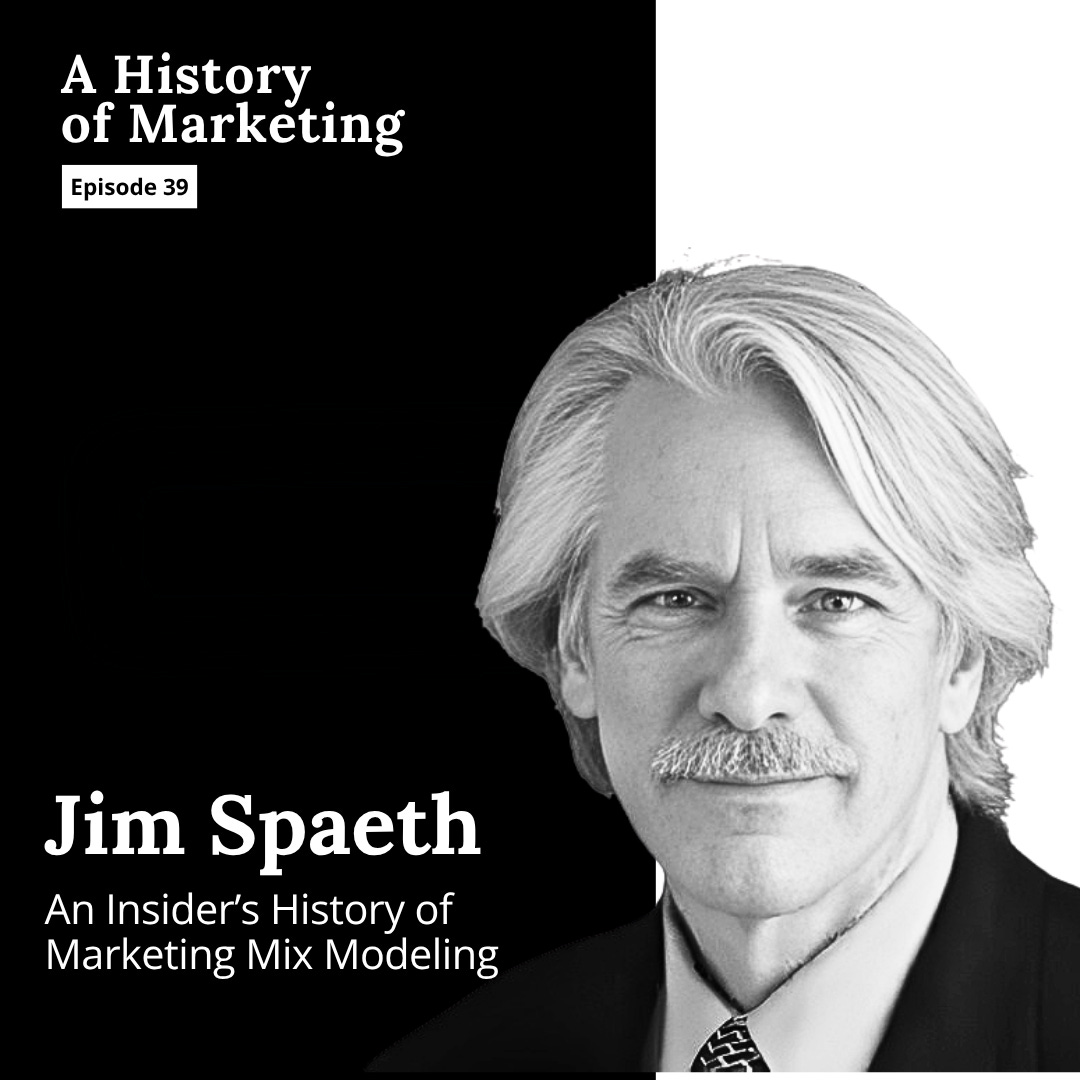
本集简介
双语字幕
仅展示文本字幕,不包含中文音频;想边听边看,请使用 Bayt 播客 App。
数字技术正在重塑一切。
Digital is reinventing everything.
当时涌现了一大批非常聪明的人,他们压根儿没干过广告或营销,却彻底改变了这个世界。
So you had a lot of really smart people coming on the scene with absolutely no background in advertising or marketing for that matter, and they were reinventing the world.
这当然很棒。
Now that's great.
他们正在改变这个世界。
They're reinventing the world.
但作为历史学者,你应该明白,了解这个世界的来龙去脉非常重要。
But as you will appreciate as a historian, it pays to understand where this world came from.
欢迎来到《营销史话》。
Welcome to A History Marketing.
我是安德鲁·米特拉克。
I'm Andrew Mitrak.
本周,我邀请到了营销组合建模的先驱、广告研究基金会前主席吉姆·斯皮斯。
And this week, I'm joined by Jim Spaeth, a pioneer of Marketing Mix Modeling and a former president of the Advertising Research Foundation.
吉姆分享了他数十年深耕营销前沿的见解,讲述了他如何努力将营销从依赖直觉的艺术,转变为基于严谨数据分析的科学。
Jim shares insights from his decades long career spent at the bleeding edge of marketing and tells the story of his quest to turn marketing from an art based on gut instinct to a science based on rigorous data analysis.
接下来是我的对话,与吉姆·斯皮斯。
Here's my conversation with Jim Spaeth.
吉姆·斯皮斯,欢迎来到《营销的历史》。
Jim Spaeth, welcome to A History of Marketing.
谢谢。
Thank you.
我非常期待和你交谈。
I'm really excited to speak with you.
之前的嘉宾谢莉·扎利斯和比尔·穆尔特都强烈推荐我来和你聊聊,尤其是关于营销组合建模的历史——这个话题之前在这档节目里提过,但还没深入探讨过。
Prior guests, Shelly Zalis and Bill Moult, both highly recommended speaking with you, especially on the history of marketing mix modeling, which is something that has been brought up on this show before but we haven't fully delving into.
所以我想请你谈一谈这方面。
So I thought I'd ask you about some of that.
首先,我想先为听众们厘清一下这个概念。
And first, I thought maybe we could define that for listeners.
所以,如果你在聚餐或者喝着葡萄酒时,遇到一个从来没听过营销组合模型的人,你会怎么向他解释这个概念呢?
So if you're at a dinner party or having a glass of wine with somebody and and you had to explain marketing mix modeling to them, to somebody who hadn't heard of it before, how would you overall describe that to them?
我会从几个角度来解释。
Well, I would describe it in in a few ways.
最简单的说法,就是从它的目标入手。
So so the simplest is just from what its goal is.
它的作用是拆解所有影响销售的营销和非营销因素各自贡献了多少。
It it attempts to decompose the contribution to sales of all of the marketing and non marketing factors that drive sales.
对吧?
Right?
简单来说,它就是为了证明营销确实带来了成效。
And at its simplest, in some ways, it's to prove that marketing is accomplishing something.
量化这些成效,并衡量投资回报率。
It's quantify what it's accomplishing, and to measure the return on investment.
所以,它其实是营销和财务人员之间沟通的共同语言。
So, it's a way for marketing and finance people to talk to each other.
所以这是其中一部分。
So that's kind of one part of it.
但通过了解所有影响销售的因素,你就能开始思考如何最优地分配预算,哪些渠道有效,哪些需要改进,以及那些你无法控制的外部因素如何影响销售。
But also, by understanding all of the factors that are driving sales, you can begin to think about how to optimally allocate budgets, which things are working, which things need help, how external factors that you don't control impact your sales.
比如天气、经济状况、竞争对手的定价,这些都是很好的例子。
Good examples would be things like the weather, the economy, competitive product pricing.
你没法掌控一切,但有些事情你必须做出应对。
You don't control everything, but you need to react to certain things.
从概念上讲,它就像是为营销人员打造的理想仪表盘的核心引擎。
A way, conceptually, it's the engine for an ideal dashboard for a marketer.
你觉得它更像一个回顾性的仪表盘,用来分析结果,还是更像一个前瞻性的模型,指导你该把资源投向哪里?
And do you think of it more as a backwards looking dashboard analyzing results, or more of a forward looking model of where to apply things?
或者它其实是两者的结合?
Or is it a little bit of both of those?
两者都有。
A little bit of both.
它常被说成是回顾性的,因为营销组合模型通常需要两到三年的数据。
It's accused of being backwards looking because the problem is typically marketing mix models need two or three years' worth of data.
所以它们从中得出的结论,听起来就像人工智能一样。
So, what they learn or figure out learn tends to make it sound like AI.
现在营销组合里确实有AI成分,但并不是总有,过去更没有。
These days, there is AI in marketing mix, but not always, and certainly there hasn't been.
但你可以从营销组合中推断出——这么说可能更准确——那些过往活动的实际影响。
But what you can infer, I guess it's a better way to say it, from marketing mix is what the impact of those historical activities have been.
对吧?
Right?
如果你过去十年一直做同样的电视广告,模型告诉你的就只是这些。
So, if you ran the same television campaign for the last ten years, that's what you're to understand about, that's what your model's going to tell you about.
它不会告诉你,一个全新的广告活动可能会有什么效果。
It's not going to tell you about this great new campaign and what it might do.
不过话说回来,你可以用营销组合来优化未来的投入,依据的就是过去的表现。
Now, that said, you can use Marketing Mix to, as I said, optimize your spend going forward, based on what historical responses have been.
你可以用它来做预测,预测可以是宏观层面的,也可以精细到帮助生产、库存这类具体事务。
You can use it to forecast, and forecasting can be at a broad level, or it could be at a very granular level to help production, inventory, things of that sort.
但你必须清楚,它完全是基于历史数据的。
But you always have to recognize that it's based on history.
这就是为什么它总被说成是面向过去的。
That's why it has that backward looking reputation.
不过我觉得,任何方法都是面向过去的,因为只要是靠数据的方法,就离不开过去的信息。
However, I would say any technique is backward looking, because any technique based on data is based on something from the past.
不管是昨天、上周,还是上个月,归根结底都是过去发生的事。
I mean, it might be yesterday or last week or last month, but it's something from the past.
关键只在于你得回溯多远的历史。
It's just a question of how far back in the past you have to go.
你之前提到,你职业生涯早期是在家乐氏公司内部工作的。
You mentioned earlier in your career, you were at General Foods, in house.
顺便说一句,现在大家提到家乐氏,更多是想到它旗下的Post麦片品牌。
By the way, General Foods is probably better today now known for the Post cereal brands.
是吗?
Is that right?
那时候Post、麦斯威尔咖啡、吉露果子冻、还有被带上太空的Tang饮料,都是他们家的。
It was the home of Post, Maxwell House, Jell O, Tang that went to the moon, or at least in space.
我记不太清了。
I can't remember anymore.
后来它被卡夫收购,再后来卡夫又和亨氏合并了。
So it was merged with Kraft, then Kraft has been merged with Heinz.
所以那些大规模的快消品,你在那儿的时候有参与过营销组合建模吗?
And so really mass products, mass CPG products, were you involved in marketing mix modeling there?
这么说,那算是起点吧?
So, that was kind of the beginning, right?
说实话,通用食品公司正是营销组合建模的开端。
GF was the beginning of marketing mix modeling, quite frankly.
要说更早之前,我曾在扬罗必凯干了九年,那时候它还是一家全方位的广告公司。
I would say the prologue is, before that, I worked for nine years in Young and Rubicam when it was a full service ad agency.
那时候佣金是15%,广告公司手头宽裕,能给客户提供各种各样的福利和服务,也不会为每一分钱争得面红耳赤。
And those were the days of the 15% commission, so the agency had a lot of money to bestow many, many benefits and services upon their clients, and they weren't always squabbling over every nickel and dime.
我们有个庞大的研究部门,做了很多不同类型的项目。
So we had a big, big research department, and we did a lot of different stuff.
但那些人已经开始思考如何把科学方法用在营销上。
But these guys were thinking about how to use science in marketing.
那时候营销纯粹是一门艺术。
Marketing was an art.
说实话,完全就是靠艺术感觉来做的。
Quite I mean, it was just all an art.
靠的是判断力。
It was judgment.
靠的是创意。
It it was creativity.
靠的是经验,管用就行。
It was and it works.
你知道,我们真的没法证明这一点。
You know, we just couldn't really prove it.
我们没法量化它。
We couldn't measure it.
但你能看到,那些营销得好的品牌,完胜那些普通商品品牌,它们能卖得更贵,还让人觉得值,因为看起来档次更高。
But you you could see it work when when well marketed brands beat the crap out of the, you know, the the more commodity brands, and they could charge more money and get away with it because they seem to be higher value.
所以我们知道营销有效,但一直没被系统测量过,也没被纳入优化科学那些方法里。
So we knew marketing worked, but it hadn't really been measured and it hadn't really been submitted to the science of optimization and all those kinds of things.
这些工作在扬罗必凯刚开始展开。
That work was beginning at Y and R.
所以我管那叫序章阶段,就是努力把科学、方法、计量经济学这些东西带进营销领域。
So those are kind of the, I call it the prologue days, really trying to bring science, methods, econometrics and such into the marketing world.
你在加入通用食品之前,是在扬罗必凯工作的吧。
You worked at Y and R, Young and Rubicam, before General Foods.
你既有公司内部、又有广告公司的视角,这对你的营销组合建模看法有影响吗?
Did having this in house and agency perspective on marketing mix modeling, did it shape your views in any way?
你有没有注意到一些漏洞或者不奏效的地方?
Did you notice sort of gaps or things that didn't work?
毕竟不是每个人都有机会在两边都工作过。
Because not everybody has the luxury of working at both.
是的。
Yeah.
没有。
No.
这是个非常好的观点,真的非常好。
That's a really good, really, really good point.
我确实注意到了。
I absolutely did.
我在扬罗必凯时对媒体购买和销售的了解,起了很大作用。
My knowledge from Y and R of how media is bought and sold made a big difference.
既然没法付诸行动,那学了又有什么用呢?
Because why do you need to learn something when you can't act on it?
对吧?
Right?
所以你知道,电视广告主要是在年初采购季搞定的。
So, you know, you buy your television largely in the upfront market.
虽然有点余地,但基本上已经八成定下来了。
While you have some flexibility, you're pretty much, let's say, 80% locked in.
所以咱们短时间内很难改,但广播广告就灵活多了。
So we're not going to be able to change it anytime soon, whereas radio was pretty nimble.
要是你从广播里学到了什么,周末就能立刻调整,真的能马上见效。
And if you learn something about radio, you could act on it over the weekend, you know, and make a change.
像这类事情,真正理解媒体是怎么运作的,特别特别有帮助。
So think things like that, knowing how media really worked was very, very helpful.
再有,从食品行业内部看,那视野太棒了——你真能看清整个运作方式,组织怎么运转,决策是什么时候做的,决策过程又是怎样的。
And then the view from inside the food business was amazing because you really got to see how it worked, both organizationally how it worked, what the decisions were, when they got made, what the decision making process was like.
我一开始进的是市场研究部,我们开始建立真正意义上的“真实缺口”营销组合模型,简单说,就是用计量经济学,把所有能拿到的销售和营销数据拿来做回归分析。
I came in initially into the Market Research Department, where we began to build an actual Honest Gap Marketing Mix Modeling practice, which meant, to boil it down simplistically, using econometrics, so using regression modeling and all the sales and marketing data you could lay your hands on.
在那些早期阶段,我们为所有谷物品牌都建立了模型。
And in those early days, we built models for all of the GF brands.
那时候的模型非常简单。
And they were very simplistic.
就是简单地列出:这是我的销量。
They would just say, here's my sales.
然后要弄清楚——别忘了,我们现在说的是八十年代——
To what degree is and now remember, we're talking in the eighties now, right?
电视、广播、户外广告和杂志,各自对销量的影响有多大?
So, to what degree does television drive sales versus radio versus outdoor versus magazines?
定价又起了多大作用?
What's the impact of pricing?
门店促销呢?
What about my in store promotions?
优惠券呢?
What about my coupons?
所以,我真正要列出的大概是七八个因素。
So what are I real just name seven or eight factors.
有时候一个模型里可能会有十来个因素。
Maybe there'll be 10 or 12 factors in a model.
我个人最大的突破是发现,当土豆价格高的时候,炉灶型馅料销量特别好。
My personal big breakthrough was when I discovered that stovetop stuffing did well when the price of potatoes was high.
你知道,盘子里的淀粉类食物,可能是炉灶型馅料,也可能是土豆。
So, you know, starch on your plate could be stovetop, could be potatoes.
要是土豆太贵了怎么办?
What if potatoes are expensive?
那大家就会选炉灶型馅料。
You go to a stovetop.
土豆便宜的时候,炉灶型馅料的销量就没那么好了。
With potatoes cheap, the stovetop didn't do as well.
所以,这在当时算是挺高级的发现了。
So, you know, that was pretty sophisticated.
这在模型里体现的是弹性变化。
That was across elasticity in the model.
所以,那些模型其实非常简单。
So, they were really, really simplistic.
是的。
Yeah.
你在通用食品公司刚开始做这些模型的时候,是向谁汇报的?
When you built those early models at General Foods, who do you present that to?
谁会用到这些信息?
And who makes use of that information?
是给产品团队参考,让他们决定调整产品吗?
Is it to product groups as far as, Okay, we're going to change our products?
还是给广告公司,让他们据此策划推广活动?
Is it to advertising agencies who then use it to inform their campaigns?
还是说,这些研究结果到底是怎么落地应用的?
Or how does that research actually get put into practice?
这是个非常好的问题,因为这种组织流程的建立,其重要性不亚于甚至超过了数据和统计方法的发展。
Well, that's a very, very good question because that development of that kind of organizational process has been equally, if not more important, than the development of data and statistical technique.
那时候,我们都是协同合作的。
And in those days, we worked collaboratively.
每个部门都有自己的小型研究团队和研究负责人。
So, every division had their own little research group and a head of research.
所以我们跟他们紧密配合,不想各自为政,希望我们的说法能保持一致。
And so we would collaborate with them because we didn't wanna be you know, we wanted to be somewhat cohesive and and and consistent in our story.
最后,我们会向市场总监或部门总裁汇报。
And then ultimately, we would report to the marketing director or the division president.
市场总监或部门总裁会看这些数据,用它们来指导整体的营销策略。
The marketing director or division president, they are looking at all this information, then they're using it to just inform their overall marketing strategies.
没错。
Right.
主要是用来制定预算、分配资源,判断哪些有效、哪些没效果。
Setting budgets, allocating budgets, that was the primary application, deciding what's working, what's not working.
那时候我们没法单独分析创意效果,所以根本搞不清某个广告活动到底有没有用。
Back in those days, we weren't able to break out creative, so we couldn't really try to understand whether this particular campaign was working.
这种能力是最近才出现的。
That has only come very recently.
从一开始我们就想这么做,但当时根本做不到。
That was a desire from the beginning, but not something we could accomplish.
你觉得通用食品公司在这种做法上算是先行者吗?算是最早用研究和数据分析的公司之一吗?
Did it feel like that General Foods was early to this kind of practice, that this was sort of the frontier of using research and analytics?
我的感觉是,那时候通用食品绝对是第一个,后来才慢慢传开的。
My impression is back then, GF was clearly the first, and it disseminated from there.
所以早期混合建模主要集中在快消品行业,就是因为很多人从通用食品跳到百事、卡夫、妙洁这些公司,把这套方法也带过去了。
So one of the reasons mixed modeling in its early phase was pretty much just CPG practice is because people moved from GF to Pepsi, to Kraft, to Clorox, to wherever, and brought the practice with them.
离开通用食品之后,你后来参与了ScanAmerica和Arbitron,对吧?
After General Foods, at some point, you get involved with ScanAmerica and Arbitron.
能给我讲讲这段经历吗?
Can you tell me this story?
那是最早尝试同时追踪同一家庭中商品购买行为和电视收视情况的项目,这样就能分析女性观众中谁是麦斯威尔咖啡的购买者,或者高频购买者。
That was an early attempt at measuring both product purchasing and television viewing among the same households, so that you could look at what not the audience is among women, the audience among Maxwell House purchasers, or frequent Maxwell House purchasers.
那就是ScanAmerica。
That was ScanAmerica.
这其实是伯克营销服务公司和Arbitron的合资项目。
That was actually a joint venture between Burke Marketing Services and Arbitron.
Arbitron负责电视数据部分,伯克负责销售数据,他们还擅长测试营销。
So Arbitron did the TV part and Burke did the sales part, and they also had expertise in test marketing.
那真是非常令人兴奋,可惜最终没成功。
So, that was very, very exciting, and it didn't make it.
这是我参与过的众多初创项目中,第一个虽未成功却极具开创性的例子。
The first of a number of startups that I've been involved in that have not been successful, but have been exciting and groundbreaking.
这项目听起来相当有雄心,毕竟那应该是八十年代的事了。
It seems like a really ambitious project, because this would have been in the 80s.
八十年代后半段。
Second half of the 80s.
这个想法的核心,其实是把广告投放和实际购买行为直接关联起来,找出哪些超市区域的顾客看了广告后买了特定商品,实现从广告到销售的完整闭环,这在当时确实是个相当复杂的难题。
The idea really was the ads you're running, really connecting those to actual purchases, and having a set of SKUs that are at a grocery market in an area that saw those ads and really connecting kind of end to end, which seems like a complex, challenge to solve.
就算放到今天,这依然很有挑战性,更别说四十年前、五十年前了。
It still seems challenging today, especially forty, fifty years ago or so.
听起来真是个特别难啃的硬骨头。
It sounds like a really tough one.
是啊,那时候确实有点超前了。
Yeah, it was a little bit ahead of its time.
我待过几家初创公司,作为市场人员,加入一个还在愿景阶段的产品,其实挺有意思的,对吧?
I've worked for a handful of startups, and it seems like there's an interesting thing as a marketer to join a product as part of the vision, right?
那时候产品还没成形,但只要你能拉到足够多的人支持,它就有可能跨越鸿沟,变成现实——这背后藏着巨大的机会。
Where it's not quite reality yet, but if you get enough people on board, and it seems like it could kind of cross a chasm and become real life and that's a reality, and that's a big opportunity there.
所以,我觉得哪怕失败了,也值得大胆去尝试这些想法。
So, it seems like it's an important thing to just swing for the fences and try those things out even if they don't work.
没错。
Absolutely.
这一直是我职业生涯的写照。
That's been the story of my career.
一旦看到机会,就果断去追。
It's like, when you see it, go for it.
我们真的非常相信这件事。
We really, really believed in it.
我们也有客户同样深信不疑。
And we had clients who really, really believed in it.
那时候做起来太难了,太贵了,根本没法落地。
It was just too hard to do, too hard, too expensive to do at that time.
还有就是,你会碰到各种组织上的障碍。
And the other thing is you run into those organizational issues.
我想,正是从那时起,我第一次真正明白了。
That's, I think, where I first learned.
这听起来完全合理,合情合理。
It may make complete sense, total sense.
它可能会带来实实在在的经济效益。
It might have demonstrable economic benefit.
但在你大力推动之前,一定要搞清楚这个行业或组织可能有哪些限制。
But before you really push too hard, make sure you understand what the industry or organizational constraints might be.
你多次提到广告研究基金会,而且你在90年代中期当上了ARF的主席。
So, you mentioned a few times the Advertising Research Foundation, and you become president of the ARF in the mid-90s.
对于没听说过这个机构的人,ARF到底是什么?
What is the ARF for somebody who hasn't heard of that before?
当然。
Sure.
广告研究基金会,我想说是美国历史最悠久的。
The Advertising Research Foundation is, I want to say, the oldest.
我不太清楚美国市场营销协会(AMA)有多久的历史,但ARF绝对是美国最早、或最早之一的以营销为核心的行业组织,它是由美国国家广告商协会(ANA)和美国广告代理协会共同创立的,因为他们需要一个平台来推动更优质的市场研究。
Now, I don't know how far back the AMA goes, but the oldest or one of the oldest marketing centric trade organizations in The United States, it was founded by the ANA, the Association of National Advertisers, and the forays, the American Association of Advertising Agencies, because they needed something they needed to stimulate better research.
是的,我觉得AMA是三四十年代成立的。
Yeah, and I think the AMA was the 30s or 40s.
我得查一下。
I'd have to look it up.
我觉得那个关税其实更早出现。
I think the tariff actually predates it.
它专注于广告,因为它是广告主和代理机构共同催生的。
It was focused on advertising because it was the child of the advertisers and the agencies.
显然,营销的范围更广,但他们的核心确实是广告。
Obviously, marketing's a broader topic, but that's what their focal point was advertising.
很多年以后,ARF 依然在全球范围内被视为广告和媒体领域首屈一指的权威机构。
Again, many, many years later, ARF was still respected around the world as a preeminent authority with respect to advertising and media in particular.
至于更广泛的营销或市场研究,它可能就不是最突出的了,因为欧洲、亚洲和其他地方还有其他组织。
Maybe not marketing more broadly or market research more broadly, because you had other organizations in Europe and Asia and elsewhere.
但这是一个历史悠久、具有全球影响力、并持续发挥领导作用的机构。
But it's an organization with global stature that's been around for a long time and does a lot of leadership.
我们现在正在这个市场组合建模的话题上做一些非常出色的工作。
We're doing some great work right now on this topic of market mix modeling.
太棒了。
That's awesome.
对了,根据维基百科,ARF似乎是1936年成立的,而AMA是1937年成立的。
By the way, so it looks like ARF, based on Wikipedia at least, was founded in 1936 and AMA was founded in 1937.
所以我觉得你——没错。
So I think you- yeah.
好的。
All right.
AMA确实早一点,虽然只早了一点。
Free dates AMA by- Yeah, slightly earlier.
对,我认这个输。
Yeah, I'd take the win.
更早一些。
So earlier.
明白了。
All right.
你之前在初创公司、广告公司和大型快消企业都干过,为什么偏偏选择加入ARF呢?
Why jump to ARF after having a career at startups, at agencies, at large CPG companies?
ARF对我来说个人意义重大。
The ARF was very important to me personally.
这就是原因。
That's why.
事情是这样的,我当年在通用食品公司的时候,那里的研究主管正好参与了ARF的工作。
The reason is, back when I was at General Foods, the head of research at GF was involved.
我记得他当时可能是ARF的董事会成员。
I think it might have been on the board of ARF.
他们正好需要一个懂媒体的人来义务帮忙。
They needed someone with some media expertise in a volunteer role.
那会儿还是ARF的早期阶段。
This was just early on.
我就去找了我的老板,他说想推荐我来接手这个事,我觉得特别好,因为当时我确实有点闲得慌。
And went to my boss and he said, I want to volunteer Jim for this job, which was great because I was a little bit bored, frankly.
我当时对外面的世界了解得太少了。
And I had very little exposure to the outside world.
一直在那两家公司待着,日子是挺安稳,但很少往外走。
I'd been in my two companies I worked at and, you know, fine, comfortable, but didn't really get out a lot.
这件事让我真正接触到了外面的世界。
So, this kind of put me out in the outside world.
我永远记得那次开会,委员会里坐着五六位当时的大人物。
I will never forget being in a meeting with five or six legends of the day who were on this committee.
他们都不愿意当主席,你知道吧?
They just didn't want to chair it, you know?
不是因为我本人,而是因为我的公司,我才有资格坐这个位置。
And somehow, not because of me, but because of my company, I had the stature to chair it.
于是他们把这担子交给了我,而我那时根本不知道自己要面对的是谁。
So, they gave it to me and the kid walks in, not knowing who he was getting himself into it.
突然间,我和那些我读过他们论文、看过他们文章的人坐在一起了。
Suddenly, I'm talking to these people who have read their papers, I've read their articles, I know all about them.
我当时简直被震撼住了。
It's like, I was awestruck.
我不太想把自己说得太重要,但说实话,这段经历真的让我找到了方向。
And I will say just without making this too much about me, I mean, it enabled me to kind of find my footing.
我觉得ARF对很多行业人士来说,都是这样的作用。
And I think that's what ARF does for a lot of people in industry.
它真正把大家拉到了一起,开阔了视野。
It really brings them on board, broadens their perspective.
我以前有些想法挺有创新性的,特别想推进,但当时公司还没准备好接受。
And a lot of my ambitions were maybe, you know, I had something that was innovative, I really wanted to push, but the company I worked at wasn't really quite ready for it.
要是换个工作,我就能一边做ARF的志愿工作,一边试着推动行业往某个方向走。
Had another gig, I could go whatever ARF volunteer work I was doing, and try to push the industry in a certain direction.
我整个职业生涯,说到底就是追求创新。
My whole career has been about innovation.
还有什么地方比这更适合推动创新呢?
What better place to try to drive innovation?
所以这就是我后来去那里的原因。
So that's what brought me there.
对。
Yeah.
说到你在那期间推动创新,那正是你担任主席的年代——90年代末到2000年代初。
Well, as far as driving innovation when you're there, this is really, it's the late '90s through early 2000s that you're president.
那时候正是互联网泡沫时期,也是互联网兴起、早期数字广告崛起的阶段。
And this is like the .com bubble era, or I mean, rise of the internet and the rise of early digital advertising as well.
我之前做调研、准备这次采访的时候,看到一篇2002年发表的文章,想念一段给你听。
And as I was researching, prepping for this interview, I came across an article that was published in 2002, and I'm going to read you a quote.
这篇文章讲的是,随着互联网发展,广告效果评估方式正在发生变化。
The article is all about how advertising measurement models are changing as the internet is developing.
文章里提到一个说法,我们已经听腻了这些术语。
And I'm going to quote, we've been to this jargon.
‘点击量、广告曝光量、页面浏览量’,这是ARF主席吉姆·斯皮斯说的。
Clicks and ad views and page views, says Jim Spaeth, president of the ARF.
我们需要让大家统一使用标准的媒体术语,说同一种语言。
We need to direct people to standard media terminology and get people to talk the same language.
所以我还在说广告展示次数的问题。
So, it's, I'm still talking about ad views.
对,广告展示次数、页面浏览量和点击量,这些现在还在用。
Yeah, ad views and page views and clicks, those are still used today.
我正试着想象自己处在那个年代。
So I'm just like thinking of this, putting myself in this era.
那时候互联网刚兴起,对每个人来说都是全新的,大家都很不确定。
It's like, okay, Internet's developing, it's brand new for everybody, there's a lot of uncertainty around it.
这听起来跟今天的AI情况还挺像的。
Kind of sounds somewhat familiar with AI today as well.
但当时确实需要建立新的标准。
But there's kind of new standards that need to happen.
人们在用不同的方式衡量效果。
People are measuring different things.
大家心里都没底。
There's uncertainty.
作为ARF的负责人,你得推动标准化,把大家聚到一块儿。
Then you, as the head of ARF, need to help standardize, need to kind of bring people together.
你能描述一下那个年代吗?当时有哪些挑战和机遇?你得说服哪些人,让大家用同样的术语来沟通?
So can you just paint a picture of that era and some of the challenges there and opportunities there and who you needed to persuade to adopt the same language around things?
那时候互联网才刚冒头。
The internet was just happening.
来了很多特别聪明的人,但他们压根儿没干过广告或营销这行。
You had a lot of really smart people coming on the scene with absolutely no background in advertising or marketing for that matter.
他们正在重新塑造这个世界。
And they were reinventing the world.
这当然很好。
Now, that's great.
他们正在重新塑造这个世界。
They're reinventing the world.
但作为一位历史学者,你应该明白,了解这个世界从何而来、你正踏入怎样的框架,是非常重要的。
But as you will appreciate as a historian, it pays to understand where this world came from and what the framework is you're moving into.
尤其是从广告预算的角度来看,数字媒体当时还是个新鲜事物。
Particularly, when you think about it from an ad spend perspective, digital was new.
那会儿的钱就像是试水的钱。
It was like novelty money.
完全是实验性的投入。
It was experimental money.
就是这儿那儿多出来一点闲钱罢了。
It was you know, some extra cash here and there.
大部分预算还是在传统户外广告上,数字广告的投入根本没法比,对吧?
The bulk of the spend was still you know, we were spending more on outdoor advertising than in digital, right?
但突然间,数字媒体开始重塑一切。
But suddenly, digital's reinventing everything.
我们不再谈曝光量,而是看点击量;不再说覆盖人群,而是算独立访客。
So, you know, we don't have impressions, we have clicks, we don't have reach, we have uniques.
我们能不能别老把人搞糊涂了?
We don't like, can you just stop confusing people?
你是想融入这个圈子,还是...
Do you want to be part of the scene?
非要让人专门去上培训课,才能懂你这一套术语?
Or do you want to have somebody have to have a special training course just to understand your vocabulary?
顺便问一句,你把点击量放进媒体计划的时候,怎么办?
And then, by the way, what happens when you put your clicks into a media plan?
是把点击量加到曝光量里,还是得为电视节目也造出点击量来?
Do we add them to the impressions, or do we have to create clicks for television?
说真的,这太荒唐了。
Was kind of stupid, frankly.
这种情况还在继续。
And it continues.
确实还在继续。
It continues.
确实很惊人,数字营销在这么长的时间里,占营销预算的比例居然这么低。
Yeah, it is shocking how little digital was for, as far as a percentage of marketing spend for as long as it was.
但它的增长速度非常快。
But, I mean, it grew at a rapid rate.
你觉得在这一阶段,有没有哪些标准化的里程碑是特别重要的突破?
Do you think of there were there any milestones at standardization that you saw as big wins in this period?
我认为最大的突破是程序化购买。
I think the biggest breakthrough was programmatic.
数字广告一直有个问题,因为你买的任何一处流量,观众都太分散了,不像买一个收视率12的电视节目,能有12%的全国观众看到你。
Digital always had a problem because the audiences to any one thing you bought were so tiny that instead of going out and buying a 12 rated television program, I got 12% of the country watching me right now.
就这么多。
That's it.
再加一个这样的,来,加十二个这样的。
Let's put another one of these let's put 12 of these in.
这下我的投放计划就有了。
Now I've a plan.
这事儿其实用张纸、用个Excel表格就能搞定。
It's like, you could do it on a back of an well, you could do it on an Excel spreadsheet, for sure.
但那时候数字广告太小了,你得买成千上万份,才能凑出点像样的量。
But digital was tiny, and you needed to buy thousands and thousands of units to add up to anything.
所以人工操作根本行不通。
So, it was manually prohibitive.
人力成本太高了,广告公司根本没法高效操作,直到自动化出现——而数字广告本来就是靠数据驱动的,对吧?
Labor was prohibitive because it was not efficient for agencies to do at all, until you could do it in an automated fashion, which was supported by the fact that digital is data driven, right?
它背后有元数据之类的支撑。
So there's metadata and so forth associated with it.
所以程序化在数字广告上不仅可能,而且是必须的。
So the programmatic was possible for digital and absolutely necessary.
但要把它做好花了挺长时间,说实话,我都不确定现在是不是真做对了。
And it took a while to get it to work right, you know, and I'm not sure it still works right.
后来我们还试过把程序化用在电视广告上,早期那些尝试简直乱来,想干嘛就干嘛。
But and then we then we had some experiments trying to do television programmatically, and the early ones were kind of nuts because you did well, whatever.
这话题说来话长,但他们忽略了一些我们从一开始就明白的基本道理。
It's a it's a long long subject, but, you know, they they ignored some basic things that we understood from the beginning of time.
比如,人们在黄金时段对广告特别关注,这一点很重要。
Like, people pay a lot of attention to ads on primetime, so that's important.
白天的广告就没那么多人留意了,因为大家忙着呢。
They pay a lot less attention to ads in daytime because they're busy.
就算待在家里,也都是在忙家务,做各种事情。
If they're home, they're busy around the house doing whatever they're doing.
所以不同时间段的广告价值不一样,但这一点在程序化投放里经常被忽视。
So there's different value propositions, and that was often not seen in programmatic.
现在,注意力成了一个关键指标,我觉得这很好,它能明显区分广告效果的优劣。
Now, attention has become an important variable, which I think is great, and that really differentiates the quality of impressions a big way.
对吧?
So, right?
抱歉,我讲得太啰嗦了。
Sorry, long winded answer.
自动化对数字广告来说既是必要的,也是可行的。
Automation was necessary and possible for digital.
这让成本变得更低了。
It made it more affordable.
另外,数字广告的广告位几乎是无限的,对吧?
And then the other thing that happens is digital has more or less an infinite supply, right?
作为经济学家,我会说,当供给无限时,价格自然就会变得很低。
So, as an economist, I would say when your supply is infinite, your price gets really low.
所以数字广告的展示价格才这么便宜。
So, that's why digital impressions are so inexpensive.
你还想听更多吗?
Oh, you want some more?
那我们再给你讲一点。
Well, we'll make you some more.
这么说有点过于简化了,我承认。
Know, a little oversimplified, I I will say.
但这种机制一直在起作用。
But that dynamic is at work.
所以广告展示的成本变低了。
So they became cheaper impressions.
这对广告主来说是好事,因为成本很低。
So it was good for advertisers because they were cheap.
对广告公司来说也是好事,因为不需要太多人力投入。
It was good for agencies because it was it was labor It was not labor intensive.
对广告公司而言,这种方式既高效又盈利。
It was efficient and profitable to the agencies.
现在,当然了,电视、广播这些家庭媒体也在经历同样的自动化过程。
And now, of course, we've got television at home and other media radio going through that same kind of automation process now.
回顾你职业生涯中这段经历,以及营销组合模型的发展,还有哪些问题至今没有得到彻底解决吗?
Reflecting on this conversation in your career and the development of marketing mix modeling, are there any remaining challenges with it that haven't fully been solved yet?
或者,有没有哪些本该早就完善、成为成熟解决方案的问题,到现在还是没搞定?
Or are there still things you would have expected to be buttoned up and dialed in more of a solved problem by now that still haven't been resolved?
还是说,还有一些方面你觉得,天啊,这个领域亟需更多创新,才能为未来打开局面?
Or are there lingering things where you think, wow, more innovation needs to happen in this space that'll pave the way for it in the future?
当然,这种问题一直存在。
Well, there's always that.
不过我得说,营销组合模型在一些大公司里已经成了一个独立业务,跟很多其他生意一样,他们一心想着压成本、提利润,诸如此类的事。
But I have to say, marketing mix is, in some cases, is conducted by bigger companies as a business and like a lot of businesses, really trying to drive costs down and profits up, this and that and the other thing.
我不是说他们做得不好,完全不是这个意思,只是这种心态多少会改变他们的方向。
Not to say they don't do a good job, I'm not saying that at all, but it changes the orientation a little bit.
另外,还有很多由创业者主导的建模公司,他们真心想把事情做好。
And then there are a lot of modeling companies that are driven by entrepreneurs who are really motivated to do a great job.
我之所以喜欢投身这个领域,是因为这里有很多非常有干劲的人,他们不光是为了赚钱。
One of the things I've enjoyed about being involved in this field is a lot of very highly motivated and not just about making money.
我的意思是,这总是件好事——大家动力十足,只为了推动行业前沿,把事情做到极致。
I I mean, this is always a good thing, highly motivated to just advance the state of the art and do a great job.
顺带一提,比如Analytic Partners的南希·史密斯,她创办了全球最大的独立营销组合建模公司之一。
And and just off the top of my head, you know, I'll I'll I'll call out Nancy Smith at Analytic Partners who has created one of the biggest independent marketing mix companies in in the world.
我想说的是罗斯·林克,他创办了自己的公司,后来还短暂执掌过尼尔森的业务,现在又回归自我,按自己的方式做事。
I would call that Ross Link, who developed his company and then actually ran Nielsen's company for a while and is back doing his own thing in his own way.
信息洞察公司的史蒂夫·科恩和他的搭档马克,一直在不断突破边界。
Steve Cohen at Information Insights and his partner Mark, who just keep pushing the envelope.
这些人就是单纯想把事情做好。
Mean, these people just want to do great work.
看到这样的态度,真的让人耳目一新。
And it's so refreshing to see.
他们对自己的服务和产品都充满自豪感。
There's real pride of their services and their products.
这很棒。
That's cool.
能持续发展、不断进步真好,这个领域里,创业者们一直在为人们带来更好的解决方案。
It's great that it continues to develop and continues to get better, it's an area where entrepreneurs continue to make an improvement for folks.
关于这次对话,你还有其他最终的感悟或总结吗?
Do you have any other final reflections or takeaways on this conversation?
其实挺有意思的,咱们不妨回过头来,更直接地回答你刚才的问题。
No, you know what's interesting is the practice I mean, kind of just go back and answer your question possibly even more directly.
在那些我提到的人,还有其他人的带领下,这个行业一直在朝着我和我的搭档艾丽丝一直认为的方向发展——更快、更精细、更包容。
The practice under the stewardship of those people I've mentioned and others has continued to push in the directions I always and my partner, Alice, have always seen as where the benefits are getting faster, getting more granular, more inclusive.
这种趋势还在持续,真的很好。
And that just keeps happening, which is great.
几年前有个重大突破,我们终于开始用这些工具来评估创意本身,这真的非常棒。
A big breakthrough was a few years ago, we finally started seeing creative being assessed through these same tools, which was really, really good.
现在,这种做法的规模比以往任何时候都更大了。
So that's finally happening in a bigger scale, I think, than ever before.
而眼下最前沿的,是人工智能,它让某些层面的分析变得更可行、更经济,要是全靠人工,根本做不到。
And then, you know, the frontier right now is AI, which offers to make certain levels of analysis, makes it more possible, affordable, than it would be if it was all manual.
不过,人工智能,特别是深度学习,有个特点:混合建模过去一直是一门结合艺术与科学的活儿。
But the other thing with AI and deep learning in particular is mixed modeling was always a bit of an art and a science.
科学部分是数据、统计和模型,但建模的人还得看结果,然后说:这不可能。
The science was the data and the statistics and the models, but the modeler had to look at the results and go, That's not possible.
大家都知道价格上涨了,销量就会下降,那这个模型到底哪里出问题了?
Everyone knows when prices go up, sales go down, so what's wrong with the model?
对吧?
Right?
这就是那个需要靠经验判断的部分。
That was the art part.
你得对这些东西的运作方式有基本的常识理解。
You had to have a just a common sense sort of understanding of how these things work.
因为模型有时候会给出一些荒唐的结论,你必须从各个角度仔细检查,确保结果真的合乎逻辑。
And because the model can come up with some cockamamie solutions, and you have to really make sure you're looking at something that really makes sense from every angle.
深度学习我本人没实际用过,但通过阅读和了解,我觉得它对因果关系的理解更到位,能让你更有把握地判断,你看到的是真正的因果,而不是巧合。
And deep learning, I have not practiced it, but as I've read about it and understood it, has a better grasp of causality and can give you more assurance that what you're looking at is actual causality, not coincidence.
我觉得这是另一个重要的突破,希望这种趋势能很快在行业内普及开来。
I think that's that's another important breakthrough, and I hope we see that spread quickly through the industry.
吉姆,非常感谢你抽出时间。
Jim, thanks so much for your time.
这场对话我真的很享受。
I really enjoyed the conversation.
很高兴能和你聊,安德鲁。
Great talk to you, Andrew.
非常感谢你。
Thank you so much.
《营销史》由我,安德鲁·米特拉克,负责研究与编辑。
A History of Marketing is researched and edited by me, Andrew Mitrak.
如果你想及时收到新 episodes,请访问 marketinghistory.org。
If you'd like new episodes delivered right to your inbox, visit marketinghistory.org.
在那里你还能找到每期对话的文字稿,以及一些有用的链接、图片、视频,还有其他关于营销历史的博客文章。
There you can also find transcripts of every conversation, including helpful links, images, videos, and other blogs about marketing history.
你可以给我发邮件,地址是 hellomarketinghistory dot org。
You can send me an email hellomarketinghistory dot org.
这个播客是我个人的热爱之作,我完全不打算靠它赚钱。
This podcast is a passion project of mine and I have zero interest in monetizing it.
展开剩余字幕(还有 3 条)
但如果你喜欢《营销史》这个节目,不妨在你常用的播客应用里留下一个评价。
But if you'd like to support A History of Marketing, consider leaving a review on your favorite podcasting app.
或者更好的是,推荐给你的朋友。
Or better yet, tell a friend about the show.
感谢收听。
Thanks for listening.
关于 Bayt 播客
Bayt 提供中文+原文双语音频和字幕,帮助你打破语言障碍,轻松听懂全球优质播客。