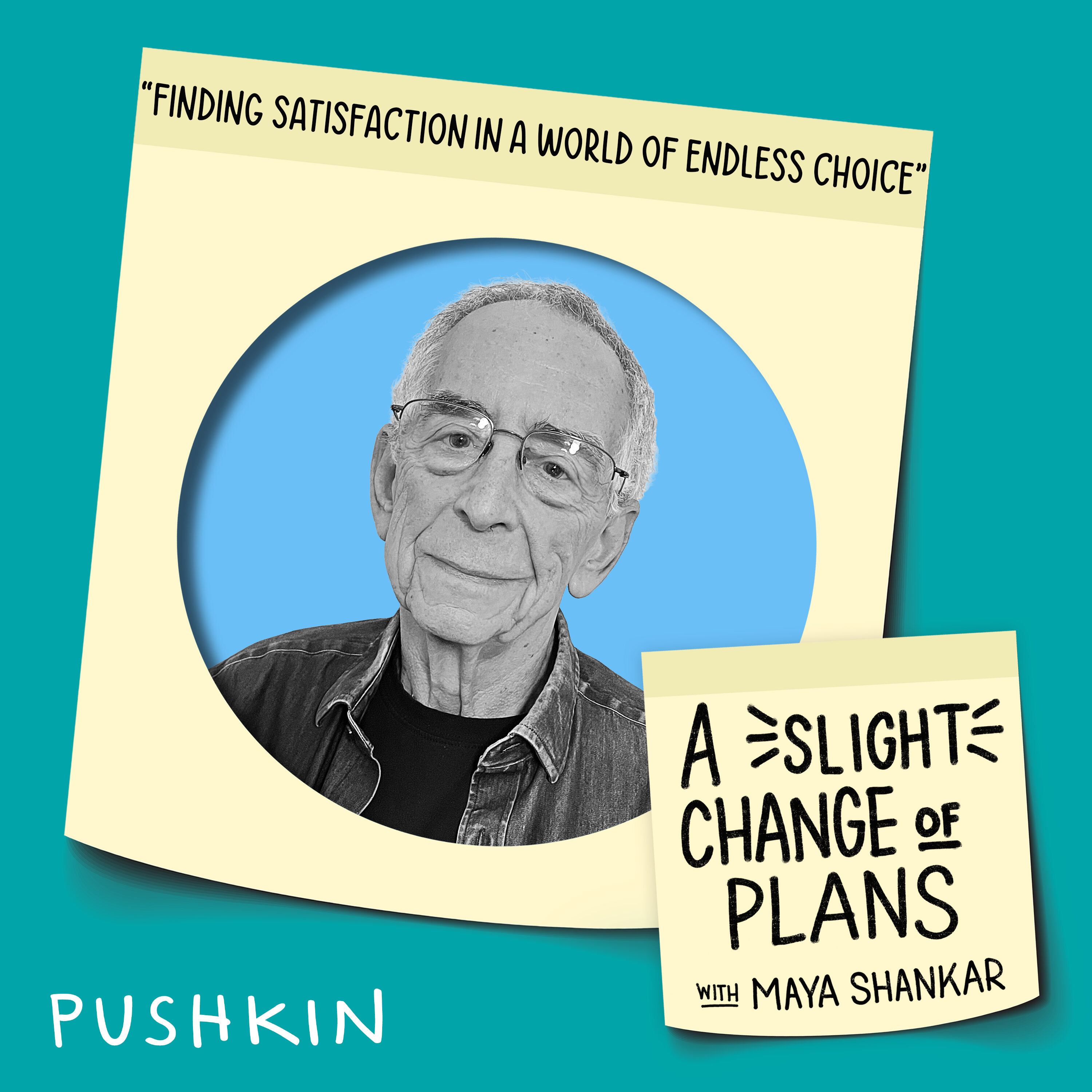
本集简介
双语字幕
仅展示文本字幕,不包含中文音频;想边听边看,请使用 Bayt 播客 App。
这是iHeart播客。
This is an iHeart podcast.
百分百真人制作。
Guaranteed Human.
在《伟大人生》中,我们聚焦一位文化偶像
On Big Lives, we take a single cultural icon
比如简·方达、乔治·迈克尔、小理查德。
People like Jane Fonda, George Michael, Little Richard.
并拆解表象背后的故事,发掘那些改变我们对这些文化巨匠认知的被遗忘的访谈。
And we pull apart the story behind the image, discovering forgotten interviews that change exactly how we see these giants of our culture.
我们关注的是英雄们混乱、卓越、真实的人性一面。
We're here for the messy, the brilliant, the human version of our heroes.
我是埃马纽埃尔·约基。
I'm Emmanuel Jochi.
我是凯·赖特。
I'm Kai Wright.
这就是《大人生》。
And this is Big Lives.
在您收听播客的任何平台都可以收听《大人生》,并通过 Pushkin Plus 订阅免广告收听每一集。
Listen to Big Lives anywhere you get podcasts and hear each episode ad free with a Pushkin Plus subscription.
请前往 Apple 播客上的《大人生》节目页面,或访问 pushkin.fm/+ 进行注册。
Head to the Big Lives show page on Apple Podcasts or pushkin.fm/+ to sign up.
Pushkin。
Pushkin.
当我们的长孙女大约五岁时,我妻子带她去超市买牙刷,她们走到牙刷区,那里有大约一百五十种,我五岁的孙女站在那里,完全被吓住了,不知所措,最后说:‘奶奶,你能帮我选一个吗?’
When our oldest grandchild was five ish, my wife went with her to the supermarket to buy a toothbrush and she got to the toothbrush section of the aisle and there were a 150 or so and she stood there, my five year old granddaughter, and was just completely overwhelmed and paralyzed and finally said grandma would you pick?
这听起来熟悉吗?
Does this sound familiar?
也许对你来说,不是牙刷,而是该买哪张沙发,或者该看哪位医生。
Maybe for you, it wasn't toothbrushes, but what couch to buy or what doctor to see.
社会心理学家、斯沃斯莫尔学院荣休教授巴里·施瓦茨,数十年来一直挑战‘选择越多越好’这一观念。
Social psychologist Barry Schwartz, an emeritus professor at Swarthmore, has spent decades challenging the idea that more choice is always better.
这使得做决定更加困难。
It makes making decisions harder.
这使得做出好的决定更加困难。
It makes making good decisions harder.
即使你成功做出了一个好决定,最终也会让你更不满足,因为你知道, somewhere out there 还有更棒的选择。
And it ends up making you less satisfied even when you manage to make a good decision because, you know, somewhere out there is something that is even better.
在今天的节目中,我们将探讨如何在充满无限选择的世界中找到满足感。
On today's show, finding satisfaction in a world full of endless choice.
我是玛雅· Shankar,欢迎收听《计划的微调》,一档关于我们在面对重大变化时成为怎样的人的节目。
I'm Maya Shankar, and this is A Slight Change of Plans, a show about who we are and who we become in the face of a big change.
巴里·施瓦茨是决策领域的专家。
Barry Schwartz is an expert on decision making.
他最新的著作名为《明智选择》。
His latest book is called Choose Wisely.
在这本书中,他挑战了人们用来做决定的一些传统观念和工具,以及什么是做出正确选择的真正含义。
In it, he challenges some of the conventional wisdom and tools people use to make decisions, as well as what it even means to make the right choice.
我们首先概述了各种决策模型。
We began with an overview of various models of decision making.
人们做决定的方式多种多样。
There are all kinds of ways that people make decisions.
对吧?
Right?
有些人凭直觉做决定。
Some people go with their gut.
另一些人则根据他们认为能最小化遗憾的方式来选择。
Others choose a decision based on what they think will minimize regret.
还有一些人依靠信仰。
Others go with their faith.
他们向神求助。
They ask God.
你能给我们简要讲讲这些不同模型的历史,以及科学对决策的理解是如何随时间演变的吗?
Can you just give us a quick history lesson on these different models and how the scientific understanding of decision making has evolved over time?
我很乐意。
I'd be delighted.
在某些方面,这正是《明智选择》这本书想要讲述的故事。
In some respects, this is the story that the book Choose Wisely is trying to tell.
你刚刚列举了人们做决定时可能采用的各种方式,比如凭直觉、依赖宗教建议、参考朋友的选择、听从受尊敬的长者意见、或者依赖习惯——今天做和上周同样的事,所有这些方式都是为了减轻选择的负担。
You went through all of the kinds of approaches that people might have to make decisions that would occur to me going with your gut relying on religious advice relying on what your friends have chosen relying on what respected elders have chosen relying on habit do the same thing today that you did last week all of these are ways to ease the burden of choosing.
实际上,当你这么做时,你是在把选择权委托给某个值得信赖的他人。
In effect, when you do any of those things you're delegating the choice to some respected other person.
无论是过去的你,还是社区里的长者、好朋友,或者其他任何人。
Either the previous you or you know an elder in the community or a good friend or what have you.
你刚才说的话让我想起了我们在面对艰难抉择时经常听到的一句话。
What you just said reminds me of this very common refrain we have in these tough moments of decision making.
你能替我做决定吗?
Can you just decide for me?
是的。
Yeah.
我们多少次会问这个问题?
How many times do we ask that?
我们会向医生提出这个问题。
We ask that of physicians.
我们会向父母提出这个问题。
We ask that of our parents.
我们会向朋友、向配偶提出这个问题。
We ask that of our friends, of our spouses.
替我做决定吧。
Just make the choice for me.
事实上,在我人生的很多时刻,我都希望宇宙能帮我消除一个选项,这样我就不用做选择,也不用事后承受后悔和质疑自己是否做出了正确决定的心理负担。
In fact, a lot of times in my life, I've wanted the universe to eliminate an option just so that I don't have to make the choice and have to deal with the psychic costs afterwards of regret and you know questioning whether I actually made the right choice or not.
但从经济学和决策心理学的角度来看,你所描述的任何一种替代方式都比正确的方式要差。
But here's the thing from the perspective of the discipline of economics on the one hand and the psychology of decision making any one of those alternatives you described is inferior to doing it the right way.
为了澄清一下,巴里,当你说到正确的方式时,你指的是一个叫做理性选择理论的框架,对吧?
And to clarify, Barry, when you say the right way, you're referring to a framework called rational choice theory, right?
这是一种描述人们应该如何做决定的模型。
It is a model for how people ought to make decisions.
你实际上对这个模型提出了异议,我们稍后会谈到这一点。
And you actually take issue with this model, which we'll get to a bit later.
但目前,请告诉我们这个理论主张什么。
But for now, tell us what this theory purports.
理性选择理论主要是经济学家提出的观点,认为做出良好决策、理性选择的方法是评估每个选项对你而言的价值,以及它实际达到你预期价值的可能性。
Rational choice theory, mostly the product of economists, is the view that the way to make good decisions, rational choices, is to assess how valuable each option is to you and how likely it is to be as valuable as you think it is.
每一个决定都是一次预测。
Every decision is a prediction.
我们有时会预测自己会喜欢一家餐厅,但结果并不喜欢。
We sometimes predict that we'll love a restaurant and we don't.
我们预测会喜欢一辆车,结果却不喜欢,诸如此类。
We predict we'll love a car and we don't and so on.
你创建一个小表格,为每个选项填入这两个数值,然后进行计算。
You create a little spreadsheet, you fill in for every option those two numbers and then you do the math.
这就是理性的人做决定的方式。
That's the way rational people make decisions.
让我顺便说一下,与此相关但更为重要的是一种方法,它影响的是整个实体的政策决策,而不仅仅是个人的决定,这就是成本效益分析。
And let me just say there's a cousin to this that is much more consequential in a way because it affects policy decisions of whole entities rather than just yours and my decisions as individuals And it's called cost benefit analysis.
那么,减少碳足迹的最佳方式是什么?
You know, what's the best way to reduce our carbon footprint?
很多人对这个问题有不同的看法。
Lots of people have different ideas about that.
人们认为很可能存在一种最佳方式。
The idea is there probably is a best way.
你通过计算实施成本和预期收益来找出答案。
The way you figure it out is you figure out how much it will cost to implement and how large the benefit will be.
通过这种分析,就能得出这个问题的明确答案。
Out of this analysis will come the clear answer to the question.
你实施的方案不仅是为了个人使用,更是为了整个社会的利益。
You implement it not just for your own personal use, but for the whole society's use.
我们时时刻刻都在进行这种分析,而且在做个人决策时,我们也被鼓励采用这种方式。
We live with that kind of analysis all the time and we're encouraged to do that kind of analysis when it's our own personal decisions.
这就是理性选择理论的核心。
That's what rational choice theory is.
它极度依赖于对事物进行量化的能力。
It critically depends on being able to quantify things.
这就是你认为人们被这种模型吸引的原因吗?
Is that why you think people are drawn to this model?
因为这种模型让他们感到既轻松,又确信自己已经完成了分析,从而得出了正确的答案?
Because it gives them a feeling of both ease and a feeling of confidence that they have done the work, if you will, and they have arrived at the right answer?
我觉得可能是这样。
I think maybe so.
让我指出,这种理论被称为理性选择理论并非偶然。
And let me say, it isn't incidental that this theory is called rational choice theory.
‘理性’并不是一个描述性词语。
Rational is not a descriptor.
理性是一个评价性术语。
Rational is an evaluative term.
你知道这意味着理性选择理论是做出正确选择的理论。
You know what that means is rational choice theory is The right way to make a choice theory.
是的,
Yes,
谁愿意被说成是非理性的呢?
and who wants to be irrational
对,当然。
Yeah, of course.
被人说成是非理性的,是对我们智慧的冒犯。
It's an affront to our intelligence to be told that we're being irrational.
没错。
Exactly.
因此,它带有某种尊崇的意味。
So there's an honorific attached to it.
如果他们看到并阅读了报纸上那些使用类似框架做出政策决策的文章。
And if they see and read articles in the newspapers where policy decisions are being made using a framework very much like this.
你还需要更多证据来证明,这才是聪明且有权力的人所做的事情吗?
More evidence do you need that this is what the smart and powerful people do?
但对我来说,关键概念是,心理学家们五十年来对人类所犯错误的研究,以及两位因研究此领域而获得诺贝尔经济学奖的心理学家。
But to me the critical notion is that the fifty years of research by psychologists on the errors we make and two Nobel Prizes in economics to psychologists who studied this.
他们从未,哪怕是一瞬间,质疑过‘什么是理性决策的标准’这一标准本身是否正确。
Never, not for a second, was their questioning of whether the standard for what counts as a rational decision is the right standard.
这一切都被当作理所当然的前提。
It was all just presupposed.
这是正确的方式,让我们来研究人们如何偏离这一标准。
This is the right way to do it, and let's study the ways in which people fall short.
而这本书的主旨是提出,理性这一规范性标准是灾难性的糟糕。
And the point of this book is to suggest that the normative standard of rationality is catastrophically bad.
除非你能量化各种结果对你而言有多好,以及它们实现的可能性有多大,否则你根本无法真正使用理性选择理论。
You can't really use rational choice theory unless you can quantify how good the various outcomes will be for you and how likely they are to be that good.
换句话说,你需要为每一个你正在思考的事物赋予一个价值和一个概率,并且它们必须处于同一量纲上,这样你才能根据所有对你重要的因素来比较各个选项,从而真正进行计算。
In other words, you need a value and a probability for everything you're thinking about, and they need to be on the same scale so that you can compare option against another with respect to all the things that matter to you, so you can actually do the math.
把叙述性的描述填入Excel表格中,并不能帮你找到答案。
Putting discursive descriptions in that Excel spreadsheet isn't going to help you get to the answer.
问题是,我们给予量化太多的尊重,而它并不值得这份尊重。
And the problem is we give quantification more respect than it deserves.
我们常常被最容易量化的维度所驱动,而不是被那些实际上对我们最重要的维度所驱动。
We are often driven by the dimensions that are most easily quantified rather than by the dimensions that are actually most important to us.
这会导致决策扭曲了我们真正关心的东西。
And that will lead to decisions that distort what we actually care about.
我还看到另外两个问题。
There's also two other issues that I see.
一个是历史终结论的错觉,即我们忘记了自己会持续变化。
One is per the end of history illusion where we forget that we will keep changing.
我们假设自己是一个固定不变的实体,认为所有的偏好在未来都会保持稳定。
We assume we're a fixed entity and that all of our preferences will stay stable into the future
这也是。
That too.
而且我们会成为出色的认知预测者,能够预知自己的感受。
And that we will be excellent cognitive forecasters and be able to anticipate how we'll feel.
几十年的研究表明,这根本不对。
We know from decades of research that's simply not true.
我们非常不擅长预测未来事件会如何影响我们的感受。
We're very bad at predicting how future events will make us feel.
第二点是,当面对重大决策时,你必须区分你认为自己会从中获得的价值,也就是卡尼曼所说的体验幸福与反思幸福之间的区别。
And then the second thing is that when it comes to large decisions, you have to differentiate when it comes to how much value you think you'll get from it between, you know, what Kahneman would call experiential happiness versus reflective happiness.
因此,我们做出的许多选择在短期内都会非常艰难。
So there are lots of choices we make where in the short term, things are really hard.
想想刚生了孩子的场景。
Think about having a newborn baby.
对吧?
Right?
这是一段非常艰难的经历。
That's a really hard experience.
你睡不好觉。
You're not sleeping.
你几乎吃不下饭。
You're barely eating.
你忽视了自己的需求,但当你抽空反思时,会获得巨大的回报。
You're not allowing your needs to be met, but there's a massive payoff when you take moments to evaluate.
嘿。
Hey.
我的生活怎么样?
How's my life going?
我感到满足吗?
Do I feel fulfilled?
我感到满意吗?
Do I feel satisfied?
而拥有那个孩子可能会给你带来巨大的提升。
And having that kid might give you a massive boost.
或者可能三十年后,它才会给你带来巨大的提升。
Or maybe thirty years down the line, it gives you that massive boost.
那么你如何在Excel表格中区分这两种情况呢?
And then how do you differentiate between those in the excel spreadsheet
但你知道,量化这种诱惑会让你迷失方向,因为你所说的长期满足感,无法像你每晚的睡眠时长或你花在最新项目上的工作时间那样被量化。
but you know here to the the seduction of quantification screws you up because the long term satisfaction that you're talking about can't be quantified in the way that the number of hours of sleep you get a night and the number of hours you can spend working on your latest project.
你知道,那些是可以量化的。
You know, those are quantifiable.
因此,在这种情况下,明显可指认且可测量的全是负面的东西。
So what is salient and pointable at and measurable in this case is all the bad stuff.
是的。
Yes.
你知道,你所谈论的那些事情只能退居其次,因为我们不知道如何量化它们。
You know, and the things you're talking about play second fiddle because we don't know how to quantify them.
但你说得完全对。
But you're absolutely right.
让我来说一下,既然这是你的专长,理性选择理论的一个问题是,它只是对某个时刻的生活拍了一张快照,将其冻结,不允许你或世界发生变化。
And let me say, since this is your wheelhouse, that one of the problems that rational choice theory has is that it takes a snapshot of life in a given moment and freezes it and does not allow for you to change or the world to change.
你知道,它误导我们以为决策应该是简单的。
You know, it tricks us into thinking that decision making should be easy.
嗯。
Mhmm.
但事实并非如此。
And it's not.
当我思考自己主观上是否做出了最佳决定时。
When I think about my subjective assessment of whether I made the best decision.
比如说,我正试图为自己挑选一辆合适的车。
So let's say I'm trying to choose the right car for me.
好吧?
Okay?
我们不仅应该评估汽车在多大程度上满足了我的需求、偏好和期望。
I we should not only integrate how well the car services my needs and meets my various preferences and expectations.
我们还应该考虑这些更宏观的层面,比如我对所做决定的感受,是否产生了后悔情绪,是否因为不断重新评估这个选择是否正确而感到心理压力。
We should also consider these other more meta components, namely how I feel about the decision that I made, whether it induces a feeling of regret in me, whether I have psychic stress because I'm constantly reevaluating if it was the right choice or not.
理性选择理论是否考虑了心理因素?
Does rational choice theory account for the psychic factors?
也就是说,我所说的那些宏观因素——我们在实时评估自己所做决定时的心理状态。
The well, again, what I'm calling meta factors of how we are in real time evaluating the decision that we made.
因为如果我对这个决定非常不满,或者它给我带来了很大困扰,这会削弱我的正面效用。
Because if I'm really upset with the decision or it's causing me a lot of consternation, that will eat away at my positive utility.
你问的问题非常好。
You you ask very good questions.
谢谢,巴里。
Oh, thanks, Barry.
恐怕每个问题的答案都更加复杂。
And every question has a more complicated answer, I'm afraid.
因此,有几种方式可以处理这种观点。
So there are a couple of ways to treat this view.
你必须考虑你所谓的交易成本。
You have to consider what you might call transaction costs.
在使你的决策复杂化时,你需要付出代价,而也许这个代价不值得支付。
There is a price that you pay for complexifying your decision, and maybe it's not worth paying the price.
也就是说,心理上的交易成本。
Like mental transaction costs to be clear.
是的,而且不仅仅是心理上的,你知道,这会耗费时间,而这些时间本可以用来做其他事情,比如更好地完成你的工作。
Yes and not just mental you know like it takes time and that's time that you could be spending doing something else like doing your job better.
所以,这是一个问题。
So that's one problem.
如果你把交易成本考虑进去,可能会采用不同的决策策略。
If you factor in the transaction costs, might adopt a different decision strategy.
是的。
Yes.
第二点是,从经济学家的角度来看,增加选择会使决策更加复杂,但这不可能是坏事,因为如果你原本喜欢在两种早餐麦片之间轮换,而我在货架上多加了一种,你完全可以忽略它。
The second thing is that from the economist's point of view, adding options and thus making the decision more complicated can't be bad and they can't be bad because if you're happy alternating between two breakfast cereals and I add a third one to the grocery shelf, you can ignore it.
所以增加一个选择并不会让你变得更糟,反而可能让某些人变得更好。
So adding an option doesn't make you worse off and it may make somebody better off.
如果第三个选择是这样,那么第四个、第五个、第五十个甚至第一百个选择也是如此。
And if it's true of a third option, it's the same thing as true of a fourth and a fifth and a fiftieth and a hundredth.
因此,这种观点本质上忽视了你所担心的这类成本的存在。
So that approach essentially doesn't acknowledge that the kind of costs you're worrying about exist.
我在书中提出的观点是,更多总比少好,但达到某个临界点后,继续增加反而会变得有害。
What I suggest in the book is that more is better than less, but a point is reached where still more starts to become worse.
这种有害性可能严重到让你不是被这些选择所解放,而是被它们困住。
And it can become sufficiently worse that instead of being liberated by all these options, you're paralyzed.
广告插播后,巴里会为我们提供摆脱决策瘫痪的路径。
After the break, Barry gives us a path out of decision paralysis.
我们稍后回来,计划略有调整。
We'll be back in a moment with a slight change of plans.
在《大人生》节目中,我们聚焦一位文化偶像
On Big Lives, we take a single cultural icon
比如简·方达、乔治·迈克尔、小理查德。
People like Jane Fonda, George Michael, Little Richard.
我们拆解表象背后的故事,发掘那些改变我们对这些文化巨匠认知的被遗忘的访谈。
And we pull apart the story behind the image, discovering forgotten interviews that changed exactly how we see these giants of our culture.
我们关注的是英雄们真实、复杂、充满人性的一面。
We're here for the messy, the brilliant, the human version of our heroes.
我是埃马纽埃尔·约基。
I'm Emmanuel Jochi.
我是凯·赖特。
I'm Kai Wright.
欢迎收听《大人生》。
And this is Big Lives.
在您收听播客的任何平台都可以收听《大人生》,并通过 Pushkin Plus 订阅享受无广告收听体验。
Listen to Big Lives anywhere you get podcasts and hear each episode ad free with a Pushkin Plus subscription.
前往 Apple 播客上的 Big Lives 节目页面,或访问 pushkin.fm/+ 进行注册。
Head to the Big Lives show page on Apple Podcasts or pushkin.fm/+ to sign up.
我和巴里·施瓦茨教授一直在讨论决策背后的隐性心理代价。
Professor Barry Schwartz and I have been talking about the sneaky mental costs of decision making.
你可能会觉得在多个选项中做选择特别有压力,原因之一是你是个最大化者。
One reason you might find choosing between options particularly stressful is because you're a maximizer.
心理学家将这种类型与另一种决策者——满足者——进行对比。
Psychologists contrast this with another type of decision maker, a satisficer.
我请巴里解释一下这两者的区别。
I asked Barry to explain the difference.
最大化者是指那些追求最好结果的人,无论‘最好’意味着什么。
A maximizer is someone who's out for the best, whatever that means.
‘最好’可能是主观的。
The best can be subjective.
事实上,它几乎总是主观的。
In fact, it is almost always subjective.
但如果你在买新家电,你想要最好的家电。
But if you're buying a new appliance, you want the best appliance.
如果你在买新车,你想要最好的车。
And if you're buying a new car, you want the best car.
如果你在买房,你想要最好的房子。
And if you're buying a house, you want the best house.
诸如此类。
Yada yada yada.
满足者是指那些追求足够好就行的人。
A satisficer is someone who wants good enough.
如果你运气好,看一件东西,它符合你的标准,你就结束了。
If you're lucky, you look at one thing, it meets your standards, and you're done.
在某些方面,这可能意味着标准很低,而在其他方面,可能意味着标准很高。
And in some areas, that can mean very low standards, and in others, it can mean very high standards.
但一旦找到足够好的,你就不再找了。
But once you find good enough, you stop looking.
是的。
Yes.
这一点之所以重要,是因为在我们当前所处的世界里,如果你想找到最好的,就必须查看每一个选项。
And and the reason this is important is that in the world we currently live in, if you want the best, you have to look at every option.
正如大家都知道的,当你开始查看每一个选项时,还没看完列表你可能就已经不行了。
And as everybody knows, when you start looking at every option, you'll be dead before you get to the end of the list.
嗯。
So Mhmm.
因此,找到最好的已经成为一个无法实现的目标。
So it's become an unachievable goal to find the best.
对。
Yeah.
我很喜欢你指出,满足者也可以有非常高的标准。
I love I love that you articulate that a satisficer can have very high standards.
没错。
Yep.
这只是相对于那些高标准而言,已经足够好了。
It's just that it's good enough against the backdrop of those high standards.
它
It
并不意味着你接受最差的结果。
does not mean that you are okay with bottom of the barrel outcomes.
明白吗?
Know?
不。
No.
不。
No.
这一点非常重要,因为当大多数人听到‘满意型决策’这个术语时——这是七十年前一位诺贝尔奖得主心理学家兼经济学家创造的技术术语——他们并不会把它理解为一个中性的描述。
And and it's really important this point because most people, when they hear satisficing, which is a technical term invented by a Nobel Prize winning psychologisteconomist seventy years ago, they don't hear it as a neutral description.
是的。
Yes.
当你说‘满足’时,人们听到的却是妥协。
They you know, when when you say satisfies what people hear is settling.
是的。
Yes.
没错。
Exactly.
但没人认为妥协是中性的。
And nobody thinks that settling is neutral.
我的意思是,这个词是带有贬义的。
I mean, it's used disparagingly.
对。
Yeah.
比如在感情关系中,不要妥协。
In the context of relationships, for example, don't settle.
完全正确,而且括号里其实有个没说出来的词,那就是‘只是’——‘他只是在妥协’,这本身就是一种隐含的批评。所以我认为,无论是别人还是我们自己,都在不断推动我们不要接受‘足够好’,因为我们对自己应该有更高的期待。
Absolutely you know and and there's so there's a word in parentheses that isn't stated and that word is just he's just settling which is an implicit criticism And so I think everybody is pushing us and we push ourselves not to accept good enough because we should have higher expectations of ourselves.
我们应当对自己提出更高的要求,诸如此类。
We should make more demands of ourselves and so on.
我们和其他研究人员都发现,这种心态会让做决定变得更难,在有些情况下甚至近乎寸步难行。
What we found and other people have found is that it makes making decisions harder, in some cases close to impossible.
它会让你更难做出正确的决定。
It makes making good decisions harder.
而且就算你最终成功做出了不错的选择,它到头来还是会降低你的满意度。
And it ends up making you less satisfied even when you manage to make a good decision.
完全没错。
Totally.
因为,你懂的,总会有更棒的选择在别处等着你。
Because, you know, somewhere out there is something that is even better.
太对了。
Absolutely.
比如说,要是你拿到了十所大学的录取通知书,你可能会把自己折磨得够呛,就为了选去哪一所,可那些比你年长些的人都清楚,选哪所根本就没多大区别。
You know, if you get into, you know, 10 colleges, you can torture yourself to oblivion trying to decide which of these colleges to go to when people a little older than you know it doesn't make a damn bit of difference.
完全正确。
Totally.
我有时候在关于这个话题的演讲中会展示一幅《纽约客》漫画,画中一位年轻女性穿着一件印着‘布朗大学’的运动衫,但我的第一选择是耶鲁。
There's a New Yorker cartoon that I show sometimes when I give talks on this of a young woman who's got a sweatshirt that says brown parentheses but my first choice was Yale.
这固然有趣,但想象一下,如果你在布朗大学——一所很棒的学府——度过了四年,每天醒来脑子里都想着这句话。
Now it's funny but imagine spending four years at Brown, a wonderful institution, and every day you wake up with that sentence in your head.
没错。
Yep.
你能在布朗大学获得尽可能多的收获吗?
Are you going to get as much out of being at Brown as you possibly can?
根本不可能。
Not on your life.
你每天在布朗大学都会想着,要是当初能进耶鲁,生活该有多好。
You'll spend every day you're at Brown thinking how much better life would be if only you'd gotten into Yale.
所以这并不是一个无关紧要的问题。
So it's not it's not a frivolous problem.
这是一个非常严重的问题。
It's a very serious problem.
它令人身心俱疲。
It's debilitating.
它让人觉得自己总是在做出错误的决定,削弱自信,消耗精力。
It makes people feel like they are consistently making bad decisions, and it undermines confidence and saps energy.
所以我认为,这个问题非常关键。
So it's very, I think, very consequential.
是的。
Yeah.
我那些使用交友应用的朋友对此感受特别深刻。
I my my friends who are on dating apps feel this acutely.
你知道的吧?
You know?
过去,嗯,在那些美好的旧日时光里。
It used to be that you well, back in the good old days.
对吧?
Right?
你当时只有几个选择。
You had a few options.
可能是你上学时认识的人,或者去教堂时认识的人,或者在本地社区见过的人,等等。
Maybe it's who you went to school with or to church with or saw at your local community, whatever.
现在关于约会应用有趣的地方在于,你甚至不是面对着明确的十个选项。
And now what's so interesting about the dating app thing is it's not even like you had the 10 options laid out in front of you.
而是你知道,只要你一直滑动,就会不断遇到更多的人。
It's that you know that if you keep swiping, you will keep getting more and more people.
所以,一个无限选择的反事实世界,始终存在于你的脑海中。
So there is this counterfactual world of infinite options Yep.
这会严重削弱你满足于现有选择的能力。
Lives in your head at all times, which can really eat away at your ability to satisfice.
选择悖论的很大一部分要点在于,即使人们按照自己的标准做出了好决定,他们对这些决定的感受仍然较差。
A lot of the point of the Paradox of Choice is to show that even when people make good decisions by their own standards, they feel less good about them.
是的
Yep.
由于各种原因,如果你的选择不够完美,就会后悔选了它。
For a variety of reasons, you know, if it's not perfect, regret having chosen it.
如果你没能查看所有选项,你就会确信,那些你没选到的选项中,一定有一个比你最终选择的更好。
If you haven't been able to look at all the options, you're sure that some option out there that you didn't get to would be better than the one that you ended up choosing.
所有这些都让决策的主观质量感觉更差。
And all of that makes the quality, the subjective quality, the decision feel less good.
当然。
Absolutely.
当然。
Absolutely.
我在这里有很多想法。
I have so many reflections here.
其中之一是,我觉得你更像是一个满足者,而不是最大化者。
One is, I mean, you strike me as someone who's more of a satisficer than a maximizer.
确实如此。
Very much so.
我想知道,对于正在听的听众来说,我想象有人会想:我并不完全属于满足型或最大化型人格。
I'm curious to know for people listening who are well, one, I'm imagining someone's listening, they might think, well, I'm not across the board a satisficer or a maximizer.
在生活的某些领域,比如我买微波炉时,我根本不在乎选哪一款。
There are certain areas of life, certain domains of life where I it doesn't really matter to me what microwave I get.
在这一点上,我是个满足型的人。
I'm a satisficer in that domain.
但当我选择长期伴侣时,我会变成一个最大化型的人。
But when it comes to my long term partner, I'm gonna be a maximizer.
所以他们可能会有这种反应。
So they might have that response.
我想知道你的看法:满足型心态是人们可以培养出来的吗?
What I wanna know from you is, is a satisficing mindset something people can cultivate?
假设他们正被自己的最大化倾向逼得发疯。
Let's say that they're being driven crazy by their maximizing tendencies.
他们能做点什么吗,巴里?
Can they do something about it, Barry?
还是我们注定就是这样的性格?
Or are we sort of destined just to be the way we are?
我有两点要说。
So I have two things to say.
首先,你完全正确,没有人会在所有事情上都追求最优,这意味着我们当然都知道如何做满足者,因为有些决策我们确实就是这么做的。
First, you're absolutely right that nobody's a maximizer about everything, which means of course that we all know how to be satisficers because there are some decisions where that's what we are.
而且大多数人的直觉是,对于不重要的事情,追求最优是愚蠢的。
And people have the most people's intuitions are well, know, with unimportant stuff it's foolish to maximize.
但当事情变得重要时,为什么不去寻找最好的呢?
But when it gets to be important, why would you not look for the best?
而人际关系往往是人们难以想象‘找一个足够好的伴侣’意味着什么的地方。
And relationships is often where people can't imagine what it would mean to look for a good enough life partner.
因此,有一两项研究试图引导人们采取追求最优或满足的倾向,表明你可以让那些在我们开发的问卷中显示为追求最优者的人培养出满足的倾向。
So there's one or two studies where they try to induce people to take up maximizing or a satisficing orientation and suggests that you can create satisficing orientation in people who on the questionnaires that we develop look like they're maximizers.
真有趣。
How interesting.
令人不满意的是,你不知道这种状态能持续多久。
What's unsatisfying about that is you don't know how long this lasts.
你在实验室里,拿到一些东西来读或听,就会让你在接下来的三十分钟内变成一个满足者。
You're in the lab, you get something to read or to hear and it makes you a satisficer for the next thirty minutes.
然后呢?
And then what?
我想象有人在即将被求婚前读到这段话。
I'm imagining someone reading this right before they get proposed to issue a proposal.
我只需要坚持三十分钟就行,巴里。
I just need to last for thirty minutes, Barry.
是的。
Yes.
那个缺乏自信的求婚者啊。
The the the unself confident proposer Yeah.
没错。
Exactly.
也许可以把这种治疗条件提供给伴侣,这样你就知道,这正是你即将说“是”的黄金三十分钟窗口。
Probably ship that treatment condition to the partner so that, you know, this is the golden thirty minute window when you're gonna say yes.
是的。
Yeah.
但另一项证据是,当《选择的悖论》这本书二十年前出版时,我收到了数百封甚至上千封邮件,人们说:‘我以为只有我才有这个问题。’
But the other piece of evidence I have is that when the book, The Paradox of Choice came out, which was twenty years ago, I got hundreds, maybe thousands of emails from people who who said, I thought I was the only one who had this problem.
我非常感谢你让世人明白,这个困扰着我和许多其他人的难题并非我独有。
I thank you so much for making it clear that the world has given me and a lot of other people this problem.
你的意思是,当他们说‘我不知道原来只有我一个人受这种困扰’时,指的正是最大化心态,对吧?
You mean when they said I I didn't know I was the only one to suffer from this, it was the maximizing mindset, right?
正确。
Correct.
而且这本书成功地改变了他们做决定的方式。
And it succeeded in changing the way they made decisions.
所以这是个人证词。
So this is personal testimony.
我显然没有数据来证明他们是否真的改变了决策方式,以及这种改变是否持久。
I I obviously don't have any data about what a, whether they actually did change the way they make decisions and b, whether that lasted.
我认为,如果一个简短的干预——比如让你阅读关于满足者与最大化者的文字——就能让你产生一点微妙的思维转变,这很有意义,因为它至少表明这种思维是可塑的。
I do think it's meaningful that if a short intervention where you're reading about someone who's a satisficer versus a maximizer can give you that little nudge to slight to think slightly differently, that's meaningful because at least shows this is malleable enough.
是的。
Mhmm.
我也认为,仅仅认识到这两个概念本身就具有强大的力量。
And I also think that the mere recognition of these two concepts is powerful in its own right.
我觉得,在我做博士后研究判断与决策时,学习这些概念的过程中,我会不断反思自己日常生活中的各种决定。
I I feel like when I was studying judgment and decision making during my postdoc and was learning about these concepts, I'm just thinking through my day my daily decisions.
当我发现自己花了四个小时在谷歌搜索中纠结该买哪款沙发时,我至少能用这些标签来识别自己的状态,是的。
And when I find that I've been in the Google search rabbit hole for four hours trying to figure out what couch I want, I can at least use labels Yep.
以此识别正在发生的事情。
To identify what's happening.
你可以问自己这个核心问题。
And I you can ask yourself this primary question.
这个决定是否值得你投入最大化的心态,考虑到它对你心理福祉造成的代价?
Is this decision worthy of the maximizing mindset given the cost I will incur to my psychological well-being?
我完全同意,给事物命名往往能在很大程度上削弱它们的影响,而了解到你只是众多这样的人之一,会让你不再觉得自己有某种需要纠正的病理。
I absolutely agree and giving a name to things often in many ways diffuses the impact that these things will have, and finding out that you're just one among many will make you stop feeling like you have some pathology that needs to be corrected.
所以,我认为命名确实很有帮助,它能引导你采用截然不同的策略和决策方式。
So, I think that's right naming things helps a lot and it can lead to very different strategies and very different approaches to making decisions.
是的。
Yes.
我最近刚开始使用一个略有不同的词来区分‘理性’,这个词是‘合理’。
What I have just started doing is using a slightly different word to distinguish it from rational and the word is reasonable.
在我看来,你所需要的是一种‘合理选择理论’,它承认并非所有事物都能被量化,也无法将所有事物相互比较。
And so it seems to me that what you want is reasonable choice theory, which acknowledges that not everything can be quantified, everything can be compared to everything else.
你所能做的,就是尽力思考决策中那些重要的方面,以及你和你关心的人会如何应对这些方面,同时明白你不应期望比你所要解决的问题本身更高的精确度。
All you can do is give it your best shot at thinking about the aspects of the decision that seem important and how you'll respond to those aspects and how the people you care about will, with the understanding that you should not expect a level of precision that is greater than the problem you are trying to solve.
有些类型的决策中,尽可能精确似乎是相当合理的。
There are certain kinds of decisions where it seems quite reasonable to try to be as precise as possible.
比如,当你在赌场决定下什么注时,你应该知道赔率。
You know, if you're deciding what bet to make in a gambling casino, you should know the odds.
你也应该清楚自己可能会赢多少、输多少。
And you should know how much you're gonna win and how much you're gonna lose.
精确性是存在的,你没有理由不去了解它。
The precision is there, and there's no excuse for you not knowing it.
但当你决定去哪里度假、选择什么工作,或者如何管教刚犯错的孩子时,这种精确性并不存在。
But when you're trying to decide where to go on vacation or what job to take or how to discipline your kid who just transgressed, that kind of precision doesn't exist.
当你试图寻找或强加这种精确性时,你是在扭曲需要解决的问题,而不是澄清它。
And when you seek it or impose it, you're distorting the problem that you need to solve rather than illuminating it.
但要知道,这并不是打个响指就能解决的问题。
But, know, this is not snap your fingers and it goes away.
你有你的习惯。
You've got habits.
一开始,打破这些习惯会让你感到非常不舒服。
It's gonna feel very uncomfortable in the beginning for you to break those habits.
你会想,天啊,我错过了什么机会?要是再多花十分钟看看就好了。
And you'll think, oh, what what did I what opportunity did I pass up by not spending another ten minutes looking?
但随着时间推移,你会发现自己对决定的感觉可能更好了,而且一天突然多出了几个小时。
But over time, you will discover that you feel maybe even better about your decisions, and your day has suddenly added a couple of hours.
那么,我们为什么不试试‘合理选择理论’,而不是‘理性选择理论’呢?
So how about reasonable choice theory instead of rational choice theory?
太棒了。
Love it.
巴里,非常感谢你加入我们。
Barry, thank you so much for joining us.
非常感谢你。
Thank you so much.
再次见到你真是非常愉快。
It's such a pleasure to see you again.
嘿,非常感谢你的收听。
Hey, thanks so much for listening.
如果你认识正在为艰难决定而困扰的人,请一定要把这一集推荐给他们。
If you know someone who's currently struggling with a tough decision, make sure to send them this episode.
如果你发现生活正在替你做选择,一定要读读我的新书《改变的另一面:当生活另有安排时,我们如何蜕变》。
And if you found life making choices for you, make sure to read my new book, The Other Side of Change, Who We Become When Life Makes Other Plans.
你可以在任何购书平台找到它,或者点击节目说明中的链接。
You can find it wherever you buy books or at the link in show notes.
我们将在一周后带来《计划的微调》的另一期节目。
We'll be back in a week with another episode of A Slight Change of Plans.
到时候见。
I'll see you then.
《计划的微调》由我,玛雅·尚卡尔创作、撰写并担任执行制片人。
A Slight Change of Plans is created, written, and executive produced by me, Maya Shankar.
《微调》家族包括我们的节目总监亚历山德拉·杰拉廷、编辑黛芙妮·陈、首席制作人梅根·卢宾、助理制作人索尼娅·格维特,以及音效工程师艾丽卡·黄。
The Slight Change family includes our showrunner, Alexandra Geratin our editor, Daphne Chen our lead producer, Megan Lubin our associate producer, Sonia Gerwitt and our sound engineer, Erica Huang.
路易斯·盖拉创作了我们动听的主题曲,金吉·史密斯协助编排了人声。
Luis Guerra wrote our delightful theme song and Ginger Smith helped arrange the vocals.
《计划的小改变》由普什金工业公司制作,衷心感谢那里的每一位成员。
A slight change of plans is a production of Pushkin Industries, so big thanks to everyone there.
当然,特别感谢吉米·李。
And, of course, a very special thanks to Jimmy Lee.
在《伟大人生》节目中,我们聚焦一位文化偶像
On Big Lives, we take a single cultural icon
比如简·方达、乔治·迈克尔、小理查德。
People like Jane Fonda, George Michael, Little Richard.
我们剖析表象背后的故事,发掘那些改变我们对这些文化巨匠认知的被遗忘的访谈。
And we pull apart the story behind the image, discovering forgotten interviews that changed exactly how we see these giants of our culture.
我们关注的是英雄们真实、混乱、精彩而人性的一面。
We're here for the messy, the brilliant, the human version of our heroes.
我是埃马纽埃尔·约基。
I'm Emmanuel Jochi.
展开剩余字幕(还有 5 条)
我是凯·赖特。
I'm Kai Wright.
这就是《大人生》。
And this is Big Lives.
在您收听播客的任何平台都可以收听《大人生》,并通过 Pushkin Plus 订阅免广告收听每一集。
Listen to Big Lives anywhere you get podcasts and hear each episode ad free with a Pushkin Plus subscription.
前往 Apple 播客上的《大人生》节目页面,或访问 pushkin.fm/+ 注册。
Head to the Big Lives show page on Apple Podcasts or pushkin.fm/+ to sign up.
这是 iHeart 播客,保证人性化。
This is an iHeart podcast, Guaranteed Human.
关于 Bayt 播客
Bayt 提供中文+原文双语音频和字幕,帮助你打破语言障碍,轻松听懂全球优质播客。