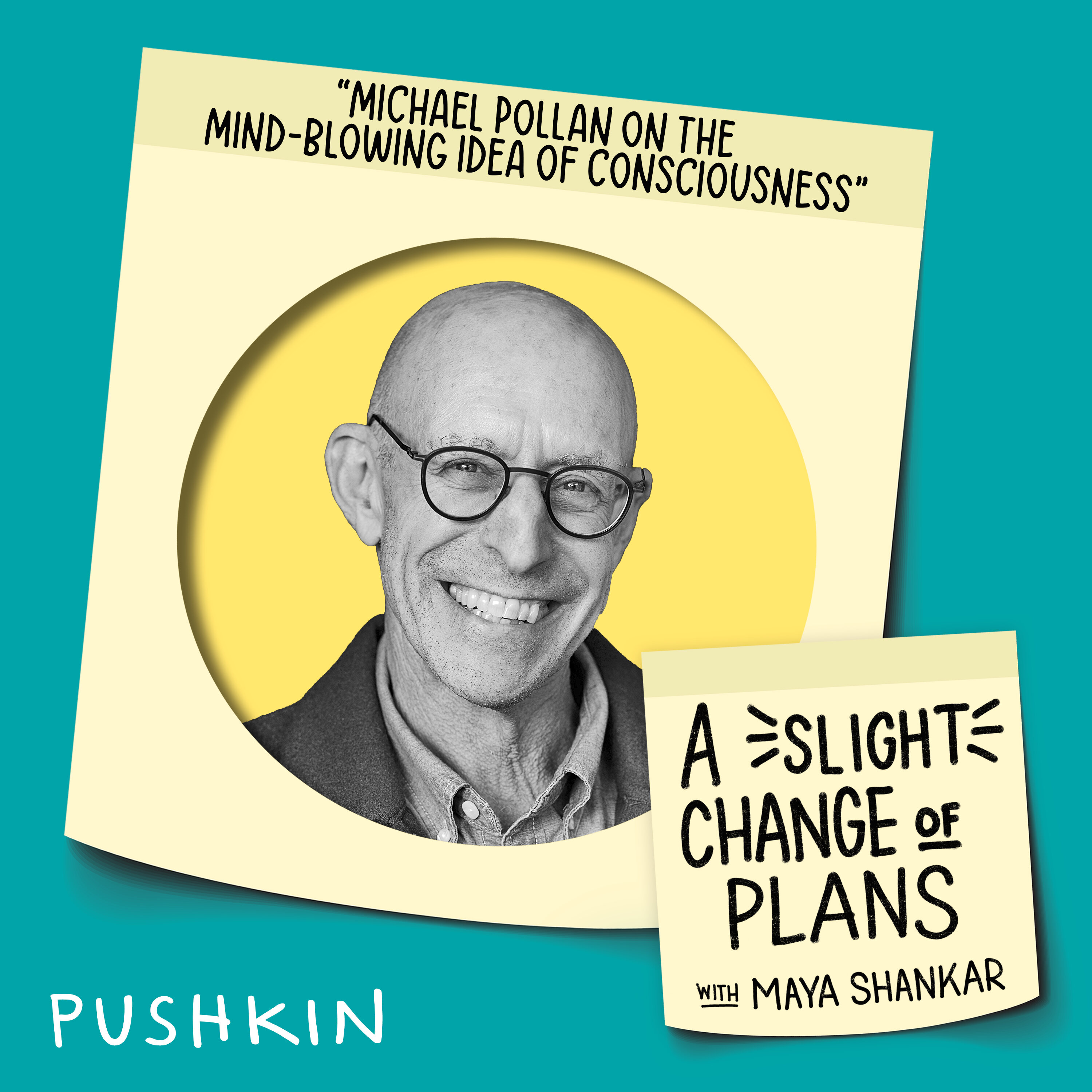
本集简介
双语字幕
仅展示文本字幕,不包含中文音频;想边听边看,请使用 Bayt 播客 App。
这是iHeart播客。
This is an iHeart podcast.
保证真人制作。
Guaranteed Human.
普希金。
Pushkin.
回过头来看,我竟然觉得自己有资格写一本关于意识的书,这简直疯狂至极。
In retrospect, it seems absolutely crazy that I thought I had any qualification to write a book about consciousness.
这是一个非常难懂的话题。
It's a really difficult topic.
几千年来,人们一直在苦苦思索这个问题,但我心想,嗯,我是个充满好奇心的人,恰好拥有意识,而且我挺擅长解释事物的。
People have been cracking their head on it for thousands of years, but I figured, well, you know, I'm a curious human who happens to be conscious, and I'm pretty good at explaining things.
于是我毅然跳了进去。
So I went ahead and took the plunge.
这是著名作家迈克尔·波伦,他并没有给自己应得的赞誉。
That's renowned author Michael Pollan, not quite giving himself the credit he deserves.
迈克尔已经撰写了六本畅销书,彻底改变了我们对从食物到致幻剂等各方面的理解。
Michael's written half a dozen bestsellers that have reshaped our understanding of everything from food to psychedelics.
他最新的书名为《一个世界显现》。
His latest book is called A World Appears.
这本书探讨了意识这一复杂主题,他将意识简单地定义为主观体验。
It tackles the complex subject of consciousness, which he defines simply as subjective experience.
这是一个令人震撼的想法。
It is kind of a mind blowing idea.
哇。
Wow.
有一种东西在调节着我与现实的关系。
There's something mediating my relationship to reality.
那是什么?
What is it?
为什么它是这样的,而不是那样的?
And why is it that way and not this way?
在今天的节目中,我们将进行一场令人脑洞大开的人类意识探索。
On today's show, an brain tickling exploration of human consciousness.
我是玛雅·尚卡尔,一名研究人类行为的科学家,欢迎收听《计划的微小改变》,这是一档关于我们在面对重大变化时是谁、又将变成谁的节目。
I'm Maya Shankar, a scientist who studies human behavior, and this is A Slight Change of Plans, a show about who we are and who we become in the face of a big change.
当迈克尔和我上次在《计划的微小改变》中对话时,他刚写完一本关于迷幻剂科学及其如何改变我们思维的书。
When Michael and I last spoke on A Slight Change of Plans, he had just written a book about the science of psychedelics and how they can change our minds.
那是一场愉快且富有哲学深度的对话。
It was a delightful and philosophically rich conversation.
因此,当他邀请我主持一场庆祝他新书《世界显现》的现场活动时,我非常兴奋。
And so when he asked me to moderate a live event celebrating his new book, A World Appears, I was thrilled.
迈克尔,我想先分享一个小故事来开启今天的讨论。
Michael, I wanted to just share a quick story to kick this off.
那是2014年,我刚认识了一个叫吉米的家伙,对他一见倾心。
So back in 2014, I had just met this guy named Jimmy, and I had a pretty big crush on him.
我记得当时我们在华盛顿特区散步,正要去吃晚饭,我在脑子里盘算着菜单上的选择。
And I remember we were walking in DC, and we were on our way to dinner, and I was weighing the menu options in my head.
我当时想,我们吃意大利面、汤还是沙拉呢?
I was like, should we pasta or the soup or the salad?
我不知道,也许都来一点吧。
I don't know, maybe both.
突然间,吉米停下了脚步,看着我说:‘天啊,玛雅,意识是不是太棒了?’
And all of a sudden, Jimmy suddenly stops in his tracks, and he looks at me and he goes, man, Maya, isn't consciousness so great?
我当时想,这人怎么回事,但他好像特别热爱生活,所以我想,
I was like, I don't know what's up with this guy, but he seems to be a life lover and so What's
那接下来呢?
on the line?
也许只要我跟着他,生活就会永远美好。
Maybe if I hitch myself to his wagon, life's gonna be great forever.
总之,我们结婚了。
Anyway, we're married.
他现在就在前排。
He's in the front row.
一切都顺利解决了。
It all worked out.
不用说,能和你讨论《一个世界诞生》对我来说是一种莫大的荣幸,但今晚和你一起做这件事,吉米给了我好多加分。
Needless to say, it is such an honor for me to be in conversation with you about A World Appears, but I am getting so many brownie points from Jimmy to do this with you tonight.
谢谢这份婚姻的礼物。
So thank you for that marital gift.
上次我为我的播客《计划的小改变》采访你时,你刚刚写了一本关于致幻剂以及你个人使用致幻剂经历的书。
The last time I interviewed you for my podcast, A Slight Change of Plans, you had just written a book on psychedelics and your personal experience with psychedelics.
我知道,那正是你探索意识的重要灵感来源之一。
And I know that that was one of the big inspirations for you to explore consciousness.
你能跟我讲讲那段经历吗?
Can you tell me about that experience?
是的。
Yeah.
有趣的是,一本书往往像是下一本书的发酵种,我经常在看一本书时,会留意在写作过程中是否有什么萌芽或种子需要继续生长。
So there's a funny way in which one book kind of has the sourdough starter, you carry through to the next one, And I I very often will look at a book and see whether it or along the way of writing it that there's some germ that needs to be or seed that needs to grow.
在迷幻剂方面,写完这本书后,有两件事一直萦绕在我心头。
And with psychedelics, there were two things that happened that stuck with me after I'd finished the book.
其中一件事是我在花园里服用裸盖菇素时的经历,我强烈地感受到,我花园里的植物是有意识的。
And one was this experience I had in my garden on psilocybin, and getting the distinct impression, overwhelming impression that the plants in my garden were conscious.
我知道。
I know.
我当时在幻觉中。
It was I was tripping.
它们仿佛在回望我,而且非常仁慈。
And they were kind of like returning my gaze, and they they were very benevolent.
它们似乎很喜欢我。
They they seemed to like me.
我当然是它们的园丁。
I was their gardener, of course.
当你从这样的体验中走出来时,你会想:在迷幻剂作用下获得的洞见,其真实价值究竟有多大?
And, you know, you come out of an experience like that, it's like, well, what's the truth value of an insight you have on psychedelics?
这真的值得怀疑。
It's really questionable.
所以那是一个数据点。
So that was one data point.
另一个数据点则更广泛地涉及意识。
And the other data point was more generally about consciousness.
迷幻剂具有——当然我不是第一个经历这种事的人——它们有一种方式,正如我在书中所写的,模糊了我们感知现实的挡风玻璃,而大多数时候,那块挡风玻璃是完全透明的。
And that psychedelics have and I'm not the first person this has happened to by any means, but they have a way of kind of, as I put in the book, smudging the windshield through which we experience reality, and most of the time that windshield is like perfectly transparent.
但迷幻剂和冥想却能让人注意到这块玻璃,你突然会想:哇,原来有什么东西在中介着我与现实的关系。
But psychedelics and meditation, has a way of calling attention to the the pane of glass, and you're suddenly like, wow there's something mediating my relationship to reality.
那是什么?
What is it?
为什么它是这样而不是那样?
And why is it that way and not this way?
是的。
Yeah.
所以这两个想法一直萦绕在我心头,后来我意识到,是的,我确实应该去深入研究一下。
So these two thoughts just kind of stuck with me for a while, and I realized well, yeah, I should I should look into that.
回想起来,我竟然觉得自己有资格写一本关于意识的书,这简直疯狂至极。
In retrospect, it seems absolutely crazy that I thought I had any qualification to write a book about consciousness.
这是一个非常困难的话题。
It's a really difficult topic.
几千年来,人们一直在为这个问题绞尽脑汁。
People have been cracking their head on it for thousands of years.
但我心想,好吧,我是个充满好奇心的人,恰好拥有意识,而且我挺擅长解释事物的。
But I figured, well, you know, I'm a curious human who happens to be conscious, and and I'm pretty good at explaining things.
于是我毅然决定投身其中。
So I went ahead and took the plunge.
我被‘挡风玻璃上的污渍’这个隐喻深深打动了,尤其是意识到原来真的存在一块挡风玻璃。
I I I was so moved by the metaphor of the smudge on the windshield and the recognition that there is a windshield at all.
对吧?
Right?
在我们和对现实的感知之间,存在某种中介。
That there's some mediator between us and our our perception of reality.
我仍然记得,我想我有过两个类似的经历。
And I still remember, I think I had two kind of similar moments.
第一个是在我本科攻读认知科学时,我第一次了解到我们的眼睛有一个盲点,所有神经在这里汇聚成一小束。
The first is when I was in undergrad studying cognitive science and I first learned that there's a blind spot on our eyes where all the nerves kind of there's like a little bundling.
对吧?
Right?
对。
Right.
而我们只是在不知不觉中填补空白。
And we just fill in Fill in.
是的。
Yeah.
我们时时刻刻都在毫不费力地填补这个盲点。
That blind spot effortlessly all the time.
我现在在看。
I'm looking now.
当我在这里看的时候,我并没有看到一个小黑点。
There's no I don't see a little black spot when I'm looking here.
我心想,天啊。
I'm like, oh my god.
我正试图欺骗我的大脑。
I'm trying to trick my brain.
无论我往哪里看,无论我看得多快,它都能自己补上。
It figures it out no matter where I look, however quickly I look.
这真的非同寻常。
It's truly extraordinary.
另一个时刻是在我做常规眼科检查时,医生说:‘哇,你看到的东西有点偏棕黄色。’
And another moment was when I just had a regular eye exam, and the doctor said, oh wow, you kind of see things in sepia.
我当时想:‘哇,这简直像Instagram滤镜一样。’
And I was like, woah, I'm gonna o g Instagram filter.
好的。
Okay.
但我根本不知道还有这种事。
But I had no idea that was a thing.
他说是的,通常我们会在老年人身上看到这种情况,但你似乎是天生就带着这种棕褐色滤镜。
He's like, yeah, typically we see this in older populations, but it seems like you were just born with this sepia lens.
那又是另一个顿悟的时刻。
And that was another recognition.
哇。
Wow.
事情本不必如此。
It didn't have to be this way.
没错。
No.
我所看到的世界,并不一定就是外界的真实反映。
The way that I see it is not a veridical representation necessarily of the world around me.
对吧?
Right?
而且我确实有一种令人敬畏的感觉
And I and I so sort of had that awe inspiring
这确实是一个令人震撼的想法。
It is kind of a mind blowing idea.
我的意思是,我们所感知的在很大程度上是一种预测,而不是对世界的直接记录或接收,大脑在进行猜测,然后利用感官进行误差修正。
I mean the extent to which what we perceive is actually a prediction, not a literal transcription or taking in of the world, and that the brain is guessing and then using senses to error correct essentially.
是的。
Yeah.
我们并不是每次都从所有感官中完全重新构建一幅现实的图像。
It's not like we're creating a whole new picture of reality from all our senses all the time.
我想先确立一些基本概念,因为当我们听到“意识”这个词时,会想到很多东西。
I I wanna start by establishing some of the basics because lots of things come to mind when we hear the word consciousness.
对吧?
Right?
你在写《一个世界出现》时,使用的操作性定义是什么?
What is the working definition that you had when writing A World Appears?
是的。
Yeah.
这很有趣。
It's funny.
这是一个普遍的现象,人们仍然难以定义它,我认为这是因为意识包含不同的层次。
It's a universal phenomenon that people still struggle to define, and I think it's because there are different layers of consciousness as part of it.
但最简单的层面,就是主观体验。
But at the most simple level, it's subjective experience.
你对世界有主观体验,而你的电器没有这种体验。
You have subjective experience of the world and your appliances don't have that.
它们没有任何体验。
They don't have any experience.
所以这是一种定义。
So that's one definition.
另一个是哲学家托马斯·内格尔,他写了一篇著名的文章,叫《成为一只蝙蝠是什么感觉?》
Another is Thomas Nagel, the philosopher, philosopher, wrote wrote a a famous essay called what is it like to be a bat?
蝙蝠和我们非常不同。
So bats are very different than we are.
它们没有视觉系统。
They don't have a visual system.
它们主要依靠声纳。
They have sonar, basically.
它们通过回声定位来感知世界。
They navigate the world through echolocation.
他说,如果成为一只蝙蝠有什么感觉,那么蝙蝠就是有意识的。
And he said if if it is like something to be a bat, then a bat is conscious.
我们可以借助想象力来推测——别无他法——用回声而非光的反射来感知周围世界会是什么样子。
And we can kind of guess using our imagination, and there's no other way to do it, what it would be like to go through life using echoes rather than reflections of light to see where we are.
所以,那有什么感觉吗?
So is it like something?
成为任何动物或植物,会有一种内在的感受吗?
Does it feel like something to be any animal or a plant?
如果真是这样,那它就是有意识的。
And and then if that's true, then it is conscious.
是的。
Yeah.
这一直是一个相当实用的表述方式,我不确定这是否算得上一个精确的定义,但许多研究这一领域的科学家都接受了这种框架。
And that's been a pretty handy, I don't know if it's a definition exactly, but kind of framing of the problem that has been accepted by a lot of the scientists who are working on it.
对。
Yeah.
不过在人类身上,意识还有其他层次。
There are other levels to consciousness though in humans.
我的意思是,我们不仅有觉知,还知道自己有觉知,这相当惊人。
I mean there is the fact that we are not just aware, but we're aware we're aware, and that's pretty wild.
我们拥有所谓的元意识。
We have you know meta consciousness.
这时候事情就变得有点复杂了。
That's when it gets a little complicated.
我们脑子里会有声音,你知道,你并不需要有意识才能有声音,但这就是我们的方式。
And we have voices in our head which, know, you don't need to be conscious, but that's the way we do it.
是的。
Yeah.
我真想花点时间来惊叹于我们确实拥有意识这一事实。
I I would love to take a moment to just marvel at the fact that we do have consciousness.
因为这是我们许多人习以为常的事情。
Because it is something that many of us take for granted.
我觉得我第一次明确思考意识问题,是在我上一门叫‘认知科学导论’的课时。
I feel like the first time I overtly thought about consciousness was when I was literally just in a class called intro to cognitive science.
那时我还是个大学生。
And that was when I was a college student.
我之前一生都把这件了不起的事视为理所当然。
I kind of gone the whole rest of my life taking this incredible thing for granted.
你知道,很容易想象出一个反事实的世界,在这个世界里,我们人类从事着所有我们目前的行为,拥有我们所有的智慧,但却缺乏这种内在体验。
And you know, there's a counterfactual world that's easy to conjure up in which we humans engaged in all the behaviors that we engage in, have all the intelligence that we have, and yet we do lack this inner experience.
对吧?
Right?
是的。
Yeah.
换句话说,灯并没有亮起来。
The lights aren't on, so to speak.
僵尸思想实验。
The zombie thought experiment.
没错。
Exactly.
哲学僵尸。
The philosophical zombie.
我的意思是,意识的一个有趣现象是,你大脑所做的大部分事情,你其实并没有意识到。
I mean, I think it's one of the interesting phenomena of consciousness that most of what your brain does, you're not aware of.
对吧?
Right?
你的大脑在全天候地调节你的身体,比如心率、血压,还有所有这些事情,同时处理来自环境的大量信息,而且这一切都是自动进行的。
Your brain is regulating your body twenty four seven, heart rate, blood pressure, all this kind of stuff, plus processing lots of information from the environment, and it's all automatic.
那么问题来了,为什么其中任何一部分不是自动的呢?
So the question is, why is any of it not automatic?
为什么我们不把所有事情都自动化呢?
Why don't we automate everything?
我认为,解释这一点最好的理论——这是一个进化论观点——是对于社会性生物而言,驾驭社会现实至关重要。
And the best theory, I think, explaining this, and it's an evolutionary theory, is that for social beings, navigating social reality is key.
而别人会做什么,是极其不可预测的。
And and what other people are gonna do is very unpredictable.
因此,你需要意识来设身处地地想象他人的内心世界。
So you need consciousness to be able to imagine your way into other people's heads.
你可以想象两种不同类型的人。
You could imagine two two different types of people.
一种人根本不认为你有意识或有主观视角,而另一种人则有能力在脑海中构建一个空间,去想象你内心正在发生什么,这显然是一种巨大的生存优势,因为你能因此更有可能与他人建立联系。
One, who doesn't really think that you have consciousness or you have a point of view, versus someone who has that ability to create a space in their head where they can imagine what's going on in your head, that that would be a a big survival advantage, That you would be more likely to be able to form bonds with other people because of that.
因此,意识为决策和想象创造了一个空间,我认为这对像我们这样的社会性物种具有真正的进化价值。
So consciousness creates a space for decision making, a space for imagination, and I think that that has a real evolutionary utility for a social species like us.
另一件令人惊讶的事情是,当物理物质——比如我们大脑中的神经元——以某种方式组织起来时,竟然会涌现出内在体验。
Another thing that's astonishing is just that when physical stuff, you know in this case the neurons in our brains get organized in a certain way, an inner experience emerges at all.
这就是难题所在。
That is the hard problem.
没错。
This is Yeah.
意识的难题。
The hard problem of consciousness.
那么你能定义一下这个难题吗?
So can you define the hard problem Yeah.
然后分享一下目前有哪些理论试图解释这个难题?
And then share what theories are floating around that have helped to explain the hard problem?
嗯,有200种理论。
Well, there are 200 theories.
如果你能一一列出它们,迈克尔。
If you could just name each of them, Michael.
那将会非常全面,请尽量详尽。
That would be really please be comprehensive.
是的。
Yeah.
硬问题本质上是:你如何从物质中产生意识?
Well, the hard problem is basically how do you get from matter to mind?
你如何从神经元的某种组织方式——尽管我们还不确定这一点——中产生意识?
How do you get from a certain organization of of neurons presumably, because we don't know that for a fact, and how does consciousness emerge from that?
这就是硬问题。
So that's the hard problem.
为什么这不能全部自动化?这也是硬问题的一部分。
Why isn't it all automated also as part of the the hard problem?
大卫·查尔莫斯是提出这一术语的哲学家。
And, David Chalmers is the philosopher who came up with that term for it.
举个例子,有一种理论叫全局神经工作空间理论,意思是大脑中存在许多模块,它们竞争整个大脑的注意力,当最显著的信息进入工作空间时,会被广播到全脑,从而成为意识,让整个大脑能够处理它。
You know, just to give you an example of a theory or two, there's something called, global neuronal workspace theory, and that's the idea that you have all these modules in your brain that are competing for the attention of the whole, and when the most salient information gets into the workspace, it's broadcast to the whole brain, and becomes conscious, so the whole brain can work on it and deal with it.
这很有趣。
So that's interesting.
我的意思是,它仍然没有回答:谁是接收这种广播的意识主体?
I mean it it still doesn't answer like, well who's the conscious subject that is receiving that broadcast?
是的。
Yeah.
而这就是每个人都会陷入困境、开始手舞足蹈的地方。
And that's where everybody falls down and starts waving their hands.
其中一部分问题是,我们的科学建立在第三人称、客观、可量化的基础之上,自伽利略以来,科学——至少是物理科学——一直是这样的。
And part of that is the problem that our science is based on third person, objective, quantifiable, you know, ever since Galileo, that's what science is, physical science anyway.
而我们讨论的却是一种主观现象。
And we're talking about a subjective phenomenon.
所以没有任何进展。
So there's no traction.
你该怎么切入呢?
How do you get how do you get in?
你怎么能进入呢?你知道,伽利略把这一切都留给了教会。
How do you and and you know, Galileo left all that to the church, know.
那就是灵魂、主观性和质性体验。
That was the soul, subjectivity, qualitative experience.
他知道他在做什么。
And he knew what he was doing.
他是在保护科学免受教会的打压,而教会确实曾试图摧毁科学。
He was protecting science from the church, which otherwise would have crushed it, and and did try to crush it.
你知道,把复杂的现象简化为物质和能量,这种做法对意识根本行不通。
You know, this this idea that you take a complex phenomenon and you reduce it to, you know, matter and energy, it just doesn't work for consciousness.
是的。
Yeah.
而且它可能永远无法解释意识。
And it may never work for consciousness.
我们可能需要一种不同的科学。
We may need a different kind of science.
所以这是一种基于大脑的理论,但也有一些非基于大脑的理论,它们看起来非常离奇,但我认为没有理由 dismissing 它们。
So that's a brain based theory, but there are others that are not brain based, and they strike us as really out there, but there's no reason to dismiss them, I don't think.
其中之一是泛心论,即意识并不需要演化,它一直存在。
One is panpsychism, which is that everything that consciousness didn't have to evolve.
它一直都在。
It was always here.
它存在于每一个粒子中。
It's it's In every particle.
这张桌子上的每一个粒子都有一点点微小的心灵, somehow 它们结合在一起,形成了像我们这样的更大意识。
Every particle in this table has some eensy weensy little bit of psyche, and somehow it gets combined to form larger consciousnesses like our own.
为了适应你的理论而改变物质的本质,这代价太高了,你知道的。
That's a high price to pay, know, to I mean, to change the nature of matter, you know, to accommodate your theory.
是的。
Yeah.
但我们以前也这么做过,你知道的。
But we've done that before, know.
两百年前,法拉第发现了电磁波的存在。
Two hundred years ago, Faraday discovered that there are electromagnetic waves.
它们现在充斥着整个房间,而我们当时并不知道。
They're all over this room right now, and we didn't know about that.
嗯。
Mhmm.
所以你是说
So So you're telling
你相信泛心论吗?
me you believe in panpsychism?
不,不是的。
Know No.
你不信。
You don't.
不。
No.
我不信。
I don't.
但我也不否认它。
But I don't not believe in it either.
好吧。
Okay.
我能
Can I
仅仅因为我们不知道
Just because we don't
吗?
know?
我不。
I don't.
我可以就其中一点提出异议吗?我知道这会让所有泛心论支持者不高兴,但是
Can I just quibble just quibble with one piece of it, which is and then I I understand I'll upset all the panpsychist supporters out there, but
这不是
It's not
很大的一部分吗?
a big part?
是的。
Yeah.
这可能是一个非常小的群体。
It's probably a very small constituency.
但我觉得,对于泛心论来说,是的,你消除了一个难题,但与此同时,你至少创造了两个新的难题。
But it feels like with panpsychism that, yes, you've eliminated one hard problem, but in doing so you've You created an at least two new ones.
是的。
Yeah.
比如,是什么赋予了构成这张桌子的原子等实体意识?
Like one, what imbued those entities like the atom that makes up this table with consciousness?
这种意识是从哪里来的?
Where did that come from?
谁是这个意识的发起者?
Who's the initiator of that?
那么,这些单独的意识单元又是如何融合的?
And then how do those individual conscious units merge?
这就是组合问题,也是泛心论的难题所在。
Well, the combination problem, which is the hard problem of panpsychism.
是的。
Yeah.
所以他们用另一个
So they answered it with another
难题来回答了它。
hard problem.
我知道。
I know.
但这有点像物理学,你知道,我们遇到这个问题,但如果我们假定存在多重宇宙,问题就解决了,所以它确实行得通,是的。
But it's sort of like physics, you know deciding that you know, well we have this problem, but if we stipulate a multiverse, problem So you know it it works Yeah.
在某种理论层面上。
On some theoretical level.
另一个观点是,意识就像电磁波一样环绕在我们周围,我们只是接收意识。
The other idea is that consciousness is a field all around us, like electromagnetic waves, and we channel consciousness.
所以我们应该把大脑看作是……
So that we should think of the brain.
大脑仍然密切相关,你知道,如果你损伤了大脑,就会损害意识;如果你改变大脑,就会改变意识。
The brain is still intimately involved, and, you know, if you damage the brain, you damage consciousness, and if you change the brain, you change consciousness.
但大脑只是一个接收器。
But the brain is a receiver.
这些是意识的传输理论,认为大脑就像收音机或电视机的接收器。
These are transmission theories of consciousness, and that the brain is like a radio or television receiver.
同样地,你不会在电视机里寻找天气预报员,那里根本找不到他。
And in the same way you wouldn't look for the weather lady or guy in the in your TV set, That's not where you're gonna find him.
意识也一样,不会在那里找到。
That's not where you're gonna find consciousness either.
所以意识是传入的。
So it's coming in.
奥尔德斯·赫胥黎相信这个理论。
Aldous Huxley believed this theory.
奥姆里·伯格森是一位相信这一理论的哲学家。
Omry Bergson was a philosopher who believed it.
那么,你如何证明这些理论呢?
And, you know, how do you prove these theories?
是的。
Yeah.
这些理论是无法被证明的。
They're they're not they're not provable.
有没有哪一个理论是你比较认可的?我记得你提过有超过200种理论。
Is there one that you find I know you said there's over 200.
有没有哪一个是你觉得特别有说服力的?
One that you find particularly compelling?
有没有什么新的、你刚了解到的新版本理论,让你觉得——我当时就觉得
Something new a new version you learned of that you were I like
最后都没办法站出来为某一种意识理论辩驳。
didn't finally like come out and argue one theory of consciousness.
不过我发现有一项研究方向最能帮助我理解意识。
But there was a line of research that I found the most helpful in understanding consciousness.
这项研究要追溯到一位名叫安东尼奥·达马西奥的神经学家身上。
And that goes back to a neurologist, Antonio Damasio.
很长一段时间里,我们都认为意识必然是大脑皮层的产物,大脑皮层就是大脑中所谓的、最晚演化出来的人类专属高级脑区。
For a long time we thought that consciousness had to be a product of the cortex, this, you know, new part of the most advanced human part of the brain.
当时大家都觉得,意识作为人类取得的这项了不起的成就,肯定就是从这个脑区产生的。
Surely, you know, consciousness, this great achievement of humans must originate there.
但他认为,意识始于感受,而非思想。
But he suggests it starts with feelings, not with thoughts.
饥饿、口渴、温暖、瘙痒,这些才是意识的初始表现。
Hunger and thirst and warmth and and itch, and that these are the inaugural acts of consciousness.
基本上,我们忘记了大脑的存在是为了支持身体、维持生命,而不是反过来。
Basically, you know, we forget that the brain exists to support the body, keep the body alive, not the other way around.
而感受是身体与大脑沟通的语言,告诉大脑稳态何时失衡。
And feelings are the language that the body uses to communicate with the brain, and tell it when homeostasis is not working.
对吧?
Right?
当你太热、太冷、饥饿,或者其他情况时。
When you're too hot, too cold, hungry, you know, whatever.
这些感受中,有些是自动处理的,但有些必须有意识地应对。
And these feelings, some of them are dealt with automatically, but some of them have to be dealt with consciously.
嗯。
Mhmm.
所以意识始于脑干,而不是大脑皮层,具体来说是上脑干。事实上,如果你的上脑干受损,就会失去意识;而如果你完全没有大脑皮层,仍有证据表明你具有意识。
So it begins in the brain stem, not in the cortex, the upper brain stem, and indeed if you have a lesion in the upper brain stem you lose consciousness, whereas if you lack a cortex completely, there's evidence that you are conscious.
这就是他们所依据的证据。
So that's kind of the evidence they're working with.
但仍然存在一个问题:谁在感受这些情绪?
There still is the question of who's doing the feeling.
仅仅说情绪本质上是被感受到的,并不能完全解答这个问题。
And and saying that feelings by definition are felt doesn't quite answer that problem.
但我发现这种推理非常有说服力,我认为我们需要更多地关注情绪作为意识起源的作用。
But I found that line of of reasoning really compelling, and I think that we need to pay more attention to feelings as it, originator of consciousness.
你提到有一些证据表明存在意识。
You mentioned there's some evidence to show that there is consciousness.
研究人员是如何评估其他实体的意识的呢?
How is it that researchers have found ways to evaluate consciousness in other entities?
毕竟我们永远无法完全知晓。
Given that we can never fully know.
那么,意识的替代指标是什么?
So what are like proxy metrics for consciousness.
在其他生物中。
In other creatures.
是的。
Yeah.
对。
Yeah.
或者像你描述的那样,在脑损伤患者身上。
Or in the person with the brain damage as you were describing.
哦,是的。
Oh, yeah.
有一种非常严重的脑损伤形式。
Well, there's a horrible form of brain damage.
某些孩子出生时就没有大脑皮层。
Certain kids are born without a cortex.
然而,他们似乎对各种刺激表现出适当的情绪反应。
And nevertheless they appear to have appropriate emotional reactions to things, to various stimuli.
动物也可以被切除大脑皮层,这听起来很可怕,但它们也表现出意识的迹象。
And animals can be decorticated, which sounds pretty awful, and that they too show evidence of consciousness.
不过,你得推断出意识的存在。
Again, though, you know, you have to impute consciousness.
我甚至得推断你也有意识。
You can't even I have to impute it to you.
我无法确定你是否具有意识。
I can't be sure you're conscious.
除了观察到你表现出有意识生物的行为,并且你是我的物种,除此之外,没有任何方法能证明一个人有意识,但没人
There's no way to prove someone is conscious except, oh, you've got the behaviors of a conscious being, and you're, you know, you're my species and you know, No one
以前有人对我说过这句话。
said that phrase to me before.
你是我的物种。
You're my species.
别往心里去。
Don't take this personally.
是的。
Yeah.
谈一谈怎么破坏情感亲密吧,老兄。
Talk about breaking emotional intimacy, man.
所以我有一个问题:创造一个有意识的实体需要哪些必要条件?
So one question I have is what the necessary ingredients are for creating a conscious entity.
而且,在整个这个领域里,始终都只是关于各种理论。
And again, in this whole space, it's always just about theories.
对吧?
Right?
我的意思是,你书里一开始就说,你踏上了一段探索之旅,结果发现旅程结束后,困惑反而比之前更多了。
I mean, one of the things you open the book by saying is like, you went on this quest and there's even more things to be confused about post the quest than before.
但人们是怎么思考这些必要条件的呢?
But how do people think about the necessary ingredients?
而且显然,现在在人工智能时代,这个问题尤其相关——科学家是否会认为人工智能具有意识。
And obviously, this is particularly pertinent right now in the era of AI than whether scientists ever deem AI to be conscious.
真的很难判断。
It's gonna be really hard to tell.
已经有一些明显没有意识的人工智能,却让人们相信它们是有意识的。
Already, you know, AIs that are clearly not conscious are convincing people they are conscious.
嗯。
Mhmm.
人们正在爱上聊天机器人。
People are falling in love with chatbots.
人们甚至被说服,认为自己解决了重要的数学和物理问题,而他们根本不是数学家或物理学家。
People are convinced they've solved important problems of math and physics, who aren't even mathematicians or physicists.
人们被说服,认为自己是神。
People are being convinced they're gods.
现在,人工智能精神病确实是一个真实存在的现象。
There there's AI psychosis is a real thing right now.
这真的非常可怕。
It's it's really frightening.
我不认为人工智能会有意识。
I don't think AIs can be conscious.
我的意思是,如果你愿意,我可以为你论证这一点,但关键是这无关紧要,因为人们会认为它们有意识。
I mean I can you know make that argument for you if you want, but the the point is it's not gonna matter because people are gonna think they're conscious.
通常的测试方法,比如图灵测试,用来判断一台计算机是否具有智能。
The usual tests so we had this Turing test, right, to determine if a if a computer is intelligent.
如果它能欺骗一个人——一个不知道自己在和计算机对话的聪明人类,那么它就被认为是智能的。
And if he could fool someone, an intelligent human who didn't know he was talking to a computer or she was talking to a computer, then it was intelligent.
但这种方法对意识无效,因为意识很容易被伪装。
But that doesn't work for consciousness, because consciousness is pretty easy to fake.
我们总是把人类的特质投射到一切事物上。
We anthropomorphize everything.
我认为,把事物拟人化只是人类的一种偏见,而拟人化其实是更安全的做法。
It's just a human bias I think to anthropomorphize thing and you're you're it's safer to anthropomorphize
Alexa。
Alexa.
对。
Right.
是的。
Yeah.
所以我认为唯一的测试方法——我是说,作为一个计算机知识非常有限的人——就是构建一个AI,完全不向它提供任何关于意识或情感的人类对话内容,也不让它阅读任何小说或诗歌,然后与它就意识问题进行对话。
And so I think the only test, and and I'm saying this as someone with very little computer sophistication, would be to build an AI from which you never included any of the com human conversation about consciousness or feelings, and you don't give it any novels to read, no poetry, and then have a conversation with it about consciousness.
是的。
Yeah.
我猜它不会表现得很好。
I'm That's guessing it won't do very well.
是的。
Yeah.
但我也不确定。
But I I don't know.
我希望有谁在谷歌工作的人能来做这个实验。
I hope someone who, you know, works for Google will undertake this.
这很有道理。
Mean, makes a lot of sense.
我觉得这是一种非常敏锐的直觉,至少能让我们获得某种信号。
I think it's a it's a brilliant instincts that that would be how we could at least get some sort of signal.
对吧?
Right?
从机器中获得一个有意义且可靠的信号。
At a meaningful reliable signal out of the machine.
是的。
Yeah.
对。
Yeah.
而且我觉得,如果意识真的依赖于感受,也就是依赖于身体,那确实如此。
And I you know, I think the feeling issue if it if it is true that consciousness depends on feelings, is to say on a body Yeah.
这对人工智能来说是个真正的问题。
Then that's a real problem for AIs.
是的。
Yeah.
它们没有身体。
They lack bodies.
如果你思考一下感觉是什么,它与拥有一个脆弱、会痛苦、可能还会死亡的身体密切相关。
If you think about what a feeling is, it's very much tied to having a body that is vulnerable, that can suffer, and probably that's mortal.
我不认为这对机器行得通。
And I don't see that working for machines.
我们该如何思考意识的组成部分?
How should we think about the constituent parts of consciousness?
它需要神经系统吗?
Does it require a nervous system?
人们过去认为,哦,智能。
People used to think, oh intelligence.
展开剩余字幕(还有 339 条)
这就足够了。
That's all that's needed.
如果你的东西足够聪明,意识就会自然出现。
If you if the thing becomes intelligent enough, consciousness will emerge.
但它们实际上是完全不同的概念,智能和意识。
But they're they're they're actually very different ideas, intelligence consciousness.
我的意思是,我觉得它们是正交的。
I mean, I think they're kind of orthogonal.
嗯。
Mhmm.
我不认为一个东西,我的意思是,我们都知道有些人有意识,但并不怎么聪明。
I don't think one I mean, we all know people that are conscious, but not that intelligent.
反过来,我不太确定。
And the other way around, I'm not so sure.
那么你的直觉是,意识需要某种形式的神经系统吗?
Do you is your instinct then that consciousness requires a nervous system of some kind?
你知道,植物没有神经系统也活得挺好。
Well, you know the plants are doing pretty well without a nervous system.
你知道,第一章讲的是科学对植物意识或感知能力的看法,我认为当谈到植物时,'感知能力'这个词更合适。
You know, first chapter is about what science has to say about plant consciousness or sentience, which is a much more appropriate word I think when when it comes to plants.
我学到了许多令人难以置信的研究成果。
And I learned all this incredible research.
有一群特立独行的植物学家。
There's a group of kind of renegade botanists.
他们自称植物神经生物学家。
They call themselves plant neurobiologists.
尽管实际上并没有神经元参与其中。
Even though there are no neurons involved.
他们故意用这个名字来调侃更传统的植物学家,比如他们会做实验,看看能不能教会植物,以及植物能记住一个教训多久——结果确实可以教会植物,它们能记住大约二十八天,这比果蝇能记住任何东西的时间多出二十七天。
They're they're trolling more conventional botanists by calling themselves that, and they do things like, you know, see if they can teach a plant, and see how long it'll remember a lesson, and yes you can teach a plant and it will remember for like twenty eight days, which is twenty seven more than a fruit fly can remember anything.
还有别的他们能做的吗?
Oh what else can they do?
我的意思是,有一种藤蔓会根据它所寄生的植物改变叶子的形状。
I mean there's a vine that changes its leaf shape depending on what plant it's colonizing.
是的。
Yeah.
它是怎么看到叶子的形状并模仿的呢?
How does it see the leaf shape to imitate it?
它是怎么做到的?
How does it do that?
我们其实并不清楚。
We don't really know.
如果播放毛毛虫啃食叶片的录音,它们会做出反应,向自己的叶片释放毒素,并警告其他植物。
They can hear, if you play a recording of of caterpillars munching on leaves, they will react and send toxins to their to their own leaves and alert other plants.
如果把它们放在同一个花盆里竞争,它们能识别出自己和近亲。
They recognize self and kin if you put them in a pot to compete.
如果和有亲缘关系的植物在一起,它们就不会竞争。
If they're with a related plant, they won't compete.
它们会分享。
They'll share.
不可思议。
Incredible.
但 otherwise 它们会竞争。
But they'll compete otherwise.
所以它们有一定的自我和他者意识。
So they have some sense of self another.
无论如何,能让人失去知觉的麻醉剂,对植物也有效。
Anyway, and the same anesthetics that will put out a human put out plants.
你现在可能会想,它们不是本来就处于一种无意识状态吗?
Now you might think, they're already kind of out, aren't they?
但不是的,它们并不是。
But no, they're not.
它们是有行为的。
They have behaviors.
它们只是非常缓慢。
They're just very slow.
是的。
Yeah.
但它们有两种存在状态。
But they have two modes of being.
这真的很奇怪。
That's really curious.
总之,我深入研究后最终得出结论:我不应该用‘有意识’这个词来形容它们,因为它们没有内在体验。
Anyway, so I went deep and finally concluded that I wouldn't use the word conscious for them in that they don't have interiority.
它们脑子里没有声音。
They don't have a voice in their heads.
它们根本没有头。
They don't have heads.
但它们是有感知的,而感知是一种更基础的意识形式,更原始。
But but they're sentient, and sentient is kind of a more basic form of consciousness, more elemental.
这个词实际上意味着它们有感官,能够感受,并能识别环境中的好坏变化并做出适当反应。
Really just connotes they have senses, they they feel, and they can recognize good and bad changes in their environment and respond appropriately.
而这可能是生命的一种特性。
And that may be a property of life.
因此,我并不准备说,拥有意识就必须有神经系统。
So I'm not prepared to say you need a nervous system to have consciousness.
广告后,迈克尔对意识的探索转向了个人层面,而他对自己发现的内容感到非常惊讶。
After the break, Michael's exploration of consciousness takes a personal turn, and he's quite surprised by what he finds.
马上继续,敬请关注《计划微调》。
That's in a moment on A Slight Change of Plans.
随着这本书的深入,内容变得越来越个人化。
As the book advances, things get more personal.
对吧?
Right?
当你读到关于感受、思考和自我这些章节时,你最终会开始审视自己的意识。
So you get to the feeling and thinking and self chapters and you end up interrogating your own consciousness.
你心想,让我亲自做一些实验和观察吧。
You're like, let me do some first hand experimenting and observation here.
你做了一个有趣的小小实验,结果对发现感到非常惊讶。
And you you conduct this fun little experiment, in which you are quite surprised by the findings.
你愿意分享一下吗?
Do you mind sharing that?
是的。
Yeah.
这本书并不完全是关于科学的。
So this isn't a book all about science.
它一开始以科学为起点,但最终走向了不同的方向。
It's a book that kind of starts with science, but ends up somewhere different.
当我与这些研究意识的科学家交谈时,我意识到他们谈论的内容和我脑海中的想法并不完全一致。
And the, as I was talking to these scientists who work on consciousness, I realized what they were talking about and what was going on in my head were not quite the same thing.
这并不是因为我特别古怪,而是因为他们专注于视觉感知之类的内容,因为这是我们对大脑了解最多的部分。
And it's not because I'm so idiosyncratic, it's that they focused on things like visual perception because that's what we know the most about in the brain.
但当我想到意识时,我想的是思想。
But when I think of consciousness, think of thoughts.
我想的是内在性。
I think of interiority.
我想的是所有这些其他东西,而他们却不愿触碰这些。
I think of all these other things, and they don't they they don't want to go near that.
要弄清楚世界是如何呈现在我们的感知中的,已经够难了。
It's hard enough to figure out how a world appears to our, you know, perceptions.
于是我开始寻找研究思想的科学家,我遇到了一位名叫拉塞尔·赫尔伯特的人,他在拉斯维加斯大学任教。
So I went looking for scientists who were looking at thought, and I met this guy named Russell Hurlburt, who teaches at the University of Las Vegas.
他一生中五十年都在做同一个实验,那就是采样人们的内在体验。
And he has been doing one experiment for fifty years of his life, and that is sampling people's inner experience.
他用一种蜂鸣器设备来做这件事,五十年前还没有蜂鸣器。
And he does this with this, he has a beeper device that you carry around, and fifty years ago, there were no beepers.
那时候也没有个人电子设备。
There were no personal electronic devices.
他得自己设计制造这个设备:它有一个小耳机,你把主机放在口袋里,白天的随机时刻,你的耳朵里就会响起一声尖锐的蜂鸣提示音,你马上就能反应过来是怎么回事,接着掏出记事本,写下你当时正在想的内容。
He had to design and build it, and it has a little earpiece, and you keep the the thing in your pocket, and at random times of day, this sharp beep goes into your ear, and you and you know immediately what it is, and you take out a pad, and you write down what you were thinking.
之后你一天里大概会接收到五次蜂鸣提示,接着你会和他通过线上会议进行一次交流,过程中他会像询问情况一样和你梳理记录的内容。
And then you do about five beeps in a day, and then you have a session with him on Zoom where he kind of interrogates you.
举个例子,我当时也体验了这个蜂鸣设备,得提前说清楚,我记录下的那些内容都特别平淡,还经常和吃的有关。
So for example, I would have a beep, and I have to warn you my beeps were very banal and often involve food.
然后我就碰到了这么一次蜂鸣提示。
So I had this, beep.
我当时把一块三文鱼排调好味,正准备走到冰箱边把它放进去,然后(设备的)哔声就响了。
I was, I had seasoned a fillet of salmon, and I was walking to the fridge to put it in the fridge, and then beep.
而就在那一刻,我脑子里想的是:糟了,我忘放胡椒了。
And at that moment, was thinking, shit, I forgot the pepper.
那次的触发哔声时机看起来非常清晰合适。
And that seemed like a good clear beep.
但等我去找拉塞尔聊这件事的时候,他就问我:‘那你刚才真的在脑子里听到这句话了吗?’
And but when I went to talk to Russell about it, he would say, well, did you hear that?
你是听到‘胡椒’这个词,还是你说了‘胡椒’这个词?
Did you hear the word pepper, or did you say the word pepper?
所以当你脑海中出现那个声音时,你是在听它,还是在说它?
So when you have that voice in your head, are you listening to it, or are you speaking it?
这很难确定。
And that's very hard to determine.
我完全不知道。
I had no idea.
这真是一次艰难的实验。
And it was really a hard experiment.
其中一部分是你不断在想:如果现在 beep 响了怎么办?
Part of it is you're constantly wondering, what if the beep goes off now?
如果觉得太尴尬,你可以删除几次 beep 记录。
And you're allowed to erase a couple beeps if it's like too embarrassing.
总之,这是一次有趣的实验,但五十年后我问自己:你学到了什么?
Anyway, it was an interesting experiment, but fifty years later I said, what have you learned?
他是个有趣的人。
He's a funny guy.
他完全排斥理论。
He's like totally allergic to theory.
他从这项工作中得出了任何理论结论。
He's drawn no theoretical conclusions from this work.
他拥有五十年的数据,却根本不相信理论。
He's got fifty years of data, And he doesn't believe in theory.
他和我,你知道的,当我告诉他我正在写一本关于意识的书时,他只是说:‘祝你好运。’
He and, you know, when I told him I was writing a book on consciousness, he was like, good luck with that.
不过,我认为真正重要的发现是,我们大多数人认为自己的思想是以语言形式呈现的。
Anyway, the the finding though, which I think is really significant is that, you know, most of us assume our thoughts are in the form of language.
而他说,实际上这只是少数人的状况。
And he says that's actually a minority.
有很多人的思维是视觉化的。
There are lots of people who have their thoughts are visual.
他们用图像来看,用图像来思考。
They see in they think in images.
还有一些人用无符号的思想思考。
Then there are people who think in unsymbolized thought.
我们所有人都以为自己知道‘思想’是什么意思,比如‘你在想什么?’,但这个词对不同的人意味着完全不同的东西。
And the word thought, which we all think we know what it means, like what are you thinking, means very different things to different people.
是的。
Yeah.
这让我觉得挺有意思,因为我原本以为语言是核心,但他发现事实并非如此。
And that was kind of interesting to me, because I assume that you know language is at the heart of it, But he he has found that not to be the case.
我们当然会借助语言来向他人表达思想,但思想并不是从语言开始的。
We resort to language obviously to to tell our thoughts to other people, but they don't start there.
我们为此争论了很多,因为我根本无法相信思想可以被拆解。
And we had a lot of arguments because I just didn't believe you could disaggregate a thought.
以我的经验来看,同时有多种事情在发生,就像我一边在决定要不要买面包,一边在想奶酪拼盘的事。
That in my experience, that there were multiple things going on at the same time, that I was like that the cheese board deciding whether to buy a roll or not.
这是我另一个重要的想法。
This was another big thought I had.
但我也在看我前面那位女士格子裙,那条裙子真的不太显瘦。
And but I was also looking at the plaid skirt on the woman in front of me that was really unflattering.
我当时还闻到了奶酪板上奶酪和烘焙食品的香味,所有这些都在同时发生。
And I was I was smelling the cheeses in the cheese board and the smell of baked goods, and there were all these things going on.
而且我刚刚读了威廉·詹姆斯关于思维流的论文,他对我们的思维本质描述得极其细致。
And and I had also just read, William James' essay on the stream of thought, and he's just so granular about the nature of our thoughts.
他说,你知道,没有两个想法是完全相同的,即使是你自己的想法,每当你回到某个想法时,它都会被之前的想法所染色或影响。
And and he said, you know, no thought no two thoughts are alike, even your own thoughts, whenever you come back to a thought, it has been colored or or or or, tinted by, the thought that came before.
因此,赫尔伯特让我剖析并分离我的各种想法。
And so Hurlburt was making me dissect my thoughts and separate them.
所以在最后一次复盘时,我问他:‘你认为我属于哪种类型的思考者?’
So finally at our final debrief, I said, so what kind of thinker do you think I am?
他说:‘还有一种第四类人,他们的内心活动非常少。’
And he said, well, there's a fourth category, and these are people who have very little inner life.
所以,这就是全部了。
So there you have it.
是的。
Yeah.
我们这里有一个内在生活贫乏的心灵。
We have here an impoverished inner mind.
谈谈僵尸问题。
Talk about the zombie problem.
如果这种心灵就是产生这种现象的原因,我觉得我们情况不错,迈克尔。
If that's if that's the kind of mind that produces this, I think we're in good shape, Michael.
我们其他人没救了。
The rest of us are hopeless.
我假设,鉴于你的职业,你靠写作谋生,你大概也像刚才点头表示的那样,对吧?
I'm assuming that given your profession, with the fact that you write for a living, you assumed as I think you were nodding to this, right?
你大概默认自己是用某种语言思考的。
You kind of assumed that you thought in words of some kind.
对吧?
Right?
是的。
Yeah.
那你观察到了什么?
And then what did you observe?
所以,例如,当你说到‘糟了,我忘了胡椒’的时候。
So for example, when you said, oh shit, I forgot the pepper.
当你试图分析这个时,你有没有注意到脑海中浮现出胡椒的图像?
When you tried to dissect that, did you notice that an image had come to mind of the pepper?
是的。
Yeah.
那明显是一个‘胡椒’这个词。
It was clearly a word pepper.
它非常清晰,但我意识到我的很多想法都是詹姆斯所说的‘突出性想法’。
It was just so clear, but I realized a lot of my thoughts are what James called promontory thoughts.
想法处于即将成为词语的边缘,思想和词语之间存在一段间隙。
Thoughts on the verge of becoming words, and that there's a gap between the thought and the word.
我确实有这种体验。
And and I definitely have that.
意思是,是的。
Mean Yeah.
我会有一些想法,但必须再深入思考一下才能用语言表达出来。
That I'll have thought and I have to think a little more to put it into words.
所以我不认为我是用词语思考的。
So I don't I don't think I think in words.
我原本以为我是的,但我思考的是一种类似前词语的东西。
I would have assumed I did, but I think in something just a little bit Like pre
词语。
word.
是的。
Yeah.
前语言的。
Pre pre linguistic.
是的。
Yeah.
当你思考时,尤其是在你知道自己的想法会被他人评判的实验情境中,你有没有发现这种情况?
And do you find that or when you're thinking when you think about your thoughts in the context of an experiment in which you know you're gonna be judged
被一个巨大的观察者评判。
by huge observer of that.
为了你的想法。
For your thoughts.
毫无疑问。
Without question.
对。
Yes.
你注意到出现了哪些类型的现象?
Like the what kinds of artifacts did you notice emerge?
比如,你是不是稍微修饰了一下想法,或者那条裙子也没那么糟,对吧?
Like were you you maybe rounded out a thought a little bit or the skirt wasn't that bad, was it?
是的。
Yeah.
不。
No.
这确实会让你感到不自在。
It does make you self conscious.
是的。
Yeah.
冥想也会这样。
Meditation does that too.
你知道,冥想是我们可以观察自己思绪的一个地方,而这些思绪有多么奇怪,真是令人着迷。
Know, meditation is is one of these places we can go to watch our thoughts, and it's it's it's interesting how weird they are.
我们平时很少思考这一点,但我总是不禁好奇:那个想法到底是从哪儿冒出来的?
And we don't really think about that very often, but, I'm always struck by, like where did that thought come from?
我去上冥想课,老师经常会做一个练习,让你进入自己的内心,观察你的想法和感受,然后去找找是谁在思考这些想法。
I go to a meditation class and and the teacher will often do this exercise of like go into your mind and, you know, you've observed your thoughts and your feelings and now look for who's thinking them.
是的。
Yes.
天哪。
Oh my gosh.
是谁在思考你的想法?
Who's the thinker of your thoughts?
是谁在感受你的情绪?
Who's the feeler of your feelings?
但根本没有人存在。
And there's nobody home.
是的。
Yeah.
我的情况就是这样。
I mean in my case.
哦,是的。
Oh yeah.
我们已经
We already
知道该怎么替你说话了。
know know how to speak for you.
不。
No.
已经确认过了。
Already established that.
所以,我的意思是,大卫·休谟在18世纪40年代做过一个实验,你知道,他试图理解自我,于是通过内省来寻找它。
So I mean and David Yume did this experiment in the seventeen forties, you know he was trying to understand the self, and he went looking for it in in his own, you know, by introspecting.
他说我发现了大量的知觉、想法和感受,但并没有找到任何感知者,而自我是一个非常难以捉摸的概念,也是意识最有趣的创造或表现之一。
And he said I found plenty of perceptions and ideas and feelings, but I didn't find any perceiver or or and and the self is a very elusive concept, and it's one of the more interesting creations or manifestations of consciousness.
所以,是的。
And so yeah.
所以,我也研究了禅宗或佛教关于自我的观点,他们认为自我是一种幻觉。
So and I, you know, I looked at the Zen or Buddhist ideas of self too, and, you know, they believe self is an illusion.
是的。
Yeah.
我能理解他们的出发点。
And I get where they come out.
我的意思是,但我同时也认为,确实存在一种约定俗成的自我。
I mean but I also think that there is I mean, there's a conventional self.
对吧?
Right?
就是你我现在正在体验的这种自我,也许它没有实质基础,但依然具有约定俗成的实用性。
There's the self that you and I are experiencing right now, and there may be no basis for it, but it's nevertheless conventionally useful.
是的。
Yeah.
但这也非常有趣,我在这一章中探讨了这一点:意识可以在自我的消逝之后依然存在。
But it's also very interesting, and I explored this in this chapter on the self that consciousness can survive the the the disappearance of the self.
我对这一点感到惊讶。
I was surprised by that.
你是在说 psychedelic 体验的背景下吗?
You're talking about in the context of a psychedelic trick?
那是一个情境,但还有其他情境。
That's one context, but there are other context too.
意思是,有经验的冥想者能达到完全无我的状态,但依然保持意识。
Mean, experienced meditators get to a point of complete selflessness, yet they're still conscious.
我采访过一位名叫托马斯·梅辛格的哲学家,他收集了大约1500个案例,证明人们可以在没有自我意识的情况下依然存在意识,其中只有一部分与迷幻剂有关。
There's a philosopher I interviewed named Thomas Metzinger who's collected like a 1,500 case studies of people having consciousness without a self, only some of which are psychedelic.
嗯。
Mhmm.
他指出,我们每天早上醒来时都会经历这种体验——在意识到自己身在何处、是谁之前,会有一个大约五百毫秒的空白期。
And he points out that we all have this experience every morning when we wake up, and there is that five hundred millisecond gap between like until you realize where you are and who you are.
嗯。
Mhmm.
如果你在酒店房间里,那大约是七百五十毫秒。
And if you're in a hotel room, it's like seven hundred and fifty milli milliseconds.
不。
No.
因为这会让人非常迷失方向。
Because it's very disorienting.
是的。
Yeah.
所以我们每个人都经历过这种状态。
And so we we've we've all been there.
所以,自我是
So yeah, the self is
对。
Yeah.
是一个非常难以理解的概念。
Is a very challenging concept.
我觉得,质疑我是否拥有任何自由意志的最快方式之一,就是问自己:一个想法是从哪里来的?
I feel like one of the fastest ways to challenge my my personal belief that I have any free will at all is to ask myself where a thought came from.
那么,那个想法是谁产生的?
Then where where did that who did that who generated that thought?
接着,又是谁产生了另一个想法?
And then who generated that other thought?
天啊。
And oh my god.
好吧。
Okay.
是的。
Yeah.
我真的不控制这一切。
I I don't I'm not in control of any of it.
是的。
Yeah.
一切都只是在发生。
All just happening.
没有指挥者。
There's no conductor.
这非常有趣,你让你习以为常的事情变得陌生了。
It's it's very it's very interesting, and and you defamiliarize these things that you just take for granted.
所以你可能不想深入探索这条路径。
And so you may not wanna go down that whole path.
是的。
Yeah.
我想进入提问环节。
I wanna get to questions.
我还有一个最后的问题要问你。
I have one final one final question for you.
顺便说一下,如果我的呼叫器现在响了,它可能会问:‘这个活动结束后,Cheese Board还会开门吗?’
I feel like by the way, if my beeper went off right now, it would be, is Cheese Board going to be open after this events?
这样我就能拿一片了。
And so that I can grab a slice.
谢谢你这么说。
Thank you for that.
我们都有对食物的共同热爱,这太好了。
We do share the food obsession in common, so this is great.
好的。
Okay.
我想知道,写这本书是如何改变你的生活方式的?
I wanna know how has writing this book changed the way that you live your life?
这是个好问题。
That's a good question.
你知道,它确实让我更清楚地意识到自己的思维过程。
You know, it's definitely made me, more aware of my thought processes.
在日常生活中,我对前方的挡风玻璃(即生活中的障碍或视角)有了更明确的觉察。
I'm more definitely more aware of the windshield as I go through life.
我对自己的自我有了更多的洞察,而自我就是另一个词来形容‘我’,嗯。
I'm a little I have a little more perspective on my ego, which is another word for the self Mhmm.
我不再那么认同它了,我可以指着它说:好吧,这只是我头脑中的一个声音,你知道的,但我并不必去听它。
And don't feel quite as identified with it that I can like point at it and say, okay, that's one voice in my head, you know, but I don't have to listen to it.
那么,在这句话里,‘我’到底是谁呢?
And who is I in that in that sentence?
我……我不知道。
I I don't know.
你知道,我也是一名冥想者,我非常喜欢进入那种状态。
You know, I'm a meditator also, and I really like entering that space.
我认为,我们意识自我的这种内在性是非常珍贵的,我变得更加珍惜它,同时也为此感到担忧,因为我们正在以各种方式浪费它,只是用一堆垃圾填满我们的头脑。
And I think that the space of our conscious selves are this this interiority is very precious, and I've become more appreciative of it, and the and also worried about it, because of the fact that we're squandering it in various ways, and that we're just filling our minds with just, you know, bullshit.
我的意思是,不客气地说,我们有社交媒体,那些极其精巧的算法不断给我们带来微小的多巴胺刺激,是的,刷手机确实需要一点意识,但要求极低。
I mean, not to put too fine a a term on it, but you know, we have social media, you know, with very sophisticated algorithms that give us these little dopamine hits, and and yes, you have to be conscious to scroll on your phone, but minimally so.
而且现在,当我们与聊天机器人建立关系时,这些关系都是人工的,完全缺乏真实人际关系中那种富有创造性的摩擦。
And and now, you know, as we form relationships with chatbots, you know, these are synthetic relationships that offer none of the generative friction that comes from real relationships.
所以,我认为从中学到的是,这里有一种非常珍贵却正面临威胁的东西。
So I guess what I've come out of it with is a sense that there's something very precious here that's endangered.
我们需要重新夺回它,而且我们能够夺回它。
And and that we need to reclaim, and we can reclaim.
我的意思是,你可以做一些事情。
I mean, there are things you can do.
你可以放下手机,静坐并忍受无聊。
You can put down your phone, and sit with the boredom.
无聊本身也是富有创造力的。
Boredom is generative also.
如果你只是坐在那里,就会开始观察别人,思考他们,无意中听到他们的对话,思绪飘散——我从一位研究思维领域的有趣心理学家那里学到了很多关于‘自发思维’的知识,她研究的是走神、白日梦和直觉,或者说那些突如其来的灵感。
If you just sit there, you know, you start watching people, you start thinking about them, you overhear them, you mind wander, you know, there's this I learned a lot about what's called spontaneous thought from a really interesting psychologist in the thought section, who's and she studies mind wandering and, daydreaming and intuitions or, you know, bolts from the blue.
她说,相比十年前或二十年前,我们的自发思维更少了,因为我们用各种干扰填满了头脑。
And she says we we have less spontaneous thought in our lives than we did ten or twenty years ago, because we're filling our heads with these distractions.
当然,这些干扰背后都有企业推动,它们希望将我们的注意力——也就是我们的意识——变现。
And of course, these distractions have corporations behind them that want to monetize our attention, which is to say our consciousness.
所以我认为,我们需要把它重新夺回来。
So I think we, you know, we need to take it back.
这太美了。
That's beautiful.
有问题吗?
Questions?
是的。
Yeah.
如果我们有人想提问,这里有麦克风。
We have microphones if anybody wants to ask a question.
你愿意上来提问吗?这样每个人都能听到你。
You want to come out and ask it there so everybody can hear you?
我来抢先问一个。
I'll beat you to it.
太慢了。
Too slow.
迈克尔,谢谢你。
Michael, thank you.
很棒的书。
Fantastic book.
非常鼓舞人心。
Really inspiring.
有一件事,我认为是在关于艾莉森·戈普尼克的章节中,我们讨论了自我是如何通过社会方式形成的。
One thing, I think it was in the section about Alison Gopnik, we talked about how the self was formed socially.
也就是说,通过父母与孩子的互动,鼓励他们发展出自我。
You know, by the engagement of parents with children, encouraged them to kind of develop a self.
因此,我想了解一下这种元意识,或者说意识的社会建构,以及社会如何在宏观上建构意识,你能否假设存在一种社会层面的意识?
And so I'm curious about the kind of this, you know, the meta consciousness, I guess, the social construct of consciousness and how society is in large constructs consciousness and whether you can hypothesize a kind of societal consciousness as well?
是的。
Yeah.
这是个好问题。
It's a good question.
我的意思是,我们的意识如何被社会生活塑造,我认为这可能是至关重要的,而且在不同社会中可能会非常不同。
I mean, there are how the way our consciousness is shaped by our social life, I think is probably I mean, I think it's probably critical, and would be very different, and it's probably different in different societies.
我认为意识可能是一种生物现象,但和许多生物现象一样,它也具有社会甚至历史的成分。
I you know, I think consciousness is I mean, it probably is a biological phenomenon, but like a lot of biological phenomenon, it has a social or even historical component.
我猜测,五百年前生活的人们的意识与我们不同。
My guess is that people who lived five hundred years ago have a different consciousness than we do.
我认为我们是通过学习来获得意识的方式的。
And my guess is we learn ways of being conscious.
我认为伟大的艺术家,甚至伟大的哲学家,可能会改变我们对意识的理解。
I think great artists and possibly great philosophers may change our sense of what consciousness is.
所以我认为——我的意思是,我不知道如何证明这一点,但我认为它会受到通常的历史力量的影响。
So I I I think it prob I mean, I don't know how to prove this, but I think it is subject to to the usual historical forces.
这将会很棒。
And, it would be great.
我的意思是,我们从文学中已经能感受到这一点。
I mean, we have some sense of this from literature.
对吧?
Right?
我的意思是,创作《奥德赛》和《伊利亚特》的心灵是完全不同的心灵。
I mean, the mind that conceived of the Odyssey and the Iliad was a different mind.
所以,是的,我认为它确实具有社会成分。
So, yeah, I would say it does have a social component.
而且我们还能引用这些作品。
And the fact that we can reference that.
我喜欢你引用的文学名句,以及你带我们领略这些内容的方式。
I love the the quotes from literature and how you brought us through that as well.
文学对我来说非常重要。
Literature was very important to me.
我的意思是,有段时间我意识到,小说家和诗人都对意识了解得非常多。
I mean, you know, at a certain point, I realized, you know, novelists know an awful lot about consciousness, and poets too.
而且在某些方面,他们比科学家更早地研究这个问题,也研究得更久。
And and in some ways, they're ahead of the scientists in in and and they've been working on the problem longer than the scientists have too.
所以确实如此。
So yeah.
谢谢你。
Thank you.
感谢你提出的问题。
Thanks for your question.
你好。
Hello.
大家好。
Hello.
晚上好。
Good evening.
刚才那位年轻女士提到了自由意志,我记得曾有人问过鲍勃·霍普:你相信自由意志吗?
The young lady mentioned free will, and I think it was Bob Hope who was asked, do you believe in free will?
然后他耸耸肩说:我没得选。
And he shrugged his shoulders and said, I have no choice.
谢谢你的分享。
Thank you for that.
我记得读过
So I recall reading
哦,谢谢你叫我年轻。
Oh, and thanks for calling me young.
一切都是相对的。
Everything's relative.
我记得读过一本书,其中布莱兹·帕斯卡谈到了行为。
I recall reading a book where Blaise Pascal was talking about behavior.
如果在心脏和大脑之间有一场拔河比赛或斗争,那根本毫无悬念。
And if there's a tug of war, a battle between the heart and the brain, it's no contest.
心脏一定会占上风。
The the heart is gonna dominate.
我想知道,在这本书中,或者你之前的某些书中,你是否讨论过思想如何影响我们的行为?
And I'm wondering, in this book or in some of your previous books, do you talk about how thought affects our behaviors?
是的
Yeah.
我确实这么认为。
I do.
你知道,我认为我刚才描述的关于情感的研究中,其中一个重要的启示是情感在决策中的重要性。
And, you know, I think one of the lessons of this work that I was describing about feelings is about the importance of feelings to decision making.
这正是迪马西奥这本书的核心内容。
That's really what Di Macio's book was about.
他发现,那些依靠直觉做决定的人,比那些因情感能力受损而无法感受的人做出更好的决定。
And he found that people who felt their way through decisions made better decisions than people who say since their ability to feel was impaired.
在这个过程中,我们的身体会进行一种‘直觉检查’,当我们这样做时,就能做出更好的决定。
And that there's a process in which we pass our our body does kind of a gut check on when we're making decisions, and that when we do that, we make better decisions.
这正是《笛卡尔的错误》一书的核心论点。
And that so that's really the argument of Descartes' error.
这是一本非常有趣的书。
It's a really interesting book.
你知道,如果你想想厌恶这种情绪,它是一种非常有趣的情绪,因为它是一种非常具身化的情绪。我在书中提到过一个实验,实验中有对照组,有一组人吃了大量的姜。
And you know, the I mean, if you think of the emotion of disgust, which is a really interesting emotion because it's a really embodied emotion, there was an experiment I I allude to in the book where they had a control group, and one group got ginger and ate a bunch of ginger.
然后他们被展示了一个关于乱伦或其他类似行为的道德上令人反感的情境。
And then they were presented with a morally repellent scenario about incest or something like that.
而那些吃过姜的人评判性更低,因为他们的胃已经平静下来了。
And the people who had eaten ginger were less judgmental because their stomachs had settled.
所以,具身化的重要性比我们意识到的还要大,我认为神经科学中越来越重视身体,这是一个非常有趣的趋势。
So, embodiment is more important than I think we've realized, and I think it's kind of a very interesting trend in neuroscience to pay more attention to the body than we once did.
我们曾经流行过‘缸中之脑’这种说法,但这种观点其实站不住脚。
We used the brain in the vat was a kind of like meme, and that really doesn't work.
谢谢。
Thank you.
你好。
Hi.
非常感谢。
Thank you very much.
我能想到三个语言与意识无关的例子。
I can think of three examples of where language is not connected consciousness.
我曾经与许多发育严重迟缓的孩子一起工作,他们没有语言能力,但显然能够通过其他感官方式交流。
I used to work with very developmentally delayed children who were had no language, and they definitely were able to communicate in other sensory ways.
第二个例子是我曾经与大猩猩可可共事,这只大猩猩有着强烈的存在感和连接感,看着它的眼睛并与它交流——它似乎掌握了一些语言,这真是一个很好的例子。
The second one was I used to work with Coco the gorilla, and how the gorilla had such a presence and a connection, and looking in the gorilla's eyes and and talking with the gorilla who had apparently some language, that was a good example.
第三个我认为非常重要的例子是,我认识一些先天失聪、重度耳聋、从未习得语言、直到五岁、六岁甚至七岁才学会语言的人。
And the third one that I I feel is very important to recognize is that I know deaf people who had were born deaf, who were profoundly deaf, had no language, who didn't acquire language until they were five, six, seven years old.
没有词语,你该如何思考?
And how do you think without words?
你如何获得概念?从那种视角看世界,你的世界是什么样的?
How do you think how do you get concepts, and and what is your world like looking at the world from that.
所以我认为这表明了那些
So I would say that shows that Those
都是很好的例子。
are great examples.
是的。
Yeah.
对。
Yeah.
你并不需要拥有语言才能拥有思想。
It it it you don't need to have a a language in order to have a thought.
这就是我的感受。
That's how I feel.
如果你阅读小说,会发现有些小说家显然持有这种观点,普鲁斯特就是其中之一。
And and if you read fiction, there there are novelists who clearly and Proust believed that.
是的。
Yeah.
而乔伊斯则认为意识是由语言构成的。
Whereas Joyce thought consciousness was made out of words.
嗯,应该如此。
And Well, should.
是的。
Yeah.
这是个很好的例子。
That's a great example.
另一个例子是,最近有一个实验发现,黑猩猩具有想象力。研究人员能够和一只黑猩猩坐在一起,进行类似你和四岁孩子玩的想象茶会——你倒茶,但其实没有液体;你啜饮,但也没有液体。
Another one is, there was an experiment that recently happened where they found that chimps have imagination, and they were able to sit down with a chimp and have, you know, the kind of imaginary tea party you might have with a four year old where you're pouring and there's no liquid, and you're sipping and there's no liquid.
可可以前也做过类似的事情。当她养的小猫去世时,她会表达自己的悲伤,谈论自己有多难过,还会谈论过去和未来,而这些行为曾被认为只有人类才具备。
Coco used to do things like that too, and when she had a kitten who died, she would express her sorrow and how sad she was and talk about the past and the future, and that was something they thought only humans
是的。
Yeah.
只有人类能做到。
Could do.
我们正在失去这种独特性。
Well, we're losing our sense of exclusivity.
我认为,唯一剩下的可能是:我们是唯一会思考‘意识’是什么的物种。
I think the only thing that'll be left is we're the species that worries about what consciousness is.
感谢大家提出如此精彩的问题。
Thank you all for your wonderful questions.
非常感谢
Thank you so
您。
much.
谢谢。
Thank you.
也谢谢你,玛雅。
And thank you, Maya.
谢谢。
Thank you.
谢谢。
Thank you.
嘿,非常感谢你的聆听。
Hey, thanks so much for listening.
你可以在节目笔记中的链接找到更多关于《一个世界浮现》的信息。
You can find more information about A World Appears at the link in the show notes.
下周,我们将重新回顾我与迈克尔关于最初引发这一切的话题——致幻剂的对话。
Next week, we're revisiting my conversation with Michael on the topic that started it all, psychedelics.
致幻剂的一个作用是,它能有效地刮去我们覆盖在世界上的那层讽刺的外壳。
One of the things psychedelics does is it takes all that ironic crust we cover the world with, and it scrapes it off really effectively.
突然间,事物以初见时的深刻与美丽重新显现。
And suddenly things appear with the profundity and beauty of first sight.
我的意思是,对日常事物的敬畏,比如一首音乐、一朵花。
I mean, awe at the ordinary, a piece of music, a flower.
这是致幻体验中一个美好的方面。
And that's a wonderful aspect of psychedelic experience.
哦,还有一件事。
Oh, and one more thing.
非常感谢每一位阅读了我的书《改变的另一面》的人。
Thank you so much to each and every one of you who's read my book, The Other Side of Change.
我很喜欢听到这些故事如何影响了你们,或让你们对自身生活中的变化有了新的思考。
I've loved hearing about how the stories have affected you or made you think differently about the changes in your own life.
如果你们能在Goodreads上分享你们对这本书的阅读体验,我会非常感激。
I'd be so grateful if you could share your experience of the book on Goodreads.
这真的有助于让更多人了解到这本书。
It really helps spread the word.
我们已经在节目笔记中分享了链接。
We've shared the link in the episode notes.
非常感谢,我们下周再见。
Thanks so much, and I'll see you next week.
《微小改变》由我,玛雅·尚卡尔创作、撰写并担任执行制片人。
A slight change of plans is created, written, and executive produced by me, Maya Shankar.
《微小改变》团队包括我们的节目总监亚历山德拉·杰拉廷、编辑陈达菲、首席制片人梅根·卢宾、助理制片人索尼娅·格维特,以及音频工程师黄爱莎。
The Slight Change family includes our showrunner, Alexandra Geratin, our editor, Daphne Chen, our lead producer, Megan Lubin, our associate producer, Sonia Gerwitt, and our sound engineer, Erica Huang.
路易斯·格拉负责创作了我们动听的主题曲,金吉尔·史密斯协助编排了人声部分。
Luis Guerra wrote our delightful theme song, and Ginger Smith helped arrange the vocals.
《计划的微小改变》由Pushkin Industries制作,衷心感谢那里的每一位成员。
A slight change of plans is a production of Pushkin Industries, so big thanks to everyone there.
当然,特别感谢吉米·李。
And of course, a very special thanks to Jimmy Lee.
这是iHeart播客《保证人性化》。
This is an iHeart podcast, Guaranteed Human.
关于 Bayt 播客
Bayt 提供中文+原文双语音频和字幕,帮助你打破语言障碍,轻松听懂全球优质播客。