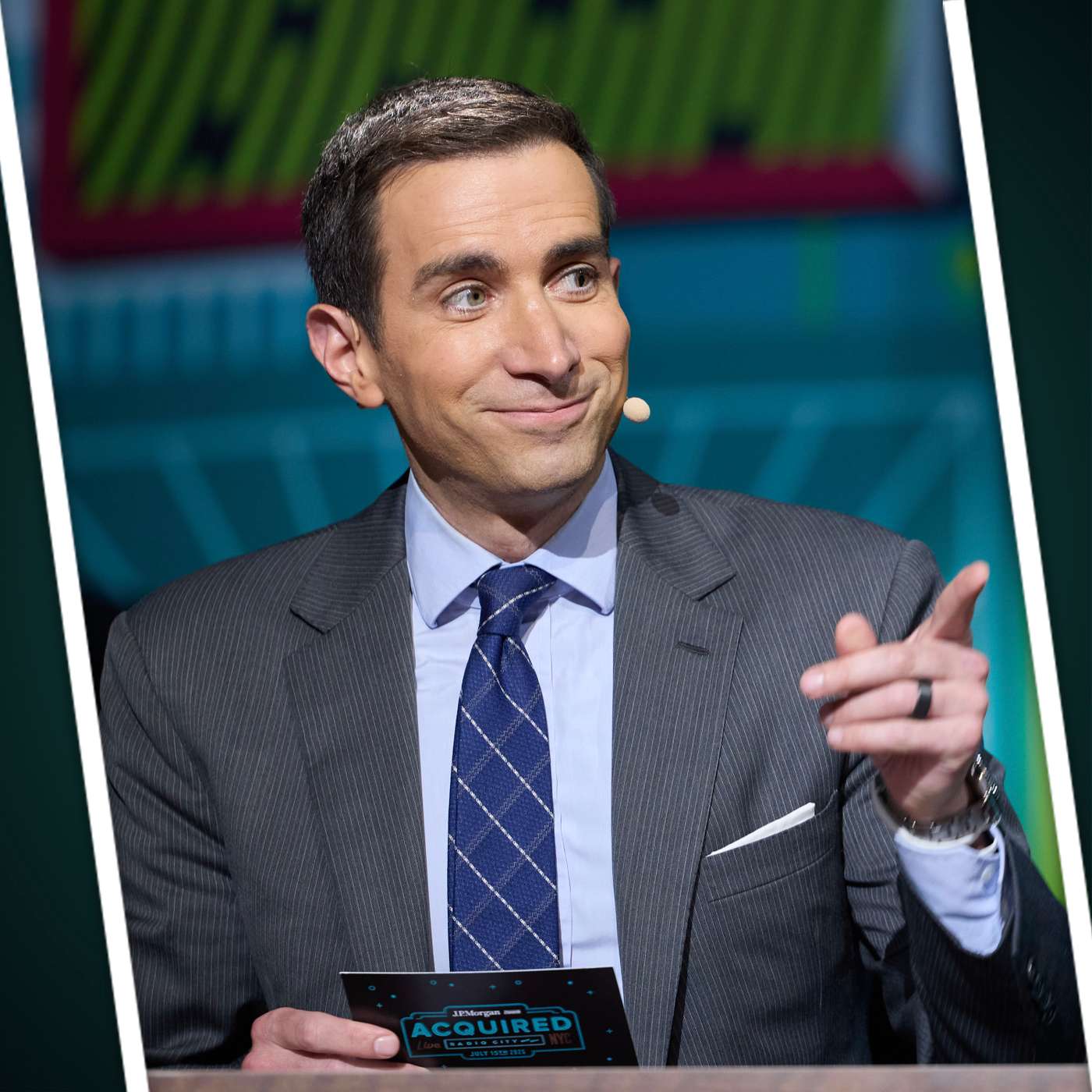
本集简介
双语字幕
仅展示文本字幕,不包含中文音频;想边听边看,请使用 Bayt 播客 App。
你好,Acquired的听众们。
Hello, Acquired listeners.
今天我们带来一场非常有趣的ACQ两期访谈,嘉宾是我们的好友安德鲁·罗斯·索尔金。
We are coming to you today with a very fun ACQ two interview with our buddy, Andrew Ross Sorkin.
没错。
Yep.
今年夏天,我们在《Radio City》节目中认识了安德鲁,当时他客串出演,给我们留下了愉快的印象。
We got to know Andrew over the summer for our Radio City show where he had a delightful cameo with us.
他最近出了一本新书,叫《1929》。
And he's got a new book, 1929.
他正在开展新书巡演,我们就问他:‘既然你在做巡演,要不要来ACQ两期做客?’
And he's doing a book tour, and we said, hey, do you wanna come on ACQ two, given you're doing the book tour?
我们不想只聊这本书,不如聊聊你到底是怎么做到同时做这么多事情的?
And rather than just talking about the book, why don't we talk about how the heck do you do all of this that you do?
我们光是做一期节目就已经累得不行了。
Like, we're dying just making one show.
你知道吗,你每天要做四件事。
You know, you do, like, four things every day.
比如《纽约时报》的Deal Book,还有每日通讯。
So there's the New York Times deal book, the daily newsletter.
还有每年十二月举办的Deal Book峰会。
There's the deal book summit, which happens every December.
当然,他还共同创作了剧集《亿万》。
There's, of course, that he cocreated the show Billions.
他每天早上东部时间6点到9点都在CNBC主持《Squawk Box》。
He is every single morning from 6AM to 9AM eastern on CNBC doing Squawk Box.
他写了《大到不能倒》和《1929》这两本书。
He's written Too Big to Fail and 1929.
两本重要著作。
Two major books.
没错。
Yeah.
这是一次非常有趣的对话。
This was a very fun conversation.
今天的对话有点探讨他是如何做到这一切的,但我们也意识到,安德鲁从未讲过这个关于这一切如何开始的故事。
So today's conversation is a little bit how does he do it all, but also we realize Andrew's never actually told this story before of how it all came to be.
他是如何在2001年创办一份每日电子邮件通讯的?
How did he start a business daily email newsletter in 2001?
我的意思是,这比Strathecari早了十多年,甚至比Substack时代早了十五年,却已经内嵌其中了。
I mean, this is over a decade before Strathecari, I don't know, fifteen years before the era of Substack, doing it inside.
如今,它已成为美国乃至全球最大的报纸之一。
Now the biggest newspaper in The US, I think, in the world.
如今每年十二月举办的DealBook峰会,在我看来,是全球最具标志性和权威性的商业访谈论坛。
And now every December doing DealBook Summit, which to me is kind of the flagship canonical business interview forum in the world.
我的意思是,这不仅仅是商业,还涵盖了科技和政治。
I mean, that's more than that, business, technology, politics.
所以听众们,大卫和我之所以对这次对话特别感兴趣,是因为我们有点自我陶醉,但我们认为安德鲁的故事非常引人入胜。
So listeners, this conversation was especially interested to David and I for navel gazing reasons, but we think Andrew's story is just fascinating.
这真正体现了媒体格局的转变,我对他是如何在如此广泛的一系列活动中保持高标准感到非常感兴趣。
It really illustrates the shift in the media landscape, and I am just so interested in how he maintains the quality bar that he does across such a wide, wide set of activities.
请尽情享受我们关于安德鲁·罗斯·索尔金惊人高效生产力的对话。
So please enjoy our conversation on the insane productivity of Andrew Ross Sorkin.
安德鲁,你今天穿的衣服和今天早上在《早间秀》上穿的不一样。
Andrew, you're wearing something different than you were wearing on Squawk Box this morning.
这是怎么做到的?
How does that work?
嗯。
Yeah.
你一天中的衣着变化是什么样的?
What's your wardrobe change throughout the day look like?
说实话,我就是为了你才这么做的。
So I did that for you, to be honest with you.
真的吗?
Really?
是的。
Yes.
通常,我一整天都穿着西装。
Usually, I'm in a suit basically all day.
我睡觉时都穿着西装打着领带。
I kinda sleep in a suit with a tie.
然后我想,我们正在录这个播客。
And then I thought to myself, we're doing this podcast.
可能会有视频。
There might be video.
这些人可能会穿毛衣,看起来很酷。
These guys are probably going to wear sweaters or look cool.
而我却会像个穿着西装的老头。
And I'm going look like some old man in a suit.
我还是穿件毛衣吧。
I'll put a sweater on.
所以这就是这里发生的情况。
So that's what's going on here.
好的。
Okay.
所以安德鲁,我一直把你当成《纽约时报》的记者。
So Andrew, I've always thought of you as a New York Times reporter.
我觉得你是DealBook的创始人。
I've thought of you as the founder of DealBook.
你还会做Squawk Box。
You also do squawk box.
你怎么看待这个,尤其是因为它在早上9点左右就结束了?
How do you think about that, especially since that's over by, what, 9AM?
它确实早上9点就结束了,但整整三个小时,常常感觉比那还要长。
It is over by 9AM, but it's a full three hours, which oftentimes feels like a lot longer than that.
但当时并不觉得。
Not in the moment.
我觉得我们此刻正处在一种状态中。
I think we have a ball in the moment.
但对我来说,这是我的一天的开始,也是我尝试做的一切事情。
But for me, it's the way I begin my day and all the things that I try to do.
在很多方面,我一直在做DealBook,常常在Squawk Box开播前就完成它,然后做Squawk Box,再回到DealBook,接着去做其他项目。
In many ways, I'm doing deal book, oftentimes finishing it up even before Squawk Box starts and then doing Squawk Box and then going back to deal book and going to other projects.
它们以各种有趣的方式相互影响。
And they all sort of inform each other in interesting ways.
大约十五年前,我想是2011年,我经常作为嘉宾参加Squawk Box。
About fifteen years ago, I want to say, in 2011, I used to be a guest on Squawk Box often.
他们给我打电话说:嘿,你愿意做这个节目的主持人吗?
And they called me up and they said, Hey, would you want to be the host of the show?
我当时想,这太疯狂了。
And I thought, That's crazy.
我根本不会看提词器。
I I can't read a teleprompter.
我以前从没做过这个。
I've never done this before.
这太疯狂了。
This is insane.
是其他主持人中有人退休了吗?
Was one of the other hosts retiring?
还是说,这个是怎么回事
Or, like, how did this
实际上,发生了一些事情。
A couple things had happened, actually.
我不知道你是否记得一位传奇记者马克·海恩斯,他是Squawk Box的原始主持人,后来又主持了Squawk on the Street节目,但已经去世了。
I don't know if you remember a legendary journalist named Mark Haines, who was the original host of Squawk Box and then was on a show called Squawk on the Street, passed away.
他们打算重新调整Squawk on the Street节目。
And they were going to reshape Squawk on the Street.
而Squawk Box的三位主持人之一卡尔·基尼坦利亚将调去那个节目。
And Carl Quintanilla, who was one of the three hosts of Squawk Box, was going to move to that show.
所以他们在找一个人来接他的位置。
So they were looking for somebody to put in his chair.
我想,我非常喜欢我在《纽约时报》的工作。
And I thought, I love my job at the Times.
我从18岁起就一直在那里。
I'd been there since I was 18 years old.
他们愿意让我早上做这个节目,同时允许我继续从事其他我喜爱的工作。
And they were willing to have me do the show in the morning and also allow me to continue doing a lot of the other work that I enjoy doing.
我可以两全其美,这太棒了。
I could have the best of both worlds, this would be great.
只要我能在这个时间点保持清醒。
And as long as I could be awake at that hour.
我一直都是早起的人。
Now I was always up early.
所以早起并不是困难的部分。
So the up early was not the hard part.
不过我认为我那时候还没化妆,也没开灯就起床了。
Though I don't think I was up early with makeup on and lights.
我总是早起,因为我要发布《DealBook》——我们的简报,通常在早上七点到八点之间发送。
I was always up early because I was publishing DealBook, our newsletter, which typically was going out between seven and 08:00 in the morning.
所以我一直都需要早起。
So I always did have to get up early.
但我经常穿着睡衣。
But I was often in my pajamas.
我并没有在采访别人。
I wasn't interviewing people.
如果你需要那个时间来发布《DealBook》,现在你就没有那个时间了。
And if you need that time to publish DealBook, now you don't have that time.
是,也不是。
Yes and no.
所以有几件事。
So a couple of things.
DealBook团队已经壮大了。
The DealBook team has grown.
这实际上是一个巨大的好处。
So that actually was a huge benefit.
而且我通常在Squawk Box节目开始前的一个小时左右,对DealBook简报做最后的调整。
And also I end up spending usually about an hour in the morning before Squawk Box starts sort of making last tweaks things to the DealBook newsletter.
这实际上是我了解所有动态的一种绝佳方式,正如电视行业常说的那样——在我为确保简报内容无误而做最后润色时,顺便学习一切信息。
And that's actually one of the great ways that I sort of read in, as they say in the TV business, to learn about everything that's going on, sort of as I'm doing my last licks at the newsletter to make sure everything's in order.
你几点起床?
What time are you getting up?
你的一天什么时候开始?
What time is your day starting?
对。
Right.
现在你做最后的调整时,时间是早上5点55分。
This is five to 6AM now that you're doing the last minute tweaks.
东部时间5点55分。
Five to 6AM Eastern.
所以我的一天通常在早上4点半左右开始。
So my day usually begins around 04:30 in the morning.
我通常就是在这个时候醒来,差不多吧。
That's usually when I wake up ish, I'd say.
我会躺在床上,手机藏在被子里,查看昨晚收到的邮件、短信,经常还有关于DealBook的Slack消息等等。
I lie in bed with my phone under the covers, like looking at email, text that came in overnight, Slacks oftentimes around DealBook and things like that.
然后我经常在写东西。
And then I'm oftentimes writing.
如果你看DealBook的开头,会写着:‘早上好,这里是安德鲁。’
If you read DealBook at the top, says, good morning, Andrew here.
我每天早上都会写这段话。
I'm writing that in the morning, every morning.
因为我想了解我们目前的情况,以便决定 newsletter 开头重点报道什么内容。
That's because I need to see where we are in terms of what we're going to really lean into for the top of the newsletter.
经常尝试修改主题行或其他类似内容,以吸引更多读者。
Oftentimes trying to change the subject line or other things like that as we try to get more readers.
是的。
Yeah.
每当我打开时,都能明显看出那是一个引子。
It's very clear whenever I open it up that that is a lead.
那是一个钩子。
That is a hook.
这是在向我推销:这份简报的其余内容很有趣。
This is a pitch to me of the rest of this newsletter is interesting.
原因如下。
Here's why.
继续阅读。
Read on.
这就是目标。
That's the goal.
所以如果这对你们有效,那就敲敲木头保平安。
So if that's working for you, that knock knock on the wood.
太好了。
That's great.
那么你是从CNBC的新闻台发送的吗?
So are you sending that from the news desk at CNBC?
不是。
No.
实际上,这个按钮是由我在欧洲的两位同事,迈克尔·迪勒·梅尔塞德按下,他已经在《DealBook》和我共事了大约二十年。
So the button is being pressed actually in Europe by two of my colleagues, Michael Dille Merced, who's actually been with me in DealBook for about twenty years now.
还有伯纳德·沃纳,他负责夜班。
And Bernard Warner, who work overnight.
他其实住在意大利。
He lives in Italy actually.
他们和一位文字编辑一起工作,进行一些最后的修改。
And they're working with a copy editor, doing some of the last minute changes.
然后,通常在内容发布前的早上,我们会稍微放松一下,互相交流一下。
And then usually we're doing a little bit of slacking back and forth in the morning before things go out.
他们是在一天晚些时候做的。
They're later in the day.
他们按下按钮的时候已经喝过咖啡了。
They've had their coffee when they're hitting the button.
他们喝过咖啡了。
They've their coffee.
他们一直在修改、添加,有时甚至完全重写和调整我们在纽约通宵弄出来的那一堆乱七八糟的东西。
They've been fixing, adding, sometimes completely rewriting and changing the mess that we've made you know, out of New York overnight.
你怎么看待这份简报的内容?
How do you think about the content of the newsletter?
这些文章是为了打造一份内容连贯的简报而创作的,还是你们只是想把昨天最有趣的商业新闻汇编成一份简报?
Are those stories created in service of creating a cohesive newsletter, or are you trying to create a newsletter out of the most interesting business stories of yesterday?
两者兼而有之。
Combination of both.
所以我认为,就这份简报的目的而言,我们思考的是如何让读者在早上9点的会议、早餐,或他们要去的任何地方之前,做好充分准备、充满洞察。
So I think for the purpose of the newsletter, we're thinking about how can we make the reader armed and dangerous before their 09:00 meeting or their breakfast in the morning or wherever they're headed off to.
DealBook在过去几十年里实际上已经发生了转变,我们即将迎来这项工作满二十五周年。
DealBook actually transformed itself over the last, and we're coming up on twenty five years of doing this.
刚开始时,它主要是为交易圈的人服务的。
In the beginning, it was really for the world of deal makers.
它的读者是并购银行家、律师、会计师,以及这个生态系统中的其他人。
It was M and A bankers and lawyers and accountants and people in that ecosystem.
后来,越来越多的首席执行官、董事会成员、战略发展部门,以及监管机构和政界人士也开始阅读它。
And then increasingly CEOs started to reread it and board members and strategic dev groups and then regulators and politicians started to read it.
因此,我认为我们在2008年金融危机之后,逐渐调整了重点,努力捕捉商业与政策的交汇点,把众多不同故事线之间的联系串联起来。
And so I think we shifted our focus, especially after the financial crisis of two thousand and eight, to really try to capture the intersection of business and policy and really connect the dots between lots of different storylines.
所以每天早上,我们都在寻找尽可能多的独家原创报道,同时也试图抓住新闻中的某个故事,如果可能的话,将其向前延伸、深入解读。
And so every morning I think we're trying to find as much scoopy original stories, but also be able to try to take a story that's in the news and spin it forward, if we can.
我们这里算是直接切入了故事的中间部分。
We're sort of starting in medias res here.
让我们回到最初。
Let's go back to the beginning.
让我们回到DealBook通讯的起点,那时还没有峰会。
Let's go back to the start of DealBook, the newsletter, before there was a summit.
我认为人们没有意识到你在电子邮件领域起步有多早。
I don't think people realize how early you were to the email game.
或者说是时代早了。
Or to the times.
我的意思是,你刚才在对话中提到,你18岁时就创办了它。
I mean, you made the quip earlier in our conversation about you started it, you know, when you were 18 at the time.
你真的是在18岁时就开始了,对吧,在《纽约时报》。
You literally started at age 18, right, at the New York Times.
这可不是开玩笑。
That's not a joke.
好吧。
Alright.
我们从那里开始吧。
Let's go there.
那是怎么发生的?
How'd that happen?
好的。
Okay.
所以背景是,我那时15岁。
So backstory is I'm 15 years old.
我要倒退三年。
I gotta go back three years.
我只想进入媒体行业。
All I wanted to do was be in media.
不一定是当记者。
Not necessarily as a journalist.
实际上,媒体的商业方面更吸引我。
Actually, the business side of media was more interesting to me.
我当时为校报销售广告,最终在纽约斯卡斯代尔的高中创办了自己的杂志,名为《体育版杂志》。
And I was selling ads for the school newspaper and then ultimately created my own magazine in my high school in Scarsdale, New York called The Sports Page Magazine.
这本杂志的目的不仅是体育新闻,更是为了销售广告并吸引特定受众——当时难以接触的高中生男生。
And the purpose of the magazine was as much about sports journalism as much as it was about selling ads and trying to capture a particular audience, in this case, high school aged boys, which were harder to get to than high school aged girls at the time.
这些杂志会在全国各地的高中中分发。
The magazines would be distributed across the country inside high schools.
广告商会付费。
Advertisers would pay.
孩子们会像为《体育画报》撰稿一样,撰写关于职业体育的文章。
Kids would write the articles about professional sports as if they were writing Sports Illustrated.
所以我们做到了。
So we did it.
这个项目进行大约一年后,《纽约时报》刊登了一篇关于这个小项目的报道。
And about a year into this project, New York Times wrote a little article about this little endeavor.
我母亲经常开车送我去纽约市的不同广告公司,因为我得去推销我的广告。
My mother used to drive me down to New York City to different advertising agencies because I'd have to go sell my ads.
而且它们很便宜。
And they were cheap.
我的意思是,相对而言很便宜,比如一页广告只要900到1200美元,等等。
I mean, cheap on a relative basis, like $900 $1,200 for a full page ad, blah, blah,
是啊,但对你这样一个高中生来说,这太棒了。
Yeah, but for you, as a high school student, this is amazing.
太惊人了。
Huge.
不管怎样,到我18岁左右的时候,这个项目成功了,也失败了。
Anyway, it succeeded and failed by the time I was about 18 years old.
它成功的地方在于,我们让所有这些高中都同意接受它。
It succeeded in that we had gotten all these high schools to agree to take it.
有些学校收到了,有些学校没有。
Some schools were getting it, some schools weren't.
说实话,我们犯了一大堆新手错误,而优秀的商业领袖是不会犯这些的。
And I'll be honest, we made a whole bunch of rookie errors that a great business leader would not have.
我们过去常常用联邦快递寄信,因为我们觉得这样会让我们的形象显得非常专业。
We used to send mail by Federal Express, for example, because we thought that that would make it look like we were really professional.
与此同时,你的邮费是
Meanwhile, your mail bill Which is is
一个巨大的错误。
a great mistake.
然后我们雇了一家印刷公司,实际上就是当时在印刷《连线》杂志的那家公司。
And then we had hired a printer, actually the same printing company that was printing Wired magazine at the time.
我们本应直接发货。
And we were supposed to drop ship.
我们正从黑白印刷转向全彩印刷。
We were moving from black and white to full color.
我们完全低估了最终的成本。
And we totally just mis estimated what the cost was going to ultimately be.
那件事就这样结束了。
And that was the end of that.
但那是我人生中最重要的一次教育经历。
But it was one of the great educations of my life.
因此,我认为这帮助我得以进入《纽约时报》的大门。
And as a result, it helped me, I think, get my little foot in the door of the New York Times.
当我18岁的时候,我经常阅读一位名叫斯图尔特·埃利奥特的人,他是《纽约时报》的广告专栏作家。
When I was 18 years old, I used to read a guy named Stuart Elliott, who was the advertising columnist at the New York Times.
他对我来说就像神一样。
He was like a god to me.
大多数人读报纸的头版或体育版。
Most people read the front page of the paper, the sports section.
我会翻到C6版,阅读斯图尔特写的内容。
I would go to page C6 to read what Stuart had to say.
这样我就能去参加广告公司的会议,并假装自己懂行。
So I could go down to these meetings with the advertising agencies and pretend like I knew what I was talking about.
而我唯一想做的就是为这位先生工作。
And all I wanted to do was work for this guy.
我一直在寻找各种方法进入《纽约时报》,接近他。
And I was trying to find all these different ways to get into The Times and get to him.
在高中时,我经常回家给他打电话,想争取一个机会。
And I used to go home during high school and call him on the telephone to try to get a gig.
最后,他请我吃了一顿午饭,并不知怎的说服了他让我留下来。
And then finally, he took me out to lunch and somehow convinced him to let me stay.
后来,有个叫格伦·克拉蒙的人负责商业版面,他也让我留了下来。
And then there was a guy named Glenn Cramon who was running the business section and he let me stay.
于是,我每天都带着访客通行证来报到。
And so I used to come every day with a visitor pass.
当时有工会,他们并不太喜欢这种做法。
There was a union at the time so they didn't really like this whole idea.
但实际上他们并不知道这件事。
So they didn't really know about it actually.
我只是每天来,然后站着。
I just would come every day and I'd stand.
我会复印并装订。
I'd Xerox and staple.
我根本没打算写两个词,更不用说一句话了。
I had no intention of putting two words together, let alone a sentence.
那是1995年,幸运的是,一位编辑根本不知道我多大年纪。
This is 1995 and happily, an editor who had no idea how old I was.
那时我穿着西装打领带。
I was wearing a suit with a tie back then.
她以为我是个正经人。
And she thought I was a real person.
她给我分配了一篇报道去写。
And she assigned me a story to write.
就这样,一切开始了。
And that's how it all started.
不可能。
No way.
所以你写第一篇《纽约时报》的文章,是源于一场身份误认。
Like a mistaken identity thing is how you wrote your first piece at the Times.
我想她以为我是个刚从大学毕业的年轻新闻职员。
I think she thought I was a young, maybe news clerk graduate from college.
她在1995年无意中听到我谈论一个叫互联网的东西。
She overheard me talking about this thing called the internet back in 1995.
于是她想,哦,他好像懂点门道。
And she thought, oh, he may he seems to know what's going on.
你还记得那篇文章吗?
Do you remember the piece?
当然记得。
Oh, absolutely.
那是篇最荒谬的文章,但我特别喜欢它。
It was the silliest piece, but it was I I love it so much.
你听了会笑的。
It was you're going to laugh.
那是一篇关于调制解调器发出的声音的文章。
It was a piece about the noise that modems make.
那时候我们还会写下‘调制解调器’这个词,逗号,一种通过电话线传输数据的设备。
Back when we used to where we actually used to write the word modem, comma, a device that transmits data over a phone line.
所有这些成年人
And all these adults
嗯,现在你又需要它了。
Well, now you need that again.
没人知道那是什么东西。
Nobody knows what it is.
根本没人知道了。
Nobody even knows.
我孩子都不知道调制解调器是什么。
My kids don't know what a modem is.
她想弄清楚那种声音究竟是什么,你知道的,就是那个声音。
And she wanted to understand what that noise was, know, that Yeah.
发出高音调的噪音。
Going high pitched noise.
我试图向她解释,那种噪音其实是它们在交配。
And I was trying to explain to her that the noise was they were mating.
两个调制解调器正在互相通信。
The two modems were talking to each other.
那是第一篇出炉的文章。
And that was the first article out of the gate.
所以你开始全职工作了吗?
So did you start full time?
不,抱歉。
No, sorry.
我去了康奈尔大学。
I went to Cornell.
那个夏天我本打算当一名营地辅导员。
I was going to be like a camp counselor that summer.
然后他们请我留下来度过整个夏天。
And then they asked me to stay for the rest of the summer.
然后我去了康奈尔大学。
Then I went off to Cornell.
在康奈尔大学期间,我继续为报纸撰写自由撰稿文章等。
And then at Cornell, I would continue writing for the paper, freelance stories and things.
到了大三那年,我去了伦敦经济学院度过了一段时间。
And then my junior year, I went off to London School Economics for part of the year.
结果在下午写了大量文章。
And ended up writing a lot the afternoons.
因为学校,你可以想象,在伦敦下午两点或三点就结束了,而那时是早上九点或十点。
Because school, as you might imagine, was over in London at two, three in the afternoon, which was nine or ten in the morning.
所以我经常几乎每天都在写文章。
So I would often be writing articles almost every day.
小文章。
Little articles.
但这对我来说是一段非常棒的教育经历。
But it was just a great sort of education for me.
我想从交易手册的开端说起。
I wanna go to the beginning of deal book.
我仍然对电子邮件这么早就出现感到惊讶。
I am still astonished at how early this was in email.
我的意思是,看看Substack是什么时候成立的?
I mean, look at when did Substack start?
2016年、2017年左右,
2016, '17,
大概就是那时候吧?
somewhere there?
2016到2017年。
1617.
对。
Yeah.
本·汤普森是2011年开始写作的吗?
Ben Thompson started writing 2011?
2013年。
2013.
我觉得是2013年。
I think it was 2013.
对。
Yeah.
我根本不知道DealBook比这些都早。
I had no idea that DealBook predated all of this.
那真是一个非凡的时期。
That was a really remarkable period.
所以,没错,是2001年。
So, yeah, it's 2001.
我去康奈尔大学之后,曾在伦敦生活过。
I had lived in London after I went to Cornell.
我一直在报道并购交易,试图挖掘他的独家新闻,尽可能保持竞争力。
I'd been covering mergers and acquisitions, trying to break his stories and be as competitive as we could be.
我回到了纽约。
I get back to New York.
我本该负责报道并购交易。
I'm supposed to cover M and A.
我想,好吧,这下可轻松了。
I'm thinking, Okay, this is going to be easy pickings.
我在伦敦时觉得很难,因为那是《纽约时报》。
I thought it was hard in London because it's The New York Times.
那可不是地方报纸。
It wasn't the local paper.
于是我开始结识银行家、律师以及那个灰色世界里的人。
And I started to meet bankers and lawyers and people in that whole netherworld.
他们对我说:‘索金,你看起来是个不错的小伙子,但我们家都订《纽约时报》。'
And they'd say, Sorkin, you seem like a nice kid, but we get the times at home.
我还会读头版,有时也会看体育版。
And I read the front page, sometimes the sports section.
然后我把报纸留给妻子。
And then I leave it with my wife.
我坐火车时会带上《华尔街日报》。
And I take the Wall Street Journal with me on the train.
那简直像一刀刺进心脏。
And that was like dagger to the heart.
那简直像一刀刺进心脏。
It was like dagger to the heart.
我当时想:天哪。
I was like, Oh my God.
我该怎么才能做好这份工作?
How am I going to make this work?
于是我心想:你知道吗?
And I thought, Well, you know what?
我花了大量时间在互联网上四处搜寻各种零散的信息。
I spent an inordinate amount of time racing around the internet trying to find little bits and nuggets of things.
而其他人也在做同样的事情。
And everybody else is doing the same thing.
如果我能每天把这些整理成一份报告,直接绕过纸质报纸,发送到他们的邮箱里——既然他们似乎声称把报纸留在了家里,也许这就是解决方案。
And if I could put that in a report every day and then effectively almost bypass the physical paper and go straight to their inbox, since they seem to be claiming that they're leaving the paper at home, maybe this is the answer.
华尔街过去确实有过简报,但那些都是通过传真发送的,对吧?
And there've been a history of newsletters on Wall Street, but they were faxes, right?
是的,那时候你可以收到各种分析师报告,大多数人都是通过传真发送分析师报告。
Yeah, mean you could get all sorts of, you know, analyst reports back then, people would fax the analyst reports for the most part.
很多信息都是通过传真传递的。
A lot of stuff was going by fax.
事实上,当我们刚开始做DealBook时,如果我没记错的话,有不少订户会让他们的助手——当时叫秘书——打电话来问:你们能传真一份DealBook给我们吗?
In fact, when we first started DealBook, if I remember correctly, there was a number of subscribers who had their assistants, back then they called them secretaries, call and say, could you fax us DealBook?
这简直成了家常便饭。
That was like a regular thing.
你能把DealBook传真给我们吗?
Could you please fax us DealBook?
我总是想着,但里面是有链接的。
And I remember always being like, well, but there are links in it.
如果你点击链接,就可以阅读完整的故事。
And if you click on the links, you can read the whole story.
但他们真的没明白这一点。
And they didn't really get that.
所以这就是最初的构想。
So that was the sort of original conceit.
在《纽约时报》内部,我要说是有支持的,但只是边缘性的,因为我觉得大多数人并不理解我们想做什么。
And inside the Times, I will say there was support but marginal because I think most people didn't understand what we were trying to do.
另一个构想是,我们经常会将你链接到我们的竞争对手。
And the other piece was part of the conceit was we were going to link you oftentimes to our competitors.
因此,我们会提供指向《华尔街日报》或《金融时报》的链接,而那时很多地方报纸实际上也在做非常出色的商业报道。
So we were going to provide links to the Wall Street Journal or the Financial Times or oftentimes back then there were a lot of local papers that were doing actually incredible business coverage.
当朗讯收购阿尔卡特,或者更准确地说,阿尔卡特收购朗讯时,我们会翻译《世界报》的部分内容,把你们引向《特伦顿时报》,提供他们对这笔交易的报道,或者如果达拉斯的石油行业有什么动态,我们就提供当地的相关信息。
When Lucent was buying Alcatel or rather say Alcatel was buying Lucent, we would translate parts of Le Monde, we would send you to the Trenton Times, give you what they were saying about a deal or what the local issue was in Dallas if there was something going on in the oil patch or something like that.
所以我们把人们引向了各个地方,包括SEC文件和其他类似的内容。
So we were linking people all over the place and into SEC filings and other things like that.
但我想,在新闻编辑室里,有一段时间对这个理念多少有些不安,就这么说吧。
But I think as a newsroom, there was a little bit of discomfort, let's just say, about that whole concept for a while.
广告销售和商业模式的问题也一定存在,对吧?
There must also been a ad sales and business model question too, right?
所以有几点要说明。
So a couple of things.
我当时正试图在互联网泡沫破灭后的废墟中推出这个项目。
I was really trying to launch this thing in the ashes of what was This was the .com bust had just happened.
并不是我们还处在繁荣期,而是泡沫已经破灭了。
It wasn't that we were still in the boom, the bust had happened.
当时人们对所有事情的经济前景都存在真正的担忧。
And there were real concerns just about the economics of everything.
《纽约时报》实际上曾计划为其互联网业务推出一种追踪股票。
The New York Times actually had what was going to be a tracking stock for its.com business.
而鉴于当时市场上的情况,这一计划似乎正在搁置。
And that looked like it was starting to go off the table, if you will, given what was happening in the marketplace.
无论如何,我认为他们的观点——如果我回去翻找一下的话——我当时其实正在寻找一些旧笔记。
In any event, their view, I think, if I got to go back and look, I was actually trying to find some of these old notes.
我认为他们认为,用当时的话说,总可用市场(TAM)是三万名免费用户,虽然我们当时从没用过‘TAM’这个词。
I think they thought that the TAM, to put it in a mod, I don't think we ever used the phrase TAM back then, was 30,000 subscribers for free.
那今天呢?如果你愿意分享的话,现在是多少?
And what what is it today, if you're willing to share?
我们已经超过一百万了。
We're we're over a million.
我们有一百多万名订阅用户。
We're over a million subscribers.
这听起来非常像我自己的经历。
This sounds very, like, been in my own journey.
你知道吗,在早期,我们总是觉得,不可能超过一万人。
Know, in the early days, we used to be like, oh, there's you know, there can't be more than 10,000.
只有十万到二十万人会
There's ten, twenty thousand people who
听这个节目。
will listen to this.
谁会听这个节目呢。
Who would listen to this.
嗯。
Yeah.
所以我有个想法,我们可以通过广告来完全覆盖成本。
So and I had this thought that we get the whole thing paid for by advertising.
我根本没打算向用户收费。
I I was not looking to charge for it.
真正的目标是让更多受众了解《纽约时报》的品牌,仅此而已。
Really, the whole goal was to get the brand of the New York Times out in front of this audience more than anything else.
我告诉他们,我们第一天就能赚钱。
And I told them that we were going to make money on day one.
我说,除非我们第一天就能赚钱,否则不会做这件事。
I said we would not do this unless we made money on day one.
我们确实做到了。
And we did.
我们的原始广告商是布鲁克斯兄弟。
Our original advertiser was Brooks Brothers.
兄弟。
Brothers.
这是我们第一个广告商。
It was our first advertiser.
太棒了。
Awesome.
布鲁克斯兄弟现在还在经营,但我认为只是勉强维持。
Brooks Brothers is still in business, but only by a hair, I think.
我想他们已经几次开张又关门了。
I I think they've gone in and out of business a couple of times.
你负责广告销售吗?
Were you doing the ad sales?
我没有负责广告销售。
I was not doing the ad sales.
当时《纽约时报》的好消息是,这种情况一直持续至今,但两者之间确实有着明确的界限。
So the good news about The New York Times at that point, and continues to be the case but there really is a church and state wall between the two.
如果我没记错的话,我们当时还有一个货币兑换公司,也是早期的广告商之一。
We also had a currency exchange if I remember was another advertiser that was one of the early ones.
但不管怎样,几个月内,这件事似乎突然火了起来。
But anyway, within a couple of months, it felt like the thing had sort of caught fire.
突然间,有人给我发邮件问:我该怎么订阅?
And all of a sudden there were people who were sending me emails saying, how do I subscribe?
我想订阅。
I'd like to subscribe.
正如我所说,我们会接到不同CEO的电话,问你们能不能传真给我的老板之类的。
We get, as I said, the phone calls from different CEOs saying, can you fax it to my boss or whatever it is.
于是我们就开始飞速发展了。
And we were off to the races.
有没有一种很酷的动态,就是你们报道的人会订阅,然后回复邮件?
Was there a cool dynamic where people who you were covering would subscribe and then would reply to the emails?
哦,当然有。
Oh, yeah.
我的意思是,直到今天,最酷的部分仍然是读者群体简直疯狂。
I mean, that was actually I mean, even to this day, that's the coolest part about it, which is just the audience is so crazy.
疯狂体现在他们每天收到的那些名字上,经常还会回复邮件。
Crazy in some of the names that they get it every day, that oftentimes they would reply.
我的意思是,人们过去常常给我们发邮件,现在依然如此。
I mean, people used to send us they still do.
我会收到一些PDF文件,内容是关于两天内即将发生的交易,或者提前发来的方案。
I get PDFs of decks about a deal that's gonna be coming within two days or ahead of time.
展开剩余字幕(还有 480 条)
有人在向我们泄露信息,或者有人回复说:我参与了这笔交易。
Someone's leaking us something or people are replying to this saying, I'm involved in this transaction.
顺便说一下,你这里没搞对。
And by the way, you didn't get this right.
我想告诉你实际上真正发生的事情。
I wanna tell you actually really happened.
多么棒的报道渠道啊,就靠这些回复。
What a great reporting channel, just the replies.
对,对。
Yeah, yeah.
不,这些回复非常关键,因为你能立即获得反馈。
No, the replies are huge since just that immediate feedback that you get.
这实际上是一个巨大的优势,我觉得。
And that actually was a huge sort of plus, I think.
有趣的是,现在我觉得这已经非常普遍和正常了。
It's funny, now I think that is so common and normal.
但那时候,二十五年前,并没有这样的反馈机制。
But back then, twenty five years ago, there was no feedback loop in that way.
这确实是最早的一批之一,因为当时还没有推特或X,或者其他任何这些社交媒体平台。
This really was one of the first because we didn't have Twitter or X or any of these other social media platforms didn't exist back then.
所以这可以说是当时一种原始的做法。
So this was sort of like an original way to do that.
好的。
Alright.
我得问一下,这里的深层玩法是什么?
I gotta ask, like, what is the meta game here?
当你收到回复说‘实际上,我参与了这笔交易’时,到底发生了什么?
What's going on when you do get a reply that said, actually, I'm involved in this deal.
你没理解对。
You're not getting this right.
这才是真正的事实。
Here's the real thing.
显然,分享这些信息给你背后是有动机的。
Obviously, there's an incentive at play to share that with you.
当你收到这些信息时,这种动机如何影响你吸收信息的方式?
How does that enter into how you decide to absorb information when you get it?
我的观点是,每个信息来源都有他们跟你交谈的原因。
So my view is that every source has some motivation for why they're talking to you.
而且很多时候,如果不是所有时候,都是出于自我利益。
And oftentimes, if not all the time, it is self motivated.
也就是说,他们相信这样做对自己有利。
Meaning like there is something that they believe benefits them.
我认为理解他们的动机很重要。
I think it's important to understand what their motivation is.
但最终,只要我能通过两三个甚至四个不同来源确认信息,或者能获得相关文件证明,我通常就不会太在意他们最终的动机,因为一些最好的消息来源往往有着极其恶劣且别有用心的动机。
But ultimately, as long as I can confirm the information, typically from two, three, four different sources, or I can get documentation of the issue, I try not to worry too much about what their ultimate incentives are because some of the best sources have completely terrible and ulterior motives.
我经历过无数次这样的情况:有人想陷害别人,甚至是你以为是朋友的人,办公室里明明挨着坐的两个人,其中一人却在告发另一人。
I can't tell you how many times I've had people who want to screw somebody else over, even people that you thought were their friends, people in offices that literally were next to each other and somebody's ratting out the other.
我曾经遇到过与董事会成员交谈的情况。
I had situations where I've talked to board members.
我记得有一个11人组成的董事会。
I remember 11 member board.
10个人想达成这笔交易。
10 people want to do a deal.
其中一个人认为这个交易是个糟糕的主意。
One of them thinks the deal is terrible idea.
他担心,如果公众得知他们正在考虑这笔交易,股东们会恐慌、反抗,从而对公司的声誉造成打击。
Thinks if the deal is somehow in the public domain that they're even considering it, the public shareholders will freak out, rebel and that will turn on the company.
我也遇到过相反的情况。
I've had the opposite happen.
我遇到过一些首席执行官,他们认为董事会反对他们。
I've had CEOs who thought that their board was against them.
但他们坚信,如果公开市场了解到他们正在考虑此事,市场会欢呼,董事会反而会被迫反过来支持这笔交易。
And but was convinced that if the public markets understood that they were contemplating this, they would cheer and the board would actually be sort of put into a corner the opposite way to do a deal.
我们刚刚录完了可口可乐的那期节目。
We just finished recording our Coca Cola episode.
我不知道你是否记得这件事。
I don't know if you remember this.
可口可乐的首席执行官达成并宣布了收购桂格燕麦的交易。
The CEO of Coca Cola struck and announced announced a deal to buy Quaker Oats.
那天晚上我参与了这件事。
I worked on it that night.
我记得那个晚上。
I remember that night.
我清晰地记得那个晚上,就像昨天发生的一样。
I remember that night like it was yesterday.
桂格燕麦拥有佳得乐,这才是收购的原因。
And Quaker Oats owned Gatorade, which is the the reason to do it.
新闻稿都已经准备好了。
The press releases were ready.
两位首席执行官共同发布了公告,但公告后可口可乐董事会却取消了这项交易。
The two CEOs did a joint announcement, and then the Coca Cola board killed it after the announcement.
难以置信。
Unbelievable.
随后百事公司收购了桂格燕麦和佳得乐,这对他们来说简直是大获全胜。
And then Pepsi ended up buying Quaker Oats and Katerade, and it's been a home run grand slam for them.
大卫,我很喜欢你跟安德鲁讲这个。
David, I love that you're telling Andrew this.
我敢肯定
I'm pretty sure
安德鲁知道。
Andrew knows.
嗯。
Yeah.
不。
No.
但这
But it's
是个精彩的故事,它展示了这些事情是如何发生的——从外部看,一切似乎都非常有条理。
great story, it's an example of just how these things happen where from the outside it all looks very organized.
你经常看到一个重大公告和一份新闻稿。
Oftentimes you see a big announcement and there's a press release.
但幕后 invariably,有许多不同的个性和野心,各自有自己的计划,这么说吧。
But behind the scenes invariably, there's a lot of different egos and personalities that have their own sort of plans, if you will.
作为记者,大多数故事都来源于此。
And as a reporter, that's where most of the stories come from.
有时是高级职员,有时是初级员工。
Sometimes very senior people, sometimes junior people.
顺便说一下,那些讨厌老板的初级员工,或者爱戴老板的人。
By the way, junior people who hate their boss or people who love their boss.
情况起伏不定。
It's up and down.
我认为人们有一种看法,认为你可能只与最资深的人交谈。
I think people have this view that maybe you talk just to the most senior people.
这通常不是实际情况。
That's typically not the case.
很多时候,一个精彩的故事始于非常初级的层级。
Oftentimes, a great story starts at a very junior level.
很多时候,一个精彩的故事始于我所说的被抛弃者。
Oftentimes, a great story starts with what I call the jilted somebody.
所以可能会有一个竞标活动。
So there could be an auction for something.
有人现在输掉了竞标。
Someone's now lost the auction.
现在他们被抛弃了,就像被甩的恋人。
Now they're jilted, the jilted lover.
如果他们生活中有任何动机,除了可能想搅乱局面之外,他们并没有切身利益。
And now if they have any incentive in life, they have no skin in the game except maybe to upset the situation.
或者可能有一位银行家、律师、会计师或其他人,认为自己过去十年一直在给某位首席执行官寄圣诞贺卡,以为对方是自己的客户,还每年带他们参加一些会议或滑雪旅行之类的。
Or maybe there's a banker or a lawyer or an accountant or somebody else who thinks they've spent the last ten years sending Christmas cards to some CEO thinking that this is their client, taking them on some annual conference or ski trip or something.
然后突然发现,高盛拿到了这笔业务,而不是他们。
And then all of a sudden finds out that Goldman Sachs got the business and not them.
现在他们没有了利害关系,因此可能更倾向于说:嘿,索尔金,你应该调查一下这件事。
Well, now they have no skin in the game and so they may be more inclined to say, hey, Sorkin, you should look into this.
顺便说一句,很少有人会直接打电话告诉你这些事情。
By the way, it's very rare that someone just calls you up and tells you this stuff.
但我认为,如果你经常主动联系不同的人,聊各种话题,有时候这些事就会在谈话中自然浮现,人们可能因为心情不好而愿意说出来。
But I think if you're sort of like in the flow calling around talking about different things, sometimes it just comes up in conversation where people are maybe willing to say it's like one of those, they're having a bad day.
你可能本来在谈论别的事情。
You might be talking about something else.
你可能会问:还有什么其他情况吗?
And you might say, well, what else is going on?
他们可能会说:我得告诉你,我在这件事上被彻底坑了。
And they might say, well, I got to tell you, I just got totally screwed on this situation.
你应该去看看这件事,因为很多这样的故事都是这样开始的。
You should check out this other thing because that's and that's how a lot of stories like this start.
你就会得到这样的线索。
You get a beat like that.
你说你需要再找两三个甚至四个其他消息来源来核实。
You say you need to confirm it with two, three, four other sources.
那你接下来该怎么决定找谁呢?
How do you decide who to then call next?
那么我会开始思考:在我建立关系的这些人中,谁可能了解这件事?
Well, then I start to think through, Okay, who in my network that I've tried to develop relationships with might know about this?
在直接找最高层之前,我总会想,如果你直接找顶层,很可能什么都得不到。
Before going to the tippy top, I always think if you go straight to the top, you will probably not see.
我认识X。
I know X.
你能证实或否认吗?
Can you confirm or deny?
是的,这其实行不通。
Yeah, that doesn't really work.
你通常需要从较低层级获取足够的信息,才能知道会议在哪里举行、他们计划何时宣布、价格是多少。
You sort of need to get enough information, usually at lower levels, to know where the meetings are happening, when they're planning on announcing, what's the price.
如果是股票换股票的交易,比例是多少?
If it's a stock for stock deal, what's the ratio?
这个比例有没有上下限?
Is there a collar to the ratio?
我想说,在向公司求证之前,你最好先掌握80%到90%的信息。
I I would say you want to get 80% to 90% of the way there before asking the company for comment, if you will.
我还想说,一旦你掌握了90%的信息,公司往往在某种程度上会愿意告诉你实际情况。
And I will say that once you if you get to 90% of the way there, oftentimes it behooves the company in some ways to tell you what's actually happening at that point.
是的。
Yeah.
他们更愿意参与塑造报道,而不是完全被忽视。
They'd rather have a hand in shaping the narrative versus not.
通常如此。
Typically.
是的。
Yeah.
大多数公司都希望参与其中,至少告诉你发生了什么。
Most companies do want a hand in at least to tell you what's going on.
而且,我的观点是,这会让故事更有力量。
And look, my view is it makes the story stronger.
我想知道人们是怎么想的。
I want to know what folks think.
我想知道在正面故事中人们是怎么想的。
I want to know what folks think in a positive story.
在负面故事中,我 definitely 想知道人们是怎么想的。
I definitely want to know what folks think in a negative story.
我认为,包含故事的另一方观点会让故事更出色。
And I think it makes it a better story to include whatever the other side of the story is.
嗯。
Yep.
好的。
Okay.
所以我们能一直聊这个话题。
So we could talk about this forever.
我感兴趣的部分原因是,大卫和我并不认为自己是记者,但我们所做的很多事却和商业历史学家有相似之处,尽管我们并不是真正的历史学家。
And I'm interested in part because David and I don't think about ourselves as journalists, and and yet we have a lot of the same what we do rhymes as sort of this business historians even though we're not
其实并不是在研究过去,但却是相似的。
really doing about the past, not the but it's similar.
你知道,不同的人对事情的记忆差异很大。
You know, different people remember things very differently as you know.
你知道,你也是一个历史学家。
You know, you're a historian too.
嗯,试着回溯过去真的很有趣,我刚读完一本关于1929年的书。
Well, it's very interesting to try to think back mean, I just finished this 1929 book.
这太棒了,顺便说一下。
Which is fantastic, by way.
我正在读这本书,给那些还没读过或听过的人推荐一下。
I'm in the middle of it for anyone who hasn't read it yet or listened.
这真的很好,顺便说一下。
It's it's great, by way.
我也很喜欢你在有声书中的朗读。
I love that you narrate it too in the audiobook.
你们俩都在有声书里。
You guys are in the audiobook.
我以前从来没做过这种事。
I'd never done anything like that before.
但我想说的是,关于当下的故事,显然可以去采访亲历者,他们能提供当时的视角。
But what I was gonna say is stories about today, can go obviously talk to people who are involved in them and they can give you their perspective in the moment.
而一百年前的故事,你只能依赖信件、日记、备忘录和笔记等档案材料,你们在研究那些拥有悠久历史的公司项目时,已经多次发掘过这类材料。
Stories a hundred years ago, you're dependent on letters and diaries and memos and notes and all this archival material which you guys have unearthed a whole number of times when you guys have been working on projects around companies that have lengthy histories.
我总是试着设身处地为那些活着的人着想。
I always try to put myself in the shoes of the people who are living.
我发现自己也在尝试设身处地为那些当时已经不在世的人着想。
And I found myself trying to put myself in the shoes of the people who were not living back then.
他们会怎么想?
What would they be thinking?
他们为什么会这样想?
Why would they be thinking it?
这与今天还活着的人有什么关联?
How would that relate to somebody who's alive today?
我不知道你们有没有想过这一点,但是
I don't know if you guys ever think about that, but
我们确实努力让这些人物更真实,用‘现代化’这个词不太准确,但我们会让他们显得有血有肉。
We definitely try to modernize is the wrong word, but like make these characters real.
你会谈论他们,重现对话,就像今天人们自然交谈的方式一样,而不是像读历史书那样,听起来非常生硬。
You know, talk about them, reenact conversations, like, in the way that people would naturally have them today as opposed to, you know, you read a history book and it sounds very stilted.
试着想一个例子。
Trying to think of an example.
比如标准石油公司。
Maybe like Standard Oil.
这真的是,简直太有戏剧性了。
It really is, like, incredible drama.
对吧?
Right?
而且,那些残酷的事件发生时,人们用的是当时那种可能今天不太容易理解的语言,但也可以用一种更现代的方式来讲,比如你绝对想不到亨利·弗拉格勒接下来做了什么。
And, like, ruthless stuff that's happening, and there's a way to talk about that in the language they were using at the time that might be a little less accessible today, and there's a way to talk about it of, like, you're not gonna believe what Henry Flagler did next.
这家伙真是个狠角色。
Like, what an animal that guy.
你知道的?
You know?
好了,各位听众。
Alright, listeners.
现在是感谢我们最喜爱的公司之一——Shopify的好时机。
Now is a great time to thank one of our favorite companies, Shopify.
是的。
Yes.
这真的很有趣,因为我们多年来一直是Shopify的朋友和粉丝。
And this is really fun because we have been friends and fans of Shopify for years.
我们刚在CQ2上邀请了Toby,讨论了AI领域的一切进展,以及自我们在《Acquired》节目中报道过这家公司以来,Shopify在过去的六年里发生的所有变化。
We just had Toby on a c q two to talk about everything going on in AI and everything that has happened at Shopify in the six years now since we covered the company on acquired.
对他们来说,这真是一场疯狂的转变。
It's been a pretty insane transformation for them.
没错。
Yeah.
在他们上市时,Shopify是创业者和小企业上网的首选平台。
So back at their IPO, Shopify was the go to platform for entrepreneurs and small businesses to get online.
自那以后,这种情况依然成立,而且Shopify还成为了任何规模企业全球领先的商业平台。
What's happened since is that is still true, and Shopify has also become the world's leading commerce platform for enterprises of any size, period.
是的。
Yeah.
所以这家公司最酷的地方在于,它在扩张的同时没有失去自己的灵魂。
So what's so cool about the company is how they've managed to scale without losing their soul.
尽管像Everlane和Voori这样的公司,甚至像美泰这样更老牌的企业都在Shopify上实现了数十亿美元的收入,但公司的使命依然和Toby创立那天一样:创造一个让更多的创业者得以涌现的世界。
Even though companies like Everlane and Voori and even older established companies like Mattel are doing billions of revenue on Shopify, the company's mission is still the same as the day Toby founded it, to create a world where more entrepreneurs exist.
哦,是的。
Oh, yeah.
本,你得告诉大家你最喜欢的在Shopify上的企业品牌。
Ben, you gotta tell everyone your favorite enterprise brand that is on Shopify.
哦,我留到下一期再说。
Oh, I'm saving that for next episode.
我为本季第二集已经规划好了一整套内容。
I have a whole thing planned for episode two of this season.
好的。
Okay.
好的。
Okay.
太好了。
Great.
无论如何,企业现在也开始使用Shopify的原因很简单,因为无论规模大小,企业使用Shopify都能卖出更多产品。
Anyway, the reason enterprises are now also using Shopify is simple, because businesses of all sizes just sell more with Shopify.
他们打造了一个了不起的生态系统,让你可以在任何地方销售。
They built this incredible ecosystem where you can sell everywhere.
当然,自己的网站一直都可以。
Obviously, your own site, that's always been true.
但现在有了Shopify,你可以轻松地在Instagram、YouTube、TikTok、Roblox、Roku、ChatGPT、Perplexity等任何地方销售。
But now with Shopify, you can easily sell on Instagram, YouTube, TikTok, Roblox, Roku, ChatGPT, Perplexity, anywhere.
再加上Shop Pay的加速结账功能,你能获得极高的转化率,并且它内置了2亿用户,他们的支付信息已经存储在系统中。
Plus with Shop Pay, their accelerated checkout, you get amazing conversion, and it has a built in user base of 200,000,000 people who have their payment information already stored with it.
Shopify是‘不做对啤酒味道无益之事’这一理念的终极典范。
Shopify is the ultimate example of not doing what doesn't make your beer taste better.
即使你是一个大品牌,也不会为自己的产品构建一个更好的电子商务平台。
Even if you're a huge brand, you're not gonna build a better ecommerce platform for your product.
但这正是托比和Shopify的全部宗旨,所以你应该使用他们。
But that is what Toby and Shopify's entire purpose is, so you should use them.
是的。
Yes.
所以,无论你是刚刚起步还是已经达到了大规模,都去 shopify.com/acquired 吧。
So whether you're just getting started or already at huge scale, head on over to shopify.com/acquired.
那就是 shopify.com/acquired,记得告诉他们是本和大卫介绍的。
That's shopify.com/acquired, and just tell them that Ben and David sent you.
那么,安德鲁,我本来想问你, newsletter 运营了多少年后才启动了 DealBook 峰会?
Well, Andrew, I was gonna ask you, how many years was it of the newsletter before starting the DealBook Summit?
实际上,我们在2011年就启动了峰会。
So we started the summit in 2011, in fact.
所以,我们基本上已经做了十年了,整整十年。
So we'd basically been doing it ten years, ten years in.
实际上,这个峰会的初衷是:我们能否让《DealBook》的页面活起来?
And really, the summit was just the idea of, can we bring the pages of DealBook to life?
我们能否把这些每天我们撰写的人物——他们经常通过邮件回复我们——请上舞台,以一种非常人性化的方式与他们对话,让公众能够看到他们,了解他们如何看待当今的重大议题?
Could we actually take all of these characters who we were writing about every day, who oftentimes were replying to us on the email and put them on a stage and talk to them in a really human way so that people could the public could sort of see them and see the way they think about the big issues of the day.
我总是喜欢探讨人们最终为何会形成这样的想法。
I always love conversations about ultimately why people think what they think.
我更在意的不是他们传递的信息本身。
Less about, I mean, care about the information they're imparting.
但我觉得,尤其是当你想到那些极具影响力和权力的人时,即使你不同意他们的观点,理解他们为何如此思考,我认为具有巨大的价值。
But I feel like especially when you think about people of great influence and power and all of that, even if you disagree with them, understanding why they think what they think, I think has huge value.
只是为了我们共同的理解。
Just to our collective understanding.
在观看了过去几年的《DealBook》峰会访谈后,我一直在思考,无论是马斯克、桑达尔还是杰夫·贝佐斯,他们并不是坐在那里发布新闻。
I've thought that watching the last few years of DealBook Summit interviews, I mean, whether it's Elon or Sundar or Jeff Bezos, it's not like they're sitting there breaking news.
举办峰会并不是一种新闻报道行为,但你真的能深入他们的内心世界。
It's not an act of reporting to do the summit, but you really do get inside the psyche.
通过一小时的访谈,你能更深入地理解他们为什么这么做,内容更加丰富。
You get a much, like, richer texture of why they're doing what they're doing from a hour long interview.
他们大多访谈持续半小时到一小时。
A lot of them go between a half hour and an hour.
就报道而言,你说得对。
In terms of the reporting, you're right.
这通常不是当下的新闻,但有时他们确实会在那一刻制造出登上头条的新闻。
It's not oftentimes news of the moment, though sometimes they do make news in that moment that make headlines.
亚历克斯·库珀打翻了她的能量饮料。
Alex Cooper dropped her energy drink.
是的,她确实打翻了。
She did.
是的,她确实打翻了。
She did.
但对我来说,最终这是一份报道,它解释了他们过去的行为,并常常被用来理解他们未来的行为。
But to me, ultimately, it's reporting that ends up explaining what they did in the past and oftentimes gets used later in what they do in the future.
所以有时你会看到一些零星的片段、引语或其他内容,它们会在六个月后,当他们宣布了其他事情或发生了某些事时,出现在报纸上。
So sometimes you'll see little nuggets, little quotes, little other things that end up in the newspaper you know, six months later after they've announced something else that they're doing or or something happens.
这些引语被用来解释他们的行为。
And and those quotes are used as a way to explain them.
你知道,这挺有趣的。
You know, it's funny.
我还没来得及读今天的《交易简报》,但我对你们参与报道的关于杰夫·贝佐斯新 ventures 的故事非常好奇——今天早上我只看到了一个标题。
I haven't had a chance to read today's deal book yet, but I'm very curious in the story that you helped report around Jeff Bezos' new venture that that I saw just a headline of this morning.
这是否让你回想起你对他进行的那次采访?当时他谈到想把所有重工业都移出地球,以及要实现这一切需要什么条件?
Does that call back at all to your interview with him where he's talking about all the heavy industry that they wanna move off for Earth and what's gonna be necessary to to accomplish all of that?
是的,而且。
Yes and.
是的,而且因为他特别强调了人工智能。
Yes and because he made a particular point of leaning in to AI.
我记得当时对他的兴趣感到有点惊讶,他显然越来越想谈论人工智能。
I remember being a little surprised about sort of his interest in artificial intelligence and how he clearly wanted to talk more and more about artificial intelligence.
我记得当时心想,亚马逊目前还没有自己的大型语言模型。
And I remember thinking to myself, well, know, Amazon doesn't have its own large language model right now.
可以说,它落后了。
Arguably, it's behind.
我想当时很多人都这么认为。
I think a lot of people thought that at the time.
这是一个声称自己专注于太空的人。
And here's a guy who says he's focused on space.
那他为什么突然开始谈论人工智能,还说人工智能就像火一样?
So why is he all of a sudden talking about AI and talking about how he thinks AI is like fire.
我记得他说过,他认为人工智能的重要性就在此。
I remember him saying, he thinks it's that important.
所以昨晚当我得知这件事时,我想,哦,原来如此。
So last night when I learned about this, I thought, oh, Okay.
现在这一切就说得通了一点。
This all makes a little bit more sense now.
他将成为这家公司的联席首席执行官,这非常值得注意,因为他之前并不是蓝色起源的首席执行官。
And he's going become the co CEO of the company, which remarkable because he hasn't been he was not the CEO of Blue Origin.
他是创始人,但已经聘请了其他人担任首席执行官。
He was the founder, but he had hired someone to be the CEO.
他上一次担任公司首席执行官显然是在亚马逊的时候。
And the last time he'd been the CEO of a company obviously was Amazon.
因此,他实际上是在加倍投入,并将个人精力集中在这一点上,这一点非常有趣。
So the idea that this is what he's effectively doubling down on and where he's going to focus his own personal energy, think, is pretty interesting.
当你在2011年创办这个峰会时,你有没有想过:我们拥有如此出色的读者群和互动参与度,不如把它们变成现实?
When you were starting the summit back in 2011, did you think about it as, we have this amazing readership and engagement of people replying and like, let's bring it to life.
让我们围绕这个打造一些真正了不起的东西。
Let's make something really amazing around this.
还是你认为:市面上已经有很多各种水平的商业峰会,也许我们有机会成为其中最顶尖的版本?
Or did you think about it as like, hey, there are a bunch of these business summits out there to varying degrees of great, and maybe there's an opportunity for us to become the premier version of this?
我认为这两种想法都有。
I think it was a combination of both of those things.
事实上,那时候会议的数量远没有现在这么多。
And the truth was back then, there weren't nearly as many conferences either.
当时最大的会议可能是《华尔街日报》的D会议,后来它演变成了Recode。
The biggest at the time was probably what was The Wall Street Journal D Conference, which ultimately turned into Recode.
那个会议主要聚焦于科技领域。
And that was focused really on tech more than anything.
我认为我们看到的机会在于金融与华尔街、科技与华盛顿政策的交汇点。
I think we thought the opportunity was the sort of confluence of finance and Wall Street, tech and policy out of Washington.
所以我们第一年的会议手册,开场演讲嘉宾是杰米·戴蒙,还有劳埃德·布兰克费恩、马克·安德森、埃里克·施密特、迪克·科斯特洛——当时他正在执掌推特。
So our first deal book, Jamie Dimon, I think was the opening speaker, Lloyd Blankfein, Marc Andreessen, Eric Schmidt, Dick Costello, who's running Twitter at the time.
那些都是当时我们邀请到的大牌领袖。
Those were some of the big leaders back then who we had.
到了第二年,我们邀请了肯·格里芬、丹·勒布和普里亚·巴拉拉——当时她正在领导纽约南区联邦检察官办公室。
And then I think the second year, Ken Griffin and Dan Loeb, Prie Barara, who was at that point running the Southern District Of New York.
这就是我们当时想要做的事情的背景故事。
So that was really the backstory of what we were we were trying to do.
我们认为,这里有一个机会可以提升这一切,但我真的不知道这一切最终会走向何方。
And we thought we thought there was an opportunity to elevate all of this, but I I don't think we knew where it could all go.
对我来说,这些是今年最重要的访谈系列。
To me, the this is the flagship set of interviews for the year.
我的意思是,你做的每一次访谈,都堪比我和大卫一年中做的那一次重大访谈。
I mean, each interview that you do is on par with the one big interview that David and I would do for the year.
我们一年可能只做两次。
We will maybe do two.
而你却要在一天之内连续完成八次。
And you do eight of them back to back in one day.
你是如何为这做准备的?
How do you prep for that?
这个过程是怎样的?
What does this process look like?
我认为每次访谈通常需要我准备十五到三十个小时左右。
I would say each interview usually takes me anywhere between fifteen and maybe thirty hours of prep, typically.
首先,我手机里有一个备忘录应用,记录了各种人的信息。
First of all, I keep a little notes app in my phone for all sorts of people.
有些人最终登上了舞台,有些人则因为各种原因未能实现,但仍在我的愿望清单上。
Some of the people who make it to the stage, some people who are sort of on my wish list that for whatever reason don't happen.
但我会在全年中不断记录一些他们的名言、文章、笔记和相关信息,以便日后回顾。
But I keep little notes throughout the year of little quotes, of little articles, little notes and things about them so that I can sort of go back to that later on.
我花了很多时间与其他了解这些不同人物的人交谈。
I ended up spending a lot of time talking to other people who know different individuals about them.
有时候,了解某些事实和了解他们的性格同样重要。
Sometimes it's as much about knowing certain facts as it is about like their disposition.
以及真正驱动或激励他们的是什么。
And sort of what's really driving them or motivating them.
我只是试图理解他们。
Just trying to understand them.
其中一些人,我自己已经认识很多年了。
Some of these people I've known myself for many years.
其中一些人我这辈子从未见过。
Some of them I've never met in my life before.
如果我以前从未见过他们,我会尽量通过Zoom或其他方式与他们交谈,或者试着见面。
I do try to talk to them if I have never met them before prior, like on a Zoom or something, or maybe try to meet them.
他们通常有团队、公关团队和其他人会主动联系。
Oftentimes they do have teams, PR teams and other people who reach out.
因此,如果可能的话,我希望能了解他们,这样第一次见面时不会太生硬。
So I do like to understand them, if I can, so that it's not totally cold for the first time.
作为一名记者,我从不向任何人分享问题,这是我的原则和规定。
I never share questions with anybody as a policy and as a rule, as a journalist.
我们经常就主题进行讨论。
We do often talk about themes, thematically.
可能想聊聊几件事。
Probably want to touch a couple of things.
因为你也希望他们在那一刻之前能稍微思考一下,这样他们不会完全毫无准备地面对这一切。
Just because you also want to get them thinking a little bit in that moment ahead of time so that they're not coming to all of this completely cold.
我不确定你有没有采访过这样的人,他们根本不知道你为什么要找他们谈话。
I don't know if you ever interviewed somebody where they had no clue why you're planning to talk to them.
你知道的,最接近的是Radio City的巴里·迪拉德。
You know, the closest was Barry Dillard at Radio City.
但他真的太棒了。
But he's so great.
我们一直试图联系他,比如:嘿,想聊聊吗?
We kept trying to reach out like, hey, do wanna chat?
想提前准备一下吗?
You wanna prep?
我们可以发些资料给你。
We can send you stuff.
但他却说:不用了。
And he's like, no.
不用。
No.
不。
No.
我们最终在排练时从化妆间打了一个简短的电话。
We did ultimately do a quick call from our dressing room when we were in rehearsal.
对。
Right.
但即便只是那样,顺便说一下。
But it just even that, by the way.
我经常觉得,采访最重要的时刻,说来奇怪,但在实际操作中很难把握,因为我大部分时间都在舞台上,偶尔在演出间隙才下台一两分钟,那就是那前两分钟。
I often think that the most important time of an interview, oddly enough and it's actually hard in the context of doable, cause I'm on stage most of the time and I'm only coming off for a minute or two after in between sets sometimes, is in those two minutes prior.
在电视上做直播时,我常常觉得最重要的时刻是广告中断期间,有人坐在椅子上的时候。
On TV when we're doing squawk, often think that the most important time is while the commercial break is happening and someone's sitting in the chair.
因为人们进来时,有点紧张,有点不安。
Because people come in, they're a little anxious, a little nervous.
而让他们平静下来,发挥出最佳状态,我认为这几乎比我在舞台上最终问他们的问题更重要。
And trying to get them to settle and trying to get them to be the best they can be, I think is almost more important than what ultimately I end up asking them on the stage.
就像在开始之前,无论用什么方式去贴近他们的状态,我认为这都是我努力去做的非常重要的一点。
Like, however you can sort of meet them where they are before it begins, I think is a huge thing that I try to do.
这太真实了。
That's so true.
CHASE中心,马克。
Chase Center, Mark.
本在CHASE中心与马克·扎克伯格进行了我们的对话。
Ben made our conversation with Mark Zuckerberg at Chase Center.
所有准备工作都是在幕后完成的。
It it was all in the wings beforehand.
安德鲁,我肯定你在幕后每次都是这样。
Andrew, I'm sure you have this every time in the wings.
不。
No.
关键是,你该如何去理解对方所处的状态?
And it's like, how do you meet that other person where they are?
而且每个人对待它的方式都完全不同。
And and everybody comes to it totally differently.
有些人带着极大的能量前来。
There's some people who come, either with great energy.
还有些人则吓得魂飞魄散。
There are other people who come completely scared out of their mind.
顺便说一句,通过握手你能学到很多东西。
You can learn a lot by shaking a hand, by the way.
如果你握到一只汗湿的手,你就知道接下来要发生什么了。
You get a sweaty hand, you know what's about to happen.
我们的《Squawk Box》经历,我们感觉非常——我的意思是,你看。
Our our Squawk Box experience, we felt very I mean, look.
大卫和我是商业历史学家,我们看过无数期《Squawk Box》的录像。
David and I are business historians, and we've watched so much tape of Squawk Box.
走上演播厅时,感觉就像一种奇怪的迪士尼体验。
And walking onto the set almost felt like this weird, like, Disneyland experience.
哇哦。
Like, woah.
这就是现实中看起来的样子。
This is what it looks like in real life.
所以,走进来的时候,我感受到一点这种 heightened 的能量。
And so there's a little bit of this heightened energy for me walking in.
你们做得非常好,让我们感觉非常放松。
You guys did a great job of making us feel very at ease.
我们还有一次电视访谈,走进去后,主持人整段时间都盯着他的iPad, literally 忽略了就在一英尺外的我们。
We had another TV appearance where we walked in, and the host just stared down at his his iPad the whole time and like literally ignored us one foot away.
哦,天哪。
And Oh, wow.
这简直是天壤之别。
It was complete night and day experience.
谢谢你们这么做。
Well, you for that.
我们总是说,应该在广告时段启动一个直播节目,因为广告时段发生的事情往往和正片一样有趣,甚至更疯狂。
We we always say we we think we should start a streaming show during the commercial breaks because we what happens during the commercial breaks is oftentimes as fun, if not crazier, than what happens.
而且我们所有人都在状态中。
And we're all on.
我们很少会低头看iPad。
It's very rare where we're just looking down an iPad.
有时候我会对那个让你有那种经历的人表示理解和同情。
Sometimes I will empathize or sympathize with whatever that person was that your experience was with.
因为确实有过这样的时刻,比如有新闻突发或发生什么事,你觉得在广告的九十秒内必须快速了解情况,以便知道发生了什么。
Because there have been times where I've, something like news is breaking or something's happening, and you feel like you have this ninety seconds between commercial and you have to study the things so you know what's going on.
我不确定这是否就是你当时的情况。
I don't know if that was your circumstance.
这并不是那种情况,但我能理解那可能是一个非常合理的理由。
This was not that, but I could see that being a very valid reason to
我也有过那样的经历,而且当时觉得很抱歉。
I've had that, and I've felt bad about it.
因为有几次我盯着屏幕一动不动,根本没抬头,我本该抬头的。
Because there have been a couple of times where I've stared straight at the screen and not really looked up, and I probably should have.
也许我旁边的人会想:这里到底发生了什么?
Maybe the person next to me was like, what is going on here?
我当时完全沉浸在自己的思绪里。
And I've been like, in my own thoughts.
你们在《Squawk Box》里,真的很用心地安排嘉宾的体验。
You guys in Squawk Box, like, you put a lot of thought and effort into the guest experience.
比如,你们派车来接我们。
Like, you had a car pick us up.
我们在等候室受到了接待,那里非常舒适,还提供了饮品。
You know, we were greeted in the in the waiting room, it's very nice there, we're offered something to drink.
我们被引导进场,大家互相打招呼。
We're escorted in, we all say hi.
这一切都只是
Like it's just
哦,你不需要自己化妆。
Oh, you don't have to do your own makeup.
是啊,你真的不需要自己化妆。
Yeah, you don't have to do your own makeup.
这和整个行业的其他地方简直是天壤之别。
Like this is night and day versus the rest of the industry.
我们希望它充满乐趣。
We want it to be fun.
我认为,人们一再回来并希望上节目的原因之一,很大程度上是因为他们觉得这是一次非常愉快的经历。
And I think actually one of the reasons people keep coming back and want to come on the show is for the most part, I think people have a ball doing it.
甚至顺便说一句,当我们有分歧或辩论时,整个体验依然很有趣。
Even by the way, when we have disagreements or debates or whatever it is, the experience is is is a fun experience.
我可以告诉你,作为嘉宾,我们感觉你们真的很重视我们的时间和体验。
Well, I can tell you, I mean, as as guests, it felt like you really valued our time and experience.
我们并没有觉得我们只是用来填充那十分钟节目的填充物。
It didn't feel like we were the commodity filler for, you know, the that ten minute segment.
就像是
Was like
但这就是关键。
But that's the thing.
根本没有什么填充性内容。
There is no commodity filler.
我的意思是,老实说,无论你是巴里·迪勒、杰米·戴蒙,还是研究股票的分析师,我认为在三个小时的节目中,每一个组成部分都具有巨大的价值。
I mean, honestly, whether you're Barry Diller or Jamie Dimon or an analyst who's studying a stock, I think we all think that each of these component parts over the course of three hours has huge value to the broadcast.
好的。
Okay.
那么回到准备工作。
So going back to prep.
好的。
Okay.
给我们说说今年《交易手册》的嘉宾安排。
Give us the lineup for deal book this year.
马上就要发生了。
It's about to happen.
我们正在录制这个。
We're recording this.
我认为视频发布后,我们就会立即推出。
I think we're going to release it right after the videos come out.
我们邀请了贝森秘书,我猜这会是一场关于我们经济、华盛顿局势以及关税的对话。
So we've got everybody from secretary Bessen, which I imagine is gonna be a conversation about obviously our economy, what's going on in Washington, tariffs.
我们还将采访大卫·埃里森,他刚刚收购了派拉蒙,正试图收购时代华纳探索,无论你如何看待剩下的棋盘。
We've got an interview coming up with David Ellison, who of course is in the middle of having just bought Paramount, trying to buy Time Warner Discovery, and whatever you think the rest of the chessboard looks like.
显然,甲骨文的创始人参与了各种人工智能项目。
Obviously, father at Oracle is involved with all sorts of AI efforts.
他们正在介入抖音。
They're getting involved with TikTok.
我将与查理·柯克的遗孀艾丽卡·柯克交谈,我非常期待这次对话。
I'm going to be talking to Erica Kirk, the widow of Charlie Kirk, which I'm really looking forward to.
我其实认识查理。
I actually knew Charlie.
我记得在葬礼上见过她。
I remember watching her at the funeral.
我觉得她谈到想要宽恕杀害她丈夫的凶手时所说的话,简直令人难以置信。
I think her words and the way she talked about wanting to forgive the killer of her husband, I thought was unbelievable.
她现在将接管转折点组织,这在保守派共和党运动中极具影响力。
She's now going be running Turning Point, is hugely influential in the conservative Republican movement.
所以我认为,理解她对这件事的思考方式可能会非常、非常有趣。
So I think trying to understand the way she's thinking about that could be really, really interesting.
玛丽·巴拉可能是美国最具影响力、最有权势的女性首席执行官,她掌管着通用汽车,正身处这一切的中心。
Mary Barra, probably the most influential, powerful female CEO in America who runs General Motors, she's in the middle of it all.
谈谈美国的制造业和整个关税问题。
Mean, talk about manufacturing in America and the whole tariff story.
达里奥·莫迪领导着Anthropic,我认为他是人工智能领域中最富个人魅力的人之一。
Dario Mody, who runs Anthropic, I think he's one of the most personally interesting people in artificial intelligence.
他愿意发声,说出我认为其他人不敢说的事情。
And he's been willing to speak out and say things that I think a lot of others have not.
他对人工智能的影响有一些非常具有争议性的观点,甚至涉及像英伟达等公司以及政界人士的所作所为。
He has some very provocative views about the implications of AI, even what some of the things like NVIDIA and others and the political class is doing.
特朗普总统曾就他发表过一些评论。
President Trump has made some comments about him.
所以我非常好奇。
So I'm I'm very curious.
他在每一个主要的AI基础性公司中都发挥了重要作用。
He's also had a large hand in every single one of the major foundational AI, you know, players.
没错。
Totally.
谷歌、OpenAI、Anthropic,都有他的印记。
Google, OpenAI, Anthropic, have his fingerprints on them.
它们都有他的印记。
All have his fingerprints.
所以我认为花点时间和他在一起,一定会非常有趣。
So I think spending some time with him, I think, is gonna be really interesting.
亚历克斯·卡普是帕兰蒂尔的联合创始人,与彼得·蒂尔一起经营帕兰蒂尔。
Alex Karp, who's co founder with Peter Thiel of Palantir, runs Palantir.
我认为这不仅被认为是目前最热门的股票之一,也是全国最引人注目的故事和公司之一。
And I think that's been considered one of the hottest stocks clearly, but also one of the most interesting stories and companies in the country.
我们将进行一场对话,邀请我所说的金融界的‘年轻元老’和‘资深元老’。
We're going to do a conversation with what I call the young OG and the old OG of finance.
所以我们将把布莱恩·阿姆斯特朗和拉里·芬克放在一起对话。
So we're going to put Brian Armstrong and Larry Fink together.
你打算进行到目前为止提到的所有访谈吗?
Are you doing every one of the interviews you mentioned so far?
我会做所有的访谈。
I do all of the interviews.
所以舞台上所有的访谈都是我来主持。
So every interview on the stage, I do.
我们可能是在会议的第三年开始这样做的。
We started doing that maybe in the third year of the conference.
好的。
Okay.
继续说吧。
So keep going.
然后我们邀请了世界上最具影响力、最有权势的网红。
And then we've got arguably the most influential, powerful influencer in the world.
吉米·唐纳森,更广为人知的名字是Mr.
Jimmy Donaldson, better known as Mr.
Beast。
Beast.
因此,我的孩子们今年特别想来参加DealBook会议。
So my children want to come to DealBook this year for that very reason.
接着我们将与加文·纽森展开对话,他当然是加利福尼亚州州长,也是在反对特朗普政府方面最直言不讳、最积极的政界人士之一。
And then we're going to have a conversation with Gavin Newsom, of course, the governor of California, who's probably been the most outspoken and vociferous politician when it comes to being on the other side of the Trump administration.
好的。
Okay.
你一天内做了所有这些。
You're doing all this in one day.
听起来哦,像和
Sounds Oh, like and
哈莉·贝瑞。
Halle Berry.
哈莉·贝瑞。
Halle Berry.
哈莉·贝瑞。
Halle Berry.
哈莉·贝瑞。
Halle Berry.
你怎么能忘记
How could you forget
哈莉,哈莉·贝瑞?
Halle How Halle Berry?
你能忘记哈莉·贝瑞吗?
Can you forget Halle Berry?
当然。
Yeah.
我要做这件事。
I'm going to do this.
我通常从早上九点一直待在舞台上,到晚上六点或六点半,这是一整天的马拉松。
I'm usually on stage from, call it, nine in the morning to six or 06:30PM, And it's an all day marathon.
这就像跑一场马拉松冲刺。
It's like sprinting a marathon.
我猜你得从《早安美国》那天休息了。
I assume you're gonna take the day off from Squawk Box.
我早上休息。
I take the morning off.
我早上通常会讲大约五分钟,稍微预告一下全天的动态。
I usually go on for like five minutes in the morning and sort of tease what's going on all day.
但你还好吗?
But you okay.
你在做这些之前就上过《Squawk Box》。
You go on Squawk Box before all this.
这太疯狂了。
This is insane.
是啊。
Yeah.
我只是在想,准备工作的量有多大,说实话,我的大脑CPU在面对扎克伯格、鲍尔默或詹森的采访时已经超负荷运转了,我和大卫的工作——大卫的工作更多是讲故事。
I'm just thinking about the just the amount of prep and, like I mean, truly, my the CPU of my brain is redlining going into a Zuckerberg interview or a Balmer interview or a Jensen interview where, like, my job and David's job David's job is more of the story.
我的工作则是更多地进行反思和分析,确保我们在采访结束后,能给听众留下重要的收获。
My job is to more the reflection and the analysis is to make sure that we leave that interview with, did we give the listener important takeaways?
比如,他们会不会惊叹:‘哇哦。’
Like, do they have something where they're like, woah.
我学到了一些以前不知道的新东西。
I learned something new I didn't know before.
我对这一点有了更深层次的理解。
I understand this at a deeper level.
要做到这一点,我得倾尽全力。
And it it takes everything I have to do that.
我真的觉得那些深度访谈节目就属于这种水准,你能在这段时间里深入探索受访者的内心世界。
And I really do feel the the deal book interviews are of that caliber, you get to indulge in this person's psyche for that period of time.
你的技巧和窍门是什么?
What are your tips and tricks?
对我来说,我必须提前吸收所有信息。
For me, I have to absorb all of the information in advance.
我需要几乎在直觉层面掌握它,这样就不依赖笔记或其他东西了。
I need to almost like know it at a visceral level so that it's not about notes or anything else.
就是你已经了然于心了。
It's just like you know it.
因为两次采访之间往往没有太多时间来重新调整和重新思考:好吧,我得开始下一个了。
Because there often isn't a lot of time even between interviews to sort of recalibrate and rethink sort of, okay, I've got to start this new one.
所以对我来说,这真的关乎一种直觉上的感受,这么说吧。
So it really is for me about sort of feeling it, if you will.
而且我读了这么多,也花了大量时间思考各种可能的发展方向。
And having read so much and having spent so much time thinking about the different ways it could go.
我认为,我常常用的一个类比是,我会在脑海中,甚至在纸上,规划出飞行路线,尽管我知道天气会变化。
And I do think a little bit, the sort of analogy I often use is I try to plot out in my mind, and on paper actually, what the flight path is, knowing that the weather's going to change.
但我知道我从肯尼迪机场出发。
But I know that I'm starting at JFK.
我知道我最终会抵达洛杉矶国际机场。
And I know I'm ending at LAX.
我知道我可能会在奥黑尔、亚特兰大、丹佛和达拉斯降落。
And I know I'm probably going to land at O'Hare, maybe Atlanta, Denver, and Dallas.
我们可能不会在途中与空管联系。
We may not pay ATC along the way.
所以谁知道会有什么迂回呢?
So who knows what detours are going to happen?
但我也知道天气会变化。
But I also know the weather's going to change.
因此,我急于先到达奥黑尔的计划可能会很快被打乱,我们可能不得不先改道去亚特兰大。
And so my ambition to get to O'Hare first might get upended pretty quickly and we might have to divert to Atlanta first.
那么,如果我想再回到那里,我该如何调整方向呢?
And then how am I going to pivot back if I want to go back there?
所以对我来说,这有点像拥有一个大致的路线,但同时也要倾听。
So I think that for me, it's sort of like having a little bit of a path but then listening.
对我来说,你们做得如此出色,我认为整个关键在于倾听,因为会出现大量让你惊讶的新信息。
To me, and you guys do this so brilliantly, I think the whole trick is to listen because there's going to be so much new information that's going to come up that's going to surprise you.
但如果你事先做好了准备,这些新信息就会激发你,在那一刻放弃之前读过或思考过的其他某些内容。
But then if you've prepped, that new information is going to inspire you to then maybe drop some other piece that you had read about or thought about before in that moment.
如果你能让受访者露出微笑,说:‘等等,你居然知道这个?’
And if you can get the subject to sort of smile and be like, wait, you you knew that?
或者你成功地把那个点连接起来了?
Or you were able to connect that dot?
那么整个采访的其余部分都会变得有趣得多。
Then the whole rest of the interview is gonna be much more interesting.
因为突然间,他们成了你的粉丝。
Because suddenly they're a fan.
我记得多年前采访过比尔·盖茨。
I remember interviewing Bill Gates It was many, many years ago.
我来告诉你那个信号是什么。
And I'll tell you what the tell was.
那不是微笑。
It wasn't a smile.
而是他瘫坐在椅子上。
It was he slouched in the chair.
在对话的某个时刻,他仿佛把椅子变成了吊床。
At one point in the conversation, it was as if he had turned the chair into a hammock.
他就那样躺着。
And he was just lying there.
我想,好吧。
And I thought, okay.
我们现在在这儿了。
We're here now.
我们可以继续了。
We can do this.
我只是觉得,我从不像那些人那样聪明、疯狂、有野心或有建树。
I just feel like I'm never as smart or as maniacal or as empire building or as any of these people.
但我对他们的经历所做的研究,可能比任何人都要深入。
But I can be better researched about their journey than just about anyone out there.
所以,如果你能制造出那种‘内行看门道’的时刻,让他们觉得,哦,你真的为这个做了很多功课。
And so if you can get that, like, game recognized game moment where they're like, oh, you you really did a lot of work on this.
我觉得,那种时刻之后,很多美妙的东西才会真正出现。
I just feel like that that's where a lot of the the beauty comes from after that.
嗯,很多人对你们俩有着极大的尊重,因为他们看得到。
Well, think that a lot of people have an enormous amount of mutual respect for you guys because they they see it.
他们看到了你们的努力。
They see the work.
当他们听你们说话时,这种努力非常明显——无论是在采访中的提问,还是在你们讲述的故事里,都蕴含着大量信息,而这些信息只能通过切实的研究获得,而这种研究 frankly 是AI无法完成的。
And the work is so evident when they listen to you Because embedded both in questions when you're doing interviews or obviously embedded in the storytelling that you do is all of this information which can only be acquired by demonstrable research that frankly can't be done by AI.
这是个很好的观点。
That's a great point.
你在采访中带入了你全部的作品,而你的受访者也有同样的体验。
You're bringing your whole body of work to the interview, and your subjects have that experience too.
希望如此。
Hopefully.
是啊。
Yeah.
我的意思是,这正是你所期望的。
I mean, that's that's what you want.
嗯。
Yeah.
好的,行吧。
So Alright.
我们来谈谈安排,安排,然后我想聊聊商业方面。
Let's let's talk logistics, logistics, and and then then I I wanna wanna talk about the business.
在CNBC,你们有一个制作团队。
So at CNBC, you have a producer team.
我们得和一些很棒的人合作,他们帮我们做准备,帮你们做了预热。
We we got to interface with some great people who helped us prep, who who prepped you.
有提词器。
There's teleprompters.
还有笔记。
There's notes.
DealBook峰会的制作方是怎样的?
What does the producer side of DealBook Summit look like?
DealBook的制作团队方面,我们有一个非常出色的活动团队,负责大量的组织工作,因为现场观众显然有数百人。
So the producer side of DealBook is we do have a fantastic events team that's doing a lot of the sort of the organizational work just because there's obviously hundreds of people in the audience.
主舞台上还有所有与会参与者。
There's all the participants who are on the main stage.
我们还有一系列被称为任务小组和开拓者的工作组。
We also have a series of these things called task forces and ground breakers.
有很多需要协调的细节。
There's a lot of sort of moving pieces.
对于我进行的访谈,大部分笔记都是我自己撰写的,我有一位制作人会帮我做一些事情,比如在整理内容前进行一些初步研究。
For the interviews that I do, most of the notes I'm creating myself, I do have a producer who helps me with some things, some early research as I'm sort of gathering to put things together.
但这就是整个 setup 的全部了。
But that's really the extent of the setup.
并没有一个庞大的团队在为我构建笔记或问题。
It's not like there's some huge apparatus that's building notes or questions.
顺便说一下,我经常依赖于。
I often, by the way, do lean on.
《纽约时报》有一些非常出色的领域记者,他们真正专注于特定的主题、首席执行官和企业。
There's some great, great beat reporters at the Times who obviously live and breathe particular topics and CEOs and businesses.
我会联系他们,问:你觉得绝对需要提出的五个问题是什么?
And I'll reach out to them and say, you know, what are the five questions you think absolutely need to be asked?
或者你认为我应该去哪些地方,或者有哪些不同的方式可以切入?
Or are there particular places that you think I can go or different ways to get there?
因为有时候,关键在于了解对方会遇到的障碍。
Because sometimes it's about knowing where the speed bump is for the other person.
然后想办法在不让他们感受到这个障碍的情况下,抵达同样的目的地。
And then figuring out a way how to get to the same place without them feeling that bump.
我完全明白你在说什么。
I know exactly what you're talking about.
一个人身上有一个敏感领域,它紧邻着一个非常有趣的话题。
There's an area of sensitivity for a person that is adjacent to a topic that's really interesting.
你该如何在不使整个对话变得尴尬、不剥夺观众一场精彩访谈的情况下,触及这个有趣的话题?
And how do you get to that really interesting topic without making the whole thing awkward and depriving the audience of a good interview?
你知道,我希望对方能把球打回来。
You know, and I want the other person to hit the ball back.
我一直说,我们现在在谈论飞机。
Like, I always say, here we are talking about airplanes.
这有点像一场网球对打。
It's also a little bit like a tennis rally.
你希望球能来回飞舞。
You want the ball to go back and forth.
即使我把球打到了球场的角落,但看到对方跑过去捡球,我依然希望他能把球打回来。
Even if I hit the ball into the corner of the court, and yet we're seeing the person run to go get the ball, I'm still rooting for them to hit the ball back.
我确实希望他能把球打回来。
I do want them to hit the ball back.
所以关键在于,你该如何把球打到那个位置,让对方有多种方式回击,从而得到一个深刻而有趣的回答。
And so it's a question of how do you place the ball there so that they can hit it back in many ways and that you're going to get a really revealing interesting answer as a result.
有时候这很复杂,因为我觉得——我想知道,在记者这个身份的语境下,你们怎么看待这个问题?你们说你们不是记者。
And sometimes it's complicated because I do feel again, and I'm curious how you guys think about it in the context of I'm a journalist, you guys say you're not journalists.
有时候,有些问题或议题非常棘手,我希望并感觉有必要让受访者深入思考。
And sometimes there's questions or issues that are really difficult that I want to and feel like I want the interviewee to grapple with.
你该如何引导他们去思考,使他们既不感到防御,也不觉得被攻击,诸如此类?
And how do you get them to grapple with it in a way where they don't necessarily either feel defensive or they don't feel they're being attacked or what have you.
但你能真正了解他们对这一特定问题的看法。
But that you're actually learning about the way they think about that particular issue.
顺便说一句,我发现一个有效的方法是:有时我会找到别人写过或说过的一段话,这段话可能对该公司、此人或某个议题持批评态度,或者提出了某个问题。
I find, by the way, one technique that does work is sometimes I'll find a quote that somebody else has written or said that's critical either about the company or the person or some issue or raises an issue.
然后我会大声读出这段话。
And I'll read the quote aloud.
这样做会带来两个效果。
By doing that, two things are happening.
一是,这并不是我在说这些话。
One is it's not me saying this.
而是,我不是在指责你什么。
It's not here I am accusing you of something.
有这么一件事。
There's this thing.
这件事是公开的。
It's in the public domain.
公众正在思考这件事。
The public is thinking about this.
所以实际上,每个人都在思考这件事。
So it's also we're all everybody's thinking about this.
你是怎么看待它的?
How do you think about it?
我之所以觉得这非常有效,另一个原因是,对方通常已经反复思考过这个问题。
And the other reason why I find it's actually very effective is typically the other person has thought about it a lot.
即使这个问题有些触动情感或令人痛苦,但他们已经读过那句引言,并且常常为此纠结数周,因为他们要么对此感到不满,要么认为还有别的看法,因此这并不是一个无法回答的问题。
Even if it's somewhat triggering or painful, it's that they've read the quote, they've grappled with that quote oftentimes for weeks on end, because they're either annoyed by it or they think there's another And so it's not an impossible question to answer.
大卫在那边笑,因为我曾试图从你那里借用一个非常具体的说法——你把它去个人化。
David's over there chuckling because I have tried to steal a very specific phrase from you, which is you depersonalize it.
你提出某个观点,但并不是安德鲁说的。
You you you bring something up, and it's not Andrew saying it.
这是一个引述。
It's there's this quote.
当你听到这个,你会说什么?
When you hear that, you would say what?
你会说什么?
You would say what?
嗯。
Yeah.
嗯。
Yeah.
嗯。
Yeah.
我就是喜欢这个。
I just love it.
你直接称之为,你知道的,安吉·罗斯·萨金的表达方式。
You literally call it, you know, the Angie Ross Sarkin phrasing.
我妻子听到播客这一部分时一定会笑。
My my wife is gonna laugh when she listens to this part of the podcast.
为什么?
Why?
告诉我们吧。
Tell us.
因为我经常用这个说法来描述很多
Because I use that with a lot
事情。
of things.
我可以想象,如果你或你的配偶,你会怎么说?
I could imagine if you or your spouse, that would be What extremely would you say?
你怎么看待这个问题?
How do you think about that?
关于 Bayt 播客
Bayt 提供中文+原文双语音频和字幕,帮助你打破语言障碍,轻松听懂全球优质播客。