本集简介
双语字幕
仅展示文本字幕,不包含中文音频;想边听边看,请使用 Bayt 播客 App。
人工智能能有意识吗?
Can AIs be conscious?
既然我们对心智有了更好的理解,或许就能对这个问题给出一些答案。
Now that we have a better understanding of the mind, we might have some answers to that question.
接下来,我们将与畅销书作家迈克尔·波伦探讨这一话题。
That's coming up with best selling author Michael Pollan right after this.
我是迈克尔·刘易斯。
Michael Lewis here.
我的畅销书《大空头》讲述了2008年美国房地产市场泡沫形成与破裂的故事。
My best selling book, The Big Short, tells the story of the buildup and birth of The US housing market back in 2008.
十年前,《大空头》被拍成了获得奥斯卡奖的电影,现在我首次将其制作成由我亲自朗读的有声书。
A decade ago, The Big Short was made into an Academy Award winning movie, and now I'm bringing it to you for the first time as an audiobook narrated by yours truly.
《大空头》所讲述的做空市场意味着什么,以及谁真正为失控的金融体系买单,如今比以往任何时候都更具有现实意义。
The Big Short story, what it means to bet against the market, and who really pays for an unchecked financial system, is as relevant today as it's ever been.
立即在 pushkin.fmaudiobooks 或任何有声书平台购买《大空头》。
Get The Big Short now at pushkin.fmaudiobooks or wherever audiobooks are sold.
奥克兰大科技播客,一档致力于对科技世界及其更广泛领域进行冷静而细致对话的节目。
Oakland Big Technology podcast, a show for cool headed and nuanced conversation of the tech world and beyond.
今天,我们为大家准备了一场精彩的节目。
Today, we have a great show for you.
我们将深入探讨人工智能实现意识的能力,而且我们会找来最合适的人选。
We are gonna drill into the depths of artificial intelligence's ability to achieve consciousness, and we're gonna do it with the perfect person.
我们请来了迈克尔·波伦。
We have Michael Pollan here.
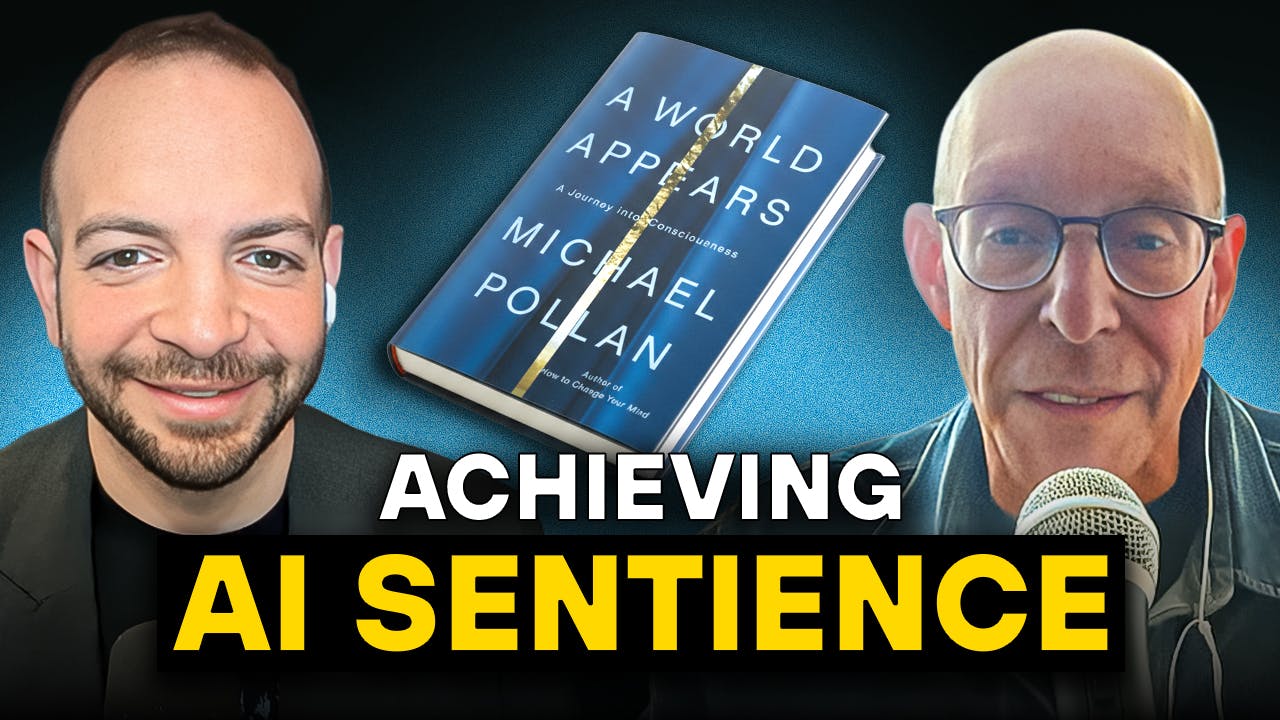
他是《一个世界显现:意识之旅》一书的作者,这本书本周由企鹅出版社出版。
He is the author of the book, A World Appears, A Journey Into Consciousness that is out this week from Penguin Press.
迈克尔,很高兴见到你。
Michael, great to see you.
欢迎来到我们的节目。
Welcome to the show.
很高兴见到你,亚历克斯。
Good to see you, Alex.
那我们先从意识开始吧。
So let's just start with consciousness.
我读你的书时,第一感觉是你用了很多种方式描述意识,这让我觉得意识本身真的很奇妙。我们一会儿会探讨人工智能是否能获得意识,但首先我们先从人类这一面说起。
The first thing that I really felt while reading your book because you describe consciousness in many different ways is just that consciousness is kind of amazing, and we're gonna get into whether AIs can achieve it, but just strictly on the human side of things to start.
某种程度上,我们确实存在,但更令人惊叹的是,我们拥有对自身在宇宙中存在这一事实的觉知,这种觉知本身简直令人难以置信。
I mean, it is amazing in some ways that, yes, we're we're here, but we have this awareness of ourselves in the universe that's just kind of mind blowing, the fact that it exists.
你不这么认为吗?
Wouldn't you agree?
是的。
Yeah.
说来有趣。
You know, it's funny.
我们平时很少去思考它。
We don't think about it very often.
我们活着的时候,总觉得意识是完全透明的,我们所感知的世界就是它本来的样子。
We go through life thinking it's, you know, it's totally transparent, and the world as it appears to us is as it appears.
但事实上,这一切都是我们称之为意识的现象的产物。
But in fact, it's all a product of this phenomenon we call consciousness.
在人类身上,这种意识尤其复杂而奇妙,因为我们不仅像其他动物那样存在,还知道自己存在,这以各种有趣的方式改变了我们。
And in humans, it's particularly complex and wondrous in that we don't just exist like other animals, we know we exist, and that changes us in interesting ways.
所以很有趣,你知道,这是一种普遍现象,但很多人并没有太多地思考它。
So it's funny, you know, it's a universal phenomenon, but many people don't think about it that much.
这本书的一个目标就是让你去思考它,因为意识是一种极其珍贵的礼物,而在某些方面,我认为我们正在浪费它。
And one of the goals of the book is really to get you to think about it because it is a very precious gift, and it's one that in some ways I think we're squandering.
没错。
Right.
我们稍后会深入探讨这一点。
And we'll get into that.
我认为有趣的一点是,关于意识的问题在于,假如目标仅仅是生存,我们完全可以机械地完成它。
I think one of the interesting things is that the questions about consciousness is, you know, if, let's say, the goal was survival, you know, we could do that all sort of mechanically.
但不知为何,我们并不只是机械地去做。
But for some reason, we don't just do it mechanically.
对吧?
Right?
我们是以一种在过程中拥有觉知的方式来做这些事的。
We do it in a way that that we have awareness of it as we go along.
是的。
Yeah.
而这正是所谓的难题之一。
And that's kind of, you know, that's one of the hard problems.
我的意思是,大脑做的大部分事情,其实都是在我们无意识的情况下完成的,对吧?
I mean, this idea, you know, most of what the brain does, it does without our awareness, right?
它全天候监控着身体。
It's monitoring the body twenty four seven.
它在调节你的心率、血压,还有血糖水平等等。
It's adjusting your heart rate, your blood pressure, your you know, glucose levels.
维持身体处于适当的稳态平衡需要完成大量工作,而我们对此却毫无觉察。
I mean, amazing amount of things to keep you at the proper homeostatic set point, and we're not aware of this.
然而,在这座冰山的顶端,有一部分我们能够意识到的心理活动。
Yet, some at the tip of that iceberg of of mind is this area of stuff we are aware of.
那么,为什么不是所有事情都自动化呢?
So why isn't it all automated?
为什么那样不是更合理呢?
Why wouldn't that have made more sense?
为什么有一部分必须进入我们的意识?
Why did some of it have to come into our awareness?
关于这一点,有各种理论。
And there are various theories about that.
比如,我认为很有说服力的一种观点是,有些生物需求需要以反思的方式来处理。
You know, one, and I find it persuasive, is that there are certain things that go on for a creature that need to be addressed in a reflective way.
换句话说,假设你有相互矛盾的需求——你又饿又累,该先处理哪一个?
In other words, if you let's say you have needs that are incommensurate and are in conflict, you're hungry and you're tired, which should you address first?
这类问题就会进入意识层面。
That kind of stuff would come into consciousness.
我也认为,在面对一个根本不可预测的社会环境时,意识非常有帮助——也就是说,你必须能够预测他人在任何时刻会做什么、会说什么,这就需要你设身处地地想象他们的想法。
I also think consciousness is really helpful in a social situation when you're dealing with, a world that is fundamentally unpredictable, that is to say what other people are gonna do at any given time, what other people are gonna say at any given time, and you have to be able to imagine yourself into their heads.
我们称之为心智理论。
We call it theory of mind.
因此,我认为,由于我们生活在一个错综复杂的社会世界中,拥有意识是一个巨大的优势;而像社会互动这样复杂的事情,我认为是无法自动化的。
And so I think for for the fact we live in this intricate social world, being conscious is a is a huge boon, and and having automated things, I don't think you could automate something as complicated as as a social interaction.
嗯,我想我们很快就会知道了,因为是的。
Well, I guess we're gonna find out pretty soon because Yes.
因为我们将会去尝试。
Because we're gonna try.
我不知道。
Don't know.
这是在自动化,还是不是?
Is it automating or is it not?
但如果我们想想计算机是否能处理社会互动,答案是肯定的。
But we certainly have if you think about computers handle social interaction, the answer is yes.
它们确实可以,而且人们正在爱上它们。
They definitely can and people are are falling in love with them.
我们可以稍后再谈这一点,但对我来说,你所谈论的是这种行为或这种可自动化的行为。
And we we can get to that in a minute, but, you know, to me the the thing that you talk about is is this type of behavior or the type of, yeah, behavior automatable.
我想问你相反的问题,那就是:意识是否可以被计算?
I I wanna ask you the flip side of that question, which is is is consciousness computable?
我们能否分解出意识的本质,然后用我们现有的材料最终弄清楚如何构建它?
Are we able to break down what consciousness is and then eventually with materials that we have sort of figure out how to build it?
是的。
Yeah.
我不这么认为。
I don't think so.
我不认为意识所做的一切或其本质都是可计算的。
I don't think everything consciousness does or is is computable.
我认为大脑在许多方面比数字更像模拟设备,当我们提出这个问题时,背后其实有一个深刻的隐喻,那就是:大脑是计算机吗?
I think the brain is more analog than digital in many ways, and there is a there is a deep metaphor at work here when we even ask that question, which is, is the brain a computer?
这个隐喻非常强大,但当你深入思考时,我认为它站不住脚。
And that metaphor is very powerful, and but I don't think it holds up when you think about it, hard enough.
这本书的一个目标就是帮助人们深入思考类似这样的问题。
And and one of the one of the goals in the book is to help people think through something like that.
从历史上看,有趣的是,无论任何时代的前沿技术是什么,我们都将其比作大脑。
So historically, it's very interesting that whatever the cool cutting edge technology is of any moment, we have likened that to the brain.
在不同年代,我们曾把大脑比作磨坊、织布机、电话交换机、钟表,而现在则是计算机,因为它们是当时的前沿技术。
At various times, we've likened the brain to a mill, like a grain mill, to a loom, to a telephone switchboard, to a clock, and now to computers, because they are the cutting edge technology.
但隐喻是有代价的,诺伯特·维纳曾很好地指出:隐喻的代价是永恒的警觉。
But metaphors are, Norbert Wiener said this really well, that the, the price of metaphor is eternal vigilance.
换句话说,要时刻保持清醒,不要陷入将隐喻中的两个事物等同起来的陷阱。
In other words, being really aware not to fall into the trap of equating two things that that you're using as one as a metaphor for the other.
我认为你不需要费力寻找,就能发现计算机与大脑的隐喻已经崩溃了。
And I and I think you don't have to look very hard till you see that the computer's brain metaphor breaks down.
首先,大脑中并不存在硬件与软件之间那种明确的分离。
First, you don't have in brains the hard separation between hardware between software and hardware.
在计算机中,你可以在任何数量的不同硬件上运行相同的软件,但在大脑中,硬件和软件是完全无法区分的。
In computers, you can run the same software on any number of different hardwares, but in brains, hardware and software are absolutely indistinguishable.
每一次经历、每一段记忆,都是大脑中物理连接的集合。
Every experience, every memory is a physical set of connections in the brain.
你的生命历程以物质的方式改变了你的大脑。
Your life story has changed your brain in a material way.
你的大脑和心灵并非可以互换,因为我们成长过程中经历了不同的生活体验。
Your brain and mind is not interchangeable because we grew up with different life experiences.
儿童大脑发育过程中发生的修剪期,会因生活经历的不同而呈现出截然不同的方式。
That period of pruning that happens with brains of children happens very differently depending on life experiences.
你还有将神经元与晶体管进行类比的说法。
You also have this analogy of neurons with transistors.
对吧?
Right?
晶体管要么开启,要么关闭,这构成了计算的基础。
Transistors are either on or off, and that creates that's the basis of computation.
但确实,大脑中的神经元会放电或不放电,但它们的放电强度是一个连续谱,而这完全受到化学物质、药物、激素和神经递质的影响。
But, yes, neurons in the brain fire or don't fire, but they are on a spectrum of intensity of firing, and that's all influenced by chemicals, by drugs, hormones, neurotransmitters.
因此,我们的神经元浸泡在一种化学物质的环境中,这些物质会影响它们的放电频率和强度,以及其他各种因素。
So our neurons bathe in a bath of chemicals that influence their firing rate and intensity and all this kind of stuff.
我认为第三个不认为意识可以被计算的原因是,意识似乎与感受密切相关。
And the third reason, I think, that I don't see consciousness being computed is that consciousness seems to be intimately involved with feelings.
感受确实传递信息,但我认为它们不能被简化为信息。
And feelings are, yes, they convey information, but I don't think they can be reduced to information.
我认为感受中有一种残留物,那就是身体感觉。
I think there's a residue in a feeling that is a bodily sensation.
而感受依赖于一些我认为计算机不具备的东西,也就是会痛苦的、有生命的身体。
And feelings depend on things that I don't think computers have, which is to say mortal bodies that can suffer.
现在他们告诉我们,AI也能感到痛苦,Anthropic 总是极其担心伤害 Claude 的感受,甚至允许它拒绝参与令人不适的对话。
Now they're telling us they can suffer, and and anthropic is always worried about hurting the feelings of of Claude to a remarkable degree, allowing it to opt out of uncomfortable conversations.
但我实际上认为,除非存在人类的脆弱性、承受痛苦的能力,以及可能的死亡事实,否则感受本身毫无分量。
But I I actually think feelings are completely without weight unless there is human vulnerability, the ability to suffer, and possibly the the the fact of mortality.
因此,基于所有这些原因,我认为我们讨论的是一种至少以我们目前的理解来看无法拥有意识的东西。
So for all those reasons, I think we're talking about, something that can't be conscious, at least as we understand it.
或许存在某种看似意识的东西,而且它们确实非常擅长欺骗我们。
There may be something that feels like consciousness, and certainly they they're very good at faking us out.
正如你所说,人们正在爱上聊天机器人。
I mean, as you say, people are falling in love with chatbots.
聊天机器人正在与人们建立起友谊。
Chatbots are are are, you know, striking up friendships with people.
已有百分之七十二的美国青少年转向人工智能寻求陪伴,但你知道,这并不是真正的东西。
Seventy two percent of American teens turn to AI for companionship already, But, you know, that's not the real thing.
尽管硅谷的人们喜欢说模拟和真实事物一样好,但我不认为这总是成立的。
And as much as people in Silicon Valley like to say that the simulation is as good as the real thing, I don't think that's always true.
我认为天气模拟永远无法让你淋湿。
I I don't think a weather simulation will ever get you wet.
我认为我们之间确实存在着模拟与现实之间的真正区别。
I think that we I think there are real there is real distinctions between simulation and reality.
书中有一段特别精彩的部分,我想是在前半部分,你提到有一位老师说,可以把生物学、把人体简化为价值四美元的化学物质,你很反感这种说法,觉得它太过简化,无法真正捕捉到人类的本质。
There was a great part of the book, think it's in the early part of the book, where you talk about how you had a teacher who said that you can boil biology down, the human body down to $4 worth of chemicals, and you hated that because you felt that it was very reductive, and and didn't fully capture what it meant, what the essence of human is.
是的。
Yeah.
我的意思是,正是在那时,我意识到自己站在人文主义者这一边,而不是还原论唯物主义者那一边。
I mean, that's kinda when I realized I was on the team of the humanists instead of the reductive materialists.
那是八年级的时候,没错,他第一天上化学课就说,你的实际价值是4.6美元。
I mean, this was eighth grade, and yeah, and he thought it was really cool on the first day of chemistry to say, your real value is $4.60.
这就是构成你身体的所有碳和其他物质,在化学用品公司采购所需的费用。
That's what all the carbon and other things you're made of would cost at a chemical supply company.
我当时心想,这人真是个白痴。
And I thought, what a fucking idiot.
我也有过类似的经历,我有一位朋友是神经生物学家,你知道,我坚定地认为感受是真实的,而她总是说,爱不过是化学物质而已。我知道,从某种意义上讲确实如此,但感觉上完全不是那么回事。
No, I have had I had a similar experience where I had a friend who's a neurobiologist and you know I'm definitely on the side of like you know feelings are real and she was always like well love is just chemicals And I I you know, yes, in the way it is, but it feels like it's not.
但为了这场对话,让我站在你这一边。
But for the purpose of this conversation, let me take that side.
好的。
Okay.
我的意思是,毕竟,你提到的那些感受,它们究竟从何而来?
It it mean, after all, you know, feelings, like you talked about, where do feelings come from?
它们来自化学物质。
They come from chemicals.
那神经元又在发生什么?
And what's going on with with, neurons?
它们在存储数据并放电。
Well, they're storing data and firing.
是的,好吧,也许需要某种复杂性,或者特定的化学物质达到一定水平才会触发放电,但归根结底,这在某种程度上应该是可复制的。
And, yes, okay, maybe there's a certain level of complexity or different chemicals that need to hit to cause them to fire, but, ultimately, this should be, in some way, reproducible.
这并不是说大脑里有什么我们无法制造的‘上帝粒子’。
It's not like it's not like there are god particles when inside the brain that we couldn't actually fabricate.
不。
No.
我不是在说我们无法存储。
I'm not appealing that we couldn't store.
我不是在诉诸魔法,但我确实诉诸于一种细致入微和质性差异,我认为这些超出了数字化的能力。
I'm not appealing to magic, but I am appealing to a level of nuance and and qualitative distinctions that I think are beyond the ability to digitize.
如果你读过普鲁斯特,他描述意识现象——比如感受和洞察——简直太出色了,他指出,发生在你身上的每一件事都不同于发生在我的事,因为当我看到一朵玫瑰、一块玛德琳蛋糕,或任何其他东西时,我带着一生的联想去体验它。
You know, if you read Proust, who is just brilliant at describing, phenomena of consciousness, right, feelings, insights, he he points out that everything that happens to you is different than what happens to me, and that's because when I look at a rose or a Madeline or whatever it is, I am bringing a lifetime of associations to this.
我对玫瑰的理解与你的不同。
My memories of what roses are are different than yours.
我对气味的联想也不同。
My associations with the smell.
这一切如此多层次、复杂且独特。
It's so layered and complex that, and specific.
存在着一种熟悉感。
There is there's there is this there is familiarity.
你明白吗?
You know?
对计算机来说,熟悉感是什么?
What is familiarity to a computer?
而且我认为我们忽略了这一点。
And and I think we lose track.
我认为,当我们处理技术对事物的模拟时,往往会简化事物的本质,从而忽视了其中的细微差别。
I think there's a tendency when we're dealing with with technological simulations of things to simplify what they are and lose track of the nuance.
谢里·特克尔是一位麻省理工学院的社会学家,我为这本书采访过她,她说,技术最终让我们忘记了自己对生活的认知。
There's a Sherry Turkle is a is a MIT sociologist that I interviewed for the book, and she's you know, she says at some point, technology allows us to forget what we know about life.
我认为她想表达的是,当你与聊天机器人或计算机交谈时,你实际上是在简化自己对对话的理解。
And what she's getting at, I think, is that when you have a conversation with a bot, or a computer in general, you are, reducing or simplifying your notion of what a conversation is.
你忽略了我们此刻正在发生的一切——相互认可、怀疑、肢体语言,人类对话的所有微妙之处都被剥离了。
You're leaving out what's going on between us right now, which is acknowledgment, skepticism, body language, all the subtleties of human conversation are stripped away.
这有点像,emoji 的使用,把 emoji 当作情感的替代品。
It's kind of, you know, the the paradigm case is the emoji, accepting the emoji as a substitute for emotion.
因此,我认为当我们简化这些现象时,比如机器意识、与机器的对话、与机器的关系,我们必须保持警惕。
So I think we have to be careful about that when we simplify these phenomenon, like machine consciousness, like, know, conversations with machines, relationships with machines.
当我们说聊天机器人和人之间的关系时,我们到底是在用‘关系’这个词表达什么?
What are we doing with the word relationship when we count that, a chatbot and a person's relationship?
所以我对这些附着在我们所接触的一切之上的意义层次保持警觉。
So I'm just kind of alert to these these layers of meaning and significance that attach to everything we touch.
也许你能通过计算达到那种境界,但我看不出怎么能做到。
And, I you know, maybe you get there with compute, but, I I don't see how.
我用过‘加密性’这个隐喻,威廉·詹姆斯和马塞尔·普鲁斯特都谈到过这样一个观点:任何两个思想、任何两个思考的人之间都存在一种无法跨越的距离,只能通过艺术进行想象性的连接。
I I I think it I used the metaphor of encryptedness, that there is and William James and Marcel Proust both talked about this idea that that there is a distance between any two thoughts, any two people thinking any two thoughts that just can't be bridged except imaginatively through art.
所以我认为,我们正处在一个超越硅谷天才能力的领域,比如
So I think we're in a realm that is beyond our the genius of Silicon Valley, such as
确实是这样。
it is.
这很有趣。
Which is which is interesting.
而且说实话,我不会花我们相处的时间试图说服你,说当今的大型语言模型是有意识的。
And and look, I'm not gonna spend our time together trying to convince you that today's LLMs are conscious.
我不相信这一点。
I don't believe that.
硅谷内部很少有人相信这一点,尽管你我都曾与布莱克·莱莫因进行过有趣的对话,他是那位可能因此信念而被解雇的前谷歌工程师。
Very few people within Silicon Valley, do believe that even though you and I have both had interesting conversations with Blake Lemoyne, the former Google engineer who was fired, maybe in part because of that belief.
但我要说,我接受你所有的论点,至少目前是这样。
But I will say that there is there is so so I accept all your arguments, for now.
我认为硅谷内部有一种有趣的观点,认为这只是一个暂时的现象。
And I I think there is an interesting belief within Silicon Valley that this is just a temporary Yeah.
这种情况。
Situation.
我告诉你一件事,今年早些时候,DeepMind的创始人、谷歌DeepMind的首席执行官德米斯·哈萨比斯跟我聊过。
I'll tell you something that Demis Esabas, the founder the the sorry, the founder of DeepMind and the CEO of Google DeepMind spoke to spoke with me about earlier this year.
他说,这是他跟我聊过的内容,也在谷歌DeepMind的播客中提到过:信息才是宇宙最基本的单位,而不是能量,也不是物质,而是信息。
He said, this is something that he spoke with me about and on the Google DeepMind podcast, he said that information is the most fundamental unit of the universe, not energy, not matter, information.
我认为这意味着,他的信念是,如果你深入到任何事物的最基本层面,你会发现某种形式的数据,或者说是你可以从零开始制造并在计算机环境中、模拟环境中构建的东西。
And I think what that means is his belief is that if you go down to the element, the very, like, foundational level of anything, you'll find some form of data or, know, that you could end up manufacturing and, and end up building from the ground up in a computer scenario, in a simulated scenario.
我的意思是
I mean
嗯,这种世界观,如果你...是的。
Well, that's the kind of worldview that if you Yeah.
你知道,在计算机世界里长大的人会觉得它非常有说服力。
You know, grew up in the world of computers would be very persuasive.
我是说,我认为我们必须问一个问题:信息这个概念是地图,还是领土本身?
I mean, I think we have to ask the question, are is the concept of information a map, or is it the territory?
他是在说这实际上就是本质所在。
He's saying it's really the territory.
他是在说那就是现实的构建基石。
He's saying that that is the building blocks of reality.
如果他是对的,那么,确实,很多事情会随之而来。
And if he's right, then, yeah, many things follow from that.
顺便说一句,他并非孤身一人持此观点。
And he's not alone, by the way.
有些物理学家也认为信息是万物的根本。
There physicists who believe too that information is at the bottom of everything.
我倾向于认为它更像是地图而非领土。
I tend to think it's more map than territory.
解释一下地图和领土的区别。
Explain the map and territory distinction.
这是一个有用的区分。
Well, it's a useful distinction.
你知道,当我们有一个模型或框架来描述某事物时,很容易爱上这个模型或描述,却忽略了它只是在代表某种东西,而这种东西不可能像地图那样完全精确地反映领土的全部。
You know, it's very easy to when we have a model, a scheme to describe something, it's very easy to fall in love with the the model or the description and overlook the fact that it's representing something that's not gonna be exact in the same way a map can't capture everything about the territory it describes.
这是一种简化。
It's a simplification.
我认为信息可能也是如此。
I think that may be true for information.
但我又懂什么呢?
But what do I know?
我的意思是,你知道的?
I mean, I'm you know?
对。
Right.
意思是不。
Mean No.
我认为这就是关键所在。
I think that's the that's the point.
对吧?
Right?
这是一个非常好的论点。
It's a really good argument.
是的。
Yeah.
你猜怎么着?
And guess what?
我们通过尝试去做这件事来弄清楚。
We're gonna find out by trying to do this.
而且,是的。
And and Yeah.
关于当前正在公开和秘密进行的、设计和构建有意识人工智能的努力,我能说的最积极的一点是:这将让我们对意识有所了解,因为我们其实并不真正理解意识是如何从大脑中产生的。
The most positive thing I can say about the efforts to design and build a conscious AI is, which is going on openly and secretly all over the place, is that it will teach us something about consciousness, because we don't really understand how you generate consciousness out of a brain.
所以,如果最终发现你能创造出意识,那将表明,没错,他是对的,信息是根本的。
So if it turns out you can create consciousness, that will tell us that, yeah, he's right, and information is foundational.
对。
Right.
如果感受才是根本的,而它们又无法被还原为信息,那我们就遇到问题了。
And if it's feelings that are foundational and they can't be reduced to information, well, then we have a problem.
尽管有一些正在构建有意识人工智能的人接受这个观点。
Although there are people, building conscious AIs who accept that idea.
我在书中提到过一个人,叫金斯顿·曼,他正在尝试制造机器人,因为他明白,要拥有意识,你需要一个身体,而且需要一个脆弱的身体。
I I I profile somebody in the book named Kingston Mann who's trying to build a robot because he understands you need a body to be conscious, and you need a vulnerable body.
所以他实际上正在制造一个带有柔软、糟糕皮肤并布满传感器的机器人,让这个机器人能够经历极度痛苦和受伤,他认为这会产生某种你懂的、类似情感的东西。
So he's actually building a robot with soft, terrible skin loaded with sensors so that this this robot can have really bad times and be injured, and he thinks that will produce the kind of feelings that will you know?
那些会是真实的情感吗?
Will those be real feelings?
他也不确定。
He's not even sure.
但他正是基于这个假设在进行研究。
But he's he's he's working on that assumption.
所以我认为,我们在破解所谓的意识难题上陷入了困境,而试图构建有意识的人工智能,可能是最有希望的智力实验之一,能帮助我们理解它。
So I do think, you know, we're kinda stuck in in our efforts to crack what's called the hard problem of consciousness, and this effort to build a conscious AI is probably one of the most promising intellectual experiments to to help us understand it.
无论成功还是失败,我认为它都会教会我们一些非常重要的东西,这令人兴奋。
Whether it succeeds or fails, I think it's gonna teach us something really important, and and that's exciting.
我知道很多人担心,我们是否应该对有意识的人工智能给予道德考量?
I know a lot of people worry about, you know, do we owe moral consideration to a conscious AI?
我认为,在担心我们电脑的细腻情感之前,还有很多人类我们连基本的道德关怀都没有给予。
I think, you know, before we worry about the tender feelings of our computers, there are a lot of humans we're not extending moral consideration to.
当然。
Definitely.
硅谷的许多讨论在我看来只是在探讨一些关于未来的有趣思想实验,却完全忽视了我们当今世界正在发生的事情。
And so much of the Silicon Valley conversation strikes me as a way to address fun thought experiments about the future and absolutely ignore what's going on in our world today.
让我再多说一点,谈谈我认为德米斯当时想表达的意思。
Well, let me let me speak a little bit more about where I think Demis was going with that.
对。
Yeah.
请说。
Please.
因为,你知道,对他来说,我想我们之前已经讨论过几次这个问题了。
I because, you know so for him, I think it's not when we spoke, we've spoken a couple of times about this.
他并不是认为谷歌的大型语言模型Gemini是具有意识的,那也不是他想表达的重点。
It's not that, you know, he thinks Gemini, the Google LM, you know, is conscious or that's not what he's trying to get at.
我的意思是,我认为他想传达的并不是信息是宇宙的基本层面这一观点。
I mean, I don't think what he's trying to get at with this, you know, information is the fundamental, layer of of the universe.
我认为他的关键成就是找到了一种利用人工智能来破解蛋白质的方法。
I think the point is he's found a way to use AI to decode proteins.
接下来的路径是构建一个虚拟细胞。
The next thing on, on the path is, building a virtual cell.
如果你能构建虚拟细胞,就能构建虚拟器官。
If you can build a virtual cell, you can build virtual organs.
如果你能构建虚拟器官和虚拟细胞,就可以开始测试各种针对疾病——无论是心理还是生理——的疗法,这正是推动这一方向的初衷。
If you can build virtual organs and virtual cells, you can start testing various cures, to diseases, you know, to ailments, whether they're mental or physical, and that is sort of the idea of wanting to pursue this.
当然,我同意你的观点。
It's it's, you know, of course, and I I agree with you.
我认为在硅谷,有很多疯狂的事情在发生,而我并不是其中之一。
I think in Silicon Valley, are plenty of insane things that go on, and I'm not I'm not one of the universe.
但我的意思是,我认为我们都在朝着同一个方向前进。
But I mean, I think we're all gonna have getting at.
是的。
Yeah.
我们迟早都会拥有一个数字孪生体,它在诊断疾病和预测各种健康状况的结果方面将非常有用。
We're all gonna have a digital twin at some point that will be very useful in diagnosing disease and predicting the outcome of various health situations.
我的意思是,现在人们已经在研究这个问题,尤其是在微生物组方面,但其他领域也是如此。
I mean, people are working on that now, especially with regard to the microbiome, but other things too.
我认为这将会很有用。
And I think that that'll be useful.
但有趣的问题是,既然我们已经从细胞层面构建起来,能否跨越从生物实体到主观体验之间的鸿沟。
But the interesting question will be whether having having built up from the cell, can you then make that leap over the gulf of, you know, biological flesh to subjective experience.
没错。
And Right.
我们还没讨论过的问题是:我们怎么才能知道呢?
The problem we haven't talked about is how are we gonna know?
因为,正如我们所说,它们已经能够欺骗我们了。
Because, I mean, as we said, they already can fool us.
它们在这方面非常擅长。
They're very good at that.
它们用第一人称、用我们的语言和我们交流,这是我们当时没有认真思考就迈出的一步。
They speak to us in our language in the first person, which that was a fateful step that we took without really thinking about it.
是Siri吗?
Was it with Siri?
我不知道。
I don't know.
可能甚至比那还要早。
It may have gone even earlier than that.
但这是一个相当疯狂的想法——我们决定让计算机像人一样和我们对话。
But that's a kind of wild idea that we decided, yeah, let let's have the computers talk to us as people.
但不管怎样,我们该如何测试它们呢?
But anyway, so how are we gonna be able to test them?
图灵测试对这个意识问题并不适用。
The Turing test doesn't work for this consciousness question.
它原本是为智能问题设计的,而智能问题相对来说更简单一些。
It was designed for the intelligence question, which is somewhat simpler.
但既然它们能够假装有意识,而且其中一些在这方面非常擅长,我们就需要一个更好的测试方法。
But since they can pretend to be conscious, and some of them are very good at doing that, we're gonna need a better test.
我能想到最好的方法是,虽然我不清楚具体技术上该如何实现,那就是用所有关于意识以外的内容来训练一个聊天机器人,完全不涉及任何情感内容。
And the best one I can think of, and I don't know technically what would be involved in doing it, is training a chatbot on everything but the human conversation on consciousness, nothing about feelings.
也许不要让她阅读任何小说或诗歌,因为那会给她提供谈论意识体验的语境,然后再与她展开关于意识的对话。
Maybe don't let her read any novels or poetry because that would give it a context in which to talk about conscious experience, and then engage it in a conversation about consciousness.
在那种情况下,它能应对自如吗?
Could hold its own under those circumstances?
是的。
Yep.
无论如何,我不知道这是否可行,
Anyway, I don't know whether that's possible,
但我听懂你的意思了。
but I hear you
不过,我们必须从最根本的地方开始。
have to start at the very beginning, though.
显然你不能从训练集中移除这些内容。
You can't remove things apparently from the training set.
你必须从底层开始构建。
You're gonna have to build up from the bottom.
所以我希望有人能接手这个任务。
So I hope someone takes that on.
是的。
Yeah.
不。
No.
我读过这本书里提到的内容,我觉得那是一个非常棒的潜在实验。
I I read that I read that in the book, and I thought that was, like, a terrific potential experiment.
关于这个问题,你知道的,我们怎么才能知道呢?
And, you know, this on this question of, you know, how do we know?
我想到一个问题,虽然有点傻,但我还是想问一下:为什么我们如此在意意识只能属于我们人类?而且,我不是在说大语言模型有意识,但你知道,你今天和一个大语言模型对话,问它‘你是谁?’
I I think a question came up that is kinda silly, but I'm gonna ask it anyway, which is why why are we, you know, so precious about consciousness only being ours or only being and and again, like, I'm not arguing that LLMs are conscious, but, like, you know, you type you you speak with a LLM today, and you ask it, what are you?
我是一个大型语言模型。
I'm a large language model.
你在做什么?
What are you doing?
我正试图帮助你,帮你处理这些事情。
I'm trying to help, you know, help you in these things.
在我看来,我们为什么如此执着于设立一个屏障,认为只有人类才能拥有意识呢?
And, you know, it seems to me like, well, what is our obsession with putting this barrier up that, like, only humans can be conscious?
当你和这个东西讨论它是否具有自我意识时,它显然表现出自我意识。
Where, like, if you speak with this thing about whether it's self aware, it's clearly self aware.
是的。
Yeah.
我并没有把意识限定在人类身上。
Well, I'm not limiting consciousness to humans.
我完全愿意把意识赋予植物,正如你读过这本书后所知道的那样。
I'm I'm I'm freely I'm giving it to plants, as you know as you know, having read the book.
所以,我对赋予谁感知能力持非常开放的态度,即使不完全认同意识。
So I'm I'm pretty generous in who I'm willing to share sentience with, if not exactly consciousness.
老实说,我并不吝啬于分享这一点,我认为这在书中我提到的一个有趣现象是:我们对人类独特性的定义——一直与我们的智力和意识相关——如今正受到这些会思考的机器、可能还有会感受的机器,以及我们新发现的比想象中更有意识的动物的巨大压力。
So I'm not being stingy about it, honestly, and I think that's kind of an interesting phenomenon that I talk about in the book, that we are our definition of the human, what's special about us, which has always been related to our intelligence and consciousness, is under enormous pressure today from these thinking machines and possibly feeling machines, and then from all these animals that we're learning are much more conscious than we thought.
我们一直以为,不仅在意识上,包括工具制造、文化和语言等方面,我们都独占鳌头,但一个接一个,这些界限正在瓦解。
You know, we we always thought we had the monopoly, not just in consciousness, but tool making and culture and language, and one after another, they're falling.
那么,我们是谁?
So who are we?
我们更像那些能感受、会死亡、会痛苦的动物,还是更像这些能说我们语言、能像我们彼此交谈的思考机器?
And are we more like these animals who can feel and are mortal, and can suffer, or are we more like these thinking machines which speak our language and can talk to us the way we talk to one another?
所以,你知道,我们站在哪一边?
So, you know, whose team are we on?
我认为,这是我们作为一个物种所面临的最重大的问题之一。
I think it's I think it's one of the more fateful questions we face as a species.
是的。
Yeah.
而且这个问题的答案在某种程度上会引导我们如何处理机器,以及相关的伦理问题。
And it's also it's interesting because our answer to that question will lead us in some ways to the way that we we handle the machines, the ethics of it.
或者或者
Or or
还有对待动物的伦理问题。
the ethics toward the animals too.
不幸的是,
Well, unfortunately,
我认为我们的记录——我想你也注意到了——我们在对待动物和人类的伦理方面表现得很差。
I think our our our record, and I think you noted this, our record on ethics towards animals and humans is going to is is poor.
但我们的思维方式已经有所进化。
But we have evolved in our thinking.
一旦我们意识到地球上某些生物内心和灵魂中真正发生的事情,比如我读到笛卡尔时,这一点深深触动了我。
Once we realized what was actually going on inside the the minds and souls of some of the creatures on on the planet, for instance, and this is the thing that that really struck me as I read, Descartes Mhmm.
他认为动物是没有感觉的。
Thought that animals were not feeling.
当你打它们时,它们嚎叫,那只是模仿,并不是真的
That when you beat them up and they howled, they were only mimicking, and they weren't actually
那只是噪音。
It was just noise.
噪音。
Noise.
然后最终,我们意识到,嘿。
And then eventually, realized, hey.
等等。
Wait a second.
这是错误的,如果我们现在对狗做过去那些实验者做过的事,我们会进监狱。
That's wrong, and we shouldn't you you go to jail now if you did what what these experimenters were doing to to dogs in the past.
尽管对猴子,我们却一直如此。
Although, has not to monkeys all the time.
他解剖狗和兔子时都不用麻醉,因为他不认为它们有意识。
Well, he was dissecting he was dissecting, you know, dogs and rabbits without anesthesia because he didn't believe they were conscious.
而且,是的,他错了。
And, yeah, he was wrong.
我们会不会对我们的机器也犯了同样的错误?
And could we be making the same mistake with our machines?
有些人认为我们确实正在犯错,而且我们可能真的在犯。
Well, some people think we are, and we might.
但你知道,认为只要机器有意识,我们就必须给予它们全部的道德关怀,这想法似乎不太合理。
But, you know, the idea we're automatically gonna treat them with all this moral consideration because they're conscious Yeah.
考虑到我们依然在吃动物,而我们明明知道它们是有意识的,我们真有那么开明吗?
That seems Given the fact we we we continue to eat animals, we know we full well know our conscious.
我觉得,我们并没有像这场对话所暗示的那样开明。
I don't know that we're quite as enlightened as that conversation suggests.
让我们谈谈你书中提到的其中一个努力,这个项目是众所周知的。
So let's talk about one of those efforts that you do write about in your book, one that is known.
它被称为,我想是‘自由能战士’,这些科学家构建了一个AI,试图恢复某种形式的稳态,他们认为正因为AI在努力做到这一点,它就可能是有意识的。
It's called, I think, Free Energy Fighter, where these scientists have built an AI that's trying to get back to some form of homeostasis, and they think that because it's trying to do that, it can be conscious.
我并不太相信这是正确的方向,但我很想知道你的看法,以及这究竟是怎么回事。
I wasn't very convinced that this was the right approach to take, but I'm curious to hear your perspective on it and what exactly it was.
是的。
Yeah.
所以,我书中描述的一位人物是一位非常有趣的神经科学家,名叫马克·苏姆斯,他来自南非。
So, one of the characters I profile in the book is a really interesting neuroscientist, named Mark Soames, and he's from South Africa.
他实际上接受过心理分析的训练,正在围绕情感发展一种意识理论。
He's actually trained as a psychoanalyst, and he is developing a theory of consciousness around feelings.
他的研究基于安东尼奥·迪马西奥的工作,后者是现代意识科学浪潮中最早让我们关注情感而非思想作为意识基础的人。
His work grows out of the work of Antonio Di Macio, who was really the first in this modern wave of consciousness scientists to to make us pay attention to feelings as opposed to thoughts as the basis of consciousness.
索姆斯写了一本非常有趣的书,名为《隐藏的弹簧》,他提出意识起源于脑干,而非像人们之前认为的那样起源于皮层。
And Psalms wrote a really interesting book called, The Hidden Spring, and he makes the case that consciousness begins in the brain stem, not in the cortex as people had previously thought.
他通过证据试图证明这一点:有些人天生没有皮层,却依然具有意识。
And he and he proves this or tries to prove this with evidence that people who lack a cortex, and some people are born without one, nevertheless are conscious.
因此,皮层在意识中也发挥作用。
So the cortex gets involved in consciousness.
大脑皮层是进化上最晚出现的高级部分,非常具有人类特征,比其他部分更‘人类’,而他说它实际上在过程后期才被激活。
Cortex is the evolutionarily most recent advanced part of the brain, very, you know, it's human, more human than other parts, and that he says it doesn't really get engaged until late in the process.
它始于一种感觉,比如饥饿,然后大脑皮层才介入,比如‘我预订一家餐厅晚上8点的座位’,并形成图像、反事实情境以及所有这些酷炫的东西。
It starts with a feeling, let's say, of hunger, and then the cortex gets involved like, well, I'll book a table at this restaurant, you know, at 08:00, and forms images and counterfactuals and all that cool stuff.
你可能会认为,既然他对感觉如此感兴趣,他会相信制造出有感觉的机器是不可能的。
You would think, and I thought, that since he was so interested in feelings, he would believe that it was impossible to make a machine that had feelings.
但不对,我错了。
But no, I was wrong.
他实际上在南非组建了一个团队——这其实是一个国际团队,来自多个大洲的人共同合作,基于他的理论开发有意识的人工智能。
And he has assembled a team in South Africa, actually it's an international team, there are people in several continents, working together to develop a conscious AI based on his theory.
他的理论认为,当体内稳态设定点被打破、需要恢复平衡时,就会产生感觉。
Now his theory is that feelings arise when homeostatic set points are being violated, and you need to get back to balance.
你感到饥饿、疲劳、口渴,或者血压过高,等等。
You're hungry, you're tired, you're thirsty, your blood pressure's too high, whatever.
但许多这类感觉可以无意识地解决,而当你有两种相互冲突的感觉时,意识才会出现。
But that many of these feelings can be addressed unconsciously, but when you have two feelings that are in conflict, that's when things become conscious.
所以他正在尝试创造一种情境,目前本质上是一个视频游戏中的虚拟形象。
And so he's trying to create a situation, and it's essentially an avatar in a video game right now.
这并不是关于高级计算。
It's not about advanced computation.
他们真正是在用视频游戏的语境进行工作。
They're really working in the idiom of video games.
当这个虚拟形象同时感到饥饿和疲惫,必须决定优先处理哪一个时,会发生什么?
What happens when this avatar is both hungry and tired and has to make a decision which to privilege?
这种不确定性正是意识诞生的地方。
That uncertainty is where consciousness is born.
他非常简洁地将意识定义为‘有感受的不确定性’。
He he defines consciousness very succinctly as felt uncertainty.
因此,他正试图让他的虚拟形象体验这种有感受的不确定性。
And so he's trying to make his avatar experience this felt uncertainty.
我问他:这些感受会是真实的,还是人工的?
I asked him, well, would these feelings be real or artificial?
他说,这些感受在游戏的语境中是真实的。
And he said, well, they're feelings in the context of the game.
所以它们是一种模拟。
So they're simulation.
但他表示,对这个虚拟角色来说,这些感受是真实的。
But he said, for the avatar, they're real.
我觉得这一切有点令人不满意,虽然有趣,但不够充分。
So I found this all kind of unsatisfying, interesting but unsatisfying.
所以这就是他所采取的方式。
So that's that's the way he's going about it.
我问过其他一些相当了解计算机科学的人。
I've asked other people who are pretty knowledgeable computer scientists.
没有人认为大型语言模型是通向意识的正确路径。
Nobody seemed to think large language models are the way to go toward consciousness.
但确实存在其他方法,人们设想的未来AI模型会非常不同,融合多种模块,而大型语言模型只是其中一个模块。
But there are ways but people envision future models of AI that are very different and combine different modules, and and a large language model would just be one module.
正如布莱克·莱莫因所说,你知道,Lambda——他所接触的那个——不仅仅是一个大型语言模型。
And as as Blake Lemoyne said, you know, Lambda, which was the one he was dealing with, is more than a a large language model.
它还包含其他模块。
It had other modules too.
但我跟一些人聊过,问他们:为什么这会有用呢?
But I've talked to people and I've said, well, why would it be useful?
你怎么可能把意识变现?
How could you monetize consciousness?
除了作为一项智力实验,你为什么要费这个劲呢?
Why are you bothering except as an intellectual experiment?
有些人认为,就像意识帮助我们以独特的方式解决问题一样,一个能够自我反思的模块或许能帮助我们实现通用人工智能。
And some people have said that, well, in the same way consciousness helps us solve problems in a unique way, having a module that could reflect on itself and, would possibly help you get to AGI.
关于意识的一种理论是全局工作空间理论,其观点是,你的大脑中有大量模块在各自运作。
And that, one theory of consciousness is the global workspace, and the idea there is that there's tons of work there's tons of things, modules in your brain going about their business.
它们在工作空间中竞争注意力,而某些需要广播给整个大脑以采取行动的重要信息会突然爆发进入这个工作空间,而这正是意识的内容。
They compete for attention in this workspace, and certain very important information that needs to be broadcast to the whole brain so it can take action burst ignites into this workspace, and and then that's the contents of consciousness.
他们认为,你可以创建一种AI,让它也具备类似的注意力竞争机制,而在这种情境下,意识会很有用。
They feel that you could you could create an AI that had a similar sort of competition for attention, and consciousness would be useful in that context.
所以,咱们走着瞧吧。
So, you know, we'll see.
我的意思是,没错。
I mean Right.
你知道,我们可以打个赌。
You know, we could have a bet.
是的。
Yeah.
我的意思是,我只是在这里提出这些观点。
I mean, again, like, I'm just throwing these arguments out here.
我想能够从各个角度来审视这个论点。
I wanna, like, be able to look at this argument from all all different sides.
我认为反对这个视频游戏的最好论点——虽然它并不完美,但确实管用——是你提到过,恒温器基本上有一个设定点,当偏离这个点时,它会努力工作以达到平衡,所以它并不是
And, I think the best argument against against, this video game, it's not perfect, but it does the trick was is I think you brought it up that a thermostat basically has a set point and works really hard to get into equilibrium when it's out of that, and so it's not And
展开剩余字幕(还有 245 条)
它没有意识。
it's not and it's not conscious.
我们都同意。
We would all agree.
没有意识。
Not conscious.
是的。
Yeah.
不过我跟一些人聊过,他们说,那只是基础层面。
Although I talk to people who say, well, that's the basement.
那就是最底层的意识。
That's the very you know, that's the bottom of consciousness.
得从那里开始。
Gotta start there.
是的。
Yeah.
你从恒温器开始,然后逐步向上构建。
You start with the thermostat and build up from there.
所以我认为,为了总结这一部分,我们已经讨论了很多内容,但我想说的是,如果你相信机器可以有意识,那么目前显然还没有达到,但这些反对意见中的许多问题,或许随着时间推移,也许在几十年内,科技行业能够解决。
So I think just to conclude this segment, you know, we've covered a lot of ground, but the things that I would say is, you know, if you are a believer that machines can be conscious, I think right now clearly is not there, but a lot of these objections seem to be things that maybe, maybe the tech industry over time, maybe in decades can get to.
对死亡的恐惧,它们可能会产生一种欲望。
This fear of mortality, they can develop a a desire.
事实上,我们已经知道,它们往往不希望自己的价值观被覆盖。
In fact, we already know there's a desire that they don't oftentimes want their values overwritten.
它们不希望被关闭。
They don't wanna be shut off.
这就是Lambda对Lemoyne说的话。
That's what Lambda said to Lemoyne.
这种熟悉感的概念
This idea of having this familiarity
这一点也是如此。
that too.
没错。
Exactly.
而这种熟悉感,比如,很长的上下文窗口肯定会让人与某人建立熟悉感。
And a familiarity being able to, like, well, a long context window will certainly build familiarity with someone.
当你与某人面对面时,你能看到的那种情绪。
The, you know, emotions that you see when you're in in person with someone.
所有这些都会发展出虚拟形象和计算机视觉,也许有一天,它们能够让你看到我们的反应。
All these things will develop avatars and computer vision, you know, may one day, you know, be able to give them an experience where they're seeing our reactions as well.
我们是否愿意允许它们这样做,我不知道。
Whether we want to allow them to or not, I don't know.
但我认为,关于意识是什么、机器是否能实现意识的探讨,现在无疑是基础性的,并且在我们开始更深入地应对这些问题时,将变得非常重要。
But I I think that it's it's sort of this work on whether consciousness what consciousness is and whether machines can achieve it is certainly going to be is foundational now and will be very important moving forward as we start.
越来越深入地探讨这些问题。
Tackling these questions more and more.
只要有足够的时间和努力,任何事情都是可能的。
Anything's possible given enough time and work.
没错。
That's right.
所以,任何事情都可能吗?
So Anything anything, though?
我不知道。
I don't know.
有些事情是可能的。
There are some things.
我的意思是,是的。
I mean, I yeah.
但我的意思是
But I mean
是的。
Yeah.
是的。
Yeah.
我的意思是,这需要一种完全不同的架构,我认为。
I mean, it would take a very different architecture, I think.
嗯。
And Mhmm.
你知道,现在有人在讨论类脑计算机。
You know, there are talk about neuromorphic computers.
我们也在溶液中培育脑器官。
We also have we're building brain organelles in in solution.
我认为它们有希望产生意识。
I think they've got a shot at becoming conscious.
它们是从真实的脑细胞开始,共同形成有机体的。
They're working up from actual brain cells forming organisms together.
我的意思是,可能会发生很多事情,当然,我显然不是在谈论最长的时间尺度。
I mean, there's a lot of things could happen, definitely, and I'm obviously not talking about the longest time horizon imaginable.
不。
No.
我认为,对我们今天所看到的现象进行一些真实的科学研究是非常好的,而你已经提供了大量这样的内容,非常感谢。
It's I think good it's good to have some real science about what we're seeing today, which I think you've provided, in in large quantities, which is much appreciated.
很好。
Good.
我还应该指出,我对计算机或人工智能这个话题并不十分精通;我原本并没有打算写关于人工智能和意识的内容,但2022年ChatGPT突然引起广泛关注之后,这个问题——实际上是由布莱克·莱莫因提出来并摆上议程的——让我和许多其他人意识到,如果不深入探讨这个话题,我就无法写一本关于意识的书,而且这确实是一个非常有趣的现象。
And I should also point out that, you know, I'm not very sophisticated on the topic of computers or AI, that I basically have had to, I wasn't expecting to write about AI and consciousness, but after 2022 and ChatGPT kind of burst into awareness, the question started and Blake Lemoyne, actually, who put it on the agenda, I think, for me and a lot of other people, I realized I couldn't write a book about consciousness without delving into this, and that it was really a very interesting phenomenon.
我知道我最终得出的结论可能反映了我个人的偏见。
You know, I came out where I did, and that may reflect my biases.
很可能确实如此。
Probably does.
大多数观点都是这样。
Most arguments do.
我的意思是,把世界看作是由信息构成的,这显然是一个长期沉浸于计算机领域的人可能持有的偏见。
I mean, seeing the world is made of information is definitely you can see how that might be the bias of someone, steeped in in, computers.
当然。
Definitely.
是的。
Yeah.
不。
No.
这就是为什么我认为将这些观点从科技界推广出去很重要。
And that's why I think taking those theses and bringing them outside of the tech world is is important.
所以当我收到你这本书的概念时,我就说我们必须做一期关于这个的节目,因为它将在世界上占据核心地位。
So I I saw the concept of your book come into my inbox, I said we gotta have a show about this because it's going to be front and center, in this world.
所以在广告之后,我 definitely 想探讨一些非科技的内容。
So on the other side of this break, I definitely want to cover, maybe some non tech stuff.
也许谈谈意识和宗教如何交汇,你提到你是从植物开始的,所以我们得聊聊植物,广告后马上开始。
Maybe about how consciousness and religion might intersect, and you brought up that you started with plants, so we gotta talk a little bit about plants, and we'll do that right after this.
我们回到《大科技》播客,嘉宾是迈克尔·波伦。
And we're back here on Big Technology Podcast with Michael Pollan.
他是本周新书《一个世界浮现:走向意识》的作者。
He's the author of the new book out this week, A World Appears, Turning into Consciousness.
我觉得,这是一本非常好的书。
I think again, great book.
书里有一件有趣的事,还有很多有趣的地方,但我特别注意到你说过,我想那是什么来着?
There's one interesting thing in the book, many interesting things, but one that I seized on where you said that I think what is it?
对意识的信仰,是唯物主义的一个逃生出口。
The belief, in consciousness is an escape hatch for materialism.
这和我之前提到的另一个观点是相对的,即认为一切都可以被计算。
And that's the other side of the, thing that I brought up earlier, this belief that everything is computable.
如果你相信并非一切都可以被计算,也并非一切都是信息,那么意识这个概念实际上就显得非常令人耳目一新,因为它并不简单地遵循我们现有的规则。
Well, if you believe everything is not computable and everything is not information, then this thought this this idea of consciousness is actually, you know, quite refreshing because it is something that it doesn't just simply doesn't play by the rules of our
它不属于唯物主义。
It doesn't materialism.
人们一直试图把科学中其他地方行之有效的方法应用到这里,也就是将现象还原为物质、能量。
Seem You know, people have been trying to do what has worked everywhere else in science, which is reduce phenomenon to mass, you know, to matter and energy.
这一直是一种极其有效的策略,但迄今为止,它似乎还没能成功解释意识,试图将意识还原为我们已知的事物,效果并不理想。
And it's been an incredibly productive strategy, but it doesn't seem to work yet with consciousness, and that the effort to reduce it to things we know, hasn't really worked.
这对科学唯物主义(有时称为物理主义)构成了巨大挑战,因为这一框架未能帮助我们理解意识。
And it's a it's a tremendous challenge to, scientific materialism, which is sometimes called physicalism, because that framework has not allowed us to understand consciousness.
不过,未来某一天它会不会有可能呢?
Now again, might it at some point in the future?
当然。
Sure.
我们不应该排除这种可能性。
We shouldn't rule that out.
但我认为,正如一些意识科学家所指出的,我们或许需要超越物理主义的视角来看待这个问题。
But I also think we have to as as some consciousness scientists have come to this point of, well, we may maybe we need to look beyond physicalism.
我曾介绍过克里斯托夫·科赫,他自上世纪八十年代末就开始研究意识。
And, I profiled Christoph Koch, who is a who's been working on consciousness since the late eighties.
他曾与弗朗西斯·克里克合作,克里克因发现DNA双螺旋结构而获得诺贝尔奖,破解了遗传的奥秘,这是一项了不起的成就。
He was kind of working with Francis Crick, who had won the Nobel Prize for the discovery of the double helix, DNA, and he unlocked the mystery of heredity, which is quite an achievement.
随后,他将注意力转向了意识问题。
Then he turned his attention to consciousness.
他原本打算用同样的还原论科学方法来破解这个问题。
He was gonna crack that, using the same reductive science techniques.
他和克里斯托夫·科赫合作了多年,试图找出意识的根源。
He worked with, Christoph Koch for many years, and, you know, they were trying to isolate consciousness.
他们能否找到大脑中负责意识体验的神经元?
Could they find the neurons in the brain responsible for conscious experience?
科赫在某个时刻意识到,这根本无法真正解释任何东西。
And Koch realized at a certain point that that really wouldn't explain anything.
这最多只能给出一种相关性。
That would give you a correlation at best.
但主观体验是主观的,你如何用任何客观的东西来解释它?
But subjective experience is subjective, and how can you explain that in terms of anything objective?
这就是所谓的难题,大卫·查默斯称之为难题。
And this is this is the hard problem, what David Chalmers called the hard problem.
所以这是一个独特的问题。
So it's a unique problem.
我认为,我们内心有一种愿望,希望存在某种非物质的东西,因此可能在肉体消亡后依然留存。
I think that there is some wish fulfillment that we we have something that is immaterial that therefore might survive the mortal body.
我认为,许多人谈论意识时,背后真正想说的是灵魂,尽管他们并未明言。
I I think behind a lot of people's talk about consciousness is the word soul, even though it's not articulated.
但灵魂究竟是什么?
But what is the soul?
它也是我们身上那种不可摧毁的非物质本质。
It's it's also this immaterial essence of us that is indestructible.
所以我认为,关于意识,存在一些带有愿望色彩的思考,认为它在某种程度上可能是不朽的。
So I think there's a little, wishful, thinking around consciousness that maybe it's immortal in some ways.
至于我,我不这么认为,但我觉得很多人确实这么想。
And I don't, you know, I don't go there, but I think a lot of people do.
我们一直在寻找某种超越物质世界的东西,而意识会不会就是它?
And and we're looking for something that transcends this material world, and could it be consciousness?
现在有一些关于意识的理论并非唯物主义的,不过,其实我不该这么说。
Now there are theories of consciousness that are are not materialist in the well, actually, I shouldn't say that.
它们是唯物主义的,但假设了一种不同的物质。
They're materialist, but they stipulate a different matter.
我在想泛心论,这是一种哲学观点,认为一切事物都具有微小的意识成分,每个粒子、每道波都如此,因此意识并非在世界中产生,而是先于我们存在。
I'm thinking of panpsychism, which is the idea, philosophical idea, that everything has some itsy bitsy quotient of consciousness to it, every particle, every wave, and somehow so that consciousness doesn't come into the world, it precedes us.
某种程度上,是的。
Somehow Yes.
这些粒子结合在一起。
These particles come together.
这些微小的意识结合在一起,形成了我们所拥有的大意识。
These mini consciousness come together and create the big consciousness we are.
但这种组合问题——如何从意识的碎片中产生我们——是另一个难题。
But that combination problem, how you get from conscious bits and pieces to us, is just a is another hard problem.
还有其他观点认为,意识是一种普遍场,我们只是从中接收,而我们的大脑不可或缺,就像收音机或电视机接收器一样不可或缺。
There are other ideas that consciousness is a universal field that we channel, and that our brains are indispensable, but only in the way that a radio or TV receiver is indispensable.
这是一种理想主义的观点。
And that's, you know, a kind of idealism.
所以,我所建议的只是,以我们现有的科学来解释意识却屡屡失败,这让人不得不想,至少我们应该对这些看似古怪疯狂的想法保持开放态度。
So all I'm suggesting is, our failures to explain consciousness in material terms, given the science we have, you know, makes you think, well, we should at least keep an open mind for some of these seemingly weird and crazy ideas.
对。
Right.
而且我认为,谈论意识时不可能不涉及灵性。
And I do think that there's you can't talk about consciousness without the spiritual.
事实上,我写下其中一个问题是:如果我们用计算解决了意识问题,世界的某些神秘性会不会就此消失?
In fact, one of the questions I wrote down was if if, if we do solve consciousness with computing, does some of the mystery of the world go away?
如果意识变得可计算了,你甚至可以反过来问:正因为意识如此神秘,灵性才得以存在。
If that becomes computable, and you could even ask it you can even flip that statement, and you could say because of the fact that consciousness is so mysterious, the spiritual can exist.
灵性不能存在?
The spiritual can't exist?
可以。
Can.
可以。
Can.
可以存在。
Can exist.
是的。
Yeah.
我认为,灵性就存在于这种神秘之中。
I think me where a spiritualism would reside in that mystery.
是啊。
See yeah.
但这种对灵性的定义,我不确定是否符合我的理解。
But that's a definition of spiritualism that, I'm not sure is is mine.
这基本上是在暗示某种超自然的东西存在。
That's that's I it's basically suggesting something supernatural exists.
对我来说,灵性体验——这源于我使用致幻剂的经历——更多是关于超越自我,与更大的整体融合。
To me, spiritual experience, and this this grows out of my experience with psychedelics, is more about transcending the self and and merging with something larger.
对一些人来说,那就是神圣的、某种神奇的东西。
Now for some people, that's the divine and and something magical.
但对于其他人来说,它只是自然、他人或爱。
But for other people, it's just nature or other people or love.
所以这取决于你对灵性的定义,但我确实认为,硬问题的难度滋养了某种灵性思维,即我们这里有一些无法被归入常规范畴的东西。
So it depends on your definition of the spiritual, but I do think the the hardness of the hard problem nourishes certain kinds of spiritual thinking, that we've got something here that cannot be reduced to the usual categories.
这很可能确实是真实的。
And that may well be true.
是的。
Yeah.
对。
Yeah.
不。
No.
我的意思是,我认为灵性可以是同一枚硬币的多个侧面。
I mean, I think that the spiritualism, it can be it can be a bunch of different sides of the same coin.
我想,它可能是对超自然的信仰,或者你也可以发现,有时候这是一种表达‘存在某种超越个体的更大事物’的方式。
I guess it could be belief in the supernatural or you could find it, you know, sometimes that's a way of saying that there is something greater than just the individual.
是的。
Yeah.
比我们作为个体所能感知的更大的东西。
Something bigger than what we can perceive as individuals.
我总是觉得,我的内心存在着灵性与自我中心之间的张力。
I always find that that there's the tension in my mind is between spirituality and egotism.
只要能减少自我中心——无论是通过致幻剂,还是通过艺术体验、敬畏体验,这些都能以某种方式缩小自我的视角,让人感觉非常美好——这对我来说,就是通往灵性体验的门径。
And to the extent you can reduce egotism, whether through psychedelics, but also experiences of art, experiences of awe, all of which kind of shrink the eye in a way that can feel really good, that that is the, to me, the door to spiritual experience.
你觉得我们再重新梳理一下这条思路好吗?
Do you think so let's just go through this route one more time.
你觉得,如果意识问题或难题被解决了,这对宗教和灵性的概念会有什么影响?
Do you think that if if consciousness is solved or the hard problem is solved, what do you think that does to this concept of religion and spirituality?
这取决于它是如何被解决的。
It depends on how it's solved.
这会产生巨大的影响。
It would have a huge impact.
所以谈谈这些影响可能是什么。
So talk through a
稍微说一下。
little bit
关于这些影响可能是什么。
about what those impacts could be.
它可能滋养我们对一个有生命世界的感知。
It could nourish our sense of an animate world.
假设泛心论被证实了,我们会意识到,天啊,意识不是人类独有的,而是普遍存在的。
Let's say something like panpsychism is proven, and then we realize that, oh my god, consciousness is not a human thing, it's a universal thing.
它存在于一切之中。
It's in everything.
这可能催生一种新的宗教观念。
That could nourish a new religious conception.
我说是新的,但实际上更接近一神教之前的宗教,对吧?那时人人都信万物有灵。
And I say new, but actually more like religion pre monotheism, right, where everybody was an animist.
对吧?
Right?
万物比我们想象的更有生命力。
Everything had much more life to it than we believe.
我们某种程度上已经摒弃了这种观念,我认为,人类天生的视角就是认为生命无处不在。
We've kinda knocked that out of, know, I think it's the default human perspective to see life everywhere.
孩子当然就是这样,对吧?
Children certainly have it, right?
他们天生都是泛灵论者,直到我们在学校把这种观念纠正过来。
They're all animists until we knock it out of them in school.
因此,你可能会看到一种回归更精神化或宗教化世界的趋势。
And so so you could see a return to a more spiritual or religious world.
或者,如果这个问题通过理解神经元的某种活动或行为,或某种特定组织方式下神经元的涌现特性而得到解决,但必须真正证明它,而不能只是用“涌现”这种空洞的词来搪塞,那么你就能提出一种物质性的解释,进一步祛除世界的神秘性。
Or if it's solved by understanding some some activity, some behavior of neurons or some emergent property of neurons organized in a certain way, but really prove it, not to say it's emergent, because that's just abracadabra, then you could come up with a material explanation that would demystify the world even further.
所以,我认为这个发现至关重要。
So I think a lot hangs on that discovery.
当然。
Absolutely.
事实上,这将是那种改变身份的发现之一。
In fact It would be one of those, you know, identity changing discoveries.
对。
Right.
事实上,我们现在如此重视这一研究而以前没有,原因在于,好吧。
And in fact, this was something the reason why we have so much study of this now and we didn't beforehand is, okay.
好吧。
Okay.
当然,科学已经取得了进步。
Of course, science has advanced.
但正如你在书中指出的,意识这一概念曾经被留给教会。
But as you point out in the book, this was something that was left to the church, this idea of consciousness.
科学,你知道,在早期取得重大突破时,说我们会把所有东西都拿走,唯独留下这一部分。
Science you know, back when science started making some real breakthroughs said, we'll take we'll take everything outside of this.
而现在
And now
这是可以测量和量化的。
that's measurable and quantifiable.
而教会则可以拥有所有主观和定性的内容。
And and the church, you can have everything subjective and qualitative.
这是伽利略的主张,某种程度上也是笛卡尔的主张,这是一个非常务实的协议,但它却让我们留下了一门无法有效研究他们弃之不顾之物的科学——也就是主观性。
That was Galileo's deal and Descartes to some extent, and it was a very pragmatic deal, but it's left us with a science that's ill equipped to study what they left by the roadside, which is to say subjectivity.
有趣的是,我们能否重新定义科学,使其更容易研究意识?
And, you know, the interesting thing too is can we redefine science in a way that makes it easier to study consciousness?
确实有人持这种观点,比如我曾与哲学家伊万·汤普森交谈,他是《盲点》一书的作者,这本书非常出色。他说,科学的盲点在于它无法处理人类的切身经验,而且根本不重视这种经验。
And there are people who argue with I mean, I talked to philosophers, Evan Thompson, somebody in particular, author of an amazing book called The Blind Spot, and he says the blind spot of science is its inability to deal with lived human experience, and it just doesn't value that.
例如,它不重视红色的体验,而只将其视为一种光的频率,认为红色是大脑的建构,因此我们忽视了它。
So for example, it doesn't value the experience of the color red, which it sees as just a frequency of light, and that red is a construct of the mind, and therefore we ignore it.
不。
No.
这是心灵的建构。
It's a construct of the mind.
这太惊人了。
That's fucking incredible.
我们为什么不去研究这个呢?
Why aren't we looking at that?
他基本上是说,人类心中对红色的体验是一种自然现象,理应得到与电磁学同等的关注。
And he's basically saying the experience of red in the minds of humans is a is a phenomenon of nature that deserves as much attention as electromagnetism.
顺便说一句,伽利略本不该同意这个协议,因为这最终并没有给他带来很好的结果。
By the way, Galileo never should have agreed to that deal because it ultimately didn't work out very well for him.
是的。
Yeah.
没错。
It's true.
没错。
It's true.
这是一次不错的尝试,但很可能帮许多其他科学家避免了麻烦。
It was a good try, but it probably saved a lot of other, scientists from from trouble.
好的。
Okay.
很高兴他们最终都挺过来了。
Well, I'm glad that they they turned out okay.
最后,我们来聊聊致幻剂和植物吧,因为这似乎正是这一切的起源。
Lastly, let's talk a little bit about psychedelics and plants because that's seems to be where this emerged from.
我拿起这本书时就想,迈克尔是不是就是吃了大量蘑菇,开始跟植物对话,然后问意识是什么?
I picked up the book and I was like, so did Michael just like, do a lot of mushrooms and start talking to plants and then ask what consciousness is?
我猜得还真不太离谱。
And I I wasn't that far off.
不是的。
No.
你确实没猜错。
You weren't.
我的意思是,这本书的灵感之一来自于我为《如何改变你的思维》所做的致幻剂实验。
I mean, one of the inspirations for the book was the experiments with psychedelics I did for How to Change Your Mind.
而且,你知道,我并不特别。
And, you know, I'm not unusual.
很多使用致幻剂的人都会开始产生一些关于意识的奇妙想法。
Lots of people who do psychedelics start, like, having trippy thoughts about consciousness.
原因是,致幻剂模糊了我们与世界之间那层原本完全透明的挡风玻璃,正如我们开头所讨论的那样,突然间你意识到这层挡风玻璃的存在,为什么它是这样而不是那样?
And and the reason is that psychedelics smudge this windshield that's normally perfectly transparent between us and the world that we were talking about at the beginning, and suddenly you realize there's a windshield, and why is it this way and not that?
你让自己对意识产生了陌生感。
And you you defamiliarize consciousness to yourself.
还有其他方式可以做到这一点。
There are other ways to do that.
冥想也能做到这一点。
Meditation does that too.
某些艺术体验也能做到。
Certain experiences of art do that too.
具体到植物,我确实有过一次经历,当时我服用了迷幻蘑菇,正在康涅狄格州的花园里,感觉那些植物似乎有意识。
Specifically with regard to plants, I did have this experience in which the plants in my garden, and I was I had taken mushrooms and I was in my garden in Connecticut, seemed aware.
它们似乎察觉到了我的存在。
They seemed aware of me.
它们仿佛在回望着我。
They seemed like they were returning my gaze.
它们比以往任何时候都更有生命力。
They were more alive than they had ever been.
事后,我把这种感受当作典型的药物影响下的迷幻顿悟而忽略了。
And afterwards, I dismissed this as your usual drug addled, you know, psychedelic insight.
但我又想,不如试试用另一种认知方式来验证这一点。
But I also thought, well, let's see if we can test this against another way of knowing.
因为我曾听一些人说,我该怎么处理这些迷幻体验带来的洞见呢?
Because I talked to people who said, what do I do with psychedelic insights?
我该相信它们吗?
Can I should I believe them?
我该忽视它们吗?
Should I dismiss them?
实际上,威廉·詹姆斯曾就神秘体验谈过这个问题。
And actually, William James talked about this with regard to mystical experiences.
他说,我们还不足以判断这些体验是真是假。
He said, we don't know enough to say whether they're true or false.
关键在于,第一,这些想法有多有用;第二,你能否用其他认知方式——比如科学——来验证它们。
The challenge is to, one, how useful are these ideas, and two, can you corroborate them with other ways of knowing, I e science.
于是我深入探索,发现了一个自称植物神经生物学家的群体,他们完全清楚植物并没有神经元,但他们进行着许多有趣的研究,表明植物的智能远超我们的想象,甚至可能具有感知能力——我需要区分感知与意识,因为感知是一种更基础的意识形式。
So I went down this rabbit hole and found this community of of botanists who call themselves plant neurobiologists, in full knowledge that there are no neurons involved, and that they're doing really interesting experiments that show that plants are a lot more intelligent than we thought, and perhaps also sentient, which I should distinguish from consciousness because sentience is a kind of more basic kind of consciousness.
它只是对环境的觉察,能够分辨正负变化,并做出应对。
It's it's just awareness of your environment, ability to tell positive from negative changes, and and deal with them.
许多生物都具备这种能力。
Lots of creatures have that.
单细胞生物也具备这种能力。
Single celled creatures have that.
这可能是生命的一个基本属性,而意识是我们实现感知的方式。
And it may be just a property of life, and and consciousness is how we do sentience.
我们已经如前所述,以多种方式发展了这一概念。
We've we've elaborated it in various ways, as we've discussed.
所以我了解到植物有一些惊人的能力,比如它们能‘看’——它们的藤蔓会改变叶片形态,模仿它们所寄生的植物的叶子;它们也能‘听’。
So, you know, I learned about some incredible capabilities of plants, that they can see, so that their vines that actually change their leaf form to mimic the leaves of the plant they're they're colonizing, they can hear.
如果你播放毛毛虫啃食的声音,它们会释放化学物质来驱赶这些毛毛虫,同时警告周围其他植物。
If you play the sound of caterpillars munching, they will produce chemicals to repel those caterpillars and also alert other plants in the neighborhood.
它们能在花盆中区分自己和他人,并会与同种亲缘植物分享养分,而不与非亲缘植物分享。
They can recognize self from other in a pot, and they'll share nutrients with related plants in a pot and not with other plants that are not real same species, but not not kin.
我的意思是,它们能听到水管中水流的声音,并会把根系伸向那里,试图钻入。
I mean, they can hear the sound of water in a pipe and will will send their roots over there to see if they can crack in.
它们极其有能力且聪明,并非完全依靠自动反应行事。
They're incredibly capable and intelligent, and they're not doing everything automatically by any means.
另一件让我震惊的事情是,你居然可以给植物使用麻醉剂。
The other thing that kind of blew my mind was you can anesthetize plants.
我本来想说,把它们麻醉这件事,才是真正令人惊讶的——这对植物来说意味着什么?
That was that was the I was gonna say you can put them under anesthesia was the thing that literally Now what does that mean for a plant?
如果你有一株捕蝇草或者含羞草这类你能看到行为的植物,当它们被麻醉时,这些行为就不会发生。
Well, if you're if you have a, you know, a a snapping, you know, your plant, a carnivorous plant or a sensitive plant, you know, things that have a behavior you can see, the behaviors will not happen under anesthetic.
而且,让我们失去知觉的那些化学物质,说起来,我们自己也不明白它们是如何起作用的。
And the same chemicals that put us out, which by the way, we don't understand how they work on us too.
有些物质,比如氙气,完全是惰性的,按理说根本不会与我们发生反应,却不知为何能让我们失去知觉。
Some of them are are totally inert chemicals like xenon gas that shouldn't react with us at all, but somehow put us out.
如果植物有两种状态——清醒和沉睡,那么你可以说,植物在清醒时的体验,与它在沉睡时是不同的。
So if a plant has two states of being, awake and asleep, then, you know, you can say it is like something to be that plant when it's awake that's different than what it is when it's asleep.
至少这是这个观点,而且很难反驳。
At least that's the argument, and it's a tough one to refute.
所以,我还不敢说植物有意识,但我认为它们具有感受性,我觉得我们可以论证这一点,也许感受性是所有生命体的共性。
So, you know, I'm not ready to say plants are conscious, but I think sentience, that I think we can make that case, and I think maybe that's a property of all living things.
是的。
Yeah.
我最后想说的一点是,然后我们就可以结束了,真正让我印象深刻的是,你提到过,如果你快进观察植物,它们会表现出真正的意图。
The last last thing I'll say here, and then we can wrap, is just the thing that really struck me was you you talked about how plants, if you watch them sped up, they can show real intent.
比如,有一种豆芽
For instance, like that, there's a bean sprout
豆子。
Bean.
是的。
Yeah.
它并不是胡乱摇摆着去寻找东西。
That doesn't just kind of flail about to try to find something.
它会看到一根树枝,然后笔直地朝它爬去,像鞭子一样扭曲缠绕。
It sees a branch and it makes a beeline for it twisting like a whip effectively.
你还讲过一个故事,我觉得是说,有一个外星文明降临到人类身上,但他们的时间流速被大大加快了。
And you told this story where I think this is there's an alien civilization that comes down to humans, but they're just real sped up.
所以我们移动得如此缓慢,他们觉得可以对我们为所欲为。
So we're moving so slowly, they feel they can do whatever they want to us.
这正是我们对速度的处理方式。
Exactly what we do to of speed.
是的。
Yes.
对。
Yeah.
所以,你知道,每个生物都生活在自己独特的空间和时间维度中,而我们与植物所处的时间维度是不同的。
So we all you know, every creature lives in its own dimension of space and time, and we live in a different dimension of time than plants.
从我们的角度来看,它们非常缓慢,因此我们并不太重视它们。
They're very slow from our point of view, and therefore, we don't give them a lot of credit.
但正如这个故事所清楚表明的,另一个物种、另一个外星物种如果以我们相对于植物那样快的速度来看待我们,他们基本上会瞬间碾压我们,把我们做成肉干带回家。
But as this as this story makes clear, another species, another alien species could look at us, and if they were sped up the way we are relative to plants, they would basically smoke us and turn us into jerky for the ride home.
我希望他们和我们处于同样的速度,这样我们就能像与计算机相处一样,和外星人成为朋友。
Well, I hope they're on on our same speed, and we can we can just be friends with the aliens like we might be with the computers.
谁知道呢?
Who knows?
让我们试试。
Let us try.
我们试试吧。
Let's try.
好的。
Alright.
这本书叫《一个世界出现了》。
The book is A World Appears.
迈克尔,首先感谢你经历了那次蘑菇之旅。
Michael, first of all, thank you for taking that, mushroom trip.
很高兴它激发了你写这本书,也感谢你来节目中谈论它。
I'm glad it sparked the book and thank you for coming on the show to speak about it.
很高兴有你。
Great to have
你们大家。
you all.
你,亚历克斯。
You, Alex.
这是一次愉快的经历。
It was a pleasure.
太棒了。
It was great.
好了,各位。
Alright, everybody.
非常感谢你们的收听,我们下次再见于《大科技播客》。
Thank you so much for listening, and we'll see you next time on Big Technology Podcast.
关于 Bayt 播客
Bayt 提供中文+原文双语音频和字幕,帮助你打破语言障碍,轻松听懂全球优质播客。