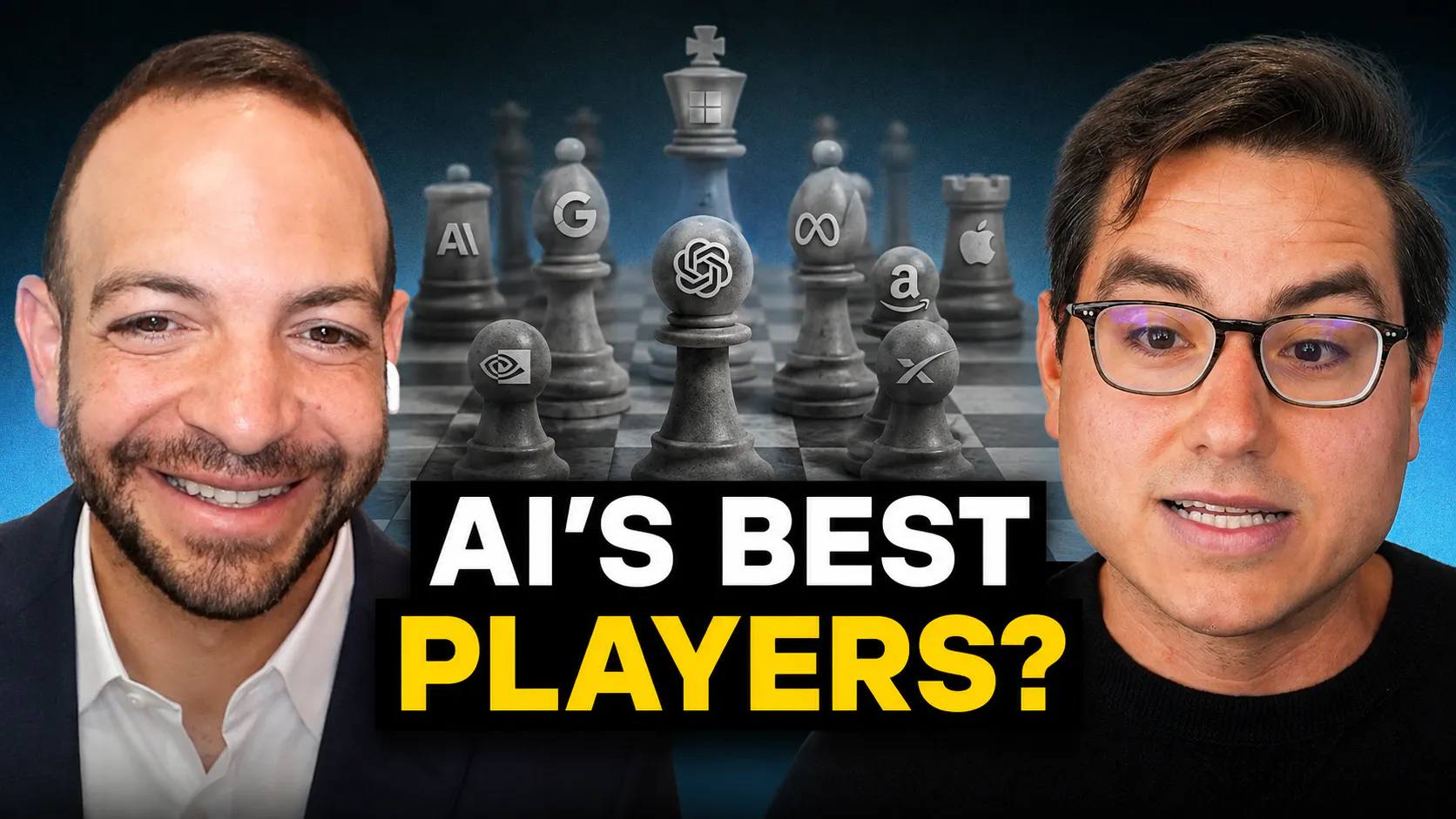
本集简介
双语字幕
仅展示文本字幕,不包含中文音频;想边听边看,请使用 Bayt 播客 App。
AI行业需要赚多少钱才能收回投资,哪家公司的策略最有可能成功?
How much money does the AI industry need to generate to pay back its investments, and which company is employing the winning strategy?
接下来,红杉资本的合伙人David Cahn将为我们解答。
That's coming up with Sequoia partner David Cahn right after this.
欢迎收听《科技大观》播客,一档冷静、细致探讨科技界及更广泛话题的节目。
Welcome to Big Technology Podcast, a show for cool headed, a nuanced conversation of the tech world and beyond.
今天我们有精彩的节目献给大家。
We have a great show for you today.
David Cahn的文章我们每周都在节目里读过,今天他来到现场,和我们聊聊AI投资需要多少回报才能回本,然后我们会逐一分析各家公司的策略,看看哪些能赢,哪些可能不行。
David Cahn, who's writing we've read on the show week after week, is here with us today to talk about what it's gonna take to pay back all the investment going into AI, and then we'll go company by company and decide which ones have the winning strategy and which ones might not.
David,很高兴见到你。
So, David, it's great to see you.
终于,欢迎来到我们的节目。
Finally, welcome to the show.
谢谢你邀请我,Alex。
Thanks for having me, Alex.
所以你的文章进入了我们的视野。
So your writing came onto our radar.
最早是在2024年,你开始讨论要让AI投资回本需要多少回报。
First, when you were basically talking in 2024 about the ROI needed to make the AI bets pay off.
那时候“AI投资回报率”这个词还没流行,大家觉得这项技术有前景,所以当然愿意砸钱进去,因为不想被落下,对吧?
This was long before the term AI ROI was in vogue and there was a sort of determination that there was some promise in this technology and so of course you'd want to spend a lot of money in it because you don't want to be left out, right?
但你很早就开始说,嘿,我们至少得算算账,看看要投入多少才能回本。
But you actually very early on started to say hey, let's at least put some numbers around this to see what it will take to pay off what was coming in.
从2024年开始,你写了那篇《AI的2000亿美元问题》。
And it started in 2024 where you wrote this AI's $200,000,000,000 question.
这篇文章引起了我们的注意,因为哇,你基本上证明了AI需要产生2000亿美元的终身收入才能回本,这开始看起来像真金白银了。
And for us it caught our attention because wow, like it basically you demonstrated that AI would have to make lifetime $200,000,000,000 to pay off its investments and that was starting to look like real money.
让我快速读一段那篇文章,然后我们聊聊它今天怎么适用。
So let me read a quick selection from that and we'll kind of talk about how it might apply today.
你说,每在GPU上花1美元,大概还需要花1美元在数据中心的能源成本上来运行这个GPU。
So you said for every $1 spent on a GPU, roughly $1 needs to be spent on energy cost to run the GPU in a data center.
所以,如果英伟达到年底的GPU年化收入达到500亿美元,那就意味着数据中心的总支出大约需要1000亿美元。
So if Nvidia sells 50,000,000,000 in run rate GPU revenue by the end of the year, that implies approximately $100,000,000,000 in cumulative data center expenditures.
我们假设那些建设数据中心的人需要获得50%的利润率。
Let's assume those building them need to earn a 50% margin.
这意味着,对于当前每年的GPU资本支出,这些GPU需要产生2000亿美元的终身收入才能收回前期资本投入。
That implies for each year of current GPU CapEx, 200,000,000,000 of lifetime revenue would need to be generated by these GPUs to pay back the upfront capital investment.
所以2024年的总数,仅仅两年前,是2000亿美元的终身收入。
So the total number in 2024, just a mere two years ago, was $200,000,000,000 lifetime.
现在让我谈谈我们今天的情况。
Let me talk about where we are today.
保守估计,目前我们看到的资本支出是2万亿美元,今年和明年,也就是2026年和2027年加起来,大科技公司的资本支出预计会超过这个数。
So conservatively right now we're looking at $2,000,000,000,000 in capex, in big tech capex this year and next between, you know, cumulative together 2026, 2027 projected.
实际上不止2万亿,但为了保守起见,我就说2万亿吧。
It's more than than 2,000,000,000,000, but I'll just say 2,000,000,000,000 to be conservative about it.
所以按照你的算法,这些AI基础设施需要产生4万亿美元的终身收入才能收回成本。
So by your math, that would be 4,000,000,000,000 in lifetime revenue on this AI infrastructure needed to make that money back.
那从科技收入的角度来说,给我们一个规模的概念吧。
So in terms of tech revenue, give us a scale, like a sense of scale.
四万亿到底是多少?
How much is 4,000,000,000,000 really?
这是科技公司经常能赚到的数目吗?
Is this something that tech companies make regularly?
他们不常赚到这么多,而且以目前的投资水平,要赚回这笔钱来偿还终身成本并让投资者回本,可行性有多大?
They don't make often and how feasible is it for this current level of investment to earn that money to pay back lifetime and make those investors whole?
嗯,也许先对那几点说几句。
Well, maybe first a couple of comments on that.
首先,2000亿是2023年的,6000亿是2024年的。
First, the 200,000,000,000 was 2023, 600,000,000,000 is 2024.
好的。
Okay.
不管怎样,这些数字确实变得非常大了。
Anyways, regardless, these numbers have gotten really big.
现在听这些数字都觉得有点好笑,因为它们显得有点过时了。
It's funny to almost hear the numbers from then because they feel quaint.
显然,从那以后事情变得超级大规模,而且在2026年有一次大的重新膨胀,这就是为什么你会有那种感觉。
Things have gotten obviously mega sized since then and had a big reinflation in 2026, which is why you had yeah.
这是2000亿美元的问题,然后是6000亿,所以是三倍的增长。
It's $200,000,000,000 question and 600, so a three x growth.
2025年是85亿,所以已经放缓了。
2025, it was $8.50, so it had slowed down.
2026年翻了一番,达到1.5万亿。
Doubled in 2026 to 1,500,000,000,000.
然后就像你说的,如果看2027年的预测,显然会超过1.5万亿。
And then as you say, if you look at 2027 and the forecast there, it's obviously going to scale past 1,500,000,000,000 at this point.
最后要说的是,这些数字是累积的。
And then the last thing to say there is these numbers are cumulative.
所以如果你真的想问自己,嘿,总的资本支出负担是多少?
So if you really want to ask yourself, hey, what's the total CapEx burden?
你说,每一美元的资本支出,最终都需要获得投资回报。
You say for every dollar CapEx, we eventually need to get an ROI.
那要多少,你怎么,如果你真的要把所有这些数字加起来。
How much, how do you, if you actually have to add up all of those numbers.
所以是200加600加850加1.5。
So it's 200 plus 600 plus eight fifty plus 1.5.
基本上,自ChatGPT以来,大约有3万亿美元需要被偿还。
You basically have about $3,000,000,000,000 that needs to get paid back just since chat GBT.
然后正如你所说,如果加上2027年,这个数字会更大。
And then as you say, if you add $20.27, it's going to get larger.
是的,说到你的观点,我想我们大家都开始意识到这些数字有多大了。
And yes, think to your point, we all I think we're all starting to recognize how big these numbers have gotten.
第一个引起广泛关注的帖子是那个6000亿美元的问题。
The first post that kind of went viral was the $600,000,000,000 question.
那是2024年夏天。
That was summer of twenty twenty four.
我觉得那时候的原因,如果你还记得,就是英伟达成为全球市值最高的公司的时候。
And I think the reason for that at that point, if you remember, that was that was when Nvidia became the most valuable company in the world.
所以当我刚开始发这些帖子的时候,没人在乎。
And so when I first started publishing these posts, no one really cared.
这还不是大家关注的焦点话题。
It wasn't really a topic of conversation that people were focused on.
让我觉得疯狂的是,从最初那篇帖子到现在,两年半过去了,这仍然是头号话题。
And what's crazy to me is that two and a half, you know, two and a half years later from the original post, this is still the number one topic of conversation.
所以无论如何,希望我们能快速过一遍。
And so anyways, hopefully we'll take through it quickly.
我想你的听众在过去一年里应该已经听过很多关于这个话题的讨论,现在大家都叫它“AI投资回报率之争”,而且正进行得如火如荼。
I think probably your listeners have heard a lot about this topic in the last year and the AI ROI debate, which is now what everyone calls this is raging full speed.
每次大型科技公司发布财报,你都会听到双方的观点。
And every time a big tech company reports earnings, you hear the debate on both sides.
所以我最初的意图就是提出这个问题。
And so my original intent was to ask the question.
我觉得看看双方的观点很重要。
I think it's important to look at both sides.
就像你在开场白里说的,我们尽量保持冷静,客观看待这些事情的两面。
As you said in your intro, we we try to be cool headed and just look at both sides of these things.
一方面,人工智能可能会成为人类历史上最伟大的革命。
On the one hand, AI is gonna be probably the greatest revolution in human history.
今天,人类承担了99%的认知工作。
Today, humans do 99% of cognitive work.
五十年后,人类可能只需要承担1%的认知工作。
In fifty years, humans are going to do maybe 1% of cognitive work.
对吧?
Right?
所以,一场巨大的革命即将到来,我们都看到了这一点。
So there's a huge revolution that's coming and we all see that.
但另一方面,戴上我们金融分析师的帽子,看市场的话,事情总是有繁荣和萧条的周期。
And yet on the other hand, wearing our financial analyst analyst hats, looking at markets, things go through boom bust cycles.
对于实现这一目标所需的时间、投资去向以及谁将获得回报,我们必须保持冷静。
We have to be cool headed about the timeline that it takes to get there, where the investment goes, who gets the returns.
我们从研究历史中学到的一件事是,有赢家也有输家。
And one thing that we've learned from studying history is there winners and losers.
因此,在这些极度炒作和极度兴奋的时刻,人们往往会假设每个人都会成为赢家,而到了某个时候,又会假设每个人都会成为输家。
And so in these moments of immense hype and immense excitement, there's sort of this assumption that everybody's gonna be a winner and that at some point, there's an assumption that everyone's gonna be a loser.
而实际上,这就是我们将在博弈论和一些具体公司分析中探讨的内容——有些人会成为赢家,有些人会成为输家。
And in reality, and this is what we'll get into in some of the game theory and some of the, you know, company specific stuff, some people are gonna be winners and some people are gonna be losers.
我想,对于那些不在局中、只是旁观的人来说,有趣的对话可能是:谁会赢?
And I think maybe the interesting conversation for those of us who are not in the arena and are looking in is, well, who's gonna win?
对吧?
Right?
我觉得作为人类,我们就是对这个问题的着迷,我也对此着迷。
That's I think as humans, we're just fascinated by that question and I'm fascinated by that question.
我认为你越接近、越深入,就越会发现,关键在于这些人的个性。
I think the closer you get and the deeper you get, the more it becomes apparent that it's these human personalities.
这不是什么抽象的数学。
It's not some abstract math.
实际上是人的个性在推动它。
It's actually human personalities driving it.
所以这一切始于一个6000亿美元的问题,但我想,在这个问题之下,是人、公司文化,以及这些公司相互互动时产生的生态系统效应。
And so it all started with a $600,000,000,000 question, but I think down downstream of that is humans and company cultures and ecosystem effects as these companies interact with each other.
好的。
Okay.
是的,确实如此。
Yes, that's true.
我们接下来会深入探讨这些方面,但我想回到最初的问题,那就是那种收入规模的量级。
And we're going to get into that side of things, but I'm going to go back to the initial question, which is the sense of scale of that type of revenue.
你为什么不把它和比如我们在SaaS行业看到的比较一下?我觉得整个SaaS行业每年的收入不到1万亿美元。
Why don't you compare it to like what we see in sat like the total, I think the total SaaS industry makes less than a less than 1,000,000,000,000 a year.
所有大型科技公司每年的收入加起来也不到1万亿美元。
All big tech makes less than 1,000,000,000,000 a year.
对吧?
Right?
那再给我们讲讲,要赚回这四万亿,大概需要多大的规模,你觉得可行吗?
So just give us again like a sense of scale of what's going to be needed to return this 4,000,000,000,000 and whether you think it's feasible.
是的。
Yeah.
在2024年夏天最早的一篇后续文章里,我写了一篇关于AI资本开支博弈论的文章,试图量化我们到底在说什么。
In the in one of the first follow-up posts in summer twenty four, I did a post in the game theory of AI CapEx and I sort of tried to quantify what are we talking about here?
而且就像你说的,咱们就用整数来算,云软件行业大概分两大块。
And to your point, you know, let's just use round numbers here and say the cloud software industry has two big buckets.
一块是云基础设施,AWS、Azure、GCP,市场规模大约5000亿美元。
There's cloud infrastructure, AWS, Azure, GCP, about a $500,000,000,000 market.
另一块是SaaS应用,市场规模也差不多5000亿美元。
And then you have SaaS applications, roughly a $500,000,000,000 market.
加起来大概一万亿吧。
Let's call it a trillion total.
其实还不到这个数,但我们就按一万亿来算吧。
It's actually less than that, but let's call it a trillion total.
所以这里说的都是非常大的数字。
And so you're talking about very big numbers here.
然后我觉得人们在AI投资中讨论的第二个层面的事情是,好吧,行。
And then I think the second order thing that people talk about in AI investing is, okay, fine.
但实际上,AI所针对的潜在市场并不是软件收入,我觉得这个说法是对的。
But we're not actually the TAM that AI addresses is not software revenue and I think that's correct.
真正的潜在市场其实是人类劳动,所以人类劳动的市场要大得多。
The TAM is actually human labor and so human labor is a much bigger addressable market.
嗯,我觉得确实是这样。
Well, I think that's true.
最近有人给我发了个数据,说是有几万亿美元的服务收入,如果AI能自动化其中的10%,并且实验室能获取所有这些价值,那就能回本了。
Somebody sent me a stat recently that was like, you know, there's X trillion dollars of services revenue and if AI automates 10% of that and the labs capture all of that value, you know, then we get a payback.
然后就想,好吧,那挺好的。
And it's like, okay, that's great.
但这可是个很大的假设,也就是说,你得让10%的服务业实现自动化。
But that's a huge assumption to be making which is you need to have 10% of all of the services industries get automated.
而且在那之后,还有价值捕获的问题。
And then there's some question of value capture downstream of that.
所以我认为从长远来看,就像我说的,99%的认知劳动都会由AI完成。
And so I do think in the long run, like I said, I think 99% of cognitive labor is gonna be done by AI.
所以长期来看,投资回报率不是问题。
So in the long run, there's no ROI question.
不过,这里有个矛盾。
However, there's this tension.
金融市场总是存在时机上的矛盾,因为长期不是明天。
There's always a timing tension in financial markets because the long run is not tomorrow.
公司现在就在花钱。
Companies are spending today.
我觉得这个问题就是,金融市场里人们一直在反复争论,试图弄清楚长期什么时候到来,以及我们能否在短期内获得回报。
And I think there's this question of and there's this constant back and forth in financial markets with people trying to figure out like when is the long run coming and are we going get the payback in the short term?
对,所以我觉得你的回答是,这是可行的,但问题是它能否在可接受的时间表内实现?
Yeah, so I guess your answer here is it is feasible, but the question is does it come on the timetable that is going to be acceptable?
而有趣的是,我们将会发现是否存在那种期限错配。
And sort of the interesting thing that we're going to find out is whether there is that, you know, sort of duration mismatch.
不仅可行,而且我们正在取得巨大的进展,对吧?
And not only is it feasible, but we're making tremendous progress, right?
我觉得值得说的是,我在那篇关于1.5万亿美元的文章里也说过。
I think it is worth saying, and I said this in the 1,500,000,000,000 post.
我的意思是,Anthropic在过去一年里取得的成就简直令人震惊,任何研究过公司的人都会这么觉得,对吧?
I mean, what has happened with Anthropic in the last year is nothing short of mind blowing anyone who studied companies, right?
这是历史上增长最快的公司。
It's the fastest growing company in history.
所以我认为这不仅仅是可行。
And so I think it's more than feasible.
确实有实实在在的进展。
There's real tangible progress.
我回想了一下,当我第一次提出那个6000亿美元的问题时,我说OpenAI占据了收入的大部分。
When I traced back when I first published the $600,000,000,000 question, I said basically OpenAI is the lion's share of revenue.
我记得那时候是120亿美元。
I think at that time it was 12,000,000,000.
现在,OpenAI和Anthropic加起来已经超过1000亿美元了。
Today, it's a 100,000,000,000 plus across OpenAI and Anthropic.
现在仍然有两家公司主导着AI领域绝大部分的收入。
Now there's still two companies driving the vast, vast, vast majority of the revenue in AI.
所以虽然还有很长的路要走,但已经取得了巨大的进展。
And so there's still a long way to go here, but there has been tremendous progress.
我觉得这一点很重要。
And so I think that's important.
而且我觉得这很棒。
And I think that's great.
对。
Yep.
我确实在回顾你写的一些旧帖子时想过这个问题,你在那里大致估算,比如,我们可能会看到的人工智能收入的实际数字。
I definitely thought about that when I was going back and reading some of those old posts that you wrote, you're sort of tallying up like, let's get the feasible number that, you know, we might see in terms of AI revenue.
你列出了OpenAI、Anthropic,还有所有的云服务,这项技术有趣的一点是,它催生了全新的用例和非常赚钱的新业务线。
And you had OpenAI there and Anthropic there and then all the cloud services and one of the interesting things about this technology is it has sort of given birth to brand new use cases and new very lucrative lines of business.
比如,我会回到你2025年的一篇帖子,讨论ChatGPT和Anthropic的收入。
Like I'll go back to one of your twenty twenty five posts talking about the ChatGPT and Anthropic revenue.
ChatGPT继续其史诗般的崛起,收入运行率超过120亿美元,而Anthropic的收入运行率已达到50亿美元,还有一个新公司群体正从零迅速增长到1亿美元收入。
ChatGPT has continued its epic rise north of $12,000,000,000 run rate in revenue and Anthropic has reached $5,000,000,000 in run rate revenue and there's a new club of companies quickly scaling from zero to $100,000,000 in revenue.
你知道,我认为唯一真正相信Anthropic收入今年会增长10倍的人,显然这将会发生,就是Dario,他非常明确地说,他们从2024年的10亿美元,到2025年将做到100亿美元,谁知道接下来会发生什么。
You know, I think the only person that was really convinced that that Anthropic revenue was going to 10x this year, which is clearly what's gonna happen, was Dario, who like said it very clearly that they went from 1,000,000,000 or they went from yeah, they went 1,000,000,000 in 2024, they were gonna do 10,000,000,000 in 2025 and who knows what happens.
当时这看起来疯狂,但正因为这项技术的能力,Cloud Code和Cloud Cowork出现了。
And it seemed crazy at the time, but because of what this technology enables, Cloud Code and Cloud Cowork showed up.
然后Anthropic从一个规模不错的AI API业务转变为一个强大的产品业务。
And then Anthropic went from having a decent sized AI API business to a powerhouse product business.
没有什么比看到这些问题全部得到解答更让我高兴的了。
Nothing would make me happier than to see all these questions get answered.
所以对我来说,我一直觉得,咱们得看看等式两边。
And so I think for me, it's always been, let's just look at both sides of the equation.
现实是,成本那边的增长速度和收入那边一样快,对吧?
The reality is the cost side of the equation has scaled maybe as fast as the revenue side of the equation, right?
所以我觉得,就像有个分子和分母,你在一边取得了进展,但另一边又有了更大的缺口要填。
And so I think sort of have this numerator and denominator and you sort of make progress on one side, but then you sort of have more of a hole to fill.
我觉得特别是2026年,我们看到的一个情况是,在AI编程规模化的推动下,超大规模云服务商在资本支出上加倍投入。
And I think one thing we've seen in 2026 in particular is that on the back of all of the AI coding scaling, hyperscalers doubled down on CapEx.
所以我觉得
And so I think
对。
Right.
特别是看今年,AI发展太快了,我觉得有时候人们连不到两周前发生的事都记不清了。
When you look at this year in particular, you know, AI is moving so fast that I feel like we sometimes it's like people can't remember what happened less than two weeks ago.
但如果你回到2025年1月,那感觉像是很久以前了,你知道,微软和亚马逊当时在缩减资本支出。
But if you rewind back January 2025, which feels like forever ago, you know, Microsoft and Amazon were pulling back on CapEx.
而且,你知道,当时有个时刻,大家说,好吧,让甲骨文来做,这风险很大。
And, you know, there was this moment of like, well, we'll have Oracle do it and it's super risky.
为什么不找甲骨文呢?
Why not have Oracle do it?
然后微软和亚马逊都受到了股市的惩罚,人们说,哦,他们对AI不够乐观。
And then Microsoft and Amazon both got penalized the stock market where people said, oh, they're not bullish enough on AI.
所以后来他们不得不重新回到游戏中来。
And so then they had to come back to the to the to the to the game, if you will.
现在到了2026年,我们达到了一个点,不仅每个人都在游戏中,而且每个人都在大幅加速。
And now we've reached a point in 2026 where not only is everybody in the game, but everyone is massively accelerating.
而且,你知道,我觉得我们曾经有过一些疑问,比如人们会不会试图合理化这些事情?
And there's no, you know, I think we were at some point, there was some question of like, are people going to try to rationalize things?
人们会不会看看数学?
Are people going to look at the math?
我觉得我们已经到了一个人们根本不在乎数学的地步了。
I think we reached a point where people just don't care about the math anymore.
全都押上去了。
All it's all in all the way.
我们拭目以待吧。
Let's see what happens.
这就是我对2026年的看法。
And that's how I view 2026.
我认为那是今年早些时候的一个真正的催化剂。
And I think that was a real catalyst for that earlier this year.
好的。
Okay.
说到不在乎数学、全力投入,你最近写的一篇文章,我想也是2025年的。
So speaking of not caring about the math and going all in, one thing that you wrote recently, I think it was in 2025 also.
你写道:有一点已经变得清晰,除非实现AGI,否则无法证明未来十年拟议的投资是合理的。
You wrote one thing has become clear, nothing short of AGI will be enough to justify the investments now being proposed for the coming decade.
你现在还这么认为吗?
Do you still believe that?
是的,我相信。
Yeah, I do.
我觉得这要追溯到我们俩刚开始通过邮件讨论这个话题的时候。
I think it's when you and I first started exchanging emails on this topic.
其实挺有意思的。
It's funny, actually.
我记得写那篇文章的时候。
I remember writing that post.
我刚读了Hyperion,那是Meta新数据中心的名字。
I just read Hyperion, which is the name of Meta's new data center.
所以也许这有点道理。
So maybe there's something to that.
但那时候,再提醒一下听众,当时大家都在谈论10吉瓦、30吉瓦,甚至100吉瓦的资本支出。
But you at that time, again, to remind the audience, at that time, everyone was talking about 10 gigawatts, then 30 gigawatts, then a 100 gigawatts of CapEx.
而且这些数字大得惊人,远远超过我们现在的水平,说清楚这一点。
And so and those are just astronomically large numbers far beyond where we are today, to be clear.
所以如果你想想那些资本开支,唯一能回本的方式就是实现AGI。
And so if you kind of think about those dollars of CapEx, the only possible way to pay those dollars back is going to be AGI.
所以我觉得市场搞错的地方,也是华尔街固有的问题,就是华尔街总是盯着股市涨2%还是跌2%。
And so what I think the market kind of gets wrong and it's just inherent to Wall Street, but Wall Street sort of always has this view of like, is the stock market gonna go up 2% or is it gonna go down 2%?
对吧?
Right?
就是这种持续的波动,如果一个月跌10%,大家就惊呼天哪。
It's like this just constant volatility and everyone, you know, if the market's down 10% in a month, it's like, oh my god.
如果一个月涨10%,也惊呼天哪。
If the market's up 10% in a month, oh my god.
实际上,我觉得我们正在走向一个分岔路口,一条路是我们实现AGI,把这些钱都赚回来,甚至更多。
In reality, I think we are reaching this, like, sort of bifurcated path where path one is like we get AGI, we pay back all these numbers and more.
这将是人类历史上最伟大的技术。
It's the greatest technology in human history.
所有我们在媒体上经常听到的那些东西。
All of the things that we hear in the media all the time.
然后第二条路是我们搞错了时间。
And then path two is we got the timing wrong.
编码之后没有下一个应用,那就会有一场大清算。
There's no next application after coding and you have a big reckoning that has to come.
而且我觉得,某种程度上,市场低估了AGI的可能性,也低估了某种修正的可能性,却大大高估了现状惯性,也就是我们每年花2000亿美元在资本开支上的现状。
And I think, you know, in some ways, I think the market underestimates the probability of AGI and underestimates the probability of some correction and massively overestimates the status quo bias, which is the current status quo of we're spending $200,000,000,000 a year on CapEx.
而且,是的,我们在租GPU,所以收入在加速增长。
And, you know, yes, we're renting our GPUs, so revenue is accelerating.
但根本上,没有新的业务线从中产生。
But fundamentally, there's no there's not a new business line coming out of it.
那是不可持续的。
That is not sustainable.
所以,确实要想想,而且顺便说一句,这就是为什么我谈论领导这些公司的人们的博弈论和逻辑,你看看桑达尔,看看萨蒂亚,看看山姆,看看埃隆,看看达里奥,他们都告诉了我们他们的信念。
And so do think and if for what it's worth, and this is why I talk about kind of the the game theory and logic of the people leading these companies, you look at Sundar, you look at Satya, you look at Sam, you look at Elon, you look at Dario, they've told us what they believe.
他们相信他们在追求AGI。
They believe that they're chasing AGI.
这非常清楚。
It's very clear.
我觉得这一点没有争议。
I think there is no debate about that.
这些人对自己在做什么已经说得非常明白了。
These guys have been extremely clear about what they're doing.
金融市场有时候就是喜欢忽略人们说的话,因为要在假设AGI的前提下持有谷歌的股票,确实很难。
The financial market kind of likes to ignore sometimes what people are saying because kind of hard to own Google on the assumption of AGI.
这真的很难让人理解。
It's just like hard for our brains to grok that.
所以我们就把这个想法收回来,变成一些,哦,会有一些投资回报。
And so we sort of pare that back into some, oh, there's going to be some ROI.
你知道,微软要公布财报。
You know, Microsoft's going to announce earnings.
他们会公布Azure的增量,是X还是X加2%。
They're going to announce Azure incrementality of X or X plus 2%.
然后股价就会因为这个其实无关紧要的随机数字而波动。
And the stock's going to move on this like random number that doesn't really matter.
实际上,真正重要的是我们能不能实现AGI。
In reality, what matters is like, are we going to get to AGI or not?
以及我们是否有足够的证据表明他们能继续以这种规模投入。
And are we going to have enough evidence that they can continue to spend at this scale?
但现在我们开始进入负自由现金流区域,规模越来越大,要继续保持这种投入会越来越难。
But now we're getting into negative free cash flow territory, getting to a scale where it is going be harder and harder to keep spending at this scale.
但所有证据都表明,超大规模云服务商会继续积极朝这个方向前进。
But all the evidence suggests that the hyperscalers are going to continue aggressively moving in this direction.
有趣的是,现在很多市场和投资都涌向这些公司,想象着AGI很快就会实现,但正如你指出的,实验室领导们发表的很多声明都在淡化或拖延那个时间表。
You know, what's interesting is that it seems like right now a lot of the market and the investment is going into these companies sort of imagining that AGI is going to happen pretty soon but as you've pointed out, a lot of the pronouncements we're getting from the lab leaders have been sort of downplaying or slowplaying you know that timeline.
Dario当然认为可能今年或明年就会实现,但Sam Altman谈到了温和的奇点,Ilya说预训练已经结束,Yann LeCun一直在激烈地表示LLM不是通往AGI的路径。
Dario of course thinks it might happen you know this year, next year but Sam Altman talked about a gentle singularity, Ilya has talked about how like pre training is over, Yan Lakun has been like on the warpath talking about how LLMs are not the route to AGI.
所以,无论你怎么看待这种不一致——一边是技术构建者们的说法,另一边是市场和投资所指向的方向——如果我要找哪里不同步,这可能是头号问题。
So whatever you make of that mismatch between like what we're hearing from the people who are building this technology and what the market and the investments he used to be pointing to, which is like if I was thinking of places where this is out of sync, that might be like the number one place.
对。
Yeah.
这是我2025年写的最重要的一件事。
This is the number one thing that I was writing about in 2025.
2025年我完全沉迷于这个话题。
I was just obsessed with this topic in 2025.
我之所以这么沉迷,部分原因是我投资AI已经大约十年了。
And part of the reason why I was so obsessed with it, you know, I've been investing in AI for about ten years now.
所以我长期以来一直是AI的坚定看多者。
So I'm in a massive AI bull for a very, very long time.
我在Transformer论文发表一年后就开始投资AI了。
And I started investing in AI a year after the transformer paper.
所以算是比较早,但你知道,还有更早的人。
So early but not, you know, there are people who are earlier.
对吧?
Right?
而且我一直遵循我的理念,作为投资者,你的工作就是跟随那些真正聪明的创业者。
And I always try to follow my philosophy is kind of as an investor, your job is to follow the really smart entrepreneurs.
最终事情会变成共识,因为证据太明显了,而作为投资者,你的工作就是走在共识前面。
And eventually things become consensus because the evidence is so obvious and and your job as an investor is just to be ahead of that consensus.
所以也许你会在ChatGPT出现前五年开始投资AI,但不会提前十年。
And so maybe you start investing in AI five years before ChatGPT but you're not going to start investing ten years before ChatGPT.
你必须跟随领导者。
You have to follow the leaders.
我开始看到的是,Ilya、Sam、Greg这些人出来说,AGI还有十年。
And what I started to see is that Ilya and Sam and Greg and all these guys are coming out and they're saying it's AGI is ten years away.
顺便说一句,作为一个关注AI十年的人,这很有道理。
By And the way, as somebody who's been following AI for ten years, that makes a lot of sense.
这些事情需要时间。
These things take time.
在2024年和2025年,我深入研究的东西,我发表了这篇文章,《服务器、交易和电力》。
And in 2024 and 2025, the thing that I had gone deep on, I published this piece, Servers, Deal and Power.
我深入研究了怎么真正建一个数据中心。
And I got extremely deep on just like, how do you actually build a data center?
我飞过去参观了很多数据中心,然后我意识到,从你宣布要建数据中心到数据中心建成,需要两年时间。
I'd flown, I'd visited a bunch of data centers, and I sort of had this realization that, well, it takes two years from the time that you announce you're doing a data center, the data center getting built.
也许会更久,因为我们现在看到的社区反对等等。
Maybe it's going to be longer because of all of the community pushback and stuff that we're seeing right now.
所以这个想法,我觉得在Excel表格或图表里,展示指数级增长很容易。
And so just this idea, I think in an Excel spreadsheet or in a chart, it's very easy to show exponential scaling.
但在现实世界里,指数级增长非常困难。
But then in the physical world, exponential scaling is very challenging.
所以我有这样的看法。
And so I had this view.
而且,我在25年的时候特别痴迷于这个,因为我觉得市场讨论的方式和真正懂技术的聪明人讨论的方式之间有很大的分歧,他们可能认为AGI还要十年或二十年才能实现。
And again, I was sort of obsessed with this in '25 because I thought there was such a divergence between the way the markets were talking about this and the way the really smart technical people were talking about this where AGI could be ten or twenty years away.
然后我一直说的,我觉得我可能已经重复说了两年了,就是AGI将会非常惊人。
And then the thing that I've been saying, and I think I've been saying this on repeat maybe for two years now, but it's like AGI is gonna be amazing.
对吧?
Right?
比如说到2050年,我80岁的时候,我经常说,当我80岁时,世界会完全不一样。
Like, in '50 when I'm 80 years old, it's something I've said a lot of times, like, when I'm 80 years old, the world is gonna be completely different.
我们生活的方方面面都会改变。所以从某些方面来说,所有乐观的预测都是对的。
Everything about the way we live is gonna be So in some ways, all of the optimistic forecasts are right.
而且如果要说的话,他们还低估了世界变化的程度。
And if anything, they're underestimating how much the world is going to change.
但到达那里的时间线和路径依赖很重要。
But the timeline and the path dependency that we get there matters.
金融市场关心路径依赖。
Financial markets care about path dependency.
而且我觉得很多,你知道,赢家和输家就是这么产生的,因为在通往那个目标的路上,你必须做出正确的战略决策。
And I think a lot of, you know, that's where the winners and losers come out because on the path to get there, you have to make the right strategic decisions.
如果你是大师级人物,我觉得埃隆和山姆·奥特曼都是,这些人都是大师,他们试图规划,比如,好吧,如果发生这个,然后就会发生这个,接着发生这个。
And if you're a grandmaster, which I think Elon is and Sam Altman is and some of these guys are grandmasters, they're trying to plan out like, okay, well, if this happens, then this happens, then this happens.
而且我觉得这些实验室的领导者们都在谋划很多步棋,我们只看财务报表就太简单了。
And I think that the the leaders of these labs are planning many, many moves ahead and we're oversimplifying when we just look at the financial statements.
我们得看看他们的总体计划是什么,能不能行得通,还有谁的计划最合理。
We have to look at what's the master plan and is it going to work and whose master plan kind of makes the most sense.
这就是我一直在收集数据的原因。
And that's what I'm trying to collect data on.
我在一篇文章里说过,每次看到AI的新闻标题,我就觉得像是马走到了E6之类的。
In one of the posts I said like every time I see an AI headline, I think like, you know, knight moves to E6 or something.
对吧?
Right?
这步棋是什么意思?
Like what is this sort of move?
这对整个棋局意味着什么?
What does this imply about the chessboard?
我就是在构建这样一个世界模型,如果你愿意这么理解的话。
And I'm kind of building this world model, if you will.
我脑子里有一个总的世界模型。
Like I have a sort of a master world model.
它并不正确。
It's not correct.
显然它在很多方面都是错的,但我一直在根据每一个决策不断更新这个总的世界模型。
Obviously it's incorrect in a 100 ways, but I'm constantly updating this this master world model with every decision.
有些决策是一致的,更新很小;有些决策是新的,确实需要更新对实际情况和底层战略的理解。
Some decisions are consistent, it's a very small update and some decisions are new and they actually require some updating of what is actually going on, what is the underlying strategy.
如果你能在脑中保持这个世界模型,你就能更好地预测五六年后的情况,远胜于只看Azure的增量是X还是Y。
And if you can hold that world model in your brain, that actually enables you to forecast what's going to happen in five or six years far more so than like Azure incrementality is X versus Y.
对我来说,最大的更新之一是去年所有这些人都出来说同样的话,即AGI还有十年之遥。
And to me, one of the biggest updates was last year when all of these guys came out and said the same thing, which is AGI is ten years away.
那是一个巨大的更新。
That was a huge update.
嗯。
Mhmm.
好的。
Okay.
对。
Yeah.
我确实想深入聊聊那些战略性的举措。
I definitely want to get into sort of the strategic moves.
我之前已经提过几次了。
I've teased it a couple times.
关于这部分,我再问你一个问题,然后我们就休息一下,继续下一个话题。
I'm gonna ask you one more question on this section then we're gonna take a break and move on.
我想跟你提的一件事是,你之前也经常谈到,就是关于AI泡沫这个概念。
One of the things that I wanted to bring up to you was, and you've talked about this lot, is this notion of an AI bubble.
我不是要问你我们是否处于AI泡沫中,就像你之前说的,这里面有些元素确实像泡沫,但我想问的是,为什么这个话题这么让人困惑?
And I'm not gonna ask you whether we're in an AI bubble or not like you said before that there are elements of this that is, but I guess my question for you is why is this so confusing?
因为大家的共识似乎总是在摇摆,一会儿说这是AI泡沫,一会儿又说不是,特别是在有一系列新进展的时候。
Because it does seem like the consensus vacillates from yes, this is an AI bubble to no, it's not when there are a bunch of developments.
对吧?
Right?
想想看,比如今年年初的时候。
Like think think about like the turn of this year.
风向从“我们肯定在AI泡沫里,看看这些支出”变成了“AI能写代码了,所以不是泡沫,因为它会消灭所有SaaS甚至更多,并占据所有价值”。
The shift went from we're definitely an AI bubble, look at all the spending to like AI can code and so therefore there's it's not bubble because it's gonna wipe out all of SaaS and more and capture all the value.
现在我们又觉得,哦,但那种……我不想说已经到顶了,但已经确立了,而且接下来还会有更多支出,所以现在感觉更像泡沫了。
And now we're like, oh, but like that sort of we've that I don't want don't wanna say has plateaued but that's been established and now there's gonna be even more spending so now it feels more like a bubble.
所以,谈谈当人们思考是否存在AI泡沫时,他们应该怎么想,以及为什么这个问题这么让人困惑。
So just talk a little bit about how when people think about whether there's an AI bubble, how they should think about it and why it's so confusing.
这个词太有争议了。
It's such a charged word.
我觉得这是部分原因。
I think that's part of it.
就像每个人都有自己的立场,都在某种程度上为自己的立场说话,所以你看,迈克尔·伯里公开说这是泡沫,而他是做空的。
It's like everybody has a book and everyone's somewhat talking their book and so it's like, you know, you have Michael Barry going out saying, like, it's a bubble and he's a short guy.
所以,他当然会说他在做空很多东西。
And so, of course, he's saying that he's, like, short a bunch of stuff.
然后你有很多做多的人,他们说一切都会好起来。所以我觉得这很难,至少对我来说,这就是为什么这么难,因为你试图理解每个人在说什么,但还要看他们拥有什么,以及他们为什么这么说。
And then you have a lot of guys who are long and and so they're saying it's all gonna be and so I think it's just hard, at least for me, this is what makes it so hard is like you're sort of trying to parse what everyone is saying but also relative to what do they own and why are they saying what they're saying.
所以我觉得这真的很棘手。
And so I think it's really tricky.
而且“泡沫”这个词本身就带有各种情感包袱。
And then the word bubble sort of like has all of this emotional baggage associated with it.
所以每个人都对泡沫感到紧张。
And so and everyone's kind of nervous about a bubble.
什么是泡沫?
What is bubble?
然后我觉得你有一个更广泛的大趋势,那就是硅谷在过去五十年里已经吞噬了世界。
And then I think you have this broader sort of megatrend, which is like Silicon Valley has eaten the world in the last fifty years.
所以,押注科技不会吞噬世界似乎非常非常冒险,而且坦率地说,这似乎是错误的赌注。
So, like, betting against tech eating the world seems super, super risky and frankly seems like the wrong bet.
而且再看看人工智能,你会想,如果这跟之前的技术革命一样,哇,那它一定会改变世界。
And then also you look at AI and you say, man, if this is anything like the previous tech revolutions, wow, it's gonna change the world.
然后你去试试这项技术。
And then you try the technology.
我记得我好像是2024年第一个非员工使用Devon的人,就是那个编程代理。
I remember I think I was the first non employee to use Devon in 2024, the coding agent.
对吧?
Right?
如果你试过这些技术,你就能看到未来。
If you were trying the technologies, you saw you could see the future.
你会看到这些东西会变得极其强大。
You saw that these things were gonna be extremely powerful.
所以,你知道,你试了这些技术,发现它们会取代认知劳动。
And so, you know, you try these technologies, you see that they're going to replace cognitive labor.
然后你还会看到一些具体的应用案例。
And then you also look at some of these concrete use cases.
你看看Sierra在客服领域做的事情。
You look at what Sierra is doing in customer service.
你看看Harvey在法律领域做的事情。
You look at what Harvey's doing in law.
你看看Juice Box在招聘领域做的事情,然后你会想,哇,这些工作都会变得不一样。
You look at what Juice Box is doing in recruiting and you think, wow, like these jobs are all going to be different.
所以再说一次,你身处前线,你几乎能看到一切都会改变,然后你试图预测未来,而且这需要时间。
So again, you're at the front lines, you kind of see that everything is going to change and then you're trying to forecast that out and there's a timeline to get there.
所以我几乎,我有点回避这种泡沫讨论,因为泡沫讨论会变得非常短视。
And so I almost, I sort of avoid this kind of bubble conversation because the bubble conversation becomes very myopic.
突然间一切都围绕着一两三件事,人们几乎停止思考。
Suddenly everything becomes about one, two, three things and people almost stop thinking.
你说泡沫这个词,人们的大脑就关机了。
Like you say the word bubble and people just, their brain shuts down.
而且也许他们站在一边或另一边,基本上取决于他们的经济利益在哪里。
And like maybe they're on and they're on one side or the other basically based on where their financial incentive is for the most part.
所以你就没法进行一场有深度的、有趣的对话了。
And so you just like can't have an intellectually interesting conversation.
而我感兴趣的是那种细致的讨论,因为记住,我80%的工作就是坐在公司的董事会上,想办法怎么应对这轮AI周期。
And the thing that I'm interested is like the nuanced conversation because remember 80% of my job is I'm sitting in the boardroom of this company trying to figure out how do we navigate this AI cycle?
怎么确保我们能成为最终的赢家?
How do we make sure that we're winners on the other side of it?
我每天做的就是这些,比如,我们能赢吗?
That's what I'm spending my day doing is like, do we win?
怎么制定我们的策略?
How do we craft our strategy?
我不是像埃隆·马斯克那样的大师,但关键是我们怎么制定策略,好在这轮周期结束时表现优秀,至于泡沫不泡沫的,根本不重要。
I'm not a grandmaster like Elon Musk, but it's like, how do we work on our strategies that we do a good job at the end of this cycle and sort of like bubble, no bubble is irrelevant.
反正总有一天会有调整。
Like at some point, there'll be corrections.
我们得挺过这些调整。
We need to survive those corrections.
从长远来看,这项技术显然会成功。
In the long run, this technology is obviously going to work.
我们需要确保自己是赢家,并且要非常激进地确保我们在那之后成为赢家。
We need to make sure that we're the winners and we need to be massively aggressive to make sure that we're the winners on the other side of that.
所以我觉得,进行细致的讨论比用这种非黑即白的语言来结束话题要好。
So I think, you know, it's better to actually have the nuanced conversation than to sort of shut things down with this kind of binary language.
这就是我们在这里努力做的。
And that's what we try to do here.
好的。
Alright.
那么,让我们继续讨论休息后的其他内容。
So let's let's keep going on the other side of this break.
回来后,我们将讨论大卫所说的世界历史上最伟大的策略游戏,以及大型科技公司是如何玩这个游戏的。
When we're back, we're gonna talk about the greatest strategy game in the history of the world as David puts it and how the big tech companies are playing are playing it.
所以,我们稍后回来。
So we'll be back right after this.
大家好。
Hi, everyone.
我是Alex Cantroids。
Alex Cantroids here.
我想告诉大家,我和Gravity一起制作了一部纪录片,探讨AI代理安全的未来。
I wanna tell you about a documentary I've made with Gravity to explore the future of AI agent security.
为了了解我们是否真的为自主代理做好了准备,我采访了麻省理工学院教授Ramesh Raskar、前白宫首席信息官Theresa Payton、米其林集团首席数据与AI官Ambika Rajagopal,以及阿里巴巴前高管Sharon Guy。
To find out if we're truly ready for autonomous agents, I sat down with MIT professor Ramesh Raskar, former White House CIO Theresa Payton, Michelin's Group Chief Data and AI Officer Ambika Rajagopal, and Sharon Guy, a former executive at Alibaba.
他们对这个不断发展的领域各有独到见解。
They each unique insights into this evolving landscape.
最后,我们与Gravity的首席执行官Rory Blundell进行了对话,讨论了未来的发展方向。
We conclude with Rory Blundell, CEO of Gravity, to discuss the path forward.
在Gravity的引领下,加入我们的旅程吧。
With Gravity leading the way, join us on this journey.
你可以在节目说明中的链接观看完整纪录片。
You can watch the full documentary at the link in the show notes.
欢迎回到Big Technology播客,今天我们请到了David Cahn。
We're back here on Big Technology podcast with David Cahn.
他是红杉资本的合伙人。
He is a partner at Sequoia Capital.
你可以在dcahn.substack.com上阅读他的文章。
You could rate his writing at dcahn.substack.com.
强烈推荐你订阅。
Highly recommend you sign up.
每次David发东西,我都会确保去读。
When David sends something out, I always make sure to read it.
那我们来聊聊这个精彩的策略游戏,就是这些大科技公司之间的竞争。
So let's talk about this great strategy game which is what's going on between all these big tech companies against each other.
如果我把我对这些玩家的一些简短看法读给你听,你告诉我这是不是他们的策略,以及这个策略好不好,怎么样?
What if I were to like read to you sort of my one liner on some of these players and you tell me if you think this strategy is this is the strategy and whether it's gonna be a good one.
好的。
Yeah.
对。
Yeah.
我觉得,这篇是我2026年最喜欢的文章。
I think, like, this was the this was my favorite post of 2026.
所以我觉得,从某些方面来说,有趣的是,国际象棋是一个显而易见的策略游戏比喻。
And so I think in some ways, the thing that's interesting to me is chess is like an obvious strategy game metaphor.
对吧?
Right?
所以显然,人们会用国际象棋来思考这个问题。
So it's like, obviously, people are gonna think about this in terms of chess.
我觉得更有趣的比喻是《星际争霸》和《阿扎德》,我认为这将影响我们如何看待各个公司的战略,在《星际争霸》中,对于那些玩过《星际争霸》的人,如果没有玩过,强烈建议至少读一读相关的内容。
I think the more interesting metaphors are like StarCraft and Azad, and I think this will inform how we think about the individual company strategies, which is on StarCraft, for those who've played StarCraft, if not, highly recommend at least reading about it.
但《星际争霸》是一个资源分配游戏,而AI也是一个资源分配游戏。
But it's like StarCraft is a resource allocation game and AI is a resource allocation game.
所以当我们深入探讨时,你的资源是什么,以及你如何分配这些资源?
And so I think as we get into it, what are your resources and how do you allocate those resources?
展开剩余字幕(还有 480 条)
这是每家大型科技公司面临的最重要的问题。
That's the most important question facing every big tech company.
好的。
And Okay.
很好。
Good.
然后我觉得还有一个问题,就是,你知道,星际争霸里有三个种族。
And then I think there's a question of, like, you know, there's three races in Starcraft.
比如,你与生俱来的能力是什么?
Like, what is your what are your intrinsic abilities?
我们会谈到谷歌。
We'll get into Google.
它可能是一个种族。
It's maybe one race.
微软是另一个种族。
Microsoft's another race.
比如说,你天生的能力和特长是什么?
Like, what are your intrinsic abilities and intrinsic capabilities?
然后我在那篇文章里用的最后一个比喻是阿扎德,这是伊恩·班克斯的《游戏玩家》里的一个虚构游戏。
And then the last metaphor I used in this post was Azad, which is this fictional game in Ian Banks, the player of games.
想象一个文明,你实际上在玩一个策略游戏,谁赢了谁就成为皇帝。
Imagines a civilization where you literally play a strategy game and whoever wins becomes emperor.
我觉得这就是现在人工智能领域正在发生的事情。
And I think that's what's happening right now in AI.
我认为这八位玩家在这个四维棋盘上,他们觉得自己是在为宇宙中最高 stakes 下注。
I think that the eight players around this four d chessboard think they are playing for the highest stakes in the universe.
他们是在为成为宇宙的皇帝而战,不管那意味着什么,控制 AGI 的人,不管那意味着什么。
They are playing to be the emperor of the universe and whatever that means, the person who controls AGI, whatever that means.
所以,不管怎样,我们会深入探讨各家公司的具体情况,但我认为一切都取决于玩家们的信念、他们可用的资源,以及他们的种族赋予他们的优势,让他们在这个世界棋盘上行动。
And so, anyways, we'll get into the company specifics, but I think everything is downstream of what do the players believe, what are the resources available to them, and what are the strengths that their sort of race gives them to to act in this chessboard that is the world.
好的。
Okay.
好的。
Alright.
那我们一个一个来,看看能聊到哪儿。
Let's let's go by one by one then and and see see how far we get.
对于Anthropic,我写的策略是主导企业市场,通过产品和API主导代码领域。
For Anthropic, I wrote the strategy is dominate enterprise, dominate code via products and API.
那你觉得这个评估怎么样?你认为他们的资源分配策略是什么?
So how would how did we how would you rate that assessment and what do you think their resource allocation play is?
不同意。
Disagree.
我不认为那是他们的策略。
I don't think that's the strategy.
我觉得他们的策略就是垄断全球AI人才,然后赢,就这么简单。
I think the strategy is corner the world's talent in AI and win period.
详细说说。
Elaborate on that one.
我觉得这一点一直都很明确。
I think it's been very clear.
Anthropic一直有一个非常一致的策略,那就是他们有自己的立场,并且清楚自己的立场,这让他们能够吸引到顶尖人才。
Anthropic has had a very consistent strategy which is they stand for something and know what they stand for and the that enables them to recruit exceptional talent.
而且人才会不断累积,因为在他们看来,而且我觉得很多人也这么认为,扎克伯格显然也这么想。
And the talent compounds because in their view, and I think in a lot of people's views, Zuck clearly believes the same thing.
现在人才是稀缺资源。
Talent is the scarce resource right now.
所以,只要抓住这个叫人才的稀缺资源,让这些人为你效力,你就能赢。
And so corner this scarce resource called talent, you get these people fighting for you and that's how you win.
对。
Yeah.
而且有意思的是,这就是Anthropic的策略,实际上,在当年Meta超级智能实验室挖人的时候,他们流失的人才比竞争对手少得多。
And it is interesting, like, that is Anthropic's play, they actually lost far fewer people than competitors did to Meta during the Meta Superintelligence lab poaching spree back in the day.
有趣的是,假设我们进入一个LLM商品化的世界,对吧?
One interesting thing about that is let's say you go into a world where let's say LLMs commoditize, right?
那你就得靠产品来取胜了。
Then you need to be able to win based on product.
如果你有最优秀的人才,那你就有可能拥有最好的模型和最好的产品。
And if you have the best talent, then you could potentially have the best models and the best products.
这似乎就是目前对Anthropic所处位置的一种评估。
And that does seem to be down to like sort of one assessment of where Anthropic is playing right now.
是这样吗?
Does that track?
但我要再次反驳一下,好吧。
But again, I'm gonna push back on this like Okay.
我觉得大家容易混淆的地方在于,你把模型混在一起了,你得专注于战略是什么。
Where exactly where I think everyone gets confused because you sort of mix models here and you sort of you have to focus on what's the strategy.
这个战略可以追溯到Anthropic还没那么成功的时候,一直都非常一致。
The strategy and you can back test this back to before Anthropic was famously successful is like the strategy has always been extremely consistent.
他们从哲学上深信AGI。
They deeply philosophically believe in AGI.
一切都围绕着实现AGI。
It is all about getting to AGI.
他们相信我们终将实现AGI,而实现它需要人才。
They believe we are going to get there and they need talent to get there.
而且我认为,至少到目前为止的证据表明,他们一直在推动前沿发展,而且在他们看来,他们会继续推动前沿。
And I think what evidence at least so far shows that they have been able to push forward their frontier and in their view, they're going keep pushing for their frontier.
当然,他们会有这些产品,有产品是好事,而且他们需要收入来吸引投资。
And sure, they're going to have these products and it's great that they have products and they need revenue in order to attract investment dollars.
但归根结底,一切都关乎AGI。
But at the end of the day, it is all about AGI.
这是我的看法。
That is my read.
再说一次,这只是局外人的观察。
Again, this is just an outsider looking in.
我并没有身在其中。
I'm not in the arena.
我不知道。
I don't know.
但作为旁观者来看,这个策略非常一致,他们会继续执行这个策略。
But as an outsider looking in, it's like very consistent strategy and they're gonna keep executing that strategy.
当然,他们需要应对商品化之类的噪音,但对他们来说,那只是噪音。
And sure, they need to, like, deal with this noise around commoditization and they need to do but to them, it's just noise.
他们就是觉得,只管执行策略就好。
It's just like, let's just execute the strategy.
安德烈·卡帕西刚加入。
Andrej Karpathy just joined.
所有这些好事都在发生。
All this good stuff is happening.
就像,加油干吧。
Like, let's go.
对吧?
Right?
而且我觉得,如果你走进那栋楼——我并没有在那里待很久——但你想,如果你走进那栋楼,那就是你午餐时坐在别人旁边的地方。
And I think that if you walk in the building and I don't spend hours time there, but think if you walk in the building, that's where you sit next to people at lunch.
我不觉得他们在谈论什么中国模式。
I don't think they're talking about like some China model.
我觉得他们就是在想,怎么才能招到最好的人才?
I think they're just like, how do we get the best people?
怎么才能推动前沿发展?
How do we push the frontier forward?
怎么确保我们有足够的算力来做这件事?
How do we make sure we have enough compute to do that?
好的。
Okay.
所以,但我会说他们模型中的缺陷是,你知道,有可能被商品化。
So but I would then say that the flaw in their model is that, you know, that can be there's a chance that that is commoditized.
AGI被商品化的可能性,就是那个策略的缺陷。
Like the chance that AGI is commoditized is the flaw in that strategy.
你觉得呢?
What do you think?
那是你的权利,我不是大师。
That's your prerogative to I'm not a grandmaster.
我不喜欢,对我来说,就像我不喜欢去说那个大师不好。
I don't like to like to me, think it's just like I don't like to go say like, that grandmaster is bad.
我不是大师。
I'm not a grandmaster.
我只是像玩游戏一样。
I'm just like game.
这并不意味着他们不好。
It doesn't mean that they're bad.
只是说,你看,嘿,听着。
It just means like, you know, hey, look.
就拿国际象棋来说吧。
In the let's go with the game of chess.
当你把一个棋子往一个方向移动时,就意味着其他方向对你来说就关闭了。
When you move a piece one direction, it means that the other directions are shut off for you.
所以我觉得,如果在这段对话中说到,你移动了,那是一个选择。
So I think that if in this conversation talking about, well, you moved, it's a choice.
你朝那个方向移动了。
You moved in that direction.
你没有朝那个方向移动。
You didn't move in that direction.
那让你的侧翼暴露了。
That leaves your flank open.
我觉得,如果你想谈论游戏,这并不意味着你是个差劲的玩家。
I think that if you want to talk about the game, it doesn't mean that you're a bad player.
它只是表明,好吧,你做了那个选择,而那是你的弱点。
It just shows, okay, you've made that choice and that is your weakness.
但我觉得这又回到了那个问题,比如你有哪些基本的资源可用?
But I think that this comes back to this question of like what are the fundamental resources available to you?
你觉得这就是象棋比喻失效的地方,也是星际争霸更有趣的地方。
You think that is where the chess metaphor breaks down and where StarCraft is more interesting.
好的。
Okay.
你真正能分配的基本资源是什么?
What are the fundamental resources that you actually can allocate?
归根结底,如果模型商品化了,那当然是好事,但对一个推动前沿工作的初创公司来说显然不是好事。
And at the end of the day, like if models commoditize, that's good, obviously not gonna be good for a startup that is driving all the frontier work.
所以我认为你必须押注于某个世界。
And so I think you have to bet on a certain world.
也许这个赌注是错的。
Maybe that bet is wrong.
这就是初创公司有风险的原因。
That's why startups are risky.
也许这个赌注是错的,但你确实需要有主见。
Maybe that bet is wrong but like you do need to be opinionated.
我觉得这个游戏的美妙之处在于,作为这个领域的学生,Anthropic 玩这个游戏的方式非常美,因为他们对这个策略如此坚持。
And I think what's beautiful about, you know, as a student of the game, what's beautiful about the game that Anthropic is playing is that they're so consistent on that strategy.
如果他们所做的假设被证明是正确的,那他们将会变得非常非常有价值。
And if the assumptions they're making prove to be correct, they will be very, very valuable.
现在每个人都必须做出假设,通常这些假设需要基于你手头可用的资源。
Now everyone has to make assumptions and generally those assumptions need to be based on the resources that you have available.
所以当然微软会押注于商品化,因为基于微软的战略地位,那是一个值得下的好赌注。
And so of course Microsoft is gonna bet on commoditization because based on Microsoft's strategic position, that is a good bet worth making.
而宇宙是概率性的。
And the universe is probabilistic.
我们不知道哪些情景会真的发生。
We don't know which scenarios are gonna play out.
所以,我想反问你的问题是,如果你是 Dario,你会怎么做不同的事情?
And so, you know, the question I would put back on you is like, if you were Dario, what would you do differently?
而我的答案是,我会完全按照 Dario 正在做的事情去做。
And the answer for me is I would do exactly what Dario is doing.
我不会做任何不同的事情,因为我认为你不能试图在所有可能的概率场景中都赢。
I don't I wouldn't do anything differently because I don't think you can play you can't try to win in all probability scenarios.
你需要努力推动你认为最有可能的那个概率场景。
You need to try to drive the probability scenario that you believe is most likely.
这就是我喜欢的地方,我觉得概率在这里会失效,我更像一个下棋的人而不是打扑克的人,我会说,嘿,让我们朝着我们想要的结果前进。
And this is where I like I I think probability breaks down and I'm more of a chess player than a poker player where I'm like, hey, let's drive to the end game that we want.
对吧?
Right?
我认为当你在公司内部时,你就是这么思考和行动的。
And I think when you're on the inside of companies, that's how you think and behave.
华尔街把一切都看作扑克游戏。
Wall Street thinks of everything as a poker game.
那是概率性的。
It's probabilistic.
CEO们则像下棋一样思考。
CEOs think in terms of chess.
就像,我需要将对手的军。
Like, I need to checkmate the opponent.
我需要实现通用人工智能。
I need to get to AGI.
获胜的条件是什么?
What's the win condition?
我该如何达到目标?
How do I get there?
所以我觉得,作为棋手,老是想着‘嘿,会不会发生其他事情’是没有意义的。
And so I just think it's not productive as a chess player to be like wondering, hey, is this like other thing gonna happen?
不,我们只需要朝着我们相信的结果努力,我们可能会错,但这没关系。
It's like, no, we just need to drive toward the outcome we believe in and we might be wrong and that's okay.
商业是复杂的。
Business is complicated.
世界是复杂的。
The world is complicated.
你不可能百分之百每次都做对。
You're not going to be right 100% of the time.
但如果你分心了,我觉得这就是大公司会发生的情况,比如那些超大规模企业,一桌子人围坐在一起,每个人都有不同意见,那其实更具挑战性,因为你实际上无法持续执行一个战略,至少对Dario来说是这样,我觉得对Sam也是这样,对初创公司一般也是这样,对Elon来说也是如此。
But if you get distracted and I think this is what happens at big companies so we can get into some of the hyperscalers where you have a committee around the table and everyone has a different opinion, that's actually much more challenging because you actually can't consistently execute a strategy, at least for Dario and I think for Sam and I think generally for startups and for Elon for what it's worth.
Dario、Sam和Elon都在非常一致地执行战略,而且看起来他们做得很好。
Dario, Sam and Elon are all executing strategies very consistently and it seems like they are doing a good job.
好的。
Okay.
这很有趣,因为我为OpenAI写下的东西听起来和你说的Anthropic很像。
This is funny because what I wrote down for OpenAI actually sounds a lot like what you said for Anthropic.
我给OpenAI写的策略是:造出最聪明的AI,然后边做边想办法。
My line for OpenAI is build the smartest possible AI and figure it out.
我又不同意了。
Disagree again.
大家都低估了AGI,我们全力押注AGI,我们会是最激进的,其他人都会比我们承担更少的风险,最终会证明我们是对的,我们会赢。
Everybody underestimates AGI, all in AGI, and we're going be the most aggressive and everybody else is going take fewer risks than we do and we're ultimately going to be proven right and win.
而且我觉得,如果你看他们的算力策略,那似乎就是他们的策略。
And I think if you look at their compute strategy, that seems like what the strategy is.
再说一次,这是一个非常连贯的策略。
And again, that's a very coherent strategy.
山姆经常谈论这个。
Sam talks about this all the time.
这些东西是指数级的。
These things are exponential.
人们低估了指数增长,而我们会达到那个目标。
People underestimate exponentials and we're gonna get there.
顺便说一句,我认为OpenAI还有一个额外的优势,回到我之前说的资源问题,你的资源是什么,OpenAI开创了这个领域。
And by the way, think OpenAI has the added advantage back to my like resource thing of what are your resources where OpenAI invented the field.
所以我认为,开创者总是有优势的。
So I think there's always a invented the field advantage.
我觉得他们那里有非常出色的人才。
I think they have incredible talent in there.
如果说有什么的话,扎克伯格试图与OpenAI竞争,但到目前为止的失败恰恰证明了OpenAI的人才储备有多强。
If anything, Zuck's attempt to compete with OpenAI and just the failure of that so far just demonstrates how good the talent sled OpenAI AI is.
而且我觉得山姆的策略非常连贯,就是我们要成为最激进的那个。
And I think Sam's strategy is very coherent which is like we're just gonna be the most aggressive.
好的。
Okay.
所以我觉得你关于OpenAI的说法是,他们有点像在对Anthropic说“是,而且”?
So I think what is what you're saying about OpenAI kind of like they're yes anding Anthropic?
就像他们在说,是的,我们要朝着AGI前进,我们要比你更激进地建设。
Like they're like, yes, we're gonna drive towards AGI and we're gonna try to build more aggressively than you.
对。
Yeah.
而且我觉得那
And I think that's
就是计划。
the plan.
这就是山姆作为领导者的风格。
That's that's who Sam is as a leader.
我觉得这非常——我是说,我总是试着回顾过去,因为大家都容易忘记。
I think that's been very I mean, again, I always try to rewind the clock because everyone, like, forgets.
但你要知道,他当初为这个实验室筹集了十亿美元,那时候这简直是疯狂的事情。
But it's like, remember that he raised a billion dollars for this lab when it was like that was a crazy thing to do.
对吧?
Right?
然后他又从微软那里筹集了一百亿美元。
And then he raised $10,000,000,000 from Microsoft.
对吧?
Right?
他一直都是这样。我觉得你必须去检验这些策略,问问自己,当我回顾之前的决策时,这是否证实了我对他们战略思维的假设,还是违背了?
He's always been I think you have to back test these strategies and ask yourself, when I look at the prior decisions, does this confirm or does this violate my assumption about the strategic thinking that is going on in these people's heads?
而他们也是人。
And these are humans.
对吧?
Right?
他们是复杂的人。
They're complicated humans.
他们是影响力会波及全球的人,所以我觉得分析他们的决定是合理的,但他们终究是人。
They're humans whose impact is gonna have global scale and so I think it's fair that we analyze their decisions, but they're humans.
而且我觉得如果你回顾山姆之前的决定,他一直是个大信徒,也一直是棋盘上最激进的玩家。
And I think if you backtest Sam's previous decisions, he's been very consistently a big believer and he's very consistently been the most aggressive player around the board.
对。
Yeah.
好的。
Alright.
所以如果你不想谈弱点,那我就来谈。
So if if you don't wanna talk about the weaknesses, I'll talk about them.
我想说,如果你做出那个举动,对吧,你留下的空档就是我们之前谈到的那个期限错配。
And I would say if you're making that move, right, you're the flank that you leave open is we were talking about earlier, that duration mismatch.
如果你比任何人都更激进、更快地全力以赴,那么你最有可能面临时间框架与科技发展时间框架以及你的业务时间框架不匹配的风险。
Where if you're going all in harder and faster than anybody else, you're the most susceptible to potentially having that time frame not line up with sort of technologies timeframe and your business timeframe have a mismatch.
好的,我就说这么多,我们接着看下一家公司,谷歌。
Okay, I will say that and let's move on to the next company which is Google.
我对谷歌的一句话总结是,顺便说一句,这真的很有趣。
So my one liner for Google is, this is really fun by the way.
所以谢谢你陪我玩这个游戏。
So thanks for playing playing the game.
这是游戏中的游戏。
This is a game within a game.
就像四个解说员在看场上的球员。
Like, four commentators watching the guys on the field.
对吧?
Right?
确实,感觉就是这样。
Like It really it does feel like that.
好的。
Okay.
那么对于谷歌,我的看法是,只要稍微改变一下搜索,就能留住客户,然后祈祷好运。
So for Google, mine was mine is change search just enough to keep our customers and cross our fingers.
另外,还要努力构建好的模型和云服务,同时避免内部互相争斗。
Also, try to build good models and cloud services without killing each other.
谷歌很难搞。
Google is hard.
我们得花点时间好好聊聊这个。
And and we'll let's so we'll spend some time on it.
谷歌难搞,因为它似乎不是由某个有单一愿景的个人来运营的。
Google is hard because it doesn't seem to be run by a single individual with a single vision.
我觉得对于这些超大规模云服务商来说,这种情况在某种程度上都存在。
And I think this there's varying degrees to which this is true for the hyperscalers.
但让我先说说我会为谷歌制定什么战略,然后我们再试着弄清楚它实际的战略是什么。
But let me tell you what I would have the Google strategy be and then let's try to understand what it actually is.
谷歌第一,它有两个巨大的优势。
Google's number one, it has two big advantages.
对吧?
Right?
它有搜索这个印钞机,能资助很多事情。
It has a cash machine from search that can fund a lot of things.
然后第二,它有TPU。
And then number two, has TPU.
我怎么强调都不为过,拥有TPU是多么大的优势。
And I cannot overstate what an advantage it is to have TPU.
他们研发这个芯片已经很长时间了。
They've been building this chip for a long time.
这确实是个非常好的芯片。
It's a really good chip.
有些人认为Anthropic之所以做得这么好,部分原因就是他们用了TPU。
Some people think that part of why Anthropic is doing so well is there because they're using TPUs.
所以如果我是谷歌,我会全力押注TPU。
And so if I was Google, I would be all in TPU.
我觉得他们在某种程度上也是这么做的。
And I think they are to an extent.
对吧?
Right?
比如,他们现在大部分情况下还是把TPU留给自己用。
Like, they're but they're they're right now hoarding the TPUs for themselves for the most part.
他们开始开放大门,让别人也能用TPU了。
They're starting to open up the gates to let other people use TPUs.
我觉得让我惊讶的是,你看黄仁勋,我觉得你得欣赏他的一点是,这个人已经干了三十年。
I think something I've been surprised by is you look at Jensen, and I think one thing you gotta appreciate about Jensen is the man has been doing this for thirty years.
这三十年来,他在一件事上一直很坚持,那就是生态系统。
And for thirty years, he's been really consistent on one thing, ecosystem.
你去台湾,黄仁勋是民族英雄。
You go to Taiwan, Jensen's a national hero.
你知道吗,我敢说,詹森大概让一百个人发了财,因为他不在乎那一点点小利。
You know, I can prop there's probably a 100 people who Jensen's just, like, made rich because he doesn't care about the incremental point.
他就觉得,我们都会赢的。
He's like, we're all gonna win.
一切都会顺利的。
It's all gonna go well.
詹森让别人变得富有。
Jensen makes other people rich.
我觉得这是詹森最好的品质之一。
I think that's one of the best things about Jensen.
他不是那种只想着自己成为全球最有价值公司的人。
He's not I'm gonna be the most valued company in the world.
你也可以分一杯羹。
You can have some some some juice too.
对吧?
Okay?
所以黄仁勋就打造了这样一个生态系统。
And so Jensen sort of builds this ecosystem.
你看CUDA。
You look at CUDA.
你看他围绕芯片建立的整个生态。
You look at sort of the ecosystem he's built around the chip.
就好像如果我明天要创业开公司,我很乐意跟黄仁勋合作。
It's like if I was gonna go into business tomorrow and start a company, I'd love to work with Jensen.
黄仁勋会对我很好。
Jensen's gonna treat me well.
他会是个好的商业伙伴,等等等等。
He's gonna be a good business partner, etcetera, etcetera.
谷歌就有点更封闭一些。
Google has a sort of like more insular thing.
对吧?
Right?
谷歌过去三十年都是自己造所有东西。
Google for the last thirty years have built everything themselves.
对吧?
Right?
就是所有东西都是内部造的。
Like everything is built in house.
所有东西都是这里发明的。
Everything is invented here.
尽管他们发明了AI背后的所有核心技术,但他们好像真的不知道怎么用它做点什么。
Even though they invented all the core technology behind AI, they, like, couldn't really figure out how to do anything with it.
不过他们历史上在收购方面做得不错。
Now they've been good at acquisitions historically.
所以,他们收购了很多公司,而且他们擅长收购人才,他们的技术团队真的很棒。
So, like, they've acquired a lot of companies and they're good at acquiring talent and their tech is technical team is really good.
但如果我是谷歌的负责人,对我来说,全力押注TPU的策略看起来真是太聪明了。
But if I was running Google, to me, it's like the all in TPU strategy just seems so smart.
这就像,嘿,英伟达是一家市值五万亿美元的公司。
It's like, hey, Nvidia is a $5,000,000,000,000 company.
我们仅凭TPU就能打造一家价值数万亿美元的公司。
We can build a multi trillion dollar company just on TPU.
但谷歌,现在让我们回到谷歌到底在做什么。
But Google and now let's come back to what is Google actually doing.
因为他们囤积了TPU,我认为他们实际上是在采取追逐AGI的策略。
Because they're hoarding the TPUs, I think they're actually doing the, like, go chase AGI strategy.
我只是不知道他们是否为此做好了充分准备,因为我认为他们实际上越来越倾向于OpenAI的策略。
And I just don't know if they're well set up to do that because I think they are actually going down the OpenAI strategy more and more.
对吧?
Right?
就像,我们只会把TPU留给自己。
It's like we're just gonna keep the TBUs for ourselves.
我们会努力吸引最优秀的研究人员。
We're gonna try to get the best researchers.
我们会努力取得最好的突破。
We're gonna try to make the best breakthroughs.
Gemini会非常出色。
Gemini is gonna be amazing.
Gemini会很有竞争力。
Gemini is gonna compete.
也许那才是正确的策略,因为AGI的回报太大了,根本不值得去做对冲或者生态布局。
And maybe that's the right strategy because maybe AGI is such a big prize that it's just, like, not even worth some kind of hedge bet or some ecosystem bet.
我有时会纠结,谷歌就是那种,我说过,Dara在下一盘好棋。
I just struggle sometimes where Google is one where I I I said, like, Dara's playing a beautiful game.
Sam也在下一盘好棋。
Sam's playing a beautiful game.
作为棋局的观察者,我能欣赏棋局中的美。
Like, as a student of the game, I can appreciate beauty in the game.
对我来说,那就是美。
And to me, it's beauty.
对吧?
Right?
就是,哇。
It's just like, wow.
多么厉害的选手啊。
What a me you know, what an amazing player that is.
谷歌,真是个了不起的公司。
Google, like, it's an amazing company.
它拥有惊人的资源。
It's got amazing resources.
它拥有巨大的优势。
It's got amazing advantages.
所以从某些方面来说,谷歌是最容易让人欣赏的公司。
So in some ways, like, Google is the easiest to appreciate as a company.
但当你想到它的策略时,有时确实感觉不太连贯。
But then when you think about the gameplay, it does sometimes feel disjointed.
所以,我也不太清楚。
And I so I don't I don't know.
总之,我没有那么清晰的看法。
Anyways, I don't have as clear of a view.
我对另外两家公司倒是很有主见。
I was very opinionated on the other two.
对于谷歌在做什么,我没有那么清晰的看法。
I don't have a clear as a view at Google on what they're doing.
他们投入了,你知道,两千亿美元的资本支出。
They're spending, you know, $200,000,000,000 in CapEx.
他们在加速发展他们的云业务。
They're accelerating their their their cloud business.
我想指出一点,我觉得有时候在讨论中会忽略一些基础的财务知识,比如,如果你建了一栋房子然后租给我,那这就是资本支出加上收入。
I think one thing to point out, and I think sometimes there's, like, some finance one zero one that kind of gets lost in these conversations where it's like, you know, if I build a house and then rent the house to you, that's CapEx with revenue.
所以当然,你可以通过建东西来获得租金收入。
So of course I can get rent revenue by building something.
但你必须问一个问题,就是你能获得多少收入?
But there's you have to ask the question of like how much revenue are you getting?
而且对于这些超大规模云服务商来说,他们不只是盖房子然后收租金。
And then for these hyperscalers, it's not just that they're building the house and then collecting rent.
收入是增加了,但他们实际上是在盖房子,并且投资于你,这样你才能付他们租金。
So the revenue goes up, but they're actually building the house and investing in you so you can pay them rent.
所以我认为关于这些超大规模云服务商有一个更广泛的问题,那就是他们拥有的资源是现金。
And so I think there is this broader question on the hyperscalers which is like the resource they have is cash.
他们都在最大限度地使用这些现金。
They're all using it to the maximum degree.
这几乎是一种诅咒,我几乎想知道这些大型云服务商是否有一种资源诅咒,因为他们有太多现金,他们有动力去花掉它,而实际上推动成功的不是现金,现金只能让你走这么远。
And is it almost this curse of like, I almost wonder if there's like a resource curse for these big hyperscalers where they have so much cash, they're incentivized to spend it when really the thing that's gonna drive success is like not cash and cash just can only get you so far.
有时我看着这轮资本支出热潮,觉得这几乎是这种资源增长的副产品。
And sometimes I look at this CapEx boom and it's like I think it's almost downstream of this resource growth.
就像,哦,我有这么多资源。
It's like, oh, I have so many resources.
我得把这些资源花掉。
I have to spend those resources.
我处在这种博弈中,亚马逊、微软和谷歌都有云业务,这是个寡头垄断,而且是个现金牛。
I'm in this, like, game theory with Amazon, Microsoft, and Google all have these cloud businesses and it's an oligopoly and it's like cash cow.
对吧?
Right?
这简直是史上最好的生意。
It's like the best business in history.
可能是有史以来最伟大的寡头垄断。
Probably it's the greatest oligopoly in history.
它产生了这么多现金。
It's producing all this cash.
所以我得跟其他家伙竞争。
So I kind of have to compete with the other guys.
总之,你可以顺着这个思路想,最后会得出这样的结论:这个策略是由我手头可用的资源驱动的,而不是由我想要达成的某个目标驱动的。
Anyways, you can kind of like pull the thread and you sort of get to a place where it's like, this strategy seems downstream of my resources available to me as opposed to being downstream of some outcome that I'm trying to get to.
那他们还有什么别的选择呢?
What is the alternative though for them?
比如说,是选择不参与吗?
Like, is it to sit it out?
我觉得这就是我之前说的,我会怎么做,你知道,也许这是错的,而且我不在公司内部。
I think that's where I said, like, what I would do, you know, and maybe this is wrong and I'm not in the building.
我不了解你们面临的所有限制条件。
I don't understand all the constraints that you have.
但对我来说,我会尝试打造一个英伟达的竞争对手。
But to me, it's like I would try to build an Nvidia competitor.
我就是觉得TPU是个很棒的产品。
Like, I I just think the TPU is a wonderful product.
如果二十年后我能在AI芯片市场占有50%的份额,那已经是很不错的生意了。
If I could have 50 market share in twenty years of AI chips, that's a pretty good business.
我会组建一个管理团队来负责这件事。
I would sort of have a management team that does that.
当然,我的内部团队可以成为那个业务的客户,而且垂直整合确实有优势。
Now, sure, my internal team can be a customer of that business and there's advantages to vertical integration.
但有一点,我写垂直整合已经写了几年了。
But one thing and I've been writing about vertical integration for a couple of years.
现实是,当你看看今天的生态系统和两年前相比,那些垂直整合的公司并没有能够把垂直整合转化为某种模型优势。
The reality is when you look at the ecosystem today versus two years ago, the vertically integrated companies have not been able to leverage that vertical integration into some model advantage.
所以,在某个时候,这就是我认为一个伟大的棋手必须改变策略,或者一个伟大的星际玩家,在某个时候你会得到数据。
And so at some point and this is where I think a great chess player has to change strategies or a great Stargardt player, like at some point you get data.
比如,我认为有数据表明,垂直整合并没有带来这些公司原本以为会带来的优势。
Like, I think there is data that vertical integration isn't resulting in the advantages that these companies thought it was going to drive.
所以,好吧,也许有不同的策略,我认为有一个连贯的策略,就是我们会让一个团队去追求AGI,同时我们也会将TPU这个资产变现。
And so, okay, like maybe maybe there's a different strategy and I think there is a coherent strategy that's like we're gonna have one team chase AGI and we're going to also monetize this TPU asset.
然后还有搜索的问题,对吧?
And then there's the search question, right?
从某些方面来说,如果你采用老派的方法,你知道,有阿拉斯泰尔·纳恩,我很喜欢他,也非常尊敬他,他写了《推动市场的引擎》这本书,那是关于科技投资的经典之作,他说做空运河比弄清楚哪家铁路公司会赢更容易。
Like in some ways, if you do the old school, you know, there's Alastair Narn, who I love and think very highly of and who wrote the book, The Engines That Move Markets, which is like the book on technology investing, who says it's easier to short the canal than it is to be like figure out which railroad's going to win.
这就像,谷歌搜索是不是就像那些运河?
It's like, is Google search like the canals?
对吧?
Right?
谷歌搜索是不是就像那些广告驱动的业务?
Is Google search just like, you know, these ad driven businesses?
我认为Meta和谷歌如此全力投入AI的部分原因是,他们的业务最容易被AI颠覆。
Part of why I think Meta and Google are so all in AI is their businesses are the most at risk for AI.
比如,如果我们都转向ChatGPT,如果我们都把时间和注意力转移到这些其他界面,那么这些广告驱动的业务就会面临很多问题。
Like if we all move to ChatGPT, if we all move, if our time eyeballs move to these other interfaces, then these ad driven businesses have a lot of questions.
所以当你谈到你有什么优势时,我认为广告驱动的业务风险很大。
And so when you talk about what flanks you have, I think ad driven businesses are a very risky place to be.
所以不管怎样,我觉得他们做的事情还算合理。
So anyways, I think it's somewhat coherent what they're doing.
我只是觉得所有这些业务,这些大型超大规模企业,还有很多问题,而部分原因是,我认为这就是创始人领导企业的魅力所在。
I just think all of these businesses, these big hyperscalers, there's a lot more questions about and a part of it is like and I think this is the beauty of founder run businesses.
对创始人来说更容易。
Easier for a founder.
比如,看看扎克伯格。
Like, look at Zuck.
他的策略很清晰。
His strategy is coherent.
我们可以深入聊聊。
We can get into it.
他完全投入了。
He's like all in.
对吧?
Right?
就一个策略,就是花最多的钱,招最好的人才。
There's like one strategy, which is like spend the most money, acquire the best talent.
谁在乎呢?
Who cares?
创始人领导的企业和非创始人领导的企业,行事方式可以完全不同。
Fatter led businesses can just act and behave differently than non founder led businesses.
对。
Yes.
好的。
Okay.
关于那个问题,就是垂直整合的企业无法生产出基础性的、领先的模型。
On the one question on the vertically integrated businesses not being able to produce the foundational, like the leading models.
你觉得这是为什么?
Why do you think that is?
基本上,你的意思是,那些主营业务不是卖AI的公司。
Like so basically, what you're saying is the companies who like their their main business isn't necessarily selling the AI.
他们可能把AI用在别的地方。
It might be you can put it into play somewhere else.
比如如果你是Meta,你可以把它用在消费产品上。
Like if you're Meta, can put it into play in a consumer product.
如果你是谷歌,可能是谷歌地图或者Gmail。
If you're Google, maybe Google Maps or Gmail.
对吧?
Right?
但他们都在努力构建自己的模型。
But they're all trying to build their own models.
他们很难与那些非垂直整合的公司竞争。
They've struggled to to sort of compete with those that are not vertically integrated.
所以基本上,你必须靠模型本身赚钱。
So basically, you have to make the money on the model itself.
你觉得这种困境的根源是什么?
What do you think has been the source of that struggle?
是的,这很有趣。
Yeah, it's funny.
我觉得每隔十年,哈佛商学院的教授们就会改变主意,讨论垂直整合是好是坏。
I think like every ten years, you know, the Harvard MBA professors change their mind and like is vertical integration good or bad?
所以,你知道,也许从第一性原理来看,对吧,有些方面垂直整合是好的。
And so, you know, maybe just first principle thing it, right, like there's elements in which vertical integration is good.
你看特斯拉,你看那些硬件公司。
You look at Tesla, you look at hardware companies.
在硬件供应链中,垂直整合通常相当不错,因为你有所有这些供应链伙伴,而你的供应链伙伴可能没有,你知道,你看SpaceX,对吧?
Vertical integration typically is pretty good in the hardware supply chain because you have all these supply chain partners and your supply chain partners maybe don't have, you know, you look at SpaceX, right?
就像你必须进行垂直整合。
Like you had to vertically integrate.
就像你的供应链伙伴很糟糕。
Like your supply chain partners were bad.
一切都太贵了。
Everything was too expensive.
账怎么算都不对。
The math never worked.
而埃隆就是不断压缩垂直整合,垂直整合,再垂直整合。
And Elon just squeezes vertical integration, vertical integration, vertical integration.
所以现在垂直整合非常热门,因为埃隆在垂直整合方面做得非常出色。
And so now vertical integration is super hot because Elon has done such a great job of vertical integration.
我们提出一个假设:软件和硬件之间的垂直整合,也就是他们试图通过芯片、数据中心和模型来实现的,不一定是一件好事。
Let's propose the hypothesis that vertical integration between software and hardware, which is what they're trying to do with the chip and the data center and the model, isn't necessarily a good thing.
就像,这只是一个房地产的事情。
Like, it's just a real estate thing.
我可以租这个房地产。
I can rent the real estate thing.
我不必买这个房地产。
I don't have to buy the real estate thing.
现在再说,我觉得这个可以讨论。
And now again, I think you could debate this.
我不认为这是明确的。
I don't think this is clear.
所以这是一个假设,对吧?
So this is hypothesis, right?
当时有个论点,我觉得第一次提出时还挺有道理的。
There was an argument and I thought this was a good argument when it was first being made.
只是还没看到证据。
Just haven't seen the evidence.
有个说法是,如果我能控制数据中心,就能做出更好的模型。
There was an argument that if I control the data center then I can make a better model.
这就是那个论点。
That was the argument.
但看看过去两年的证据,似乎并非如此。
When you look at the evidence over the last two years, it doesn't seem to be the case.
也许是因为这些公司太大了,做模型的人和建数据中心的人各管各的,他们从不交流。
And maybe it's because these companies are so big that the guy building the model is like over here and the guy building the data center is like over there and they never talk to each other.
所以,你还不如把他们当成不同的公司。
So you might as well, they might as well be different companies.
我的假设是,实际上他们可能就像不同的公司一样。
That would be my hypothesis is that like in reality, they as might well be different companies.
所以如果它们实际上可以当作不同的公司,那你直接买最好的芯片不是更有利吗?
And so if they might as well be different companies, then aren't you advantaged just buying whatever the best chip is?
你直接利用自由市场,不是更有利吗?自由市场存在是有原因的。
Aren't you advantaged just like using whatever the free market exists for a reason.
反对垂直整合的论点就是资本主义,对吧?
The anti vertical integration argument is capitalism, right?
资本主义倾向于这样:你有所有这些,你知道,资本主义的大多数趋势是,你专注于你真正擅长的、你有相对优势的事情。
Like capitalism murmurs where you have all these and like, you know, most of the trend lines of capitalism is you specialize in the thing that you're really good at, you have a relative advantage at.
如果你没有相对优势,就让其他有相对优势的人去赢得那个业务。
If you don't have a relative advantage, you let some other guy who has a relative advantage win that business.
你知道,也许苹果就是反垂直整合的例子,对吧?
And you know, maybe Apple is sort of the anti vertical integration, right?
苹果组装iPhone,有人做芯片,有人做摄像头,有人做这个,有人做那个。
Apple assembles the iPhone, somebody makes this chip, somebody makes the camera, somebody makes this, somebody makes that.
而我只是确保产品很棒,苹果从某个做摄像头的人那里买摄像头更好,因为有30个人在争着为苹果做摄像头,我可以挑最好的那个。
And I just make sure the product is amazing and Apple is better off buying the camera from some guy who makes the camera because there's 30 guys trying to make camera for Apple and I get to pick the best one.
所以我觉得目前来看证据是这样的,但咱们走着瞧吧。
So I that seems to be the evidence so far, but we'll see.
我觉得现在还没有确凿的证据来下定论。
I I think the evidence is not in yet in a way to be definitive on this.
好的。
Okay.
行。
Alright.
我们再多聊几个。
Let's do a few more.
对于Meta,我有的是:把我们的优势商品化,先转轮子,直到有人做出好的消费者AI应用,然后复制并分发它。
So for Meta, I have commoditize our compliments, spin the wheels until someone builds a good consumer AI application and then copy it and distribute it.
我是个简化者,可能有点过头了。
I'm a simplifier, so maybe to a fault.
我就直接给你我的所有想法,都很简单。
I'm just gonna give you all of mine are very like
好。
Good.
好。
Good.
对吧?
Right?
其实就是买人才。
Which is just like buy talent.
你就像雇佣军一样。
You it's a mercenary army.
买人才。
Buy talent.
只要钱给够,就能招到你需要的人。
You can pay enough and get the people that you need.
再说一次,问题在于,Meta 能不能靠雇佣军做到像传教士军队那样好?
And again, the question be so the question for Meta is, like, can a mercenary army do as well as a missionary army?
显然,是雇佣军。
Obviously, a mercenary army.
我们给这些公司开出了天价的金手铐,为AI研究员支付数十亿美元。
We're buying these companies insane golden hand cuffs, billions of dollars for AI researchers.
我碰巧认为他们收购的人非常优秀,Meta内部的团队也非常出色。
I happen to think that the people they've acquired are very good and that the team is very good inside of Meta.
这是我个人的看法。
That's my personal opinion.
所以我认为他们很有可能成功,扎克伯格的做法是连贯的。
And so I happen to think that there's a good chance that they do figure it out and that Zuck's approach is coherent.
再说,就像,你有什么资源?
Again, it's like, what do you what resource do you have?
嗯,你有Instagram。
Well, you have Instagram.
它源源不断地产生现金。
It spits off cash.
你拿这些现金能做什么?
What can you do with that cash?
你可以买下Alex Wang。
You can buy Alex Wang.
然后问题就是,好吧,这能让你走多远?
And then the question is like, okay, well, does that get you far enough?
然后到2026年出现的问题是,你是否会有这种文化失调:一个拥有数万人的组织,然后有50个人在象牙塔里做着显然重要的事情,而你看到所有那些泄露的新闻稿等等。
And then emergent question at 2026 is do you have this cultural dysfunction where you have this organization with tens and tens of thousands of people and then you have these 50 people off in the Ivory Tower working on the thing that matters clearly and you see all these leaked press releases and whatnot.
显然,这种组织失调就是由此产生的。
Clearly there's this organizational dysfunction that has emerged as a result of this.
所以我认为Meta的问题在于会发生什么。
And so I think the question for Meta is what happens?
然后另一个问题是,你知道,我大学毕业时,Meta是全世界最热门的工作地点,而今天不是了。
And then the other question, you know, when I graduated college, Meta was like the hottest place in the world to work and today it's not.
所以另一个问题是,你是否在对抗人才自然流动的这场必败之战?
And so the other question is, like, do you, you know, are you fighting a losing battle against organic talent flows?
就是说,你需要赢得人才自然流动的这场游戏吗?
It's like, do you need to win the organic talent flow game?
这是所有大型科技公司都面临的问题,也就是说,人才自然流动已经不存在了。
And this is a question for all the big tech companies, which is, like, organically, the talent flows are not there.
我花了很多时间。
I spend a lot of time.
我们可以谈谈人才。
We can talk about talent.
我每年见300个年轻人。
I meet 300 young people a year.
我在人才上花了很多时间。
I spend a lot of time on talent.
我是一个非常以人才为中心的投资人。
I'm a very talent centric investor.
大型科技公司的人才自然流动已经没有了,而十年前,真正优秀的人确实会去这些公司工作。
The organic talent flows simply are not there for the big tech companies in a way that ten years ago, really good people did go to work at these companies.
而如今,它们不再被视为领先的公司。
And today, they are not perceived as leading edge companies.
对于Meta来说,如果他们能搞定一切,比如所有事情都顺他们的意,那是不是其实并不重要,如果没有广泛的消费者应用,比如超级个人智能这种AI应用,还是说你觉得如果他们能成功执行这种买人才、囤人才的策略,那么那种个人超级智能自然就会出现?
For Meta, if they figure it out, like, let's say everything goes their way, doesn't it not really matter if there's no, like, consumer widespread like consumer application of AI like super personal super intelligence or do you feel that if they're able to succeed in their strategy of this buy talent, hoard talent, then naturally that personal super intelligence will emerge.
这又回到了那个点,我觉得我们都低估了AGI,而这些大师们是在为AGI下棋。
And this comes back to like, I think we're all underweight AGI and I think these grandmasters are playing for AGI.
Zonk显然是在为AGI下棋。
Zonk is obviously playing for AGI.
所以不管那意味着什么,我觉得,你知道,我不确定我们有没有时间深入去定义AGI。
And so whatever that means, I think it's, you know, I don't know if we have time to go in and like try to define AGI.
没有一个公认的好定义,但不管它是什么,你知道,我的合伙人Constantine提出的那个定义,基本上就是机器完成的认知劳动从1%变成99%。
There's no one good definition of it, but whatever it is, you know, this definition that my partner, Constantine, proposed, which was basically you go from 1% of cognitive labor done by machine to 99% of cognitive labor done by machine.
我觉得这可能是最简单的定义,因为工业革命就是这么发生的。
I think it's probably the easiest definition because that's what happened in the industrial revolution.
以前99%的劳动由人类完成,现在99%由机器完成。
99% of labor was done by humans than 99% is done by machine.
不管那个未来是什么样的,如果Meta赢了这场竞赛,扎克伯格会非常有钱,股东们也会得到回报。
Whatever version of that future is, you know, Zuck is going to be a very wealthy man if Meta wins that race and shareholders will be rewarded if they win that race.
所以我觉得这就是他们正在走的路线。
And so I think that is the path they are on.
而且我认为这个路线是连贯的。
And again, I think it's coherent.
至于能不能成功,那就是另一回事了。
Whether it will work is another question.
对。
Yep.
好。
Okay.
那么,我来说说我对微软的看法。
So here's mine from Microsoft.
我基本上认为微软会试图打压OpenAI和Anthropic,也就是我们之前聊过的,把那些模型变成商品,然后利用现有的企业关系来赚钱。
I basically have it that Microsoft is gonna try to knock OpenAI and Anthropic down a peg, which I think we've kind of talked about is turn those models into a commodity and leverage existing enterprise relationships for profit.
我一直很尊重萨蒂亚·纳德拉,而且我觉得我一直对微软持相当乐观的看法。
I've always had a lot of respect for Satya Nadella and I've always sort of, I think, had this pretty optimistic view on Microsoft.
我觉得他们拥有OpenAI那么多股份,这一点没有得到足够的认可。
I think they don't get enough credit for the fact that they own so much of OpenAI.
对吧?
Right?
就像萨蒂亚在担任微软CTO期间展现出的交易能力,真是无人能及。
Like, the deal making that Satya has demonstrated in his career as Microsoft CTO is just unmatched.
对。
Yeah.
大概是27%。
It's like 27%
对。
Yeah.
OpenAI的股份。
Of OpenAI.
而且一开始,我觉得份额更多。
And in the beginning, I think it was more.
也许现在就是这个数。
Maybe that's what it is now.
但一开始,那是相当多的。
But in the beginning, it was a lot.
你知道,有那些故事,比如山姆去找了所有大型科技公司,我相当确定,给他们提供了这个交易,而萨蒂亚是唯一做成的那个。
I it was, you know, there's these stories of, like, Sam went to all the big tech companies, I'm pretty sure, and offered them this deal, and Satya was the one who did it.
所以我觉得有个问题,萨蒂亚没有得到足够的认可,因为他下了一盘非常非常好的棋。
And so I think there's this question of Satya doesn't get enough credit for the fact that he's played a very, very good chess game.
而且,再说回我那个漂亮棋手的评论,就像,想想,他是那种你只能站在那儿,然后感叹‘哇’的棋手之一。
And, again, to my beautiful player's comment, like, think, is one of these players that you just have to stand there and go, wow.
这家伙思考的层次是我们达不到的。
This guy is thinking at a level that we're not thinking.
而且我觉得你说得对,在某种程度上,微软现在的策略就是,不管谁赢,它都赢。
And I think to your point, to some degree, I think Microsoft's strategy right now is, like, whoever wins will win.
你知道吗?
You know?
我很喜欢这一点。
And I I love that.
关于商业,我最喜欢的一点是,我认为最值得投资的CEO是那些无论世界发生什么,都能赢的人。
One of my favorite things about business, I think the best CEOs that I wanna invest in are people who no matter what happens in the world, I'm gonna win.
Alex Wang就是其中之一。
Alex Wang is one of the guys.
无论发生什么,他都会赢。
No matter what happens, he's gonna win.
这仅仅是因为你灵活、行动迅速、适应性强,而且有进取心。
And it's just because you're, like, nimble and you move fast and you're adaptive and and you're aggressive.
所以我认为Saez有这个策略。
So I think Saez had this strategy.
当我回顾2025年,他试图缩减资本支出,让Oracle承担大部分资本支出时,我认为那是一个非常明智的战略决策。
And when I look back at 2025 when he attempted to kind of pull back on CapEx and had Oracle do a lot of the CapEx, I thought that was a pretty smart strategic calculation.
他也很快更新说,这件事比他预期的要久,所以他还是得留在游戏里。
He also updated pretty quickly that this thing is taking longer than he expected and so he still has to be in the game.
所以当我想到一家牌打得特别好的公司时,我觉得微软的分发机器太厉害了。
And so when I think about a company that's playing its cards just really well, I think Microsoft's distribution machine is amazing.
所以如果OpenAI和其他实验室赢了,而且都是前沿模型,没有被商品化,微软会受益,他拥有很多这些。
So Microsoft benefits if OpenAI and the labs win and it's all frontier models and it's not commoditized, he owns a lot of that.
他会做得很好。
He's gonna do great.
如果他们达到AGI,那很好。
If they get to AGI, great.
比如,拥有AGI的20%就相当不错了。
Like, owning 20% of AGI is pretty good.
然后如果没有达到,而是商品化了,他会赢得分发游戏。
And then if it doesn't and it commoditizes, he's gonna win the distribution game.
所以,不知道,Saya,我觉得他是那种比较慢的玩家之一。
And so, like, don't know, Saya, I think, is one of these players who he's sort of slower.
他不是那种,你知道,你不会看到Saya每天发推文说他们在做什么新东西。
He's not, you know, you don't see Saya publishing a tweet every day about some new thing they're doing.
他有点慢热。
He's like a little bit more slow.
你知道,再说回我对谷歌的评论,我说了我会怎么做。
You know, again, on my comment on Google, I said what I would do.
我想如果我是他,我可能会在并购上更激进一些。
I think I would probably be more aggressive if I was him on on M and A.
比如,他过去是个很棒的买家。
Like, he's been a great buyer in the past.
他是那种我觉得知道如何从公司身上榨取最大价值的人。
He's he's he's someone that I think knows how to get the most out of companies.
所以我很惊讶他们在并购上没那么激进。
So I've been surprised they've been less aggressive on M and A.
但话说回来,Saya下棋比我下得好。
But again, like, Saya is a better chess player than I am.
我觉得他确实有一个清晰的总体规划,而且他在运营上非常谨慎又积极,这一点我真的很佩服。
He he I think he does have a clear master plan here, and I think he's been extremely prudent and aggressive in how he's operated in a way that I really admire.
那我对亚马逊的看法是这样的。
So here's mine for Amazon.
就是少折腾,靠卖计算能力赚钱。
It's do very little, sell compute profit.
这可能是最接近我认同的一个了,你知道吗?
That's probably the closest one that I agree on, you know?
好的。
Alright.
不错。
Good.
看看我们。
Look at us.
我们快到了。
We're almost there.
亚马逊的战略是什么?
What is Amazon's strategy?
这又回到了那个问题,就像委员会制定战略一样,很难确切知道战略是什么。
It's almost, again, it comes back to this, like, strategy by committee thing where it's, like, hard to know exactly what the strategy is.
当然,结果就是做得很少。
Certainly, the output of that is, like, do very little.
他们内部有类似AGI实验室的部门。
They have their internal kind of AGI lab.
看起来他们并不太重视这个。
It doesn't seem like it's a big priority for them.
他们有一个庞大的云业务。
They have a huge cloud business.
他们的云业务似乎在逐渐失去市场份额,被Azure和谷歌超越。
The the the their cloud business does seem to be, like, losing share to Azure and Google over time.
我的意思是,在软件时代,它曾是云业务中最好的。
I mean, it was the best of the cloud businesses in the in the software era.
在AI时代,它还会那么有差异化吗?
In the AI era, will it be quite as differentiated?
我不确定。
I'm not sure.
所以我觉得Azure、Google和GCP已经追了上来,在AI云方面有一些相当不错的优势。
So I think Azure and Google and GCP have kind of caught up and have pretty some pretty good advantages on AI cloud.
所以你看云业务,你会想,我觉得你的分析可能是对的。
And so you look at the cloud business and you think, I think your your analysis is probably correct.
就像,嘿,我们只是随波逐流。
It's like, hey, we're just going along for the ride.
我们打算做别人都在做的事。
We're going to do kind of what everyone else is doing.
我们不会做任何疯狂的事。
We're not going to do anything crazy.
我们只是做别人都在做的事。
We're just going to do what everyone else is doing.
我们最擅长建数据中心,也许该给他们一些肯定,毕竟这是他们真正擅长的。
We're the best at building data centers, maybe to give them some credit on the things they're really good at.
比如,他们是全球最会建数据中心的。
Like they're the best in the world at building data centers.
他们的云业务也是全球最好的。
They have the best cloud business in the world.
他们知道怎么运营云业务,而且一直很稳定。
They know how to build a cloud business and it's kind of steady as she goes.
在所有的财报电话会上,他们基本上都在说,嘿,我们真的很擅长建数据中心,这就是我们的优势。
On all these earnings calls, they basically talk about like, hey, we're really good at building data centers and that's an advantage.
我还是在等着看这些优势真正显现出来。
Again, I'm waiting to see those advantages kind of materialize.
我觉得这个说法有道理,但得看到实际效果才行。
I think they're it's a good argument, but like, let's see it materialize.
所以,也许十年后回头看,简单的策略确实能奏效。
And so maybe, again, maybe we're gonna fast forward the clock in ten years and it's kind of the simple strategies did end up working well.
显然,微软的战略在智力上没那么有趣。
Obviously, there's to there's less intellectually interesting about Microsoft strategy.
但问题是,这种‘无为而治’其实并不是真的什么都不做。
It's just like and the thing is, like, this do nothing approach is not really doing nothing.
他们在资本支出上砸了数千亿美元。
They're blowing hundreds of billions of dollars on CapEx.
所以,超大规模云服务商的另一个奇怪之处在于,基线太高了,你根本不能说他们什么都没做。
So maybe that's the other thing that's kind of weird about the hyperscalers is the baseline is so high that you can't actually say you're doing nothing.
比如,你花了数千亿美元。
Like you're spending hundreds of billions of dollars.
你把投资者的自由现金流都花光了。
You're spending all of your investors free cash flow.
我觉得在这种疯狂的周期里,确实会发生这种情况:我们对‘正常’的基线期望会调整。
And I think this is something that does happen in these kind of crazy cycles is that our baseline expectation for its normal adjusts.
所以,就像,哦,是的。
So it's like, oh, yeah.
花几千亿美元在资本支出上,这哪是什么无为而治的策略。
Spending hundreds of billions dollars of CapEx, that's like a do nothing strategy.
这实际上是在烧很多钱。
It's like, that's actually in seeing a lot of money that you're spending.
所以某种程度上,我为亚马逊担心,感觉就是怎么都是输。
And so in some ways, I worry for Amazon, which is like heads I lose, tails I lose.
如果一切顺利,AGI实现了,他们并没有做好准备。
It's like if this all goes well and AGI happens, they're not well positioned for that.
如果没实现,他们又和其他人一样,为花掉的资本支出买单。
And then if it doesn't happen, they're kind of in the bath with everybody else on the CapEx that they've spent.
所以,优势在哪里?
And so it's like, where's the edginess?
有什么亮点能让人觉得,哇,这真是个绝妙的策略?
Where's the spike that makes you think like, man, this is a a great strategy.
所以,我还是不知道。
So, again, I don't know.
关于 Bayt 播客
Bayt 提供中文+原文双语音频和字幕,帮助你打破语言障碍,轻松听懂全球优质播客。