本集简介
双语字幕
仅展示文本字幕,不包含中文音频;想边听边看,请使用 Bayt 播客 App。
库沙,你做访谈主持人多久了?
Kusha, how long have you been an interview host?
我第一次主持工作是在2016年的PBS,但当时还不算正式主持。我只是对着镜头读稿子。我记得第一次做采访是在七年级的时候,那天有个为期一整天的'选择你自己的冒险'工作坊,让大家了解各种职业之类的。我不想参加职业体验日?是的。
My first hosting job was in 2016 on PBS, but I was just not just. I was reading scripts into a camera. And I think my first interview was when I was in seventh grade, and there was a day long, like, choose your own adventure workshops for everybody to, like, learn about jobs and whatever. I didn't wanna Career day? Yeah.
或者像是那种半小时就能学会某些技能的课程。我哪个都不想参加,只想四处走走,和别人聊聊他们对这些课程的看法。嗯。然后有位老师建议我不如来做这个。
Or, like, here are skills that you can learn in half an hour sessions. And I didn't wanna do any of them. I just wanna walk around and talk to other people about what they thought about the sessions. Mhmm. And one of the teachers suggested that I do this instead.
当时我觉得,我很特别。没错,我就该做这个。但现在回想起来,我觉得他们可能是觉得'哦,这好像是他感兴趣的方向'。这样很好——
And at the time, I was like, I'm special. That's right. I'll do this. But I think in retrospect, they're like, oh, this seems to be what he's interested in. We can like which is great.
很棒的教学方式。
Great, like, great teaching.
嗯。
Mhmm.
所以这行我干得挺久了。你呢?
So it's been a while for me. How about you?
那是很久以前的事了。我曾在内布拉斯加公共广播电台担任了几年《晨间版》的本地主持人,那段经历很棒,有很多上镜时间。但直到后来,我才真正开始做更多会被播出的采访。作为记者我做过大量采访,会和人们交谈,但通常我的声音不会出现在录音中。我觉得直到几年前,也就是这份工作的几年前,我才开始做更多采访。
That is a while. So I was the local host of Morning Edition for the Nebraska Public Radio Station for a few years, and that was, you know, a great experience, lots of on air time. But then I didn't really do much interviewing to be heard on air until later. I did a lot of interviewing as a reporter where I would talk to people, but usually my voice didn't end up on the tape. I don't think it's really until a couple years ago, a few years before this job that I began to do more interviewing.
你喜欢它的什么?
What do you like about it?
哦,我喜欢和人交谈。我一直都喜欢。我喜欢了解人们如何看待世界,以及他们对我们在讨论的任何问题的看法。显然,在这里主要是气候问题。但我认为,如果做得好,这是一种了解别人的方式,是一种美好的人际体验。
Oh, I like talking to people. I always have. And I like learning how people view the world and what they think, you know, about whatever issues we're discussing. Obviously, here it's largely climate. But I think when done well, it's a way to just get to know somebody, and, it's a nice human experience.
我不知道。你呢?
I don't know. What about you?
这完全是一种人际体验,对吧?我觉得,尽管我们的工作或背景不同,但我们许多人都有一个共同点,那就是我们都希望被理解。我认为,当你真正专注地倾听,听到别人所提供的东西时,这可能是一种非常有意义的共享人际体验。这让我特别想起本周的节目,因为我有机会与一些有精彩故事分享的人交谈,听起来你也是。
It is a total human experience. Right? Like, I feel like the thing that so many of us have in common despite, like, whatever our job is or whatever our background is is that we all wanna be understood. And I think that when you listen really intently and you hear what somebody's offering, it can be a very meaningful shared human experience. And I think that reminds me of this week's episode especially because I got to talk to, and it sounds you as well got to talk to, individuals that had really wonderful stories to share.
嗯。在另一端听到这些真的很酷,因为我觉得自己参与了一场非常有意义的对话。
And Mhmm. It was really cool to hear it on the on the other end because I felt like I was in a a very meaningful conversation.
是的。我也是。那么,我们开始吧。
Yeah. Likewise. Yeah. So let's get into it.
是的。
Yeah.
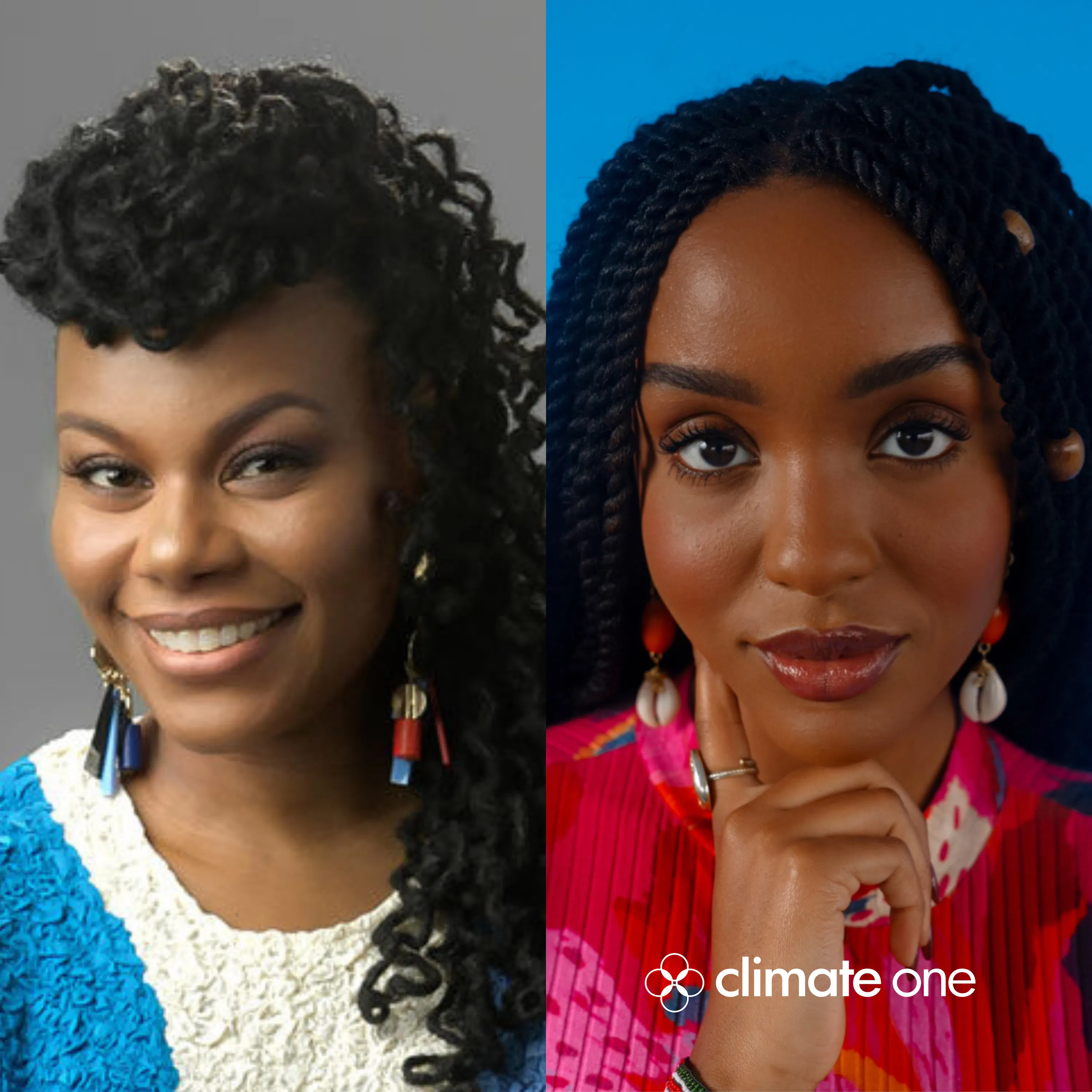
我是阿里安娜·布罗修斯。
I'm Ariana Brosius.
我是库沙·纳维达尔。
I'm Kusha Navidar.
这里是《气候一号》。
And this is Climate One.
阿里安娜,这期节目对我来说感觉非常特别,因为我非常享受这些对话。
Ariana, this episode feels very special to me because of how much I enjoyed the conversations.
是的。我同意。
Yeah. I agree.
所以我当时有机会
So I had the opportunity to
与格洛丽亚·沃尔顿进行了交谈,她是解决方案项目的总裁兼首席执行官。格洛丽亚已向基层努力注资数千万美元,以建设韧性。
talk to Gloria Walton, who's the president and CEO of the solutions project. And Gloria has channeled tens of millions of dollars into grassroots efforts building resilience.
我与黑人女孩环保主义者组织的创始人兼执行董事瓦瓦·戈韦鲁进行了交谈,她致力于创建更具包容性的气候空间,并真正倡导一个更完整的气候叙事图景。
I talked with Wawa Goveru, founder and executive director of Black Girl Environmentalist, and she's working to create more inclusive climate spaces and really advocate for a more complete picture of the climate narrative.
我认为那个完整的图景元素贯穿了这两次对话。对我来说,这非常令人振奋,因为与格洛丽亚讨论的一些主题是,比如,如何将草根阶层与慈善事业连接起来?在当前环境下,尤其是对于气候倡导,慈善事业是什么样的?以及今天的草根工作真正是什么样的?
That complete picture element, I thought ran through both conversations. And for me, it was very invigorating because some of the themes that came up with Gloria was, like, how do you bridge grassroots to philanthropy? What does philanthropy look like in the current environment, especially for climate advocacy? And and what does grassroots work really look like today?
嗯,没错。这两位女性都非常关注本地解决方案和赋权于人,她们知道最接近问题的人往往最清楚如何解决它们。有时她们只是需要资源或一些帮助。
Mhmm. Right. Both of these women are really focused on local solutions and empowering people, and they know that the people closest to the issues are often the ones who know best how to address them. And sometimes they just need resources or some help.
你认为她们是否也对转变叙事有浓厚兴趣?至少对我来说,
Do you think they also have a strong interest in, like, shifting the narrative kind of? I know for me, at least,
我们谈到了
we talked a
很多关于是的。我们谈了很多关于从受害的前线社区转变为拥有能动性、正在解决自己问题的人的叙事,即使这些问题并非由他们造成。
lot about yeah. We talked a lot about shifting from victimized frontline communities to the narrative of people with agency who are solving their own problems even if they're ones that they didn't create.
是的。我的意思是,Wawa真正致力于让气候运动反映出真正参与其中的人们,而不仅仅是最初进入这个领域时她所看到的那些领导者。我认为这两位女性所做的工作真正鼓舞人心的地方在于,她们实现的解决方案确实具有深远影响。麦克阿瑟基金会等机构七月份的一份报告记录了基于社区的气候策略如何能够实现可衡量的温室气体减排,同时建立持久的社区参与。
Yeah. I mean, Wawa is really focused on making the climate movement reflect the people that are really within it, you know, not just the leaders that she saw when she first entered the field. And I think what's really empowering about the work that both of these women do is that the solutions that they accomplish are really impactful. There was a July report prepared for the MacArthur Foundation and some others that documents how community based climate strategies can achieve measurable greenhouse gas reductions in addition to building lasting community engagement.
是的。我们已经讨论了这些对话。我很想深入了解一下并听听它们。特别是社区参与这部分,正是由格洛丽亚·沃尔顿在解决方案项目中支持的那种努力。那么,让我们直接进入我对她的采访吧。
Yeah. So we we've talked about the conversations. I'd love to dive in and and and listen to them. The community engagement piece, especially, are the kinds of efforts that are supported by Gloria Walton at the Solutions Project. So let's just jump into my interview with her.
我想首先承认我们当前所处的时刻,因为很多人正在站出来对抗气候和环境不公,他们面临的挑战是我们一年前未曾见过的。那么,你是如何看待这种在我看来既是政治又是文化上的变化的?
I wanna start by, like, acknowledging the moment that we're in because a lot of people are standing up to climate and environmental injustice, and they're facing challenges that we weren't seeing a year ago. So how are you processing what feels to me like both a political and a cultural change?
哦,
Oh,
你知道,我这一年是从阿尔塔迪纳火灾开始的。阿尔塔迪纳是我的家。那是我曾经居住并购买第一套房子的地方,是一个历史上以黑人为主的社区。在那里经历火灾,那种打击是你根本无法准备的。当我的前邻居在他们家起火的那晚打电话给我时,我的心一下子就沉了下去。
You know, my year started with the Altadena fires. And Altadena was my home. Like, that's actually where I lived and where I bought my first home, which is like this historically black community. And, you know, experiencing the fires there just hit, like, in a way that I you just can't even be prepared for. Like, my heart dropped the minute that my former neighbors called me the night that their home started burning.
这让你感受到我们曾经多么亲近,以及这个社区是怎样的。对我来说,已经搬走了,但邻居在火灾袭击我们家园的那晚还打电话给我,这意义重大。想想今天,他们仍然受到影响,因为这在年初是头条新闻,而快进到今天,现在我们又有不同的火灾,但那些社区仍在恢复中。许多人流离失所,应对着社区遭受气候危机冲击后的影响,外面的人看着这片土地,真正看到了一个机会,趁机利用灾难进一步私有化土地和水资源,积累更多资本,并驱逐居住在那里的社区。总而言之,这些社区正在团结起来,以便能够提出一个策略,让他们能够继续留在自己的社区。
You know, and that just kinda gives you a sense of how close we were and how the community is. Like, for me to have moved and my neighbors are calling me the night that the fires hit our home is a big deal. And thinking about today and how they're still impacted, because it was kind of like headline news at the top of the year, and then fast forward to today, you know, now we have different fires, but those communities are still in recovery. Many displaced, dealing with, like, the effects of what happens when communities end up being hit by a climate crisis, where you have people from outside the community looking at this land and really seeing an opportunity to kinda swoop in and leverage the disaster to further privatize, like, the land and the water and accumulate more capital and displace those communities that live there. And all in all, those communities are coming together so that they can actually put forward a strategy so that they can remain in their community.
是的。所以,即使变化以这样或那样的方式发生,悲剧对你来说,无论如何都感觉非常贴近家庭,是吗?
Yeah. So even with changes happening one way or another, the tragedy is, like, being felt very close to home for you no matter what?
我是说,完全感同身受。这种共情非常深刻,因为这完全可能发生在我身上。在很多方面,感觉就像确实发生在我身上一样,因为它影响了我深深关心的人们。你知道,他们是我遇到过的最好的一些邻居。而这场火灾,当你想到当下的政治时刻,那只是年初的开端。
I mean, completely. Like, the empathy just runs deep because it literally could have been me. And in in a lot of respects, it feels like it was because it affected and impacted people that I deeply care about. You know, these are some of the best neighbors that I've ever had. And the fires is just like, you know, when you think about this political moment, that was just the top of the year.
你知道,自那以后,我们经历了DEI(多元化、公平与包容)的严重倒退,气候政策被削弱,FEMA(联邦紧急事务管理局)和NOAA(国家海洋和大气管理局)也遭到大幅削减。对吧?这些本应是灾难发生时的首要政府响应机构。NOAA作为一个联邦机构,致力于了解和预测天气与气候。我想到我们所服务的社区,比如现在正成为ICE(移民和海关执法局)突击搜查目标的移民社区。
You know, since then, it's like we've had severe rollbacks to DEI, you know, climate policies, the gutting of FEMA and NOAA. Right? These are supposedly the first government responders when disasters hit. NOAA being like a federal agency that works to understand like weather and predict weather and climate. You know, I think about communities that we serve, like the immigrant communities that are being targeted right now with the ICE raids.
这正在加利福尼亚乃至全国发生,他们针对工作场所、学校、医院、公园和其他表面上的安全空间。然后你想想当前许多社区正面临的法律、数字和人身威胁,以及监视和骚扰。我们知道联邦资金的大量削减也影响了许多我们支持的组织和团体,以及当地社区。
And that's happening in California and all over the country where it's like job sites, you know, they're targeting schools, hospitals, parks, and other ostensibly safe spaces. And then you think about like the legal, digital, and physical threats that are happening right now to a lot of communities and the surveillance and the harassment. And we know that there's been, like, so many federal cuts that have also impacted a lot of the groups and organizations that we support as well as local communities.
在我们继续之前,我想知道你以前的邻居们现在怎么样了。
Before we move on, I mean, I'm interested in how your former neighbors are doing.
是的,谢谢你的关心。你知道,他们仍在挣扎。很多人流离失所,暂时寄住在亲戚家。而那些没有离开的人,虽然还住在自己家里,但现在不得不面对火灾带来的公共卫生问题。
Yeah. So I appreciate that. You know, they're still struggling. A lot of people have been displaced, and they're staying with family. And for those who haven't been displaced, you know, they're also still in their homes, and they're now dealing with the public health implications of fire.
我们通过解决方案项目,成功将那里的家庭与一个名为ACLEMA的公司和组织联系起来。他们主要做空气和水质监测。我们把他们介绍给当地社区,他们去测试了土壤、地面和房屋,发现苯和铅的含量基本上很高。对吧?这些对健康有非常严重的影响。
And we were able to, the solutions project, connect the families there with this company and organization called ACLEMA. And essentially, they do air quality and water quality monitoring. And we connected them to the local community, and they went and they tested the soil and the ground and the homes, and there's basically high amounts of benzene and lead. Right? And so these have really serious health implications.
所以,家庭们在应对公共卫生后果的同时,也在彼此交流,试图规划一个重建愿景,真正让居民留下来,而不是被迫搬迁,让开发商和其他有资本的人趁机涌入并掌控局面。
And so families are dealing with the public health consequences while, like, meeting with each other and trying to have a vision for how to rebuild that actually keeps the people there versus displacing them and moving them out and letting developers and other folks with capital kinda soup in and and seize this moment.
是的。现在我们开始深入探讨你在解决方案项目中所做的工作。我认为其中很多工作也植根于你自身的经历。在我们深入讨论当前工作之前,我想先了解你,格洛丽亚,你带来了什么样的背景。我的意思是,在你创立如今这个价值数百万美元的组织之前,你曾在洛杉矶中南区做了十六年的社区组织者。
Yeah. So now we're getting into some of the work that you do at the solutions project. And and I think a lot of it is rooted in in your own experience too. So before we dive deep into the work now, I think it might help to think about you, Gloria, and what you brought to the table. I mean, before you started what is now a multimillion dollar organization, you worked for sixteen years as a community organizer in South Central LA.
那段经历教会了你什么?
So what did that experience teach you?
非常多。我在Scope(战略概念与组织政策教育组织)的时光——那是我之前的组织——为我的生活和工作奠定了重要而关键的基础。我常说,在美国乃至全世界,生为黑人本身就具有政治性。但在Scope这样的组织工作,确实将我的政治意识、政治分析和政治经验提升到了一个完全不同的层次。你知道,我刚开始在那里工作时还在上大学,所以我从事社区组织工作,并向一些优秀的组织者和领导者学习,直到今天也是如此,比如安东尼·蒂格彭、洛杉矶市长巴斯。
So much. My time at Scope, Strategic Concepts and Organizing and Policy Education, which was my former organization, really set important and critical foundation in my life and for my work. I always say that being born black in The US and around the world is intrinsically political. But being at an organization like Scope actually took that political awareness and my political analysis and my political experience to a completely different level. You know, I was in college when I started there, and so I did community organizing and learned from some great organizers and leaders to this day, Anthony Thigpen, mayor Bass, the mayor of Los Angeles.
你知道,她曾是中南区的一名社区组织者,对吧?所以我有幸向他们学习。组织工作的美妙之处在于,它帮助我理解并将我的个人经历和家庭经历置于更广阔的背景下。它还帮助我思考那些造就了我们生活环境和成长条件的各种系统,比如我们所处环境中的问题及其成因。
You know, she's a former community organizer in South Central. Right? So I I had the privilege and the honor of learning from them. And what was great about organizing is that it helped me understand and situate my personal experience and my family's experience in a broader context. And it helped me think about the systems that are at play that created a lot of the conditions that we lived in and how we grew up, like the problems and those conditions that we lived in.
是的。你知道,我们之前交谈时,你告诉我你在贫困中长大,但你同时也有一种富足感,我想这是你用的词。你是如何同时持有匮乏感和富足感的?
Yeah. You know, when we spoke earlier, you told me that you grew up in poverty, and yet you also had a sense of abundance, I think is the word that you used. How do you simultaneously hold a sense of scarcity and abundance?
是的。你知道,在贫困中长大,我部分时间在密西西比州的杰克逊度过,但也有一部分时间在加利福尼亚北部。我的妈妈和祖母抚养我长大,出于必要,我们成了节约主义者。这意味着我们购买二手货,重复使用一切物品,节约能源,对吧?
Yeah. So, you know, growing up in poverty, I was partially raised in Jackson, Mississippi, but also parts of Northern California. And my mom and my grandmother raised me, and we were conservationists out of necessity. And what that means is that we thrifted, we reused everything, we like conserved energy. Right?
比如如果你不在房间里,就会关掉灯。
Like if you're not in a room, you turn off the lights.
如果你
If you're
就像你刷牙的时候,你不会让水一直流着,而是一直刷个不停,对吧?就像我们
like when you're brushing your teeth, you don't just let the water run while you're, like, brushing the whole time, right, like you We grew
在非常相似的家庭环境中长大的。是的。
up in very similar households. Yeah.
没错。对吧?你得有意识,因为他们在付那些账单。对吧?所以,你知道,那有点像是那种节约的态度。
Exactly. Right? Like, you gotta be mindful because they're paying those bills. Right? So, you know, and that's that's kind of like that conservationist attitude.
我们那样做确实是出于可持续性的态度,但它是根植于生存的。对吧?因为如果你本来就没多少,你就会注意你用了多少能源,用了多少水。所以那是一个严肃的现实。
And we did that in a sustainability attitude, really, but it was rooted in survival. Right? Because it's like, if you already don't have much, like, you're gonna be mindful of, like, how much energy you're using, how much water you're using. So that's one serious reality.
是的。那是匮乏的一面。告诉我富足的一面。什么
Yeah. That's the scarcity side. Tell me about the abundance side. What
那一面从何而来?那是匮乏的一面。对吧?很多人都熟悉那一面。真的,太多人了。
where does that come in? That's the scarcity side. Right? That many are familiar with. Too many, really.
但富足的一面——我对此思考良多,也是我们‘解决方案项目’支持的众多组织工作的核心——在于认识到我们并非孤军奋战。对吧?要知道,富足就是明白你拥有邻居和整个社区,大家能够相互支持、彼此关照。所以我奶奶去杂货店时,因为她有车而街对面的邻居没有,她就会告知对方。对吧?
But the abundance side, which I think so much about, and a lot of the organizations that we support at the Solutions Project is very central to the work, is recognizing that we're not in this alone. Right? And, you know, abundance is knowing that you have neighbors and an entire community that can show up for each other and look out for each other. So when my grandmother went to the grocery store because she had a vehicle, but our neighbor across the street didn't, she would let her know. Right?
她会说:'嘿,我周一要去杂货店,你想一起吗?'然后我们就拼车同行。如果有人需要了解如何节省某笔账单开支,或是去哪里获取特定资源,大家都会互相交流。就像邻居之间会交谈,我们甚至彼此知道对方的名字。
And she would say, hey, I'm gonna be going to the grocery store on Monday. Do you wanna join me? And we would carpool together. If someone needed certain resources to kinda know how to save money on this particular bill or where you go to get this particular resource. It's like people talk to each other, you know, neighbors just like, we knew each other's names.
是啊,你们那条街的人都挺友善的
Yeah. You were kind on the block
都认识我。没错。你不是独自一人,这其中就蕴含着富足。对吧?
knew me. Yeah. Exactly. You're not on your own, and there's an abundance in that. Right?
关键是认识到当你分享和整合资源时,能获得多少额外的收获。对吧?这不只是考虑你拥有的那一小部分,而是思考我们共同拥有什么。
It's it's recognizing how much more you can have when you share and pool your resources. Right? And it's not just thinking about the little bit that you have, but, like, what do we have together?
是的,这某种程度上正是'解决方案项目'工作的核心——寻找社区来支持发现的项⽬,这完全合理。关于你作为社区组织者的经历,我还有个问题:你曾提到这帮助你将自己(格洛丽亚)的亲身经历置于系统语境中理解。
Yeah. Which kind of lies at the heart of what the solutions project does a lot. It's finding the communities to help support the projects that you find, which I makes total sense. And one more question that I had about your experience as a community organizer is you talked about it helping you put into a systems context what you yourself, Gloria, experienced.
完全正确。是的。
Absolutely. Yeah.
你能想到一个具体的例子吗?那种系统层面的思考,那种情境为你填补空白的时刻?
Can you think of a specific example where that systems level thinking, that just, like, context filled in for you?
是的。你知道,当我刚开始从事组织工作时,我实际上是一名经济正义组织者。
Yeah. So, you know, when I started in organizing, I was actually an economic justice organizer.
嗯。
Mhmm.
我经常思考经济问题,觉得经济是承载我们所有互联系统的空间。在某种程度上,它确实如此。对吧?它包含了太多东西。而我接触气候问题的切入点,其实是研究经济和就业,思考下一个大的增长领域会是什么。
And I was often thinking about the economy, and I felt like that was the space that held all of our interlocking systems. And to some degree, it it really it does. Right? Like, it it holds so much. And my entree point into climate was actually researching the economy and jobs and, like, thinking about, okay, what's gonna be the next big growth sector?
那是在很久以前,大概是2006年左右,或者2005年初。我开始研究哪些投资将会带来就业机会,以及如何确保黑人和有色人种社区能够获得这些工作。实际上,当时在气候领域,我发现将有数万亿美元投入这个新产业,这是一个机会,可以建立职业阶梯,为新来者提供切入点,同时如果你考虑现有工作,它们将转变为更清洁的工作,形成一个职业网络。对吧,思考如何从污染工作转向清洁工作。随着我深入研究气候问题,我越发意识到,这不仅仅是关于就业和经济。
And this was way back in, like, 2006 or something like that, 02/2005. And I started researching what investments were going to be coming down to create jobs and how to make sure that black and brown communities could have access to those jobs. And it was actually climate at that time where I saw found that it was gonna be trillions of dollars that were going to be invested in this new industry, and that it was gonna be an opportunity to have, like, a career ladder, an entree point for new folks, but then also a career lattice if you're thinking about already existing jobs that will be, you know, transformed to cleaner jobs. Right, and and thinking about how to move from a dirty job to a clean job. And then the more that I delved into climate, I really saw how, okay, this is more than about jobs and the economy.
这关乎空气质量、清洁水源、从化石燃料向可再生能源和太阳能的能源转型。它关乎交通、食品正义、资源公平以及获取这些资源的途径。那时我意识到,气候正义是交织在社会各个层面和我们所生活的系统中的。它之所以对我而言比经济更重要,是因为气候正义不仅仅关乎经济,它关乎人民,关乎我们的土地和资源,以及我们如何相互关联。对吧?
This is about air quality, clean water, the energy transition away from fossil fuels to renewables and solar energy. It's about transportation, food justice, equitable resources, and access to those resources. And that's when I realized that, okay, climate justice is what's interwoven into all facets of society and the systems in which we live. And the reason it became bigger than the economy to me is because climate justice is not just about the economy, it's about people, and it's about our land and our resources and how we interrelate to each other. Right?
而这,就像是我们这个时代真正包罗万象的问题。
And that's, like, the real all encapsulating issue of our time.
我真的很感兴趣你提到人是其中的一部分,因为这某种程度上把我们带到了现在,与'解决方案项目'有关。你们组织的一个关键原则是,气候危机的解决方案存在于前线社区中,存在于
I'm really interested in the fact that you brought up people as a part of that because, like, this is kinda bringing us to the present now with the solutions project. A key tenet of your organization is that the solutions to the climate crisis exist within frontline communities, exist with
是的。
Yes.
人民之中。对吧?你是如何意识到这一点的?
The people. Right? How did you come to to that realization?
通过组织活动。在南洛杉矶,我们是一个被高速公路所定义的社区。它被称为中南区,因为北面、南面、东面和西面都有高速公路。而我们的社区就处于所有这一切的中心。此外,我们还有洛杉矶的港口。
Organizing. In South LA, we were a community that was defined by the freeways that surrounded us. And it was called South Central because there was a freeway to the North, the South, the East, and the West. And we our community was at the center of all of that. Plus, we had the ports that were in Los Angeles.
所以你知道,柴油卡车会通过环绕我们社区的所有高速公路穿过我们的社区。因此,我们实际上拥有洛杉矶县一些最差的空气质量,这意味着我们是一些最不健康的社区,癌症和其他疾病的发病率最高,死亡率也比县里其他地方高。而这并非偶然。对吧?每天都有决策在制造我们所生活的这些条件。
So you know that there's diesel trucks coming through our communities on all the freeways that surround our communities. So we actually had some of the poorest air quality in LA County, which meant that we were some of the sickest communities, the highest rates of cancer and other illness, the highest mortality rates compared to other places in the county. And this wasn't happenstance. Right? Like, there are decisions that are being made every single day that create those conditions that we're living in.
一旦我意识到这一点,我是从那些早已从事这项工作的社区中学到的。就像,我得以加入一个自我出生前就一直在做这项工作的组织者传承中。
And once I realized that that I learned that from the communities that had already been doing this work. Like, I was able to join a legacy of organizers who've been doing this since before I was born.
是的。
Yeah.
我有幸从他们身上学到了很多。当你把问题聚焦到这一点:有一群人坐在房间里决定着你和我的生活。你要么只能被动承受这些决定的后果,要么你实际上可以走进那个房间,分享你的观点、你的声音、你的分析和你的解决方案,并在决策桌上拥有一席之地。只要知道这其实很简单,比如打个电话,向民选代表提出诉求。就这么简单,你就能帮助塑造你的民主、塑造你的社区,影响你和家人正在经历的真实生活状况。
And I had the honor and the privilege to learn so much from them. And when you kinda narrow it down to the fact that there's people sitting in a room making decisions about your life and my life, And either you can be on the side reaping the consequences of that, or you can actually go in that room and share your perspective, your voice, and your analysis, and your solutions, and and have a seat at the table. Just knowing that it's that easy, like, to make that phone call, to do that delegation to an elected official. It's that easy to help shape your democracy, to shape your community, to influence the real conditions that you and your family are living with.
你说'简单'是什么意思?因为我想有些听众可能会想:简单?我不知道这有什么简单的。
Well, when you say easy, what do you mean by that? Because I I I imagine some people will be listening. You know? Easy. I don't know.
这并不容易。对吧?我说'简单'的意思是,我们的民主关乎你我的力量。我们的民主关乎社区的力量。但很多时候,我们容易依赖或顺从一种主流变革理论:你只需要把某人选上台,假设他们与你的价值观和信仰一致。
It's not easy. Right? What I mean by easy is that our democracy is about your power and my power. Our democracy is about community power. And too often, I think it's easy, like a dominant theory of change that we all rely on or defer to is that you just put someone in office, and, you know, supposedly, they align with your values and what you believe in.
对吧?至少你是这样推测的。然后你就把决策权交给他们。但我们民主的力量在于说:好吧,我会尽力选举一个我认为符合我最大利益的人。但我不能止步于此,因为真正的魔力与力量在于我要让他们对我的愿景和利益负责。
Right? At least that's what you surmise. And and you just kinda leave the decision making up to them. But the power in our democracy is actually saying, okay, yes, I'm going to try to elect someone who I think aligns with, my best interests. But I can't stop there because the magic and the power comes with me holding them accountable to my vision and my interests.
这可以通过投票、打电话、游说来实现。而且你不需要独自做这些事。对吧?你可以与邻居联手,可以与社区组织合作来实现这一目标。但如果我们寻找成为变革推动者的途径,其实有很多方法,而不是仅仅站在场边承受他人决定的后果。
And that's through voting, that's through making phone calls, that's through lobbying. And you don't have to do these things alone. Right? You can link up with your neighbors, you can link up with community organizations to make this happen. But there's a lot of avenues if we look for them to be an agent of change, right, and not just like on the sidelines reaping the consequences of other people's decision.
接下来,格洛丽亚·沃尔顿将分享她对慈善事业的愿景。
Coming up, Gloria Walton shares her vision of philanthropy.
这是关于变革,而非慈善。对吧?这是关于团结,为我们所爱的人民、社区和地方挺身而出。
It's about change, not charity. Right? Like, it's about solidarity and showing up for the people and the communities and the places that we love.
接下来请继续收听《气候一号》节目。
That's up next when Climate One continues.
您是否对广告打断《气候一号》的收听体验感到烦恼?
Are you frustrated by ads interrupting your Climate One listening experience?
那我们有个好消息告诉您。我们的Patreon会员可享受无广告收听节目的特权。
Then we have good news for you. Members of our Patreon receive ad free access to our show.
每月仅需5美元,您既能支持我们重要的气候对话,又能完全无广告地收听《气候一号》。
For just $5 a month, you support our critical climate conversations while also gaining access to Climate One totally free of ads.
Patreon会员还可自动加入《气候一号》Discord服务器,与气候爱好者及我们团队成员畅快交流。
Patreon members also receive automatic access to the Climate One Discord server, where fellow climate enthusiasts can chat with each other and members of our team.
作为对忠实播客听众的特别优惠,现为Patreon支持者提供专属福利。今日使用代码CLIMATEPOD加入,首月仅需1美元
As a special offer for frequent podcast listeners, we're now offering Patreon supporters a special deal. Join today using the code CLIMATEPOD, and you'll get your first month for just $1
代码是c l i m a t e p o d,无空格。访问patreon.com/climateone找到我们。
That's c l I m a t e p o d, no spaces. Find us at patreon.com/climateone.
这里是《气候一号》。我是库沙·纳维达尔。让我们回到我与解决方案项目总裁兼首席执行官格洛丽亚·沃尔顿的对话。她的组织支持的其中一个倡议是德克萨斯州休斯顿的西街恢复项目,该州最近经历了致命的气候引发的洪水。
This is Climate One. I'm Kusha Navedar. Let's return to my conversation with Gloria Walton, president and CEO of the Solutions Project. One of the initiatives her organization supports is the West Street Recovery Project in Houston, Texas, a state that recently experienced deadly climate driven flooding.
西街恢复项目是在飓风哈维之后应运而生的。我们现在从媒体上了解到,那里洪水反复发生,社区基本上只能靠自己来保护生命。西街恢复项目一直在为这些社区奋斗,真正试图重建他们社区中被忽视的基础设施。我想提到的一点是,他们最近赢得了2000万美元,用于排水投资,并推翻了一项长达22年的城市法令,该法令基本上导致了有色人种社区基础设施的不平等。所有这些都得益于他们所做的基层组织工作和倡导,全部围绕改善过时的排水系统。
West Street Recovery emerged in response to hurricane Harvey. And we know, at at least now from, like, looking at the media, that there's, like, repeated floods, and communities basically have to take their lives into their own hands. And West Street Recovery has been, like, fighting for these communities and really trying to rebuild this neglected infrastructure in their community. And one thing that I wanna mention is that they recently won $20,000,000 for, like, drainage investment and reversing a twenty two year long city ordinance that basically led to unequal infrastructure in communities of color. And all this happened because of the grassroots organizing that they were doing, the advocacy, and it was all around improving outdated drainage systems.
考虑到那里洪水如此频繁,排水系统至关重要,必须确保它是最新的。因此,当他们通过了这项2000万美元的胜利时,它基本上扩大了当地的排水计划,城市开始回应并解决许多这些被忽视的区域。
Given that they had so much flooding there, the drainage system is so important to make sure that it's actually up to date. And so when they passed this $20,000,000 victory, it basically increased the local drainage program, and the city started to respond and address a lot of these neglected areas.
那么,像这样的项目如何体现你的个人使命?
So how does a project like that exemplify your personal mission?
是的。西街恢复项目是草根性的。它关乎社区。它由受问题和条件影响最深的人们领导和驱动。我们在解决方案项目中支持的许多组织都是草根组织。
Yeah. West Street Recovery, it's grassroots. It's about the community. It's led by driven by the people most impacted by the problems and conditions. And a lot of the organizations that we support at the solutions project are grassroots organizations.
所以它们是本地的。西街恢复项目正在做的一件事,也是我们许多合作伙伴实际上正在做的,是建立韧性中心。你听说过这个词吗?
So they're local. One of the things that West Street Recovery is doing that a lot of our partners are actually doing is building resilience hubs. Have you heard that term?
没有。没有。是的,我正要问。那是什么?
No. No. What yeah. I was about to ask. What is that?
韧性中心本质上是一种地方层面的集体响应机制,社区、地方组织和企业作为一线响应者协同合作,实地提供互助支持,并绘制社区资产和资源分布图。
So resilience hubs, basically, it's like a collective response at the local level where you have community, local organizations, and businesses working together as first responders, boots on the ground, offering mutual aid to each other, and mapping community assets and resources.
嗯,比如你能举个社区资产的例子吗?像是就地避难场所之类的?
Well, like, you give me an example of a community asset, like a shelter in place location or, like
是的。
Yes.
什么?对。
What? Yeah.
没错。比如当灾难降临——在德州他们要应对冬季风暴、极端热浪和飓风——如果社区遭遇这些灾害并发生停电,他们实际上已经标注好了:哪个街区的哪户人家装有备用太阳能板和电池;谁是联络人负责对接能提供食物饮水的本地资源。因为在危机中,这些往往关乎生死存亡。
Yeah. So, like, if a disaster hits, and in Texas, they are dealing with winter storms, severe heat waves, a hurricane. Right? And so if the community is facing any of those and a power outage happens, for example, they've actually mapped who on the block or in the neighborhood is the home that has, like, backup solar panels and batteries, for Who's the point of contact who's gonna reach out to the local community who can provide food and water to the community when there's an outage. Because those things end up being a matter of life and death when crisis hits.
是的。我记得你曾说过一句名言:'我们的社区总被描绘成受害者,但事实上我们是胜利者'。这句话值得深入探讨。首先,为何你认为前线社区总被塑造成受害者形象?
Yeah. A a quote that I've heard you say before is our communities are too often depicted as victims when, in fact, we are victors. And there's a lot to unpack there. So first, why do you think frontline communities are portrayed as victims?
因为我们的故事常常由他人代述。如今我们不断被错误信息、谎言和气候否定论淹没,大量对立叙事试图压制我们,掩盖背后的政治意图,让我们相信自己无能为力——这本身就是另一种谎言。气候否定论者正在用他们的权力对所有人进行心理操纵。你看,现在所有议题都被颠倒黑白:民主、气候变化、生育权、家庭价值观、公平性、多样性,无一例外。
Often, our stories are told by someone else. Right now, we're constantly inundated with misinformation, lies, climate denial, and so many counter narratives that push against us and try to hide the political will that is at play and telling us that we're powerless, right, which is another lie. And climate change deniers are using their power to gaslight us all right now. You know, Up is literally down on every issue, whether that's the democracy, climate change, reproductive rights, family values, equity, diversity, you name it. Right?
他们正利用新闻和社交媒体来误导、诽谤,煽动恐惧和压迫,传播仇恨。他们把我们创造的故事叙述拿过去,进行挪用、破坏和妖魔化,因为他们知道故事的力量。因此,解决方案项目支持社区和草根运动夺回他们的力量和故事。这实际上是从受害者转变为胜利者和远见者,将叙事从无力感重写为自我决定,掌控我们自己的故事,并展示解决方案不仅仅来自自上而下,而是真正自下而上产生的。
And they're using the news and social media to misinform and malign and to invoke fear and overwhelm and to spread hate. And so they've taken the very narratives that we've created, and they have appropriated, undermined, and villainized them because they know that stories are powerful. And so the solutions project, we support communities and grassroots movements taking their power and their stories back. And that's literally shifting away from victims to victors and visionaries, and rewriting the narratives from disempowerment to self determination, you know, and taking control of our stories and showing that solutions don't just come from, like, the top down, but they actually come from the ground up.
与此同时,我在很多圈子里都听到,关于有色人种,你知道,在美国这里,或者发展中国家的居民,低洼岛国。他们最先且最严重地受到气候破坏的影响。对吧?就像,是的。那些对全球气候不公正贡献最少的人,也正在经历最严重的洪水、最严重的火灾等等。
At the same time, I I hear in so many circles, I hear about people of color, you know, here in The US or or residents of developing countries, low lying island nations. They are affected by climate disruption first and worst. Right? Like, Yeah. Those who contribute least to the climate injustice in the world are also experiencing the greatest floods, the greatest fires, etcetera.
这不是事实吗?我的意思是,如果人们被一个他们并未造成的问题所伤害,那不就是受害者的定义吗?
Is that not true? I mean, if people are being hurt by a problem that they didn't cause, isn't that the definition of victim?
是的。所以如果他们被一个自己并未造成的问题所伤害,绝对是。故事的一部分可以是受害,但故事不应该止步于此。而通常,故事就停在那里了。所以当人们想到这些社区时,他们想到的就是这些。
Yeah. So if they're being hurt by a problem that they didn't cause, absolutely. One part of the story can be victimization, but the story shouldn't stop there. And often, the story stops there. And so when people think about these communities, that's what they think about.
哦,受害者,那些可怜的社区,被那边的事情影响的人们,它不会影响到我。但是当社区讲述他们自己的故事时,他们可以谈论问题,对吧,因为我认为这很重要,这是一种人们理解事物影响的方式。但他们也可以谈论解决方案,可以谈论他们如何克服这些问题。他们可以谈论他们的愿景。可以谈论他们正在建立的力量。
Oh, victims, those poor communities, the people who are impacted by that thing over there, it's not going to impact me. But when communities tell their own stories, they can talk about the problems, right, because I think that that's important, and it's it's like a way that people understand the impact of things. But they can also talk about the solution, and they can talk about how they overcome those problems. They can talk about their vision. They can talk about the power that they're building.
他们可以谈论他们与谁结盟。所以这只是创造了一个更广阔的故事,让人们能够真正在其中看到自己,并知道当灾难来袭时,它并不只是以受害开始和结束。
They can talk about who they're in allyship with. So it just creates a more expansive story so that people can actually see themselves in it and know that when disasters hit, it doesn't just begin and end with victimization.
是的。在你的观念里,这是一个正在经历相当艰难处境的人的360度全景视角。但我听你说的是,受害只是那个故事的一部分,这一点至关重要。
Yeah. In your mind, it is the the the three sixty view of a person who is experiencing a hand dealt that is quite difficult. But the it is one piece of that story is what I hear you saying, which is crucial.
是的。
Yes.
没错。你知道,不公正的一个根源在于财富分配不均。你现在深度参与慈善事业,将数千万美元投入到一线社区。但这仍然是杯水车薪,对吧?
Yeah. You know, one root of injustice is the unequal distribution of money. You're now deeply embedded in the world of philanthropy, and you're channeling tens of millions of dollars into frontline communities. And yet that's still a drop in the bucket. Right?
据报道,全球所有慈善资金中,只有不到2%用于气候问题。而其中又有多少真正流向一线社区组织呢?你对这个比例有概念吗?
Like, it's been reported that of all the philanthropic dollars that are out there in the world, less than 2% is devoted to climate. And of that, how much of that flows to frontline community organizations? Do you have a sense of that?
微乎其微。对吧?既然已经不到2%,其中只有一小部分会流向受影响最严重的群体。
A fraction. Right? If it's already less than 2%, a fraction of that flows to those who are most impacted.
所以对你来说,你所在的这个位置让我觉得特别有意思,因为你一方面在审视着变革的生命线——资金确实能带来巨大改变,钱能解决问题,能移山填海。你如何改变慈善资金的流向和投放方式?
So for you, I mean, the position that you are in, I find so fascinating because you are looking at what is oftentimes, like, the lifeblood of change on one hand? Like, money money makes a huge difference. Money can solve problems. Money can move mountains. How can you change how and where philanthropy dollars flow?
是的。要知道,慈善(philanthropy)其实是个希腊词——在我从社区组织工作转向慈善领域之前就了解过。即使身在慈善界,我仍然自认为是一名组织者,这很重要,因为这表明了我的立场和问责对象始终是基层社区,我真正为之奋斗的是本地社群。当我查考这个希腊词时,发现是philanthropia,其本意是'对人类之爱'。
Yeah. So, you know, philanthropy is actually a Greek word, you know, before I chose to be in philanthropy coming out of organizing. And I still identify as an organizer even though I'm in philanthropy, and that's really important because it's giving you a sense of my purview and who I'm accountable to, which is always the ground and communities, and who I'm actually in this work for, which are local communities. And so when I think about the Greek word, once I look this up, it's philanthropia, and it actually means for the love of humanity.
这个解读真棒。
I love that.
我太喜欢这个了。
I love that.
是啊,我也是。对吧?
Yeah. Me too. Right?
所以,就像我真的很喜欢这个。
So, like I love that.
当我了解到这一点时,我就想,当然,这就是我应该做的事。你知道,这是关于变革,而不是慈善。对吧?是关于团结,为我们所爱的人、社区和地方挺身而出。后来,当我亲身参与慈善事业,在地面层面运营一个组织时,我清楚地意识到,要将资源真正输送到受问题和条件影响最严重的社区是多么困难。
When I learned that, I was like, of course, this is what I would be doing. Like, you know, it's about change, not charity. Right? Like, it's about solidarity and showing up for the people and the communities and the places that we love. And then the more that I experienced philanthropy, when I ran an organization on the ground scope, it was clear how hard it was actually to get resources to communities that are most impacted by the problems and conditions.
然后,在慈善领域,我确切地了解到你刚才谈到的那个统计数据——只有不到2%的资源流向受问题和条件影响尤为严重的社区。因此,当你观察资本和慈善资金的流向时,因为这是流动的主要资源,你会发现它实际上流向了资源充足、主要由白人领导的大型组织和机构,而最需要资源的社区得到的却最少。这不仅仅是从受害者的角度来看。对吧?因为最需要帮助的社区实际上正在实时推进解决方案。
And then being in philanthropy, I learned exactly that stat that you just talked about with the less than 2% going to the communities that are disproportionately impacted by problems and conditions. And so when you look at the flow of capital and philanthropy, because that's the the main resource that's moving around, it was actually flowing to well resourced, predominantly white led larger organizations and institutions, and the least amount of resources were actually flowing to the communities most in need. And not from just a victim sense. Right? Because the communities most in need are actually advancing solutions in real time.
他们不仅仅沉浸在受害情绪中。他们正在努力当下就创造改变。而那里正是资源流向最少的地方。这就是‘解决方案项目’的切入点,就是要填补这个空白,并描绘出这样一幅图景:如果这是关于对人类之爱,那么我们并没有达到目标。嗯。
They're not just saturated in victimization. They're trying to create change right now. And that's where the least amount of resources was going. And that's the sweet spot for the solutions project, is actually stepping into that gap and painting a picture of, like, if this is about the love of humanity, we're not meeting the mark. Mhmm.
对吧?并且要与慈善界进行更广泛的对话。我必须筹款,对吧,你知道,我们在‘解决方案项目’都在筹款,因为我们筹集这些资金是为了输送到处于前线的社区。
Right? And it's having that larger conversation with philanthropy. I have to fundraise, right, like, you know, we all fundraise at the Solutions Project because we raise this money to move to communities that are on the front lines.
你知道,你因从杰夫·贝索斯那里争取到4300万美元而受到认可。这笔资金是用于气候工作和气候正义工作的。在与主要慈善家建立关系的同时,你如何保持基层的真实性?
You know, you've been recognized for, quote, wrangling $43,000,000 from Jeff Bezos. And you you got that for climate work, climate justice work. How do you navigate relationships with major philanthropists while maintaining grassroots authenticity?
实际上我为这项运动筹集了约1.51亿美元。这其中也涉及到问责的问题。因为虽然筹集到这么多资金很棒,但要知道,我们最初获得的是一小笔资金,然后将其放大了10倍多。基本上,就是从200万美元的对话转变为1.51亿美元的对话,支持了许多组织。但我也确保他们清楚,我们对运动负责,我需要与相关人士沟通。
I actually helped to raise about a 151,000,000 for the movement. And part of that is also thinking about accountability. Because as great as it was to raise that kind of capital, you know, we started off with a small amount that was offered to us and amplified that up more than like 10 times the amount that was offered to us. Basically, it was like a $2,000,000 conversation transformed to a $151,000,000 conversation that supported many organizations. But I also made sure that they were clear that we are accountable to Movements, and that I needed to talk to to those folks.
因此我个人在代表运动接受这些资源之前——再次说明,其中相当一部分资源是直接流向各组织的,而不仅仅是通过解决方案项目。
And so I personally, before accepting those resources on behalf of Movement, and again, a a good amount of those resources were going to organizations directly, not just through the solutions project.
是的。
Yeah.
但我个人与全国大约33位劳工领袖进行了交谈。考虑到亚马逊是一家大公司,杰夫·贝索斯是世界知名的名字,这一点很重要。围绕他本人和他的公司都存在很多争议。这并不是要否定在亚马逊工作并做出贡献的优秀员工,因为显然这也是故事的一部分。
But I personally talked to about 33 labor leaders across the country. And this was important given, you know, Amazon's a big company. Jeff Bezos is a world renowned name that many know. And there's a lot of controversy around both of those things, whether it's him or his company. And that's not to knock the great people that are working at Amazon and and doing good work because, you know, obviously, that's part of the story too.
但考虑到这些争议,我知道亲自与那些劳工领袖交谈、分享我们的故事、我们如何开始、最初的提议是什么、我们如何将提议转变,并获得他们的祝福来接收这些资金并将其转移到受影响最严重的社区,是非常重要的。
But given the controversy, I knew that it was important to personally talk to those labor leaders and share the story and share how we started, what the original offer was, what we were able to transform the offer into, and get their blessing to receive those monies and move it to the communities that are most impacted.
所以你获得了他们的祝福。在接受之前就获得了他们的祝福。
So you got their blessing. Got their blessing before you accepted.
毫无疑问,他们所有人都说,格洛丽亚,你知道,很多人得到一点钱,比如20万美元,却不会彼此进行这样的对话。而你们在桌面上有1.51亿美元,还亲自打电话给我们进行这次对话,这意味着一切。所以如果我们信任任何组织来管理这些资源,我们信任你们以及你们所代表的组织。
Hands down, all of them said, you know, Gloria, this, you know, many many folks get a little bit of money, like 200,000 and don't have these conversations with each other. And the fact that you have a $151,000,000 on the table, and you're calling us personally to have this conversation means everything. And so if we trust any organization with these resources, we trust you and the organizations that you all are representing.
面对气候紧迫性和系统性不平等,你如何保持你所说的这种势头?
How do you maintain that momentum that you're talking about when facing both climate urgency and systemic inequities?
哦,我想到的现实是,造成气候危机的那些系统——无论是殖民主义、白人至上主义、种族主义还是父权制——正是这些系统世世代代伤害着有色人种社区。所以当我想到那些被撤销和直接攻击的联邦气候政策与公平投资时,威权行为者有意识地、经过算计地针对气候与公平绝非偶然。这实际上是为了削弱运动和基层力量。气候与威权主义之间存在着强烈的相互作用,比如对土地和资源的控制、将异议刑事化,这些都是威权主义剧本的核心。因此在这个时刻,当务之急是为我们的国家和民主而战,我认为没有对气候正义的关注就不可能有民主。
Oh, what comes to mind is the reality that the same systems that created the climate crisis, whether that's colonialism, white supremacy, racism, and the patriarchy, those are the same ones that have harmed communities of color for generations. So when I think about the federal and climate policies and equity investments that have been rolled back and under direct assault, it's no accident that the targeting of climate and equity by authoritarian actors is intentional and calculated. And it's really about weakening movements and grassroots power. And there's a strong interplay between climate and authoritarianism, like the control over land and resources, criminalizing dissent are central to authoritarian playbooks. And so in this moment, when the imperative is to fight for our country and to fight for our democracy, I contend that we can't have a democracy without a focus on climate justice.
所以在这个时刻和背景下,这正是激励我的东西
And so in this moment and in this context, that's what's energizing me
是的。
Yeah.
就是确保人们理解气候正义确实是威权议程的对立面。而且我们不必独自做这项工作。我们拥有完整的基础设施。解决方案项目将其与美国350多个草根组织连接起来,这些组织正在努力改造社区、建立力量,并确保我们所有人都拥有民主应该保护的权利。
Is making sure that folks understand that climate justice really is the antithesis of an authoritarian agenda. And we don't have to do this work alone. Like, we have a whole infrastructure. The solutions projects connect it to upwards of 350 plus grassroots organizations across The US that are working to to transform communities right now and to build power, and to ensure that we all have the rights that our democracy are supposed to protect.
这让我想到你提到的慈善的词源,它的定义是'对人类的热爱'。那么对你来说,爱如何融入你所做的工作中?
It makes me think of what you brought up about the etymology of philanthropy, its definition, meaning the love of humanity. So for you, how does love fit into the work that you do?
你知道,当我思考那些主导性的变革理论和世界观——那些真正影响并塑造我们当前民主和资本主义形态的理念时,会发现它们很大程度上围绕着个人主义、竞争、人的商品化以及我们称之为家的地方的商业化。而当我想到'解决方案项目'所支持的社区和草根组织时,它们正在彻底颠覆这些世界观,实际上是在实践并展示一种不同的方式,一种关乎相互联系的方式。
You know, when I think about the dominant theories of change and the world views, really, that influence us and and shape our democracy and capitalism right now. It's a lot about individualism, competition, the commodification of people, and the places that we call home. And when I think about the communities and the grassroots organizations that the Solutions Project supports, it's flipping those world views on its head. And it's actually practicing and demonstrating a different way. That's about interconnection.
这关乎关怀,关乎资源的丰盈与共享,也关乎社区——认识到我们不必独自完成这项工作。因此,慈善事业的核心及其真正意义在于爱,这就是为什么作为一名组织者,在基层工作了近二十年后,我正尽力推动更多资源、资金的流动,并聚焦那些已经在进行中的解决方案。这些解决方案不仅惠及许多当地社区,更有利于更广泛的民主和整个社会。
That's about care. That's about the abundance and sharing of resources. And it's about community, recognizing that we don't have to do this work alone. So, philanthropy at its heart and in its true meaning is about love, which is why as an organizer, after doing this work for working on the ground for nearly two decades, I'm trying to do my part to move more resources, capital, and shine a light on the solutions that are already happening and underway. And these are solutions that are, yes, benefiting many local communities, but it's benefiting the broader democracy and and society as a whole.
格洛丽亚·沃尔顿是'解决方案项目'的总裁兼首席执行官。格洛丽亚,非常感谢您抽出时间与我们交流,并分享您的工作。
Gloria Walton is president and CEO of the Solutions Project. Gloria, thank you so much for spending time with us and and talking to us about your work.
非常感谢邀请我。
Thanks so much for having me.
'解决方案项目'资助的一个组织范例是莫洛凯岛瓦胡能源合作社。这是一家位于夏威夷小岛上的社区所有制能源公司,当地居民多数为夏威夷原住民。
One example of the kind of organization funded through the solutions project is Oahu Energy Cooperative Molokai. Oahu is a community owned energy company on this small Hawaiian island where the majority of the population is native Hawaiian.
我认为如果你在莫洛凯岛长大,就会意识到这里的社区独一无二。每天你都会被提醒,我们真的对此负有责任。
I think if you if you grow up on Molokai, you realize that the community here is like no other. So you're just reminded every day that we really have a responsibility to that.
托德·山下是该组织的志愿董事会成员。他表示,莫洛凯岛的电价是全国最高的地区之一,这对居民来说可能相当艰难。
Todd Yamashita is a volunteer board member with the organization. He says that Molokai has some of the highest electricity rates in the country, and that can be tough on the residents.
我的邻居,他的电费账单高达700美元。他没有工作,还有一个五岁的儿子,正在向我求助。
My neighbor, his electric bill was $700. He doesn't have a job. He has a five year old son, and he's begging me for help.
莫洛凯岛60%的居民属于中低收入群体,其中约40%的人生活在贫困线以下。
60% of Molokai residents are low to moderate income, and about 40% of those people live below the poverty line.
这位是莱拉尼·赵,瓦胡岛的项目协调员。
That's Leilani Chao, projects coordinator for Oahu.
我们莫洛凯岛上有相当多的人过着离网生活。他们烧丙烷,还有些人根本没有任何能源。
Quite a lot of our people on Molokai live off grid. They burn propane, and then some people just don't have anything.
莫洛凯岛的电价如此昂贵,主要是因为大部分电力依靠燃烧化石燃料发电,而这些燃料需要进口。地球正义组织的环境律师艾萨克·森分对此进行了解释。
Molokai's electricity is so expensive because most of it is generated by burning fossil fuels, which have to be imported. Isaac Moriwake, an environmental attorney with Earthjustice, explains.
夏威夷是地球上最与世隔绝的陆地,却依赖进口石油——细想之下这个设定很疯狂。如果运输船停止往来,我们就完了。我们没有能源,而化石燃料价格昂贵。
Hawaii's the most isolated land on this planet, and it's dependent on imported oil, which is a crazy thought if you think about it. If the ships stop coming, we're screwed. We have no energy, and fossil fuels are expensive.
但这个社区团结了起来,培训自己的成员安装太阳能电池板。他们希望为所有需要的人提供廉价可靠的电力。
But this community has rallied together, training their own members to install solar panels. They hope to provide cheap, reliable power to everyone who needs it.
这是机不可失的时刻。莫洛凯岛从未经历过如此高昂的电价。如果我们这次失败了,我不敢想象后果会怎样。
This is now or never. Molokai has never experienced such expensive electricity. If we fail at this, I I am afraid to think about what it could mean.
为满足本土发电需求,瓦胡岛为清洁能源技术员培训项目提供全额补贴学费。这些项目提供光伏太阳能课程、安全认证和动手建造经验。学员完成培训后将成为能建造小型太阳能系统的合格认证技术人员。
To help meet the need for homegrown power, Oahu offers fully subsidized tuition for clean energy technician training programs. These programs provide photovoltaic solar courses, safety certification, and hands on building experience. Participants come out of these programs trained and certified to construct small scale solar systems.
请把这两块太阳能板递给我。太阳能发电在夏威夷效果特别好。短短六个月内,我们已经培养了12名清洁能源技术员。我们已经在为朋友和邻居安装系统。我们就像一个大家庭。
I want you guys to hand me up these two panels. Solar happens to work really, really well in Hawaii. In six short months, we've graduated 12 clean energy technicians. We're already installing systems for our friends and neighbors. We are a family.
我们正在曾经没有就业机会的社区创造工作岗位。哦,快看,110伏。太阳能发电启动了。太棒了。
We're creating jobs now in the community where there were no jobs before. Oh, look at that. A 110. We got solar coming up. Yay.
从长远来看,对可再生能源的投资几乎肯定会获得回报,但对于像这样规模较小、收入相对较低的社区来说,筹集初始资金是个挑战。
In the long run, the investment in renewable energy will almost certainly pay off, but coming up with the initial capital is a challenge for a small, relatively low income community like this one.
我们拥有最出色的董事会和最优秀的员工。我是志愿者,做这些完全没有报酬。我们全力以赴是因为这件事令人振奋。
We have the most amazing board. We have the most amazing staff. I'm a volunteer. I get paid nothing for this. We're all doing this because it is exciting.
我夜不能寐,因为我知道只要我能筹集足够资金,找到合适的合作伙伴,精准把握时机,或许我们就能成功实现这个目标。
I lose sleep at night because I know that if I can just raise enough money, if I can just find the right partners, if I can thread the needle, then, you know, maybe we can make this work.
对Tad Yamashita来说,这是个人使命。
For Tad Yamashita, this is personal.
我正努力为我的孩子们留下一份遗产,一份能惠及他们及其同辈的财富。而应对气候变化最艰难的部分在于,我家族房屋所在的土地、我苦心经营的农场所在地,很可能等到我的孩子们刚比我稍大一些时,那里有很大概率会被海水淹没。
I'm trying to leave a legacy for my kids, something that, will benefit them and their peers. And the hardest part about climate change is that where I I own my family home, where I've built my farm, probably when my kids are just a little older than I am, there's a good chance that that's gonna be on the water.
地球正义组织的Isaac Moriwake表示,像这样的草根项目可以作为一个范例,展示人们如何真正将能源掌控权握在自己手中,而且不仅仅是在夏威夷。
Earth justice's Isaac Moriwake says that grassroots projects like this can serve as an example of how people can literally take power into their own hands and not just in Hawaii.
我认为莫洛凯岛可以展示这样一个社区如何团结一致,朝着100%清洁能源的目标迈进,并自下而上地由人民、由社区来实现这些目标。
I think Molokai can show how a community like this can come together and drive towards a 100% clean energy and achieve these goals from the people, from the community, bottom up.
欧胡岛能源集体的采访音频由The Years Project慷慨分享,这是一家501(c)(3)气候媒体公司。
The Oahu Energy Collective interview audio was generously shared with us by the years project, a five zero one c three climate media company.
接下来,我们将探讨为何需要让气候和环境领域对每个人都更加包容和友好。
Coming up, why we need to make climate and environmental spaces more inclusive and welcoming for everyone.
总有人在某个时候会带着一脸疑问走近我,说‘哦,你对这个感兴趣真有意思’。而我则会反问,为什么这就有意思了?因为你关心气候,那我为什么就不能关心气候呢?
Someone at some point would always approach me with this question on their face of, oh, that's interesting that you're interested in this. And I'd go, well, why is that interesting? Because you you're interested in climate, so why wouldn't I be interested in climate?
接下来请继续收听《气候一号》节目。
That's up next when Climate One continues.
每周,我们的播客触达全美50个州及世界各国的数千名关注气候问题的听众。现我们开放赞助合作机会,若您有意与《气候一号》合作,向听众传递信息或推广产品,请联系Multitude公司,邮箱地址:multitude@multitude.productions/ads。若您希望赞助特定主题的单期节目,也可直接联系我们,邮箱:climateone(注意是one)@commonwealthclub.org。
Each week, our podcast reaches thousands of climate concerned people in all 50 states and in countries across the world, and now we are accepting sponsorships. So if you're interested in working with Climate One to bring your message or your product to our listeners, contact Multitude at this address, multitude@multitude.productionsslashads. Or if you would prefer to underwrite an episode on a specific topic, you can reach out to us directly via email. That address is climate one, that's one,@commonwealthclub.org.
这里是《气候一号》,我是玛丽安娜·布罗奇斯。瓦瓦·格韦鲁初涉气候环保行动时,很少见到与自己相似的身影。于是她决心改变这一现状。这位Z世代气候活动家、罗德学者创立并领导着全国性组织'黑人女孩环保主义者',致力于帮助更多黑人女孩、女性及性别多元群体进入气候领域并担任领导角色。
This is climate one. I'm Mariana Brochis. Wawa Gueveru didn't see many people like herself when she began to participate in climate and environmental activism. So she decided to change that. The Gen Z climate activist and Rhodes Scholar is the founder and executive director of Black Girl Environmentalist, a national organization dedicated to helping more black girls, women, and gender expansive people enter and lead in the climate space.
我加入气候运动的渊源或许要追溯到我出生之前。我的家族世代务农,根据口述历史,双方家族皆如此。守护大地始终是我们故事的一部分。父母移民美国,既因肯尼亚机会匮乏,也因气候变化——他们正经历着持续至今长达四十年的干旱。因此当他们为未来子女谋划机遇时,气候因素在很大程度上影响了他们的移民决定。
My story in in regards to joining the climate movement, I think, started before I was born. So I come from a long line of farmers as far back as oral history goes back on both sides of my family. Earth stewardship has been a part of our story. And when my parents immigrated to The US, they did so because of lack of opportunity in Kenya, but also because of climate change, because they were experiencing a lot of the dynamics of what is now a forty year long drought. And so for them, when they thought about opportunity for their future children, they factored that into their their their migration story in a lot of ways.
所以我将气候问题与我的根源紧密相连。随着时间推移,我愈发理解家人赴美的深层原因。具体到某个转折点:十五岁那年,我偶然选了一门环境科学课程。说实话当时并不想选,原本立志从医,却因化学成绩不佳,
So I have connected climate to my genesis. As as the years have gone on, I've better understood the reasons why my family went to The US. On a more specific moments end of things, When I was 15, I stumbled into an environmental science class. And as the story goes, I didn't wanna take the class. I thought I was gonna be a doctor, didn't do well in chemistry.
唯一能选的只有环境科学。这门课最终改变了我的人生。我遇到一位杰出的老师——罗斯女士,她精妙地阐释了气候变化与我们师生亲眼所见、亲身经历的现实联系,还专门开设环境正义章节,为我打开新世界:原来气候变化对每个人的影响并不均等,尤其是我所属的群体——散居世界各地的黑人同胞,不仅承受着不成比例的气候冲击,更遗憾的是在气候领导层中缺乏充分代表。
And the only course that I could take was environmental science. And so I took that class and it ended up changing my life. I had an incredible teacher. Her name was missus Rose, who did such a great job at connecting the dots between climate change and the very real dynamics that myself and my classmates were were seeing and experiencing, as well as including a chapter on environmental justice, which really opened my world to the ways that climate change doesn't impact us all the same and the ways that specifically so many of the communities that I'm a part of, particularly the black community across the diaspora, and and how climate change is disproportionately impacting us while, unfortunately, we aren't adequately represented in climate leadership.
嗯。假设童年时有人让你画一位环保主义者,你会画成什么样呢?
Yeah. So when you were a kid, if someone had asked you to draw a picture of an environmentalist, what would you have drawn?
我本来会画任何不像我的东西。你知道,我我我我从小就和许多人一样,觉得环境工作总体上需要一个非常高端的科学学位,比如巴塔哥尼亚那种喜欢徒步和露营的人——这很有趣,因为现在我也热爱徒步和露营。但当时,我我我直到上大学才有机会做那些事。
I would have drawn anything that didn't look like me. You know, I I I I grew up with, like, so many other people feeling as though environmental work at large just required a really fancy science degree, like Patagonia, like, liking to go hiking and and camping, which is funny because now I love hiking and camping. But at the time, I I I hadn't had the opportunity to do that until I was in college.
但这并不是先决条件,对吧?
But it's not a prerequisite. Right?
而且它不是先决条件。但如果你热爱那些事,那很棒,对吧?现在我知道有太多不同的方式可以让你以环保主义者的身份出现。但当时,我我确实认为还有这种完美主义的要求。
And it's not a prerequisite. But it's great if that's what you love to do. Right? There's so many different now I know that there's so many different ways that you can show up as an environmentalist. But at the time, I I certainly thought that there was also this requirement of perfection.
而我只是把自己看作一个非常不完美的人,无法真正想象自己能以某种方式成为一个完美的环保主义者。
And I just understood myself as a very imperfect person and couldn't really see myself showing up in a way that I could be maybe a perfect environmentalist.
我觉得你非常关注气候领域需要更多元化代表的问题。我想稍微探讨一下这一点,因为它非常有力,尤其如你所说,对年轻人来说,看到可能性,审视世界的现状,并能够将自己置身其中。你能谈谈你在扩展气候运动参与者理念方面的工作吗?
I think you focus a lot on this question and need for more diverse representation in the climate space. And I just wanna explore that a minute because it's so powerful, especially I think, as you've said, when you're a younger person to see what's possible to kind of look to the world as it is and and be able to put yourself in it. So can you talk a little about your work expanding this idea of who is in the climate movement?
是的。你知道,这很有趣,因为当我15岁决定加入气候运动后,我亲身经历了很多这样的动态。我开始参加随机的气候活动,出席不同的社区会议,并在大学里加入社团。真正触动我的是,在我所处的许多空间中,我似乎是那个所谓的“唯一”。我经常是唯一的有色人种。
Yeah. And, you know, it's it's interesting because I experienced a lot of those dynamics once I decided to join the climate movement when I was 15. I started showing up at random climate events and showing up at different community meetings and joining clubs at college. And something that really hit me was that it seemed as though in so many of the spaces that I was in, I was the quote, unquote only one. I was oftentimes the only person of color.
在我常去的几乎所有空间里,我几乎肯定是唯一的黑人。而当我在大学之外的气候空间时,我通常是最年轻的人,至少年轻二十岁。共同点是,总有人在某个时候会带着一脸疑问走近我,说‘哦,你对这个感兴趣真有趣’。而我会想,嗯,为什么这有趣?因为你对气候感兴趣,那我为什么不能对气候感兴趣呢?
I was almost certainly the only black person in almost all of the spaces that I frequented. And then when I was in climate spaces outside of my university, I was oftentimes the youngest person by, like, at least twenty years. And the common denominator was someone at some point would always approach me with this question on their face of, oh, that's interesting that you're interested in this. And I'd go, well, why is that interesting? Because you you're interested in climate, so why wouldn't I be interested in climate?
通过许多这样的经历,我意识到不幸的是,主流气候运动,尤其是在那个时候——我们说的是大约七八年前——并不像现在这样多元化,尽管我们还有很多可以改进的地方。因此,在很多方面,我在努力为更多有色人种,特别是黑人女孩创造空间,让她们在气候工作中看到自己的身影时,内心是带有一些创伤的。尤其当我继续在学术研究和倡导中成长,并开始真正理解黑人、有色人种、原住民一直以来都有着悠久、悠久、悠久的土地守护传统,与地球管理有着深厚的祖先联系,甚至将我自己的家族历史与这一传统联系起来。所以我认为,很大一部分工作还在于揭示那段非常真实的历史——不幸的是,我作为学生时无法接触到这些——并让更多人能够了解这些历史。嗯。嗯。
And I realized through so many of those circumstances that unfortunately, the the mainstream climate movement, especially at that time, so we're talking like eight years, seven years ago, wasn't as diverse as I think it is now, even though there's a lot of improvements that we can make. And so in a lot of ways, there was some trauma embedded in my pursuit to help cultivate spaces for more people of color and specifically black girls to see themselves in climate work, especially as I continue to grow in my scholarship and advocacy and began to really understand that there had always been a long, long, long legacy of of black people, folks of color, indigenous folks stewarding the land and having a really deep ancestral connection to earth stewardship and even connecting my own family's history to that legacy. And so I think a huge part of it has been also uncovering the very real history that, unfortunately, I just didn't get to access as a student and making that more accessible to other people. Mhmm. Mhmm.
所以你提到了气候问题在这个国家乃至全世界的不均衡影响。在本期节目的其他部分,我们与格洛丽亚·沃尔顿进行了交谈,她谈到了需要将那些受气候破坏影响最严重的人群的叙事从受害者转变为胜利者。那么,你是如何看待前线社区在媒体中的形象的呢?比如,从更广泛的意义上来说?
So you touched on this idea of the disproportionate impacts of climate across this country, across the world. Elsewhere in this episode, we talk with Gloria Walton, and she talks about this need to shift the narrative about those most impacted by climate disruption from victim to victor. So how do you see frontline communities portrayed, you know, in the media in, like, a large sense?
是的。这是个很好的问题,向格洛丽亚致敬。她太棒了。有趣的是,在某种程度上,我处于一个气泡中。在过去的五年里,我找到了很多气候社区的伙伴。
Yeah. That's a great question, and shout out to Gloria. She's wonderful. It's interesting because in some ways, I'm I'm in a bubble. I found so much of my climate community in the past five years.
所以我实际上经常被真正优秀的气候故事所包围。比如,我身边有很多从事好莱坞工作的人,他们非常热衷于讲述真实的故事,并与前线社区直接合作和沟通。我经常与所谓的“前线人群”在一起,因为我运营着一个为黑人青年服务的组织,而黑人青年正是环境危害和整体气候危机的前线社区之一。但我也非常清楚,这种认知并非人人都有的。我必须非常有意识地为自己建立这种认知。
So I'm actually surrounded by really great climate storytelling often. Like, I am surrounded by folks who engage in Hollywood and are really interested in telling authentic stories that are in direct collaboration and in communication with frontline folks. I'm constantly with, quote, unquote, frontline folks as being someone who runs an organization for black youth, who is a demographic that is a frontline community in regards to environmental hazards and the climate crisis at large. But I am also very aware that that perception is not everyone's perception. And I've had to build that for myself really intentionally.
我说这些是想说明,还有很多工作要做。我认为特别是在社交媒体上存在一种二分法,社交媒体往往奖励快速、简化的叙事,这些叙事常常陷入错误信息和窥探癖,尤其是在讲述气候灾难的故事时,有时可能会忽略气候韧性,甚至当你参与其中时可能存在的“气候喜悦”。而气候故事讲述必须始终以真相和细微差别为先,有时这两者可能感觉是对立的。但我坚信你可以同时做到这两点。这再次需要意图,也需要社区本身坐在驾驶座上。
And so I I say that all to say, there's still a lot of work that needs to be done. And I think that there's this dichotomy that exists particularly on social media, where social media really rewards fast, simplified narratives that oftentimes fall into misinformation and voyeurism, especially when it comes to telling stories of climate disaster and maybe sometimes sidelines the climate resilience and even climate joy that can exist when you get involved. Whereas climate storytelling always must lead with truth and nuance, and sometimes the two can feel at odds. But I'm a firm believer that you can do both at the same time. It just, again, requires intention and requires the communities themselves to be in the front seat.
是的。我想深入探讨这一点,因为我认为你是一位非常有才华的故事讲述者,并且你在社交媒体这个领域工作,正如你准确指出的,它确实奖励简单、易于消化、碎片化的内容。你的很多社交媒体帖子在某种意义上是基于事实的。你知道的?比如,北极变暖的速度是地球上其他任何地方的四倍,或者美国目前生产的石油和天然气比历史上任何石油国家都多。
Yeah. I wanna unpack that because I think you're very talented storyteller and you work in this space of social media, which as you said so accurately really does reward, like, simple, easy, digestible, you know, bite size, whatever. And a lot of your social media posts are based in some sense around facts. You know? Like, the Arctic is heating up four times faster than anywhere on Earth, or The US is currently producing more oil and gas than any petrostate in history.
我们在节目中经常讨论,有时事实并不足以打动人们。关于气候变化影响的科学已经存在了几十年。人们知道这一点,但并没有太大程度地改变行动。真正吸引人们的是故事,你知道,比如人的故事。那么当你在创作内容发布到你的社交动态时,你是如何平衡这些的呢?
We talk a lot on on our show about how sometimes facts aren't what compels people. There's been science around the impacts of climate change for decades. People have known it, hasn't shifted the action that much. And what really captivates people are are stories, you know, like human stories. So how do you kind of balance those when you're creating things to to put on your feeds?
简单来说,我相信事实让我们脚踏实地,而故事让我们感动。我认为它们是伙伴,而非对立面。每当我们谈论气候时,数据都在支撑这一切。对吧?比如,我们理解气候危机正在发生,是因为我们有大量数据,也有大量的生活经验。
To put it plainly, I believe that facts ground us and that stories move us. And that I see them as partners, not as opposites. Anytime we talk about climate, data is grounding all of that. Right? Like, we we understand that the climate crisis is happening because we have a plethora of data and also we have a plethora of lived experience.
因此,数据帮助人们理解危机的规模,故事也能做到这一点。但我认为故事真正独特之处在于它们让人们在其中看到自己。我觉得我们现在正处于数据麻痹的状态。数据太多了。总有一份报告,这些报告显然非常重要。
And so that data helps people understand the scale of the crisis, and stories do that as well. But I think where stories really have a unique hold on people is that they allow people to see themselves inside of it. I think we're at a point where we have data paralysis. We got so much data. There's always a report, and those reports are so important, obviously.
但我们不能仅靠报告来改变人们的思想和心灵。这需要通过讲故事,通过情感层面与人建立联系,因为气候变化是一个深刻的情感问题。这正是我们必须从技术官僚式的气候变化语言中走出来,注入这样的理念:我们有办法解决这场危机,而且在我看来,气候危机是我们最终为所有人建立一个公正世界的机遇,作为物种,我们很少有其他这样的机会。
But we're not gonna report our way out of this in in in transforming people's minds and hearts. It's through telling stories, and it's through connecting with people on an emotional level because climate change is a deeply emotional problem. And this is where we have to really move from this technocratic language of climate change, and we need to infuse this idea that there are ways for us to solve this crisis and that the climate crisis, in my opinion, is an opportunity for us to finally build a world that's just for all of us, and that there are few other opportunities for us to do that as a species.
是的。你说叙事变革归结于构建一种叙事来瓦解另一种可能有害的主流叙事。你在努力瓦解哪些有害的气候叙事?你想,比如,甚至给它们空间然后列举出来?还是你更愿意专注于,比如,你希望看到的那些叙事?
Yeah. So you said that narrative change comes down to crafting a narrative that dismantles another prevailing narrative that can be harmful. What harmful climate narratives are you working to dismantle? Do you want to, like, even give them space and then list them? Or would you rather focus on, like, the ones that you wanna see?
你知道,我真的很鼓励进行 nuanced(细致入微)的对话。我认为一个很好的例子是当我们谈论气候悲伤、生态焦虑、愤怒、绝望,所有这些对气候变化非常复杂的情感反应时。至少在我的个人经历中,当我刚开始真正感受到这些情绪时,我感到非常尴尬,觉得自己是个失败者。我在想,我怎么还能自称环保主义者?我怎么能说我做气候工作?我怎么能说我是环境正义的倡导者,而我却在半夜出冷汗?
You know, I think I really like to encourage conversations of nuance. And I think a great example of that is when we talk about climate grief, eco anxiety, rage, anger, hopelessness, all these very complex emotional responses to climate change that I feel that, at least in my personal experience, when I first started really feeling those things, I felt so embarrassed, and I felt like I was a failure. I was like, how can I call myself an environmentalist? How can I say that I do climate work? How can I say that I'm a proponent of environmental justice when I'm having cold sweats in the middle of the night?
就像,这不是人们想在舞台上听到的。他们想听到有人说,你不应该感到这些,等等。所以现在,我对不认识的人、认识的人都非常公开地谈论这些感受,因为我认为我们必须重新构建这些对话,并说,好吧。现实是,我们许多人对气候危机感到的不适,正是你意识到正在发生什么的标志。事实上,我会担心有人目睹并经历气候灾难却毫无感觉。
Like, that that's not something people wanna hear on stage. They wanna hear someone who's like, you shouldn't feel these things, etcetera. And so now, I'm very open about those feelings with people that I don't know, with people that I do know because I think that we have to reframe these conversations and say, okay. The reality is is that the discomfort that so many of us have around the climate crisis is a sign that you're awake to what's happening. In fact, I would be worried about someone witnessing and experiencing climate disaster and feeling nothing.
感受到所有这些情绪是非常人性的。更进一步说,我认为我们必须去感受它。我们必须去感受它。我们必须进行更好的对话,实际上要有某种素养,比如情感素养,关于如何应对这些事情,然后据此采取行动。这些情绪是极其强大的。
It is so human to feel all those things. And taking a step further, I think we have to feel it. We have to feel it. We have to have better conversations and actually have some sort of literacy, like emotional literacy of, like, how to navigate these things, and then do something with it. Those those emotions are incredibly powerful.
就像,愤怒的人能完成很多事。当我生气的时候,那才是我真正发力的时候,这种状态能激发干劲
Like, angry people get a lot of shit done. Like, when I'm angry, like, that's when I'm like, this grunts
不。它可以被做到。它可以赋予力量。
No. It can be did it. It can be empowering.
你知道吗?我认为我们需要让人们明白这一点,而这首先要从对自己诚实开始,然后再对他人诚实。
You know? And I think we have to let people know that, and that starts with being honest with ourselves and then with others.
是的。这里面有太多我想回应的内容。我完全同意你必须成为一个有感知的存在。对吧?你不能只是在一个冷漠的空间里围绕着事实和数据运作,而充分感受那些情绪——尽管有时很糟糕——才能真正让你与我们从事这项工作的原因建立连接。
Yeah. There's so much in there I wanna respond to. I just I agree wholeheartedly that you have to be a sentient being. Right? Like, you can't sort of operate in this dispassionate space around facts and figures and that by feeling those emotions fully as awful as it is sometimes really connects you to the the reason for why we're doing the work.
对吧?我想稍微转回一下你们在创建更具包容性空间方面的工作,因为我认为这非常根本。你们的组织'黑人女孩环保主义者'现在拥有超过2000名成员,并被公认为全国最大的黑人青年领导的组织之一。这种增长告诉我们什么关于对更具包容性气候空间的需求?
Right? I wanna pivot back for a second to the work you're doing in creating more inclusive spaces because I think this is so fundamental. So your group, your organization, Black Girl Environmentalist, now has more than 2,000 members and is recognized as one of the largest black youth led organizations in the country. What does that growth tell us about the demand for more inclusive climate spaces?
是的。看到组织规模扩大的方式真的令人兴奋,特别是我们最初只是一个数字页面。我们实际上是从最Z世代的起源开始的,就是一个Instagram页面。当时我在处理所有这些主流对话时感到非常孤独,极度渴望社区。所以我们从Instagram页面开始,后来转移到Zoom,举行大型视频通话,让人们谈论他们在环保领域的经历,然后又发展到虚拟欢乐时光、虚拟小组讨论和社交时间。
Yeah. It's been really exciting to see the way that the organization has scaled, especially since we started out as a digital page. Like, we quite literally began with the most Gen Z genesis, which is an Instagram page. And I was just super lonely dealing with all of these prevailing conversations and just really needed desperately community. And so we started out as an Instagram page that would move to Zoom and have these huge video calls where people would talk about their experiences in the environmental space, which then moved into virtual happy hours and virtual panels and networking hours.
最终,在我完成牛津大学的研究生学业后,我决定给这个小数字社区一个机会,看看是否有可能利用我从这个在线社区多年协助中学到的所有东西,将其转变为一个实体组织,帮助解决许多这些特别影响黑人女孩和黑人性别多元青年的独特问题,特别是关于职业路径和留存的问题。现在我们组织有三个影响领域:社区赋权、叙事改变和绿色劳动力发展。通过这些影响领域的视角,我们有六个国家项目,尽最大努力解决这些普遍问题。实际上我刚从俄勒冈州回来,我们上周在那里,看到这16位早期职业的黑人女性和黑人性别多元的新兴气候领导者如此坚定地致力于气候工作,现在拥有了这些经历,希望这些经历能继续为她们在领导力成长过程中提供坚实基础,这真是太美好了。
And eventually, after I finished my graduate studies at Oxford, I decided to to to take a chance on this little digital community and see if there was a way to utilize all of what I had learned from the community that I'd helped facilitate online for several years and transform it into an in person organization that could help address so many of these really unique issues around pathway and retention that specifically impacts black girls and black gender expansive youth in particular. And so now our organization has three impact areas, community empowerment, narrative change, and green workforce development. And through the lens of those impact areas, we have six national programs that that that do their best at addressing these prevailing issues. I just got back from from Oregon, actually. We were there last week and it was just so beautiful to see these 16 early career black women and black gender expansive emerging climate leaders be so firm in their commitment to climate work and who now have these experiences that are that are going to hopefully continue to ground them as they grow in their leadership.
我非常非常兴奋能够看到这一切,我觉得BG作为一个由我们所服务群体组成的组织,其工作确实赋予了我们独特的优势,让我们能够以非常有意的方式去解决问题。
And I'm very very excited to to to watch them and and I feel like the work that BG is doing as an organization that is made up of the very demographic that we're working to support really gives us this unique edge and ability to address in really intentional ways.
是的。听你描述创建这样一个项目投入了多少思考与关怀,让那些人能够承担更多领导责任并在职业生涯中持续成长,这真是太鼓舞人心了。你曾谈到要为一个'前所未有的关怀时代'而奋斗。这在实践中具体是怎样的?
Yeah. That's so empowering just hearing you describe how much thought and care has gone into creating a program like that, to have those people take more leadership on and continue to evolve in their careers. You've talked about fighting for an age of, quote, unprecedented care. What does that look like in practice?
我认为这意味着很多不同的东西。说实话,我从废除主义框架中学到了很多,关于气候正义对我真正意味着什么,以及我正在为什么而奋斗。我其实希望气候运动能有更多空间让我们去梦想,去激进地思考我们正在建设什么。我完全理解为什么缺乏这样的空间,因为危机的紧迫性实在令人窒息。但我觉得我们必须养成这样做的习惯。
I think it means a lot of different things. I've learned a lot from abolitionist frameworks, to be honest, and abolitionists about what climate justice really means to me and what it is that I'm fighting for. And I actually wish we had more space in the climate movement to dream and to think radically about what it is that we're building. And I completely understand why there is a lack of space given to that because the urgency of the crisis is just so overwhelming. And I think we have to get in a practice of doing that.
所以今年我一直在努力更多地投入这种实践。这是我真正坚持下来的新年决心之一。我真心希望,我们不必建立一个必须按照我们所有人形象塑造的气候运动。我希望我们不是生活在一个孩子们不得不成为活动家的世界。这些是我正在思考并希望实现的事情。
And so I've been trying to lean into that practice more and more this year. That was one of my New Year's resolutions that I've actually kept up with. I would love for, you know, us not to have to build a climate movement made in the image of all of us. I wish we didn't live in a world where children had to be activists. And those are things that I'm that I'm thinking about and would like to have actualized.
我不知道在我有生之年这些是否可能实现,但我会尽我所能为在某个时间点让某人实现这些目标做出贡献。
And I don't know if they're possible in my lifetime, but I'll do my best to contribute to making them a reality for someone at some point.
Wawa Guveru是'黑人女孩环保主义者'的创始人和执行董事。非常感谢您做客Climate One节目。
Wawa Guveru is founder and executive director of Black Girl Environmentalist. Thank you so much for joining us on Climate One.
非常感谢您的邀请。
Thank you so much for having me.
大家好,我是Kusha和Ariana。我们的节目即将结束,这意味着又到了“气候再多说一点”环节。Ariana,你有什么要分享的?
Hey, everyone. It's Kusha and Ariana. We are coming to the end of our show, and that means it is time for Climate One More Thing. Ariana, what do you got?
是的。我这周读到一篇文章,发表在《自然》杂志上的新研究发现,地下适合储存二氧化碳的好地方比我们之前认为的要少得多。这有点不算好消息,因为根据我在Grist上读到的文章,这仅相当于能减少全球变暖约0.7摄氏度的二氧化碳量。而之前,我们认为可以储存足够相当于约6摄氏度的二氧化碳。所以这是一个巨大的差距。
Yeah. I read an article this week that there's new research out in the journal Nature that found there are far fewer good places to store carbon dioxide underground than we previously thought. And this is little bit of a not good news story, because according to the article that I read in Grist, that's only equal to about as much carbon dioxide as would cut global warming by point seven degrees Celsius. And previously, we have thought that we could store enough carbon dioxide to equal about six degrees Celsius. So that's a huge difference.
那还不到一度。这意味着我们真的必须专注于在排放发生之前就减少它们,正如许多人主张的那样,而不是这种事后解决方案。
That's less than one degree. And it means that we really have to focus on reducing emissions before they happen, as many people have argued, rather than this kind of after the fact solution.
我也看到了这篇文章,你说得对。这不是什么好消息。还有其他策略,比如,你知道,跳出二氧化碳封存的框框思考——我们做过一期关于超级污染物的节目,除了二氧化碳之外的大气污染物,这些绝对是或者说,是净化空气的低垂果实。是的。所以听到这个消息有点令人沮丧,但我认为还是有路可走的。
I saw this article, and you're right. It's not great news. There are other strategies just to, like, you know, think outside the carbon dioxide sequestration box that we did an episode about super pollutants, atmosphere pollutants besides carbon dioxide that could definitely or or, like, low hanging fruit in cleaning up the air. Yeah. So it it is a bit of a bummer to to hear, but there is a way forward, I think.
是的。了解我们能做什么和不能做什么是好事。再次,我认为气候领域的一个广泛共识是,碳封存从来就不是真正能拯救我们的法宝。它更像是工具箱里的一种工具。所以我认为它仍然存在,但可能没有我们之前想的那么强大。
Yeah. It's good to know what we can and can't do. And again, I think that a lot of the consensus broadly in the climate space is that carbon sequestration was never really gonna save our bacon. It was like one tool in the tool basket. So I think it still remains there, but it's less powerful than maybe we we thought.
Kusha,你呢?
Kusha, what about you?
好的,我也可以分享。几周前,我征求了关于在跑步机上跑步的建议。Ariana,我得到了一些建议,并且我非常高兴我这么做了。我只想特别感谢Alison、Carlo和Charles,他们是我们三位出色的听众,都给我发了邮件,给了我一些很好的建议和一些要点。
So yep. I I can go as well. So a few weeks ago, I asked for advice about running on a treadmill. And, Ariana, I got some advice, and I was so delighted that I did. I just wanted to give a shout out to Alison, to Carlo, and to Charles, who are three of our wonderful listeners who all emailed me and gave me some good advice, some some highlights.
卡洛建议我做梯形间歇跑来分解里程。艾莉森说,去别的地方跑吧。来趟公路旅行,找个有趣的地方。我最喜欢的一件事,我想特别感谢查尔斯,他给我写了两行字的邮件。他只说了:去听《气候一号》的节目。
Carlo suggested that I do ladder intervals to break up the miles. Allison said, go run somewhere else. Take a road trip and and find some place that would be fun. And one of my favorite things, I just wanna shout out Charles, he wrote me a two line email. All he said was listen to climate one episodes.
我就是这么做的。所以我想感谢现在正在收听的每一位听众,帮助一个人让跑步机跑步变得更有趣一点。如果你有更多建议,你知道的,我的邮箱一直开放。Koosha@ClimateOne.org。
That's what I do. So I just wanted to thank everybody listening right now for helping one guy make make treadmill running a little bit more fun. And if you have more advice, I'm you know, my my email is always open. Koosha Climate One dot org.
太棒了。我很高兴听到大家回应了,而且你得到了好建议。以上就是我们今天的节目。感谢收听。你可以通过订阅我们的新闻通讯来了解我们团队正在阅读的内容。
That's great. I'm so happy to hear that people responded, and you got good advice. So that's our show. Thanks for listening. You can see what our team is reading by subscribing to our newsletter.
请在climate1.org注册。
Sign up at climate1.org.
《气候一号》是联邦俱乐部的制作节目。我们的团队包括格雷格·道尔顿、布拉德·马什兰、珍妮·帕克、阿里安娜·布罗修斯、奥斯汀·科隆和梅根·巴西利亚。我们的主题音乐由乔治·扬创作。我是库沙·阿夫达尔。
Climate One is a production of the Commonwealth Club. Our team includes Greg Dalton, Brad Marshland, Jenny Park, Ariana Brosius, Austin Colon, and Megan Basilia. Our theme music is by George Young. I'm Kushan Avdar.
关于 Bayt 播客
Bayt 提供中文+原文双语音频和字幕,帮助你打破语言障碍,轻松听懂全球优质播客。