本集简介
双语字幕
仅展示文本字幕,不包含中文音频;想边听边看,请使用 Bayt 播客 App。
感谢您再次加入我们,收听联邦俱乐部的另一期播客节目。
Thank you for joining us for another podcast from the Commonwealth Club.
大家好,欢迎参加今晚的联邦俱乐部国际事务节目。
Hello, and welcome to this evening's Commonwealth Club World Affairs program.
我是简·科斯滕,Crooked Media《今日要闻》的主持人。
I'm Jane Kosten, host of Crooked Media's What a Day.
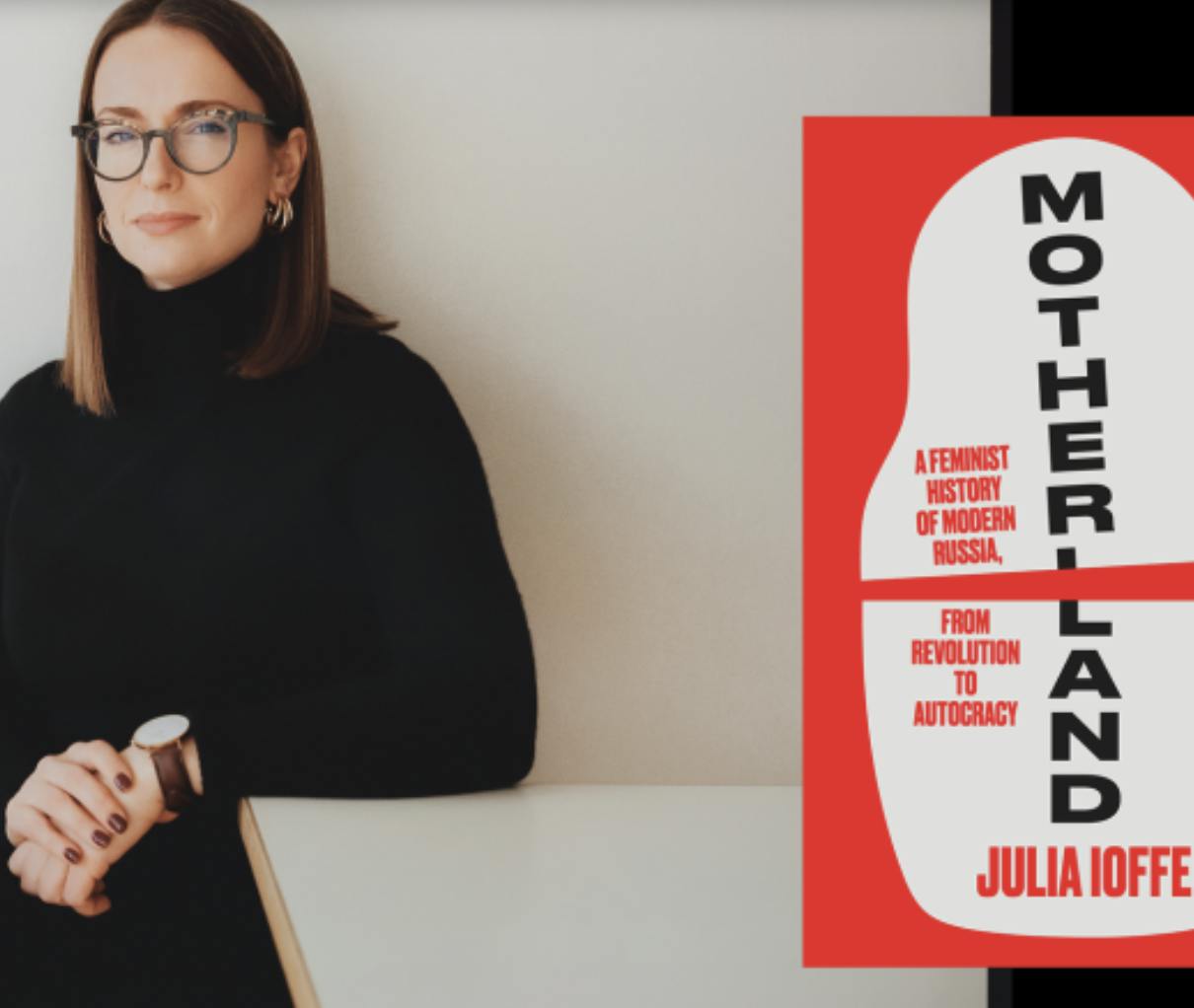
今晚,我非常荣幸能与朱莉娅·雅菲对话,她是新书《祖国:从革命到专制的现代俄罗斯女权主义史》的作者。
And tonight, I have the absolute pleasure of speaking with Julia Yaffe, author of the new book of the new book, Motherland, A Feminist History of Modern Russia From Revolution to Autocracy.
朱莉娅·雅菲是Puck的创始合伙人兼华盛顿记者站主任,她是美国在俄美关系领域最重要的声音之一。
Julia Yaffe is a founding partner and Washington correspondent for Puck, one of America's foremost voices on Russia US relations.
她常驻华盛顿和欧洲,负责报道国家安全、外交关系和国内政治事务。
She covers national security, foreign relations, and domestic politics from Washington and Europe.
她的新书《祖国》入围了2025年美国国家图书奖终选名单,实至名归。
Her new book, Motherland, is a finalist for the 2025 National Book Award as it should be.
欢迎你,朱莉娅。
Welcome, Julia.
太好了。
Yay.
那么首先,我要让你做一件事。
So to start out, I'm gonna make you do like one thing.
好的。
Okay.
所以贯穿你书中的一个主线是关于新女性的理念。
So a through line of your book is the idea of the new woman.
关于新苏联女性、战后苏联女性、1980年代苏联女性、1990年代俄罗斯女性以及当今俄罗斯女性的理念。
The idea of the new Soviet woman, the postwar Soviet woman, the 1980s Soviet woman, the 1990s Russian woman, the woman of today's Russia.
有一段话让我印象深刻,希望你能从第253页的'当这里'开始朗读。
And there's a paragraph that I was so struck by that I'd like you to read starting with when here on page two fifty three.
看,
See,
我就知道让你做这个准没错。
I knew when I asked you to do this that this would be good.
当赖莎在韦尔斯利学院对年轻的美国女权主义者讲话时,距离亚历山大·柯伦泰为全球劳动女性发表那本宣传手册已过去近七十年,那本宣称苏联女性生活在'童话国度'的宣传册。
When Raisa spoke to the young American feminists at Wellesley, it had been nearly seventy years since Alexander Kolentai had published a brochure for the world's working women, a piece of propaganda proclaiming that Soviet women lived in a, quote, fairy tale country.
自那时起,三代苏联女性用她们的脊梁扛起了这个童话国度,在男性领导人不断将其摧毁的同时重建并繁衍着它。
Since then, three generations of Soviet women had carried this fairy tale country on their backs, rebuilding and repopulating it as the men in charge repeatedly laid waste to it.
在克鲁普斯卡娅和柯伦泰之后三代人,新苏联女性已彻底精疲力竭。
Three generations after Krypska and Kalantai, the new Soviet woman was utterly and totally exhausted.
引述:'我们仍在套用那个全能坚韧的苏联女性老套形象',一位女性在《莫斯科新闻》报巅峰时期的公开信中写道。
Quote, we still apply the old stereotype of the all capable and resilient Soviet woman, one woman wrote in the Moscow news during the height of Perestroika.
是的。
Yes.
她无所不能,但她再也不愿这样了。
She can do everything, but she doesn't want to anymore.
这段话让我深受触动。
I was so struck by that.
这种'她无所不能,但她再也不愿这样了'的理念。
The idea of, yes, she can do everything, but she doesn't want to anymore.
你认为苏联新女性、战后苏联女性还是当今女性,这些理想在多大程度上依赖并建立在那些承担双重负担的女性身上?正如你不断写到的,她们现在再也不愿继续这样下去了。
How much do you think that the ideals of whether it was the new woman of the Soviet Union, whether it was the woman of postwar Soviet Union, whether it's the woman of today, has so relied on and depended on women who took on that double burden that you kept writing about, and they just don't wanna do it anymore.
我认为这是主要因素。
I think that was the main factor.
事实是布尔什维克新政府向女性做出了诸多承诺,并且兑现了其中一部分。
It was the fact that the new Bolshevik government made all these promises to women, and it delivered on some of them.
但你要知道,在解放女性的理念中,本意是让女性能像男性一样兼顾工作和育儿。
But, you know, in emancipating them, the idea was that women could work and parent the way men did.
1918年,她们不仅被迫参加工作,同时也获得了无过错离婚权、带薪产假,以及即使未婚也能获得子女抚养费的权利。
In 1918, they were given the right, they were forced to go to work, but they were given the right to no fault divorce, paid maternity leave, child support even from a man who they were not married to.
1920年,她们又获得了堕胎权。
They, in 1920, were given the right to abortion.
她们还享有免费高等教育的权利。
They were given the right to free higher education.
国家本应也提供相应支持。
And the state was also supposed to help.
本意是将生育和抚养孩子视为一种社会公益行为,而不仅仅是为了女性的快乐、自我实现或自我完善才生育。
It was supposed to treat I mean, the idea was to treat childbearing and child rearing as a social good, that it's not just for the woman's pleasure and self realization or self actualization that she has babies.
女性生育孩子也是因为这对社会有益。
She has babies because it's also good for society.
这对国家有益。
It's good for the country.
政府承诺将儿童抚养、洗衣、洗碗、烹饪等事务集体化。
And the government promised to collectivize child rearing, collectivize laundry, collectivize dishwashing, collectivize cooking.
但很快,布尔什维克政权初期掌权的少数女性就被边缘化了。
And, but very quickly, the women, the few women that had been in power at the beginning of the Bolshevik regime were sidelined.
而掌权的男性——说出来你可能要震惊——对这些事情根本毫不在意。
And the men in charge, you'll be shocked to know, didn't really give too much of a shit about these things.
因此女性最终不得不既要全职工作,又要全职操持家务和养育子女。
And so women ended up having to work full time and be full time homemakers and mothers.
到你让我读的那段引文时期,普通苏联女性每天在医院、学校、工厂等工作一整天后,还要再做七小时家务劳动。
They by the time of that quote that you had me read, the average Soviet woman was doing seven hours of domestic labor per day after getting home from a full day in the hospital, in the in the school, in the factory, etcetera.
而男性则不被要求帮忙,这些被视为女性的工作,女性们只能无奈地想:我们能不能至少放弃其中一件事?
And whereas men were not expected to help, it was seen as women's work and women were just like, can we just give one of these things up?
我认为这引出了你在书中反复强调的另一个观点——这让我非常感兴趣——没错,苏联70%的医生是女性,但其中90%从事低薪的初级诊疗,而男性却能成为外科医生。
And I think that that leads to another point that you keep making in the book, which was so interesting to me, which is that, yes, 70% of Soviet doctors were women, but 90% worked in poorly paid primary care while men got to be surgeons.
请谈谈职业是如何被女性化的。
Talk to me a little bit about how careers were feminized.
是的。
Yes.
在图书巡讲过程中,不断有人质疑我的观点,因为我一再强调——我的女性先驱们都是普通女性。
So this is in the in the process of doing this book tour and these talks, people keep challenging me and saying there's no because I keep saying, you know, my my foremothers were ordinary women.
但总有人反驳说:
And they're like and people will say, no.
她们并不普通。
They weren't.
他们认为这些女性是医生——这些人其实是在用美国人对医生这个精英职业的认知来投射苏联的情况。
They were doctors because they're projecting this, American view of doctors and medicine that this is an elite profession.
而且,某种程度上它仍然是一个中产阶级职业,尽管苏联当时的情况有所不同。
And, like, yeah, it is still it was still in some way, like a middle class profession as much as the Soviet Union had one.
但是,由于它变成了一个女性化的职业,就变得地位低下且薪酬微薄。
But, because it had become a feminized profession, it became low prestige and low pay.
所以在苏联当医生,并不意味着在美国这里当医生的那种地位。
So being a doctor in the Soviet Union did not mean what it meant here in the in The US.
所以,第二个领域也女性化了,不仅仅是教师行业。
So, the second field became feminized, not and not just teaching.
法官这个职业领域,你知道,在普京的俄罗斯被视为主要是女性化的职业。
The field of being a judge is, you know, being a judge is considered mostly a feminized profession.
因为法官在普京的俄罗斯都做些什么呢?
Because what do judges do in Putin's Russia?
他们只是机械地盖章通过判决。
They just rubber stamp verdicts.
对吧?
Right?
他们只是复制粘贴起诉书,改几个时态,而女性被认为注重细节,所以能被信任完成这种文书工作并提交。
They just take they copy and paste the indictment, change a couple tenses, and, you know, women are seen as detail oriented so they can be trusted to do that and hand that down.
所以,这再次说明,女性化的工作被视为低声望职业。
So, again, low prestige job because it's feminized.
会计工作——财务领域的这一部分——也被视为女性化职业。
Being an accountant is is that that aspect of finance is seen as a feminized profession.
事实上这是俄罗斯女性最常因此入狱的罪名之一,因为她们是管账的。
And it's actually one of the things that women in Russia go to jail for most frequently because they are the bean counters.
与那些放荡的男性不同,她们是注重细节且纪律严明的人。
They're the ones who are detail oriented and disciplined unlike the dissolute men.
当公司发生权力斗争,并利用俄罗斯所谓的'司法系统'让当局对竞争对手提起刑事诉讼时,替罪羊通常是女性——那个在财务文件上签名的会计。
And, when companies have these power struggles and weaponize the, quote, unquote, justice system in Russia and have the authorities open a criminal case against their competitors, the fall guy is usually a woman, the accountant who put her signature on, on the financial documents of a company.
因此她往往最终入狱,而男人们则在争夺各自公司的控制权。
So she'll often end up going to jail while the men fight over the fate of their respective companies.
所以,这就是苏联时期的另一个特点——当我告诉人们我祖母是医生,曾祖母也是医生,而且苏联70%的医生都是女性时。
So, I mean, that that's the other thing about the Soviet Union when you tell people where when I tell people that my grandmother was a doctor, my great grandmother was a doctor, and 70% of doctors in the Soviet Union were women.
听起来很酷,但实际上并非如此。
It sounds cool, but it actually was not.
实际上,我最早关于这个话题的演讲之一是在我经纪人的犹太会堂。
I actually one of the first talks I gave about this was at at my agent synagogue.
有个男人站起来说,我是个医生,曾在世界卫生组织工作。
And one guy stood up and he said, I'm a doctor and I used to work at the WHO.
我当时常驻瑞士。
And I was based in Switzerland.
七十年代末八十年代初,我每年都会去莫斯科。
And every year in the late seventies, early eighties, I went to Moscow.
我们会参观这些医院,按规定要带礼物。
And we would tour these hospitals and we were supposed to bring a gift.
所以我们带了伏特加、鱼子酱和巧克力。
So we would bring vodka and caviar and chocolates.
而所有这些医生都是女性,除了像医院院长这样的高层管理人员。
And all the doctors that we worked with other than, like, the top hospital administrators were women.
我们早上十点到达医院
And we'd arrive in the morning at ten in the morning.
到了中午,所有人都喝得醉醺醺的,下午就没人干活了
By noon, everybody's snackered, and nobody gets and nobody works for the rest of the day.
所以在之后的行程中,我决定
So on subsequent trips, I decided, hey.
要不我们等到一天工作结束再开伏特加
Let's just wait till the end of the day to open the vodka.
我们先完成工作
We'll do our work.
参观完实验室和医院后,再开怀畅饮
We'll tour the labs, the hospitals, and then we can, pour one out.
他说那些女医生们非常不高兴
And he said the women were so upset.
因为这是她们工作中唯一的节日
The doctors were so upset because it was their one holiday at work.
因为当美国人带着伏特加出现时,她们就能直接休假,不用回家做饭打扫、采购杂货,你知道的,也不用在公共公寓里用炉子上的锅煮水洗衣服拖地板。
Because when the Americans showed up with a bottle of vodka, they could just take the day off without having to then go home and cook and clean and forge for groceries and, you know, mop the floors and wash the laundry by boiling it in a pot on a stove at a communal apartment.
所以是的,一旦这个职业女性化,对男性来说它的吸引力就大大降低了。
So, yeah, it was like the second the profession became feminized, it became much less desirable for the men.
你认为这对俄罗斯女性在职业发展观念上产生了什么影响?
What do you think that did to the mindset of Russian women with regard to career advancement?
因为你在书中写到,攻读博士学位对她们来说似乎是件很平常的事。
Because you write in the book about how the idea of looking for getting a PhD was kind of a regular event.
所以有那么多女性拥有博士学位。
So so many women had PhDs.
但正如你所说,在那里拥有博士学位并不等同于我们这里的意义。
But again, as you say, having a PhD didn't mean what it means here.
那么你认为这种差异如何改变了俄罗斯女性对职业的看法?
So how did that shift, do you think, the view of Russian women towards thinking about their career?
嗯,职业是给男人准备的。
Well, the careers were for men.
男性拥有事业,女性只有工作。
And men had careers and women had jobs.
即使她们的工作需要博士学位或看似权威职位,正如一些八十年代末研究此现象的社会学家所言,女性仍会将职业生涯折射于家庭生活的利益之中。
And even if their jobs required a PhD or seemed like a position of authority, they still, as some sociologists who studied this in the late eighties put it, women refracted their careers through the interests of their home lives.
所以情况就像是,我怎样才能早点下班去杂货店,排三个不同的队买些东西,你知道的,就是杂货店里那些勉强能算食物的东西,比如罐头海藻,或者几乎不能称之为肉的肉?
So it was like, how can I leave a little bit early to, run out to the grocery store, wait in line in three different lines to pick up whatever, you know, they whatever kind of scraps they have in the grocery stores, like canned seaweed or, you know, meat that can hardly be considered meat?
比如我的祖母,我父亲的母亲,她是一名化学工程师,听起来很酷。
My grandmother, for example, who my paternal grandmother, who was a chemical engineer, sounds very cool.
她负责监管莫斯科郊外一家水处理厂的实验室,该厂为莫斯科部分地区及克里姆林宫提供清洁饮用水。
She oversaw the lab that the lab at a water filtration plant right outside of Moscow that provided clean drinking water to parts of Moscow as well as the Kremlin.
非常酷。
Very cool.
手下管理着一批人,绝对是个权威职位。
Had a bunch of people under her and was definitely a position of authority.
但在午休时间,她会去水处理厂周围的森林里采蘑菇,以补充商店里买不到的东西。
But during her lunch hour, she would go out and pick mushrooms in the forest around the water filtration plant to supplement what she couldn't find in the stores.
然后她的责任就是把这些蘑菇带回家,清洗干净。
And then it was her responsibility to bring those home, wash them.
如果你洗过从森林里采的蘑菇,就知道这要花很长时间。
If you've ever washed mushrooms from the forest, it takes a long time.
它们非常脏。
They're very dirty.
你得先晾干它们,然后装罐腌制,或者用其他方法处理。
You have to dry them, then you have to can them, pickle them, whatever you're gonna do with them.
我祖父从不会帮忙做这些事。
My grandfather didn't help with any of this.
对吧?
Right?
所以我祖父有工作,但他和大多数男人一样可以专注于职业发展。
And so my grandfather had a job, but he could and most most of these men could focus on advancement.
他们可以参加各种会议。
They could go to conferences.
他们可以继续深造。
They could study more.
他们可以在这些职业中谋求自我提升。
They could work on self advancement in these careers.
女性根本没有时间。
The women just simply didn't have time.
她们连睡觉的时间都没有。
They didn't have time to sleep.
如果你在办公室工作一整天后还要做七小时家务,哪还有时间专注职业发展?
If you're doing seven hours of domestic labor per day after working a full day at the office, what time do you have to focus on career advancement?
你光是活着就已经竭尽全力了。
You're just trying to survive.
数据也印证了这一点。
And the figures reflected this.
到苏联时期结束时,49%受过高等教育的男性担任领导职务,比如管理岗位或行政职位。
By the end of the Soviet period, 49% of men who had higher education had leadership jobs, like positions of authority, administrative jobs.
拥有同等教育水平的女性中,仅有7%获得了类似的职位。
7% of women who had the analogous education level had the same.
而且女性平均而言比男性受教育程度更高。
And women had were more on on average more educated than the men.
你
You
你在书中后文提到了对女性工作的理解。
write later in the book about your understanding of women working.
然后,当你移民到美国时还是个孩子,见到学校里同学的妈妈们都不工作,你会觉得这既荒谬又可悲。
And then, you know, when you immigrate to The United States and you are a little kid and you are meeting the mothers of people at school and they aren't working, and you're kind of like, that just seems ridiculous and pathetic.
她们对做饭感到恼火。
They're mad at cooking.
她们不工作。
They don't work.
她们都做些什么呢?
What do they do?
嗯,因为她们会这样说,哦,我是个家庭主妇。
Well, they because they they would be like, oh, I'm a homemaker.
然后我就想,这...这也算工作吗?
And I'm like, is is that a job?
就像,她们说这话时仿佛在谈论正经职业一样。
Like, you say they said it like they were jobs.
当时我就想,可我妈妈做着同样的事,她还是个医生。
And then and I was like, well, my mom does all those same things, and she is a doctor.
而且你们整天吃外卖,我妈妈却坚持每天现做饭菜。
So and and but you guys are eating takeout all the time and my mom cooks from scratch all the time.
所以显然我妈妈在任何方面都更优秀。
So and obviously my mom is superior in always.
是啊。
Yeah.
我印象很深的是,你在书中描写母亲时,我原以为的特权恰恰相反。
And I was really struck because you write what I about your mother, what I perceived as privileged was the opposite.
对你来说,这种对俄罗斯女性社会规范认知的转变是怎样的体验?
What was that shift in understanding of the norms for women in Russia like for you?
那是个启示,但这一切都发生在撰写和研究这本书的过程中。
It was a revelation, but it all happened in the process of writing this book and researching this book.
尽管我研究过苏联历史,尽管在着手写这本书前我已报道俄罗斯近二十年,但其中很多内容我都不了解。
Despite having studied Soviet history, despite having written about Russia for nearly two decades when I set out to write the book, I didn't know a lot of this stuff.
我没有意识到,其实很多这些女性并不想工作。
I didn't realize that, you know, a lot of these women didn't want to work.
她们并不想要这些职业。
They didn't want these careers.
而我最初察觉到这点,其实是在读我曾祖母的情书时。
And the first inkling, I had of this was actually when I was reading my great grandmother's love letters.
她是一位化学博士。
She was a, PhD in chemistry.
她拥有自己的实验室,专门研究皮革染色技术,并致力于实现工业化规模染色。
She had her own lab, that worked on leather dying and figuring out how to, dye leather at scale, like industrial dying.
她经常参加学术会议并撰写科学论文。
And she was always going to conferences and write writing scientific papers.
她年纪轻轻就守寡了,在克里米亚的一个度假胜地偶遇了大学时的恋人,重燃了这段恋情,而对方当时在基辅。
She, was widowed fairly young, and she runs into her college sweetheart at a resort in Crimea and, rekindles this romance, and he's in Kyiv.
她在莫斯科,两人通过书信往来。
They're she's in Moscow, and they're writing letters back and forth to each other.
我一直知道这段伟大的爱情故事,也一直为这位拥有化学博士学位、如此有教养的优秀曾祖母感到骄傲。
And I had always known about this great love story, and I was always so proud of this great grandmother who was a PhD in chemistry and was just such a cultured, fine woman.
当我读她的信件时,发现她显然患有严重的偏头痛,甚至都没有这个词来形容。
And I'm reading her letters, and she clearly suffers from terrible migraines, doesn't even have a word for that.
所以她整天工作,回家后还要独自抚养我祖父——他是个非常难带的孩子,可能患有自闭症。
And so she works all day, she comes home, She is a a single mom because she's a widow to my grandfather who was a very difficult child and was probably on the spectrum.
她还要照顾自己守寡的母亲,而这位母亲几乎帮不上什么忙。
She had to care for her own mother who was a widow and pretty useless.
她还有个同样守寡的妹妹也需要她照顾。
She had another sister who was a widow that was also on her.
她们还有个兄弟,却对这些事一概不管。
They had a brother who didn't help with any of this.
另外还有个身体不太好的小妹,也成了她的负担。
And then another little sister who wasn't in great health and was also her responsibility.
所以她从实验室回来,要给所有人做饭、照顾他们、哄每个人睡觉,然后坐在那里把科学论文从英文和德文翻译过来,赚点外快。
So she would come home from the lab, cook for all of them, take care of all of them, put everybody to bed, and then sit there and translate scientific papers from English and German to make a little extra money.
她在写给后来成为她第二任丈夫的情书中,描述了所有这些艰辛。
And she's writing, describing all of this in these love letters to the man who would become her second husband.
他是基辅乌克兰国家科学院的工程师,对她的职业成就、所做的一切和智慧充满敬仰。
And he is an engineer at at the, Academy of Sciences in Ukraine in Kyiv, and he is so in awe of her, career, of all that she does, of her mind.
他甚至开始修化学课程、阅读化学论文,试图在专业领域与她比肩。
And he starts taking chemistry classes and reading papers about chemistry to kind of meet her where she is professionally.
而她的反应却是:不,我根本不需要这些。
And she is just like, no, I don't want any of this.
我累了。
I'm tired.
她说,我是个重要的女人,但我已经厌倦了做个重要女人。
She's like, I'm an important woman and I'm so tired of being an important woman.
我只想当个小女人。
I just wanna be a little woman.
我只想能躲在你背后休息。
I just want to be able to hide behind your back and just rest.
她实在太累了,就像在说,这些我都不想要。
She was so tired and so just, like, I didn't want any of this.
那是在1934年,我初次读到这些时就在想,我是不是看错了。
And this was in 1934, and I thought when I first read it, I was like, did I maybe I didn't read that right.
因为布兹,这样可不好。
Because Buzzi, that's not cool.
但后来,你知道,她在所有信里反复提到,她就是不想承担这些。
And, but then, you know, it kept coming up in all her letters that she was just she didn't want any of this.
她只想待在家里,被一个能主事的男人照顾。
She just wanted to stay at home and be taken care of by a man who would be in charge.
这是我第一次隐约意识到,也许这并不是我家族中所有女性都会做出的选择。
And that was kind of the first inkling I got that, maybe this wasn't something that the women in my family would have all chosen.
进而推想,苏联和俄罗斯的女性们可能也不会这样选择。
And by extension, that Soviet and Russian women would have chosen.
我认为这涉及到你写年轻时的弗拉基米尔·普京时,谈到了他的婚姻。
Which I think gets into when you're writing about, young ish Vladimir Putin and you're talking about his marriage.
他提供的是稳定与舒适。
He is offering stability and comfort.
嗯哼。
Like Mhmm.
他完全——我甚至不确定‘情感疏离’这个词是否足够贴切——这大概是对他最友善的评价了。
He's completely I don't even know if the word emotionally unavailable even begins That's nicest thing anyone has ever said about him.
但他确实存在,他会回家,旁人也注意到了这一点。
But he's there and he comes home and other people comment.
你引用了——我记得是一位克格勃官员妻子的话——‘他总是回到你身边,始终如一’。
You quote from, I believe, like a KGB officer's wife talking about, well, he always just comes home to you and he always is there.
这种吸引力达到的程度,虽然并不
And the degree to which that becomes so appealing, which doesn't
而且他确实不
And he make doesn't
喝酒。
drink.
他不喝酒。
He doesn't drink.
他不打她。
He doesn't beat her.
对。
Right.
直到我读了你家族的故事和你详述的内容,你才明白这有多么吸引人。
And you don't understand how much, how appealing that is until I read the stories of your family and the stories you detail.
你之前提到的部分让我印象深刻,就是关于卡兰泰和克鲁普斯卡娅的那段我让你读的内容。
And I was so struck by how you mentioned earlier, you know, in the section that I had you read of Kalantai and Krupskaya.
你在书开头重点提到的那些布尔什维克思想家们,他们谈论的理念是——你可以自由地向任何你想爱的人倾注爱意。
And these Bolshevik thinkers who you highlight at the beginning of the book, who are like, you know, talking about this idea of, you you could pour your love out to whomever you'd want and you'd be free.
你会工作,因为每个人都得工作,但你会成为这个新苏维埃社会的一部分。
You could work because everyone's going to work, but you would be part of this new Soviet society.
我确实觉得‘母亲宫’因纵火被烧毁是个颇有预示性的情节。
And I did think it was a bit of foreshadowing that the palace of motherhood burns down as a result of arson.
我当时就想,我大概能猜到故事会怎么发展。
And I'm like, well, I feel like I can tell where this is going to go.
但令我震撼的是,你笔下后苏联时期的女性,她们的革命职责不再是成为工人社会的积极参与者。
But I was so struck by how, you know, you write of women in the later Soviet period that her revolutionary duty was no longer to become an active participant in a worker society.
这是柯伦泰和克鲁普斯卡娅曾为之奋斗的目标。
Something Kolentai and Krypskaia have fought for.
也是那些驾驶夜间轰炸机空袭德国的‘夜间女巫’们真正为之战斗过的理想。
Something that the women, the night witches who flew over bombing raids over Germany literally fought for.
但现在她们的使命变成了履行作为母亲的宿命。
But now it's to fulfill her destiny as a mother.
你稍微提到了这一点,像是顺便提及的,但你认为这些理想和意识形态——列宁也嗯。
And you mentioned this a little bit, kind of as an aside, but how and why do you think those ideals and that ideology, which Lenin also Mhmm.
深信不疑的。
Believed in.
他谈论过这样的观点,有朝一日核心家庭会成为博物馆里的展品。
He talked about the ideas of, the nuclear family would someday be something you'd go see in a museum.
嗯。
Mhmm.
发生了什么?
What happened?
发生的是男人们,因为这就是常态。
What happened was men, because that's what tends to happen.
其实列宁在这些问题上相当进步,但他在党内男性中是个异类。
So well and and Lenin was actually quite progressive on this stuff, but he was very much an outlier among the men in the party.
而科隆泰、克鲁普斯卡娅和奈斯·阿尔芒德——她曾是革命者,一度是列宁的情人——她们都谈到工作、事业和职业不仅是解放女性、让她通过经济独立获得自由的方式,更能赋予她生命意义与目标。要知道,当她们在十九世纪末二十世纪初写下这些时,那是相当激进的。
And Kolonthay, Kurupskaya, and Nes Armand, who was a revolutionary and for a time was Lenin's mistress or lover, they all talked about work and a career and a profession being not just a way to free a woman and make her independent because she has her own money, but also something that it would give her life meaning and purpose as which you know, when they're writing this in the early nineteen hundreds, late eighteen hundreds, that's radical.
对吧?
Right?
当时所有人都在说,不。
Everybody was saying at the time that, no.
赋予女性生命意义与价值的,是她与某个男人的关系,或是她与子女的关系。
What gives a woman's life meaning and value is become as it relates to another man or as it relates to her children.
对吧?
Right?
但问题在于列宁于1924年去世,在此之前他已丧失行为能力约一年半。
But the problem is that Lenin died in 1924, and he was incapacitated for about a year and a half before that.
而党内其他高层男性并不太认同这些理念。
And the other men in the party hierarchy weren't super down with these ideas.
他们觉得克伦泰——那个谈论'畅饮爱情之杯'、认为工作对女性具有神圣意义的人——
They didn't they thought Klon Tai, who talked about, you know, drinking from the cup of love and work having this kind of sacred meaning for a woman.
他们不喜欢这些观念。
They didn't like these ideas.
他们同意女性工作,因为他们需要重建一个被内战、第一次世界大战和饥荒摧毁的国家,但他们乐于接受这一点。
They were fine with women working because they needed to rebuild a country that was devastated by the civil war and World War I and famine, but, they were happy to take that.
但他们对自由恋爱不感兴趣。
But they weren't interested in, free love.
他们对女性掌权不感兴趣。
They weren't interested in having women in power.
他们很快就边缘化了科隆泰。
And they very quickly sidelined Kolonthai.
他们很快就边缘化了格鲁布斯科耶。
They very quickly sidelined Grubbskoye.
而且,我觉得这很有意思。
And, I mean, it's interesting.
布尔什维克在1917年前是俄国地下组织中最主张平等的政党。
The Bolsheviks were the most egalitarian party in the Russian underground before 1917.
然而一旦他们掌权,利害关系变得真实,他们就立刻变卦了。
And then the second they take power and the stakes become real, they're like, okay.
好吧,我们不能让女性真正掌权。
Well, we can't have women actually running things.
对吧?
Right?
他们几乎搁置了所有案件。
And they, sideline pretty much all cases.
是啊。
Yeah.
他们几乎搁置了所有人。
They sideline almost all of them.
而且再次强调,他们根本不认同这些理念,所以毫无兴趣实施其中任何一条。
And, again, they have not bought into any of these ideas, so they have no interest in implementing any of them.
甚至可以说,他们完全颠倒了这些理念。
And if anything, they turn them on their head.
比如他们采纳了科隆泰的观点——将'饮爱情之杯'比喻为爱情只是女性生活的课外活动,主业仍是工作。
So they take Kolon Tae's idea, for example, about drinking from the cup of love as, you know, love being something extracurricular to the main pursuit of a woman's life, which is her work.
他们将其称为'一杯水理论'。
They turn it into what they call a glass of water theory.
苏联曾有位负责健康与性教育的官员,他把这曲解为'一杯水理论',声称科伦泰认为性行为不过像喝杯水那样随意、毫无意义且轻浮——这完全违背了她的本意。
There was a man who was, put in charge of, health and sexual education in the Soviet Union, and he turned this into the glass of water theory, which was saying that Kolentai actually said that sex is nothing more than drinking from a glass of water, that it's completely casual, meaningless, and, frivolous, which is the opposite of what she was saying.
此人还制定了十二条性戒律,从1920年代起要求所有苏联青年遵守:必须早婚,性行为仅用于生育。
And this man came up with the 12 sexual commandments that all Soviet youth were taught starting in the nineteen twenties, which is that you have to get married young, sex was for having children.
若性伴侣过多或尝试过多体位,就会耗尽本应投入革命的精力,将能量浪费在性这种愚蠢之事上,必须保持一夫一妻制等等,这些成了新的正统观念。
If you had too many partners or engaged in too many sexual positions, you would drain your revolutionary energy you need to put into the revolution into stupid things like sex and that you need to be monogamous, etcetera, that the this was the kind of the new, orthodoxy.
正如某位社会学家所言,到苏联末期时,其清教程度之严苛,连维多利亚时代的英格兰都会自愧不如。
And by the time we get to the end of the Soviet Union, as one sociologist put it, the Soviet Union was, was so puritanical that, Victorian England would have made it blush.
根本原因在于男性不感兴趣,他们实施了政治镇压、集体化、人为制造饥荒、在清洗全军后卷入世界大战等行为,导致1945年二战结束时,过去三十年间已有超五千万苏联人丧生。
And, yeah, basically, the men weren't interested, and then they did all kinds of things like, political repressions, collectivization, creating famines out of nowhere, getting involved in world wars after purging their entire armies and military staff so that by the time World War two ends in 1945, in the previous thirty years, over fifty million Soviets had been killed, and the Soviet men realized the real thing that they need the women to do on top of rebuilding the country because there's no men left to do it.
他们还需要女性为国家补充人口。
They also need them to repopulate the country.
他们称之为'填补死者空缺'。
They call it replacing the dead.
他们基本上强制女性为国家提供生育服务。
And they basically press women into reproductive service for the country.
他们,你知道,他们
And they, you know, they
这是一项税收政策,基本上要求你必须生育足够替代你和配偶的人口,并额外多生一个,之后才不用继续缴纳这项税。
It's a taxation policy, which is basically until you replace both you and your spouse and you need one more, then you don't have to pay that tax after that point.
我注意到这是普京试图重新推行的政策。
And I noted that that was something that Putin has tried to reintroduce.
但我认为这实际上引出了一个贯穿全书的另一条有趣线索:男性既被神化又被娇纵,而女性却因神化和娇纵他们而受到指责。
But I think that that actually leads to something and another interesting through line of the book, which is that men are simultaneously deified and coddled, and then women are blamed for deifying and coddling them.
你在书中写道:‘矛盾的是,在一个日益父权化的社会中,男性在苏联俄罗斯几乎变得无关紧要。’
And you write, Paradoxically, in an increasingly patriarchal society, men have become nearly irrelevant in Soviet Russia.
而这一主题不断重现——女权主义的衰落削弱了俄罗斯男性的地位。
And that keeps being a theme of the idea of the decline of feminism diminishing the Russian man.
你知道的,女权主义的兴起。
You know, the rise of feminism.
是的。
Yeah.
我认为这个观点非常引人注目。
I think that the idea of that is so striking.
所以我想从两个方面来看待这个问题。
So I wanna look at that in two ways.
首先,这是一项明确的政府政策。
One is that's a clear state policy.
在1950年代的一个时期,政府改变了对待单身母亲所生子女的政策。
A moment in the 1950s in which the state changes its policies with regard to how children are treated who are born of single mothers.
这基本上让父亲变得可有可无。
And that seems to basically make fathers unnecessary.
嗯。
Mhmm.
这是怎么发生的呢?
How did that happen?
这是因为二战中死亡人数过多,斯大林要求当时的副手赫鲁晓夫制定一项政策来补充人口损失,为苏联制造婴儿潮。
So that was because so many people were killed in World War two that, Stalin asked Khrushchev, one of his lieutenants at the time, to come up with a policy to replace the dead and engineer a baby boom for the Soviet Union.
这是在1944年。
This was in 1944.
战争即将结束。
The war is ending.
他们知道自己即将获胜,同时也清楚遭受了灾难性的人口损失。
They know they're winning, and they also know that they've suffered catastrophic human losses.
于是赫鲁晓夫提出了一系列最终成为法律的政策提案。
And so they come up with Khrushchev comes up with a number of policy proposals that turn into law.
他们让离婚变得几乎不可能。
They make divorce nearly impossible.
所以任何幸存的男性——顺便说一句,战争结束时几乎看不到男性身影。
So whatever men are around so I should say, by the way, that at the end of the war, there were, like, no men around.
有些地方男女比例甚至达到19:100。
There were places where there were 19 men for every 100 women.
有些地方,你知道,整个村子的男人都去打仗了,最后只回来一个,他的妻子就把他‘借给’村里其他女人,好让她们也能当上母亲。
There were places where all the men you know, villages where all the men went to war and one comes back, and his wife then loans him out to all the other women in the village so that they could also become mothers.
要知道二战中有两千一百万男性丧生,其中大多数正值生育黄金年龄。
And this is the you know, twenty one million men are killed in World War two, and most of them in their prime reproductive age.
在这种情况下,苏联试图以此为基础人为制造一场婴儿潮。
And using that, like, that's the that's the sub like, the given, and the Soviet Union's trying to engineer a baby boom with that.
所以他们让幸存的男人无法解除婚姻关系。
So they make the men who are around, they make it impossible for them to leave their marriages.
但同时他们又说:
But they also say like, hey.
如果你不小心让别的女人怀孕了,别担心。
If you happen to knock up somebody else, don't worry about it.
她没法追究,你也不用娶她。
She can't and you're not married to her.
完全不必担心。
Don't worry about it.
她不能把你的名字写在出生证明上。
You she can't put your name on the birth certificate.
她不能向你索要子女抚养费,这些都是对1918年科恩·泰格实施政策的全面逆转。
She can't seek child support from you, which is all these are all reversals of the policies that Cohen Tighe enacted in 1918.
他们基本上创造了单身母亲这一社会和法律类别。
And they basically create the the social and legal category of the single mother.
他们在战后确实迎来了婴儿潮,但这些孩子中有三分之一是单身母亲所生。
And they do get their baby boom in the postwar years, but one third of these children are born to single mothers.
因此有数百万苏联人出生时不知道自己的父亲是谁。
So it's millions of Soviet people who are born who do not know who their fathers are.
国家表示:别担心,第一,我们会付钱让你生孩子。
And the state says, you know, don't worry about, a, we're gonna pay you to have children.
第二,如果你不生,我们会惩罚你。
B, we're going to penalize you if you don't.
第三,我们将取代父亲的角色。
C, we're going to replace the father.
我们将以家长身份介入。
We will step in and loco parentis.
我们会给你,我们会提供资金抚养孩子。
We will give you, we will give you money to support the kid.
我们会提供孩子的免费教育,以及你工作时的免费托儿服务。
We will give you schooling at the child's schooling, free childcare while you work.
当然,国家并未完全履行这些义务。
And the state, of course, doesn't meet those obligations fully.
但结果就是母职与亲职的混为一谈。
But the result is the conflation of motherhood and parenthood.
即使在有父亲的家庭中,他们也无关紧要。
And even in the families where there were fathers, they were irrelevant.
人们并不期望他们积极参与育儿。
They were not expected to actively parent.
人们也不指望他们帮忙料理家务。
They weren't expected to help around the house.
他们只需要去工作就行了。
They were just expected to go to work.
而且,许多从战场归来的男性心理严重受创,其中不少人开始酗酒。
Also, lot of them who the men who did come back from the war came back so shattered psychologically that many of them take to drink.
正如一位人口学家告诉我的,苏联时期没有抗抑郁药物。
As one demographer told me, there were no antidepressants in the Soviet Union.
于是酗酒现象开始蔓延。
And alcoholism takes off.
因为在俄罗斯没人独自饮酒,他们开始教院子里的小男孩一起喝酒。
And because nobody drinks alone in Russia, they start teaching the little boys in the yard to drink with them.
就这样一代又一代的酒鬼不断产生。
So you start getting these generations and generations of alcoholics.
结果就是,要么新一代人根本不知道父亲是谁,要么虽然知道父亲是谁,却视其为家中的幽灵般无足轻重。
The result being that either, you know, there is a generation growing up that doesn't know who their fathers are, or they do know who their fathers are, but see them as kind of ghosts in their own home, see them as irrelevant.
他们并非真正的权威形象。
They're not really authority figures.
他们实际上并不能与母亲和祖母平起平坐地共同养育孩子。
They're not really coequal parents with the mother and the grandmother.
所以俄罗斯现在有个笑话,说俄罗斯禁止同性恋领养孩子,声称孩子在单性别家庭中成长不健康。
So the joke in Russia now is that, you know, Russia banned gay people from adopting children and says that it's that it's unhealthy for children to grow up in a single sex household.
人们就觉得,在俄罗斯谁不是在单性别家庭长大的啊。
And people are like, everybody grows up in a single sex household in in Russia.
每个人都有双亲——妈妈和奶奶。
Everybody has two parents, their mom and their grandma.
这种状况始于战后岁月。
And that started in the postwar years.
这很有意思。
And it's interesting.
你看,这就是那种政策决定做出后的典型时刻。
You know, it it's one of those moments in which a policy decision is made.
然后大约二十年后,所有人都会惊叹:哇。
And then about twenty years later, everyone's like, wow.
这是怎么发生的?
How did this happen?
因为你会遇到这样的时刻——你在书中写到苏联作家们曾通过读者来信等形式,引发过一场关于‘男性陷入危机’的大讨论。
Because you have these moments and you write about this where Soviet, you know, Soviet writers, there's, you know, letters to the editor and this big crisis about like men are in crisis.
男性正处于危机中。
Men are crisis.
对,男性气质危机——我当时的反应是‘又来这套’。
Yeah, crisis of masculinity, which I'm like, oh, that.
有趣的是,甚至你在俄罗斯调研时也发现,人们总说‘男人才是真正需要被关注的群体’。
So it's interesting to me that, you know, and even in the research you were doing in Russia, people are saying like, you know, men are the real targets of concern.
我们对男性关怀得不够。
We aren't doing enough for men.
社会对男性议题讨论得太少。
There's not enough being discussed as men.
那么在俄罗斯社会里,这种既视男性气质为脆弱又认为其不可或缺——仿佛没有它就不行的观念,你怎么看?
So talking about Russian society, what do you think that view of masculinity as simultaneously fragile, but also necessary, so inherent that you have to have it?
这个观点,你写道'等等',我要再引用你的话。
The idea, you write hang on, I'm gonna quote you again.
你提到一位名叫卢迪亚的女性打电话给你,询问你为何她从未离开她的丈夫,尽管她有充分的理由这样做。
You go you know, you talk about to a woman named Ludia who calls you and asks, you know, you had asked her why she had never left her husband despite ample reasons for her to leave her husband.
他打她。
And she He beat her.
他酗酒。
He drank.
是的。
Yes.
情况很糟糕。
It was horrible.
嗯。
Yeah.
还出轨了。
Cheated on her.
她说,你问我为什么从未离开我丈夫。
She says, you asked me why I never left my husband.
我来告诉你为什么。
I'll tell you why.
因为他从未因我们不能有自己的孩子而对我有过半句怨言,一次都没有。
Because he never once said anything to me about the fact that we couldn't have our own kids, not once.
而且他也从未试图离开。
And he never tried to leave.
即使在他酗酒鬼混的时候,他也总是会回家。
Even when he was drinking and fooling around, he always came home.
这才是真正男子汉的行为。
That's a really manly act.
就像我老祖母曾对我说的,卢蒂娅,他是个真正的男子汉,有血性的男人。
As my old grandmother once said to me, Lutya, he's a real musik, a manly man.
所以他酗酒鬼混。
So he drinks and fools around.
那又怎样?
So what?
这些俄罗斯男人都这样,喝酒鬼混。
They all drink and fool around, these Russian men.
你怎么看待这种观念:男人可以为所欲为,但同时他们又需要被保护,保持他们通过这种方式展现的男子气概?
What do you think that idea of men can do whatever they want, but also they need to be protected and preserved in their masculinity, which they express in this way?
你认为这对俄罗斯人的思维方式造成了什么影响?
What do you think that's done to the Russian mindset?
没什么好处。
Nothing good.
但我觉得确实如此。
But I think it's yeah.
你非常出色地指出了其中的矛盾之处。
It's this you did a really great job of pointing out the contradictions of it.
对吧?
Right?
展开剩余字幕(还有 391 条)
这种溺爱源于1945年,当时没有男人回家,整整一代苏联女性永远无法结婚,永远无法拥有国家告诉她们必须拥有的核心家庭,而这是最理想的生活方式。
The coddling comes from, 1945 when no men come home, and there's a whole generation of of Soviet women who can never marry and who can never, you know, have this nuclear family that the state is telling them they need to have, and that is the best way to live.
于是这种社会潜规则下的等级制度逐渐形成:有孩子的已婚女性处于顶端,其次是已婚女性,然后是单身母亲,最后是那些既未婚又无子女的可怜人。
And this hierarchy, the social unspoken social hierarchy develops with married women with children at the top, then married women, then single mothers, and then these pathetic creatures who are neither married nor have children.
但要爬到最顶端,你需要一个男人,可根本找不到男人。
And but to get to that very top, you need a man, but there are none to be had.
因此针对男性的激烈竞争就此展开,人们觉得他们就像濒危物种。
And so this fierce competition develops for them, and there's a sense that they're an endangered species.
对吧?
Right?
再加上政府从六十年代开始谈论男性气质危机,说国家为女性做了这么多,现在该为男性做点什么了。
Plus, the government starts talking in the sixties about this crisis of masculinity and how the state has done so much for women that now it's time to do something for the men.
如果说有什么影响的话,那就是赋予女性权力削弱了我们男人的男子气概。
And if anything, empowering women has emasculated our men.
当然,你知道的,在苏联报纸上,他们不能说这是政府实施这些政策的错。
And, of course, they can't in, you know, Soviet newspapers, they can't say, you know, it's our government's fault for enacting these policies.
他们转而说的是,哦,这是因为我们所有的教师都是女性。
What they say instead is, oh, it's because all all our teachers are women.
这就是为什么我们的男性陷入危机。
That's why our men are in crisis.
他们没有可以仰望的男性榜样。
They have no male role models to look up to.
因此,男性被争抢和溺爱,因为他们数量稀少,被视为稀缺资源。
And so then, you know, men are fought over and coddled because there's so few of them, and they're seen as a scarce resource.
但这同时也催生了——要知道,顶层男性催生了我认为这种充满野性的男子气概理想,几乎没有女性在现实生活中见过或经历过这种气质,这就是为什么普京那些骑马的无上衣照片对俄罗斯女性来说是如此惊人的象征。
But that also gives rise to plus, know, you have the men at the top, and this gives rise to this, I think, an aspirational idea of this macho masculinity that so few women have ever seen or experienced in their lives, which is why Putin, you know, with his shirtless photos on a horse, is an amazing symbol for Russian women.
她们几乎没有人拥有过像他这样的男人。
They've none of them have almost none of them have had a man like him.
对吧?
Right?
他不喝酒。
He doesn't drink.
他纪律严明。
He is disciplined.
他专注力强。
He is focused.
他行事果断。
He's decisive.
他不像那些被宠坏的巨婴——许多俄罗斯男人正是这种自我毁灭型巨婴,这正是过度溺爱的直接后果。
He's not like this overgrown spoiled child, which a lot of self destructive child, which a lot of these Russian men are, which is the direct result of coddling.
对吧?
Right?
而且,在苏联时期和当今俄罗斯,这又演变成不仅是女性阉割男性气概的过错,还成了女性必须承担的另一项职责——赋能男性。
And, and again, it then also becomes, both in Soviet Russia and in Russia today, becomes not just the fault of women for emasculating the men, but also becomes yet another job for the women to empower the men.
所以我采访过一位女性,她创办了整个学院
So there's, you know, one woman, I interview who has a whole academy
专门培训。是的。
to train Yes.
我真的很想让你谈谈生命学院的事。
I really wanted you to talk about the Life Academy.
请继续。
Go ahead.
我真的很想了解,因为这基本上就是去那里学习如何钓到男人。
I really want it because it's basically like going there to learn how to catch a man.
嗯。
Mhmm.
还运用了佛教、印度教和一些模糊的东正教理论的奇怪结合体,来阐述男人是什么以及你需要成为什么样的人才能得到一个——因为你必须拥有一个。
And using like this strange intersection of like Buddhist and Hindu and some vaguely orthodox theories about like what men are and what you need to be to get one because you have to have one.
但那一章最让我感兴趣的是,虽然男人听起来很糟糕,但你必须拥有一个。
But also the way in that chapter, which I found so interesting is that men sound kind of terrible, but you have to have one.
嗯。
Mhmm.
是的。
Yeah.
是啊。
Yeah.
没错。
Yeah.
对。
Yeah.
因为这是个身份地位的问题。
Because it's a status thing.
因为自20世纪40年代以来,女性就不断被告知结婚成为妻子和母亲有多么重要。
Because since the 1940s, women have been hearing about how important it is to get married to be a wife and a mother.
如果存在这种感知上的稀缺性——毕竟这种状况后来消失了,对吧?
And if there aren't if there's this perceived scarcity, I mean, because it goes away after right?
男孩和女孩的出生率大致相同。
Boys and girls are born at roughly the same rates.
所以在战争导致大量年轻男性死亡的那一代人之后,下一代开始生育时,就不再存在性别比例失衡了。
So after the generation that was had all these young men killed off in the war, after the next generation starts having kids, there's no disparity anymore.
但这种短缺心态却延续了下来。
But that shortage mindset stays.
抱歉。
And sorry.
我忘记说到哪了。
I lost my train of thought.
你刚才在讲生命学院的事。
You were talking about the Life Academy.
哦,就是那种'必须找个男人'的短缺心态,但是...
Oh, the The shortage mindset of, like, you have to get a man, but So
但它
but it
听起来完全不能信任男人。
sounds cannot trust men at all.
没错。
Right.
但他们也被视为像孩子一样,觉得他们很愚蠢,基本上就是些没脑子的存在,而且非常容易被操控。
But they're also seen as these children, like, that they're so stupid, and that they're basically these brainstems, and that they're very simple to manipulate.
这一切都源于——这是我小时候被灌输的观念——你只需要耍点小手段让男人娶你,这并不难因为他们真的很蠢。
It's all about and this is what I was taught as a young girl, is that, like, you just have to trick a man into marrying you, and it's not very hard because they're really dumb.
你只需要做以下几件事,并且不要向他展现你的真实个性,因为男人实际上...
And you just need to do the following things and and do not show him your personality because men actually.
而且女人也讨厌女人。
And women hate women.
我们都讨厌女人。
We all hate women.
但记住千万别让他知道真实的你。
But just don't don't show him who you are.
按照以下步骤操作。
Do the following things.
设计让他娶你,然后你就稳了。
Trick him into marrying you, and then you're set.
但你知道吗,实际上你并没有安稳下来,因为其他女人会试图把他从你身边抢走。
And then, you know but then actually you're not set because then women are trying to take him from you.
我和一位出色的社会学家聊过,她说有种观点认为男人就像小牛犊,被拴在绳子上,你把他绑在栅栏上,就会有别的女人过来解开绳子把他牵走,明白吗?
And I talked to this amazing sociologist who was like, there's this idea that women that men are like veal calves, you know, on a rope, and that you tie him to the fence and some woman's gonna come by and untie him and take her to her farm, you know?
但与此同时,男人又被塑造成那种高大、重要、阳刚的形象,应该是他们来做所有重要决定,因为柔弱的女人根本不可能...这根本说不通,自相矛盾,但欢迎来到俄罗斯。
And it's like but then at the same time, men are like, oh, they're these big, important, masculine people, and they're the ones who should be making all the important decisions because feeble minded women couldn't possibly it just it doesn't it's a contradiction that doesn't make sense together, but welcome to Russia.
嗯。
Yeah.
我很好奇,因为你提到法官以及司法系统如何逐渐变成一种女性化的职业。
I was interested because you mentioned you're talking about the judges and how that became like the judicial system became kind of a feminized profession.
但正是女性在推动家庭暴力的非刑事化。
But it's women who are arguing for the decriminalization of domestic abuse.
普京的一些最坚定支持者也是女性。
It's women who are some of Putin's biggest defenders.
这是否因为普京被视为那种能提供稳定和慰藉的理想俄罗斯男性形象?
Is that because he is seen as like this ideal Russian man who offers that stability, that comfort?
你知道,你喜欢引用你讨论过的那些信件内容,提到你可以躲在他身后,不必操心所有事情,因为他会处理好一切。
You know, you like to quote your the letters you were discussing where, you know, you could hide behind him and you don't have to do all that work because he'll just take care of it.
是的。
Yeah.
我是说,普京执政前二十年的关键词就是稳定。
I mean, the watchword of the first twenty years of Putin's rule was stability.
每当西方出现任何金融波动时,他都会说我们是稳定的避风港。
And every time there was any kind of financial hiccup in the West, he'd say we're an island of stability.
稳定是那个时代全球关注的关键词。
Stability was the watch world watchword.
我认为部分原因确实在于,他是她们从未拥有却渴望拥有的那种男人。
I think in part, yes, it's because he's the man they never had and wish they had.
有位女性告诉我,对她和约70%的俄罗斯女性而言,弗拉基米尔·普京是她最潮湿幻想的对象。
Whereas one woman told me that for her and as she guessed 70% of Russian women, Vladimir Putin was the subject of her moistest fantasies.
但这也像是
He but it's also that like
这是我听过最可怕的一句话
That's the most terrible sentence I've ever heard
在我一生中
in my life.
是啊
Yeah.
当我听到时,我就像小猫反胃一样恶心
When I heard it, I was like just like a little cat barf.
没错
Yeah.
这是...这是...这是他们向往的
It's it's it's aspirational.
这是他们在其他地方很少见到的那种男子气概
It's the kind of masculinity they don't really see in many other places.
你知道还有什么是很有趣的吗?
And you know what's also interesting?
我我没把它写进书里,因为实在太过分了。
I I didn't include it in the book because it was just too much.
但如果你看看所有那些广告,尤其是早期的,向俄罗斯男性宣传军队、鼓动他们参军去乌克兰打仗的内容——因为征兵适得其反,他们只能重新花钱雇人。
But if you look at all the ads, especially the early ones, advertising the military to some Russian men and why they should join the military and go fight in Ukraine, because the draft backfired and they needed to just go back to paying people to do it.
他们不只是简单地说'嘿,给你钱'。
They weren't just like, hey, here's money.
所有广告里有个让我印象深刻的:一个男人邋遢地瘫在沙发上喝酒,然后镜头一切——他正持枪躺在战壕里。
All the ads showed there was one that really stuck with me, where there's a guy on a couch drinking, looking slovenly, and then it's, you know, it's like, oh, and he's in a lying in a trench with a gun.
接着又出现超市保安窝囊的样子
And and then it's like, oh, here's a security guard looking pathetic at the supermarket.
然后特效一转
And then it's like, special effects.
他其实是在乌克兰战场上站岗
And he's actually standing guard on a battlefield in Ukraine.
广告语写着:做个真男人,去乌克兰打仗
And it was like, be a real man and go fight in Ukraine.
所以它实际上是在利用这些形象——不,是利用俄罗斯男性的现实状况。
So it was actively playing on these images of, not images, on the reality of what Russian men are.
而且有很多故事讲述俄罗斯女性非常乐意将她们的丈夫送去乌克兰打仗,因为军队支付的报酬比他们在平民生活中能赚到的多出几个数量级——如果他们还有工作的话。
And there are many stories of, Russian women who are more than happy to ship their men off to fight in Ukraine because the what the military pays them is orders of magnitude more than they can make in their civilian lives if they're even working.
所以,你知道,现在他躺在家里沙发上,喝得烂醉,然后打你,还不把全部工资带回家。
And so, you know, now he's at home lying on the couch, getting drunk, and then beating you and not bringing his whole salary home.
你除了要照顾自己真正的孩子外,还得应付这个超大号的巨婴。
And you have this large extra large child that you have to deal with in addition to your actual children.
或者你可以让他和国防部签份合同。
Or you can have him sign a contract with the Ministry of Defense.
他不会在家,这挺好的。
He won't be there, but there which is good.
然后这些钱就会源源不断地进来。
And all this money will start coming in.
我...我觉得这看起来非常应景。
I I it was it seemed very timely.
《华尔街日报》今天有篇文章谈到,俄罗斯非常担忧一种现象——虽然术语不准确,但类似于'黑寡妇'的出现,这些女性专门嫁给俄罗斯士兵以获得阵亡抚恤金,你知道的,大约有3000万卢布。
There was a piece in the Wall Street Journal today about how there's been the Russia is very concerned about the rise of basic it's not the correct term, but kind of black widows who basically will be like, they are purposely trying to marry Russian soldiers to get the death payouts because they are you know, it's like 30,000,000 rubles.
这相当于...相当于很多
It's like it's like a lot of
钱。
money.
500万。
5,000,000.
是啊。
Yeah.
没错。
Yeah.
差不多有500万。
And it's like an 5,000,000.
如果他阵亡,那将是一笔难以置信的巨款。
It's an unbelievable amount of money if he dies.
所以就有了这些努力。
And so there are all these efforts.
看看你的脸。也许你今天过得不好。
It'll be like, you know, grandparents will come out of the woodwork being like, ah, yes.
我帮助抚养了他。
I helped raise him.
嗯哼。
Mhmm.
请把这笔钱给我。
Please give me this money.
当然。
Absolutely.
我不知道文章是否提到过,但之前发生过一起事件,可能是几个月前,也可能是一年前。
There was I don't know if the piece mentioned it, but there was, an incident a few could have been a few months ago, could have been a year ago.
我已经记不清了。
I don't know anymore.
但她属于那种房地产网红。
But she's this kind of, real estate influencer.
是的。
Yes.
继续,我提到过这个吗?
Goes on Did I mention this?
他们提到过。
They mention it.
好的。
Okay.
她上了个播客节目,有人打电话进来说,嘿。
She went on a podcast, and somebody called in and was like, hey.
我是个二十多岁的年轻女性,但房地产太贵了。
I'm a young woman in my twenties, but, real estate is so expensive.
我怎样才能在30岁前买下第一套公寓?
How do I get buy my first apartment before I turn 30?
然后她说,简单。
And she's like, easy.
嫁个男人,让他跟国防部签份合同。
Marry a guy, have him sign a contract with the Ministry of Defense.
他就会去打仗。
He'll go off to war.
很可能就战死沙场。
Chances are he'll be killed there.
你就能拿到500万卢布的抚恤金。
You get your 5,000,000 ruble payout.
叮咚。
Bingo bongo.
你的公寓就到手了。
There's your apartment.
当然她因此惹上大麻烦,不得不公开道歉,但这建议确实存在。
And she, of course, got in massive trouble for it and had to apologize on camera, but that's definitely there.
但问题是。
But here's the thing.
这不仅仅发生在俄罗斯,虽然那里的一切都被夸大、怪异、疯狂且荒谬,但这并非俄罗斯独有的问题。
This is not in Russia, everything is exaggerated and bizarre and crazy and absurd, but this is not just a Russian problem.
我的伴侣是一名前海军陆战队员。
My my partner is a former marine.
当他还是基地指挥官时,他们都在等待被派往阿富汗或伊拉克,他的许多部下或其中几个人会回家后说,'哦,我刚和酒吧的桑妮结婚了'。
And when he was, you know, a commander on base and they're all waiting to ship out to Afghanistan or Iraq, a lot of his guys would or a few of them would come home and be like, oh, I just got married to Sunny from the bar.
她在酒吧跳舞。
She dances at the bar.
她真的坠入爱河了。
She's really in love.
我们真的相爱了。
We're really in love.
然后就会有人说,等等,我们下周就要出发了。
And it's like, wait, we're shipping out next week.
他们都知道,那些在军事基地附近酒吧跳舞的很多女性,特别是在Gewat期间,清楚死亡抚恤金是多少。
They all know, you know, a lot of these women who dance at bars near the military bases, especially during the Gewat, knew what the death benefits were.
她们中有很多人出于同样的原因试图嫁给这些年轻士兵。
And a lot of them were trying to marry these young guys for the same reasons.
但话说回来,我觉得这让我想起住在俄罗斯时,我曾看不起这些女性,觉得她们多么恶心、多么物质主义等等。
But again, I think that speaks to when I lived in Russia, I looked down on these women and I was like, how how gross, they're so materialistic, blah blah blah.
而在研究和撰写这本书的过程中,我的想法变成了:姑娘,干得好。
And then in the process of researching and writing this book, I was like, you go, girl.
要知道,在一个日益严苛的父权社会里,男性尽管品行不端,却仍是掌控所有资源的唯一途径。
You know, like, in a in a society where it's like an increasingly harsh and strict patriarchy and men are the only way, are the ones who control all the resources despite them being the way they are.
他们依然是你获取资源的唯一渠道。
They are still your only way to access resources.
他们非但不把你当人看,还像所有来俄罗斯的西方男人那样利用你——那些家伙会说'天啊'。
And they they dehumanize you, and they use you like the all the Western men who came to Russia and were like, oh my god.
我早就知道女权主义是个骗局。
I knew feminism was a scam.
看看这些了不起的俄罗斯女性,她们完全不介意我的啤酒肚和秃头之类的问题,依然爱我。
Look at all these amazing Russian women who just love me despite my beer belly and my bald head and whatever.
后来他们意识到,比如我认识一些常春藤盟校毕业的美国男人,他们会说‘我觉得我在给女友发生活费,但我不太确定。
And then they realized like, oh, I think I'm I literally had American men who were, you know, Ivy League educated, and they're like, I I think I'm paying my girlfriend an allowance, but I'm not sure.
或者,我有个朋友交往的英国男友,他生活中还留着俄罗斯前女友。
Or, oh, I think or or like, I had one friend dating a British guy who still had his Russian ex in his life.
那个女人甚至还有他公寓的钥匙。
Like, she had keys to his apartment.
她总是出现在那里。
She was always there.
我朋友当时就说‘抱歉,
And my friend was like, I'm sorry.
我们这到底是在干什么?’
What the fuck are we doing?
而那个男人却说‘但她真的很需要我’
And he's like, well, she really needs me.
我刚给她父母买了辆车,还帮他们还清了房贷,她真的非常需要我。
I just bought her parents a car, and I helped them pay off her pay off their house, and she just really needs me.
而且,我们所有人都看不起这些女人,但现在我发现男人们也看不起她们。
And, again, we all look down on these women, but now I'm like and and the men look down on these women too.
他们还说,'真不敢相信她在占我便宜'。
They were like, I can't believe she's taking advantage of me.
'真是个妓女'。
What a prostitute.
我就想,哦,难道你就是出于完全正当的理由,怀着最纯洁的意图?
I'm like, oh, because you're in it for, you know, all the right reasons, and you have the purest intentions.
他们其实也在利用这些男人。
Like, they use the men right back.
如果这是你获取资源的唯一途径,那么——对了,那个经营'私生活学院'的女人,她在2015年写了本《如何让你的男人成为百万富翁》。
And if that was if that's your only way to access resources, then, yeah, again, that woman who ran the who runs the Life Academy, the Private Life Academy, she wrote a book in 2015 called How to Make Your Man a Millionaire.
她就说,'好吧'。
And she's like, okay.
所以你要把所有的创造力和组织才能都倾注在你的男人身上,让他变得富有,然后你就可以辞职,因为他会照顾你。
So you put all your amazing creative energies and organizational talents into your man, and you make him rich, And then you can quit your job because he'll take care of you.
我还有两个问题要问你。
I have two more questions for you.
嗯哼。
Mhmm.
然后我们会来处理你的问题。
And then we are going to get to your questions.
非常感谢你的提问。
And thank you so much for your questions.
我看到你一直在写问题。
I can see you've been writing them.
你提到,我其实正想谈谈俄罗斯向西方宣传自己的方式,甚至包括无意中的宣传,因为很明显,俄罗斯的军事广告在乌克兰入侵后病毒式传播,并被美国右翼的许多成员所接受,他们显然
So you mentioned, I was actually going to mention both the ways in which Russia advertises itself to the West, even unintentionally, because obviously, Russian military advertising, those ads went viral after the invasion of Ukraine and got picked up by many members of the American right who apparently are
带着些讽刺意味。
Have done some of irony.
我当时想,有些更易受骗的人。
I was like, some of the more gullible people.
但我觉得很有趣,因为你提到我们之前说过苏联对外宣传自己是一个对女性而言的童话国度。
But it's interesting to me because you talked we mentioned earlier that the Soviet Union sold itself to outsiders as a fairy tale country for women.
现在它又在这样做,但这次是作为对男性而言的童话国度。
And now it's doing so again, but as a fairy tale country for men.
如果你上推特,有时会看到这样的内容,比如这里是莫斯科的视频。
You can if you go on Twitter, you will see sometimes like, you know, here's video of Moscow.
你注意到了什么?
What do you notice?
全是女性。
And it's all women.
我就在想,男人们都去哪儿了?
And I'm thinking like, where did all the men go?
但我确信看到这个的人会想,天哪,这地方太棒了。
But I'm sure that people seeing that are like, oh my god, what an amazing place.
你会听说西方人去那里,因为那里没有LGBT权益,一切都会很美好。
And you hear about westerners going there because, you know, there's no LGBT rights and they can be it's all gonna be great.
而每一个这样的故事,最后都是'哦,然后他不得不上了前线'。。
And every one of those stories, it's like, oh, and then he had to go to the front.
但你能谈谈俄罗斯在海外如何推销自己,以及这种宣传如何从针对女性转变为现在针对极右翼男性吗?
But can you talk a little bit about like that the ways in which Russia sells itself abroad and how that's shifted as when it was going to women beforehand and now it's aimed at far right men?
这是个非常非常好的观点。
It's a really, really good point.
是的。
Yeah.
我的意思是,这两件事都不是真的。
It's, I mean, both neither of those things are true.
对吧?
Right?
它既不是女性的童话国度,也不是男性的童话国度。
It was neither a fairy tale country for women nor a fairy tale country for men.
但是,自苏联时代以来,他们就非常擅长像一面镜子般反映我们,并思考:他们想从我们这里听到什么?
But, they've since Soviet times have been very adept at kind of being a mirror to us and being like, what is it they want to hear from us?
但与此同时,现在确实存在美国右翼与俄罗斯在意识形态上的某种契合。
But at the same time, it's right now, there is, I think, a an ideological dovetailing between the American right and Russia.
就像这种观念,你知道的,一切都非常简单。
Like, this this idea of, you know, everything everything is simple.
这就是自然的法则。
This is just how nature is.
女人就是女人。
Women are women.
男人就是男人。
Men are men.
男人当家作主。
Men are in charge.
我们刚刚就听到这个观点,就在尼克·芬特接受塔克·卡尔森采访时。
We just heard this right, and then Nick Funt is Tucker Carlson interview.
所以当
And so but when
当我思考男性气质时,我想到的就是那两个人。
I think about masculinity, I think about those two.
完全同意。
Absolutely.
但这些人就是这类人,对吧?
But those are those are the people, right?
正是那些自认为是超人的家伙最容易受这类信息影响。
It's the guys who think they're the Ubermenschen who are the most susceptible to this kind of this kind of messaging.
而且我认为,这里还存在一种意识形态上的合流。
And I think, yeah, it's I think there's just there's also just an ideological confluence here too.
对俄罗斯和美国右翼来说,这都是他们渴望实现的。
Like, they it's aspirational for both the Russians and the American right.
这确实是他们真心希望看到的世界。
This is really truly the world that they would like to see.
这本书大部分内容都在讲述你家族中女性的故事,尤其是你的祖母艾玛。
So much of this book is about the stories of the women of your family, especially Emma, your grandmother.
但我想和你聊聊,通过这些家族女性的故事,你对自己有了哪些新的认识?
But I wanna talk to you about what did you learn about yourself through the stories of the women in your family?
从里瓦、布兹娅和她的信件,到肯尼亚、艾玛、奥尔加,所有这些女性,以及你的一些年长男性亲属。
From Riva and Buzia and her letters and Kenya and Emma and Olga and all of these women and some of your some of your your your older male relatives.
其中有些人听起来可不太讨喜。
Some of them don't sound so great.
这不是他们的错。
It's not their fault.
他们是苏联时代的男人。
They're Soviet men.
就像我提到的,我惊讶地发现拥有化学博士学位的布扎——我一直把她视为理想女性的典范,独立又事业有成——其实她根本不想过这样的生活。
I think, well, as I mentioned, I was amazed to see that Buza, who I had always the PhD in chemistry, who had always thought was this kind of paragon of the kind of woman I would want to be who was emancipated and worked, that she just didn't want any of this.
而我的两位祖母,我意识到她们在婚姻中都曾多么孤独。
And my two grandmothers, I realized how lonely they had both been in their marriages.
一方面,她们是少数幸运儿,找到了丈夫、维持婚姻、养育子女、拥有事业,但她们的生活竟是如此糟糕和艰难。
On one hand, they had been some of the lucky few that got men, stayed married, had kids, had careers, but just how shitty and hard their lives were.
我想我一直知道生活很艰难,但我没有意识到这些女性的日常生活竟如此挣扎。
I think I like, I always knew that life had been hard, but I didn't realize, like, the extent to which daily life was such a struggle for these women.
我对她们产生了前所未有的敬意,甚至比之前更深。
And I got a newfound respect for them, would say, even more than I already did.
另一件事是,我对俄罗斯女性也产生了新的敬意——说实话,我以前也把她们视为竞争对手。
And the other thing, again, was a newfound respect for Russian women who I, to be fair, also treated as my competition.
我们彼此都把对方当作竞争对象,但究竟在争夺什么呢?
We all saw each other's competition for this, like for what exactly?
就为了这些装模作样的男人吗?
For these veal calves, you know, posing as men?
在研究和撰写这本书的过程中,我对她们产生了新的同理心和敬意。
And, in researching and writing this book, I had a newfound empathy and respect for them.
她们能在这种体制的束缚下生存已属不易,她们确实很难跳出框架思考。
In just how they managed to work within the confines of this system, they couldn't really like, they didn't really think outside the box.
但在这个局限的框架内,她们至少能试着从这些无用的男人身上获取所需。
But in the box that they were in, they were able to at least try to get what they needed from these useless men.
现在进入观众提问环节,我们有几个非常精彩的问题。
So now we've come to audience questions, and we have some really good ones.
第一个问题是:在书中是否有某些时刻,你感觉自己的叙述与家人对事件的描述存在冲突?
First up, were there moments when you felt your own voice in the book conflicted with your family's version of events?
完全有。
Totally.
是的。
Yeah.
有好几次。
Several times.
我想起我的祖母艾玛,她对所有事情——包括她自己和家庭运作方式——都抱有非常乐观的看法。但当你真正听她讲述,特别是关于她父母如何相处以及两人共同经历的艰难时,
I think my grandmother, Emma, who had a very rosy view of everything, including of herself and how her family operated, just kind of when you actually listen to what she was saying, especially about how her parents related to each other and how hard, things must have been for both of them together.
这很有意思。
That was interesting.
我在写这本书时采访了我的母亲。
I also, you know, in writing this book so I interviewed my mom for this book.
那大概是在2018年或2019年进行的采访。
And that was in I think I interviewed her for, like, 2018, 2019.
了解到她就像苏联和俄罗斯的每个女性一样,因为那是唯一的避孕方式,经历过多次堕胎。
And knew that she, like, every woman in my in The Soviet Union and Russia, had had multiple abortions because that was the only form of birth control.
而她已记不清具体做了多少次。
And she had lost count of how many she'd had.
我也意识到在美国生活,长期受到右翼关于堕胎宣传的潜移默化,如何影响了她对自我的认知。
And I I had realized also how being in The US and being subjected to this drip, drip, drip of right wing propaganda about abortion had shaped her own narrative of herself.
我从小就知晓她堕胎的事。
I had always known as a kid about the abortion she had.
我知道她怀我时曾想引发流产。
I knew that she wanted to trigger a miscarriage when she was pregnant with me.
我在书中读到了这段往事。
I read about that in the book.
嗯。
Mhmm.
我小时候就知道这件事,而且我知道这没什么大不了的,绝对不是针对个人的。
And I knew that as a kid, and I just knew that it wasn't, like, it wasn't a big deal, and it definitely wasn't personal.
实际上,这在我们家甚至是个开玩笑的话题。
And it was actually it was a subject it was a subject of jokes in our family.
比如,我妈正对我亲热时,我爸就会说,看吧,你当初还想打掉她呢。
Like, my mom would be loving on me, my dad's like, see, and you wanted to abort her.
然后大家就一笑而过。
And it was like, okay.
不过你知道,只要结局好就一切都好。
But, you know, everything everything's well that ends well.
嗯。
Mhmm.
但她一直会提起这件事,而在她接受我采访时谈起的方式,她说那就像拔牙一样简单。
But and she had always talked about it, and and the way she talked about it in her interview with me, she she was like, it was just like getting a tooth pulled.
我们都这么做过。
We all did it.
当时没有避孕措施,我们尝试的方法每年大约会失败一次。
We had no birth control, And what we tried to do would fail about once a year.
基本上每年你都得去拔一次牙。
And about once a year, you'd have to go in and get get a tooth pulled essentially.
这完全不是什么禁忌话题。
And it wasn't any it was something that was talked about.
这并不羞耻。
It was not anything shameful.
根本不是什么大不了的事。
It was just not a big deal.
而且她其实从没跟我父亲商量过这事。
And like, she had never really consulted my dad about it.
这就像她的身体,她真正的选择,她认识的所有女性都是这样。
It was like her body, her choice truly, and it was for all the women that she knew.
但在美国生活了几十年后,她开始为此感到内疚。
But then after a few decades in this in in The US, she had come to feel guilty about it.
她开始觉得自己做了错事,觉得,你知道,也许她本可以拥有我和我姐姐之外更多可爱的孩子。
She had come to feel like she had done something bad, that she had, you know, that, oh, maybe she could have had all these other wonderful kids in addition to me and my sister.
这让我为她感到无比难过。
And that, made me incredibly upset for her.
那么另一个问题,我认为这与书中后面的部分有关。
So another question, and it's something that I think plays in in the later parts of the book.
跨性别者在俄罗斯和美国都被政治领导人塑造成社会威胁。
Trans people are positioned as a social danger by political leaders in both Russia and The United States.
这种态势在乌克兰和当前全球局势中是如何体现的?
How does that dynamic play out in Ukraine and in our global moment?
你提到普京在2024年声称俄罗斯移民正涌回国内,因为西方有男女共用的卫生间。
And you talk about how, you know, Putin claimed in 2024 that Russian emigres were streaming back to Russia because in the West, there are common bathrooms for boys and girls.
嗯。
Mhmm.
就像这个想法,到了某个时候,你会想,这是谁写的?
And just like this idea, like, at a certain point, you're just like, who wrote this?
德克萨斯州共和党吗?
The Texas Republican Party?
这种观念如何产生影响,尤其是当它与俄罗斯女性乃至全体俄罗斯人已有的这种性别化理解绑定时?
Like, how is that how does that play in, especially when it's tied to this very gendered understanding that is already there for Russian women and for Russians in general?
嗯,
Well,
我认为有趣的是,因为早期的布尔什维克女性革命者被从历史中抹去了——她们的早期改革很快被推翻,而且她们从未自称女权主义者,因为这被视为资产阶级的分裂主义。
so I think what's interesting is, because the bull early Bolshevik women revolutionaries were written out of history because their early reforms were undone so quickly and because they had never called themselves feminists to begin with because that was seen as a bourgeois kind of splitterism.
对吧?
Right?
因为阶级高于一切。
Because class trumps everything.
俄罗斯人不知道本国的这段历史,他们逐渐相信并不断被告知女权主义是一种入侵物种,是从西方进口的、与俄罗斯文化格格不入且具有腐蚀性的东西,而非在俄罗斯本土有真实根源的事物。
Russians don't know this history of their own country, and they have come to believe and they are constantly told that feminism is an, like, an invasive species, that it's some that is imported from the West, that is deeply alien to Russian culture, and is corrosive to Russian culture as opposed to being something that has real roots in in Russia itself.
这是其一。
So that's one thing.
第二点是普京在操弄这点——我认为他真心相信这套说辞,但也很清楚美国人在关注,所以刻意放大这种论调。
The second thing is Putin has played, I think he really believes this, but I think he also plays this up because he knows the Americans are watching.
他知道美国右翼——他的盟友们在密切关注。
He and he knows the American right, his allies are watching.
因此当他在2022年发动全面入侵乌克兰时,当天早晨的宣战演讲不仅提到北约,还着重强调——
And so when he invaded, Ukraine or launched the full scale invasion in 2022, his speech announcing the invasion that morning talked not just about NATO, but it talked.
他长篇大论地阐述要在乌克兰作战的原因,声称西方输出的文化理念和社会观念与俄罗斯价值观如此格格不入,已构成国家安全威胁。
He talked at length about how he was going to fight in Ukraine because the West was bringing in these cultural ideas, these social ideas that were so deeply alien to Russia that they were a national security threat.
他不断重复这套说辞,俄罗斯精英们也鹦鹉学舌,说什么'我们在乌克兰作战是因为他们想让我们都变成跨性别者'。
And he constantly talks about this, and the Russian elites parrot him that, you know, we're fighting in Ukraine because they're trying to make us all trans.
'我们在乌克兰作战是因为他们想让我们都变成同性恋,我们绝不接受这种局面'。
They're we're fighting in Ukraine because they're trying to make us all gay, and we will not stand for that.
俄罗斯社会绝不会容忍这种情况。
Russian society will not stand for that.
LGBT议题被他塑造成关乎俄罗斯存亡的问题——如果我们允许这些西方思想渗透,因为俄罗斯显然天生不存在同性恋者。
It is like, the LGBT issue is an he has framed it as an existential one for Russia, That if we allow these Western ideas because there are no gay people in Russia, obviously, naturally.
字面意义上。
Literally.
如果我们允许这些思想进入,它将从内部侵蚀俄罗斯社会,这再次体现了这些矛盾。
If we allow this in, it will eat Russian society from the inside, which is, again, speaking of these contradictions.
对吧?
Right?
在俄罗斯民族主义者眼中,俄罗斯人民是强大的、充满活力的、果断的,他们是征服者。
In the Russian nationalist view, the Russian people are strong, and they're virile, and they're decisive, and they're the conquerors.
他们是历史的胜利者。
You know, they're the victors of history.
他们曾击败法西斯主义和拿破仑,要知道,这可是个庞大的俄罗斯国家。
They've defeated fascism and Napoleon and, you know, try this in a big Russian country.
是啊。
Yeah.
但与此同时,他们又总是被跨性别者欺骗和诱惑,确实如此。
But then at the same time, they're always getting duped and and seduced by trans people and and are yeah.
就好像,只需要一点点推动,他们就会突然全部变成同性恋和跨性别者,然后俄罗斯社会就会崩溃,被他们所称的俄罗斯文明将从地球上抹去。
Like, that they're it would take just a little bit for them to all suddenly become gay and trans, and then Russian society would collapse and, be wiped from, Russian civilization, as they call it, would be wiped from the earth.
再次强调,这种矛盾本身就说不通。
Again, it's this contradiction that doesn't quite make sense.
有人提出了这个问题。
Something someone asked this.
其实有两个问题。
There are two questions, actually.
我打算先问第二个问题的第一个。
I'm gonna ask the first one the second one first.
我们之前没深入讨论这点,但反犹主义如何影响了俄罗斯犹太女性的生活?
We didn't actually get into this much, but how did antisemitism shape the lives of Russian Jewish women?
女性?
Women?
犹太裔俄罗斯女性与非犹太裔俄罗斯女性之间有哪些相似与不同之处?
What were the similarities and the differences they had between themselves and non Jewish Russian women?
因为你提到过,由于护照上标注了犹太裔身份,你们家庭的机遇受到极大限制。
Because and you mentioned how your family's opportunities were so limited because of that line on their passport that said they were Jewish.
我对斯大林的做法特别感兴趣,比如战争期间他如何试图争取美国犹太人的支持来参战。
And how, like, I was so interested by how Stalin being Stalin was like, you know, during the war being like, yeah, let's get the support of American Jewish people to help fight.
对。
Yeah.
因为他们富有,能帮我们对抗纳粹主义。
Because they're rich and they're gonna help us fight Nazism.
然后战后就要让你们所有人消失。
And then after the war, we're going to disappear all of you.
是啊。
Yeah.
没错。
Yeah.
是的。
Yeah.
我认为这是额外的困难层级。
I think it was it was just an an added level of difficulty.
在苏联的生活本来就非常艰难。
Life in the Soviet Union was already really hard.
而如果你是犹太人,那就更加困难。
And then if you were Jewish, it was extra hard.
你知道,有些职业完全对你关闭,有些大学院校也完全不对你开放。
You know, you there were certain professions that were completely close to you, universities and colleges that were completely close to you.
这还不包括日常生活中人们叫你'犹太佬'这样的反犹言论。
And that's on top of the kind of everyday antisemitism of people calling you kike this, kike that.
人们会开玩笑说,你护照上的第五行写着不同的残疾等级。
The fifth line on your passport, people would joke, was, you know, there was different categories of disability.
第一类残疾是最严重的,能让你获得最多的社会福利。
So category one being, like the most total kind of disability that entitled you to the most social benefits.
他们就像在说,我是五级残疾,意思就是我是个犹太人。
And they were like, I'm a category five disability, meaning I'm a Jew.
嗯。
Mhmm.
因为人们大多将其视为负面身份认同,无论是俄罗斯族裔还是苏联犹太人自己。
Because people saw it mostly as a negative identity, both rush ethnic Russians and Soviet Jews themselves.
我认为他们——确切地说,我知道他们吸收内化了许多反犹主义思想,许多偏见让他们开始用俄罗斯人看待他们的方式看待自己:烦人、不可信、病态,还有...你知道的,丑陋。
They I think they well, I know they took on and internalized a lot of the antisemitism and a lot of the bigotry came to see themselves the way that Russians saw them, which is, annoying and untrustworthy and sickly and, you know, like, ugly.
这在我母亲的访谈中也非常令人痛心——她内化了太多她所经历的反犹主义观念。
It was that was also really hard to see in interviews with my mother, the way that she had internalized a lot of the the antisemitism that she had been operating with.
对我的祖母和曾祖母而言,这几乎彻底断送了她们的职业生涯。
For my grandmother and great grandmother, it nearly derailed their careers.
所谓'医生阴谋案',斯大林当时偏执地认为他的医生们在毒害他,这才是他生病的原因。
The the doctor's plot in, you know, Stalin had had this fixation that his doctors were poisoning him, and that's why he was getting sick.
于是他开始围捕医生——大多是有犹太姓氏的——把他们关进监狱。
And he started rounding up doctors, mostly with Jewish last names and throwing them in jail.
当时有传言说所有这些犹太医生和犹太人都会被送到西伯利亚,集中营已经为他们准备好了,后来斯大林去世,这一切就烟消云散了。
And then there were rumors that all these Jewish doctors and Jews in general would be sent to Siberia, that there were camps already waiting for them, and then Stalin died and it all went away.
但这件事发生时,我的祖母艾玛刚进入医学院第一学期,就不断被训诫说我们不需要犹太医生。
But when this happened, my grandmother, Emma, was in her first semester of medical school and was constantly lectured about how we don't need Jewish doctors.
她的母亲丽娃是儿科医生,人们开始把孩子从她那里接走,因为他们确信她在毒害孩子。
Her mother, Riva, was a pediatrician and people started pulling children from her care because they were convinced she was poisoning them.
她最终因此失去了工作,也失去了朋友。
She she ended up losing her job, losing friends over it.
所以,这就像在艰难的生活中,又进一步加剧了困难程度。
So it was, again, it was like in a difficult life, it just amped up the level of difficulty.
关于俄罗斯身份认同或道德复杂性,你最希望书中哪些真相能挑战西方人的固有观念?
What truths about Russian identity or moral complexities did you most hope would challenge Western assumptions in your book?
美国人并非女权主义的发明者。
That Americans didn't invent feminism.
早在格洛丽亚·斯泰纳姆提笔写作之前,就有一个国家拥有丰富的女权运动历史。
That, there was a country that had this rich history of it well before Gloria Steinem sat down to write.
因为我不断在美国女权主义者中遇到这种观念——她们所关注的问题应该成为全球每位女性都关注的问题。
Because what I kept encountering among American feminists was this idea that their concerns should be every woman's concerns everywhere.
书中有个我描述的事件——是《Glamour》杂志,他们决定评选年度女性人物。
And there's an incident that I described in the book where I mean, it's glamour, but Glamour magazine decided to do a woman of the year.
他们每年都会评选年度女性人物。
They have a woman of the year feature every year.
有一年他们请我为他们撰写关于Pussy Riot的专题报道。
And one year, they asked me to profile Pussy Riot for them.
编辑读完我的文章后从纽约打来电话质问:'为什么你不提她们对生育权的立场?'
And after reading this, what I wrote, the editor called me from New York and was like, so how come you don't talk about their stance on reproductive rights?
还有她们的丈夫怎么看待她们的行为?
And what about what do their husbands think about what they do?
我当时就想:她们是Pussy Riot啊。
I'm like, they're pussy right.
她们根本没有丈夫。
Like, they don't they don't have husbands.
就算他们有丈夫,也根本不在乎丈夫怎么想。
And if they do, they don't give a shit what they think.
而且她们自1920年起就拥有堕胎权。
And they've had abortion rights since 1920.
可以说,她们对此习以为常,甚至视为理所当然。
Like, they don't they take the they take it for granted, if anything.
我的意思是,普京至今仍不敢直接废除这项权利,因为他知道如果这么做,不仅俄罗斯女性,连男性都会群起反抗。
I mean, Putin's still afraid to outright cancel it because he knows that not just Russian women, but Russian men, would be up in arms if if he did this.
所以对我来说,这是我想挑战的主要美国正统观念之一。
But so that to me was one of the main, things I wanted to main kind of American orthodoxies I wanted to challenge.
我也想从俄罗斯方面挑战这种观念,因为正如我所说,俄罗斯人也认为女权主义是美国发明的,并试图用它毒害俄罗斯。
And I also wanted to challenge it on the Russian side because the Russians also think Americans invented feminism, like I said, and that they're trying to poison Russia with it.
我希望俄罗斯人也了解自己的历史。
And I wanted Russians to also know their history.
我过去也不知道这段历史。
I didn't know this history.
我知道我父母也不了解这段历史。
I know my parents didn't know it.
我把书给了其他研究俄罗斯领域的朋友,他们同样对这段历史知之甚少。
I gave it to other friends who are in the Russia space, so they also didn't know much of this history.
所以这是我想挑战的另一件事。
So that was the other thing I wanted to challenge.
有人留言问(如果不介意私人问题的话):当你撰写关于母职和家族中母亲们的书时,成为母亲这件事是否让你与母系祖先建立了某种原始联结?
Someone wrote, if you don't mind a personal question, has becoming a mother as you write a book about motherhood and the mothers within your family, has that been a primal connection to your maternal ancestors?
它是否带来了更深的理解?
Did it grant further insight?
如果你读了这本书就会发现,
It made certain if you read the book,
书中有某些部分读起来非常残酷。
there are certain parts that are very brutal to read.
是的。
Yeah.
关于儿童、孕妇和母亲在古拉格集中营的遭遇。
About how children and pregnant women and mothers fared in the gulag.
因为无论人们身处何地,即使在古拉格,人们也会继续怀孕生子。
Because wherever people are, people are gonna keep getting pregnant and having having babies even in the gulag.
而且,在我成为母亲之前,研究和撰写这些内容已经足够艰难。
And, that was hard enough to research and write before I became a mother.
但当我分娩后重读这些章节并进行编辑时,我发现自己在生理上无法阅读这些内容。
But when I after I gave birth and was reading over these sections and editing them, I found myself, like, physically unable to read them.
我不得不频繁停下来休息,而以前我对这类内容有很强的承受力。
I had to keep stopping, taking breaks, whereas before I had a pretty iron stomach for this stuff.
是啊。
Yeah.
但除此之外,没有其他影响。
But other otherwise, no.
我觉得在祖母们去世前,她们和俄罗斯女友们不断施加巨大压力,催我生孩子。
Like, I think I had also been subject to so much fucking pressure from my grandmothers before before they died about, you know, have a kid, have a kid, have a kid, have a kid, and Russian girlfriends.
就像,你知道的,如果你生个孩子,所有问题都会迎刃而解。
Like, that, you know, if you just have a kid, all your problems would be solved.
我已经在这方面和他们筑起了一堵墙,就像在说,好了,现在别再来烦我了。
That I had kind of, built a wall on that account with them and was like, okay, now get off my back.
我们的最后一个问题是,你的专栏标语一直是‘明天会更糟’。
Our last question will be your puck column tagline has always been tomorrow will be worse.
现在发生的任何事情是否让你对‘明天会更好’抱有希望?
Does anything happening now give you hope that tomorrow will be better?
昨晚的选举结果。
Last night's election results.
是的。
Yeah.
你知道,我们还不是一个专制国家,人们出来投票、参与其中、行使我们仍然拥有的权利,并以我们仍然能够的方式进行反击,我认为这非常重要。
You know, we're not an autocracy yet, and, people coming out and voting and becoming being engaged and exercising the rights we we do still have and pushing back in ways we still can, I think is really important?
对我来说,这是一个提醒,好吧。
And it to me, it was a reminder like, alright.
我们还没变成俄罗斯那样。
We're not Russia just yet.
所以这是好事。
So this is good.
也许明天会更好。
Maybe tomorrow will be better.
朱莉娅,我必须说这可能是——我是认真的。
Julia, I have to say that this is probably and I mean this.
这是我过去五年读过的最喜欢的书之一。
This is one of my favorite books I've read over the last five years.
天啊。
Oh my goodness.
我花了很多时间研究俄罗斯和苏联历史,还给你讲过关于亚历山大二世的愚蠢笑话。
I have spent a lot of my life studying Russia and Soviet history and, you know, telling you really stupid jokes about Alexander II.
我非常感激这本书。
And I very much appreciate it.
我不觉得那些笑话很蠢。
I don't think they're stupid, the way.
哦,谢谢你。
Oh, thank you.
但当有人能以一种你认为已经被充分探讨的主题(尽管主要是由男性书写的)来写作,并以如此新颖的角度切入,使一切焕然一新,同时变得既骇人听闻又奇妙非凡时,这真的很能说明问题。
But it's really telling when someone can write about a subject in a way that you think has been so well covered, granted by men, and comes at it in such a new direction that it all becomes new and it all becomes simultaneously horrifying and fantastical.
我真的很感谢你写了这本书。
And I just want to thank you so much for writing this book.
首先,你用最简洁的方式解释了1918到1924年间的事件,这是我非常欣赏的。
For one thing, you explain the events of 1918 to 1924 in the most succinct way anyone ever has, and I appreciate that.
我真心希望你在2005年就写了这本书,那样我当时上课就能学得更好。
And I really wish you had written this in 2005 because I would have done way better in a class.
但我必须说这本书实在太棒了。
But I just have to say this book is fantastic.
这绝对是一本必读之作。
It is an actual must read.
我无法再更强烈地推荐这本书了,尽管其中有许多部分让我读完后需要长时间舒缓散步,暂时不去想它。
And I cannot recommend it more highly, even though there are many parts of it after which I needed to take a long soothing walk and not think about it for a while.
非常感谢你,朱莉娅·雅菲,《从革命到专制的现代俄罗斯女性主义历史》的作者。
So thank you so much, Julia Yaffe, author of A Feminist History of Modern Russia from Revolution to Autocracy.
你不能拿走我的这本,因为我在里面做了很多笔记,正如你所见。
You can't have my copy because I took a lot of notes in it, as you can see.
节目结束后她将现场签售。
She will be signing books right after the program.
欲了解更多关于联邦俱乐部会员资格或即将举办的活动信息,请访问commonwealthclub.org。
And for more information about Commonwealth Club Affairs membership or upcoming programs, visit commonwealthclub.org.
我是简·科斯滕。
I'm Jane Kosten.
非常感谢大家的到来,祝大家晚安。
Thank you so much for coming, and have a great night.
谢谢。
Thank you.
您正在收听的是加利福尼亚州联邦俱乐部的节目。
You've been listening to the Commonwealth Club of California.
您可以在苹果播客、Google Play和Stitcher上收听我们的数千期播客节目。
Hear thousands of our podcasts on Apple Podcasts, Google Play, and Stitcher.
如果您喜欢我们的内容,请考虑支持我们的工作,帮助我们每年为像您这样的听众带来500期节目。
If you like what you've heard, please consider supporting our work and help us bring 500 programs a year to listeners like you.
请访问commonwealthclub.org/donate。
Go to commonwealthclub.org slash donate.
通过我们的旅行项目,用思维环游世界,探索激动人心的国内外目的地。
Think your way around the world with our travel programs to exciting domestic and international destinations.
当您身处湾区时,欢迎亲临我们的活动现场参与。
And when you're in the Bay Area, please join us live at our events.
感谢您的收听与支持。
Thank you for listening and for your support.
关于 Bayt 播客
Bayt 提供中文+原文双语音频和字幕,帮助你打破语言障碍,轻松听懂全球优质播客。