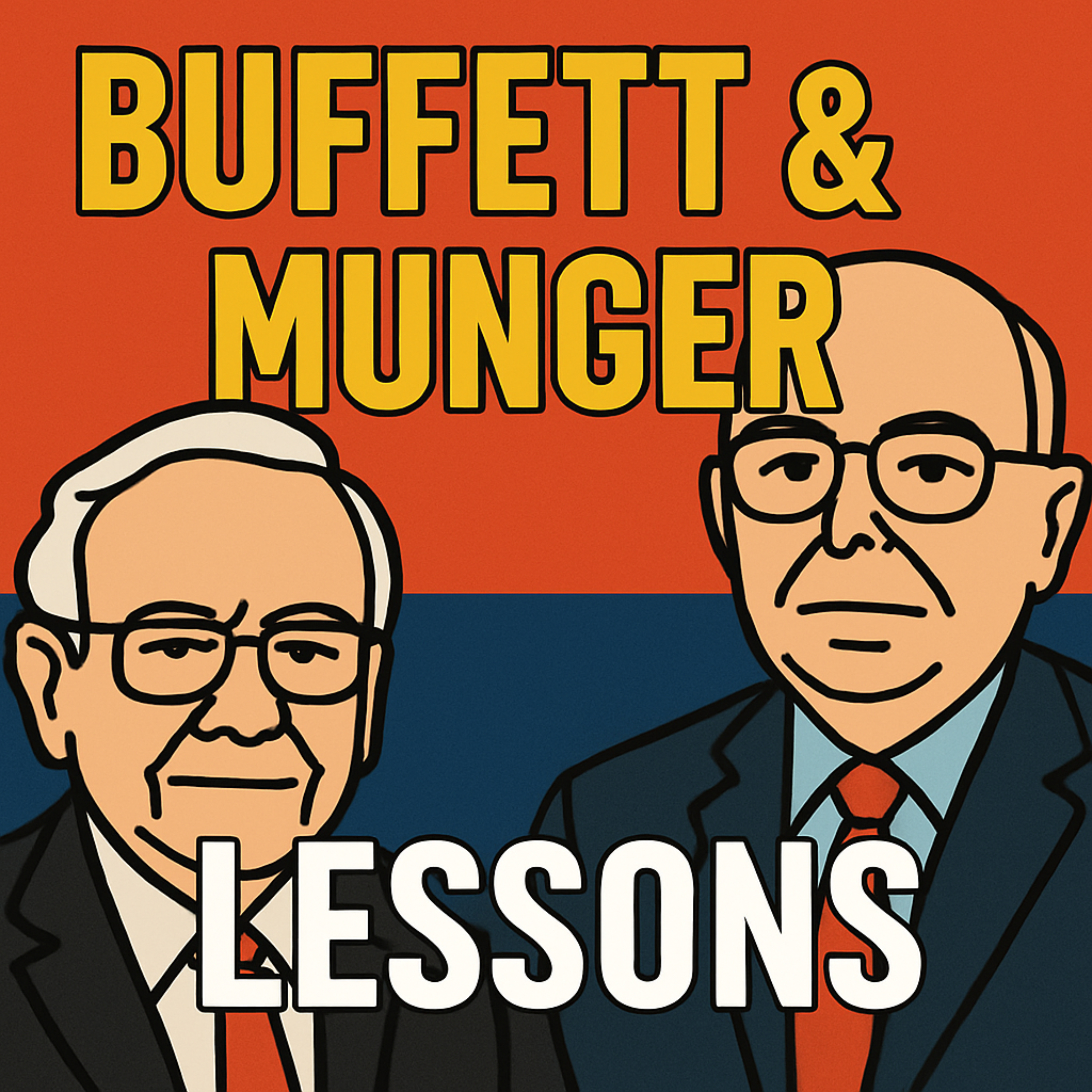
本集简介
双语字幕
仅展示文本字幕,不包含中文音频;想边听边看,请使用 Bayt 播客 App。
欢迎回到深度解析!
Welcome back to the Deep Dive!
今天我们要坐上时光机。
Today we are jumping in the time machine.
我们要回到1994年。
We are going back to 1994.
我们将看到一段难得的、出人意料地坦诚的记录,展现两位投资界传奇人物的内心世界。
We have got a rare and honestly surprisingly candid look into the minds of two absolute legends of investing.
我们要聊的是伯克希尔·哈撒韦年度股东大会。
We're talking about the Berkshire Hathaway Annual Meeting.
如果你一直好奇,亲临现场听沃伦·巴菲特和查理·芒格对话是什么感觉,那这个深度解析绝对适合你。
So if you've ever wondered what it's really like to be in that room with Warren Buffett and Charlie Munger, well this deep dive is definitely for you.
人们常把它称为资本主义的伍德斯托克音乐节。
It's often called, you know, capitalist Woodstock.
那里融合了商业智慧、深刻洞见,还有大量的幽默感。
It's an amazing mix of business smarts, deep insights, and actually a whole lot of humor.
确实如此。
It really is.
而这里令人着迷的是,他们的见解即使过了三十年依然如此相关。
And what's, fascinating here is how relevant their insights are even three decades on.
我们特指上午的对话部分。
We're talking about the morning session specifically.
我们仔细翻阅了会议记录,提炼出他们原话中的核心观点和关键内容。
We've dug through the transcript, pulled out the key nuggets, the really important bits directly from what they said.
我们希望帮你理解的不仅是他们怎么想的,更是为什么这些观点至今依然重要。
We want to help you understand not just what they thought, but why it still matters so much today.
对,没错。
Yeah, exactly.
我们的目标是拨开所有干扰,帮你快速掌握这些要点,或许还能让你突然领悟到,真正杰出的头脑是如何思考商业与投资的。
Our mission here is to cut through all the noise, give you that shortcut to being well informed on this, and maybe, just maybe, spark a few of those moments about how truly great minds approach business, investing in the whole thing.
准备好了吗?我们这就开始。
Ready to dive in.
好,咱们先聊聊现场的氛围。
Okay, so to kick us off, let's talk about the atmosphere.
这场会议一开场就很明显。
This meeting, it's immediately clear.
这可不是那种死板的公司年会。
It's not some stuffy corporate event.
完全不是。
Not at all.
巴菲特一上来就开玩笑说,得找个更大的场地。
Buffett himself was joking right at the start about needing a bigger place.
他说,咱们的文化档次一路下滑,从文化圣殿——约斯林博物馆,到老式歌舞剧剧场,说不定明年就得去阿克塔尔·宾竞技场了,那儿还有赛马和赛道。
He said they were, sliding down the cultural chain, you know, from the temple of culture, the Joslin museum to an old vaudeville theater and maybe next year the Akhtar Bin Coliseum where they have Keo and racetracks.
芒格早就料到会这样。
Apparently Munger had predicted exactly that.
没错,她确实说过。
She did.
是的
Yeah.
这定下了一种氛围。
It sets a certain tone.
完全没错。
Totally.
还有个挺有意思的小插曲。
And there was this funny personal bit too.
巴菲特提到,芒格赢得了‘最亲切奖’。
Buffett mentioned Munger winning the Miss Congeniality title.
为什么?
Why?
因为他在董事选举中一张反对票都没有。
Because he got zero negative votes for director.
巴菲特开玩笑说,连‘最亲切奖’都输给查理了,那你可真是麻烦了。
Buffett quipped, when you lose out the title of Miss Congeniality to Charlie, you know you're in trouble.
是的
Yeah.
那种自我调侃的幽默和随意的风格,真的立刻就定下了基调。
That self deprecating humor, that casual style, it really does set the tone immediately.
这体现了一种管理理念,注重透明和人与人之间的联结。
It shows a management approach that, you know, values transparency, connection.
即使伯克希尔变得如此庞大,你依然能感受到那种直接、坦率的沟通方式。
Even as Berkshire got huge, you feel that direct sort of unvarnished communication style.
对
Right.
就连问答环节也体现了这一点。
And even the Q and A setup showed that.
观众可以问任何问题。
People could ask literally anything.
巴菲特开玩笑说,他会把乐观的问题丢给芒格,而把现实的问题留给自己。
Buffett joked about sending the optimistic questions to Munger and the realistic ones to himself.
这建立了信任。
It builds trust.
明白了。
Okay.
那我们稍微转个话题,从这种独特的氛围转向一些更严肃的金融内容。
So let's shift gears a bit from the vibe which is unique to some, pretty serious financial stuff.
1994年时有一个特别值得注意的警告,现在看来反而更相关了,就是关于衍生品。
One of the really striking warnings from ninety four and man, has this become more relevant, was about derivatives.
有人问到了这个问题。
Someone asked about them.
巴菲特曾把衍生品称为无知和借来的钱的危险组合。
Buffett famously called them a dangerous combination of ignorance and borrowed money.
他反复强调了这一点。
He hammered that point.
只要把无知和借来的钱凑在一起,就很可能酿出严重后果。
Anytime you combine ignorance and borrowed money, you can get some pretty interesting consequences.
他还特别提到了当时的宝洁公司。
He even pointed to Procter and Gamble at the time.
他们一开始只是做了利率互换,结果最后却卖出了大量政府债券的看跌期权。
They'd announced, well, what started as interest rate swaps ended up with P and G writing puts on huge amounts of government bonds.
巴菲特那句话说得真到位。
Buffett's line was great.
从卖肥皂一下子跳到卖债券看跌期权,这跨度可真不小。
Anytime you go from selling soap to writing puts on bonds, you've made a big jump.
他们当时能看得这么清楚,真是了不起,对吧?
It's pretty amazing how clearly they saw the danger there, wasn't it?
这可是早在衍生品在后来的金融危机中爆雷之前的事了。
This was well before derivatives blew up in later financial crises.
他们并不是完全反对衍生品。
They weren't totally against them.
他们也承认,衍生品在对冲风险等方面确实有其用处。
They acknowledged they serve useful purposes for hedging and things like that.
但他们看到的核心危险在于,可以借入巨额资金,同时一夜暴富或一夜破产。
But the core danger they saw was the ability to borrow enormous amounts of money combined with a chance to get either very rich or very poor very quickly.
历史上,这种模式总是会出问题。
That historically is a recipe for trouble.
那他们是怎么做的呢?
So what do they do?
避开它。
Date away.
没错。
Exactly.
他们只是避免直接参与其中。
They just avoided getting directly involved.
他们优先确保自己完全理解正在做的事。
They prioritized really understanding what they were doing.
这其实是一个永恒的警告:如果对风险缺乏透彻理解,复杂性和杠杆终会带来灾难。
It's a timeless warning really about complexity and leverage if you don't fully get the risks.
是的。
Yeah.
很有力量的提醒。
A powerful reminder.
保持简单。
Keep it simple.
有时候,简单就能救你一命。
Sometimes that saves you.
明白了。
Okay.
从警告转向他们的核心原则——也就是投资方法论,他们分享了一些关于估值、如何看待股东以及如何管理公司的深刻见解。
So moving from warnings to let's say their core principles, their investment playbook, they shared some really profound stuff on valuation, how they think about shareholders and, managing their companies.
那估值呢?他们到底是怎么判断一家企业的价值的?
So valuation, How do they actually figure out what a business is worth?
显然,这不只是看今年的利润那么简单。
It's clearly not just about this year's profit.
不是。
No.
绝对不是。
Definitely not.
巴菲特说得非常清楚。
Buffett laid it out quite clearly.
对他们来说,内在价值就是未来盈利能力的现值。
For them, intrinsic value is all about the present value of the future earning power.
就这么简单,但意义深远。
Simple as that, but profound.
他们计算时,会以至少10%的折现率,折现未来的税后现金流,尤其是考虑到当时长期债券利率只有7%。
How they calculated it, by discounting future after tax streams of cash at at least a 10% rate, especially he added, in a world of 7% long term bond rates.
这说明一切都在看未来的现金流,是长远的布局。
That shows you it's all about future cash flow, the long game.
对。
Right.
他们并不在意第一年的财务数据是多少。
They weren't overwhelmed by what the first year's figure would be.
他还拿GEICO作为例子。
He even used GEICO as an example.
他们收购的时候,这家公司还在亏钱。
They bought it when it was losing money.
是的。
Yeah.
因为他们相信它未来能产生现金流。
Because they believed in its future ability to generate cash.
他们用的折现率取决于对业务的信心程度——越有把握,折现率越低;越不确定,折现率就越高。
And the discount rate they use depended on the certainty we feel about the business more certain, lower discount rate, less certain, higher rate.
这让你不得不思考,对吧?
Makes you ask, right?
你是看眼前的数据,还是看长期的现金流潜力?
Are you looking at current numbers or that long term cash potential?
这个问题问得好。
That's a great question.
好的。
Okay.
接下来才是他们真正独特的地方。
Now here's where they get really, really unique.
他们对股票分割的看法。
Their view on stock splits.
大多数公司都喜欢拆股,这样每股价格更低。
Most companies love splitting their stock makes it cheaper per share.
但芒格说,这等于把企业的所有权切成一块块二十美元的小碎片。
But Munger, he called it carving ownerships in an enterprise into little tiny $20 pieces.
他认为这简直荒谬。
And he thought that was almost insane.
这跟普通公司的做法完全相反,对吧?
It's so counter to standard corporate practice, isn't it?
芒格的观点其实也很实际。
Munger's point was practical too.
服务一个20美元的账户效率太低了。
It's quite inefficient to service a $20 account.
是的。
Yeah.
巴菲特进一步解释了。
And Buffett explained further.
他说他们故意推行一些政策,吸引特定类型的股东,同时让另一些股东望而却步。
He said they deliberately followed certain policies that we think attracted certain types of shareholders and actually pushed away others.
优生计划。
The Eugenics program.
对。
Yeah.
他还真把这叫作他们的优生计划,说他们觉得现有的股东群体已经很好了,没必要再改。
He actually called it their Eugenics program saying, we don't think we can improve on this group of shareholders they had.
没错。
Yeah.
他们从根本上认为,拆股并不会提升长期股价。
They fundamentally believed splitting the stock wouldn't raise the long term price.
只会增加波动性,这对我们的股东整体并无好处。
It would just increase volatility, which does not help our shareholders as a group.
所以关键在于吸引对的股东。
So it's all about attracting the right kind of owner.
正是如此。
Exactly.
长期、理性、能理解他们理念的人。
Long term, rational people who get their approach.
不是追逐市场潮流或迎合短期交易者,而是真正寻找合作伙伴。
Not just chasing market fads or catering to short term traders, it's about finding partners really.
这说得通。
That makes sense.
好的,另一个重要主题,对任何企业来说都至关重要,就是他们多么钦佩优秀的管理者。
Okay, another big theme, and this is critical for any business, is how much they admired great managers.
但你怎么识别出这样的人呢?
But how do you spot them?
或许更难的是,你怎么让他们感到满意?
And maybe harder, how do you keep them happy?
他们的方法其实出乎意料地简单。
Well, their method is again, surprisingly straightforward.
巴菲特说,判断管理者要看两点。
Buffett said you judge management on two things.
第一,他们把公司经营得怎么样。
One, how well they run the business.
看看他们的业绩对比同行,资本配置做得如何,这些都很基础但很重要。
So look at their results versus competitors, how they allocate capital, basic stuff but important.
第二,他们对待股东的态度如何。
And two, how well did they treat their owners.
他的实用建议是,真的,就一条。
His practical tip, tip.
读代理声明。
Read the proxy statements.
看看管理层对自己和对股东的待遇有什么不同。
See how management treats themselves compared to the shareholders.
这建议很好。
Good advice.
还有留住他们。
And keeping them.
更简单了。
Even simpler.
找到那些打击率四成的球员,然后别教他们怎么挥棒。
Find the point 400 hitters and then not tell them how to swing.
自主权。
Autonomy.
没错。
Right.
让他们自己做主。
Let them do their job.
对。
Yeah.
他们的许多经理本来就已经很富有,经济上完全独立,所以并不是单纯靠砸钱来激励他们。
Many of their managers were already rich, financially independent, so it wasn't just about throwing money at them.
关键是让这份工作对他们来说有趣又有成就感,让他们能真正当家做主。
It was about making the job interesting and fun for them to run their business.
而且别用千篇一律的薪酬方案。
And no cookie cutter compensation plans.
绝对不行。
Absolutely not.
他们根本没有统一的公司薪酬体系。
They had no company wide compensation plan.
巴菲特说,他们根本不会让什么薪酬专家或顾问来插手搞砸这事。
Buffett said they wouldn't dream of having some compensation expert or consultant come in and screw it up.
薪酬直接跟各自业务单元的业绩挂钩,而不是跟伯克希尔整体表现挂钩。
Pay was tied directly to the performance of their specific unit, not Berkshire overall.
芒格总结说,就是换位思考,你希望别人怎么待你,你就怎么待别人。
Munger summed it up as, you know, treating the other fellow the way you'd like to be treated if the roles were reversed.
这就是黄金法则。
That golden rule.
差不多就是这个意思。
Pretty much.
这一切都建立在信任、自主权和真正的人际联结上,就像他们和阿吉特·贾因之间的关系。
It's all built on trust, autonomy, and a real personal connection, like their bond with Ajit Jain.
他们明明白白地说,我们希望自己的业务和人际关系不只是单纯的商业往来。
They literally said, we like our businesses, our relationships to be more than a business relationship.
明白了。
Okay.
咱们聊聊风险吧。
Let's talk risk.
对投资者来说,理解风险是根本,对吧?
Understanding risk is just fundamental for investors, right?
但他们对风险的定义,跟你在金融课上学的完全不一样。
But their definition was really different from what you learned in finance class.
巴菲特是这么说的:我们把风险定义为可能造成损害或伤害的可能性。
Buffett put it like this, We do define risk as the possibility of harm or injury.
很简单吧。
Pretty simple.
在这方面,他说,风险和你持有资产的时间长短是密不可分的。
And in that respect, he said, we think it's inextricably wound up in your time horizon for holding an asset.
时间跨度。
Time horizon.
这才是关键。
That's the key.
没错。
Exactly.
他说,如果你买一支股票只是为了当天卖出,那风险就非常高。
He argued if you buy a stock just to sell it by the end of the day, that's very risky.
但如果你买的是可口可乐,真正理解它的业务,并打算长期持有,那么永久亏损的风险几乎为零。
But if you buy, say, Coca Cola, understand the business and plan to hold it long term, the risk of permanent loss is essentially nil.
他完全否定了用贝塔系数——也就是股价波动——来衡量风险的做法。
And he completely rejected beta, you know, stock price volatility as a measure of risk.
对。
Right.
这对大多数人来说是金融入门常识。
Which is finance 101 for most people.
是的。
Yeah.
他还用他们的超级飓风保险业务作为例子。
And he used their super cat insurance business as an example.
他们完全预料到,遇到特大灾难的年份会亏钱。
They fully expect to lose money some years because of huge disasters.
但他表示,我们觉得十年内亏钱的概率很低。
But he said, we think the probability of losing money over a decade is low.
所以从我们的投资周期来看,这根本算不上高风险的生意。
So we feel that in terms of our horizon of investment, that that is not a risky business.
关键看你盯着多长的时间。
It depends on how long you're looking out.
这完全颠覆了传统的定义。
It really flips the standard definition on its head.
芒格的那番话正好把这一切串起来了。
And Munger's comment just ties it all together.
我觉得现代金融理论很多地方简直让人反感。
I really think that a lot of modern finance theory can only be described as disgusting.
说得真够重的。
Strong words.
是的。
Yeah.
他们更愿意像费马和帕斯卡那样思考,仿佛从来没听说过现代金融理论。
They preferred to think like Fermat and Pascal as if they'd never heard of modern theory.
你要知道,他们关注的是基本概率,理解企业面临真实世界中不利结果的可能性,而不是仅仅盯着市场的波动。
You know, focus on fundamental probabilities, understanding the real world chances of bad outcomes for the business, not just market wiggles.
所以少一些复杂的数学,多一些常识和长期思维。
So less about complex math, more about common sense and long term thinking.
没错,非常务实。
Precisely, very practical.
那么,既然这么重视长期和企业基本面,这些人会不会花大量时间纠结于经济预测或市场走势呢?
Okay, so given this focus on the long term and business fundamentals, do these guys spend hours agonizing over economic forecasts or market predictions?
他们是怎么说的?
What did they say?
你可能会感到意外。
Well, you might be surprised.
他们对市场预测向来持中立态度。
They are famously agnostic about forecasts.
巴菲特说得直白。
Buffett was blunt.
查理和我从不对市场发表看法,因为那没什么用,还可能干扰我们真正有价值的判断。
Charlie and I never have an opinion about the market because it wouldn't be any good and it might interfere with the opinions we have that are good.
他强调,靠风向标是发不了财的。
He stressed, you cannot get rich with a weather vane.
他们始终关注的是具体企业的经营状况和经济本质,而不是市场过山车什么时候上下起伏。
Their focus is always on what will happen with a specific business, its economics, not when it will happen in the market roller coaster.
那市场下跌他们不害怕吗?
So market drops aren't scary?
不害怕。
Nope.
那是机会。
Opportunities.
趁低价买入优质资产的机会。
Chances to buy good stuff at an attractive price.
这真让人深思,对吧?
It really makes you think, doesn't it?
你花多少时间担心市场预测或经济新闻,而不是真正去了解你可能投资的公司?
How much time do you spend worrying about market calls or economic news versus actually understanding the businesses you might invest in?
他们的观点很简单:把公司搞懂了,市场方面的波动迟早会自己理顺。
Their argument is basically get the business right and the market stuff will sort itself out eventually.
这真是个关于集中精力的深刻教训。
Powerful lesson in focusing your energy.
是的。
Yeah.
当然。
Absolutely.
明白了。
Okay.
另一个反直觉的观点。
Another counterintuitive point.
现金。
Cash.
你可能会觉得,手里攥着一大笔现金是种明智的战略,对吧?
You'd think holding a big pile of cash is a smart strategic move, right?
尤其是像伯克希尔这样的大公司。
Especially for a huge company like Berkshire.
但他们不这么看。
But not for them.
巴菲特说,现金堆积如山,是管理层失败的标志。
Buffett called cash piling up an index of failure on the part of your management.
一种失败。
A failure.
这话可真够重的。
That's strong.
对吧?
Isn't it?
他说,他们巴不得一点现金都没有,因为那说明他们找到了特别棒的投资机会,投在自己懂又喜欢的公司里。
He said they would love to have no cash because that would mean they found great places to put the money in businesses they like and understand.
他还坦承,如果我们手头钱太多,那我们就比平时蠢一点。
He even admitted, If we have a lot of money around we are a little dumber than usual.
我的意思是,钱太多容易让人松懈。
I I mean, it ends to make you careless.
这不正说明他们寻找价值有多执着吗?
That just reinforces how relentless they are in searching for value, doesn't it?
他们是积极的资本配置者,一直在寻找符合严格标准的下一个好投资。
They're active capital allocators, always hunting for the next good investment that meets their strict criteria.
对他们来说,现金不是策略,只是还没找到合适去处的资金。
Cash isn't a strategy for them, it's capital that hasn't found its proper home yet.
它没法产生价值。
It's unproductive.
好,我们快速聊聊他们1994年关于某些企业或行业的评论。
Okay, let's quickly touch on some of their comments about specific businesses or industries back in '94.
这能让你感受到他们是怎么把这些理念付诸实践的。
Gives you a flavor of how they applied these ideas.
首先是保险业。
First, insurance.
这是他们的核心引擎。
Their huge engine.
巴菲特解释说,保险业务的实际内在价值远高于账面价值。
Buffett explained the intrinsic value that real underlying worth of their insurance operations was way well above book value.
账面价值就是会计上的那个数字。
Book value being the accounting number essentially.
没错。
Right.
主要原因就是浮存金。
And the main reason, the float.
就是他们在收保费和赔款之间的这段时间里持有的资金。
That's the money they hold between collecting premiums and paying claims.
而且历史上,这笔钱的成本低得惊人,简直就像白给的钱,可以拿去投资。
And historically it came at an extremely attractive cost, basically free money they could invest.
巨大的优势。
Huge advantage.
确实非常大。
Absolutely huge.
至于巨灾保险,你用了那句妙话——潮水退去,才知道谁在裸泳。
Then on the super cat insurance catastrophe insurance, you use that great line, you don't find out who's been swimming naked until the tide goes out.
意思是,只有当情况变糟时,才能看出谁冒了愚蠢的风险?
Meaning you only see who took dumb risks when things go bad?
没错。
Exactly.
他提到那年洛杉矶大地震,虽然严重,但远不是最糟糕的情况。
He pointed out the big LA earthquake that year, while bad, was far from a worst case situation.
他认为整个行业严重低估了一场超强飓风袭击东海岸的可能性。
He thought the industry had vastly underestimated a truly massive hurricane hitting the East Coast.
所以他们的定价方式不一样。
So they priced differently.
没错。
Yeah.
他们根据实际风险敞口来定价,而不是只看最近发生过什么。
They priced based on exposure, the actual potential risk, not just on what happened recently.
这差别可大了。
Big difference.
那鞋业呢?整体上挺艰难的,对吧?
Then the shoe industry, generally tough, right?
但他们公司的表现,比如德克斯特鞋业,H.
But their companies, Dexter Shoe, H.
H.
H.
布朗公司当时表现不错。
Brown, they were doing well.
为什么呢?
Why?
是因为管理层。
The managers.
没错。
Yep.
他们取得的卓越业绩完全归功于管理层,而不是因为鞋业本身容易做。
Truly extraordinary records due to the managers, not because the shoe business itself was easy.
再次说明了管理层质量的重要性。
Again highlighting management quality.
还有美国航空。
Then there was US Air.
巴菲特坦率承认,投资这家公司的决定是个错误。
Buffett flat out admitted getting into it was a mistake.
还是诚实的问题。
Honesty again.
没错。
Yeah.
他说航空公司成本结构根本行不通,尤其是人工成本,要削减几亿美元时,矛盾就爆发了。
He said the airline just had a non viable cost structure, especially labor costs, and fixing that creates enormous tensions when you have to cut hundreds of millions.
芒格甚至给出了建议——他很少对外人提建议,说如果他是工会领袖,他会全力支持塞思这位CEO,要什么给什么。
Munger even gave advice, very rare for him to advise outsiders, saying if he were a union leader there, he would give Seth, the CEO, whatever he wants.
这充分说明当时的局面有多艰难。
Just underlining how tough that situation was.
这提醒我们,再厉害的人也会犯错,尤其是在航空这种结构性困难的行业里。
It's a good reminder, even the best make mistakes, especially in structurally difficult industries like airlines.
当然。
For sure.
还有所罗门兄弟公司,经历过一场大丑闻后,他们对新管理团队评价极高,称赞他们出色地带领公司渡过危机,这体现了他们对领导力、尤其是扭亏为盈能力的坚定信念。
Then Salomon Brothers, which had gone through a massive scandal, they actually felt extraordinarily good about the new management team, praised them for doing an absolutely fabulous job steering the firm through that crisis, shows their belief in leadership, especially turnaround leadership.
还有
And
顺便说一下,蓝筹邮票。
just for fun, blue chip stamps.
他们是1969年买下的。
They bought it in '69.
巴菲特承认,在他们持有期间,这东西跌了99%,只剩12%的价值。
Buffett admitted it had seen a '99, 12% decline under their watch.
真够惨的。
Ouch.
他建议持有这些邮票的人,别卖,留着。
His advice to someone holding the actual stamps, tell her to keep them.
多年下来,它们的价值不会有任何增长。
They'll do nothing to gain in value over years.
为什么呢?
Why?
它们会变成收藏品。
They'll become collector's items.
典型的巴菲特式幽默,把失败变成笑话。
Classic Buffett humor turning a failure into a joke.
这真让人佩服。
You gotta love that.
最后,简单说说税收问题。
Finally, quick word on taxes.
巴菲特本人支持一种累进性很强的消费税。
Buffett personally liked a steeply progressive consumption tax.
他认为高收入者在这个社会里已经得到了太多优待,理应回馈更多。
He felt high earners were extraordinarily well treated by this society and should give back a fair amount.
有意思。
Interesting.
还有芒格
And Munger
芒格认为,如果所得税累进税率太高,可能会适得其反,但在1994年,他还觉得远没到那个地步。
Munger agreed income taxes could be counterproductive if their progression is too high, but he didn't think we're there yet in '94.
听到他们这么个人化的看法,真有意思。
Just interesting to hear their personal takes.
抛开具体数字不说,这次会议充满了常识和真知灼见,这些道理远远超出了金融的范畴。
So, know, pulling back from the specific numbers, this meeting was just packed with common sense and sharp thinking, stuff that applies way beyond just finance.
比如芒格说的,要避开那些难搞的问题。
Like Munger's point about avoiding difficult problems.
他说,如果一件事想不清楚,我们宁可乘以三,也不愿乘以π。
He said, If something is hard to figure, we'd rather multiply by three than by pi.
对我们来说,这样简单多了。
It's just easier for us.
他还提到,要避开那些本质上就很复杂的事情。
He talked about avoiding things that are intrinsically complex.
他回忆说,以前有个建房项目,一听说要跟建筑师、承包商还有山坡打交道,他就觉得不踏实。
He recalled being wary of a building project because it involved an architect, a contractor, and a hill.
变量太多了。
Too many variables.
准得头疼。
A recipe for headaches.
没错。
Right.
巴菲特也强调了这种简单理念:你不需要做特别的事,也能取得非凡的成果。
And Buffett echoed that simplicity theme, you don't have to do exceptional things to get exceptional results.
他还提醒别轻信卖家或经纪人的预测,这是他常说的一句话。
And he warned against trusting projections from sellers or brokers, his famous line.
别去问理发师你需不需要剪头发。
Don't ask the barber whether you need a haircut.
这建议真棒,对吧?
That's such great advice, isn't it?
它确实逼着你去认真思考。
It really pushes you to think critically.
你是不是把事情想得太复杂了?
Are you making things harder than they need to be?
有时候,基于清晰思考、避开那些最难啃的硬骨头,反而是最好的选择。
Sometimes the clearest path based on solid thinking and avoiding the really tough nuts to crack is the best one.
一定要自己做足功课。
And definitely do your own homework.
别光听别人怎么说,尤其是那些有利益牵扯的人。
Don't just take someone else's word for it, especially if they have skin in the game.
要自己动脑思考。
Do your own thinking.
明白了。
Okay.
对于一直想学习的听众,他们还推荐了几本书,能看出他们的思考方向。
And for listeners who are always learning, they even gave some book recommendations, shows where their heads were at.
巴菲特建议读珍妮特·洛的《本·格雷厄姆传》,那是他的导师;还有杰夫·考恩写的《人民诉克拉伦斯·达罗》。
Buffett suggested Janet Lowe's biography of Ben Graham, his mentor and also the People V Clarence Darrow by Jeff Cowan
还有芒格。
and Munger.
他喜欢康妮·巴克写的《游戏大师》讲史蒂夫·罗斯的那本书,还极力推荐卡尔·范·多恩1952年写的本杰明传记。
He liked Connie Buck's Master of the Game about Steve Ross and he strongly recommended a 1952 biography of Benjamin by Carl Van Dorn.
他特别推崇富兰克林对复利的信仰。
He loved Franklin's belief in compound interest.
这确实说明了很多问题,对吧?
It really shows you, doesn't it?
他们的学习可不只是看年报。
Their learning wasn't just annual reports.
而是历史、传记、人性这些方面。
It was history, biography, human nature.
他们明白,这些更宏观的洞见,远比把某个金融模型算得滴水不漏重要得多。
They understood that those broader lessons are more than nailing some financial model perfectly.
没错。
Absolutely.
回到1994年,深入探讨巴菲特和芒格,真是让人叹为观止。
So what an incredible deep dive going back to 1994 with Buffett and Munger.
我们谈到了他们的独特文化、对衍生品的警告,还有他们对价值、风险、选人和留人的核心理念。
We've hit on their unique culture, that warning on derivatives, their core ideas on value, risk, finding, and keeping good managers.
内容太丰富了。
So much there.
是的。
Yeah.
贯穿这一切的,是一种非常一致、近乎传统的自律。
The thread that runs through it all is this really consistent, almost old fashioned discipline.
对吧?
Right?
关注企业真实的经济本质。
Focus on the actual business economics.
要有长远的眼光。
Think really long term.
选合作伙伴要慎重,不管是经理人还是股东,别被市场的日常噪音干扰。
Pick your partners carefully, managers, shareholders, and just tune out the market noise day to day.
关键就在于耐心、自律,还有那种最朴实的常识。
It's all about patience, discipline, and just profound common sense.
确实如此。
It really is.
既然聊到这儿了,有件事值得你好好想想。
So as we wrap up this deep dive, here's something to chew on.
我们生活在一个信息泛滥、市场议论不断的时代。
We live in an age with just endless information, constant market chatter.
说实话,你的决策里,有多少是真正独立思考的?
How much of your decision making, honestly, is truly independent?
又有多少只是随大流,跟着别人的风向走?
How much is just following that weather vein of what everyone else is saying?
你是去问理发师要不要剪头发,还是自己真正搞清楚了状况?
Are you asking the barber if you need a haircut or are you doing the real work to figure it out for yourself?
感谢你参与这次深入探讨。
Thanks for joining us on the deep dive.
希望你收获更多有用的信息,也能带走一些经得起时间考验的见解。
We hope you feel much more well informed and maybe have some timeless ideas to apply.
下次再见,继续学习。
Until next time, keep learning.
关于 Bayt 播客
Bayt 提供中文+原文双语音频和字幕,帮助你打破语言障碍,轻松听懂全球优质播客。