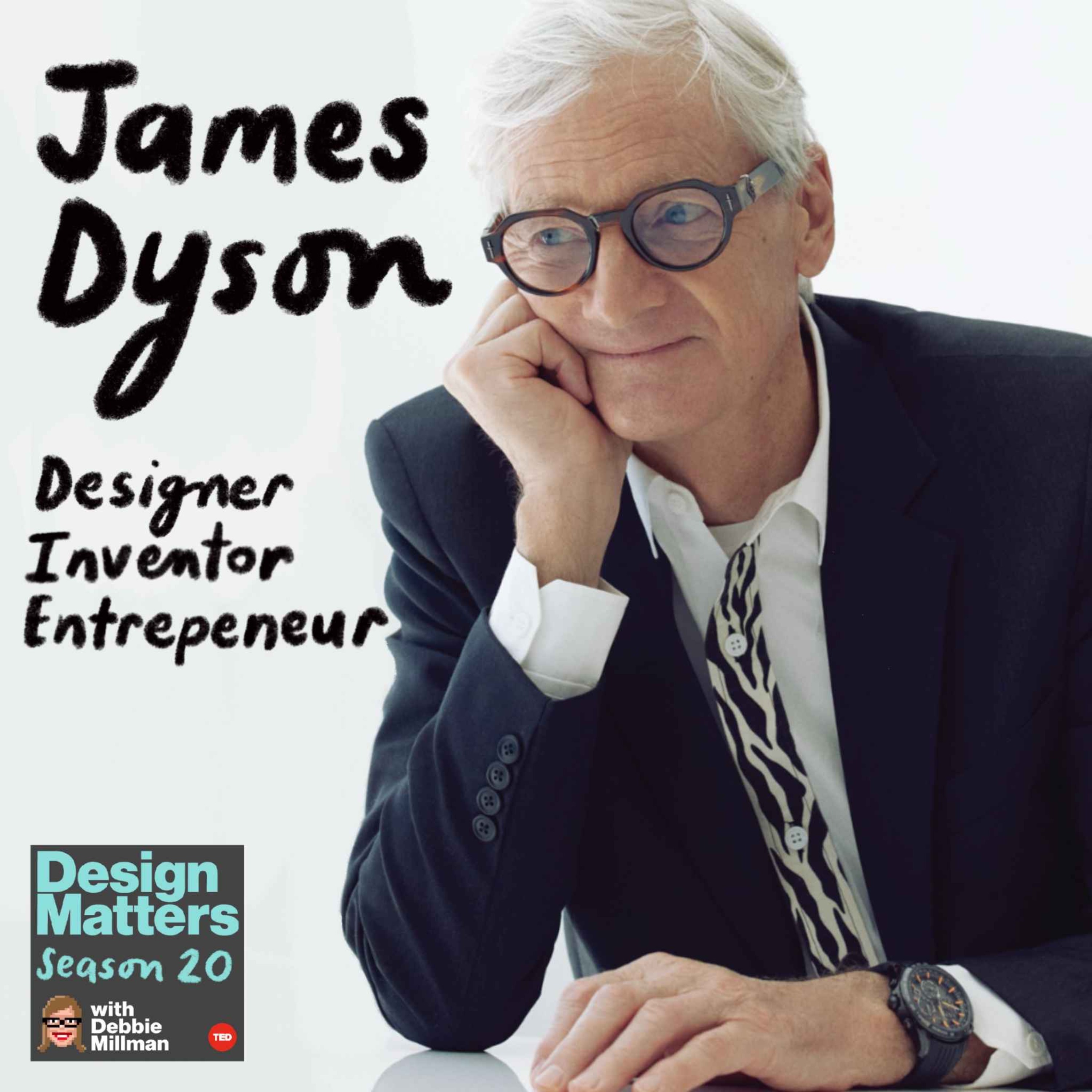
本集简介
双语字幕
仅展示文本字幕,不包含中文音频;想边听边看,请使用 Bayt 播客 App。
我是设计师,也是工程师。
I mean, I'm a designer and an engineer.
我不是搞钱的,也不是搞生产的。
I'm not a money man or a manufacturer.
我当时只是在做自己特别喜欢的产品。
I was making a product I loved.
喜欢吸尘器听起来挺奇怪的,但我确实喜欢,到现在还是。
Strange to love vacuum cleaners, but I did and still do.
来自TED音频合集,这里是Debbie Milman的《设计之道》。
From the TED Audio Collective, this is Design Matters with Debbie Milman.
在《设计之道》里,Debbie会与全球最有创意的人对话,聊聊他们做什么、怎么走到今天,以及现在在想什么、在做什么。
On Design Matters, Debbie talks with some of the most creative people in the world about what they do, how they got to be who they are, and what they're thinking about and working on.
本期节目,詹姆斯·戴森谈到了自己的人生,还有他设计的一些突破性产品。
On this episode, James Dyson talks about his life and some of the groundbreaking products he's designed.
我当时根本没觉得我做的事有什么特别或不同。
I wasn't aware that what I was doing was anything unusual or different.
我只是按自己的方式在做。
I was just doing it my way.
想想七月的酷热和拥挤的商店。
Skip to July heat and crowded stores.
IHub 是你一站式选购真实健康、美容和日用品的平台,拥有数百万条用户评价。
IHub is your one stop shop for authentic wellness, beauty, and groceries, backed by millions of reviews.
享受满150元免运费、24小时送达和便捷退款服务。
Enjoy free shipping over 150, twenty four hour delivery, and easy refunds.
活动时间:7月4日至7月31日。
Shop July fourth to thirty first.
老客户使用代码 HKPOD75 可享七五折优惠。
Existing customers get 25% off with code HKPOD75.
新客户使用代码 HKPOD N7 可享七折优惠。
New customers get 30% off with H K POD N seven.
现在就去 IHub 购物吧。
Shop iHub today.
这项服务由Wise提供,它是全球管理所需货币的聪明之选。
Support comes from Wise, the smart way to manage the currencies you need around the world.
你的生活是全球化的。
Your life is global.
你的资金也该如此。
Your money should be too.
有些机构声称跨境转账零手续费。
Some providers promise no fees on overseas transfers.
别被蒙骗了。
Don't be fooled.
额外费用往往藏在不透明的汇率里。
Extra costs often hide in bloated exchange rates.
选择Wise。
Choose Wise.
你可以用Wise在40多种货币之间转账、消费和收款。
You can send, spend, and receive money in over 40 currencies.
汇率就跟你在谷歌上看到的一样透明。
Count on the exchange rates that you'd usually see on Google.
正是这样,数以百万计的人省下了数十亿的隐性费用。
That's how millions save billions on hidden fees.
做个聪明人。
Be smart.
选择Wise。
Get wise.
访问wise.com。
Visit wise.com.
条款细则适用。
Ts and cs apply.
今天我邀请的这位嘉宾,不仅改变了我们打扫家居的方式,也改变了我们对失败、创新,甚至对呼吸的空气的理解。
My guest today is someone who has not only changed the way we clean our homes, but how we think about failure, invention, and even the air we breathe.
詹姆斯·戴森爵士是一位英国发明家、设计师、企业家、教育家和慈善家。
Sir James Dyson is a British inventor, designer, entrepreneur, educator, and philanthropist.
詹姆斯·戴森最初因发明了世界上第一款无袋吸尘器而闻名,他打造了一家全球企业,彻底改变了人类与科技互动的方式。
First known for inventing the world's first bagless vacuum cleaner, James Dyson has built a global company that has reinvented reinvented how humans engage in and with technology.
戴森爵士,欢迎来到《设计之道》。
Sir James Dyson, welcome to Design Manners.
早上好。
Good morning.
您建立了一家改变世界的企业,坚信最好的创意源于挫败、失败和不懈的反复改进。
You have built a world changing company on the belief that the best ideas come from frustration, failure, and relentless tinkering.
您不仅改变了我们清洁家居的方式,更重塑了我们对设计、工程乃至发明本质的理解。
You transformed not just how we clean our homes, but how we think about design, engineering, and the very nature of invention.
戴森爵士,我第一个问题是:
Sir James, my first question is this.
泥土教会了您什么?
What has mud taught you?
泥土?
Mud?
泥巴。
Mud.
泥巴。
Mud.
泥巴。
Mud.
泥巴。
Mud.
不过也没多少。
Well, not a lot.
我是说,我在农场里经常碰到泥巴。
I mean, I I come across mud on my farms.
是的。
Yes.
我知道你走路的时候容易产生灵感,泥巴就曾启发你思考事物的制造方式。
I understand that when you walk, you get a lot of ideas, and mud has helped inspire you with new thoughts about how things are made.
哦
Oh,
你不用非得回答这个问题。
you don't have we don't have to answer that question.
我做研究的时候经常遇到这个话题,真的吗?
It just came up a lot in a lot of my research that Oh, really?
是的
Yeah.
是的
Yeah.
是的
Yeah.
哦
Oh,
我小时候在诺福克的小溪里经常在泥里滑来滑去。
well, I used to slide around on it when I was a child in the in the creeks of Norfolk.
而且我猜它会被踩进地毯里,尤其是干了以后,我们得清理干净。
And I guess it gets trodden into carpets, and, we have to we have to clear it up, especially when it's dry.
现在我们用地板清洁机来清理硬质地面,就在身后,它会变成灰尘。
And we now clean it off hard floors with our hard floor washing machine, which I can just see behind me, and it turns into dust.
是的。
Yeah.
我们还得处理这些灰尘。
And we have to deal with dust.
跳过这个吧。
Skip that one.
我只是觉得聊聊这个挺有意思的,因为我的研究里好几次都提到它。
I just thought it would be fun to talk about because it it came up a few times in my research.
真的吗?
Oh, really?
你小时候在诺福克长大,家里自己种菜,还从母鸡那儿捡鸡蛋。
You grew up in Norfolk, a home where your family grew their own vegetables and collected eggs from your hens.
那时候没有电视,暖气也不够,新玩具更别提了,几乎没有什么消费品。
There was no television, not enough heating, no new toys, and few, if any, consumer goods.
可我听说,你最早的记忆是父亲把你放进游泳池里,教你游泳。
Yet I read that your first memory is of being lowered into a swimming pool by your father who was teaching you how to swim.
你觉得是什么让这段经历在你心里留下了如此深刻的印象?
What do you think it is about that experience that prompted such a visceral memory?
我当时是个特别瘦小的孩子,而且那时候泳池正在放水。
Well, I was a very skinny little boy, and it was being done while the swimming pool was filling up.
水是冰凉刺骨的。
So it's filling up full of freezing water.
别忘了,那是诺福克,往北走,从我家到北极之间什么都没有,往另一边则是西伯利亚。
Remember, this is Norfolk, and there's nothing between me in Norfolk and the Arctic in one north in one direction and Siberia in the other.
那真是一次冷得透心的体验。
So it was a pretty chilling experience.
我记住的,远比学游泳的困难要多得多。
I remember that far more than the the difficulties of learning to swim.
我觉得我学游泳学得特别快,就是想赶紧从水里出来。
I think I learned to swim very quickly just to get out of the water.
你爸爸被形容成一个乐观博学的人,还特别喜欢摄影。
Your dad has been described as a cheerful polymath, who was also a keen photographer.
他在你寄宿学校当橄榄球和曲棍球队的教练。
He coached the rugby and hockey teams at your boarding school.
他还在那里教古典文学,你和你哥哥也都上了那所学校。
He was also a teacher there of classics, and you and your older brother attended the school as well.
在学校期间,你还学了大管。
And while at school, you studied bassoon.
你参加了联合学员部队,演过学校的戏剧,还负责布景设计。
You were part of the combined cadet force and acted in the school plays and designed the sets.
你也是个运动员,后来开始练长跑。
You were also an athlete and began long distance running.
是什么让你一开始对跑步产生了兴趣?
What first drew you to running?
我小时候从来都不走路。
As a young child, I never walked.
我总是跑着去任何地方,因为我总觉得赶时间。
I always ran everywhere because I think I was in a hurry.
我觉得走路没什么意义。
I didn't see any point in walking.
那纯粹是在浪费时间。
It seemed to be a waste of time.
后来我发现,我其实挺喜欢跑步的。
And I then discovered I rather enjoyed it.
我现在不喜欢跑步了。
I don't enjoy it now.
但我现在还是在跑。
I do it now.
78岁了,我还在跑,只是不再喜欢了。
At the age of 78, I'm still running, but I don't enjoy it now.
但那时候,跑步没那么累。
But in those days, it wasn't such hard work.
也没那么痛苦。
It wasn't so painful.
感觉特别自然。
It seemed much more natural.
我还喜欢跑步,因为能一个人跑到乡下,穿过荒原,沿着海滩的沙丘奔跑。
I also liked it because I could get out into the countryside, on my own across the Heathland and across the sand dunes along the beaches.
那是一种特别棒的方式,去感受和亲近大自然。
So it was a it was a wonderful, way to experience and feel the countryside.
你觉得长跑所需的耐力,影响了你做长期发明的方式吗?
Do you think that this stamina required for long distance running impacted how you approach the task of long term invention?
当然有。
Completely.
我年轻时就明白,要想跑得好,就得大量跑步,多做力量训练,而且绝对不能放弃。
That I experienced during my youth that you in order to be good at running, you have to run a lot and do a lot of weight lifting and other things, and you must never give up.
我觉得从中学到最特别的一课,就是跑一英里。
And I think the thing I learned most from it peculiarly is running the mile.
为什么这么说?
Why is that?
我以前是长跑选手,而一英里在那时候算是我们能跑的最远距离了。
Well, I was a long distance runner, and the mile was one of the it was the longest distance we're allowed to run-in those days.
我觉得他们认为跑更远会对身体有害。
I think they thought running any further was bad for you.
我学到的是,跑到第三圈快结束时,终点还没看见,人往往最累、最沮丧。
And what what I learned was that at the end of the third lap, when the finish isn't quite in sight, you're feeling the most tired and the most down if you like.
我意识到,这时候反而该加速,因为成功就在眼前。
And I realized that was the time to accelerate because success is just around the corner.
很多人就在快要成功的时候放弃——当一切都不顺、所有努力都无效、精疲力尽、觉得毫无意义的时候。
And people often give up at the point they're about to be successful when everything's against you, everything you've tried doesn't work, you're feeling exhausted, it seems pointless.
恰恰是这时候,该咬紧牙关,冲破最后那道关卡。
That's the point to double down and really break through that last bit.
就是这个时候,别人都放弃了。
That's where everybody else gives up.
你觉得为什么会这样?
Why do you think that is?
是因为那时候感觉实在太难了吗?
Just because of how difficult it feels at the time?
是的。
Yes.
确实很难,你会觉得自己没成功,没达成目标,好像成了个失败者,而且根本看不到解决办法。
Well, it does feel difficult, and it feels that you're not being successful, that you haven't, achieved what you set out to achieve, and you're bit of a failure, and there doesn't seem to be a solution to the problem.
跑步是这样,搞新技术也是这样。
I mean, it's same in running, same in developing new technology.
恰恰就是在这种时候,你绝对不能停下。
And that's the very point where you mustn't stop.
你父亲40岁的时候,没能战胜癌症。
Your father lost his battle to cancer when he was only 40 years old.
你当时才九岁。
You were nine.
你曾经这样谈起他的离世。
You said this about his passing.
也许我不得不快速学会自己做决定,变得独立,敢于冒险。
Perhaps I had to learn quickly to make decisions for myself to be self reliant and be willing to take risks.
没有什么比父亲在那时去世更糟糕的了。
Little could be worse than my father dying when he did.
但你也写到,你必须强忍悲痛,表现得镇定自若。
Yet you also wrote that you had to respond with a stiff upper lip.
为什么会这样呢?
Why is that?
那是在战争刚结束不久,很多人都在战争中去世了。
Well, this was, very shortly after the war, and, you know, a lot of people had died in the war.
在英国,一直以来,上层社会都讲究坚忍克制,遇到灾难也要若无其事地挺过去。
And in Britain, there had always been up to that point, the stiff upper lip of the upper classes and that, you know, you took disaster, in your stride.
你被送去寄宿学校,远离父母,而那时老师经常在精神上虐待他们。
You went away to boarding school, away from your parents who were often maltreated by teachers.
我不是说身体上的虐待,而是心理上的。
I don't mean physically necessarily, but mentally.
你不得不学会在那种环境里生存下来。
And you had to learn to survive that system.
那时候,死亡并不像现在这样被视为巨大的灾难。
So death at that time was not considered the awful disaster that it is now.
我的意思是,从某种角度说它当然也是,但远没有现在这么严重。
I mean, of course, it was in a way, but nothing like how it is now.
但我感觉不一样,因为我只有妈妈,而学校里其他人都有双亲——其实是因为那时候离婚非常少见。
But I did feel different because I only had a mother, whereas everybody else at school had two parents for another reason, actually, which was that divorces were far less frequent then.
所以别人都有父母双全,而我只有一个。
So everybody else seemed to have two parents, and I only had one.
这让我觉得自己跟别人不一样。
So that made me feel different.
我并没有自怜,但就是觉得跟别人不一样。
I didn't feel sorry for myself, but it made me feel different.
你觉得这段经历是怎么影响你后来的人生轨迹的?
How do you think that impacted how you ultimately have crafted the arc of your life?
影响可大了。
Oh, hugely.
就像你说的,我得靠自己。
Because as you said, I I had to rely on myself.
我总觉得得靠自己,虽然我妈妈非常能干,也很爱我。
I thought I had to rely on myself, although I had a very competent mother, a loving mother.
我总觉得孤零零的,凡事都得自己拿主意,自己找路走。
I somehow felt alone, and I had to make my own decisions and find my own way in life.
说实在的,我也没什么可失去的。
You know, I didn't have an awful lot to lose.
所以冒险、走钢丝这类事,对我来说很自然。
So taking risks and living on the edge was something that came naturally to me.
他去世前,你父亲曾在格雷沙姆中学教古典文学,那是一所顶尖寄宿学校,你和你哥哥也都上过那里。
Before his death, your father had been a teacher of classics at Gresham's, a prestigious boarding school that you and your older brother also attended.
他去世后,当时的校长洛吉·布鲁斯·洛克哈特允许你继续留在学校,尽管你付不起学费。
And after he passed, the school's then headmaster, Logie Bruce Lockhart, allowed you to stay at this school despite not having the money to pay the tuition.
我觉得洛吉在你上学期间对你影响很大。
And I believe Logie became a big influence on you while you were at school.
他是第一个建议你继续深造、考虑学习产品设计的人吗?
Was he the first person to recommend you to consider furthering your education and product design?
不是。
No.
我觉得当时学校根本不支持学生走艺术这条路,他们管那叫‘艺术’。
I think the school was very much against going into art, as they called it then.
大家默认的出路是进外交部、当医生、做会计师之类的。
You were supposed to go into the foreign office or be a doctor or an accountant or something.
所以我应该是离开那所学校后,第一个去艺术与设计学院的学生。
So I and I think, indeed, I was the first person from the school to go to a school of art and design, when I left.
不过我不确定这是否属实,但我确实读到过,他对你去艺术学校其实并不反对,因为他觉得你学术上没那个潜力去走别的路。
Now I don't know if this is true or not, but I did read that he was okay about you going to art school because he didn't think you had it academically in you to pursue anything else.
是这样吗?
Is is that correct?
他说得一点都没错。
Well, he's absolutely right.
那
That
我的意思是,当时你心里是什么感受?
did I mean, how did that make you feel at the time?
其实他本人也是个全才。
Well, he he was also he was a polymath.
作为校长,他当时也承认,学术并不是一切。
I mean, he he he admitted as a headmaster at the time that academia wasn't everything.
生活中还有别的东西。
There were other things in life.
他当年可是个非常成功的橄榄球运动员。
I mean, he had been a very successful rugby player.
他在苏格兰一直打橄榄球。
He he kept in Scotland in in rugby.
他还曾是第一个以年轻陆军上尉身份进入贝尔森的人。
He also was the first person to go into Belson as a as an army captain, young army captain.
所以他看待生活的眼光很开阔,觉得学术并不是唯一重要的事。
So he had a quite a broad view of life that that academia wasn't the only thing.
我读到说,你当时觉得既然能坐椅子,就能当家具设计师,还挺喜欢能做出实用东西的感觉。
I read that you thought since you sat on chairs, you could be a furniture designer and quite liked the idea of constructing something useful.
这听起来可真够自负的。
Well, that sounds incredibly arrogant.
但你得记住,六十年代中期的时候,设计这行哪有现在这么风光。
But, you have to remember in in the mid in the mid sixties, design wasn't the thing it is now.
是的。
Yeah.
那时候根本买不到设计品。
There weren't shops where you could buy design.
我的意思是,根本没什么设计商店,现有的商店也根本不关心设计。
I mean, there weren't design shops, and the shops that existed were not interested in design.
战后那会儿,什么东西能凑合用就行。
It was postwar anything will do kind of setup.
所以我当时根本不懂什么是设计。
So I didn't know about design.
我大学的校长特别好,他问我:你接下来打算做什么?
And I the wonderful principal of my college said, what are you gonna do next?
因为我之前一年都在学绘画和素描。
Because I did painting and drawing for a year.
他对我说:有个叫设计的东西,你不妨试试。
And he said, there's this thing called design.
我觉得你挺有天赋的,适合做设计。
I think you might be quite good at design.
我就问:设计是什么?
And I said, what's design?
我的意思是,我当时真的无知到这种地步。
I mean, I mean, I was it was that basic.
他一口气说了几种设计类型,但只有家具是我认识的。
And he reeled off a few types of design, and furniture was the only one I recognized.
所以我决定去学这个。
So that's what I chose to study.
其实我在学的过程中,转到了建筑专业。
I actually switched to architecture while while I was doing it.
你还记得,你是什么时候第一次开始不只看到世界本来的样子,而是想着它能被重新设计的吗?
Do you remember when you first began to think about the world not just as it is, but how it could be redesigned?
我挺幸运的,因为六十年代中期正是文化巨变、科技飞跃的时期。
Well, I was really lucky because the mid sixties were a time of big cultural change, big technology change.
你知道的,协和式飞机就要问世了。
You know, Concorde, was about to come out.
微型车已经问世了。
The minicar had been invented.
当时有很多有意思的事情在发生。
There were lots of interesting things going on.
我对这些产生了兴趣,这让我自己都觉得意外,毕竟我是个从艺术家转行做建筑的人。
And, I I got interested in that, which I saw it surprising for an artist turned architect.
我才发现工程原来这么有趣,那时候正好是诺曼·福斯特、理查德·罗杰斯,尤其是巴克敏斯特·富勒活跃的年代。
I discovered that engineering was actually very interesting, and it was the time of Norman Foster, Richard Rogers, and Buttmister Fuller in particular.
巴克敏斯特·富勒刚为蒙特利尔世博会设计了美国馆,就是那个特别棒的全封闭圆顶,完全用铝管搭成的。
And Buttmister Fuller had just done The US exhibit at the Montreal Expo, which is this wonderful dome, you know, complete dome made of aluminum tubes.
那是我见过最让人振奋的展览。
The it's the most wonderfully inspiring exhibit.
我突然明白,建筑也好,产品也好,真正重要的是背后的工程,而不是风格或者外表。
And I suddenly realized that architecture and products for that matter were really about their engineering, not the style, not the outward appearance of them.
我意识到自己真正想做的,这有点特别,因为我本来是个设计师,也打算当建筑师。
And I realized that I wanted to do which is a bit odd because I was a designer and a would be architect.
我想亲自做工程、搞技术,同时还要负责设计,甚至更狂妄的是,还想自己把它生产出来。
I wanted to do the engineering, the technology, as well as design it, and most arrogantly, also wanted to make it.
我也不知道自己哪来的这种想法。
And I don't know what gave me that.
你为什么觉得这是狂妄呢?
Why do why do you think that's arrogance?
我当时在伦敦皇家艺术学院,那是一所艺术与设计学校,却幻想着自己能当制造商,把产品卖到全世界。
Well, there I was at the Royal College of Art in London, a school of art and design, imagining I could be a manufacturer and sell my products to the world.
我的意思是,这确实算得上是极大的狂妄了。
I mean, that that is a huge form of arrogance.
你曾跟安东尼·亨特一起上过结构工程课,他可是伦敦滑铁卢车站的设计者。
You attended structural engineering classes with Anthony Hunt, the designer of London's Waterloo Station.
他跟你讲过设计、工程和完整性之间的关系吗?
What did he teach you about the relationship between design and engineering and integrity?
那时候我们用黑板,他总是在黑板上画结构问题。
Well, he we have blackboards in those days, and he used to draw structural problems on the blackboard.
我觉得特别着迷,比如为什么桥能立得住,为什么桥会垮,缆索结构是怎么工作的。
And I found it riveting, you know, why a bridge stayed up and why bridges fell down, how cable structures worked.
结构是一切的核心,工程也是这一切的核心。
The structure is at the heart of everything, and engineering is at the heart of everything.
你得从这儿开始。
And that's that's where you start.
这正是我学到的东西。
That's what it taught me.
是的。
Yeah.
我岳父是工程师,他特别惊讶,设计界对工程的理解实在太少了,根本不懂把一个想法变成现实有多难。
My father-in-law is an engineer, and he's astounded at how little design really appreciates in engineering and what it really takes to bring an idea to life.
没错。
Well, yes.
我的意思是,托尼画画的时候就是个普通人,我以前根本没想到工程师也能这样。
I mean, Tony drew, was a normal human being, and I didn't realize that engineers were like that.
我以为搞工程的人都是穿着白大褂、特别无趣的家伙,直到那一刻我才意识到自己错得有多离谱。
I thought they were very boring people in white coats, and suddenly I realized how wrong I'd been.
当时社会把人分成两类:躲在后台、穿白大褂的工程师,和站在台前、穿粉衬衫、拿记号笔的设计师。
And society then did divide people into the background boys with the white coats and the designers out front with the pink shirts and the felt tip pens.
这说法现在听来老掉牙了,但当年世界确实这么划分的,我觉得这种分法根本不对。
I mean, it's a stale analogy, but that's the world was divided like that, and I didn't think that was right.
你学艺术和设计的经历,是怎么影响你后来看待工程的?
How did your experience of studying art and design affect the way you eventually approached engineering?
我的结构工程导师带我认识了巴克敏斯特·富勒,通过他,我才明白:应该从产品的工作原理、所用的新技术出发,去理解它为什么更好,为什么能造出更出色的建筑。
Well, I the the my structural engineer's tutor who introduced me to Buckminster Fuller, through that, I realized that you start with how the product works, the new technology it uses, and why it's therefore a better product or a better building for that matter.
设计应该随着产品的功能、用途和使用方式自然演化,而不是像哈维·厄尔那样,只给产品贴个迎合市场潮流的外壳。
And that the design should evolve from how the product works, what it's used for, how you use it, not the sort of Harvey Earl skin that the marketing department uses to help sell the product in a contemporary style.
我对那种做法感到反感,我希望产品的外观能随着工程设计的推进自然形成,因为它的运作方式本来就这样。
So I I was sort of, revolted by that and and wanted to have the product know what the product's gonna look like as you develop the engineering because of the way it works.
你有没有发现,大多数人觉得设计和工程是互补的,还是互相对立的?
Do you find that most people find that design and engineering are complementary or intention?
说来也巧,我刚毕业不久,就回去当了考官,后来还成了校董。
Well, strange enough, shortly after I left college, I I went back as an examiner and then as a governor.
我们最早在皇家学院启动了这个课程,可能是世界上第一个把设计和工程融合在一起的工程设计课程。
We started in the Royal College, but probably the first engineering design course in the world, melding design and engineering.
后来这种趋势慢慢流行起来,现在大多数学院教工程时都会结合设计。
And that started to trend, and I think most colleges now teach engineering with design.
真是谢天谢地。
Thank goodness.
没错。
Yes.
你第一个商业发明是球轮手推车,就是把传统手推车的轮子换成一个球。这个点子是从哪儿来的?
Your first commercial invention was the ballbarrow, a wheelbarrow with a ball instead of a Where did that inspiration come from?
这段经历让你对创新和阻力有了什么新的认识?
And what did that experience teach you about innovation and resistance?
其实我第一个产品是一艘高速登陆艇,是为一家上市公司做的。
Well, that my my first product was actually a high speed landing craft, which I did for a public company.
我那时候直接就做了,
I did that straight from actually,
那是一艘海上船只。
took That was a sea vessel.
对吗?
Is that correct?
是的。
Yeah.
没错。
Yes.
那确实是一艘高速登陆艇。
It was it was a high speed landing craft.
对。
Yes.
我是在皇家艺术学院上学期间做的这个项目,之后就创办了公司,把产品推向全球生产和销售。
And I did that actually while I was still at university at the Royal College of Art, and then went to set up the company to manufacture and sell it around the world.
然后我想为普通人设计一款自己的产品。
And I then want to do my own product for humans.
我的登陆艇原本是给军队、建筑公司这些机构用的,但我想做点不一样的,给家庭用的。
I mean, as as opposed to armies and construction companies and old companies, which was what my landing craft was useful.
所以我打算开发一款适合家用的产品。
So I want to do something for the home.
那时候我正在翻修科茨沃尔德的一栋老房子,结果手推车老是陷在泥里。
And I had been doing up a house, an old house in the Cotswolds, and, the wheelbarrow kept getting stuck in the mud.
它的轮子太窄了。
It had a narrow wheel.
泥地。
Mud.
这就是泥地。
And that's mud.
又是泥地。
Mud again.
泥巴。
Mud.
是啊。
Yeah.
全又回到泥巴里了。
It's all back to mud.
那些管状的腿陷进泥里,车子就翻了,里面装的东西全都撒出来。
The the legs, the the tubular legs, they get sunk in and the thing would tip over and and the whatever you put in it fell out.
我拖着这东西走的时候,脑子里就开始重新设计它。
So I just while I was lugging this thing around, I started to redesign it in my head.
最明显的就是改用那种宽大的充气轮胎,而不是他们用的细轮子。
And the first obvious thing was to have a balloon fat tire, not this narrow tire that they have.
从那以后,想法就慢慢展开了。
And then it started from there.
当时
While
沮丧
Frustration.
沮丧
Frustration.
想象出更好的方案
Envisioning something better.
没错
Yes.
对
Yes.
想做出更好的东西
Wanting to do something better.
在给球轮手推车喷漆时,你一开始用普通风扇吹走飞溅的漆雾,但风扇老是堵住,导致生产线频频停工
While spray painting the ballbarrow, you initially used a standard fan to keep removing the flying paint particles, but it kept clogging and stopping the production line.
后来你发现只有旋风分离器才能解决这个问题,这个发现最终让你彻底重新设计了整个吸尘器品类
And you discovered that cyclone separators were the only thing that could do the job, and that discovery led to your reinvention of the entire vacuum cleaner category.
在这款吸尘器正式面世前的几年里,你花了五年时间,一共做出了5127个原型,才最终打造出一个真正管用的版本。
And in the years leading up to its public introduction, you famously made 5,127 prototypes of the vacuum over five years before arriving at one that worked.
这个数字后来成了戴森品牌神话的一部分。
And that number has become part of the Dyson mythology.
对。
Mhmm.
在通往5127个原型的路上,有没有哪一刻你想过放弃?
Was there ever a time in the journey to 5,127 that you wanted to give up?
当然有,这感觉就像又跑了一次一英里。
Well, of course, it's like running the mile again.
我又回到了那种状态。
So I'm back to that.
是的。
Yeah.
我的意思是,我也说不准。
I mean, I don't know.
当我做到第四千个原型的时候,我心想,这事儿到底什么时候是个头?
When I got to the four thousandths prototype, I wonder, is this ever gonna end?
天哪。
Oh my god.
有没有哪个具体的原型让你彻底崩溃过?
Did it ever did any any any specific prototype ever just break you?
其实它们都没成功,但我越来越明白,也更清楚哪些地方行不通。
Well, none of them worked, but, I was understanding more and more and certainly finding out what didn't work.
我造了这么多原型,我们今天还在这么做,原因之一就是:每次只能改一个地方。
And one of the reasons I built so many prototypes and one of the reasons we still do today is that, you can only make one change at a time.
很多人想一步到位,直接跳到最终答案,但其实你得从头开始,每次只改一个地方,然后等它带来什么变化。
So a lot of people want to be brilliant and leap to the final answer, but you you start and you make one change at a time, and you wait to see what difference that change makes.
有时候改了之后变好了,有时候反而更糟。
And sometimes it makes it better, and sometimes it makes it worse.
然后你就会琢磨,为什么会这样。
And then you wonder why.
这就告诉你下一个原型该怎么做,再下一个,以此类推。
And that tells you what to do for the next prototype, and the next prototype, and so on.
所以你是在缓慢地推进。
So you're making slow progress.
你在学习,常常是一步前进,一步后退,反复这样。
You're learning, and you're you're taking often one step back, one step forward, and so on.
很多天看似白费了,但你至少排除了那些行不通的方案。
So many of the days are wasted, but you rule things out.
这就像在做控制实验。
So it's like a control.
对。
Yes.
你正在缩小范围,越来越接近解决方案。
And you're you're narrowing the field, and you're getting close to the the solution.
我遇到的一个具体问题是,首先,英国最权威的旋风专家告诉我,根本不可能做出能清除香烟烟雾的旋风装置。
And often, I mean, a particular problem I had was that, well, first of all, I was told by the highest authority in Britain on cyclones that you can never make a cyclone that will clear cigarette smoke.
你只能在里面收集沙子,就是那种粗糙的沙子,吸不了香烟的烟灰。
You can only collect sand in it, you know, gritty sand, not cigarette smoke.
所以我的一部分研究就是证明他这个说法是错的。
So I part of my research was proving him wrong about that.
我特别喜欢挑战权威,证明专家们错了。
I rather like proving people right experts wrong.
这确实挺有成就感的,对吧?
It's very satisfying, isn't it?
另一个问题,其实到最后才是更大的难题,就是旋风分离器只适合清理非常细小的颗粒。
And then the other problem was, which is actually a far greater problem in the end, was that a cyclone is for clearing very fine particles.
但吸尘器会吸进各种乱七八糟的东西,比如剪刀、硬币,尤其是毛发、绒毛这些东西。
But vacuum cleaners pick up lots of nasty things like scissors and coins and, and hair in particular, fluff and hair.
旋风分离器最怕的就是毛发和绒毛。
And cyclones don't like fluff and hair.
因为这些东西太大了。
Because they're too big.
直接穿过去就行。
Go straight through it.
对。
Mhmm.
因为那东西只适合清理细粉尘。
Because they're not it's only for clearing fine dust.
所以我得解决这个问题,这可能是最难的一个。
So I had to solve that problem, and that was probably the most difficult one.
这也是我最想放弃的一个。
And that's one where I most nearly gave up.
你在这段经历中欠了一屁股债。
You went into debt in this journey.
你甚至把和家人一起住的房子都押上了。
You even had the house you lived in with your family on the line.
是什么支撑你坚持下来的?
What kept you going?
你当时真有把握能做出最终变成那样的东西吗?
Were you that sure that you could produce something that would ultimately become what it became?
没有。
No.
我一点把握都没有,越找不到解决方案,就越怀疑自己。
I wasn't sure at all, and I was beginning to doubt myself more and more as I couldn't find a solution.
但我欠了一屁股债,只能硬着头皮继续下去。
But I was in debt, and I had to carry on.
你的妻子,戴森,是
And your wife, Dyson, was
我妻子非常支持我。
My wife is hugely supportive.
是的。
Yeah.
她是个艺术家,很懂什么是项目。
And she's an artist, and she understands what a project is.
但不管怎样,把这东西放在家里可不是小事,尤其是家里还有三个小孩和一条狗。
But nevertheless, it's a big thing to put in the house, especially when you've got three young children and a dog.
第一次失败和第五千次失败,感觉上有区别吗?
Was there an emotional difference between the first failure and the five thousandth?
五月。
The May.
其实没有,因为到2020年5月,你已经快成功了。
Well, not really because by the by 05/2020 by 5127, you're on the verge of success.
但到了五千次的时候,你还不知道到底还要试多少次才能成功,甚至不确定能不能成功。
Whereas 5000, you're still not sure how many more iterations you will need to be successful or if you'll be successful.
这会变得容易些吗?
Does it get easier?
反复经历挫折,韧性会变得更容易培养吗?
Does resilience get easier with repetition?
我觉得不会。
I don't think so.
没有。
No.
我的意思是,这挺有意思的,因为你做过这么多实验,失败过,也取得过一些成功。
I mean, it's interesting because you've done these experiments, you've failed, and you had some successes.
实际上,那是一段特别令人着迷的时期。
And it's a fascinating time, actually.
从外面看可能不像,但当你亲身参与、亲自做出这些发现的时候,真的会全神贯注。
It may not sound it from outside, but when when you're doing it, when you're making these discoveries yourself, it's it's very absorbing.
我当时在家工作,常常中午回来时满身灰尘,直接坐下来吃饭。
I mean, I I was working at home at the time, and, I used to come in for lunch covered with dust and sit down.
我其实挺开心的,虽然欠了一屁股债,心里也特别担心,这当然没错。
And I was happy actually, heavily in debt and worried, deeply worried, of course.
但至少在职业上,我非常满足。
But at the same time, professionally at least, very happy.
你害怕失败吗?
Does failure do you are you afraid of failure?
嗯,是的。
Well, yes.
我的意思是,失败其实是实验过程中必不可少的一环,最终才能取得成功。
I mean, if it was a failure, it's a necessary part of experimenting and ultimately succeeding.
我总是很遗憾,学校总希望你立刻给出正确答案,学术界也一样,好像非得马上答对才行。
And I I'm always very disappointed that school wants you to get the answer or academia wants you to get the answer right, you know, immediately.
我觉得我们现在生活在一个几乎要求即时满足、立刻成功的时代。
Well, I think we're living in a world now where there's this almost requirement for immediate gratification, immediate success.
年轻时就取得成就的人会被大加赞扬,但如今大多数人对待世界,都缺乏真正的耐心和严谨。
People that are successful early in their lives are lauded, and there seems to be a lack of real patience and rigor in the way most people approach the world these days.
我的意思是,你干的几乎任何工作,一开始都不知道答案是什么。
Well, I mean, any almost any job you do, you don't know the answer.
你得自己去摸索、去解决。
You you you have to work it out.
但学校教的偏偏不是这个。
But that's not what school teaches you.
展开剩余字幕(还有 322 条)
学校教的是学东西、背下来,然后别人一问就复述出来。
School teaches you to learn something, remember it, and then spout it when asked.
它从不教你怎么面对失败。
It doesn't teach you about failure.
我一直觉得,学校评分不该看你答对了多少,而该看你答错了多少——因为错得越多,越能促使你去尝试、去调整、去自己真正领悟。
I mean, I always think that school should mark people not on the number of right answers they give, but the number of wrong answers, which should then go away and experiment and correct for themselves and find out for themselves viscerally.
因为生活本来就是这样。
Because that's what life's about.
没错。
Yeah.
我看过当年在学校里特别追求高分、争第一的那些人。
And if if you I've looked at the people I was at school with who were very keen on getting top marks and coming top and all that kind of thing.
结果他们后来的生活,并不一定有多精彩。
And they haven't always had very interesting lives afterwards.
反倒是那些学业上失败的人,生活反而更丰富、更有意思。
Whereas the failures, all of the academic failures have had a much more interesting and exciting life.
作为老师,我会借用这句话,鼓励我的学生多提问,哪怕答案是错的,也要通过不断尝试找到正确的方向。
As a teacher, I am going to borrow that phrase and encourage my students to ask as many questions as they can that might be giving them the wrong answers to get to the right one.
还要学会自己去摸索和解决。
And also work things out for themselves.
对。
Mhmm.
通过失败来找到答案。
Get to the answer by failing.
人们总想赶紧得出正确答案,但真正重要的是先犯错,弄明白为什么错了,然后自己找出正确的解决办法——这才是生活的本质。
You know, there's no well, there is a hurry to get the right answer, but getting the wrong answer and then understanding why they failed and working out the right answer is what life is about.
您在1991年创立了戴森公司,并在1993年推出了DC01。
You founded Dyson limited in 1991 and launched the d c o one in 1993.
戴森公司刚起步的时候是什么样子?
What were the early days of Dyson limited like?
特别吓人。
Really scary.
我创业时一分钱都没有。
I didn't have any money for a start.
但那过程挺有意思的。
So, and it was interesting.
很多人会给初创公司投钱。
A lot of people put money into startups.
所以现在的初创公司资金都很充足。
So startups are quite well funded.
我真的一分钱都没有。
I didn't have any money.
所以我只能想办法在没钱的情况下干下去。
So I had to make do without money.
我没法做广告,也不能搞任何公关。
I couldn't advertise or do any PR or anything.
这段经历特别有价值,逼着你学会不靠砸钱,硬生生把事情做出来。
It's a very good process to go through so that you you work out how to do things the hard way without just spending money.
比如,第一家零售商,他们一开始都拒绝了我,因为我不是个知名品牌。
So for example, the first retailer who is because they all rejected me at the beginning because I wasn't a brand.
你懂的。
You know?
你懂的。
You know?
你根本卖不动。
You can't sell
一个电动的,是的。
an electric Yeah.
一旦你做出那个能用的5120原型,大家就都说不。
Once you get to that 5,120 prototype that works, then you have everybody saying, no.
我不想要这个。
I don't I don't want this.
对。
I Yeah.
他们确实这么说了。
They they absolutely said that.
我倒是找到一个人,有点兴趣,是个电器零售商。
And I I got I got one person who is vaguely interested, electrical retailer.
他说:‘我拿回家试了,你说的那些优点都没错,但谁会去店里买一个戴森呢?’
And he said, well, you know, I've taken it home and I what you what you everything you say about it is true, but why would anyone buy a Dyson in a shop?
人们买的是品牌,不是你。
They're gonna buy a brand name, not by you.
那要不要做点广告?
What about doing some advertising?
我说:‘我没钱。’
I said, haven't got any money.
他说:‘那我真没法跟你合作了。’
He said, well, I I can't take you then.
后来我说:‘这样吧,你每订一千台,我就花一万英镑,或者 whatever,做电视广告。'
And I then I said, well, supposing you every thousand machines you order, I'll spend £10,000 or whatever it was on television advertising.
我们就按这个条件达成了协议,这真的让我干劲十足。
And we did a deal on that basis, and that really got me going.
那你在广告里出镜了吗?
And you were featured in the ads?
没有。
No.
一开始没有。
Not originally.
哦。
Oh.
没有。
No.
我后来才出镜的。
I did that later.
明白了。
Okay.
有一件事
One of the things
顺便说一下,这主意是我提的。
my idea, by the way.
我知道。
Oh, I know.
我清楚。
I know.
因为我觉得做这种事挺尴尬的。
Because I thought it's a very embarrassing thing to do.
我觉得挺可爱的。
I think they're charming.
真的特别可爱。
Absolutely charming.
有一件事让我特别着迷
One of the things that I was so fascinated by
他们看到我在做这个,都吓坏了。
horrified when they saw what I was doing.
为什么?
Why?
为什么?
Why?
我也说不清楚。
Because I've I don't know.
他们觉得我这是在搞一种特别糟糕的推销。
I think they thought it was some terrible form of salesmanship.
在英国,人们对推销这事儿挺瞧不起的。
In Britain, we're we're quite snobby about selling.
这行当根本不受人尊重。
It's not a profession that's well respected at all.
但在美国就完全不一样了,而且确实应该如此。
It's very different over in The United States quite correctly.
其实,这是一件特别棒的事。
It's a it's a wonderful thing to do, actually.
一份非常令人兴奋的工作。
A very exciting job.
确实是一份很令人兴奋的工作。
It is a very exciting job.
1995年,我加入了一家源自英国的公司,叫Sterling Brands,我担任的是销售和业务拓展的角色。
In 1995, I joined a firm that had originated in The UK, Sterling Brands, and I came in as their salesperson, their business development person.
我当时和一整个英国男团队共事,我觉得他们一开始挺讨厌我的,因为我太……
And I was working with an entire team of British men, and I think they hated me at first because I was I'm so
他们才不会讨厌你呢。
sure they didn't.
我敢说,那是因为你特别有干劲儿……
I'm sure that oh, because you you were keen
对销售充满热情。
on selling.
特别积极。
Was keen.
我是个奇怪的美国女人,到处去推销,他们都被吓坏了。
I was like this weird American woman that was out there selling, and they were horrified.
你可是给他们开了眼界。
Well, I hate you showed them away.
没错,我确实做到了。
I did, actually.
那真的让我特别有成就感。
That was very gratifying.
行业里对你们吸尘器最大的抵触,就是它没有集尘袋,尽管这恰恰是最突出的优势。
One of the biggest resistances to the acceptance of your vacuum cleaner by the industry was the fact that it didn't have a bag, even though that was one of the great great differentiators.
因为人们担心这会颠覆吸尘器袋的产业,做袋子的人就赚不到钱了。
Because people were concerned that it would change the vacuum cleaner bag industry, and therefore, the people that were making the bags wouldn't be making money anymore.
这简直让我难以置信。
And that just blew my mind that
其实有两个原因。
Well, it it was two things, actually.
一个是真空吸尘器制造商就再也卖不出配件了。
One is that the vacuum cleaner manufacturers would have no further sales
对。
Right.
就像剃须刀和刀片那样,你知道的。
Like the razor blade, you know.
还有店铺也担心,他们再也卖不出吸尘器袋了。
And the shops are worried that they too would have no further sales of bags.
他们喜欢卖吸尘器袋,因为顾客得专门跑来店里买。
And they liked selling bags because people had to come into the shop to buy them.
这样能带动顾客进店,其实挺好的。
So it brought them into the shop, which which was a good idea.
所以,没错,确实存在‘没袋子’的阻力。
So, yes, there was, no bag resistance.
事实上,‘无袋’这个词并不是我发明的。
And the the in fact, the term bagless wasn't coined by me.
是我那些竞争对手造出来的,就是想把它说得很难听。
It was coined by my competitors who wanted to make it sound bad.
所以‘无袋’原本是个贬义词。
So bagless was a derogatory term.
在你的吸尘器问世之前的好多年里,我有多少次因为买不到吸尘器袋而彻底用不了它,你根本想象不到。
I can't even begin to tell you how many times over the decades prior to your vacuum cleaner coming out, I would cease to be able to use my vacuum cleaner because I had issues getting the bags.
结果吸尘器就一直搁在壁橱里,灰尘却越积越多。
And so it just sat in the closet dormant while dirt piled up on the carpet.
这故事听起来真让人毛骨悚然。
This is horrifying story.
确实如此。
It is.
其实,我当初就是从这儿开始的——因为吸尘器根本没法用。
And, no, actually, that's how I started because, the vacuum cleaner wasn't working.
对。
Right.
我当时想,哦,肯定是袋子满了。
And I thought, oh, the bag must be full.
但我找遍了也没找到备用的。
So I I but I couldn't find a spare one.
于是我就把里面的东西倒进垃圾桶,然后用胶带把袋口重新封上。
So I went and tipped the contents out into a garbage can and gaffer taped it, you know, scotch tape it the end back up again.
再装回机器里,结果还是吸不起来东西。
Put it back in the machine, and still it wasn't picking things up.
我就觉得挺奇怪的。
So I thought, well, that's odd.
吸尘袋明明是空的。
The the vacuum bag is empty.
所以我撕掉胶带,往袋子里一看,发现内壁上全是细密的灰尘,这才恍然大悟。
Why isn't it so I took my, Scotch tape off and looked inside the bag, and there was a lining of fine dust all the way around the inside of the bag, and then the penny dropped.
这里的情况是,空气本该穿过袋子,却被细小的灰尘颗粒堵住了。
What's happening here is that the air is supposed to go through the bag, and it's being clogged by fine dust particles.
对。
Right.
所以这其实是个骗局。
So it's a con.
袋子根本没满。
The bag wasn't full.
袋子是被堵住了。
The bag was clogged.
我们需要一个更好的设计。
We need a better system.
你是什么时候意识到,你做的不只是吸尘器,而是在创造一个全新的品类和设计语言?
At what point did you realize that you weren't just making vacuums, that you were creating an entirely new category and a new design language?
其实,我并没有某个特定的时刻觉得自己在做这件事。
Well, I don't I don't think it was a point where I thought that.
我是设计师,也是工程师。
I mean, I'm a designer and an engineer.
我不是搞钱的,也不是搞生产的。
I'm not a money man or a manufacturer.
我只是在做自己真心喜欢的产品。
I was making a product I loved.
喜欢吸尘器听起来有点怪,但我确实喜欢,到现在还是。
Strange to love vacuum cleaners, but I did and still do.
我就只是在做这件事。
And, that's what I was doing.
我根本没觉得我做的事有什么特别或不同。
So I wasn't aware that what I was doing was anything unusual or different.
我只是按自己的方式来做。
I was just doing it my way.
想想七月的酷热和拥挤的商店。
Skip to July heat and crowded stores.
iHerb 是你一站式选购正品健康、美容和食品的好地方,有数百万用户评价作保障。
IHub is your one stop shop for authentic wellness, beauty, and groceries, backed by millions of reviews.
满150美元免运费,24小时送达,退换货也特别方便。
Enjoy free shipping over $150, twenty four hour delivery, and easy refunds.
7月4日到31日期间购物。
Shop July fourth to thirty first.
老客户使用优惠码 HKPOD75 可享七五折。
Existing customers get 25% off with code HKPOD75.
新客户使用 HKPOD7 可享七折优惠。
New customers get 30% off with HKPOD and seven.
现在就去 iHerb 购物吧。
Shop iHerb today.
你之前说过,设计不是为了让东西看起来好看。
You've said that design is not about making things look pretty.
设计是为了解决问题。
It's about solving problems.
但我现在坐在你位于纽约苏荷区的工作室里,四周全是你们所售品类中最出色的产品。
Yet, I'm sitting in your studio in SoHo, New York City, surrounded by the most beautiful products in your categories that you sell in existence.
所以,你能说说,你们的视觉风格和每款产品中天然蕴含的创新之间,到底有什么联系吗?
So talk about, if you can, the connection between your visual aesthetic and your innovation that's inherent in every product that you've brought to market?
我觉得这要从我在皇家艺术学院学习的时候说起。
I think it goes back to the time I was at the Royal College of Art and Design.
我的根基就在那里。
That's where I come from.
后来我想深入了解工程和工程产品的设计,虽然富勒先生引导了我,但当时让我设计一艘高速登陆艇——我以前连船都没怎么坐过,更别说设计了。
And then wanting to understand engineering and designing engineering products, I mean, but mister Fuller led me to it, but, being asked to design a high speed landing craft, which I'd never I'd hardly been on a boat before, let alone design one.
但这艘船必须能用。
And, the boat had to work.
它得能浮起来,不能沉,要跑得快,还得能冲上沙滩,诸如此类的要求。
I mean, it had to float, it had to be unsinkable, and had to go fast, and had to land on beaches and all that sort of thing.
所以关键在于它的实际表现。
So it's it's how it performed.
关键是它的表现,你怎么用它,用起来感觉怎么样,外观当然也很重要。
It's it's performance, how you use it, what it's like to use, how it looks, certainly.
它看起来有明确的目的感吗?
Does it look purposeful?
大多数人觉得它不像船,确实,它跟传统意义上的船完全不一样。
Does it, most people thought it didn't look like a boat, and it did it didn't look like a conventional boat.
但它是一种独属于自己的船的设计,只要你一看,就能明白它的用途。
It was this own version of a boat, but it explained its use when you looked at it.
我根本看不出工程和设计有什么区别。
I I didn't see the difference between engineering and design.
对我来说,它们就是一回事。
For me, they were one thing.
我不喜欢那种想法——让工程师负责设计和开发技术,然后再找个人来给它美化外观。
And I hate the idea that an engineer design and develops technology, and then someone comes along and make it makes it look good.
我就是不认同这种做法。
I just don't like that approach.
在你的工作中,有没有因为工程上的限制,不得不放弃某种特定的审美需求?
Has a need for a specific aesthetic in your work ever needed to be sacrificed because of an engineering need?
当然有。
Oh, yes.
很多时候,因为工程问题,你根本没法实现心里想要的视觉效果。
Often, you can't do what you want to do visually because of an engineering issue.
但这没关系。
But that's fine.
你得学会在这些限制下工作。
You know, you've gotta work with it with those constraints.
我在研究中发现,你多次对市场调研表现出不屑,还有一篇采访里你说,大多数焦点小组都是错的。
In my research, I came upon numerous instances where you were dismissive of market research, and I read one interview wherein you stated most focus groups are wrong.
你现在还这么认为吗?
Do you still believe that?
如果是的话,为什么?
And and if so, why?
这么说吧。
Well, let's put it this way.
它们不可靠。
They're dodgy.
能提供一些信息,但给不出真正的答案。
They can tell you some things, but they really can't give you the answers.
我一直说,证明这一点的就是政客们依赖它们。
And I always say that proof of that is that politicians rely on them.
如果你想知道它们为什么不管用,我给你举个简单的例子。
So if you want an example of why they don't work, but and and I'm I'll give you a very simple, a good example.
我们在开发吸尘器的旋风系统时,把所有部件都做成了透明的,好让你看清内部运作。
When we were developing a cyclonic action for a vacuum cleaner, we made all the parts see through so you could see what was going on.
你能看到灰尘在集尘盒里堆积起来。
And you could see the dirt piling up in the collection bin.
我们觉得这样挺不错的。
And we thought that was rather nice.
那是一种
It was something
让人特别舒服的感觉。
very pleasing about this.
这是实证。
It's evidence.
所以我早期的原型都用了透明的集尘盒。
So so I made made the early prototypes with clear bins.
当我们给零售商看的时候,他们说:这东西卖不出去。
And when we showed them to retailers, they said you can't sell that thing.
人们不想看到里面的脏东西。
People don't want to see the dirt.
太恶心了。
It is disgusting.
但我们还是决定坚持下去,因为我们觉得这才是对的。
But we decided to persevere because we thought it was right.
我们做了一些市场调研,发现零售商说得没错。
And we did some market research, and the retailers were absolutely right.
人们真的不想看到里面的脏东西。
People didn't want to see the dirt.
我们的竞争对手也
And our competitors They
说他们不想看到。
said they didn't.
对吧?
Right?
我觉得
I think
他们也不愿意看到。
they didn't want to see it.
所以嘛,确实挺让人反感的。
So Well, it's disgusting.
嗯,我
Well I
我的意思是,确实很恶心。
mean It is disgusting.
看到人类制造出这些东西,简直让人毛骨悚然。
It's sort of horrifying to see what humans produce.
是啊。
Well, yeah.
没错。
Well, yes.
还有狗,还有整个世界。
And dogs and and the the world.
但我们坚信,这既有趣又有成就感。
But, we were just convinced that it was interesting and satisfying.
因为当你推着一个袋式吸尘器时,你根本不知道自己在清理什么。
Because when you push around a vacuum cleaner, a bag vacuum cleaner, you don't know what you're doing.
我的意思是,你就是推着它到处走。
I mean, you're pushing it around.
它发出刺耳的噪音,你只能指望它真在打扫。
It's making a screaming noise, and you hope you're cleaning.
也许你能看到一些灰尘从地板上被吸起来。
Maybe you could see some of the dirt coming off the surface.
其实我们根本不知道里面到底发生了什么。
We don't know deep down what's going on.
所以我们干脆装作没看见。
So we ignored it.
我们无视了零售商的反应,竞争对手看到店里摆着这东西,都笑我们。
We ignored the retailers, and our competitors laughed when they saw it in the store.
但人们真的很喜欢,因为终于,他们能清空了。
But it was something that people really liked, because at last, they they got no.
用‘愉悦’这个词不太准,但至少花半小时到一小时吸完地后,他们觉得挺有成就感的——毕竟把满屋子的灰尘都清出去了。
Pleasure is wrong word, but they got some satisfaction for the half an hour an hour they spent vacuuming their home because they had collected that dirt out of the house.
你在推出吸尘器之前,一共做了五千一百二十七个原型。
You made 5,127 prototypes before you launched your vacuum cleaner.
你设计过几款产品,市场反响没那么好,或者你决定不再继续销售了,比如电动车和洗衣机。
There are a couple of products that you've designed that haven't been as successful in the market or you chose not to continue selling them, the electric vehicle and your washing machine.
不过看起来,你的洗衣机其实很有潜力,至少从我读到的资料来看,它表现得非常出色,完全有机会重新推出。
Although it does seem like your washing machine really there's a there's a moment in time where it could be relaunched, at least from everything I've read about how great it is.
谈谈你为什么决定不把某款产品推向市场,或者干脆从市场上撤下来。
Talk about the decisions to not bring something to market or to remove something from the market.
我们其实应该继续做洗衣机的。
We we that we should have carried on with the washing machine.
那时候,它的生产成本太高了,大概是普通洗衣机的三倍,但我们定价又不够高。
At the time, it was very expensive to make, probably three times the cost of a normal washing machine, and we didn't charge enough for it.
结果每卖一台就亏一笔。
And so it was losing money.
我们当时应该再坚持一下,因为后来它的销量其实还不错。
And we should have persevered, because actually we're selling quite well.
买过的人其实都很喜欢。
And people who bought it really liked it.
但那时候我们规模还不大,作为一家私营企业,亏钱可不是好事。
But we weren't very big in those days, and losing money is not something you want to do as a private business.
对。
Yes.
至于那辆车,情况就完全不同了。
Now the car was a very different matter.
我们是2014年开始研发的,那时候特斯拉是唯一在做电动车的公司。
We started developing that in in 2014 when Tesla was the only other person doing electric cars.
我看了当时行业对未来的预测,说到了2030年,电动车只占汽车总量的2%。
I looked at the what the industry was predicting, and it said that 2% of cars by 2030 would be electric.
我觉得这个预测完全不对。
And I thought that was wrong.
那时候我们还在持续研发电动机。
And we were developing electric motors, still developing electric motors.
我们还在研发电池技术,同时也致力于净化空气、推动空气、冷却空气等等。
We are developing battery technology, and we're about cleaning air and moving air and chilling air and so on.
所以我觉得,我们当时其实很有条件去造一辆电动车。
So, I thought that we were in quite a good position to do an electric car.
但那时候所有车企都在做电动车,而且都亏得厉害,但他们愿意这么干。
But every manufacturer had started making electric cars, but losing a lot of money on them, which they were prepared to do.
可我们没法在这种环境里竞争,因为我们必须靠汽车赚钱。
Now I we couldn't compete in that environment because we had to make money out of our car.
我们没法靠另一边继续卖耗油车来弥补电动车的亏损。
We couldn't offset our losses on the electric car by continuing to make gas guzzlers at the other end.
所以这完全是一个商业决策。
So it was an entirely a commercial decision.
你知道,汽车这一行是个大生意。
You know, it's a car car business is a big business.
需要大量资金和资本,而我们是一家规模相对较小的私营企业。
You need a lot of money and a lot of capital, and we're a private business, a relatively small private business.
你们自1991年以来一直是一家私营公司。
You've been a private company since 1991.
你是唯一的股东。
You are the sole owner.
谈谈你为什么选择保持私有化。
Talk about the decision to keep it private.
这其实没什么难的。
Well, that wasn't difficult.
我拥有全部股份,因为根本没人愿意投资。
It's it's I I mean, I own all the shares because no one would back it.
我确实尝试过找人投资。
I did try to get people to back it.
是的。
Yes.
但就是没人愿意投资。
But no one would back it.
他们说你是个工程师,我们不投资工程师。
They said you're an engineer, and we're not backing engineers.
我们要找的是懂商业的人。
We want commercial people.
所以我自然而然就持有全部股份,其实我也不打算把任何股份卖给别人。
So I by default, I own a 100% of the shares, and I don't really want to sell any any shares to anybody.
我想让它一直是一家家族企业,一家只专注于研发新技术和新产品、不受短期业绩压力束缚的私营公司。
I want it to remain a family business, a private family business whose sole interest is in producing, new technology and developing new products and not be constrained by short termism and having to make an immediate profit.
Airblade干手器、无叶风扇、超声波吹风机,这些可不只是普通的家用小电器。
The Airblade hand dryer, the bladeless air multiplier fan, the supersonic hair dryer, these aren't just technological household gadgets.
它们是颠覆性的产品。
They're game changers.
但创新真的非常烧钱。
But innovation is really expensive.
当你独自承担所有成本,结果又充满不确定性时,你对风险和回报的底线是什么?
What is your philosophy on risk and return, especially when the outcome is uncertain and you are the person that's funding everything?
是的。
Yeah.
当然,我们得从商业角度来考虑问题。
Of course, we have to look at things commercially.
但你得敢于冒险,结果谁也说不准。
But you have to take risks and you don't know.
当初我们推出洗手干手器和吹风机的时候,其实根本不知道会不会有人买。
And when we introduced a hand dryer a hairdryer, well, and from that time, the hand dryer, we didn't know we'd sell any.
你永远猜不到到底能卖多少。
You never know how many you're gonna sell.
所以每一件事都是巨大的冒险。
So everything is a huge risk.
正如我所说,从年轻时起,我就习惯了在边缘地带生活。
As I said, I think from the early age, I didn't mind living on the edge.
你知道的,我曾经一无所有。
You know, I'd lost everything.
我失去了父亲和母亲,母亲特别疼爱我,但我从不害怕失去东西。
I lost my father and my mother, very loving mother, but, I I wasn't afraid of losing things.
2016年,你创办了戴森工程与技术学院。
In 2016, you founded the Dyson Institute of Engineering and Technology.
现在它已经是一所大学,学生在学习的同时还能参与真实产品的研发。
It is now a university and offers degrees while students work on real products.
你还创立了詹姆斯·戴森基金会,支持设计教育。
You also created the James Dyson Foundation, which supports design education.
你觉得现在我们教年轻人工程和创意的方式,缺了什么?
What do you think is missing from how we teach engineering and creativity to young people today?
我们有一个叫詹姆斯·戴森奖的项目,现在覆盖了大约35个国家,我们鼓励大家去解决实际问题。
Well, what what the the we have we have a thing called the James Dyson Award, which is now in, I don't know, 35 countries, I think, where we ask people to solve a problem.
主要是大学生这些年轻人。
Young people, these people at university.
有意思的是,二十年前刚起步时,他们设计的都是冲浪板啊、运动类的东西。
And one of the interesting things is that in the beginning, twenty years ago, they designed wind surfers and and sort of sporting things.
但现在,他们的创意只集中在两类上。
But now, they've fallen into two categories only.
一类是改善健康,特别是帮助老年人的发明,另一类是环保项目,比如改善环境。
One is things that improve the health, particularly an ability of of old people, or environmental projects, improve the environment.
这两类都有不少出色的例子。
And, there are some wonderful wonderful examples of both of those.
比如,有个菲律宾学生发现,菲律宾因为飓风等原因,水果腐烂的情况特别严重。
For example, as a Philippines student who discovered there's a lot of rotting fruit happens in The Philippines because of hurricanes and so on.
他发现,把某些腐烂水果混合成糊状,涂在窗户上做成一层绿色薄膜,就能利用光线发电,不是非得靠阳光,普通光就行。
And you discover that a mixture of certain rotting fruit, if you formed a, a a paste from it and put it over a window as a sort of film, a green film, it creates electricity from light, not sunshine, but light.
他还给我看了一块玻璃,就像电视屏幕那样。
And he showed me a pane of glass, like a television screen.
他用这块玻璃给自己的iPad充电。
And he was charging his iPad from it.
这简直太了不起了。
So that was utterly brilliant.
然后还有一个更简单的例子,是爱尔兰的一位年轻学生,她的母亲得了癌症,头发都掉光了。
And then a much simpler example was a a in Ireland who young student in Ireland, whose mother had had, cancer and lost her hair.
她发现医院里用来冷冻头部的设备不够用。
And, she designed a you there weren't enough, freezing things in the hospital to to keep your freeze your head.
于是她设计了一款便携式的。
So she designed a portable one.
戴上去看起来像个挺时尚的帽子,连着几根管子通到手提包里的小型冷却装置,包可以挎在肩上,这样就能给头部降温了。
We put on something that looked like quite a stylish hat, actually, with some tubes that went down to a cooling device in a handbag that you hang on your shoulder so that you could cool your head.
如果你得了癌症,其实你可以在任何地方给头部降温,比如在车里、旅途中,或者在家里。
If you had cancer, you could cool your head anywhere, actually, in the car, traveling, or at home.
所以你知道,这真的很不可思议。
And so the you know, what my my Incredible.
我觉得这件事很有意思,年轻人能考虑到这些并想出解决方案,真是太棒了。
The thing I find interesting about this is it's wonderful that young people are thinking of those things and coming up with those solutions.
他们不是在空谈问题,而是在真正解决问题。
Rather than talking about problems, they're actually solving them.
所以这就是我对年轻人充满信心的原因。
So that that's why I have huge faith in young people.
在看到问题后产生想法,和真正付诸行动之间,似乎有很大的差别。
There seems to be a big difference between coming up with an idea where you see a problem.
比如,化疗的时候头发会掉。
So hair falls out when you undertake chemotherapy.
但贴在窗户上的胶呢?
But the paste on the window?
像这种想法,到底是怎么在一个人脑子里冒出来的?
Like, how does something like that manifest in somebody's mind?
我觉得我就拿这些烂水果里的黏液,涂在窗户上,看看会发生什么。
I think I'm just gonna take the paste from these decaying fruit, smear it on a window, and see what happens.
是的。
Yeah.
不是的。
No.
他其实是个挺有意思的人,因为两年前他参加过我们的奖项评选,但没获奖。
He was rather an interesting person actually because he had entered our award two years earlier and not won it.
但他没有放弃。
So he carried on.
他一直尝试,不断实验,最后终于赢得了我们的全球大奖。
He kept trying and trying again, experimenting, and then he won our global award.
每年我都特别惊讶,人们是怎么把那些看似无解的问题,真正解决掉,为世界带来改变的。
So the the I mean, every every year, I'm just amazed at how people take intractable problems and solve them for the good of the world.
是的。
Yeah.
他们做的不是滑板,也不是什么花哨的东西。
They're not skateboards or, you know, something fancy.
他们真的在努力解决重大的问题。
They're really trying to solve serious problems.
詹姆斯,我最后还有一个问题想问你。
So James, I have one last question for you.
如果你明天能发明一样东西,而且马上就能大获成功,随便什么都行,你会发明什么?
If there was something you could invent tomorrow that would be instantly successful, anything at all, what would that be?
这种问题根本没法想,所以我就不回答了。
Well, you you can't think of things like that, so I'm not gonna give an answer to that.
哦,这样啊。
Oh, okay.
挺好。
Good.
你根本不知道什么东西会成功,除非你真去做了。
Because you know know something's going to be successful until you do
对。
it.
明白了。
Okay.
而且也不是每次都能成功的。
And it isn't always successful.
有时候确实不会。
Sometimes it's not.
而且我觉得,你其实不该用那种方式来看待生活,因为你该做自己真正想做的事。
And I'm not sure in a way, you shouldn't think of life in those terms Because, you should do what you want to do.
去做你真正热爱的事情。
That's something you have a passion for.
有时候能成,有时候不成。
And sometimes it works, sometimes it doesn't.
但成功,或者经济上的成功,并不是衡量成功的唯一标准。
But success or financial success isn't the only measure of success.
对你来说,成功最重要的方面是什么?
What is the most important aspect of success to you?
解决问题,然后从中创造出点什么。
Solving a problem and making something out of it.
而且这可以是一件大事。
And it can be a big thing.
也可能是一件很小的事。
It can be a small thing.
其实无所谓。
It doesn't matter.
但说真的,也许对某些人来说还是挺重要的。
But, well, it maybe it does matter to some people.
但不管怎样,你毕竟做成了点什么。
But, either way, you know, you've achieved something.
你已经以一种微小的方式改变了这个世界。
You've changed in a very small way the world.
这是你自己的成就。
It's your achievement.
你本来就是来带来改变的。
And that's what you were there to do, make a difference.
詹姆斯·戴森爵士,非常感谢您创作了这么多有意义的作品,也感谢您今天做客《设计之道》。
Sir James Dyson, thank you so much for making so much work that matters, and thank you for joining me today on Design Matters.
和你聊天我很开心。
Well, I enjoyed talking to you.
非常感谢。
Thank you very much.
谢谢。
Thank you.
想了解更多关于戴森爵士的伟大工作,可以访问 dyson.com 或 jamesdysonfoundation.com。
To learn more about the great work of sir Dyson, you can go to dyson.com or jamesdysonfoundation.com.
今年是我们制作《设计关乎一切》播客的第二十个年头,感谢你的收听。
This is the twentieth year we've been podcasting Design Matters, and I'd like to thank you for listening.
我们既可以谈论如何带来改变,也可以实际去做出改变,或者两者都做。
And remember, we can talk about making a difference, we can make a difference, or we can do both.
我是黛比·诺兰,期待很快再和你交流。
I'm Debbie Nolan, and I look forward to talking with you again soon.
《设计关乎一切》由柯蒂斯·福克斯制作公司为TED音频合集制作。
Design Matters is produced for the TED Audio Collective by Curtis Fox Productions.
这些访谈通常是在纽约视觉艺术学院的品牌硕士项目中录制的,这是全球首个且历史最悠久的品牌专业项目。
The interviews are usually recorded at the Masters in Branding Program at the School of Visual Arts in New York City, the first and longest running branding program in the world.
《Design Matters》媒体的主编是艾米莉·韦兰德。
The editor in chief of Design Matters Media is Emily Weiland.
想象一下七月的酷热和拥挤的商店。
Skip to July heat and crowded stores.
IHub 是你一站式购买正宗健康、美容和食品的好去处。
IHub is your one stop shop for authentic wellness, beauty, and groceries.
拥有数百万条用户评价作为背书。
Backed by millions of reviews.
满150美元免运费,24小时内送达,支持便捷退款。
Enjoy free shipping over $150, twenty four hour delivery, and easy refunds.
活动时间:7月4日至7月31日。
Shop July fourth to thirty first.
老客户使用优惠码 HKPO75 可享七五折。
Existing customers get 25% off with code HKPO75.
新用户使用代码 HKPOD7 可享七折优惠。
New customers get 30% off with HKPOD and seven.
立即前往 iHerb 购物。
Shop iHerb today.
关于 Bayt 播客
Bayt 提供中文+原文双语音频和字幕,帮助你打破语言障碍,轻松听懂全球优质播客。