本集简介
双语字幕
仅展示文本字幕,不包含中文音频;想边听边看,请使用 Bayt 播客 App。
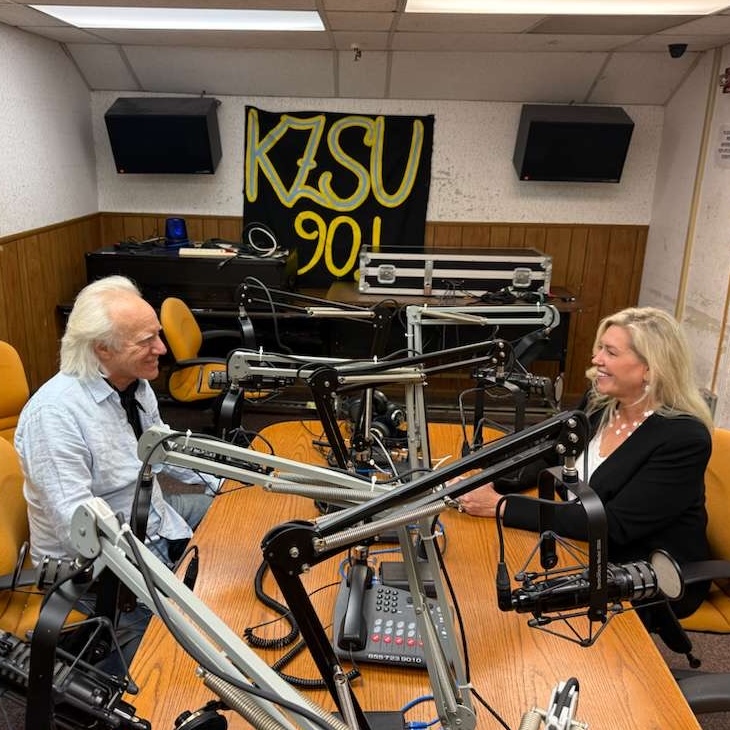
这里是KZSU,斯坦福大学。
This is KZSU, Stanford.
致所有自以为是的评论者,致所有灵界中的灵魂,致本广播节目的尊贵赞助人,欢迎回到我们90.1调频的挚友盛宴,我们的欢庆尚未结束,我们继续为伟大的队伍保持节奏。
For all you knights of entitled opinions and all you souls in Astral and all you venerable trustees of this radio program, welcome back to our feast of friends on ninety point one FM, where our revels have not yet ended, and we keep the beat going for the great brigade.
在美国诗人W.
In his poem Cold Spring Morning, the American poet, W.
S.
S.
默温的诗《寒春清晨》中写道:自我无年龄。
Merwin, wrote, the self has no age.
几行之后,他宣称:天空无天空,唯有它自身,这五月的白色清晨。
A few verses later, he declares, the sky has no sky except itself this white morning in May.
我不了解天空。
I don't know about the sky.
我不了解自我。
I don't know about the self.
然而,我今天所见的天空,已不同于往昔。
Yet the sky I see today is not the same as it was in time past.
当我七岁时,它是我与宇宙之间的契约。
When I was seven, it was my body's covenant with the cosmos.
到二十岁,它成了我与未来之间的一层薄纱。
By 20, it was a veil between me and the future.
到四十岁,它已化作一种抽象的面容。
By 40, it had become the face of an abstraction.
如今,它是我明知自己不会久居的房屋的穹顶。
Today, it's the dome of a house I know I won't inhabit for too much longer.
不久之后,它将成为今日仍属疑问之答案。
Shortly, it will be the answer to what today still remains a question.
如果自我拥有一片天空,那么它也拥有一个天界的年龄。
If the self has a sky, then it also has a celestial age.
因此,让我为这支大军献上一句话,你们或许会在未来的生日时铭记。
So let me offer up to the brigade a sentence that you may want to remember on your future birthdays.
宇宙中的一切,无论是初生的婴儿还是宇宙本身,都没有不具年龄的。
Nothing in the universe, be it the newborn infant or the universe itself, is without age.
如果一种现象不会衰老,它就不属于这个世界。
If a phenomenon does not age, it is not of this world.
如果它不属于这个世界,它就不是一种现象。
And if it is not of this world, it is not a phenomenon.
我们今天节目的主题是衰老。
The topic of our show today is aging.
在美国,我们对衰老有一些不寻常的看法。
We have some unusual ideas about aging in America.
我们往往将其视为一种诅咒、一种失去、一种贫瘠,一种被逐出伊甸园。
We tend to think of it as a curse, a loss, an impoverishment, an expulsion from the Garden of Eden.
然而,这种想法是多么轻率啊?
Yet how thoughtless is that?
衰老是生命的代谢,是向你的本质以及你本来是谁的展开。
Aging is the metabolism of life an unfolding into your essence and who you already are.
纵观人类历史,年轻人一直模仿成年人,正是因为他们渴望那种完整的生命状态。
Throughout human history, the young have always emulated adults precisely because they yearn for that fullness of being.
如今,情况却恰恰相反。
Nowadays, it's the other way around.
老年人渴望变得年轻。
The elderly aspire to be young.
这难道不荒谬吗?
Again, how absurd is that?
社会的主要特权和福利属于人生的后期阶段。
The major privileges and benefits of society belong to later stages of life.
这一点今天和过去一样真实。
That's as true today as it was in the past.
如今许多焦虑地紧抓青春表象的成年人,绝不会选择回到童年或青春期的艰辛中去。
Most of the adults who today anxiously hang on to the trappings of youth would never choose to return to the travails of childhood or adolescence.
他们过得太好了,不会那么做。
They're too well off for that.
讽刺的是,我们生活在一个痴迷于青春的社会,但其本质却是由老年人主导的。
The irony is that we live in a youth obsessed society that is fundamentally gerontocratic in nature.
用命题形式来说,青春是一种具有欺骗性且自我消耗的理想。
To put it in propositional form, youth is a deceptive and self consuming ideal.
我们的委托人伊壁鸠鲁说得最好,他说:‘不应认为年轻人是幸运的,而应认为那些生活得充实的老人才是幸运的。’
Our trustee Epicurus put it best, I quote, It is not the young who should be considered fortunate, but the old person who has lived well, end quote.
要意识到我们在晚年保持年轻,并非通过憎恶衰老过程,而是通过培养心智,这需要情感与智力上的成熟。
It takes emotional and intellectual maturity to realize that we stay young in later life not by abhorring the aging process but by cultivating our minds.
心灵永远不会停止学习,它拥有特殊的能力,即使在黑暗降临之际仍能保持清醒,并对生命过去所赐予的一切心怀感激。
The mind, which never finishes learning, has a special capacity to stay fully awake even as the darkness falls and to remain grateful for what life has offered up in the past.
伊壁鸠鲁又说:‘无论年轻还是年老,人都应致力于哲学,以便在变老的过程中,因感恩过往而保持心灵的年轻。’
Epicurus again, quote, Both when young and old, one should devote oneself to philosophy in order that, while growing old, he shall be young in blessings through gratitude for what has been.
愚人的生命以不知感恩和充满焦虑为特征。
The life of the fool is marked by ingratitude and apprehension.
他的思绪完全倾向于未来。
The drift of his thought is exclusively toward the future.
忘记已有的美好,他今天就已步入老年。
Forgetting the good that has been, he becomes an old man this very day.
说到感恩和好好生活,让我引述另一位人士的话,他几周前以78岁高龄坦然离世。
Speaking of gratitude and living well, let me quote someone else here, someone who went to his death gratefully a few weeks ago at the age of 78.
在2025年3月接受《滚石》杂志采访时,鲍勃·韦尔说:每一天都在变化。
In a March 2025 interview with Rolling Stone, Bob Weir declared, Every day things change.
我要这么说:我期待着死亡。
I'll say this: I look forward to dying.
我常把死亡视为对美好人生最后也是最好的回报。
I tend to think of death as the last and best reward for a life well lived.
作为感恩死者乐队的创始成员,鲍勃·韦尔将乐队的名字转化成了一种生活哲学。
As a founding member of the Grateful Dead, Bob Weir turned his band's name into a philosophy of life.
同伴伊壁鸠鲁不相信来世。
Comrade Epicurus didn't believe in an afterlife.
但如果他错了,而他真的在某个地方存在,他将是第一个欢迎鲍比·韦尔进入灵界的人。
Yet if he was wrong and is out there somewhere, he'll be the first to welcome Bobby Weir into the astral realm.
今天来到演播室的嘉宾正在撰写一本关于衰老的书,她将与我们分享她对这一主题的一些个人见解。
The guest who joins me in the studio today is writing a book about aging and will be sharing with us some of her own thoughts on that topic.
阿德里恩·科恩在范德堡大学获得了领导力、政策与组织行为学的博士学位。
Adrienne Corn earned a PhD from Vanderbilt University in leadership, policy, and organizational behavior.
她是位于田纳西州纳什维尔的软件与服务公司HumanTalented的创始人。
She is the founder of HumanTalented, a software and services company located in Nashville, Tennessee.
她也是《自以为是的观点》节目的长期听众。
And she's also a longtime listener of entitled opinions.
所以,阿德里恩,欢迎来到本节目。
So Adrienne, welcome to the program.
谢谢你,哈里森。
Thank you, Harrison.
很高兴能来到这里。
It's a pleasure to be here.
我提到你正在写一本关于衰老的书,我想知道,首先是什么促使你选择这个主题?
I mentioned that you're writing a book about aging, and I'm curious, first off, what inspired you to embark on this topic?
哦,这是个很好的问题。
Oh, it's a great question.
说实话,写一本关于衰老的书并不是我原本的目标,但过去几年里,随着我逐渐步入中年晚期,我开始对此产生兴趣。
To be honest, writing a book on aging wasn't something that I had aspired to do, but I've come to over the past few years as I've moved toward the end of my middle age.
我已经不再年轻,但还称不上年老。
So I'm no longer young, but I'm not yet old.
真正让我逐渐意识到的,不是年龄数字,而是身体随着衰老而发生的实际变化。
It's not so much about the number as it is the physical reality of getting older that has been dawning on me.
我认为,我们大多数人都是通过身体首先意识到衰老的,这几乎是普遍的。
I think it's pretty universal that we come to the awareness of old age first with our bodies.
但我也在更广泛的文化中观察到这一点:老年人,即60岁以上的人群,是西方世界增长最快的人口群体。
But it's also something I'm observing in the larger culture as well as the elderly, are people over the age of 60, are the fastest growing population segment in the Western world.
我自然好奇这段衰老之旅会是什么样子,会带我去向何方,但发现文化告诉我们关于衰老的许多内容都是负面的,认为它应该被避免——通过尽可能保持年轻,或借助科学与技术来规避。
I'm naturally curious about what this journey of aging will be, where it will lead but find so much of what the culture tells us about aging is that it's a negative experience and want to be avoided by remaining young in every way possible or outsmarted through science and technology.
但如果我们早早地接纳它呢?
But what if we embraced it early on?
所以我希望从好奇与学习的角度来探索衰老,有意识地将它视为一个我终将抵达的地方,因为这也是我们所有人最终的归宿。
So I wanted to explore aging from the perspective of curiosity and learning, intentionally thinking about it now as a place, a space where I will eventually end up because it's where all of us eventually end up.
我接受的是定量社会科学研究的训练,因此我整个职业生涯都专注于个体身份及其与更大文化背景之间的互动。
I'm trained as a quantitative social scientist so my work across my career has been focused on both individual identity and its interplay collectively with the larger cultural context.
而我们身份的一部分,就是价值观。
And one of those variables that's part of our identity is values.
所以对我来说,价值观简而言之就是对我们而言重要的东西。
So for me that's shorthand for what matters to us.
在撰写这本书时,我希望探索研究、哲学与实用主义如何交汇,帮助我们思考在衰老背景下什么才是真正重要的。
And in writing this book I wanted to explore the ways in which research, philosophy and pragmatism intersect to help us think about what matters to us in the context of aging.
它们如何从一开始就为这段通往老年的旅程提供指引,甚至在我们真正抵达之前?
How can they inform this journey into old age from its very beginning even before we get there?
我们可以学到什么?又可以开始实践什么?
What can we learn and what can we begin to practice?
你能再多谈谈你作为社会科学家的背景吗?你将如何运用你的专业训练来研究这个话题?
So can you say a little bit more about your background as a social scientist and what use you're going to make of that training as you attack this topic?
当然。
Sure.
我早期的研究集中在身份、教育和职业选择上。
My early work focused on identity, education, and occupational choice.
换句话说,就是我们是谁,我们如何学会成为自己,以及我们如何根据自己的身份融入职场并在此环境中持续发展。
So in other words, who we are and how we learn to be what we are and then how we fit into the working world and persist within those contexts of the work given who we are.
我完成博士学业后,创办了一家名为HumanTalented的公司,专注于研究和咨询,帮助人们将自我身份与职业相匹配,也就是人们在工作生活中所从事的内容。
After I finished my PhD, I started a company called HumanTalented, and I focus on research and consulting around aligning who we are, our identities, with occupation, so what people do in their work lives.
我创办这家公司的目标是解决困扰80%人群的问题——他们每天从事的工作都感到不满足。
The goal for me in starting the company was to solve the problem plaguing 80% of people who feel unfulfilled by the work that they do each day.
缺乏有意义的工作会对我们的生活产生负面影响,而我们大约有三分之一的时间都在工作。
The lack of meaningful work really has a negative effect, a deleterious effect on our lives and we spend about a third of our time at work.
因此,我的目标是开发工具和方法,帮助个人理解自己的身份变量,并将这些变量与职业和公司相匹配,从而实现与自我身份的契合,最终帮助他们过上更有意义的生活。
So the goal was really to build tools and a practice to help individuals understand their identity variables and then match those variables with occupations and companies so that they could align with their identities and that goal would be to help them live more meaningful lives overall.
简单总结一下,哈里森会说,作为一名社会科学家,我的兴趣是双方面的。
So just a quick summary of that would be Harrison to say that my interests as a social scientist have been double sided.
我对个体感兴趣,这是其中的微观层面,但我也对集体感兴趣,即这一问题的宏观层面。
I'm interested in the individual which would be the micro piece of it but I'm also interested in the collective which is the macro side of this as well.
对我来说,衰老是双面的。
And aging for me is very double sided.
它既有微观影响,也有宏观影响。
It has both micro and macro ramifications.
你是否同意我的观点,即我们生活在一个痴迷于青春、本质上却是由老年人主导的社会?
Do you agree with my statement that we live in a youth obsessed society that is fundamentally gerontocratic in nature?
我完全同意你的看法。
I absolutely agree with you.
我认为,这正是我撰写这本书如此重要的原因之一,因为在文化层面、宏观层面上,我周围所看到的是社会越来越倾向于追求年轻,即使我们的身体在逐渐失去青春,我们也不愿放手。
I think that this is one of the big reasons why pursuing this book was important to me because all around me at the cultural level, at the macro level, what we're seeing is this gear towards being young, towards not letting go of our youth over time even as our bodies are letting go of youth over time.
我们需要拥抱走向衰老的过程,以及作为老年人所经历的一切,而不是固守青春、拒绝向前迈进。
And it's important for us to embrace that move towards being, older and what we experience as being older as opposed to keeping this place in our youth and refusing to move out of it.
关于文化与年龄,我最喜爱的书籍之一,当然是你写的《青春化》,因为它探讨了衰老的复杂性及其运作方式。
One of my favorite books on culture and age is, of course, your book on juvenescence because it tackles the complexity and the question of aging and how that works.
年龄不仅仅是一个生物学上的年数,它还关乎你属于哪个年龄段——文化年龄、历史年龄,对吧?
Where age is not just biological number of years, but it's also what age do you belong to, cultural age, historical age, no?
在二十一世纪活到四十岁,和在公元前第三世纪活到四十岁,这意味着什么?
And what does it mean to be 40 years of age in the twenty first century as opposed to, you know, the third century BC and so forth.
毫无疑问,我们对年龄的体验受到宏观背景的影响,你所说的微观层面,正是在我们实际展现年龄的宏观语境中被塑造的。
So there's no doubt that our aging our experience of age is influenced by the, let's say, the micro what you call the micro is influenced by the macro context in which we're actually performing our age.
你说老龄化人口正成为一个非常重要的少数群体。
So you said that the aging population is becoming a very substantial minority.
我的意思是,目前在美国这还不是一个多数群体。
I mean, it's not a majority yet in America.
对吧?
Right?
但它确实是一个非常庞大且重要的少数群体?
But it's a very, very substantial minority?
是的。
Yes.
没错。
That's correct.
在西方人口中,它正成为多数。
It's becoming a majority in Western populations.
它正在成为多数。
It is becoming a majority.
是的。
Yes.
这意味着60岁以上。
That means over 60.
对吧?
Right?
老年人的定义就是这个吗?
Is that what the elder is that how you define
实际上,1965年美国对老年人的定义将成年老年人定为60岁。
the older Actually, the older American act, older Americans act of 1965 defines older adulthood as adults 60.
对。
Right.
是的。
Yeah.
作为社会科学家,您是否预见由于人口结构变化会出现许多社会问题?
And do you foresee as a social scientist, do you foresee a lot of problems, social problems given the demographics?
从政策角度来看,这确实正在影响我们,尤其是在我们面临的医疗保健方面,显而易见。
It's definitely something that is affecting us from a policy perspective in terms of the health care that we're facing, obviously.
因此,老年人面临的一个主要问题是阿尔茨海默病和痴呆症。
So one of the major areas for the elderly is Alzheimer's and dementia.
仅在这一领域,我们已经看到每八个65岁以上的美国人中就有一人患有某种程度的阿尔茨海默病或痴呆症,而从政策层面来看,现有的资源不足以应对这些问题。
In that particular area alone, we've seen that one in eight Americans over the age of 65 will have some level of Alzheimer's or dementia and the resources aren't available to address those from a policy perspective.
因此,毫无疑问,我们需要投入目前尚未到位的资源。
So absolutely, we're seeing that there are resources that are going to need to be in play that aren't currently.
因此,我的一个假设是,活到高龄实际上是一种奢侈。
So one of my, assumptions is that aging to the advanced age is actually a luxury,
而
and
当你本可能已经去世时,为活到80岁而哀叹是荒谬的。
that it's absurd to lament the fact that you turn 80, for example, when you could be dead.
那你希望怎样呢?
And would you you know, what would you prefer?
如果你坚持尽可能长寿,就必须准备好面对随之而来的衰老与衰弱。
And if you're going to insist on living as long as you can, then you have to be ready for the decrepitudes that that come into the into that process.
对吧?
Right?
是的。
Yeah.
因此,你可以把即将面临的老年人口激增问题视为令人担忧的危机,但也可以将其视为社会最大的成功标志之一——许多人异常地突破了自然规律,活到了过去绝大多数人根本无法企及的高龄。
And therefore, you can look at the looming problem of the majority of geriatric as something to be alarmed at, but you could also see it as, you know, as a sign of the greatest success, socially speaking, that, that many people quite exceptionally, according to the laws of nature, have reached an age when in ages past, they would, most likely be dead.
对吧?
Right?
同意。
Agreed.
我同意你的观点。
I I agree with you.
衰老并不是问题。
Aging is not the problem.
说衰老是问题,就等于说做人本身是个问题。
To say that aging is the problem would be to say that being a human is problem.
对吧?
Right?
既然我们从一开始就在衰老。
Since we Right.
从出生起我们就开始衰老了。
Began aging from the beginning.
我认为,真正的问题在于,我们生活在一个痴迷于保持年轻的文化中。
I think definitely the problem is aging in a culture that's obsessed with remaining young.
如果我在你的节目或你的书《青春化》中引用你的话,你说我们通过幼稚化而非教育欲望,并利用其无限的负面性,来宣扬青春,并非真正促进青春。
If I were to quote you on your show, in your book, Juvenescence, you say that we do not promote the cause of youth when we infantilize rather than educate desire and then capitalize on its bad infinity.
我想在此基础上将这一点反过来思考。
And I wanna turn that around in this.
我想说,这对衰老也同样适用。
I wanna say that that's true of aging as well.
当我们幼稚化而非教育欲望,并利用其无限的负面性时,我们并没有真正促进衰老。
We do not promote the cause of aging when we infantilize rather than educate desire and then capitalize on its bad infinity.
因此,我认为衰老的过程本身有一些值得庆祝的地方。
So I think that there is something to be celebrated by and through the process of aging.
如果我们活到80岁,那绝对是值得庆祝的。
If we get to 80, absolutely, it's a celebration.
是的。
Mhmm.
而且我认为这是双面的。
And I think that it's double sided.
我认为在西方社会,我们能够衰老但仍属于社会,这一点非常可贵。
I think in Western society, the idea that we age and can still be part of society is great.
你知道,我们在很多地方都能看到这一点,但将衰老婴儿化才是问题所在。
You know, we see this in lots of places, but the infantilization of aging is the problem.
我认为阻止自然的成熟过程,这才是真正该被质疑的。
And I think preventing the natural maturation process, that's the one that Yeah.
我确实对此持不同意见,我认为。
I would really take issue with, I think.
对。
Right.
因此,从社会学角度来看,很多问题都被当作医学问题、阿尔茨海默病问题来处理。
So a lot of this sociologically is approached, you know, as these problems, medical problems, Alzheimer problems.
老年人更需要照顾。
There's the the elderly in more need of care.
还有社会保障。
There's Social Security.
老年人总是以这样或那样的方式损害年轻人的利益。
There's the way in which the elderly are always screwing over the young one way or another.
是年轻人为这种过度延长的衰老付出了代价。
It's the young who pay the price for the luxury of excessively prolonged aging.
我们可以在技术上、医学上甚至心理上应对这个问题,但伊壁鸠鲁和塞内加等伟人有着一种伟大的传统,他们将衰老视为值得庆祝的事物。
And we can deal with it technically or medically and even psychologically, but what Epicurus and others like Seneca and these the great there's a great tradition of senescence as something to be celebrated.
我认为,当你说到我们应该庆祝而非哀叹时,你实际上正在某种程度上融入了这一讨论。
And I think that you are actually flowing into that discourse in some ways when you say that we should be celebrating rather than lamenting.
但培养诸如感恩之类的美德,我认为这显然是一个不言自明的道理——你越老,积累的过往就越多。
But that cultivating certain virtues like gratitude for the has been, I think, seems to me a very obvious, a self evident proposition the older one gets because the older you get, the more past you have accumulated.
如果你足够伊壁鸠鲁主义,你就能逐渐积累起感恩的资本,为晚年可能拥有的幸福打下坚实的基础。
And the more you can start building up the capital of gratitude if you're Epicurean enough, you're building up a solid foundation for the kind of happiness that might pertain to a later stage of life.
幸福当然有多种不同的方式。
There's different ways of being happy, obviously.
我认为,当你谈到庆祝时,如果我理解得没错,你其实也在尝试重新构想如何在那些年岁中重新定义幸福。
And, I think that when you talk about celebrating, think you're also if I hear you correctly, trying to conceive of how to, reconfigure the notion of happiness in in those years.
是的
Yeah.
当然
Absolutely.
我认为把故事和历史联系起来也很重要。
I I think bringing in the stories and the connection to history as well.
所以,如何幸福是一个很大的问题。
So I think how to be happy is is a is a big question.
这就像试图吃掉一头大象。
That's a big elephant to try to eat.
因此,当我们思考如何在老年时实现幸福时,而我们目前甚至还没有很好的模式来应对进入老年、过渡到老年的过程,这头大象就显得更大了。
So when we think about how to do that in old age, when we currently don't even have really good models of how to move into old age and transfer and transition into old age, that elephant becomes even bigger.
当然。
Sure.
那么,你从哪里开始呢?
So where do you start?
你说你需要从更基础的东西开始。
You're saying you have to start with something more basic.
对。
Right.
我最近在读莎伦·布莱克的书,她在英国获得了博士学位。
So I've been reading Sharon Blackie has a PhD in England.
如果我引用她的话,她说:‘我们对衰老的理解取决于我们讲述的关于衰老的故事。’
And if I quote her, she says, quote, the ways in which we think about aging depends on the stories we tell about it.
我们对老年女性的看法,取决于我们对她们的想象。
How we think about aging women depends on the images we hold of them.
而今天我们对老年女性的想象并不健康。
And the images we hold of aging women today aren't healthy.
事实上,在当代西方文化神话中,并不存在令人向往的女性老年形象。
The truth is there is no clear image of enviable female elderhood in the contemporary cultural mythology of the West.
它已经不再是被我们认可的一种原型了。
It's not an archetype we recognize anymore.
在我们的文化中,老年女性大多被忽视,被鼓励保持低调,或被当作嘲笑和讽刺的对象。
In our culture, old women are mostly ignored, encouraged to be inconspicuous, or held up as objects of derision and satire, unquote.
我之所以提到这一点,尽管我们正在讨论幸福,是因为我认为幸福是一个非常好的理念。
And the reason I bring this up even though we're talking about happiness is because I think the idea of happiness is a great one.
这绝对是我们在晚年应该追求的东西。
This is something we absolutely should aspire to in our later years.
但我们当前的语境中缺乏关于如何在那些年份中获得幸福的故事,因为对青春的痴迷有一个孪生兄弟,那就是对衰老的恐惧。
But we don't have a lot of stories in our current lexicon of how to be happy in those years because this obsession with youth has a sibling, which is fear of aging.
是的。
Mhmm.
如果你一直生活在对衰老的恐惧中,你就无法真正幸福。
And so you can't be happy if you're living with this fear of aging.
对。
Right.
因此,在我们当代社会中,我们并没有将老年女性视为拥有应有尊严甚至特权的存在。
So in our contemporary society, we don't have a notion of the elderly woman as having the proper dignity and even privilege.
而在其他时代和别的文化中,正如我想到你提到的那本书——虽然我自己还没读过,但你一直跟我讲——确实存在一些可以从不同文化中发掘出来的榜样。
Whereas in other times and in other cultures, there is, if I'm thinking of the book that you're referring to, which I haven't read myself, but you've been telling me about it, that there are models out there that can be retrieved from different cultures.
事实上,我应该直接说出这本书的名字。
In fact, I should just name the book.
莎伦·布莱克的书名叫《Haggitude》,它讲述的是
Sharon Blackie's book is named Haggitude, and it is
Haggitude 是以 H 开头的。
Haggitude with an h.
对吧?
Right?
Haggitude 是以 H 开头的。
Haggitude with an h.
是的。
Yes.
我认为它是一个非常好的资源,就像你向我推荐的另一本书《冬日之光》,作者是道格拉斯。
And I think it's a a great resource much like another book that you have introduced me to, which is called winter light by by Douglas.
佩尼克
Penick.
冬日之光
Winter light.
一本非凡的书
Extraordinary book.
是的
Yeah.
对
Yeah.
我认为这些模型探讨了如何通过以往文化中呈现的模式过渡到老年阶段。
And I think these kinds of models that talk about how we can transition into old age through the models that are laid out before us in previous cultures.
它们不仅将我们与过渡到老年的理念联系起来,还连接了我们自身的过去和历史。
They tie us not only to this idea of transition into old age, but into our own past, our own history.
对吧?
Right?
我想这又回到了你所说的异质性这个概念,对吧?
And it goes back I think to this idea of the heteronicity that you're talking about, right?
我们和宇宙一样古老,对吧?
We are as old as the universe, right?
我们和今天一样年轻,但这个想法是,如果我们能够了解并内化这些历史,我们就与过去相连——那些成功走过这条路的人的故事,以及他们传递给我们的经验。
We are as young as today, but this is this idea that we are also tied to the history if we can know it and internalize it, those stories of people who have done this successfully or have done it and have passed those stories onto us.
对。
Right.
我认为,关于变老,还有另一个我们常常忽视的方面。
I think also that there's another piece of getting older that we often don't talk about.
那就是能动性的问题。
It's this idea of agency.
在谈论幸福时,很大程度上,在美国文化中,我们把幸福与自身的能动性联系在一起,认为我们可以让自己幸福。
There's so much of getting old that when you talk about being happy, to some extent, we, in American culture, associate happiness with our own agency, our own sense of we can make ourselves happy.
但我认为,把年龄视为具有能动性这一点其实是个问题,因为我们能掌控的其实很有限。
But I think the idea that age is agentic is a bit of a problem because we only have so much control.
是的。
Yes.
当我提到‘幸福’这个词时,可能用得不够准确。
I may have not used the best word when I said happiness.
也许可以用另一个词。
It could be a different word.
比如,我很大程度上是从道格拉斯·潘尼奇的《冬日之光》这本书中获得这种想法的,他以一位79岁老人的视角在讲述。
Like, there's there's a certain I'm I'm getting this from in large part also from Douglas Penic's book, Winter Light, and he's speaking from the point of view of someone who has turned 79.
他谈到了衰老过程中人们会失去很多东西,嗯。
And he speaks about the perceptual shift that there's so much that one loses in the aging process Mhmm.
你会越来越感到与世界脱节、被边缘化、变得无关紧要。
And you become increasingly worldless and sidelined and irrelevant.
但当你意识到时间多么珍贵时,就会发生一种奇特的感知转变,世界会在你无需主动作为的情况下向你展现自身。
But a weird thing happens when you realize that how precious time is is that you have a perceptual shift and the world reveals itself to you without your agency being involved.
这几乎像是一种被动的启迪,让你敞开心扉,去感受存在的意义和微妙的内涵。
It's almost like this passive inspiration of being open to the revelations of, you know, presence and shades of meaning.
而且,我认为他引用了一个人的话,说他的父亲正坐在草坪上,那人说了什么?
And, also, I think he quotes someone whose father is sitting on a lawn, and and what's he say?
他说:我从不知道绿色有这么多不同的种类,这位96岁的老人在后院说道。
He says, I never knew there were so many kinds of green, says this 96 year old man in the backyard.
当一个人正值壮年、充满能动性、行动力、项目和各种青年时期对未来导向的事物时,某些感知就会被挤压掉。
There are certain perceptions which are crowded out when you are in the prime of life full of agency and action and, you know, projects and all those things which youth future orientation and so forth.
所以,我们不要称之为幸福,而应称之为一种因对时间与世界的短暂性产生高度觉察而带来的强烈感受。
And so let's not call it happiness, but let's call it a certain intensity that comes from a heightened awareness of the evanescence of time and the world.
回到关于女性的问题,我认识很多年轻女性,她们正在积极寻求经历过人生不同阶段的年长女性的智慧,这种前瞻性的学习,但我们社会中却缺乏这种年长者对年轻一代的指导,缺乏这种代际延续。
And going back to the question of women, I know a lot of young women who are really seeking out the wisdom of older women who have been through stages of life and this looking forward, but that we don't have a society in which that kind of mentorship of the elderly, of of the younger, that kind of intergenerational continuity.
我想知道,当你谈到性别在衰老体验上的差异时,是否也想到了年长女性所扮演的这种指导角色。
And I'm wondering if when you talk about the gender difference in the experience of aging, whether that mentorship role of an elderly woman is something that you have in mind.
是的。
Yeah.
当然。
Absolutely.
我觉得关于这一点,我想从两个角度来谈。
I think there are two ways I wanna talk about that.
第一个角度与我所做的工作有关。
I the first way is related to the work that I would do.
当我开始接触高层管理者时,我确实注意到了这种性别差异。
I really saw this gender gap when I started working with senior executives.
我会看到男性和女性在步入退休时的不同状态。
So I would see men who were moving into retirement versus women who were moving into retirement.
那些步入退休的男性往往很难适应。
And the men who were moving into retirement were having really a difficult time with it.
原因在于,他们常常将自己的身份与职业生涯紧密联系在一起。
And the reason for that was because they had often tied their identities to their careers.
他们是谁,很大程度上是由他们的职业、他们赚钱的方式以及他们所追求的金钱、声望和认可所定义的。
So who they were was very much just defined by what they did for a living and how they earned what mattered to them from money to prestige to recognition.
我最近看的一个电视节目里有一句话说:‘如果没有经济功能,社会会在你活着的时候就埋葬你。’我觉得这种看待世界的方式非常可怕。
There is a quote in a TV program I watched recently that said, without an economic function, society buries you before you're dead, which is a terrible terrible, way to think about the world, I think.
埋了我。
Buried me.
天哪。
Jeez.
太糟糕了。
It's terrible.
但很多男性都能对这句话产生共鸣。
But so many men can relate to that statement.
我合作过的很多男性都是这样。
So many men that I've worked with.
另一方面,女性往往通过自己在社区中的相关性来定义自己和身份。
Women, on the other hand, tend to define themselves and their identities in relationship to relevance in their communities.
因此,她们是谁部分由她们所属的地方定义,而这通常比单一的工作社区要广泛得多。
So who they are is defined in part by where they belong, which often is much broader than a single community of work.
所以,由于这些社区会贯穿她们的一生而发生变化,她们正是在这些地方学习,而非通过工作来获得对她们而言重要的东西——无论是金钱、声望还是认可。
So because those communities change across their lifespans, this is where they learn as opposed to earn what matters to them from money to prestige or recognition.
因此,她们进入退休生活的方式与男性截然不同。
So their transition into retirement seems very different than than men's.
在我们讨论的这个老龄化人口中,60岁以上的成年人中大多数实际上是女性。
In this aging population that we've been talking about, the majority of the aging population, the adults 60, are actually women.
回到你刚才说的,许多年轻女性都在寻找这些榜样,我认为这完全正确。
And to go back to what you were saying that so many young women are seeking those role models, I think that's absolutely true.
我认为,拥有这些故事并与另一代人建立联系非常重要。
I think having those stories and a connection to another generation is really important.
你在《青春化》中提到过,这句话是你的原话:过去并不会因为我们遗忘它而就此消失。
You talk about in Juvenescence that, and this is a quote from you, the past doesn't cease to exist simply because we lose our memory of it.
我认为,在代际之间连接记忆,是我们可以开始内化并实践的重要一环。
And I think connecting our memory across generations is a really important piece that we can begin to internalize and practice.
但我们需要的不只是在我们自身孤立的细胞中去实践它。
But we need to practice it not just in our own cells, isolated cells.
我们需要代际共存的多元年龄社区,因为我们确实生活在一个代际隔离的时代。
We need the generational presence of multigenerational communities where because we do live in an age of generational segregation.
孩子们、学校里的学生、职场中的成年人,以及养老院或其他地方的老年人。
The children, school, adults in the workplace, the elderly in retirement homes or wherever.
你知道的吧?
You know?
是的。
Yeah.
所以,这意味着在历史上这是非常特殊的时期,当时几代人同住一个屋檐下,有着持续不断的交流与实践、记忆的传递,教育年轻人的方式也不是基于课程或学业,而是基于启蒙和成长仪式。
So, I mean, this is historically very exceptional where you had those generations all within the same household and where you had this very continuous sort of communication and transmission of practices, memories, the notion of educating the young in ways that were not based on curriculum and not based on schoolwork, but just initiation, the initiation process.
如果我们认为祖母如此重要,我的意思是,我知道很多年轻女性非常爱她们的祖母,祖母去世时她们的悲痛程度,或许甚至超过失去父母。
If we think Grandmothers are so essential for I mean, I I know, young women who are so fond of their grandmothers and are just devastated when the grandmother dies in a way that may perhaps even more than a parent.
谁知道呢?
Who knows?
我的意思是,我不想做出过于笼统的论断,但年轻人对老年人陪伴的需求,至少不亚于老年人需要年轻人来指导的需求。
I mean, I I don't wanna make any sweeping statements, but that need of the young is for the elderly presence is as great, if not greater, than the need of the elderly to have the young to mentor.
我
I
我有个朋友在芝加哥建造代际住宅,她的初衷正是你所说的,为人们提供一个让这种传承得以发生的场所
have a friend in Chicago who builds intergenerational housing, and she does this with the intention of exactly what you're speaking about, giving people a place where this transmission can occur
对。
Right.
所以这种传承不仅仅是通过我们能通过考试或用头脑理解的方式来学习,而是通过非语言的方式传递的。
So that there is this transmission of not just learning in a way that we, you know, can pass a test or that we understand with our minds, but that gets transmitted in the nonverbal.
如果我们认为大部分沟通实际上是非语言的,那么智慧和知识的传递并不仅仅依靠言语。
If we think about most of our communication actually being nonverbal, then this transmission of wisdom, of knowledge doesn't just happen with our words.
它发生在我们的行动中。
It happens in our actions.
它发生在我们日常生活的点滴里。
It happens in how we live in the daily.
我们会开始观察老年人,观察他们是如何生活的。
We begin to observe people who are elderly, observe how they live their lives.
一位80岁的人,一天的生活是什么样子?
What does a day look like for an 80 year old?
对吧?
Right?
我奶奶早上起床、吃午饭、晚上睡觉时是什么样子?
What does it look like for my grandmother to wake up in the morning, to eat lunch, to go to bed at night?
她是如何度过这些日子的?
How does she live those days?
她的步伐是什么样子的?
What do her steps look like?
我们开始理解,作为一个有尊严的老人意味着什么。
And we begin to understand what it can be to be an old person with dignity.
对吧?
Right?
对。
Right.
这些都会通过共同生活的经历传递给我们。
That gets transmitted to us and through that experience of living together.
我认为这是一个正在通过建造这种住房来实践的美妙理念,对吧?
And I think it's a beautiful concept that is being practiced, right, by building this kind of housing.
是的。
Yeah.
我认为你说得对,这种模式似乎在女性环境中比在男性环境中更容易实现。
And I think you're right that somehow seems to be easier to take place in context of women rather than men.
父子关系中存在一些过于强烈的俄狄浦斯情结,但谁知道呢?
There's a little bit too much Oedipal tension in the father son relations, but who knows?
我的意思是,祖父也同样具有一种尊严和魅力,我的意思是,我不太想把这一切过分按性别划分,但我喜欢你的观点:当人们变老时,女性往往更倾向于创造或让自己的价值观朝向社区,而非生产。
I mean, the grandfather also has has a certain dignity and and a certain charisma as well as I I mean, I don't wanna divide it too much by gender, but I like your idea that when they get older, women tend to create or their values tend to go in the direction of community as opposed to production.
无论如何,你是否愿意分享更多关于你认为同龄人应该如何为未来做准备的想法?
Anyway, do you wanna share some more thoughts on what you have in mind when you think of how people around your age should prepare.
我不知道为人生的后期阶段做准备是否困难,但我感觉你的书的一个目标是提出某种议程,哪怕只是提高人们对一个事实的意识:我们都身处这条衰老的洪流之中。
I don't know if it's tough to prepare for later stages of life, but I gather that one of the ambitions of your book is to propose some kind of agenda for, if only, awareness and bringing a certain kind of heightened awareness of of the fact that we're all within this stream of aging.
不是吗?
No?
我认为我们之前谈到的跨情境学习很重要。
I think cross contextual learning that we were talking about matters.
我不认为这仅仅对女性有意义,所以也许我不同意你的观点,认为男性就不会从中受益。
I don't think it matters just for women, so I do maybe disagree with you that, you know, men wouldn't also benefit from that.
我认为我们确实会。
I I think we do.
我认为我们都受益于这种代际学习。
I think we all benefit from this intergenerational learning.
我认为女性在这方面更容易做到,就回答这个问题而言。
I think women have an easier time of it just to answer that.
但我不认为男性会远离它。
But I don't think that men I don't think they fall away from it.
我认为他们也会接受这一点,但目前我们的文化中还没有这种东西。
I think they will also embrace it as well, but it's something that we don't have as something that's in our culture right now.
不是。
No.
我同意。
I agree.
我的意思不是针对年长的男性。
I I what I meant is not for the older men.
我觉得年轻人的接受度更低。
I I think my sense is that there's less receptivity among Younger.
年轻男性比年轻女性的接受度更低。
Younger males than there are among younger women.
是的。
Yeah.
说到这一点,我认为当我们长大后,我们会教年轻人如何生活。
And to that point, I think, you know, we teach the young how to live when we're grown.
对吧?
Right?
我们教育他们如何饮食、说话、穿衣、思考和工作。
We educate them on eating, speaking, dressing, thinking, working.
在这样做的过程中,我们延续了这一模式。
And in doing so, we perpetuate the process.
对吧?
Right?
所以,我们的想法是,是否有可能提供一条通往衰老的路径,教会中年人甚至年轻人,如何在年老时生活,对吧?
So the idea is, is it possible to offer a pathway toward aging that can teach the middle age, even the younger, how to live when we're old, right?
那会是什么样子?
What does that look like?
我认为,有办法去教育这一过程。
And I think that there are ways to educate that process.
你之前提到过,我知道我总是在回到‘幼态持续’这个概念,你说教育是最关键的职业,因为它教会年轻人如何在黑暗中看见,我非常喜欢这个说法,因为这正是我们正在讨论的内容。
You had said and again I know I keep going back to juvenescence, you had talked about education being the most vital vocation because it teaches the young how to see in the dark and I love that because this is exactly what we're talking about.
当我们面对衰老时,我们其实身处黑暗之中,因此教育绝对是这一过程未来发展中不可或缺的一部分。
We're in the dark when it comes to aging and so education is an absolute part of I think this process going forward.
那么,哲学能为我们提供怎样的前进路径呢?
So what can philosophy offer us in terms of a path forward?
我们能从哲学家那里学到什么,以帮助复兴代际老龄化的理念和老龄化模式?
What can we learn from the philosophers that can help rejuvenate this idea of intergenerational aging, the models for aging?
我们能从社会科学中学到什么,以帮助纠正我所认为的当前这种错位?
What can we learn from social science that can help us realign what I believe is a misalignment currently, right?
如果这种错位在于我们视衰老为一个问题,那么我们该如何重新调整,将衰老视为自然过程的一部分,并从中学习?
If the misalignment is that we are aging and aging is a problem, then how do we realign with aging as a natural part of the process and we should do that and learn what we can from that process.
我从多个不同领域来审视衰老。
I'm looking at aging from various different domains.
在身体层面,我们重视什么?我们又该如何在衰老的背景下学习和实践这些被重视的东西?
So from the physical domain, what is it that we value in the physical and how could we then learn and practice what we value in the aging context about the physical.
如果随着生物年龄增长,我们的身体能力有所丧失,与其恐惧或否认这种丧失,我们能将哪些珍视的价值带入这种新的心态中?
So if there's a loss of physical ability as we age biologically, rather than fear or deny that loss, what is it that we value that we could bring into that new mindset as we age?
感恩,你提到了伊壁鸠鲁。
So gratitude, you mentioned Epicurus of course.
如果我们对身体仍保留的东西心怀感恩,或许就蕴含着一种哲学。
I think if we have gratitude for what remains in our bodies, maybe there's a philosophy.
例如,瑜伽包含哲学,如生命能量的实践、正念运动或调息法,即对呼吸的觉知。
Yoga has for example philosophy, the practice of prana, mindful movement or pranayama which is the awareness of breath.
从实用的角度来看,也许是规划。
In the pragmatic sense perhaps it's planning.
如果我们珍视活着,而否认不可避免的衰老是错位的,并且我们知道阿尔茨海默病正在逼近,那么我们或许可以在微观层面制定检查机制,并在宏观层面通过政策共同为这些资源提供资金。
If we value being alive and the denial of the inevitable is misaligned and we know that Alzheimer's is on the horizon, perhaps we find a way to plan checks at the micro level and then collectively on the policy level, we fund for those resources at the that's the macro level.
所以我认为在身体层面,我们有办法做到这一点。
So I think that there are ways to do that in the physical realm.
在精神层面,同样地,我认为我们需要弄清楚在衰老过程中我们重视什么,然后建立相应的方法来应对。
In the mental realm, again, we figure out, I think, what we value in this area of aging and then we build in ways to approach it.
再次强调,从我还未老去的视角来看。
And again, from the perspective of I'm not yet old.
我想了解,我可以在个人微观层面开始观察和实践什么,又该如何在更广泛的文化和社群层面建立社区与理解?
I would like to understand what can I begin to see, what can I begin to practice at the micro individual level, and then how can I begin to build community and understanding at the more cultural collective community level?
我应该说,当我年轻时,在高中、大学和研究生院,我最大的志向就是尽可能活得长久,不是几百年,而是几千年。
Well, I should say that when I was young in high school, college, graduate school, my primary ambition was to become as old as I possibly could, namely not hundreds of years, but thousands of years old,
通过
by
进入荷马或经典、前苏格拉底哲学家的思想之中。
entering into the minds of Homer or could be the scripture, the pre Socratic philosophers.
所以我认为,当我25岁的时候,你问我多大了,我会说:
So I think that by the time I was 25, you asked me, I would have said, how old am I?
是的。
Yeah.
我已经有2500岁了。
I'm 2,500 years old.
所以我想提出的是,当然,这对于那些花大量时间阅读、从事哲学研究的人来说,除了培养感恩之心以及你提到的其他更实际的措施外,还可以通过阅读与那些能追溯数百年、数千年历史的作者对话,来拓展自己的精神社群。
So what I'd like to suggest, and this is, of course, for someone who spends a lot of time reading, doing philosophy, and things of that sort, is that in addition to cultivating gratitude and the other kind of more practical measures that you've mentioned that one can enlarge one's community through reading and holding converse with authors who can go back, you know, hundreds, thousands of years.
阅读是一种提升自己年龄的方式,让你在文化上比实际年龄更年长,成为悠久传统的继承者,而不是像如今大多数人那样,似乎都想成为历史的孤儿。
And that reading is a way of enhancing one's age, becoming culturally older than than one is, to become an heir of long traditions rather than nowadays where everyone seems to wanna be an orphan of, you know, history.
我认为,那些在年老时仍坚持阅读的人——当然,我不是社会科学家。
I think that people who are readers in their older age, my impression Of course, I'm not a social scientist.
展开剩余字幕(还有 113 条)
我从未能为我的任何主张收集任何统计数据,我想我也永远做不到。
I've never been able to marshal any statistics for any of my claims, and I never will, I guess.
但我强烈感觉到,爱读书的人拥有某种福气
But my strong impression is that people who are readers have blessings
是的。
Mhmm.
而那些不读书的人则没有这些。
That those who don't read don't have.
他们拥有栖身于多个世界的奢侈。
That they have the luxury of inhabiting multiple worlds.
因为每次你翻开一本书,你都在进入某种世界。
Because every time you enter a book, you're entering into a world of sorts.
这和看电视节目、电影或电视剧是不一样的。
And it's not the same thing as watching a television program or a movie or a television series.
阅读时,你与作者之间存在着某种伙伴关系。
There's something about a partnership with the authors one's reading.
所以我认为,存在着一个与死者之间的共同体,我们也可以将这种意识带入你之前提到的那种状态中。
So that I think there's a community of the dead that we can also bring into the very consciousness that you were referring to earlier.
是的。
Yeah.
正如你所说,我们正生活在数据过载的时代。
To your point, you said this, that we live in data overwhelm.
我不确定你是不是原话这么说的,但你的意思是,我们不再阅读,而是去谷歌搜索。
I don't think those were your exact words, but this idea that we no longer read, we Google.
我们在线上。
We're online.
我们盯着手机,注意力持续的时间变得非常短暂。
We're on our phones, and there's a short period of attention that we have.
因此,我们没有真正深入那些数千年历史的故事,而这些故事中的人们本可以教导我们许多东西。
And so we're not truly delving into the history of those stories of people who are thousands of years old, who have things to teach us.
而那种通过教育、通过阅读,跨越‘知道’与‘成为’之间鸿沟的想法。
And that idea that we could cross this chasm between knowing and being through education, through reading.
这绝对是我在变老过程中认为重要的实践之一,我们可以开始将其融入我们理解的过程。
It's absolutely one of the practices I think is important as we age and something that we can begin to build into our process of understanding.
所以,是关于衰老的心理过程,对吧。
So the mental process, right, of aging.
我认为另一个方面是情感层面,当然还有社交层面。
I think another domain for me is the emotional and then obviously the social.
这些就是我能看到的领域,我们可以开始审视哪些东西对我们重要,并围绕它们建立实践。
So those are the domains that I can see that we really can begin to look at as areas of understanding what matters to us and beginning to build a practice around them.
教育在每一个领域中显然都是根本性的。
Education being fundamental in each of those categories, obviously.
你指的是正式的教育,还是任何形式的学习?
And do you mean education in a formal sense or any kind of learning?
这是一个很好的区分。
That's a great distinction.
我会说非正式的学习。
I would say informal learning.
显然,你可以在任何社区中做一些事情,以了解衰老的各个领域。
Obviously, there are things that you can do within any community to learn about various areas of aging.
但我认为,非正式学习对大脑的持续发展、对我们随着年龄增长而不断丰富的内心生活至关重要。
But I think informal learning is so critical to the continued development of our brains, the continued development of our internal lives as we age.
我认为,当我们开始放慢脚步,以不同的方式看待自己的时间时,这为我们提供了机会,去接触那些能够帮助我们验证老年生活意义的文本和故事。
And I think the idea that we begin to slow down, we begin to think differently about our time gives us an opportunity to then engage with those texts and those stories that help us validate what we're doing in our old age.
是的。
Yeah.
你提到过一个彭南特的引述,我来读一下。
There's a Pennant quote that you brought attention to, I'm gonna read it.
大多数针对老年人知觉的研究都聚焦于损失、缺陷和偏离常态的现象。
Most studies into perception in the old focus on losses, deficits, and deviations from norms.
对知觉的质性转变的研究则较少。
There's less investigation of qualitative perceptual shifts.
我认为,我们或许应该将这种学习、教育和阅读实践也纳入知觉的范畴之中。
And I would submit that maybe we should include under the rubric of perception also this kind of learning and education and reading practices.
这不仅仅是感官知觉,还包括心理知觉和情感知觉。
It's not just sense perception, it's mental perception, emotional perception.
我认为宾尼克在这一点上一定会同意我的看法。
And I think Pennick would definitely agree with me on that front.
当然,再次强调,正式教育很难实现,所以我喜欢你提出的观点——这必须是一种非正式教育。
And of course, again, it's hard to educate in a formal way, so I like your idea that it has to kinda be informal education.
但当我试图思考,如果有人问起这件事,我会推荐什么呢?
But when I try to think of, well, what would I recommend to someone when it comes to this thing?
我会说,去读一读《冬日之光》和《晚年光辉》。
I would say, well, go read Winter Light and the radiance of on late life's radiance.
多棒的副标题啊。
Great subtitle.
不是吗?
No?
这种非正式教育常常表现为从头到尾读完一本书。
That informal education often takes the form of reading a book from start to finish.
因为正如你所说,你只是随便搜一下某件事,或者活在一种原子化的当下,没有过去也没有未来;而阅读像《白鲸》这样的书,即使不能花上几天,也可能需要几周甚至几个月,这时你突然获得了一种时间体验,这种微观层面的时间体验,象征着从童年到晚年的整个人生历程。
Because as you say, the fact that you just Google something or that you're living in the in this atomized present, which doesn't have a past and or the future that the experience of reading an a Moby Dick, for example, which can take you, if not days, weeks, and even months, now all of a sudden you have an experience of time that at the micro level stands for the experience of living an entire life from childhood into late life.
你开始自我教育,思考连续性可能是什么样子,以及如何从开始、中间到结尾保持一条叙事线索,而不是陷入我们所有人都被迫生活其中的、令人疯狂的时间碎片化状态。
You start educating yourself on what forms of continuity might look like and how you maintain a narrative thread, you know, from beginning, middle, into the end as opposed to the insane fragmentation of time in which we all are kinda doomed to live in.
彭诺克也说,他谈到了怀旧,并且他说,没有记忆是一种避难所。
Pennock also says he was talking about nostalgia, and he said that no memory is a refuge.
我觉得这很
And I thought that was
没有记忆是一种避难所。
No memory is a refuge.
他是什么意思?
What does he mean?
你觉得他这句话是什么意思?
What do you think he means by that?
我认为,我们拥有的每一个记忆都在提醒我们自己的青春,提醒我们过去。
I think this idea that every memory that we have reminds us of our youth, reminds us of the past.
所以我们不断被过去的自己所束缚,而不是能够向前迈进。
So we are constantly beholden to our past selves as opposed to being able to move forward.
我认为这又是一个苦乐参半的想法。
And I think that is, again, it's a bittersweet thought.
是的。
Yeah.
对吧?
Right?
这确实如此,因为我要读一段彭内克书中的文字,虽然令人伤感但却是事实,同时正因为这种伤感,才让我们对当下有了新的开放态度。
It definitely is because if you I'm gonna read a passage from Pennek's book, which is it's sad but true, but at the same time, it's because it's sad that there's this new openness to the present.
他说,我们没有人真正想象过,随着我们变老,环境中无数微小的变化会让我们感到越来越陌生。
He says that none of us ever really imagines that as we become old, the flow of innumerable small changes in our environment will make us feel ever more foreign.
附近的建筑,即使是那些平凡无奇、不值一提的,也会突然被更多匿名的商业办公楼和公寓楼取代。
Nearby buildings, even undistinguished and unmemorable ones, are suddenly replaced by yet more anonymous commercial office buildings, apartment houses.
社区悄无声息地消失了。
Neighborhoods vanish without a trace.
很快,你就再也记不起这里以前是什么样子了,而新的景观甚至没有任何随意的联想。
It soon becomes impossible to remember what was there before, and the new landscape does not even have casual associations.
它与任何被记住的事物都没有关联。
It has no relationship to anything remembered.
这些陌生的街道无法支撑我们的连续性。
The unfamiliar streets do not support our continuity.
我不记得这里以前是什么样子,也不记得走在这里的感觉。
I don't remember what used to be here or how it felt to walk here.
这是一种被剥离了本质的景观,在其中,我不可避免地感到自己更加虚无、像幽灵一般。
This is denatured landscape in which I cannot help but feel less embodied, ghostly.
这种悲剧并不在于衰老,而在于世界正在通过摧毁那种曾经被视为理所当然的永恒背景,来使自身变得非世界化——人们曾理所当然地认为,自己在这颗星球上的短暂逗留,有着更大的永恒背景。
And the tragedy, it's not in the aging, it's also what the world is doing to unworld itself by shattering the context of permanence that used to be always taken for granted that one's temporary sojourn on this earth had this larger context of permanence.
但当这种背景或环境本身经历如此剧烈的动荡时,你就会意识到,昨天还在的东西今天就消失了,于是你感受到一种连续性的中断与断裂,这反映在我们所谓的‘谷歌时刻’中——我们迅速切换,然后转向别的东西。
But when the context or the setting itself is undergoing all these convulsions and that, you know, what was there yesterday is no longer here today, and that what the then you have a sense that the interrupted the the rupture in any sort of continuum, which is reflected in the way that we have the Google moment, and then we pass on to something else.
我们不再阅读,更不用说读像《白鲸》这样长的书了。
We don't read, let alone read a long book like Moby Dick.
我认为如今在高中里,他们甚至不再布置完整阅读任何书籍。
I think nowadays in high schools, they're not even assigning any books in their entirety.
我最近读到,你根本不需要从头到尾读完一本书。
I was reading recently that you don't have to read a a book from start to finish at all.
所以一切似乎都在合力使世界去本质化,而人类需要世界的稳定性,才能建立我们所谈论的这些身份。
So everything seems to conspire to unworld the world, and human beings need the stability of worldhood in order to found these identities that we're talking about.
我非常喜欢你对世界的看法。
I love your idea of the world.
你提到‘Amur Mundi’和‘Juvandescence’,我认为这正是我们需要一个新——让我用‘经典’这个词——一个新世界地图的原因。
You talk about Amur Mundi and Juvandescence, And I think this is exactly the reason we need a new, let me use the word canon, a new map of a new world.
对吧?
Right?
因为当我们学会恐惧衰老过程,或把衰老仅仅视为失去、痛苦、流放或死亡时,这实际上就是我们所体验和认知的世界的丧失。
It's because when we learn to fear the aging process or aging becomes only known as loss or pain, exile or death, it is literally the loss of the world as we experience and know it.
我们失去了这个世界。
We're left without a world.
有什么值得期待的呢?
What's there to look forward to?
是的。
Yeah.
你知道,我们存在于哪里?
You know, where do we exist?
我认为我们需要一些新的东西。
And I think we need something new.
我们必须有不同的眼光。
We we must have a different perspective.
要从各种文本、各种非正式的学习方式中获得它,从那些已经身处老年阶段的人身上获得它。
And to get that from various texts, various ways of informal learning, to get that from people who are living in that age of elderness already.
对吧?
Right?
我认为,我们正是从这里开始,在微观层面上为我们自己和我们的理解构建一个新世界。
That's where I think we we begin to build a new world for ourselves and our understanding at the micro level.
如果我们从微观层面开始实践这些方法,为自己构建新的世界,那么我们是否也能在宏观层面、在集体文化层面开始为老年人想象一个全新的世界?
If we begin to do some of these practices at the micro level and to build worlds for ourselves, then can we begin to practice that at the macro level, at the collective cultural level where we begin to imagine a new world for older people.
我不认为我们会改变建筑物被推倒又重建的命运。
I don't think we're gonna change buildings being knocked down and recreated.
你知道,我得说,今年夏天我做了一场演讲,当时我说只有景观设计师能拯救我们。
Well, you know, I I have to say that I I gave a lecture this past summer where I said only a landscape architect can save us.
我相信,构建新世界的一部分工作不仅要在教育领域进行,也必须在环境中展开。
And I I believe that part of the building of the new world has to take place not just in the realm of education, it has to take place in the environment as well.
同意。
Agreed.
确实有一些富有远见的景观设计师。
And there are certain kind of visionary landscape architects.
我的一位朋友托马斯·沃尔茨,他也曾做客《有道理的意见》节目。
I friend of mine, Thomas Waltz, who's also been a guest on entitled opinions.
这些景观设计师所做的,是恢复被盲目建设所掩盖的持久性环境。
What some of these landscape architects are doing is they're restoring that context of permanence that an indiscriminate building has built over.
所以我认为,重建世界必须在许多不同的层面上同时进行。
So I think it has to be on very many different fronts that the rebuilding of worlds takes place.
这无疑是心理层面的。
It's psychological for sure.
它也涉及教育,以及医疗和其他相关领域,但我认为,对景观和环境的修复是其中至关重要的部分。
It's educational, also in terms of medical and all those other issues, but I think a rehabilitation of the landscape and of the environment is a crucial part of it.
关于想象力在老龄化中的作用,有一些非常出色的研究。
There's some great research on imagination in aging.
有一项出色的研究发表在《自然》杂志上,探讨了我们能从想象的经历中学到什么,以及我们的大脑如何将想象体验与真实经历同等对待。
There is a great study that was done and published in the journal Nature that talked about what we can learn from imagined experiences and that our brain takes imagination and takes the imagined experience and does with it often what happens to us in actual experiences.
它会以类似的方式看待它们。
It it sees them in similar ways.
这表明想象力并非被动的,它实际上能够主动塑造我们的期望和选择。
So it suggests that imagination isn't passive, and it can actually actively shape what we expect and what we choose.
我喜欢这种观点,即把想象力作为工具,用于构建世界的理念——因为景观建筑师正是在进行想象,他们能拯救我们。
I like that idea of imagination using that as a tool in this idea of world building, this idea of a landscape architect can save us because they are imagining.
对吧?
Right?
他们在想象新的建筑和新的代际共处方式。
They are imagining new buildings and new ways for us to be intergenerational.
他们能够透过废墟,洞察其下隐藏的自然环境、生态以及遗址的文化历史等本质。
And they have a visionary seeing through the rubble to what underlies it in terms of the natural environment and and the ecology, the cultural history of the sites, and so forth.
因此,通过一种清除的过程,他们也让所有世界赖以建立的基础得以显现。
And and therefore, through a process of removal, they're also allowing to emerge the, foundation on which all worlds are built.
所以,我明白你的意思。
So, yeah, I hear you.
构建一种焕然一新的神话体系,运用我们的想象力、我们的历史,这种理念让我们能够通过融合历史与自身经验,实践并内化那些对我们重要的事物,在衰老的过程中学习。
The idea of building a rejuvenated mythology, you know, using our imagination, our histories, this idea that we can begin to imagine a new world by blending a history with our own experience and practice the process of learning internalizing, of practicing what matters to us in the process of aging.
我认为,这一过程为下一代——包括我自己——提供了一种参与焕新衰老过程的邀请,这真的令人兴奋。
I think in the process, it offers those who come next, me, the next generation, an invitation into the rejuvenated process of aging and that's really exciting, I think.
说得好。
Well said.
阿德里安·科恩,很高兴您做客《理所当然的观点》。
Adrienne Corn, it's been a pleasure to have you on Entitled Opinions.
我想提醒我们的听众,我们刚才与科恩博士进行了对话。
I wanna remind our listeners we've been speaking with Doctor.
阿德里安·科恩来自田纳西州纳什维尔,我们非常期待您正在撰写的关于衰老的著作。
Adrienne Corn from Nashville, Tennessee, and we're looking forward to that book on aging that you're working on.
谢谢,哈里森。
Thanks Harrison.
再次感谢您做客节目。
So thanks again for coming on.
我是罗伯特·哈里森,为您带来《理所当然的观点》。
I'm Robert Harrison for Entitled Opinions.
感谢您的收听。
Thanks for listening.
我用罐子捉住了一只蜻蜓。
Caught a dragonfly inside a jar.
当天空布满乌云时,我感到恐惧
Fearful when the sky was full
关于 Bayt 播客
Bayt 提供中文+原文双语音频和字幕,帮助你打破语言障碍,轻松听懂全球优质播客。