本集简介
双语字幕
仅展示文本字幕,不包含中文音频;想边听边看,请使用 Bayt 播客 App。
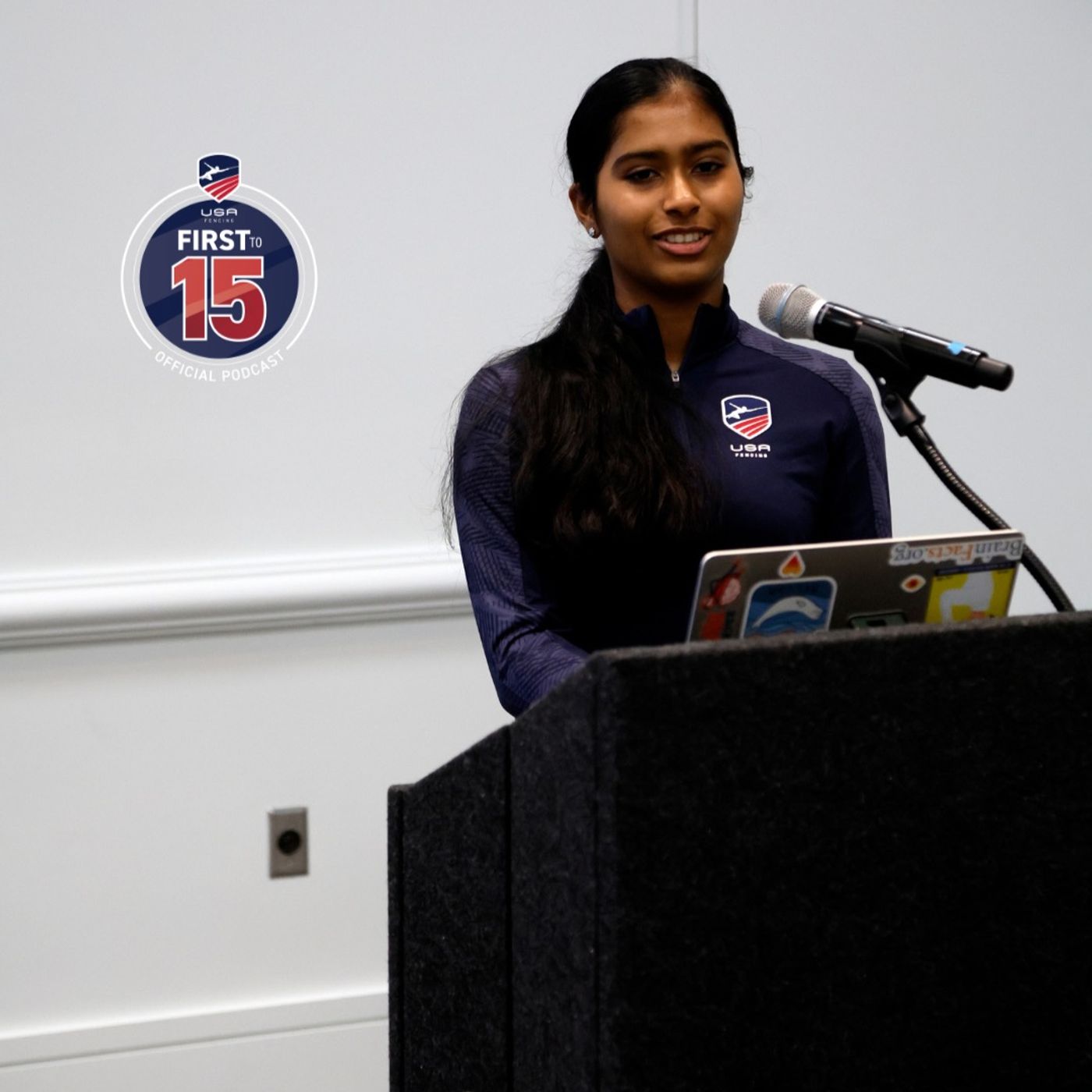
所以我们现在正在密尔沃基现场直播2025年夏季全国锦标赛,我再次邀请到了斯坦福在线高中三年级学生、三剑种击剑运动员、Neurofencing项目的创始人苏丽娅·奈尔。
So we are here live at Summer Nationals twenty twenty five in Milwaukee, and I'm back with Supriya Nair, who is a junior at Stanford Online High School, three weapon fencer, and the creator of Neurofencing.
她之前已经上过这个播客几次了。
She's been on the podcast a couple times before.
Neurofencing这个项目旨在回答每个运动员至少想过一次的简单问题:良好的热身真的能让你在击剑中更快、更出色吗?
Neurofencing is a project that answers a simple question that every athlete has thought about at least once, which is, does a good warm up really make you faster and better at fencing?
对吧?
Right?
你最初在自家车库用一些廉价的传感器把自己连上,两年后,你已经在大型医院和大学实验室收集数据,使用更高端的设备从数百种不同方式追踪弓步和反应时间。
So you started by wiring yourself up with some cheap centers in your garage and then two years later you're collecting data at major hospitals and university labs and using much higher end gear to track lunges and reaction times in hundreds of different ways.
而你的求知欲甚至没有就此停止,对吧?
And then your curiosity doesn't even stop there, right?
所以你最新的研究在西雅图儿童医院进行,关注大脑深处最微小的血管,对吧?
So your newest study at Seattle Children's Hospital is looking at the tiniest blood vessels deep in the brain, right?
你正在研究这些深层血管与靠近表面的血管有何不同,并希望在2025年神经科学会议上分享这些成果,对吧?
And how those differ from those near the surface and you're going to be hopefully sharing those at the Neuroscience twenty twenty five meeting, right?
所以,在我们这次最新的对话中——这已经成为一种年度传统——我们将谈谈你最近的经历,也许你能用通俗易懂的英语给我讲清楚,然后重点介绍一下你最近在忙什么。
So, in our latest conversation here in this what's becoming an annual tradition, we're going to talk about where you've been, maybe you can simplify it for me in plain English so I understand and then highlight what you've been up to lately.
嘿,苏丽娅。
So, hey, Supriya.
欢迎再次做客播客。
Welcome back on the podcast.
是的。
Yeah.
我们每年都能这样做真是太好了。
It's great that we're doing this annually.
是的。
Yeah.
是的。
Yeah.
这在这里正逐渐成为一种相当重要的传统。
It's it's becoming quite a tradition here.
只是地点变了,没错。
Just, the the location changes Yeah.
而且你的研究范围扩大了,对吧?
And your research has expanded, right?
但我认为这对刚了解你、刚认识你的人很有帮助。
But I think it's helpful for those who are just learning about you, just meeting you.
什么是神经击剑?这个想法最初是怎么产生的?
What is neurofencing and what sparked this idea in the first place?
是的,神经击剑是一个将击剑运动与神经科学结合起来的研究领域。
Yeah, so neurofencing is an area of research that brings together the sport of fencing and neuroscience.
我自己就是一名击剑运动员。
I am a fencer myself.
所以自然地,我选择了击剑作为研究的运动项目。
So naturally, I chose fencing to be the sport of interest.
而且我对神经科学非常热衷。
And I'm very passionate about neuroscience.
我非常喜欢。
I love it.
这是我的兴趣领域。
It's my area of interest.
这个想法诞生于2021年,那正是新冠疫情最严重的时候。
The idea for it came in 2021, which was kind of the peak of COVID time.
嗯。
Mhmm.
当时所有的击剑俱乐部都关闭了,比赛也基本没有了。
And so all the fencing clubs were shut down, competitions were not really there.
我们试图在家重现击剑训练。
And we were trying to recreate fencing training at home.
在那个过程中,热身练习基本上就丢失了。
So warm up routines were kind of lost in that process.
至少对我来说是这样。
At least they were lost for me.
所以当我回来时,状态已经生疏了,不得不慢慢重新适应比赛环境。
So when I came back, I was very rusty and started slowly getting used to the competitive environment again.
这让我开始思考:自从那段时间以来,我其实一直没有做热身。
And this made me wonder about, okay, since this time period, I haven't really been warming up.
那么热身对击剑运动到底有什么影响呢?
So what is really the effect of warming up on fencing?
没错。
Right.
教练们总是告诉我们,在比赛前一定要热身。
And the coaches tell you to warm up when we do do it all the time before a competition.
但除了教练建议我们这么做之外,我们为什么要热身呢?
But why do we do it besides the fact that the coaches recommend us to do it?
实际上,这方面的定量数据非常缺乏。
There isn't really any quantitative data behind it.
所以,这就是我想填补的空白。
So that was what I wanted to fill.
所以我开始使用类似后院大脑的小型肾上腺设备,有人
So I started using backyard brains like small adrenal kits, which Someone
你可以在线购买。
you could buy online.
对吧?
Right?
嗯。
Yeah.
嗯。
Yeah.
是的。
Yes.
我给自己贴上电极,开始观察肌肉、心脏和大脑的电活动,这些活动可以用任何数字设备捕捉到。
And I attached electrodes to myself and I began working and looking at activity in the muscles, heart and the brain, electrical activity, which you can capture on any digital device.
于是我开始研究热身对击剑的影响。
So I started looking at the effect of warming up prior to fencing.
所以我会在假想目标上做大约10次弓步,五次热身,五次不热身。
So I would do about 10 lunges or so on a dummy target, five with warm up and five without.
这些会在不同的日子进行。
And this would be on separate days.
我观察到表现提升了大约18%左右。
And I saw that there was a performance improvement of about 18% or so.
所以这是你能实际测量到的东西吗?
So something you could actually measure?
是的。
Yes.
哪些方面得到了提升?
What was improved?
比如,什么
Like, what
你观察到了哪些可测量的指标?
measurables did you see?
测量了从开始处于预备姿势到完成弓步所用的时间。
Measured the time that it would take for you to start in an on guard position and finish a lunge.
啊,
Ah,
好的。
okay.
所以我们测量的就是这个时间。
So that time was what we were measuring.
而变量显然是我们是否进行了热身。
And the variable was obviously whether we warmed up or not.
是的。
Yeah.
是的。
Yeah.
我们发现热身后,这个时间减少了。
That was what we saw decrease after we did the warm up.
然而,我之前只在自己身上做过这个实验。
However, this I had only done it on myself.
所以这并不是一个具有统计显著性的样本。
So it wasn't really a statistically significant sample.
因此,当我2022年第一次和你分享我的发现时,
So once I had shared my findings in 2022 when we first spoke
嗯。
Mhmm.
我有机会在西奈山能力研究中心重复我的实验,这让我能够以多个受试者为对象,并使用更高质量的设备。
I got the chance to replicate my experiments at the Mount Sinai Abilities Research Lab, which was a great opportunity for me to do it with multiple subjects and to use higher quality equipment.
对。
Right.
我想我在2023年的对话中已经谈了很多这个,但我当时用得更多了。
And so I think I spoke a lot about this in our 2023 conversation, but I used a lot more.
我使用了无线肌电图传感器来测量肌肉活动。
I used wireless EMG sensors to measure muscle activity.
因此,对于击剑运动员来说,相比我之前使用的电线,移动起来要容易得多。
So it was much easier for the fencer to move around versus the wires I had been using previously.
对。
Right.
这是我第一次使用脑电图帽来测量大脑活动。
And it was the first time I used an EEG cap to measure brain activity.
因此,我们在大脑上放置了八个电极来测量脑活动。
So we had eight electrodes on the brain to measure brain activity.
从那里,我们得到了类似的结果:在热身之后,击剑运动员完成弓步所需的时间减少了大约10%。
So from there, we got similar results in that after warming up, the time that it took for the fencers to complete a lunge decreased by about 10% or so.
这很棒,因为它与我研究的第一阶段结果一致。
So that was great in that it aligned with my first initial phase of the research.
对。
Right.
然后,在纽约这段经历的末尾,我尝试使用了一些开源的人体性能模型,比如OpenPose。
Then towards the end of that New York experience, I had tried using human performance models that are open source, like OpenPose, for example.
我尝试估算身体各关节的位置。
And I tried estimating the positions of joints on the body.
你会将视频输入这些模型,然后它会为你估算出这些位置。
And so you would feed these models a video, and then it would estimate those positions for you.
但它的准确度并不高。
And it wasn't very accurate.
因此,我想基于这一点开展我的下一阶段工作。
So I wanted to base my next phase off of that.
我想找到一种更准确的方法来表示关节的位置,并更加关注关节。
So I wanted to find a more accurate way of representing where the joints were and focus more on the joints.
嗯。
Mhmm.
于是,我获得了另一个机会,与华盛顿大学核心实验室的斯科特·特尔弗合作。
So that's when I got another opportunity to work with Scott Telfer at the University of Washington's Core Lab.
它离我很近,所以我很容易往返于实验室。
It was quite local for me, so it was pretty easy for me to commute to the lab and back.
对。
Right.
你是在西雅图训练的吗?
And You you train out of Seattle.
对吗?
Right?
是的。
Yes.
我以西雅图为基地。
I'm based out of Seattle.
嗯。
Mhmm.
实验室配备了完整的动作捕捉系统。
And the lab was equipped with the full motion capture system.
这给了我另一个机会学习如何使用动作捕捉。
So that was another opportunity for me to learn how to use motion capture.
我能够获得一个相当大的样本量。
And I was able to get a pretty large sample size.
大约有50名来自西北地区的击剑运动员前来参与我们的研究,我对此非常感激。
About 50 fencers from the Northwest came and volunteered for our study, which I'm very grateful for.
所以,所有正在收听的西北地区击剑运动员,非常感谢你们的参与。
So all the Northwest fencers that are listening, I thank you very much for joining.
是的。
Yeah.
是的。
Yeah.
所以我能够做到,所以你有
So I was able to So you have
更好的设备和更多的击剑运动员。
better equipment and more fencers.
那么,当你不仅使用测力台,还用三维摄像记录时,你希望发现什么呢?
So what were you hoping to find there when you were not only using force plates, but also filming them in three d, right?
所以
So
我希望准确了解人们在做弓步或前进弓步时,对优势脚施加的力有多大。
I was hoping to find exactly how much force people were applying on their dominant foot whenever they would do a lunge or advanced lunge.
是的。
Yeah.
我还想看看这两种武器之间是否存在差异。
And I wanted to see if there was any weapon specific differences between the two of them.
好的。
Okay.
我发现佩剑运动员产生的地面反作用力相对于自身体重最大。
And I found that sabre fencers tended to produce the most ground reaction force relative to their body weight.
这有点
It kind
合情合理。
of makes sense.
对吧?
Right?
当你
When you
想到花剑的爆发力时。
think about the explosiveness of sabre.
有道理。
Makes sense.
嗯。
Yeah.
而且我们希望将所有数据都根据个人体重进行标准化,因为如果你只看一个显示最大力约为1600牛顿的图表,
And we wanted to normalize everything to the person's body weight because if you were to just look at a process chart that says, like, the top force was about 1,600 newtons.
嗯。
Mhmm.
我们很难理解1600牛顿意味着什么。
It's very difficult for us to comprehend what 1,600 newtons is.
嗯。
Yeah.
我完全不知道。
I have no clue.
你本来可以直接说16,000或者
You could have just said 16,000 or
嗯。
Yeah.
16,然后
16 and then
我们也不确定,这到底有多大作用力。
We're not we're not sure, like, how much force is that.
嗯。
Yeah.
所以当你说到,假设一个人体重约130磅
So when you say, take a person who might weigh, say, a hundred and thirty pounds
对。
Right.
那么你可以说,这是他们体重的五倍。
Then you could say it is, like, five times their body weight.
明白了。
Got it.
相比于说1600牛顿,五倍体重似乎更容易让人理解我们所讨论的内容。
Which could make more sense compared to say saying sixteen hundred newtons, five times your weight seems like a more easier way to communicate what it is that we're talking about.
我们发现的主要问题是,不同人施加在地面上的力存在差异。
That was the main thing that we found was that there was differences between the amount of force people were putting on the ground.
特别是,花剑运动员施加的力最大,其次是重剑运动员,然后是佩剑运动员。
Notably, the sabre fencers tended to exert the most force and then the foil fencers and then the FA fencers.
然后我们还分析了关节角度,这正是录像和三维分析发挥作用的地方。
And then we also looked at the joint angle, which was where the filming and three d came in.
嗯。
Mhmm.
所以我们用了大约60个标记点,这些只是小型的、无需电池的标记,用双面胶贴在身上。
So we had about 60 markers, which are just small non battery powered markers that we stick on using double sided tape.
这些标记点可以
And so these allow
让我们获得动作捕捉的视频。
us like motion capture movies.
对吧?
Right?
是的。
Yes.
所以人们可能想象过,比如一些名人或特技演员穿着这些设备的样子。
So people probably have a visual of, like, you know, some some of these celebrities or stunt people wearing them.
好的。
Okay.
明白了。
Gotcha.
是的。
Yeah.
我们没有把摄像头对准他们的脸部,而是过去使用了大约60个这样的
We don't have the camera in front of their face, but instead, we used to have about 60 of these
好的。
Okay.
先贴在身体上的标记点。
On the body that we attach first.
他们要做五次深蹲和五次进阶深蹲。
And they do about five lunges and five advanced lunges.
在这段时间里,我们会从他们下方的测力板获取力的数据。
So during that time period, we get the force data from the force plates below them.
是的。
Yeah.
但我们也通过这些标记点获取关节数据。
But we also get joint data from the markers that we attach.
因此我们可以看到他们的关节是如何运动的,或者关节运动的速度。
So we can see as to say the angle of which their joints are moving or how fast their joints are moving.
所以我们主要关注的是关节角度。
So the main thing we've been looking at is joint angles.
到目前为止,我们发现——我想去年我也讨论过这个,但没错。
And what we've found so far is, I think last year I also discussed this, but Yeah.
去年我们特别关注了膝关节角度。
We specifically focused on knee angles last year.
我们发现,膝盖最初处于屈曲位置,然后会伸展一段时间。
And we found that the knee starts at a flexed position and then extends for a period of time.
嗯。
Mhmm.
这一点对我们来说非常明显,因为当我们做弓步时,你会把腿伸出去。
And that's quite obvious to us because when we're doing a lunge, you kick your leg out.
显然,你的腿会处于伸展状态。
And obviously, your leg is going to be extended.
是的。
Yeah.
因此,你的膝盖也会伸展。
So therefore, your knee is gonna be extended too.
对。
Right.
这说得通。
That makes sense.
当你落地时,膝盖会有一个弯曲的过程,这在我们做弓步动作时非常明显。
And then when you land, there is a period of bending your knee, which is obvious to us when we're doing this lunge technique.
因此,这就是我们观察到的模式:当人完成弓步后前脚着地时,在优势脚触地到弓步结束之间,存在一段屈曲阶段。
So that's the pattern that we saw in that from the when the person lands their front foot after they've started their lunge, that there's a period of flexion between the time that their dominant foot hits the ground and when they end the lunge.
所以,这主要是我们关注的重点。
So that's mainly what we've been focusing on.
重要的是,我们该如何预防膝关节受伤?
And the important thing is how do we prevent injury from happening to the knee joint?
对。
Right.
所以因为有大量力量,牛顿数越多,对吧?
I So Because there's lot of force and the more newtons, right?
作用在膝盖上的牛顿力越大,受伤的可能性就越高,对吧?
More newtons of force that are going on that knee, the more likely there is to be an injury, right?
是的。
Yeah.
那里有多个因素在起作用,但你说的角度也起着一定作用。
There's a number of factors at play there, but the angle you're saying also plays a part in
对。
that.
嗯。
Mhmm.
好的。
Okay.
所以教练建议你保持膝盖在脚踝上方,有时他们会用鞋带作为标记。
So the coaches recommend that you keep your knee above your ankle or sometimes they use a shoelace as a marker.
所以如果它超过的话
So if it goes So
你没有伸展膝盖
you're not extending the knee
是的。
Yeah.
当超过那个点时。
Beyond that point when okay.
我明白了。
I gotcha.
所以如果它超过脚趾,例如,嗯。
So if it goes beyond your toe, for example Uh-huh.
那就是一个危险信号,可能会导致受伤。
Then that's a red flag for and that could be injury prone.
这会使膝盖更容易受伤。
That could make the knee injury prone.
对。
Right.
但另一种方式,实际上是通过过度屈曲,就是你降低你的重心。
But another way you can do it actually over flexing is if you basically lower your center of mass.
所以如果你直接往垫子上蹲下去,你的大腿会前移,髋部也会低于膝盖。
So if you just fall down on the strip, then your thigh tends to go and your hip tends to go lower than your knee.
但你的膝盖仍然在脚踝上方。
But your knee is still above your ankle.
对。
Right.
但你的髋部是
But your hip is
确认了这一点,但现在你已经
checked that box, but now you've
造成了另一个不同的问题。
created a different a different problem.
是的。
Yeah.
是的。
Yeah.
所以不是膝关节本身会引发问题。
So it's not the knee joint itself that is going to, you know, cause problems.
而是它周围的肌腱。
It's the tendons around it.
因为关节周围有这么多肌腱和韧带。
Because around the joint, there are all these tendons and ligaments.
尤其是在膝盖,比如你有前交叉韧带(ACL)。
And especially in the knee, you have the ACL, for example.
是的。
Yeah.
这些肌腱负责控制这些关节的屈伸动作。
So those are the ones that are managing the flexion and extension of these joints.
嗯。
Mhmm.
你越拉扯它们,这些肌腱就越会疼痛。
So the more you strain them, the more these tendons are gonna hurt.
在一些严重的情况下,它们甚至可能撕裂。
And, potentially, they could possibly tear in some severe cases.
所以
So
嗯。
Yeah.
我们之前稍微谈了一下SABER。
So we talked a little bit about SABER.
当你查看这些慢动作数据和运动捕捉数据时,有没有什么特别让你注意到FOIL和epi的地方?
Can you can you say if anything jumped out with, like, FOIL and epi when you were looking at, you know, these kind of slow motion numbers and motion capture data?
是的。
Yeah.
总的来说,佩剑在地面施加的力比重剑更大。
So foil was generally greater than epee in terms of force exerted on the ground.
好的。
Okay.
但在关节角度方面,模式非常相似。
But in terms of joint angles, the pattern was pretty similar.
这是因为弓步技术通常是相同的。
And that is because the lunge usually, the lunge technique is the same.
也就是说,你从预备姿势开始,然后腿部伸展。
In that, you start in the on guard position and then your leg extends.
一旦前脚落地,它又会再次弯曲。
And then as soon as you land the front foot, it flexes again
嗯。
Mhmm.
所以你的膝盖要正好在脚踝正上方,而不是更靠前。
So that your knee comes right above your ankle and not above that.
关于这一点,三种武器之间没有太大差异。
So regarding that, there wasn't much difference between across the three weapons.
我们看到了相似的模式。
We saw a similar pattern.
好的。
Okay.
但通常,我们再次强调同一个观点:某些角度,尤其是我们之前提到的脚踝内翻或膝盖过度弯曲,无论使用哪种武器,都是危险的。
But, usually, we're again emphasizing the same point that certain angles, especially like the ones we spoke about about rolling your ankle inwards or over flexing the knee, these are hazardous regardless of what weapon you fence.
嗯。
Mhmm.
尤其是脚踝内翻,这在三种武器中都很常见。
Especially the ankle rolling is something we see across all three weapons.
这不仅仅是佩剑或花剑的问题。
It's not just saber or foil problem.
对。
Right.
因为你知道,人们都想得分。
Because, you know, people want to score.
所以困难的部分在于,意识到自己确实在做这些动作,然后开始纠正它们。
So the difficult part is, you know, noticing that you're actually doing these things and then starting to correct them.
说实话,我还没能成功纠正它们。
To be honest, I have not successfully corrected them yet.
嗯。
Yeah.
我仍在努力将我的学习成果应用到我的击剑中。
I'm still working on applying my own learnings to my fencing.
对。
Right.
脚踝内翻对我来说是个大问题。
And the ankle rolling is a pretty big problem for me.
所以,除了磨坏鞋子外,这还会在未来导致脚踝问题。
So besides tearing your shoes, it'll also create ankle problems in the future.
是的。
Yeah.
所以,对所有正在听的击剑运动员来说,请留意自己何时在滚动脚踝或给关节造成压力,并尽量避免这种情况。
So to all the fencers listening, please try and notice when you're rolling your ankles or when you're causing some strain on your joints and try to avoid that as best you can.
也许可以找别的方法来得分。
Find another way to get that touch maybe.
是的。
Yeah.
当你向击剑运动员、教练和其他人谈论这些时,你们用的是同样的语言,但你也在一些面向完全不懂击剑的人的会议上做过分享。
When you're talking about this to, you know, fencers and coaches and others, you're speaking the same language, but you also have presented this at conferences in front of people who don't know anything about fencing.
对吧?
Right?
那么,你是如何向别人解释这项运动的呢?
So how do you find yourself explaining the sport?
因为我认为,在介绍你所做的研究之前,你必须先给他们简要介绍一下这项运动。
Because I assume you have to kind of give them a rundown on the sport itself before you can even get into the research that you've done.
是的,我演讲的对象,尤其是会议上的听众,大多数都没听说过击剑。
Yeah, most people that I present to, especially at conferences, have not heard of fencing.
对。
Right.
也许
So Maybe
他们只在电影里见过。
they've seen it in a movie or something.
是的。
Yeah.
或者在奥运会上见过。
Or in the Olympics.
但通常,我得解释一下,好吧。
But, generally, I have to explain that, okay.
这项运动是击剑。
The sport is fencing.
我们有三种武器:花剑、重剑和佩剑,然后简要介绍每种武器的规则。
We have three weapons, foil at Veinsaber, and then briefly touch on the rules of each weapon.
是的。
Yeah.
是的。
Yeah.
解释一下预备姿势,以及我们如何做弓步。
And explain the position of or what our on guard position is and how we do a lunge.
对。
Yep.
我通常会向他们演示弓步的动作。
Usually, I'll demonstrate it to them how the lunge is.
这样他们就能大致理解动作的幅度范围。
That way they get that kind of idea as to what the range of motion is.
但我
But I
我特别喜欢你那个画面,你知道的,在这个展览大厅中间做弓步。
Which I love that visual of you, like, you know, doing a lunge in the middle of this, like, you know, exhibit hall.
是的。
Yeah.
在我海报前面,
In front of my poster with
是的。
Yeah.
周围有50张其他海报,我正在做弓步。
50 other posters, I'm doing a lunge.
对。
Right.
对。
Right.
大家都说:那边到底在搞什么?
Everyone's like, what is going on over there?
这真是
This is
是啊。
Yeah.
这很有趣。
That's funny.
但实际上,在这些会议上做展示非常有趣
But it's been really fun actually presenting at these conferences
是啊。
Yeah.
因为我从那些在关节领域做了更具体研究的研究人员那里得到了很多反馈。
Because I've gotten a lot of feedback from researchers who have done more specific work on joints.
所以这是一次很棒的经历。
So that's been a great experience.
偶尔我也会遇到一些以前练过击剑的人。
And occasionally I do run into people who have fenced before.
遇到前击剑手总是很有趣。
That's always a fun treat when you run into ex fencers.
在你最新的项目中,你正在研究大脑中的血管。
For your newest project, you're studying blood vessels in the brain.
可以,呃。
Can you Yeah.
能给我讲讲吗?
Tell me about that?
比如,是什么吸引你研究这个领域的?
Like, what what drew you to that?
如果你能用非常简单的语言给我解释清楚,让我完全明白你在研究什么,那就太好了。
And, you know, if you can put it in brilliant terms, in very simple terms for me so I can know exactly what you're researching.
嗯。
Yeah.
这其实是一个非常有趣的故事,因为两年前我正前往参加神经科学2023会议。
So this was actually a very interesting story because I was actually traveling to the neuroscience twenty twenty three conference two years ago.
在飞机上坐我旁边的是安迪·石博士,他现在是我这个项目的导师。
And next to me on the plane was doctor Andy Shi, who's my current mentor for this project now.
所以他向我介绍了很多关于我们大脑中微小血管的知识。
So he was showing me a lot about the small blood vessels that we have in the brain.
等等。
Wait.
你上飞机前根本不认识他吗?
This was someone you didn't know before getting on that plane?
或者
Or
是的。
Yeah.
一个我不认识的人
Someone I didn't know
这太疯狂了。
That is before crazy.
好的。
Okay.
继续说。
Go ahead.
对不起。
Sorry.
所以他整个飞行途中都向我展示了这些血管是如何工作的。
So he showed me for the entire plane ride just how these blood vessels would work.
是的。
Yeah.
还有这些血管的视频。
And then videos of these blood vessels.
我当时就想,这太酷了。
And I'm like, this is so cool.
嗯。
Mhmm.
所以,他给我做了一个关于血管的小型讲座。
So I ended up, you know, getting a small mini lecture from him about blood vessels.
这激发了我的兴趣,因为一直以来我都在从事与我热爱的击剑运动相关的应用研究。
And that kind of, like, sparked my interest because all this time I had been working on applied research with the sport that I love, fencing.
对。
Right.
我还为舞蹈做过类似的研究。
And I'd done it for dancing too.
我为武术也做过。
I've done it for martial arts as well.
所以我想摆脱应用研究,转向更偏向神经科学的研究。
So I wanted to kind of move on from applied research and transition to more neuroscience related research.
嗯。
Yep.
所以这是一个我看到的有趣机会。
So that was a fun opportunity for me that I saw.
所以我当然接受了。
So I took it, of course.
现在我们正在研究大脑中的血管。
And right now we're working on looking at the blood vessels in the brain.
好的。
Okay.
在大脑中,你有两种不同类型的组织。
So in the brain, you have two different types of tissue in the brain.
一种叫做灰质。
One is called gray matter.
它被称为灰质,是因为在成像时通常是灰色的。
It's called gray because it's usually gray when you image it.
另一部分叫做白质,同样也是因为这个原因。
And the other section is called white matter, again, for the same reason.
好的。
Okay.
这两者的区别在于,白质区域通常集中在大脑更深层的位置。
So the difference between the two is that the white matter area is usually concentrated deeper in the brain.
所以如果你切开大脑,是的。
So if you were to cut open a brain Yeah.
通常在大脑的中心区域就是所有白质结构所在的地方。
Usually near the center of the brain is where all the white matter structures are.
好的。
Okay.
而这些区域的血管通常非常少。
And those tend to have very few blood vessels.
我们仍在研究为什么会这样。
We're still researching as to why this is the case.
但尽管血管较少,它仍然能够正常运作。
But yet with fewer blood vessels, it's still able to function.
展开剩余字幕(还有 230 条)
然而,
However,
它更容易受到疾病的影响。
it is more vulnerable to disease.
我们尤其在帕金森病和阿尔茨海默病中观察到这一点。
We are seeing that especially in Parkinson's and Alzheimer's.
首先受损的区域是白质区域。
The first area to get damaged is the white matter area.
因此,我们正在试图弄清楚这些血管与表层血管有何不同。
So we're trying to figure out what is it about these blood vessels that is different from the surface level blood vessels.
因此,血管是从上往下分布的。
And so the blood vessels come from the top down.
所以表层区域布满了血管。
So the surface area is filled with blood vessels.
嗯。
Mhmm.
但当你深入下去时,数量就开始减少。
But as you go deeper, the numbers start to decrease.
因此,我们正在研究这些血管的大小或直径,因为血管是圆形的。
So we are looking at the size of these blood vessels or the diameter because the blood vessels are circular.
对。
Right.
我们发现,深层的血管往往比表层的血管更大。
And we're finding that the deeper ones tend to be larger than the surface ones.
这让我们感到有趣,因为它们数量更少,但尺寸却更大。
So that was interesting to us because there are fewer of them and yet they're still bigger.
而且
And
因此,我们目前已经确定了表层血管和深层血管之间存在显著差异。
so we've right now established significant differences between the surface and the deeper blood vessels.
对。
Right.
但现在我们正在研究如何解读这一点。
But now the interpretation of this is what we're working on now.
比如,这为什么重要?
Like why why does that matter?
嗯。
Yeah.
我的意思是,你们的研究和击剑有什么关联吗?
I mean, is there a fencing link to what you're studying?
或者这个,我的意思是,显然击剑运动员大量使用他们的大脑,是的。
Or has has this I mean, obviously, fencers are using their brains quite a bit Yeah.
在剑道上。
In the strip.
这可能是分开的。
This is probably separate
好的。
Okay.
来自击剑。
From fencing.
是的。
Yeah.
因为我们正在用小鼠研究,并且进行切片
Because we're looking at it with mice and we're, you know, sectioning
你们不会给小鼠配小剑吧?
You're not giving the mice a little tiny foils
什么的?
and stuff?
不会。
No.
好的。
Okay.
我的意思是,如果你真这么做了,请告诉我
Well, I mean, if you ever do that, please
那会很酷。
That would be cool.
请发我一张照片。
Please send me a photo.
那真的会很酷。
That would be really cool.
但是
But
所以这是一个独立的兴趣。
So this is a separate interest.
而且显然,所有击剑运动员都有多种兴趣,既涉及击剑,也涉及其他方面。
And obviously, like all the fencers out there, have multiple interests, both involving fencing and not.
所以我觉得你的研究很棒的地方在于,你以一种非常有趣的方式呈现它。
So the thing that I think is great about your research is how you present it in a way that's really interesting.
而且当你和科学家、生物力学爱好者,或者击剑圈的人交流时,你可能还得调整自己的表达方式。
And you also probably have to find yourself modifying the way you speak when you're talking to a scientist or someone who's like a biomechanics nerd, I guess you could say, or a fencing crowd.
那么,你是如何保持这些群体的参与和兴趣的?
So how do you keep the groups engaged and interested?
你是如何让这个话题如此易懂的?
Like how do you make this topic so accessible?
因为你在这方面真的很有天赋。
Because you have a really good talent for that.
我不敢说是天赋,但当我跟击剑运动员交流时,我会尽量避免使用专业术语。
I wouldn't call it a talent, but when I'm speaking to fencers, I try to avoid technicality Mhmm.
因为那样不够吸引人。
Because that isn't as engaging.
对。
Right.
所以我尽量让内容聚焦在他们能从我的演讲中获得什么。
So I try to make it focused on what they can take away from what I'm presenting to them.
是的。
Yeah.
而且,主要是关注如何预防受伤,以及如何解决这些关节问题,保持身体健康。
And, you know, mainly focusing on injury prevention and what you can do to fix these joint problems and keep your body healthy.
对。
Right.
这样看来
In that way
他们可以带走并应用的东西
take away that they can use
是的。
Yeah.
马上就能用上。
Right away.
对。
Yeah.
这样一来,他们就更容易理解我所讲的内容了。
In that way, it's been easier to get them to understand what it is that I'm speaking to them about.
嗯。
Yeah.
对于生物力学家来说,我们经常会展开关于我海报上所展示的图表,比如关节角度的具体数据,这涉及更多技术性内容。
For biomechanists, we often go into a discussion about the graphs that I've put on my poster, for example, or the specifics of the joint angles so that there's more technicality involved with that.
嗯。
Yeah.
而对于神经科学家,我们有时会深入讨论我是否使用了肌肉活动数据,显然,这些都是更专业的内容。
And for the neuroscientist, we end up going sometimes down a discussion of whether I've used muscle activity or obviously, all of these are more technical.
嗯。
Mhmm.
所以我觉得,比起向科学家们讲解,向击剑运动员解释要更困难一些。
So I think it's harder for me to speak to fencers rather than to scientists.
因为当你参加学术会议时,所有内容都会呈现在你的海报上。
Because when you go to a conference, everything is laid out on your poster.
对。
Right.
所以我们现在可以开始讨论一个具体的图表,深入细节。
So we can start talking about a specific chart and going down into the weeds.
但当你在夏季全国赛上只有一个小时的时间时
But when you're given one hour slot on a summer national's time
对。
Right.
你就需要保持重点突出。
Then you need to keep it pointed.
你需要解释一些细节,但不能多到让人难以承受。
And you need to explain some of the detail, but not so much that it gets overwhelming for people.
是的。
Yeah.
这一直是个挑战。
So that's been a challenge.
嗯,我正在看这里房间里你的一些海报,在夏季全国赛上,这些细节的水平,根本不可能在一个小时内讲完,比如我们只谈其中一张海报,而你还有好几张,而且这还不只是击剑相关的。
Well, I'm looking at some of your posters here in the room at Summer Nationals and the level of detail, it's like there's no way you could go through all that in an hour, you know, just if we were talking about one of the posters and, you know, you've got multiple there and it's not just fencing either.
你还做了类似的东西,我看到有一张海报是关于舞蹈的。
You also are doing like, I see one poster is about dance.
所以你能跟我讲讲这个吗?因为我们还没怎么讨论过这个,虽然你一直让我了解这个新的研究领域,但具体是什么呢?
And so can you tell me about that because we haven't really discussed that, although you've been keeping me updated on that new area of study, but what exactly is that?
你们是否用到了在击剑研究中学到的一些东西?
And are you using some of the same things you learned in the fencing research?
是的,我本人也是舞者,这就是我做这个的原因。
Yeah, so I am a dancer too, which is why I did this.
你的兴趣,没错。
This Use Yeah.
你的兴趣。
Your interest.
对吧?
Right?
嗯。
Yeah.
研究你所知道的。
Study what you know.
嗯。
Yeah.
太棒了。
Love that.
这个项目始于2024年左右。
So this project started in about '24, 2024.
嗯。
Mhmm.
我之前在西奈山中心进行击剑研究时使用过Delsus肌电图或肌肉活动系统。
So I had used the Delsus EMG or muscle activity system I had used for the fencing study at the Mount Sinai Center.
自从我开始使用这个系统以来,我一直想做一个舞蹈项目。
And I had wanted to do a dance project for a while now since I had started using that system.
我很幸运,这家公司借给我一台设备,为期四到五个月。
So I was very fortunate that the company gave me one on loan for a period of four or five months.
在那段时间里,我能够开展一项与舞蹈相关的研究。
So during that time, I was able to formulate a study related to dance.
这与击剑不同,因为这种舞蹈是南印度古典舞,动作非常缓慢且流畅。
And it's different from fencing in that the style of dance, which is a South Indian classical dance, it's very slow and very fluid.
与击剑不同,击剑有高速激烈阶段,然后会放缓,对吧。
So unlike fencing, which has periods of high speed intensity and then slow down Right.
我们刚才说的是一种非常爆发性的动作。
It's very explosiveness we
我们刚才在讨论这个。
were talking about.
是的。
Yeah.
它非常持续稳定。
It's very constant.
因此,舞者主要关注的是他们在舞台上的动作有多优雅。
So mainly what the dancers are looking for is how graceful they're moving on stage.
嗯。
Mhmm.
因为你不希望有任何突然的动作或僵硬的表达。
Because you don't want any abrupt movements or any jerky sort of expressions.
你希望它非常流畅。
You want it to be very fluid.
是的。
Yeah.
是的。
Yeah.
观众在舞台上期待的就是这个,你的老师也在寻找这一点。
And that's what people are looking for on the stage, and that's what your teacher is looking for too.
对。
Right.
所以我们开始主要关注他们的加速度。
So we started looking at their acceleration primarily.
如果加速度接近零,那就意味着他们一直在匀速移动。
And if the acceleration was closer to zero, then that meant that they were moving constantly.
加速度是你速度的变化。
The acceleration is your change in velocity.
对。
Right.
所以如果变化为零,你就以恒定速度移动。
So if the change is zero, then you're moving constant speed.
所以如果你在高速公路上以60英里每小时的巡航速度行驶,那么在行驶过程中你的加速度为零。
So if you're going down the highway 60 miles an hour cruise control, then you're you're at zero acceleration while you're taking
火车。
the train.
但如果你从60英里每小时加速到80英里每小时,对。
But if you go from 60 miles an hour to 80 miles an hour Yeah.
那么速度就发生了变化。
Then there's a change in speed.
所以目标是尽可能保持低水平。
So the goal was to keep it as low as possible.
所以你实际上找到了一种方法来量化舞蹈,而舞蹈是一种艺术形式,大多数人会觉得它和数字无关。
So you actually found a way to, like, quantify dance, which is like this artistic thing that most people would think there's no numbers associated with it.
但你认为,实际上它可以有数字,并且这些数字能告诉我们一些信息。
But you were like, actually, there could be, and it would tell us something.
是的。
Yeah.
我们正试图把它打造成舞者的训练工具。
We're trying to make it a training tool for dancers.
酷。
Cool.
好的。
Okay.
但目前,我们必须戴上肌电图传感器,然后获取加速度测量数据。
But right now, it's like we have to put on the EMG sensors and then get the acceleration measurements.
是的。
Yeah.
是的。
Yeah.
目前的训练方法当然是通过视觉反馈。
And the current training method is, of course, by visual feedback.
所以如果老师看到你做了什么,那么
So if the teacher sees you doing something, then
对。
Right.
她就会告诉你。
She'll tell you.
但这种加速度数据可以成为舞者使用的更精细的工具,以确保他们的动作尽可能流畅。
But this acceleration could be a more fine grain tool for dancers to use to make sure that their movements are as smooth as possible.
是的。
Yeah.
回顾你在研究中学到的一切,不仅仅是舞蹈,还包括击剑和大脑研究,你最想把哪一点应用到击剑中?
Thinking of all that you've learned in this research, not just with dance, but also the research in defensing and the brain research, Like what's one big thing that you put into back into fencing?
换句话说,当你在夏季全国赛上出场参赛时——我想你今天就要比赛了,你现在正在准备展示,然后马上就要上场参赛。
In other words, like when you go out there here at summer nationals and compete, I think you're competing today, You're fencing lights right now as you're about to present and then go out there and compete.
那么,你在击剑场上实际用到了哪些东西?
So like, what's something that you actually use on the strip?
我会用上我学到的关于关节健康的知识,尤其是关节角度方面的内容。
I would use the joint health things that I've learned and especially about joint angles.
对。
Yeah.
对。
Yeah.
所以我现在尽量减少脚踝的滚动。
So I've tried rolling my ankle less often.
嗯。
Mhmm.
所以这算是挺成功的。
So that's sort of been successful.
我已经能减少脚踝扭伤的次数了。
I've been able to not roll it as much.
嗯。
Yeah.
但偶尔还是会发生脚踝扭伤的情况。
But occasionally, it does happen where I roll my ankles.
但主要的是,我首先需要好好热身再进行击剑。
But primarily, it's the fact that I need to, first of all, warm up well for fencing.
其次,通过避免过度弯曲膝盖或扭伤脚踝来保持关节健康。
And second of all, just keep my joints healthy by not over flexing my knee, for example, or rolling my ankle.
所以如果我能做好这两点,那就是我从研究中学到的最重要的东西。
So if I do those two things, then that would be my main thing that I take away from my research.
嗯,这很棒。
Yeah, that's great.
然后,好吧,反过来。
And then, okay, flip it around.
从击剑中,有没有什么你学到的教训,可以应用到你的研究中?
Is there something from fencing that you, like a lesson you've learned from fencing that you use in your research?
当然不是说击剑本身就是你研究的一部分,而是你从中学到的关于自己的某种东西,能用在研究里。
Obviously not the fact that fencing is part of your research, but something that you've learned about yourself that you use in your research.
我觉得我总体上是一个非常有分析能力的人。
I think I have a very analytical mind in general.
尤其是在击剑时,比如当我进攻对手时,是的。
Especially when I'm fencing, when I'm, say, attacking my opponent Yeah.
我必须仔细思考:我想要击中对手的哪个部位?
I have to really think about, okay, where do I wanna hit on the opponent?
是的。
Yeah.
是的。
Yeah.
我该如何执行这个动作?
And how do I want to execute this?
所以我的思考有多个阶段。
So I have stages in thinking.
嗯。
Mhmm.
我想这可能是某种我并不确定是否带到了研究中的东西,但我经常用到它。
So I think that's kind of something I don't know if I brought it over to my research, but that's something that I use a lot.
那里有明显的相似之处。
There's a clear parallel there.
对吧?
Right?
在我的研究中。
In my research.
是的。
Yeah.
因为给我们提供了大量的数据,尤其是我最近这一阶段做的数据特别多。
To because we're given so much data, and there's clearly a lot of data, especially with this newer phase that I've done.
我一共研究了50名击剑运动员。
There's 50 fencers I've done.
每个人做了10次弓步,身上有60个标记点。
Each of them have done 10 lunges, and there are 60 markers on the person.
而这仅仅是视频中的一帧数据。
And that's just in just one frame of the video.
对。
Right.
所以如果你有一个200到500帧的视频,那大概就是一百万个数据点。
So if you have a 200 to 500 frame video, that's like about a million data points.
是啊。
Yeah.
那这一切怎么样?
How about that all?
确实很多。
It is a lot.
是啊。
Yeah.
所以你真的需要花时间分析数据,确保你正确地处理它。
So you really need to take the time and analyze the data and make sure you're processing it correctly.
所以我认为这是我一直坚持下来的一点。
So I think that's one thing that I've sort of carried over.
完全正确。
Totally.
好的。
Okay.
那你和你的研究接下来有什么计划?
So what's next for you and your research?
比如,我们现在是在夏季全国赛期间,大概是仲夏,或者说2025年初夏,你希望接下来实现什么目标?
Like, you know, we're talking on, you know, during summer nationals, mid summer, I guess you could say, or early summer by the 2025, like what do you want to have accomplished next?
所以我新开始的脑科学研究,我们正在整理一份报告。
So mainly the new brain research that I've started, we're sort of putting together a report.
我们正在完成所有的数据分析和主要结论,然后将其整理成易于展示的格式。
So we are working on getting all of data analysis and main conclusions finished and then packaging that in a presentable format.
是的。
Yeah.
当然,我今年十一月还有一个神经科学会议。
And, of course, I have the neuroscience conference this November.
这将是我关于这个项目的首次海报展示。
So that'll be my first poster presentation of that project.
是的。
Yeah.
所以我们想在那之前完成它。
So we wanna get it finished by then.
所以这将是我整个夏天主要的工作内容。
So that's kind of what I'll be working on all summer.
时间在流逝。
The clock is ticking.
嗯。
Yeah.
好的。
Okay.
最后,如果所有听众能记住你迄今为止的旅程中的一个最重要的教训的话。
And then finally, like, if everybody listening remembers, let's say, just one big lesson from your journey so far.
当然,这段旅程还在继续,希望我们能继续保持每年的对话。
And obviously it's continuing and hopefully we'll continue our annual conversations.
但到目前为止,从你所学到的经验中,如果要你选出一个最想让听众从中汲取的启示,会是什么?
But so far from what you've learned, if there's one big takeaway you'd like people to extract from this episode, what could it be?
这最终会变成两个启示。
This will end up being two takeaways.
但就击剑这项运动而言,请务必关注并优先保护你的关节。
But in terms of fencing as the sport, please focus or keep give a priority to your joints.
嗯。
Yeah.
别扭伤脚踝,尽量避免膝盖过度弯曲。
And don't roll your ankles and try not to over flex your knee joints.
即使你只有12岁、13岁,
Even if you're 12, 13,
14岁,无论你是12岁到80岁,都要保持关节健康,这样你才能更长久地练击剑。
14 Even if years you're 12 to 80 years old, just keep your joints healthy so you can fence longer.
嗯。
Yeah.
至于对任何对STEM研究感兴趣的人,我的研究心得是。
And my research takeaway for anyone listening who is interested in STEM research.
嗯。
Mhmm.
总有人愿意帮助你。
There are always people willing to help you.
在过程中,我得到了许多导师的帮助,也多次谈到与他们的互动。
I have gotten a lot of help from various mentors along the way, and I've spoken a lot about my interactions with them.
嗯。
Yeah.
所以如果你对某个领域真正感兴趣,就去追求吧,总会有人愿意帮助你。
So if you're really interested in a subject, pursue it and there will always be someone willing to help you.
即使你觉得自己只是个青少年,他们也不会回复你的邮件。
Even if you're like, well, I'm a teenager, they're not gonna answer me in email.
显然,你的经历证明了他们不仅会回复,还会让你进入一些非常酷的地方,让你接触这些高科技设备,看看你现在已经取得了怎样的成就。
Obviously you're evidence that not only are they gonna answer, but they're gonna let you into some of these really cool places, give you access to this high-tech equipment, then look where you've ended up already.
嗯。
Yeah.
恭喜你,祝你好运。
Well, congrats and good luck.
谢谢。
Thank you.
我大约二十分钟后要去做一个演示,然后还有很多击剑比赛要参加。
I'm gonna get a presentation here in about twenty minutes and, then plenty of fencing to do.
你这里参加了多少个项目?
How many events are you in here?
我是密尔沃基?
I am Milwaukee?
五个项目。
Five events.
好的。
Okay.
所以你是
So you're So
我们这儿要待一阵子。
we're here for a while.
五个击剑项目,两个演示项目,是的。
Five fencing events, two presentation events Yes.
各种有趣的东西。
All kinds of fun stuff.
好了,苏丽娅,非常感谢你,祝你好运,我们会关注接下来的篇章。
Well, Supriya, thank you so much, and good luck, and we'll be following the next chapter.
嗯。
Yeah.
好的。
Alright.
谢谢。
Well, thanks.
太好了。
Great.
好的。
Alright.
谢谢。
Thank you.
感谢收听《First to 15》,美国击剑协会官方播客。
Thanks for listening to First to 15, the official podcast of USA Fencing.
我们将在几周后带来下一次对话。
We'll be back with our next conversation in a couple of weeks.
在此期间,您可以通过关注我们在Instagram、Facebook和Twitter上的账号,及时了解最新的击剑资讯。
In the meantime, you can stay up to date on all the latest fencing news by following us on Instagram, Facebook, and Twitter.
如果您喜欢这个播客,请通过为我们评分或留言评论来帮助我们成长并触达更多听众。
And if you like this podcast, please help us grow and reach more people by leaving us a rating or review.
下次再见,我是布莱恩·温德尔,希望很快能在击剑场上见到你们。
Until next time, I'm Brian Windell, and I hope to see you real soon out on the Strip.
再见。
Bye.
关于 Bayt 播客
Bayt 提供中文+原文双语音频和字幕,帮助你打破语言障碍,轻松听懂全球优质播客。