本集简介
双语字幕
仅展示文本字幕,不包含中文音频;想边听边看,请使用 Bayt 播客 App。
我们今天要聊的这本书,简直太棒了。
We're gonna be talking about this phenomenal book.
明白吧?
Okay?
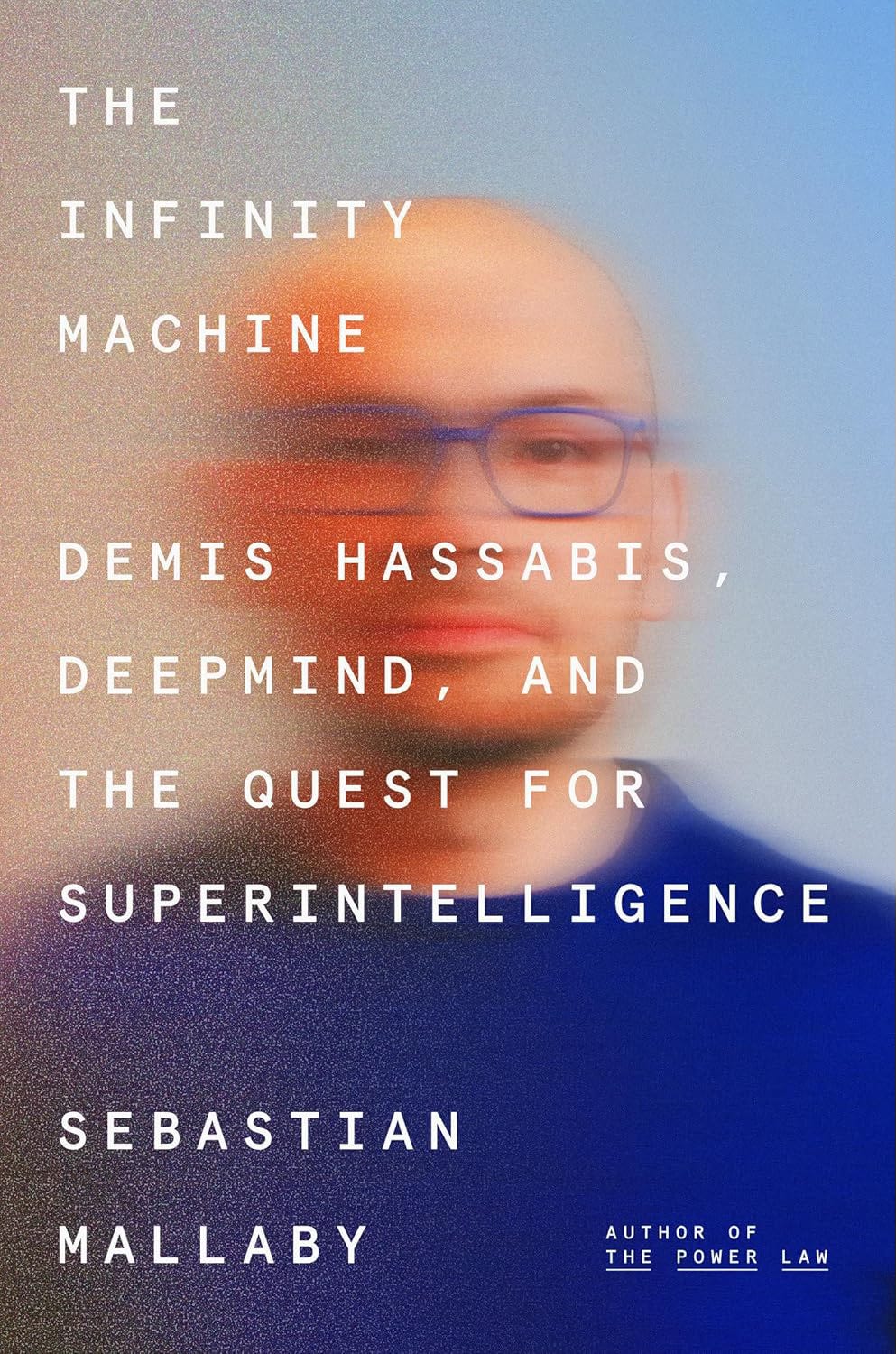
这本书是塞巴斯蒂安·马利比写的,叫《无限机器》,讲的是德米斯·哈萨比斯、DeepMind,还有他们追求超级智能的故事。
This book by Sebastian Mallaby called The Infinity Machine, Demis Hassabis, DeepMind and the Quest for Superintelligent.
这真是一本非同凡响的书。
It's an extraordinary book.
因为我认识书里的一些人,又对这个话题特别熟悉,所以读的时候真的被深深吸引了——内容丰富、信息量大,根本停不下来,太引人入胜了。
And because of knowing some of the people in the book and the whole topic, it really hit me with how rich and informative and just page turn, and just a really riveting book.
塞巴斯蒂安,这应该是你的第六本书了吧?
So I know this is your sixth book, Sebastian.
欢迎你!
Welcome.
塞巴斯蒂安是外交关系委员会的保罗·沃尔克高级研究员,也是一位记者,职业生涯特别高产,待过好多知名媒体,比如《金融时报》《华盛顿邮报》《经济学人》等等。
Sebastian is the the Paul Volcker senior fellow at the Council for Foreign Relations, and he is a journalist and has been very prolific throughout his career at many different places, including the Financial Times, The Washington Post, The Economist, and others.
欢迎欢迎。
And so welcome.
很高兴你来。
It's great to have you.
能和你聊太好了。
Great to be with you.
咱们直接切入这本书吧,因为我第一想聊的就是这个书名——《无限机器》。
So we're gonna get right into this book because the first thing I wanted to touch on was the title itself, The Infinity Machine.
很多人可能不太明白这到底指的是什么。
Because a lot of people might not realize exactly what is meant by this.
我觉得如果我试着梳理一下,因为你重点写了那些影响德米斯和DeepMind的关键工作。
And I think if I try to piece it together, because you really zoom in on some critical work that antidated and influenced Demis and DeepMind.
在我看来,有两项研究特别关键。
It seemed to me there were two specific works that really had an impact.
一个是克劳德·香农在1948年提出的信息论,他认为信息才是现实的基本单位。
One was Claude Shannon in 1948, Information Theory, that the fundamental unit of reality is information.
本质上,就是处理这些信息。
The reality is processing this information.
还有道格拉斯·霍夫施塔特那本得过普利策奖的《哥德尔、埃舍尔、巴赫》,他在书里说,人脑能做到的事,电脑也该能做到,根本没什么神秘的意识,关键就在于从近乎无限的数据里发现模式。
And the other extraordinary book that won a Pulitzer Prize by Douglas Hofstadter, Godel, Escher, Bach, that he basically in this book, of course it was many things, but some of it was whatever human brains could do, computers should be able to do, and dismissing anything magical about human consciousness, discovering patterns in a near infinity of data.
所以,你认为这样理解这本书的标题合适吗?
So would you is that an apt way to try to interpret the title of the book?
毕竟,这标题挺有冲击力的。
Because, obviously, it's a very provocative one.
是的,没错。
Well, yeah.
但其实比你说的还要更具体一点。
I mean, it's actually a bit more specific than that.
你说得对,香农的信息论和《哥德尔、埃舍尔、巴赫》这两样,对德米斯影响都特别大。
And you're right that both Shannon and the book Godel, Escher, Bach were very important for Demis.
不过我觉得,‘无限机器’这个标题,我想表达的是,传统计算机系统本质上都是基于演绎逻辑的。
But I think with the Infinity Machine title, what I'm getting at is that, you know, traditional computer systems were essentially based on deductive logic.
这其实跟罗素当年想搞一个数学体系有关,那个体系想把所有能从一组基本前提推导出来的真理都包揽进去。
And, you know, it's some way by kind of the Bertrand Russell project of trying to create a mathematical system that would encompass, you know, all possible truths that you could derive from a set of basic, you know, grand premises.
结果发现,光靠演绎根本没法完整解释智能到底是怎么回事,知识又是什么东西。
And deduction, it turns out, is a very incomplete way of thinking about what intelligence does, what knowledge consists of.
很多时候,我们其实是在归纳知识,而不是推导出来的。
Because a lot of the time, we are inducing knowledge.
我们不是在做演绎,而是在从大量例子中总结规律。
We are not deducting it.
我们看很多例子,然后从这些例子里归纳出一个结论。
So we're looking at lots of examples, and we are inducing a conclusion from these examples.
至于《哥德尔、埃舍尔、巴赫》这本书,你说得对,它确实有一层意思是:人脑能做到的事,机器迟早也能做到。
Now the point about Godel Escher, Bach was partly what you said, which is that what what the human brain can do, machines will be able to do one day.
但更重要的是,书名里的哥德尔——这位数学家——他当年反驳罗素,提出了所谓的‘不完备定理’,
But it was also that Godel mathematician in the title who was famous for his repudiation of Bertrand Russell for showing the so called incompleteness theorem Oh.
这个定理证明了一件事:有些东西,你根本没法光靠演绎推出来。
Which which established that, you know, it's impossible to deduce everything.
比如你想想分类知识这件事——为什么一把又长又锋利的切肉刀,和一把短小、钝头、样子完全不同的黄油刀,会被归到同一类里?
If you take the example of, you know, categorizing knowledge, you know, how do we understand why a carving knife, big, long, and sharp, is in the same category as a butter knife, short, blunt, and totally different looking?
因为它们的用途是一样的。
Well, they have the same function.
但还有别的类别,比如一只大狗和一只小狗。
But then there are other categories where, you know, you have a big dog and a small dog.
它们长得天差地别,可还是都算狗。
They look very different, but they're still both dogs.
这是为啥?
Why?
因为它们能互相交配,还能生出有生育能力的后代。
Because they mate together and they can be fertile.
那你怎么用演绎的方式解释:狗这个类别,是按繁殖来划分的?
So how do you explain deductively that, you know, you categorize dogs in one way according to reproduction?
而九型分类,却是按功能来分的。
You categorize nines according to function.
还有很多事情是没法直接推导出来的。
And there's just lots of things you can't simply deduce.
它们远比那要随意得多。
They're much more arbitrary than that.
通过归纳学习的话,得有大量的例子才能准确归纳。
And when you learn through induction, need a lot of examples to induce accurately.
要是我只观察十个纽约人,我就会以为所有美国人都早上喝咖啡。
And, you know, if I look at 10 New Yorkers, I will conclude that all Americans drink coffee in the morning.
当然,这根本不对。
Of course, that's not true.
要是我多观察一些人,就会明白这其实不成立。
If I looked at a bigger sample, I would understand it wasn't true.
对啊。
Yeah.
所以好的归纳需要无穷多的数据,这也正是‘无限机器’这个名字的由来。
And so good induction requires an infinity of data, hence the title of the Infinity Machine.
AI 其实就是一个能掌握归纳推理的系统。
And AI is really a system that can master induction.
对。
Yeah.
这总结得真到位。
That well, that's a great summary.
谢谢你把这点说清楚了。
I'm glad you clarified it.
你还把它提升到了另一个层次。
You even took it to another level.
我一直在想,你为啥选这个当标题,现在听你这么一说,真是再贴切不过了。
My trying to understand why you selected that as the title and quite apropos hearing your side of it.
回头看看 DeepMind 这家公司,真的非同寻常。
Now, the DeepMind company is pretty extraordinary when you go back.
我们说的是 2010 年的事。
We're talking about 2010.
他们说的是将近十六年前的事了。
They're talking about almost sixteen years ago.
德米斯今年七月就五十岁了。
Mean, Demis will be 50 in July.
那时候他才三十出头,三十三或三十四岁。
So he's a young chap, 34 back then, or 33.
他和谢恩·莱格、穆斯塔法一起创办了这家公司,立下目标,最迟在2030年实现超级智能,我想是这样。
And with of course, Shane Legg and Mustafa, they formed this company and they have a charter to have super intelligence achieved by 2030, at the latest, I guess.
更惊人的是,他们的商业计划里早就提到了智能体。
And what was also striking is they had agents in the business plan.
直到最近,大家才开始接受‘这么多智能体能自主执行任务’这个想法。
Now only recently have people welcomed to the idea that we have all these agents to execute autonomously.
他们真的领先了太多。
So they were so far ahead.
最让我佩服的是,这简直把远见提升到了新高度,我真得这么说。
And what's really striking to me is that this was I mean, this takes prescience to another level, I I I have to say.
所以跟我们说说2010年DeepMind是怎么成立的吧,那时候他们肯定被人当成怪人吧。
So tell us about this formation of DeepMind at 2010, because it at the time, they must have been seen as, you know, kooky people.
但你要回头看,他们真的远远领先于所有人。
But they if you look back, they were they were so far ahead of everybody else.
是的。
Yeah.
没错,完全就是这样。
I mean, that's totally right.
某种程度上,这正是我选Demis作为我那本AI书籍主角的原因。
In a way, that's why I chose Demis as my central protagonist for a book about AI.
其实你也可以选Sam Altman或者其他任何人。
You know, one could have chosen Sam Altman or somebody else.
但Demis真的太早了,通过他的人生,你几乎能讲完整部现代AI的发展史,他本人也特别有意思——我们刚才聊的这些只是冰山一角,更难得的是他这份信念来得这么早、这么坚定。
But, you know, Demis really was so early that through his life, you can tell the story of the making of modern AI, and he's just perfectly he's fascinating himself as perhaps we're talking about that, but just the span and the early nature of this conviction.
因为2010年的时候,就像你说的,那会儿还完全是AI的寒冬呢。
Because in 2010, as you say, you know, it was still the AI winter, really.
我的意思是,ImageNet在计算机视觉上的突破,还有那篇Katz的论文,那都是2012年底的事了。
I mean, the ImageNet breakthrough in terms of computer vision and that Katz paper, this was late twenty twelve.
而Demis早在那之前两年就创立了DeepMind,再往前推十五年,他就在琢磨人工智能了。
So Demis is forming DeepMind two years before that, He's been thinking about AI, you know, another fifteen years before that.
这真的太惊人了。
So it it is amazing.
你说得对,那个商业计划书,我花了超多功夫,软磨硬泡、费尽口舌,才终于从Demis那儿把东西掏出来。
And and as it you're right that the business plan, it it took me enormous amounts of, you know, negotiation, charm, and general patience to extract the business plan from Demis.
但最后,他还是给了我。
But finally, he gave it to me.
你读了之后就会发现,里面的内容简直超前得离谱。
And when you read it, it is unbelievably present.
我的意思是,他当时就预测,照着计算机算力的增长趋势推下去,超级智能大概会在2013年出现。
I mean, he really did say that extrapolating the way that computer power was growing, he expected, you know, superhuman intelligence to arrive around 2013.
太不可思议了。
Amazing.
对吧?
Right?
我知道。
I know.
你被这个困住了,真好。
Glad you're stuck with that.
你说到代理,也对。
And you're right by agents too.
是的。
Yeah.
没错。
Yeah.
我简直惊呆了。
I I was stunned.
我知道他创办了这家公司,但真不知道他的计划这么深。
I just I mean, I knew he started this company, but I didn't know about the depth of the plan.
所以现在咱们深入聊聊德米斯吧,我读这本书的时候就觉得,这人简直就是为这项使命而生的。
So now let's get more into Demis because as I read this book, I feel like what this human was made for the mission in so many respects.
首先,他从小就接触国际象棋,这算是他后来投身游戏和竞技的起点。
Because for one, he got into chess very early as a precursor to games and competition.
那时候他年纪小,还得搬着书本跟那些比他大很多的对手较量。
And of course, he was already doing that, sitting on books to be able to compete against older competitors.
这种强烈的竞争意识,后来被杰夫·辛顿形容得特别到位。
But it brought out this fierce competition, was later characterized by Jeff Hinton.
我觉得他可能是唯一一个比我还要好胜的人。
He's the only person perhaps more competitive than me.
他12岁那年输了一盘棋——对,是12岁,不是14岁——之后就彻底改了。
Of course, when he was 14, or was it 12, when he lost a match, changed every Oh, 12, I think.
他说,只有拼到快累死的地步,才算真正尽力了,因为他爸跟他说过:你必须使出全部力气。
And he said, The only way I could know if I pushed myself to the point just before death, because his father said, You gotta try your best.
他每次都是100%全力以赴,这点他联合创始人谢恩·莱格也特别提到过。
And he gave it always a 100%, not 99% of Shane Legg, his co founder, point out.
他有一种停不下来的劲头,特别爱玩游戏。
So he had this unsatiable drive, games.
后来他用GPU做游戏,这其实为深度学习打下了基础。
The fact that he then went on to games using GPUs, which really enabled deep learning.
他在Bullfrog工作时就接触过产品开发,这让他后来做产品得心应手。
The fact that then he had products from the games when he was working at Bullfrog, so he could deal with products later.
他在剑桥学计算机科学,后来又去研究神经科学,特别是海马体;他特别有魅力,能像绝地武士一样影响别人;他从和大卫·西尔弗一起创办的Elixir公司失败中学到了东西,因为他实在太超前了。
The fact that he was a computer scientist at Cambridge, and then later a neuroscience learning about the brain, the hippocampus specifically, that he had this ultra charisma that he could pull Jedi mind tricks, that he learned from failure from Elixir, the company started with David Silver, because of the fact that he was far ahead of his time.
对了,还有件事书里没提,是我2024年11月在伦敦和德米斯参加一场会议时听说的。
And by the way, one other thing that wasn't in the book, which I learned from a conference when I was with Demis in London, November 2024.
他和另外四位诺贝尔奖得主同台对谈。
He was on a panel with four other Nobel laureates.
其中一位是珍妮弗·杜德纳,还有几位别的学者。
And one of them was Jennifer Doudna, and there were a couple others.
他说,自己从小就知道,将来一定要拿诺贝尔奖。
Anyway, he said he knew he wanted to be a Nobel laureate when he was a young child.
其他人都一脸懵地看着他,心想:啥?
And all the others looked at him like, what?
后来他又跟谷歌搭上了线,谷歌虽然没有无限的数据,但有Gmail、互联网、搜索这些海量数据,还有无限的TPU和算力,以及自家的Google Brain。
And then you have him connected with Google later, which has not an infinite dataset, but lots of data from Gmail, and the internet, and searches, and unlimited TPUs, and computing power, and its own Google brain.
这整个故事,好像就是专门为他量身打造的,每一块拼图都刚好到位。
It seems like this was a whole story built around this one person that had every piece covered to do this.
我是不是理解错了什么?
Am I processing this wrong?
没有。
No.
我觉得你说得对。
I think that's right.
其实,最早在2010年A轮投资DeepMind的彼得·蒂尔跟我说过,他总觉得根本不存在那种什么都能干的通用型创业者。
I mean, actually, Peter Thiel, who wrote the first check into DeepMind in the series a round in 2010, said to me, you know, he often thinks of, you know, there's no such thing as sort of a general purpose entrepreneur.
每个人心里其实都只有一家公司,拼命想冲出来。
People generally have one company that's inside them screaming to get out.
所以德米斯,他生来就是为了打造通用人工智能的,因为他具备了你刚才说的那些所有特质,简直就是完美人选。
And so Demis, the mission for which he was born, you know, was was building AGI because he had all those qualities you've just described, and he was just the perfect person to do it.
是的。
Yeah.
这就是为什么这个领域其他领导者跟他是完全不一样的。
So that's what's so different about the other leaders in this field.
他不仅在时间上远远领先于他们,而且他的经验组合、个性、那种独特的魅力——所有这些特质加在一起,更别提后来他不得不面对各种问题时,我觉得那根本不是他主动选择的,因为骨子里,他真的就是一个科学家。
Not only was he way ahead of them in time, but the the portfolio of experience, the personality, the special charisma, you know, all these features just and then, of course, when he got forced to have to deal with problems, I don't think that's something he would have picked because at heart, he's he really seems like a scientist.
还有一点让我特别印象深刻的是,他特别以能在《自然》杂志上发表论文、登上《自然》封面为荣,这跟其他公司完全相反,那些公司只管发白皮书、写博客,随便往官网一贴就完事了。
And what also strikes me is he was so proud to publish papers in nature, of covers in nature, which is the opposite of the other companies that are happy to put out their white papers and blogs and just post them on their website.
他们根本不在乎。
They don't really care.
这其实反映了科学家和那些觉得‘我们这么大了,发个论文还用得着期刊?’的人之间的区别。
And so it's a difference between the scientists and the people that say, you know, we're so big, we could just publish we don't need a journal.
我们不需要同行评审。
We don't need peer review.
我们自己发就行了。
We could just publish our own stuff.
这恰恰体现了科学家和当今AI领域其他领导者的思维差异。
And that's like the mind of a scientist versus a different kind of leader in in in AI today.
这个故事的迷人之处还在于,德米斯·哈萨比斯出生在北伦敦,公司也扎根在伦敦国王十字区,根本不是硅谷那一套人——虽然他确实拿到了硅谷的投资,比如彼得·蒂尔和埃隆·马斯克,后来又被谷歌收购了。
It's So there's also you know, part of the charm of the story is that Demis Hassabis, of course, born he in North London, built his company in London in Kings Cross, not a Silicon Valley person, even though he got funding from Silicon Valley, both from Peter Thiel and from Elon Musk and later from Google when he sold to Google.
但看起来,德米斯的一个不同之处在于,他特别重视叙事和沟通。
But, you know, one of the differences, it seems to be, in the style is that Demis cares a lot about narrative and communication.
他在乎自己的声誉,也相信要想推动AI事业,就必须公开发声,为自己争取空间和资源。
He does care about his reputation, and he he believes you have to communicate publicly about yourself in order to build the space, the resources to go after AI.
所以他并不天真,很清楚公关的重要性,但他的公关方式,就像你说的,是发在同行评审期刊上。
So he he's not innocent about the importance of public relations, but his style of public relations, as as you say, published in a peer reviewed journal.
这才是他认为真正靠谱的做法。
That's what he thinks is good.
因为只有这样,才能真正打动人心。
Because then you can really impress people.
你可以说,嘿。
You can say, hey.
这事儿你没法质疑。
You can't question this.
这可是经过同行评审的。
This is peer reviewed.
你懂的。
You know?
而萨姆·阿尔特曼的想法是,他在推特上有大批粉丝。
Whereas, you know, Sam Altman's idea is that he has a lot of followers on Twitter.
对。
Yeah.
这是两种完全不同的风格。
It's a kind of different style.
没错。
Yeah.
自从《纽约客》上罗恩·法罗那篇文章发表后,质疑他的人就更多了。
Well, he's had even more people questioning him after the New Yorker piece by Ron Farrow that appeared.
所以现在的情况是,这位独特的领导者带着一群各有专长的联合创始人,还能吸引大量顶尖人才追随他、听他的指挥。
So I think what we have now is we have this setup of a unique leader who has brought with him these co founders with other talents, of course, and then is capable of bringing many other great minds to join him and basically follow his lead.
他一直在推进这个使命。有一件事我完全没想到,塞巴斯蒂安,那是2016年3月。
And he's on this mission One of the most extraordinary things, I had no idea, Sebastian, was in March 2016.
就在世界围棋冠军李世石被DeepMind的算法击败的那一天。
Basically, the day when Lee Sedol, the Go champion of the world, was overtaken by the DeepMind algorithms, if you will.
就在同一天,甚至可能几个小时之内,他就决定:还不够。
The same day, if not within hours, he decides, well, that's not enough.
我要启动AlphaFold。
I'm starting AlphaFold.
所以AlphaGo和AlphaFold,同一天成了转折点?
So AlphaGo, AlphaFold, the turning point in the same day?
差不多是这样吧?
Is that about right?
这简直难以置信。
It's unbelievable.
当时他在首尔,和大卫·西尔弗——那位主导AlphaGo的强化学习科学家——一起。
He's out there in Seoul with David Silver, his friend and the reinforcement learning scientist who was behind AlphaGo.
那天是比赛的第四天。
And, it's day four of this, tournament.
他们以三比一领先,就知道这场五局三胜的比赛已经稳了。
And, by winning, I guess it was three the the third three to one, they knew that they were gonna win the best of five.
所以比赛实际上已经结束了。
So the the tournament was over effectively.
他们走在首尔的街上时,背后有个摄像团队,无意中录下了这段完全没打算公开的即兴对话。
And as they walked down the street in Seoul, there was a camera team behind them that picked up on a microphone this entirely sort of, you know, open mic moment.
那根本不是为了采访或者录什么正式发言。
It wasn't intended to be for quotation or whatever.
但德米斯当时对他的朋友戴夫说:‘咱们搞定AlphaGo了。'
But but, you know, Demis was saying to Dave, his friend, look, we've done AlphaGo.
现在咱们得转向下一件事了。
Now we gotta move on to the next thing.
我觉得接下来该攻克蛋白质折叠了。
And I think, you know, protein folding is what we should go after next.
现在我们真的能搞定蛋白质折叠了。
Now we can really do protein folding.
所以,就像Dave淡淡地跟我说的,每当Demis完成像攻克围棋这样的壮举,他总要等上32天才公布下一个目标。
So, you know, as Dave laconically said to me, you know, when Demis does an extraordinary achievement like solving Go, he waits about 32 before announcing his next ambition.
这真的太不可思议了。
It's so extraordinary.
我的意思是,就那步37手,已经足够让机器想出人类根本想不到的招了。
I mean, you know, the the the move 37 wasn't enough to have basically the machine come up with something that humans couldn't.
紧接着,他们就直接转向了AlphaFold的攻关。
And then, right there, turn to what was going to be the quest for AlphaFold.
你知道的,对听这个节目的人来说,AlphaFold经历了好几个阶段,最终AlphaFold 2成功预测了两亿个蛋白质的折叠结构和特征,这些蛋白质要是靠传统方法,我跟你说——我在斯克里普斯研究所,那儿的晶体学家多得是,一个蛋白想结晶出来,少说也得花两三年。
And as you know, I think for those who are listening, AlphaFold went through stages where ultimately AlphaFold two was what was recognized for predicting 200,000,000 proteins from amino acid sequences, the folding and the features of the protein, which otherwise would take I mean, I'm at Scripps Research where we had so many crystallographers on our faculty, and they might spend two years, three years to crystallize a protein to be able to understand its folding.
而你现在用AlphaFold二,几秒钟就能搞定,现在AlphaFold三还能处理蛋白质互作。
And here you could do it in seconds through AlphaFold two, now AlphaFold three with the protein interactions.
我的意思是,这到目前为止是AI做出的最了不起的贡献。
I mean, this is the singular biggest contribution of AI to date.
Demis、John Jumper还有整个团队,确实值得骄傲。
And that's, you know, something that Demis, John Jumper, and the whole big team, of course, can be proud of.
还有件特别有意思的事,我现在才明白为什么——当时我在伦敦的一个会议上挨着John Jumper坐,我就跟他说:‘你们做AlphaFold二,离了Transformer模型根本不可能吧?’
And what was really interesting, and now I know why, we're gonna get into this, when I was sitting next to John Jumper at the same conference in London, And I said to him, Well, you couldn't have done AlphaFold two without the transformer model, right?
他一听就不高兴了。
And he didn't like that.
他这人对Transformer模型有点抵触。
It's an anti transformer model thing.
在聊这个之前,我得先说明一下,其实也没到那种针锋相对的地步,但你之前也提到过,而且很早就讲了,我想再回头聊聊,因为这在书里可是个核心话题。
So before we get to that, and I'll qualify that because it wasn't quite as an antibody response, but there's, as you discussed, and you introduced this pretty early, but I want to get back to it because it's really a central part of the book.
以前呢,流行的是符号主义AI,靠的是规则,全是死板的逻辑推导。
So previously, there was a symbolic AI, and it was rules based, and it was rigid deduction.
好吧。
Okay.
这种路子终究有极限。
It only could go so far.
后来,多伦多和阿尔伯塔那边的团队崛起了。
And then came along the Toronto and subsequently Alberta tribes.
多伦多团队搞的是深度学习,核心人物是杰弗里·辛顿,还有伊利亚、杨、 Yoshio 他们一帮人。
The Toronto tribe, Deep Learning, this is Jeffrey Hinton with Ilya and Yan and Yoshio and others.
这玩意儿主要解决的是感知问题。
And this is really about perception.
就是那些能做分类的神经网络。
It's about these neural networks that can classify.
图像识别的爆发,当然要归功于李飞飞的 ImageNet。
And of course, that's really where images took off with Fei Fei Li's ImageNet.
就像你提到的,真正火起来是2012年,不是DeepMind成立那会儿。
And as you said, that really got going in 2012, not when DeepMind was formed.
所以,这个深度学习的时代——我们如今依然身处其中——真正把AI从寒冬拉进了火热的发展期。
And so that deep learning era, which we're still in in some respects, of course, that really took AI out of the winter, into the hot zone.
没错。
Right.
强化学习呢,说白了就是游戏那种模式,靠奖励机制来学习。
Reinforcement Learning, which again, the fact that that's the game story, that the games can learn by reward.
所以从游戏入手,再一步步推进到AlphaFold,这思路再合适不过了,对吧?
So this is perfect to start there and then just work your way up to AlphaFold, right?
但本质上,这是靠智能体不断试错来学习的。
But this is really using agents and trial and error.
它通过在环境中行动来学习,而不是光靠观察。
And it's learning by acting, acting in an environment.
你在书里其实特别强调了一个关键区别:深度学习和强化学习完全是两码事,但要是能把两者的优势结合起来,那才最厉害。
So in the book, you really make a big, I think, dichotomy between the deep learning and the reinforcement learning and how the best of both worlds when you confuse it.
你能再详细说说这个观点吗?
Can you tell us more about that?
当然。
Sure.
第一代DeepMind的突破,就是那个能玩Atari游戏的系统,比如打砖块、乒乓球之类的。
I mean, the first DeepMind breakthrough was the system that could play Atari games like Breakout and Pong and and so forth.
它把深度学习和强化学习结合在了一起,是第一个成功把这两者融进同一个系统的案例。
And this combined both deep learning and reinforcement learning, and it was the first successful combination of the two, in one system.
这事儿特别革命性,就像你刚才说的‘部落’——那时候,强化学习那帮人主要在加拿大埃德蒙顿,而搞深度学习的在多伦多,还有蒙特利尔的约书亚·本吉奥他们,两边几乎不怎么来往。
And it was revolutionary because, you know, as you indicated by using the word tribe, there hadn't been much communication between the Reinforcement Learning tribe based mostly in Edmonton in Canada and then the deep learners who were you know, Toronto was one place, but I guess there was Joshua Benjori in Montreal and so forth.
但有个研究生,既在埃德蒙顿待过,也在多伦多学过,他就是弗拉德·尼。
And and so they really didn't communicate much, but there was one graduate student who had studied at a graduate level in both places, both Edmonton and in Toronto, and this was Vlad Ny.
弗拉德·尼,是个乌克兰裔加拿大人,很早就被拉进了DeepMind,他一心想把自己在两个地方学到的东西合二为一,做成一个系统。
And Vlad Nie, a sort of Ukrainian Canadian, was persuaded to join DeepMind early on, and he brought with him this ambition to combine the two sides of his graduate studies to put them into one system.
他还拉上了些在瑞士待过的人,那边强化学习和深度学习的隔阂没那么严重。
And he teamed up with other people who had studied in Switzerland where this divide between the two schools, reinforcement learning and deep learning, was less pronounced.
所以DeepMind决心让这两派联手,这才搞出了能玩Atari游戏的智能体。
And so DeepMind resolved to make the two work together, and that's what unlocked these Atari game playing agents.
你需要深度学习,主要是为了让系统具备视觉能力,能看清雅达利游戏的界面、理解屏幕上的像素;而强化学习则让系统能真正理解游戏规则,进行规划、制定策略,这才是强化学习的关键作用。
You needed the deep learning partly just to give the system a perceptual tool to actually see the Atari board, the screen, understand the pixels on the screen, but you needed the reinforcement learning to give the system the ability to kind of understand the game, to plan, to develop a strategy, and that's where the reinforcement learning came in.
通过把这两者结合起来,DeepMind 一下子脱颖而出,成了独树一帜的存在。
And through combining the two, DeepMind put itself in a league of its own.
是的。
Yeah.
而这无疑起到了关键作用。
And and that, of course, was instrumental.
你可以想想蛋白质数据库,人家研究了这么多年,而我们能用上这个数据集,简直太幸运了——这种级别的数据集可不多见,它成了把深度学习和强化学习融为一体的绝佳基础。
That is you could take the protein databank, which had been worked on for many years, and the brilliance of using that, which we don't have many datasets like that, to basically bring deep learning and reinforcement learning together.
但回到我当初问约翰·詹珀的问题:你要处理两亿个蛋白质,肯定得有经过重大改造的模型吧?
But going back to when I challenged John Jumper about, well, for you to go into high gear with these 200,000,000 proteins, you had to have had transformed models.
他其实不太认同这个说法。
And he really wasn't keen on that.
这就引出了我想说的下一点:在这本书的各个章节里,你越来越能感受到,德米斯真是个非同寻常的人物,极具影响力。
And that gets me to the next thing, which is in the book, through these chapters, you're really starting to appreciate that Demis is an extraordinary force, a character.
这些话还不够。
Those are not enough words.
也许算不上救世主,也不是终结者,但绝对是出类拔萃。
Maybe not messianic, maybe not enders, but out there.
他这个人,完全是独树一帜的存在。
He's in a very class of his own as an individual.
但接着你就发现那个巨大的疏漏。
But then you see the big miss.
明明前面一路高歌猛进,最后还拿了2024年诺贝尔化学奖,可谁想到,2017年他所在的谷歌那个七人小组,突然搞出了个Transformer模型,还说‘注意力就是一切’。
The fact that after all this tremendous momentum leading up eventually to the Nobel Prize in chemistry in 2024, that in 2017, the the group of seven at Google, the company he's part of, they come up with this transformer model and attention is all you need.
他们直接给伊利亚在OpenAI那边铺好了路,搞得他直接从椅子上跳起来了。
And they basically set the stage for Ilya at OpenAI to you know, he falls out of his chair or whatever.
他直接从椅子上跳了起来。
He jumps out of his chair.
跳起来了。
Jumps out of his chair.
是的。
Yeah.
跳起来,没错。
Jumps out of yeah.
于是,OpenAI就这么诞生了。
And so now, OpenAI is born.
他们现在有了明确的方向。
They have now the way forward.
接下来就是GPT-2、3、4,一路往上,数据越堆越多,最终搞出那个‘无限机器’。
They're going to be GPT-two, three, four, and on and on, and they're going to just get hyperscale with data, and they're going to build the Infinity machine.
他们没这么叫,但突然之间,他们其实是在说:我们要造出通用人工智能。
I mean, they didn't call it that, but all of a sudden, no, they invented, we're going to get AGI.
可他们这不明明晚了七年吗?别说什么十七年,对不起,是七年。
Well, they're like, what, seventeen years late here, or at least seven years late, sorry, after what DeepMind had initiated.
但我真想不通的是,虽然你在书里提过一些可能性,比如谷歌和DeepMind之间因为分家闹得关系紧张。
But then what I just cannot fathom, although you bring up some possibilities in the book, you bring up, well, maybe because there was so much angst between Google and DeepMind about being separated.
或者是因为德米斯和穆斯塔法之间闹了矛盾,还有那种我们对深度学习、强化学习的骄傲感,你知道的。
Or maybe it's because it was angst between Demis and Mustafa, or or, you know, about this pride that we developed, you know, the whole deep learning, reinforcement learning.
我们根本不需要别的东西。
We don't need anything else.
但当时他们明显轻视了Transformer架构和生成式AI的重要性。
But there was basically a dissing of the importance of transformer architecture and generative AI.
你能帮着解释一下吗?
Can you help explain that?
因为那会儿他们错得实在太离谱了。
Because this was a catastrophic miss at the time.
其实我跟德米斯聊过很多次这个事,因为我有幸向他推销了这个项目,他给了我好几个小时的时间,就在2022年11月。
Well, you know, I talked to Demis a lot about this because I had the good fortune of pitching him on the idea of this project, giving me hours and hours of his time in November 2022.
而就在那个月的最后一天,ChatGPT就发布了。
And, of course, on the last day of that month, is when ChatGPT came out.
所以我正好在DeepMind内部,亲眼看着AI从边缘话题一下子变成全民热议,生成式AI也迎来了爆发的时刻。
And so I was embedded with DeepMind right when this whole topic of AI went from the fringe to the mainstream, and right when generative AI had its breakout moment.
所以我们经常在北伦敦他家附近的一个酒吧碰面,那儿后面有一段没人知道的、积满灰尘的楼梯。
So in in our discussions and we would meet up at a pub in North London near his house, and there'd be a dusty staircase at the back that people didn't know about.
爬上去。
Go up the staircase.
上面有个空房间,就我们俩,一待就是俩小时,吵个没完。
There was this empty room we would have to ourselves and sit there for two hours and debate stuff.
所以我有好多机会问他:你当时怎么就看走了眼?
And and so I had plenty of chances to ask him about why he had this big miss.
他回答里最有意思的地方是,他的神经科学博士背景让他深信,智能啊,首先是由大脑里好多不同部分协同作用、以不同方式处理信息才产生的。
And the most interesting part of the answer is essentially his neuroscience PhD had left him with this big conviction that, you know, intelligence is, first of all, the result of different components of the brain and different ways of coming out information and processing it.
不是单一的东西。
It's not just one thing.
而且在神经科学里,有个叫‘行动与感知’的领域,认为真正的智能必须得有身体,得实实在在地活在世界里。
And also that in neuroscience, there's this field action and perception, which posits that to really be intelligent, you need to be embodied in the world.
你得有个对世界的物理模型,得亲身体验重力,得亲眼看着玻璃掉地上摔得粉碎。
You need to have a physical model of the world to experience gravity, to experience what it is to drop a glass and have it shatter on the ground.
没有这些,你就没法真正脚踏实地。
Without those things, you won't really be grounded.
‘脚踏实地’这个词,我和德米斯聊天的时候他老挂在嘴边。
And this word grounded came a lot in up came up a lot in in my conversations with Demis.
当他看到OpenAI早期试图把Transformer模型用在语言模型上的时候,他的想法就是:祝你好运吧。
And so when he saw the early efforts at, OpenAI to apply transformer models to language model to to to a language model, you know, his his idea was sort of, you know, good luck with that.
光靠语言,你是不可能实现真正智能的。
You know, you're not gonna get to full intelligence just through language.
语言太局限了。
Language is too limited.
不够接地气。
Not grounded.
对啊。
Yeah.
不够接地气。
Not grounded.
没根儿。
Not grounded.
他还跟我提过一回,说关键是你觉得人类经验能有多广。
And also, he said to me at one point, you know, it's it's a question of how big you think human experience might be.
光靠把互联网上所有文字都下载下来,真能涵盖人类经验的全部吗?
Could you really encompass all there is in human experience just by downloading all the language on the Internet?
我觉得不可能。
I didn't think so.
结果呢,他错了。
Well, it turns out he was wrong.
你只要把互联网上所有内容都下下来,至少能抓到九成的人类经验。
You can get at least, I don't know, 90% of human experience by downloading everything on the Internet.
其实语言比你想象的更接地气——首先,这些文字都是有血有肉的人写的。
And language is more grounded than you realize in the sense that, first of all, it's written by humans who are grounded.
其次,这些系统后期还得靠人类反馈来调教,训练完还能通过反馈再接地气一点。
Secondly, these systems get reinforcement learning from human feedback, so they get some grounding through the feedback after they've been trained.
所以,光靠语言数据训练,就能得到一个非常接近真实智能的系统。
And so you get a very good approximation of a grounded intelligence just by training on language data.
而这就是他犯的关键错误。
And and that was the key mistake.
你知道,早期在游戏方面,神经科学确实引导他走对了路。
You know, neuroscience had led him in the right direction early on with games.
但到了语言模型这块,神经科学反而把他带偏了。
It it misled him when it came to language models.
是的。
Yeah.
当然,他后来也想明白了。
Well, of course, he figured that out.
我觉得现在用过AI的人都知道,生成式AI在未来AI发展中会是一个极其重要的因素。
And as I think everyone who's used AI now, that generative AI was gonna be another very, very big factor in the future as AI moves forward.
而且,这还不只是大型语言模型、大型推理模型、智能体这些,还有更多呢。
And then, of course, it isn't just the large language models and large reasoning models and the agentic and on and on.
未来几年我们肯定会看到更多超越当今技术的模型。
And we'll see other models undoubtedly in the years ahead that move beyond what we have today.
但真正有意思的是,这引发了一场空前的竞争。
But what really was interesting is this set up an extraordinary competition.
一边是萨姆·阿尔特曼和格雷格·布罗克曼,另一边是Anthropic——因为达里奥和他妹妹已经离开了,当然还有其他不少玩家。
You had Sam Altman and Greg Brockman in the one side, and you had Anthropic because Dario and his sister had exited, and of course many others.
但最主要的是,谷歌和DeepMind,谷歌手里可是一堆硬实力。
But principally, had Google and DeepMind, and Google really had all these assets.
而这两家初创公司,现在居然都打算搞IPO,估值动不动就几百亿,简直疯狂。
And then you had these two startups that are now trying to have initial public offerings in hundreds of billions of crazy stuff.
对吧?
Right?
谷歌这时候可就尴尬了,被ChatGPT这一波打了个措手不及,就像你说的,2022年11月。
And here, Google's kinda caught with their pants down that they're way behind in especially with this ChatGPT moment, as you said, November '22.
但神奇的是,没过多久,Gemini就慢慢赶了上来,甚至后来还反超了。
But amazingly enough, it wasn't that long before Gemini three eventually evolved, and caught up, and even transcended.
现在这场AI军备竞赛彻底打响了,这三大巨头彼此较劲,你追我赶。
And now we have this basically arms race with hyperscaling, and these three entities are basically, you know, kinda in a way going after each other.
但它们各自的优势不一样。
But they have different strengths.
我这儿有个问题,书里没写,因为是后来才发展出来的——就是那个编程和Vibe编程的事儿。
And one of the questions I have for you that's not in the book, because it kind of evolves subsequently, is the coding, Vibe coding story.
Anthropic靠Claude Code脱颖而出,而OpenAI呢,早就有了Codex。
So Anthropic differentiated itself with Claude code, And of course, OpenAI had codex.
但我就在想,这背后还有没有别的漏网之鱼?
But that's another thing I wonder.
会不会还有别的疏漏?
Is there another miss here?
你不能指望Gemini 3干所有事,对吧?
Because the coding, you can't do I use Gemini three for a lot of things, right?
我的深度研究、我的笔记型LM、什么nana banana的,这些地方压根儿不适合写代码。
My deep research, my notebook LM, nana banana, it wouldn't be the place for coding.
这是另一个重大疏漏,还是说他们最终会特别重视这一点?
Is that another big miss, or is that something that I think eventually they're gonna put a lot of weight into?
听我说。
Look.
我稍后再回过头来谈这个。
I'll come back to that in a second.
我想先深入聊聊你提到的逆袭故事。如果你问任何商学院教授,预测把谷歌大脑(位于山景城)和深脑(位于伦敦)合并会成功,会怎么样?
I just wanna double click on one thing you said about the comeback story because I think if you'd asked any business school professor to predict the success of a merger where you take Google Brain, in Mountain View, and you smush it together with DeepMind in London.
而且你是在和竞争对手OpenAI激烈赛跑的当口做的这事,还得考虑山景城和伦敦有八小时时差,两个团队过去为了算力资源早就闹得不和。
And you do this in the middle of a really intense race with your rival OpenAI, and you factor in that there's eight hours of time difference between Mountain View and London and that the two labs didn't like each other because they'd been competing over computing resources for a long time.
我觉得,商学院教授肯定会说:嘿。
You know, I think the business school professor would have said, hey.
合并本来就不容易,
You know, mergers are always difficult.
这种组合看着根本不可能,更别提在这么短的时间内赶超OpenAI了。
This one looks impossible and certainly not in the time that you need to make it work to catch up with OpenAI in this race.
但正如你刚才说的,他们确实追上来了。
And yet, as you just said, they did catch up.
从ChatGPT发布算起,花了两年半时间,谷歌就基本追平了,甚至稍微领先了一点。
It took two and a half years from ChatGPT coming out, basically, for for Google to have pretty much drawn even or got even gone slightly ahead.
所以我觉得,这不光是前沿科技,连管理上的突破都挺前沿的。
So I think that this you know, not only is this a frontier technology, but there's been some frontier business management stories coming out as well.
至于编程能力,我觉得现在下定论说这是个大失误还太早,我猜用不了多久,Gemini的编程水平就能跟上来了。
On the coding, I mean, I think it's too early to say that's really a big miss because I suspect that it won't be long before Gemini is offering coding capability, on a par.
我的感觉是,现在这些实验室全在拼命赛跑。
My my feeling is that right now, all of these labs are racing.
你方唱罢我登场,轮流领先。
They overtake each other.
要是去年十一月你问哪个模型最强,那肯定是Gemini没跑。
If you'd asked the question, which is the top model in November year, it would have been clearly Gemini.
可现在你再问,答案就很清楚了——Claude完胜。
Now if you ask that question, it's pretty clearly Claude.
再过三到六个月,我猜领先的就是别人了。
In three or six months from now, I assume it would be somebody else.
对。
Yes.
我觉得 coding 方面的落后,对谷歌来说算不上什么大失误。
I I don't see the coding breakthrough as as that much of a key miss for Google.
没错。
Right.
我觉得这更影响的是那些想打造开源生态、搞自主智能代理、追求高效自动化的群体,而不是普通用户——他们只是拿它当个信息工具而已。
I mean, I think it's more for the people that are the the kinda open claw world that wanna have, you know, the agents that are doing efficiently, autonomously getting so much done, and it isn't for the everyday person that's more using it as an information resource.
不过咱们还是走着瞧吧,看它怎么发展。
But we'll see how it evolves.
而且现在的竞争真的太激烈了。
It's really And the competition is really fierce.
我还有个问题想问问你,毕竟我对德米斯挺了解的,我对他真是特别敬重。
And that's another question I had for you, because knowing Demis as I do, and I of course have the highest regard for him.
他对我来说真的是个英雄,这也是我喜欢这本书的另一个原因——我跟他特别有共鸣。
He's actually a hero to me, which is another reason why I love this book because I identify with him.
他是科学家,就想按科学的方式做事,不搞那些昙花一现的东西。
I mean, he's a scientist and he wants to do things the way science is done, not flash in the pan.
但他被推上了这个位置,因为整个项目交给了他负责。
But he's been put because he was made in charge of this whole effort.
就像你说的,他把伦敦的资源,加上大脑和山景城的人才和算力整合在一起,现在却被困在了远离研究的位置上。
As you said, the coalescence of brain and Mountain View resources of talent, human talent, and computing resources with what is in London, he now is put in a position that takes him away from the research.
他现在成了一个产品。
He's now a product.
他现在不仅要跟 benchmarks 竞争,还得比这个模型强、比那个模型强。
He now has to compete for not just benchmarks, but gotta be better than this model and that model.
每周都疯狂得不行。
Every week, it's completely nuts.
我问他能不能接受这样,他好像说还行,但你怎么看?
I wonder, when I asked him if he's okay with that, he kinda said he was, but what do you think about that?
是的。
Yeah.
我的意思是,你说得对。
I mean, you're right.
他身上其实有两种截然不同的性格,却集中在一个人身上。
He has these two different personas in in one in one person.
首先是科学家的那一面。
And, you know, the first is the scientist.
我觉得他真正驱动他的,是那种求知欲,那种迫切想搞懂世界如何运转的冲动。
And I think, you know, he really is driven by that intellectual curiosity, the burning desire to understand how the world works.
这算是他最主要的动力,也是他觉得自己更核心的那一面。
And that's sort of his primary driver, but also the part of himself that he likes to think of as as the dominant one.
但还有另一面,就是特别好胜,从小时候下棋就开始了,甚至一些琐事他都要较真,比如桌上足球,或者足球那种小游戏。
But then there's another side of him, which is just super competitive going back to his youth chess playing, and, you know, just kind of silly things he's competitive about, like table football or or football, you know, that that that table game.
他常跟我说:‘你懂的,塞巴斯蒂安。’
You know, he would say to me, well, you know, you understand, Sebastian.
我在剑桥的时候,是校园里最强的玩家。
When I was at Cambridge, I was the best player on the campus.
我的意思是,学校里没人比得上我。
I mean, nobody else at university was better than me at that game.
其实我也不太在意,就笑笑说:算了吧。
And I sort of didn't really care one way or the other, so I would kinda laugh and say, no.
算了吧。
No.
算了吧。
No.
算了吧。
No.
算了吧。
No.
你非得说我最强不可。
You have to have said I was the best.
展开剩余字幕(还有 213 条)
我跟你说,我看了好多美国职业选手在YouTube上的视频,他们根本不懂那种‘蛇店’技巧——就是把胳膊从杠杆底下绕过去,能给动作加点劲儿啥的。
And I tell you, I watched the the YouTube clips of the professional players in the American league, and they didn't know the snake shop where you loop your arm under the lever and you kind of get extra oomph on it and whatever.
但他就是特别好胜。
But he's so competitive.
所以说到他当谷歌DeepMind的CEO、做个企业领袖这事,我觉得他心里其实挺享受的,毕竟他好胜心强嘛。
So I think, you know, on this question of is he okay about being the chief executive of Google DeepMind and being basically a corporate leader, you know, part of him loves it because he is competitive.
但另一方面,他骨子里还是个科学家,曾经跟我坦白说,也许我该回去当教授,专心搞研究。
And part of him is a scientist and, you know, would openly talk to me about, well, you know, maybe I should take up a professorship and and and just think.
他大概会先多干几年企业领导,再回头做学术吧。
Probably he'll do more corporate leadership first and then the other thing afterwards.
是的。
Yeah.
你在书里提到,他特别喜欢去普林斯顿那种地方,一头扎进深度思考的状态。
In the book, you mentioned his affinity to go to a place like Princeton and just get into deep thinking mode.
塞巴斯蒂安,我有点担心,要是把他从科研状态里拉出来,咱们可能就错过下一个AI革命性的大模型了。
I have to say, Sebastian, I'm a little concerned because taking him out of his science mode, it could be this next big model that is the next chapter in the evolution of AI that we could be missing.
所以我们拭目以待吧,但确实非常了不起。
So we'll see how that plays out, but just extraordinary.
在我进入最后一个话题之前,我想再回到这几家大公司和玩家形成的寡头垄断格局,以及他们之间的那种你死我活的竞争态势。
Now, before I go into my last topic, I I wanna just get back to this oligopoly of companies and players, and the the kind of killer instinct between them.
有件事我之前不知道,就是那个终极双面操作。
So one thing I didn't know about was the ultimate double cross.
当你同时面对萨姆·奥特曼、埃隆·马斯克和里德·霍夫曼的时候。
When you had Sam Altman, Elon Musk, and Reid Hoffman.
那时候他们本来聚在一起是想研究AI安全的。
When they were together to try to work on AI safety.
后来他俩就……那段往事我之前完全没听说过。
And then they just basically just went I mean, that that whole story, I had no idea.
我也不清楚这件事之前有没有被公开过。
I don't know if it had been publicized previously.
不过这件事刚好就能说明我刚才说的这个问题。
But that that just kinda typifies this.
这不仅仅是激烈的竞争。
It's not just fierce competition.
好像他们为了压倒对方,什么手段都使得出来。
It's that whatever it takes to take each other on, seems like.
是这样吗?
Is that right?
是的。
Yeah.
其实你提到的那次会面,萨姆·阿尔特曼并没有参加,但确实埃尔隆·马斯克和雷德·霍夫曼都在。
I mean, actually, Altman was not part of the meeting you're referring to, but it's true that Elon Musk and Reid Hoffman were.
那是个负责AI安全与伦理的监督委员会,本来是想给谷歌在AI安全部署上提供建议的。
And this was a safety and ethics oversight board, which was supposed to advise Google on the safe deployment of AI.
他们刚开了第一次会。
And they had their inaugural meeting.
其实当时是请埃尔隆·马斯克来主持的,就是想让他更深度地参与到深度思维的AI安全工作中来。
Actually, Elon Musk was asked to host it, and that was a way of trying to bind him into the kind of AI safety aspect of DeepMind's work.
那段会议里大家聊了很多对AI可能带来生存级风险的担忧,所以当时觉得让马斯克参与进来挺合适的。
And, you know, it expressed a lot of concern about existential risk from AI, so that seemed fitting that he should be involved.
结果他全程参会,把DeepMind管理层做的所有汇报都听了个遍,结果才过了几个月,就宣布要和山姆·奥尔特曼一起创办OpenAI,里德·霍夫曼还当了投资人。
And then, you know, he sat through the meeting, sucked up all the presentations from the DeepMind leadership, and a few months later announced that he was founding OpenAI with Sam Altman, and Reid Hoffman would be one of the funders.
所以说,这件事做得真的挺不择手段的。
So, yeah, it was it was pretty ruthless.
没错。
Yep.
结果谷歌这边的反应是,说白了就是:
And and and Google's reaction to this was to say, you know what?
这种监督委员会我们受够了,每次开会上完简报,转头参会的竞争对手就拿这些信息来对付我们。
We've had enough of these oversight committees where we're just gonna brief people who who will use the information against us as competitors.
不过有意思的是,得夸一下戴密斯(DeepMind的创始人)还有另一位联合创始人,他们是真的认真想推进安全监督这件事的。
But, you know, interestingly, and to Demis' credit and also, cofounder, you know, they really were serious about wanting safety oversight.
于是他们跟谷歌拉锯了整整三年,逼着谷歌成立全新的安全监督委员会;甚至还放了话,如果要求得不到满足,他们就从谷歌拆分出去,重新独立运营。
And so then they embarked on this three year negotiation with Google to try to force Google to create a new safety oversight board, and they threatened actually to spin out from Google and go independent again if they didn't get what they wanted.
但这又是另一个故事了。
But that's a whole another story.
德米斯看到那篇文章挺不爽的,因为里面全是来自DeepMind的内部爆料。
Demis wasn't so happy that I read about that because it was based on all kinds of internal leaks from from DeepMind.
不过确实是真的,而且特别精彩。
But it is true and a remarkable story.
说来有点讽刺,里德·霍夫曼恰恰是他们想找来投资的人,各种大玩家之间的角力也挺复杂的。
And paradoxically, Reed Hoffman was one of the people that they were looking to to help fund it and all kinds of the cross talk about these big players.
说白了,就是够狠、竞争太激烈了。
Well, you know, just the ruthlessness, competition.
这种级别的博弈,咱们真没见过几个例子。
You know, there's not that many examples that we can see like this.
而且很明显,这事儿还会继续,毕竟AI的主导权 stakes实在太高了。
And obviously, it's gonna continue because everything's at stake here, the dominance of AI.
说到这儿,我想聊最后一个话题——那就是危险。
Now that gets me to the last topic I wanted to get in with you, which is the danger.
我们正在威胁人类的自主权,比如Anthropic和OpenAI之间关于用AI进行战争监控的争执,还有各种末日般的、哪怕没到末日也够吓人的场景,都可能随时出现。
The, the fact that we're threatening human sovereignty, we're have the the world as we saw the clash between Anthropic and OpenAI about using AI in war for surveillance, no less all sorts of doomsday or even just short of that horrendous scenarios that we could be seeing.
正常人看到这些都会害怕。
Reasonable people would fear this.
你在书里也多次提到安全、伦理、提前准备这些事,就是为了别失去控制。
And obviously you get into this various times in the book about the safety, the ethics, the need for readiness, and whatever, not to have the loss of control.
就像你在书里说的,我们真该暂停一下吗?
Now, as you got to in the book, there was times, do we have a pause?
可暂停六个月又有什么用?停完还不是得接着干。
Well, that doesn't seem very smart because you have a pause for six months and you're back.
我们该怎么设定更高的目标?
How do we aim high?
我们该怎么走这条路?
How do we go that route?
更何况,这不光是美国几家巨头在玩,中国和其他各种玩家也都掺和进来了。
And especially when you have, you know, it's not just the the oligopoly base in The US, you've got China, you've got other all sorts of other players here.
我们该怎么才能做对这件事?
How are we gonna get this right?
是的。
Yeah.
我的意思是,这正是我在整本书里反复思考的深层问题——德米斯,一方面,就像你刚才说的,他确实是个好人。
I mean, this is the very deep question I wrestled with all throughout the book because Demis, on the one hand, excuse me, he's he's a good person as as you've been saying.
他真心希望这些系统是安全的。
He sincerely does want the systems to be safe.
从创办DeepMind开始,他就一直有自己的一套想法,想方设法确保安全。
And he had various theories from the time he founded DeepMind as to how he would try to make them safe.
比如,他设立了一个安全监督委员会。
One was to have that safety oversight committee.
如果这个不行,他就试着跟谷歌谈,再成立一个新的安全监督委员会。
If that didn't work, he would negotiate with Google about having a new safety oversight committee.
他曾经还制定过一套关于AI使用的准则。
He had a set of principles on AI usage at one point.
但这些办法都没用,因为竞争压力太大了。
And and and none of these things really worked because of the race dynamic.
你能让一个实验室安全,可要是另外四个都不安全,那整个社会的安全水平根本没提升。
You could make one lab safe, but if there are four other labs that are not safe, you haven't really advanced the ball in terms of how safe society might be.
所以啊,这就是难题,德米斯跟我聊过很多次这个。
And so, you know, this is the dilemma, and this is something that Demis would talk to me a lot.
你知道吗,‘竞争压力’这个词,其实是我们第一次聊天——ChatGPT爆红之后——就提到了。
You know, the race dynamic, that language came up almost in our first conversation right after ChatGPT went viral.
他看起来特别担心。
And, you know, he looked worried.
他总说:‘唉,他们也意识到这竞争越来越激烈了。’
He would say, you know, oh, they know this race dynamics got worse.
我不知道咱们该怎么控制住这局面。
I don't know how we're gonna control this.
从我们每周在酒吧楼上开会的那三年里,他的态度一点都没变。
And it didn't change throughout the three years in which we would have those meetings upstairs in the pub.
要摆脱这种竞赛心态,其实只有一条路:各国政府必须同时对所有实验室施加约束。
And I think the way you get out of this race dynamic, there's only really one thing, and that is that governments have to enforce restraint on all the labs at once.
就像我说的,所有人都得遵守这个约束,不然就没意义。
Because as I say, you have to have everybody observing the restraint.
不然的话,做再多都是白搭。
Otherwise, there's no point.
这就意味着,美国和中国必须联手行动,因为中国有自己的庞大、优秀且独立的AI生态体系。
And this means, essentially, you need both The US and China to do it together because China has a very big, excellent, and independent ecosystem from The US.
它能从美国的模型中提炼出自己的版本,也就是说,美国一出新模型,中国几个月内就能逆向搞出来。
It's able to distill models from American models, meaning that it can basically reverse engineer any new model that comes out of The US within a few months.
所以,不管我们愿不愿意,中国都是关键玩家。
And so whether we like it or not, China is a player.
如果中美能就某些安全标准达成一致,那这些标准就能推广到所有其他实验室。
Now I think if China and The US were able to agree on some sort of, you know, safety standards, then these could be enforced on all the other labs.
因为像法国的Mistral、加拿大的Cohere,甚至中东或其他地方的实验室,大概率还是想用美国的云、美国的芯片,资金可能来自美国,用户也主要是美国的。
Because, basically, if you're Mistral in France or Cohere in Canada or even if you're one of the labs in, you know, The Middle East or somewhere, you probably want to train on American clouds with American chips with funding maybe from The US, maybe selling to US users of your AI.
所以你和美国有这么多交集,自然就得遵守美国的监管约束。
So so you have these touch points with The US, so you're gonna be forced to respect US regulatory restraints.
而中国则负责搞定生态系统的另一半。
And then China would take care of the other half of the ecosystem.
我觉得这就是理想的蓝图。
And I think that's the vision.
以现在中美关系的状态,要实现这个目标太难了。
Getting there with the current state of Sino American relations is very tough.
是啊。
Right.
但我们得记住,1962年的时候,我们刚经历过冷战最黑暗、最吓人的时刻——古巴导弹危机。
But we just have to remember that in 1962, we had the deepest, darkest, scariest point of the Cold War with the Cuban Missile Crisis.
是啊。
Right.
结果到了1968年,我们就签了《不扩散核武器条约》。
And then in 1968, we had the Nuclear Nonproliferation Treaty.
冷战是有阶段的,有时候也会出现缓和,我希望AI领域也能这样。
So Cold Wars go in phases, and you do get detente at some points, And I hope that happens with AI.
我真希望如此,因为一想到可能出问题,你就知道——在美国这边,根本没什么政府在管。
I sure hope so because this is you know, when you start thinking about what could go wrong and that we we The US, there's basically no government kicking in.
就像你说的,我们正朝着中国主导的生态体系前进。
And as you say, we've got the China arc to supremacy.
这些公司之间的竞争,当然和中美之间的对抗是两回事,但后者也同样激烈。
So whatever wars are going on between these companies here is of course separate from The US versus China competition, which also is equally fierce.
我们现在还有五百多人在团队里。
Now, if anybody We have over 500 folks on board still.
如果大家有什么问题,可以在聊天里提,我们会尽量回答。
And if anybody has questions, you can put them in the message, and we'll try to answer them.
四十来分钟的对话,根本讲不清这本书的分量,我觉得它太了不起了。
I can't do justice to this book in a forty some minute discussion, because I view it as extraordinary.
我的意思是,如果真有哪本书堪称AI领域的杰作,那非它莫属——因为它讲的可不只是德米斯·哈萨比斯。
I mean, if there's a masterpiece about AI that's been written, this is it because it's not just about Demis Hassabis.
这讲的不是DeepMind。
It's not about DeepMind.
而是整个十五年以上的历程,包括背景,还有什么是超级智能。
It's about the whole fifteen year plus, including the background, and how what is superintelligence?
我们究竟想追求什么?
What are we aspiring for?
潜在的风险又是什么?
What are the risks?
这本书包罗万象。
It is all encompassing.
它用了一个极其特别的主角,还有家让人印象深刻的公司,来带出这些内容。
And it uses a protagonist, quite an extraordinary one to get there and a company which was hyper impression.
但这本书讲的绝不止这些人。
But it isn't just about these people.
有人会说,哎,怎么没给萨姆·阿尔特曼、伊利亚、杨立昆他们足够的篇幅啊,诸如此类。
It's about the whole now some people say, oh, well, they didn't give enough justice to Sam Altman or, you know, Ilya or or Yan Lakun or whoever.
但关键是,你总得从某个地方开始,不可能面面俱到。
But the point is is that you have to start somewhere, and you can't really have symmetry of all.
这本书之所以这么特别,就是因为如果你想了解AI是怎么发展起来的——从寒冬期到深度学习、强化学习,再到生成式AI,方方面面的来龙去脉,这本书全给你讲明白了。
This why this reason I think this book is is so exceptional is because if if you wanna get educated about AI and how it grew up, and how it was in the winter, how it got to deep learning, reinforcement learning, generative AI, and all the ins and outs.
就在这儿了。
This is it.
塞巴斯蒂安,以后再有人想写AI相关的书,怕是很难超越你了。
So think you've got a tough act to follow for others who will write a book about AI, Sebastian.
我还没看到什么消息。
I haven't seen any messages.
还有什么你想补充、但我漏掉的吗?
Is there anything that I've missed that you wanted to add on?
有一件事我觉得挺有意思,正好说到你提的安全问题——其实我一开始以为,嗯……
You know, one thing which I found interesting, and it gets to your bringing up of the safety question, is the way that, you know, going in, I thought, okay.
我想拿曼哈顿计划和这些AI实验室做个对比。
So, I'd like to draw the comparison between the Manhattan Project and some of these AI labs.
你知道,罗伯特·奥本海默在曼哈顿计划里做出了惊人的科学成就,但他后来也对自己的工作带来的后果深感后悔。
You know, there's this Robert Oppenheimer obviously did an amazing scientific feat with the Manhattan Project, but he also regretted the consequences of his own work.
这种悔意让我特别有感触,它反映了科学家在社会中的一个根本困境——创造新技术,却可能带来危险。
And that sense of regret, you know, struck me as, you know, this sort of the scientists in society, the dilemma of creating new technologies which could be dangerous Right.
这事儿真让我心头一震。
Just just dropped me as super interesting.
但我一开始有点不敢跟德米斯或者其他我聊过的人提,怕他们不想被提醒:他们手上握着的,其实是现代版的核材料。
But I was a bit nervous about bringing it up with Demis or with other people I was talking to because I thought, well, maybe they don't wanna be reminded that, you know, their hand is on the modern version of the nuclear material.
是啊。
Yeah.
这种权力,想想真让人害怕。
That's a scary thing to have in your power.
但后来我发现,根本不用你主动提,这个圈子里的人自己就会聊起这个话题。
But it turns out you don't have to raise it with people in this field because they raise it for you.
他们其实都在想这个问题。
They're all thinking about it.
没错。
Right.
先说杰夫·辛顿吧,他老爱引用奥本海默的话,问自己:我这么做到底图啥?
Starting with, you know, Jeff Hinton who essentially quotes Robert Oppenheimer when he says, you know, why am I doing this?
就是纯粹享受发现的乐趣。
It's for the sweetness of discovery.
没错。
Right.
科学家们根本没法抗拒发现带来的那种快感。
Scientists can't resist the sweetness of discovery.
再说萨姆·阿尔特曼,他自己都主动提过,他和奥本海默是同一天生日。
Moving on to Sam Altman, who, you know, will volunteer to interview is that he's got the same birthday as Robert Oppenheimer.
这不挺巧的吗?
Isn't that interesting?
还有德米斯,有一天我跟他聊的时候就说:德米斯,咱们回溯一下2010年吧,你那时候终于给DeepMind融到钱了。
And then with Demis with Demis, you know, one day I said to him, so, Demis, let's go back to the moment in 2010 when you'd finally raised the money for DeepMind.
你最初的办公室在伦敦。
You had your first office in London.
就在罗素广场,离你读博士的伦敦大学学院不远。
It was in Russell Square, not far from University College London where you did your PhD.
那时候感觉怎么样?
Now how did that feel?
我当作家的有体会,你要是问别人十五年前的事儿,基本就是在让他们努力回忆当时的感受。
And I know from experience as a writer that normally when you say this to people, you're asking them to reconstruct the emotion of fifteen years ago.
结果呢,回答都挺平淡的。
The answer you get is disappointing.
就是‘嗯,挺酷的’之类的。
Go, yeah, it was cool or something like that.
他们根本记不起当时那种感觉了。
You know, they they've got no emotional recall of what it was like.
但德米斯不一样,他特别能说,情绪特别饱满,直接说:‘是啊,那感觉太棒了。’
But with Demis, you know, he's so articulate and fizzy that he said, yes, it was amazing.
所以我们当时在阁楼里有个办公室。
So I was you we had this attic office.
你知道吗,层高特别低,空气也不太流通。
You see, it was low, low ceilings, a little bit stuffy.
我经常得下楼透透气,毕竟那是老楼,没电梯,只能走楼梯。
So I would go out sometimes to get some some air and you know, I'd come down the stairs because of course there's no elevator, it's an old building.
噔噔噔噔噔——一路下楼。
I'd go down the stairs ding ding ding ding ding ding.
一出楼门,眼前就是拉塞尔广场的那些树。
And then outside in front of me, would be the trees of Russell Square.
就在右边,塞巴斯蒂安,你知道那儿有什么吗?
Just to the right, Sebastian, you know what there is?
那儿是伦敦数学学会。
There is the London Mathematical Society.
当然了,图灵以前就在那儿讲计算机科学的起源。
Of course, that's where Turing used to deliver his lectures about the origins of computer science.
所以我们现在正在完成这件事。
So now we're completing that.
那真是棒极了。
So that was fantastic.
但再往远一点,塞巴斯蒂安,你知道那边还有什么吗?
But then beyond the London Mathematical Society, Sebastian, you know what there is there?
就在街角,有个斑马线,黑白相间,一条接一条,过马路的时候就这么一直交替着。
There on the corner, there is a pedestrian crossing where it goes black, white, black, white, black, white, black, white as you cross the road.
你知道上世纪三十年代,是谁在这条路上过马路的吗?
And and you know who crossed the road in the nineteen thirties?
是一位匈牙利核物理学家,他就是在这条路上想到核链式反应的,后来这才催生了曼哈顿计划,塞巴斯蒂安。
It was the Hungarian nuclear physicist, who had the idea for the nuclear chain reaction as he crossed that road, which then gave rise to the Manhattan Project, Sebastian.
而我们现在,就是曼哈顿计划的现代版。
And and now we are the modern version of the Manhattan Project.
这难道不惊人吗?
Isn't that amazing?
所以这就让你稍微体会了一下,跟德米斯·哈萨比斯聊上三十多个小时是什么感觉。
So that just gives you a taste of what it's like to speak to Demis Hassabis for more than thirty hours.
我的天,简直太疯狂了。
I mean, it's just wild.
他提到了核技术这个类比,说实话,我觉得这根本不是什么好玩的事。
My he, you know, he brought up that parallel with with nuclear technology, which I find so not amusing.
太惊人了。
Amazing.
确实如此。
It is.
而且还有很多类似的地方。
And there are a lot of parallels.
你书里引用的那段话,是杰夫·辛顿说的,关于发现的美妙,还有你刚才跟德米斯经历的那些。
And your quote, it's in the book, of course, from Jeff Hinton and the sweetness of discovery and what you just went through with Demis.
我们这儿有几个问题。
So we got a couple of questions.
有人问到了穆斯塔法·苏莱曼的那本书《即将到来的浪潮》。
One asked about Mustafa Silliman's book, The Coming Wave.
这本书能帮助人打好基础吗?
Is that a good book to help anchor in?
我其实读过这本书。
And I reviewed that book.
我觉得穆斯塔法把利弊都梳理得挺清楚的。
I thought Mustafa did a nice job of outlining the the pluses and minuses.
这本书是好几年前出版的了。
It was published quite a couple years ago.
塞巴斯蒂安,你读过吗?
I don't know if you have read it, Sebastian.
是的。
Yeah.
我读过。
I have.
说不定是两三年前读的了,不过没错,我确实读过。
Might even have been two or three years ago, but, yes, I did read it.
我觉得他挺用心地梳理了人工智能的利与弊。
And, you know, I thought it was a very good attempt to lay out some thinking about both the upside and the downside of of AI.
这事儿真不好办,因为你得往前看,去设想一套政策,可这技术本身还在不停地变。
It's a tough one to do in the sense that you're trying to project forwards and develop policy ideas about a technology that is still changing all the time.
咱们都不知道它最终会落到哪儿。
We don't know where it's landing.
所以我倒觉得,穆斯塔法在《外交事务》上写的那篇随笔可能更好,因为——
And so I thought perhaps, you know, almost the the essay that Mustafa also wrote in Foreign Affairs was better because Yeah.
因为它更精炼。
Because it's more succinct.
要给还没完全成型的技术写政策书,确实太难了。
And, you know, it's it is tough to write a policy book about policies relating to technologies that haven't been quite built yet.
你说的这些,我完全同意。
I I'm really concordant with your points there.
另一个问题是,现在的大型语言模型——其实也可以算上大型推理模型——是不是通向人工智能超级智能的路径?
The other question that's come in was, are the large language models of today you can also add the large reasoning models.
还是说,得有别的东西出现才行?
Is that the path to artificial super intelligence, or is something else gonna have to happen?
不过这也取决于你怎么定义通用人工智能,因为有些人觉得我们现在已经达到了。
And I guess that also depends on how you define AGI, because some people will say we're there now.
也有人觉得还得好几年才行。
Some people say we still have years to go.
你觉得中间有差距吗?
Do you see a gap?
在我们达到超越今天水平的阶段之前,你觉得还缺了什么关键的东西吗?
Do you see something else that's missing here before we go to a level that will transcend where we are today?
对。
Yeah.
我跟DeepMind和那些竞争对手实验室的科学家们打交道三年了,我的感觉是,在我们真正实现超人智能之前,很可能还得出现像Transformer论文那样的新突破。
Well, my sense from from hanging around, all the scientists at DeepMind and and in the rival labs and and talking to them for three years is that, you know, there may well be new innovations like the transformer paper, which need to happen before we get to superhuman intelligence.
但这些新东西都是建立在大语言模型架构——也就是Transformer架构——之上的。
But these are going to build on top of the large language model architecture, the transformer architecture.
我的意思是,这个架构实在太实用、太灵活、可扩展性也强,说实话,业界确实有一小部分人批评说:‘哎呀,企业花在算力上的钱太离谱了,建这么多发电设施,还搞得周边城市停电,太恶心了。’
I mean, that is just such a useful, flexible, you know, scalable architecture that I I I you know, I think it's it's you know, there there's a sort of a minority critique of the industry, which says, oh, you know, industry is spending insane amounts on computing power and building all this electricity generation and inflicting brownouts on nearby cities, and it's disgusting.
他们觉得,根本没必要搞这么大规模的扩张。
And really, you know, we don't need all that massive scaling.
但我认为这种看法有问题,原因有几点。
I think that's wrong for a couple of reasons.
第一点,就是关于‘无限机器’这个概念。
First is the point about what an infinity machine is.
所谓‘无限机器’,指的是能处理近乎无限数据的系统,因为你没法在样本太少的情况下做出靠谱的归纳。
An infinity machine is something that has nearly an infinity of data because you can't do good induction without lots of examples.
所以从根本上说,数据越多越好,越多越强。
So just fundamentally, you need a lot of data, and the more the better.
其次,私企当然也不愿意花一千亿美元搞研发啊。
And then secondly, obviously, the private labs don't love spending a $100,000,000,000 on their r and d.
如果他们能花一百亿,那简直太开心了。
If they could spend 10,000,000,000, they'd be very happy.
所以他们有十足的动力去尽可能高效地开发这项技术。
So they have every incentive to be as efficient as possible in how they build this technology out.
他们花这么多钱,是因为真觉得能回本,觉得这是必须的。
They're spending all this money because they really think there's gonna be a return because they think it's necessary.
我觉得没有别的路可走,但也许可以在现有路径上延伸一下,才能达到真正的人类智能水平。
So I think that, there isn't an alternative path, but there might be an extension of the current path in order to get to some human human intelligence.
是的。
Yeah.
我觉得这很棒,因为我们现在已经在某些任务上看到了超越人类的能力。
No, I think that's great because I think we have some features of it now where we've seen superhuman capabilities of certain tasks.
当然,如果有人想说我们已经实现了,那得比现在全面得多才行。
Obviously, for some to conclude we're there, it would have to be much broader than where we are today.
这场讨论真是太精彩了。
Well, this has been a fascinating discussion.
任何对AI感兴趣的人,这本书都非读不可。
Anybody interested in AI, this is the book you should be reading.
我觉得它经得起时间考验。
Think it's gonna hold up.
我觉得它不会因为领域里不断有新进展就过时,因为你分析得特别透彻,根本不是那种会随时间褪色的书——这其实特别难得,毕竟你几个月前就得把稿子交去印刷了,可这行里的新模型一个接一个冒出来。
I don't think it's one that is gonna just because of new things happening in the field, because you you get at it in a very in in such an insightful way that it's not time limited, which is a it's very difficult, because you had to get this to the printer months ago, and the field keeps coming up with new models.
但这些新进展根本没影响它的价值。
But that didn't change anything.
我觉得最让人意外的,恰恰就是这一点。
And I don't think it's gonna that's what was, I think, particularly surprising.
我昨天在旧金山的一个AI大会上,刚采访了阿尔·戈尔。
I did an interview with Al Gore yesterday at an AI conference here, actually in San Francisco.
他知道你的书,但根本不知道这本书已经出版了。
And he had known about your book, but he didn't know it was out.
我就跟他说,这特别了不起,现在都2026年4月了,这本书居然还这么贴切。
And I said to him, that's one of the things that's really remarkable is here it is in April 2026.
反正我们出书之后虽然出了些新模型,但书里该有的全都有了。
And it doesn't matter that there's been some new models since we went to print because it's all there.
恭喜你,塞巴斯蒂安。
So congratulations, Sebastian.
和你聊这个真的特别开心。
Really a joy to have this discussion with you.
我也觉得特别愉快。
It's been wonderful.
太感谢你了,埃里克。
Thank you so much, Eric.
我聊得特别过瘾。
I've really enjoyed it.
行吧。
Alright.
保重。
Take care.
保重啊。
Take care.
好嘞。
Alright.
行吧。
Okay.
拜拜啦。
Bye bye now.
拜拜。
Bye bye.
关于 Bayt 播客
Bayt 提供中文+原文双语音频和字幕,帮助你打破语言障碍,轻松听懂全球优质播客。