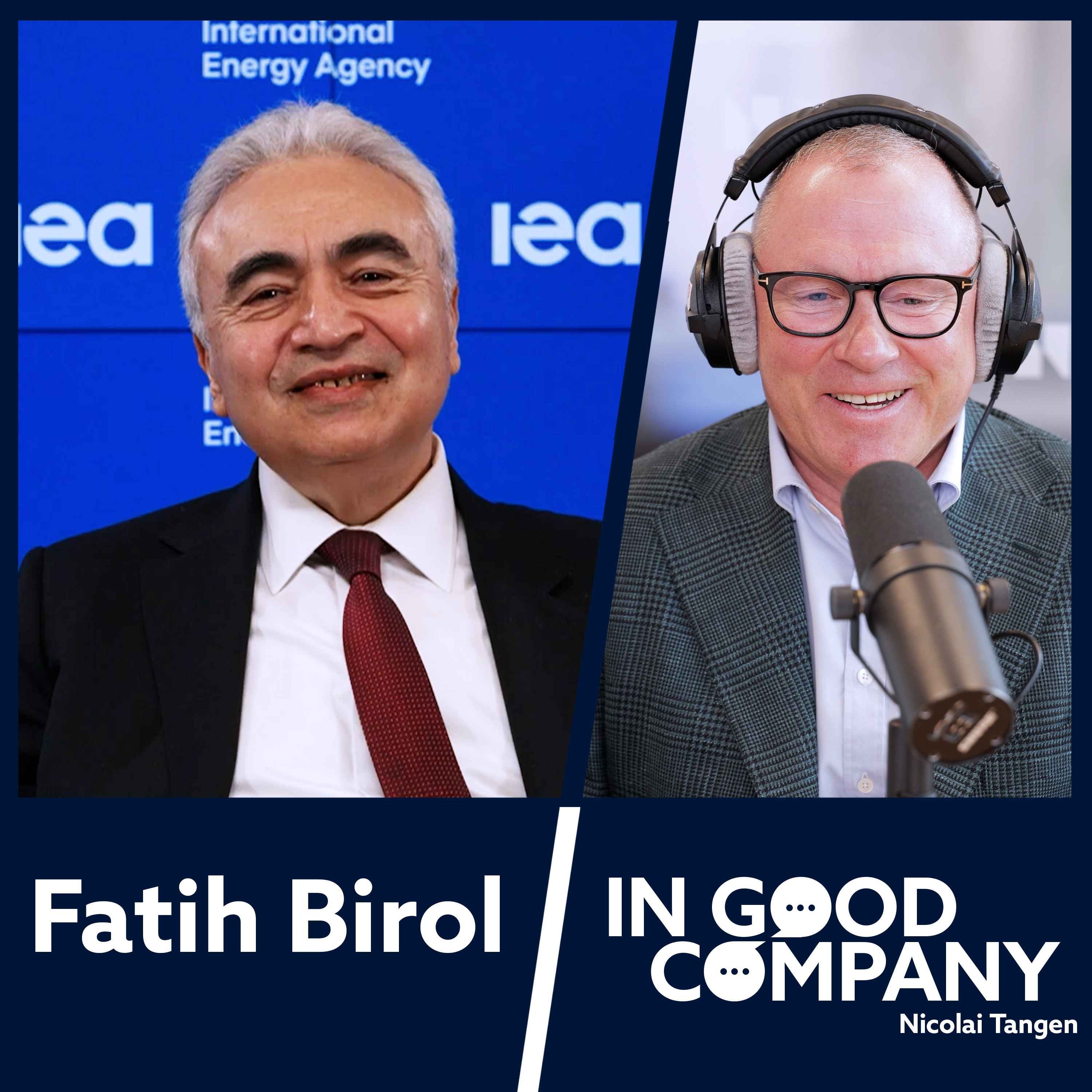
本集简介
双语字幕
仅展示文本字幕,不包含中文音频;想边听边看,请使用 Bayt 播客 App。
大家好,欢迎来到《I'm Good Company》。
Hi everybody and welcome to I'm Good Company.
我是尼古拉·坦根,挪威主权财富基金的首席执行官。
I'm Nicolai Tangen, the CEO of the Norwegian sovereign wealth fund.
今天,我们有一位非常特别的嘉宾,博士。
And today we have a tremendous guest, Doctor.
法提赫·比罗尔,国际能源署执行主任。
Fatih Birol, Executive Director of the International Energy Agency.
哇,这期播客的主题真是恰逢其时。
And wow, what a topical podcast this is going to be.
热烈欢迎,法提赫。
So a big welcome, Fatih.
非常感谢你,尼古拉。
Thank you very much, Nicolai.
你曾警告过,市场和政界人士仍然低估了中东危机的后果。
Now you have warned that markets and politicians are still underestimating the consequences of the crisis in The Middle East.
他们错在哪里?
What are they getting wrong?
你知道吗,Nicolai,我们是一个政府间组织。
You know, Nicolai, we are an intergovernmental organization.
我们为政府的公共机构工作。
We work for the government's public institution.
战争爆发后,由于存在许多市场相关的动态,我告诉我的同事们和我自己,前三周我们没有发表任何公开声明。
After the war has started, since there are many market related dynamics, I told my colleagues and myself, three weeks we didn't make any public statements.
尽管媒体和记者像往常一样向我们提出了大量请求,但我只就IEA的石油释放事宜发表了一项声明,其他事情都没有回应。
Newspapers, with the journalists, even though we received, as usual, lots of lots of requests, except for I made a statement about the oil release of the IEA, this other story.
但我发现,欧洲乃至全球的决策者们并没有意识到这个问题的严重性及其可能带来的影响——这不是针对能源行业,而是针对全球经济。
But I saw that the decision makers, governments in Europe, but around the world didn't understand how big the problem is and can be, not for the energy sector, but for the global economy.
因此,我决定——我想大概是上周吧——提出一些数据,让公众明白,这对所有人来说都是一个严重的问题,应对之道首先是承认问题的严重性,我试图描述这个问题的本质,我认为,这极大地推动了政策制定者更深入地讨论这一局势,这在我看来是一个正确的举措。
So it is the reason I decided, I think it was a week ago or so, to come up with some numbers, make the people understand that this is a serious issue for all of us, and the way to deal with this is, first we recognize what a big problem it is, and I try to describe what the problem is, and I think it was, in my view, a good move that it was a big drive to policymakers to discuss more intensely about the situation.
你曾说,这是历史上最严重的全球能源安全威胁,比1973年的情况还要严重。
You've said that it's the greatest global energy security threat in history bigger than 73 and so on.
你们具体在关注哪些指标?
Just what do you what metrics are you looking at?
不幸的是,我们经历了多次能源危机。
So we have many energy crisis, unfortunately.
但如果你回顾过去几十年,有三次尤为突出。
But when you look at the last couple of decades, three of them stand.
其中之一是1973年的石油危机、1979年的石油危机,以及2022年俄罗斯入侵乌克兰引发的天然气危机。
One of them, the 'seventy '3 oil crisis, 'seventy nine oil crisis, and twenty twenty two Russia invasion of Ukraine and gas.
当你看1973年和1979年的石油危机时,每次我们都损失了大约500万桶/天的石油。
So when you look at the oil crisis, 'seventy three, 'seventy nine, in both of them, we lost each about 5,000,000 barrels per day of oil.
所以五百万加五百万,总共大约是一千万桶。
So five plus five, it is about 10.
我们都清楚,这些石油危机导致了许多国家,尤其是发展中国家,陷入了全球经济衰退和外债螺旋。
And we all know that this oil crisis led to a global recession in many countries, developing countries, foreign debt spiral they fell into.
而如今,按目前的情况,我们每天损失了1200万桶石油,这超过了以往两次石油危机的总和。
And today, as the things stand now, we lost 12,000,000 barrels per day, so more than two of this oil crisis put together.
就天然气而言,当俄罗斯切断天然气供应时,我们损失了约750亿立方米的天然气,而现在我们损失的天然气量已经超过了俄罗斯天然气危机的规模,这意味着当前的危机比上述三次危机的总和还要严重。
In terms of natural gas, when Russia cut the gas, we lost around 75 BCM of gas, and now the amount of gas we lost now is higher than the Russian gas crisis, which means the current crisis is more than all these three crisis put together.
另外,容我补充一点,除了石油和天然气之外,还有很多对全球经济至关重要的商品,比如石化产品、化肥、氦气、硫磺,它们对全球供应链至关重要,而这一切又叠加在上述危机之上。
Plus, if I may, in addition to this oil and gas, there are many vital commodities, very important for the global economy, petrochemicals, fertilizers, helium, sulfur, they are very important for the global supply chains, and this comes on top of that.
如果我再补充一点,我们正在追踪该地区能源资产的受损情况,根据我们的数据库,已有40个关键资产遭到破坏。
If I say one more thing, we are following the damages on the assets, energy assets in the region, and according to our database, 40 key assets have been damaged.
其中一些损伤较轻,但有些则非常严重,甚至极其严重。
Some of them are light, but some of them are severe and very severe.
要恢复过来需要一些时间。
It will take some time to get back.
因此,正是基于这些数据和指标,正如你所说,我决定发声,让公众明白我们正朝着一场前所未有的重大动荡迈进,这是迄今为止历史上最严重的一次。
So it is the reason, looking at these numbers, metrics, as you say, I decided to make statements to make the people understand that we are heading towards a major, major disruption and the biggest in the history up to now.
未来这种情况会如何发展?
How will this pan out going forward?
我很高兴看到许多政府意识到了事态的严重性,也很欣慰地看到各国现在已经开始采取措施。
I think I was very happy that many governments understood how serious it is, and I was very happy to see that the countries are now taking measures.
七国集团、二十国集团、欧洲国家、日本,我上周刚与日本首相会面,前天又与澳大利亚总理会面。
The G7, G20, the Europeans, Japanese, I was last week with the Japanese Prime Minister and the day before with the Prime Minister in Australia.
亚洲目前遭受的冲击最严重,但如果你看看欧洲和其他地区的话。
Asia hit the worst for the time being, but if you come to Europe and elsewhere.
因此,各国现在都意识到了这个问题,我们正在讨论如何最好地应对这一局面。
So countries are now aware of the problem, and we are discussing how to tackle this situation best.
当然,尼古拉,我应该告诉你,我们采取的措施、国际能源署采取的措施以及各国政府采取的措施都很重要,但最重要的一项解决方案是开放霍尔木兹海峡。
Of course, Nicolai, I should tell you that the measures we are taking, IEA is taking, all the governments are taking are important, but but single most important solution is opening up the state of Hormuz.
现在
Now
海峡并没有完全关闭,只是对盟友开放。
the strait hasn't been closed totally, It's just open for friends.
当这些关键咽喉要道被如此对待时,你该怎么办?
What do you do when these choke points are treated like this?
我认为这是全球能源系统的一个薄弱环节,无论是石油还是天然气都是如此,我们正在努力寻找其他替代方案。
I think it is one of the vulnerabilities of the global energy system, both for oil and gas, and we are trying to look at other alternatives.
其中之一是,你可能知道,3月11日我宣布我们向市场释放了4亿桶石油,包括原油和成品油。
One of them was, you may know that on March 11, I announced that we released 400,000,000 barrels of oil to the markets, both crude oil and products.
一旦释放,油价立即下跌了18美元,但当然,之后各地出现了许多不同的表态。
As soon as it was hurt, prices went down by $18 But of course, afterwards, there were many statements here and there.
价格随后反弹了。
It rebounded.
我们建议许多国家采取一些需求侧措施。
We have suggested many governments to take some demand side measures.
这并不容易,但非常重要,比如在某些情况下实行居家办公,或降低汽车限速等。
It is not easy, but it is very important, such as the working from home in some cases, in some cases reducing the speed limits for cars and others.
我认为在某些情况下,还需要一些额外的财政支持措施,特别是针对弱势群体。
And I believe there is a need for, in some cases, some additional measures to support financially, especially the vulnerable parts of the population.
但如果我要告诉你一件事,尼古拉,我们在报纸上经常谈论欧洲、日本、澳大利亚、韩国或其他地方,但今天我看到的最大问题其实是新兴和发展中国家。
But if I tell you one thing, Nicolai, we talk about Europe a lot of in the newspapers, Japan, I don't know, Australia, Korea, elsewhere, but the biggest problem today I see is the emerging developing countries.
这些国家受到的冲击各不相同,尤其是那些进口石油和天然气的国家,经济首当其冲的是亚洲,接下来当然会迅速波及非洲和拉丁美洲。
They are hit diverse, the countries that are importing oil and gas, and their economies, especially now starting with Asia, and it will come, of course, very soon to Africa, Latin America, and as well.
这是我最担心的问题。
This is my biggest worry.
这种影响要多久才会真正传导到更高的通胀水平?
How long time will it take before the effects of this is really filtering through to higher inflation?
我不知道你们什么时候发布这个播客,但接下来
I don't know when you are releasing this podcast, but the next
两天后,我们会加速发布,法提赫,这个会立即播出。
In two days, we are fast tracking You're hot, Fatih, so this is coming out straight away.
好的。
Okay.
四月的情况会比三月糟糕得多。
April, April will be much worse than March.
为什么?
Why?
我来解释一下,因为在三月,已经有一些货物,包括石油和天然气,都是在战争爆发前就启运的,它们现在仍在运抵港口和国家,继续带来石油、液化天然气等。
I explain you because in March, there were already some cargoes, both oil and gas, all that they left before the war, The Middle East, and they are still coming to the ports, coming to the countries, and they are still bringing oil or LNG and others.
而在三月,我们已经从中受益,但四月却什么都没有了。
And in March, we already benefited from this, but in April there is nothing.
这意味着,即使按照我们目前保守的估计,四月的石油损失也将是三月的两倍。
So it means with even the modest estimates we have now, the loss of oil in April will be twice the loss of oil in March.
除此之外,还有液化天然气和其他能源。
On top of that, you have the LNG and others.
因此,这将传导至通胀,我认为它将削减许多国家的经济增长。
So it will come through the inflation, and then I think it will cut the economic growth in many countries.
尤其是在缺乏硬通货的新兴和发展中国家,情况可能更加严峻,我们很可能看到,尼古拉,在许多国家,能源配给即将来临。
And especially in emerging and developing countries where they don't have the hard currencies, they may be even bigger, difficult, and we may well see, Nicolai, in many countries, the rationing of energy may be coming soon.
你们释放的4亿桶石油大约占储备的20%,对吧?
The 400,000,000 barrels that you released is roughly 20% of reserves, right?
要达到什么条件,你才会建议进一步释放储备?
What would it take for you to recommend further releases?
我们正在每天,甚至每小时地评估市场,20四七。
So we are assessing the market on a daily, if not hourly basis, 20 fourseven.
如果我们认为有必要对原油或成品油进行干预,我们很可能会采取行动。
If we think there is a need crude or product, we may well intervene.
我会向各国政府提出这方面的建议。
I will make a suggestion to governments in that direction.
当今最大的问题是航空燃油和柴油的短缺。
The biggest problem today is the lack of jet fuel and diesel.
这些是主要的挑战,我们已经在亚洲看到了这种情况,但预计在四月,欧洲也会出现,或许到五月。
These are the main challenges, and it is we are seeing it already in Asia, but soon it comes to I think in April, it will come to Europe or maybe May.
因此,我正在与同事们评估局势,当时机成熟时,我会决定向政府提出建议。
And therefore, I am assessing the situation with my colleagues, and when the time right, I will make the decision to make a suggestion to the government.
这些释放行动是否有一个临界点,会从稳定市场转向扰乱市场?
Is there a point where these drawdowns go from being stabilizing to destabilizing?
我认为目前它们是起到稳定作用的,但正如我所说,这4亿桶是我们历史上最大规模的释放。
I think currently it is stabilizing, but as I said, this is only I mean, this is 400,000,000 barrels is the largest we ever made in the history.
这比俄罗斯入侵乌克兰引发危机时的释放量还要多出两倍。
It is two times more than, for example, when Russia invaded Ukraine as a result of this crisis.
但我必须非常坦诚地说,尼古拉。
But I have to be very honest, Nicolai.
这只能帮助减轻痛苦。
This is only helping to reduce the pain.
它并不能根治问题。
It will not set a cure.
真正的解决办法是开放激素市场。
The cure is opening up the state of hormones.
这是最重要的一件事。
This is the single most important issue.
我们只是在帮助减轻痛苦,争取一些时间,换句话说,如果我可以这么说的话。
We are just helping to reduce the pain and gaining some time, maybe in other words, if I may say so.
但我并不认为我们的释储会是解决方案。
But I don't claim that this will be a solution, our stock release.
你对欧洲政府补贴公民能源账单的做法怎么看?
What do you think about European governments which subsidize energy bills for its citizens?
我认为,如果以有针对性且临时的方式实施,这或许是一个可行的解决方案。
I think if it is if it is done in a targeted way, and in a temporary way, this may well be a solution.
你知道欧洲的问题是什么吗?
You know what is the problem in Europe?
欧洲有很多问题,但其中一个原因就在这里。
There are many problems in Europe, but one of the problems is because of this.
首先,欧洲——我与全球许多政府领导人交谈过,但我认为欧洲的反应比其他地区稍慢一些。
Now, first of all, Europe was I talked with many government leaders around the world, but I think Europe reflects was a bit slower than the others.
这是一个亚洲问题。
It is an Asia issue.
这是一个中东问题。
It is a Middle East issue.
不,不,不。
No, no, no.
能源市场是全球性的。
Energy markets are global.
得了吧。
Come on.
能源市场是全球性的。
Energy markets are global.
所以第一个问题是,欧洲各国政府需要意识到,一个重大问题即将席卷欧洲。
So the first issue is Europeans needed to understand, the governments, that it's a major issue coming to Europe very soon.
所以我们必须促使欧洲各国政府做出改变。
So we had to shake up the European governments.
目前欧洲的情况是,欧洲大量从现货市场购买天然气。
And what is happening in Europe is that the gas Europe is buying a lot of gas from the spot markets.
而今天,亚洲各国政府和买家由于无法从中东获得液化天然气,纷纷转向现货市场。
And today, the Asian governments, Asian buyers, since they cannot have the LNG coming from Middle East, they are jumping on the spot markets.
这正是欧洲通常获取天然气的地方,因此欧洲的天然气价格正在上涨。
It is where Europe normally gets, so therefore the prices of gas is going up in Europe.
由于欧洲的电价基于天然气的边际成本,电价也会上涨。
And since the European electricity prices are based on the marginal cost of natural gas prices, electricity prices will go up.
因此,欧洲将面临高天然气价格和高电价,我认为,依我之见,欧洲各国政府有必要对弱势群体提供有针对性的临时性支持。
So we will have in Europe high gas prices and high electricity prices, and therefore I think it is, in my view, it is important that the governments in Europe do support vulnerable parts of the population, targeted support, but a temporary one.
我担心的是,尼古拉,也许我在这里稍微谈一下政治,虽然这不是我的专业领域,但我必须说出来。
What I'm afraid is, Nicolai, maybe just making one step on the politics here, which is not my the professional occupation, but I have to say this.
我担心的是,欧洲的高能源价格可能会为极端政治思潮提供温床,尤其是在欧洲即将举行一些重要选举之前。
What I am afraid in Europe is that the this high energy prices may give a fertile ground for extreme political thinking to abuse just before some of the important elections going to happen in Europe.
这只是顺便提一下,但我认为有必要在这里记录下来。
So just a side remark, but I think it is important to register here.
你曾敦促欧洲政府不要放松对俄罗斯天然气的限制。
You've urged European governments not to ease restrictions on Russian gas.
对吧?
Right?
是的。
Yeah.
如果这种情况持续到下一个冬天,你认为这现实吗?
Do you think that's realistic if this continues into the next winter?
我认为有三个原因,正如我告诉他们的那样。
I think for three reasons, as I told them.
第一个是,从技术上讲,这几乎不可能。
First one is technically it is not almost not possible.
所以北线那边发生了破坏,技术上已经不完整了。
So the North one, there was a sabotage, and it is technically not intact.
挪威的第二条线路尚未获得德国的许可。
Norges team two didn't get the licensing yet from Germans.
其他的都太小了。
The others are too small.
从经济上看,俄罗斯的天然气主要与油价挂钩。
Economically, the Russian gas was mainly indexed to oil prices.
而以我们目前的高油价,俄罗斯天然气也会变得昂贵。
And with this high oil prices we have now, Russian gas will be also expensive.
第三点,也是在我看来可能最重要的,我几乎二十年来一直这样告诉尼卡斯。
And the third, and in my view, maybe the most important one, I am telling this, Niklas, since almost twenty five years.
我以前在这个组织担任首席经济学家。
I was a chief economist before in this organization.
从那时起,我就一直说,过度依赖俄罗斯是一个重大错误。
I am saying since that time, over reliance on Russia was a big mistake.
我们犯了这个错误。
We made this mistake.
我们为此付出了代价。
We paid for it.
但一次是错误。
But one time, it's a mistake.
如果你犯了第二次,那就不是错误了。
If you make it second time, it's not a mistake.
液化天然气上次是解决方案的一部分。
LNG was part of the solution last time.
现在它却成了问题的一部分。
Now it's kind of part of the problem.
LNG市场的动态正在如何变化?
How is the dynamics of the LNG market changing?
我认为,总体而言,天然气行业可能会遭受一些声誉上的损害。
I think the LNG is, in general, the gas industry may suffer a bit of a reputational damage.
我这么说是因为天然气一直被宣传为一种可靠、实惠且灵活的选择,而这种宣传是正当的。
Why I'm saying this is that the gas is presented, and rightly so, is a reliable, affordable, and flexible option.
但到了2022年,俄罗斯与天然气联系在一起,如今在我看来,这可能给天然气行业蒙上长期阴影。
But now, 2022, Russia, gas, and now today, in my view, may cast a long shadow on the gas industry.
所以我认为,这个行业。
So I think industry.
行业必须付出巨大努力,以证明自己依然可靠、未来仍将实惠且灵活。
Industry has to work hard in order to prove that they are still reliable, they are they will be affordable, and they are flexible.
我认为,一些国家的能源可能因发生的事情而失去部分信誉和形象,天然气行业也可能因此受损。
I think a few countries' fuels may lose some credit, some image from what happened, and the gas industry may suffer.
我不知道这是暂时的还是持久的,但我确实看到了这种趋势。
I don't know if it's temporary or not, but I see this happening.
当然,从结构性角度来看,这场危机长期来看也会让一些其他参与者受益。
Of course, when we look at the structural terms, there will be some others who can win from this crisis in the long term.
在我看来,这很可能在未来几年重塑全球能源市场。
And in my personal view, this may well reshape the global energy markets in the next years to come.
在
In
国际能源署,你们已经不再发布预测了。
IEA, you don't really publish forecasts any longer.
你们只是讨论不同的场景,对吧?
You talk about different scenarios, right?
如果从最乐观的情景来看中东,会是什么样子?
If you were to look at first the best case scenario for the Middle East, what does it look like?
我认为中东国家已经遭受了损失,未来还会继续遭受损失。
I think the Middle East countries did suffer, will suffer.
当我提到中东时,我或许会区分像伊拉克、黎巴嫩和巴林这样的国家。
And when I say Middle East, I may maybe make a distinction between countries like Iraq, Lebanon, and Bahrain.
它们将受到最严重的冲击。
They will hit the most.
其他国家,如沙特阿拉伯、海湾国家、阿联酋、科威特,将迅速恢复。
The other countries, Saudi Arabia, the Gulf countries, Emirates, Kuwait, they will recover quickly.
让我以伊拉克为例说明一下。
Let me just tell you Iraq, for example.
伊拉克90%的政府收入来自石油销售,而如今伊拉克的收入已降至极低水平。
Iraq, 90% of the government revenues come from selling oil, and today Iraq revenues came to very, very low levels.
凭借这些政府收入,他们支付当地工作人员的工资和养老金,涉及约1500万人。
With this government revenues, they pay the salaries of the people working there, and the pensions, and it's about 15,000,000 people.
因此,伊拉克的复苏将比沙特或阿联酋困难得多。
So an Iraq to recover will be much more difficult than the Saudis or The Emirates will recover.
总的来说,天然气产业存在缺失。
So there is a lack of gas industry in general.
欧洲和中东国家需要付出巨大努力,才能重新树立作为可靠供应商的声誉。
Europe Middle East countries need to make a lot of effort to regain their reputation as a reliable supplier.
这可能需要一些时间,但过去他们曾创造过奇迹,未来也可能再次做到。
And this may take some time, but they did some wonders in the magic in the past, and they may make it again.
但我一定会区分那些产能较低的国家,比如伊拉克与其他国家。
But I would definitely distinguish the countries with the lower capacity, such as Iraq vis a vis the others.
最糟糕的情况会是什么样子?
What does the worst case scenario look like here?
我认为最糟糕的情况是霍尔木兹海峡持续关闭,这可能会对全球经济造成重大损害。
I think the worst case scenario is the state of Hormuz continues to be closed, and this may lead to major damage on the global economy.
这种损害对新兴和发展中国家的影响可能是多样的,而这些国家与这一问题毫无关系,也没有制造这个问题。
And this damage might be diverse for the emerging and developing countries, which has nothing to do with this problem, creating this problem.
它们既不是这个问题的起因,也不是相关方,但却可能遭受最大的冲击。
They are not a part of this problem this way or another, but they may suffer the most.
这就是最糟糕的情况。
This is the former the worst case.
回想一下20世纪70年代,许多国家陷入了外债螺旋,这带来了诸多经济、政治和社会影响。
Remember the 1970s, many countries fell into the foreign debt spiral, and this had many implications, economic, political, social implications.
我更担心债务问题,但我希望这种情况永远不会发生,很快危害就会过去,我们可以开始恢复。
I am more worried debt front, but I hope this will never be the case, and before too long state of harms to run, and we can start to recover.
但同样,尼古拉,我们也要从全球角度来思考。
But again, Nicolai, we have to also think worldwide.
我们会采取一些短期措施,但在能源领域的这场危机中,也会出现一些长期的结构性应对。
We are taking some short term measures we will take, but there will be some long term structural reactions to this issue in the crisis, in the energy world.
能跟我们说说这些措施吗?
Tell us about them, right?
因为我们可以看到可再生能源、核能等方面的变化。
Because we could see changes in the renewables, nuclear and so on.
但你能具体说明一下,你认为会发生哪些变化吗?
But could you just lay out what do you think will be the changes?
我的意思是,现在给出非常具体的内容还为时过早。
I mean, it is too early to give very specific things.
但当我回顾20世纪70年代时,我仔细观察了这些情况,当时至少发生了三项重大变化,三项重要的变化。
But what I think is when I look at the 1970s, I look at these things very carefully, There were at least three important many changes, but three important changes.
第一,核能。
One, nuclear power.
在应对石油危机时,核能曾迎来一波建设热潮,新增了约170吉瓦的装机容量,如今我们所拥有的核电厂中,约有40%是在那场石油危机期间,于欧洲、日本、韩国、美国、加拿大及其他地区建造的。
Nuclear power, there was a big wave of as a response to oil crisis, big wave of nuclear built, about 170 gigawatts, and this is about 40% of the nuclear power plants we have today were built as a response to the oil crisis in Europe, in Japan, Korea, US, Canada, and elsewhere.
这是第一点。
This was number one.
第二,汽车行业。
Number two, in the car industry.
在20世纪70年代之前,一辆普通汽车行驶100公里大约需要20升燃油。
Before the 1970s, a car, an average car, needed about 20 liters to drive 100 kilometers.
但此后,为应对这场危机,燃油效率标准迅速出台,很快便降至每100公里仅需10升油。
But afterwards, fuel efficiency standards came as a response to this crisis, and very soon it was 10 liters you need to use for 100 kilometers.
这属于温和的调整。
It was soft.
第三点也与挪威及其他国家有关。
The third one was related to also, of course, Norway and other countries.
国内生产,北海地区,北海地区最大的增长正是对这场石油危机的回应,因为油价上涨,各国政府提供了税收激励和灵活的许可制度。
Domestic production, the North Sea, the biggest growth in North Sea came as a response to this oil crisis because the higher prices and the governments gave tax incentives and the licensing variable speed.
所以至少发生了三件事。
So at least three things happen.
这一次,我预期的是,当然,总体而言,我四年前就说过,核能将卷土重来,而且这次回归会更强劲,包括传统核能和小型模块化反应堆。
And this time, what I expect is, of course, very generally, again, I said four years ago, in fact, that the nuclear is going to make a comeback, and this comeback will be even stronger, nuclear, both traditional small modular reactors.
第二,我预期在亚洲,交通领域的电气化将迅速到来。
Second, I expect, especially in Asia, the electrification transportation sector, this will come.
我还预期可再生能源搭配电池的增长速度会更快。
And I also expect the renewables will be growing with batteries even faster.
除此之外,我不感到意外的是,在某些情况下是暂时的,有些甚至可能是长期的,煤炭可能在中国、印度尼西亚、印度因天然气价格高企而大幅反弹。
In addition to those, I wouldn't be surprised, in some cases temporary, in some cases even longer term, coal may make a big push in China, in Indonesia, in India, as a response to high natural gas prices.
因此,这些是我们可能认为是对这场危机的回应的领域:更多核能、交通电气化、更快的可再生能源,以及可能的煤炭和其他国内能源生产。
So these are some areas that we may think is a response to this crisis, more nuclear electrification transportation sector, faster renewables and maybe coal and other domestic energy production.
那么,我们来逐一分析这些方面。
Well, let's unpack each of these.
当我们把一切电气化时,我们是在构建更脆弱的系统还是更坚韧的系统?
So as we electrify everything, are we building more vulnerable systems or more resilient systems?
这取决于你怎么做,因为即使在能源系统电气化的过程中,我们未来很多年仍将使用石油和天然气。但我不知道你有没有注意到,尼古拉,我几乎一年半以来一直在说,我们正进入电力时代,因为电力需求的增长速度是总能源需求的两倍。
So it depends on how you do it, because if you make electrification of the energy systems, we will still use oil and gas many years to come, but I don't know if you heard, Nicolai, I'm saying since almost one and a half years, we are entering the age of electricity, because electricity demand is growing two times faster than the total energy demand.
人工智能、数据中心、电动汽车以及所有这些都在推动电力需求的到来。
It is coming the AI, the data centers, drivers, electric cars and everything.
我们需要在全球范围内建设更坚韧的电网,但这也带来我一个担忧:针对电力系统的网络攻击正在增加,我们必须保持警惕,因为世界正变得越来越危险,而能源系统不幸成为许多不良行为者的目标。
We need to build grids, resilient grids around the world, but this would mean one of my worries is the increasing number of cyber attacks on the power systems that we have to be careful, because the world is becoming a dangerous place, and the energy system is unfortunately at the target of many bad actors in the world.
你认为电气化能源系统中最大的系统性风险是什么?
What's the biggest what do you think is the biggest systemic risk in the electrified energy system?
其中一个比较温和的风险是政府失职,即电网建设不足。
One thing is a more innocent one, government failure, not having enough grids.
因为去年,全球新增了大量可再生能源并入电网,但新增可再生能源的四倍容量却因电网容量不足而闲置。
Because last year, the world beat huge amount of renewables, added huge amount of renewables in the grids, but four times of this renewables which were added to the grids, and our electric system was waiting idle because they were not enough grid capacity.
他们建好了太阳能板和风力发电机,却没有配套的电网。
They are they finished the solar panel, the wind, but they don't have any grids.
这是我看到的一个风险和一个问题。
This is one risk I see and one problem.
除了电网问题之外,另一个问题是,正如我提到的,网络安全。
The other problem in addition to grid problem is, as I mentioned, the cybersecurity.
针对电网的网络攻击,这是我的一个严重担忧,我们的数据显示,无论从强度还是频率来看,这些攻击都在增加。
Cyber attacks on the grids, this is my very end, our numbers show that they are both in terms of their intensity and in terms of their frequency, they are increasing.
我们收购了德国一家电网运营商25%的股份。
We bought 25% of, you know, one of the grid operators in Germany.
要吸引更多资本进入这个领域,需要什么条件?
What would it take to attract more capital into this sector?
我认为当然需要努力,我不谈任何具体公司,但如果我们希望与电网相关的投资更强有力,政府就必须认识到这一需求,并让投资者觉得有吸引力。
I think you have to work of course, I don't talk about any company, but I think if we want grids grids related investment to be stronger, there is a need for governments to see the need and make it attractive for the investors.
而在过去几年里,不幸的是,政府虽然推动了可再生能源或发电厂的建设,却忽略了我们需要电网将电力从这些发电厂输送到家庭和工业。
And currently, or in the last few years, unfortunately, governments didn't The governments give a push to building renewables or power plants, but they forgot that we need grids to bring this electricity from this power plants to the household, to the industry.
是时候了。
It is time for them.
但如果政府认真对待,就必须建立投资框架,以吸引投资者,并简化许可和审批流程。
But if the government's taken seriously, they have to put the investment framework to make it attractive for the investors, and they have to facilitate, simplify the licensing and permitting processes.
这两点是必需的。
These two things would be needed.
我看到一些数据表明,到2035年电力需求将增长40%。
I've seen numbers which indicates electricity demand up 40% by 2035.
基础设施究竟能承受多少?
How much can the infrastructure actually cope with?
我认为,如今的问题与过去人们所想的不同,建设发电厂其实并不困难,无论是太阳能、风能还是燃气发电。
I think the issue is today, unlike we thought or the world thought in the past, the issue is not building power plants because solar, wind or gas or whatever you build is not so difficult.
现在困难的部分在于,世界——不仅仅是欧洲——在建设电网方面跟不上步伐。
The difficult part is now we are not coping with as the world, not only Europe, as the world is building grids.
在我看来,这是电气化时代的阿喀琉斯之踵。
This is the Achilles' heel of the age of electricity, in my view.
你还提到了煤炭。
You also mentioned coal.
煤炭的情景是怎样的?
What does the coal scenario look like?
我所说的煤炭情景,实际上指的是中国的情景,因为目前约55%的煤炭消耗在中国,其余45%是全世界其他地区的总和。
The coal scenario I mean, the coal scenario means, in fact, China scenario, because about 55% of the coal today is used in China, 45% everybody else put together.
过去几年煤炭需求基本持平,我们原本预计它会保持平稳并略有下降。
And coal demand was more or less flat in the last few years, and we were expecting to be flat and slightly going down.
但鉴于我们当前面临的危机,我不惊讶于全球煤炭使用量会出现回升,首先是从中国开始,但也包括世界其他地区。
But with this crisis we are in, I wouldn't be surprised if we see an uptick in the coal use around the world, starting with China, but also other parts of the world.
在美国,我们看到煤炭使用量正在反弹。
In The United States, we see the coal uses rebounding.
我并不意外,甚至在欧洲国家,面对这种紧迫局势,各国也会动用它们的煤炭储备。
And I wouldn't be surprised, and even in European countries, this rather urgent situation, countries would use make use of their coal reserves.
至于核能,欧洲花了二十年时间逐步削减其核能产能。
And then on nuclear, Europe has spent two decades building down its nuclear capacity.
我的意思是,这有多大一个错误啊
I mean, how big mistake
尼古拉,我认为欧洲犯了三个历史性战略错误。
has Nicolai, that for Europe, I think we made in Europe three historically strategic mistakes.
其中之一就是我跟你说过的,过度依赖一个国家供应一种重要商品,也就是天然气和俄罗斯。
And one of them was, I mentioned to you, overreliance on one single country for a very important commodity, which is gas and Russia.
第二个错误是核能。
The second one is the nuclear.
在20世纪90年代末,欧洲约三分之一的电力来自核能,而现在这一比例已降至约15%。
In the end of 1990s, about one third of the European electricity came from nuclear, and it is going down now about 15%.
欧洲背弃了核能。
We turned our back in Europe to nuclear power.
在我看来,这是个历史性错误。
It was a historical mistake for me.
现在我们在每个国家,甚至在法国,都是如此。
Now we are in every country, even in France.
在法国,马克龙总统上任时,执政联盟和政府的计划是将核能占比从75%降低到50%。
In France, when President Macron took to office, the coalition here, and the government program was bringing the nuclear share from 75% down to 50%.
当时,法国报纸问我,你怎么看?
At that time, they asked me the the French newspapers, what do you think?
我说,这就像是把埃菲尔铁塔卖给别人一样。
I said, it is something like selling the Eiffel Tower to somebody else.
我的意思是,这是法国的国家资产。
I mean, this is because the nation asset of France.
许多国家都犯了错误,所以这是第二个错误。
Many countries made mistake, so this was a second mistake.
第三个错误是今天,当你纵观世界时,尼古拉,我每天都在关注,2025年全球所有新建发电厂中,75%是太阳能发电。
And third one is today, when you look at the world, Nicolai, which I am doing every day, twenty twenty five of all power plants installed in the world, of all of them, 75% was solar.
而如今太阳能电池板主要在中国制造,但二十五年前,是欧洲率先开始生产太阳能电池板的,但后来欧洲放弃了,中国接过了主导权,现在中国完全主导了这个领域。
And just mainly now solar is manufactured in China, but twenty five years ago it was Europe that started the solar panels, building solar panels, but then they dropped the ball and then China took it over, and now China is dominating the game.
这三大错误——过度依赖俄罗斯、放弃核能,以及在太阳能这样重要的技术上掉队——严重损害了我们的竞争力、经济安全,甚至可以说还影响了我们的外交政策。
So these three mistakes for Europe, the reliance all reliance on Russia, the turning our back to nuclear power, and such important technology like solar dropping the ball cost us a lot in terms of our competitiveness, in terms of our economic security, and I would say foreign policy.
如果你能进一步展开,谈谈欧洲在电池市场的地位,仅宁德时代一家就几乎占据了40%的市场份额。
If you were to expand on that and also include our Europe's market position in batteries, where CATL alone nearly has 40% of the market.
你觉得呢?
What do you think?
尼古拉,在国际能源署,我们组建了一个重要的技术部门,每天跟踪大约600项技术。
Nicolai, at the IEA, we build a major technology department, and we follow about 600 technologies on a day to day basis.
它们的市场地位如何?
What is their market position?
它们的技术有多先进?
How much they are advanced?
它们的经济性如何?
How economics they are?
渗透率和部署情况如何?
Penetration, deployment?
如果你问我,法蒂赫,给你一个魔法按钮,你一按,就能让其中一项技术立刻成为明天全球广泛使用的主流技术,你会选哪一项?
If you ask me, Fatih, choose one of them, you have a magic vent, you touch it and it become tomorrow economic and widely used around the world.
你会选哪一个?
Which one you choose?
有很多选择,但我会选择电池。
There are many of them, but I would choose batteries.
为什么选电池?
Why batteries?
因为这将改变很多事情。
Because it will change many things.
它将改变可再生能源的格局。
It will change the renewable dynamics.
它将改变交通领域的格局。
It will change the dynamics of the transportation sector.
但欧洲如今落后于中国。
But Europe is behind China today.
但在先进电池领域,欧洲仍有赶超的机会。我正在与欧洲各国政府进行讨论,发现欧洲现在正将先进新型电池技术视为领跑者之一,我认为这对欧洲的经济安全和竞争力将是一件好事。
But for the advanced batteries, there is a chance for Europe to come back, and I am in discussion with the European governments, and I see that Europe is now looking at this option, the advanced new battery technologies to be one of the front runners, and I think this will be a good thing for European economic security and competitiveness.
我的意思是,电池技术的进步真是令人惊叹,对吧?
I mean, the technology advances in battery is astonishing, right?
太惊人了。
Just Amazing.
最新的
The latest
而人工智能将有助于加速这一进程。
And AI, artificial intelligence, will help to accelerate this.
所以是电动汽车。
So, electrical vehicles.
欧洲再次有了一个良好的开端。
Europe again had a good start.
现在西方世界正在缩减这方面的雄心。
Now the Western world is retrenching on ambitions here.
这会带来什么影响?
What are going to be the implications?
我给你一个数字,抱歉,我总是给太多数据,因为我是个数据控。五年前,全球售出的汽车中只有5%是电动车,5%,五年前。
So I will give you one number, sorry, if I give you too many numbers because I am a man of data, I am this is just to so five years ago, 5% of all the cars sold in the world was electric, 5%, five years ago.
去年,全球售出的汽车中有25%是电动汽车。
And last year, it was 25% of all the cars sold in the world is electric.
这将迅速推进。
This will go very quickly.
这将迅速推进。
This will go very quickly.
中国当然是绝对的领导者,当然,欧洲汽车制造商可能需要一些时间,确实需要一些灵活性,但对我来说非常明确。
China is the leader, of course, by far, but European car manufacturers, of course, may have some time, need some flexibility for sure, but it is very clear for me.
对我来说非常明确。
It is very clear for me.
交通领域的未来是电动化。
The transportation sector's future is electric.
我们回到讨论的起点,尼古拉,中东的战争,在我看来,只会加速这一趋势。
And what happened we're coming back to the beginning of our discussion, Nicolai, what happened in Middle East, the war, in my view, will only accelerate this.
但欧洲将如何以及何时跟进这一趋势,仍在讨论中。
But how and when Europe will follow this trend is under discussion.
但我相信,如果欧洲企业希望继续成为全球领先的公司,并且仍希望参与全球竞争,那么未来一定是电动化的。
But I believe if the European companies want to be still leading companies in the world, and they still want to be if they still want to be part of the competition globally, the future is electric.
我说的是汽车,但两年后如果我们再做一期播客,我们会讨论电动卡车。
And I am saying cars, but soon if we make another podcast in two years of time, we will talk about trucks, electric trucks.
这也会很快到来。
It will come also very soon.
我一直在密切关注这一点。
I follow this very closely.
中国在这里取得了大量进展。
China is making a lot of advancements here.
因此,在我看来,全球大部分地区的交通行业未来将是电动化的。
So therefore, in my view, the future of transportation sector is electric in most part of the world.
在一些国家,可能在内燃机方面会有所不同,比如北美或拉美的一些地区,但放眼全球,当我观察最大的市场时,尤其是亚洲,包括发展中亚洲,我认为在此次危机之后,电动汽车渗透汽车市场的速度会比以往更快。
In some countries, it may be even it may be different in terms of combustion engines, maybe in some parts of North America, in Latin America, but globally, when I look at the biggest markets, Asia especially, including developing Asia, developing Asia, I think the electric cars will be penetrating the car markets even faster than it was before after this crisis.
如果我们把到目前为止我们讨论的所有内容加总起来——天然气、石油、核能、电池、输电网络等——最终结果是,欧洲的电价是美国的两到三倍,远高于中国。
Now if we if we add together everything we spoke about so far, so, you know, the the gas, the oil, the nuclear, the batteries, the transmission, all these things, The end result is that European electricity prices are two to three times higher than The US and way higher than China, for instance.
作为工业强国,欧洲会面临什么影响?
What are the implications for Europe as an industrial power?
我认为欧洲的竞争力正面临风险,我相信欧洲有一些传统产业,我们欧洲政府需要以某种方式给予支持。
I think Europe's competitiveness is at stake, and I believe there are some legacy industries in Europe that we, the European governments, need to support this way or another.
但其中一些产业可能无法与其他产业竞争,尤其是那些能源密集型产业,因为从今天到明天,能源价格差异不会改变。
But some of them may not be able to compete with the others, especially those very energy intensive ones, because from today to tomorrow, this price differential in terms of energy will not change.
但在我看来,欧洲一方面应该支持某些重要的传统产业,另一方面也应为明天的产业制定路线图,并大力推动它们发展。
But Europe, on one hand, in my view, should support some of the selected important legacy industries, but at the same time should have a roadmap for tomorrow's industries and push them strongly.
明天的产业涵盖从人工智能到清洁能源技术等多个领域。
Tomorrow's industries ranging from the artificial intelligence to clean energy technologies and others.
在我看来,欧洲有两项任务需要完成。
So we have two jobs to do in Europe, in my view.
我们应该保留、支持并继续让哪些传统产业成为我们经济的一部分?
The legacy industry, which one we should stick, support and continue to be part of our economy?
第二点是,我们如何促进发展,以及我们应该在哪些明日技术上发力?
And the second one is it how we can foster and which of the tomorrow's technologies we can help, we should work along those lines.
我认为我也应该提一下这一点,因为作为一位主要投资者,我深知目前存在大量对欧洲的贬低和悲观情绪。
I believe I should also mention this because there is a I'm sure you know as a major investor, is a lot of Europe bashing, Europe pessimism.
我也认为欧洲拥有非常强劲的经济基本面。
I also think that Europe has very strong economic fundamentals.
作为一个规模达45万亿美元的单一市场,一个民主国家,一个深刻影响着大量投资、出口、进口和贸易的大陆,我认为,只要制定正确的产业政策并配合恰当的能源政策,欧洲就能度过这段艰难时期。
Being a $450,000,000 a single market, being a democracy, being a continent which affects a lot of investments, exports, imports, trade, I think with the right policies in terms of the industrial policies, combined with the right energy policies, Europe can go through these difficult times.
只是
Just
关于人工智能与电价之间的关联,以及反过来电价如何影响人工智能,你有什么看法?
any reflection on the link between AI and electricity prices and then back to AI?
我想人工智能的需求正在推高能源价格,但与此同时,能源价格对未来人工智能的使用也至关重要。
I guess AI demand is increasing energy prices, but at the same time, energy prices is really very, very important going forward in terms of the usage of AI.
我的意思是,这是整个体系中一个巨大的投入成本,对吧?
I mean, it's a huge input cost in the whole thing, right?
当然。
Definitely.
尼古拉伊,我不确定你对国际能源署了解多少。
Nicolai, I don't know how much you know about IEA.
事实上,我们是一个非常低调的组织。
We are in fact a modest, really modest organization.
如果你愿意,我们可以聊聊国际能源署。
If you wish we can talk about IEA.
是的。
Yeah.
但四年前,我们决定将人工智能作为重点研究领域。
But but we we have chosen four years ago AI to be a key topic to focus.
为什么?
Why?
很简单。
Very simple.
因为没有电力,就没有人工智能,就这么简单。
Because there is no AI without electricity, full stop.
一个数据中心,仅仅一个中等规模的数据中心,耗电量就相当于十万户家庭的总和,而且你需要全天候供电。
So one data center, just one medium sized data center consumes electricity as much as a ton with 100,000 households, and you need electricity twenty four seven.
明白吗?
Okay?
所以目前在人工智能领域有一场激烈的竞争,这里有三大巨头。
So and there's a big race in AI, and there are three big guys here.
美国、中国和欧洲。
The US, China, and Europe.
还有其他参与者,但这三个是主要的。
There are other guys as well, but these are three big ones.
在我看来,人工智能可能是人类迄今为止最具深远影响的技术创新,这是我的个人观点。
And in my view, AI is perhaps the most consequential technological innovation of humanity up to now, my personal view.
而这三大巨头之间谁能胜出,将由两个因素决定。
And who will win this race among these three will be determined by two factors.
一个是技术,也就是这个领域的软实力;第二个是电力的可获得性和价格。
One is the technology, the soft part of the thing, and the second one is the availability and the price of electricity.
也许我是个能源专家。
Maybe I am an energy guy.
我说得有点多了,但如果你没有足够的电力,电力不便宜,也不能快速获取,那你可能会落后于竞争对手。
I exited too much, but if you don't have a lot of electricity, and if you don't have it cheap, and if you don't have it quick, then you may be a bit behind your competitors.
因此,那些拥有大量电力、电价低廉、并能快速输送到数据中心的国家,将领先几步。我认为欧洲在技术方面还有很多工作要做,当然在电力方面也得努力,这比美国更难,比中国难得多。
So the countries with a lot of electricity, cheap electricity, able to bring it to the data centers will be a few steps in front of the others, and I see that Europe has to work a lot in the second part, technologies part okay, but also in the electricity part, maybe harder than US and much harder than China.
法提赫,你们在很多方面都做对了,但也有一些地方搞错了,对吧?
Fatih, you guys have got a lot of things right, but you got a couple of things quite wrong too, right?
特别是清洁能源转型的速度。
In particular, speed of the clean energy transition.
首先,我们面临很多批评。
First of we got a lot of critics.
这构成了我们每天的生活,来自投资者和政府的批评。
This is our daily life from investors, from governments.
有些人说的和你相反,认为我们在清洁能源方面太过乐观,而听到你认为我们太过悲观的平衡观点,这很好。
Some people, unlike the opposite of what you said, that we were too we are too optimistic when it comes to clean energy, and it is good to hear your balancing view from you saying that we were too pessimistic.
所以我们正在做的是,尼古拉,我们有不同的项目、不同的情景和不同的选择。
So what we are doing is, Nicolai, we have different projects, different scenarios and different options.
过去我们曾说过,十年前,我们在太阳能渗透率方面相当保守。
And what we have said in the past, we were once once we have in fact, ten years ago, we were rather conservative in terms of penetration of solar power.
中国让所有人都感到惊讶。
China surprised everybody.
这不是全世界,而是中国以他们的做法让所有人都感到惊讶。
It is not the world, but China surprised everybody with their thing.
但除此之外,我认为我们对今天的太阳能、风能、核能、石油、天然气等都判断得非常准确。
But except for that, I think we got today's solar, wind, everything here, nuclear power, oil, gas, everything just right.
但我们并不声称自己一切都对。
But we don't pretend to get everything right.
我们只是把数据摆在桌面上。
We just put the data on the table.
如果我们错了,我们会承认错误并加以修正。
If we are wrong, we say we were wrong, we change it.
如果我们是对的,也不会过分强调。
If we are right, we don't underline too much.
我告诉我的同事们,我有个座右铭:数据永远胜出。
We are I tell my colleagues, I have a slogan, motto, data always wins.
有时候需要一些时间,但归根结底,数据永远胜出。
Sometimes it takes some time, but at the end of the day, data always wins.
我们把数据和事实摆上台面,由政府、投资者和行业来做出决定。
We put the data and the facts on the table, the governments and the investors, industry to decide.
你对化石燃料生产的预测怎么看?
What do you what do you say about your predictions for fossil fuel production?
你在这些预测上有多准?
How how right have you been on those?
关于化石燃料生产,我们在天然气需求方面是正确的。
Fossil fuel production, I mean, we were right in the how the gas demand was.
比如在石油方面,我们完全正确。
We were completely right on the oil front, for example.
展开剩余字幕(还有 52 条)
我们曾表示,由于中国经济放缓和电动汽车的普及,石油需求将会减缓。
We said that oil demand will slow down because of the China slowing down economy and the penetration of electric cars.
煤炭方面,我们预测它将趋于平稳,仅保持平稳。
Coal, we said, plateau just plateau.
可再生能源方面,我们看到可再生能源增长非常强劲。
Renewables, we saw that the renewables are growing very strongly.
因此,正因为存在太多不确定性,我们才不直接做预测。
So it is the reason we instead of making predictions, there are so many uncertainties.
我们而是制定不同的情景。
We make different scenarios.
如果你走这条路,结果会是这样,后果也会如此。
If you go this way, this is the result, and these are the consequences.
但如果你选择走另一条路,结果会是这样,后果也会不同。
But if you want to go this way, these are the results, and these are the consequences.
我们为全球政策制定者提供了多种预测和不同选择。
We have different projections and different options for the policymakers around the world.
现在,挪威当然从石油和天然气中赚了钱,而我们这个基金所做的,就是为下一代管理这些收益。
Now Norway, of course, we made money from oil and gas, which is, you know, what we do in this fund is to to manage that for for the next generations.
抛开政治因素,仅从系统角度来看,挪威是否应该继续勘探更多的石油和天然气?
Disregarding politics, just from a system perspective, should Norway continue to explore for more oil and gas?
这完全取决于挪威政府和挪威人民的决定。
It is completely up to the Norwegian government and Norwegian people to decide.
但我想说几点,因为我不知道你是否了解挪威,我对挪威还算有点了解。
But I want to say a few things, because I don't know if you know, I know Norway a bit.
我经常去挪威,我喜欢挪威的能源人士,也喜欢挪威的足球。
I visit Norway a lot, and I like the Norwegian energy people, I like also the Norwegian football.
这支队伍的运作方式,跟我管理国际能源署的方式非常相似。
This is a team that very similar to how I run the IEA, by the way.
我可以跟你多讲讲这个。
I can tell you more about this.
所以当我跟我的挪威朋友交谈时,我经常说,你们根本没有理由感到内疚。
So I when I talked with my Norwegian friends, I have a lot of I said that you feel so guilty for no reason.
你们是一个提供能源安全的国家。
So you are a country which provides energy security.
当俄罗斯入侵乌克兰时,挪威挺身而出支持欧洲。
When Russia invaded Ukraine, Norway is why was there to support Europe.
在气候变化方面。
You are in terms of climate change.
挪威是拥有非常雄心勃勃计划的国家之一。
Norway is one of the countries who has a very ambitious program.
在帮助发展中国家、提供援助方面,挪威始终在场;当我开展非洲清洁烹饪项目时,你们的总理也前来支持我。
In terms of helping the developing countries, in terms of the aid, Norway is there, and your prime minister, when I ran a program on the clean cooking in Africa, he was there to support me.
所以我认为挪威做得很好,国内能源系统也非常清洁,而且我们有电动汽车。
So I think Norway is doing a good job, and also in domestic energy system is very clean, and we have electric cars.
你们不必感到内疚。
You don't have to feel guilty.
你们应该为你们在全球能源安全、欧洲能源安全、应对气候变化以及帮助包括非洲在内的全球贫困人群方面所做的一切感到自豪。
You have to be proud to what you do in the global energy security, European energy security, what you do the climate change, and what you do for helping the poor, including Africa around the world.
所以说实话,我希望世界上能有更多像挪威这样的国家,但事实并非如此。
So I would say I wish there were many Norways around the world, to be honest with you, but they were not.
它们并没有。
They are not.
如果世界上有更多像挪威这样的国家,我们今天所在的这个局面就不会这么棘手了。
If there were many Norways, the station today we are in would be less problematic than it is now.
我以前说过,现在再说一遍。
And I said it before, I said it now.
Borderglimp和国际能源署有什么相似之处?
What are the similarities between Borderglimp and IEA?
好吧,有一个相似点,也有一点不同。
Okay, there is one similarity and one not similarity.
我的意思是,你可能以为国际能源署是与全球领导人对话,然后发布报告,就像你刚才提到的那样,人人都在谈论这些。
We are, I mean, you may think IEA talks with the global world leaders and then we make a report, what you just mentioned, everybody talks about this.
我的意思是,我们已经发布了18份这样的报告。
I mean, we there are 18 reports like that.
没人关心别人,他们只关心报告什么时候出来?
Nobody not not they are not many interested in the others, but in the when is the report coming?
预测是什么?
What is the prediction?
是三到五。
It is three or five.
我们是一个拥有2200万欧元核心预算的组织。
We are an organization with a core budget of €22,000,000.
我的意思是,2200万欧元根本不算什么,而其他人做预测和其他工作,预算是我们的好几倍、十几倍甚至上百倍。
I mean, this is nothing, €22,000,000, and the others people making the projections and other work, 10 times, 20 times, 100 times more than us.
在我们看来,用这么小的预算,我们创造了奇迹。
With a very small budget, we made miracles in my view.
为什么?
Why?
因为我们有卓越的团队合作。
Because we have excellent teamwork.
这与博德·格利姆相似,对于不知道博德·格利姆的同事来说,这是一支在我心目中创造了历史的挪威足球队。
This is a similarity with Bode Glimp, and for the colleagues who don't know Bode Glimp, it's a Norwegian football team which wrote the history in my mind.
不相似的地方在于,格利姆已经退出了欧冠联赛。
Not the similarity, which is not similar, is that Glymp left in the Champions League.
我们仍然是国际能源署,仍然是能源领域的冠军。
We are still the IEA, still the champion in the energy world.
所以这里有一点小差异。
So this is the is a small difference there.
法蒂赫,这是个完美的结束点。
Fatih, that's a great place to end.
你们仍然是能源领域的冠军。
You are still the champion in the energy world.
希望这种情况能持续很多年。
Hopefully, that will continue for many years.
你们肯定做得非常出色。
And are you for sure doing a great job.
非常感谢您抽出时间。
Big thank you for taking the time.
谢谢。
Thank you.
保重。
Take care.
再见。
Bye bye.
关于 Bayt 播客
Bayt 提供中文+原文双语音频和字幕,帮助你打破语言障碍,轻松听懂全球优质播客。