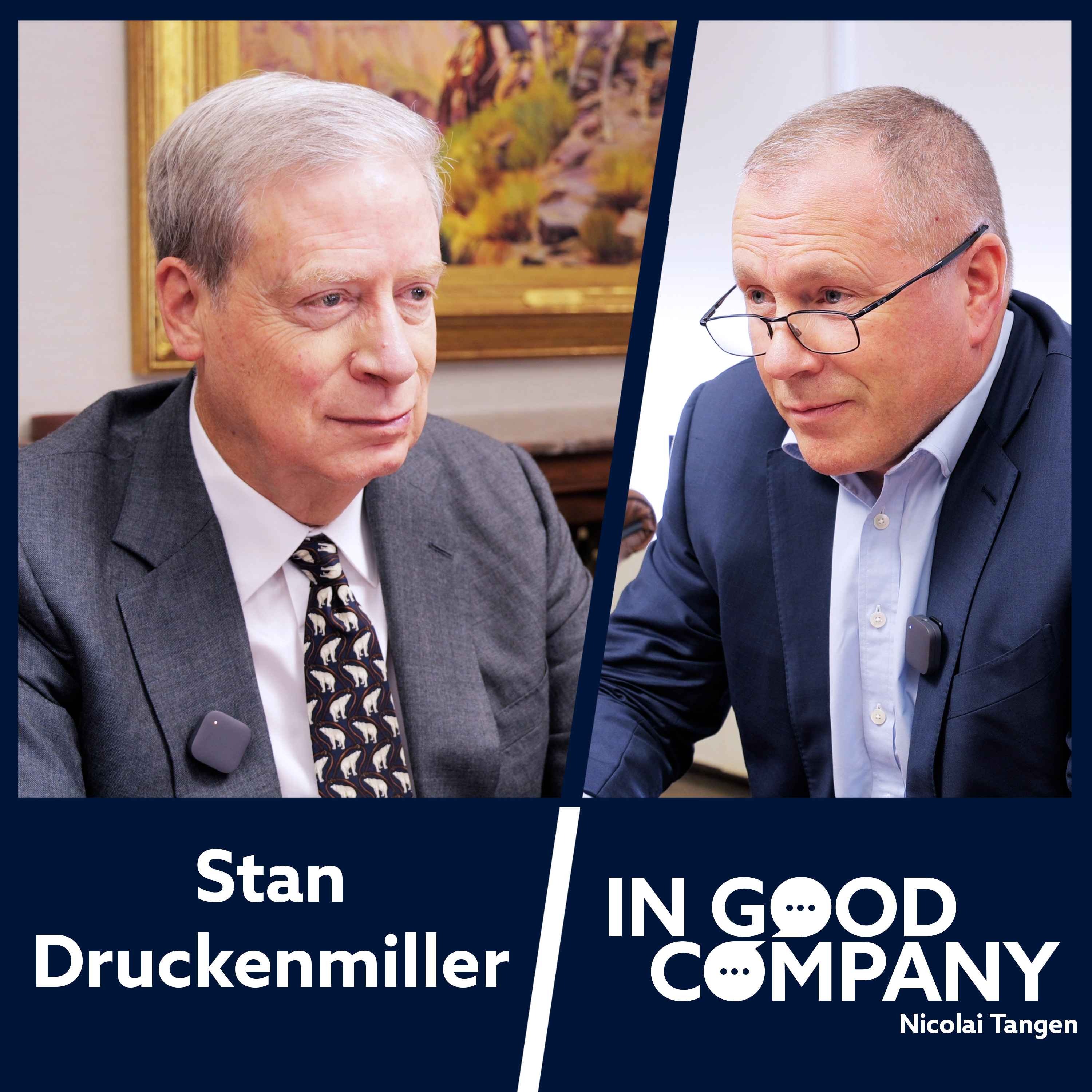
本集简介
双语字幕
仅展示文本字幕,不包含中文音频;想边听边看,请使用 Bayt 播客 App。
大家好。
Hi, everybody.
我是尼古拉·坦根,挪威主权财富基金的首席执行官。
I'm Nicolai Tangen, the CEO of the Norwegian sovereign wealth fund.
今天,我请来了斯坦·德鲁肯米勒,投资界的一位传奇人物。
And today, I'm here with Stan Druckenmiller, a proper legend in the investment world.
斯坦,很高兴能和你在这里见面。
Stan, what a pleasure to be here.
见到你真高兴,尼古拉。
Happy to see you, Niklas.
那你最近最关注哪些数据?
Now, what are the most important data you're looking at these days?
现在吗?
Currently?
对。
Yeah.
有意思的是,大家都知道我是做宏观投资的,但我其实是从底层数据出发来做宏观判断的。
Interestingly enough, I'm known as a macro investor, but I do our macro from the bottom up.
所以我们主要听企业的声音。
So, we're listening primarily to companies.
目前除了房地产市场可能有点疲软,其他地方根本看不出明显的衰退迹象,而房地产也只是从之前过高的价格水平回落而已。
And we're not seeing any material signs of weakness other than maybe in the housing market, but that's from a very elevated price level.
所以从底层信息来看,未来三到六个月里,我们看不到任何经济出问题的信号。
So we're not seeing bottom up information indicating to us that there's an economic problem anytime in the next three to six months.
我也坦白说,我更像个市场老手,而不是经济学家——我们更关注金融条件,现在这些条件依然非常宽松。
I would also say, I'm revealing now that I'm more of a market animal than an economist, that we look at financial conditions, They've been very, very loose.
我的意思是,比美联储刚开始加息的时候还要松得多。
I mean, they're as looser looser than they were when the Fed actually started tightening.
过去四五周,金融条件其实收紧了不少,但原因恰恰是美联储降息之后,美元走强,利率也跟着上升了,不过整体还是远高于正常水平。
They've tightened considerably in the last four or five weeks ever since the ironically, since the Fed cut because the dollar has rallied and obviously interest rates have gone up, but they're still quite above normal.
所以,这就是我们目前最关注的数据。
So that's pretty much the data we're looking at.
我另外特别关注的一点是,自从2021年这场通胀潮开始,我就一直纠结我们是不是重演了70年代。
I'd say the other thing I'm focused on, I've been obsessed with whether we were in the 70s, really since 2021 when this whole inflationary episode started.
大概两年前或者一年半前,我非常笃定通胀会回落,这一点我猜对了。
And I'm I'd say two years ago or a year and a half ago, I was very confident that inflation was going to come down, which I was right on.
但我当时担心经济会出问题,这点我完全猜错了。
But I was worried about the economy, which I was completely wrong on.
最近,鉴于我之前对错各一,我调整了看法,现在更担心未来的通胀,而不是经济本身。
More recently, and you can take this with a grain of salt since I had one right and one wrong there, I've switched to being more worried about inflation going forward than the economy itself.
我为什么这么说呢?
Why do I say that?
如果回头看70年代,当时OPEC的行动引发了通胀。
If we go back to the '70s, there was an episode with OPEC that set off an inflation.
接着出现了经济衰退。
You had a recession.
通胀从大约8%降到了3%左右。
And inflation came down, I think, from about eight to three.
当时降了下来,然后
It took And then
可又回升了。
it went back up again.
对。
Yes.
让我担心的是,正如你所说,它确实又回升了。
And what's bothered me and what I have wanted to see, you're exactly right, it went back up again.
它再次回升,而这段持续的月数,正好说明低点可能就在这时候。
It went back up again, and the number of months would correlate to the bottom being right about now.
没错。
Yeah.
所以,一年前、一年半前我还认为,通胀会再次回落,然后我们就安心了。
So, my confidence a year, a year and a half ago was we were going to have that period where we came down again and then we'd see.
但我有点担心,美联储过早地宣布胜利了。
And I'm a little worried that the Fed has declared victory too early.
我现在的信心不像2021年那么足,那时候我觉得通胀肯定会飙升。
I don't have conviction like I had in '21 that inflation was gonna go up.
那时候货币供应量增长了40%,各种事情都在发生。
That's when the money supply was growing 40% and all sorts of things were happening.
但我也不能确定他们已经彻底压住了通胀,真的赢了这场仗。
But I also don't have conviction that they've snuffed this thing out and won the battle.
信贷利差这么紧,金价创新高,股市一路狂飙,经济根本看不出任何明显疲软的迹象,这时候降息50个基点,实在让人想不通。
To cut 50 basis points with credit spreads tight, gold at new highs, equities roaring, no sign of weakness, material weakness in the economy.
当然,某些领域还是有点问题。
Of course, there's some spots.
这让我很担心,通胀可能又会卷土重来。
That just makes me nervous that this thing could turn up again.
是什么会让它重新抬头?
What would make it turn up again?
会是什么因素导致的?
What would be the factors?
我觉得我刚才说的,就是金融条件在放松。
I think what I just said, easing into financial conditions.
假设特朗普赢了。
Let's say Trump wins.
如果特朗普赢了,企业界可能会重新燃起热情,他们早就盼着放松监管了。
If Trump wins, you could have animal spirits from the business community who are dying for deregulation.
还可能加征关税,这在边际上会推高通胀。
You could have tariffs, which are on the margin inflationary.
移民对这个国家来说一直是巨大的利好。
Immigration has been a great boon to this country.
也许方式上有些问题,但过去两三年,它确实帮助我们实现了低通胀下的增长和劳动力的充足。
Maybe not the way it was done, but it certainly enabled us to have growth without inflation and labor materially the last two or three years.
所以,企业信心回升、经济复苏比现在表现得更好,这些我都保持开放态度。
So the combination of animal spirits, recovery doing better than it is, I'm just open minded to it.
再说一遍
Again
既然这样,为什么央行非得这么急着降息呢?
Why is it so urgent for the central bank to cut, given this?
说实话,
Honestly,
我不觉得鲍威尔是在为所谓的政治原因这么做。
I don't take the nefarious view that Powell is doing it for quote unquote political reasons.
我觉得他一心只想实现软着陆,也特别在意自己的声誉,不想重蹈2021年的错误,再加上媒体里一些经济学家在推波助澜。在我看来,美联储的职责是避免像70年代、金融危机,或者我们刚刚经历的那轮大通胀这样的大错。
I do think he's obsessed with the soft landing, and I think he's obsessed with his legacy and having made the mistake he made in 'twenty one, and he's being egged on by other economists in the press, to me, the Fed's job is to avoid the big, big mistakes, like the '70s, like the great financial crisis, like the big inflation we just had.
但所有这些精细调整、过度担心软着陆,根本不是美联储该干的事。在我看来,它的任务是长期最大化就业,而不是只盯着接下来三四个月的表现。
But all this fine tuning and worrying about a soft landing, that is not the job of the Fed, in my opinion, is to maximize employment for the long term, not for the next three months or the next four months.
但我认为,美联储对所谓软着陆的执念得提醒大家一句:我们之所以要‘着陆’,是因为你们把通胀从2%放到了9%。
But I think the Fed's obsession with nailing this so called soft landing, I would remind everybody that the reason we're having a landing is because they they let inflation go from 2% to 9%.
没错。
Yeah.
所以过去二十年,根本不需要什么‘着陆’。
So there was no need for a landing for twenty years.
但我觉得他们就是太执着于这个了。
But I think that's what they're obsessed with.
说实话,我也不太确定。
I don't really I don't know.
那么,前瞻性指引的问题有多大?
Well, how much of a problem is the forward guidance?
这个问题非常严重。
It's a huge problem.
我的朋友吉姆·格兰特说,他们依赖的是前瞻性指引,而不是数据。
My friend, Jim Grant, says they're forward guidance dependent, not data dependent.
这有问题,因为一旦你用了前瞻性指引,就失去了灵活性。
It's a problem because once you do forward guidance, you eliminate your optionality.
我觉得,尼古拉,你我都干这行,都知道错了就得改主意。
And I think, Nicolai, you and I being in this business, we know we have to change our mind when we're wrong.
但美联储一次又一次地表明,他们觉得一旦改口,就会失去公信力。
This Fed has shown over and over again that they think if they change their mind, they're losing credibility.
这就让他们束手束脚了。
So, it makes them have their hands tied behind their back.
我经常出错。
I'm wrong all the time.
我觉得我的记录之所以这样,是因为一旦错了,我就改主意。
I think my record is mainly because when I'm wrong, change my mind.
并不是我总对。
Not that I'm always right.
我当然不是。
I'm certainly not.
前瞻指引把他们困在某些立场上,剥夺了他们所需的灵活性。
Forward guidance seems to tie them into positions where and eliminate flexibility they need.
怎么
How
财政赤字是个多大的问题?
big a problem is the budget deficit?
作为从业者,我不能在三到六个月的时间尺度上对此太过执着。
As a practitioner, it's something I can't be obsessed with on a three to six month basis.
作为美国人,我确实非常在意,因为债务占GDP的比例不可能无限上涨。
As an American, it's something I'm really obsessed with because debt to GDP can't go up forever.
在我看来,我们迟早要面对后果,但我清楚什么时候会发生。
And to me, we have a reckoning, but I know how to time when that's going to take place.
我要说的是,因为美元是储备货币,我们被允许做一些英国人根本不敢做的事。
I will say that because of the reserve currency, we've been permitted to engage in behavior that say the Brits couldn't have behaved in.
我最近用了一个新词,叫‘信任流失’。
There's a new term I have, getting lose trust.
我们还没出现信任流失,就是因为美元是储备货币,尽管从我们现在的所作所为来看,其实比当年的英国激进多了。
We haven't been lose trust because we are the reserve currency, even though if you look at everything we're doing, it's much more radical than the Brits were doing.
那句老话怎么说来着?
What's that old saying?
一个人是怎么慢慢破产,然后突然就崩了的?
How do you go bankrupt slowly and then suddenly?
在充分就业的情况下维持占GDP百分之七的财政赤字,这种做法不可能永远持续下去。
Running deficits with full employment, basically at 7% of GDP, is a recipe that can't last forever.
我们之所以还没还这笔账,其中一个原因就是新冠疫情。
One of the reasons we haven't paid for it is in COVID.
整个私营部门,百分之八十的个人都重新贷款了他们的房贷。
The entire private sector, eighty percent of individuals refinance their mortgages.
尽管最新利率已经涨到8%,但平均房贷利率依然低于4%。
So the average mortgage rate is still under four percent even though at the margin it got to 8%.
企业把债务期限拉长了。
Corporations termed out their debt.
这些债务会在2025年和2026年陆续到期。
That stuff rolls over in 'twenty five and 'twenty six.
如果真要出问题,大概率是在2025年底到2026年初,但具体什么时候谁也说不准。
If we're going to have a problem, it's probably more like late twenty five, early twenty six, but you just don't know.
那到底是什么样的时刻,会让人们突然转变想法,不再愿意以当前利率借钱给我们?
And what is it that can create this kind of trust moment where people suddenly change their mind terms of the price they want to have to lend money to
可能是拍卖失败。
It could be a failed auction.
也可能是美联储对通胀判断失误,经济反而因金融环境放松而加速升温,导致通胀卷土重来。
It could be if the Fed is wrong about inflation and it turns back up again because they're easing financial conditions into a melt up.
如果他们不得不重新加息,这正是我为什么认为他们现在应该格外谨慎——毕竟他们已经提前承诺要降息,这一反转可能引发问题。
If they were to have to start increasing interest rates again, which is why I think they should be so cautious about their optionality, now that they've forward guided to a series of cuts, that could cause it.
我最担心的是拍卖失败,但说实话,可能六个月,也可能六年。
My best guess would be a failed auction, but honestly, it could be six months, it could be six years.
真说不准。
Just don't know.
如果利率开始上升,能涨到什么程度?
So if rates start to go up, how high can they go?
这是个好问题,目前十年期国债利率大概在4.5%左右。
Well, that's a great question because right now, the ten year, I guess it's around four and a half.
它可能会上涨到与名义GDP持平的水平。
It can go to nominal GDP.
假设通胀升到百分之四到四点五,实际增长在百分之二点五到三之间。
So let's say inflation went to four, four and a half, and real growth was two and a half or three.
十年前,利率可能在六到七之间。
Ten year ago, was six or seven.
我不是在预测这种情况,但这样的走势是说得通的。
I'm not predicting that, but that would be consistent.
如果通胀真的再次回升,而经济并没有走弱,我觉得利率是有可能达到那个水平的。
If inflation did turn back up again and the economy wasn't weakening, I think you could get there.
有意思的是,上世纪七十年代就发生过类似的情况。
It's interesting, that's what happened in the '70.
债券市场其实没怎么反应,直到利率从百分之三回升到百分之十二,才突然剧烈波动。
The bond market didn't really respond until we went back up from like three to 12 and then it responded in spades.
再说一遍,我不是在预测这事,但作为从业者,我对这种可能性保持开放态度,它确实在我关注的范围内。
Again, I'm not predicting this, but as a practitioner, I'm very open minded to it, and I've got a, it's like on my radar.
你说你最赚钱的时候,就是美联储犯错的时候。
Well, you say you make the most money from Fed mistakes.
你现在就是这么布局的吗?
Is this the way you are positioned now?
我做空了国债。
I'm short pawns.
但没空得特别狠。
I'm not mega short.
这次我的时机居然抓得不错。
I actually had good timing for once.
我就是在美联储降息的那天直接做空的。
I shorted them literally the day the Fed cut.
从那以后,行情一路挺顺的。
It's been kind of an easy ride since then.
我本该押得更重一点的。
I should have been much bigger.
现在他们波动这么大,我反而有点担心,怕自己仓位太大了。
Now that they move so much, I'm a little worried about, if anything, being too big.
不过,没错,我现在的仓位就是这样。
But yeah, no, that's the way I'm positioned.
如果我觉得我们讨论的这种情况真的在发生——虽然目前还没看到任何迹象——我倒是愿意考虑这种可能性,那我的仓位会大得多。
If I thought what we are talking about was happening and I don't see a sign of it yet, I'm just open minded to it, I would be much bigger.
我现在做空的仓位相当于净资产的25%,期限等同于十年期国债。
I'm like 25% NAV short, ten year equivalent.
斯坦,我们聊聊股市吧。
Stan, moving on to the stock market.
目前的行情非常集中。
The leadership is very narrow.
推动市场的股票其实没几只。
It's led by not so many stocks.
你对这种高度集中的行情怎么看?
Just how do you read this narrow leadership?
这种局面一直不算好,但比起去年四月,现在的集中度已经没那么极端了。
It's never been great, but the leadership's not as narrow as it was last April.
所以你开始看到市场范围在扩大了。
So you're starting to get some broadening out.
金融板块的表现有所改善。
The financials are doing better.
还不算好。
It's not great.
我们从未见过熊市启动时领涨股不收缩,而现在收缩得已经足够明显,接近满足必要条件了。
We've never had a bear market start without the leadership narrowing and it's narrowing enough that you're starting to get toward a necessary condition being satisfied.
但现在还早。
But it's early.
这更像是黄灯提醒。
But it's a yellow light.
还没到红灯警告的地步。
It's not a red light.
我的看法就是这样。
That's how I read it.
那你觉得科技行业接下来会怎么发展?
So how do you think the tech sector will develop?
你在那边看到哪些科技趋势?
What kind of science are you seeing there?
AI热潮一点都没减退,尼古拉。
The AI boom is going unabated, Nicolai.
我觉得私营企业都明白,要是不在这上面花钱,等竞争对手押对了注,自己的生意就可能面临生存危机。当然,那些超大规模云服务商已经全身心投入,需求还在持续增长。
I think the private sector just sees it as an existential threat to their business if they don't spend money on it because if they don't spend money on it and their competitors do and their competitors are right, they're gonna have a big competitive problem and of course the hyperscalers, they're all in and their demand is just continuing.
你看,科技板块的股价现在可不便宜。
Look, you've got very rich prices in the tech sector.
像苹果这样的公司,市盈率都跑到二十五倍、三十倍了。
Stuff like Apple selling, I don't 25 or 30 times earnings.
但它的增长显然没那么快,不可能有百分之二三十。
It's certainly not growing at 25 or 30%.
不过我们对科技板块的持仓并不重,也没做空,所以我其实没怎么关注,因为
But we don't have that much exposure to the tech sector, we're not short of it, so I'm not really involved because
但你早就入局了。
But you were very early into it.
是的。
Yeah.
你怎么能提前发现这些趋势呢?
How do you spot these early trends?
你具体看哪些信号?
What is it that you look at?
说实话,我这儿有一群年轻又出色的分析师。
Honestly, I've got young, really good analysts here.
是啊,很多人手底下都有不少年轻分析师。
Yeah, lot of people have a lot of young analysts.
他们一直紧盯动态,大概三四年前我们就注意到,去斯坦福和麻省理工的工程师们,纷纷从加密货币转向了人工智能。
Who are on top of things and they started We noticed about three or four years ago that the kids that go to Stanford and MIT, The engineers were shifting from crypto to AI.
那是第一个明显的信号。
That was the first sign.
然后我的年轻合伙人开始越来越多地谈论人工智能。
Then my young partners started talking more and more about AI.
我问他们该怎么布局。
I asked them how to play it.
他们提到了一家叫英伟达的公司,我原本以为它只是做游戏的,很久没关注过了。
They mentioned a company called NVIDIA, which I thought was a gaming company I hadn't done work on in a long time.
我买了一大笔,结果一个月后,ChatGPT就出现了。
I bought a pretty good chunk of it and then like a month later, ChachiPT happened.
纯粹是运气好。
It was just total luck.
我当时根本不知道ChatGPT,但这里关于AI的讨论已经很热了,而且股价跌了,我记得是从400块跌到150左右。
I had no idea Chet GPT, but the AI drum around here was big enough and the stock was down, I think, 400 to 150 or something.
所以我就是这样入局的。
So that's how I got started in it.
一旦你开始了,比如投了这类项目,我们就会深入挖掘,后面就牵出了一连串的事情。
And then once you get started, once we invest in something like that, then we really start to dig deeper and then there was a whole chain of things.
我们知道这会影响电力。
We knew it would affect power.
我们知道这会影响铀矿。
We knew it would affect uranium.
我们把整个产业链梳理了一遍,这个趋势其实很明显,就跟当年的云计算一样。
We just went through the whole chain and it was a pretty easy trend to spot, not unlike the cloud was.
这些趋势总是一波一波来的,但现在的关键问题是,AI到底该怎么投?这也是我们目前纠结的地方——我们的持仓既不是全面看多,也不是看空。因为我们一开始投的是‘卖铲子’的,比如英伟达,还有微软。
You know, these things come in waves, but AI, the question with AI now that I'm wrestling with and the reason our exposure is really neither long nor short is how to play it because we started with picks and shovels, which is NVIDIA and to some extent Microsoft.
但现在我们看到,这些模型公司正在疯狂砸钱。
But now we're seeing just massive amounts of capital being spent by these modelers.
如果AI是真的——我觉得它确实是——那所有人给你的答案都会一样。
And if AI is for real, and I think it is, they're all going to give you the same answer.
未来会有四到五家公司,会投入天文数字的资金。
So we're going to have four or five companies who will spend massive amounts of capital.
但我并不觉得这是个赢家通吃的模式。
But I don't see it as a winner take all model.
另一方面,我觉得还有一些应用是我根本没想到、别人也没想到的。
On the other hand, I think there are applications that I haven't even thought of and nobody's thought of.
这些应用迟早会冒出来。
They're going to spring up.
谁能在互联网刚起步的时候想到优步或者脸书呢?
Mean, who would have thought of Uber or Facebook when the internet started?
所以我们对人工智能非常看好,但目前还不确定该从哪里切入、如何积极布局。
So we're very bullish on AI, but we're not bullish currently on exactly where we're supposed to be and how to play it aggressively.
就像2000年、2001年的互联网一样。
Not unlike the internet in 2000, 2001.
你完全可以相信互联网的前景,当时不入场,等时机成熟了再参与。
You could have believed in the internet, not been exposed, and then got your exposure on a more timely basis.
当然,也可能是我错了,这也不是什么稀罕事。
Or I could just be wrong, which wouldn't be that unusual.
但你之前也早早布局了减肥药公司。
But you were also early into the anti obesity drug producers.
哦,这太简单了。
Oh, that was easy.
我是说,我不知道挪威怎么样,但在美国,如果你去迪士尼乐园之类的地方,只要了解美国人的心理,你跟他们说有一种不用动任何力气就能减肥的方法,
I mean, I don't know what it's like in Norway, but in America, if you go to Disney World and everything, and if you know the American psyche, you tell an American they got a way to lose weight without doing any work.
我早就知道这药有效,因为我们早就接触到了。
And I knew the drug worked early on just because we were exposed to it.
后来听说一旦停药体重就会反弹,我就明白这其实是个‘剃须刀+刀片’的生意——人们得一直吃下去。
Then when I heard, if you get off the drug, you gain the weight back, then I knew it was sort of a razor blade business because people would have to stay on the drug.
是啊,但你说这话说起来容易,难道你不是唯一一个在迪士尼乐园转悠、盯着这些事看的人吗?
Yeah, but you say it's easy to say, I mean, hey, it's not like you're the only one who's walking around in Disneyland and looking at these kind of things, right?
但你真的会根据直觉或者眼前的数据采取行动。
But you actually act on your intuition or the data that's in front of you.
我会,但你知道,这也不是全靠聪明。
I do, but it's, you know, it's not all brilliance.
我买进英伟达的时机很好,但就在行情真正起飞的时候,我卖在了800到900之间,也在700多的高位卖掉了礼来。
I bought NVIDIA very well, but I sold it 800 or 900 right when the party was really getting going and I sold my Lilly in the high 700s.
没错,赚了不少利润。
Granted, had a nice profit.
不过呢,我主要关注大的趋势。
But yeah, I look for big trends.
我不是那种一拿就是二十年的巴菲特型投资者,我找的是两到四年周期的机会,这两者都符合这个范畴。
I'm not a Buffett guy that holds for twenty years, but I look for two to four years stuff and both fit into that category.
说实话,我们现在正在寻找那些还没被充分认识的AI应用场景。
And frankly, we're looking now for AI applications that might not have been recognized yet.
我记得自己在纪念斯隆-凯特琳癌症中心的董事会待了将近三十年,那里的癌症治疗应用简直令人惊叹。
Think I'm on the board of Memorial Kettering, have been for almost thirty years, and the applications in cancer are unreal.
顺便提一下,纪念斯隆-凯特琳癌症中心是全球顶尖的癌症治疗医院。
And just FYI, the Memorial Sloan Gathering is the leading cancer hospital in the world.
对。
Yes.
而且他们基金会资金雄厚,部分原因是你在投资委员会任职。
And they have a lot of money in the endowment, partly because you are on the board of the investment committee.
他们的捐赠基金确实资金雄厚。
Well, have a lot of money in their endowment.
我不敢说是因为我在董事会,不过还是谢谢你的夸奖。
I wouldn't say partly because I'm on the board, but thank you.
上次我们见面时,你提到过‘先买入,再分析’这个理念。
Now, when we last met, you mentioned the concept of buy first, analyze later.
能跟我详细说说吗?
Tell me about that.
是的,索罗斯以前管这叫‘先投资,再调研’。
Yeah, Soros used to call it invest and then investigate.
我想我刚刚就给了个典型的例子。
I think I just gave a classic example.
我对英伟达其实了解不多。
I didn't know that much about NVIDIA.
我只是知道人工智能这个方向,然后有几位朋友提醒我该怎么布局。
I just knew that AI and I had some people here tell me how to play it.
所以我们买了英伟达,之后正打算深入研究,结果ChatGPT突然就出来了。
So we bought NVIDIA, and then we were in the process of doing a lot more work and then ChatGPT happened.
我一直觉得市场很聪明、反应很快,而且随着今天这些通信和技术的发展,它们变得越来越敏锐。
But I've always had the view that markets are smart, they're fast, and they're getting much more so with all the communication and the technology we have today.
如果我听到一个概念觉得不错,再花两三个月慢慢分析,很可能就错过了大半段行情,到时候心理上反而会僵住。
And that if I hear a concept and I like it, if I wait and spend two or three months analyzing it, I may miss a big part of the move and then psychologically be paralyzed.
想买一只已经涨到100的股票,本来就不容易。
It's hard to buy a stock you're looking at at a 100.
就算它最终会冲到400,可只要涨到160,你脑子里就开始打退堂鼓,总等着回调。
It's a 160 even if it's going to 400, somehow your head is screwed up and you're waiting for the pullback.
所以我们一般会先建一个不算太重、但足够有意义的仓位,然后再慢慢做深入研究。
So we will buy something, a meaningful position, but not earth shaking, and then really do the work.
如果觉得当初的判断错了,我们就果断卖出。
And if I think we made a mistake, I'll sell it.
如果觉得没错,那只要有机会,我们就会继续加仓。
And if I don't think we made a mistake, we'll add to it if we have to.
是的
Yeah.
不,我这一生其实一直用的是同样的方法。
No, I happen to have worked exactly the same way in my life.
这能让你的工作、努力和思考都更加聚焦。
It really focuses in your work and your efforts and your thinking.
但你一直相信自己的模式识别能力吗?
But have you always believed in your own pattern recognition?
是的,我刚入行的时候被提拔得太快了。
Yes, when I started in the business, I got promoted too early.
还没来得及真正掌握分析的细节,我就被推到了领导岗位,只能大量依赖图表和直觉。
So before I had really learned the nuts and bolts of analysis to the extent that I should have, I was promoted to a leadership position and I had to rely a lot on charts and I had to rely a lot on intuition.
但如果你面对的是一个周期性公司,它正在亏钱,整个行业都在削减产能,那根本不需要什么天才,也能想象出十八到二十四个月后会是什么样子。
But I found it's not that hard if you're dealing with a cyclical company and they're losing money or they're not profitable and everybody in their industry is shutting capacity down, It doesn't take a rocket scientist to try and envision eighteen to twenty four months out.
如果没人新增产能,它们可能就不再亏钱了。
If nobody's adding capacity, they may not be losing money anymore.
他们可能会赚大钱。
They might be making a lot of money.
我发现,绝对不要基于当前的情况去投资。
I have found it's very important never to invest in the present.
总要试着想象十八到二十四个月后的局面,然后想想,如果情况真的变了,证券价格会不会反映出来?
Always try and envision the situation as you see it in eighteen to twenty four months, and then see if you feel things will be differently than they are now, would security prices reflect that?
我认为,投资者最大的错误就是只看现在,而不是向前看,只盯着冰球现在的位置,而不看它将要去的方向。
I think that's probably the biggest mistake investors make, is they invest in the present rather than forward looking and looking where the puck's going instead of where the puck is.
是的。
Yeah.
不过,很少有人会相信别人的直觉。
Now, few people believe in other people's gut feel.
索罗斯相信你的直觉吗?还是你得向他展示分析数据?
Did Soros believe in your gut feel or did you have to show him analysis?
我觉得我和索罗斯一开始的关系并不太顺利。
I think Soros and I had a rocky start.
我去了那里,在道富基金管理公开基金时取得了一些显著的成绩。
I went there, I had some significant success running public funds at Dreyfus.
他跟我说我是他的接班人,但我觉得我刚到的时候,他还没完全下定决心。
And he told me I was his successor, but I don't really think his mind was completely made up when I got there.
头六个月特别不顺,因为没人清楚到底谁说了算。
And the first six months were quite rocky because it wasn't clear who was in charge.
说实话,我们俩的交易都做得一塌糊涂。
Frankly, we were both trading badly.
我经常飞去匹兹堡,因为那时我还在管杜肯基金。
And I was flying to Pittsburgh because I still had Duquesne.
我同时管着两个基金。
I was running both.
下飞机的时候,我想那时候还没手机,都是用公共电话。
And when I got off the airplane, I think we had pay phones back then.
那时候还没有手机。
We didn't have cell phones.
那边的首席交易员告诉我,他已经把我持有的债券仓位清掉了。
And the head trader there told me he had sold out my bond position.
所以那时候我对自己的评价,可能比实际情况高了不少。
So I probably had a higher opinion of myself at the time than I should have.
我当时还年轻,一直都在掌控局面,因此非常生气,直接表达了强烈的不满。他说,等你回纽约再谈这事。
I was young, and I had always been in charge, so I was quite upset and basically expressed extreme displeasure and he said, we'll talk about it when you come back to New York.
他话里话外觉得我想撂挑子,还说厨房里人太多,他打算去东欧待四五年,到时候就联系不上了。
Implied that I wanted to quit, and he said that maybe there were too many cooks in the kitchen and he was going to Eastern Europe for four or five years, he'd be out of touch.
等他回来,就能看清楚到底是他总盯着我,还是我真的一无是处。
And then he'd find out whether he had been in my hair or if I really was incompetent.
他说话就是这风格,我们心里这么想,但他敢直接说出来。
That's sort of the way he talks, way we think, except he actually says it.
幸运的是,他离开期间,柏林墙倒塌了。
And luckily for me, while he was gone, the Berlin Wall came down.
我趁机投资了德国马克。
I invested in the Deutsche Mark.
但我觉得这对我们俩来说都是幸运的。
But I think it was lucky for both of us.
之后我连续四年表现得特别出色,之前和之后都没再有过这样的状态。
I went on like the best run I've had before or since for like four years.
所以他一直看到我的成绩。
So he kept seeing the results.
我觉得他之所以信任我的直觉,纯粹是因为一开始我就打出了好成绩。
So I think he trusted my intuition only because the record started that way.
你现在会信任同事们的直觉吗?
Do you trust the intuition of your colleagues now?
我信任他们的分析。
I trust their analysis.
他们的分析能力比我强太多了。
They're so much deeper and better at analysis than I was.
但我能看出他们的直觉正在成长。
But I can see the intuition developing.
我对公司里人才和股权方面的判断,可能是过去四十五年来最乐观的一次。
I'm probably as bullish on the talent, the equity talent in my firm as I've been in forty five years.
所以这大概就是我对‘是’的回答了——一部分靠头脑,一部分靠数据分析,再加一点直觉。
So I guess that's an answer to yes, but partly brain, partly analytics, and then partly intuition.
他们不像我这么依赖直觉,因为他们没必要那样。
They're not as intuitive as I am because they don't have to be.
我之所以得靠直觉,是因为我从来没掌握过他们那种分析能力。
I was sort of forced to be intuitive because I never acquired their analytical skills.
你提到过一些你卖得太早的例子。
You mentioned some examples of where you had sold a bit early.
你通常都会卖得比较早吗?
Do you generally sell early?
不,说起来有点尴尬,我之前做过一篇关于英伟达的采访。
No, I mean, embarrassingly, I did an interview on Nvidia.
那时候股价大概是3.7美元左右,我就说,这个我们可能会拿好几年。
I think it was like $3.70 or something, and I said, this is one we're probably going to own for a few years.
但我根本没想到它一年内能涨到900美元,市值突破两万亿美元。
But I didn't think it was going to go to 900 in a year and to over a $2,000,000,000,000 market cap.
我记得刚起步的时候,市值也就一千亿到一千五百亿美元左右,简直不可思议。
I think it just started like $100,000,000,000 or $150,000,000,000 It was something crazy.
所以,我并不总是卖得太早。
So no, I don't necessarily sell early.
我是技术派,通常会等到行情见顶才出手。
I'm a technician, so I usually wait for tops.
奈飞根本就没见顶。
NVIDIA had no top.
我当时只是觉得
I just thought
那是什么意思?
What does that mean?
我想解释一下,什么叫
Just want to explain, what does it
什么叫见顶呢?
mean to have a top?
见顶就是价格上涨的速度开始放缓,之后会长时间趋于平缓。
A top is something the rate of change of it's going up changes and it tends to flatten out for quite some time.
在技术分析里,这种情况可能是看涨旗形,短暂盘整后又继续上涨,也可能是真的见顶了,就此结束。
The trick is, in the technical world, that could end up being a bull flag where it just consolidated for a bit and then it did a new leg, or it could be a top where that was it.
你怎么知道到底是哪一种?
How do you know which is which?
你不知道。
You don't.
你只能有自己的判断,然后表达出来。
You have an opinion, and you express it.
有时候对,有时候错。
Sometimes you're right and sometimes you're wrong.
NVIDIA当时根本没见顶,我只是对半导体行业了解得不算深入,但从70年代以来一直关注,这本来就是一个周期性很强的行业。
With NVIDIA, there was no top, but I I've just analyzed the semiconductors industry not particularly well, but since the 1970s, and it's a cyclical industry.
我知道英伟达有持久力,还有一支四千人的软件工程师团队,不只是做硬件而已。
And I knew NVIDIA had staying power and had 4,000 software engineers, so it wasn't just hardware.
他们有个叫CUDA的软件,专门用来优化他们的显卡。
They have a CUDA, this thing called CUDA software that they do to make their GPUs.
但我一看到股价涨到两万亿美元,就觉得这实在太高了。
But I just thought once it went through 2,000,000,000,000, this is just too much.
最坏的情况也不过是大幅回调,到时候我还能再进场。
And worst case, it'll have a big correction, I'll get another chance.
当然,我再也没有等到那个机会。
And of course, I didn't get another chance.
说不定你还有机会。
Oh, you may.
是的,我可能还有机会。
Yes, I may.
你觉得你会有吗?
You think you will?
从这个价格来看,我真说不准。
I don't know from this price.
我猜我会买回来,不然我早就买回去了。
I assume I will or I would have bought it back.
高价买回来我也不介意。
I don't mind buying something back higher than I would.
我不喜欢这样,但我完全愿意以高于卖出的价格买回来。
I don't like it, but I'm perfectly willing to buy something back higher than I sold it.
有些人就是下不了这个决心。
Some people can't get themselves to do it.
哦,我做得到。
Oh, I can.
我最拿手的就是不带情绪做决定。
I'm the one thing I'm strong on is I'm not emotional.
但是
But
你从来没遇到过亏损的年份?
you never had a down year?
没有。
No.
问得真傻。
Stupid question.
这为什么重要?
Why is that important?
没什么特别的原因。
No good reason.
我觉得重要是因为别人总在提,而且我以前有投资者的时候,他们特别喜欢这一点——我们这行有个词叫‘风险调整后收益’。
I think it's important because other people talk about it, and my investors loved it when I had investors because they have this stuff in our industry called risk weighted return.
我不太看重这个,但不得不说,这工作压力挺大,要是没大的回撤,压力会小很多。
I'm not big on that, but I will say it's a stressful job and there's less stress if you don't have big drawdowns.
我过去几年确实经历过大幅回撤,所以所谓的亏损年份,有一部分纯属运气。
I have had significant drawdowns in inner years, so part of the down year is just luck.
回撤
What does
对你有什么影响?
a drawdown do to you?
我会感到焦虑、心烦。
I get anxious, upset.
明明只是你自己的钱,你还会这么心烦吗?
You still get upset even though it's only your money?
对。
Yes.
是的,我这个人竞争心特别强,哪怕是花自己的钱也一样。
Yeah, I'm just I'm a very competitive person even if it's just my own money.
其实我也不想这样,但确实改不了。
I wish I wasn't, but I am.
这大概也是我的业绩能保持得这么好的原因之一,不过我自己倒是不太喜欢这样。
And, it's probably one of the reasons my results are as good as they are, but I'd prefer myself not to be.
这有点像病,但对我有用。
It's a bit of a sickness, but it works for me.
你跟谁竞争?
Who do you compete against?
我跟所谓的投资机会池竞争。
I compete against what I would call the opportunity set.
如果那年机会很好,但我错过了,我会对自己感到失望。
And if there was a great opportunity set that year and I missed it, I'm disappointed in myself.
比如,我赚了20%,但我觉得自己该赚50%,我就会觉得自己没做好。
Like, if I'm up 20 and I think I should have been up 50, I'm disappointed in myself.
如果机会本来只值涨10%到15%,而我涨了20%,我就会特别开心。
If the opportunity set was basically to be up 10 or 15 and I'm up 20, I'm thrilled.
当投资者的好处之一,就是总能找到理由敲自己脑袋,对吧?
I mean, good thing about being an investor is always a good reason to hit yourself in the head, right?
我不确定这算不算我们这行的好处,但肯定是坏处。不知为啥,我就喜欢敲自己脑袋。
I don't know if that's a good thing about our business, but it's probably the bad thing about our business, and for some reason, I like to hit myself in the head.
我总是以最高标准来衡量自己。
I always measure from the top.
你如何处理那些表现不佳的股票?关键是什么?
Crickets selling your losers, what's the key to that?
如果当初买这只股票的理由已经不存在了,我根本不关心自己花了多少钱。
If the reason I bought a stock is no longer the case, I don't care what I paid for it.
就算我以60块买进,现在跌到50,因为市场比我先发现了问题,我也完全不会在意。
And if I bought it at 60 and it's 50 because the market's discovered the problem before me, I have no emotion whatsoever.
索罗斯也是这么做的。
Soros was the same way.
我并不是从他那里学会的,但他的做法确实强化了我这种想法。
I didn't really learn it from him, but it was certainly reinforced.
久了以后,尼古拉伊,你会建立起足够的自信,敢于清空持仓、从头再来,因为你相信自己还能再次成功,不会固守在那些你已经没那么确定的仓位上。
Like, after a while, Nicolai, you also develop enough confidence that you're not afraid to clean the slate and start over because you have the confidence that you'll be successful again and you're not gonna sit there in a lazy position that you're not that sure about anymore.
只要清理掉那些不合适的持仓,如果你已经这么做了几十年,而且一直有效,你自然就有信心接受亏损,不会太纠结。
Just clean house and if you've been doing it for decades and it's worked, you kinda have the confidence to take a loss and not worry about it too much.
一旦我退出了,就彻底退出。
Once I'm out, I'm out.
你说你没有感情。
You said you don't have feelings.
你这话是什么意思?
What you mean by that?
我什么时候说我没有感情了?
Did I say I don't have feelings?
我感情丰富得很。
I have a lot of feelings.
你是说亏钱的时候?
You mean about taking losses?
是的。
Yeah.
就是这么回事。
Just.
展开剩余字幕(还有 321 条)
我的意思是,图表之所以有效,是因为支撑位和阻力位的形成,往往是因为有一群人当初在60美元买入,后来价格跌了,他们就一直等着股价回到60再卖,可这三四年里,他们本可以投资其他一直在涨的标的。
What I mean by that is I think one of the reasons charts work, we have The reason there's support and there's resistance is the resistance is a bunch of people that bought it at 60, and it went down, and they've been waiting for three or four years for it to get back to 60 while they could have been in something else that was going up the whole time.
我根本不关心自己当初花了多少钱买这只股票。
I just don't care what I paid for a stock.
从我未来的投资决策来看,买入成本完全无关紧要。
It's absolutely irrelevant in terms of my investment process going forward.
一方面固执,另一方面又能随时改变主意,这种组合其实挺少见的。
Now, this combination of being, on the one hand, stubborn but on other hand, being able to change your mind, it's pretty rare.
别人跟我说过。
I'm told it is.
朋友和别的投资者都说我完全不带情绪,确实,他们也告诉我这种特质很少见。
I'm told by my friends and other investors that I'm entirely unemotional and like, yes, I am told it's rare.
你认为这是你成功的秘诀吗?
Is that the key to your success, you think?
算是其中一个吧。
One of them.
我
I
我觉得这是很重要的一部分。
think a big part of it.
我觉得,关键在于保持开放的心态和谦逊,只有不固执己见,才可能改变想法,这一点非常关键。
I think, again, being open minded and having humility, the only reason you can change your mind is if you're not arrogant about a position has mattered.
我有幸遇到一些很棒的导师,一位在匹兹堡,还有索罗斯,他们在仓位管理上给了我很大启发。
I think I had some great mentors, the one in Pittsburgh and then Soros in terms of sizing.
我很早就学到了一些重要的经验。
And I think I learned some lessons very early on.
敢于集中持仓,不怕集中,这是我成功的关键原因之一。
Concentration, not to be afraid of concentration, that's a big reason for my success.
另一个重要原因,是我自己摸索出来的:愿意涉足其他资产类别。
Probably the other big reason was sort of self taught is being willing to go into other asset categories.
如果你打算集中投资,那有五个方向可选,总比只盯着一个好。
And if you're going to concentrate, it's better to have five buckets to plan than to plan one.
我最初是在股票市场成长起来的,但有时候股票市场的风险收益比并不清晰,而在债券或货币市场反而更清楚。
So I was brought up in the equity market, but sometimes the risk reward in the equity market is not that clear when it actually is clear in the bond market or the currency markets.
这其实是个巧合。
And it's a coincidence.
你提到从没出现过亏损年份,这确实是一部分原因。
You asked about never hanging a down year.
债券和货币市场最活跃的时候,往往正好是熊市期间,而股票市场也一样。
Part of it is the most action in bonds and currencies tends to happen in bear markets and equity markets.
所以你可以先把股票放一放,专心盯住这些市场。
So you can put the equities in the drawer for a while and just concentrate in those markets.
我觉得这对我成功至关重要,因为它让我有纪律不去碰那些没有足够把握的领域——只要信用、商品、货币或债券里有机会,通常总能找到风险收益比特别好的标的。
I think that's been a huge part of my success is it gives you the discipline not to play in areas that you don't have a lot of conviction in because if you've got credit to play in, if you got commodities to play in, currencies or bonds, you can usually find something that you think there's a great risk reward in.
而且这些市场的流动性通常也比股票市场更好。
It's also they tend to be more liquid in equity markets.
所以回到我们之前聊的,当你发现判断错了,也能及时调整。
So to our earlier conversation, you can change your mind when you're wrong.
你从索罗斯那里学到了关于仓位大小的什么?
What did you learn about sizing from Soros?
我不知道你是否了解棒球,或者你的听众有没有人玩过这个运动?
I don't know whether you know about Do you know baseball at all or would your
听众们可能也不太熟悉,我自己也不打,但……
listeners I don't know know about about I don't play it, but
我刚去索罗斯那里时,以为能学会怎么预测马克和美元的走势,结果发现,这方面我比他更在行。
When I went to Soros, I thought I would learn what would make the Deutsche Mark go up and the end go up, and modestly, I found I was better at that than him.
用棒球术语来说,我的击球率非常高。
In baseball terms, I had a very high batting average.
而他的长打率要高得多。
He had a much higher slugging percentage.
所以我从索罗斯身上学到的是:当你有十足把握时,就要大胆下注。
So what I learned from Soros is when you have conviction, you should bet really big.
我知道你的听众可能早就听过这个例子,但最能说明问题的,还是英镑那次。
I know your listeners have probably heard it before, but probably the best illustration is the pound.
是的。
Yeah.
那后来怎么样了?
So what happened?
我们回过头说说。
So let's go back.
你当时在办公室里。
So you are in the office.
英国那边情况如何?
What's happening in The UK?
我当时在纽约的办公室,我的合伙人斯科特·贝森特在欧洲,主要负责欧洲地区的交易,他在伦敦。
So, I'm in the office in New York, and Scott Bessent, who was a partner of mine in Europe, mainly trade, the European area, he's in London.
他告诉我,伦敦的房地产市场出了大问题。
And he tells me the London housing market is in big trouble.
英国经济也陷入困境,因为当时像大多数盎格鲁-撒克逊经济体一样,经济高度依赖房地产等板块。
And the British economy is in trouble because, like most Anglo Saxon economies at the time, it's very much driven by housing and so forth.
简单说一下吧。
Just paint it out a bit.
所以你的办公室,是正对着中央公园吗?
So your office, are you overlooking Central Park?
我没正对着中央公园,但离得很近。
I'm not overlooking Central Park, but I'm near it.
我在索罗斯公司32层,不过不是转角办公室。
I'm in the Soros office on 32nd Floor, but it's not a corner office.
就是个很普通的工位。
It's nothing fancy.
英国经济正在一路下滑。
And The UK economy is going down the toilet.
我们觉得英国经济在走下坡路,但得先回溯三年前。
We think The UK economy is going down, but I need to take you back about three years.
柏林墙倒塌的时候,我可能因此保住了工作——要是没有那件事,索罗斯去东欧后不到半年,我可能就被辞了。
When the Berlin Wall comes down, it probably saved me my job because I probably would have been fired at Soros six months after he went to Eastern Europe had the Berlin Wall not come down.
但德国马克在两天内大幅下跌,因为市场普遍认为东德的货币奥马克会拖垮德国马克。
But the Deutsche Mark went down for two days dramatically because the theory in the market was the Ausmark, which was the East German currency, was going to pollute the Deutsche Mark.
我了解德国历史,知道他们对通货膨胀极度敏感,毕竟魏玛共和国时期的经历后来直接催生了希特勒上台。
I knew German history and knew they were obsessed with inflation because of Weimar Republic, and then that led to Hitler and so forth and so on.
所以我清楚,德国人对通胀的恐惧是根深蒂固的。
So I knew the Germans were absolutely obsessed with inflation.
我知道,把这么多东德人纳入劳动力市场,必然会引发经济的强劲增长。
I knew that bringing all these East Germans into the labor supply was going to cause a boom in the economy.
因此,我们对德国整体经济非常乐观,也坚信德国央行绝不会放任通胀失控。
So we were very bullish on the overall German economy, and we were very convinced that there is no way that Bundesbank would let inflation.
所以我们确信,德国央行一定会采取紧缩的货币政策来应对。
So we were very convinced it would be accompanied by tight monetary policy.
在那段时间,我们成功做空了意大利里拉。
So we had shorted the Italian lira successfully during that period.
所以当斯科特给我打电话时,我们其实已经在这条德国马克的交易路上走了好几年了。
So when Scott called me, we were already sort of on this Deutsche Mark journey we've been for a few years.
英国经济正在下滑,而两国货币是挂钩的。
And the British economy is going down, the currencies are linked.
因为那是固定汇率,对吧?
Because it was a peg, right?
确实是固定汇率。
It was a peg.
于是我打电话问了下,做空英镑、买入德国马克,持六个月要花多少钱。
So I called and asked how much it would cost me to short the pound versus the Deutsche Mark for six months.
费用是百分之零点五。
It was a half a percent.
那时候量子基金的规模大概是75亿美元。
I think the fund was around 7 and a half billion at the time, quantum fund.
我决定先建仓,再慢慢观察情况。
And I decided to do an invest and then investigate position.
于是我投入了15亿,差不多占基金的25%,做空英镑、做多德国马克——我知道可能要亏掉百分之零点五,毕竟汇率挂钩,六个月内不太可能崩盘,但我还是想先把仓位建起来。
So I did a billion and a half or like 25% of the fund, short the pound, long the Deutsche Mark, figuring I'd probably lose a half percent because it's a peg and it won't break within six months, but I wanted the position on.
大概五六周后,我记得是9月15号,虽然我也不太确定具体是哪天。
Fast forward probably about five or six weeks, the day I believe was September 15, not that I would remember.
我读《金融时报》的时候,发现德意志联邦银行的行长——现在说这个说明我年纪不小了——但我觉得没错,他刚在《金融时报》上发了一篇社论,用比较正式的说法,意思就是马克和英镑没必要再挂钩了。
I read the Financial Times and the head of the Bundes Bank, now I'm showing my age, but I'm pretty sure it was has written an editorial in the Financial Times, basically in more proper language, but he's basically saying that the Deutsche Mark and the pound should no longer be linked.
于是我立刻决定,把杜克尼和量子基金全部押注在马克多头、英镑空头上,因为这时候的利差居然还是百分之零点五,简直不可思议。
Like, so I decide to take Duquesne and the Quantum Fund to 100% long the Deutsche Mark, short the pound, because it's still a half percent unbelievably.
接下来你要听到的是经典的索罗斯风格。
So now you're gonna hear vintage Soros.
那时候他正好在纽约,这可不是他常待的地方。
So he happens to be in New York at the time, which he wasn't always.
我去他办公室,跟他解释了我为什么要把仓位加到百分之百,而他自己也管着一笔不小的个人资金。
I go into his office and I explained to him why I'm going to a 100% and he had a rather large personal account.
我们这么安排,就是为了互不干扰。
That's how we kept each other out of each other's hair.
他也在做同样的交易,差不多有九成到九成五的仓位是重合的。
He traded that and, you know, it was 90%, 95% overlap.
我跟他解释了我这么做的理由,可他听着我的分析时,脸上露出一种困惑又不太舒服的表情——我说的是,一个经济体正在蓬勃发展,需要加息。
Told him why I was doing this, and he had this unpleasant, puzzled look on his face when I'm telling him my thesis, that this one economy is booming and they need higher rates.
另一个经济体却在崩溃。
This other economy is falling apart.
它需要降息。
They need lower rates.
这两种货币根本不该挂钩。
These two currencies shouldn't be linked.
我当时就在想,他到底哪里没明白?
And I'm thinking, what does he not understand about this?
这人可是几乎什么都懂的人。
Because this guy pretty much understood everything.
他却说:听着,这是一次单边押注。
And he says, look, this is a one way bet.
这种机会难得一遇。
They come along very, very rarely.
满仓操作太荒谬了。
It's ridiculous doing 100%.
我们应该把基金的两倍资金押在这笔交易上。
We should put 200% of the fund in this trade.
事情就是这样。
So there you have it.
也就是说,你去银行借钱,加杠杆。
So that means that you borrow money in the bank and double up.
对。
Yeah.
对于一个75亿美元的基金,他认为我们应该做150亿美元的空头英镑、多头德国马克。
On a $7,500,000,000 fund, he thought we should have $15,000,000,000 short the pound, long the Deutsche Mark.
结果我们最终没这么做,但能看出他的思维方式。
It turns out we never got there, but it shows the way the man thinks.
这种事我见过不止一次。
Saw it over and over again.
因为你一旦背弃了承诺,事情就发生了。
Because you, once you betrayed, the thing happened.
是的,不幸的是,我们当时声誉相当强。
Yeah, unfortunately, we had a pretty strong reputation.
那天晚上我刚开始抛售时,就发现很多其他对冲基金也在对冲圈和货币市场上跟风抛售。
And when I started selling it that night, I noticed a lot of other hedge funds started selling at the gossip community and the currency markets.
到午夜到凌晨一点,远期汇率已经剧烈波动。
By midnight to 01:00, the forwards had blown out.
当天开盘时,汇率还只差半个百分点。
They'd started a day at a half percent.
结果涨到了百分之六七。
They were like six or 7%.
凌晨一点之后,市场基本上就停摆了。
And it basically wasn't trading after one in the morning.
后来英国提高了利率,我记得是从6%上调到9%,想止住跌势,接着又升到了12%。
Then the British raised rates, I think, from six to nine to try and stop the bleeding, and then they went to 12.
我知道这事完了,但远期汇率已经崩得太厉害,再怎么着都无济于事了,到第二天中午就彻底结束了。
I knew it was over, but the forwards were out so much it didn't matter, and it was done by noon the next day.
你当时就坐在办公桌前,盯着路透社的屏幕吗?
And you were sitting at your desk looking at the Reuters screen?
是的,就是当时那个屏幕,不管是什么系统。
Yes, or whatever the screen at the time was.
说来讽刺,我们只完成了七十五亿。
What did you We only got 7 and a half billion done, ironically.
我得问一句,要不是因为索罗斯,你本来是不是
I have to ask you Had it not
要不是索罗斯出手,我可能根本达不到七十五亿,本来计划做十五亿,我那时特别着急。
been for Soros, I probably would have not got to the seven and half because, you know, intending to do fifteen, I was in a bigger hurry.
他崩盘的时候,你是什么感觉?
So what did you feel when when he broke?
当时肾上腺素飙升。
There was a lot of adrenaline.
那感觉真的很刺激。
I didn't it was it was exciting.
我一点都不觉得愧疚,因为我觉得英国经济确实需要这样一场调整。
I didn't feel bad because I thought the British economy needed it.
几年后,当他们把‘黑色星期三’改叫‘白色星期三’时,我特别欣慰。
I was gratified years later when they changed it from Black Wednesday to White Wednesday.
英镑脱钩后,我就立刻行动了,因为英国国债跌了两个点,这简直荒谬。
Then I went into action after it broke because the gilts were down two points, which I thought was ridiculous.
英国需要降低利率。
British needed lower rates.
学术界有一种说法,认为货币疲软时,利率就必须上调。
There's some theory in the academia that if you have a weak currency, your interest rates have to go up.
所以我买入了英国国债。
So I bought gilts.
我还买了英国的股票。
I bought British stocks.
当时还有一整套
There was a whole
因为当时货币贬值了,这对出口有好处,对吧?
Because what happened was that the currency depreciated, and it was good for exports, right?
所以之后股市就上涨了。
So the stocks went up afterwards.
是的。
Yes.
股市确实涨了。
Stocks went up.
国债也涨了,因为市场需要更低的利率,而且之前利率被人为压得太高了。
The gilts went up because they needed lower rates and, you know, they'd been held artificially high.
围绕这件事,我还做了不少其他操作,这正是我交易的方式。
So there was all kinds of other stuff I did around it, which is kind of the way I trade.
你先抓住一个主线,然后看它引发的一连串连锁反应。
You get a theme, and then you look at the concentric circles or dominoes that fall because of a theme.
但关键在于,索罗斯如果真相信一件事,他的仓位永远都不会嫌大,尤其是在流动性好的市场里。
But the point was, with Soros, if he really believes something, the position could be never be big enough, particularly if it's in a liquid market.
我从他身上学到了一点,我喜欢抓住转折点,特别是当某个大趋势即将发生时,那种感觉让我着迷。
And I learned from him, I like to play the turn, maybe my ego in a big turn in something.
他完全不介意只打第三局到第六局,要是拿棒球比赛打比方的话,一场九局的比赛他只打中间这六局。
He was perfectly happy to play from the third to the sixth inning if we go back to baseball in terms of it's a nine inning game.
他乐于在第三到第六局之间出手,因为那时候趋势更明确,杠杆也更大。
He was perfectly happy to play the third to sixth inning when there was more certainty on much greater leverage.
在仓位规模上,他的胆量比我大得多。
He had more courage than I did in terms of sizing positions.
虽然我没完全学到他的风格,但这段经历确实帮了我很大忙,是我一生中最重要的学习机会之一。
I don't think it totally rubbed off on me, but it certainly helped and it it was a huge learning experience.
我和他一起学到的最重要的一课是:你对不对其实不重要。
I think the major thing I learned with him is it's not whether you're right or wrong.
重要的是,你对的时候能赚多少,错的时候又会亏多少。
It's how much you make when you're right and how much you lose when you're wrong.
他在这方面的能力,恐怕没人能比得上。
And that's what he was probably as good as anybody who's ever been at.
斯坦,很多人听说过你做英镑,但很少人知道你也操作过瑞典克朗。
Stan, many people have heard about the pound, but not many people know that you also did the Swedish krona.
是的。
Yes.
关于那次操作的思路,我的记忆有点模糊了,但归根结底,它只是德国马克强势下的又一个牺牲品。
My memory's a little less clear on that one as to the reasoning, but it was just another victim of the Deutsche Mark.
我猜当时两国经济出现了明显背离,而那个汇率挂钩在我看来根本不合理,结果也确实如此。
I assume there was some kind of divergence between the two economies and there was a peg that I thought was inappropriate and it turned out.
所以你就抓住了这个机会。
So you took that
你不仅押了这个挂钩,还押了另一个挂钩。
peg too, but you took another peg too.
为什么说
What's Because
我还以为你也参与了泰铢的交易呢。
I thought you were also involved with the Thai baht.
对,泰铢那笔交易挺容易的。
Yeah, the Thai baht was easy.
他们
They
这事儿没人知道吧?
nobody knows about this, right?
不,我觉得塞巴斯蒂安·马利写过一本叫《比上帝还多的钱》的书。
No, I think Sebastian Malaby wrote a book called More Money Than God.
里面有一整章都在讲泰铢。
There's a whole chapter on the Thai baht.
但是,
Was But not
并没有讲瑞典克朗?
on the Swedish krona?
不是,瑞典克朗,没有。
No, the Swedish krona, no.
哦。
Oh.
我本来希望没人知道这些事,不过呢,
I prefer nobody knew any of this stuff, but Well,
但我们得为历史留下准确的记录。
we need to get it right for the history books.
我很乐意聊聊
I'm happy to talk about
二十五年后的今天。
it twenty five years later.
有没有哪笔交易你后悔没做?
Any trades you regret not making?
当然有,我经常后悔没抓住一些机会。
Oh, there's trades I regret not making constantly.
我觉得我犯的最大错误之一,就是很早就预测到了通胀,而且还特别笃定。
I'd say one of the biggest mistakes I made was having predicted the inflation really early and feeling so strongly about it.
去年春天,我和搭档克里斯蒂安·布罗达在《华尔街日报》上发表了一篇文章。
I wrote a piece in the Wall Street Journal with my partner Christian Broda in the spring of twenty one.
我当时做了一个很大的空头押注,时间跨度两年,就像我们刚才聊的英镑那样。
I had a massive short for me in two years, sort of like we just talked about with the pound.
这是一场稳赢的赌注。
It was a one way bet.
他们当时的利率只有15个基点。
They were 15 basis points.
我太被他们的走势吸引住了,一看到利率涨到150个基点,就赶紧平仓了。
And I was so mesmerized by where they'd win, where they'd been, I took most of it off at, like, 150 basis points.
从15个基点涨到150,看起来已经是一笔很漂亮的收益了。
It seemed like a great win from 15 basis points to 150.
但你知道的,后来他们一路涨到了500个基点。
But as you know, they went to 500.
我特别后悔没有继续持有那个仓位。
I regret deeply not holding that position.
可能还有三十多个类似的错误,但我更愿意把它们忘掉。
There's probably 30 others, but I prefer to forget my mistakes.
你觉得在投资方面,机器能取代人类吗?
Do you think machines can take the place of humans when it comes to investing?
我不这么认为,但我觉得机器可以当副驾驶,人机配合能超越任何单靠人类的表现。
No, I don't, but I think they can work as a co co pilot, and the combination can beat anything a mere human could be.
我很幸运,认识加里·卡斯帕罗夫很多年了。
I'm lucky enough to have known Gary Kasparov for a long time.
我是卡斯帕罗夫国际象棋基金会的联合创始人,其实也没什么特别的理由。
I'm co founder of the Kasparov Chess Foundation for no good reason.
我下棋水平很差。
I can hardly play chess.
我九岁的女儿经常赢我。
My nine year old daughter was beating me.
我就是这么开始和加里合作的。
That's how I started with Gary.
但他可能是最早用机器来训练自己、与机器协作的人之一。
But he was probably one of the first guys to use machines to train himself and work with them.
我觉得同样的事情也会发生在资产管理上。
I could see the same thing happening with money management.
我不认为纯粹的机器能赚钱,虽然它们有严格的流程和数学基础,但如果能找到一个有直觉的投资者,再用人工智能等工具来辅助,那才是世界上最强的投资者,而不是机器。
So I don't think the pure machines, they'll make money because they have a disciplined process and there's math, but I think if you could find an intuitive investor who's using AI and other things to supplement, I think that would probably be the top investor in the world, not a machine.
你在2000年休了一次假,对吧。
Now, you took a sabbatical in 2000.
是的。
Yeah.
你当时为什么这么做?
What was the reason behind that?
这事儿挺痛苦的,但也很有意思。
It's a painful but really fun story.
其实这事得从1998年说起,不过也不对。
It really starts in 1998 when well, no.
准确说是1999年春天。
It starts in the spring of nineteen ninety nine.
我做空了大概十一二只互联网股票,不是AOI或者雅虎那种领头羊,而是那些二线小公司。
I shorted, I think it was 11 or 12 internet stocks, not the leaders like AOI or Yahoo, but the also RANs.
当时仓位大概两亿美元,短短四周就亏了六亿,这是我头一回经历这么大的回撤。
And I believe the position was like $200,000,000 And in like four weeks, I had lost like $600,000,000 So it was the first time I'd ever had a big drawdown.
1999年春天,我的账户已经跌了百分之十六七。
I was down like 16 or 7% in the spring of 'ninety nine.
后来我调整了策略,意识到格林斯潘因为亚洲金融危机在降息,而我们经济本身很强,又有互联网浪潮撑着,就请了几个年轻经理,专门去买那些我连名字都念不出来的科技股。
I then pivoted and realized that Greenspan easing because of the Asian financial crisis, while our economy was strong and we had the internet and all this behind it, I went out and hired a couple of young managers to buy tech stocks that I didn't know how to spell.
他们各自管着小账户,我就往他们持仓上再加钱。
They had their own little accounts and I would plow in on top of their positions.
最后那一年,我大概赚了42个点,虽然之前跌得惨,但赶上了1999年纳斯达克那波疯涨。
And we ended up the year, I think, something like 42 net or something after being in this deep hole because I rode this crazy NASDAQ wave in 'ninety nine.
到了一月份,我就觉得这太荒唐了。
So then in January, I just said, this is ridiculous.
于是我清仓了所有科技股。
And I sold out all my tech holdings.
具体是哪些我都记不清了。
Like, I can't remember.
那时候这些股票总值大概有六十亿美元左右。
It was like they had grown to, $6,000,000,000 or so.
在那个年代,这规模简直大得离谱。
It was it was enormous for that period of time.
我还特意去告诉索罗斯,我为什么清仓了这些股票。
And I actually went and told Soros why I had sold them out.
结果接下来发生的事是,那两个年轻经理根本没卖。
And next thing that happens, the two little satellites inside, they don't sell out.
他们就是赌徒。
They're gamblers.
我其实不在乎,因为量子公司规模太大了,而他们只是个小角色。
I don't really care because quantum's huge and they're this little thing.
他们的表现对整体影响不会太大。
They're not gonna affect the performance that much.
但尼古拉,他们每天能赚百分之四五呢。
But, Nicolai, they're making, like, four to 5% a day.
我的意思是,市场到三月还在一路狂涨。
I mean, the market is still roaring going into March.
我看着这一切,越来越懊恼自己怎么没继续留在这个交易里。
And I'm watching this and I'm getting really annoyed with myself that I'm not still in this trade.
到了三月初,我实在忍不下去了。
And then around early March, I can't take it anymore.
我之前跟你说过,我向来不情绪化。
And I told you earlier I'm not emotional.
但这次真是情绪上头,犯了个大错。
This was a real emotional, really dumb move.
我把所有股票都买回来了。
I buy everything back.
我觉得我差一个小时就卖在最高点了。
I think I missed the top by about an hour.
于是我重新买进这些科技股,结果一周内我就知道完了。
So I buy back all these tech stocks, and within a week, I know I'm dead.
Quantum的涨幅从百分之十四一路跌到只剩百分之一。
And Quantum goes from like up 14% to up one percent in a week.
我进去的时候,心里已经经历过今年春天的那场打击了。
And I go in and I now, I've already been through the trauma of the spring before.
我虽然挺过来了,但那种压力真的影响很大。
I recovered from it, but it had a big effect on me, the stress.
我当时有年幼的孩子,简直和去年重演了一遍。
I had young kids, you know, and it's like a repeat of the year before.
于是我去找索罗斯,跟他说了两件事。
So I go into Soros and I tell him two things.
第一,我要全部清仓这些持仓。
A, I'm getting out of all this stuff.
第二,我不干了。
B, I'm quitting.
这事不能告诉任何人,我得把投资组合全部变现。
We can't tell anybody because I got to liquidate this portfolio.
但纳斯达克正处在暴跌90%的第一波行情里,根本逃不掉。
But the NASDAQ is in the beginning wave of a down 90% move and you can't get out.
等我终于清完仓,已经过了几周,基金跌了17%,杜克尼恩也跌了17%。
So by the time I get out, it takes a few weeks, the fund is down like 17% and Duquesne is down 17%.
我彻底垮了。
And I'm just exhausted.
我管理这个备受瞩目的基金已经十二年了。
I've been running this high profile fund for twelve years.
于是我清空了杜克尼恩的所有持仓,给投资人写了封信,说我要去休个长假。
And so I sell everything out, everything of Duquesne, send my investors a letter and say, I'm going on a sabbatical.
我不确定自己会不会回来。
I don't know whether I'm coming back or not.
你们可以把钱全部取走,但要是我后来决定回来,我不能保证还让你们再进来。
You can take all your money out, but if you take your money out, if I decide to come back, I can't guarantee I'll let you back in.
我记得当时有大约两百个客户。
I think I had like 200 clients.
其中有一个把资金撤走了。
One of them pulled their money.
我记得是谁,但现阶段还是匿名处理。
I remember who it was, but they'll remain anonymous for now.
于是,我把所有事情都停了下来。
So, I shut everything down.
我和妻子还有孩子去了非洲。
I go to Africa with my wife and kids.
我做得最对的一件事,就是整个夏天,我坚决不让自己接触任何关于市场动态的信息。
And the best thing I did is during the summer, I refused to expose myself in any way to something that would tell me where the markets were.
所以我不能看电视。
So I'm not allowed to watch TV.
也不能看《华尔街日报》的股价。
I'm not allowed to see The Wall Street Journal prices.
什么都不能看。
Nothing.
我等到劳动节才回来。
So I come back in Labor Day.
我觉得,等孩子们回学校后,我老婆根本受不了我整天在家晃悠。
I think my wife couldn't have handled me being around once the kids go back to school.
这话算是开玩笑吧,也可能不是。
Sort of humor, maybe not.
我回来的时候,发现标普指数几乎已经反弹回之前的高点。
So I come back, and it's remarkable because the S and P has rallied back almost to the high.
纳斯达克指数也回撤了跌幅的85%。
The NASDAQ's retraced about 85% of the decline.
但美元上涨了,利率也上去了,油价也在涨。
But the dollar is up, interest rates are up, and oil is up.
如果看历史,这三样东西可都是市场的死亡信号。
Three death knells for markets, if you look at history.
于是我开始给所有客户打电话,他们基本都是小企业主。
So I then start calling all my clients, are basically small business men.
不是什么大机构。
They're not fancy institutions.
他们的生意全都一塌糊涂。
And all their businesses are terrible.
然后我就给埃德·海曼打了电话,跟他说……
So then I call Ed Hyman, and I say
他是股票策略师,
He's an equity strategist,
对,他应该是当时最受机构青睐的分析师,不管怎么说,是顶级的机构投资者。我说,这事儿太奇怪了,我这段时间跟外界脱节了,美元涨了, blah, blah, blah, blah。
Yeah, he probably was the number one institutional guy, whatever that rating is, institutional And investor I say, this is very odd, and I've been out of touch, dollars up, blah, blah, blah, blah.
两天后,他在每日简报里做了回归分析。
And two days later in his daily missive, he has regression analysis.
分析显示,汇率影响占50%,石油占25%,利率也占25%。
And it says, it's 50%, I think, currency, 25% oil, and 25% interest rates.
他用这个模型向前看一年,预测企业盈利情况。
And it looks one year forward, and it predicts earnings.
模型预测明年盈利将增长36%。
And it's predicting that earnings are gonna climb 36% the next year.
但华尔街普遍预期只有18%的增长。
And the Wall Street consensus is they're going to go up 18%.
综合这些信息,加上我跟客户们的交流,还有格林斯潘正在收紧政策——我觉得这很不合适,于是我开始大量买入国债。
So combination of that, listening to my clients, the fact that Greenspan's got a tightening directive on, which I think is inappropriate, I start buying all these treasuries.
市场没按我的预期走,但各种数据还在不断印证我的判断。
And the market doesn't go my way, but all the information keeps coming.
所以我继续加仓,一次又一次,不停地加。
So I keep buying more and more and more and more.
所以现在我在基金里持有的久期相当于350%。
So now I have a 350% tenure equivalent in the fund.
接着赶上了戈尔和布什的乱局,经济彻底崩盘,我在第四季度赚了40%。
And then I get lucky with the Gore Bush fiasco, economy falls apart, I end up making 40% in the fourth quarter.
我原本已经打算这一年不干了。
So I had written a year off.
等我回来一看,亏了18%,心想好吧,至少不用再操心这些了。
When I came back, I'm down 18, I assume, okay, at least I don't have to worry about this anymore.
这下终于能有个亏损的年份了。
I'm finally going to have a down year.
结果却是我有史以来表现最好的一个季度。
And it's like the best quarter I ever had.
直到今天,如果我还继续管钱,我肯定会被压力压垮,根本不可能做出这笔交易。
And to this day, if I had stayed managing money, I think I'd have been tied to knots and there's no way I would make that trade.
那是因为我整整四个月没碰业务,重新开始,头脑清醒,只看新出现的信息。
It was the fact that I was arrayed for four months, had a clean slate, had a clear head, and just looked at the new evidence.
所以开头糟透了,结尾却特别走运。
So it was a very, very horrible beginning and a very lucky ending.
你可不常一休就是四个月。
Now, you don't take four months off very often.
你一直都很拼。
You work very hard.
你每天早上几点起床?
When do you wake up in the morning?
四点。
Four.
早上四点?
Four in the morning?
是的。
Yeah.
你起床后干点啥?
What do you do?
你家里有个办公室,是吧。
You have an office at home, Yeah,
我一醒来就打开彭博终端。
I immediately go to Bloomberg and
四点起床,你是先泡杯咖啡再打开彭博,还是直接就开终端?
04:00, do you make a cup of coffee before you go to Bloomberg or straight to Bloomberg?
对,没错,当然。
Yes, no, yeah.
我会先泡一杯咖啡。
I make a cup of coffee.
然后上楼。
I go up.
还没洗澡。
I don't shower yet.
先看看各个市场的情况。
Check all the markets.
读一下期刊。
Read the journal.
浏览一下《金融时报》。
Skim the Financial Times.
扫一眼《纽约时报》。
Skim the New York Times.
把昨晚的邮件都过一遍。
Check all the emails overnight.
我说的‘过一遍’,意思是挑重要的快速看一下。
When I say check, mean skim them for the important ones.
然后大概就是五点一刻或者五点半了。
Then it's probably 05:15 or 05:30.
洗个澡,去上班,重新开始一天。
Take a shower, go to work, start all over again.
你晚上几点睡觉?
When do go to bed?
通常早上八点半左右,快九点的时候,我一看到日本那边的情况就开始了。
Usually around 08:30, quarter or nine, as soon as I see Japan, what's happening.
明白了。
Okay.
所以你的生活基本上是围着金融市场转的?
So you basically live according to financial markets?
是的。
Yes.
我岳母很久以前说过,我是个天才白痴。
My mother-in-law said a long time ago, I'm an idiot savant.
她当时以为是开玩笑,但她说对了。
She thought she was joking, but she's correct.
这是我唯一真正擅长的事。
It's the only thing I'm really good at.
我真的很享受这个过程。
I really enjoy it.
让我保持年轻。
Keeps me young.
我身边都是聪明的年轻分析师,同时我也得看报纸、了解这些市场波动,这让我一直充满活力。
I'm dealing with brilliant young people here as analysts, but also I'm forced to read the newspaper and forced to learn about these waves and keeps me stimulated.
我特别喜欢。
I love it.
你现在71岁了,对吧?
Now, you are 71, right?
对。
Yes.
你打算做到去世为止,是吗?
And you will continue until you die, you think?
对。
Yes.
希望不是今晚。
Hopefully, it won't be tonight.
不
No,
我觉得大概不会。
I think probably not.
最后一点,我们这里有上万名年轻人。
Last thing, we've got 10,000 of young people here.
他们现在想跟你一样,在金融市场里赚大钱、取得成功。
Now, they want to be like you, make a lot of money, be successful in financial markets.
他们该怎么做呢?
What should they be doing?
他们该怎么入门?
How should they enter?
他们该想些什么?
What should they think about?
首先,如果他们是为了赚钱才进来,那就别干这行了。
First of all, if they're going in it for the money, they should go elsewhere.
现在这行里头有太多像我这样的人,纯粹是爱这个游戏、热爱这份激情,就像我刚才说的,但他们不可能比那些真正热爱这行的人更拼命。
There's too many people in the business like me that just love the game and the passion for reasons I just articulated, and they're not gonna be able to outwork the people that are passionate in the game.
如果你一直在输,这游戏根本没意思。
And it's not a fun game if you're losing.
太糟糕了。
It's horrible.
我刚才已经告诉你我怎么应对亏损了。
I just told you how I respond to drawdowns.
但如果他们真的热爱这行,要是我年轻的时候,我绝对不会去读MBA。
So but if they have a passion for it, if I was a young person, I would not get an MBA.
我会去找个导师,要是人家不收我,我就死缠烂打,非得让他们答应我跟着干不可——确实有几个人就这么缠着我,直到我最终同意让他们来跟我学、跟我干。
I'd go find a mentor, and if they didn't want me, I would just relentlessly bug the hell out of them, which a couple have done with me until they finally accepted me to go and work for them, learn what I could from them.
只要他们还喜欢这行,就一直努力扩充自己的知识体系。
If they still like the business, just keep trying to grow your knowledge base.
我觉得在我们这行里,分析师的能力要求和基金经理的完全是两码事。
I would say an analyst skill set in our business is completely different than a portfolio manager's skill set.
偶尔会有重叠,但如果他们真的很喜欢分析师的工作——这是我们所有人都从这里开始的——却以为自己非得当上投资经理不可,那我建议他们要小心。
Once in a while, you'll get an overlap, but I would be careful if they really love the analyst part, which is where we all start, of thinking they have to become a portfolio manager.
我见过不少人因为不适合做决策,硬要往那条路上走,结果人生被毁了,他们其实应该更开放一点。
I've seen it ruin people's lives who weren't built for trigger pulling, they should be open minded.
我入行是因为想追求智力上的挑战,而无论选哪条路,这种挑战都少不了,但这就是我想给他们的建议:保持开放的心态。
I got in the business because I wanted intellectual stimulation and you're gonna get plenty in either one, but that would be my advice to them And be open minded.
斯坦,这次对话真是太精彩了。
Stan, this has been an epic conversation.
谢谢,尼古拉。
Thanks, Nicolai.
我可能说得有点多了。
Probably said more than I should have.
不,不,你说得刚刚好,别停。
No, no, you said exactly I'm the right not quit
再讲下去就要惹麻烦了。
getting in too much trouble.
谢谢。
Thank you.
关于 Bayt 播客
Bayt 提供中文+原文双语音频和字幕,帮助你打破语言障碍,轻松听懂全球优质播客。