本集简介
双语字幕
仅展示文本字幕,不包含中文音频;想边听边看,请使用 Bayt 播客 App。
我亲身经历过资产管理人面对的税务系统有多复杂,每新增一个工具或数据源,问题就变得更糟,带来更多的复杂性、更多的人手和更大的风险。
I know firsthand how complex the tax stack is for asset managers, and seemingly every new tool and data source makes the problem even worse, adding more complexity, more headcount, and more risk.
Ridgeline 提供了一种更好的解决方案:一个统一的平台,能自动处理投资组合会计、对账、报告、交易、合规等所有环节的复杂性。
Ridgeline offers a better way forward, one unified platform that automates away all that complexity across portfolio accounting, reconciliation, reporting, trading, compliance, and more.
而且还能应对大规模需求。
All at scale.
Ridgeline 正在重塑投资管理,帮助有抱负的公司更快扩张、更聪明运营,始终领先一步。
Ridgeline is revolutionizing investment management, helping ambitious firms scale faster, operate smarter, and stay ahead of the curve.
来看看 Ridgeline 能为您的公司带来什么改变。
See what Ridgeline can unlock for your firm.
前往 ridgelineapps.com 预约演示。
Schedule a demo at ridgelineapps.com.
大家好,欢迎各位。
Hello, and welcome, everyone.
我是帕特里克·奥肖内西,欢迎收听《像顶尖高手一样投资》。
I'm Patrick O'Shaughnessy, and this is invest like the best.
这档节目深入探讨市场、理念、方法、故事,以及那些能帮你更好分配时间和资金的投资策略。
This show is an open ended exploration of markets, ideas, methods, stories, and of strategies that will help you better invest both your time and your money.
更多内容和最新动态,请访问 investorfieldguide.com。
You can learn more and stay up to date at investorfieldguide.com.
帕特里克·奥肖内西是奥肖内西资产管理公司的首席执行官。
Patrick O'Shaughnessy is the CEO of O'Shaughnessy Asset Management.
帕特里克和嘉宾在节目中表达的所有观点,仅代表他们个人意见,不代表奥肖内西资产管理公司的立场。
All opinions expressed by Patrick and podcast guests are solely their own opinions and do not reflect the opinion of O'Shaughnessy Asset Management.
本播客仅供信息参考,不应作为投资决策的依据。
This podcast is for informational purposes only and should not be relied upon as a basis for investment decisions.
奥肖内西资产管理公司的客户,可能持有本节目讨论的证券。
Clients of O'Shaughnessy Asset Management may maintain positions in the securities discussed in this podcast.
本周的嘉宾是安妮·杜克,我们讨论的主题是如何提升决策能力。
My guest this week is Annie Duke, and the topic of our discussion is how to improve decision making.
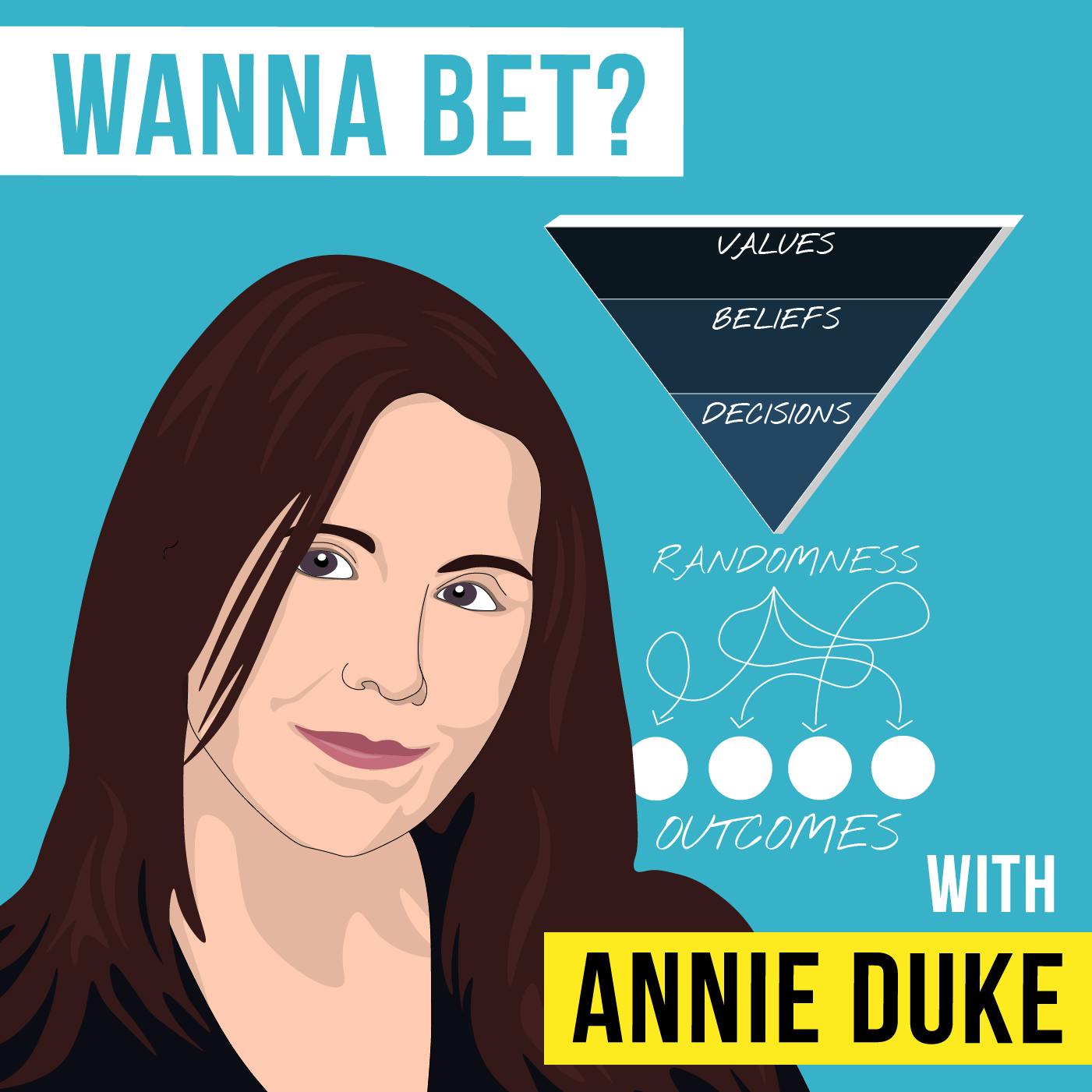
我们会把决策拆解成几个关键部分:价值观、信念、选择、随机性,以及结果。
We break decisions down into their component parts: values, beliefs, decisions, randomness, and outcomes.
在深入探讨每一个部分后,我们讨论了如何做出更好的决策,如何在团队中协作,以及如何利用群体认同的力量来改善我们的行为。
After diving into each, we discuss how to make better decisions, how to work in group settings, and how to harness the power of tribes and identity to improve our behavior.
安妮对这个话题的思考之深,无人能及。她教我们用概率思维来看问题,不再用被随机性污染的结果来评判决策,这对任何听众都会很有帮助。
Annie has thought about this topic as much as anyone, and her methods for getting us to think in probabilities and to stop evaluating decisions based on outcomes tainted by randomness will be useful for anyone listening.
请慢慢听。
Please enjoy.
我最常想的一件事是:
Here's the main thing I think about.
现在信息太多了。
There's so much information out there.
我们其实都知道什么才是对的。
We know what's right to do.
所以我们可以分析海量的数据,找出对于普通投资者来说,最该做的事是什么。
So we can look across lots and lots and lots of data and say, for the average person who's investing, what's the best thing for them to do?
而答案很清楚:别做主动投资者。
And we know, don't be an active investor.
把钱投进去,然后走开,让它静静躺着。
Put your money in, walk away, and let it sit.
我们知道这确实是对的。
And we know that that's true.
但有意思的是,尽管这些信息唾手可得,人人都懂,可就是没人照着做。
But what's interesting about that is that despite the fact that that information is readily available, that people know it, people don't do it.
所以我一直在想的问题是:为什么?
And so the question that I'm always trying to think about is why?
我从两个角度来思考这个问题。
And I think about it in two ways.
一个是,我们和人沟通的时候,有多少次是通过激发身份认同和群体归属感,以积极正面的方式影响他们的?
One is how much are we communicating with people in a way that activates identity and tribe in a really positive and good way?
另一个是,我们怎么看待这个游戏的规则?
And then how are we thinking about what the rules of the game are?
关于群体这块,我觉得它总是被污名化,这也不奇怪,毕竟我们总在政治语境里看到人们互相争斗。
So on the tribe side, I feel like tribe gets a very bad rap, not surprisingly, because we see it in the political context all the time that people are fighting with each other.
所以我们觉得,激发身份认同是有破坏性的。
So we get this idea that activating identity is destructive.
确实,看看政治圈,有时候确实如此,但也不总是这样。
And obviously, you look at the political arena and you can see that sometimes that's true, but it's not always true.
那我们不妨想想,人类最初为什么会形成群体呢?
So if we think about back to why did we as human beings form tribes in the first place?
这肯定是出于适应的需要。
Obviously, it had to be adapted.
不然,属于群体的人类不会比不属于群体的人活得更好。
Otherwise, people who were in tribes wouldn't have survived as much as people who weren't in tribes.
所以我们知道,群体一定是有进化优势的。
So we know that there were some selection for tribes.
为什么会这样呢?
Why was that?
人类没有锋利的爪子,没有尖利的牙齿,力量也不算强,跑得还慢,跟狮子、熊、老虎这些动物比起来,简直弱得不行,就像《绿野仙踪》里那种小角色。
Well, human beings don't have big claws, we don't have big teeth, and we're not really strong, and we're terribly slow, and we're kind of weaklings for our size, if you think about us compared to lions, and bears and tigers, Wizard of Oz type of things.
那么,部落到底做了什么?
So what did tribes do?
我们形成了以血缘关系为基础的群体。
It's like we formed these groups that were generally based off kinship.
这些其实就是血缘群体。
So they were like these kinship groups.
而因为我们有大脑,所以能一起合作。
And now we all work together because we had brains.
通过合作,我们就能想办法保卫自己的领地。
So we could figure out how do we defend our territory if we all kind of work together.
当然,要这样合作,你就得做些本来不太愿意做的事,比如帕特里克。
Now, obviously, part of working together like that is that now you, Patrick, are gonna do something that's really hard that you might otherwise not be willing to do.
比如说为了保护部落,你可能会去打熊——正常情况下你早就逃了,但这次你是在保护亲人。
So for example, in defense of the tribe, you might fight a bear, which normally you would run away from a bear, but now you're protecting your kin.
所以你真的会去跟熊搏斗。
And so you'll actually like fight the bear.
你可能会徒步一百英里,就为了找某种资源。
You might march a 100 miles in order to find a resource, for example.
部落的负面作用在于,我们会一心保护自己这个小圈子。
So the bad part of tribe comes from, okay, so we're gonna protect our own little group.
如果别的群体想来侵犯,他们就是坏人、外人,总之我们得干掉他们。
And if another group tries to come and invade, they're bad, they're other, whatever, and we're gonna kill them.
但部落积极的一面是,它能让你去做那些特别艰难、平时根本不会做的事,哪怕违背了你的本能。
But the good part of tribe is that it can help you to do things that are really hard, that you otherwise would not do, that would be against what generally your instincts might be to do.
那你怎么才能让这种力量为你所用呢?
So how do you sort of get that working for you?
我们可以想想,部落到底给我们带来了什么。
Well, we can think about what is tribe offering us.
有一位叫杰·范·巴维尔的人,他的研究特别出色。
And there's really wonderful work by a guy named Jay Van Bavel.
我强烈推荐你去Twitter关注他。
And I really highly recommend him as a follow on Twitter.
我觉得他是个特别出色的知识传播者。
I think he's a great science communicator.
他研究的是群体、身份,以及身份与信念之间的交集。
And he does work in tribe and identity and the intersection of identity and beliefs.
他把群体能带给我们的东西归纳为几方面。
And he kind of frames this as a few of the things that tribe is giving you.
首先是,我们究竟知道什么,又不知道什么?
One is, what are the things that we know or don't know?
比如,我们知道该坚持什么。
So we could think about like, we know we should hold.
群体能帮我们做到这一点。
So Tribe can help with that.
另一点是独特感和归属感。
But the other thing is distinctiveness and belongingness.
这两点对人类来说都极其重要。
And these are two incredibly important things for human beings.
我们都希望觉得自己属于某个群体,但同时也想跟别人不一样。
We want to feel like we belong to something, but then also we want to feel like we are distinct from other people.
当我真正思考数据告诉我们该怎么做时,与其只是跟人说‘这是数据,我觉得你应该这么做’,不如去激活身份认同,说‘我们就是这样做的’。
So I really feel like when we're really thinking about we know what the data is telling us in terms of the right thing to do, instead of just talking to someone being like, Here's the data, and this is what I think you should do, to start to activate identity and say, This is what we do.
这是我们跟别人不一样的地方。
And this is what we do that is distinct from other people.
当我们想想哪些人成功了、哪些人失败了,成功的人就是这么做的。
And when we think about the group of people that succeed and the group of people who fail, This is what the people who succeed do.
我得提醒你,这真的很难。
And I'm gonna warn you, it's really hard.
这就像一句话说的,有时候你得去跟狮子搏斗。
So it's like kind of a saying, you're gonna have to fight a lion sometimes.
这实在太难了。
It's incredibly hard.
当市场一天之内跌了5%,真的很难不放在心上。
When the market drops 5% in a day, it's really hard not to care.
真要说的话,我对这个一点都不担心。
To really say, I'm not worried about this.
这根本不在我的计划里。
This is not part of my strategy.
每个月不看一眼资产负债表,看看是涨了还是跌了,真的很难。
It's really hard not to look at your balance sheet every month and see whether it's gone up and down.
确实很难。
It's hard.
就像每隔三秒就忍不住想刷一遍推特一样难。
Just like it's hard to not look at Twitter every three seconds.
我们总想知道自己表现得怎么样。
We wanna see how are we measuring ourselves.
但如果你说,这是我们团队的做法,而别人的做法是另一回事。
But if you say, this is what we do as a group, and this is what other people do.
别人总是不停地在看那些指标。
Other people are always checking that.
他们总是被它牵着走。
They're always reacting to it.
看到资产上涨,他们一边盯着看,一边想:我手里这些债券,要是全投了股票,早赚更多了。
When they see that their balance sheet has gone up and they're looking at it and they're saying, but I have these bond holdings and boy, I could have made so much more money if I didn't have my money in bonds.
为什么我没把所有钱都投在股票上?
Why wasn't all my money in stocks?
你提前跟他们说过,他们迟早会这么想。
And you tell them in advance, they're gonna feel like that.
你跟他们说:别人都这样。
You say, that's what other people do.
市场下跌时,他们又说:我干嘛要把钱放在股票里?
When the market is down, they say, why did I have any money in stocks?
为什么我没把所有钱都投在债券上?
Why wasn't all my money in bonds?
但你得明白,这些事你不可能提前知道,只有事后才看得清。
But you have to know that you can't know that those things are gonna occur until after the fact.
所以我们做的,是考虑到未来本来就不确定,但从统计上看,这才是正确的做法。
So what we do is think about, given that we don't know how the future will turn out, we know statistically this is what the right thing to do is.
但我们也知道,坚持下来真的很难,而正因如此,你才显得特别。
But we also know it's really hard stick to it, and that's what makes you special.
谈谈这个利用身份认同的正面力量的想法,怎么帮人重新定义游戏规则。
Talk about how that idea of harnessing the positive powers of identity could play into rewriting rules of the game.
如果这是刚才我们讨论的第二个方向,那人们还能用哪些独特的方式,把规则制定当成一种决策的超能力呢?
So if that's sort of the second avenue in this idea that we were talking about, what are unique ways that people can think about rule setting as sort of decision making superpower?
我觉得,制定规则是个特别棒的办法。
I think that rules are like an amazing way to go.
我来举个例子,说明设定规则和单纯追求目标之间的区别。
So let me just give you an example of a difference between setting a rule and sort of trying to get to a goal versus having a rule.
比如说,我的目标是少吃点肉。
So let's say that my goal is I'd like to eat less meat.
每次面对肉食,我都得重新做一次决定。
Every single time I'm confronted with meat, I have to make a new decision.
我坐在餐厅里,或者在超市里,不管在哪,都得做决定。
I'm sitting in a restaurant, at the grocery store, whatever, I have to decide.
这是一次全新的选择。
It's a fresh decision.
我要选含肉的,还是不选?
Do I want to get something with meat or do I want to not?
但如果说我是素食者,那这就成了一个准则,是我身份的一部分。
But if I say I'm a vegan, now that's a rule, it's part of my identity.
所以,每当我面对菜单、走进超市,或者遇到其他情况时,都不用再重新做决定了。
So therefore I know I'm no longer making brand new decisions every single time that I confront a menu or every time I confront the grocery store or whatever.
定下一条准则,比如‘我是素食者’,其实能帮我避开很多不必要的错误选择。
So setting a rule, I'm a vegan, actually sort of saves me from the opportunity to make a lot of mistakes.
但要达成这样的准则,你可以这样想:这个群体的身份之一,就是我们会思考自己的身份,并把它变成一条规则,比如说,‘我每年只看一次资产负债表’。
But in order to kind of get to those rules, so you could think about part of the identity of this tribe is that we're going to think about our identity and we're going to write it as a rule, which is like, for example, you could say, I only look at my balance sheet once a year.
这就可以是一个例子。
That could be one thing that it is.
我可以只是说,我会看我的资产负债表,但不会在没和顾问商量之前采取任何行动。
It could be just, I look at my balance sheet, but I don't act on it without talking to my advisor first.
或者我会看我的资产负债表,意识到当情绪低落时,别人通常会怎么做。
Or I look at my balance sheet and I recognize that when sad, that's what other people do.
所以我不会跟着那样反应,或者我选择长期持有。
And so I don't react that way to it, or I'm a long holder.
这些做法都不同于说‘我的目标是长期持有’,这就像说‘我的目标是吃得健康’,而我会直接说‘我是个长期持有者’。
All these different ways where instead of saying my goal is to hold for the long term, which is kind of like saying my goal is to eat healthy, you say I'm a long holder.
这样一来,它就成了你身份的一部分。
And now that becomes part of your identity.
这其实是一种关于你行为方式的准则。
It's kind of a rule about the way that you behave.
但要达到这一点,也就是找到真正的规则——说白了,就是这个游戏的规则:怎么才算赢了‘素食者’这个游戏?
So in order to do that though, like in order to get to what is the rule, which really is kind of the rules of the game, like how do I win the vegan game?
很明显,我不吃肉。
Well, obviously I don't eat meat.
这就是玩素食游戏的含义。
That's what the vegan game is.
所以每次我不吃肉,就等于得了一分。
So every single time I don't eat meat, I score points.
你得先弄清楚自己的价值观是什么。
You have to identify what your values are.
这算是第一步。
That's kind of step one.
要让人思考自己该扮演什么角色,首先得坐下来,和他们一起梳理出他们的价值观,我觉得我们平时做得太少了。
So the first thing in sort of getting people to think about what are the roles for me is to actually sit down and identify their values with them, which I think we don't do enough of.
我们常常默认大家的价值观都差不多。
I think that we assume that people generally have the same values.
我觉得在最顶层,确实如此。
And I think that at the top level, that's true.
比如说,在最高层面上,大家都想为家人提供保障。
So I think at the top level, it's like, I want to provide for my family.
我希望退休时有足够的钱,过上体面的生活,不管那具体是什么样子。
I want to retire with enough money to live a good life, whatever it might be.
我希望自己生病时能得到妥善保障。
I want to make sure that I'm covered in case I get sick.
我希望有充足的闲暇时间,过上自己理想中的生活——说到底,就是想找一份有意义的工作。
I want to have enough leisure time to have a good life, Whatever it might be like at the top level, this kind of like, I wanna find a job with meaning.
我希望我的人生有意义。
I want my life to have meaning.
我想养活家人。
I wanna provide for my family.
这类事情,没错。
These kinds of things, yes.
在最根本的层面,大家的价值观其实都差不多。
At the top level, we all have the same values.
但一旦深入下去,就会发现,同样的价值观在不同人身上表现出来,差距能大得惊人。
But when you get down into the core of it, what you can see is how those values express for one person versus the other, like super duper different.
比如说,'养家'到底是什么意思?
So for example, what does provide for your family mean?
是说有钱吗?
Does it mean money?
还是说有时间?
Does it mean time?
你是不是那种愿意每周工作一百小时的人,只为赚够钱,让孩子们永远不会因为钱的问题被你拒绝?
Are you somebody who's like, I'll work one hundred hours a week because I wanna make enough money that my kids I'm never gonna have to say no to them for financial reasons.
但很明显,这么做你就牺牲了大量陪孩子的时间。
But obviously, if you're doing that, you're sacrificing a lot of time with your children.
也许你根本不想成为那种每周工作一百小时的人。
Maybe you're someone who's like, I don't wanna be one of those one hundred hour a week people.
你只想赚够基本开销,让孩子衣食无忧,有房住,就够了。
I wanna make just enough money that my children have their basic financial needs met and we're fine and they're fed and they have a house.
但对我来说,养家真正意味着陪在他们身边,是时间。
But what I wanna provide for them, what providing for my family means to me is time.
如果你觉得人生要过得有意义,那什么才算有意义的人生呢?
If you're like, I wanna live a meaningful life, what does a meaningful life mean?
你是从工作中找到意义的吗?
Do you get meaning from your work?
你是从家庭中找到意义的吗?
Do you get meaning from your family?
如果你是从工作里获得意义的,那这份意义具体是什么?
If you get meaning from your work, what is the meaning from the work?
我是真的喜欢动脑筋的工作。
Does it, I really enjoy intellectual work.
我真心想亲手为那些需要帮助的人提供食物。
I actually want to be physically feeding people who are in need.
我想站在那儿,亲自把食物发给那些有需要的人。
I want to stand and hand out food to people who are in need.
我想为那些没房子住的人盖房子。
I want to build houses for people who need houses.
我就想亲自动手去做。
Like I want to physically be doing it.
或者对你来说,意义可能是:我是个有效的利他主义者,我觉得自己能赚很多钱,所以去给人盖房子反而是不道德的,我该去赚钱。
Or maybe like for you, meaning is I am an effective altruist, and I think that I could make a lot of money, and so therefore it would be immoral for me to build a house for somebody, I need to be making money.
等我赚了钱,再用它来捐房子给别人,我的人生意义就体现在这种方式里。
And when I do that, I can then donate houses to people, and this is the way that I'm going to find my meaning is that way.
你看,这完全是两回事,归根结底,就像我们俩走进一家餐厅点菜——我猜这应该是我们都想做的事——对你和我来说,‘好’到底意味着什么?
So you can see it's like a whole different thing, and it gets down to as simple as if we both go into a restaurant and we're trying to order a good meal, which I assume is what we're all trying to do, what does good mean for you versus me?
对我来说,可能是想点一份健康或者纯素的餐食。
For me, maybe it's I wanna order something healthy or vegan.
对你来说,可能是想点菜单上最美味的那道,管它营养怎么样。
For you, it might be I wanna order the tastiest thing on the menu, regardless of what kind of the health profile of that is.
所以你看,无论在小事还是大事上,都是这样。
So we can see that in small ways and big ways.
如果你真花时间坐下来想清楚,这些东西对你来说到底意味着什么,那你就能明白了,也能根据这些规则来调整自己的行动。
So if you actually take the time to sit down and figure out what do these things mean for you, now you know and you can work with them about what the rules of their game are.
我从这里面得到一个很清晰的画面,这正好能引出我们今天谈话的核心——那就是我们太过于关注结果,来评判一个决定的好坏,或者一般性地评价事情。
What I'm taking from this, I have this huge kind of visualization in my head, and it's a good entree into the meat of our conversation today, which is this over focus on outcomes in terms of evaluating the quality of a decision or just in general.
发生的事情往往对我们影响太大了,而我们其实更应该关注决策的过程本身。
Things that happen probably sway us more than they should when we should instead be focused on the process of the decision.
但有趣的是,这个过程的底层,其实一直延伸到了价值观的根源。
But what's interesting now is that we've got this underbelly of process, which goes all the way down to the root of values.
所以我想再多花几分钟聊聊,听听你怎么看这些价值观到底有多固定,你能主动选择自己的价值观,还是它们在悄悄塑造你?
And so I want to spend a few more minutes there and get your take on how fixed those ideas are, how much can you choose your values versus them choosing you?
比如吃汉堡还是吃素,健康和口味之间的权衡,你觉得这些选择中有多少是人能掌控的,又有多少是人天生就有的默认倾向?
So you know, eating the cheeseburger versus being vegan, health versus taste, how much of this do you think is under someone's control versus some sort of natural settings, default settings in a person?
因为我觉得你说得对,这些价值观在一家公司里能形成极其强大的文化。
Because I think that you're right, that these are incredibly powerful culture at a firm.
一旦文化或价值观定下来,它们就会非常持久,这可能是良好决策的基石,我想确认一下你是不是也这么想。
Once it's set, culture or values, these are things that are very enduring through time, which I think is the bedrock probably of good decision making, but I wanna make sure you agree.
首先,我觉得你说得对。
First of all, think it's true.
我觉得,从根本上说,你重视什么——也就是你心中的游戏规则,以及你真正想达成的目标——准确识别这些,才是所有好决策的基础。
I think that at the base, what you value, like what the rules of the game are for you and what it is that you're trying to accomplish and really properly identifying that is really at the base of all good decisions.
举个例子,你可以想想,你更关注短期成果,还是长期成果。
And so as an example, you can think about how much are you focused on short term wins versus long term wins.
如果我意识到,我的整体目标是成为一个更好的决策者,那我就可以把‘准确性’当作一个核心价值。
So if I realize overall, my goal is to be a better decision maker, I can now think about a value of accuracy.
对我来说,我特别看重的是,努力构建一个对客观真相的准确理解。
I can think about, for me, one of the things that I really value is moving toward constructing an accurate model of the objective truth.
这其实很难做到,但这就是我的价值观。
That's actually quite a hard thing to do, but this is my value.
由此衍生出的一个取胜方式,就是以兴奋的态度面对犯错。
So what comes out of that is one of the ways to win that game is to approach being wrong with excitement.
这种态度,其实是从价值观里自然衍生出来的。
That's sort of something that falls from that.
有意思的是,这样一来,我就能把原本看似短期的失败,转化成短期的收获。
Now, what's interesting about that is that allows me to turn something that would be a short term loss into a short term win.
因为通常当我们发现自己弄错了某件事时,那感觉就像一种损失,仿佛伤到了自己的身份认同。
Because normally when we find out that we're wrong about something that that's a loss, it's like a loss to our identity.
但现在这反而变成了一种胜利,因为我会想,太好了,我又发现错了。
Now that turns into a win because I'm like, Oh, yay, I'm wrong.
这样一来,我的决策能力就会提升。
Now my decision making is gonna be better.
我能为自己的这种反应感到欣慰。
I can feel good about the way that I react to that.
而显然,这会让我未来的决策变得更好。
And then obviously that's gonna improve my decision making going forward.
但你提到的这一点,我觉得很有道理,就是每个人的性格天生就不一样。
But the thing that you said, which I think is true, is that temperamentally, people have different temperaments.
有些人天生自控力强,有些人则相对弱一些。
So, some people, I think naturally have more self control, and some people naturally have less self control.
比如,有些人天生更理性,有些人则更容易被情绪左右。
For example, I think some people are naturally more rational and some people are naturally a little bit more emotionally driven.
我觉得这类性格特质,我们必须承认,每个人做决定的质量其实存在很大差异,比如对你帕特里克来说。
And I think that those kinds of temperaments, I think we have to recognize that there's a whole range in terms of what's the quality of the decision for you, Patrick, decisions?
我的决策质量范围,或者别人的质量范围,又是什么样呢?
What's the quality of my range of decisions or somebody else's range of decisions?
这完全没问题。
Say, that's totally fine.
我们真正想达成的有两件事。
What we're trying to accomplish is two things.
第一件事是,尽量让帕特里克的更多决策落在他个人分布图的优质一端。
Thing number one is, let's make it so that more of Patrick's decisions are out at the right side of the distribution for him.
你有最差的决策,也有最好的决策。
So, you've got your worst decision and your best decision.
我们要努力让他的大部分决策都尽可能靠近那条优质曲线的右端。
Let's try to make it so more of your decisions are sitting out at the right tail as possible.
但通过这种良好的决策习惯,就像其他任何事一样,这些思维模式会逐渐被强化。
But then I think that through this really good decision hygiene, what happens is that just like anything else, those kinds of habits of mind start to get reinforced.
当这些良好的思维习惯不断强化,你的整体决策质量也会随之提升。
And as those good habits of mind get reinforced, that actually increases the quality of your decisions in general.
所以,你实际上可以把整个分布曲线向右推移。
And so you can actually shift the distribution to the right.
当然,有些人天生就可能比你更偏向右端,决策质量本来就更高。
Now, you can imagine one person just temperamentally might have a distribution that's farther to the right than yours.
但哪怕你只是稍微往右挪一点,也不一定非得追上别人。
But imagine if you just shift a little bit right, you might not get all the way there.
但关键在于你,因为我真正关心的是你。
But think about for you, because what I care about is you.
从长远来看,你的决策质量会变成什么样?
What's going to happen in terms of the quality of your decisions in the long run?
那些看似微小的改变,其实影响巨大。
Those really small changes really matter.
我们总是太纠结于怎么让人做出完美的决定。
I feel like we get really focused on how do we get people to make perfect decisions?
我们怎么才能让人不犯错呢?
How do we get people to not make mistakes?
我觉得用这种角度去看待问题太荒谬了。
And I think that's a crazy frame to be looking at that through.
真正该问的是:怎么让你少犯一点错?
It should be, how do I get you to make fewer of them?
因为只要少犯一点,对你的生活就会有巨大的影响。
Because just a little bit less is gonna have a huge impact on your life.
如果你每次市场下跌超过百分之三,都会立刻慌得不行——每次都是,一次不落,那你肯定天天都在恐慌。
If you're somebody who is gonna panic every single time, literally every single time that the market drops more than three percent, you're gonna be panicking about that.
要是我能让你只在百分之八十的时候才慌,会怎么样?
What if I could get you to do that only 80% of the time?
有人可能会说:这算什么成功?市场一跌超过百分之三,你还是有百分之八十的时间在慌。
Now someone might view that as, Oh, what a failure, because you're still panicking 80% of the time the market drops over 3%.
但你以前可是每次都会慌的。
But you used to do it 100% of the time.
这对你来说已经是巨大的成功了。
That's a huge success for you.
如果你想想,以后你的财务状况会因为现在不那么频繁地恐慌而变成什么样,就能明白这影响有多大了。
And if you think about what are your financial outcomes gonna look like in the long run that I've now gotten you to panic less of the time, think about how huge an impact that's gonna have.
这完全是好事。
And that's all good.
所以我们得认识到这一点。
So I think we need to recognize that.
说到底,关键是我们如何帮助人们进步。
Really, this is all about how are we moving people?
你生来就是拥有现在的这副大脑。
Because you are born with the brain that you have.
我没法把你的大脑掏出来,换一个全新的进去。
I can't take it out of your head and stick a new brain in there.
我能做的,就是慢慢帮你培养更好的习惯。
What I can do is start to reinforce better habits.
那我们就借这个机会,仔细聊聊某个决定的具体构成。
Let's use that as an excuse to talk in more detail about the specific anatomy of a given decision.
显而易见,运气在这中间起着作用,我们待会儿会重点讨论这一点。
So obviously luck plays a role in all of this, and we're going to talk a lot about that.
而运气正是决定结果的关键因素之一,我们之前提到过,问题出在太关注运气之后的结果。
And that's a key part of what then determines outcomes, which we already mentioned is the mistake, focusing on the post luck outcomes.
但说到决定本身——也就是最纯粹、最本质的那个决定——你能不能拆解一下,哪些要素最关键?之后我们再聊聊怎么帮大家提升这方面的能力。
But when it comes to a decision itself, sort of the atomic platonic decision, talk us through the inputs or the pieces of that that matter most, and then we'll talk about ways that hopefully we can improve on that for people.
你想知道一件很有趣的事吗?
Do you want to know something amazing?
从来没人在我做播客的时候问过这个问题。
No one's ever asked me that in a podcast.
我真的特别感谢你提这个。
So I really appreciate that.
就像你说的,我一向喜欢分析一个决定的内在结构。
As you said, I like to think about the anatomy of a decision.
决策的基础是你的信念。
So at the base of the decision is your beliefs.
就是你所知道的,以及你持有的观点。
This is stuff you know, and opinions you have.
说白了,你对这个世界有什么样的看法?
Basically, what are your beliefs about the world?
我说‘你所知道的’,但得说清楚,你几乎不可能对任何事有百分之百的把握。
Now, I say stuff you know, but let's just be clear that it's rare that you know something a 100%.
我举个例子,我不能百分之百确定地球是圆的,因为我可能活在模拟世界里。
The example I give is, I can't be a 100% sure that the Earth is round because I might be living in a simulation.
总该留一点怀疑的空间。
There's always should be a tiny bit doubt.
但显然,你对不同信念的确定程度是不一样的。
But obviously, there's a range of how sure are you of the things that you believe.
所以,信念其实就是你认为自己知道的东西。
So beliefs are really the stuff you know.
还有些事情是你不知道的。
And then there's also stuff you don't know.
当然,你所知道的信息会影响决策。
Okay, so obviously stuff you know is going to be informing the decision.
但别忘了,你不知道的事情也同样会影响你的决定。
But remember that stuff you don't know has an influence on your decision as well.
在那些你不知道的事情里,有一部分如果你知道了,会对决策有很大帮助。
In that box of stuff you don't know, some of that, if you knew it, would be really helpful for the decision.
所以,在你不知道的那部分里,最重要的是:最终到底会发生什么结果?
So the most important thing that's sitting in the stuff you don't know box is what's the actual outcome that will occur?
而这个结果,你永远不可能真正知道。
And you can never know that ever.
因此,我们不能认为‘那些不知道的事就不该考虑’,因为它们其实就在那里,只是被忽略了。
So, we don't want to think, well, we shouldn't think about stuff we don't know, because that's not actually an input into the decision, because it is in sort of the omission.
所以我们现在有两个部分:你所知道的,和你所不知道的。
So, we've got those two boxes, stuff you know, stuff you don't know.
这些显然都在影响着你的决策本身。
Those are obviously informing the decision itself.
你做了决定,这个决定就会带你走向某个结果。
You make the decision, that now gets you to an outcome.
而这里正是我们容易出错的地方。
And this is where we get tripped up.
它会带你走向一个具体的结果。
It gets you to a particular outcome.
但这就牵扯到时间上的问题了——在你做决定的那一刻,从决定到实际结果之间,运气就悄悄介入了。
But that's a temporal problem because at the moment that you're making the decision, the minute you make the decision between the decision and the outcome that actually occurs, there's an influence of luck.
因为每当你做出一个决定,未来都有无数种可能的发展方式。
Because when you make a decision, there's always lots and lots and lots of ways that the future could unfold.
所以,虽然有多种可能的结果,但最终只会有一个真正发生。
So there's always multiple possible outcomes, but there's only one that will actually occur.
而这正是我们在分析决策结构时,接下来会遇到的关键问题。
And that's where we really get into problems in the next part in terms of the anatomy of the decision.
因为一旦结果出来了,那就是你的切身经历。
Because once you have the outcome, that's now your experience.
你生命中的所有体验,都源于当时只有一条路真的发生了,其他路都没走成。
The experiences of your life are all because there was one particular path that happened and other paths didn't.
但那些路本来也是可能发生的。
But they could have.
所以我们现在回头看那些实际发生过的路,试图弄清楚:我们学到了什么?
So now we take those paths that happened and post that, we try to figure out what did we learn?
以前我们到底知道些什么?
What did we know before?
现在我们又知道了哪些以前不知道的东西?
What do we know now that we didn't know before?
这个决定是好还是坏?
Was the decision good or bad?
当时有没有哪些信息,是我本该知道却没意识到的?
Were there things that I could have known that I didn't know?
你其实是在逐一回顾这些决定,希望能借此做出更好的未来选择。
And you're sort of trying to walk through all of these decisions, hopefully with the goal of now making a better decision going forward.
可惜的是,很多时候你只是在反复纠结:早知道当初该做得更好。
Sadly, it's mostly with the goal of ruminating that you actually made a not so great decision before.
再总结一下:你有已知的信息,也有未知的部分,这些都会影响你的决定;而一旦做出决定,就锁定了可能出现的结果及其各自发生的概率。
Just again, to review, it's like you have stuff you know, stuff you don't know, those inform the decision, you make a decision, that decision now determines the set of possible outcomes that can occur and the chances that any one of those outcomes occur.
所以,我们在权衡不同选项时,本质上就是在做这件事。
So as we're weighing options, that's really what we're doing.
选项A会带来一组可能的结果。
Option A has some set of possible outcomes.
选项B也会带来另一组可能的结果。
Option B has some set of possible outcomes.
这两组结果可能是完全一样的,但发生的概率不同。
They could be the exact same set, but different probabilities.
也可能是完全不同的结果集合。
They could be a different set.
它们也可能是有重叠的。
They could be overlapping.
也可能是包含关系,各种情况都有。
It could be a subset, all those things.
然后每种结果出现的概率也不一样。
Then you have some chance of those occurring.
做出决定后,运气这个不可控的因素就会介入,最终才出现实际发生的结果。
And then post decision, there was an intervention of luck that's anything you can't control and then you have the actual thing that occurred.
而现在,基于实际发生的结果,你要反过来判断当初那个决策的质量如何。
And now, under the influence of the actual thing that occurred, you're supposed to try to figure out something about what the decision quality was.
我想确保我们聊聊这个过程中人们做得好的地方和做得不好的地方。
I wanna make sure we touch on the good things that people do in this process and the bad things.
你能说说你提到的‘结果导向’是什么意思吗?
Could you talk about your concept of resulting, what that means?
这里有一种最常见的做法,就是事后复盘结果——而这正是我们通常在做的。
So here's one of the main ways that trying to do sort of a post outcome review, which is mostly what we do.
这可不是只在商业中才会发生的事。
Like, that's not just something that happens in business.
这种事其实一直都在我们脑子里上演。
This just happens in our minds all the time.
事后复盘的一个大问题在于,你仔细想想,尤其是当你试图弄清楚该怎么做决策的时候。
One of the big problems with the post outcome review is that if you think about it, particularly as you try to think about like, so how do we make a decision?
这真的很难,因为我们既知道一些事,也有些事是不知道的。
This is really hard because we have the stuff we know, we have the stuff we don't know.
而在那些我们不知道的事里,还有一部分是根本不可能知道的,比如宇宙有多大,或者你现在在想什么。
And then within the stuff we don't know, there's stuff we can't know, the size of the universe or what you're thinking right now.
像预测这种事,我就没法准确知道明年今天天气会是什么样。
Things that have to do with predictions, like I don't know what the weather will be like on this day next year exactly.
我只能大概有个范围,但就是说不准。
I have a range, but I don't know.
这还跟你身在世界的哪个地方有关。
It depends on where I am in the world.
所以我们根本无法知道的事情太多了。
So there's all sorts of stuff that we can't know.
但还有一些事情,我们其实本可以知道,只是现在还不清楚。
But then there's stuff that we could know, but maybe we don't know right now.
接下来就得琢磨了,这些信息到底要花多少成本?
But then we have to figure out, well, how much does that cost?
这确实挺难的。
So that's hard.
有些信息太贵了,要么是因为花太多时间去查,等你查出来,机会早就没了。
Some information is too costly, either because of time, it would take too long to find it out.
或者从金钱和资源的角度看,为了获取这些信息要付出多少代价,而回报又有多大——这些复杂因素都在影响你的决策,更麻烦的是,你做的决定并不能保证某个特定结果。
And so then you lose all your opportunities, or maybe in terms of money, how much is it gonna cost you money wise or resource wise in order to get that information in terms of the return that you'll get complicated stuff is informing the decision you make, which now has this further complication of the decision you make doesn't guarantee a particular outcome.
它只能带来一组概率性的可能结果。
It guarantees a set of possible outcomes that are probabilistic in nature.
而这些概率,很少能被精确掌握。
Those probabilities are rarely exactly known.
有些事情比如离婚率,我们能估算,但大多数情况,比如股票是涨还是跌,就完全没法预测了。
They are for some things like the divorce rate, but they aren't for most things like whether a stock is going to go up or down.
而且当我们试图弄清可能的结果时,其实根本没多少把握。
And then it's also really not known as we're trying to figure out what the possible outcomes are.
未来会发生很多事,都是我们完全没预料到的。
There's going be lots of things that happen that we didn't actually see on the horizon.
所以要搞清楚所有可能的结果,实在太难了。
So it's hard to figure out what all those possible outcomes are.
这整个事情简直难到极致了。
So that's all like super hard.
既然这么难,当我们回头审视一个决定时,唯一能判断它好坏的方法,就是把当时所有信息都重新梳理一遍。
So given that that's all really hard, as we look back on the decision, the only way that we can figure out, was it a good decision or was a bad decision, is to reconstruct all of that stuff.
而很多信息在当时就很难掌握。
A lot of which is hard in the moment.
但现在回头看,我们得想想:当时你到底知道些什么?
But now looking back on it, trying to figure out, well, what did you know?
你当时不知道什么?
What didn't you know?
你本可以知道些什么?
What could you have known?
那个决定的原因对吗?
Was it the right cause?
你有没有把所有可能的结果都理清楚?
Did you have all the possible outcomes figured out properly?
那些结果各自发生的概率是多少?
What were the percentage of those outcomes?
天哪,所有人都要炸了。
Oh my God, everybody's head explode.
我得有个超级计算机才能算明白这个。
I need like a supercomputer in order to figure that out.
所以这太难了。
So that's hard.
这事儿不透明。
It's not transparent.
我们看不到背后的计算过程。
We can't see the math.
我们又不是活在《黑客帝国》里,代码一行行掉下来让我们能指着说:‘哦,原来这儿有个bug。’
We don't live in the matrix where like all that code is coming down for us so we can look and say, Oh yeah, no, look, there was a bug there.
谁知道呢?
Like, who knows?
这太难了。
Like, that's too hard.
这简直让我头都炸了。
Like, it makes my head explode.
那我到底知道些什么呢?
So what is the thing that I do know?
我知道结果是什么。
I know how it turned out.
就摆在我眼前。
That is sitting right in front of me.
不管我的价值观是什么,我知道,对我而言,结果是好是坏。
And whatever my values are, I know that for me, whether that was good or bad.
所以我清楚这一点。
So I know that.
于是我们的大脑就会想:好吧,那些东西太复杂了。
And so what happens is that our brains go, Okay, that stuff's tough.
但这个我知道——结果不错,或者结果很糟。
But this I know, it turned out well, it turned out poorly.
于是我就用这个结果来 shortcut,判断当初的决定到底对不对。
And so I'll use that as a shortcut to get me back to whether the decision itself was good or bad.
这其实是个普遍问题:我们总把结果好坏直接等同于决策质量,误以为结果能准确反映决策的优劣。
So this is a general problem that we have that has to do with overfitting outcomes to decision quality, thinking that outcomes are much more predictable than they actually are given the decision.
这叫结果导向,现在你明白为什么了吧。
This is called resulting, and you can see why.
我一看结果,就知道是好是坏,然后就凭这个判断当初的决定对不对。
I take the result, I know whether the result was good or bad, and that tells me whether the decision was good or bad.
所以这事儿才叫‘以果判因’。
So that's why it's called resulting.
这名字挺直观的,这么说吧。
It's an intuitive name, let's put it that way.
在书里,我提到一个特别有名的以果判因的例子,就是超级碗上皮特·卡罗尔的那次决策。
In the book, I talk about a really very famous example of resulting, which was Pete Carroll in the Super Bowl.
这其实特别能说明,要回过头去评估决策本身有多难。
And this actually is a good way to see how hard getting back down into the decision quality is.
当时是第二档进攻,还剩26秒,比分落后四分,对手是爱国者队——毕竟只有爱国者队能进超级碗嘛。
It was second down, twenty six seconds left, down by four to the Patriots because it's only the Super Bowl if the Patriots are in it.
所以他们落后四分,显然必须达阵才能翻盘。
So they're down by four, so obviously they have to score a touchdown.
碰巧的是,皮特·卡罗尔那时候还剩一次暂停。
It happens that Pete Carroll has one time out.
展开剩余字幕(还有 480 条)
他做了一件完全出人意料的事。
He does something super duper unexpected.
大家都以为他会把球交给跑卫马肖恩·林奇,他却下令传球。
He calls for a pass play when everybody's expecting him to hand the ball off to Marshawn Lynch, who's the running back.
球被拦截了。
The pass is intercepted.
所有人都不约而同地犯了结果导向的错误。
And universally, everybody does this resulting thing.
他们说:‘拦截太糟糕了。',
They're like, An interception is terrible.
我看得出这球的质量到底怎么样。
I can see what the quality of that was.
于是大家都说:‘这简直是史上最蠢的决定。',
So they all say, This is the stupidest decision ever.
如果我们回头想想,他当时到底知道些什么?
So if we go back and we think, Well, what did he know?
他当时不知道什么呢?
What didn't he know?
当时可能有哪些结果?
What were the different possible outcomes?
这些结果各自发生的概率是多少?
What were the percentage of those outcomes?
因为只有知道这些,我们才能真正判断这个决定是不是明智的。
Because we know that that's the stuff you need to know in order to really know whether it was a good decision.
虽然还有其他可能的结果,但最关键的三个是达阵、传球未完成和被抄截。
There's a lot of other outcomes in these, but the three main outcomes of the past that we would care about would be touchdown, incomplete, and interception.
当然还有掉球、被擒抱这些情况,但不管要不要把球交给马肖恩·林奇,这些都差不多。
And obviously there's things like fumble and sack and whatever, but those are kind of the same either way, whether you hand it off to Marshall Lynch or not.
所以我们先暂时忽略它们,简化一下分析。
So let's just ignore those for a second to simplify.
我们唯一能判断这个决定好坏的方式,就是搞清楚被抄截这个结果实际发生的频率。
So here's what we know is that the only way, literally the only way that we know whether this is a good decision or not, is to understand how often the outcome, which is interception occurs.
如果我们不知道这一点,其实就很难判断这个决策的质量如何。
And if we don't know that, we don't really know a lot about what the decision quality is.
问题是,如果你去问别人,他们往往会说:我不知道,我根本没想过这个问题。
The thing is that if I go around and I ask people, they're like, I don't know, I don't have like, didn't even think about that.
我压根没意识到这还值得去考虑。
I didn't know that was a thing I should be thinking about.
看起来这明显是个糟糕的决定,因为最终成了抄截。
It's really obvious that it was a bad decision because it ended in interception.
但如果你真去问自己这个问题,答案其实是12%左右,这时候你就会发现,等等,也许这决策也没那么糟。
So if you ask yourself that question, the answer there is between 12%, it starts to become pretty clear that, oh, wait a minute, maybe that wasn't such a bad decision after all.
当然,如果传出了达阵,我们都知道会发生什么——大家会说他太厉害了,但其实这背后也是同样的逻辑。
So you can walk through it, obviously a touchdown, we know what happens, he's a genius, which is also resulting by the way.
所以,仅仅因为达阵成功就夸他是天才,这其实和刚才的情况一样荒谬。
So that's just as bad if just because a touchdown is scored, they say he's a genius.
我觉得如果每个人都能停下来想一想,达阵之后的新闻头条会是什么样子?
And I think if everybody takes a second to think, okay, what do the headlines look like if it's a touchdown?
我觉得每个人都会觉得,没错,比尔契克就是厉害,这正是他这么出色的原因。
I think everybody can feel like, yeah, Belichick Belichick, this is why he's so great.
他从绝境中抢下了第五个超级碗冠军。
He stole the fifth Super Bowl from the jaws of defeat.
瞧瞧,汤姆·格拉迪又坐在场上哭了。
Oh, look, Tom Grady was sitting on the field crying again.
真让人难过。
So sad.
所以很明显,他真是个天才。
So that obviously, he's a genius.
有意思的是,如果传球没接住,就会发生一件非常关键的事——计时钟停了。
Now what's interesting is in the case that the ball is incomplete, a really important thing happens, which is the clock stops.
而且停得特别快。
And it stops really fast.
所以我们知道,这其实对他们来说并不是坏结果,因为钟停得够快,他们还能再打两回合。
So we know that that's actually not a bad outcome for them because the clock stops fast enough for them to still get two plays.
所以这对他们来说其实是个不错的结果。
So that's kind of a really good thing for them.
也就是说,他们没达阵也没关系?
So it's like, yeah, do they not score a touchdown?
对,但在他们能接受的好结果里,这完全算不上什么。
No, but it's in the world of good outcomes for them.
然后还有一到两成的概率,球会被抄截。
And then you have this like one to 2% chance that the ball gets intercepted.
单凭这一点,你就能看出结果导向思维有多强了。
So just on that basis alone, you can see what the power of resulting does.
这事儿看起来这么明显,可居然没人问过。
It seems so obvious that nobody even asked that question.
我倒想问问大家,别去看内特·西尔弗的网站,那儿的数学分析确实挺厉害。
I challenge people to go I mean, don't look at Nate Silver's site because you'll see some pretty good math there.
但你要是去翻《今日美国》或者《华盛顿邮报》那些媒体,看看星期一他们怎么骂彼得·卡罗尔是傻瓜,你根本找不到这个数据。
But if you look at USA Today and the Washington Post and whatever, look at that Monday, what people were saying as they were declaring that Pete Carroll was an idiot, and you will not find that statistic in there anywhere.
为什么?
Why?
因为大家都觉得,这还用说吗?
Because people are like, Well, it's obvious.
我干嘛非得知道这个?
Why would I need to know that?
但恰恰就是你需要知道的。
But that's exactly the thing you need to know.
问题是,这太复杂了。
But the problem is it's so complicated.
所以这是一种简化的方法。
So this is a way to simplify.
结果导向本质上是一种简化,但这种情境下,根本不该简化。
So resulting is basically a simplification, but this isn't a place that you actually, it's not a good place for simplifying.
我特别欣赏你工作中那些简单的启发式方法和问题,当然,最出名的、大家都广为引用的,就是‘要不要打个赌’。
One of my favorite things about your work is these simplifying little heuristics and questions that you can ask, and obviously the famous one that everyone has glommed onto, rightfully so, is Wanna Bet.
因为它逼着你去考虑各种可能性,然后根据预期结果来做决定,而不是非黑即白地思考。
Because it forces you to think about the various probabilities and then base your decision based on expected outcome versus black and white type thinking.
而是去看待一系列的概率,而不是一味地认为事情非确定不可。
So a range of probabilities instead of just being a deterministic person about it.
另一个我觉得特别有意思的是这个问题:我怎么知道的?
The other one that I found really interesting in there is this question of how do I know?
如果决策的根本是信念——也就是你自以为了解的世界信息,我很想听听你对这个问题的深入解读,因为它太棒了。
If the base level of the anatomy of a decision is beliefs, which is like the information you think you have about the world, I'd love you to expand on that question, because it's amazing.
如果你开始用这个问题反观自己,当你有一个信念时,问自己:我怎么知道的?
If you start to turn that lens on yourself, where you've got a belief, and you start to ask the question, how do I know?
很多东西很快就会崩塌。
Things can fall apart pretty quickly.
在质疑自己信念的背后,还有哪些东西?
What else is behind that question skeptical about your own beliefs?
首先,当你对别人说‘你敢打个赌吗?’的时候,背后其实藏着这样一个想法:
Well, first of all, think at the base of that is this idea of when you say to somebody, do you want to bet?
我觉得现在有两个方面逐渐清晰起来了。
I think there's two things that are coming into focus.
第一点是,结果里有多少是运气成分。
Thing number one is how much luck is gonna be in the outcome.
所以当你在考虑要不要打赌某件事会发生时,
So if you're thinking about, do you wanna bet on that something is going to occur?
你就会开始想:我不确定。
They start to think, I don't know.
比如,我得想想运气到底占多大分量?可能的结果有哪些?
Like, let me think about how much luck Like, what's the range of outcomes?
这些结果出现的概率有多大?
Like how common are those gonna be?
这样一来,不确定性就浮出水面了,运气的影响也变得明显了。
So it actually causes that uncertainty to bubble to the surface, that influence of luck to bubble to the surface.
但另一点是,它让你开始追问:我凭什么这么确定?
But the other thing it does is it gets you to start thinking about why do I know what I know?
你对这个有多确定?
How well do I know it?
你到底有多有把握?
Like how sure am I?
因为这其实正是别人在挑战你的地方。
Because that's really kind of what someone's challenging you to.
我觉得,‘打个赌’这个做法特别特别好,尤其当我们想弄清楚自己到底知道多少、对所知内容有多自信的时候——我们其实常常高估了自己对事情的了解。
And one of the things I think that wanna bet does really, really, really well, if we think about how do we figure out what our own state of knowledge is, how confident we are in what we know, is that we know that when we're thinking about our own knowledge and sort of what we see in the world that we're very overconfident about the things that we know.
这是因为我们总是从自己的角度去看世界。
And that's because we're looking at the world from the inside out.
所以当我跟你提出‘打个赌’的时候,其实是逼你跳出自己的视角,从外部来看。
So when I say wanna bet to you, I actually force you into the outside view.
因为一听到这话,你马上就会想——等等,安妮知道些什么是我没注意到的?(你可以纠正我,如果我说得不对)
Because immediately, and you can correct me if I'm wrong, one of the questions you say is, What does Annie know that I don't know?
这本质上就是在提醒你:你凭什么相信自己知道的那些事?
So it's essentially like a cue to first of all, why do you know the things that you know?
于是你就开始仔细梳理一下,我有什么证据支持这个想法?
So you start to sort of go through some vetting, like what's the evidence that I have for the belief?
我是在哪儿学到这个的?
Where did I learn it?
我怎么去研究过它?
How have I researched it?
但同时,它也会把你拉到一个更客观的视角里。
But then it also starts to pull you into the outside view.
那个想和我打赌的人,他知道些什么是我所不知道的?
What does the person who wants to bet against me know that I don't know?
你开始问自己:我哪里错了,而不是我为什么是对的。
You start asking why am I wrong instead of why am I right?
这一点其实特别关键。
That's kind of really important.
你还会想,还有哪些其他可能性是成立的?
And you think like, what are other things that might be true?
比如说结果方面,如果我们谈的是彼得·卡罗尔那个事,你说这决策真是蠢透了。
Or in the case of outcomes, if we were talking about the Pete Carroll thing, and you said, what an idiotic decision.
我说,你敢不敢打个赌?
And I said, do you want to bet?
你这时候就会开始想,还有没有其他可能的结果?
One of the things that you would do is you would start thinking, well, what are the other ways it could turn out?
难道就只有这一种结果吗?
Was that the only way it could have turned out?
你可能会问自己,那种情况下被抄截的概率到底有多大?
You might ask yourself, how often does an interception happen there?
于是你就开始琢磨,可能的结果有哪些,各自的概率又是多少。
So you start to say to yourself like, well, what's the range of outcomes and kind of what's the probability?
所以我们想做的,是不用每次都问自己‘你敢不敢打个赌’,就能意识到这一点。
So what we wanna do is recognize without always saying to ourselves, do want to bet?
你敢不敢打个赌?
Do you want to bet?
你愿意打个赌吗?
Do you want to bet?
我们该怎么培养良好的思维方式,让自己的信念尽可能靠谱呢?
How do we create good habits of mind around making sure that our beliefs are kind of as good as possible?
所以我们得做两件事。
So there's two things that we want to do.
我们要做一次审查。
We want to audit.
如果我们想想自己所知道的那些东西,就得时不时地检视一下它们。
If we think about the box of stuff we know, we want to be doing some auditing of that.
也就是说,我为什么相信这个?
So that's the, why do I know this?
我对它有多大的把握?
How sure am I of it?
就是这类问题。
Those kinds of questions.
所以这其实就是一种内部审查。
So that's kind of doing an internal audit.
但同时,我们还得想清楚,怎么把那些我不懂的东西,尽可能转化成我懂的东西。
But then we also want to figure out sort of what's the best way to extract stuff out of that box of things I don't know into things I do know.
而且在这个过程中,还要弄明白:怎么最大限度地发现那些我连自己都不知道不知道的东西。
And along with that to say, how do I actually extract the maximum stuff that I don't know that I don't know?
因为这件事真的特别重要。
Because that's actually really important to do.
那具体该怎么做呢?
So how do you do that?
首先,你得真正有动力去主动寻找答案。
Well, the first thing is you get focused on wanting to go find the information out.
这是第一步。
So that's number one.
真正推动你去做的,是那种‘要不要打个赌’的念头,这其实是个关键提示。
And the actual interesting thing that sort of spurs you to do that, and the hint is from wanna bet.
我说‘打个赌’的时候,你会开始想可能的结果有哪些,每种结果发生的概率有多大。
If I say wanna bet, it makes you start thinking about what's the range of outcomes and how often do they occur.
你要做到这一点,就得去审视自己的知识边界,然后可能会发现一些你原本没意识到自己不知道的东西。
Now notice for you to do that, you have to go think about your knowledge, and then you might want to find some things out that you realize that you don't know.
只要去想一想,事情其实有无数种可能的走向,而每一种走向都有其发生的可能性,这个过程本身就很有意义。
So just the act of sort of thinking about, there's always a lot of ways that things can turn out, and each of those ways has some probability of occurring.
我先试着估算一下可能的范围,再试着判断每种情况发生的概率——这种概率不一定是精确数字,也可能是一个区间。
And if I start to, first of all, a stab at figuring out the range, and then second of all, a stab at figuring out what the likelihood is, which may not be an exact number, it might be a range.
有时候,我知道离婚率是百分之五十。
Sometimes it would be like, I know the divorce rate is fifty percent.
有时候,我并不清楚确切的离婚率,但大概在百分之四十到六十之间。
Sometimes it might be, I don't know the exact divorce rate, but it's somewhere between forty percent and sixty percent.
光是做这种估算,就会促使你进行一次内在的审查。
Just the act of doing that starts to make you do these internal audits.
它还会推动你去主动寻找能帮助你做判断的信息。
And it makes you try to go find information that would inform that process.
所以这是第一点。
So that's number one.
这就像推你一把,让你去这么做。
That's like the kick in the butt to get you to go do that.
接下来第二点是,我只了解我知道的东西。
And then the second thing that you have to do is figure out, I only know what I know.
我知道,我在看待这个世界时,总会带有偏见。
And I know that I am going to be processing the world in a way that is biased.
不管我多努力,也许能稍微改进一点,但我始终会用支持自己信念的方式去思考。
No matter how hard I try, I might get a little bit better at it, but I am always going to be reasoning in a way that's gonna support the beliefs that I have.
我会用一种让结果显得合理的逻辑去推理。
I'm gonna be reasoning in a way that makes outcomes make sense.
一旦我知道了结果,就很难摆脱它的影响。
Once I know an outcome, it's very hard for me to get out from under the shadow of it.
你可以告诉我这对你是不是这样,但我知道皮特·卡罗尔的数学原理。
So you can tell me like if this is true for you, but I know the math of the Pete Carroll.
我对此非常清楚。
I know it very well.
我记得应该是今年世界大赛的第四场。
I know that in I think it was game four of this year's world series.
第七局换下投手完全没问题。
It was totally fine to pull the pitcher in the seventh inning.
从数学角度上,我完全明白。
I know it mathematically.
但如果我要诚实地面对自己的感受,我实际的情绪反应是什么?
And yet, if I really had to be honest with myself, like, what's my emotional reaction to it?
皮特·卡罗尔真是个傻瓜。
Pete Carroll's an idiot.
既然我已经研究过,也算过数据了,我
So given that I know that like I've looked at it, I've done the math, I
你可是亲自写过这本书的。
wrote it You literally wrote the book.
是的。
Yeah.
但在我脑子里某个地方,还是有个声音在说:皮特·卡罗尔是个傻瓜。
Still in my head somewhere, there's a voice going, Pete Carroll's an idiot.
皮特·卡罗尔是个傻瓜。
Pete Carroll's an idiot.
既然我在明明做过分析、算过数据的情况下还会这样,那想想有多少情况我们根本没意识到自己在这样想。
So if I can do that in a situation where I've actually done the work, work, imagine how much this is happening without it being in view.
你根本不知道自己有多努力地去调整思路,只为让结果看起来合理。
And you don't even know how much you are reasoning toward the outcome to make the outcome make sense.
为那些你本来就相信的东西找理由。
Reasoning toward the things that you already believe.
这就是动机性推理——我们以为自己在客观地思考,好形成最准确的看法。
So that is motivated reasoning where we think that we objective way in order to construct the most accurate beliefs.
但实际发生的是,我们脑子里有一堆固有信念,它们在两种方式上左右着我们处理信息的过程。
But what's actually happening is we have all these beliefs and they're determining how we process information in kind of two ways.
首先,我们更容易注意到那些符合我们观点的信息。
The first is that basically we pay attention to stuff that agrees with us.
其次,当我们遇到与自己观点相左的信息时,总能巧妙地编个故事,要么贬低它,要么拆解它,最后让它看起来还是支持我们的立场。
And secondly, when we do have information that disagrees with us, we're very good at spinning a story, either to discredit it or to actually slice and dice it to actually agree with us.
我们处理信息是为了维护自己的信念,而不是为了修正它们。
So we process information to support our beliefs, not process information to calibrate our beliefs.
这就像书里说的那句‘耳听为实’的想法。
This is the kind of like hearing is believing idea from the book.
对,就是这样。
Right, exactly.
这种动机性推理本质上是循环的。
So that's general, this motivated reasoning is very circular.
我们其实知道,自己总会陷入这种模式。
We know that we're going to fall into this.
我们甚至可以想想‘结果导向’这个问题——作为人类,我们天生受不了不确定性。
And we can think about that even just in terms of resulting, which is, as human beings, comfortable with uncertainty.
我们不太能接受随机性。
We're not very comfortable with randomness.
我们希望结果都有道理。
We want outcomes to make sense.
我们不愿意承认,好决定也可能带来坏结果。
We don't want to think that bad things can happen to our good decisions.
那会让人很难受。
That makes us sad.
我们也不愿想,好事居然是个糟糕的决定带来的。
We don't want to think that if a good thing happened, it was a bad decision.
那简直让人特别沮丧。
That us That would make us super sad.
所以我们总在绕圈子找理由。
And so we're always doing this circular reasoning.
如果我明白这一点,就知道光靠自己,我在这上面很难做得好。
So if I know that, then I know that on my own, I'm going to be not so great at this.
所以我现在想改进的是,事后复盘这件事我要做得更好。
So one of the things is I'm saying, I want to be better at these post outcome reviews.
我想更清楚地弄明白事情为什么会发生,这样我才能下注下得更准。
I wanna be better at figuring out why things happened so that I could win more bets.
这其实就是我们要玩的游戏,对吧?
That's the game here, right?
这个游戏的核心就是准确性。
The game is like accuracy.
谁对世界的理解最准确,谁在下注时就能赢。
The person who has the most accurate beliefs about the world is gonna win in a betting situation.
所以现在,这就是我们要玩的游戏。
So this is now the game.
那么,面对结果的时候,我该怎么处理?
So how am I after outcomes?
我怎样才能形成对世界最准确的认知?
How do I create the most accurate view of the world?
在做决定的过程中,我该怎么才能做出最好的判断,真正看清各种可能的结果呢?
How when I'm in the process of trying to decide, do I make the best decision and actually have the best view of what the possible outcomes are?
这些结果发生的概率有多大?
How often they'll occur?
我知道光靠我自己是做不到的。
And I know I can't do that on my own.
原来如此。
Oh, okay.
我可以借助别人的意见。
I can use other people.
因为我想到自己不知道的那些事,别人恰恰知道一些我不了解的信息。
Because when I think about the box of things I don't know, other people know stuff that I don't know.
当我考虑事情还有哪些其他可能的发展时,你可能会想到和我不一样的情况。
When I think about what are other ways that things might turn out, you might have a different idea than I do.
当我思考这些情况发生的频率时,你的看法也可能和我不一样。
When I think about how often might those things turn out, well, you might have a different view than I do.
你看待世界的方式跟我完全不同。
You just have a different perspective on the world than I do.
如果我跟你聊,你可能会告诉我一些我知道自己需要听但还没想到的事。
And if I were talking to you, there would be things that you might tell me that I knew that I needed you to tell me.
但你脑子里可能还有很多对我有用的信息,只是我自己根本没意识到这些信息有价值。
But there's probably a lot of stuff living in your head that would be useful to me, but I don't know it's useful to me.
我也希望把这些东西从你脑子里挖出来。
And I'd like to get those out of your head as well.
那我们该怎么做到这一点呢?
So how do we do that?
大概有三个主要方法。
So there's kind of three main tacks.
第一个方法是多跟别人交流,说话的时候别回避不确定性。
Tack number one is to talk to other people, including uncertainty in the way that you talk.
比如说,如果我说:‘很明显,特朗普2020年选举肯定会输。'
So if I say something like, let's say that I say, obviously, Trump's gonna lose the election in 2020.
如果你对这件事有别的看法,那我根本没给你留任何空间来和我讨论。
If you have other ideas about that, I haven't left any room for us to really have a conversation about it.
要么我们就会为此争起来,因为我把这事说得板上钉钉。
Either we're gonna get in a battle about it because I've declared that this thing is true 100%.
结果就是我只会对你吼一句‘你错了,你真蠢’,根本谈不上什么真正的交流。
So either I'm gonna just get out of you like, Well, you're wrong and you're an idiot, and we're not actually gonna have a real exchange.
或者在社交场合,你干脆就不吭声了。
Or in a cocktail party situation, you might not even speak up.
你其实可能和我看法不一样,但我因为说得太绝对,就失去了了解你观点的机会。
And you might have a different view than I do, and I now don't have the opportunity to learn that because I have declared something with certainty.
我根本没留余地,让你能理性地跟我聊聊,为什么你看待世界的方式和我不一样。
I haven't left the door open for us to have a rational exchange of information about why you might view the world differently than I do.
但如果我换种说法,比如:‘我其实挺感兴趣的,因为我看到很多说法,对特朗普2020年能否胜选,大家意见不一。’
But if I were to express it instead as, yeah, I'm kind of interested because I've seen a lot of stuff and I see different opinions about what the likelihood that Trump will win in 2020 is.
而且我自己也拿不准。
And I'm just not really sure.
我觉得他可能是劣势一方,但说不定支持率有百分之四十七。
I think he's probably an underdog, but maybe he's like 47%.
现在我们之间没有分歧了。
Now that we're not having a disagreement.
那现在分歧在哪呢?
Where's the disagreement now?
这下我给你开了门,你可以跟我分享你对这件事的各种看法了。
So I've now let the door open for you to now start offering me up a whole bunch of things that you think about it.
比如你可以讲,我觉得实际比例更高,而你不会觉得我否定你,因为我根本没说谁对谁错。
You could say for example, well, I actually think the percentage is higher, and you haven't told me I'm wrong because I didn't declare right or wrong in the first place.
你可以说,我觉得问题出在这些地方。
You can say like, I think these are the mistakes.
我觉得这得看是哪位候选人。
I think it depends on which candidate.
这下我们真能好好聊聊了。
Now all of a sudden, you're gonna have a conversation with me about it.
你可以在任何事情上都这么做。
And you can do this in anything.
别直接说,我知道这是投资股市的正确策略。
Don't declare, I know this is the right strategy for investing in the stock market.
你可以说,我目前只是在观察它。
Be like, Well, I'm sort of looking at it.
表达不确定的方式其实有很多。
There's all sorts of different ways that you can express uncertainty.
所以我可以说,我觉得走这条路去机场挺不错的。
So I can say, I think this is a really good route to take to the airport.
我对这个有百分之七十六的把握。
I'm like 76% on that.
我平时就这么做的。
I do this.
我写书的时候,会跟编辑说:我周一能把下一章交给你,大概有百分之五十四的把握。
When I'm writing a book, I'll say to my editor, I think that I'm going to have the next chapter to you on Monday, 54% of the time.
到了周五,大概就有92%的把握了。
By Friday, you know, it'll be 92% of the time.
她还告诉我,她其实特别喜欢这样,因为这能很好地管理预期。
And she actually has told me back that she actually really enjoys that because it's really good expectation setting.
这让她有机会问清楚,为什么周一只有54%。
It gives her an opportunity to probe as to why Monday is 54%.
她能不能在哪些地方帮帮我,让进度快一点?
Could she support me in some way that could like speed it up?
那为什么周五就只有92%呢?
Why is Friday only 92%?
周五之后又会怎么样?
What's gonna happen after Friday?
这样其实给人们留出了空间,可以自由地表达不确定性。
But it just kind of like it gives people room to do this.
所以这算是第一个策略。
So that's kind of strategy number one.
另外一件事你可以做的是,我读过一篇观点文章。
Another thing that you can do is I read this opinion piece.
我特别想听听你对这篇文章的看法,但我想先说明一下,这是我目前唯一读过的相关文章。
I'm really interested in what you have to say about it, but I just want to let you know it's the only thing I've read on the topic.
所以我现在做的就是,我表达了自己的看法。
So now what I've done is I said, I have an opinion about it.
这就是我的想法,但我想让你知道,这个观点其实没什么依据,这样你也明白,我对自己的看法其实不太确定。
Like, here's what I think about it, but I just want you to know it's not that well informed of a decision, which now lets you know that I'm pretty uncertain about what my opinion is.
我只是在寻找更多信息。
And I'm just looking for information.
现在我这样说话,更容易从你那里获取有价值的信息。
Now, I'm just speaking in a way that's more likely to be a good information extractor out of your head.
还有一点我觉得特别重要,就是要想真正擅长这一块——比如,我该怎么思考世界为什么是这样?
The other thing I think that's really important to understand is that in order to be really good at this knowledge piece, like how do I think about why the world is the way it is?
我该怎么理解自己的经历?
How do I process my experience?
我该怎么从中学习?
How do I learn from it?
我该怎么判断什么才是一个好的决定?
How do I think about what a good decision is?
结果可能会怎样?
What the outcomes might be?
我得学会怎么从别人那里获得反馈。
I have to be really good at how do I get feedback from people.
获取别人反馈时最重要的一点是,他们和你一样有偏见,也会像你一样用信念去推理,像你一样努力让结果看起来合理。
And the number one thing to understand about getting feedback from people is that they have the same bias as you do, and they will reason toward beliefs the same way that you do, and they will reason to make outcomes make sense the same way that you do.
所以你得明白,你的信念会以一种很糟糕的方式传染给别人。
So, it is really important to understand that your beliefs are infectious in a bad way.
它们具有传染性。
They are contagious.
会感染到对方。
They infect the other person.
而世界实际发生的结果,也会反过来影响整个思考过程。
And that the way that the world has actually turned out will also infect the process.
这不只是你和别人交流的问题,而是任何一群人聚在一起都会这样。
And that it's not just you talking to other people, but it's anybody who gets in a room together.
他们会彼此传染各自的信念。
They're going to start to infect each other with their beliefs.
他们还会彼此传染对结果的看法。
They are going to start to infect each other with the outcome.
比如说,如果我在复盘一个过去的决定,那最好能听听你的意见。
So, for example, if I am deconstructing a past decision, it would be really good if I am trying to get your opinion on it.
如果我只把决策过程讲到必须做决定的那一刻为止。
If I sort of work through the decision only up to the point that I needed to decide.
比如我想问:你觉得这个橄榄球战术怎么样?
For example, if I'm trying to say, Hey, do you think this is a good play in football?
我会说:当时我在一码线,二档进攻,只剩一次暂停,可以选择交给马什恩·林奇冲球,或者传球。
I would say, Well, I was on the one yard line and it was second down and I only had one time out and I could hand it off to Marshawn Lynch or I could throw it.
我当时落后四分,必须达阵得分。
I was down by four, I needed to score a touchdown.
显然时间不多了,只剩一次暂停。
Obviously I don't have a lot of time and I only have one time out.
所以我就想了这些可能性。
So here's what I considered.
首先,我可以干脆什么都不说,不让你知道我的想法。
Well, first of all, I could stop there and not even tell you anything that I considered or I believe.
那样的话,效果应该不错。
So that would be pretty good.
你觉得怎么样?
What do you think?
这样一来,我就完全没有把自己的观点强加给你。
So now I'm not infecting you with my beliefs at all.
然后我就能真正听到你的看法。
And now I get what you think.
但也许你得了解一些相关的数据。
But maybe you need to know some of the math.
你可能不知道这一点。
Maybe you don't know that.
所以我当时的想法是,我特别想把球交给马肖恩·林奇两次。
So what I would tell you then is, so I really felt like I wanted to get the ball to Marshawn Lynch twice.
我在考虑的时候想到,如果第一次把球交给他,他没得分,时间就消耗得差不多了。
And as I was thinking about that, I thought, well, if I hand it off to Marshawn Lynch the first time and he doesn't score, a ton of time has run off the clock.
那我就得叫暂停。
So I have to call a time out.
然后再交一次球给他,那就是最后一攻了。
Then I hand it off to Marshawn Lynch again, that's the last play.
于是我想到,也许我应该传球。
So then I thought, well, maybe I should pass.
因为如果传球没接住,时间会停,我还能再把球交给马肖恩·林奇。
Because if I pass and it's incomplete, the clock stops, I can get it up to Marshawn Lynch again.
你觉得呢?
What do you think?
注意啊,我还没告诉你最后结果有多糟。
So notice I haven't told you that it ended in this disaster.
所以我这么跟你讲的时候,你就已经摆脱了结果带来的影响。
So when I describe it to you that way, you're now by definition out from under the shadow of the outcome.
这样你反而能更清楚地看到我的思考过程和决策逻辑,给我更准确的反馈。
And you can actually see through to what my thinking process is and what my decision process is a lot better, such that I am going to get higher fidelity feedback from you.
所以你可以从两个角度来做这件事。
So, you can do this in two ways.
一种是在结果出来之前,先好好复盘你的决策。
You can make sure that you're doing a lot of decision review before you get an outcome.
比如你要是当律师,就在陪审团宣判前,先把你的策略拆解一遍。
So I think I say, if you're a trial lawyer, deconstruct your strategy before the verdict from the jury.
因为那个判决本身可能没什么参考价值,信息量太少了。
Because that one verdict probably gonna be very There's not gonna be a ton of signal in it.
你得从更广的视角来看,因为这里面充满了太多随机性。
You would have to sort of see across a lot of different There's a lot of randomness there.
但如果判决已经出来了,而你还想问别人对你的策略有什么看法,就千万别告诉他们判决结果。
But if the verdict has already come in, and I'm going to talk to somebody else to try to find out what they think about my strategy, I should never tell them what the verdict was.
你应该假装判决还没发生,这样才不会影响他们对你决策的判断。
I should act as if it didn't happen yet so that I'm not sullying the way that they're gonna now think about the decision.
所以第一点,就是把结果隔离起来。
So that's number one, it's like quarantine outcomes.
第二点,是要把各种想法彼此隔离开。
Number two is to actually quarantine beliefs from each other.
这其实就是彼得·卡罗尔那件事的第二部分。
So that would be sort of that second piece of the Pete Carroll thing.
我可以这么说:我有几种不同的选择。
I can say, here are my different options.
我可以先选择传球,如果失败了,再连续跑球两次。
I could pass first, And then if that failed, could run the ball twice.
我可以先把球交给我方跑卫。
I could hand the ball off first.
所以我可以一一列出所有正在考虑的选项,但不告诉你我偏爱哪一个。
So I can just walk through, here are the different options under consideration, and then not tell you which one I like.
因为一旦我告诉你我喜欢哪一个,要么让你陷入必须反对的境地,要么我很容易就能说服你。
So now, because once I tell you which one I liked, either I'm putting you in a position where you have to disagree, or I'm probably gonna be pretty convincing.
你甚至可能都没意识到,但你已经开始用我告诉你的那个观点去重新审视问题了。
And you're not even gonna know it, but you're gonna start looking through the frame of trying to justify the thing that I've told you that I believe.
这还跟你是否把我当成自己人有一定关系。
And it's gonna depend a little bit about whether you sort of consider yourself in tribe or out of tribe to me.
如果你觉得我是自己人,你就会顺着我的想法去推理。
If you consider yourself in tribe, you'll reason toward my belief.
如果你觉得我不是自己人,你就会刻意反着我的观点去想。
If you consider yourself out of tribe, you'll reason away from the belief.
我们在政治上经常能看到这种情况——比如,要是奥巴马做了这事,或者要是特朗普做了这事?
We can see this in politics all the time where it's that thing of what if Obama did it or what if Trump did it?
这很荒谬,因为这不是信念问题,而是阵营问题。
Well, that's silly because that's a tribal problem, not a belief problem.
所以我完全可以把当时考虑过的所有选项都摆出来,但不告诉你我最终选了哪一个,也不说我觉得哪个更好。
So I can just literally present you with the different options that I had and then not tell you which one I chose, not tell you which one I believed was better.
现在你可以想想,我该怎么在事前就这么做。
And now you can think about how I could do that prospectively.
当我做决定的时候,我可以把所有可能的选项都告诉你。
When I'm considering a decision, I can tell you the options that I have.
然后我可以说:你觉得呢?
And now I can say, So what do you think?
我还可以问你一个问题:你觉得我有没有漏掉什么选项?
And one of the things that I can ask you about is, Do you think that I'm missing an option?
这个问题问得非常好。
That's a good question to ask.
而这时候,我还没告诉你我偏爱哪个选项。
And now I haven't told you which option I like.
所以现在我能从你这儿得到好得多的反馈。
So now I'm gonna get much better feedback from you.
这个谜题的第三部分是,当你在做任何群体决策时,都要确保这么做。
Then the third piece of that puzzle is to make sure that you're doing that when you have any kind of group decision making going on.
如果我想收集反馈,我就得单独去收集。
So if I'm trying to elicit feedback, I wanna actually elicit it separately.
我觉得最容易理解的方式是,招聘委员会里每个人先单独面试候选人,然后各自独立写评估报告,再聚到一起讨论。
So I think the easiest way to conceptualize this is if you have a hiring committee to have each person interview the candidate separately, and then have them each write their debrief separately before they get in a room with each other.
因为那样一来,大家就容易随大流。
Because then groupthink sets in.
随大流,但有时候恰恰相反,大家会故意唱反调。
Groupthink, but sometimes anti groupthink.
我们得记住,有时候如果一个人觉得另一个人是‘外人’,他反而会刻意走另一个极端。
I I think that one of the things again, we need to remember is that sometimes if someone views somebody else's out of tribe, that they'll actually go in the other direction.
所以这不只是随大流的问题。
So it's not just a groupthink problem.
有时候你会想,你不是我这边的人,所以我不能同意你。
Sometimes it's like, You're not my team, so I can't agree with you.
这同样糟糕。
And that's just as bad.
这也不是什么好事。
That's not good either.
你刚才说的很多内容让我想起,你当初学心理学时提到的‘自我’这个概念。
So much of what you've said makes me think about and back to your psychology roots, studying psychology as a student about this concept of ego.
在很多影响决策的负面因素里,太强的自我往往在捣乱。
And that in many of the bad influences on decision making, a large ego seems to be getting in the way.
所以,你觉得提升决策质量最好的办法,是不是该压制甚至消灭自我?
So do you think that one of the best strategies for improving decision making is to suppress the ego, to kill the ego?
这可能会让你有点意外。
That might give you a surprising answer here.
不是。
No.
咱们回到对话的开头吧。
Let's go back to the beginning of the conversation.
这个游戏的规则是什么?
What are the rules of the game?
我想赢。
I wanna win.
关键是这样。
Here's the thing.
我觉得我们天生就不擅长处理绝对定价。
Like, I think that we're not particularly well built for absolute pricing.
说到商品价格,其实都是相对的。
When you think of price of goods, price of goods, it's relative.
总有个基础成本,就是生产它得花多少钱。
There's some at the base, there's like cost to produce.
你知道,这双鞋和那双鞋,价格该差多少才合理?
You know, how much should this pair of shoes versus this pair of shoes cost?
这很大程度上取决于市场能接受什么价格。
It's a lot of like, what will the market bear?
也就是说,别人愿意为这个东西付多少钱?
Like, what are people telling you they're willing to pay for?
这个跟那个比起来,看起来怎么样?
What does this look like compared to this other thing?
如果两者非常相似,价格就得差不多,哪怕生产成本差别很大。
If they're very similar, the price has to be similar relative to each other, despite what the cost to produce might be.
商品价格背后全是这种相对性,但你也可以把这种思维用在自己的幸福感上。
There's all this sort of relativity just in cost of goods, but you can think of also just in terms of your own happiness.
我们都知道,如果问一个人:你更愿意做1650年社会经济地位前10%的人,还是今天社会经济地位后20%的人?
We know that if you ask somebody, would you rather be in the top 10% of the sort of socioeconomic status in 1650 or in the bottom 20% of socioeconomic status today?
几乎所有人都选1650年。
Literally everybody chooses sixteen fifty.
从绝对价格的角度看,你为什么选1650年?
From absolute pricing, why are you choosing 1650?
我觉得你那时候的寿命大概也就四十岁左右吧。
I think your life expectancy is like 40 or something.
街上都是露天排污沟。
There's open sewer.
连疫苗都没有。
There's no vaccines.
什么?
What?
因为我们根本不知道自己高不高兴,除非拿自己跟别人比。
But because we don't really know we're happy unless we're comparing ourselves to other people.
所以我觉得,抑制自己的自尊心,是个特别棒的目标。
So I think that suppressing your ego is an amazing goal.
我真的这么觉得。
I really do.
我平时会练习正念。
I practice mindfulness.
我尽量这么做。
I try to do that.
我觉得我们注定会失败,因为我们根本不知道该怎么看待自己,除非老拿自己跟别人比。
I think that we're doomed to fail because we don't really know how to value ourselves without thinking about like, how do we value ourselves compared to other people?
我想说明白一点,我觉得你真该去实践另一件事。
And I want to be clear that I think you should practice that other thing.
我觉得你真该去实践。
I think you should practice.
我该怎么放下我的自尊心呢?
How do I take my ego out of it?
我该怎么避免这种心态?
How do I not have that?
但你有没有跟那些真在练这玩意儿的人聊过?他们反而特别在意自己有多没自尊心。
But I don't know if you've ever talked to certain people who practice this stuff, but they have a lot of ego about how much ego they don't have.
你有没有发现这一点?
Have you noticed that?
我特别有觉察力,真的会把自我从一切事情里剥离出来。
Oh, I'm very mindful and I really take my ego out of everything.
我就是那个没自我、没 ego 的人。
I'm the non ego guy.
我在放下自我这方面,比你强多了。
I'm way better at not having an ego than you.
人们得留心听,因为这种话到处都能听到。
People should listen for that because they'll hear that.
总有那么些人,动不动就说:我放下自我比你厉害多了。
There's all those people who are like, I'm better at not having an ego than you.
所以我现在就想,好吧,我得练习,试着把自我从事情里放下来。
So I'm sort of like, Okay, I'm gonna practice trying to take my ego out of things.
我真的在努力。
I really am.
但我心里也清楚,最后我可能也会变成那种人——说我放下自我比你强多了。
But I also recognize that I'm going to end up being one of those people who's like, I'm way better at taking my ego out than you.
那我们接下来该怎么做呢?
So what do we do then?
这还得回到游戏的规则上来。
It goes back to the rules of the game.
你要先明确,哪些东西是我真正看重的。
You identify, these are the things that I value.
这些是我认为能让我做决策更出色的要素。
Here are the things that I think are going to make me better as a decision maker.
在分析一个决策的结构时,我们知道它的基础是‘我知道的’和‘我不知道的’这两部分。
One of these things, when we think about the anatomy of a decision, we know that at the base of it is the stuff you know and the stuff you don't know.
要不断对自己‘我知道的’这部分做内省,同时努力把那些本该属于‘我不知道的’内容从里面清理出来。
Doing that constant internal auditing of that stuff you know box, and then trying to extract as much of the stuff you don't know out of that box.
所以我明白,我必须持续做这件事。
So I know that I have to be doing that.
而要做到这一点,我就得愿意放下自己固有的信念。
And in order to do that, I have to be willing to let go of my beliefs sometime.
我得承认,我以前相信的东西其实是错的。
I have to realize the thing that I believed is wrong.
我最近就真遇到了这样的事。
I just actually had this happen to me.
那其实是一件特别好的事。
It was a really wonderful thing.
有时候,我得稍微调整一下自己的看法。
Sometimes, I have to calibrate my belief a little bit.
现在,调整看法其实有两种方式。
Now, I could calibrate it in two different ways.
我的信念可能会变得更坚定。
My belief could become stronger.
我会觉得这件事更可能是对的。
I could think the thing is more true.
有时候,往这个方向调整才是对的。
Sometimes that is the right direction to go.
它也可能基本保持不变。
It could kind of stay the same.
我可以稍微没那么相信它了。
I could believe it a little bit less.
我之前对这件事的相信程度是72%,现在降到了63%。
I could go from 72% on that, and now I am 63%.
但有时候,我会彻底反转自己的看法。
But sometimes I can have a full on reversal.
而这些恰恰是我最该感激的时刻。
And those are the things that I should actually be the most thankful for.
因为如果我真的一开始就搞错了,所有决定都建立在那个完全偏离轨道的信念上。
Because if I really had it wrong, every decision is informed by that belief that I have that's like completely out of whack.
所以显而易见,我的决定质量取决于我的信念有多准。
So obviously my decisions are only gonna be as good as my beliefs.
所以现在,对我来说,赢的游戏就是做出更好的决定。
So now if I say for me, the winning game is to make better decisions.
而这一切的基础是,这个认知框必须更准确。
And at the base of that is that this box has to be more accurate.
我知道的这些东西,要想让它们更准确,我就得主动去探索那些我不懂的部分,因为这才是真正能影响判断的关键。
And this box of stuff I know, these things that are in it, in order to create more accuracy, I have to really be seeking out this stuff I don't know box because that's what's gonna inform those.
现在,当我发现自己错了,其实我是在赢。
Now when I find out I'm wrong, I'm winning the game.
而且说实话,我觉得自己挺了不起的,因为我在赢这个游戏。
And by the way, I feel pretty good about myself that I'm winning the game.
我为自己愿意改变想法而感到自豪。
And I feel pretty good about myself that I changed my mind.
我也为自己能认可别人的观点而感到欣慰。
And I feel pretty good about myself that I gave that other person credit.
我特别感谢他们和我意见不同。
And that I'm really thankful that they disagreed with me.
我在这场游戏里已经很在行了。
And I'm really good at that game.
就这样了。
So there.
我觉得这也没什么不好。
I don't think that's so bad.
确实很有道理。
Yeah, makes a lot of sense.
当你想到生活中谁在提升决策能力方面特别出色时,谁会第一时间浮现在你脑海里?
When I say think of somebody that stands out as being exceptional at improving their decision making ability that you've had in your life, who comes to mind?
我觉得我见过的最擅长这个的人是埃里克·西德尔,那位著名的扑克玩家。
I would say that the person that I know the best at this that I've ever seen is Eric Siedel, famous poker player.
他特别擅长发现自己的错误在哪里。
He's just really good at seeing where he might be making mistakes.
他在这方面专注得不得了。
Like, is so focused on that.
他非常开放,真心想向别人学习。
Very, very open minded, really wants to learn from other people.
坐在扑克桌旁被人赢了的时候,真的很难接受。
Think it's very hard when you're sitting at a poker table and somebody beats you.
要承认对方可能比你打得更好,实在太不容易了。
It's really hard to just admit that they might have played better than you.
尤其是当对方用的打法看起来很怪的时候,更难接受。
It's particularly hard when they're doing something that seems weird to you.
那是一种你从来没想过的策略,根本不在你的舒适区里。
That's a strategy that you hadn't thought of before, that you might not be in your wheelhouse.
这时候你就会觉得,自己好像少了点什么。
Then you sort of feel like you had a deficit.
所以你很容易就把它甩开,说对方不过是运气好罢了。
So it is a lot easier to sort of swat that off and say, They are just a lucky idiot.
但他却特别擅长说:‘其实是我自己蠢。’
And he is just so good at saying, I am the idiot.
他特别能做到这一点。
He is so good at that.
我觉得他的成果和性格都体现了这一点。
And I think it shows in his results, shows in his temperament.
他非常冷静。
He's very calm.
不容易被激怒。
He doesn't get upset too easily.
他很早就明确了自己的目标。
I think he really defined what is the goal for him so early on.
我觉得自己特别幸运,能有机会接触到他。
And then, I feel like I was just really lucky to come in contact with him.
我沾了点他的光。
I got to catch a little bit of that disease.
我还差得远呢。
I'm not anywhere close to him.
他才是我追求的目标。
He would be my goal.
能达到他那样的境界,就是我的目标。
Getting to where he is would be my goal.
在那些擅长提升决策能力的人当中,你能说说他们倾向于改变游戏规则,还是不倾向于这么做吗?
Of people of that class that are good at improving their decision making ability, can you say anything about their tendency or lack of tendency to change the rules of the game?
所以,真正擅长这方面的人,是经常换新游戏玩,还是更愿意在一个最初的目标上持续精进、保持稳定?
So how often are people that are really good at this playing new games versus just getting really good at some original thing that they're trying to accomplish and being consistent?
这是个非常有意思的问题。
That's a very interesting question.
我觉得从高层次来看,一旦你明确了目标——这当然源于你的价值观——你就能看出为了达成它,这个游戏的规则是什么。
So I think that at a top level, you have to recognize that once you identify what a goal is, which obviously is informed by your values, that you can figure out what the rules of that game are for getting there.
从这个角度来说,你始终只有一个焦点:赢得这个游戏。
In that sense, you always have a singular focus on kind of like winning the game.
我总得弄清楚自己的目标是什么。
I always have to figure out what my goals are.
结合我的价值观,这个目标对我而言到底意味着什么?
Given what my values are, what does that goal mean for me?
所以这就回到了那个问题:如果我的目标是养家糊口,我就得想清楚自己的价值观,这样才能明白‘养家糊口’对我个人到底意味着什么。
So that's back to that question of if I know my goal is to provide for my family, I have to think about what my values are so I understand what provide for my family means for me personally.
然后我就能从那里倒推回去。
And then I can sort of go backwards from there.
我书里也提到过,逆向思考时间旅行这个概念非常重要。
I obviously think backwards time traveling, talk about in my book, really important.
那我需要建立哪些结构呢?
So what are the structures that I need to set in place?
比如我签订了哪些契约?
Like what are the contracts that I'm making?
这些契约真正定义了游戏的规则,以及赢得这场游戏意味着什么。
Which really defines what the rules are and what it would mean to win that game.
所以我觉得,真正这么做的人,都清楚这个最基本的道理。
So I think for people who are doing this, they recognize that very fundamental basic thing.
然后他们会在具体情境中,用同样的策略去判断:就眼下这件事而言,这个游戏的规则是什么?
And then what I think that they do is situationally speaking, they then now use that same strategy in order to figure out, given this particular thing that I'm engaging in, what are the rules of the game?
当我对客服人员特别恼火时,我一般不会大喊大叫,也不会生气,因为在这种情境下,我的目标其实是从对方那里得到我想要的东西。
When I'm really frustrated with someone who's like a customer service person, I generally I don't yell and I don't get upset because the rules of the game are actually to get out of them what I want.
如果我冲他们发火,我就知道这只会降低我达成目标的可能性。
And if I yell at them, I know that I'm just reducing my odds of doing that.
所以我通常会保持冷静,不是因为我内心真的不生气,而是因为我很快就想清楚了:我的目标是什么,要赢得这场游戏,我该怎么做。
So I tend to be very calm in those situations, not because I'm actually calm internally I'm upset but because I've defined very quickly what my goal is and what do I need to do in order to win this game.
即使我真的很生气,大喊大叫也完全适得其反。
And yelling is very counterproductive to that, even though I'm really mad.
这个回答特别清晰,让我想到了我特别喜欢的一本书——詹姆斯·卡斯的《有限与无限的游戏》。
Really clarifying answer, and it makes me think of one of my favorite James Carse's Finite and Infinite Games.
你读过这本书吗?
Have you read that book?
读过,是的。
I have, yeah.
我觉得可以把你的观点理解为:基于价值观的游戏,其实就是他提倡的那种无限游戏。
So I think an interesting way to frame your answer is that the value based game is sort of the infinite game that he advocates you play.
我想起什么《寿司英雄梦》之类的。
I think of like Hero Dreams of Sushi or something.
我很喜欢这种说法——游戏其实从规则之前就开始了,就像我们之前聊过的,得看具体情况,灵活切换。
I love that framing of really the game starts a layer before the rules of the game, kind of like we've talked about where you're switching and it's situation dependent and everything else.
我想和你探讨的最后一个话题是,和别人打交道时,心理学扮演的角色。
The last topic I want to explore with you is the role of psychology when you're dealing with other people.
当别人参与决策时,因为人性的复杂,往往会带来很大的不确定性。
So when other people are part of a decision that introduce sort of a big error term because of human psychology.
你在书里提到一个观点,说生活不是象棋,而是扑克,因为有人参与。
And this idea that you have in the book that life isn't chess, it's poker, because people are involved.
总有一部分是数学逻辑,另一部分是人的因素。
There's always sort of the math component and the people component.
不管是不是用扑克来打比方,能不能聊聊怎么应对别人的心理,把这些因素纳入你的决策考量?毕竟你做的很多决定都牵涉到别人。
So using poker or not, maybe just riff on that concept of how to deal with the psychology of others and factor that into the sorts of decision that you're making, which very often involve others.
我先从象棋和扑克的区别说起吧,我们之前其实已经绕着这个话题聊过一些了。
Let me just start with a little chess versus poker, because we've kind of talked around it a little bit.
我们之前讨论决策的构成时,提到里面主要有两方面。
When we were talking about the anatomy of the decision, we said there's kind of two big things in there.
一方面是你知道的,另一方面是你不知道的。
The first is stuff you know, stuff you don't know.
我们可以把这看作信息不完整或信念不够清晰,因为如果你误以为某件事是真的,那它就属于信息不完整。
We can think about that as incomplete information or poorly formed beliefs because if we think that something is true that's not, that would then go into the category of incomplete information.
除了信息不完整,我们还要面对决策和结果之间出现的运气干扰。
So we have incomplete information, and then we also have this intervention of luck in between the moment that we make the decision and whatever the outcome is.
确实,运气会介入其中。
So there is an intervention of luck.
我们可以把运气 broadly 理解为那些我们无法掌控的事情。
And we can think about luck generally as stuff we do not have control over.
如果拿象棋来说,虽然也有点运气成分,但其实并不多。
So if we think about chess, there's a little luck, but there's not really a lot.
我的意思是,不像掷骰子那样,一掷下去你的皇后就没了之类的情况。
I mean, certainly not in the sense that somebody rolls dice and then, you know, your queen comes off the board or something else.
天哪,糟了。
You know, Oh, no.
是七。
It's a seven.
再见,主教。
Bye, Bishop.
而且这里没有隐藏信息,因为我能看到棋盘上的全部局面。
And there's not hidden information in the sense of, I can see the whole position on the board.
这为什么重要呢?
Why that's important?
这意味着棋子的移动完全取决于玩家的技巧。
It means that pieces will only move by an active skill.
既然我能看清整个局面,我就知道所有棋子可能的走法。
And because I can see the whole position, I know all the possible places that those pieces could move are.
所以简单来说,下棋时采取稳妥策略是完全合理的。
So what that means just in a simple thing is that resulting in chess is a totally reasonable strategy.
我们下盘棋,输了,就知道我的选择比你差。
We play a game, lose, we know my decisions were worse than yours.
对了,咱们再回来说说相对定价。
By the way, back to relative pricing.
我们没法绝对地判断我的选择到底有多好。
We don't know absolute, like in an absolute sense, how good my decisions were.
我只知道相对于你来说怎么样。
I only know compared to you.
但要是换成扑克,情况就不一样了。
So now if we think about poker, that's no longer true.
里面有隐藏信息,我看不见对方的牌。
There's hidden information, I can't see the cards.
而且还有运气成分。
And there's also luck.
牌一发,事情就发生了,你赢了我。
Cards turn, stuff happens, you beat me.
所以在扑克里,光看结果其实是个很差的策略。
So in poker now, we can see that resulting is quite a poor strategy.
我们打一小时扑克,我输给你了,但其实我们根本没法判断谁的决策更优。
We play some poker, an hour of poker, I lose to you, and we don't really know anything about my decisions in comparison to you.
我们只是感觉好像能判断似的。
We just feel like we do.
总觉得我肯定是水平最差的,可实际上我们根本不知道。
We feel like we know I was the worst player, but we actually don't know that.
因为在扑克里,就算我手牌最好、打得也到位,照样可能输,反过来也一样。
Because in poker, I can have the best hand, I can play it quite well, and I can still lose, and vice versa.
但在象棋里,这种情况根本不会发生。
In chess, that just doesn't happen.
只要我下出最佳着法,就一定能赢。
If I make the best moves, I get to win.
所以这就是象棋和扑克之间的区别。
So that chess versus poker thing.
而扑克正是因为它,成了更好的决策模型。
And poker is just a better model for decision making because of that.
在扑克里,一个关键的隐藏信息就是:你手里到底拿的是什么牌?
Now, one thing that happens in poker is that the hidden information is really what do you have?
但我们可以更广义地想,不只是你的牌看不见,你其实还知道自己的牌是什么。
But then we can also think generally about not only just that your cards are hidden from view, there's also things that you know, so you know what your cards are.
但接下来,你又会怎么应对这些牌呢?
But then there's also how are you going to react to your cards?
所以别人的行动,也是我无法掌控的部分。
So the actions of others are also things that I can't control.
有很多事情,我根本不知道。
There are things that I don't know.
我不知道别人会做出什么举动。
I don't know what the actions of others are going be.
我也不清楚你内心真实的想法和感受。
I don't know what your thoughts and feelings are really.
我无法得知那些信息。
I don't have access to that.
说实话,连我自己的内心想法都很难完全把握,心理学早就告诉我们这一点了。
I hardly have access to my own to be fair, as we know from psychology.
至于你的,我更不可能知道了。
But I certainly don't have access to yours.
所以,问题不只是我不知道下一張牌会是什么。
So, it is not just that I don't know what card is going to come out.
我更不知道你会怎么行动。
It like I don't know how you are going to act.
而且你也不一定会做出理性选择。
And you are not necessarily always going to act rationally.
如果我知道你手里有A,萨莉那边也有A,我猜你可能会用A做点什么,那萨莉也一样。
So if I knew you have ACEs, and Sally has ACEs over here, and I bet you might do something with those ACEs, then Sally will.
所以我其实根本不确定,只能靠猜测。
So I don't really know that, and I am guessing at that.
所以很明显,当我们谈扑克时,我现在是在零和博弈里尽力压过你。
So obviously, when we are talking about poker, I am now trying to, in a zero sum way, best you.
我要猜你手里是什么牌,你对这些牌怎么想,再猜你对我的想法又会怎么反应。
So I am trying to take a guess at what are your cards, and what are you thinking about them, and how do I think about what you are thinking about them.
这一切都应该是公平的博弈。
And this is all meant to be an even exchange.
我赢了,你输了——希望如此;或者遗憾点,你赢了,我输了。
I win, you lose hopefully, or sadly maybe you win, I lose.
我能不能准确缩小可能的牌型范围,应对这些不确定性,判断运气在结果里占多大比重,比别人更准地预测你手里的牌会怎么打,怎么引导你做出特定的举动,以及你各种手牌出现的概率——这些才决定我能不能赢。
So how good I am at kind of narrowing down those ranges, like working in those uncertainties, identifying how much luck is going be in the outcome, taking a better guess than most people at what you might do with your cards, how I might be able to get you to sort of act in certain ways, what the probabilities are of the different hands that you might have.
这些因素,最终决定了我能不能赢。
That's going to kind of determine how I win.
所以这就是我们刚才说的简单部分:你有多擅长猜透那些你不知道的东西?
So that's the straightforward stuff that we've been talking about of how good are you at figuring out sort of what's in that stuff you don't know box?
你又有多擅长审视自己明明知道却没想清楚的部分?
How good are you at auditing the stuff you do know box?
关于 Bayt 播客
Bayt 提供中文+原文双语音频和字幕,帮助你打破语言障碍,轻松听懂全球优质播客。