本集简介
双语字幕
仅展示文本字幕,不包含中文音频;想边听边看,请使用 Bayt 播客 App。
我亲身经历过资产管理公司技术栈的复杂程度。
I know firsthand how complex the tech stack is for asset management firms.
每一个新工具和数据源的加入,反而让问题变得更糟,增加了更多复杂性、人力负担和风险。
And seemingly every new tool and data source makes the problem even worse, adding more complexity, more headcount, and more risk.
Ridgeline 提供了一种更好的解决方案——一个统一的平台,能够自动化处理投资组合会计、对账、报告、交易合规等各项任务,而且能轻松应对大规模需求。
Ridgeline offers a better way forward, one unified platform that automates away the complexity across portfolio accounting, reconciliation, reporting, trading compliance and more, all at scale.
Ridgeline 正在重塑投资管理方式,帮助有抱负的公司更快扩张、更聪明地运营,始终走在行业前沿。
Ridgeline is revolutionizing investment management, helping ambitious firms scale faster, operate smarter and stay ahead of the curve.
来看看 Ridgeline 能为您的公司带来什么改变。
See what Ridgeline can unlock for your firm.
前往 ridgeline.ai 预约演示吧。
Schedule a demo at ridgeline.ai.
大家好,欢迎各位。
Hello, and welcome, everyone.
我是帕特里克·奥肖内西,欢迎收听《像顶尖高手一样投资》。
I'm patrick o'Shaughnessy, and this is invest like the best.
这档节目将深入探讨市场、理念、方法、故事,以及那些能帮你更好分配时间和资金的投资策略。
This show is an open ended exploration of markets, ideas, methods, stories, and of strategies that will help you better invest both your time and your money.
更多内容和最新动态,请访问 investorfieldguide.com。
You can learn more and stay up to date at investorfieldguide.com.
帕特里克·奥肖内西是奥肖内西资产管理公司的首席执行官。
Patrick O'Shaughnessy is the CEO of O'Shaughnessy Asset Management.
帕特里克和嘉宾在节目中表达的所有观点,均属个人意见,不代表奥肖内西资产管理公司的立场。
All opinions expressed by Patrick and podcast guests are solely their own opinions and do not reflect the opinion of O'Shaughnessy Asset Management.
本播客仅作信息参考,不应作为投资决策的依据。
This podcast is for informational purposes only and should not be relied upon as a basis for investment decisions.
奥肖内西资产管理公司的客户,可能持有本节目讨论的证券。
Clients of O'Shaughnessy Asset Management may maintain positions in the securities discussed in this podcast.
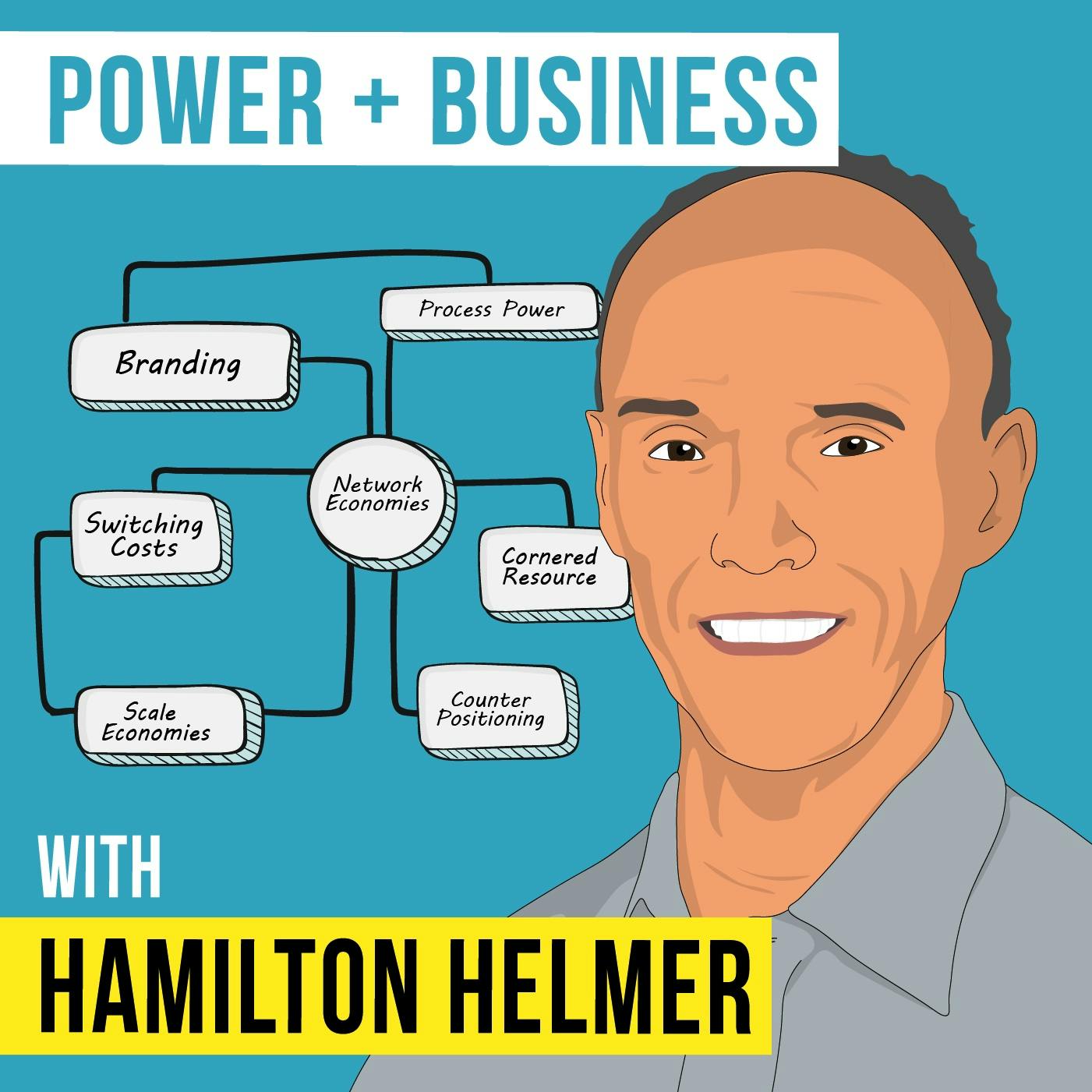
今天做客节目的嘉宾是汉密尔顿·海尔默,他是Strategy Capital的联合创始人兼首席投资官,也是史上最佳商业书籍之一《七种力量》的作者,这正是我们今天要聊的主题。
My guest today is Hamilton Helmer, the co founder and chief investment officer of Strategy Capital and the author of one of the best business books in history called Seven Powers, which is the topic of our conversation.
他一生都在实践商业战略,为企业提供咨询,依据战略洞察进行投资,并教授战略课程。
He has spent his career as a practicing business strategist, advising companies, investing based on strategy insights and teaching strategy.
在过去三十年里,他还把他的战略理念应用于公开市场的投资。
In the last three decades, he has also utilized his strategy concepts as a public equity investor.
在这次对话中,我们全面探讨了七大战略优势,从反向定位到规模经济,以及企业如何获得并维持这些优势。
In this conversation, we cover all seven business from counter positioning to scale economies and how companies earn and keep those powers.
无论是投资者还是经营者,都应该理解这些概念,而《七大战略优势》是我见过的最深入阐释这些理念的著作。
Any investor or business person should understand these concepts and seven powers is the best work I've seen that explains them in-depth.
希望你们喜欢我们的这次对话。
Please enjoy our conversation.
我想先从一个宏观的角度开始,聊聊战略优势本身,以及你所说的‘收益’和‘壁垒’这些前提条件。
But I'd love to just begin at a very high level with the concept itself, perhaps the necessary preconditions to power, which you described as benefits and barriers.
我们不妨先理清这三个概念——收益、壁垒,以及它们如何共同构成你眼中‘优势’的核心含义,然后再深入具体细节。
Maybe we could just take these kind of three concepts, benefits and barriers, and how they relate to what power means specifically to you at a high level before digging into the specifics.
如果你创业,投入了时间、资金,还有各种资源,也许你是出于热爱,但你也希望有所回报。
If you start a business, you put something in your time and investment and all this stuff, and you do it maybe for love, but you also get to get something back.
而这个回报,最好能超过你最初投入的那些东西。
And that something back has to hopefully be more than what you put in in the first place.
所以你可能会怀疑,这到底值不值得。
So you might question whether it was really worthwhile.
而所谓的‘力量’,就是当你发现某个企业的独特之处,它比市场上现有的东西更出色。
And so the notion of power is that when you figure out something about a business, you figure out something that's better than what is currently offered.
这种优势可能体现在更好的商业模式、一个独特的品牌、一款新产品,或者类似的东西上。
And so that might be a better business model or it might be an interesting brand or it might be a new product or something like that.
但紧接着,竞争套利的威胁就出现了。
But then the specter of competitive arbitrage comes in.
如果你做了一件更好的事,接下来的问题就是:那又怎样?
If you do something better, the question then is okay.
但要让这种优势真正持久,这才是你希望在商业中获得的长期成功。
But for that to be durable, it's what you want as a durable success in business.
要实现持久,就必须有什么东西能阻止别人把你的优势全部拿走。
For that to be durable, there has to be something that prevents others from taking all of that away from you.
所以,‘更好的东西’是优势,而阻止别人复制它的那些条件,就是壁垒。
And so the something better is a benefit, and the something that keeps it others from getting it is a barrier.
所以这两个条件你都得有。
And so you need both those conditions.
我书里举的例子,现在也在这里说一下,就是英特尔,因为它是个绝佳的典型案例。
And I the example I'll use in my book, I'll I'll do it here, is Intel because it's a great control case.
英特尔一开始的管理团队非常出色。
So Intel started out with amazing management.
我是说,那真是顶尖的三人领导组合。
I mean, best brilliant triumvirate business.
他们最初自称是一家内存公司。
And they started out as what they call themselves the memory company.
后来他们做半导体内存,拥有顶尖的制造能力、技术和领导力,方方面面都很强。
Then they did semiconductor memories, and they had incredible manufacturing and technology and leadership, all these things.
所以他们的优势在于内存芯片比别人的好得多。
And so the benefit was these great memory chips better than other people's.
但问题是,别人很容易就能模仿出来。
But the problem was that other people could emulate it.
所以他们的利润率开始下滑,看起来没那么有吸引力了。
And so their margins started to go down, didn't look that attractive.
尽管他们拥有这么多优势,公司也管理得非常好,但这个生意本身还是没什么前景。
So despite all the wonderful things that they had, and they were very, very well run business, it just was not going to be an attractive business.
但他们后来进入了CPU领域,我的意思是,他们做了处理器。
But then they got into CPUs, my process.
结果发现,有些东西能阻止别人快速模仿。
And it turned out that there was something that could keep others from quickly emulating that.
早期有一些特别关键的地方,比如电脑的硬件设计和芯片深度绑定之类的。
And there's some early things that were particularly strong in terms of how computers are hardwired to that chip and stuff.
但后来最关键的是,设计这样一颗芯片的成本极高。
But later on, the key thing was that to design one of these things is a very, very expensive proposition.
设计一颗这样的芯片,固定成本非常高。
And that's a fixed cost to design one of these chips.
如果你的产量足够大,这个成本就能分摊到每颗芯片上。
And if you have much higher volume, that cost is prorated over that.
所以这就是规模经济,一种真正的优势。
So that's that's a scale economy, which is type of power.
因此,除非别人也有同样的规模,否则你的成本就会更低。
And so unless other people have your scale, you're at a lower cost position.
所以这种优势是持久的。
And so that's durable.
他们拥有的那些优点——管理出色、制造精湛、营销得力——固然都很重要,但光有这些还不够。在内存业务上,他们最终不得不退出,就是因为这些条件没能保住他们的地位。
So all the nice things they have, which are necessary, good management, great manufacturing, good marketing, all that are needed, but would not have secured their position and did not in the memory business, which they eventually had to exit.
但他们还需要另外一样东西,超越所有运营优势的,那就是真正的力量:能创造价值、让竞争对手难以复制的低成本优势。
But they needed that something else in addition to all that operational excellence, which was power, which was something that created value, in this case, lower cost, but could not be easily arbitraged out by competitors.
所以,如果你既有优势,又有壁垒,那就意味着长期稳定的正向现金流,持续吸引人的回报。
And so if you have a benefit and a barrier, then you have a formally long term positive cash flow, attractive cash flow, but just good returns going on and on.
这,就是这个概念的本质。
And so that's the nature of the concept.
你觉得这样说公平吗
Would you say it's fair
是不是可以说,好处比壁垒更普遍,更容易被人想到,也更容易应用到实际中?也就是说,壁垒比好处更少见?
to characterize benefits as more commonplace, one, for people to think about it and also for people to actually put into the world than barriers, meaning barriers are a rarer breed than benefit?
对,帕特里克。
Yeah, Patrick.
这是一个非常深刻且重要的观点。
That's a really insightful and important point.
好处随处可见。
Benefits are everywhere.
汽车保险杠从镀铬变成了塑料。
A car bumper goes from chrome to plastic.
这是一个优势。
That's a benefit.
但问题在于,虽然雪佛兰科尔维特最早这么做了,我记得是这样,或者可能是火鸟?记不清了,反正是一家美国厂商。我认为其他厂商很容易就能模仿。
But the problem is is that lots of people, even though having Corvette did it first, right, as I recall, or maybe it was Firebird, can't remember an American manufacturer, I think others can easily emulate it.
而且做生意的时候,你总是试图改进工作流程,优化制造过程中的夹具,或者让代码写得更好一点。
And every time you turn around in a business, you're trying to increase, you know, this work processes a little better, you improve this jig in a manufacturing process, your code is a little bit better.
你随便往哪儿看,都有成千上万这样的例子。
Every place you turn, there are millions and millions of them.
其中有一些是真正重要的。
And then there's some that are material.
它们能显著提升整体价值,但即便如此,这类例子还是多得不得了。
So they move the needle from a point of total value, but even so far more common.
但障碍却很少见。
But barriers are rare.
说到竞争,我本身是经济学家,这让我特别看重长期竞争的力量。
Competitive, you know, one thing is I have my background is as an economist, and my background in that makes you very respectful of the power of competition long term.
总有人想模仿这些做法,而进步正是这样发生的——人人都在跟进。
And so there are always people trying to emulate that, and that's how progress takes place is that everybody does.
但如果有障碍存在,你就能长期保留自己改进带来的那部分优势。
But if there's a barrier, you get to keep a portion of that part that you've improved.
所以障碍真的非常罕见。
And so barriers are much rare.
你之前提到在硅谷的经历,我们待会儿会聊很多关于成熟企业的话题,但硅谷那种灵感迸发的氛围,确实特别鼓舞人心。
How early on you mentioned being in Silicon Valley, we're gonna talk a lot about more established businesses too, but the moment of inspiration and the vibe of Silicon Valley is always so inspirational.
有个词叫产品市场契合,我觉得这本质上就是找到了真正打动人的价值点。
You know, there's this term product market fit, which I think about as having nailed a benefit.
你做出了一样人们真心想要的东西。
Know, you've created something that people really want.
在你给早期创业者提建议,或者思考早期科技公司的战略时,你觉得他们从一开始就该考虑护城河的问题吗?
How early on when you're advising earlier stage founders, or thinking about strategy in early technology businesses, do you think they need to start thinking about barriers?
因为产品市场契合主要讲的是价值点。
Because the product market fit's all sort of about a benefit.
这在初期当然很棒,但如你所说,未必能长期维持竞争优势。
That can be great in the early days, but as you pointed out, is maybe not sustainable for long term competitive advantage.
早期公司通常会天然形成这种护城河吗?
Are these things usually the barrier side with these early stage businesses?
在你看来,创业者是无意中建起了护城河,还是有意为之?
Is it usually accidental or intentional when founders create a barrier in your experience?
关于什么时候该开始考虑这些问题,非常重要的一点是,创业初期你往往根本不知道自己会不会拥有优势。
In terms of the question of when you should start thinking about these things, it's very important to realize that often when you start a business, you just don't know whether you're gonna have power or not.
真的说不准。
You just don't know.
但即便如此,抱着未来可能有机会的心态继续推进,仍然是个很合理的决定。
And yet it may be a very reasonable bet to proceed knowing that an opportunity may arise.
我举个Netflix的例子吧。
So I I give you an example of of Netflix.
他们最初做的是寄DVD的业务,这个模式本身就有它的优势,我就不细说了。
So they had this red envelope business, which had its own levers of power, which I won't go into.
但他们很清楚,最终这事儿一定会搬到互联网上。
But they knew that ultimately this was gonna be something that was over the Internet.
所以才叫Netflix,而不是什么‘仓库影碟’。
That's why it's called, you know, Netflix and and not a warehouse flick.
但当时根本看不出来这中间有没有真正的壁垒——如果谁都能够拿到内容,用户按次付费,那谁都能做。
And yet it wasn't evident, you know, whether there would be any power there Because if they just get content from everybody gets content and you buy it on a per view basis, then kinda anybody can do that.
这里面确实涉及一些技术,但也没那么吓人。
There's some technology involved, but it's not, you know, it's not that daunting.
亚马逊云服务给奈飞提供支持,其他人也能用,等等。
And Amazon Web Services, you know, serves Netflix and somebody else can use them as well and so on.
那奈飞到底做了什么?
But what did Netflix do?
他们会不会说,等我们有了优势再说?
Did they say, well, we're not gonna do this until we have power?
不会。
No.
根本不会。
No.
完全不是这么回事。
Not at all.
这些关键阶段往往充满各种可能性,不确定性也很高。
These formative moments are ones with lots of options, high uncertainty.
如果有这个机会,优秀的企业都会先试探一下,小步尝试,同时密切留意是否有更大的机会出现。
And and if you have the possibility, what good companies do is they put a toe in the water and and take a crack at it and then keep their eyes peeled for the possibility for power.
Netflix 最初的做法很简单,就是给他们的红色信封会员提供在线播放服务。
So Netflix started off with they just said, well, we're just gonna give people streaming away for our red envelope customers.
他们这么做了,但片库质量很差,用户反响也很冷淡。
So they did that, and it was a pretty lousy catalog and not a lot of response.
后来他们决定加大投入,给用户带来更优质的内容。
But then they they said, well, let's let's up the ante here and give them some good contact.
于是他们和 Starz 达成合作,拿到了非常出色的内容资源。
So they cut a deal with with Starz, which had really good content.
突然间,订阅用户数量就暴增了。
And then all of a sudden, subscriptions just skyrocketed.
他们这才意识到,原来用户真的非常喜欢这个服务。
And they said, wow, that's so people really like this.
但问题是,和 Starz 的合作只是个偶然的个案,当时 Starz 并没意识到自己让出了什么。
But the problem with the stars deal was it was kind of a one off deal when stars didn't realize what they were giving away.
当时并不清楚这是否能带来长期的竞争优势,因为下次他们再找类似Starz的公司合作时,对方会开出一个完全反映Netflix价值的高价,那样就没那么划算了。
And so it wasn't clear that this was a source of long term competitive advantage because the next time they went to a stars like company, they'd ask for the price that fully capitalized the value that Netflix would be receiving, and it wouldn't be that attractive.
于是接下来的阶段,他们真的和Epix达成了合作,我记得应该是Epix。
And so then the next phase was they actually did deal with, I think it was Epix.
和之前Starz那笔三千万美元的交易不同,这次的合同金额我记得高达十亿美元。
And that unlike the $30,000,000 deal with Starz, that was a $1,000,000,000 deal as I recall.
而且这次Epix非常清楚自己在卖什么——这些版权非常值钱,而且是独家授予Netflix的。
And that was at a price where Epix knew exactly what they were selling, that these rights were valuable, and it was an exclusive to Netflix.
这样一来,他们就以固定价格买断了独家内容,这部分成本大约占了他们总支出的一半。
And so now all of a sudden, they have paid a fixed price for exclusive content, which is 50 percent of their cost structure roughly.
所以,任何其他想提供相同内容的平台,都不能按播放次数付费,而必须支付一笔固定的费用。
So anybody else who wants to offer the same stuff doesn't pay on a per view basis, but would have to pay a fixed price.
如果Netflix的流媒体用户越多,平均到每个用户身上的成本自然就越低。
And if Netflix has more streaming customers than the cost per per customer is is, of course, diminished accordingly.
但这正说明,他们是一步步摸索着前进的,这种做法其实更常见。
But what it shows is that step by step, they work their way into it, and that's more common.
但关键在于,这也是我这本书的核心:在这个过程中,你要时刻想着哪些结构能帮你建立起壁垒、带来优势,从而掌握主动权。
But the key thing, and this is what my book is focused on, is that along that process, you want to have in your mind the types of structures that might get you to a point where you have a barrier as well, benefit and a barrier so that you have power.
所以,你问我什么时候开始考虑这个问题,我的答案是:越早越好。
And so my answer to your question about when you start thinking about it is very early on.
你有这个框架,但不会死板地认为:除非能掌握主动权,否则什么都不做。
You have this framework and you don't slavishly say, I'm going to not do anything unless it has power.
你只是不断提醒自己:嗯,如果我们走这条路,看起来似乎有点意思。
You just constantly sort of check whether or not, oh, well, you know, if we go down this path, that looks kind of interesting.
所以我跟硅谷的创业者们聊天时,经常就是这类讨论。
So the conversations I have with founders, are quite a few in Silicon Valley, those are the kinds of conversations that we have.
他们一边想着这个,一边又琢磨那个,诸如此类。
They're sort of thinking about this and thinking about that and and so on.
正确的态度应该是:保持实验精神,但同时极其谨慎、深思熟虑。
And that's the proper perspective is to be experimental, but very, very thoughtful.
只要我的这些观点能帮人稍微更清晰一点,更快找准方向,我的目的就达到了。
And if my concepts even help a smidgen in additional acuity and zeroing in on the right thing, then my goal is accomplished.
我很想逐一探讨这些力量,聊聊它们自你最初提出以来发生了哪些变化。
I would love to explore the powers taking them kind of turn by turn here and discussing what you think has changed about them over time since you originally conceived of them.
也许可以谈谈,哪些力量对不同类型的企业特别关键。
Maybe what sorts of powers are most interesting for certain types of business.
我会围绕每个点问很多问题。
You know, I'll ask a lot of questions sort of around each.
你之前提到过一个很有趣的想法,你说是循序渐进,我觉得这更像是路径依赖——你走过的路会逐渐积累优势,因为别人也得走类似的路。
You've already mentioned this this fascinating idea of, you said step by step, I think about it as path dependency or path you have to walk that accumulates an advantage over time because others have to walk a similar path.
品牌就是一个很好的例子。
Branding could be an interesting example of that.
通常来说,品牌都是慢慢建立起来的。
Like typically brands are built over time.
偶尔也有像Dollar Shave Club那样一夜爆红的,但大多数品牌还是靠时间沉淀出来的。
Sometimes they're air dropped in like a Dollar Shave Club or something, but it's more common for them to be built through time.
我很欣赏你在书里把时间与力量的关系划分为起源、起飞和稳定这三个阶段。
And I love how you delineate in the book, the concept of origination, takeoff, and stability, as sort of different periods of how time interacts with the power.
那我就按这个顺序来探讨这些内容,方便理清思路。
So I'm gonna use that order to explore these things just for some sequencing.
咱们先从起源阶段开始吧。
And I thought we'd begin with origination.
你标记出的两个属于起源阶段的,虽然没有绝对标准,但我觉得是‘垄断资源’和‘反向定位’。在所有这些力量里,反向定位最让我着迷,我觉得它特别独特,也特别值得深入思考。
So the two that you've sort of shaded, there's no absolutes here, but that you've shaded in the origination category, are this idea of a cornered resource, and this idea of counter positioning, which of all the powers, the counter positioning is the one that that certainly animates me the most that I think is really unique and and fascinating to consider.
那我们不妨先聊聊反向定位。
So maybe we could start there with counter positioning.
你能解释一下,这个力量到底指的是什么?你见过哪些成功的应用案例吗?
Can you describe what that power means and ways that you've seen it effectively applied?
反向定位就是,一家公司开创了一种全新的商业模式,而市场上已经有一个强大的在位者,用的是完全不同的模式。但新模式在某些方面更优,比如能带来更好的现金流。
So counter positioning is if a company originates a new business model, and that there is a powerful incumbent with a different business model, but the new business model is in some way superior, which is to say that it gives you better cash flow than the other business model.
但对在位者来说,要模仿这个新模式,就得彻底推翻自己原有的模式,或者至少觉得必须这么做。
But for the incumbent to mimic that business model, they would need to blow up or they think they would need to blow up their old business model.
可这种改变带来的痛苦太大了,所以他们往往会拖很久才行动。
And the pain of that is so great that they wait a long time.
一个很好的例子就是HBO和Netflix之间的对比。
So a great example is HBO versus Netflix.
HBO确实很成功,知名度也高得多,不过现在回想起来,那时候的情况已经不一样了。
So HBO, yeah, it's hard to remember back then, but it was a much more successful, much more visible company than Netflix.
利润丰厚,出品的剧集都非常出色。
Very profitable, had amazing series.
想想《黑道家族》,它在某种程度上彻底改变了电视行业,简直太精彩了。
Think of the Sopranos, you know, revolutionized some television in some ways and just brilliant stuff.
后来Netflix出现了,但HBO的节目是通过有线电视公司分发的。
And Netflix comes along, but HBO is distributed through cable companies.
而Netflix属于所谓的‘直接面向消费者’模式,也就是绕过中间商,直接服务用户。
But Netflix is what's called over the top, which means they go directly to consumers.
所以对HBO来说,问题就在于:他们能不能也跳过有线公司,直接面向用户?
And so the issue for HBO was could they go over the top versus Netflix?
但他们一看,自己和有线电视公司签的这些合同,每一笔都赚得盆满钵满。
But they're looking at all these very profitable contracts they have with their cable providers.
他们说,天啊,如果我们改了分销方式,这些合作可能就保不住了。
And they say, wow, if we change distribution, those might be at risk.
所以我们在权衡一个不确定的前景,和一个明明白白的惨淡后果。
So we're looking at this uncertain upside versus absolutely terrible known downside.
我们不能冒这个险。
We can't go there.
于是他们一拖再拖,而Netflix却一点一点地,不断抢占市场份额。
And so they wait and they wait and they wait and bit by bit, Netflix just gain market share and gain market share.
这就是事情的本质。
So that's the nature.
当年我投资戴尔的时候,就是其中一个让我深受启发的例子——那是我最成功的投资之一。那时候戴尔直接面向消费者,而其他公司还都依赖电脑城这类渠道,签着一堆合同。
And when I was in one of the things that stimulated was I was an investor in Dell on the nineties, one of my best investments, and they were going direct and compact and everybody else was going through channels like computer land and that kind of stuff and had these contracts.
他们不敢冒险去动自己那套运转得风生水起的分销体系。
And they didn't want to risk their distribution, which was going famously for them.
所以他们一等再等,迟迟不动。
And so they waited and waited and waited.
当时,戴尔充分利用了这一点。
And Dell took tremendous advantage of that at the time.
你提到过一些例子,我总是喜欢把任何商业模式拆解成产品和渠道这两个核心支柱。
You know, you've mentioned some examples where I always try to break things down into product and distribution as the sort of key twin pillars of any business and business model.
在渠道方面,这种反向定位非常清晰——用一种完全不同的方式触达客户,一旦 incumbents 想模仿或自我蚕食,就会伤及自身。
The counter positioning is quite clear to me in the distribution examples, different way of getting to your customer that by definition would hurt the incumbent if they tried to mimic it or cannibalize their business.
这些例子真不错。
Great examples there.
那在产品层面,有没有什么反向定位的典型例子?
Are there examples that come to mind more on the product side of counter positioning?
当然有。
Definitely.
我知道你对软件很感兴趣,记得有句话特别出名:软件正在吞噬世界。
So I know you're you're interested in in software, and I think it was that famously said, The software eats the world.
这句话真是精辟。
What a great statement.
太有见地了。
Super insightful.
如果你想想这句话的含义,就会发现那些原本做硬件的公司,现在面对的竞争对手全是软件出身的。
And if you think about what that means is that companies that used to be hardware oriented now are faced with competitors that are software oriented.
在很多情况下,这都属于一种反向定位。
And I would say in many, many of those cases, there's counter positioning.
这种反向定位的根源在于,让一家成熟的大公司从硬件转向软件,难度大到几乎难以实现。
And the counter positioning comes from the fact that changing a company that's well established and large, that's hardware based is extremely difficult to move it over to a software base.
不是完全做不到,但真的非常困难。
Not impossible, but extremely difficult.
我也曾经投过一笔不小的金额,对我而言算是重注了,投了苹果。
So I also had a significant investment, very significant for me in Apple.
你看iPhone,它就是针对诺基亚做的反向定位,原因就在这儿。
And if you look at the iPhone, they were counter positioned versus Nokia for just those reasons.
诺基亚当时是个极其成功的公司,但本质上它是一家硬件公司。
And Nokia was this unbelievably successful company, but it was a hardware company basically.
他们拥有非常成熟的供应链、工程团队,方方面面都很完善。
And they had really good, you know, developed supply chains and their engineering teams and everything else.
要把他们的东西变成纯粹的软件产品,就得换人、换领导、换思维方式,甚至得重新定义价值标准。
And for them to turn it into was essentially a software product, just they would have had to have different people and different people in charge, different sens sensibilities, different measures of value.
所以,这真的特别特别难。
And so very, very difficult.
我觉得,这在当今非常普遍——硬件公司转型真的非常困难。
So I think that's one that's rather common these days, I'd say is that hardware companies have a very difficult time.
我永远记得,和丹尼尔·埃克聊天时,他提到Spotify早期的一个想法:有什么能比免费更好?
I'll always remember in my conversation with Daniel Ek, who's the person that introduced you and I, this notion he had early on in Spotify of the question was, what could possibly be better than free?
当时的主流是Napster这类公司。
You know, the the incumbent was Napster and other companies like that.
他意识到,真正的突破不在于价格,而在于速度——把全世界的歌都装进口袋,不被硬盘容量或延迟限制。
Like, how could I possibly beat that and realizing that it was a product innovation around speed of delivery and like having every song in the world in your pocket, not limited by disc space or anything like that, by latency.
我觉得这些反向定位的思路实在太有意思了。
I just think these these counter position ideas are so fascinating.
确实如此。
They are.
正如我所说,它们非常反主流,因为人们早已习惯了这些强大的老牌企业。
And as I said, they're they're very contrarian because people are used to these incredibly powerful incumbents.
比如诺基亚,大家一直觉得它是不可撼动的巨头——当然,'巨头'这个词带点负面意味。
I mean, Nokia was thought always thought of as being this unassailable monster, you know, or monster is the negative term.
我的意思是,它是一家非常成功、极具吸引力的公司。
I mean, successful, very attractive company.
是的,我觉得你说得对。
And yeah, I think that's right.
你对老牌企业如何用这种方式反噬自身怎么看?
What are your thoughts on incumbents using this against on themselves?
我当然读过克莱顿·克里斯坦森关于颠覆的所有理论,这些想法让我联想到那些观点。
So I've obviously read all the Clayton Christensen ideas of disruption, which some of this thinking brings to mind.
有时候,企业确实能成功地自我颠覆。
And sometimes companies successfully self disrupt.
那么,你觉得像我们之前提到的这些失败者,作为行业巨头,该怎么运用反向定位的思路来拯救自己呢?
So how do you think that the incumbents who we've we've used as examples of losers in these stories so far could gainfully apply the counter positioning idea to themselves?
反向定位的关键在于壁垒——为什么竞争对手要么犹豫不决,要么根本做不到,或者根本不愿意这么做?因为这会严重冲击他们原有的商业模式,而这些巨头恰恰最依赖这个模式。
The nature of the barrier in counter positioning, which is to say why a competitor hesitates from taking one or or is unable to or in this case unwilling to, is because of the damage to the old business model and the incumbents.
所以他们不可能对自己实施反向定位,真正受到威胁的,恰恰是他们自己。
So they can't be counter positioned to themselves, but what they are is they're threatened.
因此,观察这些行业巨头的处境,能帮助我们看清他们正在面对的反向定位本质,从而做出决定:是否需要彻底重塑自己,是否该接纳这个新商业模式。
And so the use of incumbents is to understand that the nature of the counter position they're facing and make a decision about whether they need to reinvent themselves, whether they need to adopt this new business model.
这个决策必须基于长远眼光,因为重塑过程本身注定会带来巨大的阵痛。
And the reasoning be a long term reasoning behind that because it will inevitably involve a lot of pain by its very nature.
我来举几个例子吧。
And so I'll give you a couple of examples.
还是拿奈飞来说,流媒体服务本质上是在颠覆他们原来的DVD邮寄业务。
So again, using Netflix, streaming was reinventing their red envelope business.
他们有足够的远见,也真正看明白了这一点。
And so they were forward thinking enough and understood that.
说实话,里德·哈斯廷斯是我见过最有战略眼光的CEO之一。
I mean, I have to say Reed Hastings is one of the most strategically astute CEOs I've ever dealt with.
他很清楚,公司必须这么做。
He understood that they had to do that.
其实,从一开始他们的基因里就有点这个倾向,毕竟公司叫Netflix嘛。
And, of course, it was sort of in their DNA a little bit to begin with because it was called Netflix.
但即便如此,他们当时业务已经很成功了,却还是主动放弃了原有的模式。
But even so, they had a very successful business and they had to disintermediate it, if you will.
如果你看看迪士尼,我也非常欣赏鲍勃·艾格。
And I think if you look at Disney, I'm also a huge fan of Bob Iger's.
我虽然不认识他,但远远地非常敬佩他。
I don't know him, but I'm I'm an admirer from afar.
他们大力投入Disney+,正体现了什么叫真正有战略眼光——他明白,未来属于流媒体,影院放映终究不是全部。
I think the heavy commitment that they made to Disney plus shows what a good strategic thinker is, that he understood that that was something in the future and the theatrical presentation was not eventually the full picture.
所以他果断投入了进去。
And so he committed to that.
但关键在于战略眼光、领导力,以及推动变革的执行力。
But so the key things there are strategic insight, leadership ability, and willingness to drive it through an organization.
不过,这一步实在走得太远了。
Now, it's just bridge too far.
举个例子,有些软件领域的转型难度极高,就算有心去做,改变也太大了。
I mean, for example, some of these software cases getting there is just so hard that even if you have the intent, it's such a change.
如果我回想一下索尼,现在他们的利润大概主要来自游戏业务。
I mean, if I think back of Sony right now, I think probably most of their profits comes from video games.
我不太确定是不是这样。
I'm not sure of that.
但当初做游戏这件事,几乎没成。
But doing video games almost didn't happen.
全靠一位痴迷于游戏的工程师,加上索尼高层的远见,才把数字业务带进了这个传统模拟文化里。
And it took a, you know, an engineering guy who was crazy about it and some amazing leadership at Sony to actually get digital through an analog culture.
要是没做成,今天的索尼肯定没这么有吸引力。
And if they hadn't, they would be a much less attractive company today.
但那真的特别难。
But it was extremely difficult.
所以,当你长期研究战略时,你会明白,人真的至关重要。
So, one thing you learn when you study strategy long enough, people really matter.
如果你想想战略是怎么开始的,战略的起点永远是创意。
So if you think about how strategy starts, the starting place of strategy is always creativity.
创意来自于个人。
Creativity comes from individuals.
在这种事情上,领导力真的太关键了。
And boy, is leadership important in this kind of stuff.
我的意思是,这真的特别重要。
I mean, it's really important.
在这一类原创性力量中,第二个是‘垄断性资源’,这个概念大家大概都能直观理解。
Second of the powers that is in this sort of origination category is this idea of a cornered resource, which probably people intuitively will understand.
但我希望你能结合你的经验解释一下,为什么垄断性资源如此强大,或者可能如此强大,以及在今天的世界里,这种资源是否还真实存在。
But I'd love you to explain it in your context, why a cornered resource is so powerful or could be so powerful, and whether or not they still really exist in the world today.
我就不一一细说这类情况的所有具体条件了。
I won't go through all the exact conditions for something like that.
简单来说,你手里有个很有价值的资源,但因为某种原因,你拿到的成本远低于它的实际价值。
But basically, you have some desirable asset, which you, for some reason, gotten at a price that doesn't fully reflect its value.
这个资源太关键了,换任何一家公司拿到它,都能获得惊人的回报。
And it's so determinative that if another company got it, they would also get this tremendous return.
所以,领导者通常并不具备这种特质。
So leaders usually aren't that.
这得是一个完整的、不可复制的整体。
It has to be a complete thing.
像史蒂夫·乔布斯这样的人,大概就是个典型的稀缺资源。
So so somebody like Steve Jobs, probably a cornered resource.
你把他放到任何一种行业里,这人太厉害了,迟早都能做出一番成绩。
You drop him in a variety of types of businesses, And this guy was so amazing that he probably would have made some later.
但大多数领导者的成功,其实都依赖于他们所在的公司。
But most leadership is dependent on the particular company they're in.
尽管这些因素至关重要,但它们并不能完全解决这个问题。
And although they're absolutely critical and important, they're not a complete answer to that problem.
所以,从历史角度看,像专利这样的东西就是例子。
So one, of course, historical aspect of it, the things like patents.
我觉得这种情况其实非常少见。
So I think that it's much rarer.
我本人可能已经研究过两百多个领导力和战略案例。
You know, I've probably done 200 lead, 200 strategy cases.
也许我的斯坦福学生还做了另外一百多个,但真正把稀缺资源作为核心驱动力的情况实在太少了,不过确实会发生。
Maybe my students at Stanford have done another couple of 100, you know, and it's it's very rare to see corner resource as the driver, but it does happen.
我对皮克斯的一个看法是,如果你看看他们前十二部电影那连串惊人的成功,那其实就是一个稀缺资源的体现。
One of my posits about Pixar is that actually if you look at their phenomenal string of successes, movie successes in their first dozen films, that that was a corner resource.
这个稀缺资源是一群特定的人,他们经历过《玩具总动员》第一部的磨砺,不仅练就了制作动画电影的真本事,还建立了彼此间的高度信任和独特的协作方式,互相激发创意。
And the corner resource was a very specific group of people that had been through the wars in doing Toy Story one, and that they both developed the chops for animated films, but also this mutual respect and way of working together and stimulating each other.
再看他们那些早期电影的产出,全部都来自这一批人。
And then if you look at their output of those films, all of the first group of films came from that group of people.
而且他们被束缚住了,可能是因为报酬不够高,没能充分实现他们创造的价值。
And and they're cornered because they probably weren't paid enough to capitalize fully the value they were achieving.
所以我肯定,很多这类人收到了其他动画公司的邀约,说‘来我们这儿吧’。
So I'm sure lots of these people got offers from other animated companies saying, oh, come work for us.
但他们说,不,皮克斯不一样,这儿特别。
Said, no, know, Pixar is special.
我决定留下来。
I'm gonna stay here.
但这种情况其实挺少见的。
But it's kind of rare.
我觉得专利这一块也很少见。
And I think the patent side is rare.
对我来说,很少见到哪个专利足够大、足够具有封锁性。
It's it's pretty rare for me to see a patent that's big enough and blocking enough.
做同一件事的方法太多了。
There's just a lot of different ways of doing things.
你现在看到的,当然有很多机器学习和人工智能方面的内容。
And one thing you're observing right now, of course, is a lot of machine learning AI stuff.
我从来没见过哪个算法能真正形成护城河。
And I don't think I have ever seen an algorithm be defensible.
也许 somewhere 有,但作为产品与市场契合的起点,这倒是个不错的方向。
Maybe there is one somewhere, but it's a good starting place for product market fit.
就像谷歌的PageRank那种东西。
I mean, like a page rank and Google or something.
但归根结底,数学方法多得很。
But eventually there are lots of math.
数学和编程都有无数种实现方式,这点你心里清楚。
You can do math a lot of different ways and programming a lot of different ways, you know that.
所以这种情形极其罕见。
And so that's extremely rare.
总的来说,现在知识的分布比以往更分散了。
And knowledge in general is more distributed now rather than less.
所以我觉得,这些东西其实很少见。
And so I would say that those things are are rare.
所以在当今这个时代,这种情况比过去更少见了。
So it's I'd say in today's world, that's less common than it used to be.
你怎么看待谷歌呢?当初PageRank确实快得多、也更优秀,但从外部看,他们至今仍保持着强大的地位,主要靠搜索业务带来的现金流。
How would you think about Google in that context where originally PageRank was so much faster and superior, but they've continued to enjoy that seems like from the outside based on cash flow is a powerful position built mostly on search, algorithmic search function.
那么,你怎么看待谷歌在这个背景下的情况?
So how do you think about Google in in the context of this?
说实话,我不太确定。
You know, I'm not entirely sure.
我可以给你一个推测,但我不确定对不对。
I'll give you a hypothesis, but I'm not sure if it's right.
他们的业务强大,其实取决于你我是否选择通过他们来搜索,不管是直接用谷歌,还是通过安卓或Chrome之类的渠道,而不是用别人的服务。
So the strength of their business depends on you and me choosing to search through them, directly or through Android or Chrome or something as opposed to using somebody else.
这里有个挺有意思的现象:如果你看一些关于Bing和谷歌的普通调查,两者的使用率看起来差不多。
And then there's sort of a curiosity about that, which is that if you look at sort of normal surveys of like Bing versus Google, it seems about the same.
并没有太多证据表明他们的搜索功能明显更出色。
There's not a lot of evidence that it's wildly superior search.
所以问题来了,这背后到底是什么原因?
So the question is kind of what's going on there?
也许他们的优势在于买下了大量的搜索流量。
The argument maybe they, of course, they buy a lot of the search.
比如苹果,就会向他们购买搜索权限或搜索结果的展示权。
So from Apple, for example, they then purchase the search rights or the search results.
既然数据看起来差不多,那我就说不清PageRank或者Bing用的是什么技术,但感觉两者差不多。
So the fact that things about the same says that I don't, you know, I don't know page rank or what Bing uses, but it seems more or less equivalent.
所以我觉得,对谷歌的解释更像是一种网络效应。
So the argument about Google, I'd say is that it's a network economy.
我再说一遍,我不确定这是否正确,但有一点挺让人意外的,就是搜索中独一无二的查询占比非常高。
And I, as I say, I'm not, I'm not sure this is true, but the idea, one thing that is surprising about search is the percentage of searches that are unique.
换句话说,这些搜索内容以前根本没人问过。
In other words, they just have not done before.
从这一点可以推断,那些只被搜索过两三次或四次的近乎独特的搜索,比例甚至更高。
And if you and then you can deduce from that that the percentage that are near unique have only been done two, three, four times is is even higher.
也就是说,谷歌提供令你满意的搜索结果的方式——我不是这方面的专家,但我觉得是这样的:如果有人之前搜过和你一样的问题,谷歌会记录下那个人点开了哪些结果,从而判断他真正想找的是什么。
So what that means is and the way Google, I think, I'm no expert in this, but the way Google gives you satisfying results is if somebody has done a search like the one you request before, when that search was done previously, they track what that person then did once they got Google search results, what things did they click on.
这样,谷歌就能知道哪些结果最能满足用户的需求。
And that gives them information about exactly what it was they were really looking for and what results would be the most satisfying.
当另一个人做同样的搜索时,系统就会把这些反馈信息推送给对方。
And if another person does the same search, that's what they feed back to them.
这简直像魔法一样。
So it's almost magical.
你会忍不住惊叹:天啊,他们怎么知道我在想什么。
You go, oh my god, they knew what I was thinking about.
而由于大多数搜索都是近乎独特的,这就意味着那些小众的搜索行为特别重要。
And since their searches are many are nearly unique, it means that tail events matter.
这意味着,如果你有哪怕10%的搜索是独一无二的,那在这些特殊搜索上,谷歌的表现就会显得格外出色。
It means that for your sense of the efficacy of your search engine, if you do, you know, even 10% of your searches are unique for those unique searches, Google just seems a lot better.
当你进行一次几乎独一无二的搜索时,这个结果就会被反馈给谷歌。
And the network effect is when you do that search that's near unique, that result is contributed to Google.
所以当我再做同样的搜索时,他们能给我提供更有价值的结果。
And so they are able to provide better value to me when I do that search.
因此你会觉得,尽管从整体和平均搜索来看,他们和别的搜索引擎没什么区别。
And so you just get this sense that they're even though on in gross terms and average searches, they're just no different than that.
普通的调查根本捕捉不到这一点。
A survey just doesn't capture that.
所以这只是一个假设,而且只是其中一个可能性。
So that's that's a hypothesis, but only one.
你怎么看?
What do you think?
我觉得太棒了。
I love it.
我以前从来没听过有人把谷歌的优势说成是网络效应,但听起来确实很有道理。
I've never heard Google's advantage articulated as a network effect before, but it certainly seems plausible.
这个观点对一个主导型商业模式来说真是独到。
And it's a unique take on a dominant business.
这正好是个绝佳的机会,来聊聊网络经济。
And it's a great excuse to talk about network economies.
这可是我特别着迷的一个话题,从布莱恩·阿瑟开始,到如今那么多依托网络经济崛起的优秀企业。
This is, you know, one of my personal obsessions, starting with Brian Arthur and so many great modern businesses that are built on top of network economies.
大家都知道Facebook这类例子。
Everyone knows Facebook and other examples like it.
所以咱们没必要再重复那些显而易见的案例了。
So we don't we don't need to hit the obvious examples of what this means.
但我特别想听听你的见解,比如刚才提到的谷歌就是个很棒又有趣的例子,连我们现在用的Zoom,其实也是网络经济的一种独特体现。
But I would love to to hear your nuance like that Google example is a is a fantastic and interesting, even Zoom that we're doing this on are sort of interesting, unique examples of network economies.
你对这种力量最感兴趣的是什么?你见过哪些特别的运用方式?
What interests you most about this power and what are some unique ways that you've seen it applied?
网络经济之所以有趣,是因为有几个特别的原因。
Well, economies are really interesting for a couple of reasons.
首先,如果这种商业模式能很好地变现,它的爆发力会非常强。
One is that if the business model that comes from them is sufficiently monetizable, they are very intense.
即使不是赢者通吃的模式,这种主导地位和超高回报也极具吸引力。
If not winner take all businesses, their dominance and very high returns is an attractive prospect.
从投资角度看,另一个问题是,这类公司刚起步时,利润表看起来并不好,因为网络效应还没积累到能产生足够价值、支撑高定价的地步,对吧?
The other aspect, of course, from an investment perspective is that when they first start, they look unattractive from a P and L because there are not enough network effects to generate enough value to charge enough to make the bottom line look good, right?
所以,最终它会变得非常有吸引力,但一开始却显得很糟糕。
So you get something that ultimately is very attractive, but looks bad to begin with.
这就造就了一个绝佳的投资机会,也是一个特别有意思的商业模式。
And so that spells a good investment opportunity and a very interesting business.
但这里也有个警示:真正能形成足够网络力量、达到可变现规模的网络效应,其实远比人们想象的要少得多。
But there's a cautionary tale here, which is that the prevalence of network effects that then are sufficient to get to network power, which means they're sufficiently monetizable, is much less than people think, I think.
要是每当我听到有人说‘我收集的数据越多,就越了解客户,就能改进产品,吸引更多用户,然后又产生更多数据’——这种话,我都能赚一笔了。
So, I mean, if I had a nickel for every time somebody said to me, well, you know, I get more data and that tells me more about customers and that allows me to improve my product and that allows me to get more customers, which gives me more data and blah blah blah blah blah.
所以,我得把这些话总结一下。
And and therefore, I have to sum it up.
我每天都能听到这种说法,但大多数情况下,这根本算不上战略。
I hear that every day, you know, and in most cases, it's not strategic.
可能有点网络效应,但作用有限。
There might be a modest network effect involved.
够不上实质性的规模,所以谈不上掌控力。
It doesn't get to materiality, So it's not power.
你之前提到过,收益和门槛是形成掌控力的必要条件,对吧?
So what, you know, you've talked about benefit and barrier in early on as are the sufficient necessary conditions for power.
我有时候会换种说法,用三个S来分析:优越性、重要性和持续性。
There's another way to parse that, which I use sometimes, which is the three s's, which is superiority, significance and sustainability.
这三个S和收益、门槛是一一对应的。
And that maps one to one to benefit and barrier.
也就是说,收益被拆成了‘优越’和‘重要’两个部分。
It's just that benefit is broken up into superior and significant.
这样拆分的好处是,能更清楚地突出‘实质性’和‘重要性’的区别。
And the reason that's useful in discussions is it breaks out explicitly materiality significance.
所以我觉得你必须非常非常谨慎。
And so I'd say you have to be very, very careful.
比如,关于Snapchat到底做的是不是真有道理,现在还不好下定论。
For example, I'd say the jury is still out on Snapchat about whether or not what they do.
我觉得他们那些会消失的照片之类的核心业务,真的能赚到足够的钱,值得整体看好吗?
I think the defensible part of their business, their disappearing photos and stuff, is it sufficiently monetizable to be attractive overall?
你要记住,真正的权力体现在商业上,就是未来的现金流折现后,远远超过当初投入的全部成本。
Remember, power is an attractive overall business position, which is that the discounted cash flow going forward far more than offsets all the money that went into the thing in the first place.
不是说只要能撑很久的生意就都值得投,很多生意一开始就不划算,因为根本回不了本,但它们就是能拖很久。
It's not just so you can have businesses that have no power to continue on a long time, but they're lousy from an investment perspective starting out because they don't justify the initial investment, but they can keep going for a long time.
我觉得他们的‘快拍’故事这类功能,护城河没那么深。
And I think their stories, snap stories stuff was less defensible.
我觉得Instagram在这方面可是下足了功夫,直接冲了上去。
I think, you know, Instagram, you know, went after that pretty hard.
所以他们确实挺有意思的。
So they're really interesting.
我还想说的是,它们极其复杂。
The other thing I'd say about them is that they are incredibly complicated.
当我们分析策略资本、研究网络效应时,第一件事就是画出一张流程图,搞清楚到底发生了什么。
That when we look at Strategy Capital and we look at a network effect, the first thing we do is try to develop a flowchart of exactly what's going on.
因为网络效应里头有各种不对称和微妙的细节。
Because there are all kinds of asymmetries and subtleties that go on in network effects.
网络效应通常出现在多边平台上,对吧?
And network effects would often happen for multisided platforms, right?
所以一定要留意这些微妙之处。
And so just beware of the subtleties.
但如果你真能找到一个,而且它能经得起这些考验,那它就会变成特别有趣、非常出色的生意,就像Facebook那样。
But if you can find one, whether it does clear all that stuff, then then they're, they're really interesting and, and turn out to be amazing businesses like Facebook.
有哪些具体的细节会让人误以为是网络效应,其实却不是呢?
What are some examples of those subtleties that might disqualify what looks like a network effect, but may not be one of the big ones?
你常看到哪些情况其实根本算不上真正的网络效应?
What are some common things that you see that disqualify?
展开剩余字幕(还有 283 条)
我觉得其中一个关键点是收益的非线性特征。
I'd say an important one is nonlinearity of the benefit.
在数据相关领域,这种情况很常见:你拥有的数据越多,理论上应该能获得更大好处。
And this happens a lot in data stuff is that as you get more data, you would hope that there's some benefit.
比如提升客户洞察力,或者降低成本,但这些往往都不是线性增长的关系。
So maybe it's better customer awareness or even lower your cost or something that often that's a nonlinear relationship.
随着规模扩大,每多一点数据带来的额外收益会越来越小,最后几乎就持平了。
And what happens is that as it scales, that additional incremental benefit becomes less and less and eventually gets that crook is rather flat.
如果市场上有很多竞争者都处在这种持平阶段,那你的优势就根本体现不出来了。
And if there are enough competitors that are in that flat zone, it means it doesn't make any difference.
我这么说可能让Netflix的人不高兴,但我觉得他们的推荐算法就是这样——确实做得很好。
And so so I would say they might get mad at me if I said this, but but I would say, for example, Netflix recommendation engine is like that, that it's terrific.
他们花大价钱打磨这个系统,让你用得开心,这没错,但它可能算不上战略优势。
They rightfully spend a huge amount on getting it just right and pleasing you as they should be doing that, But it is probably not strategic.
换句话说,我不会因为Netflix的推荐算法就选它而不是亚马逊Prime。
In other words, I probably wouldn't choose Netflix over Amazon Prime because of Netflix recommendation engine.
Netflix 在这方面做得极其精细。
And Netflix is unbelievably sophisticated about them.
你可能也知道,他们甚至搞过一个‘Netflix 奖项’,搞人工智能的人都知道,那个结果特别有意思,还被广泛引用。
And as you probably know, there's they even have this Netflix prize, which, you know, AI people look at, you know, that results from that were extremely interesting and and cited.
这属于他们必须做好的运营细节,但别人模仿个差不多的版本就足够了,所以它早就不是战略优势了。
But it's an operational excellence thing that they have to do, but a mimic of it is good enough so it is no longer strategic.
接下来这两项,可能是战略书籍和战略思维里最常提到的,那就是规模经济和用户转换成本。
The next two powers are maybe the most traditionally cited ones that you see in strategy books or or in strategic thinking, which are scale economies and switching costs.
我们之前已经聊过一点规模经济,就是能把固定成本分摊到更多的客户身上,你不可能随便空投一个巨额的固定投资。
We we've talked a bit about scale economies already, this notion of being able to spread your fixed costs across a higher volume of customers, and you can't just airdrop in a huge fixed cost investment.
这事儿真没那么容易。
That's a hard thing to do.
除了显而易见的——拥有规模经济当然很好——你觉得在规模经济这件事上,还有哪些细节是听众、企业经营者或者战略思考者应该留意的吗?
Any other nuance there that you think listeners and strategic people running businesses or or strategic thinkers should consider in scale economies other than the obvious of it would be great to have one?
对这些内容的整体看法是,真正准确地判断出哪里有优势,其实非常复杂。
An overall perspective on all this stuff is that actually correctly determining the opportunity for power is complex.
我的一位合伙人比尔·米切尔说过,七种力量的妙处在于,它把一道论述题变成了选择题,这非常有力。
And one of my partners, Bill Mitchell, made the comment that the nice thing about seven powers is that it turns a essay question into a multiple choice question, which is very powerful.
但这些力量类型内部的细节其实非常丰富。
But there's tremendous granularity in these types of power.
我是说,如果我们团队在评估一家已经运营很久的现有企业——因为我们主要看上市公司——光是做出这个判断就得花上几周时间。
I mean, if I'm looking at an existing business with my team and one that's been out there for a while because we do public companies, it will take us weeks of work to make that determination.
这不是说你一看就能下结论的。就说规模经济吧,它其实有好多不同的形式。
It's not and you don't just look at it and you say, and so just on scale economies, there are lots of different flavors.
比如其中一种是固定成本的部分,很多东西表面上看是固定的,实际上并不是。
I mean, the one is the fixed cost component and, and often things seem fixed, but they're not really.
你得一层层去拆解,搞清楚真相。
You have to you have to go through that.
当然,规模经济还有其他几种形式。
But then there are other flavors of scale economies.
比如说,物理空间上的规模密度。
So for example, physical geographical scale density.
比如你看优步,想判断它有没有优势,关键在于它的经济力量来源——一旦平台有了足够多的用户和司机,真正决定你叫车有多快的,是某个区域里司机的密度。
So if you look at Uber, for example, and wanted to know if they had power, the question of their source of economic strength, once once you get a network populated with users and drivers, is the density in an area of their driver population, which then translates into how quickly you can get a ride.
但问题在于,这种优势也会像我之前说的那样,呈现出边际递减的趋势。
But the problem, of course, with that is that that also is a flattening curve, like I mentioned before.
所以一旦超过某个临界点,如果市场上出现另一个竞争对手,哪怕规模没那么大,但也不小,那么叫车时间的差距就不再明显了。
And so past a certain point, if there's another competitor in the same ballpark, maybe not as large, but large enough, then the difference in ride pickup time is not that significant.
而这种优势,本质上是由最初的物理规模经济驱动的。
But that one is driven by original physical scale economy.
所以它在湾区可能很有效,但在湾区做得好,并不能说明你在伦敦也能做得同样出色。
So it would apply to the Bay Area, but being good at it in the Bay Area tells you nothing about how good you are in London.
因此,这是一种受地理限制的规模优势,依赖于局部的密度。
So there's geographically constrained one that's based on that kind of density.
而在重工业、化工这类领域,优势则跟产量和生产设备之间的关系密切相关。
Then in heavy duty manufacturing, chemicals and stuff, are things that have to do with volume, production equipment volume relationships.
比如你看乳品农场,我来自佛蒙特州,那里牛比人还多。
So if you look at dairy farms, I'm from Vermont, so it's an area I know well, more cows than people.
如果你看看牛奶罐,就会发现随着容量增大,每加仑的成本会大幅下降,因为成本和容量之间存在某种规模关系。
If you look at both milk tanks, what you'll see is that the cost per gallon of tanks dramatically drops as you go up in volume because there's an area of volume relationship between cost.
仓库之类的也是如此。
And that's true for warehouses and stuff as well.
那学习型经济这个说法呢?
What about this notion of learning economies?
你之前提到很多科技公司、轻资产的公司,是现代企业中具有优势的典型例子。
So you've talked a lot about technology businesses, physical asset light businesses as great examples of companies in the modern sphere that have power.
你觉得学习带来的回报,会不会更倾向于大公司,而不是初创企业?
How do you think about like the return on learning and whether or not that might accrue to larger players versus upstarts?
我们都希望不断学习。
We all hope to be learning all the time.
这就是学习的好处。
And so that's the benefit.
只要你学到了新东西,就能做得更好。
If you learn something, you can do better.
所以这些优势确实是存在的。
And so there's definitely some of the benefits there.
那么问题来了,要成为真正的优势,它必须足够重要吗?
And so the question is for it to be power, is it has to be material?
可能有很多东西都具备一定的分量。
And there are probably lots of things that have material.
但必须大到能产生明显影响才行。
It has to be big enough to move the needle.
但更重要的是,必须要有壁垒。
But more important, there has to be a barrier.
所以关于学习型优势,关键问题就在于:壁垒是什么?
So that's always the question about learning economies is what is the barrier?
在我看来,如果想把它视为一种战略优势,这个壁垒至少得持续五年以上。
And the barrier for me to think of it, you know, as strategic, it probably has to be at least five years.
但这种情况很少见,因为人们随时可能换工作。
And that's rare because people can change jobs.
有些东西是公开的。
There's things that are published.
所以我说,套利优势非常强大。
So I say competitive arbitrage is powerful.
人们总想进步,会盯着别人怎么做,然后照着学。
People are always looking to improve, and and they're looking at what other people are doing and mimicking it.
学习确实是运营卓越的重要部分,但很少能成为战略核心。
And so learning is essential part of operational excellence, but it's rarely strategic.
你怎么看转换成本这个概念?人们能有意识地打造这种成本吗?
What do you think about the notion of switching costs and the ways in which someone can be intentional about those things?
能不能举个例子,说明现代商业中哪种转换成本特别强大?还有,领导者能不能主动在产品或服务里设计出这种成本?
So maybe give us an example of what you think is an incredibly powerful example of a switching cost in a modern business, but also whether or not you think a leader can intentionally insert that into their product or service.
我书里举的例子是ERP系统,比如甲骨文或者SAP。
The example I give in my book is ERP, you know, like Oracle or SAP.
他们的软件已经深深嵌入你业务的方方面面,想彻底换掉,简直痛苦不堪。
You know, their software product is so entrenched in every aspect of your business that ripping it out and replacing it is just so painful.
这简直让人想哭。
I mean, it's just what makes you cry.
不管你多厉害、多谨慎,这过程就是痛苦,切换成本高得吓人。
And no matter how good you are, no matter how careful, it's just painful and so very high switching costs.
所以我觉得,等生意已经运转起来之后,再想人为制造切换成本,几乎是不可能的。
And so I would say it's very, very rare to be able to, once you have a business up and running, to then introduce switching costs.
因为那时候客户都很精明,他们一眼就看穿你是在设陷阱,想把他们绑住。
Because what happens is that customers at that point are smart, and they realize, you know, what you're up to for them to go into that relationship.
更准确地说,套利机制是这样的:任何想这么做的企业都会意识到,高切换成本背后有巨大回报。
Or more to the point, the competitive arbitrage works like this is that every business who then tries to do that will then understand that with these switching costs, there is a payoff.
切换成本带来的回报就是,你可以抬高价格。
The payoff for our switching cost is you can charge more.
你定的价差,刚好低于客户换平台所承受的额外痛苦。
You charge the differential that is less than that extra pain of switching.
于是其他竞争者就会开始想办法拉客户,先用折扣、免费赠品这些手段吸引人。
And they'll start to try and acquire customers and they'll offer discounts and freebies to start and all this stuff.
这会把由此产生的现金流套利掉。
And that will arbitrage out the cash flow stream that comes from it.
所以随着时间推移,这种差距会慢慢平衡。
And so it sort of equalizes over time.
因此,事后想建立这种壁垒非常困难。
So it's hard to establish it after the fact.
所以通常来说,做切换成本型业务,必须在快速增长的初期就拿下客户——那时候大家只关心能不能拿到产品,根本没空考虑切换成本这类问题。
And so that's why usually for switching cost businesses, you need to get the customers during the takeoff phase when things are growing so rapidly that customers are just worried about can they get the product and they're not worried about all the things associated with it, like switching costs.
因此,这种价值在初期定价时并没有被完全套利掉。
And so the value of that is not fully arbitrage out in that price.
所以,也许可以这样理解切换成本:你可以在别人经历范式转变的时候,顺势成为他们的一部分。
So perhaps a way to think about switching costs would be you can get them eventually by being a part of someone that's going through a paradigm shift.
比如很久以前,有人采用Oracle、SAP或者ERP系统,那完全是全新的东西。
So when someone adopted Oracle or or SAP or an ERP system long ago, that was a whole new thing.
但如果没有出现一个十倍更好的替代品,谁也不会愿意再换一次。
But then there's not a whole new thing to replace if there's not a whole new thing to replace the ERP that's 10 x better, you know, no one's gonna do it.
所以这就像一个关键支点。
So it's a fulcrum thing.
是的。
Yeah.
想想甲骨文和SAP在争夺同一个客户时的情形,它们都清楚这个障碍的存在。
So think of Oracle and SAP competing for a customer they're well aware of.
如果甲骨文想从SAP手里抢走客户,它们就明白这中间有门槛。
So if Oracle is trying to take a customer away from SAP, they realize that that's a hurdle.
所以在早期阶段,人们只想着赶紧拿到产品,根本没太在意这些细节。
And so so yeah, and in that early phase, people are just wanting to get the product and they're not too concerned about it.
这么说吧,这话说出来都显得我老了。
I mean, you know, this will date me.
但我刚买第一台iPod的时候,真没太在意苹果那种私有的音乐格式。
But but when I got my first iPod, I didn't really worry about Apple's proprietary song format that much.
但你猜怎么着?要是我想把这些歌转移到别的设备上,它们就全没了。
But guess what, if I tried to take those songs and put them on another device, they disappeared.
太有意思了。
Fascinating.
在你所说的业务稳定阶段,最后两种力量是流程能力和品牌影响力。
The last two powers that are in the time phase you call stability of the business are process power and branding.
每个人都知道品牌意味着什么。
Everyone's gonna know what a brand means.
有人提前给我举了个特别典型的例子:光买一个蒂芙尼的盒子、袋子和那层小纸巾,就要250美元,里面啥都没有,这简直是品牌价值的极致体现。
My favorite example that somebody sent me in anticipation of this call was that to buy a Tiffany box and bag and little tissue was $250 with nothing in it, which is like the ultimate branding example.
你能跟我聊聊吗?你是怎么看待品牌建设的?尤其是企业在成熟阶段,如何有意识地投入品牌打造?
But tell me a little bit how you think about branding, especially in how companies intentionally invest in their brand at the mature stage.
是的。
Yeah.
我想先强调一点,作为力量的品牌,和品牌认知度完全是两回事。
So the first thing I just wanna point out is that branding as power is a far narrower concept than brand awareness.
品牌认知度当然有用也很重要,但你要是花大价钱在超级碗打个广告,比如‘帕特里克’或者‘肖恩西’,确实能让人知道你,但你这是花钱买来的。
And brand awareness is useful and important, but you could buy a Super Bowl ad for patrick or shaughnessy, and you would probably have brand awareness, but you would have paid for it.
所以这种优势早就被市场消化得一干二净了。
So it's fully arbitraged out.
你猜怎么着?
And guess what?
别人也能做同样的事。
Somebody else could do the same thing.
你可以花钱买品牌知名度。
And so you can buy brand awareness.
但品牌的力量在于,长期来看,你能在潜在客户心中建立起一种认知——不过‘认知’这个词太理性了,更准确地说,是让客户对你形成一种情感定位:他们就是觉得跟你在一起特别舒服。
But branding is power is that over a long period of time, you establish an understanding amongst potential customers that either well, understanding is probably the incorrect word because it sounds too rational, that you establish a position with customers so that either they feel really good about it.
比如在美国,iPhone的品牌力就很强,很多用户宁愿用iPhone,也不选功能完全一样的安卓手机,就因为想让人看到自己用的是iPhone。
So I'd say, you know, iPhones have branding in The United States that there are many segments of their customers that would prefer to be seen with an iPhone as opposed to an Android phone, even though they're functionally equivalent.
他们觉得用这个牌子能让自己心情更好,或者显得更有面子,反正就是有某种心理满足。
And so it's it gives them a good feeling some way or or it impresses people or whatever the reason it's.
所以从功能上讲,两者完全一样,但人们就是觉得iPhone更值钱。
And so they're objectively identical, but perceived as higher value.
另一个原因是,品牌能建立信誉,让顾客更安心,减少他们的顾虑。
The other one is that you get a reputation that assures customers and reduces their uncertainty.
比如拜耳阿司匹林,你去亚马逊上看,价格还是高得离谱。
So Bayer Aspirin, if you look it up in Amazon, still charges an awful lot more.
可能就贵几美分,但按比例算,比普通牌子贵多了。
It may only be cents, but as a percentage, it's an awful lot more than a generic brand.
但很多人还是愿意付,因为他们觉得:哎,拜耳嘛,也就多花一点而已。
And people are willing to pay it often because they just say, oh, bear, you know, I you know, it's not much more.
我知道这东西是什么。
I know what that that is.
所以这其实是在降低不确定性。
And so it's an uncertainty direction.
但要让这种信任深植在顾客心里,得花上很长很长的时间,还得不断投入。
But to have that embedded in your customer name takes a long, long period And people have to invest in it.
比如爱马仕的包,你知道的,他们已经有一百多年的历史了。
So if you think of an Hermes bag, you know, they've been around for, you know, one hundred more than one hundred years.
你在打造品牌的时候,必须非常谨慎。
And you have to be very thoughtful about how you develop a brand.
这可不是件容易的事。
And it's not easy.
你可能会做出错误的创意决定。
You can make wrong creative choices.
这本质上是个创意活,结果未必如你所愿。
It's it's a it's creative exercise, and it cannot go well for you.
你的一些选择可能会损害品牌价值。
You can make choices that hurt your brand.
但通常来说,品牌商品总要权衡销量和定位之间的取舍。
But then there's always this trade off, of course, between for a branded good off most of the time between volume.
如果产品带有稀缺性,你总会忍不住想:要不要拓展到更大的销量市场?
If it's something where there's exclusivity involved, you're always tempted to, well, you know, should I go for this higher volume segment?
但一旦这么做了,顾客可能会觉得,这东西也没那么特别了。
But then if you know, if you do that, you may pollute your brand in terms of people think, you know, it's not all that extraordinary anymore.
我以前讲过这个故事,我家酒柜里有一瓶爱马仕的干邑白兰地。
I've told this story before, but I have in my liquor cabinet at home, a bottle of Hermes cognac.
我有个朋友是爱马仕家族的成员,当时负责美国业务,有次他带了这瓶酒来吃晚饭。爱马仕曾经想进军干邑市场,但最后失败了。
And a friend of mine was one of the Hermes family that ran it and he was head of Hermes in The US and he, and he brought it over for dinner one night and Hermes tried to go into cognac and they failed.
所以我手里有件非常稀有的东西,现在根本买不到了。
And so I have a rare, rare thing that isn't available anymore.
爱马仕是个极其强大的品牌,但它没敢拓展到干邑领域。
And Hermes is an incredibly powerful brand, but didn't extend into cognac.
结果并不成功。
It didn't work.
所以这就引出了一个问题:品牌边界到底该划在哪里?该怎么维护它的纯粹性?
And so those issues about what's covered by your brand, what do you do to maintain it?
像爱马仕这样的品牌,你选谁当首席设计师,怎么推进风格,邀请哪些名人合作,怎么把控整体调性——这些都很关键。
Obviously, if you're thinking of something like Hermes, you know, who you pick as your lead designer and how that goes forward, which celebrities you involve, how you curate that.
这些都是很难把握、但至关重要的商业决策,也正是这些一点一滴塑造了品牌今天的地位。
These are all difficult to manage important business decisions, and and that's what builds it over time.
关键在于,要形成真正的影响力,就必须是别人难以模仿的东西。
And the the key issue here is that for it to be power, it has to be something that isn't easily emulated.
而它之所以难以模仿,是因为这种认知需要很长时间才能在潜在客户心中扎根。
So and the reason that it's not easily emulated is that it takes a long time for those kinds of understandings to be embedded in potential customers.
如果能快速做到,别人早就复制了。
If it could happen quickly, others can do it.
那就不算真正的影响力。
It's not power.
我很喜欢品牌中‘知名度’和‘影响力’之间的区别。
I love the distinction between awareness and power as it pertains to brand.
真正的影响力来自流程优势,这一点其实很难说清楚,有点像反向定位,一般人可能不太明白流程优势在商业上到底指什么。
The final power is process power, which again, I think requires a pretty subtle description, sort of like counter positioning and maybe isn't obvious what exactly process power means in a business.
所以请你详细解释一下,顺便说说它和规模经济有什么不同。
So I'd love you to describe it for us and also distinguish how it differs from scale economies.
流程优势来自于一家公司拥有一个极其复杂的流程,并且随着时间推移,一点一点、步步为营地持续优化,最终带来实质性的成果。
Process power comes from if a company has a process that is highly complex, that over time, they incrementally step by step by step by step improve it in a way that the outcome is material.
这个过程太复杂了,连他们自己都说不清楚到底具体做了什么,或者至少是模糊不清的。
And it's so complex that exactly what they did is either unknown, the company itself may not even be able to articulate it, Or if not unknown, at least opaque in one way or another.
而他们能走到这一步,其实又回到了你之前说的路径依赖问题。
And the only way they got there, this comes back to sort of your path dependency thing.
他们能达成这样,完全是靠一步又一步、慢慢积累起来的。
The only way they got there is this process of step by step by step by step doing it.
光是挖几个他们公司的人过来,根本没法复制这种能力。
And it can't be emulated by hiring a bunch of people from the company or something like that.
所以这必须是一种极其复杂的体系。
So it has to be something very, very complex.
因此,这种情况非常少见。
And so it's very rare.
大多数时候,普通的流程优化其实都能在合理的时间内被模仿。
So most of the time in process improvements can be emulated in a reasonable amount of time.
市面上有各种咨询公司,专门帮你做这些事。
And there are all kinds of consulting firms that'll help you do that.
当你想到所谓的最佳实践时,其实就是在消除流程中的冗余。
When you think of just best practices stuff, that's eliminating process power.
这对国家来说是有好处的。
And it's good for the country.
可能对领导者未必有利,但对整个世界是有益的。
Maybe not necessarily good for the leader, but it's good for the the world rather.
所以这种现象非常罕见。
And so it's it's very rare.
我在书里举的例子是丰田生产方式。
The example I give in the book is the Toyota production system.
这个体系花了很长很长的时间才发展起来。
And that took a long, long, long time to develop.
他们在这方面其实挺开放的。
And they were sort of open about it.
还允许别人去参观他们的工厂之类的。
They let other people tour their plants and so on.
但要模仿它,就得在制造流程中一步接一步地调整,而汽车制造本身极其复杂。
But emulating it meant step by step by step in the manufacturing process changing and automobile manufacturing is really complicated.
所以这事儿特别难,但很少有哪种情况会复杂到连请几个人、雇个咨询公司,两三年内都搞不定的地步。
And so it was very, very hard to do, but it's really rare for things to be that complicated that you can't hire some people, hire a consulting firm, and within two or three years kind of get up to speed.
因此,这种情况极其罕见。
So it's it's extremely uncommon.
既然已经探讨了这些力量,我想再问一些更宏观的问题,比如这些力量在企业中是如何体现的,又该如何被有心人察觉。
Having now explored the powers, I'd love to ask some more general questions about how all these things manifest in businesses and become apparent to those looking for the power.
第一个问题是,权力与现金流之间存在时间延迟。
The the first of which is the notion of the time lag between power and cash flow.
回头看的话,你大概能说,那些长期保持高投入资本回报率、或者产生大量正向自由现金流的公司,背后一定有某种力量在驱动。
I think looking backwards in hindsight, you could probably say companies that have high sustained ROICs or something with a lot of positive free cash flow, there must be some power there that's generating that.
但如果你往前看,从战略制定到真正形成力量,再到最终实现现金流或自由现金流,这个时间差你怎么看?
But what do you think about prospectively, thinking about the time lag between establishment of a good strategy and therefore power and the realization of cash flow or free cash flow?
你之前提到过我的力量发展模型,它划分了不同类型的力量在企业生命周期中何时首次出现。
Going back to you alluded earlier to my power progression, which sort of divided up when each type of power would be first available over the life cycle of a business.
而处于起飞阶段的这一类企业,有三种力量:规模经济、转换成本和网络效应。
And the middle group, which is in takeoff, there are three types of power, scale economies, switching costs, network economies.
这些都属于不同类型的力量的集合。
And those are what are aggregate of types of power.
它们都依赖于你拥有的客户数量。
They they depend on the number of customers that you have.
在规模经济中,关键是相对数量;而在网络效应中,关键是绝对数量。
And in scale economies, it's relative number and networks, it's absolute number.
所以,这类企业的关键战略就是快速扩张。
So the key strategic thing in those businesses is scaling really rapidly.
核心就是吸引客户。
It's getting those customers.
这才是最重要的战略。
That's the key strategic thing.
如果你回头看,判断你是否做对了,就看你是如何实现相对或绝对规模增长的。
So if you look back, the metric that will tell you whether you're doing is how you scaled either relatively or absolutely.
一旦你获得一个客户,这个客户加入你的用户群就会带来价值。
And if you get a customer, that customer by being in your portfolio adds value.
所以在这些行业里,很多时候为了获取客户,初期亏本也是值得的。
And so so it's often makes sense in those businesses to acquire customers in a way that at first is not profitable.
你可能会免费送东西,或者补贴用户,又或者定价比正常情况低得多。
You might give away stuff for free, or you might subsidize them, or or just price it lower than you would otherwise.
因此,你的利润表看起来可能非常难看,但这完全有可能发生。
And so it's quite possible that you might run an ugly p and l.
但关键是,有很多企业这么做,却根本没有这种优势。
And the trick here is that there are lots of businesses that do that that don't have power.
等到最后阶段,你才会发现,这根本就是皇帝的新衣。
And you get to the end game, and it's the emperor has no clothes.
那时候你才会惊呼:天哪。
And you go, oh my god.
你明白吧。
You know?
在我职业生涯早期,这种现象太常见了,我甚至给它起了个名字,叫‘产品权力’。
And early on in my work, this phenomenon was so obvious or so frequent that I actually had a name for a title product power.
后来我才明白,这根本算不上什么权力,因为它撑不了多久。在快速增长的市场里,公司A和公司B的商业模式差异还没反映在财务报表上,因为大家定价混乱,各种细分市场、不同价格满天飞,你根本还没跟对手正面交锋、套利呢。
Later realized it wasn't a power because it didn't last long, which is that very fast growing market, the fundamental differences in company a and company b's economics aren't yet expressed yet in their p and l's because people are pricing, you know, there's all different segments and different prices and it you're really not meeting your competitor head on yet in arbitrage.
等到后来,这些情况才慢慢稳定下来。
And so it's later on these things get settled down.
所以,你完全可能拥有一个难看的财务报表,最后却一无所获。
So you can you can actually have a very unattractive p and l and end up with nothing.
但也有可能走向相反的方向。
Or it can go the other way.
我给你讲个有趣的事。
Tell you a funny story.
在我把业务搬到加州之前,我先过来一趟,就为了建立人脉。
I came out to California before I moved my business out here, that just a network.
我见到了当时一家早期PC公司的创始人,那家公司增长快得惊人。
And and I met with the founder of what was then an early PC company that was growing at phenomenal clips.
而且他们当时已经是现金盈余了。
And they were actually cash positive.
我跟着创始人参观了工厂,他对自己公司取得的成就感到非常自豪。
And I toured the plant with the founder, and he was rightfully very proud of what was going on.
他们刚拿下西尔斯公司的大额分销合同,前景一片大好。
And they just gotten this big contract with Sears for distribution and things were looking really rosy.
我走进他的办公室,对他说:罗杰,真是太感谢了。
I got into his office and I said, well, Roger, thanks so much.
你们这事儿干得真漂亮。
This is terrific stuff.
不过,你有没有想过,一旦市场洗牌,你们怎么办?
But what's your thoughts on when you hit a shakeout?
他差点把我从办公室里赶出去。
And he almost threw me out of my office out of his office.
他回答说:洗牌?
He said he said, shakeout.
他嘀咕了一句,说这种事根本不可能发生。
He sort of muttered, you know, and it's not gonna happen ever.
那时候,他们完全没有任何话语权。
And that was a case where there's absolutely no power.
但他们的利润表其实挺好看,因为套利还没开始蔓延。
But, actually, their p and l were good because arbitrage hadn't really set in.
人们就想着,只要能弄到一台电脑,那就知足了。
People were just, if I can get a PC, I'm happy.
多少钱都愿意付。
Pay whatever.
所以差别在于,哪怕你有台电脑,就连IBM当年那么厉害的PC推广,最后也没能躲过这个规律。
And so the difference is if you have a PC and and, you know, and even IBM with their amazing IBM PC rollout wasn't immune to this in the end.
他们最终成了个没吸引力的生意,因为把核心的控制权,连同CPU和操作系统,全都送人了。
They ended up being an unattractive business because they gave away the notes power with the CPU and the operating system.
你为什么觉得如今这么多的主导权都集中在科技公司手里?
Why do you think so much of the apparent power has concentrated today in technology businesses?
我一直觉得‘科技企业’这个词用得不对。
I always think the term technology businesses is a misnomer.
要是回到1920年,福特其实就是一个科技企业。
Because if you went back to 1920, Ford was a technology business.
联合爱迪生是科技企业,到了1950年,孟山都化工也是科技企业。
Consolidated Edison was a technology business, then Monsanto Chemicals was a technology business in 1950.
这其实只是说,技术前沿一直在往前推,这才是机会和变革最根本的推动力。
All it's saying is that the technology frontier is constantly moving forward, and that is the the most important driver of opportunity and flex.
是的。
Yeah.
可能会有人口结构变化之类的因素,但那些都来得很慢。
There may be demographic changes and this and that, but that stuff's slow.
真正推动一切的,还是技术。
It's technology is really driving it.
所以每当出现新的机会——而‘新’几乎总是意味着技术突破,总有人会找到办法把它变成商业价值。
And so when something new happens that presents an opportunity, and and new usually almost always means is technology, What happens is is that then somebody figures out how to capitalize on that.
这看起来是个很有吸引力的生意。
That looks like an attractive business.
它取代了旧有的模式。
That displaces the old model.
他们一开始管它叫科技公司,等过段时间再重新分类。
They call it a technology business until later on it gets reclassified.
我觉得奈飞最初是家科技公司,现在变成了娱乐公司。
So I think Netflix was originally a technology business and now it's an entertainment business.
我觉得亚马逊现在还是家科技公司,但主营业务已经是零售了。
I think Amazon is probably a technology business and now it's a retail business.
所以说科技公司更有话语权,其实只是承认了一点:取代旧企业的那些公司,之所以能成功,是因为它们有更优的商业模式。
And so it's saying that technology firms have more power is just simply acknowledgment that the firms that replace the old ones are replacing them for a reason, which is their better business models.
你觉得这种话语权对客户来说是坏事吗?因为企业赚取了超额回报。
Do you think that power is inherently bad for customers because companies are generating outsized returns?
他们把利润都留住了。
They're keeping them.
按定义来说,客户支付的费用可能超过了他们实际获得的价值?
By definition, the customer maybe is paying more than the value that they're getting?
是的。
Yeah.
这是个很重要的问题。
It's it's an important question.
作为一名经济学家,这更是一个关键的政策议题。
And as an economist, it's important policy question.
我觉得这有个静态视角,也有个动态视角。
So I think there's a static answer and dynamic answer.
静态角度看,你可能会想,如果在某个时间点上,把脸书获得的超额回报返还给用户,也许世界会变得更好。
The static answer is you sort of look at it and you say, well, gee, if you take this point in time and you took this amount that Facebook was getting an extra returns and returned it to customers, you know, maybe that would somehow improve the world.
但动态来看,正是这种超额回报的潜力,才让有吸引力的商业模式得以出现,从而推动投资发生。
But the dynamic thing is that it is the potential to have differential returns, to have an attractive business that causes the investment to happen in the first place.
如果没有这种超额回报的可能,风险投资行业根本就不会存在。
If there weren't the prospect of differential returns, the VC industry would not exist, period.
所以你需要这种潜力来推动它。
And so so you need that potential to drive that.
如果你从长远来看这件事对福利的影响,记住,它既是好处,也是障碍。
And then if you think about the welfare aspect of what's happening over time, remember, it's a benefit and a barrier.
好处在于,你通常是在做得更好。
So the benefit means that actually you are doing something better typically.
而垄断力量只是意味着你能保留其中一部分,而不是全部——否则别人就没动力参与了,但你确实能保留一部分。
And power just simply means that you get to keep part of that, not all of it, or else it won't be attractive to other people, but but you get to keep part of it.
所以从经济长期活力的角度来看,能够期待这种回报是好事。
So I think from the long term vitality of economy that being able to hope for that is a good thing.
当然,像反垄断法那样,政府有责任防止这种力量被滥用。
And of course, that, you know, as as antitrust law does, it is appropriate for governments to prevent abuse of that.
不对。
No.
但你并不想阻止人们真正获得这种力量。
But you wouldn't wanna prevent the actual attainment of power.
你觉得,尽管你把一道论述题简化成了选择题,但创造这些权力更像是一种艺术,而不是科学,这种说法公平吗?
Would you think that it's fair to say that though you've reduced an essay question to a multiple choice question, that still the creation of those powers is more of an art form than a science?
如果你同意的话,你见过最厉害的艺术家是谁?
And and if you do agree, who are the best artists that you've ever seen?
战略和权力的起点,说到底就是创造力。
The starting place for strategy and the starting place for power is is creativity, period.
如果你把艺术定义成这样,那我完全同意。
And so if that's how you define an art form, then I completely agree with that.
任何试图让人相信这可以通过逻辑推导出来的做法,在我看来都是完全错误的。
And any attempts to try to convince one that this is something that you can deduce logically is in my view completely mistaken.
这靠的是创造,而不是发现。
So it involves invention, not discovery.
我觉得真正厉害的人,比如……
So the people that I think are really great.
我之前提过,哈斯廷斯在这方面简直绝了。
I mean, I mentioned before Hastings is amazing at that.
他甚至纠正了我。
He even corrected me.
我记得写书的时候,一直在琢磨各种副标题。
I remember when I was working on my book, you know, I was thinking of various subtitles.
有一阵子,我想用‘敏捷策略’或者更准确点说,‘灵活策略’作为副标题,有点像敏捷开发的意思。
And at one point, I was thinking about using, as a subtitle, something about agile strategies or or no, nimble strategy that was sort of like agile development.
听起来挺顺耳,我还专门注册了个‘灵活策略’的网站地址。
It sounded catchy and sound even had the web address for for a nimble strategy.
他说:‘汉密尔顿,这完全错了。'
And he said, Hamilton, that's completely wrong.
‘灵活’意味着你不停地在不同情境间跳来跳去。
It's a nimble implies you're constantly sort of moving from space to space.
而战略是需要长时间沉淀的,慢慢打磨、调整、完善。
And strategy is something that you develop over a long period of time, you know, and and you sort of refine it and change it and this and that.
它是一种长期、深思熟虑的创造性过程。
But it's sort of this deliberative creative effort over a long period of time.
我和他都是对的。
I and he was right.
最后想问问大家,有没有人做过最让你感动的事?
Closing question for everybody is to ask you for the kindest thing that anyone's ever done for you.
在我生命中,有太多人起到了关键作用。
There's so many people that have been instrumental in sort of my life.
要说特别印象深的一件,我不确定是不是最温暖的,但记得读研那会儿,我经历了一段迷茫期——说不上是存在危机吧,但我当初选经济学,纯粹是因为喜欢这门课,这确实是长远的好动机,可我压根没想过当经济学家到底意味着什么,也没认真考虑过未来的职业方向。
I'd say one that stands out, I don't know if it's the kindest, but I remember when I was in grad school, I went through sort of a, I don't know if you'd call it existential crisis, but I, you know, I went into economics grad school just because I loved the subject, you know, which is a good motivation long term, but, but I had the idea of what it meant to be an economist never even really occurred to me, you know, I was thinking about a career or anything.
但随着深入下去,我开始不得不思考这些问题。
And then as I got into it, you know, I sort of had to think about those things.
那时候我还和我弟弟一起做些早期的创业项目。
And then I also was doing some early stage business stuff with my brother.
我妻子后来调侃说,按现在的说法,那应该叫社会企业。
My wife's quip about that period was today we would have called it a social enterprise.
但那时候,我们只管它叫失败。
And back then you just called it a failure.
那段时间对我来说真的很艰难。
And so it was it was a hard period for me.
我最后不得不彻底停下来,干脆什么也不做了。
And I sort of had to do eventually sort of had to do kind of a full stop and just, I just essentially stopped.
我虽然熬过了博士的综合考试,但之后就停了下来,转去做别的事,论文一点进展都没有。
Mean, I got through my comprehensive exams for my PhD, just sort of stopped and did other things and really couldn't get any real traction and moving forward with my thesis.
大概两三年后,我终于下定决心:算了,既然要干,那就认真干到底。
And then after about two or three years of that, I finally got to the point where I said, Okay, you know, it's time, you know, if I'm going to do this, I should really do it.
我在耶鲁有一位非常要好的朋友兼导师,叫比尔·帕克,他是全球最杰出的经济史学家之一,人也特别温暖、体贴,不仅聪明绝顶。
And I had a dear friend and mentor at Yale, a guy by the name of Bill Parker, who's one of the most eminent economic historians in the world, and incredibly warm hearted, caring person aside from being just brilliant.
于是我回去找他,说:比尔,我得重新回到这件事上来。
And you know, and I came back to him and I said, Bill, I've got to get back to this.
我要从头再来。
I'm just going to, I'm going to start over.
我要把论文从头开始重写。
I'm going start my thesis from scratch.
我希望你能担任我论文委员会的主席,咱们从头再来。
You know, I'd like you to be the chair of my thesis committee and we'll just start over.
他说,没问题。
And he said, fine.
他一路一直支持着我。
And kind of supported me all the way.
真正完成论文,可能是我这辈子最难的事,比创业还难。
Actually finishing my thesis is probably the hardest thing I've ever done, even harder than starting a business.
那段日子里,他始终如一的支持和乐观态度,起了关键作用。
And his unwavering support and good humor during that process was just instrumental.
要是他没这么做,我的人生可能会完全不同。
And had he not done that, you know, my life would have been different.
所以,这真的特别特别重要。
So it was really, really important.
太棒了。
Fantastic.
我很喜欢这个回答。
Well, I love the answer.
每次听到这个问题,我都特别期待。
It's my favorite question every time.
在你身上,我觉得你做的事情和我想做的完全一致,就是把真正有用的想法传递出去。
And in your case, you know, I think your work reflects what I am trying to do, which is just to get ideas, useful ideas out into the world.
这本书我真的特别欣赏。
I really appreciate the book.
感谢你愿意把自己学到的东西分享给大家。
I appreciate your willingness to share, what you've learned with people.
你的分享真的帮了我们大忙,尤其是在创业这件事上,让我们能更聪明地去做。
Please know that it does it does help us out here, trying to build businesses and and and do it in a smart way.
谢谢你写了这本书,也谢谢你今天抽出这么多时间。
Thank you for the book and thank you for all your time today.
是的。
Oh, yeah.
这是我的荣幸,帕特里克。
My my pleasure, Patrick.
非常感谢你。
Thank you so much.
我真的很享受这次对话。
I really enjoyed this.
大家好。
Hey, everyone.
我是帕特里克,又回来了。
Patrick here again.
想收听更多《像顶尖投资者一样投资》的节目,请访问 investorfieldguide.com/podcast。
To find more episodes of invest like the best, go to investorfieldguide.com/podcast.
如果你喜欢读书,也可以在 investorfieldguide.com/bookclub 注册我的读书会。
If you're a book lover, you can also sign up for my book club at investorfieldguide.com/bookclub.
注册后,你会立即收到一份完整的投资学习课程,之后每个月还会收到三到四本新书的推荐。
After you sign up, you'll receive a full investor curriculum right away and then three to four suggestions of new books every month.
你也可以在 Twitter 上关注我,账号是 patrick_oshag。
You can also follow me on Twitter at patrick underscore oshag, o s h a g.
如果你喜欢这个节目,麻烦在 iTunes 上给我们留个简短评价,这能帮助更多人发现并学习顶尖投资者的思维方式。
If you enjoy the show, please leave a quick review for us on iTunes, which will help more people discover and invest like the best.
非常感谢你的收听。
Thanks so much for listening.
关于 Bayt 播客
Bayt 提供中文+原文双语音频和字幕,帮助你打破语言障碍,轻松听懂全球优质播客。