本集简介
双语字幕
仅展示文本字幕,不包含中文音频;想边听边看,请使用 Bayt 播客 App。
我亲身经历过资产管理公司的技术栈有多复杂。
I know firsthand how complex the tech stack is for asset management firms.
而且似乎每一个新工具和数据源都让问题变得更糟,增加了更多的复杂性、人力和风险。
And seemingly every new tool and data source makes the problem even worse, adding more complexity, more headcount, and more risk.
Ridgeline提供了一条更好的前进道路,一个统一的平台,在投资组合会计、对账、报告、交易、合规等方面自动化消除复杂性,并且都能大规模运行。
Ridgeline offers a better way forward, one unified platform that automates away the complexity across portfolio accounting, reconciliation, reporting, trading, compliance, and more, all at scale.
Ridgeline正在彻底改变投资管理,帮助雄心勃勃的公司更快扩展、更智能运营,并保持领先。
Ridgeline is revolutionizing investment management, helping ambitious firms scale faster, operate smarter, and stay ahead of the curve.
看看Ridgeline能为您的公司解锁什么。
See what Ridgeline can unlock for your firm.
在ridgeline.ai预约演示。
Schedule a demo at ridgeline.ai.
本期《像最优秀的人一样投资》由Canalyst赞助。
This episode of Invest Like the Best is sponsored by Canalyst.
Canalyst是上市公司数据和分析的领先目的地。
Canalyst is the leading destination for public company data and analysis.
过去几年我听说过Canalyst,去年见了创始人兼CEO,跟他聊了聊SaaS业务,之后就更感兴趣了。
I'd heard of Canalys over the past few years and became more interested after meeting the founder and CEO last year to pick his brain about SaaS businesses.
Canalyst的创始人以前是买方分析师,在找数据、建模型、更新模型时遇到了不少麻烦,所以创办了这家公司。现在有300多家机构在用,包括北美最大的资产管理公司,还有我们节目的一些嘉宾。
Founded by a former buy side analyst who encountered friction in sourcing, building, and updating models, Canalys is now used by over 300 institutions, including the largest money managers in North America and by a number of guests on the show.
Canalyst几乎覆盖了所有可投资的上市公司,提供详细的个股模型,客户能更快做出反应。
With detailed company specific models on virtually every investable public equity, Canalys clients are able to react more quickly.
如果你最近被大量IPO搞得手忙脚乱,Canalyst有DoorDash、Palantir、Airbnb等公司的模型,应有尽有。
If you've been scrambling to keep up with the deluge of IPOs these days, Canalys has models on DoorDash, Palantir, Airbnb, and everything in between.
他们的上市前模型在S-1文件一提交就建好了,包含所有分部、KPI和非GAAP指标。
Their pre IPO models are built as soon as the s one hits and include all segments, KPIs, and non GAAP figures.
如果你是专业股票投资者,最近没跟Canalyst联系过,真该去问问他们。
If you're a professional equity investor and haven't talked to Canalys recently, you should give them a shout.
想了解更多或亲自试用,可以访问canalyst.com/patrick。
Learn more and try Canalys for yourself at canalys.com/patrick.
网址是canalyst.com/patrick。
That's canalyst.com/patrick.
请继续收听本期节目的结尾部分,我会与Canalys的客户Fenimore资产管理公司聊聊,看看Canalys如何帮助他们更好地发现和管理投资。
Stay tuned at the end of the episode where I talk to Canalys customer, Fenimore Asset Management, about how Canalys helps their firm better find and manage their investments.
大家好。
Hey, everyone.
我是Patrick,今天要向大家介绍一位非常特别的赞助商。
Patrick here to highlight a very unique sponsor.
本周的节目由麻省理工学院投资管理公司(简称Matimco)赞助,它是麻省理工学院的捐赠基金办公室。
This week's episode is brought to you by the MIT Investment Management Company, also known as Matimco, the endowment office of MIT.
新兴和小型投资基金,请注意了。
New and small investment funds, listen up.
Matimco正在寻找今天就开始设立基金的投资者。
Matimco is looking to find investors starting funds today.
Matimco注重合作伙伴关系,着眼长期,并且有着支持投资者职业生涯早期发展的丰富历史。
Matimko is partnership driven, long term focused, and has an extensive history of backing investors early in their careers.
这些合作伙伴对于实现卓越的投资回报至关重要,这些回报支撑着麻省理工学院追求世界一流的教育、前沿研究和突破性的创新。
These partners are key to delivering the outstanding investment returns required to support MIT's pursuit of world class education, cutting edge research, and groundbreaking innovation.
Matimko致力于在全球范围内寻找并合作最优秀的投资者,无论市场环境如何。
Matimko is focused on finding and partnering with the best investors across the globe, no matter the market environment.
没有哪家公司会因为规模太小、太年轻或不够机构化而被排除在外。
No firm is too small, too young, or too non institutional.
如果你或你认识的人正在筹备或刚刚启动一只基金,请发送邮件至partnermittimco dot org。
If you or someone you know is currently in the process of starting a fund or recently launched, please email partnermittimco dot org.
再次提醒,邮箱是partnermitimco dot org。
Again, that's partnermitimco dot org.
或者访问他们的网站www.matimco.org了解更多信息。
Or discover more on their website, www.matimco.org.
MIT的一些最佳合作伙伴关系正是在充满挑战的市场环境中建立起来的。
Some of MIT's best partnerships have been initiated during challenging market environments.
Matymco期待您的来信。
Matymco looks forward to hearing from you.
大家好,欢迎收听。
Hello, and welcome, everyone.
我是帕特里克·奥肖内西,欢迎来到《像智者一样投资》节目。
I'm Patrick O'Shaughnessy, and this is Invest Like The Best.
这档节目将深入探讨市场、理念、方法、故事以及投资策略,帮助你更好地分配时间和资金进行投资。
This show is an open ended exploration of markets, ideas, methods, stories, and of strategies that will help you better invest both your time and your money.
你可以访问 investorfieldguide.com 了解更多资讯并获取最新动态。
You can learn more and stay up to date at investorfieldguide.com.
帕特里克·奥肖内西是奥肖内西资产管理公司的首席执行官。
Patrick O'Shaughnessy is the CEO of O'Shaughnessy Asset Management.
帕特里克和播客嘉宾发表的所有观点仅代表他们个人,并不反映奥肖内西资产管理公司的立场。
All opinions expressed by Patrick and podcast guests are solely their own opinions and do not reflect the opinion of O'Shaughnessy Asset Management.
本播客仅供信息参考,不应作为投资决策的依据。
This podcast is for informational purposes only and should not be relied upon as a basis for investment decisions.
奥肖内西资产管理公司的客户可能持有本期播客中讨论的证券头寸。
Clients of O'Shaughnessy Asset Management may maintain positions in the securities discussed in this podcast.
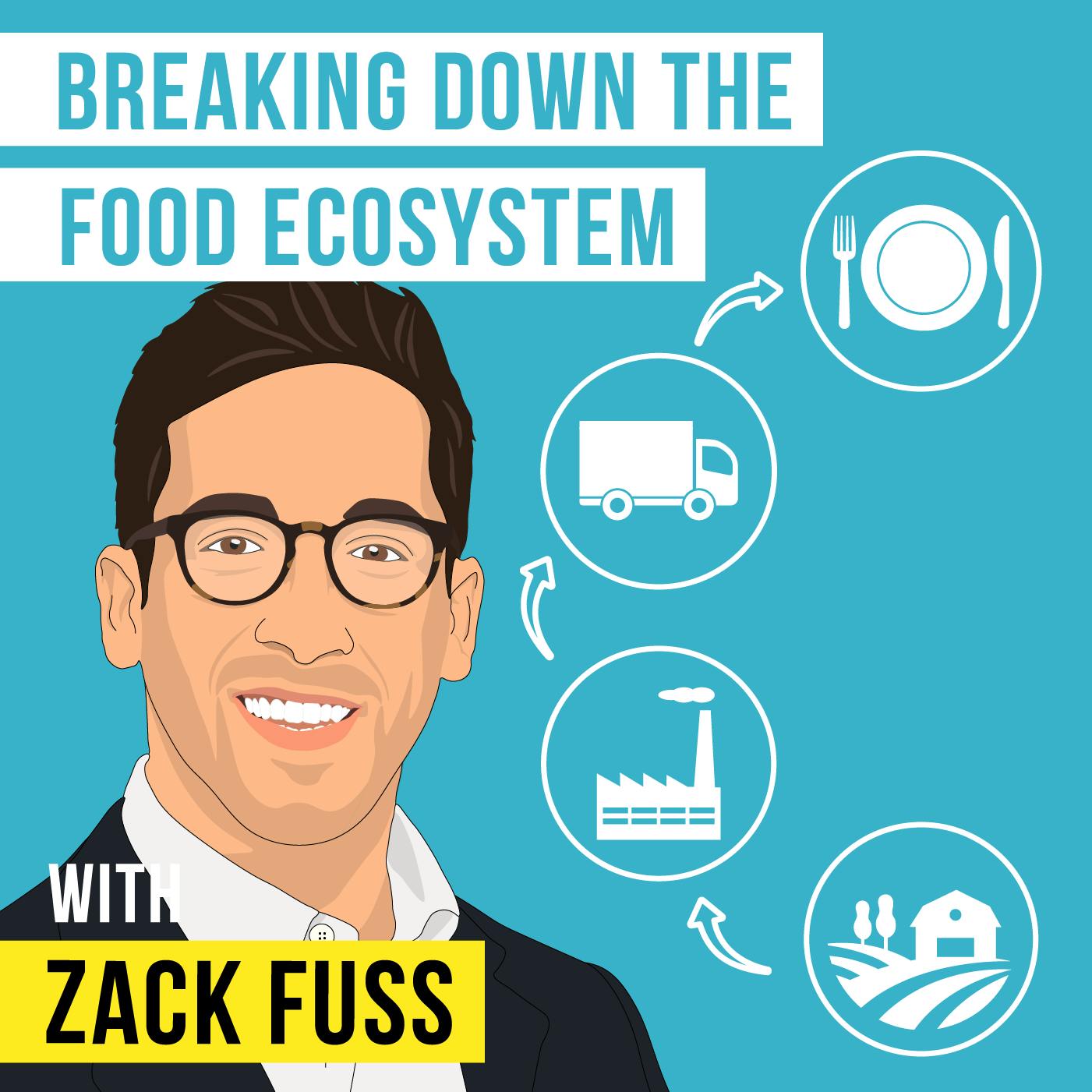
今天我的嘉宾是扎克·富斯,他是大陆谷物公司的一名投资者。这是一家拥有两百年历史的家族企业,专注于在食品和农业生态系统中进行投资和运营。
My guest today is Zach Fuss, an investor at Continental Grain, a 200 year old family owned business that is focused on investing and operating businesses through the food and agriculture ecosystem.
在加入大陆谷物之前,扎克曾在老虎基金和城堡投资做过分析师。
Prior to his work at Continental, Zach was an analyst at Tiger and at Citadel.
对食品生态系统任何方面感兴趣的人,以及想更广泛了解价值链的人,都应该听听这期节目。
This is a must listen for those interested in any aspect of the food ecosystem, but also for those trying to understand value chains more generally.
我们的对话涵盖了利润在特定价值链中的分布位置,传统食品企业如何转型为数字化企业,以及达美乐披萨为何如此有趣和特别。
In our conversation, we cover where profits tend to sit in a specific value chain, how legacy food businesses are creating their second act as digital businesses, and explore what makes Domino's Pizza so interesting and special.
希望你们喜欢我和扎克·福斯的对话。
I hope you enjoy my conversation with Zach Fuss.
扎克,我觉得合适的开场是从生态系统的构成说起。
Zach, I think an appropriate place to begin is with sort of how the ecosystem breaks down.
如果对这个领域不熟悉,关键组成部分有哪些?
So if someone's new to this area, what are the key sort of components?
你可以按任何方式拆分,比如价值链、供应链。
You can break it down however you want, value chain, supply chain.
你来给我们一个合适的分类框架来思考这个问题。
You give us the right taxonomy for thinking about this.
你觉得哪些领域特别重要,需要专门去深耕?
What are the meaningful areas that you think it's important to develop special expertise in?
你可以从价值链的角度来想。
Think about the value chain.
在最上游,主要是大型生产商和工业化农场。
At the top, you have large producers, industrial farms.
它们直接跟像约翰迪尔或者嘉吉这样的公司打交道,然后顺着产业链一直往下游走,就跟能源资产一样。
They interact directly with companies like a John Deere or a Cargill, and you go all the way downstream just like energy assets.
从大豆、玉米和动物蛋白开始,到生产商,再到像泰森食品这样的加工企业,他们卖给分销商和餐厅,比如Sysco、Performance Foods和US Foods,这些公司再供应给麦当劳、汉堡王和Chick-fil-A,最后卖给我们普通人以及这个生态链中间的所有环节。
So you go from the soy and the corn and the animal protein to the producers, to the processors like Tyson Foods and they sell into the distributors and the restaurants, a Sysco and a Performance Foods and a US Foods who sell to a McDonald's and a Burger King and a Chick fil A who sell to people like you and I and everything in between that ecosystem.
还有杂货店,以及冷链仓储业务。
The grocery stores, you have the cold storage businesses.
这是一个非常丰富的生态系统,充满了各种变化和动态发展。
It's just such a rich ecosystem with so much change and dynamicism.
我们觉得它特别有意思的原因是,归根结底,人们总得吃饭,而他们吃饭的形式、方式以及获取食物的渠道会持续发生变化。
The reason that we find it to be so interesting is because at the end of the day, people are going to need to eat and the form factors with which they eat and how they do so and where they get their food are gonna continue to be different.
但我们在说的是美国一个一万五千亿美元的市场,包括在家吃饭和在外吃饭,价值链上有很多地方可以参与。
But we're talking about in The US, a $1,500,000,000,000 market between food at home and food away from home, and there's just so many places in the value chain you can play as a function of that.
在这个生态系统中,谁在赚钱?
Who makes the money in this ecosystem?
或者换个问法,你觉得食品链中最好、最有防御性的业务是什么?
Or maybe a better way to ask the question is, what do you feel are the best and most defensible businesses in the food chain?
延迟是一个挺有意思的概念,我在评估这些业务时喜欢考虑它。
Delay is a pretty interesting construct that I like to think about when evaluating these businesses.
也就是吸引人的利润守恒定律,以及它如何影响我们在价值链中的每一个环节。
The law of conservation of attractive profits and and how it impacts wherever we interact in the value chain.
回顾过去十年,世界可能已经接受了马克·安德森的观点,即软件确实在吞噬世界。
When I think about the last decade, the world has probably come to accept Marc Andreessen's thesis that software is in fact eating the world.
我觉得我们可能没有花足够的时间去思考这对我们所参与的这些传统行业价值链意味着什么。
I think we probably don't spend enough time contemplating what the implications are for the value chains of these legacy industries that we participate in.
正如我之前所说,我们处于消费品、物流基础设施、餐饮和食品零售的交汇点,从上游到下游,贯穿企业的整个生命周期。
As I said earlier, we sit at the intersection of consumer goods, logistics infrastructure, restaurants and food retail, upstream to downstream and throughout the lifecycle of businesses.
技术进步,不管以哪种方式,都会影响到我们所有的业务。
Technological advances in some way shape or form impact all of our businesses.
我们既涉足上市公司也涉及私营企业,行业跨度很大,从蛋白质、动物饲料和快餐这些相对传统的领域,一直到固氮技术和餐厅POS系统这类更具颠覆性且处于早期阶段的项目。
We're involved with public and private businesses and sleepy industries like protein and animal feed and fast food, as well as more disruptive and early stage ones like nitrogen fixation and restaurant point of sale technology.
所以这两者之间的溢出效应,理论上能提供一些预警信号。
So the spillover between the two hypothetically provides some canaries in the coal mine per se.
克莱顿·克里斯坦森(Clayton Christensen)因《创新者的窘境》一书而广为人知,但我觉得在当前的商业分析语境下,他关于“吸引力利润守恒定律”的研究更值得关注,正如我之前提到的,这一理论在今天和二十年前一样具有现实意义。
Clayton Christensen Wright is widely recognized for his work on The Innovator's Dilemma, but I think in the context of current business analysis, probably deserves more attention for his work on the law of conservation of attractive profits as I mentioned, which is as relevant today as it was twenty years ago.
首先要明白一个概念:在整个价值链里,总有个环节的玩家能拿走不成比例的巨额利润。
Start with the idea that throughout a value chain, a certain player captures a disproportionate amount of the economics.
这就解释了为什么麦当劳是一家估值两千亿美元、EBITDA倍数高达20倍的公司,而泰森食品虽然也是三百五十亿美元规模的企业,EBITDA倍数却只有8倍;思科市值五千亿美元,EBITDA倍数是13倍。
There's a reason that McDonald's is a $200,000,000,000 business that trades at 20 times EBITDA and Tyson is a $35,000,000,000 business that trades at eight times EBITDA and Cisco is a $50,000,000,000 business that trades at 13 times EBITDA.
它们其实都处在同一条价值链上。
They all participate in the same value chain.
它们为投资者创造的价值之所以天差地别,根本原因在于价值链的不同环节被商品化的程度不同。
The value they capture for their investors is inherently different based upon which aspects of the value chain have become more commoditized.
所以说到鸡肉生产,这几乎从定义上就是一种大宗商品。
So if you think about chicken production, it's almost definitionally a commodity.
而说到本地层面的食品分销,那是一门非常赚钱的生意。
If you think about food distribution on the local level, it's a very rich business.
这是一个区域性寡头垄断,拥有路线密度的优势。
A regional oligopoly with the benefit of route density.
扩大规模需要更多资本投入,而且在一定程度上受限于本地市场。
It's more capital intensive to scale and it's somewhat constrained by its local markets.
快餐业,比如麦当劳,是一个国际性的品牌授权特许经营业务。
Fast food, McDonald's as an example, is an international licensor of its brand as a franchise business.
它本质上是一个获取客户的生意。
It's a lead gen business.
它是个房东,拥有巨大的规模优势。
It's a landlord with massive scale benefits.
所以作为一个拥有75年历史的面向消费者的品牌,他们占据了利润池中不成比例的一大块。
So as a 75 year old consumer facing brand, they capture a disproportionate amount of the profit pool.
在这个价值链里,哪些玩家最不容易被商品化,哪些最有差异化,因此能占据不成比例的大部分利润,这几乎是显而易见的。
It's almost obvious which are the least commoditized players in that value chain and which are the most differentiated and thus capture a disproportionate amount of the economics.
你能再多说说你见过的其他例子吗?就是关于这个“吸引力利润守恒定律”,或者你在食品行业内外观察到的其他现象?
Can you say more about other examples you've seen of this same concept, this law of the conservation of attractive profits, or just other things you've observed in or outside of food?
有时候多举几个例子也挺好的,能帮助讲清楚研究一个具体产业链、找出到底是什么在驱动最有吸引力的业务这件事。
And sometimes it's good to bounce around examples to make the point of studying a specific chain and figuring out what is driving the most attractive businesses?
我觉得我们还是继续聊餐饮吧,毕竟这次对话的语境就是这个。
I think we'll stay on the topic of restaurants just given the context of the conversation.
如今,外卖配送算是一个很典型的颠覆性例子,它正在重新塑造整个价值链。
Today, food delivery is kind of a canonical example of disruption that's reorienting a value chain.
在技术侧,有些资金雄厚的优秀运营商,都想从“外出就餐”这个利润池里分走一块。
On the technology side we have an exceptional operators with deep pockets all looking to carve out a portion of the food away from home profit pool.
现有玩家有的在拥抱这个变化,有的在对抗,但还有一大批参与者都在盯着,想分到自己的份额。
There are incumbent players that are embracing that and also others that are fighting back, but there's this vast pool of participants looking to get their share.
有像DoorDash、Uber Eats、Postmates这样的聚合平台,还有第三方物流公司、幽灵厨房、纯线上门店,以及Olo、ChowNow这样的技术服务商。
You have aggregators like a DoorDash or an Eats or Postmates, you've got third party logistics companies, ghost kitchens, digital only locations, technology providers like an Olo or a ChowNow.
还有像云厨房这样的暗厨房,以及像Chipotle和星巴克这样的老牌企业,他们都在开设只做外卖的店铺。
You've got dark kitchens like cloud kitchens, incumbents, Chipotle and Starbucks who are opening digital only stores.
传统观点一直认为,餐厅从历史上看是所谓的“差生意”。
Conventional wisdom was always that restaurants historically are in quotes bad businesses.
如果你考虑一家餐厅的利润率结构,食材成本大概占25%到30%,人工成本占25%到30%,房租成本占5%到10%,最后,最好的情况下,如果你是个优秀的经营者,你也就剩下10%到15%的利润。
That if you consider the margin structure of a restaurant, which is probably food cost of 25 to 30% and labor cost of 25 to 30% and rent cost of five to 10%, at the end of the day, best case scenario, you're left with 10 to 15% margins if you're a strong operator.
所以,如果你决定把外卖和获客外包给像Uber Eats或DoorDash这样的第三方,而他们要在此基础上再抽成20%到30%,并且这还会替代或蚕食你现有的销售,那这就是一笔不划算的买卖。
So in the event that you decide to outsource your delivery and lead generation to a third party like an Uber Eats or a DoorDash and they're looking to take 20% to 30% on top of that and in the event that it's replacing or cannibalizing your current sales, it's a bad economic trade.
但我觉得我们学到的是,获客是个好生意,物流历来不是,但如果你想要获客业务,你就不得不做物流,所以你最好做到不亏本,甚至更好。
But I think what we've learned is lead generation is a great business, logistics historically not, but if you want the lead generation business, you're kind of forced into the logistics business so you better do it at breakeven or better.
这真是一个绝佳且及时的例证。
This is just such a great and timely example.
看看最近提交的DoorDash的S-1文件,他们正朝着30亿美元的销售额和50%的市场份额迈进,我想我们可以有把握地说,在某些市场和某些篮子规模下,餐厅本身和聚合商、配送服务商都能赚到钱。
If you look at the DoorDash s one that was recently filed, they're tracking towards $3,000,000,000 in sales and a 50% share and I think we can say with confidence that in certain markets and at a certain basket side, both the restaurants themselves and the aggregators, the delivery providers can both make money.
特别是在城市地区,如果你有足够的路线密度或每趟的配送量,抽成比例就可以降低。
And in urban areas specifically, if you have enough route density or drops per trip, take rates can be lowered.
所以餐厅和聚合平台之间形成了一种规模经济共享的动态关系,大家共同分享更大的利润池,这样一来,配送理论上就能以非常可观的贡献毛利来运作。
So a scale economic share type dynamic between the restaurant and the aggregator where everyone is participating in a larger profit pool, delivery can hypothetically be done at a very positive contribution margin.
我们从这些利润池中不断学到的经验是,只要需求足够大,总能找到一种经济模型,让这件事做得非常赚钱。
What we continue to learn within all these profit pools is that if enough people want something, there are ways to figure out an economic model to do it very profitably.
但随着时间推移,这就像巴克斯代尔所说的捆绑、解绑、模块化和商品化的过程。当供应链的不同环节经历整合、分离和再分离时,大部分利润往往就集中在了那些关键环节上。
But over time it's kind of that barksdale bundling and unbundling and modularizing and commoditizing different parts of the profit pool and as different aspects of the supply chain integrate, segregate and desegregate, that's where disproportionate amounts of the product pool are often captured.
我想稍微退一步,聊聊传统企业,也就是非科技类企业的行为模式。结合最近发生的世界局势变化,以及你从行业顶尖者和表现最差者身上学到的应对策略,看看他们是如何适应这个世界的变化的。
I'd love to step back for a minute and just talk about the behavior of, I'll call them legacy businesses, non technology businesses, given what's happened in the world and what you've learned about what the best in breed and sort of the worst in breed have done or are doing to react to the way the world has changed.
所以想想耐克,他们做得非常出色,虽然不算科技公司,但在采用技术和拥抱直面消费者模式方面,为了业务利益做到了极致。
So if you think about like a Nike that's done an unbelievable job, maybe not a technology company, but adopting technology and adopting the direct to consumer mindset for the benefit of its business.
在餐饮行业里,你有没有看到类似的情况?
What have you seen in similar fashion in the food world?
这也是我特别喜欢思考和讨论的话题,毕竟人人都要吃饭,大家都熟悉这个领域,而且逻辑很清晰。
Which, again, it's one of my favorite things to think about and talk about because we all eat, we all know it, and it's fairly straightforward.
就是食材、组合在一起,然后以品牌的形式销售出去。
There's ingredients, they come together, they're sold under brands.
这事儿没那么复杂,也不是特别依赖技术,但世界已经变了。
It's not that complicated a thing, and it's not really tech heavy, but the world has changed.
那就说说你对那些传统工业企业的了解吧,你觉得它们现在最好的做法是什么?
So just say a bit about what you've learned about, I'll call them older school industrial businesses, and the best way that you think those kinds of businesses are acting today.
对。
Yeah.
我觉得在很多方面,这就像经典的产品分销案例。
I mean, think that in a lot of ways, it's that classic example of distribution of a product.
想想下游的食品企业,比如餐馆,那些在最好的地段拥有最强门店网络,能够最有效地、最及时地分销产品的,往往能赢。
If you think about downstream food players like restaurants, those with the strongest footprint in the best areas that can quote unquote distribute their products most effectively in the most timely nature tend to win.
那些拥抱技术的,往往能赢。
Those that embrace technology tend to win.
市场上有些领域,在愿意适应变化的企业和TRO的亨利·艾伦·博根所说的“第二幕”之间,存在着更有趣的博弈。
Areas of the market where there's a more interesting push and pull between those that are willing to adapt and Henry Ellen Bogen of TRO calls it second act.
管理层要有能力创新,抓住行业面临的技术创新或颠覆,并利用它成为更成功、更占主导地位的玩家。
Management's ability to innovate in such a way where they can capture whatever technological innovation or disruption is facing their industry, leverage that to become a more successful, more dominant player.
我觉得拿超市举个例子,里面的动态特别灵活也很有意思。
I think if you consider grocery as an example, it's a really fluid and interesting dynamic playing out.
就像我们刚才提到的,超市涉足的是那个规模达18万亿美元的在家吃饭和在外就餐的行业。
As we alluded to, grocery plays in that $1,800,000,000,000 food at home and food away from home industry.
趋势虽然来回波动,但目前大概是55%的食物在外面吃,45%在家里吃。
The trends go back and forth, but we're trending towards about 55% of food consumed away from the home and 45% at home.
这比例可能因为疫情给调转过来了。
It's probably flipped due to the pandemic.
超市生意通常是低利润、高周转的。
Grocery is typically a very low margin, high turnover business.
传统超市大概有四万种SKU,其中很多是易腐品,还有一些周转率非常低。
Traditional grocery store has something like 40,000 SKUs, many of which are perishable and others that have very low turnover.
如果你算一笔一百美元的购物清单,零售商能留下的利润,我不太确定,大概是两到四美元。
If you consider a $100 basket of groceries, a retailer keeps, I don't know, 2 to $4.
这生意绝对不好做,但市场规模巨大。
It's not an easy business by any means but it's a massive category.
所以尽管利润率低,还是有巨大的利润池可以去争取。
So despite low margins, you still have this enormous profit pool to go after.
八千亿美元的2%到4%仍然是每年两百到三百亿美元的利润机会。
Two to 4% of $800,000,000,000 is still a twenty to thirty billion dollar annual profit opportunity.
于是,新进入者和现有企业之间就展开了较量。
And so you have this battle between the upstarts and the incumbents.
有沃尔玛、克罗格、好市多、艾伯森这些巨头。
You have the Walmart, the Kroger, the Costco, the Albertsons of the world.
一边是亚马逊,另一边是更专注、更数字化的长尾企业,比如美国的Farmstead或欧洲的Picnic。
You have Amazon on one hand and then you've got this longer tail of more focused, more digitally enabled businesses like a farmstead in The US or a picnic in Europe.
他们都在用不同的方式抓住这个时机,市场份额会在现有企业和新进入者之间转移,或者现有企业因为愿意拥抱技术变革而继续占据不成比例的份额。
They're all doing very different things in order to capture this opportunity in time where share is going to shift between incumbents and upstarts, or maybe the incumbents are going to continue to capture their disproportionate amount of share because they're willing to embrace changes in technology.
杂货店和餐馆一样,都位于人流量大、交通便利的地方,而且需要相当大的面积,大概7万到10万平方英尺。
Grocery stores like restaurants are also located in highly trafficked areas with strong access points and require a fairly big footprint, probably 70 to 100,000 square feet.
所以他们面临相当高的房地产成本。
So they face pretty significant real estate costs.
线上购买、到店取货在零售业正火。
Buy online, pick up in store is having this moment throughout consumer.
但实际上,让员工在传统杂货店里走货架、拣货打包,成本非常高。
But the reality is having human labor walk the shelves of a conventional grocery store to pick and pack your order comes at a very high cost.
随着时间推移,传统杂货店将不得不变得更工业化。
What's going to have to happen over time is more of the traditional grocery store is gonna become industrialized.
它会变得更像配送中心。
It's gonna become more like a fulfillment center.
所以现在你走进一家杂货店,80%的区域是顾客在逛,未来这个比例会变成60%、40%、20%,而店内的核心商品可能会完全商品化,通过类似提前下单的方式配送。
So today maybe you walk into a grocery store, 80% of it is walk by shoppers, in the future it becomes 60%, 40%, 20% and the center of store items probably come completely commoditized and fulfilled through something like order ahead.
我推测,随着店铺形态的演变,我们会看到更多暗店或事实上的仓库,以及不那么理想的房地产。
And what I would postulate is as we observe this evolution of the store footprint, we get more dark stores or de facto warehouses and less desirable real estate.
就像亚马逊利用其快速配送中心来履行线上订单一样,杂货店也会以同样的方式运营。
And much like Amazon uses its fast fulfillment centers to fulfill its online orders, a grocery store is going to operate in the same way.
这只是科技和客户获取方式如何颠覆食品行业传统模式的一个例子。
And so that's just one example of how technology and the way with which customers are acquired are disrupting legacy industries throughout food.
能再详细说说那个术语吗?
Maybe say just a bit more about that term.
你刚才提到了暗店。
I think you said dark stores.
具体是什么意思呢?
Just exactly what you mean by that.
这让我想到了幽灵厨房。
And it makes me think of ghost kitchens.
这让我想到,从房地产成为主导因素,转向数字领域这个更具竞争力的前沿。
It makes me think of this just shift from real estate being the thing that matters for primacy onto this more competitive frontier in the digital sphere.
能再多谈谈这两个趋势吗?比如暗店或幽灵厨房,你看到了什么,学到了什么?
Say a bit more about those two trends, maybe dark stores or ghost kitchens, and what you see and have learned there.
暗店和云厨房其实是同一事物的两种衍生形式。
Dark stores and cloud kitchens are kind of two derivatives of the same thing.
你降低租金成本,然后用省下来的租金去支持其他增值服务。
You lower your rent costs and you use the savings from those rent costs to fund other value added services.
实际情况是,传统超市得让消费者自己挑选和打包商品。
The reality is that a legacy grocery store requires the consumer themselves to pick and pack the items.
现在如果把这部分人工成本转嫁给自己员工,就得额外支付工资。
Now when you shift that labor cost onto your own people, it requires an incremental wage cost.
所谓“暗店”的概念,就是把地点搬到成本更低的地方,用省下的租金来覆盖配送和履约的费用。久而久之,你就不需要再占据那些高人流地段了,而是作为客户心智中的一个参照点存在。
The idea of a dark store is that you shift locations somewhere where you have less cost that can fund the cost of delivery, the cost of fulfillment and over time you no longer need the footprint in these high traffic areas but instead serve as a cognitive referent for your customer.
去克罗格购物的概念不再是开车去店里,而是在手机上点击下单。你会重复购买那80%日常消耗品,至于剩下20%更挑剔、讲究的商品,你可能会自己去本地或独立供应商那里买。
The idea of going to Kroger is no longer driving to the store but instead you're popping up on your phone, you're reordering the 80% of items that are recurring in nature and maybe the 20% of items that are more discerning as a customer, you'll go and get yourself from a local or an independent provider.
云厨房其实也没什么特别的。
Cloud kitchens are really no different.
我们之前聊过达美乐这样的企业,它们其实就是最早的云厨房模式。
We've talked in the past about businesses like Domino's, which are effectively the original cloud kitchen.
能再多讲讲达美乐吗?
Can you say more about Domino's?
具体说说达美乐的规模有多大。
Just describe the sheer scope of Domino's.
全球有多少家店,都开在哪些地方?
How many stores there are across the world, where they're located?
我想大家应该都知道门店长什么样,不过我们待会儿也会稍微深入探讨一下。
I think probably everyone will understand what a store looks like, but we'll explore that in a bit of detail in a second too.
这类店到底有多少家?
How many of these things are there?
多米诺披萨在全球每年的销售额大概是多少?
How much in sales does Domino's do around the world annually?
给我们讲讲这个业务的规模。
Give us a sense for the scope of the business.
达美乐是一个餐饮系统,年销售额达到150亿美元,大约一半在美国,另一半在国际市场。
Domino's is a restaurant system that does $15,000,000,000 in sales, about half in The US, half internationally.
他们拥有17,00家餐厅,其中约6,000家在美国,11,000家在全球范围内,每天销售350万到400万个披萨。
They have 17,000 restaurants, around 6,000 in The US, 11,000 globally, and they sell anywhere from three and a half to 4,000,000 pizzas a day.
所以我们说的是大量的食品。
So we're talking about a lot of food here.
美国和国际加盟店的所有权性质有什么主要区别?
What's the key differences between the nature of the ownership of the franchise ownership in The US versus international?
它们看起来相似吗?
Do they look similar?
它们看起来不同吗?
Do they look different?
这是一个重要的细微差别。
It's an important nuance.
我喜欢退一步,把达美乐看作实际上是三个业务合而为一。
I like to take a step back and think about Domino's as really three businesses in one.
它是一家拥有专属配送部门的餐厅。
It's a restaurant with a captive delivery arm.
很多人称它为最早的幽灵厨房。
A lot of people refer to it as kind of the original ghost kitchen.
它是一家供应链企业,因为他们拥有并向自己的餐厅配送所有的奶酪酱和面团。
It's a supply chain business because they own and distribute all the cheese sauce and dough to their restaurants.
而且,可能最重要的是,回答你的问题,它是一个品牌管理者,一个特许经营商。
And maybe most importantly, to answer your question, it's a brand manager, a franchisor.
美国和国际体系之间有一些细微差别。
There are nuances between The US and the international system.
在美国,95%的餐厅老板都是达美乐的前门店员工。
So in The US, 95% of restaurant owners are former Domino's store level employees.
他们要么在店里工作过,要么管理过店铺。
So they either worked or managed the store.
在国际上,特许经营商是机构性的主特许经营商。
Internationally, the franchisees are institutional master franchisors.
这是另一个层次或层面,帮助管理品牌。
It's another level or layer that's helping to manage the brand.
这意味着,在国际上,有一些不那么机构化的特许经营商在主特许经营商下工作,而大多数大型成熟的主特许经营商都是上市公司。
What that means is there are franchisees which are less institutionalized internationally that work under the master franchisors and most of the large established ones are public companies.
所以你看像达美乐比萨企业,那是澳大利亚的特许经营商。
So you look at like a Domino's Pizza Enterprises, which is the Australian franchisor.
那是一家市值60亿美元的公司。
That's a $6,000,000,000 market cap company.
再看看达美乐伦敦,那是英国的加盟商。
You look at Domino's London, which is The United Kingdom franchisor.
那是一家市值25亿美元的公司。
That's a $2,500,000,000 company.
再看看Alsea,那是墨西哥的加盟商。
You look at Alsea, which is the Mexican franchisor.
那是一家市值30亿美元的公司。
That's a $3,000,000,000 company.
Jubilant Foods,市值40亿美元。
Jubilant Foods, a $4,000,000,000 company.
所以,在达美乐的生态系统中,创造了巨大的财富。
So there is a incredible amount of wealth being created throughout the Domino's ecosystem.
即使在美国,如果你看看餐厅老板的盈利能力,累计起来,他们的EBITDA可能大约有10亿美元。
And even in The US, if you were to look at the profitability of the restaurant owners, cumulatively, they probably do about a billion dollars in EBITDA.
光这一项就值60到80亿美元。
That's worth 6 or $8,000,000,000 alone.
Domino's商业模式的神奇之处在于,它在很多方面创造的价值其实超过了它自己获取的价值。
What's so amazing about the Domino's business model is it's really creating more value than it captures in a lot of ways.
针对这些点,有很多后续问题想问。
There's so many follow-up questions to each of those points.
既然我们已经聊过了一些关于人和加盟商的事情,我们就先继续这个话题吧。
Maybe since we talked a bit about the people, the franchisees already, we'll stick with that for a second.
给我们讲讲作为Domino's加盟商是什么感觉,比如说,第一次开第一家店的时候。
Just talk us through what it feels like to be a Domino's franchisee, let's say, opening your first restaurant for the first time.
假设你之前是个经理。
Let's say you were a former manager.
现在你想成为老板。
You now wanna be an owner.
从资金和时间角度来看,那会是什么样子,感觉如何?
What does that look like and feel like from a dollar standpoint, from a timing standpoint?
他们具体需要做什么?为什么前员工选择加盟这么受欢迎?
What does it require that they do, and why is it such a popular thing for former employees to do this?
我觉得多米诺披萨的加盟体系之所以强大,是因为单店的经济效益非常惊人。
So I think the reason that the Domino's franchise ecosystem is so strong is because the unit economics are truly remarkable.
如果你是一名想开自己门店的前员工,你需要支付一笔加盟费,金额其实不高。
So if you are a former employee that wants to open up their own store, you're gonna pay a franchise fee, which is a nominal amount.
但要把店开起来,总投入大概在25万到35万美元之间。
But cumulatively to open up your store, it's gonna cost you anywhere from 250 to $350,000.
美国一家普通门店的年收入大概在110万到120万美元左右。
An average store in The US does about one point one to one point two million dollars in top line.
再看看这些业务的同店销售增长,每年在同店销售的基础上,增长率大约在3%到6%之间。
And if you look at the same store sales growth of those businesses, they're growing anywhere from call it three to 6% in every given year on a same store sales basis.
因为披萨这个品类利润很高,单店平均能产生大约12.5万美元的现金流,所以投入30万美元的话,在不负债的情况下就能获得12.5万美元的回报。
Because pizza is such a profitable category, the average store can do about $125,000 in cash flow and so on a $300,000 investment, you're returning a $125,000 without debt.
所以如果你向银行贷款来支付门店的建设费用,你的现金回报率能达到30%以上,投资回收期大概为两年半到三年。
So if you were to borrow from a bank in order to finance the build out of your store, you're looking at a 30% plus cash on cash return or a two and a half to three year payback.
你能谈谈为什么达美乐能处于如此独特的地位,能为它的店主提供这么高的回报吗?
Can you talk about why Domino's is in the unique position they're able to offer such incredibly high returns to its store owners?
也许把这些回报放在一个背景里看看。
And maybe just put those returns in perspective.
比如,有没有什么能比这给潜在加盟商带来更高的现金回报?像汉堡王这样的,一般数字是多少?
Like, is there anything that offers a higher cash on cash return to to a potential franchisee, and what are some of the more normal numbers in something like a Burger King, say?
达美乐本质上更赚钱,这很大程度上跟他们销售和配送的产品性质有关。
The reason that Domino's is inherently more profitable has a lot to do with the nature of the product that they're selling and delivering.
披萨是一种成本很低的食品。
Pizza is a very low cost of good cuisine.
比如说,如果你拿披萨店和汉堡店比,披萨通常一开始就有80%以上的毛利率。
If you were to look at a pizza restaurant versus a burger joint for instance, pizza generally starts with an 80% plus gross margin.
面团、奶酪和酱料的成本并不高,不像汉堡那样要面对昂贵的蛋白质。
The cost of dough, cheese, and sauce are just not that high as opposed to a burger which is dealing with the expensive protein.
那种生意一开始的毛利率大概在65%左右。
That business is gonna be starting at like a 65% gross margin.
所以从这个角度来看,他们已经有了竞争优势。
So if you consider the spread from that perspective, they're already at a competitive advantage.
他们利用这部分额外的利润,能够支撑起配送业务。
And what they do with that incremental margin is it affords them the ability to fund their delivery.
达美乐之所以如此成功,是因为他们主打外卖配送。
The reason that Domino's has been so successful is because they lead with delivery.
他们还在餐厅的技术系统上投入了大量资金。
They've also invested heavily in the technology stack in their restaurants.
任何潜在的加盟商都会把自家餐厅的回报率和市场上其他机会做个对比。
Any potential franchisee is gonna look at their restaurant, you've return economics in comparison to the other opportunities out there.
你可以看看麦当劳、Wingstop、Chick-fil-A或者塔可贝尔。
You look at a McDonald's or a Wingstop or a Chick fil A or a Taco Bell.
大多数汉堡店的现金回报率大概在18%到20%出头,回本周期四到五年,这已经相当不错,从麦当劳或汉堡王系统的规模和体量就能看出来。
Most burger joints, they're gonna have cash on cash returns probably in the high teens to low twenties and still a four to five year payback which is still very healthy as displayed in the size and scale of a McDonald's or Burger King system.
以唐恩都乐为例,回报率大概在25%到30%左右,具体还得看地区,但整体还是很可观的。
If you look at Dunkin' for instance, you're looking at like 25 to 30 ish percent returns, so it's still very healthy depending upon the region.
我见过的唯一比它更好的就是Wingstop。
The The only thing I've actually seen that's better is a Wingstop.
如果你看那个股价图,就能看到单店经济如何真正推动回报,达到40%到50%。
If you look at that stock price chart, you can see kind of how unit economics really drive returns, 40 to 50%.
他们的商业模式很相似,但Wingstop的不同之处在于他们历来没有外卖,但如果你考虑他们门店的布局,以及达美乐具有竞争优势的另一个原因,因为达美乐是外卖业务,他们也能选择成本更低的地段。
Their business model is quite similar except the difference with Wingstop is they historically haven't had delivery, But if you consider the footprint of their stores and another reason that Domino's is competitively advantaged, because Domino's is a delivery business, they can take lower cost real estate as well.
所以他们不需要在繁忙的十字路口或人流量大的商业街。
So they don't need to be at the busy intersection or in the strip mall where there's a lot of foot traffic.
他们可以去更偏一些的B类和C类地段。
They can go to more b and c type locations.
这样毛利率更高,租金成本更低,所有这些都归结为单店更强大的经济模型。
And so you have a higher gross margin, you have a lower cost of rent, and that kind of all boils down to a much more powerful unit economic for a standalone store.
大家谈论达美乐时,总说它是一家科技公司。
One of the things that everybody talks about with Domino's is they call it a tech company.
你刚才描述了很多它的特点。
You described many of the things that it is.
你还没提到科技公司这一点。
You didn't say tech company yet.
我很想听听你的看法,关于那种普遍的说法:他们之所以业绩出色,根本原因是披着科技公司外衣的实质。
I'm curious for your take on that common trope that really what's driven their results is that they're a tech company in disguise.
确实如此。
Yeah.
他们的回报率确实像科技公司那样高,所以我完全理解大家为什么这么强调这一点。
They certainly have the returns of a tech company, so I can see why people lead with that.
他们做了几件事,足以证明这是一家走在技术前沿的公司。
There are a couple things they've done that show that they are a technology forward company.
我觉得他们非常值得称赞,因为他们敏锐地察觉到了平台的变化并迅速做出反应。
I think they deserve a ton of credit in appreciating and reacting to platform shifts.
比如,过去订披萨主要靠打电话,大家拿起电话就拨号,后来互联网兴起,帮他们加速并方便了网上下单。
So for instance, historically, pizza was a dial in business so that people would pick up the phone and call, and then the Internet helped to accelerate and facilitate Internet orders.
再后来手机变得普及,他们也确保大家可以在手机上直接下单。
And then as mobile became more relevant, they made sure that you could order on your mobile.
如今,他们的订单有5%到70%是通过数字渠道来的,比如手机或互联网。
Today, five to 70% of their orders come through digital channels, so mobile or Internet.
他们另一个非常关注的点是,让顾客无论在哪里都能下单。
Another thing that they are really focused on is allowing you to order wherever you may be as the customers.
你可以通过Alexa下单,通过Google Home下单,也可以通过iPhone下单。
You can order through Alexa, you can order through Google Home, you can order through your iPhone.
他们甚至做到了允许在中央公园这样的热点区域下单。
They even went as far as allowing all these hotspots where you can order to Central Park for instance.
所以他们确实很注重技术。
So they're certainly tech focused.
我觉得另一件重要的事情是,他们与加盟商的关系之所以如此强大,是因为这种关系更加分散,不那么制度化,尤其是在美国。
The other thing I think is important and the reason that their relationship with their franchisees is so powerful is because it's more fragmented and less institutionalized, especially in The United States.
他们可以与加盟商合作,实施新技术,这对像Yum!这样的公司来说可能更具挑战性。
They can work with their franchisees to implement new types of technology that may be more challenging for someone like a Yum!
品牌或麦当劳,他们面对的更多是私募股权类型的赞助商导向的业主。
Brands or a McDonald's who are dealing with more kind of private equity type sponsor oriented owners.
在两千年代中期他们重塑业务的时候,他们还确保所有门店都使用统一的收银系统。
Back when they were turning around the product of their business back in the mid two thousand tens, they also made sure that all of their stores run a unified point of sale system.
这意味着多米尼总公司在密歇根州能够掌握单店的经济效益、销售情况和门店数据,从而帮助他们做出决策,比如在哪里开新店、试销哪些产品、推进哪些项目以及如何定价。
What that means is that Domino's corporate in Michigan has visibility into the unit economics, the sales, the store level data, and that helps them to inform decisions about where to open new stores, what products to trial, how to push on certain initiatives, how to price their product.
他们当然不算科技公司,但在技术运用上更超前,也比大多数同类快餐同行更愿意尝试新事物。
Certainly not a technology company, but they are more tech forward and they show a higher propensity to experiment than most of their kind of fast food quick service peers.
我有点跟不上刚才说的同店增长的概念了。
I lost track of the kinda same store idea.
你开始走进一家典型的门店,看看开一家店要花多少钱,营收大概是多少。销售额超过一百万美元,毛利率高达80%,所以面团、芝士、酱料和配料这些成本相对比较低。
You started to walk down a typical store, how much it costs to start one, what sort of top line sales are, more than a million dollars in sales, 80% gross margin, so relatively low cost of the dough and the cheese and the sauce and the toppings, etcetera.
在单店经济效益方面,还有哪些关键点值得注意?比如人工或者店里的设备之类的?
What are the other key aspects of same store economics that you think are worth noting, whether that's labor or equipment in the store?
对店主来说,还有什么其他重要的因素吗?
What else is relevant for a store owner?
有几件事。
There are a couple things.
这确实是个很有意思的商业模式,你只需要创建一次业务,却能多次出售它。
It kind of is a really interesting business model in that you're creating the business once and you're selling it multiple times.
每家达美乐门店的订单处理流程都差不多。
Every Domino's store has a pretty similar order process flow.
而且,想想看,这减轻了员工的运营负担,因为所有菜单项目的准备和烹饪过程,无论是披萨、意面、鸡翅还是甜点,都用同一个烤箱。
And if you consider kinda the way that that eases the operational burden on its employees, so the preparation and cooking process for every menu item, whether that be pizza, pasta, wings, desserts, actually uses the same oven.
根据不同的进料点,所有食品同时完成烹饪,然后准备好由配送员取走并送到顾客家中。
And based upon different points of entry, all the food products complete their cooking at the same time and then are ready to be picked up by the delivery person and dispatched to the home.
这些业务的运作方式几乎就是系统工程师的梦想。
It's almost like a system engineer's dream in the way that these businesses that work.
然后问题来了,他们是如何推动门店的同店销售额增长的呢?
And then the question is, okay, how are they driving same store sales to their stores?
就我所记得的,一个中号或大号的双料披萨,他们一直收费7.99美元。
So for a medium, large, two topping pizza, they charge $7.99 for as long as I can remember.
随着他们规模不断扩大,他们就能把这种规模经济的好处传递给顾客。
And so as they gain incremental scale, they have the benefit of passing that scale economics onto their customer.
他们的业务中有一个非常有趣的反馈循环:他们在门店上投入更多,就能推动更高的同店销售额,因为同店销售额更高,门店就更赚钱。
There is this really interesting kind of feedback loop in their businesses where they invest more in the stores, it drives higher same store sales because they have higher same store sales, the stores are more profitable.
因为门店更赚钱,加盟商就愿意开更多的店;因为加盟商愿意在他们指定的区域开更多的店,配送时间就会更短;如果配送时间更短,顾客就会更满意,点更多的披萨。
Because the stores are more profitable, the franchisees are willing to open up more stores and because the franchisees are willing to open up more stores in their designated region, that means that delivery times are gonna be lower and if delivery times are lower, means that that the customers are gonna be more satisfied and order more pizza.
就这样一直循环下去。
And on and on and on you go.
而且他们实际上把这种策略正式化为所谓的“堡垒化”。
And it actually formalized that strategy to something called fortressing.
比如,如果一个加盟商在一个市场有两家店,而那个市场开始显示出门店已经饱和,达美乐会通知那个加盟商,他们应该在该地区再开一家店。
So for instance, if a franchisee has two stores in a market and that market's starting to show the stores are at capacity, Domino's will inform that franchisee that they should open up another store in that region.
如果你考虑我们刚才提到的飞轮效应,随着门店产生更多的销售额,他们可以通过增开一家店来缩短配送时间,这会让整个地区更赚钱。
If you consider the flywheel that we just referenced, as stores generate more sales, they can lower their delivery times by opening up an incremental store, which makes the whole region more profitable.
然后你还有多店系统的规模优势,他们订购更多的商品,随着他们订购更多的奶酪、面团和酱料,他们在门店上获得了固定成本杠杆,整个系统更赚钱。
And then you have the scale benefits of a multi store system that is ordering higher amounts of goods and as they're ordering more cheese, dough, and sauce, they're getting fixed cost leverage on their stores and the entire system's more profitable.
我们能看到这起作用的原因是,美国平均每个加盟商拥有六到七家店,每家店大约产生15万美元的EBITDA,整个系统大约一百万美元。
The reason we can see that that's working is the average franchisee in The US has six or seven stores doing about a 150,000 in EBITDA per store or a million dollars in their entire system.
从达美乐的员工变成拥有六七家店、年利润百万美元的企业主,你可以感受到整个系统创造的财富。
Going from a Domino's employee to a business owner of six to seven stores doing a million dollars, you can appreciate the wealth that's being created throughout the system.
我发现我们聊了这么久,还没真正聊到产品本身有趣的地方,也就是披萨。
I realized we've gone a long way without actually talking about something interesting about the product in this case, which is the pizza.
当然,他们也做披萨以外的东西。
Obviously, they make stuff other than pizza.
我觉得他们历史上最有趣的时刻之一是在2009年或2010年,当时的CEO直接上电视说,我们知道我们的披萨很难吃。
One of the most interesting timeline points in its history, I think, was in 2009 or 2010 when the then CEO basically went on TV and said, we know our pizza sucks.
这就像颠覆式创新在口味上的体现。
This is like disruptive innovation and taste or something.
聊聊那段经历吧,因为我们已经聊了达美乐这个出色的系统、技术、工程和配送,但还没真正聊过披萨。
Talk about that episode because we've talked about the brilliant system that is Domino's and the technology and the engineering and the distribution, but we haven't actually talked about pizza.
我觉得那段经历很重要。
And I think that's an important episode.
公司发布了一个挺火的视频,消费者基本上就是说他们的披萨尝起来像纸板。
The company released a pretty viral video of consumer essentially boiling down to the fact that their pizza tastes like cardboard.
产品与渠道的经典之争。
The age old debate of product versus distribution.
大家很快就看清了,达美乐其实是一家渠道公司,但当时在产品上投入的精力不够。
It became very clear that Domino's was a distribution company that wasn't focusing enough on their product.
他们重新把重心放回了配方研发上。
They refocused on the formulation.
饼底口感也得到了提升。
They improved the crust.
他们把披萨给改进了。
They improved the pizza.
连酱料也做了升级。
They improved the sauce.
我挺认同罗里·桑德伯格的一个观点:做生意,你得找个愿意去干那种财务总监会直接毙掉、觉得是馊主意的人。
I kinda like the heuristic that Rory Sutherland offers that you want someone in your business that's willing to do something that the CFO will tell you is a terrible idea.
我觉得,公开承认产品难吃,这通常不算是常规的市场营销手段。
I think coming out and saying that the product tastes terrible is generally not a typical marketing strategy.
但如果你考虑到这带来的病毒式传播和消费者尝试,人们被重新吸引回这个品牌,开始尝试产品,然后他们改进了产品。
But if you consider the virality and the consumer trial that that helped to catalyze, people were reinvited back into the business and started to trial the product and they improved it.
那是Patrick O'Shaughnessy最好的创新之一,但确实是最有力的,因为我觉得现在任何对Domino's故事稍有了解的人,都完全明白他们大约十年前站出来,直截了当地说。
That was one of Patrick O'Shaughnessy kind of best innovations, but really the most powerful because I think anyone that is loosely aware of the Domino's story today fully appreciates the fact that they kinda came out ten years ago and sit flat out.
我们很烂。
We stink.
我想回到幽灵厨房这个概念。
I wanna go back to this idea of ghost kitchen again.
也许你可以为那些不熟悉的人描述一下这个概念,以及为什么Domino's可能是第一个幽灵厨房。
Maybe you can describe that concept for those unfamiliar and why Domino's may have been the first ghost kitchen.
但也许更有趣的是,他们至少在美国,不通过我们所说的聚合平台运营,比如Uber Eats、DoorDash这些。
But maybe more interesting is that they don't, at least in The US, operate on the, what we'll call the aggregators, the Uber Eats, the DoorDashes of the world.
你不能通过这些平台订Domino's。
You can't order Domino's through that.
你必须直接下单。
You have to order direct.
他们自己掌控配送环节。
They control the delivery.
我们来聊聊这两个关键点。
Talk about those two key aspects.
就像刚才提到的,披萨在定义上就更适合外卖。
So as we spoke to earlier, pizza almost definitionally is a better product for delivery.
它本身就很耐运输,更重要的是,单份披萨外卖的经济效益非常可观。
It delivers well, but more importantly, the economics of a pizza delivery drop are really powerful.
所以,如果我们拿之前提到过的业务来对比,毛利率80%对60%,这20%的差额就是他们支付配送费用的来源。
So if you consider a business as we've referenced that starts with 80% gross margins versus 60%, that 20% differential of the margin is what funds their ability to deliver pizza.
咱们以多米诺披萨20美元的订单为例,两份中号、加三种配料的披萨。
So let's consider a $20 order of Domino's, two medium three topping pizzas.
其中20%就是4美元,基本上够覆盖配送成本了。一个骑手一小时大概能送四到六单。
20% provides you with $4 to essentially fund that delivery cost and a delivery person can do, I don't know, call it four to six deliveries per hour.
顺便提一句,在日本据说两分钟内就能把披萨送到,那效率相当惊人。
Although as an aside in Japan, apparently they can deliver pizza in less than two minutes, which is pretty impressive.
太疯狂了。
Insane.
这家公司的运营模式真的非常了不起。
The engineering of this business is are really truly remarkable.
如果每小时送五单,每单能赚四块钱,那你这一小时就能有二十块钱的收入来支付给配送员。
If you're doing five deliveries an hour or $4 per delivery, you have $20 to spread across that hour of work for your delivery person.
他们一直坚决拒绝和第三方聚合平台比如Grubhub、DoorDash和Uber Eats共享数据,因为他们非常珍视与顾客之间的直接关系。
They've been very adamant about not sharing their data with the third party aggregators with Grubhub and DoorDash and Uber Eats because they really value that relationship they have with the customer.
这也是他们的内部机密,他们觉得餐厅方面有点短视,把这些信息都透露出去了,不过过程确实不容易。
And it's also proprietary information that they feel like the restaurants are kinda being shortsighted and sharing that information, but it wasn't easy.
我是挺认可这种模式攻击的概念的,我觉得过去三四年里,一些资金雄厚的投资者为DoorDash或Uber的经营亏损买单,这已经证明了这一点。
I mean, I love the concept of a mode attack, and I think that they kinda proved that through the last three or four years where you had some very deep pocket investors funding the operating losses of a DoorDash or an Uber.
面对这种不计成本的竞争,应对起来非常困难。
When you're dealing with competition that's uneconomic, it's very difficult.
尽管多米诺在疫情期间同店销售额增长得非常猛,但你还是能明显看到竞争对其业务造成的冲击。
You definitely saw competitive impact on Domino's business despite the fact they're growing their same store sales at gaudy levels through the pandemic.
就在一年半到两年前,同店销售额因为那些聚合平台的竞争影响而放缓了,但他们还是坚持了自己的策略,保持一对一的客户关系,把销售引向自己的门店,自己获取客户。
It was just really a year and a half, two years ago where same store sales decelerated because of the competitive impact from those aggregators, but they kind of stuck to their strategy of maintaining that relationship one on one and driving sales to their stores and acquiring customers themselves.
加盟体系有规模优势,因为所有加盟商都为广告池做贡献。
There are scale benefits in being a franchise system because all your franchisees contribute to the advertising pool.
所以问题就变成了他们如何更高效、更有成效地花这些广告费。
So it just became a function of them spending those advertising dollars in a more efficient and productive manner.
我觉得幽灵厨房这个例子很有意思。
And I think the ghost kitchen example is an interesting one.
它们基本上就是为外卖而生的门店。
They're essentially stores that were created for delivery.
而且我认为,如果我们考虑食品和餐饮生态系统,随着外卖成为一个竞争更激烈的领域,这会迫使达美乐真正创新,保持领先地位。
And I think that if we consider the food and restaurant ecosystem, as delivery becomes a more competitive category, it's gonna force Domino's to really innovate and stay on the leading edge.
幽灵厨房之所以能行,是因为你可以把租金成本分摊到多个餐饮概念上。
And ghost kitchens, the reason that they work is because you're able to spread the rent cost across multiple restaurant concepts.
而且,就像我们之前说的,它们位于不太理想的地段。
And beyond that, as we were talking about earlier, they're in less desirable real estate locations.
所以每平方英尺的租金更低,这就为外卖业务留出了更多空间。
And so the rent per square foot is just less, which leads more room for delivery.
但达美乐在这方面算是先行者。
But Domino's was kind of a first mover on that.
你觉得达美乐当前或历史上的商业策略中,哪些最具可移植性?至少在某些有趣的方面,可以应用到其他行业或其他商业模式上吗?
What do you think are the most portable aspects of Domino's current or historical business strategy that could be, at least in some interesting way, applied to other industries or other business concepts?
对。
Yeah.
所以我认为其中最重要的一点就是他们业务的去中心化。
So I think that one of the most important is the decentralization of their business.
在科技公司里,人们通常对生态系统或市场环境更加敏感。
In technology companies, people are way more cognizant of the ecosystem or the marketplace.
我觉得可以说达美乐本身就是一个市场平台。
I think you can make an argument that Domino's is in of itself a marketplace.
你和加盟商的利益是高度一致的,他们做得好,总部自然也跟着受益。
You essentially have aligned incentives with your franchisees and that when they do well, the franchisor does well as well.
展开剩余字幕(还有 378 条)
这很重要,因为他们创造了价值,而加盟商们也在为自己的生意努力,为自己创造价值。
And that's important because they're creating value and the franchisees they're working on behalf of their own businesses to go and create value for themselves.
在很多方面,这就像人们常说的那种‘软件即服务’模式。
In many ways, it is kind of that software in a box model that people like to talk about.
达美乐只创建了一次业务,然后反复出售它。
Domino's created the business once and then they're selling it multiple times.
餐厅只是外在形式,真正驱动回报的是技术、专有技术和业务流程。
The restaurant is the form factor, but the technology and know how and process power of the business are what really drive the returns.
我认为,对于任何企业来说,如果你考虑商业模式中所需的资本回报,归根结底就是每家门店能产生多少现金。
And I think that for any business, if you consider returns on capital requisite in the business model, what it comes down to is how much cash can you generate for any single store.
一旦你证明了这一点,你就可以无限扩展这个业务。
And once you prove that out, you can go and scale that business infinitely.
所以关键在于证明单位经济模型可行,然后展示扩展的能力。
So it's about showing that the unit economics work and then demonstrating the ability to scale.
我一开始忘了问,除了2010年的配方改革,你觉得达美乐历史上还有什么有趣的事情?
One thing I didn't ask at the beginning is if there's anything other than a recipe redesign in 2010 that you think is interesting about Domino's history.
它已经存在很久很久了。
It's been around a long, long time.
要想跟达美乐或者其他拥有成千上万家门店的餐厅网络竞争,光是品牌建设这一块就挺吓人的。
Some of the scary aspect of trying to think about competing against the Domino's or some similar store network or restaurant network that has thousands and thousands of stores is just a brand building exercise.
这真的很难,成本高,而且需要时间。
Just it's really hard and expensive and takes time.
在达美乐的历史中,还有没有其他你觉得有趣且对今天的企业有借鉴意义的事情?
Is there anything else from Domino's history that you find interesting and relevant as people think about other businesses today?
这家公司是由两兄弟在安娜堡创立的,公司总部至今还在那里。
The company was started by by two brothers in Ann Arbor where the company is still headquartered.
他们一开始只有一家餐厅,后来很快就开始了特许经营。
They started with one restaurant and then actually started franchising quite quickly.
近来的趋势其实是先开直营店,验证经济模型,然后再开始加盟。
The trend of late has actually been to start with company operated units, prove out the economics, then start to franchise.
我觉得经营者们对于哪种方式更好,可能各有各的看法。
I think operators would probably sit on both sides of debate as to which is the better process.
这家公司从六十年代起一直是家族经营,直到1998年把大部分业务卖给了贝恩资本。
And it was family owned until from the nineteen sixties until 1998 where the company sold most of the business to Bain Capital.
这挺有意思的。
It's interesting.
所有这些快餐连锁企业要么被私有化,要么从大公司中分拆出来。
All these QSR businesses have either been taken private or spun off of larger enterprises.
比如,百胜集团就是从百事可乐分出来的。
So for instance, Yum!
唐恩都乐也被贝恩资本私有化了,Wingstop则是一家有资本背景的公司。
Brands came off of Pepsi, Dunkin' was also taken private by Bain, Wingstop was a sponsored back company.
所以,私募股权模式在效率、生产力和可扩展性方面有它的优势,还有杠杆作用,不过我们就不深入讨论了。
And so there is something about the efficiency and productivity and scalability inherent in the private equity model and also the leverage, but we'll leave that there.
这使得这些公司非常适合私募股权持有。
That makes these really good businesses for private equity to own.
然后讽刺的是,今天早上我们得知唐恩都乐品牌正寻求被Inspire Brands收购,我觉得如果你要研究达美乐,你需要了解Inspire在做什么,它是一家由Work Capital控股的投资组合公司。
And then ironically, this morning, we learned that Dunkin' Brands is looking to be acquired by Inspire Brands, which I actually think is something that if you're gonna study Domino's, you need to be cognizant of what Inspire is building, which is a portfolio company of work capital.
在这个品牌旗下,还有Arby's、Buffalo Wild Wings以及其他快餐概念店。
And under that sits Arby's and Buffalo Wild Wings and another fast food concepts.
作为家族企业,这一点是竞争对手很难匹敌的。
In the family, as an example, is something that's very difficult to compete with.
你还在哪些地方看到过这种“一次建设,多次销售”的模式?
Where else have you seen this concept of build once, sell many times?
我觉得在实体世界里,餐饮和零售行业很常见。
So I think in the physical world, you see it a lot in restaurants and retail.
有些零售企业做得非常出色,令人印象深刻。
There's some crazy impressive retail businesses.
我认为沃尔玛就是一个绝佳的例子,最近像Dollar General这样的公司也体现了这一点。
I think Walmart is one of the most fantastic examples and more recently we've seen it with a business like Dollar General.
Dollar General是美国仅次于沃尔玛的最大折扣零售商。
Dollar General is the largest discount retailer in The US behind the likes of the Walmart.
它在17000家门店中实现了300亿美元的销售额。
It generates $30,000,000,000 of sales across 17,000 stores.
也就是说,美国达乐公司的门店数量比麦当劳还多3000家。
Mean, there are 3,000 more Dollar Generals in The US than there are McDonald's.
它们通常开在乡村地区,主要面向人口在一万到两万的小镇。
They're typically found in rural areas focused on towns of 10,000 to 20,000 people.
这些市场对沃尔玛和大超市来说可能太小了,不值得去经营。
Markets that are probably too minor for Walmart on big roads, groceries to bother with.
他们每年新增一千家门店。
They're adding a thousand stores a year.
也就是说,每天大约开三家店。
So that's like three stores a day.
到目前为止,我觉得75%的美国人都住在离达乐公司五英里以内的地方。
At this point, I think 75 of Americans live within five miles of Dollar General.
所以我不知道你对他们门店熟不熟悉。
So I don't know if you're familiar with their stores.
他们的店面面积相对较小。
Their footprints are relatively small.
面积大概在7500平方英尺左右。
They're around call it 7,500 square feet.
所以比便利店稍微大一点,但跟超过10万平方英尺的沃尔玛超级中心比起来,真的非常小。
So slightly bigger than a convenience store, but really tiny compared to a Walmart supercenter at over a 100,000 square feet.
店里大概有1万件商品,而沃尔玛可能有10万个不同的SKU。在这么小的空间里,他们能产生200万美元的销售额,而且只需要六到七名员工就能运营。
And it carries about 10,000 items as opposed to a Walmart that may have a 100,000 separate SKUs and within that tiny footprint they're generating $2,000,000 in sales and can be staffed with six or seven people.
所以这真的是非常好的生意。但Dollar General的独特之处,以及我认为最被低估的业务特点,就是他们每年新开的那一千家店,是如何以如此高的速度和效率建起来的。
So really, really great businesses but what's unique about Dollar General and the way they go to market and what I think is the most underappreciated facet of their business is the way that those thousand stores a year get built with such speed and efficiency.
他们有个所谓的优选开发商计划。
They have what's called a preferred developer program.
这基本上是个程序化的合资项目,跟当地开发商合作,由他们来找地块、搞定审批和 zoning,然后建店。
It's essentially a programmatic joint venture that they have with local developers who find them sites, permit them, zone them, and build the stores.
这些独立于 Dollar General 的开发商自己都有专门团队负责建 Dollar General 的店,还围绕他们建立了一套优选建筑商生态,按他们的标准来开发店铺。
The developers themselves who are independent of Dollar General have entire teams of people dedicated to building Dollar General stores and they've created this ecosystem of preferred builders around them who develop their stores to specification for them.
Dollar General 签了十五年租约、资本化率在5%到6%之后,开发商就会拿着这份稳赚的合同转手卖给房地产投资者或者 REITs。
Dollar General, once they're into a fifteen year lease at five to 6% cap rate, the developer will take that rock solid contract and flip it to a real estate investor, to a REIT.
因为Dollar General为开发商背书,所以开发商能拿到更便宜的融资,比独立建筑商便宜得多。
Because Dollar General is standing behind a developer, that developer can get cheaper financing, materially cheaper than what an independent builder would get.
所以他们投入80万到100万美元,然后转手以131.4万美元卖给房地产投资者。
So for them, we'll put in 800,000 to $1,000,000 and turn around and sell it to a real estate investor for $1.31400000.
所以这是一个与Dollar General相关但与其核心业务——销售消费品——无关的非常健康的业务。
So really healthy business that's related to Dollar General but has nothing to do with their core competency of selling consumables.
对于一家非科技公司来说,Dollar General展现了汉密尔顿七力中惊人的几项,你知道,就是那些能创造持续超常回报潜力的条件,对吧?
For a non tech company, Dollar General exhibits a stunning number of Hemmler's seven powers, you know, that set of conditions to create potential for persistent super normal returns, right?
有反定位,因为他们位于农村市场,这些市场对沃尔玛或传统杂货店来说太小了,没有吸引力。
There's counter positioning in that they're located in rural markets that are too small for a Walmart or a conventional grocer attractive.
实际上,沃尔玛几年前开了100多家这种农村小业态门店,但后来这个模式被关闭了,其中几十家卖给了Dollar General。
Actually Walmart opened more than a 100 of these rural small format stores a couple of years ago, but the concept was shuttered and dozens of them were sold to Dollar General.
还有流程优势,对吧,在我们刚才谈到的开发策略中,这种策略很独特,让他们能以惊人的速度开店,别人无法竞争。
There's this process power, right, in their development strategy that we just talked about, which is unique and gives them this ability to open up stores with such an insane velocity that people can't compete with them.
还有关键资源,因为Dollar General为开发商背书,尽管他们不是关联方,但他们能以更低的成本借款,并且能接触到资本和人才库,从而比任何人都更快、更便宜地开店。
There's this cornered resource because Dollar General stands behind its developers and despite the fact that they're non affiliated, they can borrow at a lower cost and they have access to capital and talent pool that can stand at stores quicker than cheaper than anybody.
他们拥有规模经济的优势,作为一家300亿美元的企业,随之而来的网络密度意味着他们在门店里能获得更高的生产效率和更快的周转速度。
They've got the benefit of scale economics and being a $30,000,000,000 business and the network density that comes with that means that they get more productivity and more velocity in the stores.
现在他们可以在更集中的区域每次投放更多托盘,从而实现固定成本的杠杆效应,最后是品牌效应。
Now they can drop more pallets per visit in a more concentrated area realizing leverage on those fixed costs and finally branding.
品牌认知降低了消费者的搜索成本,他们信任Dollar General品牌,知道这代表着便利和低价,于是他们继续更多地购物,这反过来又使他们能够改善购物体验,进一步加强品牌。
The brand perception lowers search costs for consumers who trust the Dollar General brand and know that it's symptomatic of something that has convenience and low prices and they continue to shop more which enables them to improve the shopping experience, strengthen the brand further.
所以这是一个非常强大的零售模式,我们花了很多时间讨论那些数字业务,它们可以一次创造,多次销售。
So it's this really powerful retail model and we spend a lot of time talking about those digital businesses that can create something once and sell them many times.
但现实是,在美国资本主义存在以来,这种情况在实体世界中一直在发生。
But the reality is it's been happening in the physical world for as long as American capitalism has existed.
我喜欢这种伟大商业模式在实体世界中的体现。
I love the concept of physical versions of this great business model.
关于那些最优秀的零售商,你还学到了其他什么吗?
Anything else that you've learned about the absolute best in class retailers of any kind?
这些企业的领导层有什么共同点,他们在单店运营或整个业务层面做得好的最佳实践是什么?
Things that are shared in common across the leadership of those businesses, best practices for how they do so well on either a store by store basis or more generally across the entire business.
你还学到了哪些关于零售业顶尖企业的经验?
What else have you learned about the absolute best in retailing?
我觉得一个关键点是,很多这类企业都是由创始人领导的,他们对业务的第一性原理非常执着。
I would say one of the key takeaways is that they are in many cases founder led and they're maniacal about the first principles of their business.
比如像沃尔玛这样的美国零售业典范,实际上在它成立的头三四十年里,单店利润率非常健康,他们也是出色的商品经营者,但从整个公司层面来看,并没有产生现金流。这很有趣,因为今天我们还在抱怨一些高增长企业不产生自由现金流。
So if you think about a business like Walmart, which is kind of the archetype of the American retail business, the reality is that for the first thirty or forty years of Walmart's business, the four wall margins were really healthy and they were incredible merchandisers, but the business on a consolidated basis wasn't generating cash, which is funny as we look today and complain about some of these high growth businesses being non free cash flow generative.
但不同的是,在单店层面,他们非常清楚每家店的盈利能力,精确到每一分钱。
But the difference being that on the four wall level of the store, they knew to the penny how profitable these businesses were.
我之前提到过,但我觉得一些最优秀的经营者能够利用好第二增长曲线。
I alluded to it earlier, but I think some of the best operators have the ability to leverage that second act.
我认为现在这种情况越来越普遍,因为疫情的影响,加上规模收益递增的概念。
I think we're seeing it play out more and more today given the implications of the pandemic combined with that concept of increasing returns to scale.
实际上,现在最好的企业会面临更低的租金,如果他们是能带动客流的零售商,而且随着线上购买、店内取货成为在线配送的竞争替代方案,这会吸引人们到店购物,而到店购物的贡献利润率更高。
The reality is that the best businesses now are gonna face cheaper rent in that if they are a traffic driving retailer and as buy online pickup in store becomes a competitive alternative to online delivery, it's going to drive people to the store which is a higher contribution margin shopping event.
他们可以通过利用数字工具更高效地招聘,而且我认为另一个方面是拥抱技术,而不是试图竞争或回避它。
They can hire more efficiently by leveraging digital tools and I think another facet of it is embracing technology rather than trying to compete or avoid it.
而且他们还能以越来越低的利率借款,用来打击市场竞争者或与他们竞争。
And they're going be able to borrow at cheaper and cheaper rates to hurt down market competition or compete with them.
我觉得如今现有企业越来越难被竞争,因为亚马逊激发了一批高质量、定位精准的公司,去采用杰夫·贝索斯推崇的那种“第一天”心态。
I think incumbents today are becoming increasingly difficult to compete with in a lot of ways that Amazon inspired a class of high quality, well positioned companies to take on that day one approach that Jeff Bezos extols.
这就是那句老话:你的利润就是我的机会。
It's the old, Your margin is my opportunity.
所以这迫使那些可能从未尝试向价值链上游移动的公司,真正投资于自己的业务,积累勇气。
And so it forces companies that historically may not have tried to move up the value chain to actually invest behind their businesses, to stack as courage.
正是在那个节点,创新扩散理论中,你的增长开始停滞,你需要找到最佳方式,要么加固你的经济护城河,要么在新市场竞争。
It's that point, the diffusion of innovations where your growth starts to stagnate and you need to find the best way to either harden your economic moat or compete in a new market.
想想家得宝这样的公司拥有的优势,他们近十年没有增加门店,但开始进行收购,比如家得宝供应,还有像Chipotle这样的企业,正在发挥其数字能力。
And if you consider the advantages that a company like a Home Depot has, they haven't grown stores in nearly a decade, but they're starting to do acquisitions like a Home Depot supply and a business like Chipotle that's leading into its digital capabilities.
现在,他们不再受餐厅四壁的限制,能够将业务扩展到更大的配送区域,把原本可能只有几百万美元的单位销售额进一步扩大。
And now rather than being constrained by the four walls of their restaurant are going to be able to expand that to their greater delivery area and take something that probably would have been capped at a couple million dollar unit volume and expand it further.
就像迪士尼推出Disney+,直接面向消费者,以及沃尔玛试点订阅服务一样。
It's something like Disney introducing Disney plus and going direct to consumer and Walmart piloting a subscription offering.
在我看来很明显,今天最好的企业都是那些愿意拥抱变化、敢于去竞争的。那种经典的创新者窘境对它们的影响,已经不像过去对很多公司那么大了。
It's abundantly obvious to me that today the best businesses are those that are willing to embrace change and compete and that classic innovator's dilemma is not impacting them to the same extent that it has businesses in the past.
我特别喜欢的话题,就是结合市场和商业史来看,小公司到底怎么跟大巨头竞争。
One of my favorite topics is the ability to compete against large incumbents through market and business history.
从历史上看,年轻公司确实能赚到非常可观的回报,比如说风险投资或早期阶段的投资里,它们通常选一个很窄的切入点,可能是像你提到的Dollar General那样的反定位,或者一个极其具体的应用场景,总之就是在那一点上比大公司做得更好。
Historically, young companies have been able to earn incredible returns, say, the venture markets or the early stage markets because they pick some narrow, whether it's counter positioning, like you mentioned with Dollar General or some extremely specific use case to just be able to do it better than the big incumbents can.
这种做法以前确实是一条生财之道,你去进攻那些体量很大、但动作相对更慢的巨头们。
And it was often a road to riches that you could attack these big kind of sleepier, slower moving giants.
但如今看来,那些巨头比以往任何时候都更具备让过去年轻公司成功的那些条件。
But it seems like today, the giants are more than ever enabled by all the same things that make younger companies successful in the past.
因为我知道你平时也会做一些自己投资,会关注一些比较年轻的公司、早期阶段的公司。
So because I know you do some private investing and look at younger companies, earlier stage companies.
你对这个局面怎么看?
What's your view on that landscape?
那现在的判断是不是意味着,新公司想跟那些大型的上市公司竞争,比以前更难了,因为这些上市公司现在都已经很彻底地拥抱了这些变化?
Is the prognosis that it's gonna be harder for new companies than it was in the past to compete against incumbent big public companies because those public companies now have so embraced these changes?
我觉得最合适的思考方式是,你不能同时参加每一场比赛。
I think that what's most appropriate to think about here is that you can't run-in every race at the same time.
我认为现实是,专注而聚焦的企业仍然能够竞争。
I think the reality is that narrow and focused businesses will still be able to compete.
我觉得在市场的一些细分领域,思维模型和启发式方法在这种动态下更有吸引力。
I think there are certain subsets of the market where mental models are heuristics that we find to be more attractive given those dynamics.
一方面,有些企业提供某种社会信号。
On the one side of things, businesses that provide some sort of social signal.
比如一个高度相关、高度聚焦的小众品牌。
It's a niche brand that's hyper relevant and hyper focused.
我认为,成为所谓“下一个亚马逊”的挑战或愿望,部分在于此。
I think that part of the challenge or the aspirations to become the quote unquote next to Amazon.
但现实是,你不必成为拥有1万家门店的餐饮连锁,也能获得非常非常可观的经济回报。
But the reality is that you can have a very, very strong economic outcome without becoming a restaurant concept with 10,000 stores.
你可以拥有100家非常盈利、效率极高的餐厅,这比一个需要持续维护资本支出和巨额品牌投入的1000家餐厅系统更优秀。
There's a way that you can have a 100 really profitable, highly productive restaurants and be a better business than in 1,000 restaurant system that requires constant maintenance CapEx and massive brand spend.
另一方面,我认为那些赋能型的企业会继续保持成功。
I think on the other hand, businesses that empower are going to continue to be successful.
我觉得这就是加盟模式之所以强大的原因。
I think that that's why the franchise model is so powerful.
现实情况是,如果你打造了一家盈利的企业,并且单店经济模型跑得通。
The reality that if you build a business once and it's profitable and the unit economics work.
但我也认为,另一方面,重要的是要考虑到,一些被认为保守或缺乏颠覆性的企业,现在反而成了颠覆者。
But I also think on the other hand, it's important to consider that some of these businesses that are considered to be sleepy or less disruptive are now themselves becoming the disruptors.
我们常开玩笑说,如果沃尔玛改变其业务叙事方式,转而强调GMV(商品交易总额)以及日活或月活用户数,他们大概会被归类到另一个行业。
We joke about Walmart in that if they were to change the way that they talk about their business to GMV and to daily active or monthly active users, they would probably be treated as a different industry.
企业讲述故事的方式以及所构建的叙事框架,有助于他们在时间推移中确立自身定位并实现规模化扩张。
Way in which businesses tell their story and the narrative that they create helps to become and scale up over time.
我认为,他们面临的竞争对手虽然对此心知肚明,但正如你所说,小而专注的企业依然具备获胜的能力。
I think that the competition that is facing them is cognizant of them, but small and focused, as you said, still has the ability to win.
Sweetgreen之所以能从三个乔治城大学毕业生创立的小概念,发展成为如今真正的商业实体,自有其道理。
There's a reason that a business like Sweetgreen has started from a small concept by three Georgetown grads to a real business today.
公开市场对更年轻、更具投机性的企业越来越包容,而且上市并打响知名度本身就有一种反身性。
The public markets are becoming increasingly receptive to younger and more speculative businesses and there is a reflexive nature in going public and getting your name out there.
而且我觉得,讲故事的艺术在今天和以往一样重要,它能帮你更快地跨越消费者接受度的曲线。
And I think that the art of storytelling is just as important today as it's ever been in helping you to kind of get up that curve of consumer adoption.
你提到了反身性,这又是一个关于反身性的食品问题。
You mentioned reflexivity, and this is a food question again around reflexivity.
说说你对那些肉类替代品公司的看法吧,比如Beyond Meat、Impossible Foods这类企业,我一直很惊讶地看着它们,但没投资过任何一家。
Say what your reaction was to watching burger replacement companies beyond meat, Impossible Foods, these sorts of businesses that I've sort of watched with amazement with no exposure to any of them.
但请从食品行业的角度给我讲讲,看着这些公司发展是什么感觉,以及你认为未来会怎样,不只是这些公司,还有整个趋势。
But just talk me through as someone from the food background, what it's been like to watch those companies and kind of what you think the future might hold, not just for those businesses, but for that sort of trend generally speaking.
像Beyond Meat这样的公司能受到公开市场如此追捧,真是令人惊叹。
It's amazing how receptive the public markets have been to a company like Beyond Meat.
我觉得它现在的估值接近100亿美元。
I think it has close to a $10,000,000,000 valuation today.
现实是,美国消费者比以前更关注自己吃进身体里的东西了。
The reality is that American consumers are more cognizant of what they're putting in their bodies than they have been in the past.
但另一方面,现实是麦当劳在美国大约有13000家门店,每家店的营业额能达到250万美元,所以消费者在考虑如何消费时,确实存在两种截然不同的类型。
But on the other hand, the reality is that McDonald's has something like 13,000 stores in The US that do $2,500,000 in volumes per store, so there's certainly a dichotomy between the types of consumers that are thinking about how they're consuming.
但我认为替代蛋白是很重要的。
But I think alternative protein is something that's important.
现实是,像Beyond Meat这样的公司之所以受到如此多的关注,是因为它与众不同。
The reality is that the reason that a company like Beyond Meat got so much attention is because it's different.
说到你提到的反身性,有趣的是,基本面如何受到市场表现的影响,以及以每股20美元上市,在一个月内翻了五倍,这引起了大量媒体关注。
And to speak to the reflexivity that you alluded to, it is interesting how fundamentals are impacted by market performance and that coming public at $20 a share quintupling over the course of a month receives a lot of media attention.
媒体的关注带来了更高的消费者认知度。
That media attention leads to more consumer awareness.
更高的消费者认知度带来了消费者的尝试,而且你几乎可以通过股价反应带来的免费媒体来降低获客成本。
More consumer awareness leads to consumer trial and you've almost had the ability to lower your acquisition costs by free media that came from a reaction to the stock price.
很多时候市场是对的。
Many times the markets are right.
我认为当事情看起来不合理时,质疑为什么它们对你来说不是显而易见的,这是合理的。
I think that when things don't make sense, it makes sense to question why they're not immediately apparent to you.
我觉得,如果你看看美国蛋白质行业的规模和范围,认为我们能从中分得一小块但不断增长的市场份额,这并不现实。
And I think that if you consider the protein industry in The US and the size and scope of it, it's not unrealistic to think that you can carve out a small but increasing portion of it that is plant based.
还有很多像现代牧业这样的公司正在做完全创新的事情,它们的产品在生物构成上与动物基产品相同,但将在实验室中培育。
And there are a lot of other businesses like a modern meadows that are doing things that are completely innovative, have the same biological makeup of an animal based product that are going to be grown in a lab.
我想如果你考虑一下未来的影响,你看,像碎肉这样能在实验室里以我们目前能提供的成本生产出来的东西,将会具有竞争力。
And I think if you kind of think to the future implications of that, look, something like ground meat that could be grown in a lab at the cost of which we can deliver it today will be competitive.
现实是,我们现在可以每磅大约0.25美元的成本生产碎牛肉,并且利润非常可观。
The reality is that we can produce ground beef today at something like $0.25 a pound and do it very profitably.
我觉得从本质上讲,要在成本上跟这种差异巨大的产品竞争会非常难,但市场上确实有一小部分人需要它。
And I think that inherently it's going be very difficult to compete with something that's so different on the cost But there's certainly a subset of the market for it.
随着这些公司规模越来越大,它们将具备与之抗衡的能力。
As these companies become increasingly sizable, they're going to be able to compete.
核心问题在于,像泰森和通用磨坊这样的大型消费品企业,该如何应对这些新玩家,进行反击并夺回市场份额?
The core question, right, is what do the large consumer packaged goods businesses like the Tysons and the General Mills of the world do to compete with these businesses and push back and regain their market share?
它们拥有足够的体量和资源来投入资金。
They have the size and the scope to spend.
而且不幸的是,消费品零售很大程度上就是靠砸钱让产品出现在消费者面前。
And unfortunately, so much of CPG retail is the ability to spend to get your product in front of the consumer.
现在他们得喜欢你的产品,但归根结底,老牌企业的这种竞争优势可能不会消失。
Now they have to like it, but at the end of the day, that competitive advantage of incumbents is probably not going away.
在食品领域,目前最疯狂、最有趣,或者可能被低估的趋势是什么?无论是在公开市场还是私募市场,我们还没聊到的。
What are the most wild or interesting and maybe underappreciated trends in the world of food right now, whether in public or private markets that we haven't talked about yet?
我觉得有几件事。
So I think there are a couple of things.
在更新颖的原料方面,像蘑菇、益生菌、益生元以及其他新颖的原料,人们会去尝试。
I think on the more novel ingredient side, have things like mushrooms and probiotics and prebiotics and alternative novel ingredients that people are going to experiment with.
但另一方面,我觉得有一个非常有趣的社会争论,就是为什么我们国家能这么便宜地生产食品,却还有那么多人挨饿。
But on the other hand, I think that you have a very interesting social debate around why we can produce food so cheaply in this country, yet so many people still go hungry.
这不是因为生产不足。
It's not due to the lack of production.
我的意思是,就像我之前提到的,我们可以用几乎白菜价生产鸡蛋、鸡肉、牛肉和猪肉。
I mean, as I alluded to earlier, we can produce table eggs and chicken and beef and pork at literally pennies on the dollar.
说到底,关键还是在于分销。
Really, what it comes down to is distribution.
我们怎么把食物送到需要的人手里,送到该去的地方?
How are we getting food to the places that it needs to be for the people that need it?
我觉得电商和生鲜电商就是个很好的例子,因为现在价值链上很大一部分利润都被房东和房地产商拿走了。
And I think that e commerce and e grocery as an example are going to be very important applications of that because so much of the value chain today is captured by the landlords and the real estate.
所以,如果随着时间推移,我们能提高运营效率、减少浪费,那这些食物就可以重新分配,流向那些需要帮助和支持的经济领域。
And so if you consider that over time we can have more efficient operations and less waste, that food then could be reoriented and redistributed towards areas of the economy that need the help and the support.
而且,如果从ESG的角度来看食品生态系统,很多关注点都会放在生产、包装和分销的可持续性上。
And I think that if you consider kind of the ESG implications of the food ecosystem, a lot of it will be focused on the sustainability of production, packaging and distribution.
我觉得这方面有很多有前景的发展,希望能帮助缓解一些问题。
And I think that there are a lot of promising developments there that hopefully will help to stem some of those problems.
你在美国之外看到过什么值得关注的现象吗?
What have you seen outside of The US that's worthy of note?
我总喜欢关注不同发展阶段的企业,比如从公开市场看到早期阶段,看看未来趋势,或者看看其他国家或地区,也许那里有些事情比我们这里发生得更早。
I always like looking to either different stage businesses, so maybe public markets looking to early stage to see what's coming or internationally at other countries or other regions to see maybe things that are happening sooner or earlier there than they are here.
在美国以外的食品行业,有什么经验可以分享吗?
Any lessons to share on the food vertical outside of The US?
是的。
Yeah.
有趣的是,那里的超市格局和这里的发展方式很不一样。
What's really interesting is the way that the supermarket landscape has evolved there versus here.
可能有两个品牌你们不太熟悉,一个是Aldi,另一个是Lidl。
There are probably two brands that you may not be intimately familiar with, but one is Aldi and the other is Lidl.
这两个品牌都已经开始进入美国市场了。
Both have started to make inroads into The US.
它们更像Trader Joe's那种模式,店里90%的商品都是自有品牌。
They're a lot more similar to a Trader Joe's type of business where 90% of what's in the store is private label.
自有品牌食品的妙处在于,你可以以更低的价格提供给消费者,但利润率却更高。
And what's amazing about private label food is that you can offer it to your consumers at a lower cost but get a higher margin for it.
原因是你基本上绕过了价值链的一部分。
The reason is you're essentially disintermediating part of the value chain.
最好的例子就像是美国的好市多,他们的柯克兰品牌可能是美国最大的独立品牌之一,但其实它是好市多自己旗下的。
The best example would be kind of a Costco in The US whose Kirkland brand is probably one of the largest independent brands in The US, but it's owned by Costco.
这些超市主打自有品牌,而不是那些有品牌的食品。
These are grocery stores that lead with private label as opposed to branded food.
不知道什么原因,在欧洲,这种商业模式的普及速度比美国快得多,但这两家公司都在努力打入美国市场。
For whatever reason in Europe, the adoption of these types of business models have been a lot quicker than they are in The US, but both those businesses are making an effort to come here.
另外,我总觉得看看中国很有意思,可以把它当作一个路线图,预测一些可能进入美国的技术和消费趋势。
Think the other thing is I always think it's interesting to kind of look towards China as a roadmap for some of the technological and consumer facing trends that may start to come into The US.
在中国,他们有超级应用,但我觉得在微型履约中心模式上他们也做得很有意思。那里不像沃尔玛超级中心那样有十万平方英尺的巨型门店,而是在城市各处开了一些很小的门店,实际上就是微型履约中心。
In China, they have their super apps, but I also think on the micro fulfillment center model, they're doing something really interesting over there where rather than having these gargantuan 100,000 square foot stores like a Walmart supercenter, they've got tiny little stores located throughout cities that are effectively micro fees, FCs.
其中一家叫每日优鲜,这家公司在中国做的业务就是这样的。生鲜之所以是低毛利品类,就是因为劳动密集、资本密集、竞争激烈,还有高昂的门店租金。
One of them is called Miss Fresh, which is a business in China where the reason that grocery is such a low margin category is because of the labor intensity, the capital intensity, the competition and the real estate costs.
想要对冲这些成本,唯一的办法就是提高库存周转率,同时减少SKU的数量。
Now, the only way that you can offset some of that is by increasing your inventory turns and having less SKUs.
所以如果你能找到一块面积很小、典型的零售商会看不上的地方,用来履行本地和区域配送订单,周转速度就会非常快。
So if you can find a very small site that's not attractive for a prototypical retailer and you can use it to fulfill local and regional delivery orders with super high velocity.
可能你就有一千个SKU。
Maybe you have a thousand skews.
这种经济模式很有意思,说实话在美国还没人真正试过。
You have this really interesting economic model that frankly hasn't really been tried yet in The US.
我觉得像GoPuff这样的企业已经开始打入那个市场了。
And I think there's businesses like GoPuff who are starting to make inroads into that market.
届时美国这种环境下会怎么发展,肯定很有意思,因为美国的地产成本历来比海外高得多。
It's gonna be really interesting to see how that plays out in an environment in The US where historically real estate costs have been significantly more than those abroad.
再多讲讲吧。
Say a bit more.
我们前面其实也几次提到,疫情对食品行业趋势的影响。
We've touched on it obviously at various points here in terms of how COVID is affecting trends in the food world.
但那个话题你可以尽可能往深了聊。
But just go as deep as you can on that.
你觉得有什么是疫情这段特殊时期特有的现象?现在疫苗效果这么好,希望这段时期快结束了。
What you think is something very specific to this acute period of COVID, which hopefully is close to an end here with the vaccine results being so positive.
哪些是纯粹持久的影响,我们不会回头,不会回到疫情前的状态?
And what is just pure lasting impact that we will not turn back from, we won't revert back to how things were before COVID?
你能把这两类分开吗?你认为疫情带来的变化哪些是暂时的,哪些是永久的?
Can you separate those two categories as you see them temporary versus permanent change as a result of COVID?
有一种看法是,我们消费食品的方式和获取食品的渠道,大部分会随着时间恢复正常。
There's the belief that much of the way that we consume food and where we get it will return to normalcy over time.
我认为现实是,历史上我们的餐厅数量严重过剩。
I think that the reality is that we've historically been massively overstored on restaurant counts.
我不确定这种情况是否一定会改变。
I don't know that that's necessarily going to change.
我认为现实是,餐厅经营者知道他们并不总是为了赚钱,他们享受这个行业。
I think that the reality is that restaurant tours know that they're not always in it for the money and they enjoy it.
当然,我们需要做一些事情来改变这个行业,但现实是美国人喜欢外出就餐,我认为我们会继续这样做。
There's certainly things that we're going to need to do to change the industry, but the reality is that Americans like to eat out and I think we're going to continue to do so.
但我认为疫情所做的是,它迫使餐厅老板意识到,他们需要找到其他方式来利用他们的门店资产,无论是通过外卖、提前下单、订阅产品,还是像你节目中提到的某位前嘉宾所说的动态定价。
But what I think that COVID has done is it's forced restaurant owners to realize that they need to figure out other ways to monetize their store base, whether that's through delivery or order ahead or subscription products or dynamic pricing like a former guest who's mentioned on your show.
但我认为餐厅很可能会恢复,而且会强劲回归。
But I think that restaurants are likely going to return and return with strength.
我觉得线上买菜这件事不会消失。
I think e grocery is something that's not going away.
现实是,美国的杂货零售环境高度集中,而且资金雄厚。
The reality is that we have a highly consolidated, very deep pocketed grocery retail environment in The US.
克罗格、沃尔玛、好市多、亚马逊、艾伯森,然后是长尾的区域竞争者。
Kroger, Walmart, Costco, Amazon, Albertsons, then the long tail of regional competition.
他们必须拥抱技术。
They're gonna have to embrace technology.
如果你想想电子商务在在线零售领域的发展,如今大约60%的在线购物搜索是从亚马逊开始的,那么问题来了:当你去本地杂货店购物时,你会从哪里开始搜索?
If you kind of think about how e commerce has evolved in the world of online retail, I think something like 60% of online commerce searches today are started on Amazon and the question is going to be when you go to do your local grocery shopping, where are you going to start your search?
会是walmart.com吗?
Is it gonna be at walmart.com?
还是会在克罗格上?
Is it gonna be on Kroger?
会是某个应用吗?
Is it gonna be an app?
所以我觉得这将会非常动态变化。
So I think that that is gonna be super dynamic.
我认为食品配送不会消失。
I think that food delivery is not going away.
我觉得,如果有任何变化,我们已经证明了在许多使用场景中,单位经济性是可行的,并且会奏效,而在此之前这一点是存疑的。
I think that if anything, we've proven that the unit economics in many use cases can and will work, which has been questionable prior to this point.
但我也认为,在消费品方面,我们从一个环境转变而来,在那个环境中,消费品公司,也就是大型消费品包装公司,可以指望2%的通货膨胀率、2%的GDP增长,以及一定的定价权。
But I also think that on the CPG side of things, we went from an environment where CPG companies, so large consumer packaged goods companies, could count on 2% inflation, 2% GDP growth, a little bit of pricing power.
所以他们基本上能够指望4%到6%的营收增长,同时保持非常健康的利润率。
So they kind of were able to count on four to 6% top line growth with really healthy margins.
我的意思是,最优秀的消费品公司的营业利润率在百分之十几到二十几之间。
I mean the operating margins of best in class CPG businesses were in the high teens, low twenties.
在过去五年里,这种情况发生了变化,因为公司开始面临新兴品牌的竞争。
That changed over the course of the last five years as companies started to face competition from upstart brands.
但现实是,大型消费品公司通过杂货渠道拥有的规模优势和分销网络,是极难与之竞争的。
But the reality is that the scale advantages and the distribution that large CPGs have through the grocery channel is very difficult to compete with.
所以我认为,事情的发展会是这样的:Gavin Baker 曾发表过一篇很棒的文章,讲的是现有企业在线上世界中的固有优势,而我认为在消费品领域,这个问题同样存在。
And so I think the way that this plays out is that Gavin Baker had a fantastic post on the inherent advantages that incumbents have in an online world, and I don't think that that problem is any different in the case of CPG.
我认为现实是,在广告拍卖成本方面,宝洁和卡夫亨氏这样的巨头会胜出。
I think that the reality is that when it comes to auction costs for advertising, the Procter and Gamble and Kraft Heinz of the world are going to win.
而且实际上,你不会去克罗格应用或亚马逊网站的第三、第四、第五页找你想要的东西。
And the reality is you're not going to go to the third, the fourth, fifth page on the Kroger app or the Amazon website in order to find what you're looking for.
所以我认为,我们会看到一些回归,就像我们之前看到的那样,这些现有品牌会动用他们的资金实力来投资自己的品牌,而且它们存在的时间可能会比大城市里的人想象的要长得多。
So I think that we're gonna see a shift back as we have to some of these incumbent brands who are gonna flex the dollar power they have to invest behind their brands and are likely gonna be around for a lot longer than I think people in metropolitan areas tend to think.
除了食品,还有哪些你研究过并且觉得特别有意思的商店?我们之前聊过的那些不算,比如沃尔玛有时也卖食品,但还有很多其他东西。
What other stores have you covered and thought about that you find extremely interesting outside of food, outside of the ones that we've talked about, which Walmart sometimes have food and tons of other stuff.
我特别喜欢这个理念,就是把商店当作软件来打造,你可以不断迭代、完善,然后复制。
I just love this concept of the store as like the software that you build and sort of iterate and perfect and then multiply.
这种思考方式真的很吸引人。
It's just such an appealing way to think about this.
还有没有其他你觉得特别有意思的商店?
Are there other stores that you find specifically fascinating?
你觉得它们哪里吸引人?它们做的事情能不能应用到其他行业?
What do you find fascinating about them and what might be applied about what they've done to other kinds of businesses?
比如说,想想百思买的转型。它是一家大型、管理良好的上市公司,但在2000年代,人们一直担心它会被亚马逊这样的公司取代,还出现了所谓的“展厅现象”。
I mean, think if you consider the turnaround of something like a Best Buy for instance, and obviously a large, very well run public company, there was this irrational fear throughout the 2000s that they were going to be replaced by the likes of Amazon and they had something called showrooming.
这个概念就是,你走进商店,因为网上价格透明,你会查一下那台50英寸电视的价格,然后在线购买,因为更便宜。
It was the concept that you would walk into the store and because of the price transparency available via the internet, you would look up that 50 inch TV and you would purchase it online for cheaper.
百思买意识到了这一点,决定开始价格匹配。
Best Buy realized this and they decided that they would start to match prices.
他们的店里发生了创造性的颠覆,他们意识到不能再在价格上竞争了。
There was this inherent creative disruption in their store where they realized we no longer can compete on price.
所以,他们需要做的是在便利性和服务上竞争,他们提供了“极客小队”服务。
So what we need to do is compete on convenience, compete on service, they offer the geek squad.
我喜欢称之为“价值链上移”,像零售商这样的商店,历来是在商品质量和商品种类上竞争,但你可以增加增值服务,家得宝也是如此。
There's something I like to refer to as moving up the value chain where a store like a retailer historically has competed on the quality of the goods and the merchandise within that store, But there are value added services that you can add and Home Depot is no different.
他们把重心从自己动手的顾客转向了专业客户。
They shifted their focus from the do it yourselfer to the professional.
像塔吉特这样的企业,决定投入数十亿美元来改善门店体验,尽可能提供全面、全渠道的服务。
A business like Target who decided that they would need to reinvest billions of dollars into their store experience to offer as comprehensive and omni channel approach as possible.
所以,当你能够叠加服务、保险以及先买后付之类的应用时,就有很多其他方式可以从顾客身上获利,这些方式以前从未尝试过,因为老牌企业都变得懒散了。
So when you can layer on services and insurance and buy now pay later type applications, there's just so many other ways that you can monetize the customer that haven't been trialed in the past because incumbent businesses have become sleepy.
我觉得我们现在所处的竞争环境已经不允许那样了。
I think we're just in a competitive environment now where that's just no longer the case.
这些了不起的零售商,专注于维持他们享有的资本回报率,会继续创新,寻找更高利润的服务收入,这能帮助他们在互联网这个“什么都卖”的商店中脱颖而出。
These incredible retailers that are focused on maintaining the returns on capital that they enjoy are gonna continue to innovate and find higher margin service revenue that can make can help differentiate them from the everything store that is the Internet.
你去过的实体食品店或餐厅中,哪个最让你感兴趣或印象深刻?
What food store or restaurant that you've been to physically are you the most interested in or impressed by?
我觉得,Chipotle是个先驱。
I mean, was a pioneer.
Chipotle的流水线式服务方式,几乎像军事化管理一样。
Chipotle with their assembly line approach, it's almost militaristic in nature.
实际情况是,跟其他店相比,Chipotle给你的性价比最高,而且他们的利润率也是能做到最好的,这真的很厉害。
The reality is that Chipotle gives you the best value for your buck relative to any other store, and they do it at the best margin profile possible, which is amazing.
其实在大家开始关注外卖和打包之前——现在这已经成为任何成功餐饮业务里最重要的一环了——Chipotle就已经有了第二条制作线。
Even before people were focused on food delivery and to go, which has become one of the most important aspects of any successful restaurant business, Chipotle had their second make line.
在后厨那边,他们做了这样的安排:如果你提前下单或者有团餐订单,后厨就能以前台两倍的速度来准备食物。
In the back of the house, they had it so if you ordered ahead or if you had a catering order, they could be producing whatever it was in the front of house at twice the capacity.
所以如果你还记得2015年的时候,曼哈顿中城中午时分Chipotle的队都排到街角去了,那时候他们不仅处理柜台上的点单,后厨还要额外处理两倍的量。
So if you recall back into 2015 when the lines for Chipotle were around the corner at lunchtime in Midtown Manhattan, They were not only generating those orders that people had at the counter, but also twice that in the back of house.
所以,如果你考虑到单纯提升每平方英尺产出所带来的自然经营杠杆效应,你将处于非常有利的地位,从而获得极高的资本回报率。
And so if you consider the natural operating leverage you get on just increasing that square foot productivity, you're going to be positioned very well to have super, super high returns on capital.
有趣的是,餐饮业出现了一种普遍的趋势,那就是将门店特许经营化。
What's interesting, there's been this pervasive trend in restaurants to franchise your stores.
美国大多数主要的连锁餐饮品牌
Most of the major U.
都
S.
快餐连锁餐厅大概有90%到95%都是加盟模式。
Quick service restaurant concepts are 90 to 95% franchise.
你不能这么做,也正是你能保持运营控制的原因,是因为单店的经济模型太强了,外包出去根本不划算,因为你想把那些利润自己攥在手里。
The reason that you cannot do that, you can maintain operational control of your business is because the unit economics you enjoy are so strong that it wouldn't make sense to outsource them because you wanna capture those economics for yourself.
Chipotle真的是一家特别棒的餐厅。
Chipotle is an incredible restaurant.
搞笑的是,它最早其实是麦当劳旗下的,现在麦当劳可能特别后悔当初没留住它。
Ironically, was owned by McDonald's until back in the day and they probably wish they held on to that one today.
要不稍微讲讲加盟这个领域吧。
Maybe say a bit about the world of franchising.
我觉得我好像从来没让人详细讲过这儿的事。
I don't think I've ever asked anybody in detail to describe.
我想从一个想开店的老板的角度来问这个问题。
I'm gonna ask the question from the perspective of the would be store owner.
所以,如果我想以个人身份去投资一家达美乐,或者一个达美乐连锁,再或者麦当劳、温蒂汉堡、Chipotle之类的,你跟我说说,我会怎么考虑呢?
So if I wanted to invest as a person into a Domino's or a chain of them or McDonald's or a Wendy's or a Chipotle or whatever, talk me through my deliberation.
如果你来做这件事,假设你有几百万美元可以投资,你想自己开始做这个,你会怎么处理这个问题?
If you were doing this, if you had a few million dollars, let's say to invest and you wanted to go start doing this yourself, how would you approach the problem?
如果你把每家店看作是你作为投资者的一个产品,你会看重哪些方面?
What things would matter to you if you're thinking about each of these stores as a sort of product to you as an investor?
给我们讲讲那个世界吧,因为我以前从来没探索过。
Walk us through that world because I don't think I've ever explored that before.
所以最终,对于任何特许经营来说,单店经济是最重要的。
So ultimately with any franchise, the unit economics are gonna be the most important.
我知道这看起来很明显,但我认为有些人没有意识到不同的业务有不同的回报率,不同的品牌和标志有更高更好的回报。
I know that that seems obvious, but I think that some people fail to recognize that different businesses have different return profiles and different brands and logos have higher and better returns.
我们跟达美乐谈过,它是最好的之一。
We spoke to Domino's, it's one of the best.
你根本想知道的是,如果我去开一家店,建那家店要花多少钱,那家店每年大概能产生多少现金?
What you wanna know fundamentally is if I go and build a store, how much is it gonna cost me to build that store and how much can I likely expect for that store to generate in cash every year?
真的归结到回收期,就像任何私人投资者一样。
Really comes down to payback period like any private investor.
有些店成本很低,回本时间也特别短。
Some of them have really low costs and super low paybacks in terms of the time it takes to get your money back.
有些店前期投入很高,回本周期也更长,但因为投入大,回本金额也更高。
Some of them have super high costs and longer payback periods, but the quantum of that payback is higher given the upfront investment.
说到底,你要的是非常强的单店利润率。
At the end of the day, you want to have four wall margins that are really strong.
我们之前聊过一点,比如像达美乐那样的单店利润率。
We talked a little bit about the four wall margins of something like the Domino's.
普通餐饮店能做到最好的大概在20%以上,比如像Chipotle。
Typical food store has best in class is above 20%, something like Chipotle.
所以你在开店的时候,要确定这家店能有持续的高利润率,并且能给你带来可观的投资回报。
And so you want to know that when you open that store, that it's going to have a sustainable high margin structure and that you're going to get a strong return on your investment.
加盟商和品牌方的合作方式就是,加盟商要从营业额里拿出4%到6%交给品牌方,算是特许使用费。
Now, the way that the franchisee and the franchisor work together is that the franchisee pays the franchisor, call it, 4% to 6% off of their top line sales.
我刚才说的门店利润率,因为这笔特许使用费,自然就被拉低了一部分。
That restaurant level margin I just talked about is going to be automatically reduced by the cost of that royalty.
那么问题来了,我以后大概能拥有并经营多少家店呢?
Then the question is, how many stores can I likely own and operate over time?
就像我们之前提到的达美乐的例子,平均每个达美乐加盟商拥有七家店,年利润达到一百万美元。
As we talked about the Domino's example, the average Domino's franchisee has seven stores and does a million dollars of EBITDA.
他们控制的业务规模大概在五百万到六百万美元。
That's probably a 5 to $6,000,000 business they control.
所以这真的是一个非常非常诱人的经济机会。
So it's a really, really interesting economic opportunity.
一些最机构化的加盟商,也就是那些经营并拥有餐厅的人,他们可能拥有几百家店。
Some of the most institutionalized franchisees, the people that operate and own the restaurants, they can have a couple 100 stores.
所以对他们来说,这是一个非常非常大的经济机会。
So it's a really, really big economic opportunity for them.
接下来就涉及到你是否想拥有自己的房地产的问题,这很重要。
There comes down to the question of if you want to own your real estate or not, which is important.
如果你拥有自己的房地产,成本会更高。
If you own your real estate, it's more expensive.
你可以采用售后回租的方式,比如买下土地、建好建筑,然后租给房地产投资者,把从那个生意中获得的现金收益再拿去投资。
You can engage in something like a sale leaseback where you buy the ground, build the structure and lease it back to a real estate investor and take the cash proceeds from that business and reinvest it.
但归根结底,最重要的是你投资的是一个健康、有增长前景的品牌,因为随着系统的发展,更多的资金会投入到广告池中,而广告支出是整个系统共享的。
But at the end of the day, what's most important is that you're investing behind a healthy brand, has growth prospects and that's because as the system grows, more money is contributed to the advertising pool and that advertising spend is shared across the entire system.
所以这就是为什么那些大规模的快餐连锁店往往声音最大。
And so that's why you see these massively scaled quick service restaurants that tend to have the loudest voice.
我认为这会为你的门店带来客流,形成一个成功的良性循环:你的门店客流更多、更赚钱,你就有更多资金去开更多的店。
And I think that drives traffic to your store and it becomes this feedback loop of success where your store is doing more traffic, more profitable, you have more funds to open up more stores.
我们之前提到的单店经济模型,你就能继续享受。
Those unit economics that we spoke to, you continue to enjoy.
但如果你投资的是一个正在衰退的系统,效果几乎相反。
But if you're investing behind a system that's decelerating, it's almost the opposite effect.
就像我们之前提到的棒约翰,他们经历了一段非常艰难的时期,创始人的一些言论损害了业务表现,加盟商也受到了影响。
As we spoke to about Papa John's, they went through a really rocky time where their founder made some comments that hurt the performance of the business and the franchisees suffered.
所以你的成败取决于品牌的实力。
So you live and die with the strength of your brand.
那我们换个角度来谈,如果我想和你合作,推出一个全新的门店概念呢?
Let's go at it from the other angle, which is if I wanted to partner with you and introduce an entirely new store concept.
你之前提到过一个我没怎么听过的名字,叫Wingstop。
You mentioned a name earlier that I hadn't really heard of, which is Wingstop.
你提到它的方式,好像是说它是唯一一个比达美乐做得好的品牌。
The frame that you referenced it in was maybe it was the only one that was better than Domino's.
所以如果你在考虑,也许我们可以拿Wingstop来举例。
So if you were thinking about and maybe we can use Wingstop as an example.
但如果你在考虑创建一个新的快餐概念,你会把哪些方面视为与现有品牌差异化的关键点呢?
But if you were thinking about creating a new QSR concept, what sorts of things would you think about as key aspects of differentiation versus what's already available?
我觉得归根结底,对于新概念来说,你必须要有文化相关性。
I think that at the end of the day, for new concepts, you have to be culturally relevant.
所以我认为在当今的食品和农业生态系统中,有些领域非常强大,比如本地采购或者更健康的选择。
So I think there are certain areas of the food and agriculture ecosystem today whether it be locally sourced or better for you that are super powerful.
你需要有非常高的毛利率,这样才能让你有机会投资于门店本身和客户体验。
You want to have very rich gross margins that afford you the opportunity to invest in the store itself and the customer experience.
而且你还需要拥抱数字化和技术应用。
And you also want to have an embrace of digital adoption and technology.
这些幽灵厨房概念之所以这么有趣,是因为理论上,如果你能降低租金和前厅成本,然后把省下来的钱投入到更好的产品上。
The reason that these ghost kitchen concepts are so interesting is because hypothetically, if you can lower your cost of rent and the cost associated with the front of house, but also take that money and invest it behind a better product.
比如,给顾客更多的食物,或者用更高质量的食材。
So for instance, give your customers more food or use higher quality ingredients.
这样的价值主张是非常强大的。
The value proposition of something like that is incredibly strong.
所以我认为,我们会看到一些新概念在尝试创新,而传统上,门店本身就是公司的广告牌。
So I think that what we're going to see with some of these new concepts is experimentation whereas historically the store itself has served as a billboard for the company.
但如果你能通过线上社交媒体或数字应用,以非自然的方式获取客户,并推动产品试用,而不需要承担租金和门店建设的资本支出。
But if you can acquire customers online in an inorganic fashion through online social media channels or digital apps and drive trial of your products without having to front the cost of rent and the capital associated with its store build out.
我觉得那会非常有意思。
I think that's something that's very interesting.
然后,现实是,在美国,已经有非常多样化的美食可供选择。
And then I think, look, the reality is that in The United States, there's such a long tail of cuisine that's already available.
所以,要选一个还不存在的概念,可能性不大。
So the likelihood of picking a concept that doesn't already exist would be difficult.
但我认为,我们确实看到越来越多的民族风味和特色概念在尝试中。
But I think certainly we're seeing more and more ethnic and flavorful concepts be trialed.
不过,你看看像Cholula这样的例子,虽然它不直接归因于某家餐厅,但两年前,这家公司被一家私募股权投资者以2亿美元收购,就在上个月,又被卖给了味好美(McCormick),一家香料制造商和经销商,价格是8亿美元。
And yet you look at something like Cholula, for instance, not that it's directly attributable to a restaurant, but that business was bought by a private equity investor for $200,000,000 two years ago and was sold to McCormick, a spice manufacturer and distributor for 800,000,000 just last month.
所以,现实是,这样的趋势会继续发展下去,这就是我们在餐饮方面会评估的那种机会。
So the reality is that trends like that are gonna continue to take hold, and that's the type of opportunity that we would evaluate on the restaurant side.
最后,扎克,你今天最感兴趣但还不太了解的是什么?
In closing, Zach, what are you most interested in today that you still don't know much about?
换个问法,这个问题可以关于食品,也可以不关于食品。
Another way of asking the question, and this can be in food or outside of food.
我知道,我们显然花了很多时间在食品上,但我觉得你对所有生意都感兴趣。
I know, obviously, we spent time on food, but I think you're interested in all businesses.
对你个人来说,哪些领域是你想探索的?
What are those frontiers for you personally?
我觉得最有趣的问题归根结底是那个经典的“红皇后”问题。
I think the most interesting question is ultimately that classic Red Queen problem.
现实是,颠覆性的技术层出不穷。
It's the reality that there's newer and newer disruptive technology.
但问题是,这些传统企业和颠覆性力量对利润池的影响是持久的,还是我们只是在原地踏步,虽然实施了新技术,但新技术的边际投资回报并没有给最终用户带来任何好处。
But the question being, does that mean that these legacy businesses and these disruptive forces are going to have impacts on profit pools that are durable or are we just gonna be running in place, implementing new technology but the incremental return on investment from that new technology doesn't yield anything to the ultimate end user.
我认为在食品和非食品相关行业里,有很多问题都与此相关。
And I think that there is a number of questions in both food and non food related industries where it's relevant.
而且我觉得作为投资者,很难判断是否值得去自动化整个工厂,或者自动化的收益是否会全部转给消费者——作为消费者这很好,但对投资者来说就不那么有吸引力了。
And I think that as an investor, it's tough to understand whether it's worth, for instance, automating an entire factory or if the gains from that automation are just going go to the consumer, which is great as a consumer, but not necessarily as compelling for an investor.
所以我在整个B2B、B2C以及我们投资的企业生态系统中都在思考这个问题。
So I kind of consider that problem throughout the ecosystem of B2B businesses, B2C businesses and the businesses that we invest in.
因为正如我们之前提到的,软件正在吞噬世界,自动化技术就是它的衍生物。
Because I think that as we alluded to earlier, software is eating the world and automated technologies are a derivative of that.
我只是在质疑,这到底是会创造还是摧毁利润池,以及谁会从中受益。
And I just question whether that's going to create or destroy profit pools and who's going to benefit from it.
我觉得这真的很有意思,而且作为延伸,现实是如今数十亿人兜里都揣着超级计算机,这意味着我们比以往任何时候都更了解我们的客户,以及我们的企业将如何利用这些信息的力量,以过去不可能的方式为客户定制解决方案。
And I think that's really interesting and I think as an extension of that, the reality is that billions of people have supercomputers in their pockets today, which means that we know more about our customers than we ever have before and how our business is going to leverage the power of that information to customize solutions for their customers in a way that was not possible in the past.
这种对客户的洞察力让我们能够以过去无法做到的方式对他们进行细分。
That visibility into the customer allows us to segment them in ways that we historically haven't been able to.
无论是在外卖、杂货、保险还是娱乐领域,现实是我们现在能够以一种过去不透明的方式看到我们的客户。
And whether that's in food delivery or grocery or insurance or entertainment, the reality is that we now have the ability to see our customers in a way that hasn't been transparent in the past.
我认为这将对所有企业的竞争格局产生深远的影响。
And I think that's gonna have profound implications in the competitive landscape for all businesses.
我非常喜欢这个作为结尾的想法,接下来还有几个最后的问题。
I absolutely love that as a closing thought for a couple final questions here.
我知道你现在在康地谷物工作,你有一个非常有趣、独特且特定的视角,我认为正是这个让你能够对某个特定垂直领域有如此深刻的洞察。
I know that now you're working at Continental Grain and you have a very interesting, unique, and specific perch, which I think is what allows you to have all this insight into one specific vertical.
从更广泛的角度来看,因为你之前在更传统的对冲基金领域工作,然后才来到康地谷物,你对那个竞争领域的动态变化有什么看法吗?
As you look out more broadly, because you came from the more traditional hedge fund world prior to Continental Grain, Any thoughts on the changes in the dynamics of that competitive sphere?
我们现在知道,那些大型平台型对冲基金管理着巨额资金,拥有极其聪明的投资组合经理和疯狂的数据和信息访问权限,这让你不禁想,天哪,市场肯定变得越来越高效了。
We know now that the kind of major platform hedge funds that manage crazy amounts of money with incredibly smart portfolio managers and insane access to data and information, and it makes you think like, god, markets must be becoming more and more efficient.
你觉得这是真的吗?
Do you think that's true?
关于公开股票市场的竞争格局,你还有其他最后的想法吗?
Any other closing thoughts on just the competitive landscape itself in public equities?
是的。
Yeah.
这是一个很有意思的概念。
It's a fascinating concept.
我觉得随着时间的推移,我们作为股票分析师,都把自己看作非常强的商业分析师。
I think what we saw over time, we all as equity analysts fashion ourselves to be very strong business analysts.
但最终,如果你考虑竞争、分散性、对冲基金的竞争优势,它们不一定是很好的生意。
But ultimately, if you consider the competition, the fragmentation, the competitive advantages of a hedge fund, they're not necessarily great businesses.
这里存在一个内在的资产和负债错配:一方面,你作为投资者想采取长期的市场策略;另一方面,你的有限合伙人(LP)在很多情况下要求短期锁定资金,有时甚至短至三个月。
There's this inherent asset liability mismatch between you as the investor that wants to take a long term approach to the market and your LPs that in many cases require short term lockups on their capital, sometimes that are as short as three months in time.
我认为这为那些拥有永久性或半永久性资本的人创造了一种隐性优势,使他们能够采取更长期的视角。
And I think what that's created is an implicit advantage for those that have capital that's permanent or semi permanent in nature and their ability to take a longer view.
我觉得现实是市场在很大程度上是有效的。
I think that the reality is that the markets are largely efficient.
如果你想和那些拥有数十亿资产的资产管理公司争夺下一个增量数据点,那会非常困难。
If you're trying to compete with multi multi billion dollar asset managers for the next incremental data point, it's going to prove very difficult.
但我认为现实是,很多人开始意识到交叉基金具有固有的竞争优势,而且很可能确实如此,这是因为公共和私人资产之间的溢出效应。
But I think that the reality is that lots of people are coming around to the fact that crossover funds have an inherent competitive advantage and they likely do and that's because of the spillover between public and private assets.
如果你考虑从私人资产中获得的洞察,以及它们如何为公共投资者的策略提供信息,再想想我们与上市公司管理层的对话以及他们看到的情况,价值并不在于比其他人更好地分析业务,而在于真正采取主动的投资方式,无论是公共还是私人,并连接各个点。
And if you consider the insights you get from your private assets and how they can inform the strategy of a public investor and if you consider the conversations that we have with public company management teams and what they're seeing, the value is not so much created in the ability to analyze the business better than other investors, but it's really taking that active approach to the market, whether it be public or private and connecting the dots.
我认为在康地谷物,我们努力集中时间和精力的是,我们有能力投资于企业的整个生命周期,无论是A轮成长阶段的机遇,还是后期的上市公司。
And I think at Continental Grain where we try to focus our time and energy is we have the ability to invest throughout the life cycle of businesses, whether that be series A growth stage opportunities or late stage public companies.
虽然它们的竞争格局本质上非常不同,但我们作为投资者增加价值的方式不仅在于识别那些具有高回报率、能够重新配置资本的可防御性企业,还在于连接它们之间的点,并进行介绍。
While their competitive landscape is inherently very different, the way that we can add value as investors is not only in identifying those defensible businesses that have high rates of return that can redeploy capital, but in connecting the dots between them and making those introductions.
所以我认为,拥有一个混合模式,既运营又投资,并在该生态系统中分享,这种模式既能积累知识,也能增强你作为投资者的竞争优势。
And so I think that having a hybrid model where you're both operating and investing and sharing within that ecosystem is something that kind of compounds knowledge but also compounds your competitive advantage as an investor.
因此,灵活的资本基础和行业特定专业知识的结合,我认为这使我们处于非常有利的地位。
And so the combination of a flexible capital base and industry specific expertise is something that I think puts us in a very advantageous position.
而且我觉得,典型的资产管理公司要直接跟这样的模式竞争,难度要大得多。
And I think that it's much harder for prototypical asset manager to compete directly with something like that.
好的,Zach,今天真是太开心了。
Well, Zach, this has been so much fun.
你已经成了我遇到今天聊到的这些话题时,第一个想到要请教的人。
You've become my go to person for asking questions about any of the topics that we've covered today.
能和你在这里公开地交流,还不断学到新东西,真的很有意思。
Lots of fun to do it with you here on the record and continue to learn.
我想,你知道,我每次结束时的传统问题,就是问你,别人为你做过的最善意的事情是什么。
I think, you know, my traditional closing question for everybody, which is to ask for the kindest thing that anyone's ever done for you.
那当然是我父母为我做出的牺牲,他们让我有机会做今天所做的事情。
It's clearly the sacrifices that my parents have made to give me the opportunity to do what I do today.
我父亲在同一家医院工作了四年。
My father has been working at the same hospital for four years.
做投资这行有时候会让人感到谦卑,但真的,这是一种荣幸。
Working in investments is sometimes humbling but really it's a privilege.
我每天都有机会学习,这都归功于我父母所做的牺牲。
I get the opportunity to learn every day and that's because of the sacrifices that my mother and father have made.
实际上,我父亲作为医生在拯救生命,而我是在分配资本,我永远感激他所做的一切,而且他在70岁高龄时还在继续工作,而我坐在这里听管理团队汇报,靠这个谋生。
The reality is my father as a physician is saving lives and I'm allocating capital and I'm forever grateful for what he does and continues to do at the ripe old age of 70 as I sit here and listen to management teams and refilings for a living.
太棒了。
Fantastic stuff.
基础的东西总是最好的。
The basics are always the best.
非常感谢你的回答。
I really appreciate that answer.
感谢你抽出时间。
Appreciate all the time.
谢谢你和我一起做这个。
Thanks for doing this with me.
非常感谢,帕特里克。
Thanks a lot, Patrick.
本期节目由Canalys赞助播出。
This episode was brought to you by Canalys.
在这个四集迷你系列中,我采访了Canalys的客户Fenimore资产管理公司,讨论公司的历史以及Canalys如何帮助他们更好地发现和管理投资。
In this four part miniseries, I sit down with Canalys customer, Fenimore Asset Management, to discuss the firm's history and how Canalys helps their firm better find and manage their investments.
在本周的节目中,Fenimore的投资组合经理Drew Wilson和我讨论了Fenimore如何使用Canalys的模型及其定制功能。
In this week's episode, Phenomore portfolio manager Drew Wilson and I discuss how Phenomore uses Canalys models and their customization features.
想想这为覆盖个股的分析师节省的时间,其中很多工作听起来很手动,虽然重要但很机械,不一定能增加价值。
If you think about the time that this frees up for analysts covering individual companies, much of which sounds very manual, like very important, but very manual and not necessarily value add.
也就是说,一个优秀的分析师在从队列中抓取相同信息时,并不一定比一个平庸的分析师做得更好。
Meaning, great analyst isn't gonna do a much better job of scraping the same information from a queue than a mediocre analyst.
所以Canalyst帮你省去了这些麻烦。
So Canalyst sort of takes that off your hands.
如果分析师很优秀,那省下来的时间可以用来做什么重要的事呢?
What does that free the analysts up to do that is so important if they're good analysts?
把一切都看作机会成本,现在你就不必花时间做这些了。
To think of everything as opportunity cost, now you don't have to spend the time doing this.
那你们能腾出更多时间去做哪些对菲诺莫尔及其投资者更有利的事情呢?
What does that allow you to do more of that you think is good for Phenomore and its investors?
这个问题问得好。
That's a great question.
我从来没觉得在那儿拼命按计算器是最高效的时间利用方式。
I've never found time tapping away at the 10 key is the highest and best use of time.
在我看来,那样做机会成本太高了。
In my mind, there is great opportunity cost to that.
我之前说过,我们会对公司进行非常深入的调研,而且其中很大一部分是定性分析。
I said earlier that we do real deep dives on our companies and that much of it is is qualitative.
所以我觉得,我们花时间在出差路上、与管理团队交流、走访公司、参观他们的工厂和配送中心,或者跟竞争对手见面、跟客户聊天,这些才是更有价值的做法。
So I think it's much more valuable use of our time to be on the road, talking to our management teams, visiting the companies, touring their plants, looking at the distribution centers, meeting with competitors, or talking to customers.
当然,我们也喜欢尽可能多地阅读关于行业和公司的各种资料。
Of course, we like to read everything we can get our hands on on the industry and the the company.
数据确实也很重要。
And the numbers certainly are important.
所以,数据这么容易获取,而且像催化剂模型那样打包得这么好,确实帮助我们转化数据和见解,最终丰富我们对公司的整体认识。
So having them so readily available and nicely packaged as they are in a catalyst model, that certainly helps us convert the data and the insights that ultimately add to the mosaic that we're building on the company.
接下来是数据的全面性。
Next was the comprehensiveness of the data.
我测试了来自不同行业的公司,他们的模型总是包含我评估公司价值所需的关键信息,无论是零售商的店铺级数据、银行的贷款类型细分,还是石油天然气公司的井数。
I tested companies from many different industries, and their models always contain the crucial information that I would need to to value the company, whether it's store level data for a retailer, loan type breakdowns for a bank, or even well counts for an oil and gas company.
然后我要说的是更新的便捷性。
Then I'd say the ease of updating.
公司公布重要信息后,无论是财报、业绩指引更新,还是拟议的交易,催化剂都会很快更新他们的数据库。
Very soon after a company reports important information, either an earnings release or a guidance update or, say, even a proposed deal, Catalyst updates their database.
然后你更新自己的模型,几乎就是按一下按钮的事。
Then for you to update your model, it's nearly a one button push.
对大约80家持股公司和数百家关注公司这样做,为我们的团队节省了大量时间。
And doing this on 80 or so owned companies and hundreds of followed companies saves our team an inordinate amount of time.
你能再多谈谈定制化这个概念吗?尽管催化剂提供了一个基础框架,但它是如何根据不同公司的独特见解、需求、方法或流程进行定制的?
Can you say just a bit more about this idea of customization and how even though Catalyst is providing sort of a chassis, it can be tailored to the unique insights or needs or method or process of your firm relative to another firm?
因为这看起来是一个非常关键的功能,也许信息已经变得商品化了,而你能一键获取它的速度才是关键。
Because that seems like a really key piece of functionality that maybe the information has become a commodity and how fast you can get it with one button push.
你不需要浪费时间去做这件事,但你仍然会用这些信息做不同的事情。
You don't have to waste your time doing it, but you still do different things with it.
所以尤其是在模型得到维护和更新的情况下,就给我们举个例子,或者说说这种定制化的价值吧。
So especially in as the models get maintained and updated, just say give us an example or the value of this customization.
对。
Yeah.
这是一个关键的功能。
This is a key piece of functionality.
在Catalyst的电子表格里有很多很棒的工作表,但最重要的是模型选项卡,里面包含了所有数据。
There are several great worksheets in a catalyst spreadsheet, but the the most important is the model tab, which contains all the data.
它的设置让你可以直接开始建模。
It's actually set up so you can start modeling right out of the gate.
但Catalyst意识到,无论是公司之间还是公司内部,建模都没有一刀切的方法。
But Catalyst realizes that there's no cookie cutter approach to modeling either among firms or even within firms.
在费尼莫尔,我们有九位分析师,每个人都有自己的建模方式。
Here at Fenimore, we've we've got nine analysts, and each one of us has our own way to model companies.
所以Canalys让每位分析师建立自己的建模模板。
So Canalys lets each analyst build their own modeling template.
在那个模板里,你只需拖入电子表格,它就会从模型标签页拉取数据。
In that template, you just drop into the spreadsheet, and it pulls data from the model tab.
这样,分析师就可以从他们喜欢的任何角度查看数据,以帮助他们形成自己的见解。
So that way, the analyst can look at the data from whatever perspective they prefer to help them develop their own insights.
更进一步,分析师可以为不同行业建立模板,拉取特定行业的数据。
Even more, the analyst can build a template for different industries that pull industry specific data.
这些自定义模型会被放入电子表格,随着电子表格一起更新,基本上就是一键操作。
And these custom models, they get dropped into the spreadsheet to get updated along with the spreadsheet in that what's essentially a one button push.
如果你喜欢这期节目,可以订阅我们每周发送的新邮件通讯,叫做《剧集内幕》。
If you enjoyed this episode, you can sign up for a new email newsletter sent out each week called Inside the Episode.
每周,我会把当周的节目浓缩成我最喜欢的大想法、引语等等。
Each week, I condense that week's episode to my favorite big ideas, quotations, more.
多年来,我一直向这份邮件列表的成员推荐书籍,我们也会继续在每周邮件中这样做。
I've been recommending books to members of this email list for years, and we'll keep doing so in this weekly email.
你可以在 investorfieldguide.com/bookclub 注册。
You can sign up at investorfieldguide.com/bookclub.
关于 Bayt 播客
Bayt 提供中文+原文双语音频和字幕,帮助你打破语言障碍,轻松听懂全球优质播客。