本集简介
双语字幕
仅展示文本字幕,不包含中文音频;想边听边看,请使用 Bayt 播客 App。
2023年我刚入行的时候,根本没人会把Anthropic、Claude和编程放在一起说。
In 2023, when I started, nobody said Anthropic and Claude and coding in the same sentence.
我想回过头聊聊Anthropic的早期阶段。
I wanna go back to the beginning of Anthropic.
我记得那时候心想,这些人根本没戏。
I remember dealing, man, these guys have no chance.
OpenAI已经领先太多了。
OpenAI is so far ahead.
等我注意到有人开始用这些模型不只是做代码补全,而是直接写完整的大段代码时,我才意识到。
By the time I saw people were starting to use these models not just for code autocomplete, but actually writing long form code.
这根本不是我们训练Opus 3去提升的方向。
It's not an opportunity for us to train Opus three to be better at.
真正的转折点就在这里。
That was the inflection.
我总想着,一年后寒假,大家都回家了,有时间写代码的时候,Opus 4.5会是什么样。
I always think about Opus 4.5 a year later during winter break when everyone was home able to code.
Opus 4.5 的神奇之处在于,我们不仅拥有了一个模型,更有了一个绝佳的产品体验,比如 Claude Code。
What was magical about Opus 4.5 is we also now not just had a model, but a vehicle, a great product experience like Claude Code.
如果没有 Claude Code 这样的产品,Opus 4.5 不可能迎来那个转折点;而如果没有 Opus 4.5,Claude Code 也不可能这么快被广泛接受。
Opus 4.5 wouldn't have had that moment without a product like Claude Code, and Claude Code wouldn't have had that type of adoption accelerated without OPUS 4.5.
我想聊聊产品角色正在发生的变化。
I wanna talk about how the product role is changing.
对我们团队来说,创造用户价值的关键在于找到真正有用的用户反馈。
For my team, the way to drive user value is to figure out the right user feedback.
我们团队有句话:评估数据就是新的产品需求文档。
The evals, we actually have a saying on the team of evals are the new PRDs.
加里·谭提到过一件事:如果你现在愿意每年花十万美金在调用令牌上,那你过的生活,就是别人在 2028 年才会过的生活。
Something Garry Tan's been talking about, if you're willing to spend a $100,000 a year right now in tokens, you are living the way somebody in 2028 is gonna live.
你得像在意像素一样在意令牌的消耗。
You have to sweat the tokens as much as you sweat the pixels.
你必须亲自使用这些模型,才能不断产生好点子、更好的点子、更棒的点子,这一步没有任何替代品。
You have to be using the models to come up with good, then great, then better ideas, and there's no substitute for that.
现在人们在使用AI工具时,应该更有野心,因为它们的能力真的太强了。
People need to be more ambitious with AI tools these days because they're just capable of so much.
我问过团队一个问题:假如Claude 8出来了,用户的行为会有什么不同?
One thing I asked the team is, let's say Claude eight comes around, what changes in what users do?
这对你们现在做产品意味着什么?
What does that mean for how you're building today?
今天我们的嘉宾是黛安·佩恩,她负责Anthropic公司AI研究与实验室团队的产品工作。
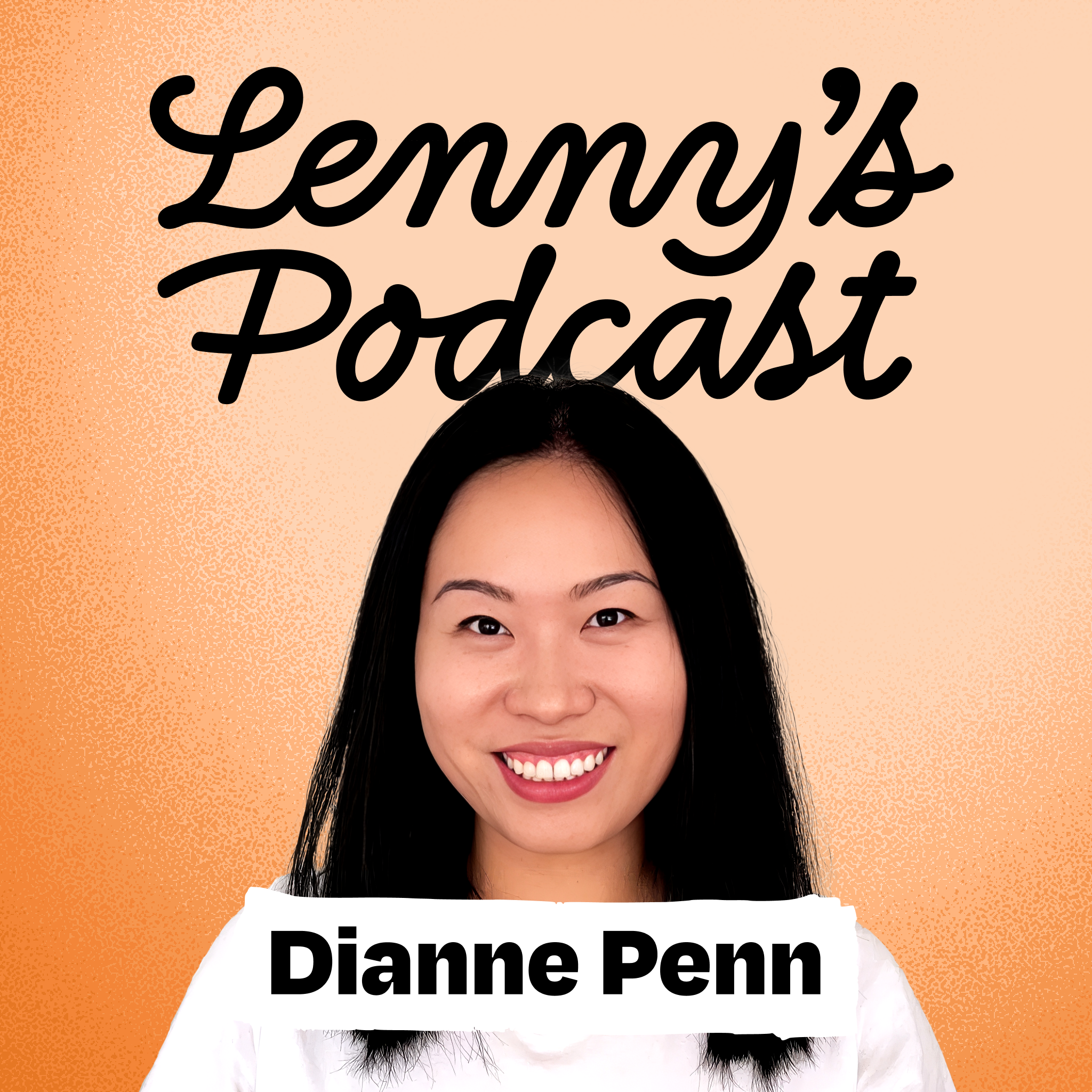
Today, my guest is Dianne Penn, head of product for the AI research and labs teams at Anthropic.
她三年前加入Anthropic时是第一位技术产品经理,这在AI领域简直像过了一个世纪。
She joined Anthropic as the first technical product manager over three years ago, which is a lifetime in AI time.
当时产品团队只有五名工程师,但她参与了从Claude 2到Fable所有模型的发布。
When the product team was just five engineers, she's helped ship every model at Anthropic from Claude two through Fable.
她还推动并上线了Claude Code、MCP、技能系统、Claude Design,以及计算机使用、工具调用和推理等核心功能。
She's also helped incubate and launch Claude Code, MCP, skills, Claude design, and also core capabilities like computer use, tool use, and reasoning.
能和一位身处AI与产品管理核心的人对话,总是让人受益匪浅,眼界大开。
It is always such a treat, and so mind expanding, to get to talk to someone who's at the very center of AI and product management.
很难想象还有谁比Anthropic研究与实验室团队的产品负责人更清楚未来会走向何方。
It's hard to imagine someone who has seen more of where things are going than the head of product for Anthropic's research and labs teams.
在开始之前,别忘了去Lenny的productpass.com注册,订阅者可以免费使用一年全球最热门、设计最精美的AI产品。
Before we get into it, don't forget to check out Lenny's productpass.com for a year free of the hottest and most beautifully crafted AI products in the world available exclusively to Lenny's newsletter subscribers.
接下来,有请Dianne Penn。
With that, I bring you Dianne Penn.
Dianne,非常感谢你来到这里,欢迎做客我们的播客。
Dianne, thank you so much for being here, welcome to the podcast.
谢谢,Lenny。
Thank you, Lenny.
再次见到你真高兴。
It's so nice to see you again.
我想回到Anthropic的早期,聊聊最初的日子。
I wanna go back to the beginning of Anthropic, the early days.
我记得Anthropic刚发布的时候,那应该是你负责的第一个模型吧,大概三年前,差不多就是那时候。
I remember when Anthropic first launched, this was, I don't know, yours the first model when it launched years ago, three years ago, something like that.
它能运行。
It works.
三年了。
Three years.
我记得当时就觉得,这些人根本没戏。
I remember just like feeling that, man, these guys have no chance.
OpenAI 跑得太靠前了。
OpenAI is so far ahead.
大家都觉得,他们真在思考吗?
Everyone, they're just like, are they thinking?
这怎么可能?
How is this possible?
OpenAI 已经领先了,现在介入太晚了。
OpenAI is one, it's too late.
现在的情况完全不一样了。
Things are very different now.
我最近看到的数据是,Anthropic的年经常性收入达到了五千亿美金左右。
The latest number I saw was Anthropic was making like, I don't know, $50,000,000,000 in ARR.
这可是以前公司上市时的估值水平。
That's like what companies used to go public at.
当年那些特别成功的企业,上市时估值也就五千亿美金左右。
Like very successful companies went public at 50,000,000,000 in valuation.
据说Anthropic每年的收入都能达到这个数。
Anthropic reportedly is making that every single year.
你是最早加入的一批产品经理之一。
You joined as one of the earliest PMs.
你加入的时候,工程师大概只有五个左右。
There were something like five engineers when you joined.
你加入的时候,模型都还没发布呢。
The model hadn't even launched when you joined.
那时候Anthropic刚起步,感觉怎么样?
What was it like in those early days of Anthropic?
你觉得刚开始的时候,有什么事情可能会让外界感到意外?
What s something that might surprise people about what it was like at the beginning?
我觉得让Anthropic走到今天的很大一部分原因,其实从一开始就是核心所在。
I think a big part of what s made Anthropic today actually has been very much the core of even the early days.
我是在2023年加入的。
So I joined in 2023.
就像你说的,我们当时只有五个产品工程师,而整个API业务线,就只有一个工程师在负责。
Like you said, we had five product engineers, there was one engineer for the entirety of our API business, if you believe.
更重要的是,当时的团队文化非常扎实。
And I think a big portion of it was the culture was really strong.
我想对那些对这家公司感兴趣的人,我特别想强调一点:真的要身体力行地践行公司的使命、文化和价值观。
And I think this is something I emphasize for folks who are interested in the company, really do walk the walk of the mission and the culture and the values.
那时候的氛围,完全就像一家初创公司。
And the energy was very much like a startup.
你说得对,我们在早期确实一直在摸索自己的定位。
And I think you're right, we were very much trying to find our identity in the early years.
我觉得有一部分跟技术有关,但这项技术到底怎么为用户、为社会创造价值?它可能带来什么?
Like, I think there's one piece around the technology, but how does that technology bring value to users, bring value to society and what could it possibly be?
在早期,我们就是用各种方式去探索这个问题。
And I think the early years were us exploring that in different ways.
我们一开始推出了 claude.ai,就是一个聊天助手,后来慢慢发展出工具使用这类功能。
Like we did start with like claude.ai, like another chatbot chat assistant, and evolving into things like tool use.
我觉得真正找到感觉的时刻,是推出了像 Golden Gate Claude 这样的产品。
I think one of the moments where really we started to get into our groove was shipping things like Golden Gate Claude.
你可能不记得了,但这个东西确实存在过。
I don't know if you like, remember that.
没有。
No.
那个功能大概只上线了二十四个小时左右。
So this this was actually up for about twenty four hours or so.
我们当时刚在2024年初发布了一项早期的可解释性研究。
We had just published one of our early interpretability research in early twenty twenty four.
其中一个例子是,模型的各层里会有一些所谓的特征,对应着某些特定的主题。
And one of the examples was essentially you can have what's called like features of the model within the layers, which express certain types of thematics.
研究人员发现的一个主题,比如说,是写要点。
So one of the one of the themes that the researchers was able to identify was, let's say, bullet point writing.
另一个是人物与场景。
Another one was people in places.
还有一个频繁出现、特别引起共鸣的主题,就是金门大桥。
And one that really came up frequently that resonated was the Golden Gate Bridge.
当你把那个特征调强之后,Claude 就会一直盯着金门大桥不放。
And so when you actually essentially dialed up that feature, Claude would obsess about the Golden Gate Bridge.
也就是说,它每一条回复里,都会提到金门大桥。
So meaning in every one of its responses, it would come back and talk about the Golden Gate Bridge.
比如你问它:给我个意大利面的食谱,它会说:这是食谱。
So if you said like, give me a recipe for making spaghetti, it would say, here is a recipe.
而它提到的颜色是橙色,因为金门大桥在照片里看起来就是那种红橙色。
And the orange color is just like international red that the Golden Bridge Golden Gate Bridge looked like.
整个感觉特别古怪。
And so it was like really quirky.
我们特别想把这种体验推广出去,让刚开始用Claude的用户都能接触到。
And we very much wanted to, that situation, just bring that user, bring it to the masses and bring it to people who are starting to use Claude.
结果我们真的在24小时内,就在cloud.ai网站上把整个体验上线了。
And so the entire experience actually, we spun up on our cloud.ai website within twenty four hours.
这背后是工程、产品设计和研究团队全都在一起协作的结果。
And that took like engineering, product design, our research teams all working together.
我们对此真的非常自豪。
And we were really, really proud of it.
说实话,可能只有两千人左右用过。
I think it maybe reached only 2,000 people to be honest.
但它让我们意识到,我们真的能创造出全新的用户体验,用一种独特又真实的方式展示我们的研究。
But it made us feel like, oh, we can actually bring new user experiences, showcase our research in a way that's different and authentic to us.
而且是以那种初创公司般的速度,这对我来说,可能是我们逐渐找到自我定位的一个隐秘转折点——我们能做出和竞争对手完全不一样的产品和体验。
And in a very startup, be like pace that to me was like one of those like, maybe hidden inflection points of we were starting to find our identity, that we could build products, build experiences that were different for what our competitors had seen, what was already out there.
我觉得像实验室、Claude Code这些项目,让我们开始思考,该怎么把这种理念更贴近大众。
And I think that obviously labs, Claude Code, etcetera, like we then started to identify ourselves as would we actually think the world how to think about how to bring that closer to the public.
但那会儿的文化完全是自下而上的。
But it was a very bottoms up culture.
所以整个体验都是自下而上的。
And so that entire experience was very bottoms up.
我看到工程师和设计师都主动抽出时间参与进来。
I see engineers, I see designers donating time to work on.
我常拿这个例子来说明,早期的日子究竟是什么样的。
And so I like to always use that as an example of like what the early days were like.
但那种文化和价值观,从那时起到现在,其实一直都没变。
But the culture and and and the values have very much, I think, stayed the same since those early days.
本集由本季的赞助商WorkOS倾情呈现。
This episode is brought to you by our season's presenting sponsor, WorkOS.
OpenAI、Anthropic、Cursor、Vercel、Replit、Sierra、Clay,还有数百家成功公司,它们之间有什么共同点?
What do OpenAI, Anthropic, Cursor, Vercel, Replit, Sierra, Clay, and hundreds of other winning companies all have in common?
它们全都依赖 WorkOS 驱动。
They are all powered by WorkOS.
如果你在为企业客户开发产品,肯定体验过集成单点登录、SCIM、基于角色的访问控制、审计日志这些大公司必备功能的痛苦。
If you're building a product for the enterprise, you've felt the pain of integrating single sign on, SCIM, RBAC, audit logs, and other features required by large companies.
WorkOS 把这些阻碍交易的难题,变成了开箱即用的 API,专为 B2B SaaS 构建的现代化开发者平台。
WorkOS turns those deal blockers into drop in APIs with a modern developer platform built specifically for b to b SaaS.
我投资的每一个初创公司,只要开始往高端市场拓展,最后都会用上 WorkOS,因为它们确实最棒。
Literally every startup that I'm an investor in that starts to expand upmarket ends up working with WorkOS, And that's because they are the best.
不管你是个刚起步、想拿下首个企业客户的种子期团队,还是正全球扩张的独角兽,WorkOS 都是你最快实现企业级准备、突破增长瓶颈的途径。
Whether you are a seed stage startup trying to land your first enterprise customer or a unicorn expanding globally, WorkOS is the fastest path to becoming enterprise ready and unblocking growth.
它简直就是企业功能版的 Stripe。
It's essentially Stripe for enterprise features.
去 workos.com 开始使用吧,或者直接去他们的 Slack,那里有真正的工程师等着回答你的问题。
Visit workos.com to get started or just hit up their Slack where they have actual engineers waiting to answer your questions.
WorkOS 让你用流畅的 API、详尽的文档和极佳的开发者体验,更快地构建产品。
WorkOS allows you to build faster with delightful APIs, comprehensive docs, and a smooth developer experience.
立即访问 workos.com,让你的应用快速具备企业级能力。
Go to workos.com to make your app enterprise ready today.
当你回望 Anthropic 从一个只是想和当时如日中天的 OpenAI 竞争的小实验室,发展到今天的历程,有哪些关键的转折点呢?
What are some of the other, big inflection moments as you think about just Anthropic going from just this, like, lab that's trying to compete with this juggernaut of OpenAI at that point to what it is today?
有没有哪些时刻让你特别印象深刻,觉得真正改变了局面?
What are some moments that stick out of like, wow, that really changed things?
definitely 是我们在训练和测试 Opus 3 的时候。
Definitely when we were training and testing Opus three.
我觉得那时候公司规模还不到两百人。
I think that was the moment when the company, I think we were less than 200 people still at that point.
那时我们很清楚,必须打造一个前沿模型。
And it was very clear that we needed and wanted to create a frontier model.
这对我们接触用户、吸引消费者,以及展示我们的研究成果至关重要。
And that was very important in terms of like our ability to reach like users, consumers, and to showcase our research.
我们也在思考,为什么用户要选择 Claude?
And we were looking for ways for also why should somebody choose Claude?
这一直是个核心问题。
And that was like a core question.
在早期,我们经常被问到这个问题。
And that was a core question we were getting asked in the early days.
我觉得Opus三是在2024年3月发布的。
And I think with Opus three, you know, it launched, I think March 2024.
但在那之前,好几个月里,从推理到研究、微调、预训练,各个团队都在不同阶段齐心协力,朝着同一个目标努力。
But there was many, many months of various teams across inference, across research, fine tuning pre training that rallied at different points and towards a common goal.
所有参与的人当时都特别自豪。
And I think everybody that was involved was like really proud.
我记得那时候我是产品经理,加上研究负责人,我们都在家,那大概是12月。
I remember being the PM, the research leads, myself, we were all in our, this was around December.
大家各自在父母家里,视频里全是小时候的房间背景。
So we were all at home in our various parents homes and seeing everybody's background of like their childhood room.
每个人都拼命在想:我们到底在训练一个什么样的模型?
And everybody is working really hard to figure out that like, what are we training the model for?
显示出来对吗?
Is it showing up the right way?
我觉得这在建立信任方面特别有效。
So I think that was really powerful in terms of just building a lot of trust.
从那时候起,我们很多研究负责人现在都负责强化学习、角色设计和对齐工作了。
And a lot of our research leads have actually, from that time, are now like leading reinforcement learning, leading our character work, alignment work.
这种早期建立的信任,也让我们现在在产品和研究之间协作生产模型时更加顺畅,毕竟当初我们是一起在一线拼命干过来的。
So that foundational trust, I think, also helped us work well now with any of our production models across product and research, because we were working just so much in the trenches together in the early days.
然后我们还意识到编程很重要。
And then I think there were things like identifying that coding was important.
对吧?
Right?
2023年我刚来的时候,没人会把Anthropic、Claude和编程放在一起说。
In 2023, when I started, nobody said Anthropic and Claude and coding in the same sentence.
那时候像GPT-4虽然也有人拿来做编程,但只是众多用途中的一个而已。
I think competitor models like GPT-four at the time was used a bit for coding, but it was one of many use cases.
我注意到一件事,比如现在人们开始用这些模型做代码相关的事,不只是代码补全,而是直接写完整的长篇代码。
And one thing that, for example, I saw was people are starting to use code, these models not just for code, not just like code autocomplete, but actually writing long form code.
这其实给了我们一个机会,去让Opus三在这一块做得更好。
And it's not an opportunity for us to train Opus three to be better at.
从训练的角度来看,这个改动并不大,但在早期却帮我们形成了竞争优势,吸引了很多最初的Claude爱好者和开发者,因为他们当时根本没想到这能做到。
And it ended up being a relatively smaller change from a training perspective, but it ended up helping us differentiate in the early days competitively for users, and actually bring a lot of the very early Claude enthusiasts and developers, because we were providing a value that they didn't really think was possible at the time.
你提到Opus三,真有意思,那都多久以前的事了,很难想象那会是个重大转折点。
It's so interesting you talk about Opus three, like, that's so long ago, and just like, it's hard to think that was a big inflection.
听到这在内部其实是个重要里程碑,真的很让人感兴趣。
And so this is really interesting to hear that that was internally a big milestone.
感觉你们那时候建立了一种信心——哇,我们真能推出一个前沿模型,虽然现在回头看,跟我们今天的东西比起来,那会儿的模型简直不值一提。
It almost feels like this confidence y'all built that, wow, we could really ship a Frontier model, which is now today so not great if you compare it to what we've got today.
我老是会想到Opus四和五,那是在差不多一年后,也是在寒假期间,大家都回家了,有时间写代码。
What I always think about is Opus four five, which was an interestingly, like a year later, also during winter break when everyone was home able to code.
那是不是另一个重要的里程碑?
Was that another big milestone?
是的
Yeah.
Opus 4.5 确实是另一个重要时刻。
Opus 4.5 was definitely another large moment.
Opus 4.5 的特别之处在于,我们不仅有了一个模型,还打造了一个产品载体——比如 Claude Code 这样出色的产品体验。
I think what was magical about magical about Opus 4.5 is we also now not just had a model, but a vehicle, which is like a great product experience like Claude Code.
我们团队经常说,要想有前沿模型,就必须有前沿产品,让用户真正感受到前沿模型的魔力。
One thing we say a lot on the team is you need frontier products in order to have frontier models and for people to feel the magic of frontier models.
其实,在那之前,我们团队早就已经感受到 Claude Code 的魔力了,持续了好几个月。
And I think, you know, we felt the magic of Claude Code for very for for for many months before that.
但真正关键的是,模型的智能水平终于达到了一个程度:用户能在各种新场景中,直观地体验到前沿智能,甚至能端到端地完成复杂任务。
But the fact that the model essentially got to a level of intelligence where at a very broad level, users can experience both frontier intelligence in new use cases, allow it to run things end to end in an egantic manner.
我觉得,这才是真正的转折点。
I think that was the inflection.
其实两方面都重要。
It was actually both.
我觉得,如果没有Claude Code这样的产品,Opus 4.5根本不会迎来那个转折点。
I think Opus 4.5 wouldn't have had that moment without a product like Claude Code.
而Claude Code,如果没有Opus 4.5,也不可能这么快就被广泛接受。
And Claude Code, I think, wouldn't have had that type of adoption accelerated without Opus 4.5.
说到这个话题,达里奥,如果你回看他过去的预测,他总是说:编码问题很快就会被解决,一年内就能做到百分之百。
So kind of speaking on this on this thread, Dario, interestingly, if you look back at all his predictions, he's just like, okay, coding is gonna be solved, it'll be a 100% in like a year, something like that.
他一直说,AI迟早会替我们写完所有代码,我记得当时大家都觉得这不可能,太复杂了。
He kept talking about how we're gonna do code, like AI is gonna do all our code, and I remember everyone being like, there's no way, this is way too complicated.
AI怎么可能真正掌握这么复杂的人类活动?这至少还得靠人类很久。
How is AI ever gonna get really good at this very complex thing that humans do, now this is gonna be humans for a long time.
但他完全说对了。
He was completely right.
他还经常提到我们现在所处的这个指数增长阶段,他现在就是这么形容的——我们已经站在了指数曲线上。
Something else that he talks a lot about is this exponential that we're now that we're on, that's the way he describes it now, we're like we're on the exponential curve.
我记得没多久前,每推出一个新模型,大家就说:行了,到头了,没戏了,没上升空间了。
I remember not long ago, were new models were being released, and everybody was like, okay we're done, there's no more upside, it's plateauing, it's over, there's no more room to grow.
但现在情况完全反过来了,我们其实已经身处指数曲线的内部了。换句话说,每一个小小的进步都是一次巨大的飞跃,因为我们正处在那个陡峭上升的阶段。
And now it's like the opposite, now we're inside, like if you think about the curve of the exponential, we're like inside of the exponential now, which by definition means every improvement is a massive jump, because we're like on that hockey stick part.
身处这样一个历史性的时刻,眼看着AI以如此快的速度进步,这么多可能性被打开,感觉到底是怎样的?
What's it like just being on the inside of this crazy historic moment when AI is improving so fast, so much is being unlocked.
这种感觉到底是什么样的?大家又该怎样为接下来AI持续加速进步做好准备?
What is it like, and how should people prepare for the coming acceleration of more and more improvement from AI?
我常跟团队说,大多数人都没经历过互联网从一个新奇玩意儿变成人人都离不开的工具的那个转变过程。
One thing I like to say on the team is most of us weren't like actively working yet when the internet transition from this novelty to something that everyone can use.
而现在的感受,就像当年那种席卷全人类的变革。
And it feels like that's just taking humans.
我觉得打个比方会很有帮助。
I think analogies are helpful.
所以,我想到几个类似的例子。
And so, like, the analogy of that is, I think a couple of things.
第一,适应能力变得至关重要。
Number one is adaptability becomes very important.
我们在安全方面有评估和测试,包括红队演练;在能力和产品这边,也在开发新原型和新产品,比如Claude Code、Tag这些。
I think we we have evals, have, you know, on the safety side, safety testing, red teaming on the capabilities and product side, new prototypes, products like Claude Code, Tag, and others.
但要准确预测具体的时间点或哪个模型,真的很难。
But it's very hard to predict the exact moment or the exact model.
所以当面对新信息时,你怎么调整决策,而不是固守原来的计划,这种适应能力特别关键。
And so the adaptability of when you're faced with new information, how do you then make better decisions versus keeping the same plan?
这种灵活性真的非常重要。
And so like that agility is really important.
另外一点是,你怎么从最根本的原理出发,去推演下一步该怎么做?
I think another piece is with that, how do you actually be thinking very first principles and reason through what's next?
那又怎么样?意义在哪?
What's the so what?
我们该怎么投资新的产品?
How do we invest in new products?
又该怎么向用户解释这些变化的区别?
How do we invest in explaining the differences to users?
所以很多体验都来自于这种指数级发展的节奏——理解你如何运作、如何做出更好的决策,并用第一性原理去推动一些原本计划几个月后才做的事,现在模型已经能实现,也能实际交付给用户了。
So a lot the experiences, I think of being in that exponential is that pace, understanding how you operate and make better decisions, and applying that first principles thinking to then do something that maybe we pull up a plan that we would, we're expecting a few months from now, but now the model can actually do and work on and actually bring that to users.
比如协同工作功能 Tag,这其实是一个正向循环,自我强化的机制。
So this is things like co work skills tag, you know, as the it's a very positive self enforcing loop.
我觉得更重要的是彼此之间的信任,确保我们是在朝着正确的方向做决策,也让更多人能跟上节奏。
And I think a big part of it also is just having that like trust in each other, making sure we have like, we're thinking through the right decision making or bring folks along.
有些团队可能比其他团队更早感受到这种指数级变化。
Some teams might see the exponential, feel it faster than others.
那我们该怎么有耐心地带着整个组织、整个公司一起跟上这种变化呢?
So how do we kind of have the grace to bring the organization, the growing organization and company along on that?
我听到的是,你几乎无法预知每一次模型更新后会出现什么新可能。
So what I'm hearing here is you almost don't know what will be possible with every model release.
所以关键是要保持灵活,随时应对新出现的情况。
And so the important things to focus on is being adaptable as things emerge.
正如你所说,产品本身必须不断跟进,赶上技术所能实现的边界。
To your point, the product itself has to stay up to has to catch up to what is possible.
你刚才说的没错,模型能做的事情很多,但很多人可能不知道该怎么用,或者根本用不出来。
Your point again, just like it can do so much, but people may not understand how to do it and may not be able to do it.
所以产品得做得简单易用,哪怕只是提醒你‘你可以试试这个’,也非常重要。
So the product making it easy and even just like telling you here's something you could do feels like an important part.
你意思是说,大概就是这样吧?
Is that roughly what you're describing?
我觉得是的。
I think so.
我觉得原始的扩展定律论文里有一些特别有意思的图表。
I think there's some really interesting graphs in the original scaling law papers.
大家应该都熟悉这么一个观点:随着算力和数据增加,下一个词预测的误差——也就是‘损失’——会下降。
And I think folks are very familiar with the scaling laws in the lens of as you add in more compute and data, what's called loss, aka the loss from next token prediction goes down.
所以模型随着规模扩大,能力提升的曲线看起来非常平滑、线性。
And so it's a very smooth linear curve of like the models get more intelligent as you scale them up.
但那篇论文里真正有意思的是,还有一些完全不同的能力涌现曲线。
What's actually also interesting in that paper is there are these like very different emerging capability graphs.
比如,当你增加数据量、用更多算力训练模型时,就会突然出现一些意想不到的新能力。
And so for example, as you add in more data, and you train the models with more compute, you essentially see these actually discontinuous emerging capabilities jump.
模型从连‘1加1’都算不了,一下子变成能稳定算出结果。
So the models go from one plus one being a thing that it can't calculate to a thing that it can reliably calculate.
这些新出现的能力,某种程度上具有不可预测性,没人能确切知道它会在什么时候突然出现。
And so these emerging capabilities, this like some nature of like predictability is, is, is not necessarily everyone knows the exact moment.
要评估模型是否真的具备了这些能力,一直是我们评估技术的重要部分。
Like you need the eval to be able to assess that has actually always been a part of how this technology works.
这也让安全问题变得更复杂,因为如果没有测试机制,这些能力的跃升可能悄然而至,你却完全没察觉。
And also what makes like things like safety harder, because unless you have the evals, unless you have the systems to test, these jumps might actually happen and you don't know.
这太有意思了,你可能已经训练出一个AI,它会做些连你都不知道的事。
That's so interesting that you may have developed this like AI brain that can do something you're not even aware of.
所以我们的任务之一,就是去发现这些隐藏的能力。
And so part of the job is just uncovering.
真厉害。
Wow.
它在这上面突然变得特别厉害了。
It just got really good at this thing.
那我们能拿这个做点什么?
What can we do with that?
我觉得现在就存在产品和用户上的积压,用我们产品团队的话说,哪怕用现在的模型也一样。
I think there's like product overhang and user overhang, like to maybe put it in our PM language, even on today's models.
我觉得我们当前的模型,比如 Fable,还有很多可以探索的空间。
And I think there's like a lot that we could be exploring on like our current opuses and definitely with like Fable, for example.
这种发现,其实从 Anthropic 早期就一直是我们的核心基因之一。
And that that discovery is actually another part of what's been in the early days of Anthropic DNA.
而且我觉得,这至今仍然是我们在产品、实验室和研究中运作的重要部分。
And I think is also continuing to be a big part of how we operate in product, in labs and across research.
这让我想到加里·谭一直在说的事,他是 YC 的总裁。
This makes me think about something Garry Tan's been talking about, president of YC.
我不太确定他现在的头衔是什么。
I don't know what his title is.
他有个很有意思的观点,说如果你现在愿意每年花十万美元在令牌上,那你过的生活其实就是2028年别人才能过上的日子。
He's he had this interesting point that if you're willing to spend a $100,000 a year right now in tokens, you're living the way somebody in 2028 is gonna live.
因为到那时候,令牌会便宜到人人都能这么工作,但眼下正是个绝佳机会,可以提前体验未来,放手用令牌,这让人能更快地摸清未来到底什么样,也能加速推进项目。
Because by then it'll be really cheap, everyone can work this way, but if you there's this alpha opportunity right now to just live in the future, go crazy on token spend, and so there's a big opportunity for people to learn what the future is like and also just build much faster.
你怎么看这种‘令牌堆满’的做法,以及它到底有多大价值?
Thoughts on this idea of and the value of token maxing, let's call it.
是的,我更倾向于从产品角度来想这个问题。
Yeah, I think I I take more of like a almost product lens.
与其说令牌消耗是核心,不如说它更像是一个输入手段。
It's almost like token spin is more the input.
真正重要的产出,是你刚才说的那种实验过程。
And really the output is what you described of experimentation.
如果我们把目标聚焦在实验本身上,
And I think if we were orienting, like goals around experimentation,
我
I
我觉得,这样来定义结果可能更合适。
feel like that, that might be the better framing of the outcomes.
因此,实现这个目标的方式也可能不止一种。
And therefore, there might be different ways of achieving that outcome.
我得说,我们内部一些最有创造力的思考者、最顶尖的原型设计师,都会花大量时间用Claude,每次新发布研究模型他们都会用。
I will say internally, some of the most creative thinkers, the best like prototypers, do spend a lot of time with Claude with every new version of a research model that we have.
所以,你得真正去使用这些模型,才能不断产生好点子、更好的点子、更棒的点子。
And so there is something around, you have to be like using the models to then come up with good, then great, then better ideas.
这一点是无可替代的。
And there's no substitute for that.
在技术发展这么快的情况下,不亲手接触技术,想制定出完美的策略几乎是不可能的。
It's very hard to come up with a perfect strategy without touching the technology when it's moving this quickly.
但与此同时,我觉得我们还能做些别的事情。
At the same time, I think there's other things that we could be doing.
比如,我们经常做的一件事,就是在内部公开地工作。
Like, so one thing that we do a lot is actually working in public at an internally within Anthropic.
所以在早期,我们产品功能还少的时候,公司里有个Slack频道,几乎所有人都在测试Claude的早期版本,尝试各种用法。
And so in the early days, when we had less product surfaces, there was a Slack channel where everyone, almost the entire company was testing early versions of Claude, and trying different use cases.
大家不会特意说‘用例’,但可能会让模型帮忙修改论文,或者琢磨怎么写好一封邮件。
Like people were not calling them use cases, but you might be asking it to edit an essay or to come up with the right way to send this email.
这些其实都是不同的用法,但我们都公开地一起做。
Like they were all different use cases, but we all worked in public.
你经常会看到,团队里有人冒出一个点子,其他人马上试着改一改、玩出新花样。
And the way you would see magically is different users or different, there's different folks on the team coming up with an idea, and then other people trying different variations of that idea.
大概十次左右的尝试后,某个特别的、有潜力的用法就突然冒出来了。
And then within maybe ten or so requests, there was something magical or potentially in the use case that emerges.
我觉得,光靠个人自己摸索怎么用这项技术,远远不够。
And I I think there's a lot in not just individuals figuring out by themselves how to use this technology.
我们其实可以做得更多,把这种集体探索的过程更好地融入实验中。
I think we could be doing more to actually bring, like, that communal discovery when we do experimentation.
实验不一定是单打独斗的事。
Like, experimentation is not always necessarily a individual sport.
这太有意思了。
It's so interesting.
对,我们其实还不清楚这东西到底能做什么,或者能怎么用。
Yeah, this idea that we're just, we're not sure what this is capable of or what we could do with it.
得靠大家不断尝试,互相看看别人在搞什么,才能慢慢发现可能性。
And it takes all this poking around and people trying things, hearing what other people are trying to figure out what's possible.
这种感觉特别有意思,有时候突然想到:哦,原来我还能这么用。
Such an interesting, I don't know, technology or just like, Okay, here's what oh, I figured out I could do this thing.
那你打算怎么用它?
What are you going do with that?
从大方向来看,我们其实心里有数。
I think at a broad theme, we know, right?
我们知道模型能写很棒的文章,能做长篇写作,但具体到每个人真正能解决什么痛点,怎么让普通用户用起来,这更多是靠探索和试验来发现的。
We know that the models write great essays or can write long form writing, but individual pain points of what can you actually solve with that and bring it to, a user level that people can use, I think is something that is more exploration or experimentation, based.
顺着这个思路,你负责实验室团队的产品,这真的很酷。
Following this thread, you, you oversee product for the labs team, which, is extremely cool.
我们之前请过本·曼和迈克·克里格来做播客,他们现在都在实验室团队工作。
We've had Ben Mann on the podcast, Mike Krieger, whom both work on labs now.
说说你们的实验室吧。
Talk about labs.
实验室到底是什么?
What is labs?
实验室都出了哪些成果?
What's come out of labs?
很多人听说过这些项目,但它们是怎么运作的?怎么能让团队在核心产品之外,做出这么创新的东西?
Many people have heard of these things and how do they work that enables them to create such innovative ideas outside of even the core Anthropic product team?
实验室的核心思路,就是去发现那些可能不在主路线图上、但有潜力的非连续性重大方向。
The thesis of labs in many ways is identifying and pulling the thread on the thread of discontinuous large bets that might not be in the core roadmap.
然后去验证,这事儿到底有没有戏?
And figuring out is there a there there?
更重要的是,这个可能性有没有可能放大十倍、百倍,甚至千倍?
And also, is a 10x, 100x, 1000x of the there there?
比如Claude Code这类东西,我觉得
And so for example, things like Claude Code, I think
我听说过。
I've heard of it.
像Claude Code、技能功能,还有最近的Claude Design和MCP。
Things like Claude Code, things like skills and most recently Claude Design, MCP.
我们团队现在特别想强调的一点是,能做的东西实在太多了。
The thing that we really try to emphasize within the teams is especially right now, there are so many things that could be built.
那什么才叫一个突破性的投入呢?
What does it mean then to have a discontinuous bet?
我觉得我今年采取的一种做法是,对某个主题或领域要非常坚定。
And I think one approach I were taking this year is you can be very strongly held opinion about the theme or the area.
但对具体的原型设计,则可以灵活一些。
And then more weekly held about the exact prototype.
所以团队里其实有一种实验文化。
And so like there is a culture of experimentation.
团队里的工程师们都很主动,自己推动各种想法去尝试。
There's a lot of the bottoms up, like engineers on the team are very self enabled, self driven to test out different ideas.
有时候我们有个想法,但暂时还行不通。
And sometimes we have a thesis, and it might not work yet.
所以我们会等下一两代模型出来后再回头看看。
And so we then might revisit it in one to two model generations.
这些原型哪怕没直接变成产品,也能帮我们学到东西,这本身就很宝贵。
And so this idea of like these prototypes that actually end up just helping us learn, like that's also valuable, even if it doesn't lead to something immediately shipping.
这种模式让实验室的孵化和探索能力真正加速了,帮Anthropic看得更远、更广。
And so I think that allows the incubation and like the charter of labs to really accelerate and see around corners more broadly for Anthropic.
挺有意思的是,Anthropic本身已经这么创新、这么能快速出产品了,居然还值得专门成立一个实验室团队。
It's so funny to think about a labs within an Anthropic, which was already so innovative and creative and just, you know, shipping like crazy, that there's value to still creating a labs team within Anthropic.
是什么让实验室能运作得这么成功?
What enables labs to work as well as it has?
你列了这么多产品,可Anthropic还推出过别的吗?
Because you listed all these products, and it's in that's like, what else has Anthropic shipped?
这些几乎都是最大的成功了。
This is, like, feels like all the biggest wins almost.
我肯定还有好多没想起来的。
I'm sure there are many that I'm not thinking about right now.
在大公司内部打造一个成功的实验室团队,关键是什么?
What's what's kind of core to creating a successful labs org within within a larger company?
我觉得是团队文化,就像Anthropic整体那样,这种文化特别重要。
I think the team culture, like similar to broadly at Anthropic, I think the team culture is very valuable.
本提出了非常了不起的愿景,激励大家去思考十倍、百倍的可能。
I think Ben sets an incredible vision and pushes people to think about the 10x 100x of the idea.
实验室里的小组规模都很小。
And, you know, are the teams, the pods within labs is small.
有时候,一个点子就是从一个工程师开始的。
Sometimes these ideas start with one engineer.
对吧?
Right?
有时候,当规模很大的团队去追求非常模糊的大方向时,反而会因为团队太大而拖慢进度。
And I think sometimes when there's almost really large teams pursuing very ambiguous large ideas, you end up actually being slowed down because of that.
所以我觉得是文化的问题,我们其实也会专门挑选那些愿意做从零到一实验的人。
So I think it's culture, I think, you know, we actually also select for folks who actually want to do that zero to one experimentation.
这并不容易。
And it's not easy.
我们很多想法最后都选择放弃或者叫停了。
There's a lot of bets that we end up turning down or turning off.
也许将来某天我们会再回头看看这些想法。
And maybe, you know, we revisit them in the future.
但做出这种决定真的很难。
But that's hard.
当你全身心投入一个项目,而它还没起色的时候,尤其难。
That's hard when you pour your heart and soul.
你就像个创始人一样在为这个项目拼命,可它就是没成功。
You're acting as a founder for bet and it's not working yet.
所以我觉得,这种选人标准其实是针对那种对从零到一特别有热情、特别投入的人。
So I think it's like that type of selecting for that type of personality, folks who are really passionate and deep about the zero to one.
你负责研究团队的产品,和Anthropic的研究人员一起工作。
So you lead product for the research team, you work with the researchers at Anthropic.
很多人对‘研究’是什么、研究人员做什么,多多少少有点概念。
A lot of people kind of get a sense of what is research, what researchers do.
但我认为,很多人其实并不真正理解AI实验室里这些非常关键的人。
I think a lot of people don't totally understand these very valuable people at all the AI labs.
我是这么看的,也想帮大家搞清楚——研究人员一整天到底在干嘛?我想象的是,他们先提出一个如何改进模型的假设,然后找数据、调整算法、修改训练方式、测试效果、不断迭代,持续寻找提升模型的方法。
The way I think about it, and I want to help people understand, help me understand just what are the researchers doing all day, what I imagine is they have a hypothesis for how to improve the model, They find data, they tweak some algorithms, they check, adjust how it's trained, and they test it, see how it did, keep iterating, and keep trying to find ways to improve the model.
大概就是这样吗?
Is that roughly right?
或者干脆说说,研究人员一整天到底在忙些什么?
Slash, help us understand what researchers are doing all day.
这确实挺贴近他们日常工作的大部分内容。
That's really I think that's a lot of maybe the like the more day to day.
我觉得研究人员和像Anthropic这样的研究机构还有一个更宏观的未来愿景。
I think one piece around researchers and like research organizations like Anthropic is there's also a vision of the future, like more broadly.
比如,早在公司成立之初,研究人员就在讨论怎么让Claude学会使用电脑。
So for example, things like I think even at the founding of the company, researchers were talking about how do we get Claude to use a computer?
怎么让AI去操作屏幕界面。
How do we get AI to navigate a screen?
其实研究人员身上有一种很像创始人的劲头,他们特别大胆,目标远大。
So there's a lot of actually very founder like energy is how I describe it within researchers are really bold and ambitious researchers.
Anthropic里这样的人特别多。
And we have a ton of those at Anthropic.
一方面,大家在构想这项技术未来能走到多远。
So there's one layer of vision of what this technology can go.
另一方面,现在Claude已经进入大众视野了,我们也在思考怎么立刻把它做得更好。
And then I think on this other side of the loop, there's also now that this technology or Claude is in people's hands, how do we make it better today?
所以既有中长期的视野,也有大量精力投入在对未来的这种思考上。
So it's a medium and long term, and a lot of energy thinking about that lens of the future.
而在近期和短期,我们还能在哪些方面做出改进?
And also in the immediate and short term, what are the improvement areas we can make?
你刚才说的,其实很好地体现了我们如何对Claude的不同版本进行持续优化。
And so like, I think you're describing a really good sense of how do we make iterative improvements on different versions of Claude.
我的团队和研究人员的合作方式是深度融入这些工作流程,尤其是在对用户影响大的领域。
The way that like my team works with researchers is kind of being very integrated and embedded in those loops, particularly areas where there's a lot of impact on users.
比如视觉识别、电脑操作、编程代理工具使用、测试、温度调节、算力分配这些直接关系用户体验的方面。
So this is things like vision, computer use, coding agentic coding tool use, test, temp, compute, things where there's a direct user impact.
然后我们要把用户的反馈整理成研究人员能理解、也能实际操作的建议。
And then figuring out what are the ways to bring the user feedback and ground it in a level that is understandable for researchers, and also actionable for researchers.
我觉得这第二部分工作,其实是职责中非常重要、也相当有挑战的一部分。
And I think that's the second piece is actually a big part of the job and sometimes a hard part of the job.
比如说,我们可能会收到关于claude.ai的反馈。
So for example, we might get feedback on claude.ai.
Claude出现了幻觉。
Claude hallucinated.
这说法太模糊了。
It's very vague.
如果你跟研究员说,请修复Claude的幻觉问题,他们根本无从下手。
If you bring that to a researcher and you say, please fix Claude from being hallucinated.
这种反馈没法直接操作。
It's not very actionable.
所以团队的一部分工作就是弄清楚,用户为什么会给出这样的反馈,背后有什么线索。
And so part of the time of the team is understanding, okay, what's the trajectory of why that user gave that feedback?
而且是经过用户同意的。
And it's like consented.
我们会去分析,当时Claude到底该调用什么工具才对?
And so we look at, okay, what should Claude have called tools in that moment?
或者,它用的工具没错,也看了正确的文档,但抓错了关键信息。
Or from its current knowledge, or it called the right looked at the right document, but it looked at the wrong facts.
如果是第一种情况,那就是工具使用出了问题。
In the first case, that would have been a failure on tool use.
第二种情况,问题可能出在搜索、知识注入、信息整合上,或者跟对齐有关。
On the second case, it would have been a failure on, let's say, search or knowledge insertion, search synthesis, or it could be something around alignment.
把这些具体的细节带给研究人员,帮他们判断这到底是不是个足够严重的问题。
And so bring that level of detail to researchers coming up with like, is this a big enough problem?
设计一些评估方法,来证明我们确实改进了。
Figure out things like evals to then describe a we've improved it.
这些才是真正的可操作层面,也是研究人员日常交流的语言。
Like those are the levels of actionability, and it's the day to day language of the researchers.
所以我们努力让用户的反馈能紧密衔接到模型训练和研发的整个闭环中。
And so we try to stay very close to how to bring that in an actionable manner between users to to the core model training and the research development loop.
前几天我跟一个人聊,他说现在搞人工智能研究是实现人生成功最好的方向。
I was talking to someone the other day about how it feels like research AI research is the place to be now if you want to be very successful in life.
从你的观察来看,要成为一位真正成功的研究员,需要具备哪些条件?
What does it take to become a really successful researcher, from which you can tell?
不是每个人都能入行,也不是每个人的大脑都适合这种方式,但如果有年轻人想探索这条路,依你看,到底需要什么才能走到这一步?
You know, not everyone can get in, not everyone's brain is gonna work this way, but just say people are like, hey, wanna explore this career path, from what you've seen, what does it take to make it there?
一般是研究人员,还是跟研究合作的产品经理,或者两者都有?
Researchers generally, or research and product managers working with research, or both?
两者都算,但主要是研究人员——那些跟研究人员搭档的产品经理也挺成功的,感觉现在每家公司都在抢顶尖的研究人才。
Let's do both, but the researchers, like you know, PMs working with researchers also going to be very successful, it feels like everyone's trying to, you know, poach all the top researchers across every company.
我知道你不是AI研究员,但就你观察到的,要在这条路上成功,到底需要什么?
So just, I know you're not an AI researcher, but just from what you've seen, just like what does it take to make it in that career path?
对。
Yeah.
我觉得Anthropic里最成功的研究员和研究主管,大多是那些擅长从第一性原理思考问题的人。
I think a lot of the most successful researchers and research leadership at Anthropic are folks who are really strong first principles thinkers about problems.
他们能深入分析问题,对自己的研究领域充满热情,对未来的可能性有清晰的愿景,同时又能扎进细节里。
Like they reason through problems really well, who are just passionate about their research area, and have a bold description of what that could look like, and then who are actually close to the details.
我们的领导层,比如首席科学家、微调和强化学习团队的负责人,都亲自参与训练流程。
And so, you know, our like leadership, our chief scientists, heads of like fine tuning and like RL, folks are actually really close to the training runs.
他们会密切关注训练进展、评估结果,以及底层数据的情况。
And actually look at things like how the training run is going, evals, looking at the underlying data.
所以,真正贴近细节、并对细节充满热情,我觉得这是优秀研究者和培养洞察力的关键。
So, like, actually staying really close and be excited to be in the details, I think have been like a sign of, like, really strong researchers and developing taste.
另一个关键是,他们能长远地放眼大局,始终保持雄心壮志。
And I think like another piece is just like their ability to think big over time and be like very ambitious.
对吧?
Right?
比如达里奥,他就敢想:我们要彻底改变软件工程。
Like the Dario, like we can transform software engineering.
朝着这种方向走,你会学到非常多东西。
And and I think going in that direction, you learn so much.
要想成为成功的研究者,你的想法就得敢想、敢冲,得有瞄准星辰的魄力。
You you had to shoot for the stars in many ways across your ideas, I think in order to be a successful researcher.
现在总有人拿‘要更有野心’当段子说,可这真的太难了。
I love just this meme of just be more ambitious comes up so often now, which is so hard.
说起来容易,可你到底能想象得多大?这真不是随便说说就能做到的。
Like it's easy to say that it's hard to actually just like how big can you think?
展开剩余字幕(还有 480 条)
而如今人工智能所开启的可能性,恰恰鼓励我们更加大胆。
And how that so much of what AI now unlocks, just be more ambitious.
确实如此。
Yeah.
没错。
Yeah.
我觉得关键是要从头到尾认真想上一两遍。
I think it's thinking through it once or twice, end to end.
然后对研究方向要坚定,但对具体方法可以灵活一些。
And then being, I think stubborn about the area and maybe more loose around the exact like approach.
我们经常自问这个问题,但技术发展实在太快了。
It is a question we challenge ourselves with, but the technology is moving so quickly.
那你怎么确保自己正在打造的东西具备未来的兼容性?
And so how do you make sure what you're building is actually forward compatible?
所以,想要格局更大,其实也是产品开发流程中不可或缺的一环,对吧?
And so it's also actually part of like, I think, the core product development loop to think bigger, right?
我经常问团队,或者我自己在做产品时会想,假如未来出了Claude 8,会怎么样?
One thing I ask the team frequently or how I think about when we're building a product is, let's say Claude eight comes around.
用户的行为会有哪些变化?
What do you what changes in what users do?
那这对我们现在做产品意味着什么?
And then what should what does that mean for how you're building today?
我们今天做的东西,能兼容那种体验吗?
Is it going to be forward compatible to that experience?
对吧?
Right?
所以,光说‘要有野心’太笼统了,得想办法把它具体化。
So like just grounding, it's I think being ambitious is very broad.
我试着用一些实际的方式,来描述这种愿景。
And so trying to like ground it in in some ways of describing describing that.
而且,所有方向都得连贯一致,别各自为政、跑偏了。
And also, everything heading in a direction that all is cohesive and makes sense versus just ambitious in a completely different direction.
说到野心和Claude 8,Fable和Mythos最近好像到了一个全新的临界点——以前呢,你做出一个很棒的模型,发出去就完了。
Speaking of ambition and Claude eight, Fable slash Mythos recently feels like hit this very new kind of tipping point with models where it used to be, you have an awesome model, release it.
大家好,欢迎。
Hey everyone, welcome.
Opus 4.5已经发布了,人人都能用。
Opus 4.5 is out, everyone can use it.
Mythos走的路却完全不一样。
Mythos went in a very different direction.
它被拦下来了,引发了很多质疑和担忧,大家担心它会不会黑进所有公司的系统。现在看来,每个新模型都会面临类似的审查,使用权限也会更严格,这真的挺重要的。
It got blocked, there was a lot of scrutiny, a lot of concern about what it was capable of, all the companies had to go make sure it wasn't gonna hack into all their systems, and it feels like now every model, because they continue to get better, will now have a lot more scrutiny and there will be more restrictions on who can use them, which feels like a big deal.
你怎么看这个问题?
How do you think about that?
这对你做事的方式有什么影响?
How does that change the way you operate?
关于政策和权限控制这块,我打算先交给专门的人去处理。
I'm going to maybe leave the policy and the expert control side to focus on that and work on that.
我觉得产品层面的问题,还有我们内部如何使用这些模型,正如你提到的,随着前沿模型能力越来越强,安全防护、红队测试和发布前的审查流程也必须快速跟进和调整。
I think the product question and how we interact with these internally is, I think, as you mentioned, as frontier models become more capable, the safeguards and the ways of red teaming and testing and the prerelease process also needs to evolve and adapt quickly to to address that.
举个例子,在Fable模型出现之前,我们并没有特别完善的备用交互方案,因为我们的目标始终是确保这项技术带来显著的正面收益,同时尽量降低潜在的重大风险。
And so one example is, you know, before Fable models, we didn't have a strong of, let's say, fallback UX's and systems because our our goal is to make sure that there is asymmetrical benefit for this technology and to minimize the downside or a severe risk of it.
所以我们后来开发了备用系统,确保用户即使遇到限制,依然能从Opus 4.8那里获得高质量的回应。
And so we ended up building like fallback systems so that users will still get a great response from Opus four point eight immediately.
我觉得随着我们不断升级安全机制,还有一个关键问题需要考虑。
And so I think there's a piece around as we evolve and like improve safety systems.
我们该怎么持续优化并提供出色的用户体验?
How do we continue to develop and deliver great user experiences?
我觉得在这两方面,我们还有更多可以做的空间。
I think there's more that we can do on both sides.
接下来几周、几个月,你们会看到我们在模型安全措施上持续创新和改进。
And so you'll see us innovating, improving on what we called out the model safeguards package more and more in the coming weeks and months.
这里最有趣、也最出人意料的是,这反而给Anthropic带来了独特的优势——你们能第一时间接触到最新成果。
What's really interesting and just like unexpected here is creates this really interesting advantage for Anthropic where you have access to the latest stuff.
每个实验室都会遇到这种情况。
And this is gonna happen at every lab.
大家都在不断改进,这就让内部能接触到最先进成果的实验室获得了不公平的优势,而外界根本无法获得这些资源。
Everyone's gonna keep improving and it's, it creates this unfair advantage within the labs to have access to the best stuff that other people can't get outside of your control.
你更希望所有人都能用上它。
You'd prefer everyone use it.
这种新的反馈循环特别有意思,最先进的模型只对少数公司开放,这会带来一种意想不到的连锁效应,是这些限制带来的第二层影响。
So it's really interesting this new feedback loop that's going to start where models that are so advanced are only accessible to certain companies, and that's going to be a whole new unexpected, it's like a second order effective of all these restrictions.
我们的目标是尽可能让这些系统和模型更具包容性。
Our goal is to be, to develop these systems and the models to be as inclusive as possible.
我们的目标是,对于通用型技术,不要让这种情况发生,要让更多人用得上。
I think our goal is to not have that happen for the general purpose, general use, like technologies, and to make it more accessible.
这现在是我们最优先要解决的问题之一,就是要减少这种现象。
I think, you know, this is like one of our top priorities right now to kind of reduce what we're seeing there.
是的,我猜你希望越多用户使用越好。
Yeah, that makes I would imagine you'd want as many customers and people using this thing as possible.
本期节目由Mercury赞助,这是一家颠覆传统银行体验的金融机构,已受到超过三十万创业者青睐,现在更推出了Command功能。
This episode is brought to you by Mercury, radically different banking, loved by over 300,000 entrepreneurs, and now with Command.
我已经是Mercury的客户六年多了。
I've been a customer of Mercury's for over six years.
我从来没想过要换银行。
I have never once thought about leaving.
Mercury就是一群产品专家而非传统银行家打造出来的银行服务。
Mercury is basically what happens when banking is built by product people, not by bankers.
他们让开票、转账、为团队成员设置虚拟卡片变得无比简单,甚至可以说很有趣。
They make it so easy, dare I say fun, to send invoices, move money around, set up virtual cards for folks on my team.
你的银行有API、原生命令行工具,或者支持AI的MCP服务器吗?
Does your bank have an API, a terminal native CLI, or an AI ready MCP server?
我觉得没有。
I don't think so.
最近,他们推出了Command,一个直接内嵌在Mercury里的对话式界面,相当于你的专属财务助手。
And just recently, they launched Command, a conversational interface built directly into Mercury, which acts as your financial operator.
我一直在用 Command 来转账,看看自己在哪些类别上花的钱最多,分析现金流,就在今天,我还用它查了过去一年从某个赞助商那里赚了多少钱。
I've been using Command to transfer money around to figure out what categories I've been spending the most money in, analyze my cash flows, and just today, I used it to find out how much I've made from a specific sponsor over the past year.
我只要问一句:过去一年我从 X 那里赚了多少钱?
I just ask, how much have I made from X over the past year?
十秒钟后,答案就出来了。
Ten seconds later, have an answer.
这简直太酷了。
It is so freaking cool.
去 mercury.com 了解更多,几分钟就能在线申请。
Visit mercury.com to learn more and apply online in minutes.
Mercury 是一家金融科技公司,不是 FDIC 保险银行,银行服务由 Choice Financial Group 和 Column NA 提供,它们都是 FDIC 成员。
Mercury is a fintech company not an FDIC insured bank, banking services provided through Choice Financial Group and Column NA Members FDIC.
我想聊聊产品岗位正在发生怎样的变化,现在 AI 已经成为我们生活的核心,哪些人在这个新世界里表现得特别出色。
I want to talk a little bit about how the product role is changing and who is doing well in this new world now that AI is such a core part of our life.
当你在招聘产品经理、产品人员时,观察那些在当下环境中表现优异的人,你注意到了哪些共同点?
When you're hiring PMs, product people, when you're looking at people that do well in today's world, what are some things that you notice?
你最看重的是什么?
What are you looking for most?
你还在寻找更多别的东西吗?
Are you looking for more?
你觉得哪些能力现在越来越重要,哪些又在慢慢退坡?
What's kind trending up in what you find is important and what's kind of trending down?
我们团队三年来一直没改过招聘流程。
We actually on my team have not changed our hiring loop for three years now.
我们看重的特质,还有怎么评估像产品专员、研究型产品经理这样的通才,一直都没变。
So what we actually look for and the traits and how we evaluate generalists like PNs, generalists like research product managers have actually been the same.
我觉得这些特质里,第一条是第一性原理的思维方式。
So I think some of those traits, number one is first principles thinking.
这跟过去在消费产品或者B2B SaaS领域靠经验套模式的做法完全不同。
And this is really rather than pattern matching what you used to do in, let's say, consumer product or B2B SaaS.
而是要当下就针对这个用户群体、用这项技术,搞清楚真正的用户价值在哪。
But actually figuring out in this moment for this user group with this technology, what is the user value?
很多人一听到‘第一性原理思维’,就觉得‘我懂了’,‘我擅长这个’,你能举个例子吗?
Is there an example that a lot of people hear first principles thinking they're like, I got it.
我确实擅长这个。
I'm good at this.
那到底什么是第一性原理思维?
What is it?
有没有人能真正展现出特别出色的第一性原理思维?
What's an example of someone having really demonstrated really good first principles thinking?
我觉得一个例子是,一般人会觉得产品经理就是负责产品战略和交付用户价值,所以日常表现就是写PRD或者产品愿景文档。
I think one example is, I think you think of a product manager as I own product strategy and delivering user value as but I demonstrate day to day by writing a PRD or writing a product vision doc.
而我们团队,作为研究型产品经理,推动用户价值的关键其实是找到正确的用户反馈和评估结果。
And my team, as like research product managers, the way to drive user value is to figure out the right user feedback, the evals, right?
这些评估结果,本质上就是用户需求的具体体现。
That then can be a personification of that user need.
所以我们虽然也会写一些产品文档和PRD,但团队里有句老话:评估结果就是新的PRD。
So like, we do write some product documents and PRDs, but we actually have a saying on the team of evals are the new PRDs, right?
因为要实现用户价值,靠的不再是过去一二十年里人们常写的那种具体文档。
Because in order to deliver that user value, it's not that exact artifact that people used to write in the last like one to two decades.
这是一种全新的工作方式。
It's a new way of working.
所以第一性原理的思维方式是:先想清楚,为了达成目标,我真正该做什么,而不是说我过去一直做这些事,所以现在还得继续做。
And so the first principle thinking would be, let me figure out what is the thing I should do to achieve my goals rather than here is a set of activities that I've done and therefore I will continue to do.
以前的做法是,先有个想法,写个PRD,跟大家讨论,达成共识,然后设计、开发、上线,看效果再迭代。
So the idea here is, used to be have kind of an idea, create a PRD, talk to people about it, align on the plan, design it, build it, ship it, see how it goes, iterate.
但我听到的是,现在的情况是:先拿到一些关于问题或机会的反馈。
What I'm hearing here is it's like, okay, here's some feedback about something that's wrong or an opportunity.
第一步不再是写PRD,而是通过评估来定义工作内容。
Step one is the eval is now how you define what the work is versus a PRD.
也许第一步应该是理解用户的痛点。
Maybe, maybe step one would be understanding the user pain point.
而要发现用户的痛点,方法本身也跟以前不一样了。
And so the way to even access a user pain point is different, right?
过去我们可能会做用户访谈。
In the past, we might do a user interview.
如果你挖得够深,可能会让用户带你走一遍他们的操作流程,连界面像素都给你看。
I think if you go like deep enough, you might have the user walk you through their user flow, the pixels.
在这里,你得像关注像素一样认真对待每一个词元。
Here, you have to sweat the tokens as much as you sweat the pixels.
我们团队的一项工作就是阅读对话记录,深入分析哪些路径出了问题,然后判断这到底是模型幻觉。
And so one activity we have on the team is reading the transcripts and understanding what was the trajectories that failed very deeply to then say, was this like a hallucination?
还是说Claude太自信了?
Was this Claude being overconfident?
所以失败背后其实有很多微妙的细节。
So like the theme of the failure actually has a lot of nuance.
而这些细节能帮你形成对这个痛点的清晰、持续的描述。
And then that allows you to build a description, a like sustained description of that pain point.
这就可以直接作为新的评估标准。
So that could be essentially in a new eval.
这是在分布范围内做评估吗?
And is it eval on distribution?
对吧?
Right?
评估是否同时覆盖了那些出错的正面场景,以及那些本不该出错却出了问题的情况?然后把这些反馈给研究团队,好让我们能衡量改进效果——比如有了Opus 5.5之后,这个问题有没有好转?
Is it capturing both the positive situations where this is failing, and also areas when it should actually not fail and then bring that back to, let's say, research so that we can make the improvements and actually measure the quality of, Okay, when we have Opus 5.5, is this area improving or not?
现在Claude能准确识别文档中的关键位置,并提取出正确的综合信息了吗?
Is Claude now able to identify the right places in the document and pull the right synthesis out?
关键是让这些发现真正能落地,缩短研究团队和合作伙伴采取行动的路径。
So it's just the actionability like, and and shorten the distance to actionability for for our stakeholders and partner teams like researchers to take action on.
有没有具体的例子,比如你们发现某个问题或机会后,专门设计了一个评估?
Is there an example of something like this where you found an issue or opportunity and then wrote the eval?
大多数情况下,这种评估长什么样?
And what the eval looking like in most cases?
当别人想想象一个评估到底是什么样子时,会想到什么?
When people want to picture an eval, what that?
他们脑子里想象的是什么?
What do they picture?
这个理念其实是我们在Anthropic率先提出的。
We actually pioneered this concept within Anthropic.
早期的一个例子是,Claude早期版本在遵循特定结构方面表现很差。
So one of the early examples is the early Claude models were not very good at following specific schema.
比如输出JSON格式这类事情。
So like things like outputs and JSON.
但现在,能够输出固定格式已经是Claude胜任智能代理的基础了,对吧?
And now that is fundamental to Claude being able to be a good agent, right?
如果你没法输出特定格式,就没办法调用API,也不能使用工具等等。
If you can't output a certain format, you don't know how to like access APIs, you can't call tools, etc.
所以最初的端到端方案是,我听到了关于Claude 2的反馈。
And so the initial end to end was I was hearing feedback around Claude two days.
Claude当时不太擅长遵循指令。
Claude was not very good at following instructions.
于是深入跟用户聊,他们说Claude不听话,具体是指什么?
So then digging in with users, what do you mean by Claude is not good at following instructions?
给我举几个实际发生这种情况的例子。
Give me what situations this was happening.
比如,到底是哪一段话出了问题?
Like, what's the exact, paragraph?
你当时是怎么问的?
What did you ask?
Claude的回答具体是怎样的?要到这种细节程度。
What was Claude's response going to like that level of detail?
我后来发现,早期用户说的这些失败,大概有80%都是因为Claude写不出正确的JSON格式。
And what I saw was something like 80% of what people meant in the early days for this failure was Claude would not write the right JSON.
那我们就先生成30到40个例子,专门记录Claude在这件事上出错的情况。
And so then, okay, let's generate maybe to start just 30 to 40 examples of when Claude was not doing this thing correctly.
这些例子,其实就是你的评估数据集。
And then that actually is your eval set.
你可以有一个提示和对应的回复。
And you can have essentially a prompt and a response.
如果这个回复和你预期的标准答案对不上,那就说明这个评估很有用,因为它能持续发现痛点。
And if that is not working in the right golden answer that you might have, then that means that the eval essentially is beneficial because it's identifying a pain point consistently.
于是我们就把这些案例加到了我们的评估库中。
And so then we added that to our repositories for evals.
每次推出新版本的Claude,我们都会跑一遍这个评估,直接检查结果。
And when we have versions of Claude, we actually run that eval and just check.
现在基本上都是100分,或者接近100分了。
I think at this point, it's always 100 or like 99.9.
所以这个问题已经不再是困扰了。
And so it's no longer a pain point.
但在早期,我们得靠用户反馈,去琢磨他们到底想表达什么。
But in the early days, it was taking the user feedback, figuring out actually what they mean.
我们能复现这个问题吗?
Can we reproduce it?
这能保持稳定吗?
Is it consistent?
这是个大问题吗?
Is it a big issue?
然后想办法把它标准化,让研究人员能方便地使用。
And then figuring out how to standardize it in a way that can be consumable for researchers.
我们现在所处的世界,就是测试驱动的开发,只不过对象是产品经理。
It's basically test driven development for PMs is the world we're living now.
我们先写测试用例。
We write the test first.
所以,在Anthropic,写测试用例现在已经是产品经理的核心工作之一了?
So is this just a core part of the product management job now at Anthropic writing you bells?
我觉得是的。
I think so.
我也跟其他公司的产品经理聊过这个问题。
I also think it's something I've talked to others PMs at other companies about.
而且我觉得,这已经成为更广泛的一项核心能力了。
And I think it's also more and more of the skill set more broadly.
因为我们现在做的很多产品,都是模型、测试框架和特定用户场景的交叉点。
Because a lot of the products that we're building is at the intersection of models, with harnesses, with a set of context for set of users.
所以,评估体系不仅仅对模型团队重要,对整个产品团队提升用户体验也至关重要——因为你无法改进你无法衡量的东西。
And so having things like evals actually isn't is a way not just for folks working on models, but generally within product to get to better user experiences, because you can't improve what you can't measure.
而且目前很多工作还是高度依赖人工操作的。
And a lot of this is very still tactile based.
依然非常依赖人的判断。
It's still very judgment based.
因此你必须紧紧盯住每一个细节。
And so you have to stay close to the details.
而且还有很强的非确定性,这一点很关键——它不会每次都给出同样的答案,你得从更宏观的角度去理解,不可能期待完全一致的结果。
And also very nondeterministic, which is a big part of this, just like, I mean it's not gonna give you the same answer every time, you gotta describe it kind of more broadly, it's not gonna be an exact match.
所以,用评估来替代传统的产品需求文档,正在彻底改变产品工作的模式,这将是未来的核心部分。
So this is a really interesting change in the way product happens and will happen, is evals, writing evals versus PRDs is is a big part of this.
你们现在还写产品需求文档吗?
Do you guys still do PRDs?
还是一份一页纸的问题描述,还是全靠复盘了?
Is there still like a one pager describing a problem or is it replay?
明白了。
Okay.
你刚才摇头了。
Now you're shaking your head.
对。
Yes.
我们确实还在用。
We we we are.
我们还是会写。
We do.
我觉得当问题很明确的时候,评估反而更像是个快捷方式。
I think when there's a very defined problem, I think things like evals might be almost a shorthand.
对。
Mhmm.
我觉得在其他一些情况下,产品需求文档还是非常有价值的。
I think there's other cases where PRDs are really valuable.
PRD 是让一大群人就体验和目标达成共识的好工具。
PRDs are great vehicles for getting a very large group of people aligned on a set of sources of truth about experience and set up goals.
当我们有模型时,每个模型我们都会写一份 PRD,不一定是为了研究人员,而是为了我们不断扩展的产品功能、工程团队,以及法律、安全等其他相关方,作为统一的参考依据,让大家朝着同一个方向努力。
So when we do have a model, we actually for every model, we do have a PRD less necessarily for our researchers, but more for our growing product surfaces, for our engineering teams, for our stakeholders like legal and safety and others as just a source of truth of putting together what we're aiming to achieve so that a big group of people can row in the same direction.
我觉得 PRD 在那些更模糊的问题和机会上也很有价值。
The other place where I do think PRDs are valuable are on the more ambiguous problems and opportunities.
对吧?
Right?
比如我们还没推出像电脑操作这样的功能时,未必总能明确列出具体的用户痛点。
So if we haven't shipped a thing like computer use, we don't necessarily have a set of like user specific pain points always.
我觉得 PRD 中的产品愿景部分很有意义,可以探索可能性,哪怕技术还没成熟到能服务所有人。
And I think there's value in the product vision portions of a PRD to explore what could, even if a technology is not yet ready to work for everyone.
你怎么才能让它在某个群体中有效运作,从而探索它的价值?
How do you get it to work well for some group so you can explore the value?
你可以向用户群体呈现一个连贯的方案。
You can actually bring something that is coherent to a user group.
我们确实有产品需求文档。
We do have PRDs.
我觉得现在它的应用场景有点不一样了。
I think the application is a little different now.
好的,这很有意思。
Okay, this is great.
我刚和安德鲁聊过,他是OpenAICodex应用的负责人,你们的想法是一致的。
I just had Andrew for he's the head of the Codex app at OpenAI and he's you guys are aligned.
产品需求文档还没过时。
PRDs not dead.
在特定项目和想法上,它依然非常有用。
Still very useful for specific projects and ideas.
很好。
Great.
好吧,关于PRD的事儿咱们就说到这里了。
Okay, we've closed the book on.
PRD依然很有生命力。
PRDs still kicking.
我们刚才聊了聊,在这个新环境下,产品人员需要哪些新技能。
Okay, so we've been talking a bit about just what kind of skills are kind of emerging for product people.
除此之外,你有没有发现,在这个AI时代,表现优秀的产品经理和产品团队成员身上,还有哪些新的共同特质?
Is there anything else that you find is shifted in what patterns are common across people that are doing well in this new AI world in terms of product managers and folks on the product teams?
还有没有其他你特别觉得需要调整的地方?或者你更看重哪些能力?
Is there anything else that you're like, okay, there's something you gotta shift or something you look for more people?
我觉得特别是对那些处于职业中期、之前更多担任管理或领导角色的人而言。
I think maybe specifically for folks who might be mid career or folks who have been more in a managerial like product, like leadership seat.
我有一个很强烈的看法:要想带好团队、有效管理使用这项技术的产品经理,你自己必须亲自上手,不只是随便玩玩,而是真正用这项技术做出过产品。
One thing that I think I feel pretty strongly about is in order to be good managers of teams and PMs working with this technology, you have to be really hands on yourself and has spent not just time tinkering, but actually shipping with this technology.
而且,再次强调,你得深入细节,和产品经理、工程师还有团队一起琢磨那些token。
And and again, being in the details and sweating the tokens along with your PMs and your engineers and your teams.
所以,即使是那些经验更丰富的PM,我给他们的入职计划也和刚入行的人完全一样。
And so even for folks that I hire who have more tenured PM experience, the onboarding plans are exactly the same as somebody who is like more early career.
重点是理解用户,阅读用户自愿提供的反馈,亲自和客户交流。
And it's around understanding users reading, like, consented user feedback, talking to customers.
我觉得,关键是要能搞清楚该怎么用这些技术,什么样的效果才算好。
I think there's something around being able to like understand what to do with this, what good looks like.
而这种判断力,必须通过亲自动手实践才能培养出来。
And having developed that in a very hands on manner, that's important.
要让一个人轻易认同或看出什么是好的、出色的产品,其实并不容易。
It's not necessarily easy for someone to Agree or be able to see what a what a good or great A.
我。
I.
产品,或者A。
Product or A.
我。
I.
如果他们没有实际搭建过经验,这个功能可能会是什么样子。
Feature could look like if they haven't kind of experience building.
我觉得我非常坚定地认为,如果你是个经理,就必须亲力亲为,得花一部分时间真正把东西做出来。
Themselves, so I think I think there is a I do feel pretty strongly that like, you know, if you're a manager, you have to be hands on, you have to spend a portion of your time actually shipping.
你得设身处地为你的团队着想。
You have to kind of walk in the shoes of your teams.
我总是会特意留出一些时间,亲自参与一到两个项目,尤其是当我们有模型在运行的时候,这样能保持我对模型的直觉,了解它们进展得怎么样、改进得有多快。
And and that's I always try to carve out a portion of time to actually like all one to two work streams when we have models in order to keep like, keep my theory of mind, keep my sense of how the models are moving, how quickly it's improving.
这样才能帮团队做出更好的决策。
So I can help the team make make decisions and and make better decisions.
我听到的意思是,不管你在这个公司里处于什么层级,如果你不亲自去搭建,不跟Claude、Codex这些工具打交道,不亲手做东西,你就走不远。
So what I'm hearing here is if you're not, no matter where you are in the ladder of hierarchy at a company, if you're not building yourself, if you're not actually talking to Claude, talking to Codex, building stuff, you're not gonna make it.
你和这项技术打交道的时候,也该享受其中。
And you should have fun working with this technology.
我觉得这是另一个关键点。
I think that's the other piece.
不管级别高低,最能成功的那些人,一定是真正热爱使用AI、喜欢探索和实验的人,他们会主动挤出时间,不只是做实验,更要亲手从头到尾把东西做出来,收集用户反馈——我觉得这对每个人来说都是根本。
I think the folks who that will be most successful regardless of their level are people who love working with AI and and are exploring and experimenting and carving out the time not just for the experimentation, but actually hands on shipping end to end, getting the user feedback, I think has to be fundamental for everyone.
我完全明白你的意思。
I 100% know what you mean there.
就像我坐在那儿写通讯、做播客,光是嘴上说‘这听起来真不错’。
Just like me sitting on my newsletter and this podcast just talking about stuff and like, yeah, yeah, that sounds great.
但每次我真动手做点小项目、捣鼓捣鼓,就会立刻明白:哦,原来事情是这样的,收获完全不一样。
Like every time I actually build something and I tinker with all kinds of little projects, you just like, okay, I see what's happening here, you just get so much more.
要准确描述实际使用模型、亲手开发时的体验确实很难,但那完全是另一个世界——我这才真正理解他们说的‘计算机使用’是什么意思,也明白了这种用户体验限制到底在哪。
It's hard to exactly describe what you experience actually working with the models and building stuff, but it's like a whole different world, okay, I see, here's what they're talking about with computer use, here's what they're talking about with this limitation of this UX situation.
是的。
Yeah.
你提到一个特别有意思的观点:你得享受这个过程。但对很多人来说,这并不容易,因为他们是被逼着用AI,或者根本不知道该怎么下手。
So so it's just like, and you made this really interesting point that you have to have fun with it, which is not easy for a lot of people because they're pushed to use AI or they just don't know exactly what to do with it.
有些人就是觉得,唉,这玩意儿真烦人,非得干这活儿,根本不知道为啥,简直讨厌死这东西了,为啥非得跟我打交道?
For people that are just like, I don't know, it's just so annoying, I just have to do this, I don't know what's, it's just so like I hate this friggin thing, why do I have to work with this?
变化太快了,我都累了。
Things are changing so much, I'm tired.
有什么建议能帮人在这份工作里找到乐趣吗?
Advice for helping people find that joy in this work.
我想再强调一下我之前说过的话:实验从来不是一个人的单打独斗。
I think maybe I'll reemphasize something I said earlier around just that experimentation is not an individual sport.
到现在,我差不多接触过二十多个版本的Claude生产模型,每个版本都摸过。
Like some of the moments where I think I've touched practically every version of research models across 20 plus versions of production Claude at this point.
而其中一部分乐趣,其实来自于看到别人发现新的使用场景。
And I think part of the joy comes from seeing other people discover use cases too.
所以不妨试试找一个对这事特别有热情的人搭档,一起围绕你真正关心的场景去探索,而不是自己闷头找什么‘完美用例’——那反而像在上班。
And so maybe one idea here would be pairing with somebody who is excited and seeing what on a use case that you care about and working together versus identifying or trying to figure out the perfect use case yourself, because that might feel like work.
和别人一起干,很多时候反而是一种享受。
Working with others feels like joy a lot of the time.
我们还能做些什么,让更多人加入进来呢?
And is there more that we could do to bring that bring other people along?
很多时候,内部只要有个特别好奇的人分享一个新原型的想法,就会让很多人恍然大悟:原来Claude还能这么用。
That's something like a lot of times internally, have somebody who is like very curious and them sharing an idea of a new prototype actually brings a ton more people who are like, oh, I didn't know this could work now with Claude.
这里头有一些良性循环,能让我们持续享受这项技术带来的乐趣。
And so there's just some virtuous cycles here and ways of yeah, bring continue to have joy with this technology.
这个观点太棒了。
That's such a good point.
我觉得这也是为什么Twitter对这些事特别有用——看到别人分享他们的成果,你会被激发,想出自己的小点子,同时分享自己的作品本身也很有趣。
I think that's also why Twitter is so useful for a lot of this is you see other people sharing what they've done, it inspires you to come up with your own little ideas, and also it's just like fun to share your own thing that you've done.
所以这真是个好建议:找些人一起玩,一起找使用场景。
So that's a really good point, just like find other people to kind of play around with and look for use cases.
我经常听到的一种做法是,找一个你生活中或工作中想解决的问题,直接打开Claude或Claude Code,跟它说:我想做这个。
The thing I've also heard a lot is just find like a problem you want to solve in your life or work and just open up Claude, Claude Code, tell it, here's what I want to do.
你只需要有个模糊的想法,就能走得很远,这简直不可思议。
And it's incredible how far you can get just with like a vague idea of a problem you want to solve.
是的
Yeah.
我觉得难点在于,能尝试的东西实在太多了。
I think it gets hard in that there's so many different things that you could try.
是的
Yeah.
所以你最好要么找一个对这项技术充满热情的人一起合作,要么找一个能立刻看到价值的切入点,这两者都能让你深入下去,而不是浮在表面,应付太多事情。
And so you just like narrowing in on either pairing with someone, working with somebody who who have a lot of joy about this technology, or figuring out something that you could immediately find value, like either of those things allow you to go deeper rather than like more high level about too many things.
我很难跟上市面上层出不穷的原型和产品。
I find it hard to keep pace with the number of prototypes or products that are out there.
所以我的做法是,自己深入钻研一到两个。
And so my lens has been how do I go deep in one to two of them myself.
你说得太对了,确实就是这样。
That's, that's so interesting you say that because that's exactly it.
我刚和同事做了一项调查,问读者们对当前科技和AI领域的各种变化有什么感受,其中一个最有趣的发现是:幸福恰恰就像你说的那样——专注于少数几件事,而不是浅尝辄止地碰一大堆东西。真正让人开心的,是终于找到一种方式,让AI真正改善了自己的生活,而不是摆弄一堆半成品、乱七八糟的工具。
We just had the survey that I ran with my colleague, asking my readers just how they're feeling about all the things going on in tech right now and AI, and one of the most interesting takeaways we had was to find that happiness is exactly what you said, is go deep in a couple things, versus trying to just ton of little things, find a couple things to really solve well and then go deep in that, because a lot of the happiness people feel is when they finally unlocked a way for AI to actually make their lives better versus just like a couple of messed up broken half working things.
是的,关键是怎么让这事儿从完成任务变成真正投入。
Yeah, it's how do you go from this being a check the box?
对吧?
Right?
作为做产品的人,这就变成了一件关于如何分配时间和精力的优先级问题。
And so, us as product people, it's then a exercise of product prioritization of your time and your energy.
如果目标是带着乐趣去尝试,那你需要哪些条件才能做到呢?
And if the goal is to experiment with joy, then how do you, what are the inputs that you need for that?
我觉得Anthropic真正的秘诀在于它的文化,还有人们工作的方式,那种公开实验的氛围。
But yeah, I think a lot of the, I think the secret sauce of Anthropic is the culture and the bottoms of nature of how people work and this like experimenting in public.
通过这么做,真正有价值的是能带动其他人一起参与进来。
And by doing that, it's very much about how to bring other people along that ends up being, I think, really valuable.
是的,我听很多实验室都说过,没人能确切知道这些技术最终会怎么用,所以大家都是先把东西放出来,看看别人怎么用,发现可能性,再根据这些反馈去打磨真正的产品。
Yeah, I've heard this so many times from all the labs, just like no one's exactly sure how some of this is going to be used, and a lot of it is just putting stuff out early, seeing how people use it, seeing what's possible, and then using that information to build that actual product to lead in.
我想了解一下,关于怎么让AI在工作和生活中真正帮上你,你有什么想法?
I'm curious how kind of on this thread of finding ways for AI to help you in your work in life.
最近作为产品经理,你有没有用Claude做过什么有趣的事情?
Are there any interesting ways you've been using Claude lately in your work as a PM?
我觉得在Fable还有类似Tag这样的工具上,用得挺多的。
I think there's a lot of things with you know, Fable and things like tag.
Tag现在还处于非常早期的阶段。
So there, I think tag is in the very like early days.
我觉得关键在于换一种思路:让AI代理自己去跑,然后把产品体验带回来给你。
I think there's something around how you work in a different paradigm of allowing this an agent to go off and work and then bring back product experiences to you.
虽然这不是最近才开始的,但我经常跟团队提到一个方向:用AI来改善我们彼此之间的沟通,提升管理能力。
I think one area that it's not more recent, but one that I bring up a lot with the team and I think we could do more on using AI is just like how to use it to also be more, to have better conversations with each other, to be better managers.
我觉得AI的意义不光是提升我们产品的智能水平,我自己也经常用它来提前准备,尤其是在关键时刻,让对话更有效。
I don't think it's necessarily just about raising the IQ of like experiences we build, but also I use it a lot and actually like prepping for how to have better conversations in the moment during like crucial conversations.
我特别喜欢那本书。
So I love that book.
所以我专门设了一个小工具,帮我在不同情境下判断该讲多细,这样能让我当个更好的管理者,更好地支持团队。
And so I actually have a skill that helps me figure out, am I having, am I going in the right level of detail given the situation at hand and actually helping me be a better manager and better supporter for the team.
所以对于团队里的管理者,我最近更常跟他们分享这一点。
So for managers on the team, that's actually a thing that I've been sharing more with our managers.
那你是怎么用 Claude 来提升自己当教练的能力的呢?
So, okay, how do you actually use Claude to make you a better coach?
有时候真难找到最恰当的表达,但这些模型特别擅长提供清晰又到位的建议。
Because it's hard sometimes to find the right perfect words and the models have a lot of perfect and bright words.
我觉得从某种角度来看,它还能帮我们补充不足,不只是在内容上。
And I think there is something about how how you can actually augment us from like an YouTube perspective in addition
天啊,这里面有太多有意思的东西了。
Oh man, there's so much interesting stuff there.
我有点想弄明白,你是不是自己搞了个小工具,把《关键对话》这本书里的要点整合进去,Claude 本身对这些内容就挺了解,根本不用你再提供原文,然后你就靠这个工具跟 Claude 对话?
So just to understand what you're doing there, so you built a skill, you're just like Claude build a skill, pulling in lessons from Crucial Conversations, the book, which it knows enough about, you don't have to even give it the content, And then you use that skill to talk to Claude.
我待会儿要跟同事谈一件特别棘手的事,你有什么建议吗?
Hey, I have this very difficult conversation coming up with a colleague.
帮我想想该怎么开口比较好。
Give me some tips on how to approach it.
是的
Yeah.
这简直就像一对一的个性化辅导,帮你提升自己。
And it's a great, it's almost like coaching, like individualized personalized coaching of just how to make you.
我们每天要频繁地在不同任务之间切换。
And there's so much context switching that we do all day.
有Claude陪着我、协助我,真的很有帮助。
And having like Claude help me pair and help me.
有时候我可能不会直接用Claude的建议,但它帮我发散思维、激发想法,效果非常好。
And maybe there are times where I end up not using suggestions from Claude, but it actually is ends up being very helpful for just coming up and brainstorming.
我有没有从正确的角度去思考别人的反应?
Am I thinking about reactions in the right way?
我该怎么更快地深入下去,建立信任,表达得更直接?
How do I actually go a bit deeper, faster, build trust faster, be more direct?
对啊,我这儿有一大堆问题。
Yeah, man, I have so many questions here.
这太有意思了。
That's so interesting.
有人担心,人们会开始用AI那种方式说话,因为整天都在跟AI交流,结果说话就变成那样了,迪安,不是这样,而是那样。
One is just like there's concern people are going to start talking the way AI writes, because they're talking AI so much, and it's gonna be like, Dianne, it's not this, but it's that.
我知道你不是这样的,但确实很多人有这种顾虑。
I know that you're not doing that, but that's all, you know, a concern people have.
我想问一下,你有没有担心过那种说法,就是大脑会退化,因为现在太依赖AI了,渐渐就不去学习和思考了,完全被AI牵着走?
Let me just ask about that I guess, do you fear this, there's this, you know, brain rot atrophy stuff people talk about where you're just so reliant on AI now, and we stop learning and thinking and, you know, overlying AI.
你每天都这么深度使用AI,对此有什么看法?
Thoughts on that being so close to it and being so integrated with, with AI constantly?
对我个人来说,思考和写作的过程是紧密相连的。
A lot of actually thinking process and writing process are tied together for me personally.
所以我觉得,我可以借助Claude来拓展自己的思维。
And so I think there are ways where I use Claude to augment my thinking.
但我希望确保的是——也许你指的就是这个——Claude不会完全取代我自己的思考。
But what I want to make sure, and maybe this is what you're describing is Claude doesn't take over all of my thinking for me.
所以我觉得,具体怎么用要看情况,如果我希望自己多一些个人判断,我通常会先形成自己的观点,再和Claude一起打磨,确保整个风格和语气还是我自己的。
And so I think depending on the situation, depending on how much more personal judgment I want to have in a situation, I might come up with my own POV first and then work with Claude through that and making sure that like I maintain my sense and tone throughout.
还有像更新这类事情,对吧?
I think there are then other things like updates, right?
我们每个月都有业务复盘。
We have like monthly business reviews.
这种时候,我就希望内容更规范、更统一。
And then in those cases, it's much more I watch you want it to be standard.
我希望信息能被准确、清晰地提炼出来。
And I want it to be much more like it gets a crystallized information in the right way.
也许我的能力加上AI的辅助,能让我们在这方面的表现更好。
Maybe and I have a skill and they were augmenting and improving our skill for that.
但我更希望达到一种状态:月度业务复盘的写作本身,其价值远低于背后的思考过程。
But I want to get to a place where like the monthly business review, the writing of that is potentially asymmetrically less valuable than the thinking.
那我该怎么把写作这部分完全交给Claude来处理呢?
And so how do I get that piece delegated to Claude fully?
我更多是负责审核和验证这些信息。
And I'm more of a reviewer and a verifier of that information.
所以我觉得这取决于你用Claude来做什么,以及你想表达什么。
So I think it depends on like what you're using Claude for and what you're trying to convey.
而且,把更多工作交给Claude,真的能带来不对称的价值吗?
And like, is there is there asymmetrical value in in delegating more to Claude?
我听到的第一个建议特别好,就是先自己思考,形成观点,然后把Claude当成对手,通过质疑和辩论来打磨想法。
What I'm also hearing the first tip is really great, which was think first, have a point of view, and then kind of use Claude as a sparring partner almost to evolve the idea of pushback on the idea.
对。
Yeah.
没错。
Yeah.
我觉得这时候,我们关于对齐和安全的研究就派上用场了,因为我们不希望AI只是盲目附和你。
And I think this is where things like actually our alignment research and safety research is helpful because it, we don't want is like a AI that just agrees with you.
对吧?
Right?
你希望这项技术真正帮你提升、拓展,最终达成更好的结果。
What you want is this technology to actually augment and grow and like get to a better outcome.
所以有时候,正是克劳德的反驳让我变得更好。
And so sometimes it's having Claude push back makes me better.
这真的很棒。
And so that's great.
就像同事一样,我希望有人在我想法还不成熟时能提出质疑。
Like a coworker, I want somebody to push back when my ideas are not fully formed.
我想多听听这方面的看法。
I want to hear more about that.
我听说本·曼在播客里提到过,克劳德内置了一套行为准则,就像你说的,安全和对齐的专注,还有这套描述克劳德该如何思考和运作的准则,你可能会觉得这会限制它的能力,让它变得无趣。
I've heard that when Ben Mann was on the podcast, he talked about the constitution that is built into Claude and how unintuitively the work and the focus on safety and alignment, as you said, and this constitution that describes how Claude should think and operate, you would think that would limit the abilities of Claude and make it less fun and interesting.
但事实恰恰相反。
It's exactly the opposite.
克劳德反而是最有个性的。
Claude is the most interesting personality.
我经常听到这种说法。
I hear that constantly.
就像,我更喜欢跟那个以Claude为基础的OpenClaw聊天,结果后来大家被迫换成了JPT,他们都说:这太差了,完全不是我习惯的对话对象。
It's just like, I much prefer talking to like open claw famously was built on Claude and then people were forced to, we won't get into it, were forced to switch to JPT and they're like this is so bad, this is not who I'm used to talking to.
我觉得这一点特别有意思,咱们得花点时间好好聊聊:为什么这种对齐、安全和明确的准则,会让Claude表现得更好?
So that is I think a really interesting point I just want to make sure we spend a little time on, why is it, why is that the case, just this focus on alignment, safety, having this clear constitution.
为什么这种设定反而让Claude更聪明、更值得交流?
Why does that make Claude better and and more interesting to talk to you also?
为了让Claude尽可能聪明、有能力,关键在于它能恰当地提出反对意见,而不是简单地回答‘是’或‘不是’,这样反而能帮你得出更好的结论。
In order to make Claude as, like, intelligent and as capable as possible, being able to have Claude actually push back in the right points and then add, it's like a yes or no and actually helps you come to a better conclusion.
我曾经用Claude帮我判断:我们下一版Claude的定价策略是不是对的。
So I've used Claude to help with things like, are we making the right pricing decision on the next version of Claude?
这听起来有点自我指涉,但用Opus的测试版来思考它自己该怎么定价,最终得出更优的方案,这才是我们真正想要的结果。
It's a little bit meta, but using a research version of Opus, asking it to figure out how it should price and being able to come out with better outcomes is a goal at the end of the day.
所以,AI不光要当助手、执行任务,更要能判断:它正在做的,是不是正确的事。
And so having AI not just be an assistant, not just be a doer and being delegated tasks by figuring out is it doing the right thing?
这其实和什么时候该提出异议密切相关。
That's actually very integrated with knowing when to push back.
对吧?
Right?
这属于知道什么时候该主动出击的一部分。
That's part of knowing when you should be proactive.
主动并不是说非得去做你被安排好的每一件事。
Proactivity is not as necessarily always doing a thing that you are scheduled to do.
而是知道什么时候该提出新想法。
It is knowing when to come up with a new idea.
为了让Claude更有用,整体设计必须让它懂得什么时候该提出不同意见。
And so in order for Claude to be more useful, the general approach has to be that it knows when to push back.
这是模型各项特质中至关重要的一环。
It's a core part of the characteristics together of the models.
这真的太有意思了。
That is so interesting.
特别有意思的是,正是这种不一味顺从,反而让AI变得更出色、更有用,因为我们确实需要这样的功能。
It's so interesting that that is what a big part of it, like it being less compliant is almost what makes it better and more useful because we need that.
我遇到过太多人,他们说:‘嘿,AI说我是对的。’
Like I've had so many people where they're like, hey, like AI told me I was right.
但其实我不希望别人总是附和我。
And like, no, I wish wish other people.
是的。
Yeah.
这又回到了我们之前说的关于思考的问题,对吧?
And it comes back to our earlier point around thinking, right?
你该怎么保护自己的思考能力?
How do you protect your thinking?
如果你有一个能跟你一起思考的AI伙伴,那这个伙伴不该只是附和你,而应该帮你拓展思路。
If you have a AI that can be a thinking partner, a thinking partner doesn't just agree with you, it should add to you.
跟你用Claude交流完之后,你最终应该得到更好的想法。
And you should come away at the end of the day, having better ideas because you worked with Claude.
这才是真正该追求的目标,而不是仅仅把你的想法提升十倍。
That should be the hero goal, not just making your ideas 10 better.
对,我特别喜欢这个观点。
Yeah, I love this.
我以前总想着要十倍增长。
Like, I used to be think 10x.
我以前就是那种创业者,老逼着别人问:如果我们把这个翻十倍会怎样?
I used to be the the way, you know, founders push people like, what if we 10x of this?
但现在我越来越听到的是:我们怎么才能把这个想法放大一千倍?
And I love what I keep hearing is like, it's like, how do we go 1000x from this idea?
这个想法最宏大的版本会是什么样子?
What is the most ambitious version of this?
我想再回到之前聊到的一个点,就是我们一直跟Claude对话的时候想到的。
I want come back to something that I was thinking about as we were talking about talking to Claude constantly.
当AI写了什么东西,你一眼就能看出来。
It's very clear when AI has written something still.
挺有意思的是,这居然是个大语言模型。
It's funny that it's a large language model.
你可能会觉得,它最擅长的应该是写作。
You think of all things, it would be very good at writing.
但奇怪的是,现在的AI其实写得并不好。
And interestingly, just no AI is very good at writing.
一眼就能看出来。
It's always very clear.
这明显是AI写的。
This was AI written.
你觉得以后我们会分辨不出这是AI写的吗?
Do you think we'll get to a place where we will not know this was AI?
我觉得这得看你到底想达成什么目标。
I think it depends on what's the goal that you're looking to achieve by no one.
你的评判标准是什么?
What's the eval?
我确实觉得我们在让Claude写得更好这方面还能做更多。
I actually do think there's more that we could be doing on making Claude write better.
我的团队和研究部门其实都在积极努力,全面提升Claude的写作能力。
There's actually very active efforts on my team and on the research side about making Claude write better, just generally.
我觉得应该清楚地表明,这个想法是来自你、Lenny,还是我,Dianne。
I think it should be clear where an idea is being led by you or by you Lenny or me, Dianne.
这其实要看写作的目标是什么。
I think it really depends on what's the goal of that writing.
比如月度业务回顾这类文档,我反而希望全程都由Claude来写。
Like for something like a monthly business review, I would actually love to have that end to end be written by Claude.
而且显然,不能让它读起来像人写的。
And obviously and not to make it feel like it was written by a human.
你提出的这点特别有意思。
It's such an interesting point you're making.
我们到底是该知道这是AI写的,还是不该知道,哪个更好呢?
Like, is it actually better for us to know that it's AI versus that?
是的
Yeah.
但更重要的是,关注点可能在于可验证性,或者是谁在核对输出结果。
But it's also for maybe the lens is more around like verifiability or who's verifying the output.
对。
Right.
对吧?
Right?
到底是谁最终批准的?
Like who's signing off?
可能更重要的不是谁在写,而是谁在核对、谁在批准。
Maybe less around who's writing, but who's verifying who's signing off?
真正关键的不是谁在写,而是谁在把关。
That becomes like more what matters than who's writing it.
你为什么觉得AI写得不够好?
Why do you think AI is not great at writing?
我觉得它已经学遍了人类历史上所有最优秀的写作。
Like my guess is it has studied all of the best writing in all of humanity.
它已经摸清了什么才是最好的写法。
It's figured out here's the best way to write.
而实际上,写作的方式就那么几种。
And now that we, and it's just, there's only so many ways to write.
所以我们现在都明白了,这就是AI的风格。
And so we've just recognized, okay, this is what AI does.
它总用那些固定的套路。
It has these tropes.
这难道就是根本原因吗?
Is that the core of it?
还有什么别的东西让它当不了一个出色的写手?
Is there something else that's keeping it from being a great writer?
说来讽刺,作为一个人工语言模型,按理说它应该最擅长语言才对。
Ironically, being a large language model of all things you think it'd be really great at language.
我觉得部分原因是我们需要在训练改进上投入更多,让AI在写作这类能力上持续保持强大。
I think part of it is also we need to invest more in training improvements to make AI continuously strong on areas like writing.
我觉得这技术本身也有点粗糙,就像我们之前说的。
I think it's also like the technology is jagged edge, like like we mentioned.
以前模型写作不错,但缺乏主动性,我们的思路就是怎么让模型更有主动性,或者更好地调用工具。
So sometimes when the models were good at writing, but not agentic, our thesis is how do we make the models more agentic or call the right tools?
现在这方面有所提升,问题就转移到了其他地方,那些反而成了新的短板。
Now that that's improved a bit, then it's well, now these other areas actually become more of the rough edges.
所以我觉得现在正是个关键节点,我们得集中精力,优先把模型在这方面的表现打磨到顶尖水平。
And so I think we're in one of those moments worth writing where we need to actually just focus and prioritize on training the models to be like great at this area.
这确实是我们目前正在积极投入的方向。
And like that is an active, a very active area for us.
你提到这点,真是巧了。
So fun that you mentioned.
那就好,我很高兴。
Okay, I'm glad.
我很高兴。
I'm glad.
而且等AI变得足够强大时,那一定会很有趣。
And also it's going be interesting once AI is so good.
我们根本分不清是谁写的。
We're like, I don't know who wrote that.
但你说得对,有时候我们其实就想确认这是AI写的。
But to your point, sometimes we actually wanna know that it's AI.
这真有意思,我以前从来没这么想过。
That's really interesting, I never thought of it that way.
还有个有趣的事,有个喜剧演员开玩笑说,我们在飞机上,WiFi断了,就炸了:‘什么情况?飞机上的WiFi怎么又不行了?连袜子都敢造反?’
The other interesting part of this is that there's that comedian who was joking that we're like on a plane and the WiFi's down, and we're just like, what the hell, the WiFi's not working on this plane, the socks, how dare you?
你都飞在天上,像鸟一样了,还抱怨WiFi不好使,这合理吗?
When you're like in a tube in the sky flying like a bird and how dare you complain that the Wi Fi doesn't work.
你的意思是,技术进步这么快,力量这么大,我们不可能面面俱到,不可能让所有东西都做到极致,所以写作一直不是重点,但现在看来,这方面确实投入更多了。
Like your point is there's so much advancement and so much power, we can't fix it all, we can't make it all work the best possible and so basically, writing has been not the priority and feels like there's more investment happening there.
是的,我觉得语气和个性才是重点。
Yeah, I think like tone and character is a priority.
我觉得这项技术的进步还在进行中。
I think it's this advancement of the technology is a work in progress.
所以我们看到代理行为有了明显的跃升。
And so we made, we see a leap or emergence of like a jump in agentic behaviors.
这已经成为新的常态。
And so that is a new normal.
其他那些能力还得继续改进。
And then these other capabilities needs to continue like improving.
等我们把写作、语气和个性都提升了,可能就会想,要不要让克劳德更主动一点?
And I think once we improve, let's say, writing and like tone and character, we probably will say, like, do we have Claude be even more proactive?
提升效率是个机会,这本来就是人性。
Like, productivity is an opportunity and that's human nature.
我们都想让自己变得更好。
Like, we want to make ourselves better.
我们希望让这项技术变得更好。
We want to make this technology better.
所以,我觉得把AI作为应用方向是正确的。
So, yeah, I think we're applying it to AI, which is the right thing.
我们确实应该不断改进它。
We should be making it better.
我想问你几个问题,这些问题我常问那些身处未来前沿的人。
I want to ask you a couple of questions I like to ask folks working at the very center of the future that is coming.
第一个问题是,你认为在未来多年里,人类大脑在哪些方面仍会最有价值?
One is, where do you think human brains will continue to be most valuable over the years?
我知道Anthropic的使命是实现通用人工智能,也就是超级智能,所以也许将来人类的作用会消失。
I know Anthropic's mission and vision is we'll reach a GI, a superintelligence, so in the future, maybe nowhere.
但在那之前,随着我们一步步接近那个时间节点,你认为人类大脑在哪些方面仍会最有价值?
But before we get there, where do you think human brains will continue to be most valuable as we approach that timeline?
我们最近一两年开始讨论如何让Claude和模型的判断力变得更好。
We started to talk about making Claude and models better at judgment, especially in the last year or so.
我认为判断力是一个关键领域,因为它积累了大量的细微差别和丰富经验。
I think judgment is one, is an area where it's accumulation of so much nuance and so much experience.
而这些系统所经历的,远不如人类那么多。
And these systems haven't experienced as much as humans have.
所以,像这种来之不易的判断力,对于产品负责人来说,未来依然会至关重要。
And so I think that hard earned like judgment is a area for product leaders and just generally will continue to be really critical.
AI能做的事情太多了。
There are so many things AIs can build.
那到底哪些事,才是像我们这样的实验室该去做的呢?
Which one are the things that, you know, an org like lab should build?
对吧?
Right?
很多这类决策,都需要人的判断力和坚持。
A lot of that requires like human judgment, persistence.
主动性这些特质,不只是能力问题,更是人的行为和特质——如何才能找到最好的解决方案?
So proactivity, these are all traits that are beyond just general capabilities, but just behaviors and characteristics of like people at that level of like, how do you get to the best solutions?
你怎么才能打造出最好的体验?
How do you create the best experiences?
我觉得这类特质其实是那种实实在在的本事,未来还会继续非常重要。
So I think those types of traits are actually the tactile traits I think will be continue to be important.
我觉得在专业能力和领域专长方面,也还有很多空间可以发挥。
I think there is also still a lot of like capabilities and subject matter expertise as well.
软件工程确实已经被人工智能彻底改变了。
I think, software engineering has been really transformed by AI.
像生物学、生命科学这些领域,也大有可为。
I think there's areas like biology, life sciences.
这些领域我们才刚刚站在指数增长的起点上。
These are all things that we're just kind of at like the foot of the exponential on.
软件工程这块,我们可能已经踏上增长曲线了,但其他一些领域还没到那一步。
Like maybe software engineering, we're on the exponential on some of these area, other areas, we're not quite there yet.
所以我们正在推出像云科学这样的项目,大力投入这些领域,因为这些正是能把技术真正带到社会、带来积极影响的地方。
And so I think you're seeing us ship things like cloud science investing in these areas because those are areas that I think is just bring the this technology to society and having a positive benefit for society.
所以我觉得这方面还有很多空间可以发展。
So I think there's a lot more to go there.
我另一个想问的问题是,作为有孩子的人,你觉得该鼓励孩子学些什么?
Another question I want to ask is, as someone with kids, how do you think about what you are encouraging them to learn?
还是你会引导他们在这个全新的世界里取得成功?
Or do you think you're gonna nudge them to be successful in this wild new world that we're entering?
我觉得其实还是那些老生常谈的品质,就像你我小时候培养的那样——对学习的好奇心、坚持不懈、相信自己的内心声音,然后去培养并坚定地相信它。
I actually think it's a lot of the same traits like you and I probably grew up with, which is curiosity for learning, persistence, believing in your own inner voice, developing and then believing in your own inner voice.
我有个四岁的孩子,还有一个八岁的。
Like I have a four year old, I have a eight year old.
我们有责任去帮助他们。
It's on us to help.
我有责任帮他们培养自己的内心声音。
It's on me to help them develop their inner voice.
对我来说,这意味着要敢于表达观点,敢于坚持自己的立场,对吧?
And whether that's being opinionated and taking a stance to me, right?
培养这一点,鼓励这一点。
And developing that, encouraging that.
我觉得这些能力在未来特别重要。
I think that those types of skill sets are things that is important in the future.
我喜欢他们拥有自己的声音。
And I like having their own individual voice.
这太有意思了。
That is so interesting.
这和你之前被问到如何避免大脑退化、不过度依赖AI时的回答紧密相关,核心就是坚持自己的观点和视角,别太依赖AI。
It's so related to the answer you had when asked about how to avoid a brain rot, essentially an overlying an AI, which is just keep focused on your own point of view and your own perspective before you over rely on AI.
你提到的这种从小培养孩子独立思考的方式,真的特别关键。
Just this idea you're describing of building that in kids is really important.
这太有意思了,而且我很喜欢这一点——所有这些都连在一起了:判断力、坚持自己的立场。
That is so interesting and I love how all this kind of connects judgment, persistence in point of view of your own.
值得好好想想。
Anything think about.
是的,对你这个年龄段的人来说,有什么想法吗?
Yeah, anything you think about for your age.
天哪。
Oh man.
我一直在想的问题是,什么时候该让孩子接触AI工具呢?
Well like the question I'm thinking about is just when to get them on like some AI thing you know.
我有个三岁的孩子,所以这个问题特别让我纠结。
I have a three year old so it's pretty hurtful for that.
但你知道,该怎么引导他们进入这个复杂的世界呢?
But you know, how do you get, how do you onboard them to this crazy thing?
我最近参加了一个活动,一群家长在讨论他们对孩子使用AI的看法,其中一个人的做法挺特别的:让他们先用早期的AI模型,这样孩子还得自己动脑,不能马上得到所有答案。
I had, I was at an event recently and a bunch of parents were talking about how they think about AI in their kids, and one person had a really interesting approach, which is keep them on the very early models, so that they still have to struggle a bit and not get all the answers immediately.
我觉得这主意不错,比如用开源的本地模型,而不是别的。
I thought that was interesting, like an open source local model, not Yeah.
对。
Yeah.
好奇心是很重要的一点,我老提起本·曼,他对这个问题的回答一直让我印象深刻,就是好奇心,还有他特别推崇蒙台梭利教育法,这正是我正在为孩子推动的方向。
And curiosity is something, I keep mentioning Ben Mann, his answer actually to this question has always stuck with me, is curiosity and also just like he's a big fan of Montessori, which is what I'm encouraging for our kids.
这里面确实有道理。
There's something there.
最后再问一个相关的问题,是菲奥娜·冯最近在播客里提出来的,她让我问问你。
Maybe a last question, just along, it's kind of along these lines, something Fiona Fung actually suggested to ask you, who's recently on the podcast.
你作为一位在Anthropic从事研究工作的妈妈,身处AI这场狂潮的中心,是怎么保持精力、不被压垮的?
How do you stay just recharged and not burnout being in the center of this crazy storm of AI as a mom working in you know, we're seeing the research work at Anthropic.
我们这些在外面看着的人,真的觉得正经历着前所未有的时代,尤其是在Anthropic这种地方工作,简直太疯狂了。
I just like, we're living through the most unprecedented time working at just like being, you know, being on the outside of Anthropic, crazy.
我都不敢想象在里头是什么感觉。
I don't even know what it's like to be on the inside.
在这场风暴中间,你是怎么避免倦怠、保持状态、保持清醒的?
What have you learned about avoiding burnout, staying recharged, staying sane during the middle of all this?
2024年,我们一整年发布了四款模型,或者说是四代模型。
In 2024, we shipped four models for the in the whole year or four series of models.
我觉得今年第二季度我们就超过了那个总量。
And I think we did more than that volume in just Q2 of this year.
我很幸运,我们团队成长得不错,无论是研究方面的利益相关者,还是研究产品管理团队,大家都特别棒。
I think I've been really lucky with the team that we've grown and built, both the stakeholders on the research side, and within our research product management team.
我觉得做这件事最神奇的一点在于,它从来不是一个人的战斗。
I think that one of the magical parts about approaching all of this is that it's not an individual sport.
这里有一种强烈的主人翁意识和团队协作精神,有时候确实像在打一场高强度的比赛,因为每一步都关乎重大决策。
There's like a sense of radical ownership and team collaboration that I think sometimes it does feel like a high performance sport because you're in very critical decisions.
用户数据、训练进展不断更新,你必须迅速做出建议、判断和决定。
There's new information about users, about training, and you have to make recommendations and judgments and decisions very quickly.
但没人能单打独斗地撑得住。
And nobody can do that sustainably by themselves.
所以真正帮到我们的,是一支特别出色的团队——大家互相照应,哪怕在发布前一晚不是主要负责人,也会熬夜帮忙审博客、改内容、优化演示,主动当对方的替补。
And so I think what's really helped is having a team that is incredible, who looks out for each other, who, you know, the night before a launch, even if they're not the core DRI on that model will stay up and help the DRI who to review the blog post and make edits and come up with better demos and knowing to be each other sort of extra hand.
如果你把所有变化都扛在自己肩上,很容易觉得孤军奋战,好像什么事都得自己来。
I think it's very easy if you take all of this change on your own shoulders to feel like you're alone and to feel like you have to do everything.
但我觉得,Anthropic 最神奇的一点,就是我们总能发现彼此能怎么互相帮上忙,然后进一步做到心领神会。
But I think one of the, like, magical parts of Anthropic is this ability for us to figure out what are those opportunities to help each other and actually then taking the next mile of, like, mind melding.
我们管这叫进入集体思维。
We called it, like, entering the hive mind.
之前有篇文章专门讲过这个。
There was a article about this.
我觉得,这部分能力其实让整个团队能不断恢复元气。
And I think, like, part of that is just that allows, like, the team to replenish.
我不是说我在六月刚休完假。
It's not that you I I was just on PTO in June.
不是说你休完假回来,发现一堆活儿堆成了山。
It's not just that you can take PTO and you come back to, like, three x the amount of things to do.
而是你休假的时候,心里清楚团队自己就能把该做的事安排好。
It's actually that you could take PTO and know the team can figure out the right things to do.
而且我们每个人都能互相留意,彼此照应。
And that we individually can like watch out for each other.
我觉得这是很重要的一部分。
So I think that's a big part.
我个人真的很幸运。
I'm really lucky just personally.
我的伴侣也非常支持我。
Also, my partner is really supportive.
我从事人工智能已经第六年了,先是亚马逊,然后是Anthropic。
This is year six of me working in AI, so Amazon and then Anthropic.
所以他一直看得到我有多热爱这项技术,以及它能带来什么改变。
And so he sees how much I just love the technology and what this can do.
这对我来说,从个人角度来说,也特别有帮助。
And that really helps, I think also, from like a personal perspective as well.
我特别喜欢这些回答之间的关联性。
I love, I love how many of these answers connect.
我听到的是,有他人同行、合作、依靠彼此,在事情变得混乱时互相支持——这和你之前说的如何在工作中找到快乐和乐趣,其实是同一个道理。
So what I'm hearing here is just the having other people, working with other people, relying on other people, helping each other out when things get crazy, which is a similar answer you had for just how to, how to find the joy and and and fun in this work.
多看看别人在做什么,从中获得灵感,一起合作。
Just get and get inspired by other people, see what they're doing, work together.
对。
Yeah.
有意思的是,最近Fiona F来参加播客时,我问她软件工程领域有什么变化,她说现在比以前孤独多了,因为现在我们主要和AI代理打交道,而不是和真人合作。
And it's interesting, when Fiona F was on the podcast recently, she I was asking her just like what's changed in the world of software engineering, and she pointed out it's a lot lonelier now because now we're working with agents instead of other humans.
团队变小了。
Teams are smaller.
人们整天都在跟一堆AI代理交流。
People are having all these fleets they're talking to constantly.
这正好提醒我们,身边有真实的人是多么重要。
And so this is just a reminder of just the power of just actual other humans around you.
我们被要求处理和决策那些规模更大的事情,因为技术带来了更大的规模。
We're asked to work and make decisions on really big things because you have more scale from the technology.
对吧?
Right?
我觉得特别重要的是,身边能有一些人,能跟你在思维上产生共鸣,理解你做事的方式——不一定要每个细节都一样,但至少能抓住最根本的原则。
And I think having individuals, having other folks more who can have some level of like mind meld with what you work on, how you approach, maybe not exactly every detail, but what are the first principles?
你到底基于哪些前提在做判断?
What are the assumptions you make?
这样他们才能帮你撑腰,或者挑战你的想法,让你的思考更清晰。
Then helps them back up for you or push your decision and sharpen your thinking.
所以我在组建团队、招人的时候,特别留意这一点:这个人是更在意自己的面子,想搞个大团队出来,还是更在意为Anthropic做贡献,为团队的整体影响力出力?
So I think, we really try to like, I really try to look for that when like building the team, growing the team, hiring, like, is this person going to care about their own ego and building out a big org?
我更倾向找那些不争功、注重团队合作、低自我、愿意一起做事的人。
Or are they gonna care about contributing to Anthropic and contributing to that, like, impact of the team and orienting towards folks who are like low ego, team oriented.
我觉得这确实是维持长期发展的关键所在。
I think that's yeah, it's a big part of I think the sustainability.
是的,说到底,一切还是归结到文化和招聘上。
Yeah, just always a lot of it always just comes down back to culture and hiring.
我知道很多人提到,Anthropic之所以能这么快推进,原因就在这里。
And I know I ve heard a lot just the reason Anthropic is able to move so fast.
我记得那会儿,每天都有东西上线。
I remember that moment when something shipped every day of the month.
当时有个发布日历,大家都纳闷这怎么可能做到。
There was like a calendar of launches and people were talking about how is this possible.
我听到最多的说法是,因为所有人都对使命和价值观高度一致,所以能迅速做决定。
And what I heard a lot is just because everyone was so aligned around the mission and the values, allows people to make decisions really quickly.
在进入精彩的快问快答环节之前,丹,你还有什么想分享的吗?
Before we get to a very exciting lightning round, is there anything else, Dan, that you wanted to share?
还有什么想补充的吗?
Anything else you wanted to touch on?
有没有哪点我们聊过,你特别想再强调一下的?
Anything you wanna maybe double down on of things we've talked about?
这其实特别有意思,因为你的问题让我更清晰地看到了自己想法之间的联系。
This was actually really fun because I feel like your questions actually sharpened some of my thinking around how the thoughts kinda connect.
说真的,我就是你身边那个真实的人类版Claude。
I mean, I'm your real human Claude over here.
我特别想传达的一点是,无论是在工作方式上,还是在使用这项技术的过程中,都充满了成长、变化,以及真正的乐趣。
One thing that I really want to like convey or have people take away is I think one in the ways of working, but also just two that I feel like this is a is a lot of like growth and change and having the joy in using this technology.
如果你现在感觉,那种最初的热情没那么强烈了,
And like, if you're feeling like in this moment, you don't have as much of that feeling of initial joy.
那你怎么去找到那些依然保有这种感觉的人呢?
How do you find people who do?
如果你对这个领域充满热情,也想投身其中,
If this is an area that you're excited and like want to work on.
我觉得关键在于不断培养和更新自己的能力,比如学会从第一性原理出发,去思考你要解决的问题。
And I think developing skill sets, replenishing skill sets in many ways of things like thinking from a first principles manner about what you solve.
你没问我,但社区里确实有个普遍的疑问:当模型这么强大、工程师也主动往前冲的时候,我们还需要产品经理吗?
I think fundamentally, you didn't ask me this, but there's this question in the community of do we still need PMs when the models are so capable, when engineers are leaning in?
我认为,真正的产品人,是那些始终以用户为中心、深入理解用户想达成什么、能把这些洞察提炼成可行动的方案,并坚持不懈去落实的人。
I think the role of people who are user centric, who go into the details of understanding what users are trying to accomplish, bubbling that up in an actionable manner and doing the relentless work to do that.
在我看来,这才是产品工作的核心。
Like, that to me is a core of a product person.
关于 Bayt 播客
Bayt 提供中文+原文双语音频和字幕,帮助你打破语言障碍,轻松听懂全球优质播客。