本集简介
双语字幕
仅展示文本字幕,不包含中文音频;想边听边看,请使用 Bayt 播客 App。
你有没有过想要预知未来的想法?
Do you ever wish you could predict the future?
其实每年都有一些科学家在做这件事——预测每年春天樱花树会在什么时候盛放。
Well, some scientists try to do that every year, forecasting when cherry blossom trees will bloom each spring.
这听起来像是天马行空的猜测,但其中确实包含了不少科学依据。
It's a wild guess, but there is some science involved in that.
而且樱花盛花期的预测举足轻重,会影响到旅游业、气候变化模型构建等诸多领域。
And there is a lot riding on the peak bloom forecast, tourism, climate change models, and more.
您可以在NPR应用程序或您获取播客的任何平台上收听短波节目,了解科学家如何预测未来。
Listen to shortwave on the NPR app or wherever you get your podcast to hear how scientists are predicting the future.
您正在收听的是NPR出品的《生活工具箱》(Life Kit)节目。
You're listening to Life Kit from NPR.
嗨。
Hey.
我是玛丽埃尔。
It's Marielle.
今天这期节目,我们来聊聊蛋白质。
Today on the show, we're talking about protein.
你可能知道我们需要蛋白质才能维持生命,也知道它能帮助我们构建和修复肌肉组织,但它的作用远不止这些。
You may know that we need it to stay alive and that it allows us to build and repair our muscle tissue, But it does a lot more.
它还能生成人体消化食物所需的酶。
It also makes the enzymes your body uses to digest food.
它能合成抗体,帮助免疫系统抵御病毒和感染。
It produces the antibodies that help your immune system fight off viruses and infection.
所以说蛋白质其实算是承担核心功能的分子,
So proteins are really kind of workhorse molecules.
它们是绝对不可或缺的。
They're absolutely essential.
这位是艾莉森·奥布里,美国国家公共广播电台(NPR)的科学与健康记者。
This is Allison Aubrey, a science and health correspondent at NPR.
她最近一直在做和蛋白质相关的报道,因为蛋白质似乎正受到前所未有的关注。
She's been reporting on protein lately because protein, it seems, is having a moment.
具体来说是因为卫生部长小罗伯特·F·
In particular, because health secretary Robert F.
肯尼迪。
Kennedy Jr.
是蛋白质的大力支持者。
Is a big proponent.
实际上,他称自己平时只吃肉类、鱼类,还有酸奶这类发酵食品。
In fact, he says he personally only eats meat, fish, and fermented foods like yogurt.
不过我得说明一下,联邦政府今年发布了新版美国人膳食指南,指南中确实建议人们多食用水果、蔬菜和全谷物。
Though I should say the federal government issued new dietary guidelines for Americans this year, and they do recommend eating plenty of fruits, vegetables, and whole grains.
不过还是回到蛋白质的问题上来。
Back to the protein question though.
艾莉森想要厘清那些杂乱的说法,让人们清楚地了解自己每天到底需要多少蛋白质。
Allison wanted to strip away the noise and give people a clear sense of how much protein they actually need a day.
因为这个答案对每个人来说并不完全一样。
Because the answer isn't exactly the same for everyone.
你的最佳蛋白质摄入量取决于你的个人情况,其中几个关键影响因素包括你的运动强度、年龄和体重。
Your optimal protein intake depends on who you are, and some key factors include how active you are, your age, and your body weight.
在本期《生活工具箱》节目中,我们将带来一份量身定制的蛋白质摄入指南。
On this episode of Life Kit, a personalized protein roadmap.
我们会聊聊如何根据不同情况确定每天应摄入的蛋白质克数目标,也会探讨如何达成这些目标。
We'll talk about how many grams of protein you should aim for each day based on different factors, and we'll also talk about how to meet those goals.
你不必非得成为只吃肉的肉食者。
You don't have to be a carnivore.
我们休息过后再聊这个话题。
That's after the break.
本消息由Wise播送,这款应用服务于在全球各地管理资金的跨境用户。
This message comes from Wise, the app for international people using money around the globe.
你只需简单操作几次,就能以多达40种货币汇款、消费以及收款。
You can send, spend, and receive in up to 40 currencies with only a few simple taps.
明智选择,尽在Wise。
Be smart.
使用Wise。
Get Wise.
今天下载Wise应用或访问wise.com。
Download the Wise app today or visit wise.com.
条款和条件适用。
Ts and Cs apply.
好的,艾莉森,我们每天所需的蛋白质有没有推荐的摄入量?
Okay, Allison, is there a recommended amount for how much protein we all need every day?
事实上,这些数据今年刚刚更新,这正是我们现在讨论这个问题的部分原因。
Well, the numbers have actually just been updated this year, which is part of why we are talking about this right now.
因此,联邦膳食指南现在建议更高的每日摄入量,每天每公斤体重摄入1.2至1.6克蛋白质。
So the federal dietary guidelines now recommend a higher daily intake, somewhere between 1.2 to 1.6 grams of protein per kilogram of body weight each day.
我知道美国大多数人不以公斤为单位思考,所以你可以使用在线计算器进行换算,计算出你需要多少蛋白质。
Now I know that most of us in The US don't think in terms of kilograms, so you can use an online calculator to make the conversion and calculate how much protein you need.
我稍后会进一步说明这一点。
I'll say more about that in a moment.
但核心结论是,这个摄入量比之前的指南标准有了明显的提升。
But the bottom line here is that this is a meaningful bump up from prior guidelines.
研究这个领域多年的蕾切尔·波日德尼克也告诉我,她完全支持这项调整。
And Rachel Pozhednik, who has studied this for a very long time, told me she's on board with this change.
这个范围是很合理的理想区间。
That's the ideal range.
我想这正是这次指南更新的原因,而且很长一段时间以来,相关研究都在佐证这个结论。
I think that's why these guidelines were updated, and I think this is what the research has been really showing for quite some time now.
好的。
Okay.
那我们来举个例子,如果一个人体重150磅,那他需要摄入多少蛋白质?
So let's say somebody weighs a hundred and fifty pounds, what would they need?
对的。
Yes.
完全没错。
Absolutely.
这其中的原理可能比较复杂,我们来用具体的数值拆解清楚。
It can be complicated, but let's make it concrete here.
就拿刚才说的那个150磅的人举例,他每天最低需要大概摄入82克蛋白质,最多的话建议摄入约109克。
So you take that one hundred and fifty pound person, they need roughly 82 grams of protein a day on the low end and up to about 109 grams on the high end.
这就是为什么体重会被纳入这个考量的原因。
And this is why body weight even enters into the equation.
你就是自身体重来计算自己需要多少蛋白质的。
You're calculating how much protein you need based on weight.
这在我看来好像有点太多了。
That feels like a lot to me.
不过可能是因为我平时吃肉不多,也不是顿顿都吃肉。
But maybe it's because I don't eat a ton of meat or I don't eat meat all the time.
是的。
Uh-huh.
我正在琢磨这要是放到餐盘里,实际会是什么样。
I'm trying to figure out how this would actually look on a plate.
当然。
Sure.
让我来给你详细讲讲。
Well, let me just walk you through.
我为此做了一些准备,这里有一种方法可以帮助那个150磅的人一天内达到这个蛋白质摄入范围。
I've thought a little bit about this in preparation, and here's one way to think about hitting that range for a day for that one hundred fifty pound person.
好的,早餐。
Okay, breakfast.
一杯希腊酸奶,这里就有大约17到20克蛋白质。
A cup of Greek yogurt, that's about 17, maybe 20 grams of protein right there.
再加一把坚果。
Add some nuts, a handful of nuts.
根据坚果的种类,你还能再获得四五克蛋白质。
You've got another four or five grams depending on the type of nut.
所以你还没出门,就已经摄入了大约25克蛋白质。
So you're starting the day with roughly 25 grams, you know, before you've left the house.
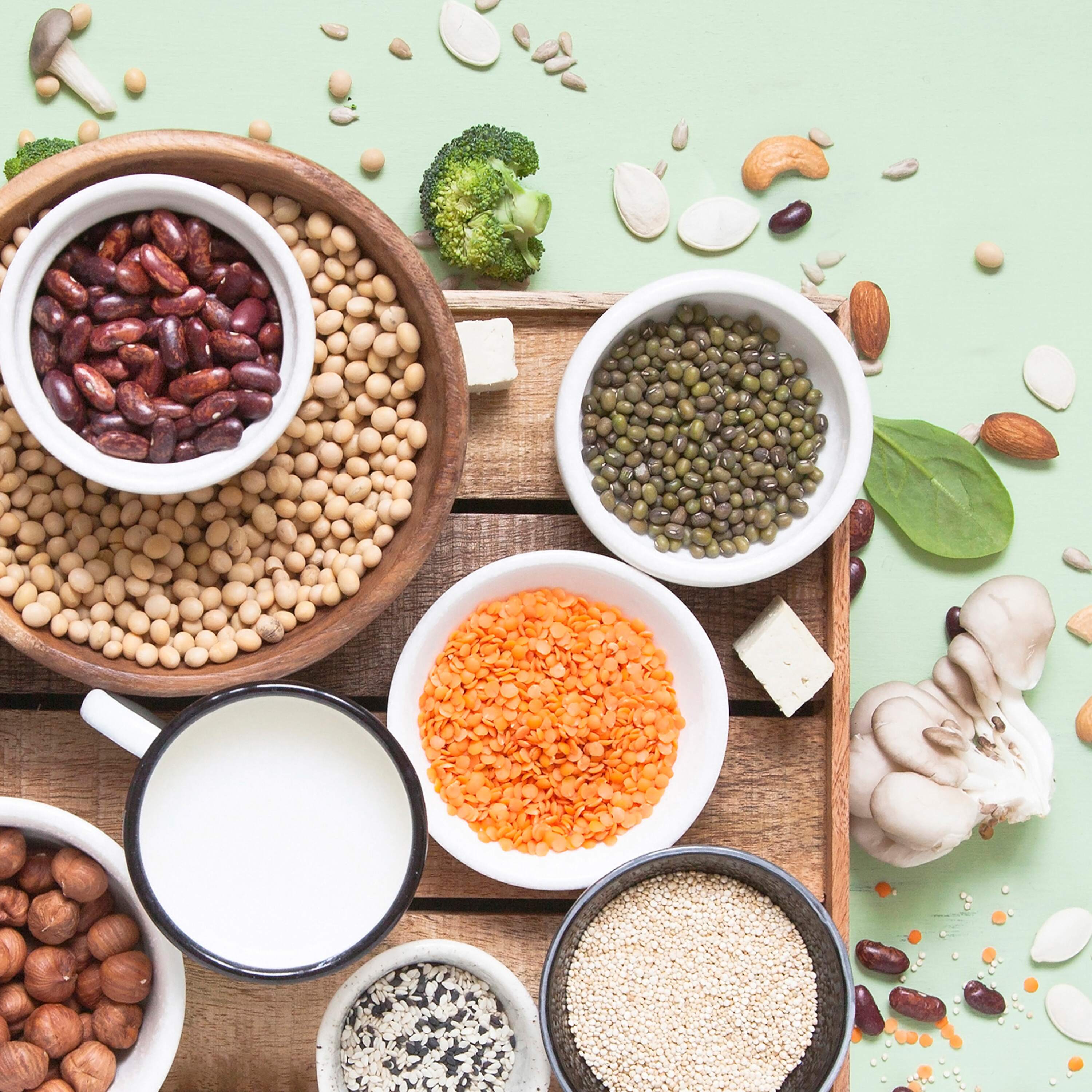
那再来说午餐,你可以选一杯煮熟的小扁豆,这大概含有18克蛋白质。
Now for lunch, think, a cup of cooked lentils, that's about 18 grams.
再加点蔬菜,比如一杯西蓝花大概含有2.5克蛋白质,数值会有小幅浮动。
Add some vegetables, for instance, a cup of broccoli has about 2.5 grams of protein give or take.
这样你就已经吃上了一顿扎实的餐食,摄入的蛋白质可能比你以为的还要多。
Now you've got a solid meal and you've gotten more protein maybe than you realized.
再来一份零食,比如一把杏仁,或者有人会选蔬菜配鹰嘴豆泥,这又能补充大约5克蛋白质。
A snack, a handful of almonds or some say hummus with veggies, that's around five more grams.
那到了晚餐的时候,吃一份包含4盎司鸡胸肉的餐食,鸡胸肉本身大约含有35克蛋白质,把这些全部加起来,你摄入的蛋白质就刚好达标了。
And for dinner, a meal that includes say a four ounce chicken breast, which is about 35 grams of protein, well then you add that all up and you are right in the target range.
如果你不吃肉,晚餐可以把鸡胸肉换成豆腐,每盎司豆腐大约能提供3到4克蛋白质,你也可以选择其他种类的豆子。
Now, if you're not a meat eater, you can swap in tofu at the dinner meal, which is about three to four grams of protein per ounce or other kinds of beans.
好的。
Okay.
也就是说就算不吃动物制品,你也能摄取到足够的蛋白质吗?
So you can get enough protein even if you don't eat animal products?
是的。
Yes.
完全可以。
You can.
这是最常被问到的问题之一,而科学界对这个问题的结论其实非常明确,也足够让人安心。
This is one of the more common questions, and the science is actually pretty clear, pretty reassuring on this.
你完全可以从植物性来源中获取身体所需的全部营养。
You can get everything you need from plant based sources.
下面再次有请雷切尔·帕耶德尼克发言。
Here's Rachel Pajednik again.
文献明确表明,无论是从纯植物性饮食,还是包含肉类或肉类加工制品的饮食中,你都能够摄取到足量的蛋白质以及所有必需氨基酸。
The literature shows unequivocally that you can get enough protein and all of the essential amino acids from a plant based diet as well as a diet that includes meat or meat derived products.
所以你看,有时候人们会把自己的个人偏好或是立场和科学混为一谈,还说什么你必须吃肉才能补足所有的蛋白质。
So, you know, sometimes people conflate their personal preferences or politics with the science and say, oh, you know, you gotta eat meat to get all the protein.
但这根本不是事实。
But that is just simply not true.
那从植物中获取的蛋白质和从肉类中获取的蛋白质是一样的吗?
Is the protein you get from plants the same as the protein you'd get from meat?
首先我先补充一点背景知识,解释一下为什么有些人会担心从植物性来源中无法获取足够的蛋白质。
So just a little bit of context first on why people sometimes worry that they won't get enough protein from plant sources.
人体内用来合成蛋白质的氨基酸共有约20种,其中9种被归类为必需氨基酸。
There are about 20 amino acids that the body uses as building blocks for protein, and nine of them are considered essential.
这其实是指人体自身无法合成这9种氨基酸,所以我们必须通过摄入的饮食来获取它们。
What this actually means is that your body can't manufacture them on its own, so we've got to get these through the food and drinks we consume.
所以像肉类、鸡蛋、奶制品这类动物制品,通常都能提供全部九种必需氨基酸的充足供给量。
So animal products like meat, eggs, dairy, typically supply sufficient amounts of all nine of these amino acids.
而部分植物来源,比如可以用来制作豆腐的大豆,也属于完全蛋白质。
And some plant sources like soybeans, which is used to make tofu, are also considered complete proteins.
不过很多植物性食物中特定氨基酸的占比更低,因此被归为不完全蛋白质。
But many plant foods have lower proportions of specific amino acids, so they are thought to be incomplete proteins.
这就是最核心的关键信息了。
So really this is the key message.
只要你摄入种类丰富的植物性食物来获取所有这些必需氨基酸,帕格尼克斯表示这完全是可以做到的。
If you eat a wide variety of plant foods to get enough of all of these amino acids, Pagenyx says this is possible.
也就是说,多吃蔬菜、水果、全谷物、豆子还有豆类食物。
I mean, think vegetables, fruits, whole grains, beans, legumes.
你可以通过搭配组合这些食物,覆盖所有必需氨基酸的需求。
You can kind of mix and match and cover the full spectrum.
而且,如果你没办法从日常食物中获取全部所需的营养,那当然也可以选择蛋白粉和营养补剂。
And, you know, if you're not getting everything that you need from food, then of course, there's the protein powders and the supplements.
好的。
Okay.
你刚才提到,一个人需要的蛋白质摄入量不仅和体重有关,还受其他因素影响。
So you mentioned that how much protein you need depends on your body weight, but on other factors too.
这些因素都有什么呢?
What are those?
我们先说说活动量吧,这个因素很重要。
Let's talk about activity level because this is important.
我曾和一位名叫斯图尔特·菲利普斯的研究员交流过。
I spoke to a researcher named Stuart Phillips.
他在加拿大的麦克马斯特大学任职。
He's at McMaster University in Canada.
他的研究方向是骨骼肌健康。
He studies skeletal muscle health.
他告诉我,活动量是决定人体所需蛋白质总量的关键因素之一。
And he told me that activity is one of the key drivers of how much protein you need.
你运动的时候,会给身体带来压力。
When you exercise, you're creating stress on the body.
而这种压力实际上会增加你的肌肉所消耗的蛋白质数量。
And then that stress can actually increase the amount of protein your muscles use.
他来了。
Here he is.
当你摄入更多蛋白质,就能吸收更多蛋白质,合成更多新的肌肉蛋白,还能抵消运动带来的压力。
When you eat more protein, can take more up, you make more new muscle proteins, and if you like, compensate for the stress of the exercise.
因此运动和蛋白质之间存在着一种共生关系:运动催生了肌肉修复的需求,而蛋白质则为肌肉重建、维持强健提供了所需的养分。
So there's this very symbiotic relationship between movement and protein, where exercise kind of creates the need for muscle repair and protein provides the fuel to rebuild, to stay strong.
这就是为什么一直以来,许多举重运动员和竞技选手都会被建议,要将蛋白质摄入量维持在推荐范围的较高水平。
This is why many weightlifters and competitive athletes have long been told to eat on the high end of the protein recommendations.
所以这里的核心信息是,如果你定期锻炼,你最好把摄入量控制在接近每公斤体重1.6克这个水平,也就是新指南的上限,而不是下限。
So really the key message here is if you're working out regularly, you may want to be closer to that 1.6 grams per kilogram mark, that high end of the new guidelines, as opposed to the lower end.
广告过后,我们会带来更多Life Kit的精彩内容。
We will have more Life Kit after the break.
好的。
All right.
那年龄因素呢?
What about age?
我们对蛋白质的需求量会随着年龄增长发生变化吗?
Does the amount of protein we need change based on how old we are?
实际上,人体对蛋白质的需求量会随着年龄增长而增加,因为身体处理蛋白质的效率会有所下降。
So protein needs actually increase with age because the body becomes kind of less efficient at processing protein.
因此,把蛋白质摄入量提升到推荐区间的上限是很有好处的。
And so bumping up intake to that higher end of the recommended range can be beneficial.
而且你知道吗,很多人完全没料到这些和年龄相关的变化会找上门来,等他们察觉到问题的时候,身体机能可能已经有所下滑了。
And you know, these age related changes, a lot of people just don't see them coming, and by the time they notice, they may have already lost a little ground.
接下来再次有请斯图尔特·菲利普斯为我们讲解。
Here's Stuart Phillips again.
人们一般会在三四十岁左右开始流失肌肉量,这个过程你可能直到五六十岁才会察觉,然后突然发现自己连这也做不了、那也做不好了。
People begin to lose muscle mass somewhere in their 30s and 40s, and you don't notice it until maybe your fifties or your sixties and all of a sudden you can't do one thing or another.
所以呢,就比如你坐飞机的时候要提行李箱,把它举到头顶行李架上会很费劲;又或者你从车里搬 groceries 上楼,也觉得比以前吃力,得多跑两趟才能搬完。
So, you know, maybe you go to lift your suitcase when you're on the airplane and it's hard to get it into the overhead bin, or you're carrying your groceries from the car and it's more challenging, you have to take two trips.
这些都是生活里的小麻烦,但它们也在发出信号:你的肌肉量已经在不知不觉中开始流失了,身体可能是在提醒你该留意这件事了。
So these are inconveniences, but they are also signals that your muscle mass has begun quietly declining and maybe your body is telling you it's time to pay attention.
菲利普斯提到,应对这个问题的方法首先从身体活动做起。
So Phillips says the remedy to this starts with physical movement.
如果你坚持锻炼,尤其是举重或者抗阻训练,就能减缓肌肉流失的速度。
If you exercise, particularly weight lifting or resistance exercise, that's going to slow muscle loss down.
如果再搭配更多的蛋白质摄入,效果会还会更好。
And that then in combination with more protein would be even more effective.
在梳理我们的蛋白质需求时,还有什么其他需要考虑的因素吗?
Anything else we need to think about as we're figuring out our protein needs?
我觉得确实还有一点要注意。
You know, I think there is something else.
那就是女性群体。
Women.
我的意思是,女性的蛋白质摄入量往往低于男性,而且至少在过去,女性进行力量训练的频率也往往更低。
I mean, women tend to eat less protein compared to men and also tend to do less strength training, at least historically.
作为一名X世代的女性,我也是很晚才了解到力量训练的重要性,长期以来很多女性都更重视有氧训练,而非力量训练。
I know as a Gen X woman, I was late to the strength training memo and many women have long prioritized cardio over strength training.
所以这里传递的核心信息其实非常简单。
So the key message here is really simple.
这不是说要走极端,或者每周花五天时间练大重量举重。
It isn't about being extreme or lifting heavy weights five days a week.
我的意思是,哪怕只是增加一些抗阻训练,比如自重训练、轻量哑铃、弹力带,每周两到三次,每次半小时左右,再配合将蛋白质摄入量提升到推荐范围的较高水平,就能帮助你维持肌肉质量,保持力量。
I mean, even just adding some resistance training, things like body weight exercises, you know, light weights, resistance bands, two to three times a week for say a half an hour, combined with bumping up your protein toward that higher end of the recommended range, can help you maintain muscle mass, like help you stay strong.
这有助于延长健康寿命。
And this can lead to a longer, healthier life.
艾莉森·奥布里,非常感谢你今天来到这里。
Allison Aubrey, thank you so much for being here.
不客气。
You're welcome.
这是一个科学建议其实非常明确的话题,只要拨开所有干扰信息就能看清。
This is one of those topics where the science is actually pretty actionable once you cut through all the noise.
好的。
Alright.
该做个总结了。
Time for a recap.
联邦膳食指南建议,成年人每天每公斤体重应摄入1.2至1.6克蛋白质。
Federal dietary guidelines recommend that adults get between one point two and one point six grams of protein per kilogram of body weight every day.
因为我们大多数美国人都做不到这一点
Since most of us in The US don't
我们平时不怎么用公斤来计算,所以最简单的办法大概就是用在线计算器把你的体重换算成磅,再用这个数值算出你需要摄入多少蛋白质。
think in kilograms, probably the easiest thing to do is use an online calculator to convert your weight into pounds and then use that number to calculate your protein needs.
比如你的体重是150磅。
Say you weigh a hundred and fifty pounds.
那大约就相当于68公斤。
That's about sixty eight kilograms.
所以你每天大概需要摄入82到109克蛋白质。
So you'd wanna eat between about eighty two and one hundred and nine grams of protein a day.
如果你运动量很大,尤其是在进行力量训练,那你就要把摄入目标定在这个推荐范围的上限。
If you're working out a lot, especially strength training, you'll wanna aim for the top of that range.
另外要记住,我们在三四十岁的时候就会开始流失肌肉量了。
And remember that we start to lose muscle mass in our thirties and forties.
所以如果你正处在这个年龄段,或是年纪更大,一定要把力量训练和蛋白质摄入放在优先位置。
So if you're in that range or older, make strength training and eating protein a priority.
哦,还有最后一点要快速补充一下。
Oh, one more quick point.
这些建议是针对普通大众制定的。
These recommendations are intended for the general public.
但如果你本身有健康问题,一定要先咨询你的医生。
But if you have a health condition, you wanna talk to your doctor.
比如,慢性肾病患者可能就会被要求控制蛋白质的摄入量。
For instance, people with chronic kidney disease might be advised to eat less protein.
本期《生活工具箱》节目由克莱尔·玛丽·施奈德制作。
This episode of Life Kit was produced by Claire Marie Schneider.
本节目数字编辑是马利卡·格雷贝,视觉编辑是CJ·拉库隆。
Our digital editor is Malika Grebe, and our visuals editor is CJ Rakulon.
梅根·凯恩是我们的高级主编,贝丝·多诺万是执行制片人。
Megan Kane is our senior supervising editor, and Beth Donovan is our executive producer.
我们的制作团队成员还包括安迪·泰格尔、玛格丽特·索里诺、西尔维·道格拉斯和米卡·埃里森。
Our production team also includes Andy Tegel, Margaret Sorino, Sylvie Douglas, and Mika Ellison.
工程支持由斯泰西·阿博特提供。
Engineering support comes from Stacy Abbott.
事实核查由安德烈亚·洛佩兹·克鲁萨多负责。
Fact checking by Andrea Lopez Cruzado.
我是玛丽埃尔·塞加拉。
I'm Marielle Segarra.
感谢收听。
Thanks for listening.
关于 Bayt 播客
Bayt 提供中文+原文双语音频和字幕,帮助你打破语言障碍,轻松听懂全球优质播客。