本集简介
双语字幕
仅展示文本字幕,不包含中文音频;想边听边看,请使用 Bayt 播客 App。
我们有数十年的研究表明,有效的识字教学需要系统性地明确教授解码和单词识别,同时有意识地发展语言、词汇、句法和背景知识。没有任何可信的阅读模型认为其中某一项单独就足够。
We've got decades of studies that show that effective literacy instruction involves systematic explicit instruction in decoding word recognition, coupled with intentional develop of language, vocabulary, syntax, background knowledge, there's no credible model of reading where one alone is sufficient.
我认为,要超越这种两极分化,我们需要采用一种包含解码、语言和知识的教学方法,并且必须为我们的多语言学习者提供有意识的支架,使他们能够接触到符合年级水平的阅读材料。
We move past the polarization, I think, by embracing an approach that includes decoding plus language plus knowledge, and it's gotta be delivered for our multilingual learners with intentional scaffolds that make grade level reading accessible for all.
这种教学方法并不是意识形态驱动的。
That kind of an approach isn't ideological.
它只是对孩子们真正有效的方法。
It's just what works for kids.
欢迎来到《跨语言识字》。
Welcome to Literacy Across Languages.
我是玛丽,一名教育工作者、教学指导员,也是多语言学习者的坚定倡导者。
I'm Mary, an educator, instructional coach, and committed advocate for multilingual learners.
我是凯瑟琳,一名多语言识字专家,也是早期阅读材料的作者,致力于将阅读与语言发展紧密结合。
And I'm Katherine, a multilingual literacy specialist and author of early reader materials passionate about developing reading and language together.
自从我们2014年作为教师初次相遇以来,我们的多语言学生就向我们证明了识字与语言本应相辅相成。
Since we first met as teachers back in 2014, our multilingual students have shown us that literacy and language belong together.
这种理解以及我们坚信识字是每个孩子的权利,自此一直塑造着我们的工作。
That understanding and our belief that literacy is every child's right has shaped our work ever since.
通过这个播客,我们将探讨阅读科学与语言习得科学如何结合,帮助每位学生成为自信、有能力的读者。
With this podcast, we'll explore how the science of reading and the science of language acquisition come together to help every student become a confident, capable reader.
我们与专家和教育工作者对话,深入研究研究成果,并分享您可立即使用的实用建议。
We speak with experts and educators to dig into the research and share practical ideas you can use right away.
通过共同努力,我们可以让每位语言学习者都拥有识字能力。
Together, we can make literacy for every language learner a reality.
大家好,教育工作者们。
Hi, educators.
我是玛丽。
It's Mary.
凯瑟琳和我非常高兴欢迎你们来到《跨语言识字》。
Katherine and I are excited to welcome you to Literacy Across Languages.
今天的节目标志着播客的正式启动,我们非常感激有你们加入我们的这段旅程。
Today's episode launches the podcast, and we couldn't be more grateful to have you here joining us on this journey.
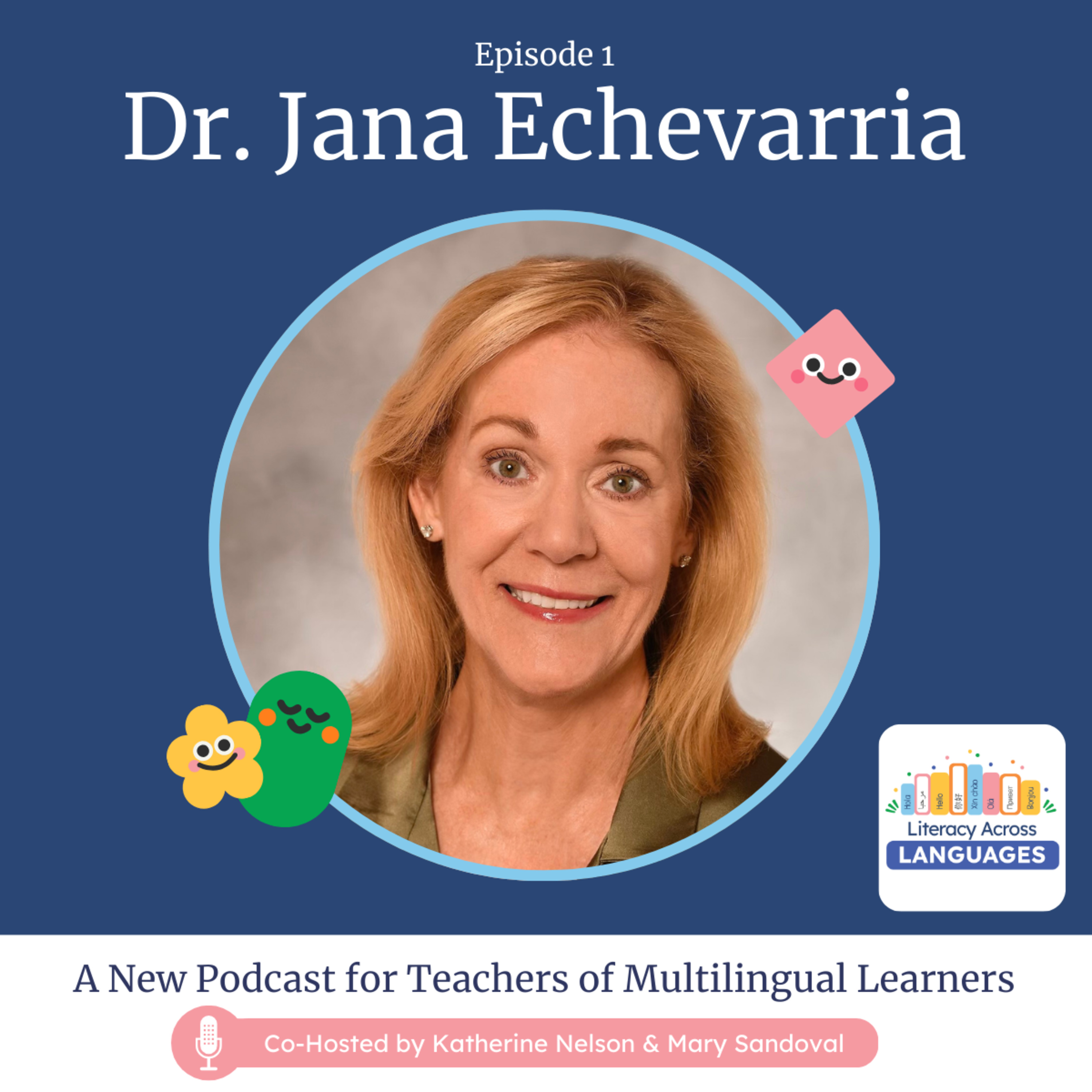
本期节目邀请的是贾娜·埃切瓦里亚博士。
Today's episode features Doctor.
贾娜·埃切瓦里亚是一位长期致力于双语教育领域的倡导者、研究者和先驱。
Jana Echevarrhea, a longtime advocate, researcher, and pioneer in the field of multilingual education.
贾娜·埃切瓦里亚博士是加州州立大学长滩分校的荣誉教授,曾被选为杰出教授。
Jana Echevarrhea, PhD, is Professor Emerita at California State University, Long Beach, where she was selected as outstanding professor.
在获得加州大学洛杉矶分校的博士学位之前,她曾教授特殊教育、英语作为第二语言以及双语课程。
Prior to receiving her PhD from UCLA, she taught in special education, ESL, and bilingual programs.
作为SIOP教学模式的创建者,她的研究和出版物聚焦于对双语学习者(包括有学习障碍的学生)的有效教学方法。
A creator of the SIOP model, her research and publications focus on effective instruction for multilingual learners, including those with learning disabilities.
她曾在美国及全球各地分享她的研究成果,包括牛津大学、威特斯大学、哈佛大学、斯坦福大学、巴塞罗那大学和东南欧大学,她还曾作为富布赖特专家在该校工作。
She has presented her research across The US and internationally, including Oxford University, Witts University, Harvard University, Stanford University, University of Barcelona, and Southeast Europe University where she was a Fulbright specialist.
贾娜·埃切瓦里亚博士。
Doctor.
贾娜·埃切瓦里亚于2016年入选加州阅读名人堂,并曾担任美国司法部民权司关于英语学习者的专家。
Echevarrhea was inducted into the California Reading Hall of Fame in 2016 and has served as an expert on English learners for the US Department of Justice Civil Rights Division.
她同时也是麦格劳希尔出版的全新趣味阅读项目Emerge的作者之一,该项目充分体现了阅读科学的理念。
She is also an author on an exciting new reading program, Emerge, published by McGraw Hill that reflects the science of reading.
在本期节目中,
In this episode, Doctor.
埃切瓦里亚博士深入剖析了英语学习者的语言能力与读写能力发展之间的关键联系。
Echevarrhea breaks down the essential connection between language and literacy development for English learners.
她明确指出,行之有效的教学必须同时兼顾基于符号解码和基于语义理解的两类技能。
She clarifies how effective instruction must bridge both code based and meaning based skills.
博士
Doctor.
埃切瓦里亚还探讨了该领域常见的认知误区,呼吁我们重新审视自身的教学实践,号召教育工作者有意识地将语言与读写能力教学融合起来,造福每一位语言学习者。
Echevarrhea also addresses common misconceptions in the field and encourages us to rethink our practice, inviting educators to intentionally integrate language and literacy instruction for the benefit of every language learner.
接下来就让我们开始与博士的对话。
Let's jump into our conversation with Doctor.
埃切瓦里亚。
Echevarrhea.
博士。
Doctor.
埃切瓦里亚,欢迎来到《跨语言识字》。
Echevarrhea, welcome to Literacy Across Languages.
我们非常兴奋和荣幸,您今天抽出时间与我们分享您的专业知识。
We are so excited and honored that you've offered some time to share your expertise with us today.
我的荣幸。
My pleasure.
谢谢您的邀请。
Thank you for inviting me.
我们喜欢在每一集中聆听嘉宾的故事,了解他们是如何投身多语言教育工作的。
We love to start each episode hearing the stories of our guests and what brought them to the work of multilingual education.
您能和我们分享一下您的故事吗?
Would you share your story with us?
天哪。
Gosh.
是的
Yeah.
我很乐意。
I'd be happy to.
这是一段有点漫长的旅程。
It's a little bit of a journey.
我很久以前就开始了。
I started a long time ago.
首先,让我说明一下,我的祖父母从西班牙移民过来,但不幸的是,我们这一代在这里就失去了这门语言。
First, let me just say my grandparents immigrated from Spain, but unfortunately we lost the language with the very first generation here.
所以,我一直对西班牙感兴趣,因为我的姓氏。
So I was always interested in Spain with my last name.
一辈子以来,人们总是问我姓氏的来源,因此我始终保持着对西班牙的自豪感。
Entire life people have always asked me what's the origin of my last name, so I had that Spanish pride.
我从学生时代起就一直学习西班牙语,曾去墨西哥与家庭同住,并在那里度过了几个暑假上学。后来,从中学开始我就下定决心要成为一名特殊教育老师,一直非常专注这个目标,于是我获得了特殊教育学位。但由于我懂西班牙语,而且我知道将来肯定会有西班牙语使用者——尽管那时还是70年代末——我预见到会有很多西班牙语使用者,同时当时越南移民也大量涌入,因此我同时获得了双语教学认证和教师资格证,之后又取得了TESOL认证。于是我去教授特殊教育,但你知道发生了什么吗?当时学校非常需要双语教师。
Studied Spanish a couple of all through school, went to Mexico and lived with families and went to school there a couple of summers, and then as I was going along, I knew from middle school on I wanted to be a special ed teacher, and I just was always sort of single-minded about that, so I got my degree in special ed, but because I had the Spanish, and I knew obviously that there were going to be Spanish speakers, this was still like in the late 70s, but I could see that obviously there were going to be Spanish speakers, and at that time we had a big influx of Vietnamese as well, so I got my bilingual certification along with my teaching credential, and then I ended up getting my TESOL certification, so I went off to teach in special ed, but you know what happened was at that time schools really needed bilingual teachers.
当时双语教师很少。
There were not many bilingual teachers.
当我开始在一所学校任职时,校长会在一两个学期后来找我,问我:‘你能不能接手双语教学?’
When I started at a position at a school, then the principal would come to me after a semester or two and say, Will you take over the teaching bilingual?
所以我做了几年,之后获得了双语特殊教育的硕士学位,随后有机会在洛约拉玛丽蒙特大学从事双语特殊教育教师培训工作。你可以想象,在80年代初,具备这种资质的人非常少。
So I did that for a few years, and I got my master's in bilingual special ed, and then there was an opportunity to work at Loyola Marymount University in training teachers in bilingual special ed, and so you can imagine in the early '80s there weren't many people that had that kind of qualifications.
我开始在那里工作,当我在进行教师培训时,许多学区都在为如何让移民学生理解教学内容而挣扎,他们想知道:我们该如何在学科教学时间内教授这些学生?
I started working there, and when I was doing teacher preparation, a lot of districts were really struggling with immigrant students, how to make content accessible for them, how do we teach these students during the content time, right?
当时虽然有ESL或ELD课程,但我开始在学区开展教师专业发展培训,逐步开发出我们现在所称的“庇护式教学”方法,并探索更多让教学内容对这些学生更易理解的方式。最终,通过一个国家级研究中心,我和同事与一线教师合作,开发出了SIOP模型,即“庇护式教学观察协议”模型。在此之前,还没有任何被广泛认可的模型来定义什么是有效的庇护式或学科教学。我们对这一模型进行了测试,发现它能有效帮助多语言学习者掌握年级水平的内容,同时提升他们的英语能力。这就是我如何逐渐深入双语和ESL领域,并以SIOP专家身份为人所知的原因——尽管我最初接受的是特殊教育训练,但这两者最终完美地结合在了一起。
There was always ESL or ELD, but anyway, I started doing professional development in school districts and sort of developing what we now call sheltered instruction techniques, and just began delving into more ways to make content comprehensible for these students, so eventually through a national research center, my colleagues and I, in collaboration with practicing teachers, developed the SIOP model, which is the Sheltered Instruction Observation Protocol model, so up until that point there really wasn't any kind of agreed upon model that what constitutes an effective sheltered or what effective content lesson, so we tested the model and found it to be effective for helping multilingual learners access grade level content as well as improve their English proficiency, so that's sort of how I got to be more in the bilingual ESL field, and known more as an expert with SIOP and helping English learners, when really my initial preparation was special ed, but it's all come together to work really well together.
我认为很难高估SIOP对英语学习者(ENL)群体所产生的影响。
I think it's hard to overstate how influential SIOP has been within the ENL community.
我记得在研究生院时,我们所有的课程都聚焦于在课堂中实施SIOP。
I remember when I was in grad school, really all of our coursework focused on implementing SIOP in the classroom.
我认为这是一种非常易懂、直观且易于掌握的框架。事实上,即使我第一次走进教室时完全没有教学经验,我也感到自己准备充分。而当我与其他没有英语学习者教学经验的老师交谈时,我发现他们常常对如何与不懂自己语言的学生互动感到不知所措。
And I think it's just such an approachable framework and intuitive and easy to understand that I think in a lot of ways, even though I had never taught before when I stepped into the classroom for the first time, I felt equipped in a way that I sometimes in talking with teachers who don't have experience working with English learners, there's a level of intimidation around how am I going to interact with a student who doesn't share the language that I speak.
SIOP框架让观察你如何为这些学生提供支持、如何从内容和语言两个角度使信息变得可理解变得非常容易。
And the SIOP framework really just makes it so easy to go through and see how you're scaffolding for those students and how you're making that information comprehensible from both a content aspect and from a language perspective.
因此,我衷心感谢您和您的同事们开发这一框架,因为我认为它真正塑造了这个领域。
So I just thank you so much for your work and your colleagues' work in developing that because I think it's really shaped the field.
非常感谢您。
Thank you so much.
听到这些反馈我感到非常欣慰,因为正如我所说,以前并没有一个明确的模型。
It has been very gratifying to hear, because as I said, there wasn't really a model.
老师们各有自己偏爱的教学方法,或者参加一些关于支架式教学的培训,但这些都只是零散的片段。
Teachers would have their favorite techniques, or they would go to a professional development session on scaffolding or something, but there were just all these different pieces.
他们并不清楚如何将这些方法整合起来,而通过我们的研究,我们发现,那些全面、高质量实施SIOP模型的老师,其学生的成绩要优于那些只选择性使用部分策略、缺乏系统性教学方法的老师。
They weren't really sure how to pull it together, and then through our research, we found that teachers who implement the full model to a high degree, their students outperform teachers who do kind of pick and choose and don't have a more comprehensive approach to teaching English learners.
是的。
Yeah.
谢谢您的评论。
So thank you for your comments.
是的。
Yeah.
这引出了我们现在所处的时刻,即教师们正在努力思考如何将阅读科学、阅读研究与我们关于教授多语言学习者英语的知识结合起来。
Well, it leads into, I think, the moment where we are now where teachers are trying to figure out how do we integrate the science of reading, the reading research with what we know about teaching multilingual learners English as well.
我想知道,您能否谈谈,对于多语言学习者来说,阅读教学有何不同?在试图将这两类研究融合时,我们应该注意哪些方面?
I'm wondering if you can talk a little bit about what makes reading instruction look different for multilingual learners and what sorts of things we should have in mind as we're trying to pull these two fields of research together.
是的,这非常好。
Yeah, that's great.
这正是我的专业领域和热情所在,因为阅读科学的核心对多语言学习者来说并没有改变,改变的是我们如何教授它。
This is really right in my wheelhouse and my passion, because the core of the science of the reading doesn't change for multilingual learners, but what does change is how we teach it.
我的意思是,我们必须认识到,这些学生入学时带着正在发展的英语能力,他们拥有跨语言资源,并且有着独特教学需求——我说的‘独特教学需求’,并不是因为这些学习者与英语母语学生截然不同,而是因为他们正在学习所有其他学生都需掌握的识字技能,同时还要学习教学语言——英语。
I mean, we have to recognize that these students are coming to school bringing in their developing English proficiency, they've got cross linguistic resources, and they have some unique instructional needs, and I say unique instructional needs, not because these learners are so very different than English speaking students, but simply because they're learning all the same literacy skills as everybody else, while at the same time they're learning the language of instruction, English.
因此,在教授基础技能时,教学必须具有语言学依据。
So in teaching foundational skills, instruction has to be linguistically informed.
您想听听我所说的这方面的具体例子吗?
Would you like me to give you some examples of what I mean by that?
好的,请讲。
Yes, please.
好的,比如在讲基础技能、拼读和音素意识时,教师应意识到并明确教授对比音系学。
Okay, so well, just for example, when we talk about the foundational skills, phonics, phonemic awareness, all that, one thing is, you know, teachers should be aware of and explicitly teach contrastive phonology.
例如,西班牙语中的/b/音和英语中的/v/音是同一个音。
So for example, the b or the b sound in Spanish is the same sound as the v or the v in English.
比如,一个二年级学生可能能拼出单词"very",但可能会读成"berry"。
So for example, a second grade student might be able to decode the word very, but may pronounce it berry.
这并不是拼读能力的缺陷,对吧?
And this isn't a phonics deficit, right?
这是从母语中可预测的迁移,因此教学应明确应对这一点,而不是将其视为某种错误。
This is a predictable transfer from their home language, so instructions should address it explicitly and not treat it as it's some kind of an error.
这仅仅是关于拼读方面,但当我们谈到词汇时,教学必须更加扎实和丰富。
So that's just around phonics, but when we get to vocabulary, it's really got to be much more substantially robust.
学生需要通过多种方式、视觉辅助、手势和例子来反复接触词汇,以理解其含义。
Students need to have multiple exposures with visuals, gestures, examples to make the vocabulary understandable.
我特别喜欢显性词素教学的高性价比,比如教授词根、前缀和后缀,这将极大地提升学生对语言和词汇的理解,当学生能够真正识别这些词素并加以运用时,效果更是成倍增长。
I really like the bang for the buck you get with explicit morphology instruction, you know, teaching roots, prefixes, suffixes, that is just gonna exponentially improve their understanding of language and their vocabulary when students really can start seeing those word parts and playing around with those.
当然,还有同源词教学,比如'important'和'importante',拉丁语系语言和英语之间有很多同源词;同时,通过互动来拓展词汇的广度和深度也很重要,SIOP框架中的一个关键组成部分就是互动,我们需要有结构的学术对话,让学生不仅有机会积累词汇,而且与之紧密相关的是口语能力,因此我们强调,口语练习不是可有可无的活动,而应成为识字教学的核心。
And of course there's cognate instruction like important, importante, there's a lot of cognates that are shared between the Latin languages and English, and also building breadth and depth of vocabulary through interaction, you know, one of the components of SIOP is the interaction, and we want structured academic talk so that students have an opportunity, not only to build vocabulary, but very closely related is oral language proficiency, so we say that oral language practice isn't an optional activity, it really needs to be central to literacy instruction.
这让我想到了我们接下来要问你的问题。
That makes me think of our next question that we have for you.
你描述了语言与识字之间如此紧密的关系。
You're describing so much of the relationship between language and literacy.
你能再为我们详细解释一下吗?语言和识字是如何相互影响的?
Would you unpack that a little bit more for us and how language and literacy influence each other?
尤其是从以语言发展为重心的ENL、ESL或ELD教师,与以识字教学为优先的普通课堂教师或阅读专家的不同视角来看。
And perhaps thinking about the ENL or ESL or ELD teacher who's carrying the lens of language development as their focus versus a classroom teacher or reading specialist who perhaps is leading with a literacy focus.
凯瑟琳和我都认为,教师不仅是语言教师,也是识字教师,那么我们该如何让协同工作的教师们清晰地理解这一联系呢?
Katherine and I believe that teachers are not only language teachers but literacy teachers and so how can we make that connection for teachers working together really clear?
语言和识字是如何相互影响的?
How do language and literacy influence each other?
很好的问题。
Great question.
它们实际上是相互依存的。
Well, they're really interdependent.
我喜欢说,语言是识字能力的引擎,因为没有这个引擎的驱动,就不可能有识字能力;而识字能力是语言的加速器,我们正是通过阅读和写作来拓展语言的。
I like to say that language is the engine of literacy because you can't have literacy without that engine driving it, and literacy is the accelerator of language, and that's how we expand our language, is through reading and writing.
词汇、句法、语篇,所有这些都影响着学生掌握解码、理解、写作等技能的难易程度。
Vocabulary, syntax, discourse, all of that shape how easily students learn how to decode, how to comprehend, how to write, and so forth.
我们知道,无论英语还是其他语言,拥有强大口语能力的孩子往往在阅读理解方面进步更快。
We know that children with strong oral language, whether English or any other language, they're the ones who tend to progress more quickly in reading comprehension.
因此,当学生阅读时,他们会接触到日常对话中很少见的更多词汇、语法结构和文本模式。
So as students read, they are encountering more words, grammatical structures, text patterns, things that they don't see in everyday conversation.
当我们特别讨论多语言学习者时,用英语阅读会让他们接触到那些在课堂之外几乎听不到的语言形式,而写作则为他们提供了练习和内化新结构的机会。
And when you're talking specifically about multilingual learners, reading in English is going to expose these students to forms of language that they likely aren't really going to hear outside of the classroom setting, and then writing of course gives them that opportunity to rehearse and to internalize new structures.
这正是我在与教师合作时经常强调互动性的重要性,因为互动式教学能同时加速语言和识字能力的发展,比如讨论环节、同伴对话、结构化互动等,都能帮助学生提升理解力、更熟悉词汇,并改善写作能力。
This is where I really talk a lot about when I'm working with teachers about having the interactive aspect, because interactive instruction accelerates both language and literacy, so discussion routines, partner talk, structured interactions, all that sort of thing are going to help students to improve their comprehension, be more familiar with the words, and improve their writing.
讨论文本有助于提高理解力。
Talking about texts, that increases comprehension.
它能澄清词汇,我们的研究发现,对于多语言学习者而言,结构化的教学和互动能减轻学生的认知负担,并支持他们在学术英语中更大胆地尝试,而这正是我们所期望的。
It clarifies vocabulary, and we've found in our research with multilingual learners that structured instruction, structured interaction reduces the cognitive load for students, and it supports more risk taking in academic English, which is of course what we want.
学生更有可能在小组活动中与同伴尝试使用新词汇和句型,这对读写能力和语言发展非常有益,但我们不能忽视家庭母语的口语能力对英语读写能力的贡献,因为学生正在发展共同的概念、同源词和可迁移的形态结构等。
Students are going to be more likely to use an experiment with new words and sentence structure with their peers in a small group, so it's very beneficial for literacy and language, but we can't forget that oral language in the home language also contributes to literacy in English because students are developing shared concepts, cognates, transferable morphology, and so forth.
因此,对于多语言学习者来说,语言和读写能力是在多种语言中共同发展的,将口语、阅读和写作相结合的教学能带来最显著的进步。
So for multilingual learners, both language and literacy develop across languages, and instruction that integrates oral language plus reading plus writing results in the strongest growth.
正如你提到的,英语作为第二语言教师和学科教师都应关注口语表达,然后围绕我们讨论过、阅读过的内容进行写作,英语作为第二语言教师也是如此。
So as you mentioned, the ENL teacher and the content teacher both should be focusing on oral language, then reading, writing about what we've talked about, what we've read about, and then same with the ENL teacher.
在英语作为第二语言课程中,内容并不仅限于语言本身。
It's not strictly language during ENL.
当然,口语表达应成为英语作为第二语言教学的重要组成部分,因为口语与阅读密切相关,但正如你所说,两者都是读写与语言的教师。
Of course, oral language should be a huge part of ENL instruction because of the relationship between oral language and reading, but as you said, both are literacy and language teachers.
我非常感谢你指出这一点并坚持这一立场,因为在实际操作中,有时会出现高度割裂的情况——英语语言发展教师认为自己的职责仅仅是提升口语、倾听和词汇能力。
I'm so grateful that you're pointing that out and taking that stance on it because I think sometimes in practice, it gets very siloed where the ELD teacher believes that their job really is to build up the oral language component and the speaking and listening and the vocabulary.
而课堂教师、阅读专家则负责以文本为基础的语言教学。
And then the classroom teacher, the reading specialist is in charge of the more text based language.
我完全同意你的观点,它们确实是相互关联的。
And I just couldn't agree with you more that they really are interrelated.
如果我们考虑语言习得这一部分,没有什么比成为一位热情的读者更能加速语言发展了,持续的输入会不断推动你的语言进步。
And if we're thinking about that language acquisition piece, there is no greater accelerant to developing your language than to be an avid reader and to just have that constant source of input pushing your language development forward.
我很欣赏你将这一点与通过语言进行社交互动联系起来的做法。
And I love that you're also tying that all together with the interaction using language for a social purpose.
对于那些试图在单一课程中整合语言、识字和内容教学的教师,你建议他们如何规划呢?
How can teachers who are trying to integrate language and literacy and content as well into a single lesson, how would you recommend they go about planning for that?
是使用你的SIOP框架吗?
Is it using your SIOP framework?
你还有其他建议吗,可以帮助确保覆盖所有这些方面?
Do you have another suggestion that you could offer in terms of how to make sure you're hitting all of those pieces?
你对此有什么建议?
What's your advice there?
当然,SIOP模式的工作已经持续了二十五年,我们于2000年首次出版SIOP模型时,它是同类中第一本为教师提供支持的资源,至今仍被广泛使用,主要原因是我们花了四年时间与一线教师共同开发了它。
Well, of course, you know, work with the SIOP model has spanned over twenty five years when we first published the SIOP model in the year 2000, and it was really the first book of its kind that was a resource for teachers, and it still is used very, very widely today because mainly, I think because we developed it over four years with classroom teachers.
我们每月与教师们会面,对模型进行了多次迭代,它的设计旨在将内容、识字和语言整合为一体,使所有部分都作为一个整体来考虑,因此语言发展是有目的、明确且融入日常教学中的,而不是附加的。
We met with them monthly, we would have many iterations of the model, but it's designed to integrate content, literacy, and language so that all the pieces are considered a whole, so language development is purposeful and explicit and embedded in daily instructions, not an add on.
有时我在英语语言艺术教学中发现,人们觉得‘我们教语言,这本来就是英语语言艺术名称的一部分’,但其实这些孩子更需要明确且有目的性的语言发展。
I find it interesting sometimes in English language arts, it's like, well, we teach language, it's part of the name of our English language arts, but we need more explicit and purposeful language development for these kids.
所以,我想说的是,SIOP的作者们因推广内容目标和语言目标而受到赞誉,有时也被指责。
So one thing is I would say, well, the authors of SIOP are credited with, or sometimes I say scorned for popularizing content and language objectives.
被指责是因为语言目标对教师来说可能有点棘手,事实上,大约一年前,我看到网上一段推特讨论,有人抱怨:‘我的校长强迫我制定语言目标,我们为什么非得做这个?’
Scorned because language objectives can be sort of tricky for teachers, and in fact about a year ago, I was reading a little Twitter discussion online, and they were talking about, you know, my principal makes me do these language objectives, why do we have to do them?
我正准备插话,结果有人问:‘到底是谁想出语言目标这个主意的?’
I was just about to chime in, and then somebody said, Who came up with that idea for language objectives anyways?
我不得不承认,我当时没有勇气站出来承认自己是这个主意的提出者,以免面对聊天中汹涌的批评。
And I have to say, I was not brave enough to chime in and take responsibility for the vitriol that was going on in the chat.
但语言目标的好处在于,它让语言对教师和学生来说都变得清晰可见。
But the good thing about language objectives, it makes languages visible for teachers and for students.
因此,当教师思考本节课所需的语言时,他们当然会关注教学内容,但教学目标会明确地将课程与读、写、说、听等读写任务联系起来。
So as teachers are thinking through what language is needed for this lesson, of course they've got their content, but the objectives really explicitly connect the lesson to literacy tasks, whether it's reading, writing, speaking, listening.
因此,教师和学生都能清楚地知道参与学习所需的精确语言工具,无论是句型框架、词汇目标,还是其他方面。这就是语言目标的一个作用;而SIOP模型中另一个非常重要的部分是构建背景知识,我们希望连接学生已有的知识并在此基础上拓展,同时激活这些已有知识,填补他们的知识空白。我们会通过使用视觉辅助工具来实现这一点——天哪,我们现在有这么多短视频片段和演示资源可用。就连我和我的孙子孙女聊天时,他们也会问:‘这是什么?那是什么?’
So the teachers and the students are going to know the precise linguistic tools that they need to engage, whether it's a sentence frame, whether they're targeting vocabulary, or so forth, so I mean that's one thing with the language objectives, and then another part of SIOP that's very important is the building background, and we want to connect with what students already know and build on that, and then we also want to activate that, and we want to build new background for them, fill in those gaps, so we do that by using visuals, gosh, we have so much access to short video clips, demonstrations, even with my grandkids, we're talking about something, and they may ask, What's this or that?
我就会说:‘我们赶紧搜一下吧!’然后放一段YouTube短视频,让他们理解我们正在讨论的概念。如今教师们都能轻松获得这些资源,这真是太棒了。
And I'll just say, Well, let's look that up real quick, and I just show a quick YouTube video so that they understand the concept of what we're talking about, and teachers have that kind of access now, which is really terrific.
在构建背景时,你可能想在阅读关于光合作用的内容之前,先教授相关词汇。比如,提前解释‘photo’意思是‘光’,‘synthesis’意思是‘结合’,然后指出西班牙语中的同源词‘photosynthesis’,这个词在英语和西班牙语中发音非常相似,这样学生就能对课程内容有一个初步的起点。另外,我还想提一下其他几点:当然,可理解的输入非常重要,比如使用手势、示范、图表。我喜欢说,展示一份已完成的作业范例——如果学生要完成一个维恩图,对多语言学习者,甚至对所有学生来说,看到最终成品的样子都非常有帮助,这样他们就能明确目标是什么。
So in building background, you might want to pre teach the vocabulary words, for example, before reading about photosynthesis, maybe preview photo, that means light, and then synthesis to put together, and then highlight the Spanish cognate, photosynthesis, it sounds very similar in English and Spanish, so students kind of have this jump start to the lesson, and then I was just going to mention a couple other things, of course comprehensible input is really important, using gestures, using models, diagrams, I like to say, a finished product of an assignment, again, if they're supposed to complete a Venn diagram, it's really useful for multilingual learners, and for actually all learners to see what would the finished product look like, so I know what the goal is.
当文本变得可理解时,读写能力就变成了一次语言丰富的学习机会,对吗?
So when a text becomes comprehensible, then literacy becomes a language rich opportunity, right?
它不再是障碍,因此,实施这些策略让课程对这些学生更易理解,就显得尤为重要。同时,还要将写作与口语表达结合起来。
It's not a barrier, and so that's why implementing some of these strategies to make the lesson more understandable for these students is so important, and then, you know, kind of marrying writing an oral language.
我喜欢‘先说后写’的顺序,或者‘先说、再读、然后写’的流程。
I like this talk, write sequence, or talk, read, and then write about it.
学生两人一组先讨论,一起阅读,再一起交流、澄清,然后写几句总结,接着再分享,最后再阅读——这对学生来说意义重大,让他们觉得自己能够参与其中,理解力更强,而且在情感层面,学生会更放松,当他们不觉得被当众考验时,头脑就更开放,更容易接纳新的语言。
Partners talk, read something together, talk about it together, clarify, then maybe they write a couple sentences to summarize it, and then come back and share it, and then read, that makes so much of a difference with students in terms of feeling like they can participate, they're gonna comprehend more, and again, that affective side of learning, students are just much more comfortable, and their minds are more open to this new language when they're not feeling like they're put on the spot.
当然。
Absolutely.
您能否为我们那些可能不熟悉这一概念的听众解释一下‘可理解输入’的意思?
Would you mind unpacking the idea of comprehensible input for our listeners who may not be familiar with it?
当然可以。
Sure.
‘可理解输入’这个术语是很多年前、几十年前提出的,它指的是教师可以使用的每一种技巧和策略,以使输入或信息对学生来说更容易理解,比如对初学者放慢语速、使用手势——你说三件事时举起三根手指、使用视觉辅助、将文本分块,所有这些都能让信息更易理解。
Comprehensible input is a term that was coined many, many years ago, decades ago, and it is simply every technique, strategy a teacher can use to make the input or the message understandable for the students, so whether it's speaking more slowly for students who need it for beginning speakers, using gestures, you talk about three things, you hold up three fingers, visuals, chunking text, all of those things make the message more comprehensible.
如果与完全没有可理解输入的情况对比,那就像是老师只是单向讲课,完全不与听众互动。
If you sort of contrast it with no comprehensible input would be just like a teacher just giving a lecture and not connecting with the audience at all.
对吧?
Right?
学生只是坐在那里,你根本不知道他们是否在参与或理解。
The students are just there, and you don't know if they're they're engaging at all or connecting at all.
这恰恰与可理解输入相反。
That's just the opposite of comprehensible input.
谢谢,核心理念是,可理解输入才是真正推动语言习得进程的关键。
Thank you, and the idea is that the comprehensible input is really what drives the language acquisition process forward.
如果学生听不懂老师在讲什么,无论是词汇还是概念,因为信息无法理解,他们就无法学习。
If students can't understand what the teacher's talking about, the vocabulary words, or even the concept because the message is incomprehensible, they can't learn.
他们既学不会概念和信息,也学不会语言。
They can't learn concepts, the information, and they can't learn language.
你们都可以回想一下自己曾经身处的场景——比如在另一个国家,或者甚至在这里,你遇到有人用另一种语言对你快速说话,你根本听不清他们在说什么,完全无法理解,而我们的学生正是这样感受的。
You can all think of a situation you've been in where you're in another country or even here and you know you're in a situation where somebody's speaking to you in another language like so quickly they could be saying anything and you just you just can't wrap your head around it and yeah that's how our students feel.
对他们来说,这就像是一堆英语噪音。
It's like English noise to them.
我认为,这正是我从一些教育工作者那里听到的担忧:他们觉得阅读科学运动并没有充分照顾到他们的多语言学生的需求。
And I think that's one of the concerns that I've heard from educators who sometimes feel like the Science of Reading movement does not serve the best interests of their multilingual students.
我认为这归根结底在于,我们一直在反复训练音素拼读,但对那些还不知道字母a代表苹果发音的孩子来说,这种训练毫无意义。
And I think that it goes back to this idea that, you know, we're drilling phonics all the time and it's essentially meaningless to kids who don't know that a is the sound for apple.
因此,我认为这恰恰揭示了英语作为第二语言教学领域研究与阅读科学之间的一种张力:前者认为,所有教学内容都必须承载意义,才能推动语言学习向前发展。
So I think that really gets at one of the tensions between the research from the ELD field, which is everything has to carry meaning in order to drive language forward.
而人们对阅读科学的普遍理解是,它非常侧重于语音教学,本身并不具有内在意义。
And then the popular understanding of the science of reading as being very phonics focused and not inherently meaningful itself.
是的。
Mhmm.
是否
Does
这样说合理吗?
that make sense?
当然。
Absolutely.
我们经常会遇到一些人对‘一刀切’这种说法提出反对意见。
And we get, you know, we feel pushback from people about the idea that it's one size fits all.
如果你能再深入解释一下,如何利用学生的跨语言资源,以及这如何帮助教师在课堂上支持学生发展语言和读写能力?
If you could go back to unpacking a little bit more the idea about tapping into our students' cross linguistic resources and how that can support teachers in helping students develop language and literacy in their classrooms?
你提到过一些有意为之的做法,比如关注同源词和专注于形态学教学,但我只是想知道,你能否把这些点整合起来,让我们能有更多工具去思考如何尊重学生的母语,以及他们来自家庭经验或先前教育的资源,同时也能让教师明白,除了翻译之外,还有哪些方式可以真正利用学生的母语?
You mentioned quite a bit of intentional moves such as honing in on cognates and really focusing on morphology instruction, but I'm just wondering if you can bring them all together so that we have some more tools to think about that honor our students' home languages, the resources they have from their home experiences or prior schooling, but that also gives teachers a sense of what are ways that they can really leverage that home language beyond using translation.
当然。
Sure.
首先,我认为这很重要。
Well, first of all, I think it's important.
网上有很多优秀的资源,讨论跨语言迁移,哪些可以迁移、哪些不能迁移,教师们可以去看看。
There's a lot of good resources out there, written resources that should and and on the Internet that talk about, you know, cross linguistic transfer, what transfers, what doesn't transfer, so that's something for teachers to check out.
但正如我提到的,还有词形结构方面的问题,需要仔细分析。
But, yeah, there's the whole issue of, as I mentioned, morphology with really dissecting.
我喜欢把单词看作有趣的东西,并试图向学生传达这种感觉,比如分析前缀,把像'preview'这样的词拆分成'pre-'和'view',然后看看还有哪些词也带有相同的'pre-'前缀,让孩子们真正了解语言的运作方式。很多词缀在英语和西班牙语中是相似的,比如以'-tion'结尾的词,像'revolution'。
I like to think of words as being fun and try to convey that to students, looking at the prefixes and how we can take a word like preview and take it apart pre- and then view, and then, you know, what are other words that have that same pre-, so that kids really become aware of how language works, and a lot of those affixes are similar in English and Spanish, for example, the t I o n ending revolution revolution.
我的意思是,很多同源词之间确实存在很多相似性,而且正如你提到的,有些发音在学生的母语中并不存在,我们需要明确教授这些新音素,因为他们需要更多的练习——这就是我所说的以语言视角为基础的技能,或者说采用一种语言学的方法。当你谈到建立背景知识时,我们需要更多地尊重学生已有的知识。
I mean, there's a lot of similarity there with some of the cognates, and then, yes, as you mentioned, some of the sounds that aren't present, we need explicit instruction in what some of the sounds that aren't present in the student's home language because that's going to be a new sound, so they're going to obviously need more practice, that's what I mean about the foundational skills with a language lens or, you know, having really a linguistic approach to it, and then when you talk about building background, we need to start honoring more what students know.
有时候,教师会误以为多语言学习者与英语母语学生几乎是完全不同的群体,彼此之间几乎没有相似之处,但事实并非如此。
Sometimes teachers get the idea that students, multilingual learners, are almost like different creatures than English speaking students, and don't have much similarity to English speaking students, and that's just not the case.
这些学生的学习方式在很多方面与英语母语学生是一样的。
These students learn in many of the same ways.
他们有许多相同的兴趣。
They have many of the same interests.
你一谈起足球,或者一部流行的迪士尼电影之类的话题,当我们引入一课时,谈到学生的背景就很重要了,比如:你有过这样的经历吗?
You start talking about soccer, you start talking about, you know, a popular Disney movie or something, and so when we introduce a lesson, it's important when we start talking about students' backgrounds, say, Have you ever had an experience with this?
你的家人在这方面会做些什么?
What does your family do for this?
然后将这些与课程联系起来,这是一种快速聚焦学生所知和他们生活经验的方法,并将其与课程内容建立联系。
And then tie that into the lesson, and it's a really quick way of focusing on what the students know and bring as part of their life, their lived experience, and how that can be connected to the lesson.
非常感谢你对此进行详细阐述。
Thank you so much for elaborating on that.
我想回到凯瑟琳的评论,当我们思考斯卡伯勒模型的两个方面时,即单词识别和语言理解。
I wanna return back to Katherine's comment as we're thinking about both, I guess, sides of Scarborough's, we're open thinking about word recognition and language comprehension.
我们已经开始探讨识字教学中的基于代码和基于意义的元素。
And we have begun digging into the idea of code based and meaning based elements of literacy instruction.
你能解释一下识字教学中基于代码和基于意义的元素是什么意思吗?
Could you unpack the idea of code based and meaning based elements of literacy instruction?
当然。
Sure.
我的意思是,这两者是有效阅读教学的两个广泛维度,优秀的读者需要两者兼备。
I mean, these are two broad dimensions of effective reading instruction, so strong readers need both.
它们是同步发展的,而不是孤立进行的。
They develop in tandem, not in isolation.
代码型技能方面,我们都熟悉解码和单词识别、英语的结构等等,但这很重要,因为学生必须掌握这些代码才能准确且流利地阅读。
So the code based skills, we're all familiar with the decoding and word recognition, the structure of English, and so forth, but this is important because students have to learn the code to read accurately and fluently.
这里存在一些误解,我必须说,在我自己的专业培训中,当我获得资格认证时,我们并没有被教导如何实际教授这些代码,而是被教导说只要学生接触大量阅读,他们自然就能掌握,而我们已经付出了惨痛的代价才明白,事实并非如此,因此,斯卡伯勒绳索中强调单词识别部分的,正是帮助学生掌握代码,从而实现准确阅读。
There is a bit of a mis perception, and I have to say in my own professional training, when I was getting my credentials, we were not taught how to actually teach the code, and we were taught that if students are exposed to a lot of reading, that they'll kind of figure it out, and I think that we've learned the hard way that that isn't the case, and so the part of Scarborough's rope that emphasizes the word recognition strand, That's where learning the code so that they can read with accuracy.
对于多语言学习者来说,一些音素是全新的,因此正如我提到的,我们需要明确地教授这些内容。
For multilingual learners, some of those phonemes are new, so as I mentioned that, that we need to explicitly teach those.
同样,词素结构是一个强大的加速器,因为它涉及我之前提到的词根和同源词,许多词根在不同语言间是相通的;而意义型技能则帮助学生理解文本含义,因此,一旦他们能发音或解码单词,就需要聚焦于词汇知识的核心要素,包括扩大词汇量——正如我们所说,学生认识的单词越多,他们的词汇广度就越宽,同时也要注重词汇的深度。
Again, morphology, it's a powerful accelerator because of the roots and the cognates that I talked about, and many, many transfer across languages, and the meaning based skills, they help students make sense of the text, so once they are able to pronounce the word or decode the word, then to have it make sense, we need to focus there on the core components of vocabulary knowledge, building breadth, which as we said, the more words the students can recognize, then they're gonna get a broader sense of vocabulary, but also depth.
他们的背景知识、语言结构、文本结构,这些都是我们在工作中一直关注和实践的内容。
Their background knowledge, language structures, text structures, these are the kinds of things that we've worked with, are focused on in our work.
我们可以通过哪些方式来促进学术语言和讨论?
What are some ways that we can encourage academic language and discourse?
同时利用写作来深化理解,这非常有帮助,因为仅仅解码是不够的。
And then also use writing to deepen comprehension, so that really helps, because decoding is just not enough.
学生当然能理解词语、句子和观点,但意义导向的教学能加强语言理解这一部分。
Students make sense of the words and the sentences and ideas, of course, but then meaning, meaning based instruction strengthens language comprehension strand.
你知道,我们的一些多语言学习者可能在某些领域有丰富的背景知识,但却缺乏表达这些知识的语言,他们可能不熟悉语法结构或如何表达,也可能不熟悉大量学科专用术语,因此基于代码和基于意义的元素是互补的,而不是相互竞争的。
You know, some of our multilingual learners may have a rich background in something but maybe don't have access to the language to express it, they may not be familiar with the syntax or how to say it, and they just may not be familiar with a lot of discipline specific language, so code based and meaning based elements are complementary, they're not competing.
有时候我觉得非此即彼,但它们实际上是非常互补的。
Sometimes I feel like it's either this or that, and they're really very complementary.
例如,一个孩子能解码出‘光合作用’这个词并理解它,但另一个孩子可能在老师使用大量可理解输入和视觉辅助教学时理解了这个概念,却无法解码这个多音节词。
For example, a child could decode photosynthesis understand it, but then another child may understand the concept as the teacher's teaching with lots of good comprehensible input techniques and visuals, and they get the idea, but they can't decode that multi syllabic word.
所以目标是实现综合接入和平衡的方法——不是‘平衡识字法’,而是一种兼顾基于代码和基于意义的教学的平衡方法。
So the goal is really integrated access, balanced approach, not balanced literacy, but a balanced approach where we're doing both the code based and the meaning based.
正如我所说,对于多语言学习者而言,意义建构尤其依赖于明确的语言支架。
As I said, for multilingual learners, meaning making is especially dependent on explicit language scaffolds.
我们希望确保在语言方面提供支持,合理利用学生的母语,并开展结构化的互动。
We want to make sure that we're providing support around the language, strategic use of their home language, and then that structured interaction.
我们完全同意你的观点。
We couldn't agree with you more.
非常感谢你指出这两个要素实际上是协同作用的。
I appreciate so much you saying that these two elements really are working in tandem.
它们并不是孤立运作的。
They're not working in isolation.
其中一个并不必然先于另一个,而是同时在发展,重要的是要根据学生的情况灵活应对——当我们发现学生在基于代码的教学方面需要更多关注时,同时也要继续以意义建构作为他们学习和语言发展的核心。
One does not come necessarily before the other, but they're both simultaneously being developed, and it's important to be responsive to where we see students perhaps needing a little bit more attention on the code based instruction, and of course, continuing to center that meaning making is part of their learning and their language development.
谢谢你对这一点的详细阐述。
So thank you for elaborating on that.
另外,我能否补充一点,这涉及到MTSS理念、评估以及我们如何评估学生?
Well, and can I just add one other thing that comes into like the MTSS idea and assessment and how we're assessing our students?
你刚才说的让我想到一件事:如果一个学生处于第一层级,那么多语言学习者必须先有学习的机会,我们才能判断他们是否需要第二层级或第三层级的支持。所谓‘学习的机会’,就是使用我刚才提到的一些方法——调动他们的背景知识、为所讲内容提供支架、创造彼此交流的机会。如果学生因为视觉辅助和同伴合作而总体上能理解内容,但仍然无法解码单词,那我们就应该针对这一点进行干预,对吧?但如果学生能解码单词,却缺乏足够的英语词汇来充分理解,那我们就必须加强明确的语言教学,提供大量使用语言和构建语言的机会。
You just said something that made me think about it, you know, if a student is in tier one, a multilingual learner needs to have an opportunity to learn before we start saying they need tier two or tier three, and an opportunity to learn means using some of the kinds of techniques that I've been talking about, tapping into their background, scaffolding what we're talking about, provide opportunities to talk to one another, and if the student is understanding generally, comprehending because of the visuals and the working in partners, but still cannot decode the words, that's what we should work on, right, but if students can decode the words but they don't have the sufficient English vocabulary to comprehend well, then we really need to work on explicit language instruction, lots of opportunities to use the language and build their language.
这些学生不应该在二年级阶段还进行解码训练。
These students should not be in tier two going through decoding.
他们已经会解码了,他们需要的是语言支持,因此理解这两者是相辅相成的,并清楚每个学生的需求,显得尤为重要。
They already know how to decode, they need language, and that's why it's so very important to understand that these do work in tandem and know what each student needs.
有些学生需要更多的语言支持,另一些学生则需要掌握解码技巧。
Some need much more language support, others need to crack the code.
他们还没有将页面上的文字与意义对应起来。
They still have not mapped the word on the page.
因此,当你开始给学生贴标签并提供额外服务时,这一点至关重要。
So it's super important when you start getting into labeling students and providing additional services for students.
非常感谢你提到这一点。
Thank you so much for saying that.
这让我想到我们之前提到的,所有教师都是语言和识字教师。
It makes me think about how we mentioned before that all teachers are language and literacy teachers.
当教师同时以这两种视角看待学生时,就能清楚地发现学生在哪些方面需要更多关注或更多练习机会。
And when teachers have that lens on both, seeing where the student is needing more attention or more opportunities for practice.
这使得多位教育工作者能够在给学生贴标签或将其纳入可能不符合其需求的干预措施之前,共同协作、一致应对。
It allows multiple educators to create more of a collaborative and cohesive response to the student before, like you're saying, labeling or putting students into an intervention that may not be necessarily meeting their needs.
当然。
Absolutely.
你所说的很多内容都始于真正了解你的学生,了解他们的背景经历和母语,这样你才能预判他们可能需要哪些额外支持。
And so much of what you're saying starts with really knowing your student, knowing their background experiences, knowing what their first language is like so that you can anticipate where they may need extra support.
但教师并不总是有太多灵活性。
But teachers don't always have a ton of flexibility.
很多时候,他们必须严格按照既定课程方案实施教学。
A lot of times, there are programs that they need to implement with Fidelity.
我想知道,你能否提供一些建议,帮助教育工作者即使在必须使用固定课程的情况下,也能留意并适当调整教学,以满足面前学生的需求。
I'm wondering if you can offer any suggestions about how educators can be on the lookout for places to adapt their instruction a bit for the needs of the students in front of them, even when they have a curriculum in place that they're required to use.
当然可以,我认为有几件事。
Well, sure, I think that one of the, well, several things.
第一,正如我提到的,即使是课前准备——我的意思是,我见过的几乎所有教材都会尝试了解学生在学习新主题或单元之前已经掌握了什么,而正如我所说,与其简单地列出‘你知道关于花园的哪些知识’,不如问:‘你有没有去过花园的经历?’
One is, as I mentioned, the sort of pre reading, even, I mean, almost every kind of program that I've seen, any kind of materials that are out there, they do try to find what does the student know before introducing a topic or a unit, and that's as I say, instead of just saying listing what you know about gardens, say, have you ever had an experience where you went to a garden?
有些孩子甚至不知道什么是花园。
Some kids may not even know what a garden is.
好吧,这告诉你如何真正了解你的学生。
Okay, that tells you this is how you get to know your student.
你不需要专门安排一个时间让所有人互相认识,而是通过教学过程来了解学生,因此在教学中可以询问他们的经历、生活体验和家庭情况。
You don't have to have a separate period of time where everybody gets acquainted, It's through instruction that we get to know our students, so ask about their experiences, their lived experiences, their families during that part.
当互动结构化且学生在讨论具体话题时,你可以走动巡视,倾听他们在小组或配对讨论中的内容,从而了解他们的学术水平、语言能力,以及语言表达是丰富还是有限。
Then the beauty of interaction, when it's structured and students are talking about specific things, you can go around and circulate and hear what the students are talking about in their small groups or pairs, and you can find out a lot of both academic information, where their language level is, how, you know, elaborate or limited their language is.
如果他们对你们讨论的概念存在完全的误解,你可以暂停一下,回头重新讲解。
If they have a complete misconception about the concept that you've been talking about, you can take time out, and let's go back and reteach that.
我认为,如果教师保持关注、认真倾听并做笔记,走动观察学生的互动,这种互动环节能提供大量有价值的信息。
I think that the interaction component really provides a lot of data for teachers if they are paying attention and listening and taking notes, walking around, and listening to what's going on with the students.
这些只是几种方法。
So those are just a couple of ways.
至于实践和应用部分,正如你所说,如果他们必须严格按照某个项目执行,通常都会有练习环节,这时教师可以深入观察学生在语言表达和对课程内容理解上的真实水平。
The practice and application part, like you say, if they're focused on a program that they have to implement with fidelity, there's always some kind of practice, and so at that time, again, that's when teachers can really sort of delve into where they are in their language and then where they are also in their understanding of the lesson.
是的,正如你所说,从观察入手,真正看到学生已经展现出的能力,并在此基础上加以发展。
Yeah, and starting with that observation piece, like you said, really seeing what the students are already demonstrating they're capable of and building on those strengths.
当然。
Absolutely.
你在识字教育的对话中一直扮演着桥梁的角色,尤其是像你之前提到的,澄清了平衡识字教学,但实际上是采取一种平衡的方法。
You've been a bridge builder in literacy conversations, especially as you mentioned before clarifying that balanced literacy, but really a balanced approach.
正如我们所讨论的,首先要真正了解我们的学生,发现他们的优势,寻找机会观察他们能做什么,并让他们参与结构化的互动。
And as we've been discussing, beginning with really knowing our students, their assets, looking for those opportunities to see what they can do, engaging them in structured interaction.
当我们思考社交媒体上以及通过研究和专业学习资源传播的内容时,教师们如何才能超越阅读科学、英语学习者群体和识字教育群体之间正在发生的两极分化?
As we think about the content both on social media, but also put out through research and professional learning sources that teachers engage with, how do you think educators can move past some of the polarization that's happening between Science of Reading, the English Learner community, the Literacy community?
你如何看待教育界的这些不同方面能够凝聚起来,真正聚焦于对我们的多语言学生以及所有学生都有效的方法?
How do you see all of these different facets of the education community coming together to really focus on what works for our multilingual students as well as all students?
是的,这是个非常好的问题。
Yeah, it's a really good question.
有时当你不断看到这种两极分化持续存在时,确实会让人感到沮丧,不是吗?
It's a little disheartening, isn't it, sometimes when you continue to see this polarization going on.
我认为有几种方式。
I think there are a couple ways.
我每个月会推荐一个资源:我们有一个由阅读联盟赞助的免费Zoom会议,旨在促进识字群体与双语ESL群体之间的共识,这是一个协作型社群,我们邀请了许多优秀的演讲者,讨论也非常深入。我希望人们能关注这个会议;同时,我们也需要通过将对话从非此即彼转向兼收并蓄,来超越这种两极分化——就像我们之前谈到的基于代码和基于意义的阅读,两者都需要,而且来自双方的讨论都应以共同目标为根基,而不是不断强调对立阵营。
One resource I'm going to give you once a month, we have a free Zoom call sponsored by The Reading League, and the focus is building consensus between the literacy community and the bilingual ESL community, so it's a collaborative community, and we have a lot of good speakers, and we get really good discussions, so I would hope that people would tune into that, but also we just need to move past this polarization by shifting our conversation from this either or to both and, a little bit like we were talking about the code based and the meaning based, we need both, and from both camps we need to really anchor our discussions in shared goals, not constantly talking about opposing camps.
每个人都希望学生能够准确、理解并快乐地阅读,因此我们需要从共同点出发,而不是意识形态的标签。第二种方式是关注那些一致的研究成果,而不是只挑选某一边的研究。
Everyone wants students to read with accuracy, with understanding, with joy, so we need to start with common ground, not ideological labels, and a second way would be to focus on the convergent research, not select some research over here.
几十年的研究表明,有效的识字教学必须包含系统而明确的解码和词汇识别训练,同时有意识地发展语言、词汇、句法和背景知识。
We've got decades of studies that show that effective literacy instruction involves systematic explicit instruction in decoding word recognition, coupled with intentional develop of language, vocabulary, syntax, background knowledge.
没有任何可信的阅读模型能仅靠其中一项就足够有效,因此我们应聚焦于现有研究的整体结论,寻找共同点进行讨论。
There's no credible model of reading where one alone is sufficient, so let's focus on what we have, what the body of research says, and find a way to talk about the things in common.
另一个方法是将课堂教学实践作为检验标准,而不是意识形态。
The other thing is to use classroom practice kind of as your litmus test, not ideology.
问问自己:这种方法能帮助我的学生更准确地阅读吗?
Ask yourself, does it help my students read more accurately?
这种教学方式是否能帮助他们更准确地阅读,并更好地理解所读内容?
Does this practice help them to be more accurate readers, to help understand what they read?
它能提升他们的语言能力吗?
Does it build their language?
它能支持我的多语言学习者吗?
Does it support my multilingual learners?
所以,如果它能做到,那就属于该用的方法。
So if it does, then it belongs.
所以我不确定。
So I don't know.
我认为,要超越这种两极分化,就要采用一种包含解码、语言和知识的教学方法,并且在教授多语言学习者时,必须提供有针对性的支架,让所有学生都能接触到符合年级水平的阅读内容。
We move past the polarization, I think, by embracing an approach that includes decoding plus language plus knowledge, and it's got to be delivered for with our multilingual learners with intentional scaffolds that make grade level reading accessible for all.
这种教学方法并不是基于意识形态的。
So that kind of an approach isn't ideological.
它只是对孩子们有效的方法。
It's just what works for kids.
我对你这样的回应感到非常受鼓舞和启发,我认为你确实抓住了关键点——团结协作、携手前进,以有意识的方式推动工作,真正服务于我们的学生,并依据数十年的研究成果行事。
I feel so encouraged and inspired by your response, and I think that you've really hit on some key points about coming together and linking arms to move the work forward that really does best serve our students with intentionality, with knowing what decades of research have told us.
但我非常感谢你提到,课堂上通过反思所验证的有效做法,是检验我们所阅读和研究中的教学实践是否与我们面前学生的实际情境相契合的绝佳标准。
But I really appreciate you saying that what's working in the classroom by being reflective is a really good litmus test for these practices that we are reading about and seeing in research and how do they relate to the context kids that are in front of us.
非常感谢你分享这一点。
So thank you so much for that.
在今晚的对话即将结束之际,我们非常感激你与我们分享了你的专业知识和热情。
As we close out our conversation this evening, we are so grateful that you've shared your expertise and your passion with us.
我们通常也会向所有嘉宾提出这个问题。
We like to ask this question as well of all of our guests.
你认为双语教育中最喜欢的部分或最让你着迷的是什么?
What is your favorite part or favorite thing about multilingual education?
天啊,我确实思考过这个问题,说实话,我就是喜欢这些人——老师、家长和学生。帮助学生实现潜能,尤其是那些需要付出更多努力才能达成目标的学生,其中有一种特别的喜悦。
Goodness, I thought about this and I thought, you know, the truth is I just love the people, the teachers, the parents, the students, there's a particular joy in helping students reach their potential, all students, but especially those who have to work a little bit harder to get there.
学生和他们的家庭常常充满感激之情,而就教师而言,那些热衷于服务这些学生及其家庭的教育工作者也展现出令人钦佩的奉献精神。
There's a lot of gratitude from students and their families, and as far as the teachers go, there's also an admirable level of dedication on the part of educators who are passionate about serving these students and their families.
每当我参加任何面向ESL、ENL或双语教育的会议时,我都觉得这些人就是我的同路人。
Whenever I'm at any conference that's geared toward ESL, ENL, you know, a bilingual conference, I always just feel like these are my people.
对于教授多语言学习者,人们充满了热情和激情,这真的非常美好。
There's so much enthusiasm and passion for teaching multilingual learners that it's it's really wonderful.
我们完全同意你的看法。
We couldn't agree with you more.
正如我们之前所说,能有与您共度的时光,我们感到无比荣幸。
As we shared before, we really feel so honored to have had time with you.
非常感谢您抽出时间,分享这些技巧、资源和智慧的结晶,帮助我们更好地推动对学生有益的工作。
We wanna thank you so much for your time, for sharing these tips, these resources, and these nuggets of wisdom to really help us push the work forward for our students.
非常感谢您今晚与我们在一起。
Thank you so much for being with us this evening.
谢谢您。
Thank you.
这是我的荣幸。
It's been my pleasure.
大家好,听众朋友们。
Hi, listeners.
我是玛丽。
It's Mary again.
在你们离开之前,我想花一点时间总结一下所学内容,突出那些你们可以立即用于学生的重点理念和策略。
Before you go, I wanted to take a moment to wrap up the learning and highlight the big ideas and strategies you can use with your students right away.
当我们反思埃切瓦里亚博士的见解时,我们意识到语言是读写能力发展的引擎。
As we reflect on doctor Echevarrhea's insights, we're reminded that language is the engine to literacy development.
如果没有有意识地发展语言能力,学生就无法成为有力量的、积极的学习者和社区成员。
Without its intentional development, students are not able to become empowered, active learners and community members.
因此,我们想给你们一个邀请。
So we'll leave you with this invitation.
想一想,你可以采取哪一项有目的的行动,来为你们课堂中的每一位语言学习者构建读写能力。
Think about one purposeful step that you could take to build literacy for every language learner in your classroom.
你可以从了解SIOP模式开始,先访问埃切瓦里亚博士的网站。
You might begin learning about the SIOP model by exploring Doctor.
埃切瓦里亚博士的网站。
Echevarrhea's website.
请查看我们的节目笔记,获取她博客中的两个优质资源,帮助你开始。
Check out our show notes for two great resources from her blog to get you started.
如果你已经熟悉SIOP模式,请点击我们的节目笔记下载SIOP教案检查表,开始反思并规划你的下一步行动。
If you're already familiar with the SIOP model, click on our show notes to download the SIOP lesson plan checklist and start reflecting and planning your next steps.
或者,你可以尝试博士
Or perhaps you might try one of the many suggestions that Doctor.
埃切瓦里亚提到的许多建议,这些方法有助于学生建立跨语言联系。
Echevarrhea mentioned that supports students in making cross linguistic connections.
这些明确的联系能为我们的学生带来巨大影响。
These explicit connections can make a big difference for our students.
他们的母语是促进读写能力和语言发展的宝贵资源。
Their home languages are powerful resources for their literacy and language development.
最后,通过形态学教学将基于意义和基于代码的技能结合起来。
Finally, use morphology instruction to bring those meaning based and code based skills together.
向学生展示词语的构成及其有意义的部分,可以激发他们对词汇的好奇心,推动他们的词汇发展。
Showing students how words work and carry meaningful parts can ignite their curiosity for words and fuel their vocabulary development.
我们非常期待听到您的想法。
We are excited to hear your thoughts.
留下评论,告诉我们您的体验如何。
Leave a comment and let us know how it goes.
如果您和我们一样热爱多语言识字教育,请加入我们,一起传播这一理念。
And if you share our passion for multilingual literacy, join us in spreading the word.
点赞、订阅,并将本集分享给其他教育工作者,让学习持续下去。
Like, subscribe, and share this episode with fellow educators to keep the learning going.
携手并进,我们可以让每位语言学习者的识字教育成为现实。
Together, we can make literacy for every language learner a reality.
关于 Bayt 播客
Bayt 提供中文+原文双语音频和字幕,帮助你打破语言障碍,轻松听懂全球优质播客。