本集简介
双语字幕
仅展示文本字幕,不包含中文音频;想边听边看,请使用 Bayt 播客 App。
你正在收听卢克的英语播客。
You're listening to Luke's English podcast.
如需更多信息,请访问 teacherluke.podomatic.com。
For more information, visit teacherluke.podomatic.com.
你说什么?
Say what?
什么?
What?
什么?
What?
什么?
What?
这是卢克的英语播客,正坐在
It's Luke's English podcast sitting
他的公寓里。
in his flat.
我们在讨论英语之类的东西。
We're discussing English and shit like that.
我们在接受教育,因为这就是我们的做法。
We're getting educated because that's the way we do.
所以仔细听,他的名字叫Luke。
So listen up close because his name is Luke.
我们在学习英语。
We're learning English.
英语播客。
English podcast.
学一些英语。
Learning some English.
英语播客。
English podcast.
来自Luke的英语播客。
With Luke's English podcast.
是的
Yeah.
晚上好,女士们、先生们,尤其是各位女士。
Good evening, ladies and gentlemen, and especially you ladies.
你们放心吧。
You're in safe hands.
这是Luke的英语播客。
It's Luke's English podcast.
本周,Luke将深入、缓慢、细致地探索英语语言。
This week, Luke takes a long, slow, lingering, linguistic look at the English language.
所以,躺下来,放一缸热水澡,放松身心,享受Luke英语播客的舒缓声音。
So lie back, run yourself a deep bath, and relax to the soothing sounds of Luke's English podcast.
大家好。
Hello, everyone.
欢迎来到Luke英语播客的又一期节目。
Welcome to another episode of Luke's English podcast.
在这一集中,我和我哥哥詹姆斯讨论语法。
In this episode, I talk to my brother, James, about grammar.
我们进行了一次小小的语法讨论,我让詹姆斯试着回答一些关于英语语法的问题。
We have a little grammar discussion in which I ask James to try and answer some questions about English grammar.
这一集的目的是想让正在学习英语的人了解大多数普通的英语母语者对语法究竟了解多少。
Now the idea of this episode is that I wanted to show people who are learning English what most normal English native speakers really know about grammar.
我哥哥是个很普通的伦敦人。
Now my brother is fairly ordinary Londoner.
他是一名平面设计师。
He works as a graphic designer.
他非常棒。
He's very good.
他为我的播客设计了标志,也就是《Luke's English Podcast》的标志。
He did the logo for my podcast, the Luke's English podcast logo.
那个标志是他设计的,所以他非常厉害。
He designed that, so he's very good.
他上过大学,所以是一个普通的受过教育的伦敦专业人士。
He went to university, and so he's a normal educated professional Londoner.
但作为母语者,我想问他一些关于语法的问题,因为英语学习者常常惊讶地发现,尽管母语者说得非常流利,却对语法规则知之甚少。
But as a native speaker, I wanted to ask him some questions about grammar because often learners of English are very surprised that native speakers don't really know anything about the rules of grammar even though they speak the language perfectly.
下面是我们的对话。
So here's the conversation.
我稍后会解释一些内容。
I'll explain some things at the end.
好的。
Right.
行。
Okay.
所以我和我弟弟吉姆在一起。
So I'm with my brother Jim.
你会说你就像一个普通的普通人吗?
And would you say that you're like an average man on the street?
是的
Yeah.
你呢?
You are?
你现在在街上吗?
Are are you on the street now?
我离街很近。
I'm very near one.
我不在街上,不过我经常在街上。
I'm not on the street, no, but I quite often am on the street.
好的。
Okay.
所以你是个典型的普通人。
So you're sort of typical typical person.
我是世界上普通的人。
I'm the average person in the world.
你是世界上最普通的人?
You are the most average person in the world?
是的。
Yeah.
你女朋友也是这么说的吗?
Is that what your girlfriend says?
嘿。
Hey.
这只是一个笑话。
That's just a joke.
并不怎么好笑。
It wasn't very funny.
总之,我哥哥基本上就是那种普通的街头人士。
Anyway, so my brother is basically this sort of average man on the street.
对。
Right.
那你上学时学了多少英语语法?
So how much kind of English grammar did you study at school?
说实话,我真的不记得了。
Don't really remember to be honest.
不记得了?
Don't remember?
好吧。
Okay.
大概是。
Probably
不少吧,但我认为更多是通过日常交流学会的,而不是在课堂上学到的。
a fair amount, but I'd say more of it was just picked up in speech than learnt in a classroom.
好吧。
Okay.
好的。
Alright.
所以你根本就没怎么学过语法。
So you just you didn't really study any grammar.
我们在学校根本不太学语法。
We don't really study grammar at school.
嗯,我们学过的。
Well, we did.
但确实如此。
But yeah.
我肯定我们学过。
I'm sure we studied it.
我记得有过这样的内容。
I remember that stuff happening.
我只是不记得自己有没有认真听。
I just don't know if I was paying any attention.
好的。
Okay.
所以,如果我问你,比如,名词、形容词和动词之间有什么区别?
So if I asked you, for example, what's what's the difference between a noun, an adjective, and a verb?
你能告诉我吗?
Can you tell me?
形容词是
An adjective is
是的
Yeah.
形容词
An adjective.
形容词是一个表示动作的词
An adjective is is is a doing word.
表示动作的词
A doing word.
比如?
For example?
例如,跑。
For example, to run.
跑。
To run.
所以你是说‘跑’是一个形容词。
So you're saying to run is an adjective.
好的。
Okay.
我稍后再回来看这个。
I'll come back to that.
我们可以删除吗?
Can we we delete?
不行。
No.
不行。
No.
不行。
No.
这太棒了。
This is this is brilliant.
不行。
No.
这再完美不过了,因为事实是学生并不了解大多数英语母语者。
This is perfect because the fact is that students don't know the most most English people.
是的。
Yeah.
但我想不到还有比这更愚蠢的了
But I don't know more stupid than
大多数人。
most people.
不行。
No.
你并不比大多数人笨。
You're not more stupid than most people.
不。
No.
你才是那个‘不’。
You're the no.
很多人不知道这一点。
Most people don't know this.
很多人不知道这个。
A lot of people don't know this.
直到我开始学习如何成为一名教师,我才了解到这一点。
I didn't know this until I started learning how to become a teacher.
会飞起来。
Would be flying.
不。
No.
那不是。
That's not.
飞可能是个形容词,但那实际上是个‘胖’。
Flying could be an adjective but that's actually a Fat.
‘胖’是形容词,对吗?
Would that be Fat is an adjective, yes.
对,是的。
Right, yeah.
所以它是一个描述性的词。
So it's a describing word.
对,那名词呢?
Right, what about a noun?
名词是一种描述性的词,比如植物。
A noun is a descriptive word like plant.
对,它就像是事物的名称。
Right, so it's like the name of a thing.
是的。
Yeah.
比如植物,好的。
Like a plant, okay.
是的。
Yeah.
动词是什么?
What's a verb?
跑。
To run.
好的。
Okay.
飞。
To fly.
跑,飞。
To run, to fly.
好的。
Okay.
所以那是一个表示动作的词。
So that's a doing word.
开车。
To drive.
开车。
To drive.
好的。
Okay.
副词是什么?
What's an adverb?
描述那个人,司机。
Describing the person, the driver.
那是名词。
That's a noun.
这是一个名词。
It's a noun.
副词修饰动词,所以他开车开得很好。
An adverb describes a verb so he drives well.
所以‘well’是一个形容词。
So well is an adjective.
对。
Right.
对。
Right.
一切都慢慢回来了
It's all coming back to
我现在想起来了。
me now.
事实上,大多数的the是我认为我
The fact is that most of The is I think I
说得很好。
speak quite well.
是的。
Yeah.
当然,我确实能让自己被理解。
Well, of course I actually make myself understood.
是的。
Yeah.
我只是可能不知道‘yeah’的确切正确定义。
I just may not know the exact correct definition of Yeah.
这对英语母语者来说就是这样。
That's the thing for native speakers of English.
就像,嗯,我不需要知道语法规则,因为我显然知道我基本上
It's like, well, I don't need to know the rules because obviously I know that I basically
我有足够的自信,认为自己英语足够好,能说得很好。
I'm confident enough that I know the language well enough to speak it well.
是的。
Yeah.
而且要让我自己表达清楚。
And to make myself understood and to be clear.
我觉得那是,我讲,我
I think that's And I speak I
我觉得我讲得还不错,只是我不清楚所有单词的精确定义。
think I speak quite well, but I just don't know the exact definitions of all the words.
好的。
Okay.
这正是英语母语者的整体态度,这完全没问题,因为事实上他们知道如何说英语,当然,因为他们出生在英语环境中。
Well, that's exactly what English native speakers that's their whole attitude, which and that's totally fine because the fact is they know how to speak English, of course, because they were born in an English speaking environment.
他们学的。
You you they learnt it.
不过,你确实能察觉到别人说错了。
You definitely notice if someone got it wrong though.
但如果是这样的话。
But if Yeah.
但如果你用错了,你会注意到那是不对的。
But if you got it wrong, you you notice that's right.
但你只是本能地知道什么是对的。
But you just instinctively know what's right.
但它感觉
But it feels
像是本能的,但我相信它
like it's instinctive, but I'm sure it
不是的。
was No.
这是本能的,因为我们不是学来的。
It is it is instinctive because we don't learn.
没人去学过,是不是
Nobody's picked up, isn't
它?
it?
是的。
Yeah.
这是通过练习获得的。
It's picked practice.
通过不断说话积累的经验。
Through experience of just speaking.
是的。
Yeah.
比如父母纠正你。
And for example, your parents correcting you.
是的。
Yeah.
类似这样的事情。
Things like that.
但英语学习者必须学习所有这些语法规则,因为对他们来说,这就像英语语言本身的语言——为了拆解这门语言,他们使用了所有这些其他术语。
But learners of English have got to learn all these rules, and it's like it's the language of the English language for them because in order to take apart the language they use all these other terms.
我经常在教学时想到,我的学生对英语语法的掌握程度,可能比大多数母语为英语的人好上十倍。
And I often think when I'm teaching that my students know English grammar like 10 times better than how most native English speakers do.
对吧?
Right?
是的。
Yeah.
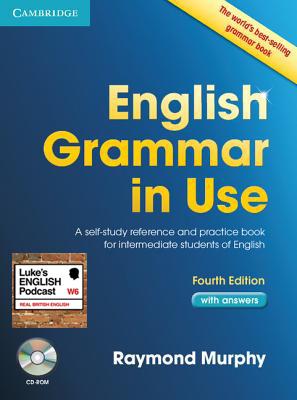
所以我这里有一本叫《英语语法在用》的书,作者是雷蒙德·墨菲,这是英语学习者中最受欢迎的语法书。
So I've got here a book which is called English Grammar in Use by Raymond Murphy and it's the most popular grammar book for learners of English.
它卖出了数百万册,对吧。
It sold millions of copies Right.
遍布全球。
All around the world.
这是一本著名的书。
It's a famous book.
它被称为蓝色书籍,蓝色语法书。
It's known as the blue book, the blue grammar book.
你说它基本上没用。
And you're saying it's basically useless.
不。
No.
我不是说它没用。
I'm not saying it's useless.
我只是说,大多数母语者根本不知道这些术语是什么意思,这很有趣。
I'm just saying it's interesting that most native speakers have got no idea what any of this stuff means.
我不知道。
I don't know.
我们谈论现在进行时、第三类条件句之类的东西。
We talk about, like, present continuous tense and and third conditionals and things like that.
完全一头雾水。
Wouldn't have a clue.
你根本不知道。
You've got no idea.
好吧。
Alright.
我很好奇的是,在英语课堂上,老师总是让学生解释这些语法术语的含义。
What I'm what I'm quite curious to do is another thing is that in English language classes, teachers are always asking students to explain what things mean.
所以他们总是问,现在完成时是什么?我们怎么用它?
So they're always saying things like, what is present perfect and how do we use it?
或者这两句话有什么区别。
Or what's difference between these two sentences.
看看一个母语为英语、已经能流利使用英语的人会怎么回答这些问题,这很有趣。
And it's interesting to see what a native speaker, someone who's already able to speak English perfectly and functionally would answer those questions.
有时候我会
Sometimes I'm
大概只会
just probably gonna get
把他们搞错。
them wrong.
关键是,你在课堂上做的很多练习都不真实、不自然。
Well, it's the point is that a lot of the exercises you do in class are kind of unrealistic and unnatural.
所以即使你是母语者,你也做不到,你
So even if you were a native speaker, you wouldn't be able to do it, you
知道吗?
know?
是的。
Yeah.
比如,如果我问你,'I painted the house' 和 'I have painted the house' 有什么区别?
So like if I said to you what's what's the difference between I painted the house and I have painted the house.
它们的意思有什么不同?
What's the difference in meaning?
嗯,'painted the house' 暗示你刚做完这件事。
Well, painted the house implies that you've just done it.
你刚刚完成了。
You've just you've just done it.
而我已经刷了房子。
And I have painted the house.
它可能是任何时间。
It could be any time.
好的。
Okay.
你不能说‘我去年刷了房子’吗?
Couldn't you say I painted the house last year?
是的,你可以说那样的话。
Yeah, you could say that.
好吧,所以‘我刷了房子’可以指任何时间。
Alright, so I painted the house could be any time.
但是
But
你不能说‘我去年粉刷了房子’。
you couldn't say I have painted the house last year.
啊,对。
Ah, right.
为什么不能?
Why not?
因为这太……
Because it's too
这,我不知道。
it's it's I don't know.
这有两层意思。
There's two levels to it.
一旦你说‘我粉刷了房子’,是的。
Once you say I have painted the house Yeah.
你就已经确立了你粉刷过房子这个事实。
You've already established the fact that you've painted it.
对。
Right.
我不知道。
I don't know.
听起来不对劲。
It just sounds wrong.
听起来不对劲。
It just sounds wrong.
是的。
Yeah.
就是这样。
That's exactly it.
事实上,'我粉刷了房子'意味着你最初是对的。
Fact is I have painted the house means you were right originally.
它并不说明你不知道什么时候发生的。
It doesn't you don't know when it happened.
只是这件事发生在过去的某个时候。
It's just that it happened in the past some time.
而且它和现在有关,因为你把它和你迄今为止的整个人生经历联系在一起。
And it's it's connected to now because it's you're relating it to your whole experience of your life up to now.
所以它和现在是有联系的。
So there's a connection to now.
我这辈子确实做过这件事。
I have done it, like, in my life.
我的意思是,我有这种经历。
I mean, I've got that experience.
是的。
Yeah.
我粉刷过那所房子。
I have painted the house the house.
你不能说‘我昨天粉刷了房子’,因为我们根本不会用这种时态。
You can't say I have painted the house yesterday because we just don't use that tense.
因为你已经说了‘我粉刷了房子’
Because you've already said I have painted the
房子。
house.
这暗示着没有特定时间,或者它是一个未完成的时间段。
Which which implies that there's no time or that it's a finished that it's an unfinished period of time.
或者只是这样说不通。
Or just it it just doesn't work.
我不知道为什么。
I don't know why.
你可以说‘我今天粉刷了房子’,但不能说‘我昨天粉刷了房子’。
Can say I have painted the house today, but you can't say I have painted the house yesterday.
我今天粉刷了房子。
I have painted the house today.
你会说
Would you say
那个?
that?
是的。
Yeah.
所以,你一天结束时到底做了什么,你知道的,到底做了什么?
So what have you, you know, at the end of the day so what have
你今天做了什么?
you done today?
哦,好吧,当你说到我粉刷了房子的时候。
Oh, well, you know When you say I painted the house.
好的。
Okay.
在一天结束时
At the end of
。
the day.
好吧。
Alright.
我一直在粉刷房子。
I've been I've been painting the house.
但午餐时间,你做了什么?
But at lunchtime, what have what have you done?
哦,我粉刷了房子。
Oh, I've painted the house.
是的。
Yeah.
没错。
Exactly.
你做了什么
What have you
今天早上?
been doing this morning?
我粉刷了房子。
I painted the house.
我不知道你是否会说
I don't know if you say
我有。
I've.
嗯,如果完成了,你就应该这么说。
Well, if it's finished, you would.
好吧,我粉刷了房子。
Well, I've painted the house.
如果是我进来了的话。
If it was I've come in.
我拿起了我的画笔。
I've I've picked up my paintbrush.
不。
No.
不。
No.
那是那是
That's that's
我在跑步。
I was running.
被抓住了
Was Grabbed
梯子。
the ladder.
我是这样放的
That's the way I put
靠在墙上,然后我
it up against the wall and I
刷了房子。
painted the house.
母语者会这样说话,这是一种错误。
That's what native speakers say as a as an error.
足球运动员就是这样做的。
That's what footballers do.
他们会说类似‘现在他来了’这样的话。
They say things like Now he's coming.
他他,是的。
He's he's Yeah.
我我拿到球了。
I've I've got the ball.
他们应该说的是‘我在禁区外拿到了球’。
What what what they should say is I've got the ball outside the penalty box.
对吧?
Right?
嗯。
Mhmm.
我把球传给了韦恩·鲁尼。
I passed it to Wayne Rooney.
他把球传回给我。
He passed it back to me.
我晃过防守球员,射门并得分了。
I beat the defender and I shot and I scored.
但他们可能会说:嗯,我在禁区外拿到球,传给了韦恩·鲁尼,他把球传回给我,然后我抬头一看,发现球门空了,就射门得分了。
But what they'd say is well I've got the ball outside the penalty box and I've passed it to Wayne Rooney and he's passed it back to me and then I've looked up and I've seen the open goal and I've shot and I've scored.
所以这种奇怪的现在完成时,其实不太对,是吧?
So all this weird present perfect, but it's kind of wrong, isn't it?
是的。
Yeah.
对。
Yeah.
他们实际上说得完全不对。
They're they're actually speaking completely incorrectly.
因为他同时在谈论现在和过去。
Because he's kind of talking about the present and the past at the same time.
现在和
Present and
过去。
the past.
捡起球。
Picked up the ball.
我把它传给了鲁尼。
I've passed it to Rooney.
你知道,我接到了球。
You know, I've I've collected the ball.
我传了
I've passed
给鲁尼。
it to Rooney.
这感觉就像事情刚刚发生一样。
It's thinking about it's like it's happened just now.
就像在当下一样。
It's like in the moment.
但他用的是'Ive'。
But he's using Ive.
用'Ive'来某种方式连接到现在。
Ive to sort of create that link to now somehow.
我不知道。
I don't know.
是的。
Yeah.
对。
Yeah.
好的。
Alright.
这就像他在脑海中快速回顾一样。
It's It's it's like he's running through in his head.
是的。
Yeah.
这有点儿,这没什么用。
It's kind of This isn't gonna be any useful.
有用。
It is.
有用。
It is.
这正是没人会听的原因。
This is exactly what No one's gonna listen
是的,确实如此。
to It's true.
这不对。
It's not true.
不。
No.
只是人们会感兴趣,如果你正在
It's just people will be interested to If you're
听到这个,我非常抱歉。
listening to this, I'm very sorry.
不。
No.
人们会感兴趣,想知道母语者是如何理解或不理解语法的。
People will be interested to hear about how a native speaker understands Or doesn't.
或者不理解语法。
Or doesn't understand grammar.
让我再问你两个问题,然后我们就结束吧。
Just let me ask you two more things and then we'll then we'll call it a day.
对吧?
Right?
展开剩余字幕(还有 326 条)
另一个问题是,for 和 since 有什么区别?
Another one is what's the difference between for and since?
这是一个学生经常问的问题。
That's a question that students ask all the time.
for 和 since 有什么区别?
What's the difference between for and since?
在什么语境下?
In what context?
所以我做过某事 for,也做过某事 since。
So I have done something for and I have done something since.
for?
For?
for。
For.
F o,是的。
F o, yeah.
嗯,我已经做了十年了?
Well, I've been doing something for Ten years?
是的。
Yeah.
我已经做了十年了。
I've been doing something for ten years.
我一直在做,从……开始。
I've done I've been doing something since.
1992年,你明白吗?
Nineteen ninety two thousand, you see?
是的,从2000年开始。
Yeah, since 2000.
那么for和since之间有什么区别?
So what's the difference between four and since?
当你想描述时间长度时,就会用for。
Well you say four when you're about to describe the the length of time Right.
你一直在做某事,是的。
That you have spent doing something Yeah.
自从”设定了你开始的时间。
Since sets the date that you started.
是的。
Yeah.
没错。
Exactly.
对。
Yes.
这就是区别。
That's the difference.
完美。
Perfect.
是的。
Yeah.
你很不错。
You're quite good.
好的。
Okay.
这彻底推翻了你的理论。
That blew your theory out of the water.
不。
No.
不。
No.
不。
No.
这只是很有趣。
It's it's just interesting.
我没有理论。
I don't have a theory.
对。
Right.
再来一个。
Here's another one.
明白吗?
Okay?
这是一个经典的例子。
This is a classic one.
说‘好吧’有什么区别?
What's the difference between saying okay.
这是条件句。
This is conditionals.
说‘如果我……你会得到这个’,因为这很简单。
What's the difference between saying if I and you'll get this because this is easy.
如果我买了一张彩票,我就中了彩票;如果我买一张彩票,我会中彩票。
If I had bought a lottery ticket I would have won the lottery and if I bought a lottery ticket, I would win the lottery.
有什么区别?
What's the difference?
我想
I want
谈论过去和谈论未来。
to talk about the past and I to talk about the future.
对。
Right.
好的。
Okay.
是的。
Yeah.
说得对。
Spot on.
完全正确。
Nailed it.
是的。
Yeah.
好的。
Okay.
我得给你一个特别难的。
I need to give you a really difficult one.
我会翻到书的后面。
I'll go to the back of the book.
好的。
Okay.
介词。
Prepositions.
对吧?
Right?
我们来讨论一下你想要什么?
Let's go for what do you want?
我们来学形容词和介词吧。
Let's have adjective and prepositions.
形容词加介词,对吧?
Adjective plus preposition, right?
介词是学习者最难掌握的部分,它们是一些小词,比如 of、to、at、in,
Which is prepositions are the thing that learners have the most difficulty with and they're little words like of, to, at, in,
还有,好吧。
and Okay.
来吧。
Come on.
就像这样。
Like that.
用一个问题。
With a question.
好的。
Okay.
所以你只需要完成这个句子。
So you just gotta you just gotta complete the sentence.
等一下。
Wait a minute.
等等。
Wait.
等一等。
Wait a second.
我觉得你应该把这段剪短一点。
I think you should edit this down.
是的。
Yeah.
好的。
Okay.
行吧。
Alright.
我们开始吧。
Here we go.
我来给你一个句子。
I'm gonna give you a sentence.
你得把介词放在空格的正确位置上。
You gotta put the preposition in the right place in in in the gap.
明白吗?
Okay?
我对你送我的礼物感到非常高兴。
I was delighted with the present you gave me.
我感到高兴,你送我的礼物。
I was delighted, the present you gave me.
介词是‘with’吗?
With?
是的。
Yes.
干得好。
Well done.
太棒了。
Brilliant.
我不知道我
I don't know I
我刚想到一个主意。
just had an idea.
每当你答对了,我就这么做。
Whenever you get anything right, I'm gonna do this.
明白吗?
Okay?
好的。
Alright.
这是下一个。
So here's the next one.
这太糟了。
This is bad.
你帮我买东西,真是太好了。
It was very nice of you to do my shopping for me.
非常感谢你。
Thank you very much.
的?
Of?
的?
Of?
但我不知道
But I don't know
为什么是‘的’。
why it's of.
我没法告诉你背后的规则。
I couldn't tell you the rules behind that.
我就知道那就是那样。
I just know that's what it is.
你为什么总是对父母这么粗鲁?
Why are you always so rude to your parents?
你不能对他们好一点吗?
Can't you be nice to them?
对。
To.
对。
To.
是的。
Yes.
干得好。
Well done.
你能不能别做
Can you not do
那个?
that?
好吧。
Okay.
但为什么对父母好就是好的呢?
But why is it nice to be nice to the parents?
因为是他们把你养大的,而且你
Well, because they brought you up and, you
知道,是他们把我们养大的
know, they brought us up
为了圣诞节。
for Christmas.
我的意思是,我们为什么用‘对’这个词?
I mean, why do we use the word to?
好要对
Nice be nice to
父母。
the parents.
因为你有点儿,我不知道。
Because you're sort of I don't know.
是的。
Yeah.
你在给予他们一些东西。
You're giving something to them.
你是在为他们的利益做点什么,我想,或者为他们做点什么。
You're kind of it's doing something for their benefit, I suppose, or something towards them.
为他们做点什么。
Something towards them.
对他们好。
Being nice towards them.
去
To be
在家里的时候。
at the home there.
对你父母好。
Nice at your parents.
是的。
Yeah.
去看,就像是朝他们看去。
To to look at is like to look towards them.
不是吗?
Isn't it?
是的。
Yeah.
但那我不知道。
But that's I don't know.
是的。
Yeah.
我可以告诉你。
I can tell you.
事实上,不可能为这件事制定一条规则。
The fact is that it's impossible to create a rule about it.
事实上,你只能学会有些词会和另一些词搭配使用。
In fact, you just got to learn that some words go with other words.
你必须明白,对别人好是件好事。
You just gotta know it's nice be nice to someone.
你必须学会‘nice to’这个搭配。
You just have to learn nice to.
所以他们必须看到词语以小组合的形式共同出现。
So they have to see words existing together in little partnerships.
学习它们如何一起工作。
Learn how they work together.
就是这样。
That's it.
就像一起学习两个词,而不是单独学一个词。
Just like learning two words together, not just one on its own.
所以就是这样。
So that that's it.
实验到此结束。
That's the end of the experiments.
你从中学到了什么吗
What have you learned anything from
这次经历?
this experience?
没有。
No.
没有。
No.
我只是希望你能从这次经历中有所收获,毕竟让我显得很蠢。
I just hope that you get something out of this, of making me look stupid, basically.
不。
No.
我觉得你答对了不少问题,对吧?
I think you got quite a few questions right, didn't you?
是的。
Yeah.
好的。
Okay.
不过还是恭喜你。
Well, congratulations anyway.
我现在要给你一个证书,显示你获得了两个证书。
I'm gonna give you a certificate now, which just shows that you've oh, two certificates.
一个证明你完成了课程。
One to show that you completed the course.
老兄。
Mate.
证书。
The certificate.
我可以拿这个吗
Can I have this
口香糖?
bit of chewing gum?
是的。
Yeah.
你可以拿走这口香糖。
You can have the chewing gum.
第二个证书呢,这是我喜欢给节目所有嘉宾的小证书。
And and the second certificate, just something I like to give to all the guests that I have on the program.
这是一张小证书,证明你曾出现在《卢克英语播客》的一集中。
It's a little certificate just proving that you appeared on an episode of Luke's English podcast.
非常感谢你前来,希望很快能再见到你。
So thanks very much for for coming, and I hope to see you soon.
非常感谢。
Thanks very much.
Luke的英语播客由
Luke's English podcast is brought to
Brigoli口香糖和
you by Brigoli Chew and
Casaillero Del Diablo葡萄酒赞助。
Gum and Casaillero Del Diablo wine.
那很不错。
That was good.
好了,各位。
Okay, folks.
我现在想做的是,解释一下我在与我兄弟的对话中提到的一些语法点。
What I would now like to do is just explain some of the grammar points that I spoke to my brother about during that conversation.
我问他了一些关于语法几个方面的问题,看看他能否回答,我想你们可以看到,重点是,我想说,母语者出人意料地并不理解或并不真正了解语法规则。
I asked him some questions about a few areas of grammar to see if he could answer them, and I think you can see there that the point is, I guess, that native speakers surprisingly don't understand or don't really know the rules of grammar.
他们不知道像现在完成时这样的术语,甚至不知道形容词或名词这样的词。
They don't know terms like present perfect or even words like adjectives or nouns.
他们真的不清楚这些术语的含义。
They they don't really know what those terms mean.
所以当你在学校学习这些内容时,某种程度上你比他们更善于表达,因为你懂得如何描述语言,而母语者却做不到这一点。
So when you're studying all that stuff at school, you're in a way more articulate than they are because you know how to describe the language, and native speakers don't know how to do that.
这相当有趣。
That's quite interesting.
但母语者能凭直觉判断什么是正确的,什么是错误的。
But native speakers know what's right and what's wrong by instinct.
他们只是在童年时期无意识地学会了这些,长大后知道某些东西是错的,却说不清为什么错,只是知道它错了。
They just sort of they learn it as children without thinking about it, and then when they get older they know that something is wrong, but they don't know why it's wrong, they just know it's wrong.
你小时候学习自己的语言时也是如此。
It's the same for you when you're learning your language as a child.
这对我们学习英语意味着什么?
What does that tell us about learning English?
你可以这么说,有些人可能会认为,英语学习者不必担心学习语法规则,而应该多听、多读英语,通过大量接触语言,自然而然地学会什么是正确的、什么是错误的。
Well, you could say that some people might say it means that learners of English shouldn't worry about learning the rules of grammar, that instead they should just try to listen to a lot of English, to read a lot of English, and by doing that, see and hear the language so much that they just learn what's right and wrong just by frequency.
因此,例如,他们知道人们会说某些话,仅仅是因为他们以前听过太多次了,他们之所以知道什么是正确的、什么是错误的,是因为他们听和读了很多英语,逐渐对英语中常见的各种模式有了感觉。
So they know, for example, that people will say things just because they've heard it said so many times before, and they they know what's right and wrong just because they have heard and read the language a lot, and they've started to learn, started to get a sense of all the patterns that you find in English.
也许这是对的。
Maybe that's true.
也许这是一种很好的学习方式。
Maybe that's a good way to learn.
或者,英语学习者应该学习语法规则,至少要研究语言模式,并通过练习来理解什么是正确的、什么是错误的。
Or maybe learners of English should study the rules or at least study the patterns and do practice exercises in order to understand what's right and what's wrong.
我认为两者结合才是最好的方法:你需要学习语言,需要通过测试和练习来检验自己,同时也需要结合大量的语言输入,即多听多读。
I think it's a combination of both, that you need to study the language, you need to test yourself with it, you need to do exercises, but also you need to combine that with high exposure, so lots of listening and lots of reading.
你接触的语言越多,就越能培养出对语言的直觉。
And so the more you see of the language, the more you start to develop a feel for it.
这就是我的观点。
That's that's my opinion.
但无论如何,我和我哥哥讨论的一些内容,我觉得还是应该向你澄清一下。
But nevertheless, some of the the things that I discussed with my brother there, I think I should just clarify for you anyway.
所以我第一个问他的是:名词、形容词和动词之间有什么区别?
So the first thing I asked him was, what's the difference between a noun, an adjective, and a verb?
他其实答不上来,但正如你可能知道的,名词是用来给事物命名的词。
He couldn't really answer the question, but as you may know, a noun is a word which is used to give something a name.
我们用的像桌子、椅子、猫这些词都是名词。
We use things like, you know, a table, a chair, a cat.
这些都是名词。
Those are all nouns.
它们可以是复数或单数形式。
They can be plural or singular.
比如三只猫。
Three cats, for example.
它们可以是可数或不可数的。
They can be countable or uncountable.
如果是可数的,你就可以数出来。
If they're countable, you can you can count them.
比如,三个桌子。
For example, three, you know, tables.
桌子是可数名词,因为你可以说一个、两个或三个桌子,但像‘糖’这样的词就不可数。
A table is a countable noun because you can say one, two, or three tables, but a word like sugar isn't countable.
我们通常只说‘一些糖’,因为它是由无数微小的糖粒组成的一个整体,因此是不可数的。
Instead, we just say some sugar, so it's like a a mass of tiny little granules of sugar that together makes something uncountable.
它们也可以是抽象的,比如那些你实际无法触摸或感知的事物的名字。
They can also be abstract, for example, the names of things you can't actually touch or feel.
像‘爱’这样的概念既是名词也是动词,但你说‘你所需要的只是爱’时,它就是一个名词,属于抽象名词,而且是不可数的。
So concepts like love is noun, it's also a verb, but you could say all you need is love in that sense it's a noun, it's an abstract one there, and it's uncountable.
这就是名词。
That's nouns.
显然,名词可以非常复杂。
Obviously the nouns can be very complex.
它们也可以是更大的短语,比如名词短语。
They can be larger kind of, phrases, you could say, like a noun phrase.
比如,移动电话技术就是一个名词短语,你可以用它来作为句子的开头。
Like, for example, let's see, like mobile phone technology is a is a kind of noun phrase, and you can use that as the start of a sentence.
移动电话技术正在迅速发展。
Mobile phone technology is developing very quickly.
所以名词有时也可以由多个词组成。
So nouns can also be sometimes a number of words together.
对,下一个词类是形容词。
Right, the next one is an adjective.
形容词是我们用来描述名词的词。
Well, an adjective is a word we use to describe a noun.
它用来描述名词,比如我们会说:这食物很美味。
It's used to describe a noun, so we'd say for example, the food was delicious.
对吧?
Right?
所以 'delicious' 描述的是食物。
So delicious describes the food.
食物怎么样?
How was the food?
它很美味。
It was delicious.
当然你也可以这样说:美味的食物。
You can also say delicious food like that of course.
所以这是一个形容词。
So that's an adjective.
下一个词是动词,动词是表示动作的词。
And then next one was a verb, and the verb is the doing word.
这些词用来表达某种行为。
These are words we use to express sort of actions.
比如 play、eat、go,这些都是动词。
So like play, eat, go, for example, verbs.
我们还有一些小的动词短语,比如短语动词,这是动词与其他词的组合。
And we also have little verb phrases, which are things like phrasal verbs, and that's a verb in combination with other words.
短语动词很难,因为有些很容易,有些则很难。
And phrasal verbs are difficult because some well, some of them are easy and some of them are difficult.
容易的那些很好理解,因为它们的意思与原动词非常相似。
The easy ones are easy to understand because the meaning is very similar to the original verb.
所以如果你在说,哦,让我们看看。
So if you're talking about oh, let's see.
go on,比如go on,意思是继续。
Go on, like go on, meaning continue.
这很容易理解,因为我们知道go的意思。
It's fairly clear what that means because go we know what go means.
go on就是继续前进,不要停下,持续下去。
Go on just means go and don't stop going, continue.
所以这个相对容易。
So that's fairly easy.
但有些短语动词很难,比如‘give up’,意思是放弃。
But some of them are difficult like if you take the expression give up, give up meaning to quit.
这不太容易理解,因为‘give’这个词,我们通常会想到,比如给某人一份生日礼物。
That's not quite so easy because the word give, you know, we think, well, give give a give someone a a birthday present.
但在这个语境中,‘give up’的意思和‘give’完全不一样,这就让它变得非常难懂。
But in this sense, give up has a completely different meaning to give, which makes it very difficult.
事实上,作为英语学习者,你必须去学习这些短语动词。
And the fact is, as learners of English, you just have to learn phrasal verbs.
你得努力去记忆它们,因为每一个都是独特的,有自己独立的意思,只是由几个词组合而成。
You just have to try and learn them because they're all unique words with their own meanings, just a combination of a few words.
所以,那是我问弟弟的第一个问题。
So that's that was the first thing I asked my brother.
下一个问题是关于现在完成时和一般过去时的。
The next thing was about present perfect and past simple.
我们知道现在完成时。
So we know present perfect.
其中一个实际上是你在学习英语时最常学到的语法点之一。
One of the actually, is one of the most common bits of grammar that you study when you're learning English.
现在完成时当然就是have加过去分词,或者has加过去分词。
Present perfect, of course, is like have plus a past participle or has plus a past participle.
比如,我曾经住在日本。
Like I have lived in Japan, for example.
她吃过披萨。
She has eaten pizza.
明白吗?
Alright?
而一般过去时,显然人人都知道,比如我住在日本,她吃了一块披萨。
And past simple, obviously everyone knows, I lived in Japan, she ate a pizza, for example.
所以这两者的区别相当大,是每个人都在学习的内容。
So the difference, well that's quite a big one and it's something that everyone's studying.
现在完成时和一般过去时的区别在于,我们用一般过去时来谈论过去已完成的动作,但时间范围很重要。
So the difference between past simple and present perfect, basically we use past simple to talk about a finished action in the past, but the time period is important.
而使用过去时,我们通常会表达一种与行为的疏离感。
And we tend to, with past simple, express a kind of distance from the act.
所以这本质上是一种时间上的距离,意味着动作发生在一段已经结束的时间段内。
So there's a distance in time, basically, which means that the action happened in a finished time period.
我住过,比如说,我没吃,而是喝了一杯咖啡。
I lived well, let's say I ate no, I drank a coffee.
这很可能暗示你昨天喝了咖啡,或者上周喝了咖啡,或者在早餐时喝了咖啡。
It's pretty probably suggests that you drank a coffee yesterday or you drank a coffee last week or you drank a coffee during breakfast.
对吧?
Right?
所以它发生在一段已经结束的时间里。
So it's like in a finished time.
现在完成时用于描述发生在未结束时间段内的已完成动作,因此与现在有联系。
Present perfect is used to describe finished actions which happened in an unfinished time, so there's a connection to now.
这是最重要的事情。
It's the most important thing.
所以基本上,你可能会说,比如:我今天已经喝了三杯咖啡,而今天还没结束。
So basically, you might say, for example, I have drunk three cups of coffee today, and today is not finished.
所以你可以这么说:我今天已经喝了三杯咖啡。
So you can say I've drunk three cups of coffee today.
这个时间段总是与现在相连的。
The time period is always connected to now.
这比听起来稍微复杂一点,但这是基本的区别。
It's a bit more complicated than that, but that's the sort of basic difference.
说实话,如果我要解释现在完成时和一般过去时,我得录一整个全新的播客,我完全可以这么做。
To be honest, if I was to explain present perfect and past simple, I'd need to record a completely new podcast, and I could do that.
我可能会,我可能会这么做。
I might, I might do that.
一般过去时和现在完成时。
Past simple and present perfect.
下一个话题是第二和第三条件句。
The next one was about second and third conditionals.
所以我们知道第二条件句的例子是,比如说,如果我买了一张彩票,我就会中奖。
So we know the second conditional would be, for example, let's see, if I bought a lottery ticket, I would win the lottery.
这不是个很好的例子,因为你不一定能中奖。
Not a very good example because it's not definite that you'd win.
所以如果我,嗯。
So if I okay.
比如说,如果我走出去,我不会。
Let's say if if I if I went outside, I no.
不会。
No.
不会。
No.
好的。
Okay.
如果我努力学习,我就会通过考试。
If I studied hard, I would pass the exam.
所以你在谈论未来,但我们却使用过去时,比如'studied'。
So you're talking about the future, but we use past tense like 'studied'.
如果我现在学习——我们在谈论过去,其实是在谈论未来。
If I studied now we're talking about the past, we're talking about the future.
我们知道这是未来,因为我们用了'if'。
And we know it's the future because we've said 'if'.
所以'if'加上过去时实际上用来描述一种不真实的未来。
So 'if' plus a past tense is actually used to describe a kind of unreal future.
因此,你使用过去时并不是为了在时间上制造距离,而是为了在现实性上制造距离。
So you use the past tense not to create distance in time, but to create distance in reality.
从这个意义上说,这是一种不真实或假设的未来,因为你并不认为它现实。
In this sense, it's an unreal or hypothetical future because you don't think it's realistic.
所以如果我努力学习,我就会通过考试,但我不会努力学习,因为我并不想。
So if I studied hard I would pass the exam, but I'm not going to study hard because I don't want to.
对吧?
Right?
所以把这个和第一类条件句比较一下。
So compare that with a first conditional.
如果我努力学习,我会通过考试。
If I study hard, I will pass the exam.
如果后面用现在时,虽然还是在谈未来,但这里我们认为这是一个现实的未来。
Present tense after if, still talking about the future, but here we think it's a realistic future.
所以这里没有与现实的距离,我们认为它是真实的。
So there's no distance from reality, we think it's real.
而且后面跟着的是'will'。
And it's followed by 'will'.
如果我努力学习,我会通过考试。
If I study hard I will pass the exam.
就是这样。
So that's it.
这是一种具有明确后果的确定性未来。
It's like a definite future with its definite future consequence.
第三条件句谈论的是过去,在条件从句中我们使用'had'加过去分词,而在主句中则是'would have'加过去分词。
The third conditional talks about the past, and there we use 'had' plus a past participle in the 'if' clause, and in second clause you'd have 'would have' and a past participle.
比如说,考试是上周举行的,而我失败了,你可以说:'如果我当时备考了,就能通过考试了。'
So let's say that the exam was last week and I failed, you could say 'if I had studied for the exam I would have passed'.
对吧?
Right?
事实上,我没有备考,也没有通过。
The fact is I didn't study and I didn't pass.
但假如我备考了,这里我们使用'had studied',看起来像是过去完成时。
But if I had studied now here we're using 'had studied' and that's like it looks like past perfect.
但它实际上并不是过去完成时。
It's not actually past perfect.
它只是看起来像,但它的作用是表示与过去现实的疏离。
It just looks like it, but it's used to create distance from reality in this sense in the past.
所以我们从过去简单时态'I didn't study',再退一步,用看似过去完成时的'If I had studied',然后在第二部分用'I would have passed',再次指代一个过去的后果。
So we go from past simple I didn't study, and we go one tenth back to what looks like past perfect If I had studied, and then in the second part I would have passed, again to refer to a past consequence.
这一切都非常复杂,老实说还有点无聊,但你还是得学。
It's all very complicated and to be honest rather boring, but you kind of have to learn it.
我可以专门做一期播客,完全讲条件句,因为这个话题太广泛了。
Again, I could do a completely separate podcast all about conditionals because it's such a big topic.
我最近和我弟弟聊的最后一 topic 是介词,如果你在学英语,你肯定知道介词。
The last thing I talked about with my brother was prepositions, And if you're learning English, you'll know about prepositions.
它们非常、非常难。
They're very, very difficult.
它们是我们用来连接名词、动词和形容词的小词。
They're the little words that we use to connect nouns and verbs and adjectives together.
你会发现介词总是和别的词搭配,但并没有一套合理的规则能解释这些搭配。
And you find that prepositions are linked to other words, and there isn't really a decent set of rules to explain these links.
事实上,你只能死记硬背。
The fact is you just have to learn them.
你必须记住,我们说 'to be nice to someone'。
You just have to learn that we say to be nice to someone.
nice to 这些词是搭配使用的。
Nice to, those words go together.
你只能记住这一点。
You just have to learn that.
你得记住它。
You have to remember it.
而且还有很多动词与介词、名词与介词、形容词与介词的搭配组合。
And there are lots of combinations of verbs and prepositions, nouns and prepositions, and adjectives and prepositions.
实际上有那么多列表,你只能多留意这些搭配,然后努力记住它们。
And there there are so many lists really that it's just a case of noticing them and then trying to remember them.
你应该意识到,介词是与其他词相关联的,然后把这些词组当作独立的意义单元来学习。
What you should do is realize that prepositions are linked to other words, and then see these word combinations as separate units of meaning that you should learn.
所以你不是只学单词,比如 consist,而是要学习整个表达 consist of。
So you don't just learn the the word, for example, consist, but you learn the expression consist of.
对吧?
Right?
好的。
Okay.
比如,一个汉堡,一个巨无霸由面包、蔬菜、牛肉和奶酪组成。
So a hamburger, a a a Big Mac consists of bread, salad, beef and cheese, for example.
所以‘consists of’这些词总是连在一起使用。
So consists of, those words always go together.
基本上就是这样。
So that's basically it.
这些就是我和我兄弟讨论的内容。
Those are the things I discussed with my brother.
我希望,如果你是英语学习者,你对语法规则的理解比我的兄弟更好,那样的话你应该为自己感到自豪。
I expect if you're a learner of English, you understood the rules of grammar a little bit better than my brother did, in which case you should feel quite good about yourself.
记住,你正在学习英语的语法,而且实际上你掌握得比大多数母语者还好。
Remember, you're you're learning the grammar of the English language, and you're learning the grammar actually better than most native speakers.
干得好!
So well done you.
本期播客到此结束。
That's the end of this podcast.
希望你们觉得有趣。
I hope you found it interesting.
我就说这些了。
That's all from me.
再见。
Bye.
再见。
Bye.
再见。
Bye.
再见。
Bye.
再见。
Bye.
谢谢收听这一期节目。
Thanks for listening to this episode.
你可以在Facebook上搜索“Luke's English podcast”找到我。
You can find me on Facebook by searching for Luke's English podcast.
如果你喜欢这期英语播客,不妨订阅Luke's English Podcast高级版。
If you enjoyed this episode of English podcast, consider signing up for Luke's English podcast premium.
你将定期收到我制作的高级节目,内容包括故事、词汇、语法和发音教学,以及一贯的幽默与乐趣。
You'll get regular premium episodes with stories, vocabulary, grammar, and pronunciation teaching from me, and the usual moments of humor and fun.
此外,你的订阅将直接支持我的工作,让整个播客项目成为可能。
Plus, with your subscription, you will be directly supporting my work and making this whole podcast project possible.
如需了解关于Luke's English Podcast高级版的更多信息,请访问teacherluke.co.uk/premiuminfo。
For more information about Luke's English podcast premium, go to teacherluke.co.uk/premiuminfo.
关于 Bayt 播客
Bayt 提供中文+原文双语音频和字幕,帮助你打破语言障碍,轻松听懂全球优质播客。