本集简介
双语字幕
仅展示文本字幕,不包含中文音频;想边听边看,请使用 Bayt 播客 App。
你正在收听卢克的英语播客。
You're listening to Luke's English podcast.
如需更多信息,请访问 teacherluke.podomatic.com。
For more information, visit teacherluke.podomatic.com.
大家好。
Hello, folks.
你们最近怎么样?
How are you doing?
无论你们身在何处,无论你们身处世界的哪个角落正在收听这个节目,无论你们正在做什么,无论现在是白天还是黑夜,我都希望你们一切顺利。
I hope you're doing well wherever you are, whatever part of the world you might be in listening to this, whatever you're doing, whatever time of day it is.
我希望你们都好。
I hope that you're well.
想到有世界各地的人通过电脑或iPod或其他设备听我的声音,这真是太神奇了。
It's amazing to think that I've got people all over the world listening to my voice on their computers or on their iPod or something.
这周播客的表现相当不错。
This week was quite a good week for the podcast.
这个月我收到了将近两万次下载,事实上,在过去三十天里,大约有两万次下载,这已经很不错了。
I've got nearly 20,000 downloads Just this month, in fact, in the last thirty days, about 20,000 downloads, which is pretty good.
越来越多的人正在不断下载,而且遍布世界各地。
More and more people are downloading it all the time and all over the world as well.
这太棒了。
It's fantastic.
如果你是节目的常听者,那么你好,感谢你下载这个节目。
So if you're a regular listener to the podcast, then hello, and thank you for downloading this.
我希望它对你有帮助。
I hope it's useful for you.
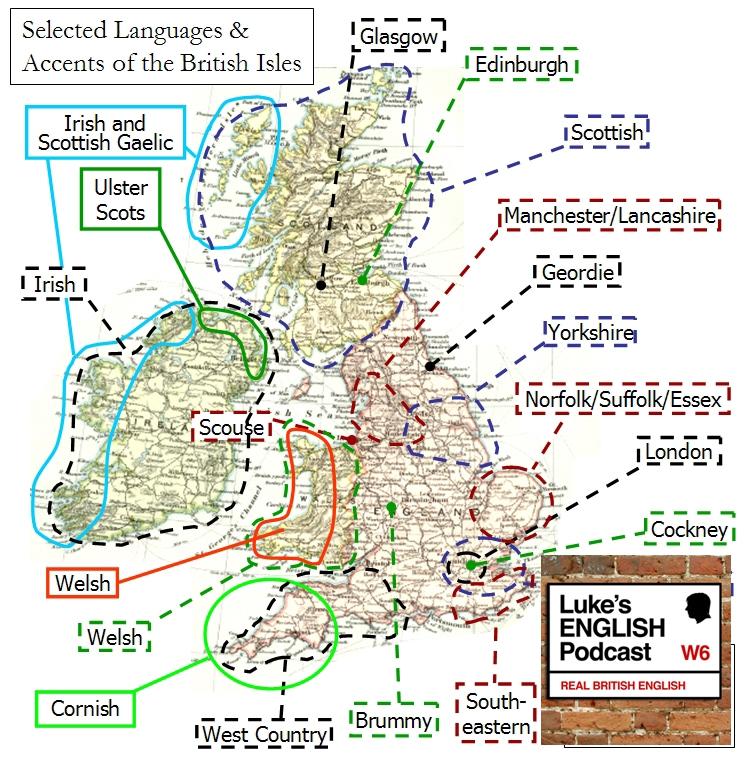
在这一集中,我将谈论口音和方言。
Now in this episode, I'm going to talk about accents and dialects.
这其实是我要做的系列节目中关于不同口音的第一集。
And this is just the first, really the first podcast in a series of podcasts which I'm gonna do about different accents.
我主要聚焦于英国口音,但也会稍微谈谈世界上其他地方的口音。
I'm mainly concentrating on British accents here, but I will be talking a bit about other accents that you find in the world.
所以我会做一系列关于口音的播客。
So I'm going to do a series of podcasts about accents.
在这期节目中,我会先给你做个介绍。
In this particular one, I'm going to give you an introduction.
我会讲解什么是口音,什么是方言。
I'm going to talk about what is an accent and what is a dialect.
在英国你能找到多少种口音?它们听起来是什么样的?
How many accents can you find in The UK and what do they sound like?
世界上你能找到多少种口音?
How many accents can you find in the world?
为什么能够识别英语中的不同口音很重要?
And why is it important to be able to identify different accents in English?
这就是你在这期节目中能期待的内容。
So that's what you can expect from this.
首先,在这期播客里,我已经做过一期关于英国和美国口音的节目。
So first thing is in this podcast, right, I've already done an episode about British and American accents.
如果你访问网站并向下滚动,滚动再滚动,就能找到一个名为《英式和美式发音》的节目。
And you can find that if you look if you're on the website, if you just scroll down, down, down, down, down, there's an episode there called British and American Pronunciation.
如果你正在使用 iTunes 听这个节目——这是个非常好的选择——你可以直接在播客列表中搜索,找到名为《英式和美式发音》的那集。
If you're listening to this using iTunes, which is a very good idea, then you can just search through the list of podcast episodes and find the episode called British and American Pronunciation.
在那一集中,我讨论了英式英语和美式英语发音的主要差异。
And in that episode, I talk about the main differences between British and American English pronunciations.
所以,我已经做过这一期了。
So so I've already done that.
我已经做过关于英式和美式口音的节目了,但我认为口音非常有趣,也很有意思。
I've already done British and American accents, but I think accents are fascinating and a lot of fun.
而且作为英语学习者,口音对你来说也很重要,原因有几个。
And they're also very important for you as a learner of English for a few reasons.
我的意思是,你需要了解英语的不同表达方式。
I mean, you need to be aware of different styles of English.
你需要意识到,英语的发音会因说话者及其出身地的不同而有巨大差异。
You need to be aware of how English can sound very, very different depending on who's speaking it and where they're from.
口音不止一种。
There is not just one accent.
你当然知道有英式英语和美式英语,但事情没那么简单。
You obviously, you get British English and American English, but it's not that simple.
比如,在英国或美国境内,你就可能遇到非常多、非常不同的口音。
There are many, many really different accents that you'll find in in just The UK or in just America, for example.
我的学生经常告诉我,他们曾在酒吧遇到一个人,却完全听不懂他说的话。
Now, my students will often tell me that they met someone in a pub, for example, and they couldn't understand him.
我知道,原因很可能是因为那个人带有地方口音。
And I know that the reason is probably that that person had a regional accent.
所以,你必须意识到你可能听到的各种不同英语口音,这非常重要。
So basically, it's really important for you to be aware of the different styles of English that you might hear.
对吧?
Right?
不要只熟悉一种口音。
Don't just be aware of one accent.
同样的事情有多种不同的表达方式。
There's a wide range of different ways to say the same thing.
你需要了解英语中的不同发音及其含义。
You need to be aware of the different sounds in English and what they mean.
你还需要选择自己想要的口音并尝试模仿它。
You also need to choose the accent that you want and try to copy it.
你得决定想说哪种口音,并且要知道去哪里找这种口音的范例。
You've got to decide what kind of accent you want to speak and you need to know where you're going to find examples of that accent.
总之,你需要更加留意英语中各种不同的口音。
Basically, you need to become more aware of the different accents that you can find in English.
当你听到人们说不同口音时,你也需要能够理解它们。
You need to be able to understand as well different accents when you hear people speaking them.
对吧?
Right?
关于口音,对我来说最有趣的一点是,口音能告诉你关于一个人的哪些信息。
So, one of the most interesting things for me about accents is what an accent can tell you about a person.
所以当我听到有人说话时,他们的口音立刻让我产生很多联想。
So when I hear someone speak, their accent immediately gives me lots of associations.
仅仅一个人的声音,就可能让我对这个人有一些了解。
Just the sound of somebody's voice might tell me a few things about that person.
例如,他们的社会阶层、来自国家的哪个地区或世界的哪个地方、是来自城镇还是乡村、他们的背景,也许他们的教育背景,甚至可能他们的政治观点或态度。
For example, their social class, which part of the country or which part of the world they come from, if they are from a town or from the countryside, what their background, maybe what their educational background might be, and even some things like maybe what their political opinions might be or, what their attitudes might be.
当然,这些都只是先入为主的观念,我们不应该仅仅因为一个人的说话方式就对他们做出评判。
Now, obviously, those are just preconceptions, and we shouldn't really judge someone just by the way that they speak.
但即便如此,当母语者遇到另一位母语者时,听到他们的声音,我认为我们会自动开始做出判断,并仅仅因为他们的说话方式就了解一些关于那个人的信息。
But nevertheless, when when a native speaker meets another native speaker, when they listen to their voice, I think that we automatically start making judgments and we we know things about that person just because of the way they speak.
但英语学习者并不真正了解这些。
But a learner of English doesn't really know those things.
对吧?
Right?
所以当我听到有人讲英语时,我会产生所有这些联想,但母语者通常并不会产生这些联想。
So I get all these associations when I hear someone speaking English, but native speakers often don't get those associations.
英语学习者不知道一个人是来自英格兰北部还是南部,也不了解他们的社会阶层,但母语者却知道这些。
Learners of English don't know if someone is from the North or South Of England or what social class they might come from, but native speakers do know these things.
我现在感兴趣的是弥合母语者对方言所知所解与英语学习者所知之间的差距。
Now I'm interested in bridging that gap between what a native speaker knows or understands about accents and what a learner of English knows.
比如,如果你在酒吧遇到一个人,他一边说:‘嘿,伙计,最近怎么样?’
For example, if you meet somebody in the pub and he's sort of going, oh, geezer, how's it going?
你知道,想来杯啤酒吗?
Know, you want a pint?
你知道,想坐下来聊聊吗?
You know, you want to sit down?
哦,坐吧,孩子。
Oh, sit down, son.
对吧?
Right?
于是你就坐了下来。
So you sit yourself down.
我去给你拿杯啤酒。
I'll go and get you a pint.
这样说法怎么样?
How's that go?
你觉得这样说如何?
How's that sound to you?
好的。
Alright.
现在,如果你遇到一个这样说话的人,然后又遇到另一个人说:‘你好。’
Now if you if you meet someone who speaks like that and then you meet another person who says, hello.
哦,是的。
Oh, yes.
真巧啊。
Well, what a coincidence.
我简直非常惊讶,而且极度震惊——事实上,还非常惊喜地发现,你竟然在这里这家可爱的酒吧里。
I I was absolutely very surprised and extremely shocked and very pleasantly surprised, as a matter of fact, to find you here in this lovely public house.
我一直在想,你是否愿意和我一起喝一杯快速的饮料。
And I I was wondering if you might maybe want to join me for a a quick drink.
如果你遇到了这两个人,你会对他们有什么了解?
Now if you met those two people, what would you know about them?
嗯,你会知道第一个人很可能——他肯定是伦敦人。
Well, you'd know that the first one is probably well, he's definitely from London.
他是工人阶级。
He's working class.
他可能——我不知道。
He might be well, I don't know.
这些就是你需要知道的全部了。
That's that's pretty much all you need to know.
他来自伦敦东部之类的地区,而且是典型的工人阶级。
He's from some kind of maybe the East Of London, and he's quite working class.
另一个人则非常优雅,属于上层阶级,可能上过私立学校,出身于非常富裕的家庭,诸如此类。
The other person would be very posh, upper class, and probably went to a private school, comes from a very rich family, that kind of thing.
你能从人们的说话方式直接判断出这些信息。
And you can just tell those things from the way people speak.
对吧?
Right?
好的。
Okay.
那么首先,口音和方言分别是什么?
So first thing, what is an accent and what is a dialect?
方言是一种特定群体可能使用的语言变体。
Well, a dialect is a kind of version of a language which might be used by a particular group of people.
这意味着它包含了不同的词汇,对吧?
Now that means it includes different vocabulary, right?
具体来说,就是这个群体使用的不同词语,以及可能不同的句式结构。
So specifically different words that that group of people would use, and maybe like different sentence structure.
但它主要是指特定群体所使用的语言的不同形式,特别是他们使用的不同词汇。
But it's mainly like the kind of different form of a language which is used by a specific group of people, specifically different vocabulary that they would use.
我们通常将方言与不同的地区联系起来,比如国家的不同部分。
And we often associate dialects with different regions, so different parts of the country.
明白吗?
Okay?
而口音只是一个人说话时所使用的发音。
Now an accent is just the sounds that someone uses when they speak.
例如,不同的口音可以通过人们发音相同单词的不同方式来识别。
For example, different accents can be identified by just the different ways in which they pronounce the same words.
我们常常将口音和方言联系在一起,因为就像方言一样,我们在国家的不同地区也能发现不同的口音。
We often associate accents and dialects together because we find like we do with dialects, we find different accents in different parts of the country.
你可以说,比如利物浦口音、曼彻斯特口音、伦敦口音之类的。
You can say, for example, a Liverpool accent or a Manchester accent or a London accent or something like that.
我在这里真正感兴趣的是口音,尤其是英国的口音。
What I'm interested here really is accents, particularly accents in The UK.
其次,英国能找出多少种口音?
Secondly, how many accents can you find in The UK?
嗯,有很多很多种口音。
Well, lots lots of accents.
你不能说只有一种英国口音。
You can't really say that there's just a British accent.
这不对。
It's not true.
英国有非常多、非常多、非常多不同的口音,它们听起来真的、真的非常不一样。
There are many, many, many different types of British accent, and they're very different, like really, really different sounding accents.
我稍后在这集中会详细讲讲这些口音的数量、不同发音细节等等。
I'll go into the number and the different sounds and all those details a bit later in this episode.
但我觉得,英国至少有十到十五种不同的口音。
But I'd say there's probably, let's say, 10 to 15 different accents in in Britain at least.
我稍后会详细介绍这些口音,也会给你举些例子。
And I'll go into those in a bit, I'll give you some examples.
世界上你能找到多少种不同的口音?
How many different accents can you find in the world?
当然,有很多了。
Well, there are loads, of course.
如果我们从一般意义上说,你有美国,而在美国内部,也有很多不同的口音,比如你来自南方还是东部,或者美国东部的特定地区,像纽约人听起来就和波士顿人不一样,波士顿人又和芝加哥人不一样。
If we if we're speaking in a general way, you've got, like, America, and within America, there are lots of different accents, you know, whether you're from the South or from the East or particular parts of the East Of America, like someone from New York would sound different to someone from Boston, who would sound different to someone from Chicago.
在洛杉矶,也有特定类型的口音。
And in in Los Angeles, you get, like, specific kinds of accents as well.
当然,在德克萨斯州那种深南部地区,你会听到非常不同的嗓音。
And, of course, in the the sort of Deep South in Texas, that kind of area, you get really different sounding voices.
当然,在加拿大,那里也有独特的声音口音。
And then, of course, in Canada, they've got, like, unique sounding accents there as well.
然后还有澳大利亚和澳大利亚的不同地区、新西兰、南非,以及其他英语国家。
And then you've got Australia and different parts of Australia, New Zealand, South Africa, and other English speaking parts of the world.
所以,不同口音的种类非常广泛。
So there's such a wide range of different accents.
但我现在聚焦于英国,而英国是个小国。
But I'm focusing on The UK, and it's a small The UK is a small country.
我的意思是,相比于美国这样的地方,英国确实很小,但口音却多种多样。
I mean, it's really small compared to somewhere like America, but there are so many different accents.
太惊人了。
It's amazing.
举个好例子,利物浦口音和曼彻斯特口音差别很大,但两地开车只有半小时左右的距离。
Even as a good example, the Liverpool accent and the Manchester accent are really different, but they're only about half an hour away from each other by car.
你从曼彻斯特开车到利物浦只要三十分钟,但口音却完全不同。
You can drive from Manchester to Liverpool in thirty minutes, and yet the accent is completely different.
真的太惊人了。
It's amazing, really.
确实如此。
It really is.
这相当有趣。
It's quite fascinating.
所以是的。
So yeah.
所以另一个问题是,有没有所谓的美式口音或英式口音?
So the other question is, is there such a thing as an American accent or a British accent?
事实上,并不存在唯一的一种美式口音或英式口音。
Well, it's not true that there is just one American or one British accent.
美国和英国都有非常多的口音,但你可以把它们归为英式口音,因为它们共享许多特征,且都源自英国。
There are so many accents in America and so many in Britain, but you can group accents as British because they share many features and they come from Britain.
同样地,你也可以把美式口音归为一类,原因相同。
And you can also group American accents as American for the same reason.
美式口音和英式口音之间存在一些总体上的差异。
There are general differences between the American and British accents.
就像我之前说的,我在之前的播客里已经讨论过这些了。
And like I said, I've been into that before in in previous podcasts.
一些差异比如/t/音,举个例子,如果你说‘water’这个词,在美国,我们发音时/t/会变成一种闪音,而在英国,我们会发成清晰的/t/音。
Some of the differences are, for example, the the the t sound, like the way we say So if you take the word water in America, we in Britain, we pronounce the t or t like a t sound.
所以‘water’这个词。
So water.
你能听到‘water’这个词的发音。
You can hear that water.
在美国,他们会用/d/音来发音。
In America, they would pronounce that with a d sound.
所以你会听到像‘wadder’这样的发音。
So you get like water.
所以这不是/t/音,而是/d/音。
So it's not t, but d.
水。
Water.
比如一杯水。
A glass of water, for example.
另一个是/ɑː/音。
Another one is the ah sound.
在美国,他们会发成类似‘ah’的音。
Now ah, in America, they they would kind of go ah.
而在英国,我们只是发‘啊’音。
And in England, we just go ah.
就像我说的,这是‘water’结尾的r音。
So that is like the the r at the end of water.
正如我所说,我们说‘water’。
Like I said, we say water.
在美国,是‘water’。
In America, water.
所以确实有一个圆唇的r音。
So there's definitely a rounded r sound.
但在英国或不列颠,我们并不真的这样发。
And in England or in Britain, we don't really do that.
我们只是说‘water’。
We just say water.
所以不是‘water’,而是‘water’。
So not water, but water.
所以它听起来像啊。
So it's like a.
在英国,我们有这种o音,比如hot、not、got这类词。
In in Britain, we we have this o sound like in hot, not, got, that kind of thing.
在美国,他们并不怎么用这个音。
In America, they don't really use that sound.
相反,他们用一种a音。
Instead, they do a kind of a sound.
所以heart、not、got,你知道的,我们说hot、not、got。
So heart, not, got, you know, we say hot, not, got.
另外,我觉得美式口音通常更鼻音化。
Also, American accents tend to be more nasal, I find.
它们更多地从鼻腔发出。
They tend to come through the nose a bit more.
所以美式口音听起来可能稍微更鼻音一些,类似这样,而在英国,我们用鼻音少一些。
So, like, in American American accents may sound a little more nasal, something like that, whereas in England, they they we use the nose a bit less.
这是一个科学的回答。
That's a scientific answer.
但如果我们聚焦于英国,就会发现许多与英国不同地区和文化紧密相关的口音。
But if we focus on The UK, we can see lots of different accents that are linked closely with different regions and cultures in The UK.
现在,标准口音被BBC世界服务使用,也出现在牛津和剑桥词典以及常用的音标图表中,这种标准口音被称为RP,即Received Pronunciation,或BBC英语。
Now the standard accent, which is used by the BBC World Service and you find in Oxford and Cambridge dictionaries and in the commonly used phonemic chart, that standard accent is called RP, received pronunciation, or BBC English.
这是一种没有特定地域特征的英国口音形式。
Now this is a kind of standard form of British accent without any specific region.
它传统上与受过良好教育、发音标准的人联系在一起。
It's traditionally associated with educated people who speak correctly.
如今,我们更加注重政治正确性,因此任何口音都是正确的。
These days, we're more politically correct, so any accent really is correct.
但RP或BBC英语被认为是清晰、非地域性的口音。
But RP or BBC English is considered to be the clear non region specific accent.
我认为它在英格兰南部更为常见,而且我也认为我自己的口音就是RP口音。
I would say it's more common in the South Of England, and I would also say that I speak with with an RP accent.
我说的是那种BBC英语。
I speak kind of BBC English.
所以,RP( Received Pronunciation),正如我所说,它并不特指英国的任何地区。
So RP received pronunciation, like I said, it's kind of it's not specific to any region in The UK.
你可以在全国任何地方找到说RP口音的人。
You could find anyone in the country who speaks with a with an RP accent.
但以我的经验来看,它通常来自受过良好教育的背景,尤其是英格兰南部。
But in my my experience, it comes from educated background, typically the South Of England.
我说的是RP口音,但还有一些地域口音的痕迹,比如你能听出我来自南方。
And I speak with a with a with RP, but I've got some traces of regional accent, like the fact that you can tell that I'm from the South.
有些人说我听起来有点高雅,我不太认同,但也能听出一些我曾在伯明翰长期居住留下的口音痕迹。
Some people say that I sound a bit posh, which I don't really agree with, but there's also you can hear some traces of the fact that I lived in Birmingham for a long time in some of the words that I say.
不管怎么说,这是别人告诉我的。
That's what some people tell me anyway.
那么,还有那些不属于RP的地域口音。
So then there are the regional accents not covered by RP.
我现在无法深入细节,但我会简要介绍几个。
Now I can't go into great, great detail, but I will run through a few.
未来还会推出更多播客,我会为你播放一些真实的不同英式口音样本。
And there will be more podcasts in which I play you some real samples of British English in different accents.
我做了大量研究,从互联网、YouTube和其他地方收集了许多音频样本,搜集了各种不同的英式口音样本。
Now I've done lots of research and I've taken lots of audio samples from the internet, from YouTube and other places, and I've collected lots of different samples of accents, British accents.
所以在接下来的几期播客中,我会播放这些样本,你可以聆听并逐渐熟悉不同的口音。
So in the next few podcasts, I'll play you samples of those, and you can listen to them and sort of get used to hearing different accents.
希望这能帮助你开始辨别英语中的不同口音。
Hopefully, it will help you to start identifying different accents in English.
你还会学到很多地道的表达和词汇。
You'll also pick up lots of good bits of language and some vocabulary too.
我认为这会对你的英语学习有很大帮助。
And it'll help you help you with your English a lot, I think.
为了大致梳理一下全国情况,我来列举一些英式口音,并尝试模仿这些口音。
So just to kind of go through the country, let me try and list some some British accents, and I will try and copy those accents.
我在这方面并不擅长,但我试试看。
I'm not brilliant at doing that, but I'll try.
所以,我想从英格兰西南部开始,那里有康沃尔口音,也就是康沃尔式的口音。
So I guess starting way down in the Southwest Of England, you've got the Cornwall accent, kind of Cornish accent.
在康沃尔,他们说话有点像这样,你知道的。
And in Cornwall, they sort of they, you know, they sort of speak a a bit like this, you know.
是的。
Yeah.
我来自康沃尔,你知道,其实挺好的。
I'm from Cornwall, and, you know, it's alright, really.
挺喜欢那种感觉的。
You know, quite like it.
在这里康沃尔很不错,因为你可以去冲浪。
It's it's it's quite nice down here in Cornwall because you can go surfing.
夏天你可以去冲浪,因为海水相当温暖。
You can go surfing in the summer because, like, the the water is quite quite warm.
所以你可以听到,在康沃尔口音中,r的发音是圆润、温暖的,就像在康沃尔那样。
So you can hear there in the Cornish accent, the r sound is rounded, warm, or in Cornwall, you know, like that.
所以,你会听到一种圆润的r音。
So, you know, you do get a kind of rounded r.
所以一杯水,油,喝一杯水,就像这样。
So a glass oh, oil have a glass of water like that.
这是一种圆润的r音。
So it's kind of a rounded r.
而不是说glass,他们会说a glass。
And rather than saying glass, it's like a glass.
玻璃。
Glass.
在康沃尔,你会说,我想我要回家了,回家后洗个澡。
You'd say in Cornwall, I think I'm gonna go home, and I'm gonna go home and I and and have a bath.
我想去洗个澡,然后就去睡觉。
I think I'll go and have a bath, and then I'm gonna go to bed.
所以不是去洗澡,而是洗个澡,然后我就去睡觉了。
So not go and have a bath, but a bath, and then I'm gonna go to bed.
这就是康沃尔地区的特点。
So that's Cornwall.
布里斯托尔也在西南部,但更靠近中心地区,差不多。
Bristol, which is like also in the Southwest, but a little bit closer to the center, Similar.
在布里斯托尔,他们说话有点像这样。
In Bristol Bristol, they sort of speak, you know, a bit like that.
所以和康沃尔很相似。
So it's similar similar to Cornwall.
说实话,我对这个口音不太了解,因为我没在那里待太久。
I don't know it that well, to be honest, because I I I haven't spent a long time down there.
所以我对这个口音不太了解。
So I I don't know it that well.
对我来说,它基本上和康沃尔一样。
It's probably for me, it's basically the same as Cornwall.
我真听不出区别。
I can't really hear the difference.
所以这就是西南地区。
So that's that's kind of Southwest.
然后是伦敦,典型的伦敦口音,你知道的,人们说话有点那样。
Then you got London, and the typical sort of London accent sort of speak you know, people speak a bit like that.
你明白我的意思吗?
You know what I mean?
比如,很多喉塞音,而且你知道,人们根本不会在意这些。
So, like, lot of glottal stops, and, you know, people don't really sort of don't really think about it.
他们根本不会在意自己是怎么说话的。
They don't really think about how they speak.
你明白我的意思吗?
You know what I mean?
但总的来说,整个伦敦地区的人说话方式差不多都是这样。
But but, like, it's lots of different sort of well, I'd say over the whole of London, people sort of speak like that.
好了,伙计。
Alright, mate.
最近怎么样?
How's it going?
想喝杯茶吗?
You want a cup of tea?
好的。
Right.
坐下吧。
Sit yourself down.
喝杯舒服的茶吧。
Have a lovely cup of tea.
真不错。
Nice.
所以我想在伦敦,人们会用喉塞音,就是他们不发出/t/的音。
So I guess in London, you get the glottal stop, which is where they don't pronounce the t.
所以在单词'water'中,带有强烈伦敦口音的人会说'wa'er',而不是'water',而是'wa'er'。
So in the word water, someone with a sort of strong London accent would say water, not water, but water.
对吧?
Right?
还有,像'think'这样的词中的'th'音,你知道的,想想看。
As well as that the th sound that you get in think, you know, think about it.
这个音是用类似'f'开头的单词中的发音来发的。
That's pronounced with a th like like you get in an a word beginning with f.
想想看。
Think about it.
想想看。
Think about it.
是的?
Yeah?
所以不是'think about it'。
So not think about it.
好好想想。
Think about it.
所以就是这样。
So there you go.
伦敦。
London.
然后你去东盎格利亚,但我模仿不了东盎格利亚口音。
Then you go to East Anglia, and I I can't do an East Anglia accent.
对我来说,听起来就像西南部的口音。
For me, it just sounds like Southwest.
我真的模仿不来。
I can't really do it.
然后在米德兰兹,伯明翰。
Then in the Midlands, in Birmingham.
在伯明翰,人们说话有点像这样。
In Birmingham, people sort of, you know, they sort of speak a bit like this.
在伯明翰,口音会上下起伏,就像这样。
It's, you know, in Birmingham, the the accent goes up and down like that.
你明白我的意思吗?
You know what I mean?
好了,老兄。
Alright, mate.
最近怎么样?
How's it going?
你想坐下来喝杯茶吗?
Do you wanna sit down and have a cup of tea?
哦,这茶真是绝佳。
Oh, it's absolutely lovely tea, that is.
哦,真是绝佳。
Oh, it's absolutely lovely.
所以在伯明翰,人们说话时句尾会这样上下起伏。
So in Birmingham, people sort of go up and down at the end of their sentences like that.
这简直太棒了。
It's absolutely amazing.
所以这就是伯明翰。
So that's Birmingham.
至于威尔士,我真模仿不了威尔士口音,而且威尔士不同地区的口音也不一样。
And then Wales, I can't really do a Welsh accent, and there are different accents depending on which part of Wales you are.
但在威尔士,我想。
But in Wales, I I suppose.
我完全模仿不了威尔士口音。
I can't do Welsh at all.
我真的做不到。
I just can't do it.
这太尴尬了。
It's embarrassing.
我不会模仿威尔士口音的。
I'm not gonna do Welsh.
然后是利物浦,利物浦虽然在英格兰,但位于西北部,紧挨着威尔士。
Then Liverpool, and Liverpool is kind of it's in England, but it's just above Wales in the Northwest.
在利物浦,人们说话有点像这样。
In Liverpool, people sort of speak a bit like this.
你明白我的意思吗?
You know what I mean?
好了,老兄。
Alright, mate.
最近怎么样?
So how's it going?
想坐下喝杯茶吗?
Do wanna sit down and have a cup of tea?
来吧。
Come on.
来吧,姑娘。
Come on, lass.
坐下吧。
Sit down.
和我们一起喝杯茶吧,好吗?
Have a cup of tea with us, will you?
众所周知,披头士乐队来自利物浦,而披头士的成员说话也带点这种口音。
Famously, the Beatles were from Liverpool, And the beat the Beatles also spoke a bit like this.
你明白吗?
You know?
所以林戈·斯塔尔在说披头士口音时就是这样说话的。
So Ringo Starr would speak like this in his sort of Beatles accent.
约翰·列侬呢,你知道的,会用一种比较沙哑的嗓音这样说话。
John Lennon would, you know, add a quite a harsh voice like this.
我其实不太能模仿得像。
I can't really do it that well.
但利物浦的口音真的很有趣,因为它融合了爱尔兰、威尔士以及英格兰北部不同地区的特色。
But the Liverpool is really interesting because they've got a combination of, like, Ireland, Wales, and then different parts of Northern England.
所以利物浦有趣的地方在于那种口音。
So the interesting things in Liverpool are that there's that sound.
我不确定。
I don't know.
这是阿什林顿·斯坦利。
It's Ashlington Stanley.
还行。
Do alright.
坐下。
Sit down.
你想喝杯茶吗?
Do you want a cup of tea?
所以有很多这类表达,我想可能是来自威尔士之类的。
So lots of that sort of stuff, which I guess comes from, like, Wales or something like that.
好的,老兄。
Alright, mate.
最近怎么样?
How's it going?
你想喝杯茶吗?
Do you want a cup of tea?
然后是曼彻斯特,正如我所说,它离利物浦只有三十分钟的路程。
And then Manchester, which as I said, is just thirty minutes away from Liverpool.
在曼彻斯特,人们说话方式稍微有点像那样。
And in Manchester, right, sort of people speak a bit more like that.
你明白我的意思吗?
You know what I mean?
所以,我其实很难描述清楚,但如果你听过绿洲乐队的诺尔·加拉格或利亚姆·加拉格的采访,我就倾向于那样说话。
So it's like, I can't really describe it and all that, but, like, if if you've ever, like, listened to an interview with, like, Noel Gallagher or Liam Gallagher from Oasis, right, I tend to sort of speak like that.
你懂我的意思吗?
You know what mean?
好的。
Alright.
最近怎么样,吉萨?
How's it going, Giza?
最近怎么样?
How's it going?
挺好的,非常不错,诸如此类。
Pretty god, dead god, all that.
你懂我的意思吧?
You know what I mean?
就是那种曼彻斯特风格的口音。
So that kind of Manchester thing.
然后我想还有约克郡的口音,但约克郡涵盖了很多不同的城镇。
Then I guess you've got like Yorkshire, but that Yorkshire covers lots of different towns.
不过在约克郡的伊巴格布,人们说话有点像这样,对吧?
But Ibargub in Yorkshire, people sort of speak a little bit like this, don't they?
你知道,我就是约克郡人。
You know, I'm from Yorkshire.
我为此感到自豪。
I'm proud of it.
我为此感到自豪。
I'm proud of it.
我来自约克郡。
I'm from Yorkshire.
我喜欢我说的话。
I like what I say.
我喜欢我说的话,我想说什么就说什么。
I like what I say, and I say what I bloody well like.
我想我刚才有点像兰开夏口音了。
I I think that may have become a bit Lancashire there.
我有时候会把兰开夏和约克郡搞混。
I confuse Lancashire and Yorkshire sometimes.
但总的来说,我觉得那是兰开夏的口音。
But, basically, it's sort it I think that's Lancashire.
差不多就是那样。
It's sort of like that.
如果你来自兰开夏或约克郡,或者来自英格兰北部,那么到了晚上,你不会去淋浴。
And now in if you're if you're from Lancashire or Yorkshire, if you're from the North Of England, then in the in the evening, you don't have a shower.
不会。
No.
你会泡澡。
You have a bath.
你会泡澡,而在后院里,你不会有什么别的,对吧?你有的是草地。
You have a bath, and in in your back garden, you don't have in your back garden, right, you have grass.
所以,北方口音和南方口音之间最大的差异之一,就是他们发字母 r 的方式。
So one of the biggest differences between northern and southern accents is the way they pronounce r.
我们会说 bath、grass、half,而在北方,他们也说 bath、grass、half。
So we'd say bath, grass, half, and in the North they'd say bath, grass, half.
这可能是南北之间最显著、最大的区别,就是那个 ah 或 ah 的发音。
And that's probably the most that's probably the biggest difference between the North and the South is the ah or ah sound.
所以是Bath。
So Bath.
在北方,人们洗澡;在南方,我们洗澡。
In in the North, they have a bath, and in the South, we have a bath.
对吧?
Right?
那里差别很大。
Big difference there.
然后还有位于英格兰东北部的纽卡斯尔,纽卡斯尔人说话有点像这样。
Then you got Newcastle, which is up in the Northeast Of England, and Newcastle, they sort of speak a a little bit like this.
我不太擅长模仿,但你要是来自纽卡斯尔,说话就会有点这样,还挺有趣的。
I'm not very good at it, but let's let's see what you see in if you're from Newcastle, right, you've you've got a sort of speak a wee bit like this, and it's and it's pretty funny.
口音什么的,真的挺搞笑的。
It's pretty funny, the accent and all that.
你懂我的意思吧?
Know what I mean?
所以,在纽卡斯尔口音里,一个不错的词是‘复印机’。
So a good word to say in a in a Newcastle accent is photocopier.
因为在纽卡斯尔,人们会说‘复印机’,发音是‘photocopier’。
Because in Newcastle, said photocopier photocopier.
是的。
Yeah.
这就是纽卡斯尔的口音。
So that's Newcastle.
然后,当然还有苏格兰。
And then, of course, you've got Scotland.
苏格兰也有很多不同的口音。
And Scotland's, you know, got lots of different accents too.
我对这个不太了解,但比如说。
I'm not very aware of it, but you've got like, let's see.
你有西苏格兰,比如格拉斯哥。
You've got West Scotland, so Glasgow.
展开剩余字幕(还有 42 条)
在格拉斯哥,人们说话比较强硬,有点像这样。
In Glasgow, they're sort of they're pretty tough, so they speak a wee bit like this.
然后还有爱丁堡。
And then and then and then you've got Edinburgh.
在爱丁堡,人们的口音更柔和一些,也更优雅。
And in Edinburgh, they're they're a wee bit more soft, a little bit more sophisticated.
我模仿得不太好。
I can't do it very well.
但总的来说,在苏格兰,说话者的声音会更硬朗一点。
But, basically, in in Scotland, you've got a you've got a speaker wee bit more tough.
你知道吗?我来给你做个示范。
I'll do you know what?
我打算制作一些真正的播客,配上实际的样本,让你能听到这些不同口音的真实例子。
I'm gonna do proper podcasts with actual samples so that you can heal hear real examples of these different accents.
当然,还有爱尔兰,整个国家各地都有不同的口音。
Then, of course, you've got, like, Ireland and different accents you find across the whole country.
北爱尔兰,贝尔法斯特。
Northern Ireland, Belfast.
没错。
I right.
如果你来自贝尔法斯特,那你说话会有点这样。
If you're from Belfast, right, you're gonna you're gonna be speaking a wee bit like this.
所以,你知道,这不仅仅是口音的问题。
So you are and, you know, it's not just the accent.
还有方言也是。
It's the dialect as well.
你明白我的意思吗?
You know what I mean?
贝尔法斯特那边的人说的东西都不一样。
It's the different things they say up in Belfast.
就像你说的,对吧?
Like you know what I mean?
而在爱尔兰南部,比如都柏林,人们说话会有点像这样。
And then in in the Southern part of Ireland, say, in Dublin, you'd you'd get people sort of speaking a bit a wee bit like this.
所以在都柏林,你知道,你得来都柏林一趟,咱们去酒吧,喝上几杯健力士啤酒。
So in Dublin, you know, you you gotta come over to Dublin, and, you know, we'll we'll go to the pub, we'll drink a few points of Guinness.
那一定会非常棒。
It's gonna be absolutely it'll be fantastic.
所以这仅仅是几种不同口音的一些例子。
So that's just a few samples of the different accents.
任何正在听这个节目的英国人,比如来自曼彻斯特或纽卡斯尔的朋友,可能会对我的口音模仿得有多差感到惊讶。
Anyone who's listening to this who's from The UK, perhaps someone from Manchester or Newcastle, you're probably gonna be quite surprised at how bad my accents are.
我不确定。
I don't know.
有些口音我还能模仿得不错,但有些说实话就有点差劲了。
Some accents I can do quite well, but some of them are a little bit poor, to be honest.
所以就像我说的,在接下来几期卢克的英语播客中,我会播放不同口音的片段,并指出它们的特点。
So like I said, in the next few episodes of Luke's English podcast, I will play you extracts of different accents, and I will highlight their features.
希望你能熟悉各种不同的英国口音。
And hopefully, you'll get familiar with a range of different British accents.
我们会深入更多细节,希望你能比现在更清楚地理解这些内容。
So we will go into more detail, and you'll hopefully understand things a lot more clearly than than you do at the moment.
本期播客就到这里。
That's it from this podcast.
希望你喜欢本期内容,无论你在做什么,都祝你度过愉快的一天。
I hope you've enjoyed it, and have a lovely day, whatever you're doing.
我很快再和你聊。
And I'll speak to you soon.
再见了。
Cheers.
非常感谢。
Thanks a lot.
再见。
Bye.
再见。
Bye.
再见。
Bye.
再见。
Bye.
再见。
Bye.
再见。
Bye.
你可以在我的网站上给我留言,我的网站是 www.teacherluke.podomatic.com。
You can leave comments and messages for me on my website, which is www.teacherluke.podomatic.com.
如果你喜欢这期《Luke的英语播客》,不妨订阅《Luke的英语播客》高级版。
If you enjoyed this episode of Luke's English podcast, consider signing up for Luke's English podcast premium.
你将定期收到我的高级节目,内容包括故事、词汇、语法和发音教学,以及一贯的幽默与乐趣。
You'll get regular premium episodes with stories, vocabulary, grammar, and pronunciation teaching from me, and the usual moments of humor and fun.
此外,通过您的订阅,您将直接支持我的工作,使整个播客项目成为可能。
Plus, with your subscription, you will be directly supporting my work and making this whole podcast project possible.
有关Luke's English podcast高级版的更多信息,请访问teacherluke.co.uk/premiuminfo。
For more information about Luke's English podcast premium, go to teacherluke.co.uk/premiuminfo.
关于 Bayt 播客
Bayt 提供中文+原文双语音频和字幕,帮助你打破语言障碍,轻松听懂全球优质播客。