本集简介
双语字幕
仅展示文本字幕,不包含中文音频;想边听边看,请使用 Bayt 播客 App。
你正在收听卢克的英语播客。
You're listening to Luke's English podcast.
如需更多信息,请访问 teacherluke.podomatic.com。
For more information, visit teacherluke.podomatic.com.
大家好。
Hello, everyone.
又到了卢克的英语播客时间。
It's time for Luke's English podcast again.
现在我们直接进入正题。
Now let's get straight to the point.
这一集讲的是什么?
What's this episode about?
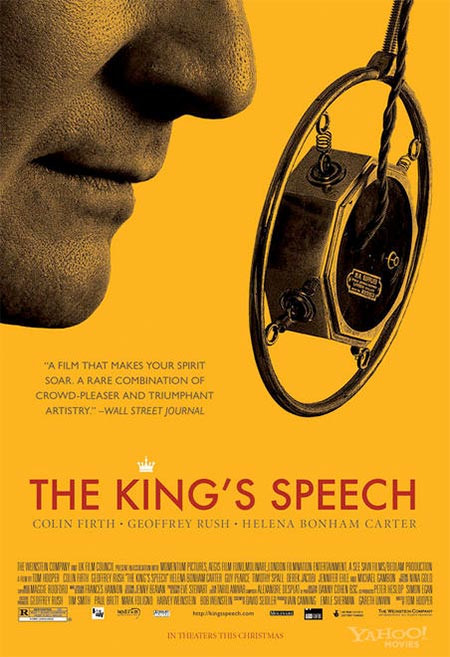
这一集讲的是电影《国王的演讲》,你将听到一段关于这部电影的采访。
Well, this one is about The King's Speech, the movie The King's Speech, and, you're going to listen to an interview, about the film.
然后我会教你一些使用'mouth'或'tongue'的实用短语和习语。
And then I'm going to teach you some really useful phrases and idioms using the word mouth or the word tongue.
明白吗?
Okay?
现在我来解释一下。
Now I'll explain that.
这一点你迟早会明白的。
That will become clear to you in due course.
但目前,你就可以期待这些内容。
But for now, that's what you can expect.
真实的访谈、地道的听力练习,再加上一些非常实用的习语和表达。
Interviews like a genuine interview, authentic listening practice, and then some really useful idioms and phrases.
明白吗?
Okay?
好了。
Right.
本集是关于电影的两集系列中的第一集。
Now this episode is the first episode in a series of two about movies.
所讨论的电影是《国王的演讲》和《127小时》。
The movies in question are The King's Speech and a hundred and twenty seven hours.
如果你喜欢电影,关注影视动态,比如今年关注过奥斯卡颁奖典礼,那你应该知道这两部电影都获得了提名。
Now if you like films, if you follow movies, if you've been, for example, if you followed the Oscars ceremony this year, then you'll know that both of those films were nominated.
《国王的演讲》赢得了四项大奖,包括最佳导演奖和科林·费尔斯因饰演乔治六世国王而获得的最佳男主角奖。
The King's Speech won four awards, including an award for best director and another award for best actor for Colin Firth for his role as King George the sixth.
《127小时》一项奖都没拿到,这让我相当惊讶,因为我以为它是一部出色的电影。
A hundred and twenty seven hours didn't win any awards, which I was quite surprised about because I thought it was a brilliant film.
我真的很喜欢它。
I really loved it.
我也很喜欢《国王的演讲》,但某种程度上,我觉得我更偏爱《127小时》。
I loved The King's Speech as well, but in a way I think that I preferred one hundred and twenty seven hours.
我将在下一期节目中详细谈谈《127小时》,所以这里先不展开。
Now I'm going to talk about one hundred and twenty seven hours in the next episode so I'll leave that until later.
我会在这里简单提一下,但主要还是留到以后再讲。
I'll talk about it a little bit here, but mainly I'm gonna leave that till later.
所以现在我认为这两部电影实际上有一些共同点。
So now I think those two films actually have something in common.
显然,它们在今年的奥斯卡奖上都获得了提名,但更重要的是,这两部电影都讲述了个人面对极其严峻挑战的故事。
Obviously, they both won they were both nominated at the Academy Awards this year, but also because both of those films feature stories about individuals who had to deal with very very tough challenges in their lives.
它们都展现了在困难面前的勇敢与勇气。
And they're about acts of bravery and courage in the face of difficult challenges.
我不知道你是否熟悉《国王的演讲》这部电影的故事。
Now I don't know if you are familiar with the story for the King's Speech.
我不知道你有没有看过。
I don't know if you've seen it.
我看过《国王的演讲》。
I saw The King's Speech.
我看了大约一个小时后,才意识到这部电影讲的不是桃子。
I got about an hour into the film before I realized it's not about a peach.
是的,那是个笑话。
Yeah now that was a joke.
好的。
Okay.
你可能没注意到,所以我再重复一遍,让你有个机会跟上。
You might not have noticed it, so let me say it again just to give you a fighting chance.
好的。
Okay.
我看了《国王的演讲》。
Now I watched The King's Speech.
没错。
That's right.
事实上,我看了大概一个小时才意识到这部电影不是讲桃子的。
In fact I got about an hour into the film before I realized that it's not about a peach.
是的。
Yeah.
其实这个笑话并不好笑,如果你没笑也没关系。
Now it's not a very good joke really, so if you're not laughing that's all right.
如果你笑了,干得漂亮。
If you are laughing, nice one.
不错啊。
Good for you.
但如果你没笑也没关系,因为这其实是个挺差的笑话。
But if you're not laughing that's all right because it's, you know, quite a bad joke really.
让我解释一下这个笑话。
Let me explain the joke.
好的。
Okay.
这个笑话大概是:国王的演讲。
The joke basically goes, the king's the king's speech.
如果你快速说‘国王的演讲’,听起来有点像‘国王的桃子’。
Now if you say that quickly, the king's speech, it sounds a bit like the king's peach.
显然,桃子是一种水果,对吧?
Obviously, peach is a fruit, isn't it?
国王的桃子。
The king's peach.
是的。
Yeah.
国王的桃子。
The king's peach.
国王的桃子。
The king's peach.
听起来很相似。
It sounds quite similar.
所以我看了国王的演讲,惊讶地发现内容根本不是关于桃子的。
So I watched the the king's speech, and I I was surprised that it wasn't about a peach.
我本来以为会讲桃子的事。
I was expecting it to be about a peach.
这其实不是一个很好的笑话,算了。
It's not really a very good joke, so never mind.
别提了。
Forget about it.
总之,我看了《国王的演讲》。
Anyway, I saw the King's Speech.
我觉得它太棒了。
I thought it was fantastic.
所以如果你不知道这个故事,简单来说,它讲述的是英国国王乔治六世的真实故事。
So if you don't know the story, basically it's about it's a true story about King George VI who was the King of Britain.
他在第二次世界大战爆发前夕登基成为国王。
He became the king just before the beginning of World War II.
乔治六世患有非常严重的口吃。
Now basically George the sixth suffered from a very very strong stammer.
口吃是一种语言障碍,意味着你难以流畅地说话。
A stammer is a kind of speech problem or a speech impediment which means that you have trouble speaking easily.
如果你查《剑桥高级学习者词典》,它定义‘stammer’这个动词是指由于语言障碍或因恐惧和焦虑而说话时出现不寻常的停顿或重复发音。
If you look at the Cambridge Advanced Learner's Dictionary, it says that to stammer as a verb means to speak or say something with unusual pauses or repeated sounds either because of speech problems or because of fear and anxiety.
比如,就像你这样结巴一样。
So for example, it's like when you go stammer like that.
谢谢,举个例子。
Thank you, for example.
对吧?
Right?
这就是结巴。
So that's the stammer.
所以,乔治六世国王患有严重的口吃,并且极度缺乏自信。
So King George the sixth suffered from a very bad stammer and and as a result of a terrible lack of confidence.
在电影中,现实中也是如此,他无法在公众面前讲话,因为这会导致他无法控制地口吃,让他自己和所有人都感到极度羞愧和难堪。
Now in the movie, he and in in real life, in fact, he couldn't speak in public as it caused him to stutter or stammer uncontrollably, which caused him total shame and embarrassment to everyone, to himself and to everyone.
比如,当他向公众发表讲话时,这是一场在全国范围内令人震惊和失望的失败。
So for example, when he addresses the public, it's a shocking and disappointing failure on a national level.
电影开头,你看到他试图面对满场观众,发表一项重要声明。
At the beginning of the film, you see him trying to talk to a stadium full of people to announce to make a very important announcement.
但由于他的口吃和语言障碍,他连一句话都说不完整,总是严重结巴。
But because of his stammer, because of his speech impediment, he can't even say a sentence without stammering a lot.
这对他自己和所有人来说都极其尴尬和令人失望,作为未来的国王,这确实是个大问题。
And it's it's obviously so embarrassing and and so disappointing for him and for everyone else that as a future king, that's kind of a real problem.
而且,当时人们对有语言障碍的人缺乏同情心。
So and this this happened in a time when people were not sympathetic to someone with speech problems.
而对于一位国王来说,这更会被视为巨大的软弱表现。
And in a king, it would have been a huge sign of weakness.
他无法在公众面前讲话,却不得不成为国王。
He, you know, he can't speak in public, and yet he has to become the king.
而且,在第二次世界大战初期,国家最需要他的时候,他将成为国家的象征。
And and he's going to be the figurehead of his country when it needs him most right at the beginning of World War two.
当时,国家需要一位坚强的国王,来激励人民在对抗残暴敌人时保持信心。
Now the country needed a strong king at that time in order to inspire confidence in in the people in their struggle against a ruthless enemy.
对吧?
Right?
显然,作为国王,在向全体民众讲话时,努力激励他们建立信心是非常重要的。
Obviously, it's very important for the country, if you're king, when speaking to everyone, to try and inspire them to be confident.
如果这位国王的声音权威、自信、沉稳,而他连一句话都说不完整,这将严重打击民众的士气。
If that king has an a sort of authoritative, confident, secure sounding voice, And if the king can't even string a sentence together, it's not gonna do very good things for the kind of morale of the people.
当时,无线电技术刚刚被引入。
So this was at the time as well when radio technology had recently been introduced.
这使得国王能够通过广播直接向民众在家中讲话。
Now this allowed the king to speak directly to his people in their own homes over the radio.
因此,清晰、自信且流畅的嗓音变得极为重要。
So the importance of a clear, confident, and unbroken voice was really huge.
但对于乔治六世来说,即使面对一小房间的人,也会让他无法控制地结巴和口吃。
But for for George the sixth, the the prospect of even a small roomful of people caused him to stutter and stammer uncontrollably.
因此,要克服如此严重的语言障碍,勇敢地在国家最需要他的时候向人民发表讲话,需要极大的勇气和力量。
So it, you know, it would take massive courage and strength to overcome such a severe speech impediment in order to address his country's people when they needed him most.
但在语言治疗师莱昂内尔·洛格的帮助下,他做到了,并在战争期间成为英国人民力量与信心的重要声音。
But with the help of a speech therapist whose name was Lionel Logue, he did it, and he became an important voice of strength and security for the British people during the war.
对他来说这非常非常困难,这一点在电影中可以看到。
It was very very difficult for him and you see this in the movie.
他要面对自己的缺乏自信和语言障碍极其艰难,但他最终做到了,并在战争期间成为了很多人的榜样。
Very very difficult for him to deal with his his lack of confidence and his speech problem and actually he managed to do it and he managed to become quite an inspiration to people during the war.
这是一个了不起的故事。
So it's an amazing story.
接下来你要听的是一个真正的口吃者的访谈,也就是一个结巴的人。
Now what you're going to listen to next is an interview with a genuine stutterer, so a stammerer.
我很抱歉。
I apologize.
我认为‘结巴’和‘口吃’虽然在词典中定义相同,但有些人更喜欢用‘结巴’,而另一些人则更喜欢用‘口吃’。
I think I think stammer and stutter, although in the dictionary they're defined in the same way, I think that some people prefer to use the word stammer and others prefer to use the word stutter.
当然,这里的访谈对象使用的是‘结巴’这个词。
Certainly, the the man in the interview here uses the word stammer.
那我们就用这个词吧。
So let's go with that.
让我们用‘口吃’这个词代替‘结巴’,虽然在字典里它们是同义词。
Let's use the word stammer instead of stutter, which in the dictionary is a synonym of stammer.
所以我们使用‘口吃’这个词。
So we're we're using the word stammer.
让我简单介绍一下你即将听到的这位男士。
So let me just briefly tell you about the man that you're going to listen to.
他的名字,我相信是莉丝·盖德斯。
His name is believe his name is Lise Geddes.
莉丝·盖德斯。
Lise Geddes.
他在YouTube上。
And he's on YouTube.
他的频道名叫《Speaking Out Too》。
His channel is called Speaking Out Too.
我相信他为英国口吃协会工作,这是一家全国性慈善机构,由口吃者运营,旨在帮助所有受口吃影响的人。
And I believe that he works for the stammering the the British Stammering Association, which is a national charity, and it's run by people who stammer, and it's run for the benefit of anyone whose lives are affected by stammering.
因此,这显然是一项非常重要的慈善事业,它帮助那些患有口吃的人,特别是帮助天生口吃的孩子克服困难,使他们能够轻松地融入社会,从事工作,为经济做出贡献,并拥有充实的人生。
So it's it's obviously a very important charity which helps people who suffer from a stammer, and in particular, they they, as a charity, they help children who are born with stammers to overcome their problem, which then allows them to to kind of operate easily in society and and work, you know, in jobs and and help the economy and and help to have, you know, fruitful lives.
如果你有口吃,这可能会让你的生活变得极其艰难。
If you have a stammer, then that can make your life extremely difficult.
因此,像英国口吃协会这样的慈善组织对于口吃患者来说显然非常重要。
So charities like the British Stammers the British Stammering Association are obviously very important for for people who suffer from this.
接下来,你将听到这位为英国口吃协会工作的男士谈论《国王的演讲》,以及这部电影对全球口吃患者的重要性。
So you're going to listen to this man who works for the British Stammering Association talking about the King's Speech and talking about how important this film is for the people in the world who suffer from stammers.
那么,我们来看一看,我们来看一看,我们来看一看。
So now let's see, let's see, let's see.
我准备了一些问题,现在我会提前问你这些问题。
So what done is I've prepared some questions and I'm going to ask you those questions in advance.
那么,我们来看一看,我们来看一看,我们来看一看,我们来看一看。
So let's see, let's see, let's see, let's see.
好的,没错,我这里有14个问题。
Okay, right, so I've got 14 questions.
现在,如果你访问 teacherluke.podomatic.com 网站并找到与这个播客相关的部分,你就可以看到这些问题。
Now you will be able to read these questions on the website if you go to teacherluke.podomatic.com and find relevant part of the website for this podcast, you'll be able to read these questions.
所以我建议你这么做,把这些问题打印出来或放在一旁,这样可以帮助你集中注意力,更好地聆听即将听到的这段音频。
So I recommend that you do that, that you have the questions with you so that you can kind of use them as a way of kind of focusing your attention on this bit of audio that you're about to hear.
现在,让我来逐个和你过一遍这些问题。
So let me let me now just go through the questions with you.
如果你能打印出来或者在屏幕上查看,会更有帮助。
And if you can print them or look at them on the screen, that will help.
否则,你就只能试着记住我读到的这些问题。
But otherwise, you'll just have to try and remember the questions that I'm reading.
第一个问题。
So question one.
自1952年乔治六世去世以来,英国出现了多少位知名的口吃者?
How many high profile stammerers have we had in The UK since George VI died in 1952?
对吧?
Right?
这个问题挺长的。
It's quite a long question.
自1952年乔治六世去世以来,英国有多少位知名的口吃者?
How many high profile stammerers have we had in The UK since George VI died in 1952?
‘知名’的意思是著名或广为人知。
High profile means kind of famous or widely known.
对吧?
Right?
所以,自1952年乔治六世去世以来,英国有多少位知名的口吃者?
So how many high profile stammerers have we had in The UK since George VI died in 1952?
第一个问题。
Question one.
对。
Right.
第二个问题。
Number number two.
问题二。
Question two.
有多少部关于口吃者的优秀电影?
How many decent films about stammerers have there been?
有多少部关于口吃者的优秀电影?
How many decent films about stammerers have there been?
好的。
Okay.
对。
Right.
现在第三个问题:口吃者在电影中是如何被描绘的?
Now question three: How have stammerers been shown in films?
对。
Right.
口吃者在电影中是如何被描绘的?
How have how have stammerers been shown in films?
也就是说,他们在电影中是如何被呈现的?
Meaning, how have they been represented in movies?
口吃者在电影中是如何被表现的?
How have stammerers been shown in films?
第四个问题:《国王的演讲》向不口吃的人展示了什么?
Question four: What does the King's Speech show people who don't stammer?
对吧?
Right?
《国王的演讲》向不口吃的人展示了什么?
What does the King's Speech show people who don't stammer?
不口吃的人能从《国王的演讲》中学到什么?
So what can people who don't stammer learn from the King's Speech?
这部电影向不口吃的人展示了什么?
What does this movie show people who don't stammer?
对吧?
Right?
第五个问题。
Number five.
这部电影在历史上是否准确?
Is the film historically accurate?
这部电影在历史上是否准确?
Is the film historically accurate?
所以,历史准确意味着符合真实的历史。
So historically accurate means accurate to real history.
它是否真实地反映了实际发生的事情?
So does it really tell the truth about what actually happened?
它在历史细节上是否准确?
Is it accurate in terms of its history?
这部电影在历史上是否准确?
Is it historically accurate?
那么,这部电影在历史上是否准确?
So is the film historically accurate?
现在是第六点。
Now number six.
我们现在对口吃了解多少?
What do we know about stammering now?
对吧?
Right?
我们现在对口吃了解多少?
What do we know about stammering now?
好的。
Okay.
第七个问题。
Question seven.
乔治六世国王的口吃是否由他童年时发生的某些事情引起的?
Was the stammer now, was was King George the sixth's stammer caused by something that happened in his childhood?
所以他的口吃是由童年时发生的某些事情引起的吗?
So was his stammer caused by something which happened in his childhood?
好的。
Okay.
第八个问题。
Number eight.
他的家人和工作人员是如何应对乔治的口吃的?
How did his family and staff deal with George's stammer?
所以他的工作人员指的是为他工作的人。
So his his staff just means the people who worked for him.
那么他的家人和工作人员是如何应对乔治的口吃的?
So how did his family and staff deal with George's stammer?
好的。
Okay.
第九个问题:这让他有什么感受?
And number nine, How did this make him feel?
这让他有什么感受?
How did this make him feel?
这让他有什么感受?
How did this make him feel?
第十:以今天的认知来看,帮助口吃者最好的方法是什么?
Number 10: With today's knowledge, what's the best way to help people with stammers?
以今天的认知来看,帮助口吃者最好的方法是什么?
Okay with today's knowledge what is the best way to help people with stammers?
也就是说,基于我们现在对口吃所了解的信息,帮助口吃者最好的方法是什么?
So that's basically with the information we know now about stammers what is the best way to help people with stammers?
第十一题:乔治六世的治疗师做了什么?
Question 11: What did George VI's therapist do?
乔治六世的治疗师做了什么,而这位受访者的治疗师却没有做?
What did George VI's therapist do which the speaker's therapist didn't do?
我们讨论的是乔治六世的治疗师和采访中这位男士的治疗师。
We're talking about the therapist of George VI and the therapist of the man speaking in the interview.
那么,乔治的治疗师做了什么,而受访者的治疗师却没有做?
So what did George's therapist do which the interviewee's therapist didn't do?
第12题:是什么让乔治六世成为一个困难的客户?
Number 12: What made George VI a difficult client?
是什么让乔治六世成为一个困难的客户?
What made George VI a difficult client?
那么,为什么乔治六世对他的语言治疗师来说是个难缠的客户?
So why was George VI a difficult client for his speech therapist?
好的。
Okay.
第13题:国王的演讲将对口吃者和非口吃者产生什么影响?
Number 13: What will the king's speech do for stammerers and non stammerers?
国王的演讲将对口吃者和非口吃者产生什么影响?
What will the king's speech do for stammerers and non stammerers?
好的,最后一个问题14:近期的危险是什么?
Okay and finally question 14: What is the danger about the near future?
那么,近期的危险是什么?
Okay what's the danger about the near future?
好的,这就是你的14个问题。
Okay right so those are your 14 questions.
现在你可以听一段与一位口吃者的访谈,他是一家致力于全球支持口吃者的慈善机构的工作人员,他在谈论国王的演讲。
Now you can listen to the interview with a stammerer, a man who works for a charity in support of stammerers all over the world, and he's talking about the king's speech.
给你。
Here you go.
你好。
Hello.
我有口吃。
I have a stammer.
自1952年乔治六世国王去世以来,英国再也没有出现过如此高调的口吃者,已经过去很久了,也没有一部像样的电影以口吃者为主角。
There hasn't been a really high profile stammer in The UK since King George the sixth died in 1952, a very long time ago, nor has there been a decent film featuring someone whose stammers.
通常情况下,我们都被塑造成笑料角色。
Generally speaking, we have been shown as figures of fun.
由于这些原因以及其他许多不准确的描述,很少有人真正了解口吃。
As a result of this and many other inaccuracies, very few people know anything much about stammering.
但如今,我们终于有了《国王的演讲》这部可能获得奥斯卡奖的电影,它向不口吃的人展示了口吃者的生活是怎样的。
But now, at last, we have in the King's Speech a potentially Oscar winning film which shows people who don't stammer how life can be if you do.
科林·费尔斯极其真实地演绎了当一个人陷入言语阻塞、完全无法控制自己的说话时的感受,一部分观众盯着你,另一部分则盯着地面。
And Colin Firth does an incredibly realistic job of conveying how it is to be stuck in a block with no control over your speech, part of the audience staring at you and part staring at the ground.
以前从未有任何电影做到过这一点。
No film has ever done that before.
因此,这部电影对于促进口吃者与非口吃者之间的相互理解将非常有帮助。
So it should be very helpful in terms of creating some greater understanding between stammers and non stammers.
但我们必须记住,故事发生在大约七十五年前,所以那是历史。
But we need to remember that the action takes place about seventy five years ago, so it is history.
根据我们所知,它对当时情况的再现相当真实。
From what we know, it's a fairly realistic reenactment of what was going on at that time.
当然,现在的情况已经不同了。
Things are different now, of course.
我们知道,口吃是一种症状,源于大脑中负责语言的神经回路未能正常连接。
We know that stammering is a symptom of a condition in which the brain's neural circuits for speech have not wired normally.
因此,国王天生就具有口吃的神经倾向。
So the king would have been born with a neural propensity to stammer.
这并不是由某种根深蒂固的心理问题引起的。
It wasn't caused by some deep rooted psychological problem.
他无法说出想表达的内容,这一缺陷深刻影响了他的性格和行为,而不是相反。
His character and behavior would have been powerfully affected by this inability to say what he was trying to say, not vice versa.
有趣的是,当时有一项研究,后来被称为‘怪物实验’,研究人员残忍地诱导一群孤儿儿童口吃。
And it's quite interesting, there was a research exercise on at about the same time, which has come to be known as the monster study in which a group of orphan children were cruelly encouraged to stammer.
实验结束后,没有一个孩子长大后继续口吃,但其中一些人出现了心理问题。
At the end of the exercise, none of them grew up stammering, but several of them developed psychological problems.
当然,语言治疗技术已经发生了巨大变化;而他小时候,口吃被视为一种缺陷,因此未来的国王被家人和工作人员不断纠正,甚至惩罚,这让他对说话变得极度自卑和紧张,无疑使他的口吃更加严重。
Of course, speech therapy techniques have changed considerably, and when he was a child, stammering was thought to be a defect, so the future king was corrected and even punished by his family and staff, which made him very self conscious and tense about speaking, and that surely would just made him have made his stammering even worse.
如今,在能够获得干预的地方(并非所有地方都能提供),早期干预能让绝大多数有持续口吃风险的幼儿终身流畅说话。
Today, where it is available and it's not available everywhere, early intervention allows the vast majority of those very young children at risk of persistent stammering to talk fluently for the rest of their lives.
一些成年人确实找到了控制言语的方法,但至今仍无根治之法。
Some adults do find ways to control their speech, but there is still still no cure.
国王依然口吃,但正如我们在电影中看到的,洛布帮助他在发表正式演讲时控制了口吃。
The king continued to stammer, but as we see in the film, Loeb helped him to control his stammering when he was making formal speeches.
不过我得说,上次我去见语言治疗师时,她并没有鼓励我骂脏话,但我也不是国王,你明白的,而这正是这部电影的核心所在。
I must say, though, that the last time I went to see a speech therapist, she didn't encourage me to swear, but then I'm not a king, you understand, and that really is the main point of this film.
正是利昂内尔·洛布找到了一种方法,与一位因成长经历而不愿谈论任何私事的客户建立起关系。
It was how Lionel Loeb found a way to form a relationship with a client whose upbringing had made him reluctant to discuss anything personal.
作为口吃者,我们并不擅长站出来纠正这么多误解,但我们必须尝试。
As stammers, we are not ideally equipped to stand up and change so many mis conceptions, but we need to try.
国王的演讲将为口吃者和非口吃者提供一种彼此交流的许可。
The king's speech will give stammers and non stammers a kind of a permission to talk to each other.
这将是我所见过的、让这个常令人尴尬的话题得以公开广泛讨论的最好机会。
It will be the greatest opportunity I've ever seen for this often embarrassing subject to be discussed openly and on such a broad scale.
所以,为了所有人的善意,请紧紧抓住这个机会,去谈论它。
So for all heart sakes, please, grasp it with both hands, talk about it.
但请记住,这个机会只会持续很短一段时间。
But remember that the opportunity will only last for a short while.
之后,口吃可能会再次变得无声无息、被人忽视。
After that, there is a danger that stammering will slip back into being inaudible and invisible.
我们不希望这种情况发生。
We don't want that to happen.
所以,如果你愿意提供帮助,请继续关注。
So if you feel you'd like to help, please stay tuned.
但在此期间,我想衷心感谢你们的聆听。
But in the meantime, I'd just like to say thank you for listening.
好的。
Okay.
在这儿呢。
There you are.
我不知道你有没有注意到他有时会口吃。
I wonder if you noticed him stammering sometimes.
有时候,他会难以说出某些词。
Occasionally, he would struggle to produce some words.
但大部分时候,他说话非常流利,也很清晰易懂,即使录音质量可能不是完美的。
But for the most part, he was very fluent and very clear to understand, even if perhaps the recording quality wasn't perfect.
但录音质量什么时候才是完美的呢?
But when is the recording quality ever perfect?
这种情况并不常见,我相信你会同意,听这种录音语音是非常好的英语学习练习,因为如今我们越来越多地通过技术与人交流,比如使用Skype、视频会议或电话。
It's it's not very common, and I'm sure that you'll agree that getting practice of listening to recorded voice like that is very good practice for you as learners of English since nowadays we communicate more and more with people through technology using Skype or video conferencing or just on the telephone.
显然,听那些通过技术录制的声音对你来说是非常好的练习。
It's obviously very good practice for you to listen to people whose voice has been recorded using technology.
我认为这是非常好的练习。
I think it's a very good practice.
你不应该只依赖在完美音频条件下听人说话,因为在现实世界中这种情况非常罕见。
You shouldn't just rely on listening to someone in kind of perfect audio conditions because that's very rare in the real world.
好的。
Okay.
那么,我之前问你的关于那次采访的问题,你找到答案了吗?
So did you get answers to the questions that I'd asked you about that interview?
我们来看看,好吗?
Let's see shall we?
现在我将逐一回答那些关于那次采访的问题,并且我们会再听一小段采访录音,这样你们可以核对一下自己是否理解了。
Now I'm going to just go through those questions and give you the answers and we'll listen to small samples of the interview again so that you can just double check that you understood.
好的。
Okay.
所以第一个问题是:自1952年乔治六世去世以来,英国出现了多少位知名的口吃者?
So the first question was, how many high profile stammerers have we had in The UK since George the sixth died in 1952?
好吧,这是答案。
Well, here is the answer.
你好。
Hello.
我有口吃。
I have a stammer.
自1952年乔治六世国王去世以来,英国就再也没有出现过真正知名的口吃者了,那已经是很久以前的事了。
There hasn't been a really high profile stammer in The UK since king George the sixth died in 1952, a very long time ago.
所以答案是,英国自那以后没有出现过任何知名的口吃者。
So the answer is there haven't been any high profile stammerers.
他说,自乔治六世1952年去世以来,英国就没有再出现过知名的口吃者。
He said there hasn't been a high profile stammerer in The UK since George VI died in 1952.
因此,乔治六世是我们英国最后一位真正知名的口吃者。
So George VI was the last really high profile stammerer that we've had in The UK.
英国这里确实出现过几位名人。
There's been a few celebrities here in The UK.
有一位名叫加雷思·盖茨的歌手,他有口吃,后来接受了治疗,说话变得非常清晰。
There was a singer called Gareth Gates who had a stammer, and he famously had therapy and became a really clear speaker.
但他并不算特别知名。
But he's not that high profile.
当然,无法和乔治六世国王相提并论。
Certainly not in the same league as King George the sixth.
但现在有了这部电影,口吃这一话题再次回到了媒体和流行文化的议程中。
But now with this movie, we have, again, the subject of stammering back on the agenda in terms of in the media and in popular culture.
好的。
Right.
那么,这是第二个问题。
So the here's the second question.
关于口吃者的好电影有多少部?
How many decent films about stammerers have there been?
这是答案。
And here is the answer.
也没有一部关于口吃者的优秀电影。
Nor has there been a decent film featuring someone who stammers.
也没有一部关于口吃者的优秀电影。
Nor has there been a decent film featuring someone who stammers.
所以答案是,根本就没有关于口吃者的优秀电影。
So the answer is, is that there have been no decent films about stammerers.
就是这样。
So there you go.
不。
No.
所以他声称,自乔治六世以来,英国就没有出现过任何知名的口吃者,也没有任何关于口吃者的优秀电影。
So he says there hasn't been anyone there hasn't been any high profile there haven't been any high profile stammerers in The UK since George VI nor has there been nor have there been any decent films about stammerers either.
明白吗?
Okay?
对。
Right.
第三个问题是,电影中口吃者是如何被表现的?
Question three is how many stammerers how have stammerers been shown in movies?
总的来说,我们被表现为笑料角色。
Generally speaking, we have been shown as figures of fun.
总的来说,我们被表现为笑料角色。
Generally speaking, we have been shown as figures of fun.
所以是笑料角色。
So figures of fun.
所以基本上就是让人取笑的对象。
So kind of like just basically people to laugh at.
喜剧角色,笑料人物。
Comedy characters, figures of fun.
由于这一点以及许多其他不准确之处,很少有人对口吃有太多了解。
As a result of this and many other inaccuracies, very few people know anything much about stammering.
问题四,《国王的演讲》向不口吃的人展示了什么?
Question four, what does the King's Speech show people who don't stammer?
这是你的答案。
And here is your answer.
现在,终于,《国王的演讲》是一部可能获得奥斯卡奖的电影,它向不口吃的人展示了口吃者的生活会是什么样子。
Right now, at last, we have in the King's Speech a potentially Oscar winning film which shows people who don't stammer how life can be if you do.
它向不口吃的人展示了口吃者的生活会是什么样子。
Well, it shows people who don't stammer how life can be if you do stammer.
对吧?
Right?
所以它展示了有口吃的人生活会是什么样子,这非常重要。
So it shows people how life can be if you have a stammer, which is very important.
我们需要了解有口吃的人的经历,以便理解他们的困境并帮助他们应对。
We we we need to know what the experiences are of people who have stammers in order to try and, you know, understand their problem and help them deal with it.
问题五:这部电影在历史上准确吗?
Question five, is the film historically accurate?
它在历史上准确吗?
Is it historically accurate?
这是答案。
Here's the answer.
但我们需要记住,故事发生在大约七十五年前,所以这属于历史。
But we need to remember that the action takes place about seventy five years ago, so it is history.
根据我们所知,这部电影对当时情况的再现相当真实。
From what we know, it's a fairly realistic reenactment of what was going on at that time.
答案是肯定的,因为他认为这是对当时情况的真实再现。
The answer is yes because he says that it's a realistic reenactment of what was going on at the time.
真实的意思就是它像真的一样。
Realistic means it's like it's real.
所以这是一个真实的重现。
So it was a realistic reenactment.
重现就是指将历史上的某些事情再次演绎出来。
A reenactment is a like a when some something from history is kind of played again, a reenactment.
所以他说是对当时情况的真实重现。
So he said it's a realistic reenactment.
问题六。
Question six.
我们现在对口吃了解多少?
What do we know about stammering now?
这是答案。
Here's the answer.
当然,现在的情况已经不同了。
Things are different now, of course.
我们现在知道,口吃是一种病症的表现,这种病症导致大脑中控制言语的神经回路未能正常连接。
We know that stammering is a symptom of a condition in which the brain's neural circuits for speech have not wired normally.
是的。
Yeah.
所以我们现在知道,口吃是一种病症的表现,这种病症导致大脑中控制言语的神经回路未能正常连接。
So we know that we know now that stammering is a symptom of a condition in which the brain's neural circuits for speech have not wired normally.
对。
Right.
所以,症状只是身体问题的一个方面或一部分。
So symptom we know is just like one part of a one aspect of a physical problem.
就像你感冒时,症状之一就是咳嗽,对吧?
Just like for example when you have a cold, the symptom would be to have a cough, right?
还记得之前关于生病的那期播客吗?
Remember a previous podcast about being sick, being ill?
回去听一下那期,你会找到很多关于症状及相关词汇的内容。
Well, go back to that one and you can find lots of vocabulary about symptoms and stuff.
但他说,口吃是一种病症的症状。
But he said it's a symptom of a condition.
所谓病症,有点像一种疾病,比如,一种大脑神经回路异常的情况——你的神经回路基本上就像大脑中的电气线路。
A condition is a kind of a bit like an illness, let's say, a condition in which the brain's neural circuits so your neural circuits are basically like the sort of electrical circuits, the nerve circuits in your brain.
对吧?
Right?
所以,负责语言的脑部神经回路没有正常连接。
So the brain's neural circuits for speech have not wired normally.
当你说‘连接’时,就像我们用金属导线把家里的电器连接在一起那样。
So if something is wired, you know, like the way we use metal wires to, connect, electrical items together in our home.
如果这些线路没有正确连接,或者没有正常连接,那些电器就无法正常工作。
If they're not wired properly or what not wired normally then those electrical products won't work in the normal way.
所以他是在说,我们现在知道,口吃是由大脑中的神经问题、电生理性的神经问题引起的,而这正是导致口吃的原因。
So in this he's saying that now we know that a stammer is caused by kind of nerve problems electrical nerve problems in the brain, and that's what causes a stammer.
对吧?我们现在知道了这一点,但七十五年前,当乔治六世国王患有口吃时,我们并不知道这一点。
Right, so we know that now but we didn't know that seventy five years ago when King George VI suffered from a stammer.
第七个问题是,乔治童年时发生的某件事导致了口吃吗?
Question seven is, was the stammer caused by something that happened in George's childhood?
这是答案。
Here's the answer.
因此,国王天生就具有口吃的神经倾向。
So the king would have been born with a neural propensity to stammer.
这并不是由某种深层的心理问题引起的。
It wasn't caused by some deep rooted psychological problem.
所以你看,就是这样。
So there you go.
答案是,他并不是因为深层的心理问题而口吃。
The answer was he wasn't so his stammer wasn't caused by a deep rooted psychological problem.
如果某事是深层的,意味着这个问题的根源非常深远,就像我们用‘根’来描述树木深入地下的部分一样。
If something's deep rooted, it means the roots or the origins of that problem go very deep just in the way that we use the word roots to describe the parts of a tree which go under the ground.
它们深深扎在地下。
They go deep under the ground.
这些就是根源。
Those are the roots.
你也可以用根源来描述一个问题的起源。
And you can also describe the roots of a problem, meaning the origins of that problem.
如果一个问题根深蒂固,就意味着它的起源非常非常深远。
And if a problem is deep rooted, it means that the origins of that problem go very very deep.
所以他可能在谈论童年时期某次创伤经历,这种经历后来表现为语言障碍。
So he could be talking about some kind of moment of trauma during childhood which would then manifest itself as a speech impediment.
他说情况并非如此,乔治六世天生大脑就存在某种生理缺陷,这才导致了他的语言问题。
He's saying that that's not the case, that George the six would have been born with a physical defect in his brain which then caused him to have speech problems.
明白了吗?
Okay?
所以答案是否定的。
So the answer is no.
这并不是由他童年时发生的某件事引起的。
It, it wasn't caused by something that happened in his childhood.
展开剩余字幕(还有 349 条)
他生来就有这个问题。
He would have been born with the problem.
明白吗?
Okay?
所以第八个问题是:他的家人和工作人员是如何应对乔治的口吃的?
So, question eight is how did his family and staff deal with George's stammer?
答案是这样的。
Here's the answer.
当他还是个孩子时,口吃被认为是一种缺陷。
And when he was a child, stammering was thought to be a defect.
因此,这位未来的国王曾被家人和工作人员纠正,甚至惩罚。
So the future king was corrected and even punished by his family and staff.
所以他被纠正,甚至被惩罚。
So he was corrected and even punished.
所以如果你被纠正,也就是说,当他试图说话却口吃时,他们就会说些什么。
So if you're corrected, they you know, if he tried to stammer if he tried to speak and stammer, they would then say something.
不。
No.
不。
No.
别那样说。
It's don't say it like that.
别傻。
Don't stupid.
你知道吗?
You know?
他们对他非常严厉苛刻,因为他们认为口吃是一种缺陷。
They were very tough and harsh and strict with him because they thought that the stammer was a defect.
缺陷就像,你知道的,就像出问题、不能正常运作的东西。
A defect is like, you know, like a miss like something that's not working properly.
他们基本上是以负面的方式看待它。
They considered it basically in a negative way.
他们觉得这个男孩身上有问题。
They thought that there was something wrong with the boy.
他们对此并不特别同情。
They weren't particularly sympathetic about it.
所以当他结巴时,他们会非常严厉和苛刻,这给他带来了许多问题。
So they would have, yeah, been very harsh and strict when he stammered, which would have caused him lots of problems.
那么,这就是下一个问题。
So that's that's the next question.
这让他感觉如何?
How did this make him feel?
嗯,我们大概能猜到这个问题的答案,但这里直接说吧。
Well, we can probably guess the answer to that one, but here it is.
这让他在说话时非常自卑和紧张,这无疑只会让他结巴得更严重。
Which made him very self conscious and tense about speaking, and that surely would just made him have made him stammering even worse.
这会让他在说话时感到非常自卑和紧张。
It would have made him feel very self conscious and tense about speaking.
如果你感到自我意识强烈,就意味着你非常关注自己。
Now if you're self conscious, it means that you're very aware of yourself.
比如,当你站在全班面前做演讲时,突然会觉得所有人都在盯着你看,于是你变得特别在意自己。
You know, like for example, when you're standing up in front of your class, if you have to give a presentation, suddenly you feel like everyone is looking at you and you become really aware of yourself.
这就是自我意识强烈的表现。
That's to be self conscious.
这是一种非常不舒服的感觉。
It's very uncomfortable feeling.
所以他说话时会非常自我意识且紧张。
So he would have been very self conscious and tense about speaking.
紧张就是指紧张不安。
Tense just means nervous.
对吧?
Right?
好的。
Okay.
所以是第10题。
So number 10.
第十题。
Question 10.
以今天的知识来看,帮助口吃者最好的方法是什么?
With today's knowledge, what's the best way to help people with stammers?
答案在这里。
Here is the answer.
如今,在能够获得干预的地方(并非所有地方都有),早期干预能让绝大多数有持续口吃风险的幼儿终身流利说话。
Today, where it is available and it's not available everywhere, early intervention allows the vast majority of those very young children at risk of persistent stammering to talk fluently for the rest of their lives.
他说,我们现在知道,早期干预是帮助年轻人应对口吃最好的方法。
He's saying that now we know that early intervention is the best way of helping young people to deal with stammer.
所以早期干预,'干预'的意思就是介入,在这里是指介入治疗。
So early intervention, to intervene means to kind of come in or to interrupt in this case to interrupt with therapy.
在孩子年幼时就介入他们的生活,立即开始给予治疗,帮助他们克服语言障碍。
To kind of become involved in the child's life at an early age and immediately start giving that child therapy in order to help them overcome the speech impediment.
所以早期干预本应是。
So early intervention would have been.
早期干预现在是可行之处的答案。
Early intervention is now the answer where it's available.
好的,问题11:乔治六世的治疗师做了什么,而受访者的治疗师没有做?
Okay, question 11: What did George VI's therapist do which the interviewee's therapist didn't do?
好的,以下是答案:
Okay, and here is the answer:
不过我得说,我上次去看语言治疗师时,她并没有鼓励我骂脏话。
I must say though that the last time I went to see a speech therapist, she didn't encourage me to swear.
所以,他上次去看语言治疗师时,治疗师并没有鼓励他骂脏话。
So the last time he went to see a speech therapist, she didn't encourage him to swear.
对吧?
Right?
所以答案是,乔治的治疗师鼓励他骂脏话。
So the answer is that George's therapist encouraged him to swear.
发誓的意思是说一些粗话,比如‘你知道’这种,我就不在这儿说具体词了,但像F字头那种粗话就是例子。
To swear means to say rude words like you know and I'm not going to say them here, but rude words like the F word for example.
如果你看过这部电影,你就明白我的意思了,因为治疗师鼓励他发誓,作为一种突破口吃障碍的方式。
If you see the film, you'll know what I mean because he's encouraged the therapist encourages him to swear as a way of kind of breaking through the barrier of the stammer.
他在采访的这部分说,我必须说,上次我去见语言治疗师时,她并没有鼓励我发誓。
And he says there in that part of the interview, he said, I must say that last time I went to see a speech therapist she didn't encourage me to swear.
‘我必须说’只是一种强调接下来要说内容的方式。
So I must say is like a way just saying of just sort of emphasizing what you're about to say.
我必须说,上次我去见语言治疗师时,她并没有鼓励我发誓。
Well, I must say that last time I went to see a speech therapist she didn't encourage me to swear.
现在第12题:为什么乔治六世是个难缠的病人?
Right now question 12: What made George the sixth a difficult client?
乔治六世为什么是个难缠的病人?
Why was George the sixth a difficult client?
看这里。
Here you go.
这确实是这部电影的主要观点。
And that really is the main point of this film.
关键在于利昂内尔· Ngo 找到了一种方法,与一位因成长环境而不愿谈论任何私人话题的客户建立关系。
It was how Lionel Ngo found a way to form a relationship with a client whose upbringing had made him reluctant to discuss anything personal.
是的。
Yep.
乔治的成长经历使他不愿谈论任何私人话题。
It's the fact that George had George's upbringing had made him reluctant to discuss anything personal.
由于他的成长方式,由于他作为王室成员由父母或仆人抚养长大的方式。
So because of the way he was brought up, because of the way he was raised by his parents or by his staff as a member of the royal family.
他不愿意,也就是说,他真的不想谈论任何私人话题,这让治疗师利昂内尔·洛布很难与他建立关系。
He was reluctant, meaning he didn't really want to talk about anything personal, and that made it difficult for the therapist Lionel Loeb to kind of develop a relationship with him.
现在,第13个问题。
Now, question number 13.
国王的演讲将对口吃者和非口吃者产生什么影响?
What will the king's speech do for stammerers and non stammerers?
答案在这里,各位女士们先生们。
Here's the answer, ladies and gentlemen.
国王的演讲将给予口吃者和非口吃者一种彼此交谈的许可。
The king's speech will give stammerers and non stammerers a kind of a permission to talk to each other.
这将是我所见过的、让这个常令人尴尬的话题得以公开广泛讨论的绝佳机会。
It will be the greatest opportunity I've ever seen for this often embarrassing subject to be discussed openly and on such a broad scale.
因此,它将让人们有勇气谈论口吃,这一点正如我们之前讨论过的那样很重要。
So it'll give people the permission to talk about stammering, which is important as we've already discussed.
它将给予人们彼此交谈的许可。
So it'll it'll give permission it give people permission to talk to each other.
他还进一步说:为了我们所有人,请用双手紧紧抓住这个机会,去谈论它。
And he goes on to say, for all our sakes, please grasp it with both hands and talk about it.
用双手抓住某物,意思是用双手去抓住、去接纳。
So to grasp something with both hands means to grab it, take it with both hands.
所以他是在说,要利用国王演讲给予我们的这个机会,轻松地谈论口吃这个话题,以及它的重要性,因为它影响着许多人的生活。
So he's talking about use this opportunity which has been given to us by the King's Speech to kind of easily talk about the subject of stammering and and the fact that it's an important subject and affects lots of people's lives.
把握这个机会,用双手紧紧抓住它,然后谈论它。
Use this opportunity, grasp it with both hands, and talk about it.
所以为了所有人的福祉,请用双手紧紧抓住它。
So for all heart sakes, please grasp it with both hands.
谈论它吧。
Talk about it.
最后,第14个问题。
And finally, question 14.
近期的危险是什么?
What is the danger about the near future?
好的。
Okay.
近期的危险是什么?
What's the danger about the near future?
答案在这里。
Here's the answer.
但要记住,这个机会只会持续很短一段时间。
But remember that the opportunity will only last for a short while.
之后,口吃可能会重新变得无声无息、无人关注。
After that, there is a danger that stammering will slip back into being inaudible and invisible.
他说,危险在于,过一段时间后,谈论口吃的机会会悄然消失,变得无声无息、无人关注。
He said the danger is that after a while, this opportunity to talk about stammering will slip back and become inaudible and invisible.
所以‘悄然消失’的意思是,它会逐渐从公众视野中淡出。
So it'll slip back means meaning it'll sort of slip away from the public eye.
由于这部电影的发布不再成为新闻,口吃就不再是一个值得关注的问题了。
It won't be such an issue anymore because kind of the release of this movie won't be news.
所以它会悄然消失,变得无声无息。
So it'll slip back and it will become inaudible.
如果某事是无声的,意味着你听不到;如果是无形的,意味着你看不到。
If something's inaudible, it means you can't hear it and invisible means you can't see it.
因此,作为社会议题,口吃将逐渐退出公共领域,人们会停止讨论它。
So as an issue, stammering will just kind of leave the public domain, the public sphere, and people will just stop talking about it.
这就是担忧的地方。
That's the worry.
我们不希望这种情况发生。
We don't want that to happen.
所以如果你愿意提供帮助,请持续关注。
So if you feel you'd like to help, please stay tuned.
所以如果你愿意提供帮助,请持续关注。
So if you feel you'd like to help, please stay tuned.
“持续关注”就是继续听下去的意思。
Stay tuned just means keep listening.
继续关注这个话题。
Keep listening to the subject.
对吧?
Right?
实际上,它指的是关注这位男士的YouTube频道。
In fact, really, it means stay tuned to this man's YouTube page.
他的YouTube账号也在发声。
His his YouTube ID is speaking out too.
所以就像你说的,如果你真的想帮忙,可以进一步了解英国结巴协会。
So like you said, if you do want to help then you can kind of find out more information about the British Stammering Association.
如果你住在英国以外,想要关于口吃或结巴的建议,或者只是想多了解一些,可以访问 www.stammering.org。
Now if you live outside The UK and you want some advice about stammering or stuttering or you simply want to learn more, then you can go to www.stammering.org.
网址是 www.stammering.org,那里可以找到大量信息。
That's www.stammering.org and you can find out lots of information there.
这是一个非常值得支持的慈善机构,我相信如果有人能多了解它,并向世界各地的人们宣传,那一定会是件非常好的事,对吧?
It's a very worthwhile charity so I'm sure that if anyone was to find out more information about that and talk about it to people around the world that would be a very good thing wouldn't it?
好的,那这个采访就到这里结束了。
Okay so that's the end of that interview.
现在我意识到时间在流逝。
Now I realize time is passing.
那么,我们来看看。
Now let's see.
我来教你们一些短语。
I'm going to teach you some phrases.
我查了字典。
Now I've looked in the dictionary.
我思考了一些有用的表达和短语,收集了一大堆常用的习语和表达,它们都包含一个共同的词——‘mouth’(嘴)。
I've kind of thought about useful phrases and expressions and I've collected together a bunch of good idioms and phrases which we often use and they are all they all contain first of all, they all contain the word mouth.
所以,显然你知道你的嘴在哪里。
So obviously you know where your mouth is.
它就在你的脸上。
It's on your face.
它是你脸上那个大洞,用来呼吸、喝水、吃饭和说话,还有一些其他用途,不过我们暂时不谈那些。
It's that big hole at the bottom of your face that you use to breathe, drink, eat, and talk, and a few other things, but we won't talk about those things now.
所以,英语里有很多日常常用的习语,都涉及‘mouth’这个词。
So I've there are loads of, like, common idioms that we use in English every day, and they they involve the word mouth.
接下来我来一一给你们讲解这些表达。
So let me go through some of those with you, and I'll explain them to you as as we go.
第一个是‘我这张大嘴巴’。
So first one is me and my big mouth.
我这张大嘴巴。
Me and my big mouth.
我这张大嘴巴。
Me and my big mouth.
如果你说了本不该说的话,就可以用这句话。
So you'd say that if you've said something that you shouldn't have said.
天啊,我这张大嘴巴。
Oh god, me and my big mouth.
比如,假设你的朋友们正在为你的另一个朋友约翰策划一个惊喜派对,对吧?
So it could be let's imagine for example your friends are organizing a surprise party for your other friend John, right?
他们告诉你:‘嘿,卢克,我们正在为约翰办一个惊喜派对。’
And they tell you, hey Luke, we're organizing a surprise party for John.
明白吗?
Okay?
聚会将在周六举行。
It's gonna be on Saturday.
别告诉约翰。
Don't tell John.
你就会说,太好了,惊喜派对。
And you go, oh great, surprise party.
好吧。
Okay.
太棒了。
Brilliant.
然后你变得兴奋起来。
And you get excited.
接着约翰进来了。
Then John comes in.
你对他说,嘿,约翰,我猜你一定等不及要参加派对了。
You go, hey John, I bet you can't wait for the party.
约翰说:什么派对?
And John goes, what party?
你在说什么?
What are talking about?
然后你说:哦天啊,我这张大嘴巴。
And you go, oh oh god, me and my big mouth.
对吧?
Right?
好吧。
Okay.
所以这就是你说了本不该说的话的时候。
So it's when you say something that you shouldn't have said.
对。
Right.
还有一个是生来就含着银汤匙。
Now another one is to be born with a silver spoon in your mouth.
生来就含着银勺子。
To be born with a silver spoon in your mouth.
对吧?
Right?
所以,是的,他生来就含着银勺子。
So, yeah, he was born with a silver spoon in his mouth.
如果你生来就含着银勺子,那就意味着你出生在一个富裕的家庭,或者一个有特权的家庭。
If you're born with a silver spoon in your mouth, it means that you're born into a kind of rich family or you're born into a privileged family.
你可以想象,你父母第一次用勺子喂你时,如果那勺子是银的,那就明显说明你的家庭很富有。
You If can imagine the first spoon that your parents use to feed you, if that's silver, that means obviously that your family is rich.
所以你一出生就来自一个富裕的家庭。
So as a baby you were born into a rich family.
显然,任何国王或王子都是生来就含着银勺子的。
So obviously like any king as a prince was born with a silver spoon in his mouth.
出生在一个充满特权的富裕家庭。
Born into a rich family full of privilege.
所以国王乔治六世出生时就含着金汤匙。
So King George the sixth would have been born with a silver spoon in his mouth.
虽然这并没有让他的生活变得更轻松,显然他面临很多问题,但他确实出生在一个富裕而特权的家庭,因此他出生时就含着金汤匙。
Not that that actually made life any easier for him, obviously he had plenty of problems, but nevertheless he was born into a rich family full of privilege so he was born with a silver spoon in his mouth.
对吧?
Right?
现在我们来看一下。
Now let's see.
嗯,是的。
To yeah.
这是另一个说法。
Here's another one.
别挑剔送上门的礼物。
Don't well, don't look a gift horse in the mouth.
对吧?
Right?
不要挑剔别人的馈赠。
Don't look a gift horse in the mouth.
不要挑剔别人的馈赠。
Don't look a gift horse in the mouth.
这就像是,比如说,你的叔叔对你说,嘿,嘿,卢克。
So that would be like, okay, someone's like, let's say your uncle says your uncle says to you, hey hey, Luke.
你想要我的车吗?
Do you want do want my car?
我不再用了。
You know, I'm not using it anymore.
你拿去这辆车吧。
Why don't you have the car?
你心里想,天啊。
And you're thinking to yourself, oh god.
我不想要这辆车,因为它完全报废了。
I don't want this car because it's a total wreck.
它耗油特别厉害。
It uses loads of fuel.
这车质量真的很差,但你又想,算了,毕竟不能对送来的礼物挑三拣四。
It's really like a really bad quality car, but then you but then you think, oh, well, I shouldn't look a gift horse in the mouth.
我应该接受它,因为你知道,它还是有点价值的。
I should just accept it because, you know, it's worth something.
它至少值几千英镑,我可以拿它去超市买菜。
It's like worth a few thousand pounds, and I could use it to, like, drive to the supermarket.
所以,不能对送来的礼物挑三拣四。
So you shouldn't look a gift horse in the mouth.
这句话 basically 就是说,如果你收到一份礼物或者免费的东西,就不该过多地挑剔。
Basically it just means that you shouldn't if you're given a gift or if you're given something for free, you shouldn't question it too much.
比如有人免费送你东西,你就不该说:‘嗯,我不确定这东西质量怎么样。’
Like if someone's offering to give you something for free, shouldn't say, oh well, no, I'm not sure about the quality of that.
你不该去检查它的质量,也不该抱怨它的质量。
You shouldn't check the quality of it or complain about the quality of it.
你就应该把它当作礼物接受下来。
You should just accept it as a gift.
这个说法源于这个国家过去人们经常拥有马匹的时代,当时判断马的健康或质量的方法是检查它的牙齿。
It comes from the times when people had horses a lot in this country and a way of checking the health or quality of a horse would be to check its teeth.
所以你会查看它的嘴巴,看看它是否健康。
So you look in its mouth to check if it's good.
所以你可以想象,当你购买一匹马时,第一件事就是检查它的牙齿,看看它是否优质。
So if you can imagine purchasing a horse, the first thing you do will be to check its teeth to see if it's good.
但如果有人免费送你一匹马,你在接受之前,是不会去查看它的牙齿,确认它是不是一匹好马的。
Now if someone gave you a horse for free, you wouldn't before you accepted it, you wouldn't look in its mouth to check that it was a good quality horse.
你只会说:‘非常感谢你送的马。’
You'd just say, oh, thanks very much for the horse.
我会欣然接受。
I'd gladly accept it.
谢谢。
Thank you.
所以这个说法就来源于此。
So it comes from that idea.
如果有人免费送你东西,你不应该仔细检查它的质量。
If someone's offering you something free, you shouldn't really kind of examine it carefully for its quality.
你只需欣然接受这份免费的礼物。
You should just accept it as a free gift.
所以不要对送来的马挑三拣四。
So don't look a gift horse in the mouth.
别,呃。
Don't oops.
不要对送来的马挑三拣四。
Don't look a gift horse in the mouth.
对吧?
Right?
另一个说法是‘朝不保夕’。
So another one is to live from hand to mouth.
如果你是朝不保夕地生活,就意味着你仅仅是在日复一日地勉强维持生计。
If you're living from hand to mouth, means you're literally just surviving on a day to day basis.
比如,你挣的钱刚到手就立刻花掉,只为了活下去,那你就是朝不保夕地生活。
So for example, if, you know, the money that you make, you just sort of spend that money immediately just to survive, then you're living from hand to mouth.
这个说法也可以用来形容那些生活在贫困中的人。
It could be used to refer to, let's say, people who are living in poverty.
它意味着他们一拿到钱就立刻花在食物等基本需求上,根本无法存下任何钱。
It just means that they they spend any money they have immediately on, like, basic needs such as food without being able to save any money.
所以,意思是你根本无法存下任何钱。
So the idea is that you're not able to save any money.
比如,你可以说:‘今年我们根本别想跑去欧洲旅行,因为我们真的是朝不保夕地生活。’
Like, for example, you could say there's no way we can even think about traveling to Europe this year as we are literally living from hand to mouth, a hand to mouth existence.
你可以想象,作为一个农民,你可能就是朝不保夕地生活。
You can imagine kind of like as a farmer, you might live from hand to mouth.
如果你种些食物,直接从地里摘下来,从手送到嘴里,这就是朝不保夕地生活。
If you grow some food and literally pick the food out of the ground and transfer it from your hand to your mouth, so you're living from hand to mouth.
你只是靠手头的钱生活,无法存下任何积蓄。
You're just living on the money you have without being able to save anything.
你并不是在勉强糊口。
You're not living from hand to mouth.
明白吗?
Okay?
另一个是入口即化。
Another one is melt in your mouth.
入口即化。
Melt in your mouth.
如果某物在口中融化,'融化'就是冰变成水时的状态。
So if something melts in your mouth, to melt, that's what ice does when it becomes water.
对吧?
Right?
所以如果某物入口即化,你会用这个表达来形容那些非常柔软、很好吃的食物。
So if something melts in your mouth, you'd say you'd use that expression to describe food which is very which is soft and very good to eat.
所以你可能会说,这家餐厅太棒了。
So you might say, oh, in this this restaurant is fantastic.
他们提供的牛排入口即化。
They serve steaks that just melt in your mouth.
对吧?
Right?
显然,这是一块非常美味、嫩滑的牛排,因为它入口即化。
So obviously, that's a really delicious tender steak because in it it just melts in your mouth.
你可以想象一种柔软多汁、嫩滑的牛排,一进嘴里几乎就像液体一样。
You can imagine a kind of soft, juicy, tender steak that just it almost becomes like a kind of liquid when it goes in your mouth.
它入口即化。
It melts in your mouth.
所以它入口即化,对吧?
So it melts in your mouth, right?
下一个短语是‘言出必行’。
Next one is put your money where your mouth is.
所以你会说服某人把钱放在嘴上,用行动证明。
So you'd sell someone to put their money where their mouth is.
比如,如果他们谈论一些他们认为不错的事情,比如说……
If for example they're talking about something that they think let's say okay.
假设你觉得曼联会赢比赛,你就会说:好吧,把你的钱押在你的嘴上吧。
Let's say if you think that Manchester United are gonna win the game, you would say, okay, put your money where your mouth is.
这意味着某种程度上是打个赌。
That means kind of like make a bet on it.
所以基本上,它意味着通过实际行动或花钱来证明你所说的话是认真的,而不仅仅是空谈。
So basically it means to show that you really mean what you say by actually doing something or giving money rather than just talking about it.
例如,政府嘴上说要帮助残障人士,却从不把钱放在嘴上。
For example, the government talks about helping disabled people but doesn't put its money where its mouth is.
所以政府嘴上说要帮助残障人士,但从未真正采取任何行动去帮助他们。
So the government talks about helping disabled people but it never actually does anything to help them.
所以你可能会对一位政客说:喂,如果你真的相信自己说的那些关于帮助残障人士的话,那就把钱放在嘴上,真正做点什么吧。
So you might say to a politician, come on, if you really believe what you say about wanting to help disabled people, put your money where your mouth is and do something about it.
好吧?
Okay?
这就是把你说的话付诸行动。
So that's to put your money where your mouth is.
把你的钱押在你嘴上,实际行动起来。
Put your money put your money where your mouth is and do something.
别光说,去做。
Don't just talk about it, do it.
把你的钱押在你嘴上。
Put your money where your mouth is.
对吧?
Right?
我们看看。
Let's see.
当然,你还有闭嘴这个说法。
Then of course you've got shut your mouth.
闭嘴,也就是别说了。
Shut your mouth, which is like shut up.
闭嘴,或者说管好你的嘴,意思是别说话。
Shut your mouth, or you can say keep your mouth shut, meaning don't say anything.
对吧?
Right?
显然有点粗鲁。
Obviously a little bit rude.
闭嘴。
Shut your mouth.
你别说话。
You keep your mouth shut.
你别说话。
Keep your mouth shut you.
闭嘴。
Shut it.
闭嘴。
Shut up.
闭上你的嘴。
Keep your mouth.
闭上你的嘴。
Keep your mouth shut.
对吧?
Right?
闭上你的嘴。
Shut your mouth.
对吧?
Right?
这是另一个说法。
So here's another one.
让人嘴里发苦。
To leave a bad taste in your mouth.
留下一种难吃的滋味。
To leave a bad taste in your mouth.
所以如果某件事让你嘴里留下难吃的滋味,首先它可以用来形容食物。
So if something leaves a bad taste in your mouth then it first of all, could be used to describe food.
所以如果你吃了一些味道非常糟糕的食物,你会说它让你嘴里留下难吃的滋味。
So if you eat if you eat some food which tastes really bad, you'd say that it leaves a bad taste in your mouth.
这种难吃的滋味会留在你的嘴里。
The bad taste stays in your mouth.
对吧?
Right?
所以如果某件事让你嘴里留下难吃的滋味。
So if something leaves a bad taste in your mouth.
这适用于食物,但我们也用‘留下难吃的滋味’来形容某种经历带给你的感受。
So that's for food, but also we can use leave a bad taste in your mouth to describe how you feel after an experience.
所以你可以说,哦,这真让我心里很不爽。
So you could say, oh, really left a bad taste in my mouth.
例如,那笔钱是从她病重的母亲那里偷走的,这让人感到非常不舒服。
So for example, the idea that the money had been stolen from her sick mother left a nasty taste in the mouth.
当你看到有人受到如此不友善的对待时,会让人觉得心里很不舒服。
When you see someone being treated so unkindly, it leaves a bad taste in your mouth.
或者,你可以说,比如那次争吵真的让我心里很不痛快。
Or for example, you could say, you know, when I you know, that argument left a really bad taste in my mouth.
这是一种让你事后感到难受的经历。
So an experience that kind of makes you feel bad afterwards.
它会让人心里留下不愉快的感觉。
It leaves a bad taste in your mouth.
好的,另一个表达是‘小心说话’。
Okay, another one is watch your tongue.
小心说话,或者小心你的嘴。
Watch your tongue or watch your mouth.
‘小心说话’或‘小心你的嘴’意思是说话要谨慎。
Watch your tongue or watch your mouth and that means be careful what you're saying.
管好你的嘴。
Watch your tongue you.
你知道吗,在这儿你得小心说话,因为有人在听着,所以管好你的嘴。
You know you've got to be careful what you're saying around here because people are listening so watch your mouth.
别说什么不该说的话。
Don't say anything you shouldn't say.
管好你的嘴。
Watch your mouth.
另一个是口碑。
Another one is by word-of-mouth.
口碑。
Word-of-mouth.
通过口碑。
By word-of-mouth.
比如,这部电影的流行完全是通过口碑传播的。
For example the popularity of this movie really spread by word-of-mouth.
某事物通过口碑传播,就意味着人们在彼此之间相互传递。
Something spreads by word-of-mouth it just means that people are telling each other.
它是通过口碑传播的。
It's spread by word-of-mouth.
这意味着人们是在相互转告,而不是通过宣传或报纸上的报道了解到的。
It just means that people are telling each other rather than reading about it in publicity or reading about it in the newspaper.
他们只是在相互转告。
They're just telling each other.
比如,《国王的演讲》的流行就是通过口碑传播的,因为每个看过的人都会告诉他们的朋友,朋友再告诉他们的朋友,所以它真的通过口碑传播开来。
So for example popularity of the King's speech really spread by word-of-mouth because everyone who saw it would then tell their friends and they would tell their friends and it really spread by word-of-mouth.
明白了吗?
Okay?
你可以把话说进别人的嘴里。
You can put words into somebody's mouth.
还有另一个说法。
There's another one.
你知道的,别把话放在我嘴里,你这是在把话放在我嘴里。
You know, don't put words in my mouth or you're putting words in my mouth.
我没说过那话。
I didn't say that.
如果你把话放在我嘴里,意思是你在暗示某人说了他们其实没说的话。
If you put words in someone's mouth it means that you're kind of suggesting that someone has said something that they didn't really say.
所以就像有人会说,你知道的,你这是在把话放在我嘴里。
So it would be like someone saying, you know, you're putting words in my mouth.
我其实不是那个意思。
I didn't really mean that.
我不是想说那话。
I didn't mean to say that.
是的,把话放在我嘴里。
Yeah, so to put words in someone's mouth.
好了,关于“mouth”这个词就讲到这里。
Okay, that's it for the word mouth.
我们来学习单词 'tongue'。
Let's move on to the word tongue.
显然,你知道 'tongue' 这个词。
Obviously you know the word tongue.
那是你嘴里用来发出不同声音的肌肉。
That's the muscle in your mouth which you use it to make different sounds.
我们来聊聊几个与 'tongue' 相关的表达。
Let's have a few tongue expressions.
T-o-n-g-u-e。
T o n g u e.
我正在字典里找这个词,各位女士先生。
I'm finding it in the dictionary, ladies and gentlemen.
T-o-n-g-u-e。
T o n g u e.
是的。
Yeah.
对,所以咬住你的舌头。
Right, so bite your tongue.
咬住舌头的意思就是停止说某件事。
To bite your tongue means just like stop saying something.
你知道,我确实咬住舌头了,意思是我没把话说出来。
You know, I really bit my tongue meaning I stopped saying something.
我不得不咬住舌头才没说出口。
I had to bite my tongue to stop saying it.
比如,在婚礼上。
Know, like maybe in the wedding.
你知道在婚礼仪式上,总有那么一刻,牧师会说:如果有谁想说点什么,他会怎么说?
You know in a wedding ceremony there's always that moment where the priest says if anyone here wishes to say anything or to what does he say?
类似这样的话:如果在婚礼誓言生效前,有人有什么想说的,现在就是你表达的机会。
Something like if anyone here has something they wish to say before the marriage vows take place then this is your opportunity to say it.
当他这么说的时候,我真的不得不咬住舌头。
And he'd say when he said that I really had to bite my tongue.
我不想提到他其实并不爱她这件事,所以我只好闭嘴。
I didn't want to say anything about the fact that he he didn't really love her, so I had to bite my tongue.
所以当你阻止自己说出某事时,就是‘闭嘴’。
So it's when you prevent yourself from saying something, bite your tongue.
另一个说法是‘怎么了?’
Another one is what's the matter?
你被猫咬了舌头吗?
Has the cat got your tongue?
怎么了?
What's the matter?
你被猫咬了舌头吗?
Cat got your tongue?
你被猫咬了舌头吗?
Has the cat got your tongue?
这基本上意思是,当某人突然说不出话来、变得沉默时,比如在争吵中,某人突然一句话也不说了。
That means basically if someone suddenly isn't able to say anything, someone suddenly is quiet, For example, like during an argument, someone suddenly doesn't say anything.
你会说:怎么了?哑巴了?
You say, what's the matter, Cat got your tongue?
这是一种表达‘你为什么不说句话?’的方式。
So it's like a way of saying, why aren't you saying anything?
你为什么这么安静?
Why are you being so quiet?
猫把你的舌头偷走了?
Has the cat stolen your tongue?
这说法其实挺蠢的,但人们确实经常这么说。
Pretty stupid expression really but people do say it quite a lot.
我们来看看。
Let's see.
你的母语。
Your mother tongue.
显然,你的母语指的是你的第一语言。
Obviously your mother tongue means your first language.
所以你知道,西班牙语是她的母语。
So like you know Spanish is her mother tongue.
英语是他的母语。
English is his mother tongue.
还有一个表达,可能是本集最后一个,就是当你想不起来某个词,或者试图回忆却一时想不起来的时候。
And another one is probably the final one for this episode is when you say when you can't remember the word or you're trying to remember something you can't quite remember it.
这个词就在嘴边。
It's on the tip of my tongue.
所以当你想回忆某件事时,你会说:那词叫什么来着?
So if there's something you're trying to remember, it's like, what's that word?
我想不起来了。
I can't remember it.
这个词就在嘴边。
It's on the tip of my tongue.
当你想不起来某件事时,你可以说:哦,就在嘴边了。
So when you can't remember something you can say oh it's on the tip of my tongue.
这是一个对英语学习者非常不错的表达,当你想不起某个词时,可以说‘那词叫什么来着?’
Quite a good expression for learners of English that whenever you can't remember a word you'd say oh what's that word?
就在嘴边。
It's on the tip of my tongue.
但你得记住‘就在嘴边’这个表达。
But you have to remember the expression on the tip of my tongue.
所以我想也许它对你的帮助不是特别大,但这是一个不错的表达。
So I guess maybe it doesn't really help you that much, but it's a good expression.
人们经常这么说。
People do say it quite a lot.
对。
Right.
就这样了。
So that's it.
好了,各位女士们、先生们,这期播客已经持续了五十五分钟。
That's fifty five minutes over fifty five minutes of podcast action for you, ladies and gentlemen.
谢谢收听。
Thanks for listening.
希望这些内容对您有帮助,敬请期待下一期节目,我们将讨论另一部电影《127小时》。
I hope that's been useful, and you can look forward to the next episode, which is going to be about another movie called a hundred and twenty seven hours.
所以您可以期待一下。
So you can look forward to that.
再次感谢收听,如果您最近有捐赠,非常感谢。
Thanks again for listening, and thank you very much if you've donated recently.
我非常感激。
I appreciate it very much.
是您让这个播客得以实现。
You're making this podcast happen.
祝各位一切顺利。
All the best to you, ladies and gentlemen.
无论您此刻正在做什么——无论是白天、早晨、夜晚、傍晚、午餐、晚餐还是早餐,无论您身在何处,都祝您度过美好的一天。
Have a very nice day, morning, night, evening, lunch, dinner, breakfast, whatever you're doing, wherever you are.
感谢收听卢克的英语播客。
Thanks for listening to Luke's English podcast.
再见。
Bye.
再见。
Bye.
再见。
Bye.
再见。
Bye.
再见。
Bye.
感谢您一直听到本集卢克英语播客的结尾。
Thanks for listening all the way to the end of this episode of Luke's English podcast.
如果您从头听到尾,那您真是一个了不起、出色且极其聪明的人。
If you have listened all the way through, then you're a fantastic, wonderful, and extremely brilliant person.
干得好,你。
Well done, you.
如果你喜欢这一期Luke的英语播客,不妨订阅Luke的英语播客高级版。
If you enjoyed this episode of Luke's English podcast, consider signing up for Luke's English podcast premium.
你将定期收到我提供的高级节目,内容包括故事、词汇、语法和发音教学,以及一贯的幽默与乐趣时刻。
You'll get regular premium episodes with stories, vocabulary, grammar, and pronunciation teaching from me, and the usual moments of humor and fun.
此外,你的订阅将直接支持我的工作,使整个播客项目成为可能。
Plus, with your subscription, you will be directly supporting my work and making this whole podcast project possible.
有关Luke的英语播客高级版的更多信息,请访问teacherluke.co.uk/premiuminfo。
For more information about Luke's English podcast premium, go to teacherluke.co.uk/premiuminfo.
关于 Bayt 播客
Bayt 提供中文+原文双语音频和字幕,帮助你打破语言障碍,轻松听懂全球优质播客。