本集简介
双语字幕
仅展示文本字幕,不包含中文音频;想边听边看,请使用 Bayt 播客 App。
如果有一种方法,能让临终的人进入休眠状态,直到针对他们疾病的特效疗法问世,那会怎样?
What if you could take someone who is on their deathbed and find some way to hibernate them until the sort of critical cure for their disease comes online?
能够
The ability
让人类冻结时间。
to freeze time for humans.
我其实没想过这会是你可以去研究的方向。
I didn't actually think that was something you could go work on.
看来这确实是可行的。
So apparently it is.
我们的长期目标是实现可逆的全身低温保存,用于医学休眠。
Our long term goal is reversible whole body cryopreservation for medical hibernation.
但短期内,我们专注于可逆地低温保存单个人体器官,以帮助移植患者更高效地获得器官。
But in the near term, what we work on is reversibly cryopreserving single human organs to help transplant patients get organs more efficiently.
让时间不再是变量,将彻底改变整个范式。
Making time not a variable changes the whole paradigm.
我喜欢冷冻保存这个领域的一点是,我认为这个问题本身就已经说明了一切。
One thing I love about the field of cryopreservation is I think the problem speaks for itself.
水在结冰时会膨胀。
Water expands when it forms ice.
这对你的组织来说很难承受,很容易造成严重损伤。
That's just hard for your tissue to take without substantial damage.
有趣的是,存在一个温度阈值,低于这个温度时冰的形成就会停止。
And the cool thing is that there's sort of temperature below which ice formation stops happening.
所以,只要你能顺利降温并低于这个阈值而不形成冰,那就没问题了。
So basically if you can traverse and you can get below that without ice formation then you're good.
我们已经能够反复地对组织,包括人类组织进行冷冻保存,而且保存时间非常长。
We already reversibly cryopreserve tissue including human tissue all the time and we do it for very long time periods.
有些孩子在还是微小胚胎时就被冷冻保存了整整三十年。
There are kids who were literally cryopreserved for thirty years as tiny embryos.
所以主要的问题并不是:这是否可能实现?
And so the main question is not, is this possible to do it all?
那么,这个问题能否被放大呢?
It's, is it possible to scale up?
既然如此,你为什么觉得它还没被深入研究呢?
Given that's true, why don't you think it's been worked on?
嗨,各位听众。
Hi, listeners.
欢迎回到《NoPriers》。
Welcome back to NoPriers.
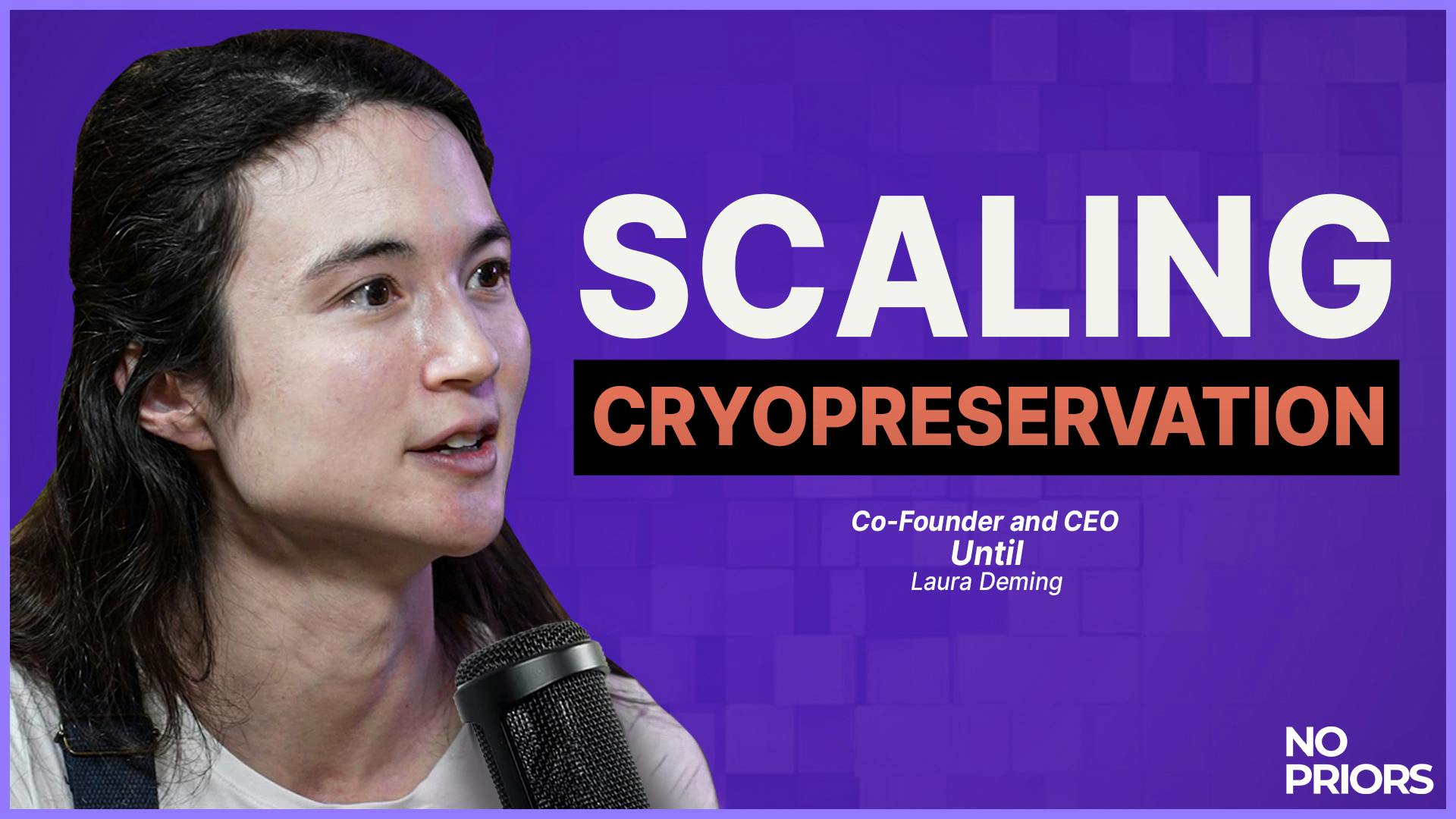
今天,我非常高兴能邀请到劳拉·德明,她曾是长寿基金的创始人,现在是Until公司的联合创始人兼首席执行官。
Today, I'm really excited to be here with Laura Deming, previously the founder of the Longevity Fund and now the cofounder and CEO of Until.
我们将讨论Until公司如何推动可逆低温保存技术的前沿进展——即冷冻活体组织并使其复苏,从人类器官开始,逐步扩展到小型动物,最终目标是实现全身复苏。
We're gonna talk about how Until is progressing the frontier of reversible cryopreservation or freezing living things and waking them back up, beginning with human organs progressing to small animals and hopefully making progress on the whole body.
这听起来像科幻小说,但我们会探讨其中的科学挑战、当前的进展,以及如果这项技术成为现实,将带来哪些影响。
It sounds like science fiction, but we'll talk about some of the scientific challenges, where we are today, and the implications if this is possible.
非常感谢。
Thanks so much.
欢迎,劳拉。
Welcome, Laura.
劳拉,非常感谢你参与这次对话。
Laura, thanks so much for doing this.
是的。
Yeah.
谢谢邀请我。
Thanks for having me.
自从我们之前的Pantheon观看了相关视频后,我就一直期待这次交流。
I've been so looking forward to this since our Pantheon watch sessions.
我们今天要讨论的是意识上传和意识的本质。
We're talking about upload and the nature of consciousness.
但你可能不知道的是,我很久以前就渴望一些技术,比如心灵感应、意识上传,以及让人冻结时间的能力。
But one thing that you don't know is that my, like, very long ago wished for technologies that I wanted to exist were telepathy and, like, upload and the ability to freeze time for humans.
我其实并不认为这些是可以去实际从事的研究方向。
I didn't actually think that was something you could go work on.
所以,看来确实可以。
So apparently, it is.
你是怎么开始从事这方面工作,或者对长寿产生兴趣的呢?
How do you end up working on that or being interested in longevity at all?
这是两个不同的问题。
There's two different questions.
是的,我来自长寿领域,但在我看来,可逆的低温保存技术的应用范围也超出这个领域。
So, yeah, I come from longevity background, but in my mind, reversible cryopreservation is applicable a bit outside of that as well.
我不确定。
I don't know.
我的意思是,我特别痴迷于那些明明应该有人去研究却没人做的领域。
I mean, I think I'm really obsessed with areas that feel like they should be worked on but aren't.
小时候,我天真地认为,长寿这一点显然值得投入研究。
And when I was a kid, I think naively, just growing up, that seemed really obvious for longevity.
但当我意识到,并不是大多数人把这当作明确目标时,我感到非常惊讶。
And it's really surprising to realize that it's not the case that most people are working on that explicitly as a goal.
事实上,长寿和衰老处于一个奇特的领域,因为它们尚未被明确视为疾病,因此不被视为值得研究的合法方向。
And in fact, think longevity and aging occupy this weird realm where because they're not explicitly diseases in a way that's fully specially recognized yet, they're not seen as valid to work on.
但这并不是出于技术层面的原因,我认为。
But that's not really for, I think, technical reasons on some level.
更多是出于分类的原因。
It's more for classification reasons.
因为,你知道,你可以用技术延长许多不同生物的寿命。
Because, like, you know, you you can extend the lifespan of, like, sort of many different organisms using technology.
那在人类身上能实现多少呢?
And how much can you that in humans?
我们完全不知道。
We have no idea.
而且,这可能只需要非常小的技术。
And, you know, it could be very small technology.
但我觉得长寿之所以有趣,是因为它似乎是一个社会忽视的领域,而我对这种领域非常感兴趣。
But sort of, like, I think longevity is interesting because it feels like an area where there's a social blind spot around something, and I find those very interesting.
也许我只是不太敏锐,我相信这确实是事实。
Perhaps I was just I'm sure this is true.
作为一个学龄孩子,我可能根本不够细心,但我甚至没意识到衰老是一个值得考虑的概念。
Not very observant as a, you know, school aged child, but I don't think I even understood aging was like a concept that I should consider at all.
那么,你是怎么开始深入思考这个问题的呢?
Like and so how did you end up thinking about it in any depth?
我成长在一个相当奇特的环境中。
I grew up in a pretty odd setup.
你知道,我在新西兰长大。
So, you know, I was in New Zealand.
我接受的是家庭教育。
I was homeschooled.
我根本没有上过正常的生物课。
I didn't really have a like, I didn't go to a normal biology class.
我基本上是独自在
I was kind of, you know, by myself in
房子里。
the house.
我想象你盯着一片羊群,然后想着:总有一天我们会变老。
I imagine you, like, staring at a field of sheep and then being like, someday we're gonna get old.
我应该为此做点什么。
I should do something about this.
是的。
Yeah.
不。
No.
我们曾经短暂拥有过一个农场。
That would have the farm that we had for a little bit.
但我记得有一件事特别让我印象深刻:小时候,我曾思考过我生命中的人们能活多久,他们有多大年纪。
But I I remember one thing that was this really stood out to me was at some point when I was a kid, I was thinking about how long people in my life were gonna live and how old they were.
不知为什么,我觉得每个人都应该活到10岁,然后立刻死去,这对我来说非常合理。
And for some reason, it made a lot of sense to me that everyone should live until they were 10 years old and then die immediately 10 years old.
我只是觉得,这听起来像是一个假设。
Like, I just that, like, that seemed like something hypothesis.
我其实不太清楚人们有多大年纪。
I didn't really know how old people were.
于是反过来想,哦,我爸爸可能大概八岁吧,我妈妈比他小,所以可能七岁。
And so working backwards, was like, oh, my dad must be, like, you know, maybe eight, and my mom's younger than him, so, maybe seven.
但我觉得特别值得注意的是,我们并不是都活到某个年龄然后就立刻去世。
But I think one thing that was really striking was realizing that we don't all live until a certain age, and then we die.
事实上,我们并不知道究竟是什么决定了我们的寿命。
In fact, we don't, you know, know, like, what determines how long we live.
这真的很有趣。
Like, that that was very interesting.
对吧?
Right?
这个想法是,如果我们都活到十岁然后立刻去世,我会觉得更有把握,认为长寿是一种不可改变的硬性限制。
This idea that, like, I almost like if we all lived until 10 years old and then we die immediately at the time, like, I would feel much more confident if I do that, like, longevity is some kind of immallible, like, hard limit.
但他们确实这么做了,当时对此存在不确定性。
But they do it that, like, there was uncertainty about that.
这非常有趣,而且有点像,是什么因素导致了这种不确定性?
It was really interesting, and it's sort of like, what what are the factors behind that uncertainty?
所以我要跳过你做的大量实验室工作、去MIT以及成为泰尔奖学金获得者的过程。
So I'm gonna fast forward through a bunch of, like, lab work you did and going to MIT and being a Thiel Fellow.
为什么选择长寿基金?
Like, why a longevity fund?
我只是非常字面地理解。
Me just being very literal.
当我对长寿产生兴趣时,如果你问这个领域里的普通人,什么是最大的问题?
Like, at the time that I was interested in longevity, I think if you ask the average person in the field, like, what's the big problem?
大多数人会说,我们只是无法为项目争取到足够的资金,所以这才是大问题。
Most people would say, well, we just can't get enough funding for our projects, and so that's the big problem.
而我当时还是个青少年,就字面意思地理解了这一点。
And I just took that literally, like, when I was a teenager.
所以我看到了这个问题。
So I I saw that problem.
是的。
Yeah.
我当时就是单纯地想,我应该弄一大笔钱来推动长寿药物的发展。
Was just literally like, I should just get a lot of money to, like, help push longevity drugs forward.
这个想法后来演变成了一个风险投资基金的名称,但它确实与风险投资的初衷背道而驰。
And the name for that happened in venture capital fund, but it definitely wasn't working downstream of the idea of venture capital.
这个想法是在那之后才出现的,是的。
Like, that came after Yeah.
这个理念就是,为那些本该获得资金的项目提供资金,
This idea of, like, just getting money for projects that should have money and
结束。
end end.
你这样做了好几年。
You did this for a number of years.
是什么促使你改变了对低温保存的关注重点?
What triggered the, like, sort of change in how you were gonna spend your attention to cryopreservation?
我觉得低温保存本身就是一件很酷的事,这么说吧,我认为它是最酷、最有趣、最好的问题之一。
I think just, like, cryopreservation is one of the cool like, I think it's not not like, to to pardon the pun, but I think it's one of the coolest, most interesting, like, best problems ever.
从很多不同的角度来看,我认为它具有巨大的反事实影响力。
Like, I I think, like, I mean, if from so many different angles, like, I think you've of counterfactual impact.
如果你痴迷于纯粹的技术乐趣、原始的、纯粹的技术兴趣、多样性和问题的逻辑层面,那它也非常吸引人。
Like, if you're obsessed with, like, just technical delight like, raw sheer, like, technical interest and diversity and and just, like, the logical parts of the problem.
而且从社会影响的角度来看,这个问题在人们如何看待它、以及影响它的各种因素方面,都特别有意思。
And then also, I think from perspective of social impact, like, I'm just it was just it's such an interesting problem from, like, how it's perceived and then, like, what are the different factors of that.
这就像从零到一的突破。
It was, like, zero to one.
我记得第一次清晰地看到这个问题时的情景。
It was, like, the I remember just seeing the problem clearly for the first time.
我身边很多人其实早就知道这件事,但我花了很长时间才真正自己看清了它。
I mean, a lot of the people in my life, I think, had been aware of it, but I just it took me so long to really, I think, see it clearly for myself.
但随后,这变成了一个从零到一的转折点,我觉得这是我未来十年唯一愿意全身心投入的工作。
But then it was just, like, zero to one of, like, this is the only thing that I could imagine pouring the next decade of, like, my work into.
那是在我完成与基金相关的第一阶段工作之后。
That that was after I kind of done kind of the the the first set of work with Fund.
我当时在想,下一个重大的方向会是什么。
I was kinda, like, thinking, like, what is the next, like, like, big thing.
和你的联合创始人一起,当时是不是立刻就明确地同意了?
With your cofounder, was it, like, an immediately obvious, yes.
我们应该一起做这个项目吗?
We should work on this together?
他是少数几个我问一个问题,第二天就能给我答复的人之一。
He's one of the few people where if I ask him a question, like, he'll come back the next day and give me an answer.
他真的深入思考过原则问题,清楚地知道正确的答案是什么。
He's literally thought through principles, like, what the correct answer is.
我记得有一次,我意识到他写过一份关于冷冻保存原则的文档。
Like, I remember at some point, I realized that he'd written a doc on, like, the principles of, like, you know, cryopreservation.
大多数人会从文献中引用,或者从不同层次的来源中摘录这些内容。
Like, most people, you know, like like, would write that from the literature or kind of, like, citing different sort of sources at various levels of granularity.
亨特却回头重新推导了统计力学的基本定律,并将其作为这份低温保存文档中你应该掌握的核心内容。
Hunter went back and, like, rederived fundamental laws of stat mech as a part of, like, this is what you should know in cryopreservation doc.
我真的很钦佩他如何从非常简单的模型出发,逐步构建出连贯且更复杂的技术图景。
Like, I I really admire how much he builds up from, like like like, really simple models to try to create coherent, like, technical pictures that that are more complex.
他绝对是迄今为止最有趣、最棒、最令人愉快的合作伙伴。
He's, like, the most fun, interesting, best person to work with ever, for sure.
这根本不需要说服。
And it wasn't a hard sell.
我们应该去研究这个问题。
Like, we should go work on this problem in particular.
这确实不难说服,但并不是一种有趣的方式。
It was not a hard sell, but it was not an interesting way.
我觉得低温保存领域最吸引我的一点是,它非常有说服力。
So I I think one thing that I, like, love about the field of cryopreservation is I think it's very compelling.
就像,如果你喜欢硬核的,这就是那种问题本身就能说明一切的情况。
Like, if you like hard like, it's it's one of those things where if you like, the problem speaks for itself.
所以我记得在我们第一次通话时跟Hunter提起过,他基本上说:‘我不信这个。’
And so I remember telling Hunter about it in our first call, and he basically was like, oh, I don't buy it.
他后来告诉我,其实当时在电话里并没有告诉我真实想法。
He he told me later that he didn't tell me at the call.
但他之后花了几天时间认真思考,仔细琢磨我们对冰形成了解多少,做了一些简单的估算,然后回来了。
But then he went off and thought about it for a couple days and, like, really thought about, like, what we knew about ice formation, like, did, you know, some, like, basic back of the envelope math and came back.
然后他说:‘等等。’
And he was like, oh, wait.
这看起来实际上可行。
This seems like actually feasible.
这似乎属于可能实现的范畴,和我最初的直觉完全不同。
Like, this seems like it's in the realm of possibility in a way that is very different from my initial intuition.
这种思维上的转变让我觉得特别有趣。
And and that that sort of, like, conjugation is just so interesting to me.
也许我们应该退一步,说说Until的目标到底是什么。
Maybe it's useful to zoom out and just say, like, what is the goal of Until?
我会把我们的目标理解为创造一种新的重症护理形式。
I would think about our goal as trying to create a new form of critical care.
我会举一个例子,这可以说是公司的核心:有些年份,某些疾病,比如转移性黑色素瘤,在短短一年内就发生了巨大变化——从原本只有六到九个月的预期生存期,不到一年,转变为通过新的联合免疫疗法,患者可能获得十年以上的预期生存期,甚至有百分之五十的人能存活超过十年,不再因黑色素瘤而死亡。
The example that I would give that is sort of the core of the company is there's some years where certain diseases such as like metastatic melanoma go from being like like, sort of in a single year, like, metastatic melanoma went from being something that you had, like, a six to nine month prognosis, like, less than a year of expected survival, to with, like, you know, new combination immunotherapies, you you might have a decade plus of expected survival or, like, fifty percent of people sort of surviving over a decade, you know, without getting sort of death from melanoma.
事实上,到那时,他们反而开始死于其他疾病了。
In fact, they were starting to die of other things at that point.
我们的标语是:单一年份的进展,可能决定患者是死于绝症,还是能活到迎来关键性治愈的那一天。
The tagline is, like, single years can make the difference between a patient dying of terminal illness and, like, living long enough to make the critical cure.
但目前,我们根本无法按暂停他们的生物时间。
But right now, like, there's no way to press pause on their biological time.
假如你能拥有一辆来自未来的救护车,会怎样?
Like, what if you had an ambulance the future?
对吧?
Right?
想象一下,如果你能对一位病危的患者采取某种方式,让他们基本进入休眠状态,一直持续到针对他们疾病的突破性疗法问世。
Like, what if you could take someone who is on their deathbed and, you know, find some way to, you just sort of hibernate them, basically, until the sort of critical cure for their disease comes online.
在这个语境下,我们谈论的并不是几十年,或者更长时间。
And in this context, we're not talking about necessarily decades or kind of like much longer than that.
最初,这指的是在某个时间窗口内,有可能开展一项关键性临床试验,如果患者符合资格,这项疗法将对其疾病产生巨大影响。
Initially, it's just kind of in the context of when there's a window where you could imagine a critical trial is being done for a drug that, were they eligible for it, could make a huge difference for their disease.
举个例子,我的联合创始人岳父就经历过这种情况:他得了晚期癌症,而一种本可治疗或缓解该病的疗法,恰恰在他失去资格后几个月才问世。
To give an example of the need to, it's like my co founder's father-in-law had this happened to him in the sense that he got sort of advanced cancer that would have been treatable treatable or addressable by a therapy that came out basically a couple months after he was no longer eligible for the therapy.
他仅仅因为时间差了几个月,就错过了关键的临床试验。
And he missed the critical clinical trial by a couple months.
因此,这种紧迫性意味着,身处这种境地的人不该因为患病时间和疗法上市时间仅相差几个月,就错失一项关键疗法。
And so it's sort of like that level of urgency that someone in that position shouldn't have to miss a critical therapy because there's a couple month difference in when they got their disease and when the therapy became available.
从产品角度来看,这意味着你需要进行全身低温保存。
And from a product perspective, that means you need to do whole body cryopreservation.
是的。
Yeah.
为了更好地说明我们对这个问题的思考方式,我们的长期目标是实现可逆的全身低温保存,用于医疗意义上的休眠。
So to give context on how we think about this problem, so our our long term goal is reversible whole body cryopreservation for, you know, medical sort of hibernation.
但在近期,我们专注于可逆地低温保存单个人体器官,以帮助移植患者更高效地获得器官。
But in the near term, what we work on is reversibly cryopreserving human single human organs to help transplant patients get organs more efficiently.
我想回头聊聊这里所有的技术挑战,以及我们目前所处的位置和你认为的下一个里程碑。
I want to come back to, like, all of the technical challenges here and where we are and what you think the next milestones are.
但因为你从医疗用途的角度来描述它,我得坦白说,小时候我就想,要是能冻结时间就好了,这样我就能去火星了。
But because you describe it in the context of medical use like, I'm gonna be honest, as a kid, I was like, well, I want to be able to freeze time because I wanna be able to go to Mars too.
或者你说,因为你一直从长寿的角度研究这个问题,像衰老这种状态,其实可以被视为一种疾病,是值得投入的、可信的医学研究方向。
Or you said, because you've worked on longevity with this perspective, like aging is, you know, it could be considered a disease, a health state we should work on that is credible medical science.
那么,你如何看待这些其他的应用场景呢?
So how do you think about those other use cases?
当你开始思考如何真正应用这项技术时,一个有趣的问题是:当事人的体验是什么?这不仅仅关乎技术层面的疾病治疗,更涉及社会层面。
So an interesting thing when you start to think about, like, actually applying this technology is is sort of what's the experience of the person, not just kind of technically for the disease, but socially.
比如,大多数人不愿意接受医疗休眠,尤其是不会把它当作一种娱乐方式,主要原因之一是,人们往往认为自己的一部分身份是由社会关系所定义的。
So, like, like, one of the number one reasons most people wouldn't do medical hibernation, and especially that it wouldn't be, like, for the most part of recreational thing, is that, you know, you I think a lot people view themselves in part defined by their social context.
所以,比如说
So, like
当你提到娱乐用途时,你是说你觉得去火星是一种娱乐性应用吗,还是
When when you say recreational thing, you mean because, like, you you just you think of that as going to Mars as a recreational use case or
不
No.
抱歉
Sorry.
我认为这种情况,我想到的是,有些人可能会想象自己想跳到未来,看看会发生什么,也许他们的生命年限不变,但整体被未来推移了一段时间。
I think this case, what I'm thinking of is, you know, some people might imagine that they would love to skip into the future just see what happens, you know, and maybe, you know, like, have their same amount of number of years of life, but, like, have be future shifted by some amount of time.
是的
Yes.
但大多数人不会这么做,而且他们对自身进行冬眠的想法也非常谨慎,原因是
But the number one reason that most people wouldn't do that and when and are are also just, you know, very wary of the idea of hibernation for themselves is, you know
我不能带所有人一起去。
I can't take everybody with me.
是的。
Yeah.
没错。
Exactly.
这种想法是,你会被周围的人塑造出你自己。
It's this idea that, like, you kinda find yourself by the people around you.
所以我认为,像去火星这样的用途,其实都是可能发生的,无论有没有时间旅行,或者说是某种意义上的意识定义,这些都可能实现,但肯定需要技术支撑。
And so I think I think, like, you know, those kinds of use cases, like, going to Mars is really those are all kind of things that could happen and could happen with or without time or, like, sort of could happen will require technology for certain, like, definitions of mind.
但我认为,很多人会面临的问题是:为了放弃当前的社会环境,远行是否值得?
But but I think the thing that a lot of people will face is just, like, this question of, like, is it worth, you know, traveling so far to give up my current social context?
这会限制人们愿意使用这种技术的程度,我认为这种选择确实会带来真正的代价。
And that will put a limit on, like, how much people wanna use this for like, I I think there's, like, a real cost that that kind of you incur.
因此,在我看来,最初它只适用于真正严肃的用途,比如你如果不这么做就会真的死亡,或者类似的情况,因为是的。
And so it's in my mind, it only makes sense for, like, really serious use case use cases initially where, like, you literally would die Or, like, you know but because yeah.
因为你正在赌上你当前的社会现实,以及没有你时它会如何演变, versus 你可能想要的其他东西。
Because you're you're kinda putting on the line, like, your current like, of your current social reality and, like, how that will evolve without you versus, like, you know, this other thing that you might want.
但你知道,即使在这种情况下,很多人还是想去火星,因为我有点觉得……
But, you know, a lot of people might wanna go to Mars even in that context because I I think I'm a little yeah.
这个代价相当大。
The the cost is pretty significant.
这非常
It's very
很难知道我们真正想要什么。
hard to know what we want, though.
很多人会根据自己的终极幸福感是否更高来做这个决定。
A lot of people might make that decision whether or not their ultimate happiness is higher.
这很合理。
That's fair.
也许你
Maybe you
可以具体分析一下,你是如何看待这些科学挑战的,对吧?相比之下,也许连亨特最初的反应都觉得这听起来像科幻小说。
can just break down how you think about the challenges scientifically, right, versus, I think, to maybe even Hunter's original reaction, like, sounds like science fiction.
我不确定你能不能去研究那个东西。
I don't know if you can go work on that thing.
是的。
Yeah.
对吧?
Right?
所以,如果这是关于晶体形成或这些挑战以及你认为应该按什么顺序解决它们的话。
And so if it's, you know, crystal formation or whatever these set of challenges and what sequence you think you should solve them.
我明白了。
I see.
对。
Yeah.
也许我可以列出一系列我认为共同让这个问题变得非常有趣的事实。
Maybe I can just give a series of facts that I I think together sort of make the problem super interesting.
所以,其中一个事实是,冰的形成是一个随机过程。
So so one one fact is that ice formation is a stochastic process.
所以,如果冰在某种材料中一旦超过某个温度点就直接完全形成,比如从零直接变成一。
So if if ice just formed unilaterally in any given material past a certain point of temperature, like, you know, just, like, go from zero to one.
那就是百分之百的冰。
It's, like, a 100% ice.
我觉得这在技术上可能很难仔细思考,但冰的形成实际上是通过随机成核然后扩展的过程。
Like, I that that might be kind of hard to think carefully about, technically, but ice sort of forms through a process of random nucleation and then extension.
这很有趣,因为你可以调控成核的速率和扩展速率,从而调控冰形成的概率。
And this is cool because you can modulate the, like, sort of nucleation the rate of nucleation and extension to then modulate the probability of ice formation.
由于这是一个概率性过程,如果你能足够好地做到这一点,并且尽量减少在冰可能成核的温度区间内停留的时间,那就有可能大幅减少冰的形成。
And because it's probabilistic, if you can do that well enough and you can sort of spend minimal time in the temperature range where ice can nucleate, then that gives you a shot at sort of preventing a lot of ice formation.
所以,最核心的口号就是:尽可能完全避免冰的形成。
So, like, the number one tagline would be, like, avoid ice at all or, like, sort of avoid as much as possible.
可能有些人正在研究利用冰形成来进行冷冻保存的技术,但我们关注的是尽可能避免冰形成的情境。
There may be some like, some may think some people might be working on technologies to cryopreserve with some sort of, like, ice formation, but we're focused on regimes where you're basically trying to avoid as much ice formation as possible.
对于非生物学家来说,冰的形成是坏事,因为它会破坏所有细胞膜。
Just for the nonbiologists, you know, ice formation is bad because it breaks all the cell membranes.
是的
Yeah.
冰的形成很糟糕,因为水结冰时会膨胀,这对组织来说会造成严重损伤。
So ice formation bad because ice expand water expands when it forms ice, and that's just hard for your tissue to take without substantial damage.
所以你要避免冰的形成。
So you want to avoid ice formation.
有趣的是,存在一个温度阈值,低于这个温度冰的形成就会停止。
And the cool thing is that there's sort of a temperature below which ice formation stops happening.
所以,如果你能快速从零度以下穿越到大约零下130度,并且在到达这个温度之前避免冰的形成,那就没问题了。
So basically, if you can traverse, let's say, going below zero degrees or less through to around minus 130, and you can get below that without ice formation, then you're good.
而有趣的是,一旦达到这个温度,你就可以长期保持稳定。
And the interesting thing is at that point, you're good for quite a long time.
已经有冷冻保存超过三十年的人类胚胎,最新纪录是超过三十年,之后解冻并成功用于妊娠。
So there have been human embryos that were cryopreserved for the latest record was over thirty years and then rewarmed and sort of viably used to create pregnancy.
而且,确实有一些孩子,作为微小的胚胎被冷冻保存了整整三十年。
And then, you know, sort of like there are kids who were literally cryopreserved for thirty years as tiny embryos.
所以最让我惊讶的是,我们已经能够可逆地对组织进行低温保存,包括人类组织,甚至整个身体的人类组织,就在那种非常小的阶段,比如只有几百个细胞的时候,我们一直在做。
And so that's the last thing which was very surprising to me, which is that we already reversibly cryopreserved tissue, including human tissue, including whole body human tissue at that very, very small, like, you know, in a couple 100 cell stage all the time.
而且我们保存的时间非常长,说实话,我原本从基本原理上会觉得这根本不可能。
And we do it for very long time periods, which I I honestly, like, would have first principles been stuck on.
这真的可能做到吗?
Like, is this possible to do it all?
能不能扩大规模呢?嗯。
It's is it possible to scale up Mhmm.
扩大到一个复杂的生物系统,这种系统拥有大量血管,涉及不同的材料特性,你必须深入思考灌注、化学物质如何进出、以及如何足够快地散热和吸热。
To a large complex biological system that has a lot of vasculature where you're dealing with different material properties, where you have to think a lot about, like, perfusion and how to sort of diffuse chemicals in and out and how to, like, get heat and out quickly enough.
所以,认为你可以暂停所有分子运动,然后随机重启,连细胞都能存活下来——这种原理在我过去看来简直疯狂。
So the idea that you could pause all molecular motion and then randomly restart it, and even a cell would survive that, you know, like, principles to me used to seem crazy.
我们知道这是可行的。
We know that works.
是的。
Yeah.
就像是,等等。
It's like it's like, wait.
等等。
Wait.
我们其实已经做到了,是的。
We just we already, like Yeah.
科学家们只是尝试了一下,结果成功了。
Scientists just tried it, and it worked.
所以现在的问题是,如何将它扩展,并以符合组织健康的方式实现。
And so now the problem is, like, scaling that up and doing it in a way that's compatible with, like, you know, tissue health.
是的。
Yes.
我觉得最让我惊讶的一件事是,不久前在你的实验室里,我发现人们实际上在处理的是一些工程问题,比如:我们如何让物体快速而安全地升温,而不是去研究治疗方案。
I think one of the things that was most wildly surprising to me, like, being in your lab a little while ago is how much it looks like people were working on what I'd consider to be like engineering problems around it's like, oh, how do we get something to warm quickly and safely enough versus let me go work on this therapeutic?
对。
Yeah.
所以其实我觉得
So actually, I feel
这个问题里有一部分,我已经对外解释了很久。
like there's this part of the problem that I've been trying to explain externally for a long time.
每次我试着解释它的时候,总觉得说得好像不够具体之类的,但它其实是我觉得这个问题值得研究的核心原因之一,那就是:我们在一定程度上可以权衡工程难度和生物学难度。
Every time I try to explain it, I think it comes off as, like, not specific or something, but it is actually one of the core reasons why I think the problem is interesting to work on, which is that, like, you can trade off, like, engineering difficulty and biological difficulty to a nonzero degree.
当然不是说能完全互换。
Like, not not a 100%.
你不能只靠工程学来解决这个问题。
Like, you can't just use engineering to solve the problem.
你绝对会遇到各类生物学问题,而且在部分应用场景中,这些问题的答案可能是行不通的。
You absolutely have biological questions, and, like, those questions could come out in the negative for some use cases.
所以这不是说你能把所有问题都归为工程问题来处理。
So, like, that's not saying you can just make engineering a problem.
不过你也可以通过搭建更完善的工程工具,来降低生物学层面的工作难度。
Like, you can make your life easier on the biology front by building better engineering tooling.
而这种可能性本身意义重大。
And the fact that that's possible is a huge deal.
这在生物学的大多数问题中并不成立,它让你在解决这个问题上拥有很大的优势。
Like, that is that is not true for most problems in biology, and it gives you a lot of leverage on the problem.
这可能只对观看此内容的约5%的人感兴趣,但我真正着迷的是这个想法:温度是一个如此美妙的概念工具。
This is probably interesting to maybe only, like, 5% people watching this, but, like, I I think that I'm obsessed with is this idea, like, temperature is such a beautiful conceptual tool.
对吧?
Right?
作为概念,温度花了物理学家数百年才得以形成。
It's like temperature as an idea is something that in physics took, like, took physicists hundreds of years to come up with.
它将分子运动与一个高层次的、可测量的参数联系起来。
It links, like, molecular motion to a high like, a single high level measurable parameter.
仅仅调节温度,就能让你大致了解纳米尺度上分子的相对时间进程。
And just tuning temperature, like, sort of tells you about almost, like, the relative passage of time of, like, molecules at the nanoscale.
拥有这样一个概念性杠杆来应对问题,绝非易事。
What it like, that's that's a highly nontrivial sort of conceptual lever to have on a problem.
在生物学中,一个最大的难题是,很难找到能够对纳米尺度进行操控的、具有如此强大作用的概念性工具。
And in biology, one of the biggest problems is, like, it's really hard to find powerful conceptual levers on for manipulating the nanoscale that have anything approaching that degree of sort of leverage.
这实际上意味着,你可以将物理学中大量理论工具应用于建模这个问题的某些部分,而且这些方法是真正有用的。
Basically, what that gives you is, like, you can apply a lot of theoretical sort of a lot of theoretical toolkit used in physics to model parts of this question in ways that are actually useful.
你几乎无法用物理学的方程来对生物学中的其他任何问题进行有意义的思考,这一点并不成立。
And it is just not true that you can use equations from physics to think usefully about almost any other problem in biology.
在医疗设备的领域中,确实存在不少应用案例。
There are plenty sections in the context of medical devices.
但当你讨论的是改变绝症的进程时,这一点尤其重要,因为这并不意味着治愈,而是为你提供了获得更多时间的可能性。
But in a context where you're talking about changing the course of terminal illness, which this one is interesting because this doesn't mean lateral change it, but it gives you the possibility of sort of more time.
我认为这是这个问题中最关键的一点之一。
I think it's one of most important things about the problem.
我目前还不知道如何清晰地解释这一点。
I don't yet understand how to explain it in a way that is clear.
但我认为,理解这个问题时,这是最重要的一点之一。
But I think it's, like, one of the most important things to understand about the problem.
是的
Yeah.
也许如果我具体思考一下如何应用它,比如,从器官保存生物学的角度来看,如果要让器官均匀地重新加热(抱歉,是复温)很有挑战性,那么也许该做的就是改变你的加热设备的表面积与体积比,或者以不同方式分布热量,而无需改变你对生物学的理解,仅通过从工程角度发明的新设备和技术来实现。
Maybe if I think about actually applying it, like, just very concretely to what you are doing, like, if it is challenging from a, you know, organ preservation biology perspective to have a organ reheated or sorry, rewarmed, like, evenly throughout, then maybe the thing to do is to, like, change the surface area to volume ratio of, like, your heating device or distribute the heat in different ways without, like, changing your understanding of the biology, but just with new devices and technologies that you invent from the engineering perspective.
这实际上看起来是一个非常简单的例子。
Like, that actually seems like a very simple example.
我意识到你暗示了一种更根本的视角,即为什么温度从工程和生物学两个角度来看都是一个如此有趣的框架,而且在你投入精力的地方存在权衡。
I realize you're implying a, like, more fundamental view of, like, why temperature is just such a interesting framework to be working on from both an engineering perspective and a biology perspective, and there's, like, trade offs where you put your effort here.
但我认为,这一点在我刚进入你的实验室、开始更多了解之前,完全没想过。
But I think that's actually that's something that, like, didn't did not occur to me at all coming into your lab and learning more about Until.
我当时觉得,这实际上在某种程度上比我原先理解的要简单得多,以至于我觉得,只要你能通过这种方式完美地降低和升高温度,器官就会起作用。
I was like, oh, it's actually like a, to some degree, much simpler problem than I understood to the point of like, well, if you can just reduce and preserve temp reduce and increase temperature in these ways that are perfect through this organ is going to work.
是的
Yeah.
让我重新陈述一下,然后给出一个注意事项,以确保我理解正确。
So let me restate that and then give one caveat just to make sure that I hear correctly.
你可以这样理解工程学与生物学之间的关系:在工程学上,你可以调节冷却和复温的速率,但只能在一定范围内。
So a way that you can talk about the tree up between engineering and biology is that, like, with engineering, you can modulate cooling and rewarming rate, just to some to certain to certain extents.
这进而会影响我们添加到系统中的冷冻保护剂——也就是调控冰晶形成的化学物质——的量。
And then that can then change, like, how much what we call cryoprotective agent or kind of chemical that modulates ice formation you add to the system.
嗯。
Mhmm.
你希望尽量降低冷冻保护剂的浓度。
And you wanna minimize the concentration of that cryoprotective agent.
它可能具有毒性。
You can be toxic.
是的。
Yeah.
没错。
Exactly.
对。
Yeah.
因此,随着冷却和复温速率的提高,也就是将组织在冰晶形成的危险温度区间内停留的时间最小化,你可以相应地降低所使用的冷冻保护剂的浓度。
And so as you increase cooling and rewarming rate, aka spending, therefore, minimal time in kind of the dangerous zone of ice formation, you can correspondingly decrease the concentration of cryopitant that you're putting in.
但如果你能瞬间完成冷却和复温,那就根本不需要添加任何冷冻保护剂了,不过我们通常不假设这种技术对大型系统是可行的。
But if you could instantaneously cool and rewarm, then you wouldn't have to put any CPE in, but that's that's not something that we're default assuming is feasible for a large system.
因此,生物学因素始终存在,比如组织对新型化学物质的反应,尤其是从毒性角度而言。
So there's still always going to be a component of biology, AKA like how tissue responds, especially from toxicity perspective to, like, a new chemical agent.
你们目前进展到哪一步了?
Where are you now in this progression?
比如,我是不是可以理解为,你们先从肾脏开始,然后直接跳到小型动物?这中间的跨度是不是很大?
Like, should I think of it as like there's a kidney, and then it seems like quite a large jump to a small animal, but maybe it's not?
是的。
Yeah.
所以我们同时在两个方向上推进。
So we work on the two in parallel.
我们既在推进冷冻保存和复温技术的规模化,使其达到人体器官的尺度。
So we both work on scaling up cryopreservation and rewarming technologies to kind of human organ scale.
同时,我们也在并行研究大鼠的可逆冬眠,并将我们在肾脏研究中获得的技术应用到大鼠模型中,
And also, in parallel, we work on sort of whole rat reversible hibernation and translating technologies over from sort of what we learn on the kidney side into the rat context, as well as
同时也专门针对大鼠开展相关研究。
doing things specifically for for rat.
你们公司创立之初,心里有设定一个时间表吗?
When you started the company, did you have a timeline in your own mind?
所以,我我
So I I
起初,我觉得我们或许能取得一些进展,或许能做出一些不错的产品。
think initially, I was like, we could maybe make some progress and hopefully make some good products.
但全身体低温保存这个想法,感觉非常遥远,如果真能实现的话。
But, like, the idea of full body cryopreservation felt like that would be really far out if that was possible.
我的意思是,我依然不会给它设定一个近期的时间表,但我感觉我们至少已经有了更清晰的路线图,可以开始朝这个方向迈进,而且最初的几步进展比我想像的要快得多,这样说你能理解吗?
I mean, I I think it I I definitely still wouldn't put, like, a near term timeline on it, but it I feel like we have a much clearer road map at least to get to begin to get there, and the first steps seem faster than than I would have imagined, if that makes sense.
但要实现全身体可逆低温保存,最大的未知数在于大脑。
Like but the the the big unknown to get to whole body reversible is the brain.
是的。
Mhmm.
还不清楚。
It's unclear.
比如,大脑能够承受很多变化,并且在衰老过程中确实能承受各种类型的损伤或变化。
Like like, the brain can withstand a lot of change and does withstand a lot of different types of damage or or change with age, for example.
但目前还不清楚,在全身可逆性保存协议的背景下,大脑可能承受什么样的损伤,以及能够达到多高的保真度。
But it's unclear whether like, what kind of injury the brain could sustain in the context of, like, whole body risk repertoire protocol and then, what level of fidelity it's possible to do.
所以,明确地说,这是神经科学领域的一个重大未知数。
So, like, that that that, to be clear, is a big unknown on the neuroscience side.
你怎么
How do
在一家关于如此重大的科学目标、时间线却很模糊的公司里,你如何招募和领导团队?无论是寻找合适的人才、激励他们,还是在这样的背景下如何思考紧迫性?
you recruit and, like, lead in a company that has, like, let's say, an unclear, like, timeline around a really big scientific goal like that, like, in terms of both finding people that are the right fit, motivating them, and how do you think about urgency in that context?
我的意思是,关于我们第一个产品,我们有一个相当明确的时间表,那就是实现不可逆的低温保存。
I mean, I think we have a pretty clear timeline for our first product, which is, like, get irreversibly cryopreserved.
如今,移植患者经常因为时间安排问题而错过正在运往他们的器官。
So, transplant patients today surprisingly frequently miss organs that are en route to them because there's a timing problem.
你知道,器官在供体捐献后很快就会失效。
So, like, you know, organs expire very quickly after they become available from a donor.
这非常不幸。
That's very unfortunate.
是的。
Yeah.
这很荒谬,因为器官是我们所知最宝贵的资源之一,但人们却经常包私人飞机。
And it's crazy because they're one of the most precious resources we know of, and yet people regularly charter private jets.
就像你派一名外科医生坐私人飞机去取器官,是的。
Like, it's like you're putting a surgeon on a private jet to go pick up an organ Yeah.
及时把它送回患者那里。
Get it back to a patient in time.
是的。
Yeah.
而且你都是在最后一刻才安排,让患者在手术前临时待在移植中心两小时范围内,随时携带传呼机或通知设备。
Like and you're doing all that at the last minute and scheduling the patient for surgery at the last minute so the patient has to wait within, like, a two hour radius of a transplant center with pager on them or, like, a notification device at all times.
因此,我们首个目标产品就是能够为器官‘暂停时间’。
And so the first product that we're aiming towards is just being able to pause time for the organs.
患者不需要着急,你可以有足够的时间把器官送到患者那里。
The patient doesn't so you can take as long as you need to get the organ for the patient.
这在近期是完全可以实现的。
And that's very near term.
这并不是长期目标。
That's not long term.
我们的目标是尽快将这项技术推进到临床前研究并进入临床应用。
That's like we're aiming to get that into preclinical studies and into the clinic as quickly as possible.
所以我认为,设定一个非常具体的、与我们长期目标密切相关的愿景很有帮助。
So I think it helps to have a very concrete goal that clearly is relevant to our long term goal.
对吧?
Right?
我认为另一个令人鼓舞的点是,如果我们真的在讨论全身可逆的低温保存,却连这个问题都解决不了,那简直
I think another thing that was inspiring just about that product was, like, if we're at all talking about whole body reversible cryopreservation and we can't make a dent on that problem, like
没有不推进的可能性
There's no version of not going
继续下去。
through it.
是的。
Yeah.
这是一点关键:如果你真的认真对待,这件事应该是能做到的。
And it's one the things where, like, if you're serious, that should be doable.
如果你连这个都做不到,那你根本就不是那个能做长期事业的公司。
And if, like, you can't do that, then, like, you you're not the company to, like, do the long term thing.
所以对我们来说,拥有这样一个清晰的基准非常棒,也就是:我们是否正确地认为,这项技术在那个层面上是可行的?
So that that it was nice for for us to, like, have a very clear benchmark for ourselves of, like, you know, are we correct that this is attractable technology on that scale?
我想,领导团队超越这个目标会不会有挑战?因为大家都明白公司有更宏大的使命?
I guess, like, is it a challenge to lead beyond that because everybody understands the company has a broader mission?
还是只专注于第一步?
Or is it just focus on step one?
我认为这可能是个难题。
I think there's the possibility that's difficult.
但我觉得目前我对我们在这一领域的竞争力感到乐观,也就是说,如果我们真的能做到全身低温保存,那毫无疑问我们是能做到的。
But I I think right now, I feel good about sort of our ability to compete around that, which is, I think if we were, it's a 100% possible to do whole body works for preservation, there's no question we're certain.
如果做不到,那我们就是吹牛了,那样我们就没法招募人才了,因为从这里到那里之间存在大量的技术风险和不确定性。
Like, then we would just be bullshooters, and then we like, we wouldn't be able to recruit because it's you know, there there's a lot of technical risk, and there's a lot of uncertainty between here and there.
嗯。
Mhmm.
但我觉得我们可以准确地展示我们用来思考这个问题的模型,比如,为什么我们认为这件事至少在理论上是可行的,以及我们正在测试什么,以逐步接近目标。
But I think what we can accurately expose the models that we use to think about the problem, you know, like, why why we think that this is at all, like, possibly in scope and, like, you know, what we're testing to, you know, sort of trying to closer to there.
我认为这个问题足够有趣,以至于许多优秀的人一开始都会持怀疑态度,因为直觉上觉得这不可能成功。
And I I think the problem is interesting enough that, you know, some of the hundreds are, like, really good people tend to be skeptical at first because there's an intuition that it shouldn't work.
但随后,他们会很快看到大量数据,然后就会想:等等。
But then, like, they'll see a lot of data very quickly where it's like, wait.
我原本直觉上认为这不可能,但看起来似乎是可行的。
I wouldn't have thought that was possible intuitively, but that seems to be possible.
所以,让我从一些基本原理来思考一下。
And so, like, let me think about some first principles.
我认为你另一个
I think you another
除了胚胎可以冷冻之外,你认为还有哪些重要的数据点?
data point that you think matters besides, like, embryos can be frozen?
胚胎可以
Embryos can be
可逆的低温保存。
reversible cryopreserved.
我的意思是,现有的低温保存领域已经有相关研究。
I mean, there's work from the existing cryopreservation community.
所以,从这个团队开始,再往前推。
So from group and then predated by that.
另外,你知道,格雷格·法赫德在研究肾脏的可逆性冷冻保存方面做了出色的工作,表明你完全可以将肾脏进行不可逆冷冻保存,解冻后移植到一只没有其他肾脏的大鼠体内,大约一个月后,这只大鼠的肾功能就能恢复正常。
Also, you know, Greg Fahed has done excellent work sort of looking at reversible cryopreservation in kidneys and showing, like, you can irreversibly cryopreserve a kidney, reworm it, put it into a rat that does not have another kidney, that rat returns normal function after about a month.
所以,即使仅从整个哺乳动物器官的层面来看,这也不是一个完全脱离现实的问题。
So it's sort of, like, you know, even just on the whole mammalian organ scale, like, this is not a problem that's entirely out in the wilderness.
这甚至在当前学术上是可研究的。
It's something that, like, is even academically tractable right now.
既然如此,你为什么认为它没有被深入研究呢?
Given that's true, why don't you think it's been worked on?
我知道我在替别人回答问题,但我只是觉得,
I realize I'm asking an answer for other people, but I'm like, well,
这很奇怪。
that's very odd.
是的。
Yeah.
我的意思是,我认为即使是器官可逆性冷冻保存这个领域,长期以来也一直难以吸引到足以推动其规模化发展的资源。
I mean, I think even the field of, like, organ reversible cryopreservation really had trouble for a while attracting the resources that would be required to to scale it.
展开剩余字幕(还有 70 条)
我非常推崇这个领域的先驱者们。
And I and I really give a lot of credit to the field pioneers.
比如格雷格,他不懈努力,让这个领域成为现实,让玻璃化保存成为人们认真对待的事物,而在很长一段时间里,这似乎并不值得专注。
Like, you know, Greg, you know, is just an incredible example of somebody who fought tirelessly to make this field a reality and sort of make vitrification a thing that people were taking seriously and, you know, like like, through a long period where I think it just wasn't kind of something to to focus on.
但我不知道该怎么表达,但在风险投资领域,我觉得我生命中这一部分的整个工作,就是挑选那些感觉奇怪、难以想象的趋势,但从技术上讲,其实并没有什么根本性的障碍。
But I don't know how to put it, but, like, in venture, like, I think my whole my whole job sort of in that part of my life is, like, picking trends that, like, sort of feel like, oh, this this thing just feels weird or it seems kind of hard to think about, but, technically, like, there's nothing kind of that corresponds to that.
嗯。
Mhmm.
我认为,比如全身可逆性冷冻保存,现在看来更合理了,但全身可逆性冷冻保存确实是一个容易与极端幻想混淆的领域,很难理性地讨论它。
And I think, like, for example, like, whole body reversible car preservation, like, now seen as much more kind of reasonable, but whole body reversible car preservation, definitely an area where I I think there's just, like, so much possibility for conflation with, like, really extreme like, like, it's it's it's hard to talk about it rationally.
人们要么非常喜欢它,喜欢到不愿质疑;要么担心,认为思考或关联这个话题太过科幻,不适合他们当前应该专注的方向。
People either, like, love it, and they love it so much that they won't question it, or it's, like, they're worried that thinking about that associating with it is a little bit too science fiction for kind of where it might be optimal for them to be focused.
所以我觉得,我一直在回避一些仍然让人感到不适的话题。
And so I think, like, I'm kind of dancing around some things that are still a bit antiemetic around it.
但对。
But yeah.
过去五年左右,长寿研究在学术界和消费者兴趣方面都变得更加主流。
The study of longevity has become much more mainstream over the last five years or so, both academically and in terms of consumer interest.
对吧?
Right?
我认为这两者是相关的。
And I think those two things are linked.
你希望冷冻保存也能发生这样的变化吗?
Do you hope that happens with cryopreservation?
当最优秀的下一代教授之一能够毫无羞耻或担心拿不到资助地选择研究衰老时,这真是太好了。
Aging becomes something that, like, of the best, like, someone who seems one of the best next generation professors chooses to work on without shame or fear of not getting a grant is great.
衰老不再被视为羞耻之事,这很好。
That part of aging being on shame is great.
我确实希望冷冻保存也能如此,特别是对于各种组织的冷冻保存,包括神经组织和与全身冷冻相关的内容。
And I definitely hope that that happens for cryopreservation, specifically also for cryopreservation of a variety of tissues, including neural tissue and including things related to whole body work.
并非 exclusively,但基本上,这些话题被视为值得研究的正经方向。
Not exclusively, but basically, those topics are seen as something that it's fine to work on.
也许你可以想象一下,器官移植是如何被改变的?比如,具体在哪些方面?
Maybe just like if you go to paint a picture of organ transplantation is transformed by, you know, until like, in what ways?
你觉得这会如何改变患者能接受的治疗类型?或者你认为这会影响人们对医学研究进展速度的看法吗?
Like, how do you think that will change either what type of care patients can receive, or even do you think that has any impact on how people think about the speed of medical research?
对我来说,最令人感触的是移植患者的真实经历。
I think the thing that feels the most compelling for me is just like the experience of the transplant patient.
这真的,我觉得非常受限。
It's really, I think, constricting.
你就在等待一场改变人生的手术,却完全不知道它什么时候会被安排。
It's like you're waiting for a life changing surgery, and you have no idea when it will even be scheduled.
你知道的吧?
You know?
你不能去度假,甚至很难离开,你必须搬过去。
And you can't go on vacation or really leave, like and you have to, like, move.
你必须待在手术地点附近,不能离开一定范围内的旅行距离,否则担心错过手术,失去生命。
You you have to be, like, close to the place where you will get surgery, and you can't leave a certain radius of, like, travel distance to that place for fear of losing out on your life and doing surgery.
嗯哼。
Like Mhmm.
这真的是
That is such a
手术中心的软禁。
And surgery center house arrest.
是的。
Yeah.
对。
Yeah.
这真是个疯狂的提议。
That's such crazy proposition.
然后我也觉得,你知道,现在配对都是在最后一刻才完成的。
And then I also think, you know, right now for matching, it's like everything's done at literally the last minute.
就像有人去世了,器官才变得可用。
It's like someone dies, an organ becomes available.
然后,你只是四处打电话,试图找到哪个病人可以接受这个器官,而你没有太多时间来做最优匹配。
And, like, you're just kind of calling around trying to find, like, what patient is available to get this organ, and you don't have that much time to make the optimal match.
对吧?
Right?
就像是,谁能够赶到医院?
Sort of like like, who can get to the hospital?
是的。
Yeah.
这些就是那些吓人的案例。
These are the ones Yikes.
所以我认为,我们一直合作的一位移植外科医生是这样描述的:只要把时间这个变量去掉,整个模式就会改变。
And so I think just, like, one sort of transplant surgeon that that we've been working with, the way he described it was just, like, just making time not a variable changes the whole paradigm.
我明白这不可能一夜之间实现,但我的理想是,生态系统中的每个人都能拥有足够的时间,去做最理想的决策,以最让他们感到舒适的方式行事。
I don't think it'll happen overnight, obviously, but, like, I think the dream would be that, like, everyone in the ecosystem has the time they need to, like, you know, make the best possible decisions, sort of, like, do things in a way that feels the best for them.
比如,外科医生不需要在同一天飞出去获取器官后,还要熬夜做手术。
Like, a surgeon doesn't have to stay up overnight the same day that they flew out to get the organ to do this the surgery.
你知道,他们可以等到最适合自己的时间再行动,而不是一落地就立刻进行手术。
You know, they they can, like, wait sort of until it's the best time for them, instead of doing it literally as soon as they land.
他们直接进入手术状态。
They go into operation.
当你真正思考一下时,会发现现在所有人都这样操作,这简直令人惊叹。
It's sort of something that when you really think about it, it's amazing that I mean, it's incredible that everyone is operating this way right now.
也许我们可以把视野放宽一点,除了这个,你认为在生物学、医学、科学或技术领域,还有哪些问题值得投入、有趣且可行,但目前却未受到足够关注?
Maybe to close-up, if we broaden the scope a little bit, are there other problems that are in, let's say, biology, medicine, science, technology that you think are, worth working on and interesting and perhaps feasible, but people are not looking at as much as they should be?
你知道的,不一定非得做价值判断,只是你个人感到好奇的问题。
You know, maybe not even making a value judgment, but that you're curious about.
从美学角度来说,我只是
Aesthetically, I'm just
非常好奇如何以一种让人能够理解并产生共鸣的方式去呈现分子世界。
really curious about how to represent the molecular world in a way that people can understand and engage with.
我觉得这真是件既酷又美丽的事情。
I think it's just such a cool and beautiful thing.
这就像我们谈论的是幼儿园级别,早了不知道多少个层次。
It's like a it's like a you know, we're talking about kindergarten, like, worlds earlier.
这就像一种美妙的幼儿园般的感觉,在我脑海中非常丰富多彩,尽管它并不是一个真正可以玩耍的地方。
It's like this beautiful kindergarten, like, feels in my mind very colorful even though it's, like, not literally sort of place to play around.
我认为大多数人看到的都是生物课本里那些扁平的三角形和正方形,比如有一个箭头从这个三角形指向另一个三角形。
And I think most people experience it as, like, flat triangles and squares in a biology textbook where it's, you know, there's an arrow between, like, this triangle and this triangle.
这根本没有任何概念上的意义,让人困惑又烦人。
It's just, like, doesn't make any conceptual sense, and it's, like, confusing and annoying.
所以我个人非常好奇,如何以一种真正引人入胜、令人兴奋的方式来呈现分子世界。
And so I'm just, like I I personally am really curious about, like, how two represent the molecular world in a way that is really compelling and feels super exciting.
从教育的角度来看。
From an education perspective.
如果具有教育意义,它在艺术上也很酷,但我认为更重要的原因是我觉得它实在太美了。
I think it is artistically cool if it's educational, but I think it's it's more just because I think it's so beautiful.
这就像你从未见过一棵树,你会说:嗯。
It's like if you've never seen a tree, it's like Mhmm.
能够看到一棵树,那该有多好啊。
Being able to see a tree, it's like, that would be so great.
对吧?
Right?
你知道,这就像一个复杂的分形结构,所有的光线都透过树的枝桠洒落下来。
You know, it's like this complex fractal thing and all this, like, light falling through the the sort of tree branches.
我觉得分子世界也是这样的。
And I I think, like, the molecular world is like that.
这只是一种大多数人无法接触到的视角。
It's just it's a kind of view that's not made accessible to most people.
很难想象,你必须花一些时间学习,才能在脑海中正确构建出这个世界。
It's hard to conceptualize, you have to, like, do some amount of studying to sort of, like, build the world in your mind correctly.
我期待能找到这样的艺术。
I look forward to finding that art.
谢谢,劳拉。
Thanks, Laura.
谢谢您邀请我。
Thanks for having me.
在Twitter上关注我们:NoPriarsPod。
Find us on Twitter at NoPriarsPod.
如果你想看到我们的脸,请订阅我们的YouTube频道。
Subscribe to our YouTube channel if you wanna see our faces.
在Apple Podcasts、Spotify或你收听的任何平台关注本节目。
Follow the show on Apple Podcasts, Spotify, or wherever you listen.
这样你每周都能收到新一期内容。
That way, you get a new episode every week.
并前往nopriars.com注册邮件或获取每期节目的文字稿。
And sign up for emails or find transcripts for every episode at nopriars.com.
关于 Bayt 播客
Bayt 提供中文+原文双语音频和字幕,帮助你打破语言障碍,轻松听懂全球优质播客。