本集简介
双语字幕
仅展示文本字幕,不包含中文音频;想边听边看,请使用 Bayt 播客 App。
这是一档iHeart播客节目。
This is an iHeart podcast.
保证是人类。
Guaranteed human.
我是安娜·奥尔蒂斯。
It's Ana Ortiz.
我是马克·因德利卡多。
And I'm Mark Indellicado.
你可能认识我们饰演的希尔达
You might know us as Hilda
和贾斯汀。
And Justin.
来自《丑女贝蒂》。
From Ugly Betty.
欢迎收听我们的新播客《万岁贝基》。
Welcome to our new podcast, Viva Becky.
耶!
Yay.
我们正在从头到尾重温这部剧集。
We're rewatching the series from start to finish.
并与标志性嘉宾交流,比如贝蒂本人——亚美利加·费雷拉。
And talking to iconic guests like Betty herself, America Ferrera.
当眼镜戴上的那一刻
There was this moment when the glasses went on
就像是,这就是我们的贝蒂。
and it was like, this is our Betty.
在iHeartRadio应用、苹果播客或任何你获取播客的地方收听《万岁贝蒂》。
Listen to Viva Betty on the iHeartRadio app, Apple Podcasts, or wherever you get your podcasts.
嗨。
Hi.
我是拉迪·德弗卢基亚,《真情流露》播客的主持人。
I'm Radhi DeVlukia, and I am the host of A Really Good Cry podcast.
本周,我邀请到了安娜·朗克尔,也被称为'糟糕童年仙女',她是一位创作者、教师和指导者,帮助人们治愈不安全或混乱童年留下的情感创伤。
This week, I am joined by Anna Runkle, also known as the crappy childhood fairy, a creator, teacher, and guide helping people heal from the lasting emotional wounds of unsafe or chaotic childhoods.
谈论创伤对人们并不总是有益的。
Talking about trauma isn't always great for people.
这并不总是最好的选择。
It's not always the best thing.
约有三分之一在童年遭受创伤的人,当他们谈论这些经历时会感觉更糟,情绪会变得非常不稳定。
About a third of people who are traumatized as kids feel worse when they talk about it, get very dysregulated.
请在iHeartRadio应用、Apple播客或您获取播客的任何平台收听《一场痛快的哭泣》。
Listen to A Really Good Cry on the iHeartRadio app, Apple Podcasts, or wherever you get your podcasts.
在播客《健康那些事儿》中,我们将解答所有让你夜不能寐的健康问题。
On the podcast Health Stuff, we are tackling all the health questions that keep you up at night.
我是
I'm Doctor.
普里扬卡·沃利医生,一位拥有双重认证的专科医师。
Priyanka Wally, a double board certified physician.
我是哈里·昆达波卢,一位喜剧演员,也是曾在凌晨三点搜索‘我是不是得了坏血病’的人。
And I'm Hari Kundabolu, a comedian and someone who once Googled, Do I have scurvy at 3AM?
在我们的节目中,我们以不同的方式探讨健康话题,比如我们有一期专门讨论糖尿病。
And on our show, we're talking about health in a different way, like our episode where we look at diabetes.
在美国,50%的美国人处于糖尿病前期。
In The United States, I mean, fifty percent of Americans are prediabetic.
二型糖尿病有多大的可预防性?
How preventable is type two?
非常高。
Extremely.
请在iHeartRadio应用、苹果播客或你获取播客的任何平台收听《健康那些事儿》。
Listen to health stuff on the iHeartRadio app, Apple Podcasts, or wherever you get your podcasts.
自信就是能够毫无歉意地做自己走进任何房间,离开时也不在乎别人对你的看法。
Confidence is about being able to walk into any room unapologetically yourself and walk out of it, not worrying what everyone else thought of you.
大家好,欢迎回到《On Purpose》,这里是让你变得更快乐、更健康、更治愈的地方。
Hey everyone, welcome back to On Purpose, the place you come to become happier, healthier and more healed.
我致力于创造一个疗愈的世界,不是一个已经完成、完美无缺的世界,而是一个我们都在不断进步的世界。
I am committed to making a healing world, not one that is finished, complete or perfect, but one where we're all a work in progress.
今天为了帮助我们实现这一目标,从内到外地疗愈,解决我们都在挣扎的一些最大挑战,无论是
And today to help us do that, to heal from the inside out, to work on some of the biggest challenges that we all struggle with, whether it's
不安全感,无论是自我怀疑,无论是
insecurities, whether it's self doubt, whether it's
缺乏自我信任,还是觉得自己不够好。
a lack of self trust, whether it's feeling like we're not enough.
也许你觉得自己不够聪明、不够漂亮、不够体贴、不够高,无论是什么。
Maybe you felt not smart enough, not beautiful enough, not thoughtful enough, not tall enough, whatever it may be.
这些都影响着我们称之为自信的那部分生活。
And it all affects a part of our life that we call confidence.
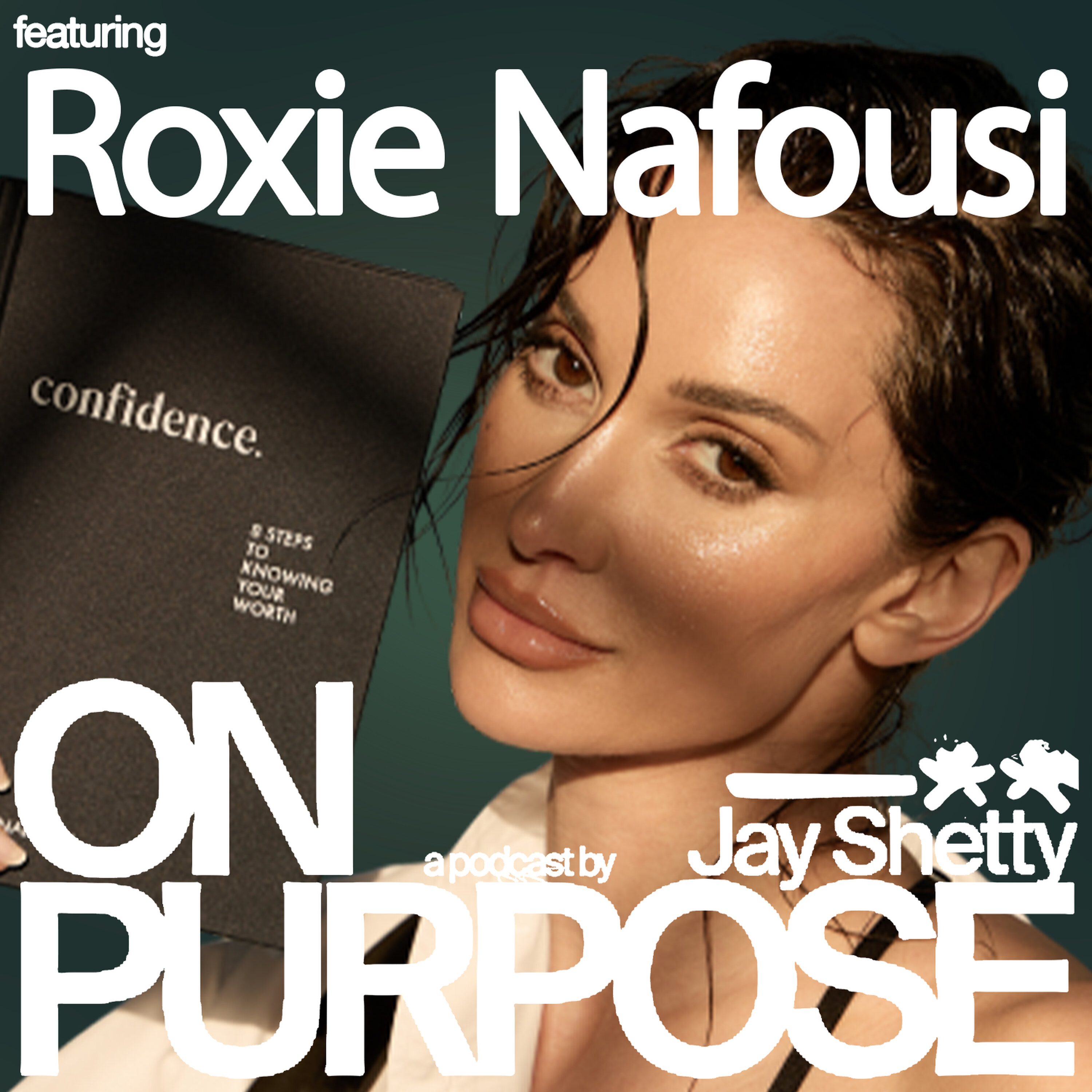
而今天的嘉宾不是别人,正是我亲爱的朋友Roxy Nafusi。
And today's guest is none other than my dear friend, Roxy Nafusi.
她的新书名为《自信:认识自我价值的八个步骤》。
Her new book is called Confidence, Eight Steps to Knowing Your Worth.
她是畅销书《显化》的作者。
She's the best selling author of Manifest.
她之前上过这个节目。
She's been on the show before.
你们都很喜欢我们那一期的对话,我非常激动能再次欢迎Roxy Nafusi回来。
You loved our episode together and I'm so excited to welcome back Roxy Nafusi.
Roxy,很高兴你能回来。
Roxy, it's great to have you back.
哦,非常感谢邀请我。
Oh, thank you so much for having me.
我是说,我都不敢相信能坐在这把椅子上一次,现在居然有第二次,这是什么人生啊?
I mean, I couldn't believe I got to sit in this chair once, so to be here twice, what is this life?
说实话,从我们见面的那一刻起,我们就很投缘。
Honestly, like since the moment we met, we hit it off.
是啊。
Yeah.
我上次分享了有多少人读过《显化》,我送出了很多本,每个读过它、与你的作品产生共鸣并知道我们相识的人都会发消息给我,说这本书太棒了,我超爱她的作品。看到你不断崛起、翱翔,现在又以你标志性的风格——既深刻又有效、平易近人且简洁——再次创作这本书,这太有力量了。
And I shared last time just how many people in my life read Manifest, I've gifted it to so many And people as anyone that's read it, anyone that connects with your work and knows we know each other will message me and just say, this book was awesome, like I love her work and to see you continue to rise and soar and now create this book as well again in your signature style of being poignant, effective, relatable, simple, it's so powerful.
哦,谢谢
Oh thank
所以我真的很高兴你专门花时间研究自信这个话题。
you And so I'm so glad you dedicated time to confidence.
谢谢你。
Thank you.
不,我深感荣幸。
No, I'm so honored.
非常感谢你。
Thank you so much.
好的,那我们开始吧,Roxy。
Okay, so let's dive in Roxy.
我想说,自信是个非常重要的课题。
I wanna, confidence is such a big thing.
我想问你,你是如何定义‘自信’这个词的?
I wanted to ask you, how do you define the word confidence?
我认为自信有很多种不同的定义方式。
So I think there's so many different ways to define confidence.
对我来说,自信最终关乎自我价值。
And I think for me confidence is ultimately about self worth.
它意味着明白你本来的样子就足够好。
It's about knowing that you are enough exactly as you are.
我认为自信不是——我也不这样定义它——成为外向的人。
And I think what confidence isn't and the way I don't define it is as being an extrovert.
很多人认为如果你自信,就意味着你习惯大声说话或很有魅力,觉得这就是自信的本质。
So a lot of people think that if you are confident, it must mean that you're comfortable being loud or you're charismatic and you kind of think that that's what it's about.
但对我来说,完全不是这样。
But for me, that's not it at all.
你知道,我认为自信是一种根基。
You know, I think confidence is grounding.
它是安静的。
It's quiet.
它是稳定的。
It's stable.
关于自信,我最喜欢的定义之一是:自信就是能够毫无歉意地做自己走进任何房间,又毫不担心别人怎么看你地走出来。
And one of my favorite definitions of confidence is that confident is about being able to walk into any room unapologetically yourself and walk out of it, not worrying what everyone else thought of you.
我认为当你能达到那种境界时,你就知道自己已经实现了真正的自信。
And I think when you can get to that place, that's when you know you've reached it.
我喜欢这个定义。
I like that definition.
这个说法太精妙了,因为我们进房间前都会过度思考:大家会怎么看我?
That's such a brilliant way of putting it because I think we are all overthinking before we walk into a room, what's everyone gonna think of me?
是啊。
Yeah.
然后我们走出来时,又都在想:他们到底怎么想
And then we walk out, we're all thinking, what did they think
我的?
of me?
完全正确。
Absolutely.
回家的整个车程可能都在纠结自己做的每件事——有人看到你掉勺子了吗?洒了点酒?食物掉地上了?诸如此类,对吧?
Can spend the whole car journey home wondering everything you did and whether someone saw you drop your spoon or spill a bit of wine or drop some food or whatever it may be, right?
你过度剖析每个瞬间,不断琢磨:他们觉得我聪明吗?
You're over analyzing every moment and you're wondering, well, that, do they think I'm smart?
他们觉得我机灵吗?
Do they think I'm clever?
他们觉得我有意思吗?
Do they think I'm interesting?
有句话我觉得特别有意思,想深入探讨:内向者和外向者展现自信的方式有何不同?
Do they think One I'm thing you said was really interesting to me and I wanna kind of go down that road is how do introverts and extroverts demonstrate confidence differently?
还是说其实看起来都一样?
Or does it even look different?
我想,我是说,我之前从未考虑过这个问题,但我认为外向者可能在社交时感到最舒适,当他们能让人们在他们的空间里感到自在,让他们感到被关注、被倾听,他们擅长交谈,擅长把一群人聚在一起,在这样的环境中他们感觉良好。
I think that I suppose, I mean, I've never considered that before but I think that extroverts probably they feel most comfortable when they can be social, when they can, you know, make people feel comfortable in their space, make them feel seen, heard, they're good at conversation, you know, getting a group together and, you know, and and they just feel good in that environment.
我认为对内向者而言,并不意味着...就像我之前说的那些词,那种安静而扎实的自信。
I think for an introvert, it doesn't mean that it's it's really about having a like I said those words before, that quiet grounded confidence.
所以你不需要成为房间里声音最大的人,因为你不需要——你不是在试图证明自己。
So you don't need to be the loudest in the room because you don't need you're not trying to prove yourself.
这其实才是真正的自信——不需要证明自己。
And that's really confidence isn't about proving yourself.
自信就是知道自己已经足够,而不需要别人来为你验证这一点。
It's about knowing you're enough and not needing anyone else to kind of validate that for you.
是啊,为什么我们会这样感觉如此明显,这是对认可的合理追求还是认可本身都是不好的?
Yeah, why is it that we, it feels so obvious like is there a healthy pursuit of validation or is validation all bad?
我认为某种程度上,完全不去想我们不需要任何认可是不可能的。
I think that some, impossible to really think that we're not going to want any validation at all.
当然,我们确实需要。
Like, of course, we do.
我认为我们需要一些认可,因为我们需要成为社会的正直成员,尊重他人,同时这也有助于激励我们不断进步,成为更好的人、更好的个体,在事业和人际关系中不断成长。
And I think that we should need some because we need to be like upstanding members of society and respect other people and also helps to encourage us to strive to be better to be better in as people, as individuals, in our careers, in our relationships, you know.
因此,激励我们发挥最大潜能是很重要的,这很棒。
So it is important to motivate us to be the best that we can be, which is great.
但我认为问题在于...这样吧,让我们从这个角度开始说。
But I think the problem is is where validation well, look, let's say that, let's start with this.
从进化角度看,我们需要归属群体才能生存,对吧?
Evolutionary, we needed to belong to be part to survive in a tribe, right?
所以获得他人认可或成为群体一部分对我们曾经至关重要。
And so it was really important for us to be liked by other people or to, you know, to be part of something.
现代社会的问题是,我们把这种进化形成的归属需求,从生存必需变成了衡量自我价值的标尺。
What's happened in the modern day is we've taken that kind of like evolutionary need to belong, but instead of it being kind of important for our survival, it's now how we determine how enough we are or the measuring stick of which we kind of measure our worth.
是的,我们需要一些认可来促进成长,但现在我们把这种需求过度放大了,以至于他人的看法比我们自己的感受更重要。
And so I think that, you know, yes, we do need some validation to keep us growing but we've just taken it so far that now other people's opinions matter more to us than our own.
没错,你说得太对了。这种转变已经从'我的同学觉得我的运动鞋酷不酷',发展到现在所有事情都向全世界直播并被量化评判。
Yeah and I think you're so right that switch has gone from being, does my class think my trainers or my sneakers are cool to now everything is broadcast to the whole world and it's measured.
所以你的帖子获得了10个赞,而别人有20个,还有人得了2000万,还有人获得20000个,这正说明如今这种认可已演变成衡量个人价值的标准,甚至等同于净资产,反映你获得多少关注,而过去你只需在教室或部落里获得认可。
So you got 10 likes on a post and someone got 20 and someone got 20,000,000 and someone got 20,000 and so you're so right that now that validation has become a matter of worth, net worth as well and indicative of how much attention you get whereas before you're in your classroom or even your tribe.
是的。
Yeah.
你会想,只要有20个人大体认可我,我就满足了。
And you're like, yeah, if I've got 20 people that are generally okay with me, I'm fine.
问题还在于这会改变我们的自我认知。
The problem with it as well is it changes our self perception.
比如说,我知道你也喜欢那句名言,因为我也很喜欢。
So let's say that and I know you love that quote because I love it too.
我不是我以为的那个我。
The I am not who I think I am.
我也不是你以为的那个我。
I'm not who you think I am.
我是我以为你以为的那个我。
I'm who I think you think I am.
我大致是这样解释的。
And I kind of explained it like this.
有一次晚餐时我坐在一个人旁边,她是个网红。
So I I was still sat next to someone at dinner once and she was an influencer.
她说,你知道吗,有时候我在Instagram上发一些我真心喜欢的内容,却一个赞都得不到。
And she said, you know, sometimes I'll post something that I really love on Instagram and it doesn't get any likes.
然后我觉得那条帖子糟透了。
And then I think that that post is terrible.
假设你有一张非常喜欢的全家福,你觉得这张照片美极了。
So you start with let's say you have a picture that you love of your family and you think this is such a beautiful picture.
我太爱它了。
I love it.
然后你把它发到网上,却没有获得你期待的点赞量。
And then you post it and it doesn't get that measure of like that you are expecting.
比如说只得到10个赞,对你来说这远远不够。
So it gets 10 likes, let's say, and that for you doesn't feel enough.
然后你非但没有想'好吧,可能今天看到的人不多,也许是算法原因',反而开始质疑自己的决定。
And then instead of you thinking, okay, that just maybe not many people saw it today, maybe it was the algorithm, you actually start to question your own decision.
我为什么要发那个?
Why did I post that?
那张照片真的好吗?
Was it even a good photo?
所以实际上,你不再考虑其他可能性或原因,而是改变了对自己的认知或看法。
And so actually instead of thinking that it's about anything else or there's any other reason for it, you change your own perception of yourself or your own opinion of yourself.
因此我认为这才是真正有害的地方——我们不仅寻求外部认可来引导自己,还指望它告诉我们该如何看待自己。
And so I think that's where it's really damaging is that, yeah, we don't just look for external validation to guide us, we look for it to tell us what we should think about ourselves.
说得太对了,这让我想到我们都会发那种'感觉可爱可能稍后删除'的配文。
Yeah, that's so good and you made me think about how we all post that caption of felt cute might delete later.
是啊。
Yeah.
就像那种'感觉自己很可爱'的想法。
And it's like that idea of like, felt I looked cute.
嗯。
Yeah.
所以我发了这个。
So I posted this.
是的。
Yes.
现在我要看看大家是否也觉得我看起来不错。如果他们不这么认为,我可能稍后会删除它。
And now I'm gonna see if everyone else felt I looked And if they don't, I might delete it later.
这就是你说的那种心态,'哦不,但我以为我在这里看起来真的很棒'。
And that's that mindset that you're saying where it's like, oh no, but I thought I looked really good here.
是啊。
Yeah.
我本想分享那个瞬间,现在你说得太对了。
And I wanted to share that and now you're so right.
现在你让我觉得,在一张我原以为很好看的照片里,我其实并不好看,这让我感觉更糟了。
Now you're making me feel like I don't look good in a picture I thought I looked good in which makes me feel even worse.
还有哪些其他方面会出现这种情况?
What are some of the other ways, where does this show up?
我很喜欢你刚刚举的例子,比如发布一张家庭照片或'这张挺可爱可能稍后删除'。
I love that example that you just brought it to of posting a picture of your family or this felt cute might delete later.
你还从人们那里听到哪些缺乏自信的表现?
What are other things that you hear from people of where we're seeing a lack of confidence show up?
人们在担心什么?
What are people worried about?
人们在害怕什么?
What are people scared about?
你在与同事、遇见的人以及巡回演讲时听到些什么?
What are you hearing from people that you work with and meet and when you're traveling touring speaking, what are you hearing?
天啊。
Oh gosh.
我认为缺乏自信体现在我们生活的方方面面。
I mean, think that lack of confidence shows up in every single area of our lives.
我想说的是,显然我的第一本书《显化》就是关于过上最佳生活的七个步骤。
And I think that, you know, the obviously my first book was Manifest which was seven steps to living your best life.
那正是一份七步指南。
And it was that seven step guide.
第二步就是消除恐惧和疑虑。
Step two is remove fear and doubt.
人们常对我说:Roxy,在显化过程中最难的就是第二步——因为要显化,我们必须也只能显化那些潜意识里认为自己值得获得的事物。
And people would often say to me, Roxy, the the step I struggle with the most when it comes to manifesting and to manifest, we must we can only manifest what we subconsciously believe we are worthy of receiving.
所以一切都植根于自我价值感,这也是为什么自信力是我工作的重要延伸。
So it's all rooted in self worth, which is why confidence is such a great extension to my work.
人们总说最难的步骤是第二步——消除恐惧与疑虑,因为这种不安全感、这种低自我价值感、这种缺乏自信的感受已深植于我们的信念体系中,确实是最难攻克的部分。
And people would always say the hardest step is step two, remove fear and doubt because this insecurity, this low self worth, this feeling of lack of confidence is embedded into us and into our kind of belief system that really it's the hardest thing to work on.
这是最难逆转的事情。
It's the hardest thing to undo.
所以无论人们是在寻求爱情、谋求职业发展,还是自主创业——
And so whether people are looking for love, whether they're trying to grow within their careers, whether they're trying to build on their own, you know, they're starting their own business.
无论他们生活的哪个领域,通常他们未能发挥潜力或按自己想要的方式成长的原因,都是因为缺乏自信。
Whatever area of their life it is, usually the reason they're not fulfilling their potential or growing in the way that they want to is is because of a lack of confidence.
关于自信,我一直觉得非常有趣的是,我们总是假设如果坐在一群人中间,我们会认为旁边的人完全没有这种困扰,他们非常自信。
And what I always think is really interesting with confidence is that we always assume if we were sat in a group of people, we would always assume that the person sat next to us was free of it, that they are so confident.
我们看不到他们的自我怀疑。
We don't see their self doubt.
我们看不到他们的不安全感。
We don't see their insecurity.
但实际上,当我在现场演出中向数千名观众提问时,我会说:'在座有谁能诚实地说自己完全摆脱了自我怀疑、不安全感或低自我价值感?'
But actually, when I do my live shows and I say, you know, to an audience of thousands of people and I'll say, who here can honestly say they are completely free from self doubt, insecurity, or feelings of low self worth?
没有一个人会举手。
Not one person will raise their hand.
于是你真正开始理解,这种自信的缺失是一种普遍经历。
And so you really start to understand that this lack of confidence is a universal experience.
这实际上是联结我们所有人的共同点。
It's something that actually binds us all.
我认为如果我们能更多地彼此分享这些感受,更开放地谈论它,会发现其中蕴含着巨大的脆弱性和连接感。
And I think there's so much vulnerability and connection to be found in kind of sharing it a bit more with each other and being more open about it.
这同时也让人感到宽慰,因为我们意识到自己其实看不到别人正在经历怎样的心理挣扎。
And it's also so comforting because we remember that, you know, we are not seeing what other people are going through mentally.
你觉得男女在自信体验方面存在差异吗?
Do you feel that there's a difference between men and women and how they experience confidence?
要知道,女性承受着更多压力,所以我们可以认为女性更难获得自信。
Do you know, think that women have more pressures and so I think that we can assume that it's much harder for women to feel confident.
但我认为男性更难表达这种不自信。
But I think it's harder for men to express it.
因此我也非常理解男性的处境,因为作为女性群体,我们更容易互相倾诉说'天啊我今天感觉糟透了'。
And so I also really feel for men because I think as a group of women, it's much easier for us to go to each other and say, Oh God, I feel so gross today.
或者说'天啊,我在那个会议上搞砸了'之类的话。
Or, Oh God, you know, I really fucked up in that meeting or whatever.
我觉得我们给予彼此更多的像是心理治疗般的支持。
And I think we give each other more like therapy.
虽然我在这里可能有些以偏概全,但依我之见,男性通常不太擅长向彼此袒露内心的不安全感。
Whereas I assume and I'm, you know, generalizing here, but men aren't as good as opening up to each other about their insecurities, you know, is my opinion.
是啊,这确实是个值得深思的有趣现象,我觉得你的观察很独到。虽然我不会说你错了,但就我个人而言,由于工作性质和社交圈的关系,我和男性朋友们确实会进行这类对话。
Yeah, no, it's a really interesting thing to think about and I think that's a really like interesting observation because I wouldn't say you're wrong, think when my male friends and obviously because of my work and who I am, I guess more men and me do have those types of conversations.
但总体而言,即使是我那些非常坦诚的男性朋友,要敞开心扉仍然很困难。
But in general, even when I have my male friends being really open about something, it's hard.
那种感觉就像是:'听着,有件重要的事要说'。
Like it comes with a very like, this is a big thing.
而按你的说法,女性之间的交谈更像是随意的闲聊,自然流露情感。
Whereas I assume as you're saying that when you're talking, it's just chitchat and it's how you feel.
但男性之间更像是:'嘿,有件事要告诉你'。
Whereas this is like, hey, I've got something to tell you.
然后就会变成'这是我一直以来的困扰'这样的郑重时刻。
And then it's a moment of, this is what I've been struggling with.
确实。
Yeah.
确实,这种感觉沉重得多,因此在某种意义上对那个人来说也显得更加沉重。
And yeah, it feels a lot heavier and therefore it feels a lot heavier to that person in one sense as well.
你的第一章名为'掌控你的思想'。
Your first chapter is called Master Your Thoughts.
你写道:'你的心灵可以是你的家园,也可以是你的牢狱,选择权在你手中。'
You write, your mind can be your home or your prison, you get to choose which.
请跟我聊聊,为什么说心灵可以是家园也可以是牢狱?
Talk to me about how your mind can be a home or a prison.
当我们真正思考什么是自信的障碍时,我想所有人都会认同内心的自我批评是最大的障碍。
When we really think about what are the barriers to confidence, our inner critic, I think everyone would agree is the biggest one.
而我真正领悟到的是:我们的思想有多么强大,它们确实在塑造我们的现实。
And I think that what I really come to understand is how powerful our thoughts are and that our thoughts really do shape our reality.
这是因为当思想被反复重复时,就会变成信念。
And the reason for this is because thoughts become beliefs when they're repeated so many times.
而我们对自己的信念决定了我们对整个世界的体验,因为它会成为你观察一切事物、每一次互动、每一段经历的滤镜。
And what we believe about ourselves determines our whole experience of the world because it becomes the filter through which you view everything, every interaction, every experience.
一切都会通过你对自己和世界的信念被过滤,然后被解读。
Everything is filtered through what you believe about yourself and the world and then interpreted.
举个非常清晰的例子,假设你持有一种信念,认为自己天生不擅长与人相处。
And so for a really clear example of this would be, let's say, that you were to hold a belief that you are naturally not good with people.
你相信自己是个无趣的人。
You're you have a belief that you're boring.
或许你曾认为自己不擅长交朋友。
Perhaps you had a belief that you were bad at making friends.
然后你去参加一个晚宴,第一次见到某个新朋友。
You then go to a dinner party and you meet someone new for the first time.
由于你持有这种信念,你会这样解读对方的社交信号——你可能会特别关注他们目光越过你肩膀的事实。
And because you hold this belief, the way that you interpret this person's social cues, whether they you might really focus on the fact that they look over your shoulder.
你可能会注意到他们没有问你问题这个事实,但你会特别聚焦在他们只谈论自己这件事上。
You may notice the fact that they didn't ask you a question, but you really focus on the fact that they just talked about themselves.
然后你可能会把对方走开去和别人交谈这件事,放大成天大的问题。
And then you might really make the fact that they walked away to talk to someone else feel like this really big deal.
由于你透过‘我知道我不擅长与人相处或不擅长结交新朋友’这样的视角看待事物,结果就是你关注了错误的信号,然后很可能变得有些防备。
And as a result of the fact that you're viewing it through this lens of I know I'm not good with people or I'm not good at making new friends, what happens is you're focusing on the wrong cues and then you likely become a bit defensive.
于是你便创造了一个自我实现的预言。
And then you create a self fulfilling prophecy.
而如果某人持有‘哦,我真的很擅长与人相处’这样的信念。
Whereas if somebody had a belief like, oh, I'm really good with people.
我很棒。
I'm great.
我很有魅力。
I'm charismatic.
人们通常都会喜欢我。
People generally tend to like me.
你会经历完全相同的互动场景。
You're gonna have the exact same interaction.
你不会注意到任何那些暗示。
You won't notice any of those cues.
你不会把可能只是中性的表情误解为不感兴趣。
You won't misinterpret maybe a neutral expression as disinterest.
因此你可能会以更积极的方式回应那个人,更加开放,从而强化你内心的这种信念。
And so you're probably gonna respond in a more positive way to that person and be more open and then you'll create a reinforced that belief in yourself.
这种情况在我们生活中不断发生,大脑更容易找到证据来支持我们已有的信念,而不是寻找矛盾证据来形成新的思维方式。
And so this is happening all the time in our lives and it's a lot easier for our brains to actually just find evidence to support what we already believe rather than kind of find conflicting evidence and then have a new way of thinking.
是的。
Yeah.
所以我们的思维确实让我们困在这些模式中。
And so our minds really are keeping us stuck in these like patterns.
我在书中是这样描述的。
And I describe it like this in the book.
想象你是一个站在舞台上的喜剧演员,正在表演你的段子,而观众却在喝倒彩。
Imagine that you're a comedian on stage and you're on stage and you're giving your set and the audience are booing you.
他们喊着让你下台,基本上就是在起哄你。
They're like, get off the stage and essentially they're heckling you.
现在舞台上的那位喜剧演员永远无法发挥出最佳水平。
Now that comedian on stage is never gonna be able to give their best performance.
对吧?
Right?
因为他们会感到不自在。
Because they're gonna feel self conscious.
他们会感到紧张。
They're gonna feel nervous.
他们会过度思考自己说出的每一句话。
They're gonna be overthinking everything that's coming out of their mouth.
因此表现就不会那么放松。
And so it's not gonna be as relaxed.
他们可能会结巴。
They might stumble on their words.
但如果他们表演同样的段子时,台下观众欢呼雀跃、笑声不断,他们就更容易发挥出最佳状态。
But if they were to go out and give the same set and the audience was there cheering there, laughing, they are gonna be so much more likely to deliver their best.
他们的笑话会更搞笑,他们会记住内容,这将是一场精彩的表演。
Their jokes are gonna be funnier, they're gonna remember things, you know, it's gonna be a fantastic show.
而在我们的日常生活中,我们却在自我贬低。
Now in our lives day to day, we are heckling ourselves.
那我们怎么能指望自己展现出最好的一面呢?
And so how do we expect ourselves to be able to put our best foot forward?
所以关键在于明白,我们的思想塑造了信念,不仅深刻影响着我们的感受,更决定了我们成为怎样的人,乃至整个人生。
And so it's really about understanding that our thoughts, which are then forming our beliefs, are having so much influence over not only how we feel but who we become and you know, our whole lives.
因此,掌控自己的思想确实是这八个认识自我价值步骤中的首要环节。
And so being able to master your thoughts really is the kind of like first of these eight steps to knowing your worth.
这种自我贬低太真实了,从你醒来的那一刻就开始了。
That hackle is so real and it happens from the moment you wake up.
比如你醒来照镜子时就会说:'我看起来好憔悴'。
Like you wake up and you look in the mirror and you go, I look so tired.
'哦,我好像胖了点'。
Oh, I've put on a bit of weight.
哦,不管是什么,对吧?
Oh, whatever it is, right?
我们都有自己的版本,哦,我有白头发了,哦,我有什么什么。
We all have our own version, oh, I've got gray hairs, oh, I've, whatever it is.
然后之后你就会想,天啊,我上班要迟到了。
And then after that, you're like, oh God, I'm late for work.
而且,就像所有事情一样,我们每天都在对自己这样做,整天如此。
And again, it's like everything and we do it to ourselves every day, all day.
哦,不该在那个会议上发言的。
Oh, shouldn't have spoken up in that meeting.
哦,我应该在那个会议上发言的。
Oh, I should have spoken up in that meeting.
哦,我在那个会议上说了些蠢话。
Oh, I said something stupid in that meeting.
哦,我本该多说一些的。
Oh, I should have said more.
哎呀,我得不到升职了。
Oh my, I'm not gonna get a promotion.
哦,我不配,你知道的,不管是什么,就是,这种无休无止的感觉太疯狂了。
Oh, I don't deserve, you know, whatever it is, it's just, it's crazy how incessant it is.
是啊,是啊。
Yeah, yeah.
这就像每一个微小的举动,几乎让你觉得有人在银幕上观察你,分析你的每一个动作。
And it's like every tiny move, it almost feels like you think someone's watching you on the big screen and analyzing every move.
不过我想问你,自我觉察和自我批评有什么区别?
And I wanted to ask you though, what's the difference between self awareness and self criticism?
区别在于背后的意图。
It's the intention behind it.
我认为自我觉察是指,比如说你参加了一个会议并做了演讲,之后或演讲过程中,也许你确实搞砸了。
I think that self awareness is an I mean, is about being able to say, let's say you've gone into a meeting and you've given a presentation and afterward and during the presentation, maybe you do mess up.
也许你没有说到点子上。
Maybe you don't say the right thing.
也许这不是你最好的表现。
Maybe it's not your best performance.
事后,如果你走出来,自我批评听起来会是:'哦,你真是个白痴。'
And afterwards, if you were to come out, self criticism would sound like, oh, you're such an idiot.
你为什么要那样做?
Why did you do that?
你总是这样。
Typical that you would.
你永远都做不到的。
You're never gonna get it.
你搞砸了。
You've messed up.
自我认知是,你知道吗?
Self awareness is, you know what?
这次不是你的最佳状态,但我们下次如何改进呢?
That wasn't your best but how can we improve for the next time?
要知道,处理这个问题其实有另一种方式,因为自信也并非意味着忽视你所有的缺点。
You know, there's a kind of there's a different way of approaching it because confidence is also not about ignoring all your flaws.
它并不是简单地说'天啊,我现在这样就很完美了'。
It's not about just saying, oh my god, I'm just perfect how I am.
我在书里引用过一句话:自信是明白自己既是一幅杰作,同时也是一件正在进行中的作品。
You I have a quote in the book where I say, confidence is knowing that you're a masterpiece and a work in progress at the same time.
因此自我认知非常重要。
And so self awareness is important.
作为人类,我们需要不断成长和进化,但关键在于你如何既能觉察自己的缺点、发现可以改进的领域,又能以充满同理心的方式对待这些问题——因为正是这种同理心,才能为你创造最好的成长机会。
As humans, we need to be growing and evolving, but it's how can you actually notice perhaps your flaws, perhaps areas where you could be better and do better, but approach it in a way that feels really compassionate, that feels because, you know, in that compassion, you're actually giving yourself the best opportunity.
想象一个孩子。
Think about a child.
对吧?
Right?
如果你想让孩子学习新技能,你肯定不会一味地责骂他们。
If you want a child to learn a new skill, you're not gonna go and just berate them.
你知道,当我教沃尔夫数学时,如果我这样说:'哦,你这个白痴,怎么连这个都不懂?'
You know, when I'm teaching Wolf maths, if I'm like, oh, you idiot, how didn't you get that?
他会想,算了吧。
He's gonna be like, forget it.
我觉得,他会受到心理创伤。
I'm like, he would be traumatized.
而且他这辈子都会讨厌数学。
And he'd never, he'd hate maths for the rest of his life.
是啊。
Yeah.
然而我们却一直这样对自己说话。
And yet that's how we talk to ourselves all the time.
我们就是,你知道,对自己太刻薄了。
We're just, you know, telling ourselves We're just mean.
我们对自己太刻薄了,这真的很累人。
We're mean to ourselves and it is so exhausting.
我知道很多听众都感到疲惫不堪。
And I know that so many people listening are just tired.
他们厌倦了不断与自己斗争,直到某一天你会想,我再也不想这样生活下去了。
They're just tired of constantly being in this battle with themselves and you just get to a point and you're like, I just don't wanna live like this anymore.
是啊,
Yeah,
没错没错,你说得太对了。这很有趣,因为我们总说要像对朋友一样对自己说话,但其实更应该像对孩子说话那样对待自己。
yeah, yeah, no it's so right and it's interesting because we always say like you should talk to yourself as you talk to a friend but it's almost like talk to yourself like you talk to a child.
对。
Yeah.
就像你刚才提到教沃尔夫数学的例子,我们每个人内心都有一个缺乏自信的内在小孩,他们在成长过程中遭受过批评和嘲笑。
Because from what you just said with Wolf, like teaching him maths, it's like there's an inner child inside every single one of us that is lacking in confidence that was criticized and was heckled while they were growing up.
这甚至不是像对朋友说话,而是对内心那个更年轻的自己说:没关系,你现在数学不好也没关系。
It's not even talking to a friend, it's talking to this younger person inside of yourself and your younger self and saying, yeah, it's okay that you're not good at maths right now.
就像,你知道的,你不会——这才是你该对自己说的话
Like, you know, wouldn't, that's what you'd say to
是的。
Yeah.
那个
The
你不会对他说'振作起来'或'吐出来',也不会说'你现在应该明白了'。
And you wouldn't tell him to get his act together or throw up or you should get it by now.
是啊。
Yeah.
这很难。
And it's hard.
当你熟悉内心的批评者时,真的非常困难。
It's really difficult when you are familiar with the inner critic.
起初,要真正停下来面对那些螺旋式上升的消极想法并对自己温柔说话,确实很有挑战性。
It is really challenging at first to be able to actually pause on the kind of like spiraling thoughts and speak to yourself kindly.
你知道吗,当我让人们在自己脑海中重复'我爱我自己'时。
You know, when I if I ask people like, I want you to just repeat inside your head like, I love who I am.
我真是体贴入微。
I am so thoughtful.
我是个非常好的朋友。
I'm such a good friend.
我为自己取得的一切成就感到无比自豪。
I'm so proud of everything I've achieved.
很多人甚至不会在脑海里说这些话,尽管别人听不见,因为他们觉得尴尬。
A lot of people will not even say it inside their heads even though no one else can hear them because they feel cringe.
他们觉得这很丢脸。
They feel like it's embarrassing.
这就是大多数人感到多么不自在。
And that's how uncomfortable it is for most people.
所以我真的不希望人们认为,我觉得从内心批评者转变为这种内心啦啦队长很容易,但这绝对是可能的。
So I really don't want people to think that I assume it's really easy to change from having this inner critic to this kind inner cheerleader, but it is absolutely possible.
通过练习,这会变得更容易,也更自在。
And with practice, it becomes more comfortable and it becomes easier.
其实,我有一个非常希望大家尝试的日记提示。
And so there's a actually, there's a journaling prompt I'd love people to try.
我在我的每日显化日记中使用过它,这是我最喜欢的日记提示。
I used it in my manifest daily journal and it's my favorite journal prompt.
这是一条来自更高自我的激励信息。
And it's a most a motivational message from my higher self.
每天早上,我都希望大家能试试这个方法。
And every morning, I just would love people to try this.
只需写下给自己的善意留言,因为这会帮助你真正熟悉这种友善的声音,赋予它更多力量,为它塑造个性,在你心中留出空间。
Just write down a kind message to yourself because what it's gonna do is it's gonna get you help you really get to know that kind of voice and really give it more power, give it a character, give it space in your mind.
当我开始自己实践时,我会写一些非常通用的内容,比如'你能行的'。
And so when I started doing this practice myself, I would write something really generic like, you got this.
对吧?
Right?
随着逐渐习惯后,我会写下更多内容。
And then as I started getting more used to it, I would write things.
比如说那天我对某件事感到紧张,我就会写下类似这样的话:今天会是很棒的一天。
Let's say I was nervous for something that day, I'd write something like, today is gonna be great.
你为此付出了很多努力。
You worked really hard for this.
尽力而为。
Do your best.
或者如果那天有让我特别兴奋的事,我会说:去享受每一秒吧。
Or if there was something I was really excited for that day, I'd say, go and enjoy every second.
你值得出现在那里。
You you deserve to be there.
你知道的,这是你旅程的一部分,诸如此类的话。
You know, this this is part of your journey or whatever it was.
所以我认为对于那些觉得'我甚至不知道该如何开始像对待内心小孩或朋友那样与自己对话'的人来说,这会是个非常有力的提示。
And so I think that this can be a really powerful prompt for those people who think that I just don't even know where to start with talking to myself like my inner child or like a friend.
这能帮助你熟悉他们的声音。
This can just help you get to know their voice.
嗯。
Yeah.
我真的很喜欢这个。
I really like that.
嘿。
Hey.
我是凯莉。
I'm Kelly.
有些人可能知道我是劳拉·温斯洛。
And some of you may know me as Laura Winslow.
我是特尔玛,也叫瑞秋阿姨。
And I'm Telma, also known as Aunt Rachel.
如果这些名字听起来耳熟,那你可能熟悉我们九十年代共同出演的剧集《家庭琐事》。
If those names ring a bell, then you probably are familiar with the show that we were both on back in the nineties called Family Matters.
凯莉和我
Kelly and I
这些年来我们经历了很多,扮演了很多角色,但我们都为能成为《家庭琐事》的一部分感到无比自豪。
have done a lot of things and played a lot of roles over the years, but both of us are just so proud to have been part of Family Matters.
你知道吗,我们是
Did you know that we're one of
播出时间最长的黑人主演情景喜剧之一?
the longest running sitcoms with a black cast?
我们在拍摄这部剧时,有太多充满欢乐、笑声和搞笑的时刻,让我永生难忘。
When we were making the show, there were so many moments filled with joy and laughter and cut up that I will never forget.
哦,姐妹。
Oh, girl.
你说得太对了。
You got that right.
你们看我的眼神
The look that you all give me is
太有黑人范儿了。
so black.
所有黑人都知道那个眼神。
All black people know about the look.
在《欢迎来到这个家庭》的每一集中,我们都会分享关于制作这部剧的个人感悟。
On each episode of Welcome to the Family, we'll share personal reflections about making the show.
没错。
Yeah.
我们甚至会邀请部分
We'll even bring in part of the
演员阵容和一些特别嘉宾加入我们的欢乐时光,并爆料一些内幕。
cast and some other special guests to join in the fun and spill some tea.
请在iHeartRadio应用、Apple Podcasts或你获取播客的任何平台收听Thelma和Kelly主持的《欢迎来到这个家庭》。
Listen to welcome to the family with Thelma and Kelly on the iHeartRadio app, Apple Podcasts, or wherever you get your podcasts.
嗨。
Hi.
我是Radhi Devlukha,播客《一场真正的好哭》的主持人。
I'm Radhi Devlukha, and I am the host of A Really Good Cry podcast.
展开剩余字幕(还有 480 条)
本周,我邀请到了安娜·朗克尔,也被称为'糟糕童年仙子',她是一位创作者、教师和向导,帮助人们治愈不安全或混乱童年留下的情感创伤。
This week, I am joined by Anna Runkle, also known as the crappy childhood fairy, a creator, teacher, and guide helping people heal from the lasting emotional wounds of unsafe or chaotic childhoods.
我们讨论了年轻时经历的事情如何仍会在成年生活中显现,影响我们的关系、反应,甚至是我们对自己身体的感受。
We talk about how the things we went through when we were younger can still show up in our adult lives, in our relationships, our reactions, even in the way we feel in our own bodies.
安娜还分享了她自己的故事,是什么帮助她意识到自己陷入的模式,以及她如何慢慢教会自己的身体现在已处于安全状态。
And Anna opens up about her own story, what helped her notice the patterns she was stuck in, and how she slowly started teaching her body that it is safe now.
当我遭遇袭击时,那非常突然,四个家伙从车里跳出来就开始殴打我。他们打断了我的下巴和牙齿,我失去了意识。
So when I got attacked, it was very random, four guys jumped out of a car and just started beating me And and my they broke my jaw and my teeth, I was unconscious.
然后我醒了过来,开始尖叫。
Then I woke up and I screamed.
我尖叫是因为尽管我不知道自己是谁或身在何处,但内心有个声音在说
And I screamed because even though I didn't know who I was or where I was, something in
坚持住,
me was just like, hold
等等,他们可能会杀了我。
on, wait, they could kill me.
我不会让这种事发生。
I'm not going to let that happen.
我不会让这种事发生。
I'm not going to let that happen.
我会挺过去的,而我确实做到了。
I'm gonna get through this, and I did.
请在iHeartRadio应用、苹果播客或任何你获取播客的地方收听《A Really Good Cry》。
Listen to A Really Good Cry on the iHeartRadio app, Apple Podcasts, or wherever you get your podcasts.
萨米·亨特。
Sami Hente.
我是安娜·奥尔蒂斯。
It's Anna Ortiz.
我是马克·因德利卡多。
And I'm Mark Indelicado.
你可能知道我们是希尔达
You might know us as Hilda
还有贾斯汀。
And Justin.
来自《丑女贝蒂》。
From Ugly Betty.
我们在剧中扮演母子,但在现实生活中,我们是最好的朋友。
We played mother and son on the show, but in real life, we're best friends.
而我现在已经长大了。
And I'm all grown up now.
欢迎收听我们的新播客《万岁贝蒂》。
Welcome to our new podcast, Viva Betty.
耶。
Yay.
哇哦。
Woo hoo.
你能相信它已经
Can you believe it has
已经快二十年了?
been almost twenty years?
我
I
这根本不可能。
That's not even possible.
你是唯一一个变化这么大的人。
You're the only one that looks that much different.
我看起来完全没变。
I look exactly the same.
我们正在从头到尾重温这部剧集,深入探讨所有时尚元素、戏剧情节,以及你从未听过的幕后故事。
We're rewatching the series from start to finish and getting into all the fashions, the drama, and the behind the scenes moments that you've never heard before.
你会听到来自嘉宾们的分享,比如亚美莉卡·费雷拉、凡妮莎·威廉姆斯、迈克尔·乌里、贝基·纽顿、托尼·普兰纳等等。
You're gonna hear from guests like America Ferrera, Vanessa Williams, Michael Urie, Becky Newton, Tony Planner, and so many more.
每一位都是传奇人物。
Icons each and every one.
突然间,有个人,像是赛尔玛·海耶克,朝我跑了过来。
All a sudden, like, someone, like, comes running up to me, and it's Selma Hayek.
然后她说,
And she's like,
你就是我的丑女贝蒂。
you are my ugly Betty.
我当时就懵了,她到底在说什么啊?
And I was like, what is she even talking about?
请在iHeartRadio应用、苹果播客或任何你获取播客的平台收听《Viva Betty》,作为播客网络的一部分。
Listen to Viva Betty as part of the podcast network available on the iHeartRadio app, Apple podcasts, or wherever you get your podcasts.
我认为我们必须明白,即便是那个内心的批评者也不是真正的我们,它只是一个你反复练习、习惯成自然的条件反射声音。
And I think that's what we have to understand is that even that inner critic is not us, it's just a rehearsed, habituated conditioned voice that you've just practiced.
所以你一生都在练习那个声音,它说你是个失败者,你不够好,你不够优秀,无论它说什么。
So you've practiced that voice your whole life that says, you're a loser, you're not great, you're not enough, you're not good, whatever it is.
而如果你开始练习另一种声音,那就会改变。
And if you start practicing another voice that will change.
是的。
Yeah.
对我来说,这总是极大地帮助我认识到,只要你愿意并选择改变,几乎可以改变任何事情,因为你所经历的只是一种习惯,而非命中注定——这就是我们的信念。
And that for me was always massively helpful in recognizing that you could change pretty much anything and everything if you wanted to and if you chose to because all you were living out was a habit and you weren't living out your destiny as if, and that's what we believe.
我们某种程度上相信,我天生就是这样,这就是我所拥有的,这就是我要面对的。
We kind of believe like, well, I'm born like this and this is what I have and this is what I'm living with.
但事实上,你在说的是:只要掌控你的思想,就能改变信念,从而改变现实。
And really what you're saying is no, if you master your thoughts, you can change your beliefs and therefore you can change your reality.
没错。
Yes.
我喜欢'来自最高自我的激励讯息'这个概念,因为这甚至超越了对自己更友善。
I love the idea of a motivational message from your highest self because that's even beyond being kinder to yourself.
这实际上是在说:让我们从这个视角来生活。
That's really saying, well, let's live your life from this point of view.
是啊。
Yeah.
而这将如何改变一切。
And how that changes everything.
这几乎就像,哪怕你只过一天那样的生活,哪怕你仅仅用二十四小时与自己对话,通过你更高自我的激励信息来看待生活,我都会觉得,哇,如果我能活在那样的状态,我能成就如此之多。
And it's almost like even if you went one day living like that, like even if you could just do twenty four hours of talking to yourself and looking at your life through your motivational message through your higher self, I feel wow, I could accomplish so much if I just lived up there.
哦天哪,确实如此。
Oh God yeah.
其实我有个非常棒的工具。
So I have this great, great tool actually.
如果我们思考我们的更高自我,那究竟是什么?
So if we think about our higher self, like what really is that?
对我来说,更高自我就是最具力量的自己。
Higher self, for me, it's your most empowered self.
是最好的你。
It's the best you.
如果你难以想象那个版本,我会说闭上眼睛,真正想象一年后的你。
And if you're struggling to kind of think about that version, what I would say is close your eyes and I want you to really think about you one year from now.
我希望你允许所有的恐惧和疑虑暂时搁置一旁。
And I want you to allow all your fears and doubts to just sit by the side.
就像,你现在不需要它们。
Like, you don't need them now.
先把它们放在一边。
Set them aside for now.
我希望你想象一年后的自己,我能成为的最好的自己是什么样子?
And I want you to imagine one year from now, who is the best me that I could be?
我渴望成为什么样的人?
Who would I love to become?
真正去了解那个版本的你。
And really get to know that version of you.
他们会如何走进一个房间?
How would they walk into a room?
他们又会如何离开?
How would they walk out of it?
他们对自己感觉如何?
How do they feel about themselves?
他们如何与生活中的人互动?
How do they how do they interact with the people in their lives?
他们在工作时感觉如何?
How do they feel when they're at work?
你开始清晰地认识到最好的自己是什么样子。
And you really start to get this really clear idea of who is the best you.
那就是你的更高自我。
And that is your higher self.
然后你如何开始让那个版本的自己在日常生活中活现?
And then how do you start to bring that version of you to life day to day?
你可以在每一个决定中做到这一点。
Well, you can do it in every decision that you make.
因为从醒来到入睡,我们会做出成百上千个决定。
Because from the minute we wake up to the minute we go to bed, we make hundreds, thousands of decisions.
事实上,我们的生活正是由我们做出的所有决定累积而成的。
And really our life is just a culmination of all the decisions that we make.
对吧?
Right?
我们所做的选择。
The choices that we make.
在每次决定、每次选择之前,我希望每位听众都问自己一个问题。
And before every decision, before every choice, I want everybody listening to just ask themselves one question.
我的更高自我会怎么做?
What would my higher self do?
正如你所说,我希望你尝试这样生活一天。
And I want you to like you said, try one day living like this.
他们会按下闹钟贪睡吗?
Should I would they snooze their alarm?
他们会选择什么作为早餐?
What would they eat for breakfast?
他们会回复这个人吗?
Do they reply to this person?
他们会答应这件自己不想做的事吗?
Do they say yes to this thing they don't wanna do?
他们会以怎样的状态去工作?
How do they go into work?
他们今天的肢体语言是怎样的?
What's their body language like today?
要知道,当你开始意识到你更高阶的自我其实已经存在,你只需要让那个版本的自己活出来。
You know, and I think when you start to realize that actually your higher self already exists, you just need to bring that version of you to life.
我认为这会让人充满力量。
I think it can be so empowering.
是的,我很喜欢这个建议。
Yeah, I love that advice.
这确实很简单,我们都能做到,只需要不断练习和预演。
It's, yeah, it's such a, it's simple, we can all do it and it is just practicing, it's rehearsing.
我认为我们没有意识到,我们所有人其实一直在用非常消极的台词表演,这些台词我们学习并排练了太久,现在必须开始像那个更高版本的自己那样行动才能触及它。
I think we don't realize that we're all, we've all been acting just with really negative lines and we've learned them and rehearsed them for so long and we've got to start acting like that higher self to access it.
这正是最有趣的地方,我很喜欢你所说的——它本就存在,但要触及它,你必须先表演它、成为它、活出它、练习它,然后你就会惊叹:哇,原来我真的拥有这种能力。
And that's what's so interesting, I love what you said that it's already there but in order to access it, you have to act it, you have to be it, you have to live it, you have to practice it and then you go, oh wow, I do have that ability.
是啊。
Yeah.
就像你之前说的,如果你能像真正自信的人那样去做演讲,突然间你可能会发现自己拥有从未意识到的其他才能。
It's what you were saying earlier that if you went in and gave your presentation as if someone who was really comfortable, all of a sudden you might actually notice you have other skills that you didn't even know you had.
对。
Yeah.
当你总是担心'我够不够风趣'、'我够不够聪明'时,这种恐惧只会让内在的一切都沸腾然后消散。
And when you're being scared about, oh, am I funny enough or am I clever enough or that just boils up everything else inside of you and dissipates.
我想直接跳到第三步,因为我可能没时间读完这本书。
I wanted to skip to step three because I won't be able to read the book.
这本书叫《自信:认识自我价值的八个步骤》。
The book is called Confidence, eight Steps to Knowing Your Worth.
我在挑选我最喜欢的步骤,希望你能买这本书来阅读中间的其他步骤。
I'm picking my favorite steps and I want you to get the book to read the steps in between.
我喜欢这一步:停止试图让每个人都喜欢你。
I love this step, stop trying to be liked by everybody.
我最喜欢的步骤。
My favorite step.
是的,这也是我最喜欢的步骤,因为它就像一种瘾,我长期受其困扰,当然我们现在都还在应对它,我并非已经完全克服。我记得它曾如此掌控我的生活,让我无法做真实的自己,而有趣的是我们总以为那些被所有人喜欢的人才是真实的。
Yeah, this is my favorite step too because it's such an addiction and I had it for such a long time and it, of course we all still deal with it so it's not like I'm beyond it at all But I remember it having such a hold of my life that I couldn't be authentic and that's what's so interesting is that we think that the people that are liked by everyone are authentic.
有时候那些被所有人喜欢的人会告诉你,他们一直戴着面具,隐藏界限,忽视自己对人际关系的真实感受。
Sometimes the people who are liked by everyone are the people who will tell you that they've just been wearing a mask and hiding their boundaries and ignoring their feelings about how they feel around people.
而实际上,那个说'不'的人,或者说'真的很抱歉,我爱你但我不能去'的人,
And actually the person who says no or the person who says, I'm really sorry, I love you but I can't make it.
或者说'嘿,我希望能支持你但实在没办法'的人,
Or the person who says, hey, I wish I could be there for you but it's not possible.
他们才是真正诚实和真实的,因为他们没有扭曲自己去讨好他人。
They're actually being honest and authentic because they're not bending and molding themselves to get you to like them.
所以当你说‘别再试图让所有人都喜欢你’时,你说的是‘别再试图迎合所有人’,你甚至并不喜欢所有人。
So when you say stop trying to be liked by everybody, you said stop trying to be like everyone, you don't even like everyone.
是的。
Yes.
我很喜欢这一点。
And I love that.
就像我说的,这太棒了。
Like I'm like, that's so good.
对,这是我在Instagram上看到的一句话。
Yeah, was a quote I found on Instagram.
我还不知道是谁说的。
I don't know who said it yet.
‘别再试图让所有人都喜欢你,你甚至并不喜欢所有人。’
Stop trying to be liked by everyone, you don't even like everyone.
说得太对了。
It's so good.
这就是第一步的开始。
It's how the step starts.
对我来说,这一步简直太棒了。
And look, this for me is I just love this step.
这是我个人成长中最具解放性的一步,相信对大多数听众而言也是如此,因为我们反复讨论过自信的障碍。
It was the most liberating step in my own journey and I think will also be for most people listening because, again, we talk about the barriers to confidence.
第一个障碍当然是内心的批判者。
So one is, of course, the inner critic.
对吧?
Right?
那个不断告诉你'你不够好'的刺耳声音,阻止你全力以赴。
That loud voice that is just telling you you're not good enough, that's stopping you from putting your best foot forward.
但另一个障碍是总在担心别人会怎么想。
But the other is this constant concern of what will someone else think.
这种顾虑从多方面束缚着我们:导致讨好型行为、阻止我们展现自我、因为害怕评判和羞耻而不敢冒险。
And this is holding us back in so many ways, whether it's creating people pleasing behavior, it's stopping ourselves stopping us putting ourselves out there, taking risks because we have fear of judgment and shame.
要知道,它确实在毁掉我们生活中的许多事情。
You know, there's so many things that it's that it's ruining for us really.
因此我在书中提出了这四个核心真理,我真心喜爱它们。
And so I've come up in the book with these four essential truths and I really love them.
那我们要不要直接开始讲解?
So I should we just go through?
好的。
Yeah.
那我们开始吧。
Let's do Okay.
第一个核心真理是:其实没有人像我们想象的那样关注我们。
So the first essential truth is nobody is really thinking about us as much as we think they are.
这就像聚光灯效应——我们总以为别人和我们一样在意自己的缺点,但其实并非如此。
So there's this thing called the spotlight effect where we assume that people are perceiving our flaws as much as we are, but they're not.
假设你脸上有颗痘,你坚信所有人都在盯着它看,但实际上很可能根本没人注意到。
So let's say you have a spot on your face and you are convinced everybody's staring at it and they're probably just not.
或许你在健身房,动作做错了或是哑铃掉了,你会想:天啊,所有人都看到了。
Or maybe you're in the gym and you do your workout wrong or you drop your weight and you think, oh my god, everyone has seen it.
但其实,他们根本没注意。
Again, they just don't.
人们不会像你那样察觉到自己的失误。
People don't perceive what you perceive.
而且我觉得,当我们诚实地面对自己时,就会发现没人在追你人生的下一集。
And I think that also, you know, when we're really honest with ourselves, nobody is tuning in to the next episode of your life.
他们根本不在乎。
They just don't care.
是啊。
Yeah.
真的不在乎。
They really don't.
你要知道,这其实是一种安慰。
And be comforted in that, you know.
有时我看到人们在Instagram上——我这么说并非出于恶意——他们会道歉说,'噢,真的很抱歉大家'。
Sometimes I see people on I don't mean this in like a mean way but people will say on Instagram and I'll see them apologizing like, oh, I'm so sorry guys.
而且这是真诚的道歉。
And it's a genuine apology.
你知道,我最近没在网上露面。
You know, I haven't shown up online.
我就想,你真的没必要道歉啊?
And I'm like, do you just not need to apologize?
我敢肯定没人注意到。
I'm certain no one noticed.
我这么说不是刻薄的意思。
And I don't mean that in a mean way.
我是说,给自己放个假吧。
I mean, and I'm like, give yourself a break.
如果你想离线,那就离线好了。
If you wanna be offline, be offline.
你不需要为此感到内疚。
Like you don't need to feel bad about it.
为自己做这件事就好。
Like do that for yourself.
其实没人在意你,不像我们以为的那样。
So no one's really thinking about you as much as we think they are.
其次,你永远无法真正知道别人对你的看法。
The second is you never really know what people are actually thinking of you.
我想给你讲个简短的故事,这是我第一次真正意识到这一点。
So I wanna give you a quick story of this where this is when I first really realized this myself.
你是个公众演讲者。
So you're a public speaker.
你知道当你在舞台上表演时,听众专注时的表情看起来像是极度无聊或讨厌你。
So you know that when you give performances on stage and people are listening to you, when people are listening and they're concentrating, they look like they are intensely bored or they hate you.
明白吗?
Okay?
人们的面部放松表情通常并不显得热情。
Those are people's resting expressions are not warm in general.
当我第一次登台时,那是我人生中的第一场研讨会。
And when I first went on stage, was my first ever workshop.
我当时并不了解这一点。
I didn't know this.
所以我上台时非常紧张,毕竟这是我第一次做这种事。
And so I went on stage and I was, you know, really nervous anyway because I'd never done it before.
我完全是在突破自己的舒适区。
I was really stepping outside my comfort zone.
我特别记得有位穿粉色运动服的女士,她看起来就像我刚侮辱了她的孩子。
And I remember this particular woman and she was wearing this pink tracksuit and she honestly looked like I had just insulted her children.
她显然对我忍无可忍。
Like she clearly couldn't stand me.
要知道,人有负面偏见倾向,而我的注意力全被这位女士吸引了。
And you know, we have a negative bias and I was focusing my attention on this woman.
中场休息后,我简直不敢相信她居然回来了。
And after the interval, I honestly couldn't believe that she'd come back.
总之,我设法完成了剩下的部分,那是在周六。
And anyway, I managed to get through the rest of the and that was on the Saturday.
到了周一,我收到一封邮件,上面写着:嗨,Roxy。
And on the Monday, I got an email and it said, hi, Roxy.
我来看了你的演出。
I came to your show.
我超级喜欢。
I absolutely loved it.
我想知道你是否提供一对一指导。
And I was wondering if you did one to one coaching.
不知道你还记不记得我,我当时穿着粉色运动服。
I don't know if you remember me, I was wearing the pink tracksuit.
我当时就想,是啊,你永远猜不透别人心里在想什么。
And I was like, yes, you know, you really never know what somebody is thinking.
我认为我们可以这样理解,比如有人发邮件时语气生硬,或者没回复WhatsApp消息。
And I think that we can take someone's, let's say they're directing an email or they don't reply to a WhatsApp.
有多少听众遇到过朋友没回消息,就认定对方讨厌自己,或者自己做错了什么?
Mean, how many people listening have had their friends not message them back and they're convinced they hate them or what have I done wrong?
结果对方只是说:'天啊,抱歉,我太忙了'。
And then only for them to be like, oh God, sorry, I was so busy.
或者说:'对不起,发生了些事情'。
Or sorry, this happened.
你看,我们真的永远无法确知别人的想法。
You know, we just really never know.
所以别再给自己强加这些不利的设想了。
And so let's just stop putting narratives that put ourselves in this kind of disadvantage.
嗯。
Yeah.
很有趣,第一步就是要明白其实没人真的在想着你。
It's fascinating to hear that the first step is no one's really thinking about you.
是的。
Yeah.
其次是你根本不知道他们在想什么。
And the second is you have no idea what they are thinking about Yeah.
精辟。
Brilliant.
这让我想起大学时学过的一个案例研究,关于太阳马戏团这家杂技表演公司。
And it reminded me, I remember when I was at university, we were learning a case study about the acrobatics and performance company Cirque du Soleil.
哦,对,
Oh yeah,
天啊,我超爱他们的,没错。
oh God, I love it, yeah.
是的,看过太阳马戏的人都知道,那些疯狂的火圈跳跃、杂技舞蹈,还有悬空旋转之类的表演简直不可思议。
Yeah, so for anyone who's seen Cirque, it's this crazy, like jumping through fire hoops, dancing acrobatics, like spinning around on a, you know, something suspended from the air, like it's unbelievable.
他们会全球巡演,网罗世界各地的杂技演员。
And they would go and travel across the world and they'd have acrobats from all over the world.
每当他们在美国表演时,当他们完成三周空翻穿过火圈并稳稳落地时,观众都会疯狂欢呼。
Whenever they'd perform in America, when they'd do a triple flip and fall through a hoop of fire and land on their feet, the audience would go ballistic.
他们会像疯了一样喝彩,现场一片混乱,观众完全陷入狂热状态。
Like they would be like cheering and like, you know, just like full on just like pandemonium, The audience would go crazy.
而当他们来到亚洲演出时,观众只会轻轻拍手示意。
And then when they'd go to Asia, the audience would just do a small tap in their hands.
所以当表演者真的完成穿过三个火圈、三周后空翻这种超高难度动作后,得到的只是这样轻轻的掌声。
And so this person just like literally jumped through three hoops of fire, triple backflip, like done the most crazy thing and they get this small tap.
他们发现杂技演员们会变得非常,就像你自己说的那样,他们会变得非常不自信,觉得自己表现得很糟糕,然后跑去跟太阳马戏团说,我觉得我今天表现得很差。
And they found that their acrobats would get really, like you were saying in your own, they would get really self conscious and think they did a So bad they'd go to Cirque and be like, I think I did really bad today.
比如,我觉得我们今天没演好。
Like, I don't think we did a good job today.
他们会变得非常沮丧。
They'd get really disheartened.
第二天的表演就会缺乏活力。
Their performance would lack the next day.
于是太阳马戏团开始引入——我不确定他们现在是否还在这么做,但当时他们开始聘请公司来培训演员,教他们理解不同文化如何表达赞赏。
So Cirque started engaging, I don't know if they still do this, but at the time they started engaging companies to train them in how different cultures show praise.
哇。
Wow.
因为所有文化表达赞赏的方式都不同。
Because all cultures show praise differently.
所以在亚洲某些地区,他们虽然很喜欢表演,但表达赞赏的方式更为含蓄。
So some parts of Asia, they loved it but the way they showed praise was more muted.
而在美国,他们表达赞赏的方式就非常热烈夸张。
Whereas in America, the way they showed praise was really big and bold.
显然英国和欧洲的表达方式又会不同。
And obviously The UK would show praise differently, Europe would.
就像这个穿运动服的女人的例子也说明了这点。
And so this idea also of just like this woman in this sweatsuit.
但这正是我们之前讨论的——鼓励能让人表现更好的道理。
But it's also exactly what we were saying before about how encouragement helps you perform better.
是的。
Yes.
所以事实上,他们的杂技表演水平有所下滑,因为他们没有得到所需的鼓励。我认为我们天生需要鼓励,而这必须从自我开始。
So the fact that they, their, you know, acrobatics was kind of deteriorating slightly because they weren't getting the encouragement that they needed and I think we naturally need encouragement and that needs to start with ourselves.
对,对,完全正确。我想我们都知道这一点,也都经历过那些日子——外部认可并不能真正支撑我们,就像你提到的内心声音那样。
Yes, yes, exactly and I think we all know that, we all know the days also just to show how external validation also doesn't carry us and what you're saying about the voice in your head.
我们都经历过那种日子:所有人都不断告诉你你很棒,但你却感受不到。
We all know days where everyone keeps telling you you're amazing and you don't feel it.
是啊。
Yeah.
无论多少人告诉你'你看起来很棒,感觉很棒,做得真棒',当你自己感受不到时都无济于事。
It doesn't matter how many people tell you, you look amazing, you feel amazing, you're doing amazing when you don't feel it.
因为当你感受不到时,所有这些都毫无意义。
Because when you don't feel it, all of that just doesn't matter.
完全正确。
Absolutely.
但当你内心真正感受到时,即使有人说你做得不够好,你依然可以保持自信。
But then when you feel it inside, even if someone said you didn't do amazing, you can still feel confident in yourself.
所以第三个真相是:你不可能一直取悦所有人。
So the third truth is you can't please all the people all the time.
我妈妈在我成长过程中经常对我说这句话。
My mom used to say that to me growing up.
当我刚开始从事这项工作时,我记得自己曾想过,要知道一年前我还自称是个瘾君子,现在却要谈论自我成长。
And when I first started getting into this work, I remember thinking, you know, I was a self confessed addict a year ago and now I'm what trying to speak about self development.
谁会喜欢?人们会怎么想?
Like who is gonna like what are people gonna think?
他们会觉得我是个笑话。
They're gonna think I'm a joke.
他们不会认真对待我。
Like they're not gonna take me seriously.
他们会觉得我太年轻。
They're going to think I'm too young.
他们会这样想或那样想。
They're gonna think this or that.
我记得当时觉得这真的很有挑战性,因为你知道,这阻碍了我去追求真正想做的事。
And I remember finding it really challenging because, you know, it was stopping me doing what I really wanted to pursue.
然后我想到了那些激励我的人,无论是布芮妮·布朗、托尼·罗宾斯,还是你,你知道的,所有我追随的这些了不起的名人,等等。
And then I thought about the people that inspired me whether that was, you know, Brene Brown, Tony Robbins, you, you know, all these amazing celebrities I followed, whatever.
然后我想,你知道吗?
And I thought, you know what?
在所有这些我崇拜的人当中,也有很多人同样受到其他人的仰慕、喜爱,诸如此类。
Of all those people, there are loads of people who also share my admiration and, you know, love and and and you know, and all of that.
但同样,也有人不喜欢他们。
But equally, there are also people that don't.
然后我就想,等等,我认识的每个人都是这样,无论有名与否。
And then I thought, well, wait, that's true for everyone I know whether famous or not famous.
总会有人喜欢他们,也有人就是不喜欢。
There are people that like them and people that just don't.
他们就是无法理解他们。
They just don't get them.
对我来说,我突然意识到地球上没有人是被所有人喜欢的。
And for me, I suddenly realized like nobody on earth is universally liked.
没有人。
Nobody.
这让我感到无比释怀,因为我心想,哦,好吧。
And that was so freeing because I was like, oh, okay.
那么,就不必再继续尝试了。
Well, don't need to keep trying.
我不需要追求让每个人都喜欢我。
I don't need to be in pursuit of this thing which is that everybody will like me.
我只是想要...我经常听到人们这么说。
I just want and I hear that a lot from people.
我只是想让每个人都喜欢我。
I just want everyone to like me.
真的吗?
Really?
是啊。
Yeah.
我觉得这是我反复听到人们说的一件事。
And I think it's something that I hear people say time and time again.
越早意识到这永远不可能实现,对你越好。
It's like, the sooner you realize that that's never gonna happen, the better.
所以我认为,你能做的最好的事情就是做你自己喜欢的人,同时保持善良和尊重他人。
And look and so really I think the best thing you can do is just be who you like whilst respecting and being a kind, you know, human.
但要明白,你永远不可能成为所有人都喜欢的那种人。
But but know that there's never gonna be an opportunity for you to be some some everybody's cup of tea.
对吧?
Right?
没错。
Yeah.
是啊。
Yeah.
没错。
Yeah.
这让我想到第四个真理:事情并非针对个人。
And then that kind of brings me to the fourth truth which is it's not personal.
我是这样理解的。
And the way I think of it is like this.
宇宙万物皆为能量,我们自身也是能量。
Everything in the universe is energy and we are all energy too.
我们一生中会遇到成千上万的人。
And we have all met thousands of people in our lifetime.
但真正能一见如故的又有几个呢?
And aren't there just a few that you just clicked with instantly?
就是那种说不出原因,但瞬间就感到心有灵犀的联结。
Like you couldn't say why, you just felt this instant bond, this connection.
可能大多数听众生活中都会有这样的人,你会说,我也不知道我们为什么是朋友。
And probably most people listening will have someone in their life that they can say, I have no idea why we're friends.
我也不知道我们为什么会在一起。
I have no idea why we're together.
我们就是莫名合拍,尽管在各方面都如此不同。
We just we just click but we're so different in every way.
对我来说,我觉得这就是能量使然。
And for me, I'm like, yeah, it's energy.
就像有些人你完全无法解释为什么就是合得来,同样也有些人你就是合不来。
And just in the way that there are people that you absolutely just click with and you can't say why, there are people that you just don't.
从能量角度来说,你们就是频率不合。
Energetically, you just don't vibe.
你可能有个朋友还有另一个朋友,当你第一次见到那个人时,你会想:他们到底为什么对这个人如此着迷?
And you might have a friend that has another friend and you meet them for the first time and you're like, what were they why are they so sad to this person for?
对吧?
Right?
当你把事物看作能量时,你就更能不把它个人化。
And when you see things as energy, you are so much more able to stop taking it personally.
如果你和某人合不来,那不是你的问题,也不是他们的问题。
It's not if you don't get on with someone, it's not about you and it's not about them.
你们只是不合适。
You're just not the right match.
这对我们生活中的所有情况都很有帮助,无论是在工作中——因为有些同事你会相处融洽,有些则不会。
And this is so helpful in all situations in our life, whether it's at work because there will be some colleagues you get on with, some you don't.
你们就是互相不对付。
You just rub each other the wrong way.
但这在约会中也很有用。
But it's also so good with dating.
对于那些正在约会的人,你知道,当你开始约会时,我是说约会本身就对我们的自信和自我价值感很有挑战性。
So for people who are dating who, you know, when you go into dating, I mean dating is so triggering anyway on our confidence and self worth.
但你知道,当我们去约会时,我们总是带着'我'的想法,比如'我真的希望他们喜欢我'。
But you know, it's so when we go into dates, we always go in with myself, you know, I really hope they like me.
对吧?
Right?
而我总认为,你实际上应该带着这样的心态去约会:我真心希望我喜欢他们。
And I always think you should actually be going in and saying, I really hope I like them.
但如果没成功,如果没有第二次约会,我们很容易就会想:我哪里不好?
But if it doesn't work out, if there isn't a second date, it's so easy for us to just go, what was wrong with me?
相反,我只希望大家能接受这种观念:只是能量不匹配而已。
And instead, I just want people to adopt this mentality of it just wasn't an energetic fit.
这完全不是针对个人的。
It's just not personal.
我认为采用这种思维方式非常有帮助。
And I think it's just so helpful for to adopt that mindset.
取悦他人和让人快乐有什么区别?
What's the difference between people pleasing and making people happy?
想要让人快乐、为他人生活带来幸福,我认为这可以源自一个自信的出发点。
Wanting to make people happy and to to bring happiness into people's lives is full of I think it comes from it can come from a confident place.
这是一种'我拥有如此多的爱,想要与周围的人分享'的状态。
A place of I have so much love that I want to share it with the people around me.
因此它源于自我价值感。
So it comes from a place of worth.
而讨好他人实际上源于自我价值感低下。
Whereas people pleasing actually comes from a place of low self worth.
讨好他人是'我必须取悦别人,因为我不值得把自己放在第一位'。
People pleasing is I have to please others because I'm not worthy of putting myself first.
我必须取悦别人,因为我需要他们喜欢我。
I have to please others because I need them to like me.
我必须取悦别人,因为这样才能证明自己足够好。
I have to please others because I need to be enough.
所以我认为,是的,我认为让他人快乐可以源于自我价值感,而讨好他人则源于缺乏自我价值。
And so I think, yeah, I think making people happy can come comes from a place of worth and people pleasing comes from a lack of self worth.
说得太好了。
That's so good.
这个回答太棒了,因为我觉得有时候我们会想,哦,我干脆不在乎别人怎么想。
That's such a great answer because I think sometimes we think, oh, I'm just not gonna care what anyone thinks.
是啊。
Yeah.
而我总是听到两种声音,对吧?
And I always hear both, right?
一种是极端的想法,比如'我希望每个人都喜欢我'。
You hear one end of the spectrum, it's like, I wish everyone liked me.
没错。
Yeah.
另一种极端则是'我完全不在乎别人的看法'。
The other end is, well, I don't care what anyone thinks.
我觉得这两种都不真实,因为你不可能完全不在乎。
I'm like, well neither of those are real or true because you can't just not care.
顺便说一句,如果所有人都不在乎别人的想法,那艺术、音乐、哲学这些东西就都没必要存在了,因为我们根本不会在意别人的看法。
If everyone just didn't care what anyone thought, by the way, there'd be no need for art or music or philosophy or anything because we wouldn't care what anyone thought.
所以有人会听这个播客。
So one would listen to this podcast.
是啊,
Yeah,
没错。
yeah.
而且永远不会有人读书,也不会有人看电影,因为我们不在乎别人的想法。
And no one would read a book ever, no one would watch a movie because we don't care what anyone thinks.
是的。
Yeah.
也永远不会有人为我们做这些事。
And no one would ever do that for us.
这样我们会失去太多联系。
So we'd lose so much connection.
所以在意他人看法是很重要的。
So caring is important.
但我喜欢你所说的,当真正关乎让人快乐时,实际上是在为他们着想。
But I love what you said about how when it's really about making people happy, it's actually about them.
而当关乎取悦他人时,那完全是为了你自己。
And when it's about people pleasing, it's all about you.
是的。
Yes.
这从来就不是为他们考虑。
And it was never about them.
你这样做是为了让他们认为你是个好人。
You're doing that so that they think you're a nice person.
是的。
Yes.
而当你只是想让某人开心时,那是因为你本性善良。
Whereas when you're just trying to make someone happy, it's because you're nice.
对。
Yeah.
这就是你,或者说你的善良本质就是如此。
And that's who you are or you're kind and that's who you are.
这更能说明你是谁以及你想如何生活。
And it says so much more about who you are and how you want to live.
当我思考这个被所有人喜欢的想法时,罗克西,我们内心有一部分其实并不想要那种摩擦。
And when I think about this idea of being liked by everybody, there's also a part of us, Roxy, that doesn't want that friction.
很多时候只是为了避免冲突。
A lot of it's just conflict avoidance.
是啊。
Yeah.
我们希望别人喜欢我们,并不是因为我们多么需要他们的喜欢,而是我们不想与任何人产生摩擦。
Where we want people to like us not because we so need them to like us, but because we just don't want to have friction with anyone.
没错。
Right.
你刚才说的我很认同,这其实关乎能量——如果每个人都喜欢你而你也喜欢每个人,就不会有那种特别的朋友了。
And what you said, which I appreciate is actually it's about energy and there's so much, if everyone liked you and you liked everyone, there would not be that special friend.
是的。
Yes.
就不会有那个深爱的伴侣。
There would not be that loving partner.
也不会有你与兄弟姐妹或他人共有的那些回忆,因为如果你喜欢所有人,所有人都喜欢你,你就无法获得那种魔力。
There wouldn't be that memory that you have with a sibling or someone because if you liked everyone and everyone liked you, you wouldn't get that magic.
是啊,太对了。
Yeah, that's so true.
我爱
I love
你说得对。
You said it.
我说过吗?
Did I?
对,就是你说的能量点。
Yes, your energy point.
你
What you
关于能量的说法让我想到了这一点。
said about energy made me think of it.
你说过有些人就是能和你一拍即合。
You said there were certain people you just click with.
不,这是真的。
No, it's true.
正是这点让那个人如此特别。
That's what makes that person so special.
如果他们
If they
不喜欢你而你却喜欢所有人。
weren't liked you and you liked everyone.
不,那太
No, that's so
那个人是谁?
who's that person?
他们只是另一个人而已。
They're just another person.
就是这样,我喜欢你这种表达方式。
It's such, I love the way you've just phrased it.
因为你所需要的一切,生活中都需要对立面。
Because everything you need, you need duality in life.
就像我们需要黑暗日子里的挑战,才能珍惜美好的时光。
Like we need challenges in dark days so we appreciate the good days.
我们之前讨论过习惯化的问题,对吧?
We were talking earlier about habituation, right?
我们是如何对事物变得麻木不仁的。
How we become desensitized to things.
如果我们生命中遇到的每个人都能相处融洽,我们就会对这种相处感觉变得麻木。
And if we just got on with everyone in our life, we would be desensitized to the feeling of getting on with people.
所以就像你说的,你需要有一些可能不太合拍的人,才能真正珍惜那些与你投缘的人。
So it's like you need to have people that you maybe don't vibe the most with exactly as you say to really appreciate the ones you do.
是啊,这样才能真正体会到那种神奇的联系,然后感叹,哇,我们之间确实有特别之处。
Yeah, to really experience the magic of connection and go, oh yeah, we have something special.
就像你永远不会那样说。
Like you would never say that.
没错。
Yes.
如果每个人都喜欢你,你也喜欢每个人,你就永远不能说'我们之间有特别的东西'。
If everyone liked you and you liked everyone, you can never say, we have something special.
是的。
Yes.
这就像,好吧,如果你和某人约会... 罗克西,这很有趣。
It's like, okay, if you date someone Well, Roxy, this is funny.
我刚才特别想到了一个水瓶座的人。
I was just thinking an Aquarius specifically.
不过不,有些人确实如此。
But no, there are some people okay.
先别提约会的事,但有些人就是跟谁都能做朋友,你知道的,我认识这样的人,他们社交能力极强,但却没有那一两个真正特别且深厚的联系。
Forget the date thing, but there are some people who are just friends with everyone, you know, and I know people like this who are such social butterflies, but they don't have those one or two really special and deep connections.
我在想这是否也是同一回事的一部分。
And I wonder if that's kind of part of the same thing.
是啊是啊,因为他们跟谁都处得来,而你有一个
Yeah, yeah because they get along with everyone and you have a
很多 对。
lot Yeah.
浅层的
Shallow
而且这并不能滋养你,真的无法滋养你。
And it doesn't fuel you, it doesn't fuel you.
不过我想问你,对于那些我们这些不愿起冲突、不想卷入其中的人来说,有人会想,为什么我们就不能和平共处、喜欢所有人呢?
I was gonna ask you about that though, for those of us who just don't want conflict and who just don't want to get into it, someone like, oh, why can't we just have peace and like everyone?
你如何应对那种被拒绝的感觉,那种冲突感,那种对方不喜欢我的感受?
How do you deal with that rejection, that conflict, that feeling of that person doesn't like me?
你会怎么处理这种情况?
What do you do with that?
因为当然会有一种被拒绝、被排斥的感觉,他们没有邀请我。
Because of course there is a feeling of, feel rejected, I feel outed, they didn't invite me.
你会怎么处理这种情况?
What do you do with that?
我认为归根结底是接纳的问题。
I think it just comes down to acceptance.
就像那种彻底接纳的理念,对吧?
Like that kind of idea of radical acceptance, right?
因为我觉得确实,被拒绝很难受,对吧?
Because I think that yes, rejection is hard, right?
这很有挑战性,而且会考验我们自信的基础,对吧?
And it's challenging and it tests the foundation of our confidence, right?
因为这确实,你知道,是种糟糕的体验,但每个人都经历过。
Because it's really, you know, it's a horrible thing to experience and everybody's gone through it.
但我真心相信,你可以学会以不会导致极度不适的方式来应对拒绝。
But I truly believe that you can learn to deal with rejection in a way that doesn't lead to this like great discomfort.
而且我认为,你可以处理别人就是不喜欢你这件事,而不让它变成你不断过度思考或反复纠结的问题。
And I think you can deal with somebody just not really liking you without it becoming something that you constantly overthink or ruminate on.
这只需要一种心态:不要把这件事个人化。
And that just comes from this mindset of it doesn't make it about me.
我无法真正了解他们内心的真实想法。
I can't really know what really is going on for them.
而且有句名言我记不清了,你可能记得——关于我们的认知,别人对我们的看法其实与我们无关,而是与他们自身有关。
And and there's that I can't remember what the quote is you might remember about how our perceptions, what people think of us is not really to do with us, it's to do with them.
那是他们自己的经历、自己的创伤、自己的,你知道,所有的过往。
It's their own experiences, their own wounds, their own, you know, all their past things.
而且,你知道,也许你让他们想起了曾经伤害过他们的某个人。
And, you know, perhaps you remind them of someone in their life that hurt them in the past.
就像,这其中涉及太多不同的因素了。
Like, there's just so many different factors to us to it.
就像我之前说的,这些与我们无关。
Like I said earlier, they have nothing to do with us.
所以这就是接受。
And so it's just it's acceptance.
还有就是,你可以与某人相处不来,这不需要演变成争吵,不需要成为大事,不需要它意味着什么。
It's also not making it things can you cannot get on with someone and it not need to be an argument and it not need to be a big thing and it not need to mean anything.
我认为有时候我们只是过于努力地给每件事都赋予意义。
And I think sometimes we just try too hard to attach meaning to everything.
嗨,朋友们。
Hi friends.
我是索菲亚·布什,《工作进展中》的主持人。
Sophia Bush here, host of Work in Progress.
本周我们播客请到了一位非常特别的嘉宾。
This week, we had such a special guest on the podcast.
我永远的FLOTUS(第一夫人)、导师、朋友、妻子、母亲、作家、律师、倡导者、电视制片人,现在她自己又添上了播客主持人的身份。
My forever FLOTUS, a mentor, a friend, a wife, a mother, an author, attorney, advocate, television producer, and now she adds podcast host to the list herself.
朋友们,米歇尔·奥巴马来了。
Friends, Michelle Obama is here.
索菲亚,能坐下来和你聊天,我简直欣喜若狂。
Sofia, I'm beyond thrilled to be able to sit down and chat with you.
我们无所不谈。
We talk about it all.
生活、爱情、母亲身份、马提尼。
Life, love, motherhood, martinis.
伏特加马提尼,干式,纯饮,配橄榄。
Vodka martini, dry, straight up olives.
哦。
Oh.
橄榄。
Olives.
非常冷。
Very cold.
我的女孩。
My girl.
几乎不加苦艾酒。
Barely any vermouth.
接下来是什么?
What's next?
她正在看什么电视节目。
What she's watching on TV.
我是《白莲花度假村》和《真实主妇》系列的忠实观众。
I am a White Lotus I am a real housewives person.
我喜欢看相亲节目。
I love the dating shows.
还有网球。
And tennis.
我只是觉得
I just find
那有点冥想的感觉。
that to be a bit meditative.
你不想错过这个。
You do not wanna miss this.
在iHeartRadio应用、苹果播客或任何你获取播客的地方收听我们的工作进展。
Listen to work in progress on the iHeartRadio app, Apple podcasts, or wherever you get your podcasts.
在本周的《下一章》节目中,我,迪迪·杰克斯,有幸与媒体大亨、慈善家和全球开拓者奥普拉·温弗瑞坐下来交谈。
On this week's episode of the next chapter, I, Dee Dee Jakes, get to sit down with Oprah Winfrey, a media mogul, philanthropist, and global trailblazer.
我的人生虽然看似非凡,但之所以可能,只是因为我顺从了那些召唤。
My life, although it may look like an anomaly, it is only been possible because I was obedient to the calls.
本期节目深入探讨了奥普拉如何将名声转化为目标,以及在众目睽睽之下进化的真正意义。
This episode dives deep into how Oprah turned fame into purpose and what it really means to evolve with everybody watching.
我做出的每一个决定,都源于与灵魂对话并询问上帝:您希望我首先做什么?
Every decision I have ever made has come from sitting with the spirit and asking God, what would you have me do first?
无论你是在重建、重新构想,还是仅仅试图维持现状,这一期都会与你产生直接共鸣。
Whether you're rebuilding, reimagining, or just trying to hold it together, this one will speak directly to you.
请在iHeartRadio应用、苹果播客或任何你获取播客的平台收听《下一章》。
Listen to next chapter on the iHeartRadio app, Apple Podcast, or wherever you get your podcast.
新剧集每周更新。
Episodes drop weekly.
嗨。
Hi.
我是丹尼·夏皮罗,热门播客《家庭秘密》的主持人。
I'm Danny Shapiro, host of the hit podcast family secrets.
当时我们在车里,《像一块滚石》这首歌响起,他说歌词里有一句是关于你母亲的。
We were in the car like a rolling stone came on, and he said, there's a line in there about your mother.
我问,什么?
And I said, what?
如果我觉得不被接纳,我会选择一种别人无法拥有的身份。
What I would do if I didn't feel like I was being accepted is choose an identity that other people can't have.
我知道半夜里发生了什么事,但我记不清具体发生了什么。
I knew something had happened to me in the middle of the night, but I couldn't hold on to what had happened.
这些只是我即将在《家庭秘密》第十三季中讲述的动人而重要的故事中的一小部分。
These are just a few of the moving and important stories I'll be holding space for on my upcoming thirteenth season of Family Secrets.
无论你是从第一季就与我同行,还是刚刚加入《家庭秘密》大家庭,我们都非常高兴有你相伴。
Whether you've been on this journey with me from season one, or just joining the Family Secrets family, we're so happy to have you with us.
我将深入探讨秘密的惊人力量——那些塑造我们身份、考验我们关系、最终揭示我们真实自我的秘密。
I'll dive deep into the incredible power of secrets, the ones that shape our identities, test our relationships, and ultimately reveal who we truly are.
请在iHeartRadio应用、Apple Podcasts或你获取播客的任何平台收听《家庭秘密》。
Listen to Family Secrets on the iHeartRadio app, Apple Podcasts, or wherever you get your podcasts.
你让我想起了佛陀所说的'第二支箭'原理——第一支箭是伤害你的拒绝或冲突。
You reminded me of that principle from the Buddha that's the second arrow, which is the first arrow is the rejection or the conflict, that hurts.
但第二支箭是你自己射向自己的,因为你为第一支箭附加了意义。
But the second arrow is the one you shoot at yourself because you're adding meaning to that first arrow.
所以你被拒绝了,但第二支箭带给你的结论是'因为我不够好'。
So you got rejected but your takeaway of the second arrow is because I'm not good enough.
是的。
Yes.
而实际上原因可能是他们在投射,把问题转嫁给你,他们将自己的创伤投射到你身上,或者只是因为他们太忙、太累、精疲力竭,有无数种可能。
When really the reason was they were projecting, they're passed onto you, they were projecting a wound onto you, they were just busy, they were tired, they were exhausted, there's a million reasons.
就像你说的,你永远无法真正弄清楚。
And like you said, you're never gonna figure it out.
所以你可以扮演福尔摩斯,扮演调查员,尝试找出侦探版的答案,但你永远不会对这个答案感到满意。
And so you can play Sherlock Holmes and play investigator and try and figure out the detective version but you still will never be satisfied with the answer.
因此佛陀说,不要射出第二支箭,因为第一支箭你无法控制,但第二支箭你可以,而那第二支箭只是你编造的故事和赋予的意义。
So the Buddha says, don't fire that second arrow because the first arrow you weren't in charge of, but the second arrow you were and that second arrow is just your story, your meaning, which you're just making up.
是的。
Yes.
而我们成了最擅长编造故事的人。
And we become the best fiction writers.
是的。
Yes.
当它在书写关于这件事为何发生的噩梦版本时。
When it's writing the nightmare version of why this happened.
完全正确,我们不断填补那些根本不存在的故事空白。
Totally, we're constantly filling in the blanks of stories that don't exist.
我最近在我的节目中提到过,顺便说一句,那真是个美妙的故事。
I said recently on my, by the way, that was such a beautiful story.
我是说,我把它阐释得如此生动。
I mean, that I illustrated it so well.
但我前几天在Instagram上发了个帖子,就像,你知道当你走在别人后面时,你的大脑已经构建了他们的形象,而当他们转身时,你会惊呼,天啊,他们和我想象的完全不一样。
But I was saying, I did a post on Instagram the other day, like, you know when you're walking behind someone and your mind has created a picture of what they look like and when they turn around, you're like, oh my god, they look so different to what I thought.
是啊。
Yeah.
但这确实清晰地提醒我们,我们的大脑总是在编造这些并非基于现实的故事、叙述和形象。
But it's just a really clear reminder that our minds are just constantly creating these stories and these narratives and these images that aren't based on reality.
是的。
Yes.
它们基于许多其他因素,这些因素阻碍我们保持真正的客观性。
They are based on so many other things that are not that stop us from being truly objective.
是啊。
Yeah.
所以真正明白你不能相信自己的故事和想法,我认为这非常有力量。
And so really understanding that you cannot trust your stories, your thoughts, you know, is I think really powerful.
我一直在问你这些问题,你都回答得很棒,我还要继续多问些这样的问题。
I've been asking you these questions, you've been nailing the answers, I'm asking you more of these.
说实话,你问的问题如此与众不同,真是太棒了。
Honestly, you asked me such different questions, it's so great.
你真的让我以不同的方式思考自信这个问题。
You really pushed me to think about confidence differently.
我真的...是的,这真的很棒,谢谢你。
I really, yeah, it's really great, thank you.
不,但你已经做了功课,所以我们才能畅所欲言。
No, but you've done the work and that's why we can go everywhere.
这让我很兴奋,因为我希望人们阅读这本书时,会发现书中精彩的八个步骤和建议,你提供了肯定语、日记提示,还有这么多实用技巧,但我觉得这次对话更像是要弄清楚我们究竟在为什么而挣扎?
Like it's exciting for me because I want people to read the book and they're gonna find the great eight steps in the book and the advice is so, and you've got, you know, the affirmations, you've got journaling prompts, like you're giving so many practical tips but I think this conversation is like really trying to figure out like what are we struggling with?
我想问你,我们该如何停止认为一切都是自己的错,同时又能承担责任去做出改变?
And I wanted to ask you, what's the, how do we stop thinking that everything's our fault and still take responsibility to make changes?
因为我认为我们陷入的困境是,当有人和你分手时,你会认为全是我的错。
Because I think where we get caught is we, when someone breaks up with you, you think it was all my fault.
如果我做了这件事,他们就会留下来。
If I did this, they would have stayed.
如果我改变了,他们现在还会在这里。
If I changed, they would still be here.
哦,如果我策划了那个生日派对,他们就还会在我的生活中,我们把一切都归咎于自己,但事实并非如此,因为这总是双向的。
Oh, if I planned that birthday, they'd still be in my life and we make it all our fault, which isn't the case because it's always a two way thing.
是的。
Yeah.
但有时如果我们不认为任何事情是我们的错,我们就不会承担责任。
But sometimes if we don't think anything's our fault, then we don't take responsibility.
那么,你该如何停止认为一切都是自己的错,同时又能承担责任呢?
So how do you stop thinking everything's your fault but still take responsibility?
我认为这归根结底是这样的,我觉得其中涉及太多因素了。
I think this comes down to like this, so I think there's so many things involved in this.
我认为其中一点其实与个人无关,而更多是关于信任——能够完全相信神圣时机,完全相信你的生命正以它应有的方式展开。
I think one actually doesn't come from anything personal, but it's more about this trust, being able to have a full trust in divine timing and a full trust that your life is unfolding the way that it's supposed to.
因为从这个角度来看,当类似的事情发生时——无论是有人和你分手、你失去工作,还是其他任何情况——实际上,如果你与某种更强大的力量有深厚联系,无论那是什么(可能是上帝)...
Because in that sense, when something like this happens, when someone breaks up with you, when you lose the job, when whatever it is, actually, if you have a deep connection to a greater power, whatever that is, it might be God.
对我来说,那就是宇宙以及宇宙的能量与力量。
For me, it's just the universe and the energy and power of the universe.
可能是一个灵性领域,无论它是什么。
Might be a spiritual realm, whatever it is.
当你与之有深厚联系时,你就能以更大的从容和韧性去臣服于各种境遇。
When you have a deep connection to that, you are able to surrender to things with such greater ease and resilience.
而我的《显化之书》第四章讲的就是'克服来自宇宙的考验'。
And step four of my manifest book is overcome tests from the universe.
而这实际上就是要能够在挑战中坚持不懈。
And that really is all about being able to persist through challenges.
并且这样做时带着一种认知:在另一面总是会有回报。
And it's done with a knowing that there is always reward on the other side.
因此,有了这种整体心态,我认为你就能像我们之前说的那样,减少对这些发生在我们身上的事情赋予过多意义。
And so with that overall mindset, you are able, I think, to attach less meaning like we spoke about before to these things that happen to us.
但我认为同样重要的是,当涉及到如何对我们需要负责的事情承担责任时...
But I think that equally when it comes to being able to how do we take responsibility for the things that we need to?
我认为这源于了解自己。
I think that comes from getting to know ourselves.
它来自于自我觉察。
It comes from self awareness.
我认为这源于一种真诚的愿望,想要成为我们能成为的最好的自己。
I think it comes from a genuine desire to be the best version of ourselves that we can be.
而且我认为这源于,你知道,当我们谈论自信以及为什么自信会影响我们生活的方方面面时,我觉得自信在一切事物中都起着作用。
And I think that it comes from, you know, when I when we talk about confidence and why confidence impacts every area of our lives, it's a kind of I feel like confidence plays into everything.
所以实际上我们越自信,就越不会为事情责备自己,也更愿意能够以富有同情心的方式说:'嘿,你知道吗?'
So actually the more confident we are, the less that we're going to blame ourselves for things and the more willing we're going to be to be able to actually say, hey, you know, in a compassionate way, hey, you know what?
让我看看有哪些是我本可以改变的。
Let me see what are the things that I could have changed here.
我能为哪些事情承担责任?
What can I take responsibility for?
然后我会放下那些我无法控制的事情。
And I'm gonna let go of the things that I can't.
我怎样才能变得更好?
How can I be better?
但同时我该如何接纳现状?
But how can I also accept the situation as it is?
所以我认为这其中需要一种微妙的平衡。
And so I think there's this like fine balance between it.
天啊,我真的很热衷于和大家交流这个话题——无论是关于显化法则,尤其是关于自信——因为我知道有多少听众正怀着你们刚才提到的那种想法,想着'如果我当初做了不同选择',然后活在懊悔、羞耻和内疚中。
And I think that, God, I just I'm so passionate about talking to people whether it's about manifesting but especially about confidence because I just know how many people listening are having those thoughts that you've just mentioned where they think, I just if I had done things differently and they live in that regret, in that shame, in that guilt.
我认为这些情绪如此强烈,它们确实渗透到我们生活的每个角落。
And I think those are such overpowering emotions that really infiltrate every part of our lives.
某种程度上,它们就像无声的存在,不断拖累着我们,正如我们之前所说,这真的很让人精疲力尽。
Kind of they're like silently there just bringing us down and you know, it's like we said earlier, you know, it's exhausting.
所以
So
是的。
yeah.
你把这些步骤简单明了地列了出来,方便人们遵循。
So you've laid out these eight steps really simply for people to follow.
当我阅读这些步骤时,我在想,但这并不是我们变得更有自信时实际会做的事。
And as I was reading them, I was thinking, but that's not what we do to become more confident.
所以我认为很多人会想,等我变得富有,我就会自信。
So I think a lot of people think when I become rich, I'll be confident.
但有趣的是,你可能会富有却依然缺乏安全感。
But what's interesting is you can be rich and insecure.
关于 Bayt 播客
Bayt 提供中文+原文双语音频和字幕,帮助你打破语言障碍,轻松听懂全球优质播客。