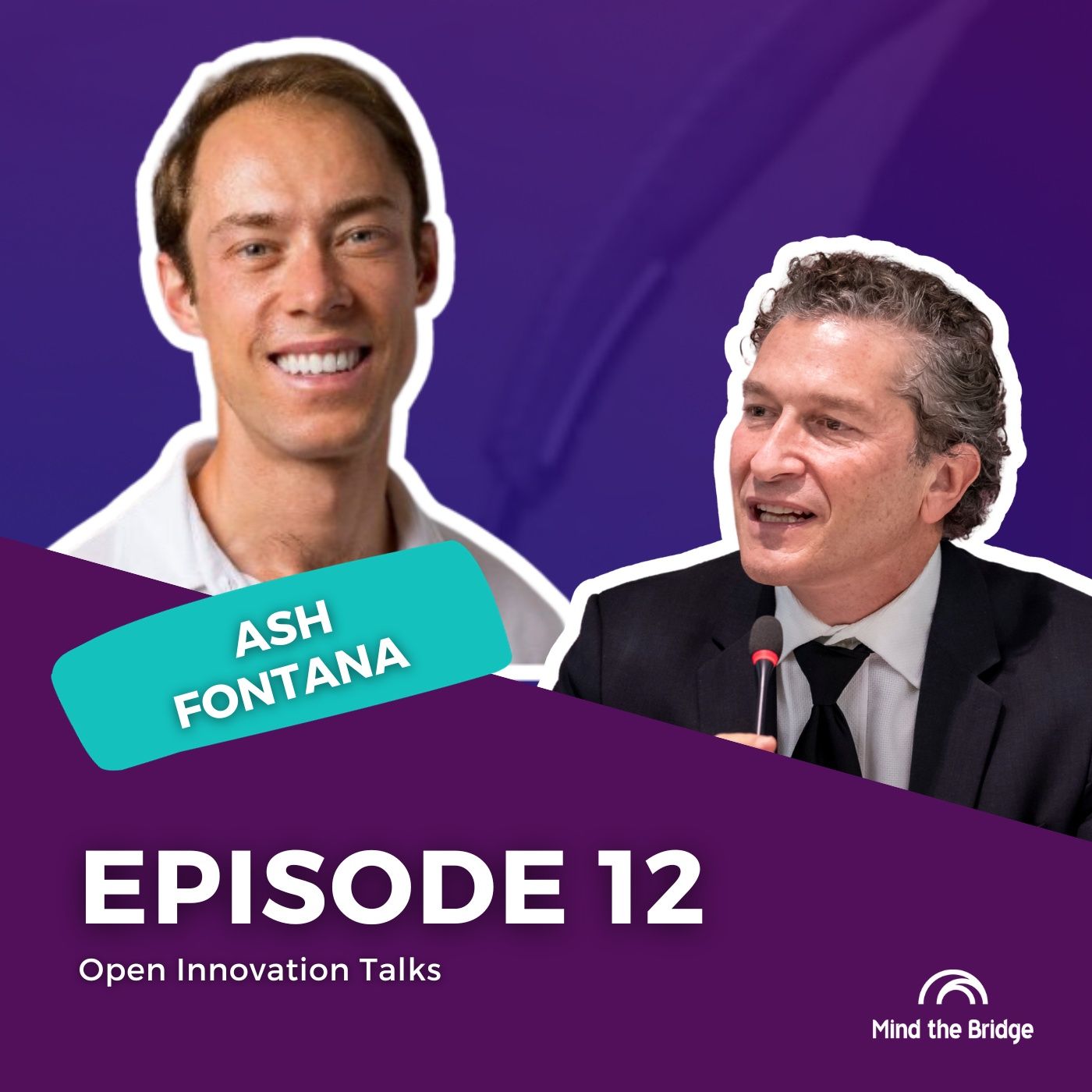
本集简介
双语字幕
仅展示文本字幕,不包含中文音频;想边听边看,请使用 Bayt 播客 App。
深度访谈科技领域最具影响力的创新高管,独家解读全球主要及新兴生态系统的数据与洞察,追踪全球最前沿的科技与开放式创新动态。每期节目都将为您带来这些精彩内容,欢迎收听《开放式创新对话》。
In-depth interviews with the most influential innovation executives of the tech arena. Exclusive data and insights on major and emerging ecosystems all around the world. The hottest news on technology and open innovation at a global level. This and much more in every new episode. Welcome to Open Innovation Talks.
关注行业桥梁对话
Mind the bridge chat with industry
大家好,我是Mind the Bridge的创始人兼CEO Marco Marinucci。欢迎收听新一期《创新对话》播客。本节目依旧由MandeBridge赞助播出。MandeBridge是一家总部位于旧金山的创新咨询公司,在全球设有多家分支机构,专注于企业级创新与初创企业生态的融合,致力于开放式创新核心领域的研究。
Hello everybody. This is Marco Marinucci, the founder and CEO at Mind the Bridge. Welcome to another episode of the Innovation Talks podcast. As usual, this podcast is brought to you by MandeBridge. MandeBridge is innovation advisory firm based out of San Francisco with multiple antenna offices around the world working at the intersection of, corporates and startups and working at the core of what open innovation is all about.
今天我的嘉宾是Ash Fontana,他既是企业家、投资人,更重要的是我的老友。我们将围绕人工智能发展焦点、投资领域趋势展望等话题展开讨论,共同探索科技世界的未来走向。请持续关注我们的对话。
Today my guest is Ash Fontana, an entrepreneur, an investor and most importantly an old friend of mine. So we'll be talking about a bunch of things, the focus of AI, where the world of investment is going and more topics of where the tech world is going all in all. So stick with us.
再次从硅谷向大家问好!这里是《桥梁对话》节目,我是Mind the Bridge的Marco Marinucci。今天我们非常荣幸邀请到好友——Zetta Venture Partners管理合伙人Ash Fontana参与访谈。
Good morning again from Silicon Valley. This is another Mind the Chat. This is Marco Marinucci from Mind the Bridge. And today we have the great pleasure to have a friend here on our interviews. This is Ash Fontana, managing partner of Zetta Venture Partners.
嗨,最近怎么样?
Hi, How you doing?
告诉你吧,我很好。
Tell me, I'm good.
很高兴再次见到你。认识Ash已经不知道多久了,肯定超过十年了。我刚才还在回想,回想自从我们相识以来你完成了多少事情。
Very good to see you again. I have the pleasure of knowing Ash for I don't know how long now. I mean, it must be definitely more than a decade. I was just checking a while. I was just checking how many things you have done since the since we've known each other.
我基本没怎么变。而你做了无数其他事情。所以这确实是个很好的叙旧话题。那么,我们不如从你的背景开始聊聊?你出生并成长在澳大利亚?是什么让你快速决定去硅谷发展的?
I'm pretty much constant. You have done a million other things. So that's definitely a good catch up on that. So so why don't we start from that a little bit of your background, born and raised in Australia? What took you to Silicon Valley and the rest real quick?
好的。我出生在澳大利亚一个意大利移民家庭。家里人有很强的创业精神,每个家庭成员都创立了独立的公司,这很特别,因为我们刚来时几乎一无所有就开始打拼。我对计算机很感兴趣,同时也喜欢投资。所以我两方面都涉猎了一些,最终意识到如果想创立科技公司,就必须搬到美国。
Yeah, sure. I was born and raised in Australia to Italian parents, immigrant family. So a strong drive to start companies and everyone in my family has started a company, a separate company, which is very strange, because, know, we arrived with very little and just got going. Then I got pretty interested in computers, but I was also interested in investing. So I sort of did a bit of both, learned a bit about both, and eventually just realised if I wanted to start a technology company, I had to move over to The US.
于是我去美国读了段时间大学,先是在一家大型机构投资者做投资工作,后来创立了公司,把公司从纽约搬到旧金山,之后出售了公司。随后我加入了Naval和Nivi的团队,当时AngelList只有五个人,我们开始将其转型为商业平台,这是我主要负责的工作。那段经历非常宝贵。几年后我意识到最有价值的科技往往建立在某种智能系统上,这时遇到了我的合伙人Mark,他刚成立基金专注这个领域。一年后我加入他,这就是Zetta基金,我们专注于投资AI优先的企业。
So I did a bit of college there and whatnot and moved over, worked on the investing side for a while for a very large institutional investor, then started a company, then we moved that company from New York to San Francisco, then we sold that company, and then I joined Naval and Nivi and the team at that point was five people at AngelList, and we started, you know, to turn AngelList into a business, And that's what I was really responsible for there. And that was a phenomenal experience. And then a couple of years after that, realised that, you know, a lot of the most valuable technology was built on some sort of intelligent system. And that's when I met my partner Mark, who had got a fund underway to focus on that. And I joined him one year in and that's Zetta and we focus on investing in AI first companies.
过去近十年我主要在做这件事,积累了相当多关于AI优先企业的认知,以及如何将AI落地现实世界的经验。于是我把这些写成书,企鹅出版社今年五月出版了这本书。
And so that's what I've done for the better part of a decade now to the point where I've accumulated a fair bit of knowledge around, you know, the notion of an AI first company, how to bring AI into the real world. So, so I wrote into a book and Penguin published that book in May.
说到这几年的事情。其实有件事我一直没问过你,你大学是学法律的吧?
Here we go. Speaking of a few things in a few years. So what, what, what years are two, a couple of things actually I never asked you. I think you studied law, right, at at university? Yeah.
那你是怎么从法律转到科技领域的?因为你从一开始就对技术表现出浓厚兴趣。我记得你当时有家公司还负担了你的学费。
And how did you move from law to tech? Because you seem to be very much interested in technology from the very beginning. I remember that you you had a company at the time that paid for your study.
是啊,是啊。我从未涉足法律领域,所以也从未当过律师。可以说,在我上法学院前十多年,我就已经在科技行业了。高中时我就在做网站之类的东西。
Yeah. Yeah. I was never in law, so I was never a lawyer. And I was in tech, so to speak, ten years before I even went to law school. I was working on websites and whatnot at high school.
我曾在一家公司负责搭建本地办公网络和连接计算机设备等工作。所以我接触科技远早于法律。我选择法学院是因为它极具挑战性,而完成困难的事情会带来满足感。如果你想在生活中达成各种交易,法律知识非常实用;同时我认为,如果你想成为优秀公民,理解政治、司法等社会层面的运作机制,法律也是非常重要的学习内容。这就是我学习法律的原因,而且我非常非常庆幸自己做了这个选择。
I was at a company that was putting together local office networks and networking computers and stuff. So I was in tech well before law. I went to law school because it's really hard and hard things are satisfying to do. It's really useful if you want to do deals in life and it's also I think a very important thing to study if you want to be a good citizen and sort of work out how things get done at the political, judicial and other levels in society. So that's why I studied it and I'm really, really glad I did.
重申一下,我虽然最终没成为律师,但坦白说每天都会用到法律知识——半小时前就在用。这里指的是运用我的法学博士学位(JD)所学。所以我很庆幸自己接受了法学教育。
Now again, I never became a lawyer but frankly I use it every day. I was using it half an hour ago. So using it meaning my JD. So I'm very glad I did that.
这太棒了。我记得上次有幸邀请您演讲时,您刚在AngelList推出了联合投资(syndicates)功能,那是个重大举措,至今仍是推动大众投资发展的关键创新。能否请您谈谈那段经历?我认为这对投资界的发展至关重要。而且这也与您的法律背景相关——想必正是法律功底帮助您处理了规模化创建联合投资体系的复杂性。
That's awesome. And I remember one of the last time that we had a pleasure to have you as a speaker. You had just launched syndicates at AngelList, which was a huge undertaking and still a key one, I think, for development of the investment at the masses. And and there may be a couple of words about that that experience because I think that's a very important part of the development really of of the investment community. Speaking also that attaches to the fact that, I mean, probably also your background in law also helped you in navigating the complexity of how to create syndicates at scale.
没错。当时存在两种概念:线上投资初创企业,以及组建联合投资体。当我加入AngelList后,我们意识到虽然一直在撮合各类融资轮次,为投资者和初创企业牵线搭桥,但有两件事没做好:一是未能简化企业同时接受多位投资者注资的流程,
Yeah. So there was the notion of investing online in startups, and then there was the notion of forming a syndicate. And so when I got to AngelList, we I realized we were putting together all these investment rounds. We were linking up investors with startups, but we weren't doing two things. One, we weren't making it easy for people to accept investment from multiple investors at once.
这在行政层面可能非常棘手;二是坦白说,我们没能从这些撮合交易、促成原本不会发生的投资行为中获取应有的价值。于是我看到了机会——本质上就是为每轮融资创建大量微型基金,这就是线上投资的雏形。如今它们被称为归集工具(roll up vehicles),并衍生出各种产品形态,如联合投资基金等。但最根本的基础设施在于能够快速且低成本地创建基金。
That can be very difficult administratively. And we weren't, frankly, like capturing any of the value we were creating in putting these investment rounds together and making these connections and facilitating these investments that wouldn't have otherwise been made. And I saw an opportunity to essentially create like a lot of mini funds for every round and that was the notion of investing online. Today they're called roll up vehicles and there's lots of different products that have spawned off this syndicates, funds, etc. But the fundamental infrastructure is around creating funds really quickly and really cheaply.
最初每轮融资的组建成本需要4万到8万美元,而我们把这个成本降低了90%,只需原来的十分之一。这背后是大量的工作,尤其是结构设计方面的工作。确实,这时候法学学位就派上用场了。
And initially, you know, that was going to cost 40 to $80,000 per round. And we got that down to 10% of that. We got that down 90%. And that was just a lot of work, a lot of work on the structuring side. And again, yeah, law degree came in handy there.
谈判方面有很多工作,采购方面也有很多工作,寻找基金经理以及大量围绕自动化的工作。这就是第一部分,让人们在线上投资。然后第二部分是,Naval有一天来了,他说,等等,这些人都在线投资,我们实际上是在撮合这些交易。为什么不让任何人都能撮合交易呢?
A lot of work on the negotiation side, a lot of work on the procurement side, finding fund managers and a lot of work just around automation. And so that was part one, you know, letting people invest at all online. And then part two was, you know, Naval came in one day and he's like, well, hang on. All these people are investing online and all these things and we're effectively putting together each of these deals. Why don't we let anyone put together a deal?
于是他有了这个绝妙的主意,我当时也觉得这真是个了不起的想法。于是我们和团队一起努力实现了这个想法,这就是后来的联合投资。当我们有了大量联合投资后,交易也多了起来,问题就变成了如何筛选和构建投资组合。也就是如何确保你投资的是好项目。于是我们在AngelList上创建了基金,由Naval、Kevin和我管理,我们选择投资项目放入这些基金,就像初创企业的共同基金。
And so he had this bright idea and I still thought, well, yeah, that's an amazing idea. And so went away and sort of worked with the team to implement that and that became syndicates. Then once we had so many syndicates happening, we had a lot of deals and the problem became one of sort of curation and portfolio construction. And that is, you know, how do you make sure you're investing in the good ones? And so then we created funds on top of AngelList that Naval and Kevin there and I managed, as in we chose the investments to put into those funds, of like a startup mutual fund.
然后我们创建了更像初创企业指数基金的产品。你可以看到,一旦完成了第一步——降低成本、让人们更容易组成投资公司的团体、使信息流和税务报告以及投资信息非常清晰,就能开始做其他很酷的事情。这就是我们早期非常努力在做的事情,也是今天你看到的许多产品得以实现的基础。
And then we created something more like a startup index fund. So you can see how once you got step one, which is get the costs low, make it easy to put people into a group that invests in a company and make all the information flows very clear and the tax reporting and just the information about the investment, then you can start doing all these other cool things. And so that's what we worked really hard on in the early days and that's what enabled a lot of the products you see today.
我认为这完美过渡到了Zetta作为风投基金的话题。简单介绍一下当前的结构、一点历史以及投资理念是什么?
And that's, I think, a perfect transition to Zetta as a as a VC fund. So a couple of words just to identify the current structure, a little bit of history and and what's investment thesis?
很简单。Zetta投资于AI优先的公司,非常早期就投资,通常是在他们刚有演示或原型的时候,某种预测模型显示出一定的准确性前景,他们刚开始接触客户。可能已经有一两个客户,可能刚完成概念验证,也可能还没有任何客户,但至少他们已经有了演示。我们在这个阶段投资,帮助公司达到他们的第一个百万美元收入或获得第一批重要客户。而且只投B2B,不做直接面向消费者的业务。
Yeah, really simple. Zetta invests in AI first companies, it invests in companies very early on, you know, usually when they're just at the point where they've got a demo or prototype, some sort of predictive model that's showing some promise in terms of its accuracy, and they're just starting to approach customers. May have got one or two customers, they may have just done a POC, they may not have got any of them yet, but at least they've done a demo. And we invest at that point and help companies get to their sort of first million dollars in revenue or get to their first significant degree of customer traction. And only B2B, no direct to consumer stuff.
所以AI优先、早期和B2B,这就是我们的投资方向。
So AI first, C and B2B, that's what we do.
我想你们刚募集完的就是第三期基金吧。
And that's the third fund, I think you just raised.
是的。抱歉先讲点历史。第一支基金成立于2014年1月,第二支2017年1月,第三支紧随其后在2020年。目前我们与数十家企业合作,部分已实现退出或上市,我们与这些企业保持紧密合作。我们深度参与企业初创阶段——在公司成立的头几年提供首笔数百万美元资金,直至它们达到可融资、盈利或被收购的阶段。
Yeah. So I'm sorry, bit of history. Fund one was effectively January 2014, fund two January 2017, and fund three just after that in 2020. So three funds, we work with dozens and dozens of companies now, some of them have exited, some of them have IPO ed, and we work really closely with those companies. We get really involved in the early stages, the first couple of years of the company's life, provide the first couple of million dollars of capital and then get them to a point where, you know, they're fundable or profitable or they sell.
我们在这方面成绩斐然。所有被投企业都成功跨越了那个阶段,有的获得更多融资,有的被收购,有的实现盈利,都取得了不同程度的进展。
And our track record there is really good. You know, none of the companies have not got to that point. They've all got to some sort of degree beyond that, raise more money, sold, got profitable, something like that.
让我们简单回顾下人工智能的技术浪潮及其当下爆发的原因。我毕业时在斯坦福跟随约翰·麦卡锡研究AI工程,那时还纯属学术探索。当时几乎没有实际应用,更多是方向性研究。后来发生了惊人突破,如今AI已无处不在。你认为究竟是哪些关键技术突破让AI变得如此核心?
So a little bit of history of the waves of technology on AI and why AI now. I was studying when I graduated actually engineering, was studying AI with a support here at Stanford of John McCarthy and that was research. I mean, was very little application was more directional than very little. And then something incredible happened and then today is AI is everywhere. So what what has been the major, I think, technological breakthrough that made the AI technology so so, you know, central?
确实,这类突破从来不是单一因素。虽然人们总想将其简化为某个叙事核心,但实际上是多重因素共同作用的结果。当时有很多优质研究在进行。
Yeah. And like a lot of these things, it's never one thing. It's easy to get hagiographic about this and try to sort of narrow it down to one thing you can center a narrative on. But it was just so many things happening at once. Yeah, there was a lot of good research going on.
神经网络研究也迎来复兴——通过在计算基质上模拟神经网络让机器学习。这项曾被搁置、资金短缺的研究在2012年左右重获重视,因为那时移动设备普及带来了海量数据,各类传感器无处不在。分布式计算也起到关键作用,云计算的诞生大幅降低了计算成本。当这三者结合时,我们终于能运行深度神经网络:输入数据,在多层网络中逐级传递,最终生成有效输出。计算机视觉模型、语音识别系统开始突飞猛进,文本生成模型近年也取得长足进步,此后的发展基本延续了这一轨迹。
There was a resurgence in interest in neural networks as well, the modelling of neural networks on computational substrates as a way to get machines to learn. And that research is really good and you know, was dropped for a while, was underfunded for a while or defunded for a while, but it picked up again in a really significant way around 2012 because you know there was a lot more data available then as well. Got mobile phones everywhere collecting all sorts of data, lots of sensors etc. And then distributed computing played a huge part in this, you know, basically creating the cloud meant we could compute more cheaply and more efficiently than ever. So that played a big role too, and you know when all of these three things come together, you can finally compute these deep neural networks, you can finally feed data in, run them over many, many layers of an over a network, run a network with many, many layers, one feeds into the next, into the next, passes its lessons on, so to speak, to really simplify things and generate real output and that's when we saw things like the computer vision models getting really good, like some of the speech recognition models getting pretty good, text generation models recently getting very good And it's sort of been a lot of the same since then.
我们在机器学习与AI的各个子领域都见证了巨大进步,但真正的融合始于那时。Zeta基金成立于2013年,取名自当年互联网首次突破zettabyte(10^21字节)数据流量,这标志着用海量数据训练模型的新纪元开启。
We've seen a lot of progress in lots of different subfields of machine learning and AI. But, you know, that was when it all started coming together again. And that's when Zeta started. Zeta started in 2013 and it's called Zeta because that was the first year a zettabyte of data went across the internet. That's 10 to the 21 bytes And that represents really the start of an era where, you know, you can learn over very large volumes of data with these models.
从投资视角看,你认为当前哪些AI核心技术将惠及大多数行业?未来五到十年最重要的突破会是什么?这显然是你们基金在中长期布局的方向吧?
So from the point of view, what is the today kind of the core technology development in terms of AI that is becoming available to most of the industries? What do think will be the major next development in the next five to ten years? That's where obviously you're betting as a fund, right, in the in the medium to long term.
好吧,我要给出一个有点烦人的回答。第一,我不做赌注,我做投资。第二,我不喜欢预测研究方向。第三,有太多不同领域都在取得巨大进展。所以没有——重申一遍——没有哪一件事是值得专注的,或者说能决定某个行业是否采用它的关键因素。
Okay, I'm going to give a bit of an annoying answer. One, I don't make bets, I make investments. Two, I don't like to prognosticate about research direction. And three, there's so many different fields making so much progress. And so there's no one, again, there's no one thing that, you know is worth focusing on or is going to make the difference between a certain industry adopting it or not.
现实是所有这些事情都在同时发生。我们在数据管理方面做得更好,在数据生成方面做得更好,生成合成数据,在数据标注方面也做得更好,更高效地让人类将专业知识融入数据标注过程,比如为图像添加元数据之类的。我们在这些方面不断进步。我们在模型计算方面做得更好,在模型架构方面也做得更好,使它们更高效,不再需要那么多计算量或数据量。所有这些方面每天都在进步,我们取得如此多进展,在监控这些系统方面也做得更好,避免系统崩溃后不得不从头再来或管理成本过高的情况。
The reality is all these things are happening all at once. We're getting better at data management, we're getting better at data generation, generating synthetic data, we're getting better at data labelling, you know, more efficiently having humans add their expertise to the process of labelling data, adding metadata to an image or something like that. We're getting better at that. We're getting better at computing these models, we're getting better architecting these models so they're more efficient, they don't need so much computation or so much data. So all of these things are getting better every day, like we're making so many developments, we're getting better at monitoring this stuff so that it doesn't break we have to start all over again or it's really expensive to manage.
所以我们每天都在所有这些方面取得进步,而现实是五年到十年后,经过上千个小步骤的积累,突然间一切就会运转得更好。比如突然之间我们有了能生成逻辑通顺、阅读有趣的博客文章或新闻稿的模型。它们现在其实就能做到,但大部分要么逻辑混乱,要么读起来索然无味。或者我们有了超廉价的语音转录技术,而目前要么质量差但便宜,要么质量好但昂贵。我们终将实现这个目标。
So we're getting better at all these things every day and you know the reality is in five to ten years, a thousand little steps later, all of a sudden it seems like it works so much better. You know, all of a sudden we've got models that can generate, you know, blog posts or news articles that actually make sense and interesting to read. You know, they can do that today, but they don't either don't make sense or are not interested to read for the most part. Or we have super cheap speech transcription, which today is like either not very good and cheap or pretty expensive and good. You know, maybe we'll get there.
语言翻译是另一个领域,机器学习有如此多细分领域都在进步,但它们需要所有这些其他方面同步发展。所以,是的,这个回答确实有点烦人,但它很现实且鼓舞人心——每天都有如此多进展,我认为我说的所有这些事情都可能在未来五到十年内实现。我们在所有这些细分领域都有非常优秀的模型。但谁知道哪个会最先突破?或者它们最终能达到多高的水平?
Language translation is another area, you know, so many different sub areas of machine learning are getting better, but they need all these other things to happen at the same time. So, yeah, the answer is it's sort of annoying, but it's realistic and it's encouraging, which is there's so much going on every day that the reality is all of the things I said, I think, may play out over the next five to ten years. We have really good models in all of those different sub areas. But but who knows which one comes first or how good they get or anything like that?
是否存在特定的地理区域?我是说,我们讨论过机器学习,讨论过数据的力量。显然,为大众简化来说,收集的数据越多,系统就能变得越智能。因此背景中一直存在关于谁将获得这种优势的讨论。我记得谷歌的某些同事,比如李开复——其实也是你们投资AI领域的长期同行——就经常提到AI强国之争,比如中国与硅谷的对比。
Is there any specific geographies where I mean, we talked about machine learning, we talked about the power of data. So the more the data, obviously, to simplify for the masses, that you gather, the more the more intelligence your system can become. And so I mean, there's a certain conversation happening in the background on who's gonna who's gonna have that edge. Right? I mean, I remember some of the some of Action X colleague at Google, Kai Fu Li, that is really also one of your colleagues actually in the industry of investing in AI for the long term, really mentioning the AI powers, you know, China versus Silicon Valley.
从您的角度来看,是否存在与地理相关的人工智能强国集中区域?
Do you see from from your point of view any any specific concentration that is geographically related of where these AI powers can be?
这个问题其实很容易回答,因为有明确的数据支持。需要澄清的是,这不是我的个人观点,而是实证结果。目前欧洲和英国(将两者合并计算)进行的AI研究比美国或中国更多,这些地区发表的AI研究成果也更多。另一个有趣的现象是,欧洲和英国有更多软件开发人员来实施这些研究。因此我认为关注欧洲和英国是很多人尚未采取的策略——而我正是这么做的。我一年大部分时间都住在那边,或者说这边。
Yeah, this is a really easy question to answer because there are good numbers on this. And this and so to be clear, isn't my opinion, this is empirically the case. That is, there's more AI research done these days in Europe and The UK, so combining the two for sure, than in The US or in China, more AI research published in those areas. Now what's also interesting is there are more software developers to implement this research in Europe and The UK than The US or China, and so focusing on Europe and The UK I think is something that something that a lot of people haven't done, something that I do. I live over there, over here, I should say, most of the year.
我在旧金山仍保留着一个团队、办公室、房子等所有资源,并在那里生活了十二年。但事实上,我在这边投资已有八年左右。没错,整整八年。而且每一年——更准确地说每个月——都能看到越来越多的公司在这里涌现。因此两年前我决定将大部分投资重心放在这里。
I still have a team, office, a house and everything in San Francisco, and I lived there for twelve years. But no, I've been investing over here for about eight years. Yeah, eight years. And every year it's just got to be the case that more and more every as every month went by, there were more companies here and there. So I made the decision two years ago to focus a lot of my investing efforts here.
同样,虽然不是全部,但肯定是占大多数。这里确实有许多优质资源。你看,无论是从人工智能研究起步阶段就深耕的剑桥,还是在机器人学、计算机视觉等领域长期领先的牛津,或是将生命科学与AI创新结合的帝国理工和UCL,甚至欧洲大陆上在语言处理与视觉领域全球顶尖的ETH、EPFL和法国多所高校,包括他们建立的机器学习研究机构如INRIA。意大利更是拥有悠久的数学传统和顶尖数学人才,无论是否涉及...
Again, not totally, but the majority for sure. So there's some really good stuff here. You know, whether you look at the research institutions that have been developing AI arguably since the very beginning, Cambridge, or in a very meaningful way for a long time, like Oxford and robotics, the areas associated with robotics and computer vision, or in like particularly novel areas like combining life sciences with AI, like they do really well at Imperial and UCL, or if you look at some of the institutions on the continent that are world leading in areas like language processing and vision like ETH, EPFL or a few universities in France, there's institutions that they've created there for machine learning artificial intelligence like INRIA, you know, in Italy, you've got a really long history of mathematics and that really strong mathematical talents, whether it's a part
的
of
阿尔皮萨或其他地方。但除此之外,这里还有悠久的工程传统,以及众多能产生海量数据的大型工业企业。于是你会看到像普伦托(意大利与奥地利交界处,给不熟悉的观众解释下)这样涌现出优秀机器学习机构的地区。奥地利许多学校的计算机科学教育也非常出色,大量人才从分布式系统领域转向AI,因为他们首批客户就是拥有庞大数据量的工业企业。关于这个现象的原因我可以滔滔不绝,但数据已经清晰地表明这个地区的投资价值。
Alpisa or wherever else, But then you've also got a really long history of engineering and you've also got all these really big industrial companies that are generating a lot of data. And so then you see institutions pop up in like Plentor, which is the region between Italy and Austria, for those who don't know watching this probably must do, that are really good at machine learning as well. And then you see all these schools in Austria actually have a really good computer science training. And then a lot of people going from that area, that field in computer science and distributed systems into AI because the first customers they work with are big industrial companies with lots of data. So I can go on and on as to the reasons why this is the case, But the numbers speak very clearly towards a focus on this area.
重申一下,这只是我对多个科技领域的一贯策略。虽不敢说这是最佳选择,但对我而言确实如此。
Again, this is just what I do for lots of other areas of technology. Wouldn't say this is the best place to be. But what I do, I think it is.
这个观点非常精辟,我也认为存在巨大机遇。你特别提到了研究领域以及人才聚集地。实际上我完全认同——顺便说下,当年我从事AI研究时就在特伦托,那可是最早的国际级研究机构之一,比美国这边许多机构都早得多。不过要结束这个话题的话,我们在硅谷峰会期间还将发布一项关于规模经济发展的研究——这是我们一贯的工作——会对不同地区进行对比分析。
I think it's an excellent point and I think there is an opportunity. Think you're talking specifically about research and the, you know, also where the talent can can reside. And I'm sure that actually I'm totally positive. I was when I was doing my AI research, by the way, was in Trento and it was one of the first big international institutions actually back in the day, way, way earlier than a bunch of other institutions actually including here in The US. The one thing though, that would conclude the conversation, the one thing that we're also launching during our summit in Silicon Valley is a research on the development of the as we normally do, the scale up economies and we do comparative analysis between different geographies.
但明显不同的是快速扩张能力。这方面硅谷依然无可匹敌,具体数据就不列举了,但其增速与其他地区可能相差一个数量级。作为投资者或基金,该如何应对这种局面?一方面是人才储备与技术专利,另一方面就是规模效应。
And that's obviously slightly different is the ability to to grow fast. And there is nothing like Silicon Valley for that and you know, don't have to give the numbers but it's still a significant maybe in order of magnitude of difference between the rest of the world, the ability of scaling fast. Do is there how do you play that as an investors, as a as a fund? Right? So one thing is the talent and the ability and the, you know, the intellectual property and then is the scale.
是的,我认为很多时候这本质上是个关于雄心的问题。只要创始人有雄心壮志,他们只需要帮助实现它。这就是我的工作——为他们聚集合适的人才,提供适量的资金,给予正确的指导,基本上通过分享我的经验避免他们重蹈他人覆辙,从而快速推进。所以,只要雄心存在,我认为如今这已不是问题。只要有合适的投资人和团队,你完全可以在任何地方创立公司。
Yeah, I think a lot of the time it's just inherently an ambition question. So if the founders have the ambition, they just need to help to realize it. And so then that's my job, surround them with the right people, provide them with the right amount of capital and give them the right guidance, basically help them to move really quickly by not making the same mistakes everyone else has made in the past by sharing my knowledge there. So, you know, if the ambition is there, I don't think it's an issue these days. Can, with the right investors and the right team around you, you can, you can create companies absolutely anywhere.
在我看来地理位置真的完全不重要。过去我不这么认为,但现在我非常确信这一点。不过再次强调,这前提是你拥有顶尖的团队,而这很难凑齐。
Location really is completely irrelevant in my mind. I didn't used to think that, but I very much do now. But again, that's assuming you have the right people at the top and that's hard to pull together.
好的,我想我们可以就此结束对话了。Ash,很高兴再次见到你,我们未来几年再见。我们会看到彼此的新动态。谢谢,就这样。
All right, and I think with that we can conclude our conversation. Ash, glad to have you again, and, we'll we'll see you in the next few years. We'll see all the the updates that, we're both up to. Thanks Alright.
谢谢你,Marco。这太棒了。
Thank you, Marco. This is great.
谢谢。好的。希望大家喜欢这次讨论。记得在mindobridge.com的LinkedIn主页上留下你的评论、问题、想法和建议。无论你通过Spotify、苹果还是谷歌收听这期播客,都请给我们点赞和评价。
Thanks. Alright. I hope that you appreciated the discussion. Remember to add your comments, your questions, your thoughts, your suggestions onto our LinkedIn profile at mindobridge.com. Also, to add a like, and review, wherever you are hearing this podcast from, whether that's Spotify or Apple or Google.
这对我们非常重要。非常感谢大家,下期节目我将邀请好友Albertonetti与瑞士邮政的Thierry Goyard对谈,讨论开放式创新与风险投资。请持续关注我们。再见。
That's very important to us. Thank you very much and the next episode we'll have my buddy Albertonetti sitting with Thierry Goyard of Swiss Post and we'll be talking about open innovation and venturing. So keep following us. Bye bye.
感谢大家今天的参与,我们下期《开放式创新对话:Mind the Bridge与行业领袖访谈》再见。
Thank you for being with us today, and see you in the next episode of Open Innovation Talks, Mind the Bridge, Chat with Industry Leaders.
关于 Bayt 播客
Bayt 提供中文+原文双语音频和字幕,帮助你打破语言障碍,轻松听懂全球优质播客。