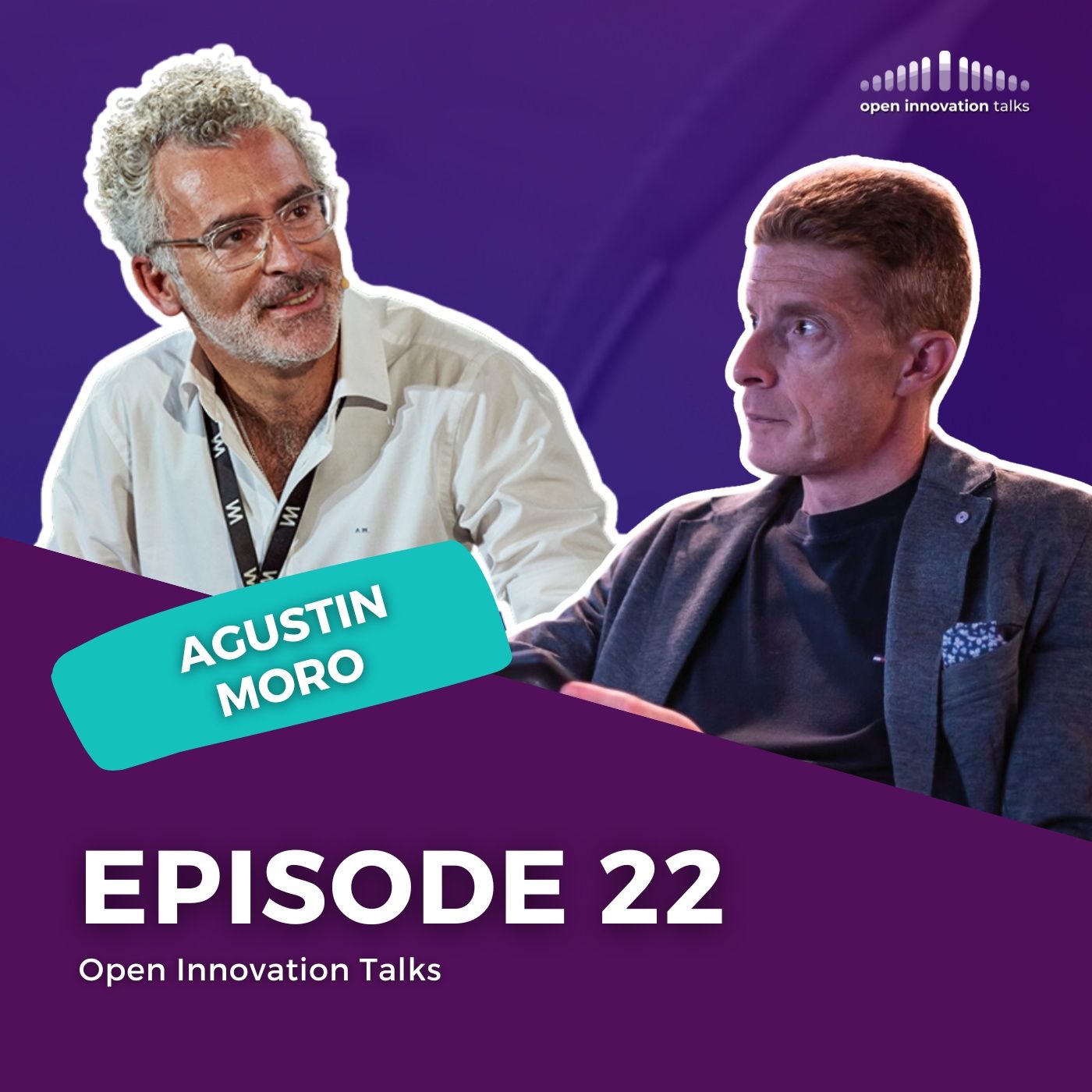
本集简介
双语字幕
仅展示文本字幕,不包含中文音频;想边听边看,请使用 Bayt 播客 App。
自从我加入西班牙电信的开放创新部门以来,这始终是一个不断自我革新与精细调整的过程,正如你最初所说,我们所做的工作本质上是混合型的——一方面需要服务于母公司集团,另一方面又要服务于创业者与初创企业。他们是最挑剔的客户群体,堪称客户需求金字塔的顶端。如果不能为他们提供业务发展机遇、融资渠道、敏捷流程,简而言之就是智能资本,你就无法留住这些人才。这就像...(此处西班牙语片段)必须同时兼顾所有环节。
Since I've been in the Open Innovation Unit in Telefonica, it has been a matter of perpetual reinvention and fine tuning and, as you were saying at the beginning, hybridization of what we do, because you have to serve, on one hand, to your mother group, but on the other hand, you have to serve entrepreneurs and startups. And they're a super demanding customer. I think they're the most demanding customer that exists. So, if you don't put on the table business development opportunities for them, if you don't put on the table financing, agile processes and, in a nutshell, smart money, you won't be able to track this talent. So, think it's kind of being, I don't know how to say that in English, but it's like, Un aqui liberista, it's like, yeah, you have to keep all the balls in the air.
是的。
Yes.
没错,就是这样。虽然很累,但确实充满乐趣。
Yeah. That's it. That's it. It's fun. It's exhausting, but, yeah, it's fun.
深度对话科技领域最具影响力的创新领袖,独家解读全球主要及新兴生态圈数据洞察,追踪全球科技与开放创新最前沿动态——更多精彩尽在每期节目。欢迎收听《开放创新对话》,搭建桥梁,与行业领袖畅谈。
In-depth interviews with the most influential innovation executives of the tech arena. Exclusive data and insights on major and emerging ecosystems all around the world, the hottest news on technology and open innovation at a global level, this and much more in every new episode. Welcome to Open Innovation Talks. Mind the bridge, chat with industry leaders.
当下开放创新的关键词是'混合型'。开放创新模式始终在演进,这一点我们都很清楚。但当前我们正见证的趋势是:越来越多的模式正在跨界融合,形成更趋混合的形态——通过共享工具以期产生协同效应。西班牙电信及其子公司Wayra就是典型案例。如您所知,西班牙电信是全球最早布局开放创新领域的先驱企业之一。
The code word for open innovation today is hybridization. Open innovation models are being evolving over time and that's something that we know. But one thing that we are currently witnessing is that more and more of this model are going across, are becoming, let's say a bit more hybrid, sharing tools in a way that can hopefully produce results. A very interesting example is Telefonica and specifically wired. Again, as you might remember, Telefonica has been one of the first players worldwide to enter the open arena.
其中最著名的举措当属Wayra加速器。它堪称企业加速器模式的开拓者,在欧洲和拉丁美洲通过创新中心网络推进项目。如今Wayra已演变为风险客户与企业风投高度混合的创新平台。为了深入了解其演进历程及未来方向,我很荣幸邀请到奥古斯丁·莫罗先生。他不仅是我的老友,现任西班牙电信开放创新英国分部的创新服务总监。
The most famous initiative has been WAIRA. They probably was being one of the force to launch the model, the concept of corporate accelerators supported by hubs in Europe and in Latin America and on the way, and Telefonica's approach to open innovation has evolved into something else. Today, WiRa is something that is very hybrid across venture client and corporate venture. In order to get a better understanding what has been the evolution, specifically what is ahead of that, I have the pleasure to have with me, Agustin Morrow. Agustin, beyond being a long term friend, since we've known each other since a while, is currently the Director of Innovation Services at Telefonica Open English.
欢迎你,奥古斯丁。
Welcome, Augustine.
谢谢,阿尔贝托。早上好,很高兴与你交谈。
Thank you, Alberto. Good morning and it's a pleasure to speak with you.
奥古斯丁,让我们先明确一下西班牙电信的开放创新星系是什么。WiLa可能是最知名的品牌之一,还有西班牙电信风投和西班牙电信开放创新部门,据我们理解,后者是目前覆盖所有创新的主要实体。请回顾一下历史以及西班牙电信内部的现状。
So Agustin, let's try to get a bit of clarity first in terms what is the open innovation galaxy of Telefonica. Think WiLa probably is one of the brand name that is definitely more known, there is Telefonica Venture and there is Telefonica Open Innovation that as we understand is the main entity that's currently covering all the innovation. Go back a bit what has been the history and what are currently the current situation inside Telefonica.
很好。你说得对,目前所有开放创新举措都归属于西班牙电信开放创新部门。在那里我们可以看到西班牙电信现有的所有风投工具和分支机构,以及业务发展计划和其他旨在促进西班牙电信与初创企业和创新者合作的举措。这是一段漫长的历程。我们早在2006年就成立了西班牙电信风投。
Great. So you're right now, the open innovation initiatives are all comprised within Telefonica Open Innovation Unit. And we can find there all the venture capital tools and all the venture capital arms that Telefonica has in place as of today, together with the business development programmes and the other type of initiatives that we've got in order for Telefonica to engage with startups and with innovators. This has been a long walk since we started. We launched back in 2006 Telefonica Ventures.
最初这是一个小型风投基金,表外投资。当时西班牙电信通过它来理解创业生态系统和风投行业的动态。我们在全球投资那些技术与我们核心资产(即网络和基础设施)高度相关的公司。在学会如何与初创企业合作及投资后,我们在2011年推出了WAIDA——这是一个微型风投基金计划,我们通过它向每家初创企业投资最高3.5万美元,主要集中在西班牙电信的业务覆盖区域(欧洲和拉丁美洲),但也能投资来自其他地区的公司。自2011年启动以来,我们大幅调整了WAIDA策略,已投资1000多家公司,战略目标很明确:支持西班牙电信增加现有业务收入,强化数字解决方案的商业组合,并为现有运营和平台带来内部效率提升和成本节约。
It was a small venture capital fund, investing off balance sheet, and at that time Telefonica used that to understand the dynamics of entrepreneurial ecosystems and of the venture capital industry. We were investing in companies worldwide, and those were companies with technologies that were very much related or very much linked to our core assets, meaning networks and infrastructure. After we learned how to engage with startups and how to invest, we decided in 2011 to launch WAIDA, which is a micro venture capital fund initiative through which we invest up to $3.50 ks per startup, mostly in Telefonica's footprint, meaning Europe and Latin America, but also, yeah, we're able to invest in companies coming from other geographies. Since we started back in 2011, we have pivoted wide strategy very much. We have invested in more than 1,000 companies with a clear strategic goal, which is basically making or supporting Telefonica in increasing the revenues with existing businesses, reinforcing the commercial portfolio of Telefonica's digital solutions, also bringing internal efficiencies and savings in existing operations and in existing platforms.
正如你所说,虽然WAIDA是我们最知名的计划,但西班牙电信风投这些年来也一直在进行投资,不仅直接投资金额高于WAIDA(从3.5万美元到5600万美元不等,平均单笔投资约100-150万美元),而且更聚焦于我们认为可能涌现电信行业相关技术的地区,如以色列或硅谷。因此它也具有全球投资视野,主要参与C轮及之后的融资。除了WAIDA和西班牙电信风投这两个分支机构外,我们还采用母基金策略。
And even though WADA, as you were rightly saying, it's the best known initiative that we've got, Telefonica Ventures has been also investing throughout all this time, not only with direct investments, with higher tickets than WAIDA, so Telefonica Ventures tickets go from $3.50 ks up to $56,000,000. Average ticket is, I think, 1,000,000, 1,500,000.0. And through Telefonica Ventures, we are more focused in geographies in which we think that relevant technology for the telco industry might arise, such as Israel or Silicon Valley. So, it has also a worldwide investment scope and with bigger tickets is series, post series C onwards. On top of those two venture capital arms that we've got, Wide and Telefonica Ventures, So Telefonica Ventures, also do a fund of fund strategy.
我们是13支不同风投基金的有限合伙人,这些基金同样投资于西班牙电信业务区域及硅谷、以色列等地。最后我们还拥有一系列支持第三方开发开放创新战略的计划,比如2015年推出的Open Future——该项目旨在支持地区和本地开放创新战略,主要面向公共机构和地方政府,同时也接纳希望支持特定区域创业生态的私营合作伙伴。这些就是我们目前在西班牙电信开放创新部门运营的主要项目。
We are LPs in more than 13 different venture capital funds, which invest again in Telefonica's geography and also in Silicon Valley and Israel and others. And we finally have also a set of initiatives and programs in order to support third parties to develop their open innovation strategies, such as Open Future, which was launched back in 2015, which is a program that aims to support regional and local open innovation strategies, mostly focused on public institutions and local and regional governments, but also embracing private, local and regional partners that want also to support entrepreneurship and startups in a specific region. I think those are the main programs that we've got as of today within Telefonica Open Innovation.
你们还有一个风险建设部门。
And you also have a venture builder.
我们还设有一个风险构建部门,它并不直接隶属于我们部门,而是归属于我们的姊妹单位——Telefonica数字创新部门中的创意单元,由我们的首席数字消费者官Cem Alonso领导。该部门主要寻找公司内部开发的理想技术,以此为基础制定商业模式,并寻求有意支持该项目的第三方合作。我们会组建管理团队,最终孵化出诞生于该单元的初创企业,这些企业应以吸引第三方融资并实现可持续经营为目标。
We also have a venture builder, which is not directly sitting in our unit, but in one of our sister's unit, which is the ideation unit within the digital innovation unit of Telefonica, which is led by Cem Alonso, our chief digital digital consumer officer, which is basically looking for ideal technologies developed within the company, so that we can draft a business model under those technologies and we look for third parties that want to also support that venture, we look for a management team and we finally fund a startup born within this unit that should aim to raise fund from third parties and become a sustainable business.
这确实是一个非常全面的策略。我注意到你们的演进过程相当出色。我认为在某种程度上指导你们行动的最重要准则,就是不断贴近战略契合度——既要找到能为Telefonica创造新业务收入的创新,同时又要能降低运营成本、提升效率。这两点本质上是主要驱动力。Telefonica是少数建立了完善指标体系的企业之一,能够快速推进并衡量业务活动的影响。
So very, very comprehensive approach. I think one of the things I'm looking at your evolution pretty well. One of the, I think the most written criteria that in a certain way inform your action has been trying to get more and more close to what is the strategic fit, again, to be able to find an innovation that might be, as you say, use of Telefonica on the one hand generating revenue, new business, on the other hand reducing operational expenses, increasing efficacy. So this is substantially the two main drivers. Telephonic is one of the few that also have some metrics in order to, again, you are quick advanced and also try to measure the impact of the activity that you do.
具体是如何操作的?能否举例说明一些大致成果以便理解?
Again, how do you do that? Some ballpark results that you can mention just to understand.
好的。首先为听众提供些背景:当我们启动Telefonica Ventures和WAIDA时,正值电信行业艰难时期。OTT玩家利用我们高资本支出的网络进军数字领域,而当时运营商却无法实现变现。因此从一开始,尽管我们诞生于远离Telefonica母体的位置(因为我们明白初期要确立定位并向创业者提供清晰价值主张,必须保持独立性),但很快就意识到:若想真正产生影响力并存活至今——十年乃至十二年后——就必须建立清晰的业务指标体系。
Sure. Just to provide some context to our audience, I would like to highlight that when we started with Telefonica Ventures and with WAIDA, there were tough times for the telco industry. OTT players were coming into the digital scene using our networks, which had high CapEx necessities and telcos weren't able to monetize those at that time. So, from the beginning, and even though we were born as far away from Telefonica, because we knew that at the beginning, in order to position ourselves and to have a clear value proposition to entrepreneurs, we had to be independent and a bit far away from the big corporation. We soon learned that if we really wanted to have impact and be here today, ten years after or twelve years after, it was needed to have clear metrics and business metrics.
这是我们始终坚持的原则。从最初就希望像常规业务部门一样接受考核,始终执着于向Telefonica集团和市场展示成果。目前我们已投资超1000家企业,现有投资组合约550家,其中400家已与Telefonica达成商业协议。
And this is something that we have always pushed for. We wanted to be, since the very beginning, a business unit measured as any other regular business unit. And we have been, since the beginning, very much obsessed in being able to present our results to Telefonica Group and also to the market. So, we have invested in more than 1,000 companies, out of which I think we have right now around five fifty in our portfolio. And from all those, 400 have been able to close commercial agreements with Telefonica.
通过业务部门转售所投初创企业的解决方案,我们为Telefonica创造了近7亿欧元收入。在节省成本方面,虽然难以精确追踪(通常以初创企业与Telefonica的合同规模为参照),但估计约为2亿欧元——实际带来的运营效率提升远高于此。不过正如所言,节省金额这类软性指标易受质疑,因此我们更倾向采用可验证的合同规模作为展示依据。
We have achieved almost 700,000,000 revenues for Telefonica by our business units reselling the startup solutions in which we have invested. And in terms of savings, I think that should be around €200,000,000 though that's a metric that's hard to follow. We just use as proxy the size of the contract of the startup with Telefonica, though we are pretty sure that savings and efficiencies brought to Telefonica Group are much higher than that amount. However, as said, we wanted anyone can challenge if you try to measure savings, those are soft metrics or things that cannot be proven. We have preferred to have like just the size of the contract, which is something that we can always show.
确实,这是个模糊领域——虽非核心但难以量化。比如开放式创新带来的典型优势可能是缩短上市时间,但这如何衡量?它未必直接产生收入,却能创造战略优势。这恐怕是全球多数企业开放式创新部门面临的最大难题:如何展现超越数字的价值(你提到的数据已很惊人)。因为开放式创新一方面能增强企业的战略前瞻能力...
Yes. Now this is a very, let's say, muddy matter, not as super relevant, but it's difficult to measure. Sometimes also measuring the value produced by open innovation, one typical advantage you can get is maybe reducing the time to market. And how do you measure that? It's not something that probably creates an immediate revenue impact, but it's something that creates a strategic advantage as well as again open innovation and this is probably one of the biggest problem that most of the corporates in the world do have, I think most of the open innovation units in the world do have, is to showcase the value produced that is beyond the numbers that you say that are by the way are impressive, but it's beyond because again if you think about that, open innovation on the one hand is helping the company to improve their strategic foresight.
从根本上说,通过开放式创新工作,企业在技术上能够优化未来战略、革新战略方向并实现持续生存。顺便提一句,这绝非小事,实际上至关重要。另一方面,您正在推动企业文化的重大变革。第四点在于,您也在某种程度上提升了企业形象和品牌价值——因为外界会将您视为着眼未来的企业,这还可能影响市场对企业的整体评估。因此当前面临的难题是:战略贡献、文化贡献和形象贡献这三项无形资产,其价值都极难量化。
Substantially by working in open innovation, you technically have the company to improve their future strategy, to innovate their future strategy and to survive. That's by the way, is not a minor thing, actually it's quite relevant. On the other hand, you are producing a big impact in the cultural transformation of your own company. And fourth also you're improving in a certain way also the image of the company, the branding of the company, again because you're perceived as a company is looking at the future, might have also an impact of the market measure and assess the company as a whole. And so the problem that the last three things that we have today, contribution to the strategy, contribution to the culture, contribution to the image are intangibles that are very difficult to measure.
因此我们需要尝试补充些更具体、更务实的经济指标作为支撑。同时我们清楚这些KPI并不全面,因为它们仅衡量了当前开放式创新的产出。未来可能实现更大突破——事实上我们已有成功案例,或许起步规模不大但终将发展壮大。成本节约的效益会不断扩大,更不用说对战略层面的全面影响了。
So some point we need also to try to add some concrete, more pragmatic and more economic API to try to support. Also, we know that this KPI are partial because we are just measuring what has been extracted from the open innovation today. It doesn't mean that what will be extracted in the future, maybe we can go beyond. Again, we have some successful implementation, maybe start small and then become larger. The impact of cost savings is larger, imagine also all the impact on strategy.
这类事项确实重要却难以量化,不知贵方是否设有专门衡量这类无形活动的KPI?
This kind of stuff is relevant, difficult to be measured, and I don't know if you have some KPIs also to try to measure this kind of intangible activities?
阿尔贝托,正如你所说,这确实极其重要——我们过去也做过相关测算。我们常讨论开放式创新的涟漪效应,它确实会影响你提到的所有维度:文化、市场定位、品牌建设等。但最终,我认为这也是所有企业创新部门共同面临的挑战。在大集团开展开放式创新时,容易陷入精力过于分散的风险。如果既要衡量传播效果,又要统计文化转型中触达的员工数量,追踪这么多指标会让人不堪重负。所以我们选择聚焦于之前提到的业务指标和投资回报率,毕竟这些才是财务部门和执委会能理解的核心数据。
It's super relevant, as you certainly say, Alberto, and this is something that we have also measured in the past. We have always spoken about the ripple effect of open innovation, which impacts in all the dimensions that you were mentioning, culture, positioning, branding and many other things. However, in the end, and I think this is a common challenge that we have with other innovation units, open innovation units from other corporates, when you're doing open innovation at a big and complex group, you have the risk of spreading too thin. If you focus on measuring the impact in comms or in the cultural shift on how many employees you are reaching throughout these initiatives, you might get mad and become mad by having to follow so many different indicators. So, we have preferred to just focus on the business ones that I mentioned, together with the return on investment, because those are the ones in the end that the financial guys and people in the executive committee understand.
展示与初创企业的合作报道固然美好,但股市和分析师评估企业自有一套标准。我们希望被视作普通业务部门来对待。因此即便曾尝试追踪其他指标,最终还是选择聚焦关键数据。虽然能提供完整的传播数据,但那些已经过时了。
So I think it's super nice to say, see this picture and see how many articles were written about our collaboration with startups. But that's know how a business is measured in stock markets or in front of the analysts. And yeah, we want to be treated by just as another business unit. So, in the end, and even if it's something that we have always considered and tried to follow, we have preferred to focus on the main ones. I could give you all figures on the comps, but those are updated.
我们大约三四五年前就停止追踪那些指标了。虽然这仍是西班牙电信的核心价值主张,但我们更希望人们自然感知到价值,而非依赖具体数据来证明。
We stopped doing and following those metrics, I think, three, four, five years ago. Not anymore. For sure, this is something that's it's in our main value proposition for Telefonica. But yeah, we really aspire that everyone perceives that, not having to give any metric around that and just speak about business?
不,商业语言本就该是通用语言。如今开放式创新已度过我们所谓的'婴儿期'——那个无论做什么都能获得免疫效应的阶段。就像过去只要做宣传就能获得好评,现在已进入'结果导向时代',人们开始理性评估成效。我担心的是:过度强调当前可量化的成果,反而会弱化我们创造的整体价值。当你向执委会汇报这些数据时,他们可能会觉得'有点意思,但不过如此',殊不知这些数字仅体现了实际价值的一小部分。
No, no, think business is supposed to be the common language, also because currently open innovation is no longer in what we call the age of infancy, where again, there was this own immune effect and whatever you do with starter was good enough. Just as we say you communicated you were golden, now I think we are entering what we define the age of results and people are rightly measuring results. My concern is that showcasing the impact that can be measured today is in a certain way we are undermining the value that we have been putting on the table. And at the end, if you go to your executive committee, your executive board showing this number, I say, that's interesting, but it's not that much. While the value is, this is just a subset of the value you put on the table.
再次强调,你们同时兼顾Horizon one和当前数字的工作,这些数字可能反映了你们能实现的成果。这对核心业务有影响,也影响着当下的业绩。但同样重要的是,你们创造的大部分价值主要来自rhizo two和rhizo three领域——按定义来说,这些价值需要五到八年才能完全显现。我们必须平衡这两种策略,既要维持现有工作,也要培育这类长期成果。短期与长期之间的平衡是个微妙话题,因为多数公司在发展过程中往往会逐渐放弃早期采用的方法。
The things because again, you are working both Horizon one and this number probably reflect what you are being able to achieve. This has an impact on the core business, has impact on the numbers of today. But again, the largest part of the value that you guys have been doing is mostly looking at rhizo two and rhizo three, that by definition is something you will grab the value will be grasped just on the way in five to eight years. But again, we need to balance both approaches and we need in order to allow this to continue to do your work while you are able to nurture also those kinds of results. And again, this balance between short term, long term is a delicate topic because most companies, at some point, are losing approach has been used in early days.
于是他们开始只关注结果。当审视这些结果时,很可能找不到值得持续投入的价值点,便可能削减预算、终止行动。所以这是个需要谨慎把握的平衡游戏。
And they start just to look at the results. And they look at these results, probably don't find anything particularly valuable to be continue. And they might reduce the budget, discontinue actions. And so it's a it's a delicate balance in the game.
我完全同意。
I fully agree.
与像你这样早期就踏上这段旅程的实践者对话很重要。我全程跨越了创新曲线,如今你们正面对这个领域。我们拥有这些经验,而很多刚成立或成立仅几年的公司无法感知这段历程——你们从何处出发,带来了什么价值。你说过投资了1000多家初创企业,这个数字令人震撼。其中潜藏着大量可提取的价值和经验,你们实际已经提炼并服务于公司,尽管这些很难量化。
It's important to talk with players like you that have probably the one that are started this journey in the early days and so I've been all the crossed the innovation curve and now you're currently facing this area and we have this experience of that probably company just started today, started a couple of years ago, don't have the perception what has been the journey, what you come from, what is the value that you put on the table because you said we invested in over 1,000 startups. That's impressive numbers. There's potentially a lot of value, a lot of learning that you can extract from that and you have actually extracted and put service of the company that is very difficult to measure.
是的,我完全认同。做开放式创新必须保持连贯性。关键在于平衡短期创新或战术性创新与支持运营部门实现短期目标的关系——这至关重要,因为你既要保持与他们的相关性,又要让他们视你为年度目标达成的盟友。所以必须投入精力支持他们。
Yeah, I fully agree. I think when doing open innovation, you have to be consistent. And the thing about the balance between doing short term innovation or more tactical innovation on supporting your OPs in achieving their short term results. It's really important because you want to be relevant to those guys and you want them to see you as an ally in closing the year. So you have to devote some efforts to supporting them in that.
如果以当前收入作为考核标准,自然会迫使你聚焦短期。但正如你所说,作为开放式创新部门,我们也要关注horizon three,必须投资未来电信领域,确保不错过任何新技术机遇——即便某些技术目前与Telefonica业务不完全契合,但可能成为未来的颠覆者或杀手锏。这是我们部门明确的原则。比如我们对Borderless和Ilium这类去中心化物联网连接平台的投资,就与现有业务战略相悖。
If you are measured by the amount of revenues that you are doing right now, it's something that really pushes you to look into the short term. But as you were saying, we are open innovation units and we have to look into horizon three too and we have to invest in the future of telco playground and making sure that we do not miss any opportunity around new technologies or things that might have not right a proper fit right now with what Telefonica is doing, but can be the game changer of tomorrow or the killer technology of tomorrow. So this is something that we try to have clear in the unit and to keep this balance. We do investments in things that are in fact against the strategy of our business, such as the investment that we've got in Borderless and Ilium, which is this decentralized network IoT connectivity platform that was born in The U. S.
这个源自美国西海岸的项目正在全球扩展。虽然它确实是竞争对手,我们的网络部门可能不满,但我们的使命正是为Telefonica集团提供多元选择。只有通过今天可能零收益、但十年二十年后可能创造价值(甚至决定Telefonica能否存续)的投入才能实现。阿尔贝托,我认为关键在于设定清晰目标并保持连贯性。比如我们向Telefonica董事会或执委会汇报时,通常只有半小时时间。
In the West Coast and that's spreading out, you know, all geographies. And for sure, that's a competitor, but we think that maybe our network guys are not happy with that. But we're also here to bring optionality to Telefonica Group, and we can only do that by doing things that might not bring any revenue today, but might bring that in ten or twenty years time or even allow Telefonica to be here in twenty years' time. So, I think it's a matter also, Alberto, of setting clear goals and being consistent. You have I always think of so when we go to Telefonica's board of directors or executive committee, you only have half an hour.
我们可以讨论通讯,可以讨论许多事情,但归根结底,我们更希望他们能期待两三项成果,这样半年或一年后我们就能说:看,我们上次承诺的事项已经实现,这里还有一两个成功案例。这就是我们下阶段的工作方向。自从加入西班牙电信的开放创新部门后,这始终是个持续革新与精细调整的过程,正如你开头所说,我们需要实现业务杂交——既要服务母公司,又要服务创业公司和初创企业。后者可是最挑剔的客户,我认为他们是世界上要求最高的客户群体。
We could speak about comms, we could speak about many things, but in the end, yeah, we just, we prefer them to expect two or three things and be able to go six months after or one year after and say, Hey, the things that we promised in the last time we were here, we have achieved those, and here are maybe one or two success cases. This is what we will be doing in the next period. And since I've been in the Open Innovation Unit in Telefonica, it has been a matter of perpetual reinvention and fine tuning and, as you were saying at the beginning, hybridization of what we do, because you have to serve, on one hand, to your mother group, but on the other hand, you have to serve entrepreneurs and startups. And they're a super demanding customer. I think they're the most demanding customer that exists.
所以如果你不能为他们提供业务发展机会、融资渠道、敏捷流程,简而言之就是资金支持,你就无法吸引顶尖人才。这就像是在...英语里不知该怎么形容,就像是走钢丝(unequilibrista),必须同时兼顾所有方面。
So, if you don't put on the table business development opportunities for them, if you don't put on the table financing, agile processes and, and in a nutshell, money, you won't be able to attract best talent. So I think it's kind of being, I don't know how to say that in English, but it's like unequilibrista, it's like, yeah, you have to keep all the balls in the air.
高空走钢丝的人,没错。
High crop walker, yes.
对,就是这样。虽然很累,但确实充满乐趣。
Yeah, that's it, that's it. It's fun, it's exhausting, but yeah, it's fun.
请允许我再次请教——作为在西班牙电信工作多年,且长期参与开放创新领域的前辈。我们常说正在播种未来,构建将改变公司战略的项目。回顾这十多年,能否举例说明你们投资或合作过的初创企业,最终被纳入体系并推动公司战略转型的案例?
And again, let me take the advantage of sitting with someone that, again, you have been in Telefonica since a while, and Telefonica has been on the open innovation arena since a while. And so most of the typical discussion, we are seeding the future. So we are building something that will change the strategy of the company in the future. Since you have been around for more than ten years, if you go look back find, can you find a couple of example of startups that you invested, that worked with years ago that actually has been embedded, helped to transform the strategy of Telefonica?
确实有几个成功案例浮现在脑海。比如TEBO这家现已成为西班牙独角兽的人工智能公司。当我们作为客户采用其技术时,他们能实时预测网络系统故障,在视频内容传输等众多场景表现出色。当时他们还处于A轮B轮阶段,通过与西班牙电信签订七位数级别的合作协议,极大助力其成长为独角兽。这项被我们发掘的技术至今仍是西班牙电信的宝贵资产。
So, yeah, some good success cases come to my mind. So I might think of TEBO, which is an artificial intelligence company, which is one of the unicorns now in Spain, that when we started to use as a customer, Telefonica as a customer, their technology, they were able to predict real time, like failures in the network systems, to me, for video and content delivery and many other use cases. They were a series A, series B company and yeah, we have worked all the work together with them. And I'm sure that having agreements and contracts with Telefonica of, yeah, more than 7 figures really supported them in their way to become a unicorn. And that was super valuable or is a super valuable technology that Telefonica has and that was identified by us.
另一个典型案例是我之前提到的Borderless Capital基金,它源自去中心化物联网网络Helium。这个项目让我们深入理解了去中心化协作网络的部署运营模式,其代币激励机制会奖励部署家用设备的终端用户。这种模式对大型企业而言是全新课题,我们从中获益良多。投资回报方面必须提到AltioStar——2018年我们与德国电信、Orange联合投资的开放网络公司,一年半后出售时获得巨额回报,也为我们的网络团队带来重要经验。
Another example that I like is the one that I was previously mentioning around Borderless Capital, which is a fund coming from Helium, this decentralized network for IoT connectivity, and which also allowing us to learn how decentralized networks and collaborative networks are deployed and how they work. And they even have tokenization component in which they reward end users that deploy their devices at home and they get these tokens. And this is something, a model that's new to a big corporation and from which we have learned a lot. In terms of return on investment, I have to name, on one hand, AltioStar, which was a joint investment of Telefonica together with Deutsche Telekom and Orange. It was an open run company that we invested in, I think, 2018 and we sold one year and a half after with huge returns and also with big learnings for our network guys.
或许可以考虑电信行业的卫星业务,比如QuickGenius这家来自英国的健康与 wellness 公司。我们在伦敦进行了投资,它为西班牙电信带来了可观的投资回报。我脑海中浮现出许多类似的例子。本质上,我们的策略是双管齐下:一方面强化现有业务,另一方面也愿意在电信行业未来数月或数年内可能具备发展潜力的垂直领域进行投资,例如健康、能源和移动出行领域。
Maybe operating in satellite businesses to telco industry, I can think of QuickGenius, for example, which is a health and wellness company coming from The U. K. That we invested in London and that has also brought great return on investment to Telefonica. So, many different examples come to my mind. Basically, what we try is, on one hand, enhancing existing businesses, but we also like to put some money in the verticals in which we think the telco industry might have the right to play in the coming months or in the coming years, such as health, such as energy, such as mobility.
是的,我依然期待能遇到优质投资项目,真正支持或帮助西班牙电信在短期内打造出年收入超过1亿欧元的业务。
And, yeah, I'm still expecting like a good investment that really supports and or helps Telefonica to build like more than 100,000,000 revenues business in a short term.
奥古斯丁,在结束对话前,想再次借助您作为开放式创新专家的经验,能否给同行同事们分享几条建议?您认为哪些经验对您特别有益?
To close our conversation, Augustine, again, also to take advantage of your experience as an open innovation professional, so what are a couple of tips, recommendations to your peers, to your colleagues? So what you have learned that you think has been beneficial?
我想在刚才的对话中已经提到过几点。首先是设定清晰目标——这对我而言至关重要。要让整个组织都明确了解未来一年的发展方向。其次就是要保持连贯性,即便某个季度或半年度未能达成目标,也要持续推动。做开放式创新难免会遇到艰难时刻,但只要确信方向正确,就该坚持到底。
So I think I mentioned a couple of them throughout our conversation. One is setting clear goals. For me, that's key. To set clear goals and to socialize them and communicate them to your organization so that everyone knows where you want to be in the next year. Another one, yeah, is for sure being consistent, even though you might fail in achieving those goals any quarter or any semester, you have to keep on pushing for that and there are tough times when you're doing open innovation, but if you really think that you're right, keep on the track.
在开放式创新领域,每个成功者都有自己的'秘制酱料'。正如您所说,现在各种模式正在融合。因此要遵循战略并保持连贯性,这没有捷径可走。坚持做你认为正确的事。最后我想说,我们开放式创新部门有时需要尝试'破解系统'——与其请求许可,不如先斩后奏。
So, one has the secret sauce when it comes to open innovation. We see, as you were saying, hybridization of the models. So, follow a strategy and be consistent. There are no shortcuts for this, So, just keep on doing what you think you're right. And finally, I think you have, with the Open Innovation Unit, we also have to, at times, try to hack system and instead of asking for permission, asking for forgiveness.
在大企业里,按部就班请示可能会让你寸步难行。所以当你确立清晰目标后,若确信方向正确,就该保持连贯性。必要时可以寻找变通方案。只要数据扎实、资金使用得当,我相信...(此处原文不完整)创新部门必须明白,这不仅关乎投资企业,更关乎改变我们自身公司和流程。没错,就是要破解系统。
So, in big companies, if you ask for permission, you might be dead. So at times, if you really have set clear goals, if you think you are right, be consistent and if you have to find carve outs and shortcuts to what you're doing, do them. If you are current, if you have neat figures, if you're not giving away money or throwing away money, I'm sure you will be So, are the innovation unit. They have to understand that this is not only just about investing in companies, it's also about changing our companies and changing processes. So, yeah, hack the system.
最后补充您之前提到的重点:要以公平方式与初创企业合作。每家企业在市场上都拥有声誉,当你能以公平方式妥善与初创公司合作时,这种声誉终将带来回报。声誉建设需要多年积累,却可能在短时间内毁于一旦。因此在与初创企业合作时保持一致性,遵循市场标准和公平原则,我认为这才是D&D战略(此处应为笔误,可能指'尽职调查'或某种合作模式)取得成效的正确方式。
Yeah. And then finally, one thing that you mentioned before, work with startups in a fair way. Because again, I think you you each corporate have a reputation on the market and when you are able to work properly with startups in a fair way, typically, this reputation pays off. And if something takes years to build up and it takes just a very, very short period of time to destroy. So being consistent also in playing with startups and market standards, fairway, I think is the way that the D and D pays off.
而且,你们拥有一个庞大的社群,这个社群经过十多年的积累已经发展壮大。据我所知,这是你们最大的资产,因为你们在所有人中享有极高的声誉。
And again, you have a large community that the community have been building up over this more than ten years. And it's something that is your largest asset, because also you have a very good reputation with all of them as far as I hear around.
我认为,从投资角度看,我们确实具备良好的价值主张,但更重要的是,从业务发展角度,我们的投资组合公司能明显感受到我们专注于提供他们所缺乏的资源——即接入Telefonica覆盖14个国家、拥有3.8亿客户的基础网络。你可以感受到开放创新部门正全力为他们带来业务机会。这正是我们与风险投资机构的不同之处,也是我们想赋予他们的价值。
I think, yeah, from an investment perspective, we have a good value proposition, but even more importantly, from a business development perspective, you can feel with our portfolio companies that they know that we're focused on bringing them what they do not have, which is access to these three eighty million clients base that Telefonica has, reaching 14 countries, and you can feel that the Open Innovation Unit is focused on that, bringing them business. That's what we have different to venture capitals and that's what we want to give them.
太棒了。谢谢您,Agustin。和往常一样,这是一次富有启发性的讨论。让我们保持沟通渠道畅通,因为正如讨论中所说,模式会演进,方法会改变。我认为与开放创新领域的市场领导者保持联系,了解未来趋势也很重要。非常感谢您的时间。
Perfect. Thank you, Agustin. It's been as usual an interesting discussion and let's keep the communication channel open because again, as as discussed, models do evolve, approaches do change and I think it's also important to to stay in touch with the market leaders on this topic, this open innovation, to to understand what's next. So thank you so much for your time.
谢谢你,Alberto。总是很愉快。
Thanks to you, Alberto. Always a pleasure.
感谢大家今天的参与,我们下期《开放创新对话:Mind the Bridge与行业领袖对谈》再见。
Thank you for being with us today, and see you in the next episode of Open Innovation Talks Mind the Bridge Chat with Industry Leaders.
关于 Bayt 播客
Bayt 提供中文+原文双语音频和字幕,帮助你打破语言障碍,轻松听懂全球优质播客。