本集简介
双语字幕
仅展示文本字幕,不包含中文音频;想边听边看,请使用 Bayt 播客 App。
深度访谈科技领域最具影响力的创新高管,独家呈现全球主要及新兴生态系统的数据与洞察,追踪全球科技与开放式创新的热点动态,每期节目为您带来这些内容及更多精彩。欢迎收听《开放式创新对话》。关注桥梁,与行业领袖畅谈。
In-depth interviews with the most influential innovation executives of the tech arena. Exclusive data and insights on major and emerging ecosystems all around the world, the hottest news on technology and open innovation at a global level, this and much more in every new episode. Welcome to Open Innovation Talks. Mind the bridge, chat with industry leaders.
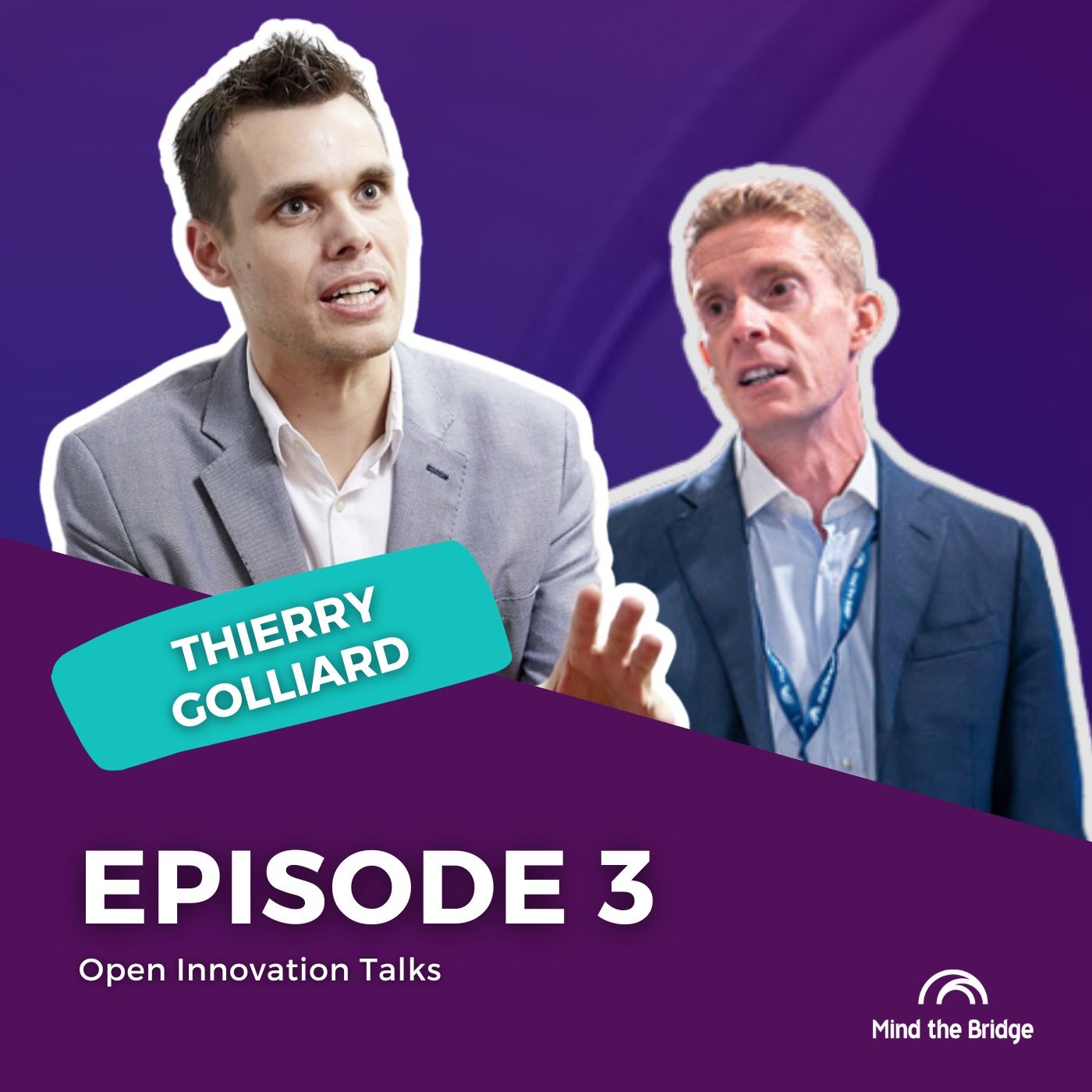
我是阿尔贝托·内蒂,企业家、大学教授兼Mind the Bridge主席。这是《开放式创新对话》第三期:Mind the Bridge与行业领袖对谈。本播客聚焦开放式创新,面向企业高管、从业者,以及渴望了解如何实现开放式创新与初创企业合作这一难题的创业创始人。今日嘉宾是蒂埃里·戈亚尔,瑞士邮政开放式创新与风险投资副总裁。
I'm Alberto Netti, CEO entrepreneur, university professor and chairman of Mind the Bridge. This is the third episode of the Open Innovation talks: Mind the Bridge Chats with Industry Leaders. This podcast is about open innovation and this is aimed at people, corporate executives, practitioners, but also executive founders of startups interested in how to make a very difficult thing like open innovation and startup corporate collaboration actually work. Today guest is Thierry Goyard. Thierry is VP of open innovation and venture in Swiss Post.
瑞士邮政是瑞士国家邮政服务机构,作为该国第二大雇主(拥有54,000名员工)的国有上市公司。本次对话将回顾瑞士邮政从创业孵化到创新触角延伸,再到近期布局企业风险投资的创新历程。这里是Mind the Bridge的阿尔贝托·内蒂,您正在收听《开放式创新对话》。
Swiss Post is the national postal service of Switzerland and is a public company owned by the Swiss Confederation that is the country's second largest employer with 54,000 employees. And during this conversation, we will go through the innovation journey that Swiss Post has done, moving from entrepreneurship to innovation antennas and lately to corporate venture capital. From the arm of Mind the Bridge, I'm Alberto Netti and this is the Open Innovation Talks.
今天我们来到瑞士伯尔尼,很荣幸邀请到瑞士邮政创新与风险投资副总裁蒂埃里·戈利亚特。欢迎你,蒂埃里。
Today we are going to Switzerland, specifically to Bern, and I have the pleasure to have with me Thierry Goliath. Thierry is the Vice President of Innovation and Ventures for Swiss Post. Welcome Thierry.
感谢邀请,很高兴认识你,阿尔贝托。
Thank you for the invitation and happy to meet you, Alberto.
蒂埃里,我们想深入了解瑞士邮政如何组织创新活动。据我所知,你们有两大领域:不向你汇报的内部创新部门,以及由你负责的开放式创新风险投资部门。能否先介绍瑞士邮政的概况,让我们了解公司规模,再详细探讨创新活动的整体架构?
So Thierry, we would like to know a bit more about how Swiss Post is organizing its innovation activities. As far as I know, you have two big areas, one is called internal innovation and that is not the part that is reporting to you, and the other one is the open innovation venture, the one that is reporting to you. Maybe you can give us some figures about Swiss Post, so how all is kind of understanding and assess the size of the company and then going a bit more into broader organization of innovation activities.
非常乐意。事实上瑞士邮政在瑞士规模庞大(虽然其他国家可能不同),我们拥有5万名员工,是瑞士第三大雇主。业务覆盖多元市场:除传统信件包裹业务外,还涉足物流供应链、货运服务,同时运营公共交通出行市场,并拥有邮政银行金融业务。
Very happily. Actually, Swiss Post is for Switzerland, a very big organization, might not be the case in other countries, but for Switzerland, with 50 k employees, this is the third biggest employer in Switzerland. We are operating actually in different markets. So of course, you know, the classical letters and parcel businesses, but we are actually much more diversified in the sense we are operating the logistics and supply chain with other kind of services than parcels and letters. We are doing cargo as well, but we are also operating in the mobility public transport market and we own also a bank with post finance.
也就是说,金融服务也是我们的一个重要业务领域。
So meaning that financial services are also a big business area for us.
谈到创新组织,正如前面提到的,我们有内部创新和外部创新。能否请您简要介绍一下各自的职责分工?
And talking about the organization of innovation, as mentioned, there is an internal innovation and external innovation. Can you give us some first level description who is doing what?
当然可以。首先要说明的是,两者都非常相关且重要,所以我们并非只依赖单一渠道,而是双管齐下。内部创新主要是利用我们员工这个宝贵的资源库,通过类似ID管理这样的服务。大约二十年前,我们推出了一个面向员工的ID建议平台,每年通过这个平台能收到约一千个ID建议。我们还在总部及组织内部管理着这个创新空间,用于举办各类研讨会。
Yes, of course, starting by saying that both are very relevant and important, so we are not just relying on one off, but on both. So the internal innovation is really about using this wonderful reservoir of employees with kind of services like our ID management. We launched about twenty years ago a kind of platform for ID suggestions open for our employees. We are getting about thousand IDs every year over this kind of platform. We are also managing this innovation space for workshops that we have in our head office, but also centrally within the organization.
我们还通过推行精益创业等方法论来培养公司内部的创新精神。这就是我们在内部创新方面的工作。至于外部创新,我和团队主要负责为业务部门提供初创企业筛选服务,帮助他们对接合适的初创企业并识别应用场景。我们还通过风险投资部门对初创企业进行投资,并与学术伙伴合作开展研究。
And we are facilitating also innovation spirit inside the company by pushing some methodologies like lean startups. This is what we do on the internal innovation. On the external innovation, what we are managing with my team, we are offering actually startup screenings to our business units to connect with startups, identifying the right use cases. We are also investing in startups over a venture capital arm. We are managing research with academic partners.
我们管理着位于旧金山和上海的前哨站。这些就是我们目前提供的服务类型。
We are managing the outpost that we do have in San Francisco and Shanghai. So this is the kind of services we are actually offering.
让我们聚焦内部创新部分。你们有一个内部平台,我记得叫Post idea,是用来收集员工创意的平台。您提到每年会收到约一千个新创意。这个平台是如何运作的?是年度周期性的还是常年开放的?
Let's focus on the internal part, I think you have an internal platform, I think it's called the Post idea, is the platform you use to gather the inputs from the employees. You mentioned about a thousand per year of new ideas. How does it work? Is it an annual cycle or is always open?
这个平台常年对所有瑞士邮政员工开放,使用起来相当便捷——操作并不复杂。我们不会要求用非常复杂的表格来描述创意。但通过这个平台,我们不仅管理创意的提交,还包括整个评估流程。您可以想象,一个被提交的创意不会由同一团队直接评估,这意味着需要在组织内部协调评估工作,而这正是该平台的实际功能所在。
It's it's always open to all the the employees of of Swiss Post, and this is a quite easily accessible home in the sense that it's not so complex to use. We are not asking to describe the ID in a very complex form. But what we do also manage over this platform is not just the suggestion of the ID, but the entire assessment of the ID. You can imagine that one ID suggested is not directly assessed by the same team, meaning that you have within the organization to manage the assessment, and this is what actually this platform is doing.
此外,我认为同一个平台需要经过多个步骤来筛选创意。日常比例通常是多少?这些创意中有多少最终会被实施?
And also, I believe that the same platform, again, you have several steps for qualifying the ideas. How how much is typical day ratio? How many of these ideas turn into something that would be implemented?
大约有10%到15%的创意最终会被真正实施。
It's about 10 to 15% of the ideas that are actually really implemented at the end.
这意味着大多数创意可能产生的是渐进式影响。比如一些小建议,它们肯定能基于现有变化改进工作方式。
That means probably most of the idea is more on an incremental impact. So something just some small suggestion that might definitely improve the way things have been done based on variations.
是的,完全正确。你的假设是对的。很多好点子也被提出过,但正如你所想,其中一些过去已经实施过了。这也是这个比例形成的原因之一。
Yes. Absolutely. Your assumption is correct. Many good ideas are also suggested, but have already been implemented in the past, as you can imagine. So that's the reason for this ratio as well.
好的,明白了。现在我们重点讨论外部部分。显然,公司有企业风投部门。据我所知你们是表外运作的。
Okay. Cool. Let's focus now on the external part. Obviously, there is the the corporate venture capital arm. I understand you are off balance sheet.
记得它是2017年成立的。能否提供一些数据,比如已完成多少笔投资?在投资组合中哪些成功案例让你们特别自豪?如果有退出案例,请分享细节。以及你们目前特别关注哪些投资领域?
Remember it was launched in 2017. Can you provide us some figures in terms of how many investments has done? What are your positive children in terms of investment you're particularly proud about? If you got any exits, give us some details. And what are the areas you're particularly interested to investing again?
是的,我们六年前启动了这个项目。你说得对。整个历程就像过山车一样,你知道的,并不容易。
Yes. So we we launched six years ago. So you were right. First, it was a kind of roller coaster all this entire journey. You know, it was not so easy.
你能想象我们身处物流供应链这样一个相当保守的行业吗?在这类组织中建立企业创投中心并不容易。但很幸运,我得到了管理层的支持。所以我们从小规模起步,逐年增加投资额,不过目前仍保持每年3-4笔交易,单笔投资规模在50万到200万瑞士法郎之间,也就是典型的A轮投资对吧?
Can you imagine we are in a pretty much conservative industry with logistics supply chain? It's not easy to launch a kind of corporate venture hub in those kinds of organizations. But by chance, I had the support of my management to do that. So we start pretty small. We increase our volumes of investments over the year, but we are still doing about three to four deals a year with kind of small tickets between half a million Swiss franc to 2,000,000 Swiss franc, meaning that we are doing typically Serie A, right?
我们在全球范围内寻找初创企业,不仅限于瑞士本土。我们提供的是'智慧资金'——除了注资外,还会为所投企业提供诸如瑞士市场准入支持、联合开展项目、通过合作项目追加投资、担任标杆客户,或是引荐行业资源等增值服务。
Looking for startups globally, so not just Swiss startups. And we are offering smart money in the sense that the startup we invest in, we try to offer, for instance, the market entry in Switzerland, or we are doing a project together. We are bringing also cash over joint projects. We are a reference customer, or we introduced startup to our industry peers. So this is typically what we are doing.
过去六年里我们共完成16笔投资,实现3次退出(2次内部收购,1次外部退出)。这些正是我们与风投合作产生的效益,这种投资本质上是一种并购前策略——我们投资那些可能不完全符合当前战略,但有望代表未来方向的初创企业。
At the end, we've done in the last six years, 16 investments, and we have three exits. Two internal exits and one external exits. These are really the the kind of fee we have with the venture capital, which is acting as a kind of pre M and A tool in the sense that we do this kind of strategic investment in startup that are maybe not hitting entirely our current strategy, but might see the strategy of tomorrow. Right? Yes.
过去发生过哪两件事?
What happened twice in the past?
这个投资比例很有意思。能否分享些被收购公司的案例?这样我们能更具体地理解你们的投资逻辑——你们是战略导向还是财务导向?投资着眼于一阶段、二阶段还是三阶段?是在为2030-2035年的瑞士邮政转型布局吗?我们投资时通常会考虑业务单元的应用潜力。这里存在一个经典难题(通常没有标准答案):如果要求业务部门验证投资标的,那基本都在核心业务周边投资,因为业务部门只对现有业务的延伸感兴趣;而前瞻性投资往往短期内无法与业务单元产生协同,但长期会改变运营模式。
Well, this is interesting, the ratio. Can you either disclose some of the example of the company you acquired? Please, so we can also have example of what we are doing and help us understand, are you strategic or are financial and your decision, or are you investing on horizon one or beyond horizon two and horizon three, you're looking more in reshaping Swiss Post in 2030, 2035, we are trying to make investments that might have a potential application with the business unit. Because again, the big question on the table, and typically there is not a right answer to this question, if you invest in something that should have a validation from the business unit, you are mostly investing close to the core business, because all the business units are interested in something that is an extension of what they are doing today, while there are others that are investing beyond ahead of business. And definitely these kind of investments that do not have potential integration with the business unit in the short term, because if you invest beyond the business, probably something that will not impact them in the short term, but impact them in the long term because we are changing the way of doing.
因此我们需要建立不同的KPIs来衡量战略性与财务性、短期与长期的投资策略。
And so this is the typical question and so also trying to find some KPIs to measure this strategic versus financial short term versus long term approaches.
嗯。
Mhmm.
我们与您同行讨论的一些关键绩效指标中,首要的是那些与其他业务单元建立概念验证或合作试点的投资数量。这始终表明您的投资紧贴核心业务。并购是一个复杂的追踪指标,而您的案例特别引人入胜——因为即便不收购投资组合公司,也不代表您采取了财务导向策略,或许您选择的是超长期布局。以博世为例,其第五期基金在上百项投资中可能仅收购了一两家初创企业。这意味着其筛选流程既保持高度财务纪律性,又极具长远眼光。
Some KPIs we have been discussing with your peers is number one is the number of investments where there is a POC or pilot of collaboration with other business units. That's always an indicator you're investing close by the core. M and A is a complicated indicator to track, and that's also super interesting about your example, because again, if you don't acquire your portfolio company, it doesn't mean that you have the financial approach or maybe you have a very long term approach. Under Bosch, again, are fund number five, and probably they have acquired one or two startups out of hundreds of investments. So meaning the avenue process is very, very financial discipline, but also very long term.
塑造2035年的博世,而非局限于2025年。
Shaping Bosch 2035 rather than 2025.
嗯。
Mhmm.
因此,了解您投资案例中那些最终实现收购的用例很有启发性——这或许能反映您团队的工作方式。当然,您还有另外十四、五家未被收购的企业,它们对了解您的运作并不感兴趣。
And so that was intriguing to understand some use case of your investments that turned into an acquisition because maybe an indicator of how you guys are working. Also, you have also other fourteen, fifteen companies that have not been acquired, are not interested to understand what you've done.
阿尔贝托,这里有很多值得探讨的问题。首先,我们需要通过有机增长、非有机增长、收购、风险投资等多元方式实现发展——事实上我们双管齐下。针对您的第一个问题:如果某家初创企业对业务单元具有重大战略意义,那么直接收购可能是最佳合作方式。这并非风险损害。
Many very interesting questions there, Alberto. So first, let me say we need to grow organically, inorganically, in different ways over acquisition, over venture capital. So we do actually both. To your first question, if a startup is at the moment so strategic for a business unit, probably the best way to do, to collaborate with the startup is acquiring directly the startup. So it's not the venture of harm.
这实际上也回答了您的第二个问题。我们更关注中长期目标,正为瑞士邮政的长期发展制定战略路径。例如,我们投资了名为Brink的初创企业,它提供店内食品采购的数字购物清单服务。您可能会疑惑瑞士邮政为何要投资这类应用。
And it actually answered to your second questions. We are targeting rather mid and long term. So we are doing strategic path for the long term development of Swiss Post. And this is why, for instance, we invested in a startup called Brink, offering digital shopping lists for in store food shopping. And you might think what Swiss Post is investing in a kind of digital shopping list app.
但当时的考量是:我们实际在提供这些投递到信箱的促销传单套装,而这些传单的主要客户正是零售商,尤其是食品零售商。通过这项投资,我们希望能为零售商提供这种全渠道营销服务。
But our thinking at that time was that we are actually offering these sets, you know, which we deliver in the letter boxes. These, you know, these flyers. Right? And the big customers of those flyers are the retailers and especially the food retailers. So our thinking by investing was that we want to offer this kind of multichannel marketing to those retailers.
我们继续在信箱里分发传单,但同时也要开辟数字渠道。这就是我们投资购物清单背后的原因和目的。当时投资时,很多人并不太相信,但我们坚持投资、推动合作,最终协作奏效了。客户们非常满意。几年后,我们决定收购这家初创公司。
Let's carry on distributing flyers in the letterbox, but let's have a digital channel. This is the reason, the purpose behind this investment in the shopping list. At the time we invested, many people not so convinced, but we invested, we pushed the collaboration, we collaborate together, it works. Our clients were extremely satisfied. And then a couple of years later, we decided to acquire the startup.
这正是我们在风险投资领域所倡导的思维方式。
And this is the kind of thinking we promote over venture capital.
这是个很好的例子,说明在投资时,潜在合作的想法可能因为过于超前而显得不太商业化。但你们坚持投资、促进合作,最终这个合作不仅成功了,还成为了当前战略的一部分。这很有意思。能否举例说明你们投资中那些非常超前的项目?你认为哪些更像是‘登月计划’式的投资?
It's a good good example that showed that at the time of investment, an idea of potential collaboration was not a very business because it's probably a bit too far ahead. Then you invested, you stimulated the collaboration, and the collaboration worked and it becomes something that enter a part of the current strategy. So that's interesting. Can you make some example of something that is very, very far ahead? And what you believe is more a moonshot among your portfolio investment?
在你所有的投资中,哪个项目最像‘登月计划’?
Which is the more moonshot among your investments?
哦,我们有不同类型的长期押注项目。比如在物流领域,五年前我们就投资了一家名为Starship的公司,研发用于最后一公里配送的自主机器人。
Oh, we have different kind of long shots, I would say. In the logistics field, for instance, we invested five years ago already in autonomous robots for last mile deliveries in a company called Starship.
哦,
Oh,
是的,你可能听说过Starship。
yes. You might know Starship.
这部分投资也来自戴姆勒货车公司。
That's been invested also by Daimler Vans.
没错。梅赛德斯-奔驰和索尼风投都有参与,还有其他企业投资者和财务投资者。顺便说一句,你之前问过我们是财务投资者还是战略投资者?实际上两者都是,因为我们认为如果缺乏财务驱动力,单纯战略投资就毫无意义。回答你关于投资组合的问题:我们部分初创企业会被内部收购,有些则不会,但它们仍是优质标的,通过外部退出时能带来投资回报。
Absolutely. Mercedes, by Sony Ventures as well, other corporate investors, also financial investors as well. And by the way, it was also a question you had actually about, are we financial investor versus strategic investor? Actually, are both because we are saying that strategic investment doesn't make any sense if we are not also financially driven. And it's answer to your question that some of the startups in our portfolio, they will be acquired internally, some of them not, but they are still good bets and they will offer us a financial return on invest when we exited externally.
所以你看,这就是为什么我们每笔投资都兼具财务考量。如果我们不看好初创企业的财务前景,就不会投资。
So you see, that's the reason why any of our investment is also financially driven. If we don't believe in the financial success of the startups, we don't invest.
对吧?是的。通常你们需要主导投资,还是只作为跟投方参与?
Right? Yes. You typically needed investments or there is someone else leading that you just participate.
两种方式都可以,但我们更倾向联合投资。与PC合作时,我们认为对初创企业能形成优势互补,这是我们偏好的模式。
We can do both, but typically we like co investing. Also with PC, we think we are a nice combination as well towards the start up, so this is what we what we like to do.
你提到投资布局是全球性的,之前也谈到全球范围的项目搜寻机制很有意思。你说在典型创新集群都设有前哨站,比如旧金山、特拉维夫,还有需要更专注对待的中国上海。具体如何运作?
You were mentioning that the footprint of your investment is global, and you already mentioned probably interesting to understand how you practice your scouting activities at global level. You mentioned that you have some outposts in some of the most typical clusters. I think you are in San Francisco. Tel Aviv is another place where you typically visit, and the other one is China with Shanghai that probably requires something more bit more dedicated. How do you work?
你们的项目搜寻机制是如何架构的?
How do you structure your scouting activities?
是的。我们组织的独特之处在于真正将开放式创新团队与风险投资相结合。对吧?在许多机构中这两者是完全分离的,这意味着我们实际上可以利用这个网络或多个网络——因为在多个生态系统中存在多个网络,既用于无股权合作的用途,也用于真正的投资目的。这对我们来说很特别,意味着我们在识别潜在投资目标方面拥有多种渠道。
Yes. What is is quite particular in our organization is that we have really this team open innovation and incorporate venture capital together. Right? In many organizations, this is fully separate, meaning that we can leverage actually the network or the networks because there are several networks in several ecosystems for both purpose, collaboration without an equity and really investment. So this is something particular for us, meaning that we have many sources for the identification of potential investment targets.
当然,我们确实拥有多年来与孵化器、加速器和风险投资机构建立的网络。投资者网络可能是最佳资源。我们会参与各类活动。在物流和邮政行业,我们作为知名大品牌也广为人知——我们已连续六、七次被负责邮政行业的联合国机构万国邮政联盟评为最具创新力的邮政组织,这意味着在我们行业中被公认为能与初创企业开展合作的创新参与者。这也是我们在行业内所运用的优势。
We do have, of course, the networks we've developed over the years with incubator accelerators in venture capital. The investor network is maybe best sources. We are a participation of events. And of course, also in the industry logistics and postal industry, we are also known as a big brand in the sense that we've been awarded also by the universal postal union or UN organization responsible for postal industry six or seven times in a row, like the most innovative postal organization, meaning that in our industry, we are recognized as a innovative player being able to do stuff with startups. And this is something that also we leverage in our industry.
供应链或物流领域的另一个优势是:相比金融科技或其他领域,这里的投资竞争可能相对温和,这意味着如果你足够聪明,就能以某种方式为自己争取到有利的交易机会。
What is nice as well in the supply chain or logistics is that this kind of competition for investment is maybe bit less high than in fintech or in other fields, meaning that you can position yourself if you are smart in a way that offer you good chances to get good deals.
你们是否还有其他经常合作的全球企业伙伴?还是说只是投机性的机会主义合作?
You have any other global corporates you typically work frequently along or just as speculative opportunistic?
企业是指作为联合投资者吗?
Corporates meaning as as co investors?
没错。以Starkey为例就很明显——背后有大型工业公司联盟支持。还有其他一些你们通常会紧密合作的企业吗?或者主要是根据具体交易机会临时寻找合作伙伴?
Yes. Exactly. The example of Starkey was pretty clear in terms of there was a big consortium of industrial companies behind that. There are some other company who typically work closely together or just mostly opportunistic based on the deal you you find the the companions?
并没有特别固定的。尤其在瑞士,企业投资者并不多,所以我们都彼此认识,当然也共同参与过一些交易,但目前并没有持续的战略合作伙伴关系。
Not in particular. There are not so many, especially in Switzerland, so many corporates, investors, meaning that we know each other, and and, of course, we had some deals together, but there are not kind of strategic partnerships ongoing at the moment.
谈到开放创新平台,我记得你们在使用两个平台。能否解释一下它们如何运作,这些平台的目标是什么,以及你们如何处理外部网络?另外,还有一些关于内向型和外向型的内容。
Talking about the platform for open innovation, I think if I can remember that you are using two platform. Can you explain how do they work and what the goal of this platform how you are dealing with the external networks? Again, there is something that is more inbound, outbound.
我们实际上正在利用多种形式推动开放创新。我们有一个类似初创企业领域的平台,可以说,我们真正遵循与初创企业合作的各个阶段——可能是开放创新合作或投资。这是我们拥有的平台类型,但更多用于管理内部与初创企业的合作。我们也有类似的平台用于学术合作,让你真正思考如何与学术界建立联系。这些就是我们用来以最高效方式管理网络的数字平台。
We are actually leveraging several forms for open innovation. We have actually a platform that is acting like a startup realm, I would say, where we really follow the stages of the types of collaboration with startups might be open innovation collaboration or investments. So this is the kind of platforms we do have, but rather for internal management of the collaboration with startups. And we do have the same kind of platforms as well for the academic partnerships where you can really think about how do you connect with the academic worlds. So those are the digital platforms we are using in order to manage our networks in the most efficient way.
此外,我们还有外部平台或合作伙伴可供利用。例如在初创企业生态系统中,我们有Plug and Play这样的全球合作伙伴。我们实际上正在他们拥有的供应链垂直领域开展合作。我们还有以瑞士科技文化中心(Swissnex)等形式存在的合作伙伴,比如阿尔贝托你知道的那个组织,他们通过自身网络在上海、旧金山等特定生态系统中提供连接服务。这些就是我们正在使用的实体或数字平台。
Plus then we have external platforms or partners that we leverage as well. Instance, in the startup ecosystem, we do have plug and play like a kind of global partner. We are actually partnering in the supply chain vertical that they do have. We have also partners in the form of Swissnex, for instance, an organization that you know, Alberto, is actually offering the connections over their own networks in specific ecosystems like Shanghai or Francisco and so on. This is the kind of platforms, physical or digital, that we've been using.
如果你要给同行一些建议,告诉他们两三点真正帮助你做好工作的要素。有哪些技巧?也许还有你学到的几件行不通的事?
If you would provide some advice to some of your peers just to tell what are two, three things that really help you in properly doing your job. Yeah. What should be the tips and maybe a couple of things that you have learned that didn't work?
我想说首先,我们讨论的是开放创新和风险投资等等。但对我来说,开放创新很大程度上始于内部。你以为它是外向型的?不。请仔细思考你的内部网络。
I would say first, we are talking about open innovation and venture capital and so forth. But open innovation starts for me very much internally. So you are thinking of it external? No. Think carefully about your internal networks.
对吧?一旦你识别出外部洞察,如何在内部分推动、促进发展?这非常重要。我认为这正是许多企业做得不够好的地方。第二点我想提到的是关于风险投资。
Right? So once you identify the external insights, how do you promote, push, facilitate the development in house internally? And that's very important. And I think that's where actually a lot of corporates are doing it, not in the best possible way. And the second one I would like to mention is about venture capital.
你会看到许多企业从风险投资起步,却缺乏与初创企业合作的经验和专业知识。他们直接开始做风投。我认为这是错误的。我们真正是一步一步走过来的——先在瑞士建立初创企业生态系统,然后是欧洲,最后扩展到全球。
You'll see many corporates starting with venture capital, having no experience and expertise by working with startups. And they start directly with venture. I think it's wrong. We really went step by steps. We really build up our startup ecosystems first in Switzerland, then in Europe, then globally.
我们推动协作。我们与初创企业有过成功案例。我们成功说服了管理层。随后我们启动了风险投资。实际上,我们具备通过多种方式利用协作关系开展业务的能力。
We push collaboration. We had success stories with startups. We were able to convince the management. Then we started our venture capital. And then we have this ability actually to leverage the collaboration we start up in different ways.
但要知道,我们花了多年时间才达到现在的成就。因此这也是我想传递的建议:循序渐进,积累成功案例,这样你就能获得管理层的支持。
But it has taken many years, you know, to achieve where we are now. So that's also a kind of advice I would like to hand over, go step by step, add success stories, and then you will have the commitment of your management.
当你面对多家企业时,通常企业规模越大,问题就越复杂,大多数障碍来自内部而非外部。外部有大量解决方案,真正的难点在于——假设你找到了正确方案(其实没那么复杂)——要确保方案能在内部落地实施,而不会遭遇内部阻力。很多时候情况是:'这个很有意思,我们一定会试点',然后试点要么半途而废,要么无疾而终。你的观点印证了重点:既要构建内部条件,又要培养内部支持意愿。虽然高层支持很重要,但你需要先获得管理层的信任投票,然后还要在业务部门中积极沟通。感谢这次对话,我们一定会保持联系,持续关注你们的进展、成功案例、下一次退出计划以及未来布局。
Now if you're seeing multiple corporate and the larger the corporate typically, the larger the problem, most of the barriers are internal rather than external. In external, there are plenty of solution. The problem is when you find a solution, assuming you find the right solution, but it's not that complicated, is to make sure that the solution might be implemented internally and internally there is not a sort of rejection or some most of the time it's just parking aside again, oh, this is interesting, we'll definitely do a pilot and then you start the pilot and know what degree ended or it goes nowhere. Your words are confirming that focusing a lot of attention in building the internal condition and also building the internal appetite to support you guys are building apps a lot, and that top level by him helps, but you need to get a vote of confidence from the top management, and then you need to walk the corridors of the business unit to make sure that anything that thank you for our conversation, definitely we are here to stay in touch and to learn more about your progress, your success stories, your success stories, your next exit, your next future bets.
非常期待了解更多,也祝贺你们实现了双赢局面。
Definitely interested to know more and congratulations for your view as a win win.
非常感谢,也感谢这次分享机会。我一直乐于分享最佳实践和经验。当然,保持联系。谢谢你,阿尔贝托。
Thank you very much, and thank you very much for this opportunity to share. Always happy to share best practices and experience. And, of course, keep in touch. Thank you, Alberto.
再见。感谢收听。在《开放创新对话》下一期中,我的搭档马可·马里诺奇将与LG Nova的Sokou Ri对谈。若喜欢本播客,请访问Mind the Bridge的LinkedIn页面告诉我们您的想法,我们期待听到您的反馈。
Bye. Thank you for listening. In the next episode of the Open Innovation Talks, my partner in crime Marco Marinoci will talk with Sokou Ri of LG Nova. If you like this podcast, please go to the Mind the Bridge LinkedIn page and tell us what you make of it. We love to hear from you.
下周见。
See you next week.
感谢您今天与我们相聚,我们下期《开放创新对话:Mind the Bridge与行业领袖访谈》再见。
Thank you for being with us today and see you in the next episode of Open Innovation Talks Mind the Bridge Chat with Industry Leaders.
关于 Bayt 播客
Bayt 提供中文+原文双语音频和字幕,帮助你打破语言障碍,轻松听懂全球优质播客。