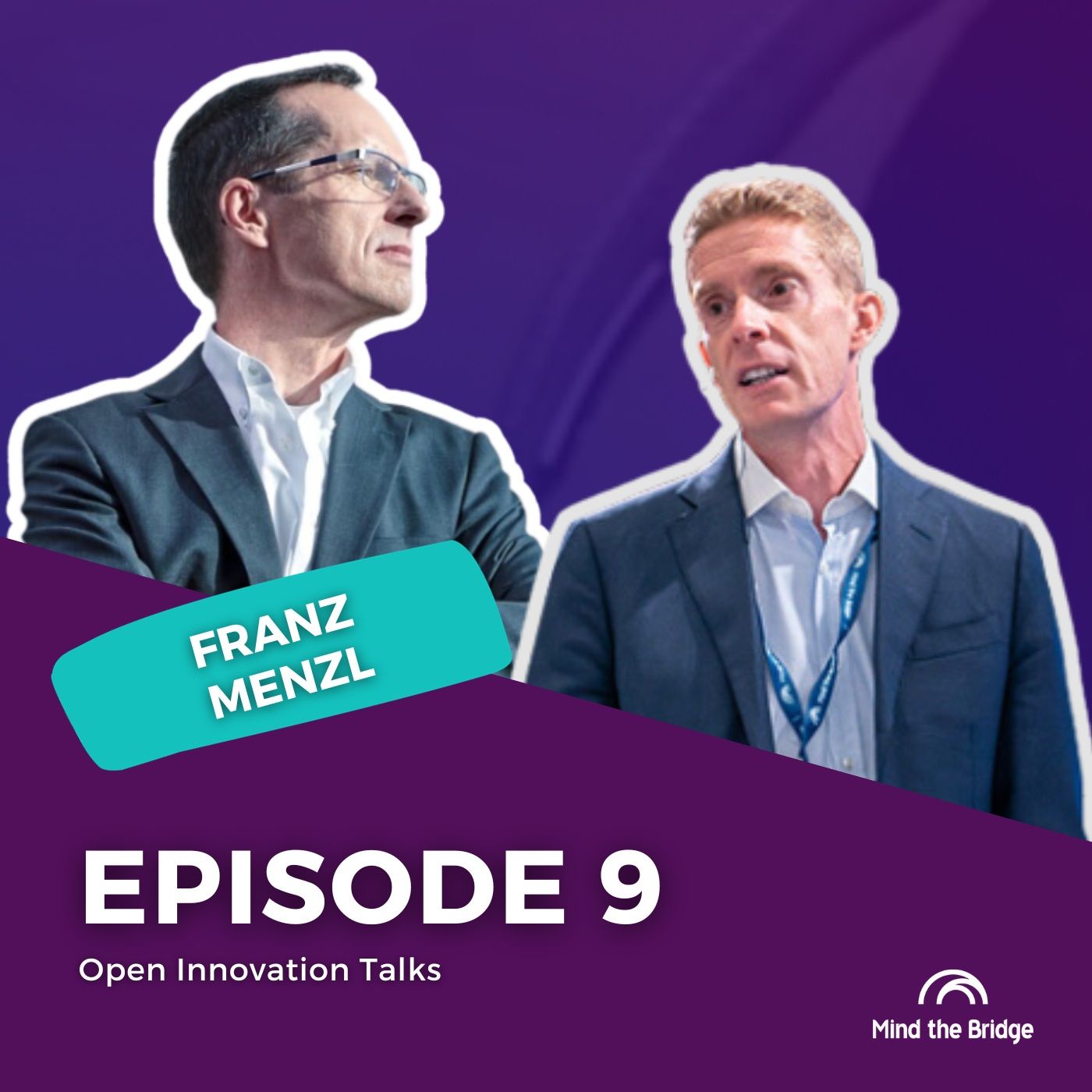
本集简介
双语字幕
仅展示文本字幕,不包含中文音频;想边听边看,请使用 Bayt 播客 App。
深度访谈科技领域最具影响力的创新高管,独家数据与全球主要及新兴生态系统的洞见,最前沿的全球技术与开放创新动态,尽在每期新节目中。欢迎收听《开放创新对话》,与行业领袖的桥梁对话。
In-depth interviews with the most influential innovation executives of the tech arena. Exclusive data and insights on major and emerging ecosystems all around the world, the hottest news on technology and open innovation at a global level, this and much more in every new episode. Welcome to Open Innovation Talks. Mind the bridge chat with industry leaders.
我是阿尔贝托·内蒂斯,企业家、大学教授、Mind the Bridge主席。本期《开放创新对话》将与创新产业领袖探讨风险构建,更准确地说,是新想法的验证。我们将了解到:虽然无人能预判赢家,但确实存在能让创意筛选过程最快且资本效率最大化的框架与方法论。最终我们会明白,真正的决策者不是我们,不是企业,而是客户——终端市场。
I'm Alberto Netis, an entrepreneur, university professor, chairman of Mind the Bridge. And this is a new episode of Open Innovation Talks, Mind the Bridge Chats with Innovation Industry Leaders. The topic of today is about venture building, or even better, validating new ideas. What we will learn is that if it's true that nobody can pick up winners, there are frameworks and methodology that can definitely make this process of idea selection to be run-in the most fast and capital efficient way. And at the end, what we'll learn is that what will be the decider, the final decision maker is not us, is not the corporates, but are the customers of the corpse, the final market.
我们还将认识到:必须尽可能在投资前完成学习。这些只是我与弗兰兹·南斯对话中的部分洞见。弗兰兹现任西门子工厂自动化事业部技术创新副总裁兼首席技术官。这里是Mind the Bridge,我是阿尔贝托·内特里,《开放创新对话》主持人。创新领域虽无法预判赢家,但通过合适流程筛选最优方案并以资本高效方式运作仍是可能的。
And then we will also learn that we need to as much as possible learn ahead of investment. This is just some of the few insights with the conversation that I will be having with Franz Nance. Franz is vice president technology innovation and CTO at Factory Automation of Siemens. From the end of Mind the Bridge, I'm Alberto Netry, and this is Open Innovation Talks. Nobody can pick up winners in the innovation arena, but that doesn't mean that might not be a good process to identify the most suitable one and identify a way to make it work in a capital efficient way.
接下来我们将与弗兰兹·门茨展开讨论。弗兰兹现任西门子工厂自动化事业部技术创新副总裁兼首席技术官。你好弗兰兹。
So this is what we will be discussing with Frans Menz. Frans is Vice President, Technology Innovation and CTO at Factory Automation at Siemens. Hi Frans.
你好,阿尔贝托。
Hi, Alberto.
弗兰兹,首先请允许我再次简要介绍——虽然用简短语句描述你的工作实属不易——你领导着西门子的风险构建部门。但在深入探讨这个主题前,或许你可以先自我介绍,并向观众概述像西门子这样的大型企业是如何系统推进创新的?目前有多个职能部门在共同推动西门子的创新进程。
So Frans, first of all, again, just introduce briefly, again, if I have to use a shorter version for describing what you do, that is difficult to be explaining in your short sentence substantially, You are leading the the venture builder of Siemens. But before getting into details into that, that will be the topic of our conversation, might be probably good, Franz, that you briefly introduce yourself and also give our audience a brief overview in terms how a large company like Siemens is overall addressing innovation. There are multiple functions that are currently working on innovating what Siemens does.
好的阿尔贝托,感谢介绍。我是弗兰兹,现任西门子数字工业集团旗下工厂自动化事业部的首席技术官。西门子作为拥有悠久成功历史的企业,我们始终在探索如何通过自我革新保持当下及未来的持续成功。
Yeah, Alberto, thank you for introducing me. So Franz, my name and I'm the Chief Technology Officer of Siemens factory automation and factory automation is within digital industries. Digital industries is one of these big businesses within Siemens. And Siemens is of course one has a long history, of course, a successful history. And we are always looking for how we can reinvent ourselves in order to be and to keep successful today and into the future.
最驱动我们的一个主题是创造客户价值,帮助客户在今天和未来取得成功。这意味着当然要处理最新技术,但始终牢记我们的一切活动最终都应导向客户价值。
And one topic which drives us really most is creating customer value, creating and helping our customers to be successful today and tomorrow. And that means dealing with newest technology of course, but always keep in mind that every activity on our side should lead at the end to a customer value.
西门子内部有多个部门专注于创新。比如Next47就是一个规模相当大的企业风投实体,它实际上独立于西门子运作。西门子还有哪些主要的创新重点领域?
Inside Siemens, there are multiple functions that are currently dealing with innovation. Again, you have a pretty large corporate venture capital entity that is Next forty seven. It's actually separate from Siemens. It's almost independent. Where are, what are the other main focal points where Siemens is working innovation?
再次强调,我们这里只做一个非常高层次的概述。
Again, we form a very, very high level overview.
是的,我们有不同部门。你提到的Next47作为风投机构支持初创企业。西门子内部还有智能基础设施部门、交通部门、医疗工程(我们的医疗业务板块)以及数字化工业。这四大工业业务构成了西门子的核心。
Yeah, we have different, you mentioned Next forty seven which deals as a venture capitalist and supporting startups of course. We have our smart infrastructure within Siemens, we have mobility in Siemens, we have health engineers, this is our healthcare segment of business in Siemens and we have digital industry. These are the four industrial businesses driven within Siemens.
聚焦你们这里的工作,可以说你们正在设计数字化工业,你们定义了一种验证引擎机制。这源于你们建立的验证框架。正如开头提到的,你们有句口号是'没人能预判赢家',但这不意味着不能尝试,对吧?能否简要说明你们当前使用的框架有何独特之处?
Focusing on what you do here, I say that you are designing digital industries, you have a design, what is, you define a sort of validation engine. Again, that's, that comes out of what you define a validation framework. And again, at the beginning, I was mentioning one of your headlines that are nobody can pick up winners, but doesn't mean that may might be a good way to try to do so, right? And so can you briefly explain us what is the framework that you guys are currently using? What is different?
你们从过往经验中学到了什么?因为通常没有什么是最终版,我们始终在完善中。记得你们现在已经是第四批迭代了?
What you've learned also from your prior experiences? Because again, typically, there is nothing is final. We are always in in the making. We are learning again. If I can remember you are currently a batch number four of your iterations.
这意味着你们已经完成三轮,当前是第四轮,未来还有更多。每次运行都会获得新认知。那么首先,是什么框架在启发你们的运作方式?
So that means that you have three back, one is current. You have more ahead of you and probably every time you run it, is some new learnings. So what has been, first of all, the framework that again is inspiring your way of doing?
是的,我个人在尝试创新过程中的体会是,创新无处不在。每家企业都在应对创新,但创新方式各有不同。当然,企业会在核心业务领域进行创新,这是一种线性创新。与之相对的则是探索性创新。就我所在的组织而言,我负责带领三个开发团队,我们的使命是不断探寻并最终发掘核心业务之外的新商机。
Yeah, my personal journey in trying to do innovation and mean, there is always innovation. Every every company deals with innovation and there are but there are different way different kinds of innovation. There are, of course, the innovation you do in your core business as a company, and this a kind of linear innovation. And in opposite you have an explorative innovation. And I'm within my organization, I'm responsible for these three development teams let's say, looking and searching and hopefully finding at the end of the day new business opportunities are chastened and beyond our core business.
我们在核心业务领域非常成功,我们的核心业务是自动化。例如,如今我们已能完美实现已知领域的自动化。但未来呢?由于各种议题的出现,我们必须思考如何实现未知领域的自动化。显然,技术在这个过程中扮演着重要角色。
We are very successful in our core business and our core business is automation. And for instance, today we can perfectly automate the known. But what's about tomorrow? Tomorrow, because of different topics, we have to think about automate the unknown. And of course technology plays a big role in this automate the unknown.
但如我最初所说,有个关键环节我们必须重视:我们能否真正为当下及未来的客户创造能显著提升其成功率的解决方案?作为一家技术驱动型企业,我们拥有优秀的技术团队。但经验表明,若创新仅从技术出发,往往难以达到预期的客户价值。因此我将技术目标分为两类。
But as I said in the beginning, there is always a very important part that we should take care of. And that means are we able to really create an offering to our today's and tomorrow's customers, which had a big positive impact on their success. And as I said, we are a very successful technology driven company and we have really engaged and very competent teams in terms of technology. But my experience is if we start with technology in an innovation, it most of the time turns out that this creates not such a high customer value that we expect. And therefore I differentiate between two, let's say goals of technology.
当引入新技术时——比如当下最热门的ChatGPT等大语言模型和AI技术——关键要让客户看到我们不仅关注这些新技术,更在思考如何将其与核心业务及现有产品组合结合。同时,我们也要评估这些新技术带来的机遇。但更重要的是,必须始终以创造客户价值为出发点,从客户痛点入手。
If you bring new technology and the newest one is chat GPT or this all these large language model topics, all these AI topics. It is very important to show to our customers that we are aware of this new technology, that we think about what could be done with this new technology in combination with our core business, with our existing portfolio elements. And that is important to also for us to have an idea about the chances out by this new technology. But in addition, we have to take care as I said to create customer value and to think about customer value. You have to start with customer problems.
必须倾听客户声音。不要先入为主地考虑解决方案或技术应用,而要从源头开始尽可能广泛地收集客户反馈,深入理解高价值的客户痛点。这意味着在创意阶段要投入80%的精力进行客户沟通与需求洞察,再考虑解决方案的构建。
You have to listen to customers. You have not to think about the solution and how technology can help you with the solution. You have really to start from the beginning with listen to as much customers as possible and try to understand what is a high value customer pain. And that means dealing 80% of your ideation phase with talking, listening and understanding customers. And consider how a solution could be.
我认为你之前提到的观点极其重要,我想再次强调:我们在当前自动化领域确实非常出色,擅长实现已知领域的自动化。但面向未来,关键问题在于如何实现未知领域的自动化——即如何将ChatGPT等新技术融入核心业务。如果我要进一步挑战的话:我们能否确定西门子的未来仍在于自动化?或许我们需要以全新方式应对未知,因为自动化可能不再是未来的关键成功要素。
I think what you say first before, one thing that I think is super relevant and I'd like to reiterate because it was You say we are very, very good in what we are doing today with this automation, and actually we are super good in automation what we know, that is the known. But how to, again, looking forward is, the big question is how to automate the unknown, meaning how we can continue to do our business, our core business with new ingredients. I mentioned Challenge GPT, maybe others. And my, if I want to challenge you a bit more is, but are we sure that the future of Siemens will be still in automation? So again, it's not just the automating the unknown, it's just dealing with the unknown in a totally different way, because maybe automation will no longer be your critical factor of success.
这正是我想进一步探讨的:显然你们正在拓展业务边界,但我认为我们需要更进一步。你们将如何应对这种可能性?
So again, this is what I want to challenge you even a bit more, because again, we obviously, it's clear that you are stretching what you're doing, but I probably said we are one step further. How do you deal with that?
是的,这也是个好问题。我们确定吗?是的,我们很确定,阿尔贝托。我认为由于各种原因,我们正处于自动化的黄金时代。想想全球人才短缺和所有这些趋势。
Yeah, this is also a good question. Are we sure? Yes, we are sure, Alberto. I think we are in the golden age of automation now because of different reasons. Think about this lack of talents and all these trends in the world.
因此我们非常密切地关注世界动态,以便发现、规划并制定清晰的业务战略。除了我们以现代方式进行创新的活动外,我们还运用名为'战略前瞻'的方法论,通过情景推演来思考未来可能发生的情况及应对之策。战略前瞻的一大主题就是研究各类趋势——不仅是技术趋势,还包括政治、社会等全球各种趋势,并尝试围绕这些趋势布局,思考如何把握机遇、应对挑战等。回到你的问题阿尔贝托,基于多方面原因,我们坚信自动化将拥有比现在更光明的未来。
So we are very, very closely watched to what is going on in the world in order to also find out and plan and have a clear strategy about our business. And therefore this is another beside our activities in how you do innovation in a modern way. We also use methodology called strategic foresight to think about in scenarios, to think about what could happen in the future and what would be our answer to that. And one big topic of strategic foresight is dealing with trends and not only technology trends, dealing with political, social, all these different trends in the world and try to arrange it around us and how can we build on what would be a good chance, what would be a challenge and so on. But coming back to your question, Alberto, we strongly believe because of different reasons that automation will have a bright future, even more bright future than we have today.
确实,我们也在关注AI的发展,你可能说得对。但我想为讨论加点料,因为看起来你们正在用未知替代已知,这很了不起,但同时保持着核心不变——我认为这才是真正的变革。回到你们运行的数字化行业验证引擎,你们内部将其定义为某种加速计划。如果用更标准的定义,这相当于西门子的风险构建器,它汇集了西门子内部产生的所有创意,经过评估后进入所谓的创新漏斗,通过越来越标准化的流程筛选出有潜力进入下一阶段的项目。希望你能描述整个流程:从创意产生、评估到后续各阶段是如何运作的?
Yeah, again, we're looking at what is happening on AI, probably yes, you're right. But I wanted just to put a bit more salt on the discussion, because again, it looks like you're looking forward, replacing known with unknown, that is a lot, but still keeping the core as is, but I think that's probably the change. Going back to the digital industry validation engine, the one that you're running, that actually is you internally define it as sort of acceleration program. I think probably if we want to use a more standard definition is the venture builder of Siemens is something that is uploading, front loading all the ideas that are coming from inside Siemens, you assess them and then you put them in a, what you call an innovation funnel, and try to, you know, more and more standard way understand what the one that have the the potential reason to move to the next step and then to the next step, to the next steps. I would like that you maybe describe how the entire process, how the entire flow works, starting from ideation, where the ideas come from, and then how the assessment is run, and then what are the different steps.
好的,我们先回顾过去的创新方式。正如我2019年思考的,我们曾以传统方式进行创新:先研发技术做出原型,再寻找客户。这是典型的'先投资后学习'模式。有些项目投入了三年时间、资源和资金,最终却发现根本没有市场需求。
Right, I better let's start with how did we innovate innovation in the past and the past is as I said in 2019 my personal journey of thinking about how can we do innovation in different way in formal time. So we start with technology and we develop a prototype and then we are looking for customers. This is invest ahead of learning. And of course there are projects then investing three years of time, resources, money, and so on. Then it turns out there is no customer need at the end of the day.
企业内部创新和外部初创团队面临同样困境。90%的初创企业失败都源于缺乏市场。正如你所说阿尔贝托,我坚信没人能预判赢家。所以我们必须尽可能多地进行实验,而实验结果总是相互关联的。
It's the same game in internal corporate than you find external or you find in that start ups team. 90% of the start ups failed because there is no marketing. Yeah. And the and as you said, Alberto, I I I strongly believe that nobody can pick winners. So we have to do as much experiments as you can with new results, and results are always related.
我们设有专项预算,现在的挑战是如何用固定预算做尽可能多的实验。这就引出一个关键问题:如何确保实验数量最大化,同时控制每个实验的成本最低?为此我们需要建立机制和方法论,帮助团队在正确的时间提出正确的问题。我们既关注外部世界,也审视企业内部。
So we have a dedicated amount of of budget. And now the the challenge is do as much experiment as possible with a dedicated amount of budget. And that leads to the question, how can you make sure that you make as much experiments as possible, but keep every experiment as cheap as possible. And that leads us to the point that we need some mechanisms, methodology that enables and empowers the teams to ask the right question at the right time. And we we look outside the world and inside the world, our our corporate, of course.
后来我们发现外部已有现成机制,当时我们与博世建立了合作伙伴关系。博世在现代创新方式特别是探索性创新方面经验丰富。我们开始了...
And and then we we find out that there are mechanisms already existing outside and we do a bit of partnership at that time and we are already into partnership with Bosch. And Bosch has a lot of experience in how you should do innovation in a modern way, especially in the exploration, the explorative innovation. Yeah, we started You're out
是加入博世加速器项目,对吧?
going the Bosch accelerator, right?
没错,正是如此。那是我们的合作伙伴。我们大约在两三年前建立了这一合作关系。顺便说一句,这是创新的绝佳范例——虽然在某些领域存在竞争环境,但我们仍能在创新领域开展合作。对我而言,这更是一个精彩的成功故事,展示了两大企业如何通过协作最终创造价值。
Yeah, that is right. That is our partner. And we start this partnership three years, two and a half years ago. And this is an excellent example by the way for innovation because fortunately in some area a competitive environment, but we are able to collaborate in that area of how you do innovation. And this is a fantastic, by the way, for me, it's also a fantastic success story in how two big corporates can collaborate and create at the end value out of this collaboration.
回到你的问题,是的,我们基于博世创新框架建立了自己的创新体系。我们根据自身需求进行了调整,更契合我们数字化工业集团的特点。这套体系已运行近两年,它本质上是一套非常强大的方法论,能引导团队在正确节点提出关键问题,并最终得出结论。
So coming back to your question, it it's about, yes, we we have our innovation framework, which is based on the Bosch innovation framework. We adapted it to our needs, let's say, to our corporate, our digital industries. And we use it now. We use it almost two years. And this innovation framework is a curriculum, a very powerful curriculum that again asks and helps the teams ask the right question at the right time and come to a conclusion at the end.
团队自主决定继续推进或终止项目。根据我的经验——我经常参与投资决策委员会,当团队进行路演后,我需要决定是否投资。如果否决项目,团队会感到沮丧;
The team itself decides about a goal or a stop. And this is again out of my experience. I was so often part of an committee, of an decision committee, and the team pitches in front of us. And then I have to decide based on the pitch, yes, I invest or or no, I do not invest. And if I if I say no, I do not invest, I don't believe in your ideas, the teams are frustrated.
嗯。
Yeah.
如果通过,他们当然高兴。但说实话,我怎么可能比团队更了解项目?该继续还是停止?当我发现团队人员频繁变动时,这成为促使我决定必须改革的关键因素之一。
If I say yes, the teams are happy. But to be honest, how should I know it better than the teams? Should we continue or not? And that was also if I see some fluctuation on the on the team side. So I this was also one of the trigger points that I I decided we have to do something different.
这套创新体系的美妙之处在于能实现三大战略目标:首先赋能团队以客户视角思考商业机遇;其次让团队基于大量客户访谈证据自主决策项目存续;第三是向投资人建立完全透明的机制以培育信任。
And and the beautiness of this innovation framework is we we we could address three main strategic goals. First, empower the teams to think from the customer and to think in business opportunities. Then empower the teams to decide about go and stop based on evidence. Evidence out of a huge number of customer interviews. And the third strategic goal is create full transparency to our investors in order to build up trust.
因为如果你进行探索性创新,当然会失败。记住90%的初创企业都是如此,在企业中这也是事实。我们大部分尝试都会失败。这是游戏规则的一部分,因此你会烧钱。而且...而且...而且我们也有责任,要对我们团队中那些创造收益的成员负责,我们必须非常清醒地认识到:虽然我们在烧钱,但应该控制烧钱的规模,最终还是要创造出成功的新业务。
Because if you do explorative innovation, of course you will fail. Remember 90% of the startups and in corporates this is also the truth. We will fail in most of our activities. This is part of the game and therefore you burn money. And they and and and it is our responsibility also in respect to the to the teams in our our collaborate in in our in our corporate that earn some money, that we are really, really conscious about the fact that of course we burn money, but we should limit the amount of burning money and at the end also create successful new businesses.
这一切都建立在创新框架及其应用的基础之上。
And that all stands behind the innovation framework and the use of the innovation framework.
在推进不同阶段时,获取一些数据可能很有帮助——比如看看有多少项目能进入下一阶段。这些数字本身没有价值,但能让我们了解漏斗的收敛情况。能否举例说明各阶段的情况?比如初始阶段会纳入多少创意?我们的结构是怎样的?
Going through the different phases, it can maybe, it can be also useful to get some numbers in terms of see how many projects come through and move to the next steps, not because there is a value in the numbers, we will give the sense of how the funnel is converging. Can you give us some example of the different phases? How many ideas are on boarded? Our structure?
是的,数字产业创新框架分为两个阶段。第一阶段为期八周,主要成果是与100位客户对话。整整100位客户,这相当多。我们身处B2B领域,企业对企业领域,因此100位客户确实是个不小的数目。
Yeah, the digital industries innovation framework consists of two phases. Phase one is about eight weeks and the main outcome of phase one is talking to a 100 customers. Really 100 customers. This is quite a lot. We are in the b to b area, business to business area, and therefore 100 customers is quite a lot.
确实很多。
It's a lot.
真的非常多。对团队来说,接触100位客户既是痛苦也是巨大挑战。这对团队来说压力非常大。第一阶段用八周时间访谈100位客户后,团队会根据客户反馈决定是进入第二阶段,还是终止创意,或是进行方向调整。
It's really quite a lot. It's a pain for and a big challenge also for the teams having access to 100 customers. This is really a big challenge and a big stress also for the teams. Phase one, eight weeks talking to 100 customers. And after phase one, based on the information coming from customers, the teams decide yes, we go into phase two or no, we stop our idea or we have to pivot.
我们最初提出假设,但在大多数情况下,经过客户访谈后必须调整初始假设。然后是第二阶段,为期七个月。在这阶段,团队开始开发最小可行产品并与客户讨论。第二大挑战是为MVP找到付费客户,不仅要找到这些客户,还要证明他们确实有支付意愿。
This we start with hypothesis and we have maybe and that is not maybe, this is in most of the cases the truth that we have to adapt our starting hypothesis after these customer interviews. Then there is phase two. Phase two is about seven months. And in phase two, you or the team starts developing a minimal viable product and discuss it with the customers. And one of the biggest challenge in phase two is finding private customers for your MVP and not only finding these customers also prove the willingness to pay from customer side.
这确实是一个巨大的挑战。听起来简单,但实际上是个挑战。这意味着团队需要直面客户,而客户需要为使用这个试点项目付费。我还想补充一点,我们讨论的不只是一个试点客户,而是多个试点客户。
And that is really, really a big challenge. It sounds easy, but it is really a challenge. And that means the team have to address customers and the customer has to pay for using this pilot. And I would also like to add that we talk about not only one pilot customer. We talk about pilot customers.
你经常会听到需要有合作伙伴来共同创造客户价值。但根据我的经验,如果你寻求的是可扩展的业务,与单一客户共同开发并非正确方法,因为这样很可能只满足这一个客户,却无法证明能扩展成规模化业务。因此,我们决定如果要开发可扩展产品,就进行试点而非与客户绑定。重申下流程:第一阶段八周100个客户访谈,第二阶段七个月进行两到三个付费试点。
The in in in you often hear that you should have a partner which make a customer co creation. And in my experience, if you are looking for a scalable business, it's not the right approach doing development together with customer, with one customer, because out of there there is a high probability that you make this one customer happy, but there is no no really no evidence that this will turn out to a scaling business. Yeah. Therefore, we decided in if we if you are looking for a scalable product, we decided to do pilots and not affiliation with customers. So again phase one eight weeks, 100 customers, customer interviews, phase two seven months and two to three paid pilots.
这些可以说是团队决定继续或停止自动转型的关键成功因素。
These are, let's say, success factors on which the team decides to continue to stop auto pivot.
所以下一阶段是孵化,对吗?
So the next phase is incubation, right?
创新框架之后就是孵化阶段。在第二阶段验证成功后,团队就进入孵化。我猜你想知道具体数字——正如你提到的,我们现在进行到第四批了。
After the innovation framework, there is incubation. So after phase two, after successful validation of phase two, the teams start into incubation. So I bet you are asking for numbers. So you mentioned it. We have now we are in batch four.
我们已运作完前三批。总计前三批共有55个申请项目,其中31个创意/主题进入了我们称为'数字产业验证引擎'的流程(基于创新框架)。55支团队申请,31支进入验证引擎,这些团队与超过1500名客户进行了沟通。
So we have operated batch one, two, and three. In total in in in total batch one, two, and three, we have 55 applications. 31 of these 55 ideas slash themes started into the we call the the digital industry validation engine, which is based on our innovation framework. 55 teams applied, 31 teams started in the validation engine with the these teams talk to more than 1,500 customers. Yeah.
都是真实客户用于验证创意。这31支团队中,18支选择终止,13支决定继续。意味着最初55支申请团队,最终有13支坚持推进创意,其余团队都自主选择了终止。
Real customers in order to validate their ideas. And the out of these 31 teams, 18 teams decided to stop and 13 teams decided to go. That means 55 teams applied. At the end, 13 teams decided to continue with the idea. And the other teams decided by itself to stop.
没有委员会。团队根据访谈得出的证据决定是否采纳这个想法?
No committee. The teams decided based on the evidence out of the interviews and and adopt the idea?
实质上是15个减少到13个,也就是说,大约五分之一,这意味着它们不是可行的业务。我认为它们目前处于孵化阶段,如果我知道这是错误的,还需要十二个月。之后,你将决定其中有多少个,这13个中有多少个会进入扩展阶段,有多少个可能会决定不再继续。这是整体流程。你提到团队最终是决定继续与否的决策者。
So substantially 15 dropping down to 13, that is, let's say, one out of five, sort of, but that means they're not viable business. I think they're currently in the incubation phase, that if I know it's wrong, is another twelve months. And afterward, you will decide how many of them, how many of these 13 will move to scaling phase and how many of them will probably decide to not to continue. That is the overall flow. And you mentioned that the team are at the end the ultimate decision makers in terms of continuing, not continuing.
我想问你的问题是,各个阶段的成本由谁承担?不同的业务和数据在某种程度上需要承担多少这类成本?因为如果你不仅参与构思,还参与预算制定,可能会对是否继续有更公平的判断,对吧?因为我觉得我正在做的事情不值得。这个结构是怎样的?
The question that I have for you is how much is, again, who is paying for the cost of all the different phases and how much the different businesses and the different data in a certain way have to contribute to this kind of cost? Because again, if you are part, not just of the ideation, but also part of the budgeting, probably you might definitely have a more fair view if the signing was to unplug, right? Because again, I'm doing something I think is not worth of. How is structure that?
是的,阿尔贝托,你可能听说过这个。麦肯锡定义了三个地平线模型。三个地平线,这背后是我这边著名书籍《增长炼金术》的一部分。三个地平线是关于组织层面的双元性,同时处理当前业务和探索新业务。开发意味着经营和增长现有业务。
Yeah, maybe you have heard about this, Alberto. McKinsey defined this three horizon model. Three horizon and behind this is is part of this famous book from my side famous book, the alchemy of growth. And the three horizon it's about ambidex territory, dealing using both hands from an organizational standpoint. Exploitation means doing your current business and growing your current business.
探索指的是第三地平线,寻找核心业务之外未来的新商机。所以这个模型,第一地平线是核心业务,第二地平线是基于核心业务的增长业务,第三地平线是关于核心业务之外的新商机。我们根据这个模型进行预算分配。作为工厂自动化部门,我们决定将70%的研发预算用于第一地平线,20%用于第二地平线,10%用于第三地平线。
And exploration means this is horizon three, looking for the future additional new business opportunities beyond your core business. So this model, this horizon one horizon horizon one core business horizon two grow business based on your core business and Horizon three is about new business opportunity beyond our core. So we do our budget allocation according to this model. So we as an organization, as factory automation decided to spend 7070% of our R and D budget in horizon one. We decided to do 20% of our R and D budget in horizon two and spend 10% of our R and D budget in horizon three.
这是一个自上而下的决策,确保我们有有限的预算可用,这很好。我建议在第三地平线的研发投入不要超过10%。我认为8%到10%的研发分配在第三地平线是合适的,这是一个非常好的预算金额。因此我们能够以某种方式将资金投入探索性创新。
And this is a top down decision And that ensures that we have budget available, a limited budget, but that's it's good. I would recommend not to spend more than 10%. I think eight to 10% of R and D allocation in horizon three is good. It's a very, very good amount of budget. And therefore we are somehow able to invest our money in explorative innovation.
我们拥有这样做的自由和自主权。
And we have the freedom and autonomy to do so.
而且
And
我们还决定将开发与探索完全分离。因为这两者在文化、思维方式,当然还有成功标准上都截然不同。你不能用衡量既有业务的标准来评估一项探索性创新或新业务的成功,必须采用不同的关键绩效指标。
also we decided to have really separation between exploitation and exploration. Because both are really completely different in terms of culture, mindset, and of course, how you measure success. You can't measure success of a new explorative innovation, a new venture, let's say. You can't measure success of a new venture in the same way you measure success in an existing business. You have to have different KPIs.
不是息税前利润,不是营收,都不是。必须采用不同的KPI才能让这些新业务成长而不被扼杀。
Not EBIT, not revenue, not whatever. You have to have different KPIs in order to allow these new ventures to grow and not to kill it.
那么回到我先前的提问,验证阶段一和阶段二的费用由谁承担?是你们部门支付这笔业务成本,还是创始团队共同分担?我们
So going back to my prior question, who is paying for the validation phase one, for the validation phase two? Is your unit is paying the cost of that business, the originators are contributing? We
作为工厂自动化部门——这正是我要解释的。这是我们的战略视野。我们会将预算分配到不同板块,因此整体而言,工厂自动化业务部门会为这些探索性创新提供资金支持。
as factory automation and that is what I try to explain. This is the horizon. Okay. We really allocate our budget in different buckets and therefore the overall the business unit, the factory automation is paying this explorative innovation.
那它们何时会在规模化阶段和后续孵化阶段移交到其他部门呢?
And when they will be then delivered to some other unit in the scaling phase and the incubation phase afterwards?
是的,阿尔贝托,这也是个很好的问题。正如我所说,我们正在转型过程中,计划将成熟的新业务从我们的安全港——也就是我们组织内部这个温室——转移出去。在孵化阶段结束后,我们会把这些成功的新业务移交至现有业务部门,以发挥大企业的独特优势,比如我们强大的销售网络。
Yes, also a very good question, Alberto. Now we are, as I said, on a journey and the plan is with our mature new venture to transform it, sorry, to transfer it from our safe harbor, our greenhouse. And we in our organization, we are that greenhouse. And we transfer this successful new venture after the incubation phase to our existing business in order to leave the unfair advantage of a big corporate. And this unfair advantage is we have a powerful sales organization.
我们拥有一个强大的营销组织。一开始我们会讨论内部创业,对吧?在大企业里创业初期,相比独立创业或企业外部合作,确实会艰难许多。但最终,如果你能像创业公司那样充分利用企业现有资源,只要方法得当,就能以极佳且难以置信的方式加速成功。如果规模扩张得当,你将受益于企业内部的创业环境。
We have a powerful marketing organization. And in the beginning of an, we talk about internal startups, right? And in the beginning of a startup in a large corporation, this is really a hard life compared to a collaborate to a startup outside of a collaboration of a corporate, sorry. But at the end, if you can use all these existing functions of a corporate as a startup, this accelerate your success in a very, very good and unbelievable way if you do it right. If you do the scaling right, you will profit from being a startup within a corporate.
是的,问题在于找到合适的交接时机。因为如果太早,你会扼杀它们;如果太晚,又会错失机会。所以时机把握至关重要,我认为这可能需要在实际操作中不断学习,观察最佳转型时机。谈话接近尾声,首先能否分享一些目前已孵化的、您愿意公开的典型案例?有哪些从您经验中产生的宝贵成果?
Yeah, the problem is finding the right time to do the handover, because again, if it's too early, you kill them. If it's too late, you are losing opportunities. So the timing is the essence here, so I think it's something probably you need also to learn as it happens and to see what is the best time to move on. Just coming to the end of our conversation, first of all, are any of the ventures that has been originated thus far that you are comfortable to share to some example of something valuable that are coming out from your experience?
当然,我们最引以为豪的三个成熟新项目都集中在机器人AI领域。首先是阿尔贝托项目,正如我提到的,这是针对未知领域的自动化方案——这套新系统能识别机器人原本无法认知的部件。第二个项目我们称之为数据驱动业务,重点是如何利用数据创造客户价值和商业价值。
Yes, I mean the three most mature new ventures we are very proud on is venture dealing in this robotic AI area. And this is Alberto as I mentioned, this is the automation of the unknown because these new portfolio element is able to grasp parts which are not known to the robot. And this is our first one. The second one is we call it data driven business. It is how can we use data in order to create customer value and business.
第三个项目聚焦电池领域,研究如何提升电池单元生产的质量。
And the third one is in the area of batteries. How can we increase quality in the battery cell production.
好的,太精彩了。我们一定会持续跟进这三个最成熟项目的发展,也期待未来涌现更多成果。最后,再次感谢您这场极具洞见的对话。能否请您基于过去三四年的实践经验,为正在尝试建立类似验证机制或运作体系的同事们分享些核心建议?
Okay, perfect. That is super interesting. So we definitely will follow-up of the progress of these three most mature engines and hopefully some more that will come afterwards. To conclude our conversation, you know, thanking you for, again, for this very, very insightful discussion is, if you have to provide some advice from what you've learned in the past three, four years, trying to putting this validation engine on the road and then making them run it. What has been the main tips that you are comfortable to share with your colleagues that are trying to do something similar or they're doing something similar?
我很乐意分享。我坚信要实现持续成功,必须兼顾深耕与探索。大企业通常精于深耕,但必须以同样专业的态度进行探索。第一个建议就是:要建立可持续的成功业务,必须双管齐下。
So I'm happy to share my experience. So my strong belief is that for a sustainable success, you have to do both exploitation and exploration. And typically, corporates are very, very good in doing exploitation, but you have to do exploration in the same way, also in the same professional way. First takeaway is doing exploitation and exploration in order to have a sustainable, successful business. Okay.
第二个建议是:成败不由他人决定,客户才是唯一裁判。因此要耐心倾听客户需求,发现高价值的客户痛点并提供优质解决方案。第三个建议是:投资前先学习,尽可能多做实验,并且永远从客户需求出发。
The second takeaway is nobody can pick them up. The only group that decides about success or fail are our customers. And therefore take your time, listen carefully, lead to the customers and find high value customer pain you can address with a good solution. And the third takeaway is learn ahead of investment. Do as much experiments as possible and always start with the customer.
这是个很好的准则,确实,从通用概念转变为可行方案的过程中,还需要大量微调和日常学习,所以非常感谢你分享这一切,弗朗茨。这次对话非常有见地,我们一定会继续关注你们,因为你们正在做的事情对所有其他人来说都超级有趣。谢谢,肖恩。
That's a good rule and definitely, again, from moving from generic concept into viable proposition, there is a lot of also fine tuning and daily learning, so I definitely thank you for sharing all of this, Franz. It's been a very, very insightful conversation and we'll definitely keep an eye on you guys, because again, what you are doing is super interesting for all the others. So thank you, Sean.
谢谢你,阿尔贝托。非常感谢,期待我们下一次的对话。
Thank you, Alberto. Thank you so much and looking forward to our next conversation.
感谢大家的收听。在下一期的《开放式创新对话》系列中,我的搭档马克·马里诺齐将与航空X实验室经理安娜·阿拉·雷达进行对谈。航空X是2019年在Diode未来基金会的愿景和支持下诞生的项目,是阿联酋航空、Tails、柯林斯航空航天、GE航空和空客的合资企业,旨在通过模块化颠覆航空业。非常有趣。如果你喜欢这个播客,请访问Mindabreeze的LinkedIn页面告诉我们你的想法。
Thanks everybody for listening. In the next episode of Open Innovation Talk series, my partner in crime, Marc Marinozzi, will sit and talk with Anna Ala Reda, who is the AviationX lab manager. AviationX is a project born from the vision and support of the Diode Future Foundation back in 2019 and is a joint venture among Emirates, Tails, Collins Aerospace, GE Aviation and Airbus, with the goal of disrupting through modules the aviation industry. So super interesting. If you like this podcast, please go to the Mindabreeze LinkedIn page and tell us what you make of it.
我们很乐意听取你们的意见,下期节目再见。
We love to hear from you and see you to the next episode.
感谢大家今天的参与,我们下期《开放式创新对话:Mind the Bridge与行业领袖对话》再见。
Thank you for being with us today and see you in the next episode of Open Innovation Talks Mind the Bridge Chat with Industry Leaders.
关于 Bayt 播客
Bayt 提供中文+原文双语音频和字幕,帮助你打破语言障碍,轻松听懂全球优质播客。