本集简介
双语字幕
仅展示文本字幕,不包含中文音频;想边听边看,请使用 Bayt 播客 App。
大家好,我是安德鲁·梅恩,欢迎收听OpenAI播客。
Hello, I'm Andrew Main and welcome to the OpenAI Podcast.
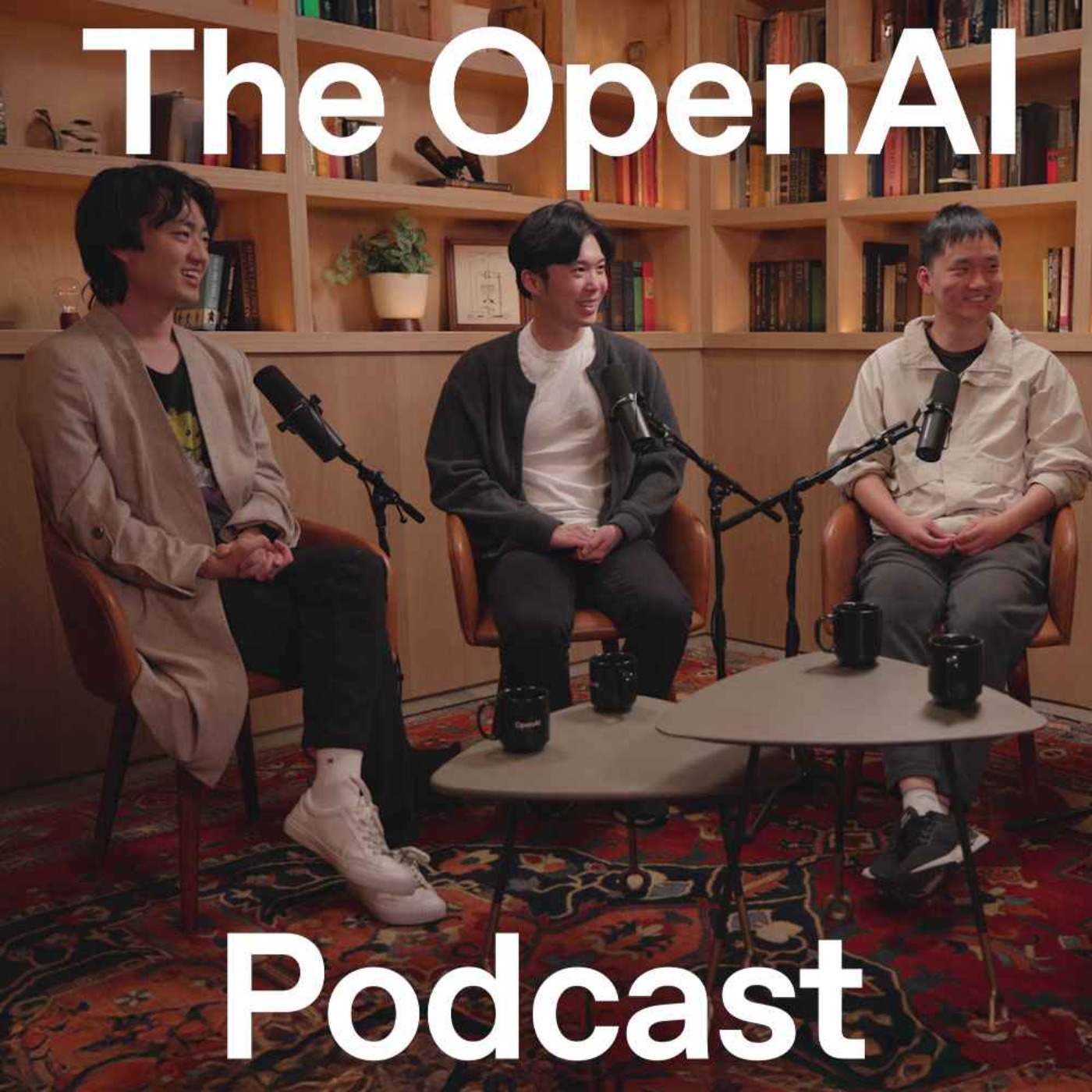
今天的节目,我们邀请到了推理研究团队的三位成员:魏浩轩、吴宏勋和陈丽杰,他们所在的团队最近在OpenAI模型上取得了重大数学突破。
On today's episode, we're speaking with Alexander Wei, Hongxun Wu and Lijie Chen from the reasoning research team behind a recent math breakthrough from an OpenAI model.
他们会跟我们分享这项发现背后的故事,以及他们对外界反应的特别感受。
They'll tell us the story behind the discovery and what stood out to them about the reaction.
大家都睡不着,因为实在太让人兴奋了。
Everyone had a hard time sleeping because it's so exciting.
这个模型真的非常了不起。
This model is something that's really amazing.
我的意思是,这项成果完全有资格发表在数学领域最顶尖的期刊上。
I mean, this is something that can be published in the best journal of maths.
这可能是百分之一的概率,好得让人不敢相信,但偏偏是真的。
Maybe this is one in 100 times where it's too good to be true, but it's actually true.
丽杰,你具体做的是哪方面的工作?
Lijie, tell me what you work on.
我跟Alex一起研究推理能力。
Oh, I work on reasoning with Alex.
明白了。
Okay.
你是怎么开始涉足推理这个领域的?
How did you find your way into reasoning?
去年夏天,Alex在IOI和IMO上取得了突破性进展。
Last summer, Alex had this breakthrough in like IOI and IMO.
我以前参加过IOI。
You know, I used to be a participant in IOI.
是吗。
Okay.
我当时就觉得,这太不可思议了。
And then I was like, oh, that's crazy.
模型居然已经能拿金牌了。
You know, Model can already win medals gold medals.
那时候,我在加州大学伯克利分校当助理教授。
At that time, I was a professor assistant professor at UC Berkeley.
但我开始想,也许我该重新考虑一下自己的职业方向。
But then I'm thinking, like, maybe I should try to rethink my career.
让模型变得更聪明,可能对世界产生更大的影响。
It seems like making the model smarter will maybe have some bigger impact on the world.
去年十月,我和亚历克斯聊了一次。
And then I just kind of had a conversation with Alex back in last October.
听完之后,我立刻对这件事特别兴奋。
And then I got super excited about this thing.
最后,我就加入了OpenAI。
And eventually, I just joined OpenAI.
我们经常听到IOI和IMO这两个词。
We hear IOI and IMO come up a lot.
亚历克斯,你能给大家解释一下这两个是什么吗?
Alex, you wanna unpack those for everybody?
IOI和IMO是两项面向高中生的竞赛。
So IOI and IOI are these two competitions for high schoolers.
它们分别代表国际数学奥林匹克和国际信息学奥林匹克。
They stand for the International Math Olympiad and International Olympiad of Informatics respectively.
这些题目难到离谱,全是超难的数学题。
And these are just devilishly hard math problems.
每场考试有两个时段,每个时段四个半小时到五小时,你得解出三道题。
You get two sessions for each of these exams that are like four and a half to five hours and you just have to do three problems.
很长一段时间里,这些竞赛一直是AI领域一个隐性的终极挑战。
And so for a long time, these were sort of an implicit grand challenge in AI.
我们什么时候能做出能和顶尖人类一样解出这些题的模型呢?
When would we be able to get models that could perform as as well as the best humans on these exams?
我觉得,用这个来衡量模型的成功,是个挺有意思的切入点。
That was a pretty interesting starting point, I think, measuring the success of the model.
今天我们来聊聊这些年来进展有多惊人,但你是怎么走进推理这个领域的?
And we're here to talk about how far things have gone since then, is pretty incredible, but how did you find your way into reasoning?
我读博士时研究的是机器学习,快毕业时,我对一个想法产生了浓厚兴趣:在推理阶段投入更多计算资源,来解决越来越难的推理问题。
So I did my PhD in ML and towards the end of my PhD, I got excited about this idea of spending more compute at inference time to solve harder and harder reasoning problems.
那时候我正在用GPT-3.5 Turbo的API做实验,但没得到什么有意思的结果,不过OpenAI有个团队似乎在做类似的事情。
At the time I was playing with GPT 3.5 turbo in the API and I didn't really get any interesting results, but there was this team at OpenAI that was seemed to be doing something pretty similar.
于是我特别兴奋,幸运的是,我有机会
And so I got super excited about it and it was lucky enough to be
加入他们。
able to join.
要简单解释的话,其实就是让模型在推理时有更多时间去思考。
So probably the simplest way to describe that is like letting the inference time is basically letting the model think longer about it.
没错,就是这样。
Yes, that's right.
在测试时计算出现之前,模型都是立刻作答,几乎是脱口而出,根本没经过深思。
So basically before this era of test time compute, models sort of answered immediately without like right off the cuff without thinking.
而测试时计算的做法,是给模型机会去反复推敲、尝试不同思路,再最终输出答案。
And what inference time compute test time compute does is you now let them all give them all a chance to think and improve its answer and like try different things before having to finally output something.
这显然能让模型变得更聪明,让它完成原本无法即时完成的任务。
That obviously just helps make the model smarter, lets them do things that they wouldn't otherwise be able to do instantly.
你刚开始研究推理能力的时候,有没有想过它最终会发展到什么程度?
When you started to work on reasoning, did you have an idea of where you wanted to see this go?
你当时对它的预期是什么?
What your expectations were?
你是单纯觉得这在学术上很有趣,还是有别的更长远的打算?
Were you looking at it purely from, hey, this is very cool from an academic point of view or did you have some sort of other vision?
对我来说,刚对推理产生兴趣时,是因为当时模型明显还做不到这一点。
I think for me the draw of reasoning when I first got excited about it was that this was something that models just obviously can't do right now.
那是2023年底到2024年初,模型连小学数学题都做不好。
So this was like end of twenty twenty three, start of twenty twenty four models were struggling with grade school math problems.
那时候的目标很简单:能不能先让模型勉强做出像样的数学解答,至于能不能比我强得多,那都是后话了。
And so at that time it was just like, can we just get these models to do something reasonable on math at all, let alone have them be much, much better than I am at it.
记得我刚到OpenAI的第一天,诺兰·布朗问我,你觉得模型什么时候能拿国际数学奥林匹克金牌。
Remember my first day at OpenAI, Nolan Brown asked me when I thought models would get IMO gold.
那只是我们当时提出来的一个参考目标。
That was just a benchmark we talked about.
那时候,就连很多研究人员都觉得,今年拿IMO金牌根本不可能,可能得等到2026年吧。
I think at the time, a lot of people even within research thought that IMO gold was out of reach this year, but maybe like 2026.
我当时就觉得,如果我们真下功夫去推,说不定四月份就能做到。
I felt like, you know, I had an idea that, you know, if we were like, if we just like pushed for it, maybe I thought, I thought we could do it by April.
直到六月份,我们才做出一个真正靠谱的模型。
It took until June to get a really good model.
后来IMO比赛一来,我们还真拿了金牌。
And then IMO rolled around and we were able to get gold.
回头一看,这进展比我预想的快太多了。
And I think zooming out, I think this happened a lot faster than I expected.
更让人想不到的是,从那以后,技术进步居然还一直保持着这么快的速度。
And it's crazy to me that progress since then has kept up at this same sort of blistering pace.
才十个月前的事,可现在回头看,IMO级别的题目简直已经落后太多了。
Was just ten months ago, but it feels like the IMO level of problem feels like far in the rearview mirror of AI today.
诺曼也问我过同样的问题。
Nomboran asked me the same question.
我不是指IMO金牌,而是问模型能不能解决P versus NP问题。
I mean, not about IMO Go, but about whether a model can solve P versus NP.
我觉得P versus NP可能特别难,因为我觉得要解决它,得先建立一套全新的理论。
I think P versus NP might be something quite hard because I think the reason is that I think for solving P versus NP, you would need to build a new theory.
也许得写好几本书,提出一大堆新想法,才有可能做到。
Maybe you have to write many books of new ideas to get there.
所以目前来看,我们离这个目标还很远。
So currently, it seems we are still far from that.
但未来会怎样,谁说得准呢?
But maybe who knows what will happen in the future?
是啊。
So yeah.
宏勋,你平时做的是什么方向?
Hongxun, what do you work on?
我之前在做战略计算机科学方面的研究。
Oh, I was working on strategic computer science.
读博士的时候,我和李杰合作得很紧密。
I was collaborating a lot with Lijie in my PhD.
那时候在伯克利。
Was at Berkeley.
我记得O1发布的时候,我跟导师说,模型解决数学问题已经没有障碍了。
And I remember when O1 come out, I was talking to my advisor saying, oh, there's no barrier in model solving math problems anymore.
我想他只是笑了笑。
I think he just smiles.
他早就知道,自己要失去一个学生了。
He knew that he was going to lose a student.
我们来聊聊这个吧,因为这点挺有意思的。正如你所说,以前模型只是花一瞬尝试找答案,现在却能花更长时间去思考、推理。
So let's talk a bit about that because it's an interesting point because as you said, it went from the model would just have a moment to try to figure out the answer then all of a sudden you've given it the ability to spend longer and to think about it, reasoning.
结果出来得很快,而且让很多人感到意外。
And the results have come pretty quickly and I think surprising a lot of people.
你之前那个模型居然推翻了其中一个埃尔德什猜想。
You had a model that was able to basically disprove one of the Erdos conjectures.
能简单解释一下吗?
Could you explain that just a little bit?
上周我们的模型成功给出了单位距离猜想的证明——准确地说,是证伪了它,这个猜想是埃尔德什提出的。
So our models last week, they were able to produce a proof of the or a disproof rather of the unit distance conjecture due to Erdrich.
这是一个在组合几何领域存在了八十年的开放性问题,核心是:如果你在纸上标出一些点,
And this was an eighty year old open problem in the field of field of combinatorial geometry where basically the question concerns if you have endpoints, let's say on a piece of paper
是的。
Mhmm.
最多能有多少对点之间的距离恰好是一英寸?
How many of them can be one inch apart exactly?
又能有多少对点之间的距离恰好是一英寸?
And how many pairs can be one inch apart exactly?
随着纸上点的数量增加,这个数字会怎么增长?
And how does this number grow asymptotically with the number of points on the piece of paper?
这可不是个简单的问题。
This wasn't a a trivial problem.
爱多士提出这个问题的时候,原本是觉得,大概只能在平面上解决,而且可能根本找不到更好的方法。
When Erdos put this together, the idea was to say that it could, you know, I think ideally it was had to be only done on a plane or something like this, but there was, you know, the idea that maybe there was no better way.
这个问题一直悬而未决,因为它太有意思了,而一个模型居然把它解出来了,这意义重大。
And this has been out there because it's a very interesting problem and the fact that a model solved this is pretty profound.
而且这个模型还是个通用型模型。
And also this model was a general purpose model.
对吧?
Correct?
是的,没错。
Yes, that's right.
爱多士最初的猜想是,平面上要让尽可能多的点之间距离恰好为一,最优的方式就是排成方格阵列。
So Erdrich's original conjecture was essentially that the optimal solution to having as many distance one points on the plane was to arrange them in a square grid.
而且
And
模型证明了,平方网格根本不是最优解,用另一种基于高级数论的构造方式,效果能好得多。
what the model proved was that the square grid was not actually close to optimal at all, and that you can do much better with a different construction using a lot of high powered number theory.
洪勋,你们是怎么选这些问题的?
Hongxun, how did you choose these problems?
其实我们并没有刻意挑选这个问题。
I guess we didn't really choose the problem.
实际情况是我们想测试一下模型能力的上限。
What happened was we want to test the upper bound of our model's capability.
所以我们只是选了一组埃尔斯的问题,来检验模型的表现。
So we just use a selected subset of Erdos problems to test the capability of the model.
我很好奇,第一个是谁敲下回车,向模型提问的?
I would love to know, one, who is the one that hit enter and asked the model the question.
应该是我们俩一起,我和洪勋。
I guess both of us, like I and Hongxun.
你们是同时按的吗?
You guys at the same time like Crypt?
是啊,也许吧。
Yeah, maybe.
我觉得实际情况是我们同时在测试两个不同的内部模型。
I think what happened was actually we were testing two like side different internal models.
而且我们都看到了一些正确的解答。
And we both saw some correct solutions.
这让我们特别兴奋。
It was really, really exciting for us.
你们怎么知道它真的有效呢?
How did you know that it worked?
当然,你先让模型自己检查了一遍。
Of course, you first asked the model to check it.
明白了。
Okay.
但你也知道,模型有时候并不可靠。
But of course, you know, model, sometimes they are not reliable.
明白了。
So got it.
不错。
It's good.
别担心
Don't worry
这个事。
about it.
是的。
Yeah.
所以我们确认模型的结果可行后,就去问了公司里几位数学方面的同事,Matab 和 Maxellky。
So then we just after we check it with the model, it seems possible, then we just ask a bunch of, you know, our mathematics friends in the company, Matab and Maxellky.
一开始他们说,这怎么可能对呢。
And at first, they were like, oh, there's no way this can be true.
这可是个重大的未解难题。
It's a major open problem.
但经过一天的思考,他们也没找出任何错误。
But after just they think about it for a day, they couldn't figure out any mistake.
于是他们变得更加确信。
Then they become more convinced.
最后他们觉得,这确实可能是对的。
Then eventually they're like, actually this may be correct.
是的。
Yeah.
然后大家都激动得睡不着觉,因为实在太令人兴奋了。
Then everyone had a hard time sleeping because it's so exciting.
当你们开始听到有人确认这个结果是准确的时候,当时的讨论氛围是怎样的?
What was the conversation like when you started getting people saying that this was accurate?
对我来说,我其实并没有太惊讶。我想当时马塔夫第一次说‘行’的时候,情况是这样的:起初马塔夫说这肯定不对。
For me, I was not that surprised because I guess when Matav first say okay, what happened was first Matav said this is definitely wrong.
但我心里清楚,他可能也就花了五六分钟看了看。所以其实我心里并不太相信他那个判断。
But I actually knew that he probably just spent like five minutes, ten minutes looking So at like in my heart, I don't really believe that.
但后来他告诉我,是百分之五十。
But later he told me it's 50%.
我当时想,好吧,如果按这个趋势推下去,也许明天晚上就变成百分之百了。
I was thinking, Okay, if we extrapolate the trend, maybe next night it will be 100%.
所以,虽然有点像做梦,但又觉得这个模型能做出这么了不起的事,似乎也挺自然的。
So yeah, it's a little bit dreamlike but also was like it feels a little bit natural that this model would do something amazing.
后来,这件事越来越真实了——这可能是对的,这可能真是一件大事,是作者第一次能发表一篇登上顶级数学期刊的论文。
Later it just become more and more real that this might actually be correct, this might actually be a big deal the first time the author can publish something that would get into top math journals.
我们知道这一天迟早会来,但没想到会这么快就成真了。
We knew this date was going to come but never knew that it's going to be a reality so fast.
简直像活在梦里。
It's like living a dream.
我的意思是,这可是能发表在顶尖数学期刊上的成果。
I mean, this is something that can be published in the best journal of math.
这远远超出了IMO的水平。
It is way beyond you know, like IMO level.
所以我只是觉得某天会有所突破,但未必就在今年五月。
So I only expect something to happen at some point, but maybe not just this May.
我觉得OpenAI一直强调的一点是,他们并不专门针对某些特定基准来训练模型。
Of the things I think that we've seen emphasize at OpenAI is that OpenAI doesn't try to train to specific benchmarks and stuff.
OpenAI的目标是打造真正优秀、全面的通用模型。
That OpenAI tries to build really good general overall models.
有时候人们会说,我们只是想造一个足够聪明的通用模型,然后意外发现了很多能力。
And I think sometimes people say like, well we just try to build a generally smart model and we find these things a lot of way.
在推理能力上,情况也是一样。
And when it comes to reasoning, it's the same thing.
只要模型的推理能力足够强,这些能力自然就会显现出来。
Something that's really good reasoning overall, you find these capabilities.
你觉得这么说对吗?
Does that ring true for you?
对。
Yeah.
就这个模型而言,我觉得我们大家都已经用它来替代当前编码器里的那个模型了。
For this model in particular, I think it's one that I think all of us have also just used in lieu of the current model in codecs.
它作为通用模型表现得相当不错。
And it works quite well as just a general purpose model.
能解决这个埃爾德什單位距離問題,相信不久之后大家在家就能做到。
Having the capabilities to do this Erdos unit distance result, think people will be able to do this at home in the near future.
看到大家对这个结果做出反应、给予关注,真的让人很兴奋。
It's been exciting to see people react to this and pay attention to this.
就在不久前,人们还说模型不擅长数学,现在模型却能做到这种程度了。
We went from just a very short period of time ago where people said models weren't good at math and now models are doing this.
你有没有看到网上一些有趣的反应或评论?
What have been some of the more fun things you've seen online or reactions from people?
自从公布结果后,朋友就开始找我帮忙试他们的开放问题,连我导师都给了我两三个问题让我试试。
Ever since we announced the results, my friend started to ask me to try their open problems, including my advisor gave me like two, three open problems to try on.
我觉得大家的反应非常积极。
I think the reaction was very positive.
我觉得人们现在明显感受到,AI的前沿能力已经能产出许多人类数学家都会引以为豪的研究成果。
I think people really get a sense that the frontier of AI today can really come up with research output that I think many human mathematicians would be proud to achieve.
而且真的很棒,我们能把这种前沿进展传达给全世界。
And I think it's really great that we're able to communicate this, that this is the frontier of progress to the rest of the world.
我看到有人尝试画出商场的结构草图。
I've seen people make these designs of trying to sketch out the mall's construction.
如果把它画在网格上,其实是一个非常漂亮的对称几何图案。
If you plot it on a grid, it's actually this very pretty symmetric geometric design.
是啊,我们或许可以选一个设计,装进相框,摆在桌上,纪念一下这个时刻。
Yeah, I guess we are thinking maybe try to make one of the design, put them in a frame and put them on a desk or something, yeah, to celebrate this moment.
对。
Yeah.
等我们开始看到铺砖问题这类东西的时候,应该会很有趣,那时候我们就能直接观察这些成果了。
I think it's gonna be fun when we start seeing things like tiling problems and other stuff where we can actually just look at the artifacts we need.
最近我们听到更多关于埃爾德什问题的消息,有些问题其实没大家想的那么难,只是之前没人认真去关注而已。
So we've been hearing more about Erdos problems lately and some seemed like they weren't as challenging to solve as perhaps as people thought, they just needed some attention.
但这个看起来要更复杂一点。
Yet this one seems to be a little bit more complicated.
你觉得这个难度排在什么水平?
Where would you rank this?
是的,没错。
Oh, yes.
我记得他提过一千多个问题,甚至更多。
I think he proposed like a thousand question or more.
对吧?
Right?
他本人其实并没有把它们归类。
So like he no.
是的,确实如此。
Oh, yes.
这些问题其实就是他一生中提出的所有题目的集合。
Problem is just collection of all the problem he has asked.
对。
Mhmm.
有些问题他悬赏过奖金来求解。
Some problem he has offered some money for for solution.
有些问题他只是提了一下。
Some problem he just noted.
这个问题他悬赏了五百美元,那是上个世纪的事了。
And this problem he offered, I think, dollars 500, which is from last century.
所以金额有点少。
So it was a little bit.
而且,这也是离散几何领域的一个核心问题。
And also, this is one of the central question in this field of discrete geometry.
许多离散几何论文都对此进行了深入讨论。
And this has been heavily discussed by mathematicians in many discrete geometry papers.
所以这算是数学界长期关注、大家都很想解决的问题之一。
And so it's kind of one of the questions people have thought about a lot and really want to answer.
所以我觉得,这更像是一个具体数学领域里的重大未解难题,而不是那种随便什么人随口提出来的、类似埃尔德什式的问题——那些可能只是他午饭后随便想想的点子。
So I would say this is more like a major open problem in a concrete field of mathematics instead of some just like many other Erdish question, which may be just something Erdrich asked after lunch or something.
那你怎么拿到这五百美元呢?
So how do you collect that $500?
他去世之后,这笔奖金还有效吗?
Did it did it did it did it disappear when he passed away?
我觉得应该有个专门的机构负责这件事。
I think there's a special agency for that.
不是的。
No.
通常你只是把支票装裱起来保存。
But you usually do just frame the the check.
对。
Yeah.
对。
Yeah.
那我们干脆把支票装框挂在山姆的办公室吧。
So maybe we'll just frame the check-in Sam's office.
我不确定。
I don't know.
你觉得这怎么证明推理是有效的呢?
How do you feel this proves that reasoning is effective?
我觉得最有力的证据是,如果你去看官方博客里的图表,就会发现给模型更多思考时间,它的准确率提升得更快。
Well, I think the biggest proof is that if you look at the plot in the official blog, if you give model more time to think, the accuracy on its problem grows faster.
也就是说,如果给它足够多的时间,它几乎能做对五十道题。
Like, if you give it a lot of time, it can get almost 50 correct.
想得越久,答得越准。
So more thinking, more correctness.
我觉得这充分证明了推理确实有效。
I think that's really a proof of reasoning being effective.
但亚历克斯,回到刚才的问题,这可不是一个数学模型。
But Alex, to go back to this, this isn't a math model.
这个模型能干很多种不同的事情。
This is a model that can do a lot of many different things.
你有没有发现,当它在解决数学问题上越来越强的时候,对其他通用问题也更有帮助?
Do you see a correlation between as these get better at solving things like mathematics that it works with other general problems?
至少我们的假设是,这个模型并不是专门为了数学而训练的。
That's the hypothesis at least is that this model was not trained specifically for math.
我们只是想,既然有了这个新模型,不妨拿它来实际试试看。
And we just wanted to, like we have this new model, how we came about this, we wanted to take it on a test drive essentially.
于是我们拿了一些特别难的数学题来测试它,看看它到底能做什么。
And so we evaluated it on some very challenging math problems and to just see what can it do.
当你仔细看它的推理过程,看看它得出的结果,有没有什么让你惊讶的、觉得特别有创意的地方?
When you go through the proof and you look at what it came up with, the things that surprised you, things that you would describe as creative?
说来话长,这个证明的难度远超我的数学水平,但简单来说,我的理解是,把类域论用到组合几何问题上,以前几乎没人这么做过——虽然有些人早就觉得这两个领域之间可能存在某种联系。
So for some context, the proof is like well above my own mathematical pay grade, but like just at a high level, my understanding was that, you know, this idea of taking class field theory and applying it to problems in combinatorial geometry hadn't really been done before, though some people knew that there could be this bridge between these two fields.
要做出这样的突破,首先得有足够深刻的洞察力和创造力,去建立这个联系;然后还要精准地完成证明,这过程极其精细,能做出来的人寥寥无几。
Being able to do that and execute it requires, first of all, make the connection requires quite a bit of insight and creativity and then to execute the proof is also a very delicate, careful affair that very few people would be able to do.
最让我惊讶的是,你让他们去做一件事,然后你去吃午饭。
I think the most surprising thing for me is you tell them all to do something and you went to have a lunch.
等你回来一看,发现它实际表现比你想象的还要好得多。
And when you come back, you'll see that it actually does much better than you thought.
那一刻你就觉得,这模型真是非同凡响。
And at that moment, you feel like, okay, this model is something that's really amazing.
回过头来看GPT-3.5 Turbo,那时候它还能自动做即时推理、解决这些问题,而现在它已经能完成如此复杂的数学证明了,它是借助了外部工具吗?
So going back to GPD 3.5 Turbo and working with that and looking at a model that was doing automatically instant sort of inference and figuring these things out to now a model that's able to do incredible mathematical proofs, is it using tools?
它用的是Lean吗?
Is it using lean?
还是用了其他类似的东西?
Is it using some other things like that?
还是说这一切都完全发生在模型内部?
Or is this doing purely inside the model?
就这个而言
For this
在这种情况下,这个模型就像Codex一样。
particular case, the model basically is like codex.
它能写代码,也能浏览网站获取信息。
It can code, it can look at the website and find information.
是的,这基本上就是一个通用的ChaiGBT系统。
Yeah, so it's basically a general ChaiGBT setup.
ChaiGBT还能写Python代码并运行它们。
ChaiGBT can also write Python and execute them.
但我认为模型本身并不会主动去写东西。
But I don't think the model will write anything.
我觉得李杰有个关于剑桥词典的故事。
I think Lijie has a story about the Cambridge dictionary.
哦,明白了。
Oh, okay.
所以,模型一访问网站,第一件事就是去查剑桥词典里‘unit’是什么意思。
So, okay, the first thing the model will do when it gets to the website is to check what unit means in the Cambridge dictionary.
这有点荒谬,是吧。
It's a little bit ridiculous, yeah.
所以它去查了‘unit’这个词?
So it looked up the word unit?
对,你还要确保它对‘unit’的理解是绝对准确的。
Yeah, you also make sure it has the absolute correct understanding of what is unit.
你有没有见过它做其他类似的事情?就是它试图通过某种方式确认自己理解了问题?
Have you seen it do other things like that where you're saying like, oh, it's trying to ground itself to make sure it understands the question?
在模型的回答里,它经常还会再解释一遍定义。
And definitely a lot of time in the model answer it will actually explain the definition again
以此表明它确实参考了定义。
to show that it actually grounded the definitions.
作为对计算机科学和数学都很了解的人,看到这种情况会不会让我们感到不安?
As people who are very knowledgeable about computer science, people who know a lot about mathematics, is it intimidating to all of us and see this happen?
我觉得这不应该让人感到不安。
I think it should not be intimidating.
我觉得这反而应该让人更有力量。
I think it should be empowering instead.
证明出来之后,数学家们先是改进了有界性证明。
After the proof actually come out, like mathematician has improved, first improved the bounded proof.
接着,他们又借助这种构造背后的直觉,解决了其他一些开放性问题。
And second, they use the intuition motivation of the construction to knock down other open problems as well.
所以我觉得这种趋势还会继续下去。
So I think the trend is going to continue.
模型能在一些我们完全不知道怎么解决的难题上取得突破。
Model can make good breakthrough on some very hard questions we don't know how to solve.
但怎么理解这些想法,怎么把这种方法用到别的地方,我觉得人类依然不可或缺。
But then how to digest that idea, how to use that method for other good things, I think humans still has a role in this.
那你觉得五年后,从事数学工作的人会扮演什么样的角色?
So what do you think the role of somebody working in mathematics is going to be like five years from now?
我觉得未来会是人工智能和人类大量协作的模式。
I think there will be a lot of AI and human collaboration.
因为现在的AI懂得太多了。
Because AI and now AI, they know a lot.
对吧?
Right?
它们能连接看似无关的想法,但人类却能想得更久远。
They can connect distant ideas, but humans can also think for longer.
目前来看,AI还无法为数学构建全新的理论。
Currently, it seems AI cannot build a new theory for math, for example.
但我认为,一旦人类有了AI的帮助,就能把各个领域里的想法都整合起来。
But I guess humans, once they have the help of AI, they can just grab all the ideas from distinct field of mass.
我觉得这会极大地增强人类的能力。
I think they can empower human way more.
你觉得这种模式会应用到其他领域吗?
Do you see this working into other fields?
我们会在物理学上看到新的发现吗?
Are we going see discoveries in physics?
我不是搞物理的,说不上来,但作为AI领域的研究者,我觉得自己现在每天的工作方式,和刚入行时已经完全不同了。
So I mean, I can't speak for physics, but I mean, I guess like we're all researchers in AI and I think definitely for me, like my day to day looks completely different than when I first started doing research in this field.
现在我的很多工作都是由代码代理完成的。
I think so much of my work is now done by coding agents.
我能做的事情比以前多太多了。
I can just do so much more.
这种感觉很奇妙——有了AI,你真的开始觉得能用AI来更快地构建AI了。
And I think that's been a sort of magical feeling that with AI you're really starting now to feel like you can use AI to build AI faster.
AI在多大程度上改变了你做这些事情的方式?
How much has AI changed the way you do these sorts of things?
我觉得完全变了。
I think Chen completely.
我半年前刚加入的时候,还得自己手写代码,天天看Slack群找方向。
Even when I just joined half a year ago, I was hand coding the codes, looking at the Slack channels for directions.
但现在默认做法就是直接问AskCodecs。
But now the default is just AskCodecs.
我让Codecs帮我做很多事,然后我就去吃午饭,顺便跟人聊聊天。
And I Ask Codecs do a lot of things and then I just go to lunch, just go to talk to people.
整个世界都变了。
The world completely changes.
现在你甚至可以在手机上用Codecs,随时查看进展。
And now you use Codecs on your phone and you can check on it.
对。
Yeah.
有了这种随时能干活的工具,我现在想做的事情比以前多太多了。
It's it's interesting how much more I want to do things now that you have this sort of tool that can work all the time and do stuff.
李杰,你怎么跟朋友解释这件事?他们想了解这到底意味着什么,会对其他领域产生什么影响?
Lijie, how do you explain this to your friends who are sort of trying to understand what this means and how it's gonna impact other fields?
我有些朋友是数学家,还有些朋友在其他领域工作。
So I mean, I have some mathematician friends, and I have some friends in other fields.
是的。
Yeah.
我觉得我会跟他们说,有些人可能担心AI会取代他们。
So I think the way I would tell them is that I feel like some maybe are afraid that AI will replace them.
AI不会取代数学家,而是辅助他们。
AI will just replace mathematician.
但我觉得这其实是让每一位理论研究者更强大,因为AI特别擅长掌握大量知识并建立联系。
But I think it's really about empowering every theoretical researcher, because AI really have this advantage of knowing so many stuff and connect things.
现在看来,对人类来说很难的问题,对AI可能并不难。
Currently, it seems like the problem hard for human may not be hard for AI.
这其实是非常棒的一件事。
And that's a really great thing.
我们可以用AI来解决这些问题,获得新思路,然后再去消化吸收,做出新的发现,就像洪勋说的那样。
Like, we can use AI to solve those problems, get new ideas, and then we can digest them and make new discovery, just like Hongxun said.
所以有些人对这个特别兴奋。
So I think some of them get very excited about this.
当然,目前这一切还只是大规模地在推进。
And of course, one thing is that current is only en masse.
但我认为这是因为这是一个通用的推理模型。
But I believe that's because it's general reasoning model.
所有理论研究者都能从中获得巨大帮助。
All the theoretical researchers, they can benefit a lot from that.
我理想中的世界是,每个人都能接触到顶级的推理能力。
I think the dream world will be everyone have some access to the top level reasoning ability.
这样其他研究者就能借助它去发现任何他们想发现的东西。
So other researcher can use them to discover whatever they want to discover.
这样一来,OpenAI 就会极大地推动科学进步,因为你让每一位科学家都能加速全球的科研进程。
And then basically, OpenAI will accelerate science like a lot, because you are empowering every scientist to accelerate the science worldwide.
而这正是我们的使命。
And then that's our mission.
如果我是一名研究者,我该从哪里开始呢?
So if I was a researcher, how would I get started?
你会建议我先尝试做什么?
What advice would you have to say, Okay, try this first?
我们先从你,洪勋开始。
We'll start with you Hongxun.
先订阅一个GPT Pro。
Get GPT Pro subscription.
当然。
Of course.
用Pro版真的好太多,因为它思考得更深入。
It's really, really much better than thinking without Pro because they think longer.
尽量问出你最大胆的问题。
And try to ask the boldest question you can ask.
我有过这样的经历,有时候我会把问题拆成几个小问题再问模型。
I had an experience that sometimes I try to decompose a problem into smaller problem and ask the model.
结果发现,直接问原问题反而更好,因为我拆解的方式并不够好。
And it turns out that it was not as good as just directly ask a question because my decompensation was not the best way.
你觉得为什么会这样?
Why do you think that was?
我觉得这是因为作为人类,我们对问题该怎么解决都有各种先入为主的观念。
I think because as human, we have all kinds of priors on how problems should be solved.
这些观念确实能帮我们节省思考时间。
And they are very helpful in reducing their thinking time.
但很多时候,这些先入之见其实是错的,还会让我们忽略一些盲点。
But very often the prior are wrong and there are blind spots.
而AI模型有时候却能意外地发现这些隐藏的问题。
And AI models, they sometimes just can surprise us with discovering these hidden things.
我跟亚历克斯·卢科斯卡聊的时候,他提到过,要把AI当成一个研究生来对待。
When I spoke to Alex Luchoska, he talked about how kind of treating like a graduate student.
就是别说得太浅显,但也别太高深,要刚好在合适的层次上,让它能理解你用的术语。
You know, not not talking down too low, but not too high, but at the right level so you could just understand that it knew the terms that worked for you.
亚历克斯,你呢?
Alex, how about for you?
你对那些想提升使用效率的研究人员有什么建议?
What advice would you give somebody who's a researcher who's wants to try to figure out how to be more effective with this?
是的,我觉得很大一部分在于学会信任模型,弄清楚能多大程度上依赖它,同时也得明白模型的局限在哪里。
Yeah, think a lot of it is actually like, I think these days learning to trust the model and figuring out how far you can go in trusting the model and also learning what's beyond what the model can do.
因为如果你没有这种认知,就无法充分发挥模型的全部潜力。
Because if you don't have a sense of that, you don't maximally use the full capabilities of the model.
我觉得李杰教会了我很多,让我更好地使用这些工具。
I think Lijie has taught me a lot about how to use these tools better.
在使用这些新技术方面,我觉得自己有点像老古董。
I feel like I'm sort of a dinosaur in some respects in terms of adoption.
因为我早在这些工具出现之前,就开始在OpenAI工作了。
Because I think I started like working at OpenAI well before these tools existed.
所以我身上还带着不少旧习惯,就是对模型的信任不够。
And so I think I have a lot of old bad habits where I don't trust the models enough.
我脑子里想的还是半年前的模型水平。
I still think it's like the models of six months ago or something.
这个观点挺有意思的。
That's an interesting paradigm.
好的。
Okay.
那DJ,你有什么建议吗?
So DJ, what advice would you give?
我有个方法,每次把对模型的信任度翻倍,然后看看它哪里出问题。
Oh, I have this method of every time you double your trust on a model and see why it fails.
如果出错了,就退回去。
And if it fails, you just go back.
每个月都这么做一次。
And you do this every month.
这样你就能很快达到既能充分信任模型,又不会搞砸事情的境界。
Then you can quickly get to the point where you can maximally trust the model but also not breaking your stuff.
是的,过去五个月,进展真的越来越快,简直呈指数级增长。
Yeah, and apparently for the last five months, it's going really, you know, exponentially.
在GPT-3那会儿,我有一份长长的测试清单,经常照着做。
Back in the GPT three days, I had like a list of tests and things like this I would do.
我看着它们一点点变强,然后GPT-4出来,等GPT-5问世时,我干脆放弃了,因为那时候那些问题都太简单了。
And I'd watch them sort of incrementally get better, then GPT four, and then by the time one came out, had to throw it out because that was just toy problems at that point.
我觉得我得不断调整,一直尝试更复杂、更有挑战性的问题才行。
And I feel like I have to continuously sort of adjust and kind of keep trying bigger and more complicated things to do that with.
你觉得现在从事数学或相关领域、对此有点担忧的人,是不是该换个更积极的心态来看?
Do you think that for somebody who's in mathematics or in a related field right now who's feeling a little bit concerned by this, do you think that they should be taking a more optimistic approach?
我觉得担心是完全合理的,尤其是当这个领域主要靠解决问题时,而模型在解决问题上会越来越强。
I think it's legit to feel concerned especially when the field is a lot like, a lot of the field is problem solving oriented because model are going to be really good at problem solving.
数学远不止是解题那么简单。
Mathematics is really, really much more than problem solving.
它更关乎理解结构,像李杰说的,去构建新的理论。
It's more about understanding the structure and building new theories like Lijie said.
我觉得我们该想办法更好地利用模型,帮我们解决遇到的问题,同时加快构建新理论、获得新洞见的速度。
And I think we should try to figure out how to better use the model to help us in solving the problems that we met and then try to accelerate the speed that we build new theory and come up with new understandings.
我觉得这才是更乐观的角度。
I think that's the more optimistic view.
当编码工具变得更强大时,它们能为你做更多事情。
When codecs becomes much better, they can do so much more thing for you.
你可能会觉得,既然工具这么好,自己该轻松点了。
You would expect you will work less because codecs are good.
但结果反而更忙了,因为能做的事情太多了。
But somehow you actually work more because that's way more thing you can do.
所以我希望数学领域也能出现这样的变化。
So I actually hope this can happen for math as well.
当模型变得足够强大,你很可能一下子冒出十个想法。
The model becomes so good that I must imagine you have 10 ideas.
你可以让十个模型分别去尝试,看看哪个能成功。
You can ask 10 models to try them and see one of them succeed.
它们不需要自己去干那些繁琐的计算。
And they don't have to do tedious calculation by themselves.
我觉得,编程领域发生的事,也许同样会发生在数学家身上。
I would imagine maybe what happened with coding can happen to mathematicians.
这对你来说挺有意思的,因为说到埃尔德什问题,保罗·埃尔德什这个人特别有意思,他总能发现一些稀奇古怪的东西,然后说:‘这真不错’,于是他把这些归为一类问题,但其实这些题目之间并没有什么系统的逻辑。
It's interesting to you because when we talk about the Erdos problems, Paul Erdos was a very interesting person who found a lot of things curious and said: Oh, this is neat and we have this category of problems he put together but there's not a lot of rhyme or reason to them.
它们就是他觉得好奇,或者跟别人一起研究的一些东西。
They were just things that he found curious or worked with other people on.
我觉得这其实反映了科学的一个特别有意思的地方:我们常常以为科学有严格的层级结构,但事实上,很多时候就只是因为我们对某些事情感到好奇而已。
I think that's kind of a big thing that is neat about science in general is often we think that there are these real specific hierarchies but literally it can just be things we're curious about.
话虽如此,你觉得还要多久,埃尔德什留下的那些未解问题才会全部被解决?
That being said, how long before there are no more unsolved Erdos problems?
有些问题真的非常非常难。
Some of them are very, very hard.
是的。
Yeah.
对。
Yeah.
所以,我也说不准。
So, I don't know.
展开剩余字幕(还有 145 条)
你觉得我们会不会需要亚历克斯来提出一类新的问题?
Do you foresee us maybe Alex needing to come up with a new category of problems?
我觉得大概是那张清单上最难的那些问题。
I think probably like the hardest problems on that list.
我觉得那张清单里包括考拉兹猜想。
I think that list includes like the Collatz conjecture.
这些问题看起来远远超出了当今数学工具的能力范围。
Like these are problems that feel like very, very far out of reach of like the mathematical technology of today.
尽管其中很多问题表述起来其实很简单。
Even though many of them are like quite simple to state.
所以我们还会有不少问题可以继续研究,不断推进。
So we'll still have some more things to work on and continuously move things to.
知道这点真好。
That's good to know.
想到把这些方法应用到物理、天文学,去分析数据,可能会带来什么新发现,真的让人兴奋。
It's exciting though to just to think about what happens when you do start applying this to other areas in physics and astronomy and start looking at data sets and stuff and what kind of discoveries are going be in store.
你有没有特别期待看到哪个领域的突破?
Do you have any particular area that you're hoping to see?
我希望它能直接解决P versus NP问题。
Oh, hope it just solve PWAS NP.
怎么说呢
How
那你怎么看,Alex?
about you Alex?
我觉得我心中下一个里程碑,是AI能够自己开展人工智能研究。
I think the next milestone in my head is really like AI that can like do AI research.
这里头还有太多没解决的问题。
I think there are so many like unsolved problems here.
某种程度上,我们受限于人类自身智能的种种局限。
In a sense, in many ways, limited by all the limitations of just our own intelligences.
我对AI技术的广泛普及持乐观态度,因为世界上对智能的需求远远超出了人类能提供的范围。
I'm optimistic about having AI broadly available as a technology because there's just so much more demand for intelligence in the world that humans can supply.
李杰?
Lijie?
我想说P1然后P2,但洪勋已经说了。
Oh, I wanted to say P1s then P2, but Hongxun said it.
除此之外,我特别感兴趣的一点是,目前AI似乎正在融合不同领域的想法。
I guess So beyond that, one concrete thing I'm very interested in is that currently, it seems AI is trying to combine ideas from different fields.
当然,是以一种非常新颖且复杂的方式,但AI真的能从零开始创造出全新的想法吗?
And of course, in a very novel and sophisticated way, but can AI actually generate completely new ideas from scratch?
我的意思是,这种事在AI里我们还没真正见过。
I mean, that's something we haven't really seen concretely in AI.
这可能是我接下来希望看到的进展。
And that's something I maybe want to see next happening.
那会非常酷。
And that can be very cool.
你有没有看到过这方面的迹象?
Have you seen traces of that yet?
我觉得是的。
I think so.
就拿这个问题来说,如果你看那125页的思维过程,我觉得其中一些想法其实挺有创意的,只是没成功而已。
Even in this problem, I I think some if you look at the chain of thought, which is 125 pages, I think some of the thoughts are pretty creative, although they didn't work out.
对。
Yeah.
我的意思是,最后的那个想法更像是把所有东西拼在一起。
I mean, the the final idea is more like combining all the stuff.
但中间确实有些很有创意的念头。
But some of it has some creative thoughts.
不过这确实挺有意思的。
But it is interesting.
早些时候人们总说这些模型没有创造力,但你只要给它两个从未被联系过的概念,问它们之间有什么关系,它就能给出全新的东西。
You know, early on, arguments were like, these models weren't creative, but you could give it two ideas that had never been connected before and say, what's the relationship?
那才是真正前所未有的突破。
And that would be something very very new.
感觉有点不一样。
It felt like something different.
我觉得以后这种事会越来越多。
And I feel like we'll probably be seeing more of that.
你觉得我们会创造出新的数学形式吗?
Do you see us coming up with new forms of mathematics?
我觉得其实用不了多久,明年就可能了。
I think that actually will be shorter away down the line because Next year.
也许吧。
Maybe.
现在的模型很擅长提出解决问题的点子,但还不会主动发明全新的数学体系或理论。
I think because model now are very, very good at coming out with some idea to solve a problem, but it's not good at proposing a completely new different kind of math or proposing new theory.
怎么让模型做到这一点,目前还是个开放问题。
How to get a model to do that is still very, open.
我是这么想的:我们正在见证这些模型有效时间跨度上的摩尔定律。
How I would think about it is we see this Moore's Law for the time horizon at which these models are effective.
我觉得在数学领域也是这样,每隔几个月,这些模型能独立工作的时间就会翻倍,至少相当于人类投入的时间。
And I think you sort of feel that in math where there's like every few months, the amount of time these models can sort of work independently for doubles, at least the amount of human equivalent time.
解决某些问题时,如果你特别擅长,可能根本不需要花太多时间,路径很短就能找到答案。
For solving problems, if you're really, really good at it, maybe some problems like you actually have pretty short paths for the solution.
其实用不了那么久。
You don't need to take that long.
但要发明全新的数学方法,那可是得花上好几年甚至几十年的事。
But I think for inventing like new ways of doing mathematics, that's much more like a years or decades long process.
所以我觉得,这种指数级的进步要真正到达那一步,还得再等一阵子。
And so I think, you know, it'll still take a bit of time for that exponential to get there.
这是你们团队内部开发的一个模型完成的。
This was done by an internal model that you guys worked on.
从那以后,5.5版本也能做到同样的事了。
And since then, five point five has been able to do the same thing.
我们还听说其他实验室也实现了类似的效果。
We've seen other labs have said that they've been able to do this as well.
但这是几周前的事了,现在都算老黄历了。
But this was several weeks ago, which is now ancient history.
从那以后,我们又看到了什么?
What have we seen since then?
我觉得原始结果和后续发现的一个区别是,那个原始模型根本不需要任何引导。
I think one difference between the original result and I think what the follow-up findings have been is that actually for the original model, there was no scaffolding needed.
你只要直接问它问题,它就会给出答案。
You sort of just asked it to do the problem and then it gave you the answer.
所以,原始的提问和回复内容,其实我们已经在博客上传的笔记里写得清清楚楚了。
And so actually this is all, you can read the original prompt and response in the note we uploaded on the blog.
而后续的尝试则给模型加了更多结构化的引导。
Whereas I think the follow-up efforts have had a little bit more structure or steering of the models.
我觉得这里有个很有趣的点,关键完全在于测试时的计算资源投入。
I think one interesting data point here is that it's really all about test time compute scaling.
我们最初解决这个问题后,李杰之前提到过一张图:只要给足测试时的计算预算,模型大约有五成概率能解出这道题。
After we initially solved the problem, this is a plot Lijie brought up earlier is that with enough test time compute budget, the model is able to solve the problem around 50% of the time.
所以用其他方法也能达到这个效果,其实也不奇怪。
So it's not surprising that you can get there with other methods.
用别的方法也能找到同样的结果。
You can find this with other methods as well.
但我觉得真正关键的是,随着测试时计算资源的增加,模型的表现会越来越好。
But I think what was really important here is just that as you pour in more test time compute, you get better results.
这看起来像是一个良性循环:拿现在的模型,给它更多算力,让它去解题,我们就能理解这些问题该怎么解决。
It seems like it's kind of a virtuous cycle where you take today's model and give it more compute, let it solve for that and you understand how these problems can be solved.
下一代模型可以从中学习,变得越来越高效。
Next generation models can learn from that and just get more and more efficient.
这样一来,似乎就能一直这样无限扩展下去,对吧?
And you just have this basically it seems like it just scales forever, right?
你觉得今年年底我们会看到什么样的进展?
What do you think we're going to see by the end of the year?
我希望能看到大家用我们的模型在科学各个领域发现大量新东西,不只是数学。
What I want to see is people use our model to discover lots of new stuff, and not only in math but also in all of science.
当然,OpenAI 想做些有意思的数学研究。
Of course, OpenAI wants to do some cool math stuff.
但我认为,如果每个人都能用这个模型去发现属于自己的科学成果,那就更好了。
But I think it would be better if everyone can use the model to discover their own science.
我预计很多数学家都会用这个模型,当然不是完全依赖它,而是和模型合作,发现更多新的数学成果。
And I would expect many mathematicians will use the model, I mean, maybe not completely on the model, but collaborate with the model to discover a lot of more math results.
我觉得这会特别棒。
I think that would be really cool.
宏勋,我接触过一些数学家,他们要么认识其他人,要么根本不敢尝试在数学里用人工智能。
Hongxun, I've talked to some mathematicians who know others or who are very reticent to even try using AI in mathematics.
你觉得最有力的理由是什么?
What is the best argument you can give?
我觉得我就给他们看看距离猜想的证明吧。
I think I'll just show them the proof of distance conjecture.
这个猜想的最小证明。
The least proof of the conjecture.
我觉得这主要是关于效率,对吧?
I think just about productivity, right?
我们做数学不只是为了享受解题的乐趣,更是为了推动领域发展,找到我们真正想理解的真理。
Like we do math not just to enjoy the pleasure of the problem solving, but also to advance the field and to understand the truth that we're looking for.
而使用人工智能能大大加快这个进程。
And using AI is going to speed up that by a lot.
它还能帮我们发现那些我们一直苦苦追寻的东西。
And it's going to tell us what we are really struggling to find.
到了某个时候,想不用人工智能都难。
And it will be hard to resist using AI at some point.
你完全可以当个天文学家却不使用望远镜,但你得想想为什么这么做。
You could be an astronomer and not use a telescope but you kind of have to ask why.
对,就是这样。
Yeah, exactly.
我知道这里有一位研究者喜欢看电脑之间下棋。
I know one of the researchers here likes to watch computers play chess against each other.
而且感觉他有时真的能从中学到东西。
And it feels like he sometimes learns things from that.
你觉得,通过观察模型给出的解法,我们能变得更擅长做数学、做研究、做科学,或者至少变得更会思考吗?
Do you think that we'll learn to be better mathematicians or researchers or scientists or just thinkers in general by watching the solutions the models come up with?
看125页的推导过程,对数学家来说可能没什么帮助。
Looking at 125 pages of thinking, it's probably not very helpful for mathematician.
但只要看看最终的答案,你确实能学到一些以前没想到的新思路。
But just by looking at the answer, you actually do learn some idea that not there that you didn't know before.
这些新思路后来启发了其他数学工作,解决了更多难题。
And that inspired the later mathematical works that knocked down other problems.
所以我确信,数学家们能从AI的解法中学到东西。
So I definitely think people learn some like mathematicians learn something from AI solutions.
是的,我们请一些数学家和合作者一起审阅证明时,他们真的用上了这些想法,推翻了实数情形下的乘积和猜想。
Yeah, so some of the mathematicians that we ask to review the proof together with collaborators, they actually use the idea to disprove the sum product conjecture but for real numbers.
我觉得这是个特别好的例子。
I think that's one very good example.
AI能够破解重要的问题,并给我们提供可以迁移到其他领域的思路。
AI can crack down important questions and give us ideas that we can apply elsewhere.
我觉得很了不起,这群数学家仅仅在一周内就用这个方法推翻了那个我认为和单位距离猜想差不多重要的结论。
Yeah, think it's remarkable that this group of mathematicians has already, just in the span of a week already used it to disprove this result that I think is maybe of similar importance to the unit distance conjecture.
这真是一个绝佳的例子,说明数学家们看到之后受到启发,把这种思路应用到了另一个问题上。
I think this is a wonderful example of mathematicians seeing this and using it as inspiration and bringing the ideas to bear on a different problem.
这对数学界意味着什么?
What does this mean for the mathematical community?
在做这些实验时,我们希望确保真正赋能我们所接触的学术群体,而不是跑到某个领域外面,试图替他们解决一堆问题,然后丢给他们一堆AI生成的垃圾。
I think for us, when we do these experiments, I think we want to make sure we empower the academic communities we interact with where we don't just go to some community and from the outside try to solve a bunch of their problems and give them a bunch of AI slop.
我们真正想做的是,让这些工具对研究人员开放,让他们自己把AI的计算资源用在他们认为最重要的问题上。
But what we really want to do is we want to make these tools available to researchers and let them direct all this AI test time compute at the problems they think are important.
我觉得这不该被看作是一场竞赛,看谁能解决更多的埃尔德什问题,而更应该让大家意识到,这项技术已经存在了。
And I think it's not, it's, I think it's like, it really shouldn't be viewed as a race to like, solve as many Erdos problems as we can, but more like, we want to like make people aware that the technology is out there.
它能做到这些。
This is what it can do.
你并不是想解决每一个埃尔德什问题。
You're not trying to solve every Erdos problem.
对。
Yeah.
我不认为这是我们的目标。
I would not see that as our goal.
我觉得这次只是一个特别重要的成果,我们觉得有必要让外界知道,现在的模型已经具备这样的能力了。
I think this just happened to be a particularly significant result that we thought would be important to share with the world that this is the capability level of models today.
我们的目的根本不是像翻清单一样把所有问题都过一遍。
This is like it's really not the goal to just like go through the list as if it were erased.
你认为这些技术会应用到密码学领域吗?
Do you foresee things applying to like cryptography?
而且也有人在讨论,这些模型会不会变得太强大,甚至超越量子计算的潜力,听起来有点不可思议。
And there's also some debate too about do these models get so good that we kind of surpass even where quantum computing goes, which sounds kind of crazy.
是的。
Yeah.
我觉得密码学现在特别重要,因为密码学的基础其实是一些像因数分解这样的问题。
I think cryptography is really an important topic these days because you know the foundation of cryptography is really about some problems like factoring.
这些问题是计算机很难解决的。
It's hard to solve by computers.
但目前我们只有推测,没有确凿的依据。
But basically, we only have conjecture.
这一点还没有任何数学证明。
There's no mathematical proof of this fact.
如果模型在算法上变得特别强大,也许能证明某些密码学猜想,确认这些协议确实是安全的。
And suppose the model gets really good at the algorithms, maybe they will prove some of the cryptography conjecture and say, Okay, those protocols are actually secure.
我们就不用再靠猜测来判断它们是否安全了。
We don't have to conjecture them to be secure.
又或者,它们可能发现其中的漏洞。
Or maybe they'll find some loophole.
那同样非常重要。
And that's also very important.
我觉得我们必须确保所有安全体系的基础都牢靠。
I think we need to make sure the foundation of all security is good.
这样模型就能对密码学的基础进行压力测试,帮助我们提升安全性。
So the model can stress test the foundation of the cryptography to make sure we have better security.
那量子计算呢?
What about quantum computing?
我
I
那完全是另一个领域了。
think that's a very different territory.
量子计算,我以前确实研究过。
Quantum computing actually, I used to study quantum computing.
我的第一篇论文就是关于量子优势的,证明了在某些任务上,量子计算机比经典计算机更出色。
My first paper is on quantum advantage, which shows for some tasks, quantum computer can do better than classical computers.
但到目前为止,我觉得这些模型,说白了,还是经典计算机。
But so far, I think the models, I mean, they are just classical computers.
我的意思是,它们能做人类能做的事。
I mean, they do what human can do.
也许做得还更好一点。
I mean, maybe a bit better.
但量子计算机有时候能做些更复杂的事,比如模拟化学中的量子效应——我不是这方面的专家,这方面还不是很清楚。
But quantum computer, they can sometimes do more fancy stuff, like simulating some quantum effect in chemistry, which we probably not I'm not an expert on that, but that might not it's unclear.
这完全是两种不同的模式。
It is just two different paradigms.
我对它们之间该怎么比较,也不是特别有把握。
I'm not super sure how they compare to each other.
但我认为人工智能会大大加快我们研发量子计算机的进度。
But I think AI is going to greatly accelerate the pace that we develop quantum computers.
最近这几年,纠错技术确实有了进步。
In recent, just in these years, there's improvement in error correcting.
现在有了更简单的量子纠错码,只需要用更基础的操作就能实现。
You have error correcting code quantum error correcting codes that only uses simpler type of operations.
这大大加快了物理实现的进程。
And that really speed up the physical implementation.
所以我预计未来会有更多这样的成果,来自人工智能与量子计算的协作——AI可以提出新的量子纠错算法。
So I expect more of these to come from collaboration with AI that AI can propose new quantum error correction algorithms.
这样一来,我们就能更快地开发出量子计算机。
And then we can develop the quantum computers much faster.
当你让模型解决一个问题时,当然可以接着问:你是怎么解决的?
Once you ask the model to solve a question, you can, of course, follow-up with, how did you solve it?
你能给我解释一下这个证明的这部分吗?
Can you explain this part of the proof to me?
然后模型会耐心地一步步教你整个过程是怎么推导的。
And then the model will patiently try to teach you how everything goes line by line.
所以它其实不只是单次的问题解决。
So it's actually not just one one shot problem solving.
你可以继续追问,来理解这个证明背后的逻辑。
You can ask a follow-up question to learn how the proof works.
我真的很喜欢这一点。
And I really like that.
作为研究人员,你很快就会明白:如果结果好得不可思议,那多半是哪里出错了。
One thing you learn very quickly as a researcher is that if your results are too good to be true, you probably have a bug somewhere.
我相信每个研究人员都经历过这种情况——看到实验数据惊人地好,结果却发现实验本身有问题,数据是错的。
I think every researcher has had an experience where they see amazing numbers from their experiments and it turns out, there was like, the experiment was actually wrong, the numbers were wrong.
当初我第一次听李杰和洪勋提起这事时,我的第一反应就是:哦,等他们找到bug吧。
When I first heard about this from Lijie and Hongxun, that was my prior, I was like, Oh, I'll wait for them to find the bug.
但随着时间推移,你渐渐开始有点乐观了,也许这次真是千分之一的例外——看起来好得不真实,但偏偏是真的。
But I think as the days were on, you sort of have this growing optimism that, maybe this is one in a 100 times where it's too good to be true, but it's actually true.
好了,各位,非常感谢。
Well, gentlemen, thank you very much.
太感谢了。
Thanks so much.
谢谢
Thank
非常感谢。
you so much.
关于 Bayt 播客
Bayt 提供中文+原文双语音频和字幕,帮助你打破语言障碍,轻松听懂全球优质播客。