本集简介
双语字幕
仅展示文本字幕,不包含中文音频;想边听边看,请使用 Bayt 播客 App。
这是来自NPR的星球金钱。
This is Planet Money from NPR.
几周前,星球金钱的制作人路易斯·加洛和我发现自己身处亚马逊雨林中央一条漆黑如镜的河流上。
A couple weeks ago, Planet Money producer Luis Gallo and I found ourselves on a dark glassy river in the middle of the Amazon Rainforest.
我们爬进了一艘小独木舟。
We climbed into a small canoe.
杰夫,别把船弄翻了。
Jeff, don't tilt us.
稍微安定下来后
After settling in a bit
杰夫,你得坐在中间。
Jeff, you have to be in the middle.
永远坐在中间。
Wait always in the middle.
我们逆流而上。
We headed upriver.
我们出发了。
And we're off.
我们来这里是为了调查一种正在全球数十亿美元的观赏鱼产业中发生的变化。
We were here to investigate a change that's been happening in the worldwide multibillion dollar business of pretty little fish.
你知道的,那些你常在宠物店看到的热带鱼,颜色鲜艳,像亮片一样闪闪发亮。
You know, those tropical fish you often see at the pet store, the neon colored ones, the ones that shimmer like sequins.
其中一些鱼其实是从野外捕捞的。
Some of them actually come from the wild.
事实上,世界上最受欢迎的观赏鱼品种之一就在这片巴西亚马逊雨林中被捕获。
In fact, one of the world's most popular species of pet fish is caught right here in the Brazilian Amazon.
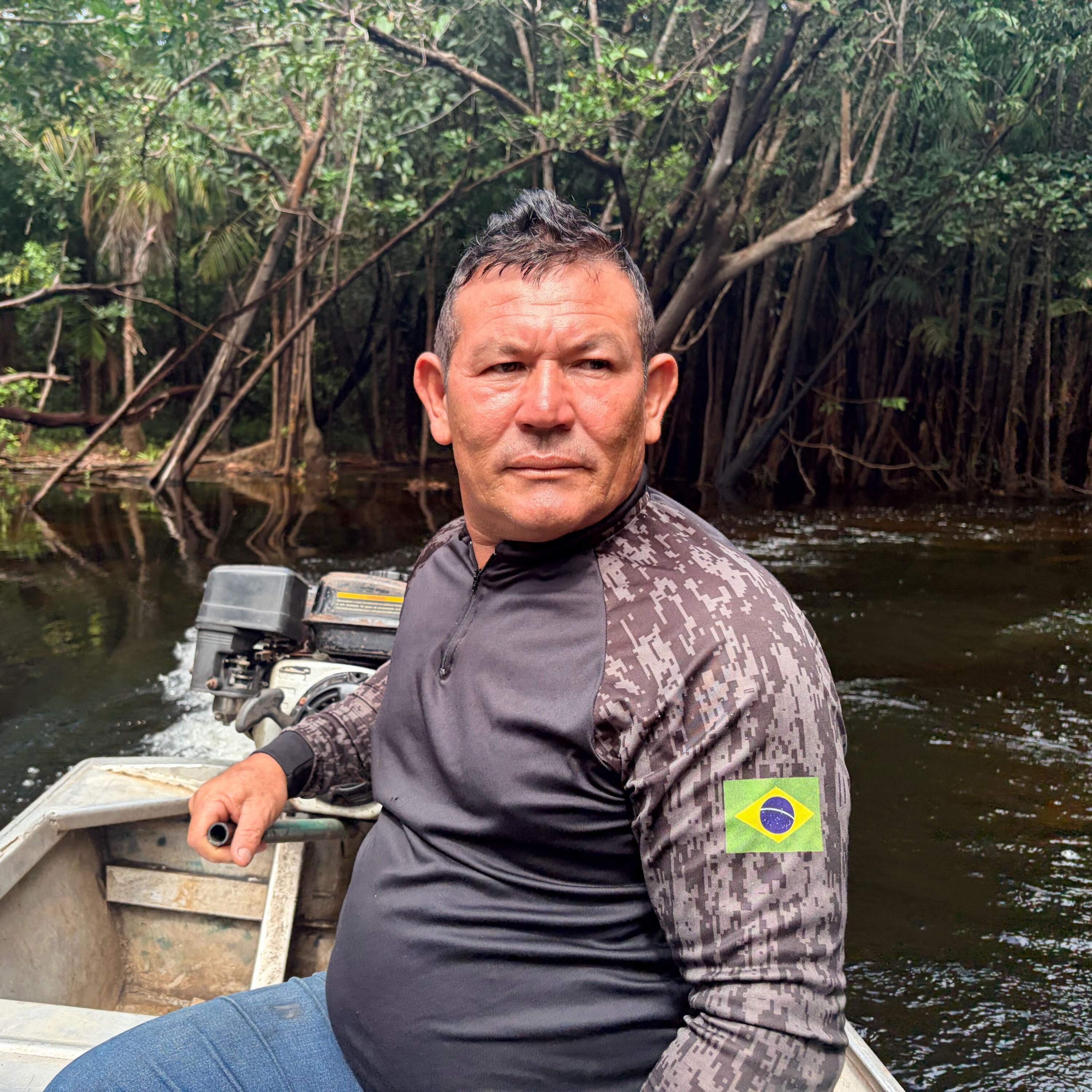
我们当天的向导是瓦德里·西卡达。
Our guide for the day is Valderri's Cicada.
人们都叫他德科。
People call him Deco.
德科说,准备好迎接一场冒险,看看我们能捕到什么。
Deco says, get ready for an adventura, an adventure to see what we can catch.
你能请Deco再多告诉我们一点我们要去的地方吗?
Will you ask Deco just to tell us a little bit more about where we're going?
我们的制片人路易斯,他实际上会说很多种语言,正在做翻译。
Our producer Luis, who speaks Portuguese, actually, speaks a lot of languages, was interpreting.
他说
He's saying
我们要逆流而上,更好地了解鱼的生活环境,因为它们生活在浅水区。
that we're going upriver to get a better sense of where the fish live because they live in shallow water.
我们所在的这条河叫内格罗河,也就是黑河。
The river that we're on is called the Rio Negro, the Black River.
它是亚马逊河的主要支流之一。
It's one of the main tributaries of the Amazon.
每年有好几个月,河水会上涨,淹没周围的雨林,形成一片茂密的热带沼泽。
And for several months out of the year, the river level rises and floods the surrounding rainforest, creating this dense tropical swamp.
我们仿佛置身于森林之中,但地面却是水。
It's like we're in the middle of a forest, but the ground is water.
完全被淹没了。
Totally flooded.
德科驾驶着我们穿过错综复杂的水道,深入森林腹地。
Deco steers us through a maze of graded waterways deeper and deeper into the forest.
哎哟。
Oh, ow.
哦,杰夫。
Oh, Jeff.
小心树枝。
Careful with the branches.
这条里奥内格罗河之所以叫这个名字,是因为这里的水实际上是黑色的。
So the Rio Negro is called this because the water here is actually black.
看起来我们像是漂浮在一条黑茶色的河流上。
It looks like we're floating on a river of black tea.
对于靠捕捉小鱼为生的德科来说,这种独特的水质正是他谋生的原因。
For Deco who catches pretty little fish for a living, this unique water is the reason he has a job.
你看,这种颜色来自于丛林中的植物。
You see, the color comes from the plants of the jungle.
当它们的叶子和树皮浸泡在河水中时,会释放出一种叫做单宁的化学物质,使水变色。
As their leaves and bark soak in the river, they release chemicals called tannins that stain the water.
这简直就是一种雨林茶。
It is literally a kind of rainforest tea.
就像普通的茶一样,这里的水是酸性的。
And just like regular tea, the water here is acidic.
它有点酸。
It's slightly sour.
所以你在这里找到的鱼,已经适应了这种奇特的水。
So the fish that you find here, they are adapted to this weird water.
这里是它们繁殖的地方。
This is where they reproduce.
长期以来,亚马逊是它们唯一繁殖的地方。
And for a long time, the Amazon was the only place where they reproduced.
最终,我们来到了森林中一个安静而昏暗的区域。
Eventually, we reach a quiet darker part of the forest.
德科探身出船边,用手指轻轻拍打水面。
Deco leans overboard, and he starts flicking water with his fingers.
他告诉我们,这就是吸引鱼的方法。
He tells us that is how you attract the fish.
德科五十多岁了。
Deco is in his fifties.
他皮肤黝黑,身材精干,双手宽大如熊掌。
He's tan and compact with big bear paw hands.
他说,有网。
Has the net, he says.
他把网放入水中,提起时,哦,鱼来了。
He dips his net into the water, and when he lifts it out Oh, there they are.
大约有一打这种小鱼,像蠕动的眉毛一样。
There are about a dozen of these little fish, like little squirming eyebrows.
哦,它们在跳来跳去。
Oh, they're jumping around.
这些鱼的头上有着电蓝色的斑点。
These ones have electric blue spots on their heads.
他把它们捞进一个大塑料桶里。
He scoops them into a big plastic tub.
那么一条鱼要多少钱?
So how much would one
多少钱?
of these fish, cost?
Deco说,在巴西,你可能要花大约2巴西雷亚尔。
Deco says in Brazil, you might pay about 2 Brazilian reais.
那大约是40美分。
That's about 40¢.
从中,他只能拿到几美分,单条鱼的收入并不多,但这条河里充满了这种鱼以及各种漂亮的小鱼,都可以卖钱。
Out of that, he gets paid a few cents, which for a single fish is not a lot, but the river is teeming with these and all kinds of pretty little fish that you can sell.
在状况好的日子里,Deco说他能捕获一万条这样的鱼,一桶接一桶地装满。
On a good day, Deco says he can collect 10,000 of them, filling up tub after tub.
在过去的几十年里,这里的人们从这些被淹没的森林中捕捞了数亿条热带鱼,销往全球各地的水族馆和宠物店。
Over the last few decades, people here have taken hundreds of millions of tropical fish from these flooded forests, selling them to aquariums and pet stores all over the world.
这些鱼一直是巴西这个偏远地区大多数人主要的经济支柱。
These fish have been the main economic lifeline for most people in this remote part of Brazil.
Deco告诉我们,他14岁就开始当渔夫了。
Deco told us he started working as a fisherman when he was 14 years old.
现在他已经54岁了。
And now he's 54.
多亏了这些小鱼,Deco得以养大五个孩子,并送他们全部去上学。
Thanks to these tiny fish, Deco's been able to raise five kids, send them all to school.
他为此感到自豪。
He's proud of that.
但Deco告诉我们,他不确定自己还能继续干这份工作多久。
But Deco told us he's not sure how much longer he'll be able to keep doing this job.
他说,他担心最终这份工作会彻底消失,因为对这些鱼的订单已经大幅减少。
He said he's afraid eventually this job won't even exist anymore because orders for these fish are way, way down.
来自亚马逊这片区域的漂亮小鱼的市场正在萎缩,这正是我们来这里的原因——了解事情是如何发生的,以及这个小镇上的一些人如何试图反击。
The market for pretty little fish from this part of the Amazon is drying up, and that is the reason we're here, to understand how that happened and how some folks in this little town are trying to fight back.
大家好,欢迎收听《星球金钱》。
Hello, and welcome to Planet Money.
我是Jeff Guo。
I'm Jeff Guo.
今天在节目中,我们来到巴西,致力于追踪一条不寻常的供应链,它将亚马逊这片偏远小镇与全球各地的宠物商店连接起来。
Today on the show, we are in Brazil on a mission to trace an unusual supply chain that connects this remote town in the Amazon to pet stores all over the world.
这条供应链正面临威胁。
A supply chain that has come under threat.
并不是因为鱼正在消失。
Not because the fish are disappearing.
这不是那种故事。
This is not one of those stories.
不。
No.
这个问题是一个古老的企业问题。
This problem is an age old business problem.
里奥内格罗河的渔民正面临来自数千英里之外的激烈竞争。
The fishermen and women of the Rio Negro are facing competition, alarming competition from thousands of miles away.
我们第一次见到我们的渔民向导是在一个叫巴塞洛斯的小镇。
We first met our fishermen deco in a town called Barcelos.
没有公路通向巴塞洛斯。
There are no roads that lead to Barcelos.
它只有几十条街道,挤在里奥内格罗河与雨林之间的河岸上。
It's a few dozen streets crammed along the banks of the Rio Negro between the river and the rainforest.
这里有一个机场、一个浮动加油站,还有一座大型的蓝白相间的教堂。
There's an airstrip, a floating gas station, and a big blue and white church.
在巴西,巴塞洛斯被称为观赏鱼之都。
In Brazil, Barcelos is known as the capital of ornamental fish.
在这儿
Here
我们到了。
we are.
曾经有一段时间,这里的经济有80%依赖于观赏鱼贸易。
At one point, 80% of the economy here depended on the aquarium fish trade.
这些鱼如此重要,以至于这个小镇每年都会举办一场盛大的节日来庆祝它们。
These fish are so important that every year, this tiny town celebrates them with a humongous festival.
这个节日叫做观赏鱼节。
It's called the festival of the ornamental fish.
我们听说这个节日极其壮观,必须亲自来看一看。
We've been told that this thing is so spectacular that we have to see it for ourselves.
当我们到达时,整个小镇都在为节日做准备。
When we arrive, the whole town is getting ready.
天气热得发烫。
It's steaming hot.
沿着主街道,我们看到路灯上挂满了鱼类标志和彩带。
All along the main strip, we see fish signs and streamers hanging off the lampposts.
你知道的,有什么大事要发生了。
Like, you know, something's about to happen.
在广场上,有一座十英尺高的耶稣雕像。
In the town square, there's a 10 foot statue of Jesus.
他站立的基座上布满了鱼类艺术作品。
The pedestal that he's standing on is covered in fish art.
而且我们不断看到一种特定的鱼。
And there's actually a specific fish that we keep seeing over and over again.
这种鱼出现在耶稣雕像上。
This fish is on that Jesus statue.
它也出现在全镇各处的横幅上。
It's on all the banners around town.
天哪。
Oh my god.
每个人都穿着印有这种鱼的T恤。
Everyone's wearing t shirts with this fish on.
这种鱼叫红莲灯鱼。
This fish, it is called the cardinal tetra.
这正是Deco花最多时间试图收集的那种。
This is the one that Deco spends most of his time trying to collect.
它身体是明亮的蓝色,腹部有一条霓虹红条纹。
It is bright blue with a neon red stripe down the bell.
它就像一颗小小的彩虹色向日葵籽。
It's like a little iridescent sunflower seed.
镇广场附近的水族箱里展示了一些。
There were some on display in the tanks near the town square.
它们就在那儿。
There they are.
好小啊。
So tiny.
红莲灯鱼是全球最受欢迎的观赏鱼之一。
The cardinal tetra is is one of the most popular aquarium fish in the world.
在阳光下,它们会发光。
In the sunlight, they glow.
是的。
Yeah.
你一生中几乎肯定见过红莲灯鱼。
You have almost certainly seen a cardinal tetra at some point in your life.
第一个告诉我们红莲灯鱼、这个小镇和这个节日的人,是一位一直在竭尽全力帮助像Deco这样的渔民维持生计的人。
And the person who first told us about the cardinal tetra and this town and this festival is a guy who has been doing everything he can to keep fishermen like Deco in business.
他叫斯科特·道德。
His name is Scott Dowd.
我们在教堂附近的码头见到了他。
We met him by the docks near the church.
你好。
Hello.
你好。
Hi.
终于能当面见到你,真是太好了。
Oh, it's great to finally meet you in person.
能当面认识你我也很高兴。
Nice to meet you in person too.
斯科特是一位保护生物学家。
Scott is a conservation biologist.
以前在新英格兰水族馆工作。
Used to work at the New England Aquarium.
他在九十年代第一次来到巴塞洛斯时,担心的并不是渔业。
And the first time he came to Barcelos back in the nineties, he wasn't worried about the fishing industry.
他担心的是这些鱼。
He was worried about the fish.
他告诉我们,曾经有一段时间,巴塞洛斯几乎独自满足了全球对红莲灯鱼的需求。
He told us that at one point, Barcelos was almost single handedly supplying the global demand for cardinal tetras.
所以他和同事们试图弄清楚当地人每年采集多少条红线灯鱼,以及这种采集是否可持续。
So he and his colleagues were trying to figure out just how many cardinals the locals were collecting every year and if that was sustainable.
我们得出结论,每年从这个地区捕捞的红线灯鱼至少有两千万条。
We concluded that were there were at least 20,000,000 cardinal tetras, taken every year Every year.
从这个地区。
From this region.
而且是
And Is
听起来很多,但这算多吗?
that that sounds like a lot, but is that a lot?
是的。
Yeah.
两千万元是个相当庞大的数字,我们在波士顿是这么说的。
20 million's a wicked lot, as we say in Boston.
而这还只是他们能数得出来的鱼。
And that was just the fish that they could count.
斯科特估计,总数甚至可能翻倍,达到每年四千万条鱼。
Scott estimated that the total number could even be double that, 40,000,000 fish every year.
那时,我胃里突然涌起一种不祥的预感,觉得这未免太多了。
And at that point, I got a bit of a sinking feeling in my stomach, and I felt this has gotta be too much.
但当他们开始研究亚马逊的这一区域时,发现了两件事。
But then as they started to study this part of the Amazon, they discovered two things.
第一,这些水域中有大量的红莲灯鱼。
First, that there were a lot of cardinal tetras in these waters.
多到即使四千万条也只不过是九牛一毛。
So many that even 40,000,000 was just a drop in the bucket.
他们还了解到,这些红莲灯鱼中的大多数注定寿命极短。
They also learned that most of these cardinal tetras are doomed to live very short lives.
每年都会有一个旱季,河水水位下降,数百万条鱼因此死亡。
Every year, there is a dry season, the river level goes down, and millions of them die.
因此,斯科特和他的同事们开始认为,采集这些红莲灯鱼或许不仅仅是可持续的。
So Scott and his colleagues started to think that collecting these cardinal tetras was maybe more than just sustainable.
这实际上可能对亚马逊和巴塞洛斯的居民都有好处。
It might actually be good for the Amazon and for the people of Barcelos.
因为如果当地居民可以通过收集这些本来会死亡的鱼来谋生,他们就不会去做破坏亚马逊的事情,比如为了放牧而焚烧森林——这确实是正在发生的事。
Because if the locals could make a living collecting these fish who would otherwise die, then they wouldn't be doing destructive things to the Amazon, like, I don't know, burning it down to make room for cattle, which is a real thing that happens.
斯科特记得他曾去参加一个大型鱼类保护会议,公布这些发现。
Scott remembers going to a big fish conservation conference to announce these findings.
我走上讲台时非常紧张。
And I was quite nervous to take this podium.
我即将告诉那些有鱼类以他们名字命名的人。
Here I was about to tell these people that have fish named after them.
他们撰写了我从小学习的教科书。
They've written the textbooks that I that I grew up on.
我即将告诉他们,我主张每年捕捞多达四千万条淡水鱼,而这是一件好事。
I was about to tell them that I was advocating for the extraction of potentially 40,000,000 individual freshwater fish every year, and it's a good thing.
通常情况下,保护生物学家们倡导的恰恰相反,是让动物留在自然界中。
Usually, conservation biologists, they are trying to advocate for the opposite, for keeping animals in nature.
这就像告诉一群牙医,嘿。
So this was like telling a bunch of dentists, hey.
这是一种实际上对你们有益的糖果。
Here is a type of candy that is actually good for you.
我当时站在讲台上,准备好被水果和鞋子砸。
I was prepared at that podium to be pelted with fruit and shoes.
但他并没有。
But he wasn't.
他的同行保护生物学家们看了他的数据,相信他所说的话,即红莲灯鱼产业是在帮助而非破坏环境。
His fellow conservation biologists looked at his data and believed what he was saying, that the cardinal tetra industry was helping and not hurting the environment.
我几乎要流泪了。
I was almost in tears.
我感到非常震惊。
I was shocked.
于是斯科特年复一年地回到巴塞洛斯,与渔民们越来越亲近,看着这个年度庆典变得越来越大。
So Scott kept coming back to Barcelos year after year, getting closer and closer with the fishermen and fisherwomen, watching this annual festival get bigger and bigger.
这种对这些小鱼及其对社区影响的喜悦、幸福和庆祝氛围突然爆发了。
Just this explosion of joy and happiness and and and celebration for these these little fish and the impact they've had on this community.
斯科特告诉我们,除非亲眼看到这个节日,否则很难理解。
Scott told us it's hard to understand until you see this festival.
体育场非常大。
The stadium is huge.
主要活动在这座出人意料地庞大的体育场内举行。
The main event takes place inside this incongruously large stadium.
我们进去吗,杰夫?
Should we enter, Jeff?
是的。
Yeah.
我们进去看看吧。
Let's go take a look inside.
好。
Yeah.
当路易斯和我到达时,有一位主持人正在倒计时,庆祝活动即将开始。
When Luis and I arrive, there is an announcer counting down to the start of the show.
五
Five
还有五分钟。
minutes to go.
路易斯,这气氛太棒了。
Luis, this is popping.
这个体育场叫皮亚博德鲁莫。
This stadium is called the Pia Bodrumo.
在这里的巴塞洛斯,'Piaba'这个词指的是小鱼。
Here in Barcelos, Piaba is the word for little fish.
所以这座闪亮的白色多层建筑——皮亚无人机,实际上是一座专门献给小鱼的体育场。
So this gleaming white, multistory Piaba drone is literally a stadium dedicated to the little fish.
三
Three
还有几分钟。
minutes to go.
在包厢里,我们见到了市长。
Up in the box seats, we meet the mayor.
还有市长夫人。
And missus.
还有巴塞洛斯小姐。
As well as miss Barcelos.
很高兴认识我。
Nice to know me.
伊莎贝拉。
Isabella.
伊莎贝拉。
Isabella.
伊莎贝拉。
Isabella.
谁穿着这件闪闪发光的礼服和绶带?
Who was wearing this glittering dress and sash.
她告诉我们,她的祖父是一位红绿灯鱼渔民。
She told us her grandfather was a cardinal tetra fisherman.
然后我们只剩下几秒钟了。
And then we are seconds away.
戏剧性的音乐。
The dramatic music.
是的。
Yeah.
倒计时,三十七秒,三十六,三十四。
The countdown, thirty seven seconds, thirty six, thirty four.
演出开始了,一位男子走出,戴着巨大的羽毛头饰,欢迎所有人来到巴塞洛斯——这里红绿灯鱼是王者之地。
And the show is A man steps out in an enormous feathered headdress, and he's welcoming everybody to Barcelos, the place where the cardinal is the king.
接着,舞者们纷纷登场,数十名身着亮片服装的舞者表演着各种复杂的编舞。
And then the dancers come out, dozens and dozens of them in sequined costumes doing all kinds of complicated choreography.
这
The
整个观众都在跟着唱:我们是红绿灯鱼。
whole crowd is singing along, We are cardinals.
我们是红绿灯鱼。
We are cardinals.
然后,
And then,
好,一台五层楼高的起重机被推了出来,上面是伊莎贝拉,你知道的,巴塞洛斯小姐。
okay, a five story crane is rolled out, and there is Isabella, you know, miss Barcelos.
她戴着王冠,坐在一个布满粉红色蝴蝶的篮子里缓缓降下。
She's wearing a tiara and descending in a basket covered in pink butterflies.
接着她手持一颗闪闪发亮的超大号红绿灯鱼,跳起舞来。
And then she's holding this bedazzled, oversized cardinal tetra and dancing.
好了,我们不会向你们详细描述整个活动,因为这场表演持续了整整五个多小时。
And, okay, we are not gonna describe this whole event for you because, well, this went on for more than five hours straight.
不是开玩笑。
No joke.
他们换了好几套服装。
There were multiple costume changes.
他们带来了游行花车。
They brought in parade floats.
我们看到一只全机械驱动的红绿灯鱼,大小堪比一艘游艇。
We saw a fully motorized cardinal tetra the size of a houseboat.
有些花车甚至从里面喷出烟花。
Some of these floats even had fireworks shooting out of them.
这比你见过的任何一场超级碗中场秀都要精彩。
This was better than any Super Bowl halftime show you have ever seen.
但我们在那里的整个过程中,有一个念头一直挥之不去:这里如此大张旗鼓地宣传这些鱼,宣传红绿灯鱼,宣传一家我们明知陷入困境的企业。
But the whole time we were there, there was this one thought that kept bothering me because here was all this hullabaloo about these fish, about the cardinal tetra, about a business that we knew was in trouble.
第二天,当我们与一些真正的渔民交谈时,他们告诉我们关于巴塞洛斯和红绿灯鱼的故事要悲观得多。
The next day, when we talked to some actual fishermen and fisherwomen, they were telling us a much less optimistic story about Barcelos and about the cardinal tetra.
斯科特带我们见了其中一位。
Scott introduced us to one of them.
她叫阿拉马拉·卡斯特罗,简称玛拉。
Her name is Aramara Castro, Mara for short.
玛拉
Mara
她自称是一位自豪的皮亚贝拉战士。
calls herself a proud Piaberra warrior.
皮亚巴是当地对收集这些小鱼的人的称呼,这些小鱼就是皮亚巴。
Piaba is the local word for someone who collects these little fish, these little piaba.
许多当地的皮亚巴和皮亚巴奥人,像德科这样的人,都会把他们的鱼带给玛拉。
And a lot of the local Piaba and Piabaos, folks like Deco, they bring their fish to Mara.
她和丈夫有点像鱼贩中介。
She and her husband are kinda like fish brokers.
他们对鱼进行分类,然后顺流而下运给出口商,出口商再把鱼装上飞机,运往世界各地。
They sort the fish and send them downriver to the exporters who, in turn, put the fish on planes and send them all around the world.
马拉告诉我们,从事piabera这个职业、捕捞这些观赏鱼的最佳时期是在九十年代和二十一世纪初。
Mar told us the best time to be a piabera harvesting these ornamental fish was back in the nineties and early two thousands.
那是这个行业的巅峰时期。
That's when the business was at its peak.
她说,要是你能亲眼看看那时候的港口就好了。
She said, if only you could see the port back then.
当时全是进港的船只,都是些漂漂亮亮的白色小船,船上挂着渔网,就是皮亚巴人用的那种渔网。
All these boats would come in, these beautiful little white boats with fishing nets on top, the fishing nets of the Piaba.
那边
There
玛拉说,以前靠捕鱼为生的捕鱼人足有数百位。
used to be hundreds of them out there fishing, Mar said.
但后来发生了一件事,彻底颠覆了玛拉、德科还有斯科特的生活。
But then something happened that would turn Mara and Deco and Scott's world completely upside down.
那是在2000年。
It was the year 2000.
斯科特当时正坐在新英格兰水族馆的办公室里,翻看一本鱼类杂志,突然看到一张美丽的红绿灯鱼的照片。
Scott was back in his office at the New England Aquarium just flipping through one of his fish magazines when he saw a photo of a beautiful cardinal tetra.
但这条红绿灯鱼并不是来自亚马逊的野生品种。
But this wasn't a wild cardinal tetra from the Amazon.
不是。
No.
这是来自佛罗里达的养殖红绿灯鱼。
This was a farmed cardinal from Florida.
你知道,虽然大多数观赏鱼都是人工养殖的,
You see, even though most aquarium fish are farmed
红绿灯鱼来自一种非常特殊的水域。
Cardinal tetras come from very unusual water.
在鱼场繁殖这种鱼并不容易。
It wasn't easy to produce these fish on fish farms.
但这篇报道却在庆祝佛罗里达的鱼类繁殖者终于破解了这一难题。
But now you had this article celebrating how fish breeders in Florida had cracked the code.
斯科特感到恶心。
Scott felt sick.
我实际上扫描了那一页,给渔民们看。
I actually scanned that page to show the fishers.
在下一次前往巴塞洛斯的旅途中,斯科特传达了这个消息。
On his next trip to Barcelos, Scott delivered the news.
人们都惊呼起来,这真是令人大开眼界。
There were gasps, and it was quite an eye opener.
每个人都明白这意味着什么。
Everybody knew what this meant.
亚马逊地区的人们不再垄断这种受欢迎的观赏鱼。
The people of the Amazon no longer had the monopoly on this popular pet fish.
竞争即将来临。
Competition was coming.
斯科特说,这件事的重要性怎么强调都不为过。
And Scott says there is no way to overstate just how big of a deal this was.
世界为我改变了,也为巴塞洛斯改变了,还改变了整个森林。
The world changed for me, and the world changed for Barcelos, and it changed for the whole forest.
一切都变了。
Everything changed.
不过,这种变化并不是一夜之间发生的,而是慢慢地,这些人工养殖的红莲灯鱼开始进入市场。
Now it didn't change all at once, but slowly, these farmed cardinals started making their way onto the market.
到了2000年代后期,来自亚马逊原生栖息地的红莲灯鱼需求急剧下降。
By the late two thousands, demand for cardinal tetras from their natural habitat in the Amazon was plummeting.
马拉告诉我们,她看到许多同行的皮亚巴人纷纷放弃,也开始怀疑自己是否也应该放弃。
Mara told us she saw a lot of her fellow Piabaos and Piabaos giving up and wondered if she should give up too.
所以。
So
她感到绝望。
she was desperate.
她当时说,是的。
She was like, yeah.
那我们该怎么办?
Like, what are we going to do?
但你知道,Mara称自己为Piaba战士。
But, you know, Mara calls herself a Piaba warrior.
所以只有一条路可走。
So there was only one choice.
她决定留在这个行业,留下来战斗,而Scott会提供帮助。
She was gonna stay in the business, stay and fight, and Scott was gonna help.
他从Mara还是个小女孩时就认识她和她的家人。
He's known Mara and her family since she was a little kid.
我们想,好吧。
We thought, okay.
比赛开始了。
It's game on.
我们必须竞争,而且必须赢。
We have to compete and we have to win.
我们要怎么做,才能让马塞洛的红莲灯鱼成为供应链中所有人眼中最赚钱、最具吸引力的选择?
What do we have to do to make Marcelo's cardinal tetras the most lucrative, the most attractive to everybody in the supply chain?
斯科特现在经营着一个名为Project Piaba的非营利组织,
Scott now runs a nonprofit called Project Piaba,
这是一个由
which is a bunch
美国和巴西的志愿者组成的团体,致力于维持巴塞洛斯地区的红莲灯鱼产业。
of volunteers in The US and Brazil trying to keep this cardinal tetra industry alive in Barcelos.
马告诉我们,如今仍在积极捕鱼的皮亚贝罗和皮亚贝拉人数已从数百人减少到仅约30人。
Mar told us the number of piaberos and piaberas has gone from hundreds to only about 30 nowadays who are still actively fishing.
而他们所面对的是新加坡、越南和马来西亚那些大型养鱼场,这些养鱼场已经不仅掌握了在人工环境下繁殖红莲灯鱼的技术,还实现了工业化规模生产。
And what they're up against are these vast fish farms in Singapore and Vietnam and Malaysia who have all figured out not only how to breed these cardinal tetras in captivity, but how to do it on an industrial scale.
换个角度看,
And look at it this way.
这些皮亚贝拉和皮亚贝罗正面临一个典型的企业难题。
These piaveras and piaveras face a classic business problem.
有人推出了竞争产品,正在抢走他们的生意。
Someone has come out with a competing product and is eating their lunch.
那他们该怎么办呢?
So what do they do?
如果这是个商学院的案例研究,教授这时候就会问:你们的竞争优势是什么?
Well, if this was a business school case study, this is where the professor would ask, what are your competitive advantages?
你们的竞争劣势又是什么?
And what are your competitive disadvantages?
野生红莲灯的一个劣势是,它们来自特殊的水域,因此有时难以适应水族箱中的生活。
One disadvantage for the wild cardinals is that they come from this unusual water, so they sometimes struggle to adapt to life in an aquarium.
所以,斯科特一直在与其他科学家合作,设计一种特殊的培育方案,帮助野生捕获的红莲灯在出售前适应圈养环境。
So now Scott's been working with other scientists to design this special regimen to help wild caught cardinals get used to life in captivity before they get sold.
我们为它们适应水族箱生活做准备。
We prepare them for their life in aquariums.
哦。
Oh.
它们吃的是世界上最好的鱼粮。
They receive the best fish food in the world.
我们还会调节它们对pH值的适应性。
We also acclimate them for pH.
所以我想象的,就是一家高档的鱼类 finishing school(精英培训学校)。
So what I'm imagining is this fancy pants finishing school for fish.
没错。
Exactly.
另一个劣势是,巴西的官僚程序繁多,把这些鱼运出国家可能需要数周时间。
Another disadvantage is that there's a lot of red tape in Brazil, so it can take weeks to get these fish out of the country.
马拉和斯科特一直在游说政府,希望加快流程。
Mara and Scott have been lobbying the government to speed things up.
但斯科特最近的主要项目,是试图推广他认为野生大帆灯鱼相对于人工养殖同类的最大优势——那就是这些鱼是野生的。
But Scott's major project recently is to try to promote what he sees as the wild cardinal tetra's greatest advantage over their farmed cousins, which is that these fish are wild.
它们有属于自己的故事。
They have a story.
所以斯科特一直在开发一种方法,让潜在客户能够追踪他们购买的野生红莲灯鱼是在哪里捕获的,并了解捕捞它们的皮亚韦罗,甚至观看节日的视频。
So Scott's been working on a way for potential customers to trace exactly where their wild cardinals were caught and to learn about the piavero or piavero who caught them, maybe even watch a video of the festival.
我们正在让他们了解这些鱼的来源、捕捞者的故事,以及这对这些亚马孙雨林居民生活所产生的影响。
We're giving them access to the story of where their fish came from, the people that caught their fish, the impact that has had on the lives of these rural Amazonians.
这就像是你在公平贸易咖啡包装上看到的农民照片一样。
So it's kinda like the photo of the farmer that you see on the side of your fair trade coffee bag.
你真的认为你能把这门大生意重新带回这里吗?
Do you really think you can bring this big business back?
我不知道。
I don't know.
但我就是停不下来。
I I can't stop trying, though.
现在,有一个版本的故事就在这里结束,留下一个巨大的问号:这个极度依赖这种小小鱼类的小镇,未来将何去何从?
Now there is a version of this story that ends right here with a big question mark about the future of this little town that depends so much on this tiny little fish.
但当我们身处巴塞洛斯时,我们也听到了另一种鱼的故事——一种体型大得多的鱼。
But while we were in Barcelos, we also learned about this other fish, a much bigger fish.
关于那个故事,我们稍后再说。
The story of that is after the break.
我们之所以远道来到巴塞洛斯,是为了试图理解这样一个小镇会发生什么——那里最主要的产业,也是大多数人赖以生存的产业,正在衰退。
One of the reasons we came all the way to Barcelos is to try and understand what happens in a town where the main industry, the industry that most people depended on, is fading away.
当我们和德科一起在洪泛森林中时,他给我们讲了这个关于小镇历史的故事,这个故事开始让我们理解皮亚巴罗人和巴塞洛斯所经历的一切。
And when we were out there in the flooded forests with Deco, he told us this story about the town's history, a story that started to put everything that was happening to the Piabaeros and to Barcelos into perspective.
那时已是上午晚些时候。
It was late in the morning.
我们和德科一起度过了数小时,看着他轻拍水面以吸引那些小鱼。
We had spent hours with Deco, watching him flick the water to attract the little fish.
他跟我们讲述了昔日的好时光。
He told us about the good old days.
当他还是个少年时,当渔民是每个人都会做的事。
Back when he was a teenager, being a fisherman was just what everybody did.
那是一份不错的生计。
It was a good living.
他告诉
He told
我们他经常喝酒玩乐,从不为未来做打算。
us he would drink a lot and have fun and wouldn't plan for the future.
他说,也许我们以为事情会一直越来越好。
He said, maybe we thought that things would just keep getting better and better.
但后来就结束了。
But then it ended.
我们来到了水面上的一个地方,感觉树木仿佛向我们逼近。
We'd gotten to a place on the water where it felt like the trees were closing in on us.
Deco用一把红色的桨 steering 我们避开漂浮的木头,时不时还会折断附近小树的树枝,标记我们走过的路径。
Deco was using a red paddle to steer us past the logs floating in the water, and from time to time, he'd snap off a branch from a nearby sapling to mark which path we'd taken.
就在这时,Deco给我们讲了他父母的故事,因为他的父母并不是Piabaeros。
And that is when Deco told us a story about his parents, because his parents were not Piabaeros.
那时候,Barcelos的主要产业是别的东西。
Back then, the main industry in Barcelos was something else.
他告诉我们,他的父母在橡胶行业工作,采集乳胶。
He told us that his parents worked in the rubber industry, latex.
每个人都从事橡胶行业。
Everybody worked in the rubber industry.
在小镇以观赏鱼之都闻名之前,它以橡胶而闻名。
Before the town was known as the capital of ornamental fish, it was known for its rubber.
橡胶树来自亚马逊,而巴塞洛斯在20世纪初是庞大的亚马逊橡胶繁荣的一部分。
Rubber trees come from the Amazon, and Barcelos was part of the huge Amazonian rubber boom in the early nineteen hundreds.
但到德科在七十年代长大的时候,这个行业早已衰退了。
But by the time Deco was growing up in the seventies, that industry had long been fading away.
他们的工作怎么了?
What happened to their jobs?
因为对橡胶的需求停止了,所以他们的工作也就结束了。
So the demand for for rubber stopped, so their jobs ended.
德科告诉我们,没人付得起账单。
Deco told us nobody could pay their bills.
每个人都欠了钱。
Everyone owed money.
每个人都破产了。
Everyone went under.
世界停止购买他们的橡胶,原因是竞争。
And the reason the world stopped buying their rubber, it was competition.
外国人将这种珍贵的树从亚马逊带出去,并学会了在其他地方种植。
Foreigners had taken this valuable tree from the Amazon and figured out how to grow it in other places.
他们在东南亚建立了大规模的橡胶种植园。
They set up huge rubber plantations in Southeast Asia.
如今,天然橡胶最大的生产国是泰国、印度尼西亚和越南。
Nowadays, the biggest producers of natural rubber are Thailand and Indonesia and Vietnam.
Deco说,是的。
Deco says, yeah.
他们在那边种下树之后,世界就不需要再从巴塞洛斯购买橡胶了。
After they planted the trees over there, the world didn't need to buy rubber from Barcelos anymore.
于是人们开始搬离。
So people started to move away.
整个城镇都在消失。
Whole towns were disappearing.
小时候,德科自己也不确定能否留在巴塞洛斯,但有一种小鱼——红莲灯鱼,让他留了下来。
As a kid, Deco himself wasn't sure if he'd be able to stay in Barcelos, except there was this little fish, the cardinal tetra.
上世纪五十年代,一些探险家经过这里,发现这种鱼比世界上任何一种小灯鱼都更漂亮。
Some explorers had come through in the nineteen fifties and noticed that it was prettier than any little tetra the world had ever seen.
于是,新经济的齿轮开始转动。
And so the gears of a new economy started turning.
红莲灯鱼实际上拯救了巴塞洛斯镇。
The cardinal tetra essentially saved the town of Barcelos.
但现在,红莲灯鱼也面临竞争,情况几乎和以前完全重演。
But now competition has come for these cardinal tetras, and it's almost like the exact same story all over again.
事实上,这些人工养殖的鱼甚至来自和种植橡胶树相同的国家,比如印度尼西亚和越南。
In fact, these farmed fish even come from the same countries that planted all the rubber trees, like Indonesia and Vietnam.
展开剩余字幕(还有 128 条)
这里有一个模式。
There is a pattern here.
对吧?
Right?
首先,世界注意到亚马逊的人们拥有某种独特而珍贵的东西,比如一种特殊的树、一种漂亮的小鱼,或者其他像可可豆那样美味的东西。
First, the world notices that the people of the Amazon have something unique and valuable, like a special tree or a pretty little fish or other stuff like that tasty treat we call cacao.
但最终,世界其他地方找到了方法,将亚马逊排除在外。
But eventually, the rest of the world figures out how to take the Amazon out of the equation.
将像德科这样的人排除在外。
How to take people like Deco out of the equation.
我们问德科,他是否认为这次可能会有所不同。
We asked Deco if he thought maybe this time could be different.
这个由斯科特、玛拉和全体皮亚贝罗斯推动的计划,能否阻止观赏鱼产业在这里消失。
If this plan with Scott and Mara and the rest of the Piabaeros could stop the ornamental fish industry from disappearing here.
他说,当然,他希望如此。
He said, of course, he hopes so.
但接着他提到了另一件事,这件事彻底改变了我对整个情况的看法,让我意识到这个小镇的经济早已在悄然演变。
But then he mentioned something else, something that completely changed how I thought about this whole situation, something that showed me just how quickly the economy of this town has been evolving on its own.
德科说,是的。
Deco said, yeah.
我的打算仍然是继续经营红绿灯鱼,但嘿,垂钓运动也总归是个选择。
My intention is to keep working with the cardinal tetras, but, hey, there's always sport fishing.
对吧?
Right?
所以就是说,一方面做观赏鱼捕捞,另一方面靠垂钓运动来维持生计。
So it's it's do some ornamental fishing, but also make ends meet with sports fishing.
就在那时,我们才知道德科已经不再是全职的皮亚贝罗了。
So that is when we learned that Deco himself is not a full time Piabaero.
不再是了。
Not anymore.
如今,他还兼任垂钓向导。
These days, he also works as a sports fishing guide.
他告诉我们,是的,许多前皮亚贝罗现在都当了钓鱼向导。
And he told us, yeah, a lot of former Piabaeros now work as fishing guides.
对。
Yes.
很多人转行做了体育钓鱼。
A lot of them have gone into sports fishing.
是的。
Yeah.
他们当向导,也有些人当司机、酒店员工或清洁工,你知道的,就是为了服务源源不断来的游客。
They work as guides, and also some people work as chauffeurs or hotel workers or cleaners, you know, to cater to all the tourists who are coming in.
当他这么说的时候,我们之前在镇上看到的许多事情突然变得更有意义了。
And as he said this, a lot of things we saw in town started to make a little bit more sense.
来到这里后,我想我太专注于孔雀灯鱼的故事、斯科特和皮亚贝罗的故事,以及这一切对巴塞洛斯未来意味着什么。
Coming here, I think I'd been so focused on this story of the cardinal tetra, the story of Scott and the Piabaeros and what this all meant for the future of Barcelos.
但一直以来,其实都有些线索,只是我之前没怎么留意——关于巴塞洛斯另一种未来的线索。
But all along, there had been these clues that I hadn't really been paying attention to, Clues about this other future for Barcelos.
比如,我们住的那家酒店,
For instance, the hotel that we were staying at,
那家
the
亚马逊酒店,看起来相当新。
Hotel Amazonita, it was pretty new looking.
它不像是会在一个经济崩溃的小镇上建造的酒店。
It didn't seem like the kind of hotel you would build in a town where the economy is collapsing.
这家酒店还有一家披萨餐厅,这显得有点奇怪。
This hotel also had a pizza restaurant, which seemed a little weird.
午餐时间,里面挤满了大声喧哗、戴着墨镜的男子。
And at lunch, it filled up with loud dudes wearing wraparound sunglasses.
其中一些人提着长长的黑色箱子,现在回想起来,那些很可能装的是钓鱼竿。
Some of them were carrying long black equipment cases, which now in retrospect probably contained fishing rods.
你知道镇广场上那座耶稣雕像吗?就是那座装饰着许多鱼的雕像?
And you know that statue of Jesus in the town square, the one decorated with all the fish?
其实,上面不只是有红绿灯鱼。
Well, it wasn't just the cardinal tetra on there, actually.
还有另一种鱼。
There was also this other fish.
它是绿色的,有黑色条纹和红色鱼鳍,现实中它的体型是红绿灯鱼的36倍大。
It's green with black stripes and red fins, and in real life, it is about 36 times bigger than the cardinal.
这种鱼叫孔雀鲈。
This fish is called the peacock bass.
它是一种珍稀目标鱼。
It is a trophy fish.
如今,很多人都在说,巴塞洛斯是钓到这种鱼的绝佳地点。
And these days, there are a lot of people talking about how Barcelos is the perfect place to catch one.
18磅重的孔雀鲈。
18 pound peacock bar.
这里有
There are
所有这些在YouTube上的视频。
all these videos on YouTube.
这里是最佳地点。
Is the best place for It's over here.
就在这里。
Over here.
就这些。
That's all.
看看那东西。
Look at that thing.
你还没醒。
You didn't wake up.
亚马逊最好的鱼,宝贝。
The best fish on Amazon, baby.
看吧。
And look.
我们早就知道巴塞洛斯有垂钓运动。
We had known that there was sport fishing in Barcelos.
斯科特甚至跟我们提起过这件事。
Scott had even mentioned it to us.
但直到现在,我才发现这里的垂钓产业已经发展得如此庞大,以及它如何改变着当地经济,创造了其他类型的机会。
But up until this point, I hadn't realized how big this sport fishing industry had gotten here and how much it was changing the local economy, creating other kinds of opportunities.
德科告诉我们,他其中一个儿子现在在镇上的酒店工作。
Deco told us one of his sons now works at a hotel in town.
他跟我们说了名字。
He told us the name.
天哪。
Oh my god.
范德尤尔森是他的儿子。
Van der Yulsen is his son.
就是在亚马逊ita工作的那个。
The one who works at Amazonita.
他是你儿子?
He's your son?
我们见过他。
We met him.
结果发现,德科的儿子是我们到巴塞洛斯后遇到的第一个人。
Turns out, Deco's son was, like, the first person we met in Barcelos.
他就是那个帮我们办理酒店入住的友善人士。
He was the nice guy who checked us into our hotel.
所以当我们回到镇上时,我们请他谈谈。
So when we got back to town, we asked him to talk.
范德耶尔辛·塞奎拉今年29岁。
Vander Yeltsin Sequeira is 29 years old.
我们在他工作的酒店阳台上对他进行了采访。
We interviewed him on the balcony of our hotel where he works as the manager.
他告诉我们,如今是游客给巴塞洛斯带来了大量资金。他说,你看。
He told us it's the tourists who are bringing a lot of money to Barcelos these He said, look.
那边酒店的那部分全是新建的。
That wing of the hotel over there, that's all new.
下面那片区域也是新盖的。
Down there, that is all new too.
当地旅游部门表示,每年大约有一万名游客来到巴塞洛斯,其中大多数是希望钓到那种孔雀鲈鱼的。
The local state tourism agency says that somewhere around 10,000 tourists come to Barcelos every year, most of them hoping to catch one of those peacock bass.
一些当地人甚至开始将巴塞洛斯打造成新的垂钓之都。
Some locals are even starting to brand Barcelos as the new capital of sport fishing.
当然,万德罗森告诉我们,有个皮亚贝罗老爸挺酷的。
And sure, Vanderjolson told us, it's cool to have a Piabaero as a dad.
他说他和父亲经常一起在水上度过很长时间。
He said he and his dad spent a lot of time out there on the water together.
但他觉得,那种生活现在更多是马塞卢斯历史的一部分了。
But that life, he thinks of it more as part of Marcellus's history now.
所以,这就是故事中缺失的那块拼图。
So this was the missing piece of the story.
这个小镇曾经是橡胶小镇,后来变成了红绿灯鱼小镇,如今正稳步转型为体育钓鱼旅游小镇。
This town, which was once a rubber town then became a Cardinal Tetra town, is now well on its way to becoming a sports fishing tourism town.
这种向旅游业的转型,在许多主要产业衰退的地方并不罕见。
And this pivot toward tourism, it's not an uncommon move for a lot of places where the main industry has faded away.
比如,犹他州的帕克城从采矿业转向了滑雪业,马萨诸塞州的普罗温斯敦则从商业捕鱼转变为海滨度假胜地。
Like Park City, Utah went from mining to skiing or Provincetown, Massachusetts, which went from commercial fishing to being a seaside resort.
在思考巴塞洛斯的故事时,我意识到旅游业之所以成为如此受欢迎的经济策略,有一个原因。
And in thinking about the story of Barcelos, I realized one reason why tourism is such a popular economic strategy.
因为旅游业是唯一无法被搬走的产业。
Because tourism is the one industry that can't be picked up and moved away.
当然,你可以把橡胶树从亚马逊移走。
Like, sure, you can take the rubber trees out of the Amazon.
你甚至可以把红绿灯鱼从亚马逊移走。
You can even take the cardinal tetra out of the Amazon.
但你无法把亚马逊从亚马逊移走。
But you can't take the Amazon out of the Amazon.
如果人们想在内格罗河上享受美好的一天,他们就必须来这里。
If people want to enjoy a beautiful day out on the Rio Negro, they have to come here.
而且,你知道,旅游也是一种最后的经济策略。
And, you know, tourism is also kind of a last ditch economic strategy.
对吧?
Right?
这是在其他所有产业都被外包、转移到海外或被竞争淘汰之后所剩下的选择。
It's what is left after everything else has been outsourced or offshore or outcompeted.
对于马拉来说,
And for Mara,
我们的皮亚巴战士,这有点令人难过。
our Piaba warrior, it's kinda sad.
所以,
So
我来告诉你一件事。
I'll tell you this.
所以我接触的大多数从事垂钓运动的人告诉我,他们肯定会转行做观赏鱼捕捞,因为
So most of the people I speak to that are working in sports fishing tell us that they would definitely come back to become ornamental fishers because
她说观赏鱼捕捞更宁静。
She said ornamental fishing is more peaceful.
更平和。
It's more tranquil.
你独自划着小船在水上。
You're out there in your little canoe.
不会被游客大声斥责。
You're not getting yelled at by tourists.
你为自己工作。
You're working for yourself.
玛拉告诉我们,她希望镇上能投入更多时间和金钱来帮助皮阿韦罗人,就像每年举办大型节日来庆祝皮亚巴罗那样多。
Mara told us she wishes that the town would put more time and money into helping the piaveros, as much time and money as it does putting on the big festival every year that supposedly celebrates the pia barros.
她说,这并不仅仅关乎节日。
She said it's not all just about the festival.
我也一直在反复思考这个问题。
And I had been thinking about that a lot too.
比如,为什么皮亚巴罗斯的数量在减少,而这个节日却每年越办越大?
Like, how is it that the number of pia barros is dwindling, but this festival just keeps getting bigger and bigger every year?
我认为,要理解这一点,唯一的方式是这个节日的意义远不止于皮亚巴罗斯。
And I think the only way to make sense of it is that this festival is about more than just the pia barros.
它关乎怀旧、传统和文化记忆。
It's about nostalgia and heritage and cultural memory.
而且,很可能也关乎推动这个新兴的旅游业经济。
And also, probably, it is about boosting this new tourism economy.
因为如今,在我们残酷的全球经济中,要想生存下去,就必须发挥自己的优势和竞争力。
Because these days, to survive in our cutthroat global economy, you gotta play to your strengths, to your competitive advantages.
而巴塞洛斯人民最宝贵的,就是一个故事。
And what the people of Barcelos have, above all, is a story.
一个关于这个小镇如何被一条小小的红蓝小鱼拯救的故事。
A story about how the town was saved by a tiny little blue and red fish.
这是一个相当不错的故事,即使那只红蓝相间的小鱼可能已经不再是它的救星了。
It's a pretty good story, even if that blue and red fish might not be its savior anymore.
顺便说一下,今年玛拉没能进场参加节日活动。
By the way, Mara wasn't able to get into the stadium for the festival this year.
她说现场人太多了。
She says there were
人实在太多了。
just too many people.
但广场上设了一个大屏幕,还摆了塑料椅。
But there was a big screen setup in the plaza with plastic chairs.
所以她就在那儿看的表演。
So she just watched the show from there.
好的。
Okay.
我特别期待在我们的图书巡展上亲自见到你们所有人。
I wanna tell you how excited I am to see you all in person on our book tour.
我将在4月8日到华盛顿特区,4月9日到波士顿。
I'm gonna be in DC on April 8 and Boston on April 9.
我们要做一个有趣的实验,看看哪个观众更聪明一些。
We're gonna do a fun little experiment to see which audience is, let's just say, wiser.
这本书叫《星球金钱》,是一本关于塑造你生活的经济力量的指南,我们即将造访十几个城市。
The book is called Planet Money, a guide to the economic forces that shape your life, and we're coming to a dozen cities.
每一场活动都会独一无二,有不同的主持人和嘉宾。
Every stop will be unique with different hosts and guests.
如果你买了票,还可以在库存允许的情况下,额外获得一个巡演专属的托特包。
And if you get a ticket, you can also get a tour exclusive tote bag with your purchase while supplies last.
我想我得这么说,大概吧。
I'm supposed to say that, I guess.
总之,点击链接找到离你最近的演出场次
Anyway, find the show nearest
在简介链接里
to you in the link in the
查看节目笔记或访问 planetmoneybook.com,谢谢。
show notes or go to planetmoneybook.com, and thank you.
本集《星球金钱》由出色的路易斯·加洛共同报道和制作。
This episode of Planet Money was co reported and produced by the amazing Luis Gallo.
本集由玛丽安·麦库恩编辑,西耶拉·豪雷斯校对,基西·李负责音频制作。
It was edited by Marianne McCune, fact checked by Sierra Juarez, and engineered by Kwesi Lee.
亚历克斯·戈德马克是《星球金钱》的执行制片人。
Alex Goldmark is Planet Money's executive producer.
特别感谢NPR里约分社的卡莉·汗和瓦尔德马尔·吉奥,以及若莉安娜·莫塔、杰基·安德森、费尔南多·布雷劳和莎伦·杜阿尔特。
A special thanks to Carrie Khan and Valdemar Gio from NPR's Rio Bureau, Joliana Mota, Jackie Anderson, Fernando Breslau, and Sharon Duarte.
我是杰夫·郭。
I'm Jeff Guo.
这是NPR。
This is NPR.
感谢收听。
Thanks for listening.
关于 Bayt 播客
Bayt 提供中文+原文双语音频和字幕,帮助你打破语言障碍,轻松听懂全球优质播客。