本集简介
双语字幕
仅展示文本字幕,不包含中文音频;想边听边看,请使用 Bayt 播客 App。
本播客由Mighty Capital赞助,这是一家早期风险投资公司,专注于把握产品管理在企业成功中日益增长的影响力。
This podcast is sponsored by Mighty Capital, an early stage venture capital firm that capitalizes on the growing influence of product management in corporate success.
其知名投资包括Amplitude、Croc和Canela。
Notable investments include Amplitude, Croc, and Canela.
你好。
Hi.
我是SC Mowadi,Products Account的创始人兼董事会主席。自2017年以来,我们一直是本节目的制作方,这是一家501(c)(3)非营利组织,致力于帮助每个人打造优秀的产品,并与全球超过50万名产品管理者互动。
I'm SC Mowadi, founder and board chair of Products Account, the producer of this show since 2017 and a five zero one c three nonprofit that helps everyone build great products and and engages over 500,000 product managers worldwide.
Products Account通过备受推崇的奖项表彰卓越的产品及成就这些产品的专业人士。
Products account celebrates product excellence through coveted awards that honor great products and the professionals responsible for their success.
通过提供卓越的免费内容,包括这部获奖播客,我们已助力全球超过30%的产品管理者加速职业发展并晋升至高管层。
Accelerates the career and rise to the c suite of over 30% of all product managers globally by providing exceptional programming, including this award winning podcast for free.
了解更多,请访问productsthatcount.org。
Learn more at productsthatcount.org.
在每一集中,你都将了解到优秀产品领导者的秘密。
In every episode, you'll learn the secrets of a great product leader.
让我们认识今天的主持人。
Let's meet today's host.
欢迎来到产品对话,这是来自Products That Count的播客。
Welcome to product talk, the podcast from products that count.
我是您的主持人马克·贝尔斯,VNS Health的技术产品管理总监。
I'm your host, Mark Bailes, director of technical product management at VNS Health.
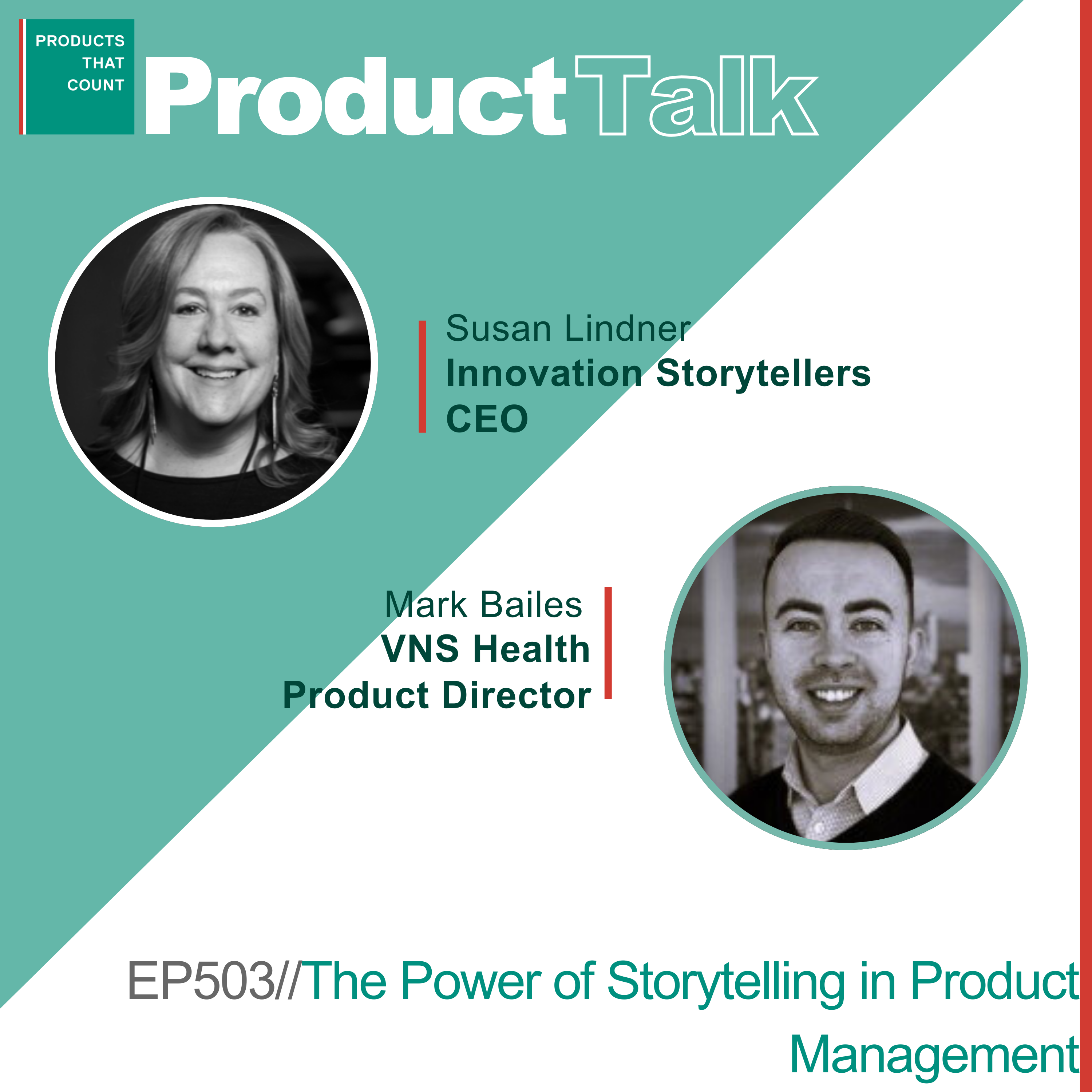
今天,我邀请到了苏珊·林德纳,Innovation Storytellers的创始人兼首席执行官。
And today, I'm joined by Susan Lindner, the founder and CEO of Innovation Storytellers.
苏珊在20世纪90年代担任国际援助官员、在泰国农村工作时,通过将性工作者转变为企业家来帮助减缓艾滋病的传播,从而掌握了讲故事的艺术。
Susan mastered the art of storytelling when she was working as an international aid officer in rural Thailand during the 1990s, helping to slow the spread of HIV by turning sex workers into entrepreneurs.
她运用说服力、实证和对更美好未来的承诺,后来教导了数百家初创公司如何利用故事来证明其颠覆性商业模式的价值,并争取投资者和客户的支持。
Using persuasion, proof and the promise of a better future, she went on to teach hundreds of startups how to use stories to make the case for their disruptive business models and get investors and customers on board.
如今,苏珊在全球财富500强企业的董事会会议室中工作,帮助全球创新领导者构建故事,将团队凝聚在突破性创意周围。
Today, Susan works in Fortune 500 boardrooms around the world, helping global innovation leaders craft stories that bring their teams together around breakthrough ideas.
她曾为财富100强公司来自60多个国家的高管团队提供服务,帮助这些创新领导者成为卓越的故事讲述者,进而改变世界。
She has worked with C level leaders and teams from over 60 countries at Fortune 100 companies, enabling those innovation leaders to become incredible storytellers who go on to change the world.
苏珊,欢迎来到产品谈话。
Susan, welcome to Product Talk.
马克,非常感谢你邀请我。
Thank you so much for having me, Mark.
我非常兴奋,今天要深入探讨我们对话的主题——讲故事在产品管理中的重要性。
I'm really, really excited to jump into the topic of our conversation today, which is all about the importance of storytelling in product management.
我本来想问你,关于讲故事,我们该从哪里开始呢?
I was going to ask, tell us where we start when it comes to storytelling.
但当我们为这次对话做准备时,你告诉我,讲故事之前还有一些前提条件。
But when we met preparing for some of this, you told me that there are prerequisites to storytelling.
也许你能为我们强调一下,在产品领域讲故事时,哪些前提条件是重要的?
Maybe you can highlight the important prerequisites for us when it comes to storytelling in product.
是的,你知道吗,最令人惊讶的是,讲故事其实并不只是关于故事本身或讲述者。
Yeah, you know, most surprisingly, storytelling is not about really the story or the teller.
但两者都是非常重要的组成部分。
They're both very important components.
但讲故事最重要的一部分是你的听众,真正理解你所面对的人,是什么让他们动心、驱动他们,是什么让他们停下脚步,甚至可能让你的绝佳想法被搁置,还要思考在你讲完故事后,是什么促使听众采取行动。
But the most important part of storytelling is your audience and really getting a handle on the people that you're talking to, what moves and drives them, what makes them stop in their tracks and maybe slow roll your fantastic idea, and actually thinking about what drives the listener to take action after you tell the story.
而创新故事讲述的第二部分是,你讲述故事的对象会继续传播它。
And the second part of innovation storytelling is actually that the people you tell your story to, they continue to share it.
他们会让这个故事在组织内部传播开来。
And they make this story spread through the organization.
因此,你不需要独自承担所有重担。
So you don't have to do all the heavy lifting.
这很有道理。
That makes a lot of sense.
你提到了很多关于作为产品经理,你所处的位置、所处的环境以及你所面对的听众。
And you mentioned a lot around understanding where you are as a product manager, The environment that you're in, the audience that you're working with.
这和我们进行产品开发时,围绕最终用户和痛点建立全面理解的过程并没有太大不同。
It's not too dissimilar to when we look to do product development and we build all of our kind of understanding around the end user and the pain points.
听起来,理解你的听众与理解你的最终用户之间,几乎存在一种相似性。
It sounds like there's almost a similarity here with understanding your audience similar to understanding your end user.
这样说是公平的吗?
Would that be fair?
当然。
Absolutely.
已经有比你和我聪明得多的人建立了各种框架,帮助我们真正理解用户的需求、愿望和渴望——其中许多是未言明的,甚至有时是潜意识的。
There are frameworks that have been set up by far smarter people than you and I, Mark, to really get a handle on how we begin to understand the needs, wants, desires, many of which are unspoken and sometimes even unconscious of our audience.
在我这边,当我与客户合作时,我们会从同理心地图开始。
And on my end, when I'm working with clients, we start with an empathy map.
同理心地图是一种由一家名为IDEO的组织开发的特定工具。
And an empathy map is a very specific tool developed by an organization called IDEO.
它最初的设计目的是帮助人们,尤其是软件设计师,理解如何推动用户从软件的1.0版本过渡到2.0版本。
And it was originally designed to actually help people understand, especially for software designers, how to move people from version one point zero to version two point zero of a piece of software.
他们通过创建一张地图来实现这一点,这张地图展示了我的听众受到哪些因素的影响?
And they did this by creating this map of what are the things that my listener is being influenced by?
他们都在听谁的?
Who are they listening to?
他们在读什么、看什么?
What are they reading, watching?
竞争对手在做什么?
What is the competition doing?
他们的实际行为是什么?
And what is their actual behavior?
他们在特定环境中说了什么、做了什么,这些行为可能暗示了他们没有直接告诉我们的东西?
What are they saying and doing in their particular environments that would indicate something that maybe they're not actually saying to us?
因此,同理心地图非常有助于开始记录,即使你只是停下来想一想:在我提出我的大点子之前,鲍勃、凯文和凯伦在桌前到底在想些什么?
And so an empathy map is super helpful to begin to document, even if you just stop for a moment and think, I really wonder what Bob and Kevin and Karen are thinking around the table before I pitch my big idea.
对我来说,从同理心地图中提炼出的核心问题有两个:第一,我的受众正在经历什么样的痛苦,而这个绝佳的新产品能缓解这种痛苦?要深入挖掘他们的痛苦。
And for me, the two biggest questions to anchor the ideas that come out of the empathy map are number one, what is the pain that my audience is experiencing that will be alleviated by this fantastic new product and get really deep into the agony?
这种痛苦可能不仅限于职业层面,也可能涉及个人生活。
So it may not be just professional, it might be personal.
我厌倦了每天在办公室待到晚上7点半,却从没机会和家人一起吃晚饭。
I am tired of being in the office till 07:30, and I never get to have dinner with my family.
我厌倦了在周末不断收到网络安全警报的误报,连孩子踢足球的比赛都参加不了,甚至连周六下午都睡不成觉。
I am tired of getting false positives on my cybersecurity alarms that are going off all weekend long, and I can't even make it to my kid's soccer game, or I can't even take a nap on a Saturday afternoon.
比如,我的痛点是我在这个位置上待了太久,如果我不稍微冒险一下,可能永远无法在这个组织里晋升。
Like or, you know, my pain is that I've been in the same position forever, and if I don't stick my neck out a little bit, I may never move up in this organization.
所以,哪怕只是开始思考我们受众的动机,就已经非常有帮助了。
So really even beginning to think about the motivations of our audience is fantastic.
另一个问题是,他们能获得什么收益?
And the other is what is the gain?
那么,我的听众真正希望通过参与这个过程——和我一起开发产品、执行、试点或实施这个产品——得到什么呢?
So what is the thing that my listener actually wants to get out of, you know, going along this process of me to build this product together or to execute or try a pilot or implement this product together?
他们希望获得什么样的收益?
What is the gain they hope to get?
可能是加薪或晋升。
It might be a raise or a promotion.
也可能是我的团队再也不用做那么多琐碎无用的工作了。
It might be that my team doesn't have to do tons of busy work anymore.
也可能是我们有机会进入以前从未尝试过的新市场,甚至彻底击败竞争对手。
It might be that we get to pop into new markets that we've never attempted before or even crush the competition.
但如果你不提出这些问题,你就永远无法讲出一个能打动听众的故事。
But unless you ask those questions, you'll never have a story that lands and connects with the listener.
这就是你需要付出的艰苦努力。
That's the heavy lifting work you need to do.
谢谢你的分享。
Thanks for sharing.
我觉得这是个很好的例子。
I think that's a great example.
我最近读到一些关于理解用户任务的内容,也就是用户希望完成的任务。
And I recently read something around understanding jobs to be done for your users and the jobs to be done.
我将这一点视为同共情地图并列的概念,因为它能帮助你关注情感和社会层面的任务,而不仅仅是功能性的任务本身。
I really raised this kind of as a parallel to the empathy map as well, because it allows you to emphasize the emotional and social jobs not just the functional job itself.
我认为你刚才提到的这一点,常常被产品经理忽视——解决方案对问题或机会的价值,实际上会因为情感层面的任务而显著提升,而不仅仅是功能层面的任务。我读的那篇文章中举的例子是,我们可以让某样东西更高效,让它效率提升十倍,这就是功能价值。
I think what you just mentioned there is often overlooked by product managers that actually the value of a solution to a problem or an opportunity is I don't know elevated increased significantly by the emotional job not just the functional job right and the example that was shared in the article I was reading is we can make something more efficient we can make it 10 times more efficient and that's the functional value.
但根据你的例子,这意味着他们在下午5点或7点之前就离开了办公室。
But to your example, that means they're getting out of the office before 5PM or before 7PM.
他们不会在周末加班,而是去参加孩子的足球比赛。
They're not working the weekends for their child's soccer game.
这确实进一步加速或提升了这种价值。
That does really accelerate or elevate the value of that as well.
我把这称为自私的利他主义。
I call it selfish altruism.
你知道,我们都希望公司做得更好,团队表现更佳,希望看到股价上涨等等。
You know, we all want the company to do better, the team to do better, we want to see, you know, the stock price go up, etc.
但其中也有一点‘对我有什么好处’。
But there's a small what's in it for me.
对。
Right.
如果你能以某种方式满足它——比如在讲述故事之前先讲一个个人故事,与对方的个人需求产生共鸣——他们就更有可能向前倾身、积极参与,并说:‘是的,这对我也适用。’
That if you can meet it somehow, either in, you know, the story that you're telling, if you tell a personal story ahead of that, that clicks in with that person's personal need, they're more and more likely to lean forward, engage and go, yes, that's for me too.
我还想给你的听众额外提一个关于同理心地图的bonus问题:在你讲述这个故事之前,你是否真正思考过,当听众同意帮助你推进这个新产品时,他们会经历怎样的痛苦?
And I want to give your listeners also one extra bonus question on the empathy map is, have you really contemplated while you're telling, you know, before you tell this story, what is the agony that your listener will experience if they say yes to helping you execute on this new product?
他们会经历怎样的痛苦?
What is the agony they will experience?
他们是否已经满负荷工作,现在还得加班来处理这个新项目?
Are they already working at 100% capacity and now have to stay late to work on this new thing?
开发这个产品是否存在声誉风险?它可能并不完全符合公司战略,但我们不得不做?
Is there reputational risk in building this product that may or may not be in full alignment with the strategy, but we just got to do it?
是否存在这样的风险,比如,如果我不做这件事,我会丢掉工作?
Is there a risk of, you know, is there fear associated new implementation of, if I don't do this, I'm going to lose my job.
因为上一次的实施实在太糟糕了。
Because that last implementation went really, really poorly.
而现在,我是在恐惧中行事。
And now I'm operating from a place of terror.
所以问问你自己:他们的痛苦是什么?
So ask yourself, what is the pain?
即使你是人类历史上第一次销售切片面包,也要想想,人们同意支持这个新事物时会经历怎样的痛苦。
Even if you are selling sliced bread for the first time in human history, what is the pain that someone has to experience by saying yes to the new thing.
这太棒了。
That's amazing.
是的,不仅是当前的痛苦,还有推动变革、向前迈进所带来的痛苦。
Yeah, not just the current pain, but the pain of moving forward and driving the change.
所有变革都是痛苦的。
All change is painful.
对吧?
Right?
没错。
Right.
顺便说一下,你的面包从一开始就切片的话,会更快变干。
Yeah, by the way, your bread goes stale faster when you slice it from the beginning.
你知道吗,这本身也是一种痛苦。
You know, that's a pain.
对吧?
Right?
所以到了第三天,你的面包就坏了。
So day three, your bread is dead.
也许在中世纪的欧洲,它能撑到第五天。
And maybe it would have lasted to day five in medieval Europe.
也许吧。
Maybe.
对吧?
Right?
你就是那个提出切片面包想法的人。
You're the guy with the sliced bread idea.
你可能会说,太棒了。
You're like, oh, terrific.
现在我们这辈子只能吃面包布丁和法式吐司了。
Now we're having, you know, bread pudding and French toast for the rest of our lives.
太棒了。
Fantastic.
谢谢提供这么多陈面包。
Thanks for all the stale bread.
不,很好的例子。
No, great example.
谢谢分享。
Thanks for sharing.
我觉得这个添加到共情地图的内容对我来说是新的。
I think that addition to the empathy map is a new one for me.
所以这绝对是我要带回去的东西。
So that's definitely something I'm going to take back
更多的同情,更多的共情,
more compassion, more empathy,
更多的共情。
More empathy.
让我们假设我们已经具备了大量这种必要的理解。
And let's assume that we have a lot of this prerequisite understanding.
作为产品经理,我们要为我们的受众、最终用户和客户培养情商。
As a product manager, we built emotional intelligence for our audience, for our end users, for our customers.
而且我们已经具备了所有这些前提条件。
And we have all of these prerequisites in place.
那么,有效讲述故事的秘诀是什么?
What is the secret to us telling a story effectively?
好的,让我们在深入创新叙事之前,先从讲故事的一些基本要素开始。
Okay, so let's start with a couple basics of storytelling before we get knee deep into innovation storytelling.
所以,如果你渴望讲一个故事却不知从何下手,只是盯着空白的屏幕发呆。
So great storytelling, if you are craving to tell a story, and don't know where to start, you're staring at a blank screen.
我希望你记住,所有故事都始于四个基本要素。
I want you to think all stories start with four basic inputs.
那就是人物、地点、事件或物品。
It is people, places, events, or objects.
所以优秀的故事都从这里开始。
So great stories start there.
一个人、一个地方、一件物品,或一件事。
A person, a place, an object, or an event.
某个激励过你的人,或者你在街上偶然遇到、让你陷入思考的人。
Someone who inspired you, someone you just passed on the street that made you think.
一个地方,一件事。
A place, an event.
我来举个例子。
So I'll give you an example.
我考驾照失败了三次。
I failed my driver's license test three times.
我最想要的,就是停在我父母车道上的那辆棕色福特Fairmont,内饰是金色的。
And there was nothing I wanted more than the brown Ford Fairmont with a gold interior that sat in my parents' driveway.
我急切地想开车去商场,和那些已经拿到驾照的朋友们汇合。
I was desperate to get to the mall to meet up with my other girlfriends who had already gotten their licenses.
而我是最后一个拿到驾照的,因为上帝知道,商场是我们生活的中心。
And I was the last one because God knows the mall was the epicenter of our lives.
所以我跟你们分享一下,我三次都没通过驾照考试,对吧?
So I'm sharing with you that I failed my test, right?
所以这就是我,主角。
So that's me, the main character.
第二点是这个物品,我渴望得到的那辆车——我父母的车。
Number two is this object, this thing that I coveted, my parents' car.
第三点是,我急切地想见到我的朋友们。
Number three is, I was just dying to see my girlfriends.
我迫切地想去那个可爱的商场,因为那里发生的活动是社交生活的中心。
I'm dying to get to this lovely place of the mall because the event that's taking place there is the epicenter of social life.
对吧?
Right?
所以我有了人物、地点、事件、物品,这些中的任何一个都可能成为我构建这个故事的基石。
So I have my people, places, events, objects, any of those could be the cornerstone that I could build out on this story.
既然我有了这个关于我考驾照失败最终通过的故事,我就可以思考想把这个故事与什么主题联系起来。
Now that I have this story of me failing my driver's license, and finally passing, I can think about what is the theme I want to associate with that story.
所以,如果我在商业语境中的主题是:伙计们,我们真的必须把这个产品做出来。
So if my theme, when I'm thinking in a business context is, guys, we really got to build this product.
无论发生什么,我们都必须坚持下去。
And no matter what happens, we have to persist.
如果我的主题是坚持,那么我就可以用这个故事来支撑它。
If my theme is persistence, then I can back up this story.
我可以说,我这辈子从未为任何事如此努力地学习过。
I can say, I never studied so hard for anything in my life.
我试了,然后失败了。
I tried and I failed.
我可以谈谈为了最终通过驾照考试所经历的所有障碍、考验和艰辛。
And I can talk about all the obstacles and trials and tribulations that went in to finally passing my driver's test.
我可以谈谈那个固执又严厉的老教练,我的考试考官,当时我太紧张了,连铅笔都掉了,我还记得教练看着我说:我不知道你紧张什么。
I can talk about the obstinate and craggy old, you know, driving instructor, my test giver who, you know, I dropped my pencil, I was so nervous, And I can still remember the instructor looking at me and saying, I don't know what you're so nervous about.
我坐在死亡座位上。
I'm the one sitting in the death seat.
我可以进一步强化和升级这个故事,让它更生动地展现我当时有多害怕、多糟糕。
I can heighten and ratchet up the story, right, about just how terrified and how awful that was.
但我坚持下来了,因为没有什么比得到那辆车、见到我的朋友、看到终点线更重要的了。
But I persisted because nothing meant more to me than getting that car and seeing my friends, the finish line.
对吧?
Right?
所以我正在描绘一个有开端、中段和结局的画面。
So I'm painting a picture of a beginning, a middle, and an end.
现在,也许产品对我来说才是核心。
Now, it might be that the product is central for me.
如果是这样,我的故事重点就会是:让我跟你们讲讲那辆棕色的福特Fairmont。
In which case the focus of my story would be like, let me tell you all about the brown Ford Fairmont.
我最想要的,就是那辆车。
There was nothing I wanted more than that car.
它象征着自由与机遇,甚至可能带来一份工作,对吧?多亏了这个物品,我才能去做这件不可思议的新事。
It was a symbol of freedom and opportunity, and even maybe a chance to get a job, right, and do this incredible new thing thanks to this object.
我们管它叫‘呕吐彗星’。
We called it the Vomit Comet.
它看起来糟透了。
It was horrible to look at.
但对我而言,它却是通往我无法想象的新机遇的关键,对吧?
But boy, for me, it was the key to new opportunities that I couldn't have imagined, Right?
所以,如果我的主题——对吧——需要围绕产品本身展开故事,我可能会深入讲述福特猎鹰的一切及其意义。
So if my theme, right, if I need to build the story around the product itself, I might go knee deep on the Ford Fairmont and everything it meant.
所以,一旦你有了故事,就可以从主题出发来构思。
So once you have the story, you might want to start off with the theme in mind.
是什么样的情感动力能让我团队的成员们齐心协力、朝着同一个方向前进?——当然,我不是在玩双关语,但关键是让大家团结起来?
What is the motivating emotional factor that will get my team on board to start driving in the same direction, no pun intended, but to get everybody on board?
所以,想想你的主题是什么。
So think about what your theme is.
所以我的主题可能是坚持。
So my theme might be persistence.
它可能是有史以来最酷的产品。
It might be the coolest product ever.
它可能是为了我的团队的利益而做,对吧?
It might be doing it for the benefit of my people, right?
能和我的朋友们在一起。
Getting to be with my friends.
那对我意味着什么?
And what did that mean for me?
也许所有美好的事物都发生在购物中心,对吧?
It might be all great things live at the mall, right?
它可能是终点,新的市场,这个新地方。
It might be the the endpoint, the new market, this new place.
现在我有了这辆车,我可以开车去购物中心了。
Now that I have this car, I can go driving to the mall.
我可以在那里找份工作。
I can get a job there.
我可以在那里遇见我的男朋友。
I can meet my boyfriend there.
对吧?
Can right?
也许这是新的市场和机会。
Maybe it's the new markets, opportunities.
所以这些是寻找故事的四个起点。
So those are the four places to start to find a story.
作为领导者,你的问题是:我需要激励在场每个人的主题是什么?
As a leader, your question is, what's the theme that I need to inspire in everyone in the room?
我需要让他们感受到什么?
How do I need them to feel?
对。
Right.
这把我们带到了下一组问题。
That takes us to our next set of questions.
所以,人物、地点、物品、事件,对吧?
So people, places, objects, events, right?
主题才是驱动因素,是你加在车里的燃料,是你希望引导人们走向的方向。
The theme, that's the motivating factor, that's the fuel that you put in the car, is the theme that you want to drive people toward.
然后,我想让你问自己四个非常重要的问题。
And then I want you to ask yourself four very important questions.
当我讲完这个故事后,我希望人们思考什么、感受什么、做什么、说什么,当我讲完话、他们离开房间时。
When I am done telling this story, what do I need people to think, to feel, to do, and to say when I am done speaking when they leave the room.
好的。
Okay.
所以这四个问题非常重要。
So these four questions are really important.
原因如下。
Here's why.
第一个问题是,如果他们只能记住这次对话中的一件事,那会是什么?
Number one is if I if they can only remember one thing from this conversation, what is it?
他们应该思考什么?
What's the think?
我们必须非常清晰,这样才能突出重点。
And we have to get really clear so that we can punctuate it.
我们要把它写下来。
We write it down.
在我们的故事中把它加下划线,并确保重复多次。
We underline it in our story and make sure that we repeat it several times.
第二步是,我们希望他们做什么?
Step two is what do we want them to do?
你真的知道行动号召是什么吗?
Do you actually know what the call to action is?
你希望人们去写代码吗?
Do you need people to code something?
你需要让人们去构建什么吗?
Do you need people to build something?
你需要推动更多共识,让其他人加入吗?
Do you need to drive more consensus and get other people on board?
我们该如何提升这个故事?
How do we move the story up?
我们需要拆解试点项目,还是先获取客户反馈,再将其融入产品?
Do we need to pull the pilot apart or get customer feedback and then stick it into the product?
所以想想清楚,核心是什么,行动是什么,因为很多人讲的故事很棒,却没有行动号召。
So think about what it is, what the do is, because lots of people tell a great story, but there's no call to action.
对。
Right.
在这种情况下,你只是一个出色的故事讲述者,但并没有真正推动变革。
In which case, you're a great fable maker, but you're not actually driving change.
有道理。
Makes sense.
请记住,你不能通过提供事实来让人采取行动。
And a reminder that you don't get people to do something by giving them facts.
如果事实有效,我们就不会喝酒、吸烟、超重,每个人都会每周锻炼七天。
If that were the case, we would not drink, smoke, be overweight, and everybody would be exercising seven days a week.
但我们并没有。
But we don't.
在这里的美国,我们喜欢把多力多滋和鲜奶油当作日常饮食的一部分。
We like Doritos and whipped cream as part of the national diet here in America.
真正驱动行动的是情感。
So it is emotion that drives action.
所以当我问人们,我希望你们思考、感受、行动和说什么时?
So when I ask people, what do I want you to think, feel, do and say?
推动行动的其实是感受。
The thing that drives the do is actually the feeling.
所以当你讲完之后,你希望他们感受到什么?
So when you're done speaking, how do you need them to feel?
因此,我强烈建议你上谷歌搜索一下前20种情绪。
And so I would highly recommend getting on to Google and doing a search on the top 20 emotions.
只是列一张清单摆在面前,想想我讲完之后,我希望我的人有什么感受?
Just do get a list in front of you and go, how do I want my people to feel when I'm done?
我希望他们感到兴奋、有力量、有动力、迅速行动。
I want them to feel excited, empowered, motivated, fast.
我希望他们感到恐惧。
I want them to feel terrified.
如果我们完不成这件事,你们的工作就保不住了。
Your freaking job is on the line if we don't get this done.
恐惧是一种驱动力。
Fear is a motivator.
顺便说一句,这种感觉不会持续太久,但它确实能让人立刻行动起来。
By the way, it doesn't last very long, but it's incredible to get people off their butts.
是的。
Yep.
那么感觉是什么?
So what's the feeling?
我们大多数人只在生气、悲伤、高兴这三种情绪中运作,如果你看过皮克斯的电影《头脑特工队》,也许还会加上抑郁和焦虑这两种新情绪。
Most of us operate in mad, sad, glad, you know, three emotions, maybe depressed and anxiety are the new ones added on if you listen to Inside Out, the Pixar movie.
但不管怎样,每个人都应该感受到什么情绪呢?
But anyway, what is the emotion everyone should feel?
因为这才是驱动行动的能量。
Because that's the energy that drives the call to action.
如果没有它,你只是给了人们一句标语,却没有给他们真正推动他们行动的火花。
So without it, you've given people like a tagline, but you haven't given them the spark that actually pushes them to move.
在产品管理中,我们真的需要人们行动起来去建设,所以这很重要。
And in product management, we really need people to move building So that's important.
最后,我们希望人们在会议结束后对下一个重要的人说什么?
And the last is what do we want people to say to the next person of consequence when they leave the meeting?
斯坦福大学已经为我们做了这项研究。
And Stanford's done the research for us.
我们知道,被故事包裹的事实更容易被记住22倍。
We know that facts wrapped in story are 22 times more memorable.
这就是为什么我认为讲故事是最强大的生产力工具——如果你只给人们事实,他们在离开会议六分钟后就会忘记。
That's why I think of storytelling as like the greatest productivity tool is if you just give people facts alone within six minutes of leaving your meeting, it is forgotten.
所以,无论你准备得多充分,无论你的幻灯片多么精美,如果我们不把事实融入故事中,它们就会被遗忘,所有这些努力都将白费。
So no matter how much you prepared and all your beautiful slides and everything else, if we don't wrap the facts in story, it's forgotten, and all that hard work is for naught.
这就是我们这样做的原因。
So that's why we do it.
它是一个极其出色的记忆增强工具。
It's an incredible memory making device.
它是一个绝佳的生产力工具。
It's a great productivity tool.
这就是我们如此喜爱使用它的原因。
That's why we love using it.
这就是为什么麦肯锡认为它是每位领导者必须掌握的前40项高管技能之一。
That's why McKinsey says it's one of the top 40 executive skills that every leader has to have.
如果你希望人们高效工作,你就需要它。
You just need it if you want people to be productive.
这很有道理。
It makes a lot of sense.
你刚才说话的时候,我脑子里冒出了两个想法,苏珊。
I think there's two parts that kind of came into my head as you were talking there, Susan.
在社交媒体上,包括领英在内,有很多影响因素,还有一些不属于专业类型的社交媒体,人们会忘记你为他们做了什么,也会忘记你对他们说了什么,但他们不会忘记你在某个时刻让他们感受到的情绪。
There's many influences, I would say, on social media, including LinkedIn, also a social media not of the professional type where people say things like they'll forget what you did for them, they'll forget what you said to them, but they'll not forget how you made them feel at a certain point of time.
你在这里谈到的情感作为叙事的一部分,真的让我想起了这一点,对吧?
What you're saying here about the feeling as part of the storytelling really reminded me of that, right?
因为你说得对,在生活的方方面面,被记住的往往是感觉和情绪,而不是其他所有东西。
Because you're right in all walks of life, the feeling and the emotion is what is remembered, not necessarily everything else.
然后我知道你还提到,当我们离开会议后,很多内容都会被遗忘,而让人们在你不在场的情况下重新讲述这个故事非常重要。
And then I know you'd also mentioned that so much of it is forgotten when we come out of the meeting and the importance of having people tell that story again while you're not in the room.
我想你在这里所指的,几乎就像是用户生成的内容,对吧?而我们知道,这种内容具有极大的影响力。
That's I think what you're referring to here is almost like user generated content, content, right, which we know is incredibly influential.
所以,我在与一些导师的多次教练对话中听到过,你希望人们在你不在场的时候讲述你的故事。
So and I've I've heard it in many different coaching conversations with some of my mentors that you want people to be telling your story while you're not in the room.
一般来说,这对你来说是一件好事。
And that's, I think, a good thing for you, generally speaking.
这表明你已经成功传达了你的信息。
Suggests that you've got your message across.
这自然引出了我的下一个问题:你怎么知道自己作为一个讲故事的人是有效的?
It's a nice segue to kind of my next question here is, how do you know you've been effective as a storyteller?
有没有一种切实可行的方法来衡量这一点?
Is there a tangible way of measuring this?
因为你知道,产品经理都关注具体的KPI、成功指标或成果。
Because you know, as product managers are all about tangible KPIs and success measures or outcomes.
那么,在有效讲故事方面,有没有什么我们可以追踪的指标?
So is there anything we can track when it comes to effective storytelling?
是的。
Yeah.
所以,这种重复可能是最明显的指标。
So that repetition is probably the greatest indicator.
还有另一个指标。
And there's another one.
你知道,我在大学时主修人类学。
You know, I was an anthropology major in college.
我还主修了宗教研究。
I was also a religion major.
我一直很着迷,那些先知们是如何在没有Facebook和Twitter的情况下,把他们的思想传播到世界各地的?
And I was fascinated how the prophets were able to move the word around the world before there was Facebook and Twitter, you know?
结果发现,用户生成内容才是先知们成功的关键。
And so it turns out that user generated content was the key to the prophet's success.
首先,他们用寓言来讲故事,对吧?
So number one, they told stories in parables, right?
他们总是用隐喻来传授道理。
They taught a lesson always in metaphor.
隐喻是一种非凡的文学工具。
And metaphor is an incredible literary tool.
它之所以是如此出色的工具,是因为它让听众能够深入自我,真正翻阅大脑中的记忆档案,寻找与当前话题相关的个人经历。
Well, it's an incredible tool because it allows the listener to search themselves and really search the filing cabinet of the brain to find a personal experience that is relevant to the topic at hand.
对吧?
Right?
所以,如果我说,比如,不是以眼还眼,而是转过另一边的脸。
So if I say something like, you know, rather than an eye for an eye, turn the other cheek.
现在,我会想到自己生活中曾经充满报复心,或者选择宽恕的时刻。
So now I'm thinking about a time in my life where I was vengeful, or I engaged in forgiveness.
我能感受到那种经历带来的情感。
I can tap into the emotion of how that made me feel.
我能具体回想起那个伤害过我或我伤害过的人,并将那种情境应用到自己身上。
I can think specifically back to the person who wronged me or whom I wronged, and I can apply that situation to myself.
现在,当我再次讲述那个寓言——转过另一边的脸——我就能用自己的故事来表达它。
Now, when I go to retell the story of, you know, that parable, turn the other cheek, I can now express that with my story.
因此,先知的故事现在增添了层次,被放大并持续延伸,因为它不仅包含先知的话语,还包含了我——这个皈依者——自己的话。
And so the prophet story now gets layers and it gets amplified and it keeps moving and moving because it not only has the prophet's word, but it has my word, the convert.
所以我们需要的是让桌子对面的人点头表示认同。
And so what we need is to get other people shaking their heads across the table and saying yes.
因此,尤其是在一项针对千禧一代的调查中显示,这种做法能带来30%更多的购买行为,其可信度和记忆度都高于先知本人或产品经理直接传达的信息。
So we know, especially in a survey that was done with millennials, that it leads to 30% more purchases, that it is more trusted and is more memorable than the words that come from the prophet themselves and the product manager themselves.
当桌边其他人重复你的信息时,会生成更多的信任。
It comes more trust is generated when other people around the table repeat your message.
但先知们还告诉我们另一件事:第一,找到你的早期采用者。
But the other thing that the prophets taught us was, so number one, find your early adopters.
在你参加任何会议之前——比如你要分享一个精彩的新产品更新或敏捷站会——你或许应该先去找一些热衷于这个想法的人,同时也找一个怀疑者,因为再也没有比一个曾经坚决反对你新产品的人都更有力的布道者了。
Before you even get to the meeting, right, where you're going to share your fantastic new product update or your agile stand up, right, Maybe you want to seek out a couple of people who are in love with this idea and also a skeptic because there is no greater proselytizer of the word of whatever your new product is than someone who was dead set against it before.
然后,恍然大悟,终于开窍了。
And then hallelujah, saw the light.
是的,他们是你理念最强大的传教士。
Yeah, they are the most powerful missionary for your idea.
我同意。
I agree.
另一点是,你必须找到这些早期采用者,对吧?
The other is that you have to so find these early adopters, right?
耶稣就是这样做的。
That's what Jesus did.
他带着十二个亲密朋友进入沙漠,一起在山中研习,然后出去传道。
He took, you know, 12 close friends into the desert and they studied together into the mountains and they went off and preached.
佛陀也是这样做的。
Buddha did the same.
他带着四十个朋友进入森林,任命了僧侣,对吧?
He took 40 friends into the forest, anointed the monks, right?
把他所知道的一切都教给他们,然后他们便走向世界各地。
Taught them everything that he knew, and away they went around the world.
所以你也必须像你产品的先知那样去做。
So you have to do the same thing as the profit of your product.
我最后要说的是,创造一种病毒式传播的语言。
And the last thing I'll say is create viral language.
我们很难记住大量复杂的主题,尤其是在从零开始构建产品时。
It's not easy for us to remember lots of complex topics, especially when we're building something from scratch.
因此,你能否在产品开发的每个阶段都创造出一些鼓舞人心的口号,让人们感到兴奋并加入其中?
So can you begin to create rallying cries at each stage gate of the product that you're developing that gets people excited and on board.
当你确定了一个主题,并意识到你需要激发的情感后,你能_associate_什么病毒式传播的语言与之对应呢?
So when you come up with a theme and you recognize the emotion you need to generate, now what is the viral language that you can associate with that?
我希望你戴上《广告狂人》中唐·德雷珀的帽子,像广告总监一样思考,什么样的内容才令人难忘且易于分享。
I want you to put on your Don Draper hat from Mad Men and think like an advertising executive of what is memorable and shareable.
如果ChatGPT能帮你完成这一点,我一点也不惊讶。
It would not surprise me if ChatGPT could help you with that.
是的。
Yeah.
但为产品开发过程中的季度性口号或关键里程碑与这些KPI挂钩,对于保持团队齐心协力、统一思维非常有帮助。
But coming up with these quarterly rallying highs or certain milestones along the product development to map to those KPIs, super helpful to keep everybody on board and thinking in the same way.
谢谢分享。
Thanks for sharing.
不,我觉得这真的非常有洞察力。
No, I think that's really, really insightful.
我完全同意你关于早期采用者或超级用户的观点。
I completely agree on your point around the early adopters or super users.
实际上,在我之前的一个职位中,我们发现,当我们的早期采用者为我们做演示或主导培训时,培训效果和产品发布的效果最好,因为这并不是来自产品经理马克的硬性推销。
We actually one of my previous roles, we actually found that the most engaged training sessions or product launches were when we had our early adopters do the demo for us or lead the training session because it's not coming from Mark, the product manager who's trying to sell this as a hard sell here.
而是来自与我一样、作为受众中另一名最终用户的普通用户。
It's actually coming from an end user who is in the same type of role as me as another end user as part of the audience.
这具有极大的影响力。
That was incredibly influential.
我认为我们后来将此作为一项最佳实践沿用下来。
I think we adopted it as a best practice, moving forward.
所以我很感谢你分享这一点,并且还补充了更多科学依据和统计数据。
So I appreciate you sharing that with a little bit more of the science around it, right, and the statistics.
是的
Yeah.
你
You
你还提到了那些先知。
also mentioned, like, the prophets there.
你可能已经回答了我接下来的问题,但我还是想问一下,看看你是否还有其他例子想和我们分享。
Think you may have answered my next question here, but I just want to ask it in case there are any other examples you'd like to share with us.
哪些是最伟大的讲故事的人?
Who are some of the greatest storytellers?
是什么让他们如此出色?
And what else made them great?
我们可以从他们身上学到什么?
And what could we learn from them?
是的
Yeah.
我的意思是,我们都想到史蒂夫·乔布斯,我认为他是有史以来最伟大的产品叙事者之一。
Mean, you know, we all think about Steve Jobs, you know, I think as probably one of the greatest product storytellers of all time.
他曾经说过,房间里最有力量的人不是那个口才最好的人,而是讲故事的人,因为只有讲故事的人才能设定愿景和未来的发展方向。
You know, one of the things that he said is that the most powerful person in the room is the storyteller, not for their ability to, you know, be eloquent, but rather it is the story teller that sets the vision and the agenda for what is to come.
所以,尤其是在做产品的时候,我经常向客户传达一个观点:在我看来,电影史上最具威力的武器,莫过于光剑。
And so especially when we're working on a product, you know, I try to convey to clients all the time that the greatest weapon ever invented in the history of cinema, for me at least, is the lightsaber.
对吧?
Right?
我觉得地球上没有哪个孩子没拿过一卷包装纸,模仿光剑的声音,和兄弟姐妹打闹过吧?
I just think there's I don't think there's a child on Earth who hasn't picked up a roll of wrapping paper and made the noises of a lightsaber while duking it out with their sibling, you know?
但这也提醒我们所有产品狂人——包括你和我——光剑并不是这部电影的主角。
But a reminder to all of us product freaks, you and me included, is that the lightsaber is not the star of the movie.
主角是卢克。
It's Luke.
作为讲故事的人,最重要的是,我们始终要把故事扎根于使用它的人,而不是工具本身。
And what's really important as a storyteller is that we always ground the story in the human that uses it, not in the thing itself.
所以我们可以对苹果在打造第一款iPhone时展现出的出色设计能力惊叹不已。
So we can oh and ah over the beautiful design capabilities of, you know, the design capabilities of Apple in putting together the first iPhone.
对吧?
Right?
它本质上就是邮件、日历和电话。
It is essentially email, calendar, phone.
对吧?
Right?
我的意思是,邮件、日历和电话的组合才是真正的精妙之处。
I mean, that was that was the brilliance of email, calendar, phone.
但你从没听过苹果谈论组成iPhone摄像头内部的9000多个零件——我想是9021个独立部件。
But you never hear Apple talking about the 9,000 I think it's 9,021 individual pieces that go to make up the camera inside of the iPhone.
你知道吗?有四根细如人类头发的悬挂线,用来固定那些镜头。
You know, that there are four different suspension wires that are the width of a human hair that hold those lenses in place.
我们不会深入探讨手机每个零部件的细节,也不会对产品的各个组件,甚至产品本身本身狂热到极致。
We don't get into the nitty gritty of how each individual component of the phone and go absolutely, you know, batshit crazy over the individual components of the product or frankly even the product itself.
这正是卢克能够拯救我们免受邪恶帝国侵害的原因。
It's what enables Luke to save us from the evil empire.
对吧?
Right?
产品的意义就在于让人类的生活在地球上变得更好。
That's what products are for, is to make humans' lives better on earth.
如果我们不谈论人类,那我们就完蛋了。
And if we don't talk about the humans, then then we're screwed.
我们真的只关注产品本身。
Like, we really just are about the product itself.
所以我只想提醒我亲爱的产品经理们,我们必须时刻思考:故事的核心在于使用者,以及产品如何让他们的生活变得更好。
So I just want to remind my lovely product managers that it's so important that we think about the story lies in the person who uses it and how their life is better.
一个积极致力于改善他人生活的善意故事,是人类最能共鸣的故事。
And a goodwill story where you're actively trying to make someone's life better is the most powerful story for human beings to hear.
因此,我们要始终牢记这个核心信息:这个产品之所以被设计出来,就是为了让你的生活变得更好。
And so keeping that message at the forefront of the story, this product isn't is designed to make your life better.
展开剩余字幕(还有 195 条)
这就是方法。
Here's how.
重点不在于那些哔哔声和天线。
It's not here the beeps and boops and here's my antenna.
我甚至不想再补充什么了,因为我觉得结尾那个信息本身就已经足够纯粹了。
I'm not even going add anything there because I think the purity of that message at the end there just needs to stand by itself.
是的,这很棒。
Yeah, that's great.
苏珊,任何事情都伴随着巨大的力量。
With everything, Susan, there's always like a lot of power.
但另一方面,也有风险,对吧?
And there's also another side, is risk, right?
或者说,有一些我们应当关注或谨慎对待的问题。
Or concern or something that we should be concerned or careful about essentially.
那么,在产品和创新生命周期的不同阶段,故事的规模或讲述方式是否存在风险,是我们应该留意的?
So is there risk in terms of how big the story is, or how we tell the story at different stages of product and innovation lifecycle that we should maybe be aware of?
是的,我正在想一个巨大的故事失败案例。
Yeah, I'm thinking about a giant story fail at the moment.
我还记得优步刚推出的时候,我年纪还不小。
I can still I'm old enough to remember when Uber launched.
好的。
Okay.
而创始人特拉维斯对这款产品将为世界带来的未来充满热情。
And Travis, the CEO was very excited about the future that this product, that his product was going to bring to the world.
在推出后不久,伴随着数十亿美元的风险投资,以及最初的算法和产品开发完成。
And shortly after launch, after the bazillions of dollars in venture capital invested and, you know, the original algorithms and and product being built.
顺便说一句,它和今天的样子完全不同。
And it looked nothing like it does today, by the way.
那只是一个 rudimentary 的小黑点在谷歌地图上移动,但仍然是当时最令人兴奋的东西。
Rudimentary little kind of like black car moving across a Google map, but it was still the most exciting thing ever.
就像小时候看着自己的遥控汽车一样。
It was like watching your own remote controlled car or something back in the day.
很令人兴奋。
Was exciting.
他最终对一位记者说,我想是《华尔街日报》的记者。
He wound up telling a reporter, I think it was at the Wall Street Journal.
他问:‘是什么促使你开发这个应用的?’
He said, what motivated you to build this app?
他回答说:‘我的目标是永远让所有出租车司机失业。’
And he said, my intention is to put every taxi driver out of business forever.
事实上,我们正利用这些车背后的司机来训练算法,因为我们知道,随着自动驾驶汽车的到来,我们再也不需要出租车司机了。
In fact, we're using drivers behind these cars to feed the algorithm because we know with the advent of self driving cars, we won't actually need taxi drivers ever again.
所以我的目标是利用他们提供所有驾驶模式和信息,然后将这些数据输入算法,让你再也不用担心开车。
And so my goal is to use them for all the driving patterns and information we can squeeze from them and then feed that into an algorithm where you'll never have to worry about driving again.
好的。
Okay.
这引发了欧洲工会的不满。
This set off labor unions in Europe.
这激起了出租车司机的抗议。
It set off taxi drivers.
在孟加拉国,发生了暴乱和火灾。
In Bangladesh, there were riots and fires.
对吧?
Right?
每当优步试图进入这些市场时,都被阻止了。
They were every opportunity for Uber to enter into these markets was being shut down.
立法者们惊慌失措,因为你知道,他在这段故事中过早地揭开了帷幕,彻底吓坏了市场。
Legislators were freaking out because they you know, he pulled back the curtain way too early in this story and spooked the market beyond belief.
更不用说,这听起来简直残忍至极。
Not to mention it just sounded utterly cruel.
对话中完全丧失了同理心,这也是大多数人对硅谷和科技行业的最大抱怨。
Concept of empathy completely gone from that conversation, which is most people's biggest complaint with Silicon Valley and technology in general.
对吧?
Right?
它没有心,没有同情心,事实上,它还试图造成伤害。
That it has no heart, that it has no compassion, and in fact, it seeks to do harm.
所以,你知道,每个故事都是在特定的时间和地点发生的。
So, you know, every story comes about at a very particular time and place.
所以你需要保持警觉。
So you need to be aware.
我们总是说,背景先于内容。
We always use the phrase context before content.
因此,在共情映射过程中,我们要告诉我们听众现在生活中正在发生什么,甚至可能包括更外围的其他相关群体。
So as part of the empathy mapping process is tell us what's happening right now in the lives of my listener and maybe even, you know, other concentric circles out from there.
这家公司最近是否经历了裁员?
Has the company recently gone through a round of layoffs?
现在你的产品团队只剩下原来的一半,每个人都要加班加点来完成这个项目。
And now your product team is half of what it used to be, and everyone's pulling up double shifts to get this thing built.
是的。
Yeah.
对吧?
Right?
天知道,如果你在电子游戏行业工作,可能会遇到一个不容你休息的截止日期,就像刚有了新生儿一样,对吧?
God knows if you're working in the video gaming world, you might have a deadline that won't allow you to sleep like you mark with a new baby, right?
接下来的两周你都看不到枕头。
You're not going to see a pillow for the next two weeks.
别去想它。
Don't you think about it.
对吧?
Right?
所以,这种同理心关乎当下的情境,必须准确把握。
So that empathy is all about context in the moment and getting that really right.
如果你的愿景太过遥远,就会像我父亲常说的那样,把马都吓跑了,结果没人支持,也没有共识。
And if you're too far out with your vision, you can really scare the horses as my dad used to say, in which case you don't have any buy in or consensus.
人们会说,算了,我们把这个项目推迟到六个月、八个月,甚至十个季度后再做吧。
And people are like, you know what, let's push that project off for the next six months, eight months, ten quarters.
是的,我觉得这是个很好的例子。
Yeah, I think that's a great example.
我很高兴你最后是那样收尾的,因为我在琢磨那个故事到底哪里出了问题。
And I'm pleased you kind of closed it out the way you did there, because I was trying to understand what was wrong with that story.
只是时间安排的问题吗?
Was it just a timing issue?
是缺少背景信息吗?
Was it that the context was missing?
你提到缺乏同理心。
You mentioned there was a lack of empathy.
是故事表达方式的问题吗?
Was it just the way that the story was delivered?
是主题的问题吗?
Was it the theme?
是当时这个故事太大太复杂了吗?
Was it that it was too big and hairy at the time that it was delivered?
为了跟进这个例子,Lynna,你对这个故事在当时讲述时如何改进有什么想法吗?
Just to follow-up on that example, Lynna, do you have any thoughts on maybe how that story could have been improved at the time it was told?
是的。
Yeah.
站在我们的立场上考虑。
Meet us where we are.
你知道,我经常听到创新因为市场还没准备好接受这些酷炫、新颖、卓越的想法而夭折。
You know, so many times I hear about innovation dying because the market wasn't ready for this cool, new, brilliant idea.
对吧?
Right?
所以如果你在第一天就讲述一个故事,说我们的目标就是让出租车司机失业,
So if you launch on day one with a story that we're here to put taxi drivers out of business, That's the goal.
那会有多少人愿意站出来支持你呢?
How many people do you get in a line behind you to say, yes.
谢天谢地。
Thank God.
我希望所有那些可爱的出租车司机及其家人挨饿。
I want all of those lovely taxi drivers and their families to starve.
那会很棒。
That would be great.
你知道,没有人从这个角度开始对话。
You know, no one no one's starting the conversation from that point.
这被忽略了。
It's missing.
这对谁重要呢?
Who does it matter to?
你如何让我的生活变得更好?
How are you making my life better?
对吧?
Right?
所以让我们谈谈它如何让乘客的生活变得更好。
So let's talk about how it makes the passenger's life better.
我们来谈谈它如何让在机场打车变得前所未有的方便。
Let's talk about how it makes, you know, getting a taxi at the airport easier than ever.
我们来谈谈我再也不用碰那些脏兮兮的现金了。
Let's talk about how I never have to handle that disgusting dirty cash.
我们来谈谈,如果我去一个外国国家,不会说当地语言,但我能输入目的地,即使我都找不到那里。
Let's talk about if I'm going to a foreign country and I don't speak the language, but I can put in my destination, which I can't even find.
在莫斯科时,我连自己在哪都不知道,因为我看不懂西里尔字母。
Don't even know where I am because I can't read Cyrillic when I'm in Moscow.
对吧?
Right?
但我的定位功能可以找到我,我能输入‘希尔顿酒店’,即使我不会说当地语言,它也能带我到达那里?
But I can I can my location finder can find me and I can put in, you know, Hilton Hotel and it can get me there even though I don't speak the language?
这其中包含了多大的自由度?
How much freedom is involved in that?
所以,所有让这个产品出色、棒极了的特性。
So all of the attributes that make that product great, fantastic.
我需要对这个故事进行阶段式把控,确定在何时、对何人分享才合适。
I need to we call it stage gating the story, figuring out when is the appropriate time and the appropriate audience to share that with.
对吧?
Right?
因为你的风险投资人可能对你对市场的颠覆感到着迷,但如果你对错误的受众讲错了故事,你可能会真正吓到整个市场。
Because your venture capitalist might be enthralled with the disruption you're creating to the market, but you might actually terrify the market with your disruption if you're telling the wrong story to the wrong audience.
他们本该在让这个故事公之于众前先跟你聊聊。
They maybe should have spoke to you before they let that story out in public.
我觉得,苏珊,是吧?
I think, Susan, right?
你能想象一下,这可能会帮优步避免多少心酸吗?
Could you imagine some of the heartache that may have saved for Uber?
顺便说一句,我认为现在某些地区仍然在发生类似的事情。
I think some of it's still going on today, by the way, in certain parts of the world.
我不确定,但我认为在某些地方,这种情况仍在持续。
I don't know for sure, but I think it's still still ongoing in certain areas.
我想再分享另一个例子。
And I want to share another example.
我相信这可能是亚马逊。
Believe it may have been Amazon.
他们正在推出一条新产品线,由于他们在物流和供应链方面的卓越能力,我确信他们曾经有一个目标,就是让某个特定地区的中小型物流公司倒闭,从而获取更大的市场份额,对吧?
They were launching a new product line and because of their logistics excellence and supply chain that they have there, I'm sure they did have at one point an objective to put a smaller logistical company in a specific region out of business, right, to capture a larger market share.
我想至少可以假设,这个故事在公司内部被讲述过,它很可能极大地激励了内部业务团队。
And I think I would assume at least that that story was told internally, it was probably quite motivating for the internal business teams.
我问你这个问题,是因为当时这个故事、使命或目标似乎对竞争对手造成了伤害。
And I'm asking you, I'm bringing this up because that story or that mission or that objective at that point in time does seem harmful to a competitor.
但这个故事是在内部受众的语境下讲述的。
But it was told within the context of an internal audience, essentially.
所以我不确定你是否熟悉这个故事。
So I don't know if you're familiar with that story.
我这次也把你逼到角落里了。
I've put you on the spot with this one as well.
但我想再分享另一个例子,这个故事的主题是一致的。
But just wanted to share like another example where the the theme of the story was consistent.
这实际上相当有害,但讲述对象的背景非常不同,我认为这引发了不同的反应。
It was actually quite harmful, but the context in terms of the audience that it was told to was very different and I think generated a different response.
所以我想听听你的想法,关于为什么两个不同故事中,相似的主题会引发如此不同的反应。
So just wanted to get kind of your thoughts and ideas around maybe why there was such a different response to a similar theme within two different stories.
是的。
Yeah.
当我们与竞争对手激烈竞争时,我们明白他们也有自己的规则,存在一个潜在的公平竞争环境,至少双方都有机会。
So you know, when we are battling it out with a competitor, we understand that they are number one, they're rules of engagement, that there is a potentially a level playing field, meaning at least the opportunity exists for both.
亚马逊显然带着一把大锤进来,而对方可能只有一把小小的木琴槌。
Amazon obviously comes in with a, you know, a hammer compared to a, what do I say, a tiny little, you know, xylophone mallet.
但亚马逊有责任说明,选择我们的服务相比他们的优势在哪里。
But it again, it's incumbent upon Amazon to say, what is the benefit of choosing our service over theirs?
因此,即使只是列举一些优势,比如我知道你过去二十年一直与XYZ夫妻店合作。
And so, you know, even the ability to list the benefits of, you know, I know you've been working with XYZ mom and pop company for the last twenty years.
让我告诉你,当你迈入未来,拥有前所未有的能力时,生活会变得多么美好。
Let me tell you how life gets better on the other side of stepping into the future and stepping into more capabilities than you've ever had before.
我们认为这些人很棒,但是
Like, we think these guys are great, but
对。
Right.
你知道的?
You know?
还有,亚马逊所能带来的持续不断的能力清单。
And then, you know, the ongoing list of capabilities that an Amazon would bring to bear.
因此,毫无疑问,竞争对手会用负面的言辞来抨击亚马逊这样的巨头。
So the of course, the competition is going to push back with negative negative language around a behemoth like Amazon.
这一直是大卫对抗歌利亚的永恒故事。
It is the perennial story of David versus Goliath.
但没错,我的意思是,大家都知道,当我们竞争时,我们是为了赢而竞争。
But, yeah, I mean, everyone knows that when we're we're competing, we're competing to win.
我不认为这是消极的。
And I don't think that that's negative.
但我们需要表达的是,我们赢是因为我们比你们更优秀。
But what what it needs to be phrased as we win because we are better than for you.
是的。
Yeah.
不是为了我们,而是为了你们。
Not for us, for you.
不。
No.
谢谢你的分享。
Thanks for sharing.
谢谢,我知道刚才那番话是即兴说的。
Thanks for I know that was on the spot there.
所以我很感谢你分享你的想法。
So I appreciate you kind of sharing your thoughts.
创建这个游戏节目环境,马克。
Creating this game show environment, Mark.
我非常喜欢。
I love it.
引发思考。
Causing a gray matter.
所以我认为,在结束之前,如果让我做个简要回顾的话,苏珊,你已经跟我们分享了一些关于讲故事的前提条件,如何讲好一个有效的故事,如何确保我们能有效衡量讲故事的效果,讲故事可能涉及的一些风险,当然还有哪些是最优秀的故事讲述者,他们为何出色,以及我们可以从他们身上学到什么。
So I think we've we've just before bringing this to a close, if I was just to recap, Susan, you've told us a little bit around some of the prerequisites to storytelling, how to go about telling an effective story, how to make sure that we're able to measure that we are doing this effectively, some of the risks involved with storytelling, and of course, who are some of the best storytellers, what makes them a great storyteller, and what we can learn from them.
我想再给你最后几分钟时间,来为我们今天的讨论做个收尾。
I wanna give you last couple of minutes here just to kind of round us out here.
关于有效讲故事和产品,你希望我们的听众带走什么?
What would you like to leave our listeners with when it comes to effective storytelling and product?
是的。
Yeah.
第一,如果你身处一个人们凡事都要求直奔主题的环境,比如我只想看三个要点之类的。
Number one, if you're in an environment where people are like bottom line first, you know, I want the three bullets, what have you.
这太棒了。
That's fantastic.
好的。
Okay.
听好了,每个人所处的文化环境都不同。
Look, everyone is in a different cultural environment.
也许他们并不希望有人站在房间前面像吟游诗人一样长篇大论。
Maybe they don't want a bard or a poet at the front of the room going on forever.
作为讲故事的人,就像做产品一样,你要让故事简洁、优美、优雅。
Your job as a storyteller, just like as a product, you wanna make it clean and beautiful and elegant.
对吧?
Right?
所以要打磨你的故事,让它的简练程度匹配房间里听众的注意力时长。我认为,实际上用五到七句话就能讲好一个故事。
So work on your story so that, you know, the brevity matches the attention span of the folks in the room, I think you can do a great story, frankly, in five to seven sentences.
这就像优质丹麦家具一样,是你的职责。
It's your job like good Danish furniture.
你知道,它没有太多花里胡哨的东西,但那些铰链、那些榫卯接合简直完美无瑕,木纹清晰可见,对吧?
You know, it doesn't have a lot of bits and bobs, but boy, those, you know, those hinges and those, you know, dovetail joints are just flawless and the grain shows through, right?
你能真正感受到木材的美。
You get really get to see the beauty of the wood.
所以打磨你的故事,精益求精。
So work on your story and refine it.
第二点,测试它。
Number two is test it.
找一些早期使用者,比如彼得、保罗、马克,还有所有
Take some of your early adopters, you know, Peter and Paul and Mark and all of
你的
your
朋友们。
friends.
别忘了玛利亚·玛达肋纳。
Mary Magdalene, let's not forget her.
是的
Yeah.
不要在没有女性审阅的情况下推出产品,但也要确保用几个不同的受众测试这个故事,看看天哪,别这么说。
Don't put out product without a woman looking at it, but, but let's make sure that we test the story with a couple of audiences to see like, man, don't say that.
对吧?
Right?
你可能会遇到一些痛点。
You might have some pain spots.
我知道我有。
I know I do.
你知道,我想多次测试这个故事。
You know, I wanna run a story through a couple of times.
而另外两个让创新故事更有效的要点是:明确指出这个世界正在发生什么变化,正是这些变化催生了这款产品。
And then two other points that really make an effective innovation story is figure out exactly what the shift is that's happening in the world that gave rise to this product.
为什么是这个?
Why this?
为什么是现在?
Why now?
这是故事中必须回答的两个重要问题。
Are two really important questions that should be answered in the story.
为什么是这个?
Why this?
为什么是现在?
Why now?
这可能是宏观因素,比如气候变化、选举,你知道的,正在发生的重大全球事件,也可能是微观因素。
And it may be macro things, climate change, the election, you know, big, huge global events that are taking place, or it could be micro things.
我们正在开拓新市场。
We're addressing new markets.
你知道,AI正在被融入我们所有产品中,这是一次重大的技术变革。
You know, there's a big tech shift with AI that's being incorporated into all of our products.
新的战略、新的领导层、新开辟的市场、新的竞争对手,以及阻碍我们的颠覆性初创企业。
New strategy, new leadership, new markets opening, new competitors, disruptive startups that are getting in our way.
对吧?
Right?
所以向观众解释为什么是这个,为什么是现在,然后告诉他们,如果我们不朝这个方向走,因为我们仍然希望影响观众,让他们认同我们卓越的产品。
So explain to the audience why this, why now, And then tell them that if we don't go in this direction, right, because we still want to influence the audience to say yes to our incredible product.
如果我们原地不动、什么也不做,我们就会灭亡。
If we sit still and do nothing, we will die.
我们必须把情况说得危急一些。
We have to make it dire.
然而,如果我们选择这个方向,就要包含支持你观点的重要数据。
However, if we go in this direction, include important data that backs up your point.
如果我们选择这个方向,我们就会赢,因为XYZ公司已经在这么做了。
If we go in this direction, we will win because XYZ company is already doing this.
或者我们可以成为第一个领先于所有人的人。
Or we could be the first ahead of everybody else.
但你必须论证世界正在发生转变,而无所作为将会置你于死地。
But you have to make a case that there is a shift happening in the world and not doing anything will kill you.
采取我们所提议的行动,会让每个人都是赢家。
Doing something like what we propose will make everyone a winner.
这真的非常重要。
So that's really important.
但如果你一开始就没有获得认同,那你只是在推销一个产品。
But if you don't get that buy in upfront, now you're just still pitching a product.
你只是在推销一个漂亮的盒子。
You're just pitching a pretty box.
所以我们必须让在场的每个人清楚理解这场变革背后的动机。
So we have to get the motivation behind the shift really clear for everyone in the room.
太棒了。
Fantastic.
不,我认为苏珊,你这样结束真是非常好。
No, I think that's a really, really great way to end, Susan.
感谢你参与我的对话。
And thanks for joining me.
能够听到这种不同的视角真是太好了。
It's great to get this different perspective.
我认为,讲故事是产品中一种被严重低估和忽视的技能。
I think it's such an underutilized, underrated skill is storytelling within products.
你们显然是这方面的专家。
You're clearly the experts on this.
非常感谢您分享的见解和例子。
So I really appreciate some of your insights and your examples.
感谢您今天参与对话。
Thanks for joining me today.
非常感谢你,马克。
Thank you so much, Mark.
这真是一场极棒的讨论。
This has just been a fantastic discussion.
祝所有出色的产品经理们一切顺利。
And best of luck to all our amazing product managers out there.
你们在做上帝的工作。
You are doing the Lord's work.
继续加油。
Keep it up.
太棒了。
Awesome.
谢谢你,苏珊。
Thanks, Susan.
谢谢。
Thank you.
我是SC Mohadi,再次登场,products.com的创始人兼主席。
This is SC Mohadi again, founder and chair of products.com.
感谢您收听本集节目。
Thank you for listening to this episode.
如果您喜欢刚才的内容,请务必在您喜爱的平台(包括Spotify和Apple)上为我们留下评价。
If you like what you heard, be sure to leave us a review on your favorite platform, including Spotify and Apple.
请访问我们的其他资源:productsthatcount.org。
And please check out our other resources at productsthatcount.org.
这些资源旨在加速你的产品职业生涯,让产品成为企业中最重要的职能。
They're designed to accelerate your product career and make product the most important function in business.
不久再见。
Until soon.
关于 Bayt 播客
Bayt 提供中文+原文双语音频和字幕,帮助你打破语言障碍,轻松听懂全球优质播客。