本集简介
双语字幕
仅展示文本字幕,不包含中文音频;想边听边看,请使用 Bayt 播客 App。
你好,欢迎收听《普鲁斯特好奇》,这是与《公共书籍》合作的播客。
Hello, and welcome to Proust Curious, a podcast in partnership with Public Books.
我是汉娜·韦弗,哥伦比亚大学中世纪文学助理教授,目前是思想与想象力研究所的研究员。
I'm Hannah Weaver, an assistant professor of medieval literature at Columbia University and currently a fellow at Institute for Ideas and Imagination.
我是艾玛·克劳森。
And I'm Emma Claussen.
我是剑桥大学三一学院的早期现代文学研究者。
I'm an early modernist at Trinity College Cambridge.
《普鲁斯特好奇》是一档关于阅读全部七卷作品的体验的播客。
Proust Curious is a podcast about the experience of reading All seven volumes.
这部作品写于1906年至1922年间。
Written between nineteen o six and 1922.
从1913年到1927年陆续出版,马塞尔·普鲁斯特的这部文化巨著令人着迷,也让人望而生畏。
Published between 1913 and 1927, Marcel Proust's cultural touchstone is an object of enduring fascination and, let's face it, intimidation.
我们并不是普鲁斯特专家,但我们以研究文学为生,因此既觉得不够格,又觉得自己有资格来挑战这部作品。
We're not Proust experts, but we do study literature for a living, so we feel both under and overqualified to tackle this.
欢迎加入我们,一同追寻逝去的时光。
Join us as we search for lost time.
一起追忆普鲁斯特笔下的种种过往。
And remember things, Proust.
今天我们就从头说起,聊聊第一卷《去斯万家那边》——也就是最新译本里所说的《斯万之路》。
Today, we're starting at the beginning with Du cote de je suon, Swann's Way or as the most recent translation would have it, the Swann Way.
在这一卷里,我们会认识身为敏感孩童的叙述者,他待在自己的房间里,梦想着成为一名作家;我们还会听到他的邻居斯万在他出生前经历的一段爱情故事。
In this volume, we meet the narrator as a sensitive child in cambre, dreaming of becoming a writer and hear about a love affair that his neighbor Swann had before he was born.
书里还出现了疑病症患者、交际花和贵族的客串戏份。
We have cameos from hypochondriacs, courtesans, and aristocrats.
我们能看到发生在沙龙里的经典桥段,还有灌木丛中发生的施虐式窥私情节。
We have set pieces in salons, and sadistic voyeurism in bushes.
普鲁斯特笔下勾勒出了一整个完整的世界。
Proust evokes an entire world.
说得简单点,就是一个怪孩子活在自己的想象里,对着花和山楂树丛浮想联翩,还有一个百无聊赖的男人,彻彻底底迷上了一个他甚至都没什么好感的女人。
Or put more simply, a weird kid lives in his imagination, fantasizing about flowers and hawthorn bushes, and a bored guy becomes completely obsessed with a woman he doesn't even like.
所以,艾玛,因为这是我们听众第一次认识我们,也许你之前听过我们的播客——艾玛的精彩播客《双述故事》,或者我之前的播客《那本书》。
So Emma, because this is our listeners first time meeting us, maybe, although you may have, I guess, heard either of our past podcasts, Emma's excellent podcast, Twice Told Tales, or my former podcast, That Book.
也很棒。
Also excellent.
哇哦。
Wow.
谢谢。
Thank you.
如果你是第一次来,可能想了解一下我们是谁。
If it's your first time here, you might want to know a little bit about who we are.
因此,我们觉得一个不错的方式是,每期节目回答《普鲁斯特问卷》中的一个问题。
And so we thought a good way to do that might be to answer a question each episode from the famous, or perhaps infamous, Proust Questionnaire.
这个问卷包含一些关于人生的深刻问题,普鲁斯特曾两次回答过,据说分别是在13岁和20岁时,后来也被《名利场》用作访谈工具。
This was a questionnaire of kind of intense questions about life, answered by Proust twice, apparently at ages 13 and 20, and it's also used as an interview device by Vanity Fair.
我们会在节目笔记中提供这个问卷的链接。
So we'll put a link to that questionnaire in the show notes.
这周的问题是:如果不是你自己,你想成为谁?
The question this week is, if not yourself, who would you be?
在我们回答之前,我觉得我们需要说说普鲁斯特13岁时的答案。
And before we answer, think we need to say what Proust answered at age 13.
他说,他的意思是,我不需要问自己这个问题。
He said, What he means by that, right, is I don't need to ask myself this.
所以我宁愿不回答。
So I would rather not answer.
然而,我非常想成为小普林尼。
However, I would quite like to have been Pliny the younger.
小普林尼,正如我们都知道的,是老普林尼的侄子,后者是公元一世纪的律师、作家和法官,据说他成功度过了多位皇帝的统治,并与许多人保持了良好关系。
Pliny the younger, of course, as we all know, the nephew of Pliny the elder, who was a lawyer, author, and magistrate in the first century AD, was apparently well known for having survived a variety of emperors and remained on good terms with many of them.
而他如今最著名的是他的书信集。
And he's best known now for his epistole, his collection of letters.
如果我们不是古典学者或罗马历史的狂热爱好者,这些内容可能显得相当晦涩。
All that we have to confess is rather obscure if you're not a classicist or like a great fan of Rome.
是的。
Yeah.
我想你可以说,他其实很想成为一个罗马人。
I guess you could say that he would have liked to have been a Roman.
一个身处核心、同时又是作家的罗马人?
A Roman who was in the thick of things and was also a writer?
是的。
Yeah.
告诉我,你选了谁?
Tell me, who did you choose?
如果不是你自己,你会是谁,艾玛?
If not yourself, who would you be, Emma?
好吧。
Okay.
所以我正在想象这个,就像,我不知道为什么。
So I'm envisaging this, like, I don't know why.
但我觉得这有点像一部超级英雄电影。
But I'm like a bit like this is kind of like a superhero film.
嗯,有一天,我睡下去还是我自己。
Well, like, one day, I go to sleep as me.
第二天早上醒来,我就变成了如果我不是我本人时会成为的那个人。
And the next morning, I wake up as the person that I would be if I weren't myself.
而那个人就是塞雷娜·威廉姆斯。
And that person is Serena Williams.
天哪。
Oh my god.
好吧。
Okay.
我真的没想到会选一个体育界的人。
I really didn't expect a sporting person.
不是说你不运动,只是我没想到会是这样。
Not that you're not sporting, it's just not what I expected.
等等。
Wait.
所以告诉我,把一切都告诉我。
So tell me tell me everything.
当我思考这个问题时,我想到了一些作家,想给出一种普鲁斯特式的回答,你知道的,那些我从历史上钦佩的人。
So I when I was thinking about this, I thought of a number of writers to give a kind of Proust esque answer, you know, people I admire from history.
但后来我想,我其实更愿意做我自己,去阅读他们或了解他们。
But then I think I actually would rather just be me reading them or reading about them.
嗯。
Mhmm.
嗯。
Mhmm.
我其实并不想成为乔治·艾略特,尽管我觉得她简直太了不起了。
I don't really feel like I would like to be George Eliot, although I think that she is completely amazing, for example.
然后我想,如果我不能做自己,非得变成别人,我希望成为一个完全不同的人。
And then I thought, what would I like if I can't if I had to not be me, I'd like to be someone really different.
当然。
Sure.
对。
Yeah.
然后我想,我绝对希望拥有强健的体魄,并在一种完全不同于现在思维方式的领域里表现出色。
And then I thought I would absolutely love to be really physically strong and excellent in a way that involves a totally different use of your mind.
对吧?
Right?
是的。
Yeah.
就像是训练、专业知识和直觉的结合,比如在网球这种运动中达到极致的水平,你知道,那真的很特别,而且基本上是我所不具备的各种技能。
Kind of, like, the mixture of training and expertise and intuition that comes with being absolutely brilliant at a sport like tennis where, you know, it's so special and, you know, basically, all kinds of skills that I don't have.
你已经提到了我对这个问题的一些疑虑,那就是,它到底意味着什么?
You already have brought up some of my issues with this question, which are that, what is it supposed to mean?
比如,如果不是现在的你自己,那你此刻想成为谁?
Like, if not yourself, who would you be right this second?
是指当代的某个人吗?
Like, someone who's contemporary?
还是像普鲁斯特那样,去想一位历史人物?
Or do you just take it as Proust took it and think of someone historical?
就是说,如果你出生在一个不同的时代,你想成为谁?
Like, you were born at a different moment, who would you be?
那是不是得选一个厉害的人?
Then is it Someone cool
放到过去的话。
in the past.
你想成为谁?
Who would you be?
就是说,你渴望成为什么样的人?
Like, who do you wish to be?
还是说只是务实一点讲,你会想成为谁?
Or just like realistically, who would you be?
所以,是的。
So Yeah.
我没去。
I didn't go
我的回答并不是基于现实。
for realism in my answer.
嗯,
Well,
我想我是从历史角度来理解的。
I I took it historically, I guess.
如果要现实一点的话,我可能就是……我不知道。
And I think I if it if it's the realistic one, I would probably be just like, I don't know.
我可能会是个仆人或者家庭教师之类的,大概在英国吧,因为我的家人大多来自那里。
Some I would probably be like a servant or a governess or something like probably in England because that's where most of my family is from.
但有趣的是,我想,如果能成为某个令人兴奋的人,我会选择成为乔治·艾略特。
But funnily enough, I was like, well, if I get to be someone exciting, I would choose to be George Elliott.
你已经提到了。
You already brought up.
没有。
No.
太棒了。
Amazing.
所以很明显,我们已经想到一块儿去了。
So clearly, we're all the same wavelength already.
所以我会用笔名写作,创作出一些被亨利·詹姆斯以矛盾态度评价的优美小说。
So I would be writing under a pen name and writing beautiful novels that are greeted with ambivalence by Henry James, I guess.
对。
Right.
而且你会生活在十九世纪类似的时期。
And you'd be in the nineteenth century in a similar kind of period.
我想是吧。
I guess.
它对我有着莫名的吸引力,因为我觉得实际上它可能相当糟糕。
It's very alluring to me for unclear reasons because I think it was probably actually fairly terrible.
那么,乔治·艾略特身上究竟有什么特质,让你想成为她?
So but what is exactly about George Eliot that means that you would be her?
这是一个我想成为谁的问题。
It's a who do I want to be?
对吧?
Right?
所以,你希望在身体上有所成就,成为不同于自己的人。
So like, you wanted to be physically accomplished and unlike yourself.
而我想成为更好、更有魅力的自己。
And I guess I just want to be a better and more compelling version of myself.
我认为这个问题只有这两种选择。
I do think those are the two options for this question.
是的。
Yeah.
是的。
Yeah.
我认为她是一位我由衷钦佩的作家,她在重重逆境中实现了自己的成就。
I I think she is a writer that I so sincerely admire, and she made it happen against a lot of odds.
因此她非常勇敢、聪明、有才华,而且人生非常精彩。
So she's very courageous, and and smart, and talented, and had a very interesting life.
她的生活看起来一点也不无聊。
Like it doesn't seem like it was boring at all.
所有这些都相当吸引人。
And all of that is quite appealing.
不过,我想她也很有魅力,尽管据说她并不漂亮。
Although, I guess, you know, she was also very charming, I gather, despite the fact that she was also reputed to be not very good looking.
因此她的魅力压倒了任何最初的印象。
So her charm overwhelmed any initial impression.
我希望自己能如此有魅力,以至于我那最初的印象会在我持续的魅力面前黯然失色。
I would like to be so charming that my initial impression fades away in the face of my relentless charm.
我觉得你确实魅力无穷,汉娜。
I do find you relentlessly charming, Hannah.
嗯,这倒是挺不一样的。
Well, that's That's a change.
我合同上觉得有义务这么说。
I contractually think obligated to say that.
所以我想,是的。
So I guess yeah.
所以我们这里有塞雷娜·威廉姆斯和乔治·艾略特。
So we have Serena Williams and George Elliott here.
她们俩一起吃晚餐也会很棒。
Who would also be great to both have at dinner.
是的。
Yeah.
我觉得她们会的。
I think they would be.
对吧?
Right?
我觉得他们俩都会是很好的对话者。
I think they'd both be great conversationalists.
是的。
Yeah.
那我们来谈谈重点吧。
So let's get into the the heart of the matter here.
这次,我们读了《追忆似水年华》的第一卷,或者如果要用英文标题,也可以叫《逝水年华》。
For this time, we've read the first volume of In Search of Lost Time or Remembrance of Things Past, if we want to use the two English titles.
让我们稍微总结一下第一卷的情节。
Let's give a little bit of a plot summary of this first volume.
不过在开始之前,我也要提前说一下,情节并不是重点。
Although, let's say also before we start that I I'm gonna go ahead and say that plot is not the point.
没错。
No.
不。
No.
绝对不是。
Definitely not.
我的意思是,有很多部分看起来完全没有情节。
I mean, there's large sections that seem quite plotless.
尽管如此,确实有一些重要的场景和情节,因此回顾一下它们可能有所帮助。
Nevertheless, there are definitely settings and plots that are important, and so it can be helpful maybe to to recall them.
是的。
Yeah.
比如这个叙事。
Like this narrative.
对。
Yeah.
所以这本书开头讲的是,我们与一个位于法国北部贡布雷的富裕家庭共度时光,这个家庭属于上层资产阶级。
So what we're dealing with at the beginning of the book is we're in we're spending time with a wealthy family in Combray in Northern France, and this family is sort of like haute bourgeois family.
这个家庭是以普鲁斯特的家庭为原型的,尽管并不完全等同于普鲁斯特的真实家庭。
And they're based this this family is based on Proust's family, although it is not identical to Proust's family.
尽管叙述者名叫马塞尔,但他实际上并不是普鲁斯特本人。
And the narrator, though his name is Marcel, is not in fact Proust.
这是叙述者童年时期、后来是青少年时期的段落,具体时间点很难精确界定,但作为更年幼的孩子,他回忆起曾去孔布雷探望生病的姑妈,那时他们有一座乡间别墅。
This is the section where as a child, then sort of as an adolescent, it's hard to exactly place these events on the timeline, but as a much younger person, the narrator remembers childhood visits to Combray where his, sick aunt lived and they had a country house.
他非常渴望母亲能来跟他说晚安。
He's desperate for his mother to come and say goodnight to him.
头五十页左右的内容都在描写这一迫切的愿望。
The first 50 or so pages are devoted to this desperate wish.
我们听到了关于教堂、邻居,以及他们喜欢前往的热尔芒特和马西格雷的两次散步。
We hear about churches, neighbors, two walks that they like to take towards Guerremont and Maisie Grise.
对他而言真正重要的是,这些过去的场景极大地激发了他的想象力,引导他渴望将这些场景描绘出来,并作为作家加以发展。
And what's really important to him are how all of these scenes from the past are really fertile for his imagination and point him towards the desire to describe them and develop them as a a writer.
接下来,这一卷的第二部分被称为《斯万之恋》。
And then, the next part of the volume is called or translated as Swann in Love.
这是一个关于一位贵族的故事,这位贵族为叙述者家族所熟知,受邀参加所有最上流的家庭聚会。
And it's about an aristocrat who is known to the narrator's family, who has invites to all the best homes.
他非常富有。
He's very wealthy.
他有广泛的社会活动选择。
He has a broad choice of social engagements.
但故事讲的是他如何深深迷恋上一位名叫奥黛特的女性,尽管他认为她既不漂亮也不聪明。
But this is about him becoming totally enraptured with a woman called Despite thinking that she is both unattractive and unintelligent.
而且他在不同场合都注意到她变得越来越不吸引人了。
And despite noting at various points that she's getting less attractive.
那么,他为什么会爱上奥黛特呢?
So why does he fall in love with Odette?
可以说,这是因为他感到无聊,或许还有点抑郁。
Arguably, it's because he's bored, maybe a bit depressed.
他没什么事可做,因为他太富有了,根本不需要工作。
He's not got much to do because he's so rich that he doesn't really need to work.
而且因为他将她与两件艺术品联系在了一起。
And also because she becomes associated by him with two artworks.
其中之一是一首他们在常去的沙龙里一起听过的奏鸣曲。
So one is a sonata that they hear together at the salon where they that they frequent.
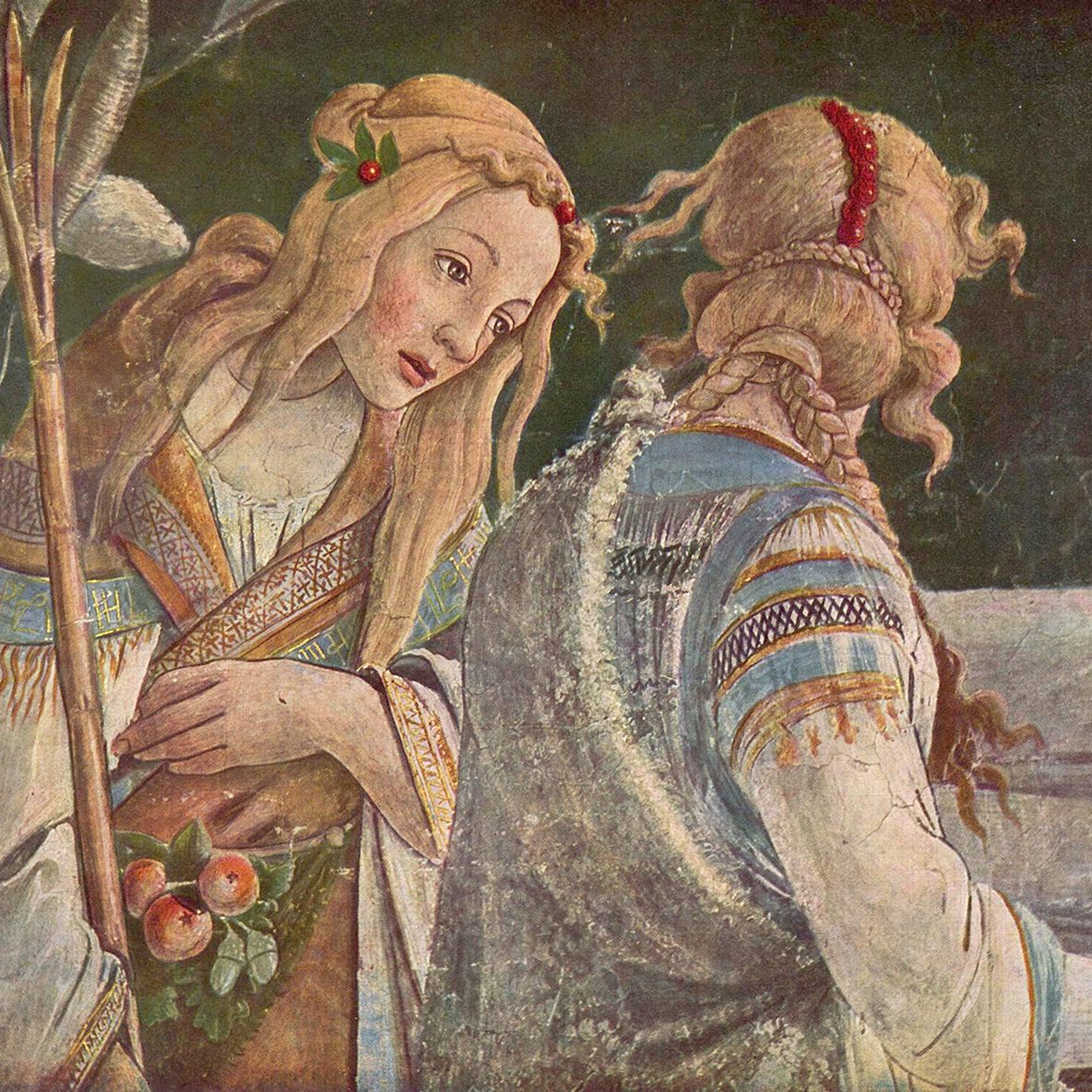
另一件是波提切利的一幅画。
And the other is a Botticelli painting.
他总是用艺术作品中的人物来理解整个世界。
Thinks thinks of the whole world in terms of figures from art.
是的。
Yeah.
他几乎是在自我暗示中陷入对她的痴迷,因为这几乎是他作为艺术史学家工作的某种替代——毕竟他本质上就是这样的身份。
He kind of talks himself into being obsessed with her because, you know, that's almost a kind of like displacement of his work as an art historian because that's sort of what he is.
他一直在写一篇关于维米尔的论文,却始终无法完成。
He's endlessly working on an essay on Vermeer that never seems to get finished.
既然我们之前提到了乔治·艾略特,我可以说,他就像一个亚艺术史学家,正在从事一项永远无法完成的项目。
So given that we had a George Elliot reference earlier, I can say that he's kinda like a sub art historian figure who's working on a project that he's never gonna complete.
我觉得。
I think.
别想
Don't think
他就是那个以研究‘所有神话的钥匙’而闻名的人。
he's Who famously was working on, quote, the key to all mythologies.
引号结束。
End quote.
所以,是的。
So, yes.
他正在研究某种关于维米尔的钥匙。
He's working on some kind of key to Vermeer.
是的。
Yeah.
根据我们的笔记,我想说,他有点像库尔贝式的人物,但他更时髦一些。
And I would say, this is from from our notes, but I would say that he is a bit like a Cusorbian figure, but he's a lot more chic.
没错。
That's true.
对。
Yeah.
对。
Yeah.
是的。
Yes.
他深受所有最时尚人士的追捧。
He's very sought after by all the chicest of them all.
对。
Yeah.
斯万和奥黛特之间有一段激情的恋情,最终他因嫉妒而几近疯狂。
So Swann and Odette have a passionate affair in which he is ultimately driven wild by jealousy.
因此,她的缺席、她的拒绝,以及她在他不在时所过生活的神秘感,加上绘画和音乐,最终也让他如此强烈地爱上她,尽管这种爱并无真实的吸引力为基础——当然,这是一种不同的真实吸引力,我想。
So her absences and her refusals and the kind of the mystery of the life that she leads without him is ultimately also, as well as the painting and the music, what makes him fall for her so incredibly strongly without basis in real attraction, although it's a different kind of real attraction, I guess.
最终,她对他失去了爱,而他则陷入深深的绝望。
And ultimately, she falls out of love with him and he realizes in great despair.
因此,他非常痛苦,因为她同时与许多男女有着婚外情,而她对他却越来越冷淡。
So he's very unhappy how many other affairs she's been having at the same time with both men and women as she begins to treat him more and more coldly.
但这一卷以他逐渐接受现实、激情逐渐冷却告终。
But the volume ends with him coming to terms with this as his own passion cools.
嗯哼。
Mhmm.
第三部分叫做《地名》,地名,名字。
The third section is called, So the name, place names, the name.
在这一部分,我们回到了年轻的叙述者身边。
And in this section, we're back with the young narrator.
似乎自从我们在贡布雷与他分别以来,没过多久。
It doesn't seem that much time has passed since we were in Combray with him.
他非常非常期待去诺曼底的巴尔贝克度假,他长期以来一直幻想那里是纯粹自然的胜地,而斯万则告诉他那里还有一座纯粹艺术的教堂。
And he's really, really, really looking forward to going on vacation to Baalbek in Normandy, and he's had long standing fantasies about it as a place of pure nature, and then after Swann tells him about a church, also of pure art.
但后来他有可能去威尼斯和佛罗伦萨,这个梦想取代了最初的幻想。
But then there's a possibility that he'll visit Venice and Florence instead, and this dream overtakes the first dream.
事实上,他因为对这些可能性太过兴奋和激动,竟然把自己搞病了,无法离开巴黎。
And in fact, he gets so excited and so worked up about the possibilities that he makes himself sick and is unable to leave Paris.
因此,他没有去那些激发幻想与联想的地方。
So instead of going to these places whose names incite fantasies and associations.
而是留在巴黎,遇见了吉尔贝特,她是斯万和奥黛特的女儿。
He stays in Paris and meets Gilbert, who is Swann's daughter and Swann and Odette's daughter.
所以我们得知,斯万和奥黛特在双方激情消退之后,最终还是结婚了。
So we learned that Swann and Odette after all of that, after the cooling of the passion on both sides, nevertheless got married.
这段婚姻在某种程度上将三卷书联系在了一起。
And that marriage ties the three volumes together to some extent.
因此,我们稍后在本集中再回过头来探讨这三卷书是如何相互关联的。
So we'll return to the question of how the three volumes work together later in this episode.
那么,艾玛,你在这次阅读中注意到了什么?
So Emma, what what did you notice in this read of this volume?
我记得这部作品对人物及其行为的观察非常细腻。
So I had remembered it as being really beautifully observed about people and their behavior.
这次重读时,我依然认同这一点。
And I didn't disagree with that again, reading it this time.
我觉得它非常有人情味,因为本质上,这部作品讲述的是人们常常显得非常愚蠢。
I do find it very humane because essentially, this is about people being very silly a lot of the time, you could say.
确实如此。
Indeed.
而且执着、犯错。
And obsessive and making mistakes.
但不知为何,这些行为被温柔地解释和描绘出来,最终让人感到既同情又美丽。
But somehow, those behaviors are so tenderly actually explained and described that they end up being both sympathetic and quite beautiful.
所以,我认为我依然喜欢这部作品的这一方面。
So I I think I I still enjoyed that aspect of it.
但这次,我真正注意到的是对环境、对人物周围非人类细节的细致刻画。
But this time, what I really noticed was the attention to setting to the kind of to the nonhuman details around the characters.
嗯嗯。
Mhmm.
尤其是那些植物和花朵。
Especially the plants and flowers.
我的意思是,其中一个英文译本的封面就是一朵兰花。
I mean, one of the covers of an English translation is an orchid.
你阅读时不可能不注意到这些花,因为兰花是核心所在。
And you can't really read without focusing on flowers because the orchid is at the heart.
它就像他们性关系的象征。
It's like a symbol of their sexual relationship.
对吧?
Right?
是的。
Yes.
但我之前真的没注意到其他那些细节。
But I hadn't really noticed all the rest.
而且很多场景都发生在乡间小路和花园里。
And a lot of it is set on country paths and in gardens.
结尾有一段关于睡莲的精彩描述,沿着河畔的小路,那些睡莲异常鲜艳,几乎像人一样有生命。
And there's this amazing bit at the end about water lilies and how and on one of the paths in in in the river that where they're really, like, vibrant and almost like people themselves.
所以你在贡布雷看到了很多乡村景色。
So you have a lot of countryside scenes in Combray.
然后你有花朵,接着是人物,也就是叙述者。
And then so then you have flowers in and then in, you have the character, the the narrator.
我的意思是,我其实想到香榭丽舍大街,那里并不太注重其中的动植物。
I mean, I was thinking actually on the Champs Elysees, it's not so much about the flora and fauna of it.
但那里有关于草地的描述,我想。
But there's a the the descriptions of grass, I guess.
是的。
Yeah.
但它
But it
在布洛涅森林结束。
ends in the Bois De Boulogne.
所以是的。
So Yeah.
有一些关于树木的精彩描述,我可能会谈到。
There are some great descriptions of trees that I might talk about.
所以这次我特别注意并享受到了这一点。
So that's something that I really noticed and enjoyed this time.
你愿意分享一下这次阅读中让你印象特别深刻的段落吗?
Do you want to share any particular passages that stood out to you on this reading?
鉴于这些关于树木、植物和花朵的大量提及,我认为真正让我越来越注意到这一点的,是一个关于茶叶的极其生动的描述。
In light of all these references to trees and plants and flowers, I think, actually, a kind of originary moment in that made me notice this more and more as we went through was this really intense description of tea leaves.
是的。
Yes.
茶在其中非常重要。
And the tea is really important in in.
如果有人对普鲁斯特有所了解,大概都知道把玛德琳蛋糕蘸进茶里的做法。
Everyone kinda knows about dipping a Madeleine in tea if they know something about Proust.
是的。
Yes.
但真正描述茶是如何被制作的,我认为是弗朗索瓦丝,她最初是那位生病姨妈的女仆,后来成了叙述者家的仆人。
But the actual setup of the tea being made, I think, by Francoise, who's first the sick aunt's servant and then becomes the narrator's family servant.
所以在玛德琳蛋糕喝茶的那个原始场景中,是母亲。
So I think in the original scene of the tea in the Madeleine Yeah.
是母亲。
Is the mother.
对吧?
Right?
所以叙述者在后来的生活中去探望他的母亲。
So the narrator is visiting his mother later in life.
她为他端来这杯茶,正是这杯茶让他无意识地唤起了回忆,并在某种程度上触发了整个写作计划。
She offers him this tea, and that is what makes his memories emerge involuntarily and triggers the whole writing project in some ways.
我认为这种茶就是那种茶。
And I think that tea is this tea.
对。
Yes.
太好了。
Great.
是的。
Yes.
所以他的姨妈正在喝她的草药茶,叙述者帮忙准备。
So his aunt is being brought her teizen, her herbal tea, and the narrator helps to make it.
为沸水冲泡所需的椴花,我的职责是把药剂师的小包里的分量倒在盘子上。
It would be my duty to shake out of the chemist's little package onto a plate the amount of lime blossom required for infusion in boiling water.
茎干干燥后扭曲成奇妙的藤架,淡色的花朵在藤架的间隙中绽放,仿佛画家精心布置,将它们摆成最富有装饰性的姿态。
The drying of the stems had twisted them into a fantastic trellis in whose intervals the pale flowers opened as though a painter had arranged in there, grouping them in the most decorative poses.
叶子失去了原本的样貌,反而呈现出难以想象的怪异形态,仿佛苍蝇透明的翅膀、标签的空白面或玫瑰花瓣被收集起来,碾碎或交织在一起,就像鸟类编织鸟巢的材料一样。
The leaves, which had lost or altered their own appearance, assumed those instead of the most incongruous things imaginable as though the transparent wings of flies or the blank side sides of labels or the petals of roses had been collected and pounded or interwoven as birds weave the material for their nests.
成千上万细小的细节,药剂师那令人喜爱的慷慨之举,这些在人工制剂中本会被剔除的细节,却让我感到欣喜,就像在一本读到熟人名字的书中一样,我确认了这些确实是真正的椴花,就像我从前在加雷大道下车时所见过的那些一样——它们虽已改变,却只是因为它们并非仿制品,而是真正老去的花朵。
A thousand trifling little details, the charming prodigality of the chemist, details which would have been eliminated from an artificial preparation, gave me, like a book in which one is astonished to read the name of a person in who one knows, the pleasure of finding that these were indeed real lime blossoms, like those I had seen when coming from the train in the Avenue De La Gare, altered, but only because they were not imitations, but the very same blossoms which had grown old.
由于每个新形象都只是从更早形态蜕变而来,在这些小小的灰色球体中,我认出了那些尚未成熟就被摘下的绿色花蕾。
And as each new character is merely a metamorphosis from something older, in these little gray balls, I recognized the green buds plucked before their time.
但最令我动容的,是那玫瑰色、月光般柔和的光辉,它照亮了悬挂在纤细枝干间的花朵,宛如一串串金色的小玫瑰;这种光芒,正如旧墙上仍依稀可见的已消失壁画的痕迹,标记出那些曾开花与未曾开花的枝条之间的差异。
But beyond all else, the rosy, moony, tender glow, which lit up the blossoms among the frail forest of stems from which they hung like little golden roses, marking as the radiance upon an old wall still marks the place of a vanished fresco, the difference between those parts of the tree which had which had and those which had not been in bloom.
这些细节让我明白,这些花瓣在绽放之前,曾被药剂师在春日温暖的傍晚封存保存。
These details showed me that these were petals which before their flowering time, the chemist package had embalmed on warm evenings of spring.
我的意思是,这真是一段不可思议的描述。
That I mean, it is it is an incredible description.
那梯子,还有对火车站的唤起。
The ladder, the the evocation of the train station.
是的。
Yeah.
就像认出树叶一样,就像在书中认出人物,能够看到它们在不同时刻的状态——当它们还是花苞时,当它们被晒干时,以及当水重新唤醒它们时。
Like recognizing leaves, like, characters in a book, being able to see them at different stages of time, as in when they were budding, when they were dried, what the what the water is kind of reanimating.
我还发现这描述得如此细致入微。
I also found that this was so so detailed.
你几乎能想象它在慢动作中发生。
You could almost imagine it happening in slow motion.
是的。
Yeah.
这有点像幻觉,你知道,你盯着杯子里,或者叙述者盯着杯子里,看着这些东西活过来,同时又像看到一部关于自然的影片的整个背景,那种被加速播放的自然纪录片,你知道的,从
It's kind of psychedelic where the, you know, you're looking into the cup or the narrator is looking into the cup and seeing these things come alive, but also kind of seeing a whole like backstory of film of the like, of those nature films that's that's sped up, you know, from
是的。
Yeah.
天哪。
Oh gosh.
是的。
Yeah.
你看到草从地里长出来。
Where you see the grass come out of the ground.
是的。
Yeah.
不。
No.
绝对如此。
Absolutely.
我觉得你说得对,这并不是那杯著名的茶,但从某种意义上说,它或许更精准地捕捉了茶杯中可能涌现的瞬间。
And I feel you're right, this is the this is not the famous tea, but in a way it's almost more precise, perhaps, moment of what can come out of the tea cup.
时间可以被拉长,或者以一种看似矛盾的方式,被浓缩在一口茶或一朵干枯的花瓣中。
That time can be stretched out and or, and simultaneously somehow paradoxically contained in one mouthful, or in one dried up blossom.
这真是一个迷人而优美的描述。
It's really a fascinating and very beautiful description.
是的。
Yeah.
是的。
Yeah.
在火车上看到真正的椴树。
And seeing the real lime trees from the train.
对。
Right.
从加赫过来。
Coming from the Gah.
所以,火车的这种休闲体验特别吸引我,因为在那杯更著名的茶中,他把玛德琳蛋糕浸入茶里,从中涌现出关于康布雷的完整感官记忆,他曾提到这是一种机械性的体验。
So the avocation of the train is particularly interesting to me, because in that first more famous cup of tea, into which he dunks his Madeline, and out of which comes all of these really fully formed sensory memories of Combray, he talks about it being a mechanical experience.
他说:‘在漫长而乏味的一天之后,面对令人沮丧的明天,我机械地将一勺泡过蛋糕碎屑的茶送到了唇边。’
He says, and soon mechanically dispirited after a dreary day with the prospect of a depressing morrow, I raised to my lips a spoonful of the tea in which I had soaked a morsel of the cake.
正是这种味道引发了整部小说。
And it is that taste that provokes the entire novel.
因此,感官与机械之间存在着一种奇特的并置,这种并置在你为我们挑选的这段文字中也隐约可见,艾玛。
And so there's this odd this odd juxtaposition between the senses and the machine, and it's very lightly present in the passage that you chose for us too, Emma.
是的。
Yeah.
这太对了。
That's so true.
我还要补充一点关于这段文字,它充分展现了叙述者对细节的关注。
I also would say one more thing about this passage, which is it just gives such a sense of the narrator's attention to detail.
尤其是这一点,但我认为在整个卷册中,都充满了对细微之处的深情关注。
So this especially, but I think arguably across the whole volume, there's such a loving attention to minutiae.
是的。
Yes.
对。
Yeah.
我确实如此。
I yeah.
我完全同意。
I totally agree.
人们情感的细微变化,或者茶杯中树叶的微小细节。
The tiny variations in a person's feelings or the tiny details of the leaves tiny leaves in a cup of tea.
而且感觉叙述者仿佛处于一种奇怪的状态,不停地凝视着周围的事物。
And kind of feel like the narrator is is kind of going around in a weird state of staring at things.
而且他总是恍恍惚惚的,简直像嗑了药一样。
And and it's kind of out of it all the time, but in the but almost like on drugs.
是的。
Yeah.
是的。
Yeah.
没错。
That's right.
是的。
Yeah.
就像是完全被所有事物同时牢牢吸引住了。
It's like just like totally fixated on somehow everything at once.
正如普鲁斯特在《追忆》中所说,我认为这正是你第一次读这本书时所感受到的那种体验——书籍能呈现一种日常生活中无法触及的真相。
It's really the novel is really as Proust says in Compre, and one of the experiences I think you were evoking when you talked about reading it for the first time, that books can present a kind of truth that's not actually accessible in daily life.
因为我们不可能一直如此专注地四处张望,否则我们可能会总是奇怪地困在某个角落。
Because we can't wander around staring at everything this intently, or we would just maybe always be sort of oddly fixated in a corner.
在我们经历这些时刻时,我们不可能像普鲁斯特那样细致地观察人类,同时又像他那样细致地观察茶叶。
We can't both observe humans as finely as Proust does, and observe tea leaves as finely as Proust does, in the moments that we're going through them.
也许在反思时,我们可以做到其中一些。
We can, in reflection perhaps, do some of that.
或者我们可以通过阅读普鲁斯特来做到。
Or we can do it by reading Proust.
加入我们吧,杜。
Join us, Du.
是的。
Yeah.
而且我想总结一下,这是一本奇怪的书。
And I think just to summarize, also, this is a strange book.
非常引人入胜。
Deeply interesting.
这也不是什么高深的评论。
And that was also something that maybe isn't a very highfalutin comment.
但直到这次重读,我才重新记起这一点。
But that is also something I hadn't really remembered until I reread it this time.
这很奇怪。
This is weird.
这个孩子真怪。
This kid is weird.
是的。
Yes.
这次阅读时,这本书中那种迷幻或诡异的特质格外突出。
The kind of psychedelic or uncanny aspects of the book really jumped out to me this time.
是的。
Yeah.
我觉得这其实和我想说的差不多,就是我觉得这本书常常被当作一座需要攀登的高山。
I think that's actually that's that's kind of what I it's similar to what I was going to say, is that I think this book is frequently just treated as a sort of mountain to climb.
我喜欢看那些关于伟大事物的一星差评。
I love looking at one star reviews of, great things.
无论是纪念碑还是书籍,这都是我以前在旧播客上常做的事。
So whether it be a monument or a book, and this is something that I used to do on my former podcast.
所以我这次也为《追忆似水年华》做了同样的事,就想看看会有什么评价。
So I did it for this, for, Swann's Way just to see.
一位名叫史蒂文的人给他的评论起了个标题叫《艰苦的工作》,并说:这是一本难读的书,需要全神贯注才能读完。
And, a man named Steven titled his review, Hard Work, and said, difficult read needs all your concentration to complete.
史蒂文,没错。
Stephen, true.
我知道我并不是来争论的。
You know, I'm not here to argue.
但与此同时,人们可能没意识到的是,这本书如此古怪,又如此深刻地幽默,简直
At the same time, what people don't, I think, think of, is that it's so wacky, and so deeply funny, like so
幽默。
funny.
我
I
重读这本书时笑了很多次。
have done so much laughing rereading it.
我觉得,很多地方我最近重读时已经注意到了。
And I think, there's a lot of it that I think I was already catching when I reread it more recently.
但当我还是大学生时,我并没有意识到叙述者作为一个孩子有多么幽默。
But when I when I read it as a college student, I don't think I caught how deeply funny the narrator as a kid is.
他甚至有一次因为太喜欢山楂灌木而跑出去拥抱它们。
He literally goes out and hugs hawthorn bushes at one point because he loves them so much.
我的意思是,这太强烈了。
I mean, that is intense.
就像我之前提到的,他对旅行的兴奋程度高到让自己生病。
And like I already mentioned, he gets so excited about traveling that he makes himself ill.
所以他就是一个夸张的人物,根本无法应对自己所感知到,或想象自己终将感知到的美。
So he's just this sort of hyperbolic figure who kind of can't cope with how much, beauty he perceives or imagines that he will get to one day perceive around him.
而且它有一种近乎偏执的特质,这种特质令人深感幽默。
And it's just has this sort of obsessive nature that is just profoundly funny.
正如艾玛所说,它以一种充满人性的方式被描绘出来,我认为其中充满了同情与爱,但同时也确实如此。
Like Emma said, it is described in a humane way with a lot of, I think, sympathy and love, but it's also Yeah.
你本该会忍不住轻笑,稍微取笑一下这位叙述者。
Meant, you're you're meant to sort of have a chuckle, think, slightly at the narrator's expense.
所以我认为,我最初把他当作一位正在成长的艺术家来认真看待,却没有意识到作为一名成长中的艺术家本身有多么可笑。
So I think the the I I think I took him sort of seriously as a budding artist without seeing what can be funny about being a budding artist initially.
而这次,我感觉我仿佛在观看有史以来最棒的一场喜剧吐槽会,尤其是——虽然不完全是。
And I also just this time, I felt like I was at the best comedy roast maybe of all time, particularly, although not exclusively.
哦,等等。
Oh, wait.
我本想说,尤其是在《论爱情》中,但现在我有些犹豫了,因为他的祖父也有一些非常有趣的行为,还有一些人物的描写方式也特别搞笑。
I was gonna say particularly in On Amourous One, but now I'm double I'm having second thoughts, because there are also some deeply funny things that his grandfather does, and some ways that, like, some of the figures in are described that are just super funny.
但确实如此。
But Yeah.
展开剩余字幕(还有 456 条)
我本来想是的。
I thought I would Yeah.
我超爱周六这个事。
I love the Saturday thing.
是的,
The Yes,
他们周六提前一小时吃午饭,然后表现得好像做了什么特别激进的事一样。
behave ridiculously because they have lunch an hour early on a Saturday, and they all act like they've done this incredibly, like, radical thing.
但要是没人知道他们周六提前一小时吃午饭,那他们简直就是野蛮人。
But also, if no one else knows that they have lunch an hour earlier on a Saturday, then they're just complete barbarians.
就是
It's just
没错。
It's true.
就是这么回事,而且整个周六这事也特别有小镇的味道。
It's just this and it's also such a small town thing, that whole Saturday thing.
这也太有趣了,而且真的凸显了这个小镇在某种程度上的封闭性。
It's also it's so it's so funny, and it also really evokes how hermetic in a way this town is.
晚一个小时。
An hour later.
他们还没吃午饭呢
They haven't lunch
也更早。
either Earlier.
他们十一点就吃午饭,我每次吃午餐都觉得这已经很早了。
An hour They have it at eleven, which I love eating every lunch, and that even strikes me as early.
无论如何,艾玛带来了一段非常优美的文字,而我想实际上为我们引述一段特别有趣的内容。
At any rate, Emma brought this really beautiful passage, and I thought I would bring actually just a really funny passage to our attention.
这是对科塔尔医生的描述,他是围绕着一位名叫瓦德伦夫人的小圈子成员,这个圈子正是斯万和奥黛特相识相恋的地方。
This is a description of the doctor Cotard, who is a member of the little group that is basically a salon around this woman called Madame Vaderun, and that is the salon where Swann and Odette court.
斯万最终被逐出了这个圈子,但我们在《斯万之恋》开篇时,正是通过描述瓦德伦夫人及其聚集的这群人来展开的。
Swann is ultimately exiled from the salon, but we open Swann in love with a description of the little clan around Madame Vaderun and the people that she has gathered.
他们都很有趣。
All of them are funny.
整个普坦·莫耶奥简直太搞笑了。
The whole the the the Poutine Moyeau is just so funny.
但我觉得最有趣的可能是科塔尔医生,尽管他面临不少强劲对手,他确实是一位医生。
But I think maybe the funniest one possibly, he's got stiff competition, but is Le Doctor Cotin, who is indeed a physician.
他就像一种典型的开放型中产阶级,显然受过良好教育,因为他是一名医生。
He's so he's sort of like again, an open bourgeois type, and clearly is highly educated because he's a physician.
但他很难理解别人话里的意思,总是过于字面化地理解事物。
But he has a lot of trouble knowing what people mean, and he tends to take things super literally.
下面这段文字是我们第一次了解到科塔尔的这种倾向。
So here is a passage where we first are introduced to these tendencies of Cotard.
科塔尔医生总是不太确定应该如何回应任何言论的语气,也不清楚说话者是在开玩笑还是认真的。
Doctor Cotard was never quite certain of the tone in which he ought to reply to any observation, or whether the speaker was jesting or in earnest.
因此,为了谨慎起见,他会在所有面部表情中加上一种假设性的表达。
And so, by way of precaution, he would embellish all his facial expressions with the offer of a conditional.
一种临时的微笑,带着期待的微妙,如果对方的话是玩笑,这微笑就能为他开脱愚钝的指责。
A provisional smile whose expectant subtlety would exonerate him from the charge of being a simpleton, if the remark addressed to him should turn out to have been facetious.
但他也必须准备应对另一种可能,因此不敢让微笑在脸上明确显现,你只能看到一种持续闪烁的犹豫,其中隐含着他从未敢问出的问题。
But as he must also be prepared to face the alternative, he dared not allow the smile to assert itself positively on his features, and you would see there a perpetually flickering uncertainty, in which could be deciphered the question that he never dared to ask.
你真是认真的吗?
Do you really mean that?
他在街上,甚至在生活中的行为方式,与他在客厅里一样,都缺乏自信。
He was no more confident of the manner in which he ought to conduct himself in the street, or indeed in life generally, than he was in a drawing room.
他可能会向路人、马车,以及任何出现的事物报以一种自以为是的微笑,这种微笑能为他之后的行为开脱,因为一旦行为不合时宜,这恰恰证明了他早已意识到这一点。
And he might be seen greeting passers by, carriages, and anything that occurred with a knowing smile, which absolved his subsequent behavior of all impropriety, since it proved, if it should turn out unsuited to the occasion, that he was well aware of that.
而且,如果他露出了微笑,那玩笑只属于他自己的秘密。
And that if he had assumed a smile, the jest was a secret of his own.
我只是想谈谈他那种弄清陈词滥调含义的需求。
I just want to talk about his, like, need to figure out what cliches mean.
根据他母亲在他初到首都时给出的建议,他绝不会放过任何一个对他来说陌生的修辞或专有名词,必定努力弄清其全部含义。
So following the advice given him by a wise mother on his first coming up to the capital from his provincial home, He would never let pass either a figure of speech or a proper name that was new to him without an effort to secure the fullest information upon it.
关于比喻说法,他对知识的渴求永无止境,因为他常常以为这些说法比实际含义更为明确。
As regards figures of speech, he was insatiable in his thirst for knowledge for, often imagining them to have a more definite meaning that was actually the case.
他想知道那些他最常听到的表达究竟确切意味着什么。
He would want to know what exactly was meant by those which he most frequently heard used.
魔鬼般漂亮、贵族血统、尽情享乐、清算之日、时尚之镜,诸如此类。
Devilish pretty, blue blood, living it up, the day of reckoning, the glass of fashion, and so forth.
他想知道在哪些具体情境下自己可以在对话中使用它们。
In what particular circumstances he himself might make use of them in conversation.
如果找不到合适的表达,他就用死记硬背下来的双关语和其他文字游戏来装饰话语。
Failing these, he would adorn it with puns and other plays on words which he had learned by rote.
后来,有一次对话中提到了某个词,他却说:‘什么?’
And later on, there's a conversation where comes up, or the the word comes up and he's like, what?
你是说布兰什·德·卡西,那位中世纪女王?
You mean blanche de cacci who is a medieval queen?
他就这样,这是个铺垫。
He just like, he'll he'll this is the setup.
他倾向于抓住一个词不放,打断对话,并以一种看似既完全缺乏自我意识、又极度在意自己乡土气息的方式,把对话引向死胡同。
For his tendency to hook onto a single word, interrupt the conversation, and send it down a total dead end by way with what seems to be both an utter lack of self consciousness and an extreme self consciousness of his provincialism.
是的。
Yes.
所以他表现得极其做作,却总是失败。
So he's ultra performative, but failing.
对。
Right.
他真的非常努力地想要融入,但他的努力却让他更加显眼。
He's really, really trying to blend in, and his attempts just make him stand out all the more.
可怜的科塔尔。
Poor Cotard.
你不得不同情他,我的意思是,他被接纳进了这个圈子,并受到维尔杜兰夫人的极度推崇。
You have to pity the I mean, he's been adopted into the saddle and is treated with the utmost approbation by Madame Verduran.
他的言论被当作妙语隽言来对待,但显然,可悲的是,这些不过是滑稽可笑的表演。
And his remarks are treated as though they are witticisms, but they're obviously, alas, buffoonery.
哦,是的。
Oh, yeah.
这太好笑了。
That's so funny.
我超爱这段文字。
I love this passage so much.
但我也得说,有点让人感同身受。
But also, I will say there is something slightly relatable.
谁没在人生某个时刻被排挤过呢?
Like, who hasn't been cut out at some point in life?
不确定自己是该反对还是赞同,或者是否完全理解那种奇怪的、假装幽默的行为,
Not being totally sure if they're supposed to disapprove or approve, or that they totally get the jokes of doing that that weird, like,
呃,是的。
ugh, yeah.
可塑性的微笑。
Malleable smile.
我觉得这跟我出国交流那一年的经历有点像
I feel like that's a little bit like my experience when I was on my year abroad
是的。
of Yes.
这是英国现代语言专业的一部分。
Which is a part of a modern languages degree in The UK.
是的。
Yeah.
你必须去国外生活,以此来提升你的语言能力。
Where you have to go and, you know, improve your language by, you know, living in the country.
对。
Yes.
而且,幽默真的很难理解。
And, you know, humor is really hard to get.
完全没错。
Totally.
哦,我的语言学习者。
Oh my language learner.
所以,是的。
So, yes.
所以加塔奥在说他的母语,但他还没完全掌握,这还挺搞笑的。
So Gatao is speaking his native language, and it's quite funny that he just hasn't quite mastered it.
而且他表现得好像那不是他的母语一样。
And he's he's behaving like like it's not his native language.
对吧?
Right?
是的。
Yes.
确实如此。
That's so true.
从某种意义上说,他是对的。
It's a well, in a way in a way, he's right.
这本书中有一个非常强烈的认同感。
There's a very strong Yeah.
这本书中有一种身份认同。
Idiolact in this book.
是的。
Yeah.
确实如此。
So true.
尤其是对贵族,但也对上层资产阶级。
Especially to aristocrats, but also to the haute bourgeoisie.
对。
Yeah.
比如当我们遇到盖蒙公爵夫人时,我认为她在这里是洛姆公主,但出于一些我并不理解、实际上也不关心的贵族原因,她后来成了盖蒙公爵夫人。
So like when we meet the Duchess de Gaumont, who I think is the Princess de Lomme when we meet her here, but she will become the Duchess de Gaumont in for aristocratic reasons that I don't understand and actually don't care to understand.
但她有很多口头禅,确实是这样。
But she has a lot of sort of verbal tics that are Yeah.
为了显得时髦,但实际上和科塔尔的问题一样荒谬。
To be chic, but are in fact just as silly as Cotard's problems.
我认为,语言以及人们使用语言的方式在这里受到了大量审视。
I think just language and the way people use it comes in for a lot of scrutiny here.
普鲁斯特是一位极其敏锐的观察者,他发现了其中的幽默和确实如此。
And Proust is such a fine observer that he finds the humor and Yeah.
人们在使用语言时如何出现偏差。
How people go awry with their language use.
是的。
Yeah.
作为一个非法语母语者,目前正在法国生活,这真是个令人恐惧的想法。
Terrifying as a as a non native speaker of French who is currently, you know, spending time in France.
被一个普鲁斯特式的观察者评价,这个想法令人不寒而栗。
It's a terrifying thought to be a think of being evaluated by a Proustian observer.
有时,科塔罗纯粹是在破坏故事情节。
And there are sometimes when Cotaro is just he frustrates what narrative there is.
因为我想说,也许我本该早点提到,这部作品确实有更多的情节和更强的推动力。
Because I would say also, maybe I should have said this earlier, that does have much more of a plot, and much more of a drive to it.
确实如此。
It does.
而科塔罗只是存在于其中。
And Cotaro is just in there.
笨手笨脚的。
Bumbling.
误导性的。
Misdirecting.
是的。
Yes.
对。
Yeah.
占着没人希望他占的位置。
Taking up space that nobody really wants him to have.
是的。
Yeah.
对。
Yeah.
但与此同时,维弗夫人却依然把头埋在手里,假装笑得喘不过气来。
But meanwhile, Madame Verever is nevertheless burying her head in her hands and pretending to have paroxysms of laughter.
她的丈夫有没有想出办法,用咳嗽来掩饰笑声?
And does her husband come up with a way to cough to Yeah.
通过咳嗽来装作笑得太厉害而忍不住咳起来?
To to make it seem like he's laughed so hard that he's having a coughing fit?
所以他们俩一直都在模仿笑声,好让别人觉得,他们所归属的这个小团体是最有趣、最机智的群体。
So they're both just sort of imitating laughter at all times to make it seem like the people they're they're they're faithful of the little clan are the funniest and wittiest possible clan that they have developed for themselves.
而且他们还必须保持完全的默契,对吧?
And they also all have they have to have perfect harmony, don't they?
所以他们必须在谁很酷、什么有趣、什么好笑这些问题上完全达成一致。
So they have to completely agree with each other about who is cool and what's interesting and what's funny.
对。
Right.
这也是为什么斯万最终被逐出圈子的原因。
And that's also why Swann gets excommunicated in the end.
是的。
Yes.
因为他错误地——而且并非出于恶意——声称自己去过其他人家,而实际上他根本没去过。
Because he's he's he's someone erroneously and not even maliciously says that he frequents other houses even though he hasn't been.
这对维尔贡夫人来说太过分了,她必须将他驱逐,因为她不容异议。
And that's too much for Madame Vergeron, and she must exile him because it's her way or the highway.
《普鲁斯特好奇》由《公共书籍》合作推出,这是一家在线思想、艺术与学术杂志。
Proust Curious is brought to you in partnership with Public Books, an online magazine of ideas, arts and scholarship.
您可以在 publicbooks.org 找到我们。
You can find us at publicbooks.org.
网址是 publicbooks.org。
That's publicbooks.org.
要为Public Books捐款,请访问publicbooks.org/donate。
To donate to public books, visit publicbooks.org/donate.
所以,艾玛,你注意到了这次阅读中植物生命的细微之处,而我则注意到普鲁斯特是讽刺大师。
So Emma, you noticed the finer details of plant life, on this read and I noticed how Proust is the master of the roast.
但这本书更宏观的奇特之处在于,它像我们之前提到的那样,分为三个部分。
But the thing about this book that is sort of odd more globally, and it's not just psychedelic plants or, deeply funny observations about people, is that it does have these three parts as we mentioned before.
而这三部分之间的关系并不明显。
And their relationship is not super obvious.
有时某些部分会单独出版。
Sometimes certain parts are published by themselves.
你可以分别购买,也可以分别购买。
So you can buy separately, and you can buy separately.
我认为你不能单独购买,因为它非常短且奇怪。
I don't think you can buy because it is, very short and odd.
就连普鲁斯特自己也常把它描述为仿佛悬挂在本卷末尾的一个附属部分。
It's often described even by Proust as sort of like a something that's dangling onto the end of this volume.
它是
It's
像一个尾声。
like epilogue.
它有点像尾声,之所以这样,其实是出于出版的实际考虑。
It's a bit like an epilogue, and it's it's it is that way because of actually just the practical concerns of publishing.
他原本打算把下一卷的前三分之二也归入第一卷,但那样印刷成本会太高。
He meant for the first two thirds of the next volume to also be part of volume one, but it would have been too expensive to print.
所以它实际上是为下一卷做铺垫,和本卷的关联并不大。
And so it's really a lead in to the next volume, and doesn't hugely go with this volume.
但如今,由于出版传统,它就这么被留在这里了。
But now, it's sort of stuck here because of, you know, the publishing tradition at this point.
但它们经常被摘录出来。
But they're frequently excerpted.
人们觉得也许没必要读完整部作品,我想这大概就是读普鲁斯特的常态吧。
They're seen as maybe we don't need to read the whole thing, which is I guess just sort of the deal with Proust in general.
我们或许不需要读完整部作品,这可以说是普遍现象。
We maybe don't need to read the whole thing is kind of it's kind of, I would say, the general Yes.
我们需要读。
We do.
对于普鲁斯特而言。
To Proust.
是的。
Yes.
我们需要读。
We do.
A。
A.
但B呢,我们该如何看待这种杂糅在一起的部分?
But b, what can we make of this kind of hodgepodge of parts?
我认为,你可以单独阅读这些片段,仅从阅读《驳圣伯夫》或《在少女们身旁》中就能获得极大的乐趣。
Well, I think that you can read them separately and get great pleasure just from reading compre or just from reading an unamored du sunde.
你知道吗,如果任何听众想这么做,完全没问题,是的。
You know, if any listeners want to do that, no shame Yeah.
在
In
这样做没有任何可羞愧的。
doing This is a shame free zone.
是的。
Yeah.
然而,把它们全部一起读,像我们这样紧密地连续阅读,嗯。
However, reading them all together and reading them as we have done quite close together Mhmm.
相对快速地。
Relatively quickly.
是的。
Yeah.
这样做的有趣之处在于,你实际上能注意到所有微妙的交织之处。
What's fun about doing that is you can actually notice all the subtle interweaving.
所以有一部分是关于叙述者祖父与斯万之间关系的。
So there's a section with the about the relationship between the narrator's grandfather and Swann in.
对吧?
Right?
这一点在第一部分中有所提及。
And that is referenced in the first part.
嗯。
Mhmm.
我认为这样尝试去发现一条贯穿始终的线索,某种程度上非常引人入胜。
And I think that is quite compelling in a way to try and like see see a through line.
对。
Right.
那么斯万是谁呢?
And then what is Swann?
这一部分常被视为整本书的缩影,或者斯万是叙述者的一个成年化身。
That section is often taken as sort of a a microcosm of the book, or that Swann is sort of an alter ego for the narrator, an adult alter ego of the narrator.
而且不是在情节意义上作为一个缩影,至少我是这么认为的。
And not a microcosm in terms of plot, at least I don't think so.
不过,我需要重读一遍来确认,所以请继续关注,我们会弄清楚的。
Although, I will need to reread to verify, so stay with us and we'll find out.
但至少在主题关切上,它是一个缩影,比如痴迷、渴望,以及你对某事物构建的幻想与现实之间的差异。
But just that a microcosm in terms of thematic concerns, think, with obsession, longing, the the difference between the fantasy you construct of something, and the reality of it.
但这仍然无法解释它为何被安置在这些纪念品之中。
But that still doesn't explain its placement sort of among these souvenir these souvenirs.
天哪。
Oh my gosh.
这些青春的回忆。
These memories of youth.
不用我最喜欢的那个词,但它实际上是插入到故事中的一段,亲爱的听众们。
Not to use one of my favorite words, but it's really an interpolation into the story of Dear listeners
两者都即将出现。
Both coming.
亲爱的听众们,我写过一本关于插叙的书。
Dear listeners, I wrote a book on interpolation.
插叙是指将外来内容插入到已有的文本中。
An interpolation is the insertion of foreign material into a preexisting text.
而这实际上正是普鲁斯特写作过程中的情况。
And this actually was that, in terms of Proust's writing process.
所以我不只是说它感觉像这样,而是他确实写过一版没有安娜·韦弗的初稿,后来又回头补上了她,这正是插叙的定义。
So I'm not just saying that it feels like that, but he wrote a draft of the book that did not include Anna Weaver, later on came back and belatedly added it in, which is indeed exactly what an interpolation is.
所以它还带来了一种时间的深度。
And so another thing that it really does is it gives it gives a depth of time.
对吧?
Right?
就像你提到的祖父关系一样,它让这些内容有了更久远的根基。
Like it grounds a lot of like you were saying about the grandfather's relationship.
它把故事的时间线拉得更久远,甚至超越了叙述者可能的记忆范围。
It grounds things further back in time, and even beyond the narrator's possible memories.
因此,这暗示着我们将几乎在整个书中都从叙述者的视角来阅读。
So there's sort of a suggestion that we're going to be reading from the narrator's point of view for, by far, the book of the book.
正如我们所讨论的,他极其敏锐。
As we've discussed, he's sort of insanely perceptive.
有充分的理由将他视为一个可靠的叙述者。
There's every reason to treat him as a a faithful narrator.
然而,他的感知能力是有局限的,而这些局限就在于时间。
And yet, there are limits to that perception, and those limits are time.
而那些尚未经历的时间,在某种程度上,或许只能通过讲故事来重新找回?
And the and the and the time that has not been lived is in some way, perhaps, only recoverable through storytelling?
是的。
Yeah.
我刚刚也在想,当叙述者的声音出现在安娜·德·斯万的部分时,有一个时刻。
I was also just thinking that there is this moment when the narrator's voice appears in Anna More De Swann.
他谈到斯万时说:‘我开始对他的性格产生兴趣,因为他的性格在完全不同的方面与我自身有着相似之处。’
And he says about Swann, I began to take an interest in his character because of the similarities which in wholly different respect, it offers it offered to my own.
嗯嗯。
Mhmm.
但这也几乎是一种类型学上的关系。
But it's also it's it's almost like a typological relationship.
对吧?
Right?
是的。
Yeah.
就像斯万是原型,而叙述者是反原型。
It's like it's like Swann is the type and the narrator is the anti type.
所以斯万是第一个预示并以某种方式已经展现了某些行为、特质和事件的实例。
So Swann is the the first instance that foreshadows and in some ways already enacts certain behaviors and qualities and events.
然后叙述者来实现前者的潜能,更彻底地完成那些事情。
And then the narrator comes to fulfill the promise of the first one, and to to do those things, but more fully.
众所周知,这就像施洗者约翰和耶稣,对于不熟悉释经学术语的人而言。
Mean, famously, this is John the Baptist and Jesus, for those who aren't hip with exegetical lingo.
这就是‘类型学’这个词的由来。
That's where that's where the word typology comes from.
但它似乎也具有一种类型学的时间逻辑。
But it it does seem to have a sort of typological temporal logic also at work.
是的。
Yeah.
而且,叙述者对斯万也很沮丧,不是吗?
And so, and the narrator gets frustrated with Swann as well, doesn't he?
当他在贡布雷遇到斯万时,不明白他为何如此虚伪。
When he meets him in Compre, and doesn't understand why he's so insincere.
是的。
Yes.
没错。
Right.
并想知道究竟要怎样才能让他变得真诚。
And wonders what exactly it would take to make him be sincere.
然后,你知道的,有一种真诚的模式。
And then, you know, there's a paradigm of sincerity.
是的。
Yes.
对。
Right.
在某些方面。
Some ways.
所以我认为,把所有这些内容一起阅读,会带来很多满足感。
So I think that there are a lot of satisfactions to be had from from reading all of all of this together.
是的。
Yeah.
而且你觉得,你有没有感受到——虽然你已经说过,但确实能感受到那个世界的深度,嗯。
And you also get a sense do you think, I mean, repeating what you've already said, but it's a sense of the depth of that world Mhmm.
以及所有这些行为方式。
And of all these kinds of behaviors.
嗯。
Mhmm.
还有这些相互交织的社会群体,比如巴黎的父母和孩子之间的关系。
And all these interlocking social groups like the and the Yeah.
巴黎的父母和孩子。
People in and the the parents and children in Paris.
对。
Right.
观察他们彼此如何互动和相处。
Just seeing how they all kind of behave and treat one another.
还有所有这些细节,那些他们相处融洽或产生矛盾的细微原因。
And all the min again, with the minutiae, all the minute reasons why they do and don't get along.
是的。
Yeah.
总之,对于这一部分的讨论,我认为我们也可以这么说,它关乎人物性格。
In conclusion, for this part of the discussion, I think we could say also that it's about it is about character.
但这是普鲁斯特所创造的这个世界,我们通过这些核心人物从多个角度去观察。
But it's about this world that Proust is creating that we're seeing from so many different angles through these core figures.
是的。
Yeah.
我认为这也是阅读这本书的一大魅力,对吧?
And I think that's one of the great appeals of reading the book, right?
你真的会感觉自己置身于一个世界之中。
You really do feel like you're in a world.
你感觉自己仿佛在其中遨游,这个世界如此完整而富有想象力。
You feel like you're swimming in a It's it's just so fully imagined.
是的。
Yeah.
这正是阅读普鲁斯特所带来的真正乐趣之一。
That's one of the just the really great pleasures of reading Proust.
所以如果你正在听,并且还在犹豫要不要试试,那就去读一读吧。
So if you're listening and you're like, I don't know, do give it a shot.
让我们来宣布本卷的赢家和输家。
Let's declare the winners and losers of this volume.
这将成为一个常设环节。
This is going to be a recurring feature.
我们会为每一卷选出一个赢家和一个输家,并简要说明理由。
We will choose a winner and choose a loser for each volume and justify ourselves briefly.
艾玛,你的赢家是谁?
Emma, who is your winner?
对。
Right.
所以我的赢家是这样一个人——我今天授予他这个赢家称号的人,其实并没有在书中出现很久。
So my winner is somebody who my winner that I'm awarding today, the badge of winning this one, is somebody who doesn't who doesn't appear in it very long.
而且,叙述者对她的描述充满了矛盾,几乎把她描绘成一个看似邪恶但又不完全是的人。
And, actually, the narrator describes her in this incredibly ambivalent way, almost as a kind of person who seems to be truly evil, but not quite.
我觉得我的赢家是女儿。
I'd say my winner is daughter.
天哪。
Oh my god.
我的天。
My god.
求你了,
Please,
不,请详细说说,但容我插一句,抱歉,我得打断一下。
no, please please elaborate, but allow me to say, sorry, I have to go out of turn.
容我说一下,我的输家是温迪。
Allow me to say that my loser was Venti.
哦,这好像和你即将说的内容有关。
Oh, think it's related to what you're about to say.
我们选了同一个输家?
We have the same loser?
好的。
Okay.
那么请告诉我们关于文蒂的女儿作为赢家的事。
So tell tell us about Venti's daughter as the winner, please.
另外,文蒂是谁?
Also, who is Venti?
对于那些还不太了解文蒂的听众来说,文蒂是谁?
For our listeners that don't have this on the tip of their tongue, who is Venti?
文蒂是当地的一位音乐老师,同时也是一位作曲家,是的。
So Venti is the local music music teacher, but he's also a composer who Yes.
叙述者在康普雷遇到了他,但在他悲惨人生的尽头,他在《康布雷》的叙述过程中因绝望而去世。
The narrator meets in Compre, but at the end of his sad little life so he dies during the narrative of Combre due to despair at the behavior.
部分原因是,他的绝望源于女儿的行为——她公开与一名女性交往,引发了巨大丑闻。
Well, partly, he's it's attributed to despair at the behavior of his daughter who has created a great scandal through having a relationship with a woman openly.
他也是《奥黛特》主题曲奏鸣曲的作曲家,是的。
He is also the composer of the sonata that was the theme song for Odette Yes.
斯万。
Swann.
但斯万始终不知道,他所认识的那个人其实就是这首奏鸣曲的作曲家。
But without Swann ever knowing that the man that he in fact knew was indeed the composer of the sonata.
是的。
Yes.
所以我们接下来可以谈谈为什么文蒂是失败者。
So we might come on to that as to why Vante is the loser.
不过,是的。
But Yes.
我选择他的女儿作为胜者,因为首先,当她初次登场时,被描绘成一个极其坚强有力的人。
I have picked his daughter as the winner because firstly, the when she's first introduced, it's as this incredibly robust and strong person.
嗯。
Mhmm.
而有趣的是,文蒂如此关心她的健康和舒适,但实际上,叙述者曾提到类似这样的话:
And part of the joke is that Vantain is so so solicitous of her her health and her her comfort, but actually, she's the narrator says something like, well,
她她
she's She
她不需要这些。
doesn't need any of that.
她无论什么天气都过得很好。
She's fine in all weathers.
然后她有了这段关系。
And then she has this relationship.
她并不隐瞒。
She does not hide it.
而且在她父亲去世后,她某种程度上——哦,我可能过度解读了。
And she also once her father has died, she is kind of I mean, I'm overreading here.
也许她在后面的卷册中又出现了,只是我忘了。
Maybe she comes back in later volumes, and I've just forgotten.
但她知道,自己的命运由自己掌控。
But she knows she's mistress of her own fate.
她和自己深爱并强烈渴望的女性生活在一起,因为叙述者曾偷窥过她们。
She's living with this woman that she loves and clearly desires very much because the narrator spies on them.
是的。
Yes.
有一个极其精彩的偷窥场景。
There's this incredible scene of voyeurism.
是的。
Yes.
对。
Yeah.
我读过这段,或者我认为可以这样解读:她是在逃离这个极其压抑且无处不在的监控世界中的规范。
And I'd read that, or I think it's possible to read that as her kind of escaping the norms of this incredibly claustrophobic and panoptically surveillance world.
然而,也许你知道,叙述者是在投射这种想法,觉得她对自己的恶劣丑闻行为感到内疚,但即便如此,我认为你仍可以说她是个赢家,因为她过着自己想要的生活,而且她摆脱了父亲的束缚,尽管这显然令人遗憾。
And yet maybe she you know, the narrator's kinda projecting that maybe she feels bad about her terrible scandalous behavior, but she's still you know, I think that you could say that she is a winner because she's living the life that she wants to live, and she's free of having her dad even though that's obviously a shame.
只是在她周围大胆地游荡。
Just daring just daring around her.
对。
Yeah.
试图尽力让她感到羞耻。
Attempting doing his best to shame her.
我考虑的另一个赢家不是人类赢家,这是他的说法。
The The other winner winner that I considered was not was a non human winner, which was his phrase.
是的。
Yeah.
是的。
Yeah.
我想确实如此,你知道,它似乎总能穿透周围发生的一切。
I guess it does, you know, it does seem to always pierce through whatever else is going on around it.
但我必须说,我认为‘短语’最终不能算作赢家,因为它似乎并没有为范迪带来任何改变。
But I I have to I have to say that I don't think the phrase can be a winner ultimately, because it doesn't seem to have done anything for Van Dij.
我觉得真正的赢家是
And I feel like a real winner
哦,斯旺。
Oh, Swann.
是的。
Yeah.
或者斯旺。
Or Swann.
是的。
Yeah.
它实际上似乎有点像一个预兆?
It actually seems to be sort of like a harbinger harbinger?
我不说这个词。
I don't say that word.
同意。
Agree.
不管怎样,某种意义上的厄运,或者
Anyway, of doom in some way, or
的 是的。
of Yeah.
未实现的梦想更准确一些。
Unrealized dreams is more Yeah.
更准确。
Is more accurate.
对于作曲家和斯万来说,这似乎都与幻想而非现实相关。
It seems to be associated with fantasy and not reality for both the composer and Swann.
是的。
Yeah.
同意。
Agreed.
所以这就是为什么我选择了他的女儿。
So that's why I went for his daughter instead.
你看,我笔记里写过,只有一个赢家。
See, I wrote in my notes, there's only one winner.
对吧?
Right?
而且她是奥黛特。
And it's Odette.
所以我的意思是,这很明显,但我觉得同时,我几乎得承认,你让我信服了凡·蒂的女儿这个观点。
So so I mean, it's super obvious, but I feel like at the same time, I feel like almost you could make an argument for you've convinced me on Van Tie's Daughter, I have to confess.
但你也可以为这本书中的几乎任何人是失败者提出论点。
But you could make an argument for almost anyone in this book being the loser.
是的。
Yeah.
我也有同样的感觉。
I felt the same thing.
但让奥黛特成为失败者很难自圆其说。
But having Odette be the loser would be hard to sustain.
因为实际上,她无论从哪个角度看都大获全胜。
Because it seems like actually she just really, really comes out ahead, like in any by any measure.
到书的结尾,她依然极其优雅。
She's still incredibly chic by the end of the book.
叙述者遗憾的是,成年后的叙述者再也无法看到她戴着那顶时尚的小帽子出现在布松哈的飞行中。
The narrator regrets the adult narrator regrets no longer being able to see her with her chic little hats in the Flight of Busanha.
她嫁给了一个非常富有的男人。
She's married to a very wealthy man.
她有一个似乎茁壮成长的女儿。
She has a daughter who seems to be thriving.
她显然已经取得了巨大的成功。
She's just seemingly, like, has come out really on top.
事实上,这里有一个我刚刚想读出来的精彩括号注释。
And in fact, there's this amazing parentheses that I just, want to read.
我觉得这个括号让我想起了弗吉尼亚·伍尔夫的小说《到灯塔去》,因为所有重要的事情都发生在括号里。
I I think this is very this parenthesis really reminded me of To the Lighthouse, the Virginia Woolf novel, and how everything important happens in parenthesis.
这出现在《在斯万家那边》的结尾部分,讲的是奥黛特永远不会真正放他走,因为她需要他的钱。
It's towards the end of Anamode de Swann, and it's talking about how Odette will never really let him drop because she needs his money.
斯万有时能让她见他,主要是因为她知道她需要他的钱。
Swann could sometimes get her to see him basically because she knows that she needs his money.
综上所述,他所有的优势、社会地位以及财富,使她屡屡需要他的帮助,因而不敢面对彻底决裂的前景。
And recapitulating all his advantages, his social position, his wealth from which she stood too often in need of assistance not to shrink from the prospect of a definite rupture.
(据说,她甚至另有打算,想让他娶她。)
Parentheses, having even so people said, an ulterior plan of getting him to marry her, end parentheses.
他的友谊,诚然,从未等。
His friendship with which it was true, never etcetera.
其实,这并不重要,更重要的内容。
I it actually doesn't matter, the greater contents.
仅仅因为这个婚姻情节被置于括号之中,你被引导去忽略它,因为它只是一个插叙。
Just the fact that this marriage plot is sort of put in a parenthesis, and you're encouraged to overlook it because it's a parenthetical.
而到了书的结尾,这个情节竟然成真了,我记得自己18岁时对此感到震惊不已。
And then it ends up coming true by the end of the book, which I recall being flabbergasted by at age 18.
我当时想:什么?
I was like, what?
他怎么会从爱中跌落?怎么可能娶了这个糟糕的女人?
He fell out of How love with could it be that he married this terrible woman?
但确实如此。
And yet yeah.
所以在我看来,她才是赢家。
So she seems to me to be the winner.
而且,确实如此。
And and Yeah.
另一个可能的赢家候选人是吉尔伯特,他只是在重演她母亲对年轻叙述者的迷恋,而自己甚至未必意识到这一点。
Another candidate, I guess, for winner would be Gilbert who is just reenacting her mother's fascination on young narrator without necessarily even knowing that she's doing that.
是的。
Yeah.
这些女性才是赢家。
These women are the winners.
比如疯狂的奥黛特和吉莱特,以不同的方式。
Like mad mad Odette, and Gillette in in different ways.
是的。
Yes.
我对奥黛特完全同意。
And I completely agree about Odette.
我也认为,在安娜·莫多·斯万的叙述中,她一开始不得不大量迎合斯万,假装和隐藏自己。
I also think that the way that at first, she in the narrative of Anna Maudeau Swann, how she has to pander to Swann quite a lot and pretend and conceal.
但最终,她能够对他更加坦诚,因为他迫使她展现出真实的一面。
And in the end, she ends up being able to be much more honest with him because he kind of forces that out of her.
我认为这对她来说也是一种胜利。
I think that's kind of a win as well for her.
她最终能够自由地决定见谁、做什么,同时仍然达成自己想要的结果。
She ends up being able to be pretty free about who she sees and what she does, and and to still get her desired outcome.
是的。
Yes.
没错。
Exactly.
是的。
Yes.
她最终把所有底牌都摊在了桌上,却依然和他走到了一起。
She's she ultimately just all her cards are on the table, and yet she still ends up with him.
是的。
Yeah.
而且,这也是一个很棒的胜利叙事,因为她一开始被斯万严重低估了
And also, it's a great victory narrative as well because she's so underestimated by Swann
是的。
Yes.
一开始,斯万觉得她根本无所谓想什么,因为她对他来说不过是个物件而已。
At the start as somebody who just, you know, it doesn't even matter if she thinks anything or not because she's just this object in some ways to him.
嗯,她就只是那幅波提切利的画作。
Well, yeah, she's just the painting, the Botticelli painting.
对。
Yeah.
确实如此。
Indeed.
是的。
Yeah.
然后她活了过来。
And then she comes to life.
这简直有点吓人。
It's almost creepy.
这真的是一个恐怖故事吗?
Is this is is this actually a horror story?
你知道,她就像
You know, she like
怪物活了过来并控制了他
the monster comes to life and takes over his
当艺术活过来时,就出问题了。
When art comes to life, it's a problem.
是的。
Yeah.
是的。
Yeah.
它会拿走你所有的钱。
It takes all your money.
它会拿走你所有的钱。
It takes all your money.
当艺术活过来时,它会拿走你所有的钱。
When art comes to life, it takes all your money.
我们都说过,输家是可怜的万泰。
We both said that the loser was poor Vantay.
我们要进一步展开吗,还是觉得已经说够了?
Do we want to elaborate, or should we just let have we said enough?
我觉得让我确信的那件事是,当他们谈论那个短语或他的奏鸣曲时。
I think that the thing that clinched it for me is when they're talking about the the phrase or his sonata in an.
斯旺说:哦,我认识一个叫万泰的人。
And Swann says, oh, I knew someone called Vantay in.
嗯。
Mhmm.
然后夫人说,哦,也许那就是他。
And then Madame says, oh, perhaps that's the man.
也许那就是这首奏鸣曲的作曲家。
Perhaps that's the composer of this sonata.
嗯。
Mhmm.
哦,不。
And, oh, no.
斯万突然大笑起来。
Swann burst out laughing.
如果你曾见过他片刻,就不会提出这个问题。
If you had ever seen him for a moment, you wouldn't put the question.
我真的觉得这太完美了。
I really do think that's perfect.
那真是个绝妙的理由,他居然,呃,
That's a perfect reason that he's oh,
你觉得这事儿怎么说?
what about that?
所有人都觉得他是个失败者。
Everyone thinks he's a loser.
所有人都觉得他是个失败者。
Everyone thinks he's a loser.
艾玛,为了给今天的内容做个收尾,我觉得我们应该花点时间聊聊这本书的最后一句话。
Emma, to wrap things up today, I think we should spend a little time with the last sentence of the book.
之后大家就能明白为什么要这么做了。
And it will become clear why.
首先,我觉得这句话是非常经典的名句。
First of all, I think this is an iconic sentence.
这句话极其优美,而且意境十足,引人深思。
It's very, very beautiful, and it's very evocative.
而且它也非常具有误导性。
And it's also very misleading.
这是法语的最后一句话。
This is the last sentence in French.
太好了。
So good.
对吧?
Right?
我们曾熟悉的地方,据蒙克里夫翻译,并不只属于我们为了方便而将其映射的空间世界。
The places we have known, translates Moncrieff, do not belong only to the world of space on which we map them for our own convenience.
它们只是夹在构成我们当时生活的连续印象之间的一薄片。
They were only a thin slice held between the contiguous impressions that composed our life at that time.
对某一特定图像的记忆,不过是对某一特定时刻的怀念。
The memory of a particular image is but regret for a particular moment.
房屋、道路、林荫大道,如同岁月一样,转瞬即逝,令人惋惜。
And houses, roads, avenues are as fugitive, alas, as the years.
关于这句话有趣的是,我认为它尤其令人悲伤,加上‘转瞬即逝’这个词,让人感觉这些事物既在逃离又在消逝,再也无法重现过去的时光。
So what's interesting about this last sentence is that I think especially that is really mournful, and really, coupled with the word fugitive, makes it seem like these things are both fleeing and fleeting, that there's no chance of ever recapturing past time.
所以我们一直在寻找它。
So we're in search of it.
对吧?
Right?
这似乎是一种虚无主义的观点,认为过去根本无法被发现。
And this is seems to be sort of a nihilist perspective that it's not actually discoverable.
但普鲁斯特在1914年2月写给朋友雅克·里维埃的信中指出,把这句话作为整个作品的终结是严重的错误。
But Proust wrote in a letter to his friend Jacques Riviere in February 1914, that taking this last sentence as the final word of the project would be a grave error.
他写道:只有在书的结尾,当人生教训已被领悟之后,我的哲学才会显现出来。
He wrote, it's only at the end of the book, once the life lessons have been understood, that my philosophy will be revealed.
我在第一卷结尾所表达的观点,恰恰与我的最终结论相反。
The idea I express at the end of the first volume is the opposite of my conclusion.
那只是一个表面上主观而稚嫩的步骤,通向最客观、最虔诚的结论。
It is a step, apparently subjective and amateurish, towards the most objective and devout of conclusions.
如果有人据此推断我的哲学是一种 disenchanteds 的怀疑主义,那就如同一位歌剧观众,在看到第一幕结尾时帕西法尔对仪式一无所知并被格诺蒙斯赶走后,得出结论说瓦格纳想表达的是纯真之心毫无出路。
If one were to infer from it that my philosophy is one of disenchanted skepticism, that would be just as though an opera goer, having seen that at the end of act one, Parsifal understands nothing about the ceremony and is sent away by Greno Mons, concluded that Wagner wanted to say that simplicity of heart leads nowhere.
所以事实证明,显然没有人会这样看待帕西法尔。
So it proves to be like, obviously no one would think that about Percival.
但无论如何,我认为关键在于,我在第一卷结尾所表达的观点,恰恰与我的最终结论相反。
But but regardless, I think the the crucial thing is the idea I express at the end of the first volume is the opposite of my conclusion.
我发现这一点尤其令人着迷,艾玛,因为很多人真的只读了第一卷。
And I find that especially fascinating, Emma, because so many people do just read the first volume.
而它就以这样一句话收尾,这是一句极其精妙的句子。
And it ends on this note, and it is such a beautifully crafted sentence.
对吧?
Right?
就是这些词特别有共鸣,我认为普鲁斯特无疑让很多人得出了这种错误的结论。
It's just those words really resonate that I think that certainly, unwittingly, Proust has left a lot of people with this false conclusion.
我认为他以为人们的耐心会比实际更多。
I think he thought that people would have more stamina than they do.
抱歉。
Sorry.
你觉得呢,艾玛?
What do you think, Emma?
这和标题之间有一种特别诱人的关联。
It's just got a really tempting link with the title.
对吧?
Right?
所以看起来我们是在追寻逝去的时光。
So it seems to be we're in search of lost time.
哦,等等,我们永远也找不回它了。
Oh, but wait, we can never get it back.
你知道的。
You know?
是的。
Yes.
对。
Right.
对。
Right.
对。
Right.
在最后一句话中。
In this final sentence.
这是一场封建式的追寻。
It's a it's a feudal quest.
实际上,帕西法尔的追求也很有意思,因为那也是一场封建式的追寻。
And actually, the avocation of Parsifal is interesting, because that's a feudal quest also.
对。
Right.
所以我能理解为什么它会被这样解读。
So I can see I can see why it's been it's been taken in that way.
我还想说,在非德佩这一部分——也就是这段文字所出自的尾声章节——充满了大量的映射关系。
I also would say that in non depay, which is the sec that kind of epilogue section that this is taken from, there's so much mapping.
他谈到自己有一张巴黎的小地图。
He talks about how he has a little plan of Paris.
有一个特别精彩的时刻,他在香榭丽舍大街上错过了吉尔伯特,因为那里有太多条她可能走的路,是的。
He there's this great moment where he misses Gilbert on the Champs Elysees because there's so many different paths that she could walk down Yeah.
要到达那里,而且
To get there, and
他错过了
he missed the
她走过的那条路。
one that she came by.
所以他正在心里描绘她可能所在的位置。
So he's doing this kind of mental mapping of where she could be.
对。
Yes.
他痴迷于她所住的那条街。
He's obsessed with the road that she lives on.
所以我也在想,这句话是否更应该被看作是对该卷或该部分关于记忆地点和其中经历的总结。
So I also wonder if this sentence should more be should be taken more as a kind of conclusion to that volume or that that part of the volume about about remembering a place and the experiences that were had there.
是的。
Yeah.
从某种意义上说,这基本是真的,你不会再遇到她了。
I in a sense, it is it is sort of just sort of fundamentally true, I guess, that that you're not going to run into in the anymore.
所以,那条大道将永远不再如从前那样了,我想。
So that that avenue will never be the same that it was again, I guess.
不过,再次说,我觉得我可能被误导了,得出了错误的结论。
Although, again, I think I might be being misled and into the wrong conclusion here.
是的。
Yeah.
我的意思是,也许这也是一个不错的收尾点,那就是这并不是终点。
I mean, I guess it's also just the point that maybe might be a nice point to end on, which is that this is not the end.
是的。
Yes.
对。
Right.
这还不是终点。
This is not the end.
对吧?
Right?
所以,这标志着试图彻底锁定这个家庭、这些人以及这个地点在特定时刻的某一阶段的结束。
So this is the end of one phase of trying to completely pin down this family and these people and this place at a particular moment.
但整个叙述中,这种当下性早已被逐渐消解,因为处处都在提及这些事物已不复存在。
But that has already been kind of been being drained of its con contemporaneity throughout the narrative because there's all these references to it not being there anymore.
对。
Right.
对。
Right.
我认为这会是我们需要努力应对的一个问题。
And that'll be something that I think we need to grapple with.
如果现在远不是这件事的终点,但文中又反复提及这些事物正在消逝,那我们该如何调和这两种矛盾的倾向呢?
If this is the opposite of its conclusion, and yet there are constant references to these things disappearance, like how how to reconcile those two opposing impulses.
也就是消逝的概念与永恒的概念,我认为梳理这二者的矛盾,正是普鲁斯特创作计划的重要组成部分。
The idea of disappearance and the idea of permanence, which does seem to be I I think that reckoning is a big part of Proust's project.
所以我们也会继续去梳理、探讨这个问题。
So we too will continue to wreck reckon.
对。
Yeah.
我觉得就是这样了。
I think that's it.
对吧,艾玛?
Right, Emma?
没错。
Yeah.
非常感谢你,汉娜。
Thank you so much, Hannah.
这真是一种享受。
It's such pleasure.
这是《普鲁斯特好奇》这一期的结束,希望我们激发了你的好奇心。
Is it for this episode of Proust Curious, and we hope that we've piqued your curiosity.
如果你喜欢这个播客,请告诉你的朋友。
If you like the podcast, please tell a friend about it.
《普鲁斯特好奇》由艾玛·克劳森和汉娜·韦弗主持,由迈克尔·戈德史密斯制作。
Proust Curious is hosted by Emma Claussen and Hannah Weaver and produced by Michael Goldsmith.
你可以通过 proustcurious@gmail.com 与我们联系。
You can meet us at proustcurious@gmail.com.
我们还要感谢我们的合作伙伴《公共书籍》——一份关于思想、艺术与学术的在线杂志。
We'd also like to thank our partner, Public Books, an online magazine of ideas, arts, and scholarship.
请访问 publicbooks.org 了解更多。
Check it out at publicbooks.org.
下次请收听第二卷《在少女花影下》。
Join us next time for volume two, In the Shadow of Young Girls in Flower.
哦,花朵,艾玛。
Oh, flowers, Emma.
我觉得你会玩得很开心。
I think you'll have a good time.
等不及了。
Can't wait.
好的。
Alright.
谢谢收听。
Thanks for listening.
谢谢收听。
Thanks for listening.
下次见。
See you next time.
关于 Bayt 播客
Bayt 提供中文+原文双语音频和字幕,帮助你打破语言障碍,轻松听懂全球优质播客。