本集简介
双语字幕
仅展示文本字幕,不包含中文音频;想边听边看,请使用 Bayt 播客 App。
大家好,欢迎收听《普鲁斯特好奇》,这是与《公共书籍》合作的播客。
Hello, and welcome to Proust Curious, a podcast in partnership with Public Books.
我是汉娜·韦弗,哥伦比亚大学中世纪文学助理教授,同时也是思想与想象力研究所的研究员。
I'm Hannah Weaver, an assistant professor of medieval literature at Columbia University and fellow at the Institute for Ideas and Imagination.
我是艾玛·克劳森,剑桥大学三一学院的早期现代文学研究者。
And I'm Emma Claussen, an early modernist at Trinity College Cambridge.
《普鲁斯特好奇》是一档关于阅读全部七卷作品的播客。
Proust Curious is a podcast about the experience of reading all seven volumes.
普鲁斯特在1906年至1922年间创作,1913年至1927年间陆续出版,这部文化巨著长久以来令人着迷,也让人望而生畏。
Written between nineteen o six and 1922, published between 1913 and 1927, Marcel Proust's cultural touchstone is an object of enduring fascination and, let's face it, intimidation.
我们并不是普鲁斯特专家,但我们以研究文学为生,因此既感到自己能力不足,又觉得自己足以应对这一挑战。
We're not Proust experts, but we do study literature for a living, so we feel both under and overqualified to tackle this.
欢迎和我们一起寻找逝去的时光。
Join us as we search for lost time.
还有,别忘了回忆,普鲁斯特。
And remember things, Proust.
今天,我们讨论第七卷,也是最后一卷,《重现的时光》。
Today, we're discussing the seventh and final volume, final volume, of or time regained.
这一卷以叙述者前往吉尔贝特·德·圣路易在康布雷附近的乡间住所拜访她开始,并回顾了他与她以及她丈夫罗伯特的漫长友谊,而罗伯特则在外追逐男人。
This volume starts with the narrator visiting his friend Gilbert de Saint Louis at her country home near Cambrai, and reflecting on his long friendship with her and her husband Robert, who is off chasing men.
随后,第一次世界大战爆发,罗伯特·德·圣路易成为数百万奔赴战场的人之一。
Then the First World War breaks out, and Robert de Saint Louis is among the millions who go off to fight.
另一方面,叙述者一直体弱多病,战争期间大部分时间待在某种疗养院里,仅几次返回巴黎,观察战争阴影下的城市,并偶然发现一家由前裁缝朱比安经营的妓院。
The narrator, on the other hand, remains sickly and spends much of the war in a convalescent home of some kind, returning to Paris only a few times to observe the city in the shadow of war and to stumble upon a brothel run by the former tailor, Jubien.
在朱比安的旅馆里,他再次偷窥查尔斯先生,后者正花钱接受鞭打,并进一步反思欲望与习惯,直到圣路易在战场上阵亡的噩耗令他再次卧床不起。
At Jupien's hotel, he once again spies on monsieur Charles, who is paying to be whipped, and reflects further on desire and habit before the shock of Saint Louis death in battle makes him take to his bed again.
随后,时间跳转到战后几年,叙述者重返巴黎,参加盖尔芒特公主举办的一场聚会,而这位公主如今已是维吉兰夫人——这一点,我想汉娜在我们最初的某一期节目中就暗示过。
We then move forward a few years to a moment after the war when the narrator returns to Paris and attends a gathering at the Princesse de Guermantes, who, by the way, is now madame Virgiland that was.
这确实是个惊喜,汉娜在我们最初的某一期节目中就提过。
That's a surprise that Hannah signaled, I think in one of our first episodes.
我当时就说:‘就你,韦德。’
I was like, just you, Wade.
她的社会地位攀升已经达到了顶峰。
Her social climbing has really peaked.
于是他去了这个聚会。
So he goes to this gathering.
他感到沮丧且毫无灵感。
He's feeling bleak and uninspired.
但当他抵达时,被庭院里不平的铺路石绊倒,触发了一系列回忆片段,使他终于明白了时间如何能够被找回。
But then, as he arrives, he trips on uneven paving stones in the courtyard, triggering a sequence of remembered impressions that enable him to finally understand how time can be regained.
也因此,他明白了艺术的目的以及他写作项目的真正内容。
And therefore, both the purpose of art and what his writing project is going to be.
这正是我们一直在读的那本书。
I it's the one we've been reading.
但在他开始动笔之前,一名仆人告诉他可以进入派对了。
But before he can go ahead and write it, a servant tells him he can enter the party.
他走了进去。
He goes in.
他惊讶地发现,他认识的每个人在这几十年里都老了几十岁
He is stunned to find that everyone he knows has aged several decades over the several decades that
他所认识的这段时间里。
he's known.
但最终,这种震惊转化为他对艺术与时间关系的进一步明晰。
But ultimately, this shock is converted into further crystallization of his sense of the relationship between art and time.
或者更简单地说,他弄清楚了该写谁、写什么、在哪里、何时以及为什么写。
Or put more simply, he figures out whom, what, where, when, and why to write.
终于。
At last.
终于。
At last.
但在我们深入之前,艾玛,该回答我们普鲁斯特问卷的问题了,普鲁斯特在13岁和20岁时分别回答过两次。
But before we get into it, Emma, it's time for our question from the Proust questionnaire, which Proust answered twice at ages 13 and 20.
我们总是在节目笔记中提供问卷链接。
We always link to the questionnaire in our show notes.
艾玛,这周我们的问题是:你最喜欢的女英雄是谁?
Emma, this week our question is, who is your favorite heroine?
我确实假设是文学意义上的女英雄。
And I did assume literary heroine.
对吧?
Right?
是的。
Yes.
我也是。
Me too.
你之所以假设是文学女英雄,是因为普鲁斯特回答的是贝蕾妮丝。
Well, you assumed literary heroine because Proust answered Berenice.
贝蕾妮丝是谁,艾玛?
Who is Berenice, Emma?
贝蕾妮丝是古典文学 canon 中的女王,但我推测——虽然他没明说——普鲁斯特指的是拉辛的《贝蕾妮丝》。
Berenice is queen of the classical canon, but I presume, although he didn't say, that Proust meant Racine's Berenice.
她是拉辛最著名剧作中的一位女主角。
She's the heroine of one of Racine's best known plays.
我们知道普鲁斯特非常喜爱拉辛,并多次提到过他。
We know that Proust loved Racine and he mentions several times.
因此,他的最爱女主角是贝雷妮丝,这一点很有趣,贝雷妮丝大概可以被概括为一个非常坦然面对分手的人。
So it's interesting that his favorite heroine was Berenice, who is probably best summarized as somebody who takes a breakup extremely well.
这或许至少与叙述者恰恰相反。
Which is maybe the opposite of at least the narrator.
我我不能,我不会发表意见。
I I can't I'm not gonna speak.
也和肥胖相反。
And the opposite of fat.
对吧?
Right?
是的。
Yes.
没错。
That's right.
关于他们的侄女,这一点在悲剧经典中非常著名,因为没有人死去。
The thing about their niece is this, right, very famous in the canon of tragedies because nobody dies.
对吧?
Right?
拉辛给自己设定了一个挑战,就是要写一部能引发他所说的那种深刻悲伤的悲剧,而这种悲伤没有流血和暴力。
Racine set himself the challenge of writing a tragedy that provokes what he called, so really like profound sadness without blood and violence.
本质上,这种悲伤 simply 就是贝雷尼丝和提图斯——她的爱人,或者你知道的,也许贝雷尼丝和剧中那个第三者的角色——无法在一起的事实。
Essentially, that sadness is simply the fact that Berenice and Titus, her lover or, you know, maybe Berenice and this other guy who's this third wheel in the play can't be together.
所以,这讲的是受挫的爱情,以及贝雷尼丝在面对这一切时所展现出的尊严。
So it's about thwarted love and the kind of the dignity that Berenice displays in in the face of this.
因此,他最喜爱的女主角就是一个充满尊严的形象。
So really a figure of dignity is his favorite heroin.
是的。
Yeah.
是的。
Yeah.
我想你可以这么说。
I guess you could say that.
你的是谁?
Who's yours?
你最喜欢的是谁?
Who's your favorite?
你告诉我你的。
You tell me yours.
你最喜欢的女英雄是谁,汉娜?
Who's your favorite heroine, Hannah?
好的。
Okay.
嗯,我是通过看看我的书架,思考这些书里有哪些人物来回答这个问题的。
Well, I answered this question by looking at my shelves and having a think about who is in these books.
首先,我惊讶地发现,大多数角色都是英雄,而不是女英雄。
And first of all, I was sort of appalled to realize that most of them have heroes and not heroines.
但我决定顺应惯例,我最喜欢的女英雄是赫里昂·德·特罗亚的《埃里克与恩妮德》中的恩妮德,这是一部中世纪浪漫小说。
But I decided to play to type, and my favorite heroine is Enid from Hretien de Troyes' Eric et Enid, a medieval romance.
我喜欢她,因为她打破了人们对中世纪女性的所有刻板印象,因此她不仅个性活泼可爱,还是一个非常有用的教学工具。
And I like her because she defies every stereotype that people have about medieval women, and therefore, she is just delightful because she's spunky in her own person, but also a very useful tool for teaching.
真粗鲁。
So rude.
以这么粗鲁的理由喜欢一个人。
What a rude reason to like someone.
不管怎样,你的呢,艾玛?
Anyway, who is yours, Emma?
嗯,说实话,我最喜欢的女英雄可能是简·奥斯汀《劝导》中的安妮·埃利奥特。
Well, I think, in all honesty, my favorite heroin is probably Anne Elliot from Jane Austen's Persuasion.
天啊。
Oh my gosh.
我差点就说爱丽诺·达什伍德了。
I almost said Eleanor Dashwood.
但我心想,我不能只选一个简·奥斯汀的角色。
But I was like, I can't just choose a Jane Austen character.
不过我很高兴你选了,因为我觉得她笔下的人物都是最棒的女主角。
But I'm really happy you did because I feel like she has all the best heroines.
不是吗?
No?
是的。
Yeah.
我觉得我最爱安妮·埃利奥特,可能是因为我实在太喜欢这本书了。
I think I love Anne Elliot the most, probably because I just love that book so much.
而且,我觉得她那种看似傻气却又深陷挣扎的状态特别打动人。
And also, I think that her mode of being kind of silly, but also, like, really struggling is very affecting.
我也很喜欢这个结局。
And I love the ending.
所以是一个有尊严的形象?
So a figure of dignity?
是的。
Yeah.
我在想,她和她侄女确实有一些共同点。
I was thinking that she does have something in common with her niece.
太棒了。
Love that.
还有,什么
Also, what
我最喜欢她的一点是,说实话,我每次生病时都会重读这本书。
I love about what I love about her is that, I mean, honestly, I read this book basically every time I get ill.
哦。
Oh.
我觉得这本书非常令人享受。
I find it so enjoyable.
每次她都有一点不同。
And every time she's a bit different.
所以我觉得这也是让我
So I think that's also something that makes me
欣赏安妮·埃利奥特的原因。
appreciate Anne Elliot.
太棒了。
Wonderful.
那么,汉娜,你对《Al HaShem》最后一卷有什么发现?
So Hannah, what did you notice about the final volume of Al HaShem?
我真的觉得这一集整个都会变成‘我们注意到了什么’的回顾,但我特别挑出了一点。
I really feel like this whole episode is gonna be just a parade of what did what did we notice, but I've picked out something in particular.
但在我说这些之前,我也想说,我真的觉得我标记了每一页
But I also just wanna say before I say those things that I truly feel like I marked every other page
这一卷的每一页。
in this volume.
就像是
Was like,
我基本上做了学生常做的事——把整段文字都标亮了,结果使得标亮变得毫无意义。
I I basically did the thing that students do where they highlight the entire text, making it sort of meaning the highlight is meaningless.
我对这卷书就是这种感觉。
That's how I felt about this volume.
但说到我注意到了什么?
But for my what did I notice?
我想提一下他描述过去和时间的一些方式,以及他用来形容过去的那些形容词。
I just wanna mention some of the ways he talks about the past and time, some of the adjectives he gives to the past.
有一次,他称过去是滑溜的、悲伤的、甜蜜的。
At one point, he calls it slippery, sad, and sweet.
他还称过去是数不清的、遥远的、展开的,这些形容词我觉得都极其生动地修饰了‘过去’这个词。
He calls it innumerable, far away, unfurled, and all of these adjectives I find just so evocative for modifying the the word, the past.
我觉得这不仅仅是简单的形容词修饰,因为在书的最后,他还把时间描述为人们随身携带的重担。
And I thought this is not so much of just a simple adjectival modifier, but at the very end of the book, he also speaks of time as a burden that people are carrying around with them.
所以他写道:无论如何,在他的书中,他不应忽视将人描绘为:其存在并非局限于身体,而是延伸至其年岁,被迫承担着一种累积的沉重负担——无论走到哪里,都要拖拽着这些岁月,最终被其压垮。
So he writes, at all events, I should not fail, in his book, to depict therein man as having the extension not of his body, but of his years, as being forced to the cumulatively heavy task, which finally crushes him of dragging them with him wherever he goes.
这真是描述衰老致死的一种绝妙方式——衰老是一种你自身背负的负担,随着你移动,最终将你压垮。
I this is such an amazing way of talking about really dying of old age, that old age is a is a burden that you're bearing upon yourself as you move around, and you're eventually crushed by it.
我觉得这真的非常了不起。
I found I found that really remarkable.
所以,这是一种人被时间压垮的形象,但就在几页之后,他却转而说:当我意识到这段漫长的时间不仅被我经历、思考、分泌出来,而且从未间断时,我感到一种强烈的疲惫——简直难以想象时间竟会从一个人体内涌出。
So that's really an image of someone being under time, but he just, pages later, turns around and says, I had a feeling of intense fatigue when I realized that all this span of time had not only been lived, thought, secreted by me, uninterruptedly, insane to think of time coming out of a person.
对吧?
Right?
是的。
Yeah.
由我分泌出来,从未间断,那是我的生命,那就是我自己,但更甚的是,因为我每时每刻都必须将它紧紧系在自己身上,它反而支撑着我。
Secreted by me, uninterruptedly, that it was my life, that it was myself, but more still because I had it every moment to keep it attached to myself, that it bore me up.
等等。
So wait.
他必须将它紧贴自身,而它却在承载着他,这看似矛盾。
He's having to, like, hold it to him, and it is carrying him, which seem contradictory.
接着,他说自己站在它令人眩晕的顶峰,只要一移动就必须带着它。
Then continuing, that I was poised on its dizzy summit, that I could not move without taking it with me.
这些全是关于时间的巨大悖论——时间总是如此庞大,究竟是外在于人,还是内在于人?是承载人,还是被人拖着?是人所站立的高峰,还是人所承受的重负?它简直难以言喻。
It's just this massive paradoxes that that deal with time as always something huge, but whether it is external to the person, internal to the person, carrying the person, being dragged by the person, a peak that you're upon, a burden that you're beneath, then so it's sort of like that it's ineffable.
我认为,普鲁斯特正是通过这一系列悖论来逼近时间的不可言说性。
And it's ineffability, I think, Proust is approaching through this sequence of paradoxes.
他把时间变成了一种极其具体、近乎物理的物体。
He's making it this incredibly material, almost physical object.
与此同时。
At the same time.
对。
Right.
但这种物理物体却具备各种矛盾的特质,任何真实的物理物体都不可能拥有这些特质。
But a physical object that has all kinds of contradictory qualities that no physical object could ever have.
是的
Yeah.
所以这几乎难以想象。
So it's almost impossible to imagine.
嗯
Mhmm.
对
Right.
对
Right.
但又真实可感。
But yet tangible.
但又真实可感。
But yet tangible.
艾玛,这次你注意到了什么?
Emma, what did you notice this time?
我深深感受到描写巴黎战时的那段与其它部分之间的强烈对比。
I was really struck by the contrast between the long section that's about Paris at war.
嗯。
Mhmm.
还有,你知道的,战争对社会的影响,以及城中众多士兵带来的多样性。
And, you know, what happens to society, the diversity that of the city of all the soldiers there.
然后,我想大概是书的后半部分,更多地探讨了时间与艺术。
And then the, I guess, second half or so of of the the book, which is more about, you know, time and art.
我觉得我们接下来会花更多时间在这一部分上。
And I think we're gonna be spending spending more time on that half.
嗯。
Mhmm.
我们几乎会忘记,这个几乎可以独立成篇的微型战争小说也同样在发生着。
Almost that we might just forget that this mini war novel, that's almost extractable in its own in itself, like, happens as well.
但在巴黎战时的这部分中,确实有一些场景。
But there are these scenes in the Paris at war section.
我认为,关于战争时期巴黎的某些描述非常有趣,有时富有诗意,有时又相当奇特。
I think some of the descriptions of Paris during the war are really interesting and sometimes lyrical, sometimes quite odd.
这些元素在描述灯火管制时融合在一起,比如当巴黎遭受轰炸时。
And those things combine in the description of the blackout, for example Mhmm.
那是在巴黎遭受轰炸时发生的事情。
That that happens when Paris is under bombardment.
而叙述者恰好。
And the narrator just happens.
恰好无意间目睹了各种在黑暗掩护下发生的性骚扰行为,比如在地下墓穴里。
Just innocently happens to be there to notice all kinds of like sexual creeping that that happens under the cover of darkness, like down in the catacombs.
因此,文本的这一部分交织着对社会与人性阴影面的描绘,以及在黑暗中可能发生的一切,同时穿插着飞机投下的光芒。
So there's all this evocation of like the shadow life of society and humanity and what is possible in the dark in that part of the text interspersed with the kind of the light from the planes.
而我觉得,这与第二部分那种鲜明的明亮感形成了有趣的对比,第二部分的词汇中充满了对艺术与生活的领悟,比如将它们比作闪电,或是一道新光,照亮了他的生命并赋予其价值。
And then that I feel is in interesting contrast to the really striking luminosity of the second half, which is very present in the vocabulary where he talks about like recognizing things about art and life as bolts of lightning or a new light that has illuminated his life and given it value.
他对此说得非常明确。
He says this quite explicitly.
他说,时间这个概念对我而言还有另一个意义。
He says the idea of time was a value to me for yet another reason.
它告诉我,如果我想达到我一生中偶尔瞥见的那种境界,现在就是开始的时候了。
It told me that it was time to begin if I wish to attain to what I had sometimes perceived in the course of my life.
在那些短暂如闪电的瞬间,在盖尔芒特之路和德·盖尔芒特夫人马车里的行程中。
In brief lightning flashes, on the Guermantes way and in my drives in the carriage of madame de Guermantes.
在那些感知的时刻,让我觉得生命是值得活的。
At those moments of perception, which have made me think that life was worth living.
如今,当我似乎看到我们所生活的这种半明半暗的生命可以被照亮时,它在我眼中又显得多么更加值得活啊!
How much more worth living did it appear to me now, now that I seem to see that this life that we live in half darkness can be illumined?
我觉得法语实际上更富有诗意,因为不是用‘闪电般的瞬间’和‘照亮’,而是用‘eclair’和‘eclaircie’。
I think that the French is much more poetic actually, because instead of lightning flashes and illumined, we get eclair and eclair c.
所以它有点像
So it kind of
仿佛是闪电一般。
Lightning as it were.
是的
Yeah.
是的
Yeah.
是的
Yeah.
我们能听到这些回响。
We get these echoes.
所以总的来说,我想我注意到了光与影。
So in sum, I suppose, I noticed the light and the shade.
太美妙了。
How wonderful.
太有诗意了。
How poetic.
不。
No.
但我真的很高兴你提到了上下半部分之间的这种共生关系,因为这并不明显,我认为你对它们如何联系在一起的解读非常有洞察力。
But I'm I'm really glad that you brought up the sort of symbiosis of the first and second halves because I don't think it's immediately apparent, and I think that's a really insightful reading that you've offered of how they tie together.
这简直就像他穿越了死荫的幽谷,走向光明。
It's almost like he's coming through the valley of the shadow of death and into the light.
是的。
Yeah.
在阅读过程中,我一直对战争非常感兴趣,虽然我们没时间深入探讨。
I've been really interested in war throughout this reading, which I think we don't have time to go into too much.
但爱情与战争之间有很多有趣的对比,这些对比也在下半部分中产生了回响。
But there's lots of interesting contrasts between love and war, and that those things also echo through through the second half.
嗯。
Mhmm.
嗯。
Mhmm.
但真的吗?
But Really?
真的,我们必须继续。
Really, we we must continue.
但事实上,这卷书最著名的地方并不是战争。
But really, what this volume is best known for isn't the war.
而是他最终领悟了自己一直追寻的东西。
It's the way that he finally grasps what he has been reaching for.
是的。
Yeah.
以及瞬间的洞察。
And glimps and glimpsing.
对吧?
Right?
比如,他曾经有过一些闪现或闪电般的瞬间,是的。
Like, he's had he's had moments of flashes or lightning flashes Yeah.
这些顿悟的时刻,但他直到现在才得以深刻地分析它们。
Of of insight, but he hasn't been able to analyze them profoundly until this time.
因此,也无法写作。
And therefore, hasn't been able to write.
所以,战争刚结束时,他很悲伤,因为他觉得:唉,我仍然没有文学天赋。
So he's you know, just after the war, he's all sad because he's like, oh, I still have no literary talent.
我甚至不再关心它了。
I don't even care about it anymore.
我甚至不再享受我的生活。
I don't even enjoy my life.
嗯。
Mhmm.
我到底在做什么?
What am I even doing?
然后他被一块铺路石绊倒了。
And then he trips on a paving stone.
对。
Right.
那块铺路石让他想起了威尼斯的一块铺路石,一瞬间,他几乎已经遗忘的威尼斯度假记忆完整地回来了,就像书中开头他把玛德琳蛋糕浸入茶中时,童年的记忆也完整重现一样。
And that paving stone recalls to him a paving stone in Venice, and all of a sudden, this Venice vacation, which he felt like he had nearly forgotten, comes back intact in the same way that his childhood encumbre had come back intact when he had dipped the Madeline into tea at the beginning of the book.
因此,他在某个时刻称这种体验为‘转移的感觉’——某种身体上的体验强烈地回响着过去的 bodily 经历,使过去与现在交织、坍缩,让你重新触及那些看似永远消失的事物。
So he calls this moment, at one point, he calls it a transposed sensation where something physical, a bodily experience echoes so strongly a past bodily experience that past and present come together and sort of collapse, and you have access to things that seemed gone forever.
对。
Right.
于是我们开始看到时间是如何被重新找回的。
So we start to see how time might be regained.
对。
Right.
于是他经历了这一过程,并引导我们分析这些时刻。
So he goes through this process and and leads us through his analysis of those moments.
他首先做的是做出一个决定。
And the first thing he does is he sort of makes a resolution.
对吧?
Right?
他说,这些事情不断发生,这一次,我引述原话,我发誓不再不加任何新的推理、不提出任何明确的假设,就轻易放弃对之前瞬间那些无法解决难题的思考——就像我品尝马德莱娜蛋糕时那样,那些难题突然失去了所有重要性。
He's like, these things keep happening, and this time, I'm I'm quoting now, I vowed that I should not resign myself to ignoring why without any fresh reasoning, without any definite hypothesis, the insoluble difficulties of the previous instant had lost all importance, as was the case when I tasted the Madeleine.
是的。
Yeah.
对。
Yeah.
因为这正是那种非自愿的体验。
Because it is it is this involuntary thing.
比如,他之前非常悲伤,完全缺乏灵感,但突然间,他充满了喜悦和清晰的洞察力。
Like, he was really sad and totally uninspired, and then suddenly, he's full of joy and clarity of vision.
对。
Right.
他并没有刻意去努力。
And he didn't try.
它就这样发生了,既是身体上的,也是心理上的。
It just happened kind of physically, but also mentally.
结果是他成为了自己所说的超时间状态。
And the result is that he becomes what he calls extra temporal.
所以他是这样,嗯。
So he Mhmm.
突然间能够超越时间进行感知。
Suddenly is able to perceive outside of time.
嗯。
Mhmm.
因此他非常清楚,尽管你读到玛德琳蛋糕的场景时可能会想,好吧,这仅仅是过去重现。
So he's very clear that although you might read the Madeline scene and think, okay, this is just about the past coming back.
它只是从远处看待它。
It's just about seeing it as from a distance.
这不仅仅是过去回来。
It's not just the past returning.
它可能是过去和现在共有的某种东西,再次引用原文,它比两者都更为根本。
It may be something that is common to both the past and to the present, again, I'm quoting now, and is much more essential than either of them.
嗯。
Mhmm.
这最有趣的地方在于,对他来说这是一种感官体验。
And what's so interesting about this is that it is like a sensory experience for him.
这不仅仅是一种智力上的体验。
It's not just an intellectual experience.
这是一种明确的身心体验。
It's it's distinctly embodied.
正是智力与身体的结合,才使得这一切成为可能。
It's really a conjunction of intellect and body that make all of this possible.
他甚至谈到事件本身是物理空间,这再次体现了那种悖论:事件是时间中的发生。
And he talks even about events as themselves being physical spaces, which, again, it's that paradoxical thing where events are occurrences in time.
对吧?
Right?
但他却以非常物理的方式,将它们描述为容器和意象。
But he talks about them as vessels and images in this very physical way.
是的
Yeah.
当你阅读这段文字时,你能真切地感受到普鲁斯特将各种感官——如声音、触觉和嗅觉——紧密地交织在一起。
As you read this, you can really feel Proust interlinking all the different senses as well, like sound and touch and smell.
这确实是一种通感体验。
It is it is really synesthetic.
对
Yeah.
所以他写道,我们在生命某一特定时期所说的最微不足道的一句话,或做出的最不起眼的一个手势,都被周围的事物所环绕和浸染——这些事物在逻辑上与它们毫无关联,甚至被理智隔离开来,因为理智并不需要它们来进行推理,但它们却恰恰存在于其中。
So he writes, the slightest word we have spoken at a particular period of our life, the most insignificant gesture to which we have given vent, we're surrounded, bore upon them the reflection of things which logically were unconnected with them, were indeed isolated from them by the intelligence which did not need them for reasoning purposes, but in the midst of which.
比如,一家乡村餐厅墙壁上粉红色的暮光,一种饥饿感、性欲、对奢华的享受。
Here, the pink evening glow upon the floral wall decoration of a rustic restaurant, a feeling of hunger, sexual desire, enjoyment of luxury.
又如,清晨蓝天下的波浪轻柔地环绕着音乐旋律,部分旋律如美人鱼的肩膀般浮现。
There, curling waves beneath the blue of a morning sky enveloping musical phrases, which partly emerge like mermaids shoulders.
最简单的行动或手势,都仿佛被封存在上千个罐子中,每个罐子都装满了不同颜色、气味和温度的事物。
The most simple act or gesture remains enclosed as though in a thousand jars of which each would be filled with things of different colors, odors, and temperature.
更不用说那些在我们不断成长的岁月里,每隔一段时间就摆放的花瓶了,即使我们只是在梦境或思绪中发生变化,这些花瓶也处于完全不同的高度,给人以截然不同气候的印象。
Not to mention that those vases placed at intervals during the growing years throughout which we ceaselessly change, if only in dream or in thought, are situated at completely different levels and produce the impression of strangely varying climates.
我喜欢这种想法——一堆装满感官信息的小瓶,正如他所说,这些信息本身是微不足道、细微的,但当你打开它们时,就像茶杯和玛德琳蛋糕一样。
I love this idea of sort of a collection of vials of sensory information that themselves are, as he says, insignificant and slight that when you access them, again, it's like the it's like the teacup and the madeline.
就像那凹凸不平的铺路石一样。
It's like the the uneven paving zone.
就像勺子碰触茶碟的声音,这些小瓶一旦被打开,我想,虽然不该再打个奇怪的比方,但这就像是潘多拉的盒子。
It's like also the sound of a spoon against a saucer that these little vials get opened, and I guess not to make another weird simile, but it's like Pandora's box.
盒子一打开,所有东西就都涌了出来。
And then after after the box is opened, everything is rushed out of them.
是的。
Yeah.
不管是什么东西
It doesn't matter what
关键是。
the thing is.
你忘了它也没关系。
It doesn't matter that you've forgotten it.
对。
Right.
而且,即使那事物本身或许不值得记住,它的作用却是让你得以接触
And it doesn't matter that the the thing itself might not be worth remembering because what it does is it allows you access to
一切。
to everything.
它是你感知的容器,你能从中获得愉悦。
It's a container for your perceptions that you can feel find pleasure in.
对。
Right.
这实际上是在为那些微不足道的事物辩护。
It's kind of a defense of the insignificant, really.
它在说,小事物才是大事物。
It's it's saying that the the small things are the big things.
这真是太非凡了。
It's just extraordinary.
对不起。
I'm sorry.
我简直忍不住笑出来,因为我觉得这太了不起了。
I'm just like I I'm almost like chortling because I find this so remarkable.
所以,这些被置换的感觉才是找回逝去时光的关键。
So these transposed sensations are really the key to how to find lost time.
对吧?
Right?
整个故事一直在寻找逝去的时光。
The whole thing has been in search of lost time.
最终,我们学会了如何找回它。
And finally, we learn how to find it.
是的。
Yeah.
我以前跟你说过,但我真的非常兴奋,因为这种东西是可以被找到的,不管它是不是真的。
And I I I told you this before, but, like, I was extremely thrilled that it's findable, whether it's true or not.
但我特别喜欢这个理论,认为它是可以被找到的。
But I love the theory that it's findable.
当你在阅读时,
When you're reading it,
你无法不被说服,因为他对自己所写的内容深信不疑,这种信念本身就极具说服力。
you can't it's he's he is so convinced of what he's writing that it is it's convincing.
就像在听一个极其聪明、已经深思熟虑的人说话,你就会觉得,没错,就是这样。
It's like listening to someone who, first of all, is so smart, has really thought it through, and it's just like, this is it.
你不由自主地被这种情绪带动,觉得当然了,时间就是可以被找回的。
And you can't help but be born along on that wave of feeling like, of course, this is how time can be recovered.
当然,时间是可以被找回的,瞧,这就来了。
Of course, time is recoverable, and here we go.
作为一点小小的预告,明天我们会带来一个附加集,讨论一些对这个理论的反应,包括分析和点评。
Just as a little teaser, tomorrow, we'll be back with a bonus episode about some reactions that that will include analysis and reactions to this theory.
所以我要说的是,实际情况并没有他在书中营造的那样明确无疑。
So just to say that it's not actually as open and shut as he makes it feel when you're reading it.
是的。
Yeah.
当然。
Absolutely.
但他写道,你该做的就是向内审视,寻找那些错位的感觉,你自己的玛德琳时刻,然后尝试‘将这些感觉解读为众多法则与理念的象征’,也就是说,努力将你的感觉从模糊中提取出来,转化为一种智力等价物?
But he he writes that, so what you're supposed to do is you look inside yourself for these transposed sensations, your own Madeline moments, and then try, quote, to interpret them as symbols of so many laws and ideas by trying to think, that is, by trying to adduce my sensation from its obscurity and convert it into an intellectual equivalent?
除了创作一部艺术作品,我还能有什么其他方法呢?
And what other means were open to me than the creation of a work of art?
跟我们说说吧,马塞尔。
Tell me about it, Marcel.
被唤起记忆,回忆起过去的某件事,可能是理解宇宙基本法则的关键。
Having your memory jogged, remembering something from the past might be the key to understanding the foundational laws of the universe.
是的。
Yeah.
我的意思是,这就像
I mean It's it's it's like
非常强烈。
pretty intense.
但他完全相信这是真的。
But he's but he is completely convinced that this is that this is true.
是的。
Yeah.
回到我们第一集,这也有点像致幻体验。
To go back to our first episode, this is also a little bit like psychedelic.
对吧?
Right?
是的。
Yeah.
是的。
Yeah.
是的。
Yeah.
是的。
Yeah.
突然间,他进入了这种状态,心想:哦,我明白了宇宙的意义。
This is suddenly, he's on this trip and he's like, oh, I've understood the meaning of the universe.
他真的出现了幻觉。
He actually trips.
是的。
Yeah.
是的。
Yeah.
就像你说得对。
It's like You're right.
你说得对。
You're right.
你说得对。
You're right.
他正在经历幻觉。
He is tripping.
尽管这与玛德琳场景非常相似,但存在重要差异。
So even though this is a lot like the Madeline scene, there are important differences.
是的。
Yeah.
这也部分回答了你可能有的问题,德尼莎:为什么非要读到这一部分?
And that also kind of answers the question that you may have, Denisna, as to why read all the way to this point.
既然前面30页就已经有玛德琳的场景了。
When there was already the Madeline scene, like 30 pages in.
那我们为什么不在那里就停下呢?
Why didn't we just stop there?
是的。
Yeah.
我认为这个场景最引人入胜的地方在于,他将马德琳场景回溯为一种已经发生的、充满焦虑的记忆。
And I think what's really compelling about this scene is that he refers back to the Madeline scene as having become memory itself and a kind of anxious memory because it's already happened.
他曾经经历过那个时刻——贡布雷从茶杯中浮现出来。
He's had that moment where Combray emerges out of the teacup.
但他当时并没有真正理解它。
And then he's not really understood it.
他没有消化它。
He's not metabolized it.
他没能再回到那个时刻。
He's not been able to return to it.
它只是变成了无数个他无法把握的灵感瞬间之一。
He is it has just become one more of those moments of inspiration that he's not been able to do anything with.
与生活中其余平庸的流逝形成鲜明对比。
And it's just in contrast with the banal flow of the rest of life.
而如今,他却恍然大悟。
Whereas now, he's like, oh, I get it.
我明白是什么导致了这一点。
I understand what caused that.
我明白该如何解读这个。
I understand how to interpret this.
我正在将这转化为想法或某种智力产物,因此我可以写作。
I'm converting this into ideas or something intellectual and therefore, I can write.
我终于能做我一直想做、却因各种原因从未做到的事情了。
I can finally do the thing that I always wanted to, but for various reasons never could.
所以他现在可以创作艺术了。
So he can create art now.
我认为,这就是区别所在。
That's the difference, I think.
你怎么看?
What do you think?
是的。
Yeah.
不。
No.
我觉得这是对的。
I think that's right.
我觉得在此之前,这几乎像是一种预感。
I think that before it was almost like a premonition.
是的。
Yeah.
或者说我回到第一集,那时是一种类型,而现在我们达到了实现。
Or for me to go back to the first episode, it it was the type, and now we're at the fulfillment.
真美。
Beautiful.
但关于他对艺术的观念,我认为真正迷人的是,对他而言,这并不是真正的创造力,比如凭空创造,而更像是一种发现的过程,或拉丁语中的'inventio'。
But the thing about his conception of art that I think is really fascinating is that for him, it's not really creativity, like inventing whole cloth things, but it's rather a process of discovery or inventio in the Latin sense.
对吧?
Right?
在古代,inventio仅仅意味着找到或发现某物。
Inventio used to just mean finding something or discovering something.
正是通过艺术,他找回了逝去的时光。
And it is through art that he finds lost time.
因此,艺术既是一种发现的机制,也是一种将这种发现记录下来的机制。
So art is sort of a a mechanism of discovery, but also a mechanism of transcription of that discovery.
是的。
Yeah.
就像记录下那道闪电——对,
Like registering the lightning bolt that Right.
否则它只持续一秒钟。
Otherwise only lasts a second.
对。
Right.
他写道:‘因此,我已经得出结论:在艺术作品面前,我们丝毫没有自由;我们并非随心所欲地创造它,而是它早已存在于我们内心,我们被迫如同遵循自然法则一般去发现它,因为它既对我们隐藏,又不可或缺。’
He writes, thus, I had already reached the conclusion that we are in no wise free in the presence of a work of art, that we do not create it as we please, but that it preexists in us, and we are compelled as though it were a law of nature to discover it, because it is at once hidden from us and necessary.
展开剩余字幕(还有 480 条)
但艺术可能让我们发现的这种东西,难道不是最珍贵的吗?对我们大多数人而言,这种真实的生活、我们自身所感受到的现实,将永远未知,它与我们曾经以为的现实如此不同,以至于当偶然的机会带来对其的真实启示时,我们便充满喜悦。
But is not that discovery which art may enable us to make most precious to us, a discovery of that which for most of us remains forever unknown, our true life, reality as we have ourselves felt it, and which differs so much from that which we had believed, that we are filled with delight when chance brings us an authentic revelation of it.
是的。
Yeah.
而这种喜悦,不正是我们一直在谈论的吗?
And that delight is what we've been talking about, isn't it?
这种喜悦贯穿于作品的这一部分之中。
That joy that this part of the work is suffused with.
我认为这里最引人入胜的是,他确实暗示了存在着两种现实。
And I think what's so fascinating here is that he really does suggest that there are two realities.
对吧?
Right?
一种是我们自己所感受到的现实,另一种是我们曾经以为的现实。
There's the reality as we ourselves have felt it, and the reality that we had believed.
我刚才读的内容,现在是在用自己的话复述。
I'm paraphrasing from what I just read.
我们所相信的现实应当被抛弃,取而代之的是内在的现实,也就是艺术。
The reality which we had believed is the one that should be discarded in favor of the inner reality, which is art.
因此,艺术就是现实,而真正活过的人生就是文学,反之亦然。
So art is reality, and a properly lived life is literature and vice versa.
对吧?
Right?
也就是说,文学就是生活。
Like, literature is life.
现实就是艺术。
Reality is art.
这简直是一份惊人的宣言。
It's just this amazing manifesto.
是的。
Yeah.
这正是让人生值得活下去的原因。
And it's what makes life worth living.
这确实存在真正的危险。
And there's a real danger.
对吧?
Right?
有一种危险,那就是惯例和习惯可能会抹去生活本身,因为你不再将这些关键时刻视为关键,因为它们被习惯所淡化。
There's a danger that convention and habit might erase life itself because you stop perceiving these critical moments as critical because they're smoothed over by habit.
所以,习惯实际上是这本书中的主要反派。
So habit is actually the big villain in the book.
是的。
Yeah.
正是这次旅行中对日常的打破,才让这一切得以展开。
And it's the disruption to the routine of the trip that enables all of this to unfurl.
对。
Right.
如果他没有在庭院里绊倒,而是平顺地走过庭院,这一切可能永远不会发生。
If he hadn't stumbled in the courtyard, if he had just walked smoothly across the courtyard, this may have never happened.
是的。
Yeah.
他反思了自己在前往派对的路上发生了这一切,而实际上,他后来决定为了撰写自己现已知道如何写成的杰作,必须远离社会,不再置身于这些肤浅、无意义的场合,与他人进行毫无意义的友谊互动。
And he reflects on how this has happened on his way to a party when actually what he then decides to do in order to write his major work that he now knows how to write, what he needs to do is withdraw from society and not be in these frivolous, meaningless spaces with other people engaging in friendships that are pointless.
因此,我发现他人日常的平庸既对艺术必不可少,又对艺术有害,这一点非常引人深思。
So I find that quite striking that the humdrum of other people is both necessary and deleterious to art.
整个观点其实建立在一个又一个悖论之上。
This whole thing is really a theory that's founded on paradox after paradox after paradox.
是的。
Yeah.
是的。
Yeah.
因为这种视角太过孤独。
Because it's so lonely, this perspective.
一切都非常内向。
It's all very inward.
但与此同时,他也写道自己的写作是为了他人。
And yet, he writes as well that he's writing for others.
他努力想把这份他由衷信奉的礼物赠予世界,而且很多人都认为他这份赠予确实成功了。
He's trying to give this gift to the world that he sincerely believes in, and that lots of people think he succeeded in giving.
对。
Right.
而且他认为,这本书的意义在于让读者在书中找到自我,在书里发现属于自己的真实经历——它不止承载了他个人的真实体验,更是要传达一种普世的真实感悟,它是为所有人而写,而非只属于某一个人。
And that he he thinks that the book the point of the book will be for the reader to find themselves in the book, to find their own true experience in it, that it's not just his true experience, that it's supposed to be some sort of universe universal true experience, that it's for many, not for just one.
对。
Yeah.
没错。
Yeah.
所以这个理论的内核如此反社会,却又有着深刻的社会性。
So it's so antisocial and yet profoundly social.
于是这段经历和这些思考促使他全心投入到这部艺术作品的创作中,他已经完全准备好了。
And so this experience and these reflections lead him to commit himself to the production of this work of art, and he's absolutely ready.
他一定会去做。
He's gonna do it.
他几乎想离开派对,但最终并没有离开,事情也没有如他所愿。
He borderline wants to leave the party, but ends up ends up not working ends up not working out.
他最终还是去了派对。
He ends up going to the party.
他觉得有人在故意逗他。
And he thinks he thinks that someone is trolling him.
我要说,这是七卷书中最有趣也最令人不安的段落之一。
This is one of the funniest and most horrifying passages in the whole seven volumes, I'm just gonna say.
我们还应该提到,这被称为‘头颅舞会’。
And we should say too, this is this is what's known as the Bal Des Tettes.
这是其中一段。
It's a it's one of the passages.
这段非常有名。
It's very famous.
它有自己的名字,所以就像是那个,是的。
It has its own name, so it's like the Yeah.
面部舞会,我想。
Ball of faces, I guess.
我认为Bal des Têtes是一种化装派对,但你只在脸上戴面具。
And I think what a bal des tettes is is a costume party, but where you only put a costume on your face.
所以他进入了这个面部化装派对,但实际情况是他离开了几十年,在这段时间里,时间对每个人都在流逝,所以大家都老了几十岁。
And so he's he's entered the costume party of faces, but actually what has happened is just that he's been away for a few decades, and during that time, time passed for everyone, so people have aged by several decades.
而且
And
他意识到自己也变老了,然后你看到一页又一页,整整好几页。
he realizes that he's aged too, and you get pages and pages and pages.
所以他想,这个人,他们也变老了。
So he's like, and this person, they got old too.
这个人变老了,而且
This person got old and
我几乎认不出这个人了。
I hardly recognize this person.
这个人已经忘记了对我的怨恨。
This other person had forgotten their grudge against me.
这个人头发变灰了,然后又变白了,但灰色的时候更好看。
This person went gray, and then white, and the gray was better.
这真是无情啊。
It's relentless.
我只能说,这既可怕又搞笑。
I can't say more than that it's horrifying and funny.
我笑了。
I laughed.
我感到不适。
I cringed.
他曾经说过,派对上的人是被岁月的非物质色彩浸染的木偶,这些木偶外化了时间。
He says at one point that the people in the party were puppets bathed in the immaterial colors of the years, Puppets which exteriorized time.
太神奇了。
So amazing.
是的。
Yeah.
时间,但因习惯而变得隐形,为了显现自身,它寻找身体,一旦找到,便抓住它们,将它的幻灯片投射在其上。
Time, but which by habit is made invisible, and to become visible seeks bodies where which where it finds them, it seizes upon to display its magic lantern upon them.
所以,再次回到第一卷。
So again, like, harking back to to volume one.
所以,时间是另一种时间得以物质化的方式。
So time it's another way that time has kind of materialized.
但除了成为一众怪诞形象的画廊,以及对衰老身体的一种极不公平的描述之外。
But apart from being a gallery of grotesques, and a very unfair way of describing the ancient body.
但这一切最终都得以体现,正如我们刚才引用的那样。
But this ultimately feeds and you see it in what we just quoted.
这种对时间如何运作、以及时间如何与艺术相关联的理解。
This understanding of how time works and how time works in relation to art.
他反思了作为艺术的身体与人类身体之间的平衡。
And he reflects on the balance between the body that is art and the human body.
他提出了艺术的残酷法则:艺术是充满活力的,不断成长,具有与个体生命(无论道德还是生理层面)截然不同的时间维度,更不用说与个体身体的对比了。
And he evokes this cruel law of art, which is that art is vital and keeps growing and has this kind of other temporal dimension in contrast to the life of an individual, whether moral or physical, and certainly in contrast to individual bodies.
嗯。
Mhmm.
他引用了维克多·雨果的一句话,大意是孩子会死去,而草却继续生长。
So he cites this line from Victor Hugo that's something like children die and grass keeps growing.
嗯。
Mhmm.
对。
Right.
而人们就是那些孩子。
And like people are the children.
他以这种方式解读:艺术就像那永不停歇的草。
He he interprets this in this way and art is the grass that just won't stop.
然后他展望未来几代人,他们愉快地享受着草地,却并未意识到这片草地是通过早已逝去之人的努力才生长出来的。
And then he projects forward to future generations who just delightfully enjoy the grass that they don't that they don't realize has like grown through the efforts of people who died long ago.
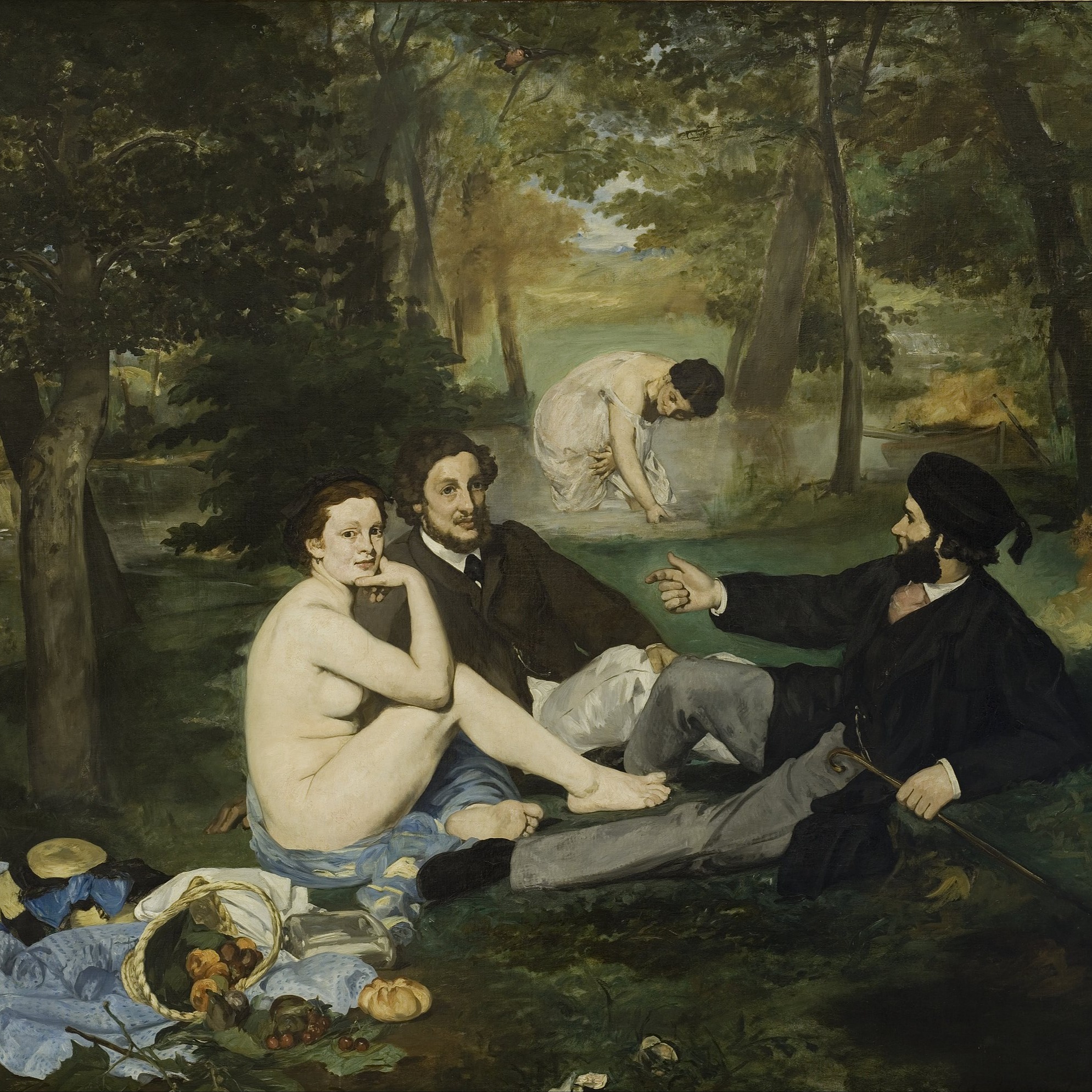
想到未来欣赏艺术与文学的人们,正悠闲地躺在草地上吃午餐。
And thinking about, you know, future appreciators of art and literature who are just enjoying their lunch on the grass.
这是一幅爱德华·马奈的著名画作,如果你去巴黎,就能看到它。
And that is a very famous painting by Edouard Manet that you can see in Paris if you ever go.
我对这个关于这幅画的引用感到无比震撼,因为我从未以这种方式思考过它。
And I was just absolutely stunned by this reference to that painting, which I'd never thought of in those ways.
这幅画很奇怪,画中的人们正在野餐,裸体的女性和衣着整齐的男性只是凝视着
I mean, it's a weird painting because it's it's like these people having a picnic and it's like naked women and men fully clothed just looking
看
at
画家或观者。
the painter or the viewer.
说实话,这与普鲁斯特的书并无不同。
Which is not not unlike Proust's book, to be honest.
是的
Yeah.
对
Yeah.
这正是它如此贴切的原因。
That's but that's why it's so so apt.
所以我当时就想,哦,这是一幅描绘读者的画。
So I was like, oh, that's a picture of readers.
我们就是这样,坐在草地上吃午饭,你知道的?
There we are, having our lunch on the grass, you know?
是的
Yeah.
伴随着二十世纪的变迁。
With the the of the twentieth century.
对
Yeah.
是的。
Yeah.
二十世纪的草地,就在普鲁斯特去世将近一百年后,那时他刚刚完成这本书的最终定稿。
The grass of the twentieth century, almost a hundred years after Proust died just around the final drafting of this book.
所以,是的。
So, yeah.
这是我们这个播客。
This is our podcast.
我们本该这么命名的。
We should have called it that.
对。
Yeah.
《普鲁斯特好奇》由公共书籍网(Public Books)联合出品,这是一家专注于思想、艺术与学术的在线杂志。
Proust Curious is brought to you in partnership with Public Books, an online magazine of ideas, arts, and scholarship.
您可以在 publicbooks.org 找到我们。
You can find us at publicbooks.org.
那就是 publicbooks.org。
That's publicbooks.org.
要为 Public Books 捐款,请访问 publicbooks.org/donate。
To donate to public books, visit publicbooks.org/donate.
好的,汉娜。
Okay, Hannah.
到目前为止,我们已经详细探讨了他是如何弄清楚写作为何如此有意义、他要写什么以及如何写的。
So we have elaborated so far how he gets to figure out why writing is so meaningful, what he's going to write, and how he's going to write it.
此外,本卷中还交织着我们之前讨论过的关于他写作项目的更深层反思。
And interwoven also in this volume are more meta reflections of the kind that we've discussed before about his writing project.
对。
Right.
他的艺术将如何与他作为作家的自我,以及与读者所经历的生活产生关联。
And how how exactly his art will relate to himself as the writer and also to life as it is lived by his audience.
因此,他在这里做的一件令人震惊的事,就是重新引入了我们曾在以往节目中讨论过的对光学的痴迷。
So one of the astonishing things that he does here is he brings back this obsession with optics, which we've discussed in in past episodes.
他认为书籍是光学仪器,读者通过它们来认识自己;如果读者无法理解一本书,也许只是因为这本书记不适合他们的视角。
He thinks about books as optic instruments through which readers read themselves, and that if a reader isn't understanding a book, perhaps that just means that it's the wrong lens for them.
他把与所有年长朋友的聚会视为岁月的全景监狱,仿佛时间正通过这些人的衰老过程,从某个中心观察点被审视。
He thinks of the party with all his aged friends as a panopticon of years, as though time is being viewed from a sort of central viewing point through these these people's aging process.
顺便说一句,我认为这是一个非常真实的观察。
I do think that's a very real observation, by the way.
比如,偶尔我会想到一些从我11岁起就认识的朋友。
Like, just occasionally, you know, I have some friends I've had since I was, like, 11 years old.
而如今,我们才三十多岁。
And, yes, we're only in our thirties now.
但偶尔,当我环顾这个群体时,我确实能感受到一种全景式的视角。
But just occasionally, I look around the group, and I do see a kind of panoptic one of you.
是的。
Yeah.
我听到了,我确实听到了。
I hear I I I hear that.
我明白。
I hear that.
是的。
Yeah.
但我
But I
我认为,就他的写作过程而言,最令人惊叹的光学隐喻或许是显微镜与望远镜之间的区别。
think maybe the most astonishing of his optical metaphors, shall we say, for his writing process is about the difference between microscopes and telescopes.
所以他写道,即使那些认同我所理解的真理的人——也就是那些认为他的艺术理论正确,并认为他理应将其奉为圭臬的人——
So he writes, even those who sympathized with my perception of the truth I meant later to engrave upon my temple, aka who thought that his theory of art was correct and that he would he was right to sort of enshrine it as it were.
即使那些对这一计划持同情态度的人,也称赞我用显微镜发现了它,而事实上,我使用的是望远镜,去感知那些确实非常微小的事物,因为它们距离遥远,但每一个都是一整个世界。
So even those who were sympathetic to that project congratulated me on having discovered it with a microscope when, to the contrary, I had used a telescope to perceive things which were indeed very small because they were far away, but every one of them a world.
我太喜欢这个了。
I love this.
我也觉得自己曾误以为普鲁斯特是微观的。
I also think I am guilty of having considered Proust to be microscopic.
我想我们已经讨论过细节了吧?
I think we've talked about minutiae, haven't we?
是的。
Yeah.
是的。
Yeah.
我们能试着理解这一点吗?
Can we try to understand this?
是的。
Yeah.
是的。
Yeah.
这样可以吗?
Is that okay?
我们能暂时非常字面地看待这个问题吗?
Can we be, like, very literal minded for a second?
我们和许多其他人原本以为他把某个微小的东西放在了放大装置下。
We and many others apparently thought that he had taken something minute and put it under a magnifying device.
而他想表达的是,他取了一个相当大但很远的东西,通过放大装置观察它。
And what he's saying is that he took something really quite large but distant and looked at it through a magnifying device.
是的。
Yeah.
就像你观察行星那样。
Like the way that you look at a planet.
对。
Right.
每一个都是一个世界。
And every one of them a world.
但是什么让它们变得遥远呢?
But what makes these distant?
是因为它们本质上总是与他人保持距离吗?
Is it that they are just that other people are always fundamentally distant?
是因为它们在时间上遥远吗?
Is it that they're distant in time?
是的。
Yeah.
我觉得两者都是。
I think it's both.
嗯。
Mhmm.
每一个都是一个世界,因为每一个都是一段生命。
And every one of them is a world because every one of them is a life.
对。
Right.
每一段生命都是它自己的宇宙。
And every life is its own universe.
是的。
Yeah.
它具备了所有这些可能性,而根据这一禁令,我们本不该称它们为微小或微观的,但它却由我们一直讨论的各种潜在事物组成,比如日落、欲望、饥饿和脑海中闪过的奇异画面。
That has the capacity for all these things that I guess we shouldn't, based on this injunction, call these kind of small or micro, but is made up of all of these different potential things that we've been talking about, like sunsets and desires and hunger and bizarre images passing through the mind.
这就是每个人所蕴含的宇宙。
That's the universe that every person, I guess, contains.
对。
Right.
对。
Right.
对。
Right.
对。
Right.
这种解读会不会因此变得过于感伤?
This is that too does that end up being too sentimental as a reading of this?
嗯,我认为这个理论某种程度上是感伤的。
Well, I think I think the thing is is I think this theory is sort of sentimental.
它只是没有以感性的方式表达出来。
It's just not expressed in a sentimental way.
某种程度上,这部小说是非常不感性的。
In a way, this this novel is profoundly unsentimental.
对吧?
Right?
比如,它是轻蔑的。
Like, it's scornful.
它以他人的缺点为笑料。
It has a laugh at the expense of others.
它对人们的不足和失败有着清醒的认识。
It it's clear eyed about people's shortcomings and failures.
但关于生与死,有些东西存在。
But there's something about life and death.
关于生与死,有些东西存在。
And about life and death.
但这种最后的兴奋与理论浪潮,实际上在某种程度上更加感性。
But there's something about this last sort of swell of excitement and theory, really, that is somehow quite a bit more sentimental.
一直以来,我们都认为他在许多场合对遇到的人嗤之以鼻,并感到自己高人一等。
All the all along, we've thought he's sneering at the people he's encountering on many occasions and feeling sort of superior.
结果却发现,这些人从某种根本意义上来说,本身就是艺术。
And it turns out that those people were, in some fundamental way, art.
是的。
Yeah.
我想我们还应该说,这不仅仅关乎人,因为是的。
I suppose we should also say it's not just people because Yeah.
还有植物,比如。
Back That's to plants, for example.
别忘了植物。
Don't forget the plants.
所以,如果你从这次讨论中只记住一件事
So if there's one thing you take from this pack
我一直对此着迷。
I've been obsessed with throughout.
我的意思是,你真幸运,我还没把那些他或别人是植物的地方一一念出来。
I mean, you're just lucky that I haven't, like, read out my list of places where he's a plant or somebody else is a plant.
我期待你写一篇关于这个话题的深度文章。
I'll look forward to your think piece on the topic.
是的。
Yeah.
接单中。
Open for commissions.
所以,人们、植物、小径、餐厅和海滨。
So people, and plants, and pathways, and restaurants, and seasides.
它们都是世界。
They're all worlds.
它们都是场景。
They're all scenes.
这些都是普鲁斯特用望远镜聚焦的事物。
They're all the things that Proust has his telescope trained upon.
在某种程度上,你知道,我们谈到了距离。
And in some ways, you know, we talked about distance.
我们谈了很多关于脱节、无法连接的问题。
We've talked a lot about disconnection, failure to connect.
我们谈了很多,或者我确实思考了很多关于孤独,以及人们在这类文本中为何无法真正相聚的方式。
We've talked a lot about or I've certainly thought a lot about isolation and the ways in which people don't manage to be together in in these texts.
但事实上,所有这些世界都会碰撞与交汇,这不也正是我们一直在阅读的内容吗?
But in fact, all these worlds do collide and intersect, and that's also what we've been reading, isn't it?
普鲁斯特是一位非常细致的建筑师。
Proust is a very careful architect.
对吧?
Right?
而且在这本书中,他不止一次将自己的作品比作大教堂,这也被用作多部关于普鲁斯特著作的标题。
And and more than once in this book, he refers to his work as a cathedral, and that's that's been taken as the title of various collections about Proust.
他明确地将这部作品视为一件需要漫长岁月、或许永远无法完成的伟大艺术作品。
He's very explicit about thinking of it as a great work of art that takes so long that it may never be finished.
但我认为,最能揭示这本书结构的段落,并非这些关于大教堂的隐喻,而是书中人物的一种地图式构想。
But I thought that the passage that was maybe most revealing about the structure of the book was not one of these evocations of a cathedral, but rather the sort of cartographical conception of the characters in the book.
他正在参加一场聚会,即将被引荐给吉尔贝特的女儿,圣卢小姐。
He is in the party, and he's going to be introduced to Gilbert's daughter, mademoiselle de Saint Louis.
吉尔贝特去把她找来。
Gilbert goes to fetch her.
他写道:吉尔贝特的话带来的惊喜和愉悦,很快就被一种关于过往时光的念头取代了——当圣卢夫人消失在另一间房间时,她以自己独特的方式,甚至在我尚未见到她之前,就唤回了这些回忆。
And he writes, the surprise and pleasure caused me by Gilbert's words were quickly replaced while Madame de Saint Louis disappeared into another room by the idea of past time, which Manoisa de Saint Louis had brought back to me in her particular way without my even having seen her.
和大多数人一样,她不正像是森林中多条道路交汇的十字路口,一个众多路径汇聚的中心点吗?
In common with most human beings, was she not like the center of crossroads in a forest, the point where roads converge from many directions?
通向圣卢夫人的道路众多,从她四周的各个方向延伸而来。
Those which ended in Malmesse De Saint Louis were many and branched out from every side of her.
我只是特别喜欢将她想象成巴黎星形广场中央的方尖碑。
I just love thinking of her as the obelisk in the center of Etoile in Paris.
他继续列举了所有的路径。
He goes on to enumerate all the way.
比如,你知道,她的父亲是罗伯特·德·圣路易。
Like, you know, her father is Robert des Saint Louis.
吉尔伯特是她母亲。
Gilbert is her mother.
那是他在康布雷之外常走的两条小路。
Those are the two coutet outside of Cambrai that he used to walk on.
对吧?
Right?
这两个角色就是由那两个人物代表的。
The and the are are represented by those two figures.
正是由于这些联系,他才最终来到了巴贝克,而在巴贝克,他遇见了罗伯特,接着又 somehow 到了莫雷尔、万泰和阿尔伯特森。
It was because of those connections that he ended up ever being at Baabec, and then at Baabec, he met Robert, and then he ends up getting somehow to Morell and Vanthay and Albertson.
这简直就像他描绘出的一张人物关系网。
It's almost like a character web that he maps out.
这是对小说结构的一种地图式描绘。
It's a cartography of the structure of the novel.
嗯哼。
Mhmm.
在这段极其富有空间感的精彩阐述之后,他切换了隐喻。
And then at the end of this incredible development, which is very spatial, he switches metaphors.
当然,如果仅涉及我们的心灵,诗人说生命会断裂那些神秘的丝线,确实是正确的。
Certainly, if only our hearts were in question, the poet was right when he spoke of the mysterious threads which life breaks.
但更真实的是,生命不断在人与人、事件与事件之间编织这些丝线,交叉它们,加倍缠绕以使织物更加厚重,如此勤勉地劳作,以至于在我们过去最微小的点与其余一切之间,记忆的宝库如此丰富,只剩下沟通的选择了。
But it is still truer that life is ceaselessly weaving them between beings, between events, that it crosses those threads, that it doubles them to thicken the woof with such industry, that between the smallest point in our past and all the rest, the store of memories is so rich that only the choice of communications remains.
我太喜欢这段了,简直不知道该说什么才够贴切。
I just love this so much that I'm not sure I can even say anything that sensible about it.
我觉得这段话真的非常动人。
I find this really affecting.
我知道他最终想说的是,这些丝线本质上存在于你自己和过去的自己之间。
And I know that he goes towards saying that the threads are ultimately between, like, I guess, yourself and your past self.
嗯。
Mhmm.
但生命不断在人与人、事件与事件之间编织丝线,这些丝线相互交错、重叠,并被如此勤勉地加厚。
But life is ceaselessly weaving threads between beings and between events, and those threads are crossed and doubled and thickened with such industry.
这非常美。
That's very beautiful.
很美,而且
It's beautiful, and
这在我们的生活中也是如此,对这本书也是如此,而且它也回到了文本性的根源。
it's also it's true of our lives, and it's true of the book, and it's also getting back to the root of textuality.
对吧?
Right?
最后一个根源就是编织。
The last root is that of weaving.
所以他真的把文本字面地当作一件编织品,这让人联想到命运纺线的情景。
So he's really taking the text literally as as a piece of weaving, and it's it brings to mind the fates spinning.
这让人联想到我们真实的体验。
It brings to mind our actual experience.
它揭示了这部宏大小说是如何精心构建的。
It illuminates how carefully constructed this sprawling novel was.
是的。
Yeah.
这太惊人了。
It's incredible.
我词穷了,因为这实在太非凡了。
I end in being tongue tied because it's just so remarkable.
它还真正给了我一直以来想要的东西,那就是将心碎这一问题并置呈现。
It's also really given me what I wanted the whole time, which was juxtaposing that question of heartbreak.
对吧?
Right?
如果只有我们的心是值得探讨的,那么诗人说生命会断裂的神秘丝线,确实是正确的。
If only our hearts are in question, the poet was right when he spoke of the mysterious threads which life breaks.
但更真实的是,生命在不断编织。
But it is truer still that life is ceaselessly weaving.
这一点又非常巧妙,因为这正是他在你所说的文本结尾处那股浪潮中所并置的内容。
And that and it's so clever again, because that's also what he's juxtaposing in this swell, as you called it, at the end of the text.
嗯哼。
Mhmm.
生命的痛苦与他在爱情中经历的挣扎,与他在艺术中感受到的真切喜悦形成对比,而艺术也是一种爱的方式。
The pain of life and the struggles that he's experienced in love against the really tangible joy that he experiences in art, which is also a way of loving,
我觉得。
I think.
哦,是的。
Oh, yeah.
对。
Yeah.
我真的必须说,我们知道他在这本书最终修订完成前就去世了。
It's really I I have to say, I mean, we know that he died before doing the final revisions on this book.
即便如此,我还是要大胆地说,这绝对是文学中最出色的结局之一。
And even so, I this has gotta be one of the best conclusions in literature, she says boldly.
但他将如此多分散的线索重新编织成一幅织锦,这真是非凡。
But it is remarkable how he takes so many dispersed threads and brings them back into a tapestry.
他记得一切,有无数细微的呼应,也有许多重大的发展与结局,这确实是关于他成长为一名艺术家的故事的终点。
He remembers everything, and he there's so many minute callbacks and so many big developments and resolutions, and it really is it's the end of the story of him becoming an artist.
对吧?
Right?
这里讲述了一个故事,但还有百万个其他故事,它们也都包含在内。
Like, there's one story that is told here and then a million other stories, and they're all here too.
这真是太惊人了。
It is just amazing.
太惊人了。
It's amazing.
是的。
Yeah.
这是一次真正的高潮。
It's a true crescendo.
就连最后几页,也简直是砰然一声。
Even the last couple of pages, it's just like bang.
是的。
Yes.
它以一声巨响收尾。
It it ends it ends with a bang.
是的。
Yes.
它并没有在结尾慢慢消散。
It doesn't it doesn't sort of fade out at the end.
整本书的最后一词是‘时间’。
It's just the last word of the entire book is time.
你就在结尾处找到了‘时间’。
I just you find time at the end.
时间是最后一个词。
Time is the last word.
你找到了它。
You find it.
我只是觉得,砰。
I just I was like, bam.
直接说出来。
Just say it.
就只是。
Just
进入高潮。
Enter the bang.
汉娜在敲她的桌子。
Hannah is banging her desk.
敲她的桌子。
Banging her desk.
我只是想说,说到结尾,我们之前承诺过要回到这个话题。
I just so but speaking of ending, we promised that we would come back to that.
第一卷的结尾非常优美,看看它在这一卷中是如何发展的。
Again, really beautiful ending of the first volume and see how it has developed in this final volume.
我们现在转向这个话题吗?
Should we turn to that now?
是的。
Yeah.
所以是第一卷的最后一句话,或者最后几句。
So the last sentence of the first volume or the last couple of sentences.
我们在第一集里讨论过。
Which we discussed in episode one.
对。
Yeah.
我来重新读一遍。
I'll reread it.
我们曾熟悉的地方,并不只属于我们为方便起见而将其标注于其上的空间世界。
The places we have known do not belong only to the world of space on which we map them for our own convenience.
它们只是夹在构成我们当时生活的连续印象之间的一薄层。
They were only a thin slice held between the contiguous impressions that composed our life at that time.
对某个特定画面的记忆,不过是对某个特定时刻的怀念。
The memory of a particular image is but regret for a particular moment.
房屋、道路、大街,可悲地如同岁月一样转瞬即逝。
And houses, roads, avenues are as fugitive, alas, as the years.
好的。
Okay.
普鲁斯特曾说过,若将这句话视为对其整个创作意图的代表,那将是完全的误解。
And Proust said about this sentence that it would be totally misunderstanding his project to take it as representative thereof.
当我们做第一集的时候,我当时就想,是的。
And at the time when we're doing episode one, I was like, yeah.
对。
Yeah.
完全不代表。
Totally not representative.
我真的没理解。
I really didn't understand.
我的意思是,我们不得不相信他的话,因为我们还没读完整本书。
Well, mean, we kind of had to take him at his word because we hadn't had the whole experience of reading the whole book.
那是一种挥之不去的好奇心。
It was it was sort of but it was a lingering curiosity.
对吧?
Right?
这到底在哪些方面不代表呢?
Like, in in what way is this not representative?
现在我觉得我们或许已经准备好回答这个问题了。
And now I think we're maybe prepared to to answer that question.
是的。
Yeah.
我们会不会说,它们是转瞬即逝的,但同时在这本书中,这些年来的图像层层叠加,几乎同时发生。
Would we say that they are fugitive, but also that we've had all these images in this volume of the years stacking up on top of each other, all happening kind of at the same time.
这里有时间顺序和错时性,还有一种额外的时间可能性,意味着是的,当你活着的时候,一切都在转瞬即逝。
There is chronology and anachronism that there is this extra temporal possibility that means that, yes, as you live, everything is fugitive.
但你也会有某些时刻,事物再次变得可感知,因而可被寻回。
But you can have these moments where things are once again perceivable and therefore findable.
对。
Right.
你可以重新捕捉到那些转瞬即逝的东西。
You can recapture a fugitive.
抱歉。
Sorry.
所以
So
他说的是,你知道的,时间会改变事物。
he's saying that, you know, time changes things.
我的意思是,这一点上,我认为他回到了那个主题。
I mean, that much, I think, he that bal des tets gets back to that theme.
他现在在这本书中说,即使那些已经改变的事物也是可以找回的。
He's saying now in this volume that even the things that have changed are recoverable.
事实上,这本书里有一段非常著名的引文,经常被摘录,我认为如果我们能更完整地接受它,而不是通常那样只取片段,或许更能说明我们所说的重新发现事物的意思。
And in fact, there's this really famous citation from this book, one that's often excerpted, that I think if if we accept it a little bit more at length than it usually is, is maybe illustrative of of what we're talking about about refinding things.
所以有一句著名的引文说:真正的天堂是我们已经失去的天堂。
So there's this famous citation that the true paradises are paradises we have lost.
对吧?
Right?
我的意思是,我觉得我们可能以前读过或听过这句话,但没意识到它出自普鲁斯特。
Like, I feel like we've maybe read that before, heard it before, maybe not realizing that it's Proust.
这句话被引用得很多。
It's quoted a lot.
艾玛,你愿意读一下完整的引文,为我们听众提供上下文吗?
Emma, do you wanna read the whole citation to put it into context for our listeners?
那接着说吧。
Go on then.
他写道,如果一段记忆由于遗忘而未能在任何时刻与当下建立联系,如果它始终停留在自己的时空之中,保持距离,孤立于山谷的低洼处或山峰之巅,它就会让我们突然呼吸到一种全新的空气——正因它是我们曾经呼吸过的空气,一种比诗人徒劳称之为天堂的空气更为纯净的气息,令人惋惜。
He writes, if a memory, thanks to forgetfulness, has been unable to contract at any tie, to forge any link between itself and the present, if it has remained in its own place of its own date, if it has kept its distance, its isolation in the hollow of a valley, or on the peak of a mountain, It makes us suddenly breathe an air new to us just because it is an air we have formerly breathed, an air purer than that that the poets have vainly called paradisiacal, which sorry.
我不
I don't
我不知道怎么读这个词。
know how to pronounce that word.
天堂般的。
Paradisiacal.
我觉得你读得非常好。
I think you did beautifully.
它之所以带来深刻的更新感,正是因为这种空气曾被呼吸过,正因真正的天堂,是我们已经失去的天堂。
Which offers that deep sense of renewal only because it has been breathed before, insomuch as the true paradises are paradises we have lost.
所以他在说,那些藏在我们认为不可触及的角落里的记忆,实际上是可以被重新探访和找回的,我们可以再次呼吸它们的气息。
So he's saying that these memories that are hidden in pockets that we think are are unvisitable can in fact be visited and recovered, and we can breathe their air again.
而这种对过去的呼吸,是一种类似于造访天堂的体验。
And then that breathing of the past is an experience akin to visiting paradise.
对。
Right.
所以你可以非常粗略地概括为:真正的天堂,是我们曾经失去却又重新找到的天堂。
So you could gloss this very inelegantly as the true paradises are the paradises we have lost and then found again.
对。
Right.
我想,所有天堂都在重新获得的过程中。
All the paradises in the regaining, I guess, also.
是的。
Yeah.
是的。
Yeah.
那种再次呼吸的感觉。
That the the breathing again.
对吧?
Right?
那个,是的。
The Yeah.
而且,再次强调,这非常具象,对吧?你呼吸,再次将它吸入。
And, again, that's so physical, right, that you breathe that you breathe it in again.
是的。
Yeah.
这种通风。
This aeration.
是的。
Yeah.
我认为,某种事物难以捉摸、难以寻回,并不是值得哀叹的理由。
So something being fugitive and difficult to find is not a cause for lamentation, I think.
我认为,这可能是第一卷中一个错误的结论,因为它说房屋、道路、大街都和岁月一样转瞬即逝。
I think that's maybe another way in which that was a false conclusion of the first volume because it says houses, roads, avenues are as fugitive as the years.
对吧?
Right?
这太感人了,我们在第一集里讨论过。
And that is so moving, which we talked about in episode one.
但实际上,这并不是一个值得哀叹的情形。
But actually, this is not a situation for alas.
这是一种重新发现它们能激发艺术、揭示现实本质的情形。
This is a situation where stumbling back upon them is productive of art, can reveal the makings of reality.
我们不应该哀叹。
We shouldn't be lamenting.
我们应该感到兴奋。
We should be excited.
是的。
Yeah.
它能为我们注入新的生命力,他确实有种肺部扩张的感觉。
It can breathe new life into us, and he really is this kind of the sense of his lungs inflating.
可怜的普鲁斯特,这位哮喘患者,真的深知无法呼吸的感觉。
Poor Proust, the asthmatic, he really knew what it was like to not be able to breathe.
你知道,他已身披战争十字勋章。
You know, he's gone fleur de guerre.
他完全充气了,这并不是对那句话很好的翻译。
He's like full inflated isn't a really good translation of that.
他仿佛被这种喜悦所充盈,嗯。
He's kind of aerated Mhmm.
被这份喜悦所充满。
With with with joy by this.
我想,你当然可以保留‘可惜’这个词,因为并非所有东西都能回来。
I suppose that, you know, you can keep the alas because not everything can come back.
是的。
Yes.
但我认为,第一卷是以一种我称之为挽歌般的语调结束的。
But I I think that the first volume ends on what I would consider to be an elegiac tone.
是的。
Yeah.
而这本书本身以对艺术力量与意义的真正肯定作结,尽管其中隐含着对死亡与生命无常的忧虑。
And the book itself ends on a real vindication of the power and purpose of art, even though there's an undertone of of worry impending death, about mortality.
与第一卷的挽歌式结尾相比,这是一种充满喜悦与欢庆的情感。
That's a really joyous celebratory feeling in comparison to the elegiac ending of the first.
所以我几乎在想,这在基调上是否恰恰与之前的方向相反,是的。
So I almost wonder if it's just tonally the opposite Yeah.
是他原本所走向的方向。
Of of where he was going.
而且它也相当宏伟。
And it's quite grandiose as well.
这有点像再次使用显微镜与望远镜的对比,当他说到,我们会将这些微小的个体塑造成在时间中彼此相连的巨人。
It's a bit like the microscope versus the telescope again when he says, you know, we'll make of all these small individuals, giants who touch each other in time.
太惊人了。
Amazing.
我的意思是
I mean
是的
Yeah.
这太不可思议了
It's incredible.
所以现在我认为是时候宣布赢家和输家了,这是我们最后一次这么做。
So now it's time, I think, for winners and losers, the last time we're going to do this.
我想我们先从本卷的赢家和输家开始,然后再分享整本书的赢家和输家。
And I think let's start with the winners and losers of this volume, and then we may share the winners and losers of the book as a whole.
艾玛,你认为本卷的输家是谁?
Emma, who was your loser of this volume?
好的
Okay.
怀着遗憾,我把本卷的输家颁给那位年迈的女演员和她的伴郎。
With regret, I'm awarding loser of this volume to the very aged actress, her best man.
她也是我的最差角色。
She's my loser too.
抱歉。
Sorry.
我完全打断你了。
I totally interrupted you.
抱歉。
Sorry.
抱歉。
Sorry.
我想我喊得太大声了,我们的听众根本没听清她是谁。
I think I screamed so loud that your our listeners couldn't even hear who she is.
Anyway,好吧。
Anyway, okay.
谁是最差角色?
Who is the loser?
抱歉啊,艾玛。
Sorry, Emma.
我不会再大喊大叫了。
I won't scream again.
好的。
Okay.
拉贝曼以前是巴黎戏剧界最负盛名的女演员。
So LaBermant is formerly the most celebrated actress of the Parisian theater scene.
讲述人早年就特别想看她出演《费德尔》,简直盼得不行。
The narrator was absolutely desperate to see her act in FEDRE earlier on in his life.
但她在第六卷里也去世了。
But she she also died in volume six.
而现在她已经复活了。
And now has been resurrected.
这才没多久呢。
Already.
是的
Yeah.
她在第七卷中被复活,却经历了一场极其痛苦的第二次死亡。
She's resurrected for an absolutely torturous second death in in volume seven.
我的意思是,她死亡的那段场景简直令人毛骨悚然。
I mean, the scene sequence with her death is just is just absolutely horrifying.
她身体非常糟糕。
She is very unwell.
她有一个极其可恶的女儿,叙述者几乎认为她活该,因为她太以自我为中心了。
She has this absolutely appalling daughter who the narrator basically says she deserves because she's so egocentric.
嗯
Mhmm.
嗯
Mhmm.
她为这个骄纵又可恶的女儿举办了一场音乐会,但没人到场,因为所有人都在观看或聆听她的劲敌在盖尔芒特公主府上演奏的另一首曲目。
And she hosts for this spoiled awful daughter a recital that nobody comes to because everyone's watching or listening to her great rival perform a different piece at the Princesse de Guermantes house.
嗯。
Mhmm.
于是她只是痛苦地坐在那里,然后她的女儿一有机会就偷偷溜去另一个派对,把她一个人丢下,这件事被那位对手女演员拉切尔——曾经是圣路易的情妇——我们不必深究这个——在下一次在剧院见到巴乌玛夫人时提了出来,人们认为这直接导致了她的死亡。
And so she just sits there miserably, and then her daughter just sneaks off when she gets the chance to the other party, leaving her all alone, which thing the rival actress, Rachel, formerly Saint Louis' mistress, we don't need get into that, happens to mention at the theater when she next sees La Bauma, and this is thought to have killed her.
她那个可恶的女儿抛弃她,这最后的羞辱。
This final humiliation of her horrible daughter abandoning her.
这太羞辱人了。
It's so humiliating.
所以我们谈了很多关于这些令人陶醉的时刻,我们完全钦佩普鲁斯特的文笔。
So we talked a lot about all these ecstatic moments, and we're just totally admiring Proust's writing.
但和往常一样,听众们,这里也有很多可怕的内容,而这正是其中之一。
But as always, listeners, there is a lot of horrible stuff here too, And this is that.
是的。
Yeah.
这就是了。
This is that.
而我们之前并没有深入讨论这一点。
And which we didn't quite dwell on.
所以最后提一下也好。
So it's good to mention it at the end.
那也是我的失败者,而你比我解释得更好。
That was also my loser, and you did a better job explaining it than I did.
这样很好。
So that's fine.
你的胜者是谁?
Who was your winner?
好的。
Okay.
我的胜者有点出人意料,我决定选上次我挑的失败者,那就是一只天鹅。
So my winner I went slightly left field, and I decided that my winner is the loser that I picked last time, which is a swan.
哦,明白了。
Oh, okay.
我喜欢这个。
I like that.
告诉我更多。
Tell me more.
因为有一次,叙述者提到,你知道,一切本可能以不同方式发生,但事实上,我整个人生中发生的一切,最初都源于天鹅的提示。
Well, just because at one point, the narrator says, you know, it could all have happened differently, but essentially, everything that's happened in my whole life is all down to Swan's prompts initially.
是的。
Yeah.
是的。
Yeah.
是的。
Yeah.
确实如此。
It's true.
天鹅最终在他成为艺术家的过程中扮演了至关重要的角色。
Swan ends up taking this really critical role in his ability to become an artist.
是的。
Yeah.
所以这几乎就像,你知道的,有很多不同的艺术家形象都以时间为艺术主题。
So it's almost like, you know, there's lots of different artist figures that feature time as an artist.
有画家。
There's painters.
我想,演员绝对是艺术家。
There's I guess, I think actors are definitely artists.
不过,Swan 在这里似乎成了整个事件的首席艺术家,这也展示了偶然性的力量。
Anyway, but Swan kind of appears here as this master artist of the entire thing that is also a way of illustrating the power of contingency.
而且只有一两页,但我当时就想,是的。
And it's only a page or so, but I thought, yeah.
实际上,他就在这一页中赢得了整本书。
Actually, he wins the book in that page.
或者也许是个缪斯?
Or perhaps a muse?
是的。
Yeah.
对。
Yeah.
他就像一个触发器。
He's like a trigger.
是的。
Yeah.
对。
Yeah.
我喜欢‘触发器’这个词。
I like trigger.
你的胜者是谁?
Who was your winner?
我的意思是,我选了最明显的胜者。
I mean, my I chose the most obvious winner
是的。
Yeah.
那就是叙述者。
Which is the narrator.
是的。
Yeah.
是的。
Yeah.
因为,我的意思是,很明显,他最终战胜了长期以来一直困扰他的东西——他的职业困境。
Because, I mean, obviously, like, he's finally triumphing over the thing that he had struggled with the whole like, vocation, which he had struggled with the whole time.
尽管如此,这并不是纯粹的胜利,因为他感到自己身体越来越不适。
It's still nevertheless, it's not just a pure win because he feels himself growing unwell.
我们看到,在结尾时,他几乎与世隔绝,根本无法与任何人沟通,也无法继续创作艺术。
We see that by the end, he's sort of sequestered and feels very unable, really, to both maintain communication with anyone and to do his art.
所以这并不是毫无瑕疵的胜利,但他确实一直在为目标努力,并且实现了目标,因此他仍然是赢家。
So it's not an unadulterated win, but still, he he was working towards a goal and he has achieved the goal, so that makes him a winner.
是的。
Yeah.
生活为他赋予了意义。
And life has a purpose for him.
生活为他赋予了意义。
Life has a purpose for him.
终于。
At last.
那就是艺术,而艺术就是生活。
Which is art, and art is life.
所以这一切都是一体的。
So it's all the same.
整本书里,你觉得谁是失败者?
Who is your loser of the book as a whole?
说实话,我在这上面纠结了很久。
I struggled with this, honestly.
我认为我所能想到的所有人,同时都是赢家和输家。
I think all the people I could think of were both winners and losers at the same time.
嗯。
Mhmm.
所以,我认为赢得整本书的人选,其含义也各不相同。
So my candidates for winning the whole thing are quite differently freighted as well.
因此,我觉得叙述者可能是整本书的赢家。
So I thought that the narrator could be the winner of the whole thing.
嗯。
Mhmm.
我们看到他经历自己的挣扎、他的历险、他的追寻——不管你如何称呼它——他在一千零一夜的讲故事生涯中,每天都为生存而拼搏。
We see him have his his struggle, his odyssey, his quest, whatever you wanna call it, his kind of survival every day of his thousand and one nights of storytelling.
哦。
Oh.
最终理解了他自己的使命。
Understand his own project at the end of it.
但他最终变得极度孤立且健康状况糟糕,不再相信爱情或友谊,我认为这同样是一种巨大的损失,也不符合我对生活的看法。
But he also ends up extremely isolated and unwell, and not believing in love or friendship, which I think is also a huge loss, and it's not how I feel about life.
对。
Right.
所以他既是赢家也是输家。
So he could be the winner and the loser.
这是一个候选者。
That's one candidate.
我对奥黛特的理解也完全不同。
I also had Odette totally differently.
她对我来说也是这本书的赢家候选人。
She was a candidate for winner of book for me too.
抱歉。
Sorry.
这太糟糕了。
This is horrible.
她简直就像蟑螂一样生命力顽强。
She's almost like a cockroach.
她怎么都打不死,永远都在拼命往上爬。
She's unkillable, and she's just always climbing the walls.
对。
Yeah.
不过话说回来,你也可以把她解读成一个失败者,因为她在临近结尾的时候提到,她自己也承认这一点。
Although, it's again, you could read her as a loser because she mentions towards the end, she's like, yes.
我人生的大部分时间都过得与世隔绝,因为我总跟那些控制欲极强的男人待在一起,他们什么事都不让我做。
I've spent most of my life sort of cloistered because I'm always with these jealous men who won't let me do anything.
所以这种处境也挺凄惨的,而且其实和叙述者与世隔绝、远离社会的状态刚好呼应。
So that's kind of dire also, and actually an echo of the narrator being cloistered and away from society.
对。
Yeah.
而且他还提到,奥德特一直都没明白自己其实拥有可以动用的资源。
And she's never understood the resources that she's had at her disposal, he says.
是的。
Yeah.
所以她只是在那里。
So she's just kind of there.
而我认为,她某种程度上可以算是赢家,因为她完全不受时间影响。
And what I thought, she could be the winner in a way because she's totally unaffected by time.
比如,她看起来还是一样。
Like, she looks the same.
比如,我觉得有一个地方,非常不现实地,她已经85岁了,但看起来和25岁时一模一样。
Like, I think at one point, very very implausibly that, like, she's 85 and she looks exactly as she did when she was 25.
对。
Right.
对。
Right.
对。
Right.
但不受时间影响,最终似乎也是一种失去。
But being unaffected by time also seems like losing in the end.
是的。
Yeah.
因为重点似乎在于理解时间的本质,并能够体会它。
Because it does seem like the point is to know what time is and and be able to understand it.
是的。
Yeah.
并且亲眼见证它发生在自己身上。
And to see it happen to you.
是的。
Yeah.
即使它看起来很可怕。
Even if it looks horrible.
是的。
Yeah.
关于 Bayt 播客
Bayt 提供中文+原文双语音频和字幕,帮助你打破语言障碍,轻松听懂全球优质播客。