本集简介
双语字幕
仅展示文本字幕,不包含中文音频;想边听边看,请使用 Bayt 播客 App。
哦,等等。你在听,好的。
Oh, wait. You're listen Okay.
好的。行。好的。
Alright. Okay. Alright.
你正在听,听
You are listening Listening
Radiolab,Radiolab。来自
Radiolab Radiolab. From
WNY,看到了吗?是的。
WNY See? Yep.
那通电话来自黑夜。它阴森诡异,像来自另一个维度的雾号,穿过旧金山海湾的迷雾。这是那段声音的真实录音,它在20世纪80年代末困扰着旧金山居民。人们对此有各种猜测:秘密政府活动、潜艇、海上钻探、UFO。
The call was coming from the night. It was eerie, like a fog horn from another dimension rolling through the mists of San Francisco Bay. This is an actual recording of the sound, which was plaguing residents of San Francisco in the late nineteen eighties. People had all kinds of theories about what it might be. Secret government activities, submarines, off shore drilling, UFOs.
无论它是什么,它都强大到让海湾里的船屋震动。
Whatever it was, it was so powerful, it was rattling the houseboats of the bay.
我是拉蒂夫·纳瑟。我是
I'm Latif Nasser. I'm
露露·米勒。
Lulu Miller.
这里是Radiolab,正是以这个谜团,我们开启了最新一场关于“虚空”的现场演出。
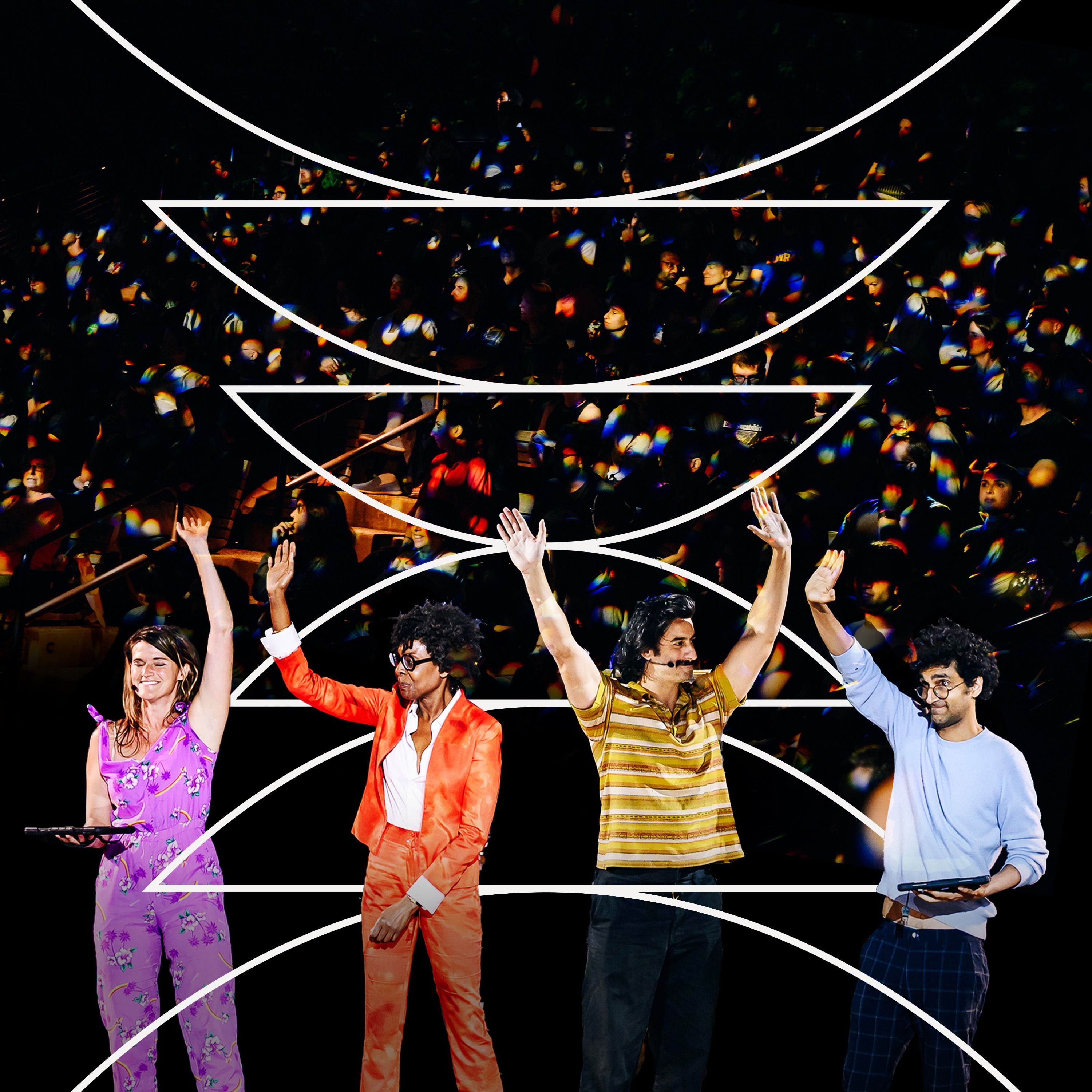
This is Radiolab, and it is with that mystery that we kicked off our latest live show about voids.
我们在纽约市一个名为“小岛”的美丽场地,在夜空下的虚空中进行了演出。它就坐落在哈德逊河边,而这条河最终汇入无边的大海。
Which we performed beneath the void of the night sky at this gorgeous venue called Little Island in New York City. It sits right alongside the Hudson River, which itself empties out into the void of the ocean.
没错。于是,在那个与虚空相邻的地方,我们想做的这期节目不仅关于虚空,也关于人们如何面对虚空——站在边缘,试图解读从中传出的声音,试图测量它,试图决定是否要对着它大喊。
Right. And so in that place, in that very void adjacent place, we wanted to make an episode about not just about voids, about people reckoning with voids, standing on the edge of them, trying to decipher the sounds coming out of them, trying to measure them, trying to decide whether or not to scream into them.
三个故事,一个由拉蒂夫讲述,一个由高级制作人马特·基尔蒂讲述,一个由我讲述,最后还有一段特别嘉宾带来的小彩蛋。
Three stories, one by Latif, one by senior producer Matt Kilty, one by me, plus a little extra special bonus by a guest at the very end.
是的。随着我们步入秋天,希望你们喜欢这场夏末实验,
Yeah. So as we head into the fall, we hope you enjoy this end of summer experiment we did,
让我们回到那个谜团。是的。让我介绍一位对此了如指掌的人。
and let's pick back up with that mystery Yes. Let me introduce you to a guy who knew exactly what it was.
音乐家告诉我,这听起来像dibmerzhu。哦,我只是按发音念。
As musicians have told me, it sounds like a dibmerzhu. Oh, I'm just pronouncing that.
哦,对,dibmerzhu。
Oh, yeah. A dibmerzhu.
迪吉里杜管,是的。
Didgeridoo, yes.
这位是安德鲁·巴斯博士,康奈尔大学的科学家,几十年来一直在研究发出这种声音的实体——一种底栖鱼类。
That is Doctor. Andrew Bass, a scientist at Cornell, who for decades has been studying the entity that makes this sound. An entity which is a bottom dwelling fish.
它们有时被称为海里最丑的鱼。
They've sometimes been referred to as the ugliest fish in the sea.
它们确实是一个有力的竞争者。
They are certainly a contender.
是啊。你知道,它们看起来可不像珊瑚礁里的鱼,对吧?
Yeah. You know, they're it's not like looking at a reef fish. Right?
想象一只青蛙。然后把它融化。再加上一副狰狞的牙齿。幸运的是,对于这个小家伙——通常被称为加州歌唱鱼——吸引伴侣的不是它的外表,而是它的歌声。它唱歌的方式是利用胸腔内一个有点像鼓的器官。
Picture a frog. Now melt it. Add a set of deranged teeth. Luckily for this little guy, who is often called the California singing fish, it's not his looks, but his song that attracts a mate. The way that he sings his song is by using an organ that's a little like a drum inside his chest.
它是一个膨胀的鳔,它用来敲击的不是鼓槌,而是一组非常强劲的肌肉,这些肌肉振动得越来越快
It's an inflated swim bladder against which he strikes not a mallet, but a set of very powerful muscles that he vibrates faster
越来越快越来越快越来越快越来越快
and faster and faster and faster and faster
直到发出一声“嗡”。有时数百条鱼会聚集在一起,齐声合唱两个多小时。所有的旋律与和声交织在一起,声音仿佛跨越维度,在水面上也能听见。
until it releases this Om. And sometimes hundreds of them will gather and sing all at once in unison for over two hours. All of their melodies and harmonics swirling together until the sound jumps dimensions. It becomes audible above water.
这令人着迷。几乎就像——请原谅我这么说——几乎像一首摇篮曲,我觉得。
It's mesmerizing. It's almost like, forgive me if I say this, it's almost like a lullaby, I think.
如果它们的塞壬之歌对雌鱼也像对贝斯博士那样有效,她会循声而去,来到他在岩石下挖出的小藏身处,只为给她留下深刻印象。他唱出不同的渴望、旋律与节奏,用持久的歌声打动她。当然,在这样的虚空中放声歌唱也有风险——你会暴露自己。
And if their siren song works as well on the female fish as it does on Doctor. Bass, she will follow him to the source of the sound, which is a little hideout beneath a rock that he has dug out just for impress her, singing out his different yearnings and melodies and rhythms, impressing her with his stamina. Now, of course, singing out into a void like this can come with a risk. You make yourself known.
你会看到海鸥飞过来把它们抓走。
You'll see gulls fly in and grab them.
哇。
Wow.
它们会把它们抓走。
They'll take them.
哎呀。
Aw.
甚至有报道称老鹰俯冲下来,把它们从水里抓走。
And there are reports even of eagles sweeping down and taking them out of the water.
但有时也可能带来回报。如果雌性喜欢它听到的声音,她会游向洞穴更深处,倒转身子,然后一个接一个地把卵产在岩石的下方。
But it can also sometimes come with a reward. If the female likes what she hears, she will swim deeper into the cave, turn upside down, and one by one begin depositing her eggs on the underside of the rock.
我们有视频显示,雄性会用指甲沿着洞顶移动她。
We have videos showing the nail will move her sometimes along the roof.
哦,像是在帮她把卵分布开?
Oh, like helping her to distribute them?
嗯,是的。这太不可思议了。实际上我得告诉你,我妻子叫玛格丽特·莫舍蒂尔,她一直密切和我一起做这项工作
Well, yeah. This is, like, amazing. This is actually so I have to tell you, my wife, her name is Margaret Moscheteer, who's worked with me closely on this
哦,真棒。
Oh, neat.
这些年来。是的。她拍了一些非常精彩的视频,展示了
Over the years. Yeah. She's the one who's made some really amazing videos showing
这些事情。
these things.
对吧?你看到那样的行为就会想,哇,那真是一种极其复杂的行为
Right? You see something like that and you go, wow. That is such a sophisticated behavior
是啊。
Yeah.
而且是一种细腻的行为。
And a delicate behavior.
这温柔的一幕大约持续二十四小时,然后雌鱼游走。在这个物种里,是雄性负责照顾孩子,守着卵好几周,直到它们孵化。几十年来,巴斯博士对这些鱼做出了几十项惊人的发现:它们如何歌唱、为何歌唱,以及让它们歌唱的大脑回路,竟与我们用来讲话的回路惊人地相似。
This delicate scene lasts about twenty four hours, and then the female fish swims away. In this species, it is the male that tends to the children, to the babies until they are hatched for weeks. Over the decades, Doctor. Bass has made dozens of incredible discoveries about these fish. How they sing and why they sing and how the circuits in their brain that let them sing look eerily similar to the ones in our brain that let us talk.
但这些都不是我找巴斯博士的原因。因为在二十世纪八十年代,他有了一个在我看来更加疯狂的发现——他从未预料到会看到的现象:在这群喧嚣歌唱的雄性合唱里,存在着第二种雄性;它们缺乏发声的肌肉,无法歌唱——是沉默的雄性。我第一次听说这个小家伙时,就爱上了他。
But none of that is why I called Doctor. Bass. Because in the nineteen eighties, he made a discovery that, to me, is far wilder, something he never expected to see, which is that inside this chorus of blustery, singing males, there is a second type of male, a male that lacks the musculature to sing. A silent male. When I first heard about this little guy, I fell in love.
在这片嘈杂中,他是一小块安静的存在,我对他充满喜爱。因为在我看来,他找到了一种方式,去表达沉默的价值。他并非基因池里的偶然错误;在某些种群中,高达十分之一的雄性天生无法发声。于是我想,他一定有什么过人之处让他得以存续,一定有某种特质让雌性选择他,而非那些能歌唱的对手。
This little slice of quiet in the din, I felt so much affection for him. Because it seemed to me he had found a way to articulate the value of silence. He's not a fluke in the gene pool. In some populations, up to one in every ten males is anatomically silent. And so I wondered, there must be something about him that allows him to persist, something that the female is choosing over these vocalizing counterpoints.
我想象过一条鳍,某种大多数人看不见却极其美丽的东西,但通过负空间,对某些人来说却像奖品或特质。说这么多花哨的词,其实就是一句话:我厌倦了语言。有没有人也这样觉得?我越靠文字谋生,就越不信任它们;它们只是带着愤怒、暴力、不安以及无数谎言的热气腾腾的噪音。尽管“交流”一词的本义是“分享”,但语言却在制造距离。
I pictured a fin, something that was gorgeous but invisible to most, but through negative space, looked like prize or attribute to some. These are all fancy words for saying, I am so sick of words. Does anyone else does anyone else feel that? The more I use them for a living, the more I have come to mistrust them, that they are just these noisy puffs of hot air laden not only with anger and violence and insecurity, but so many untruths. That despite the etymology of communication meaning to share, that words are distancing.
随着——我该找个更好的词——随着我在中年、在母职、在婚姻里悠然下沉,我越来越转向沉默。当愤怒或渴望升起,我求诸沉默去共存、去连接、去修补,去邂逅他人身上、在这炽热喧嚣的世界里残存的一丝美好。于是我想,鱼身上发生的事能否解释这一点?雌鱼选择沉默的雄性,是否正因为那更纯粹、更真实的自我呈现?
As I sink I should have a better word for sink. As I as I as I luxuriate into middle age, into mothering, into marriage, I find myself more and more turning to silence. As anger rises in me or yearning, I turn to silence to coexist, to connect, to mend, to encounter some bit of good left in another person, left in this burning and blustery world. And so I wondered, was there any way that what was going on in the fish could explain this? That the female fish was choosing in the silent male just a more pure and honest offering of self?
于是我请教巴斯博士:那么,沉默的雄性会不会把沉默当成一种类似华丽尾羽或壮观鹿角的功能?也就是说,沉默其实是他主动吸引雌性的特征?
So I asked Doctor. Bass. So the silent male, does he use silence in a way that's analogous to, like, a a rack of tail feathers or gorgeous antlers? Like, is the silence a feature that he's actually, like a a way that he can, like, actively attract a female?
嗯,你这问题问得很好。我们没有任何证据支持你说的这种假设。
Yeah. You know, you that's a really good question. We have no evidence to support what you just said.
那么,这位沉默的雄性是如何赢得雌性的呢?
Okay. So then how does the silent male get the girl?
嗯
Well
Bass博士解释说,要赢得雌性,首先要知道大家并不叫他“沉默雄性”,而是
To get the girl, doctor Bass explained, first of all, you need to know that they don't call him the silent male, but rather
“偷袭雄性”。
Sneaker males.
等等,你说“偷袭雄性”,可不是因为他穿着酷酷的锐步鞋。你指的是什么?
Wait, and when you say sneaker male, you're not it's not because he's sporting cool Reeboks. What do you mean?
换句话说,这些鱼会偷偷溜进另一条雄性的巢里,试图从对方那里偷走受精机会。
In other words, these were fishes that would sneak into the nest of another male to try to steal fertilizations from them.
明白了。所以是偷偷摸摸、潜伏、隐秘。
Okay. So sneaky, skulking, stealthy.
对。我们发现,这些体型较小的雄性真的会偷偷溜进去——此时那条雄性已经把雌性留在巢里了。
Yeah. Okay. Sneaky. What we observed was that these smaller males would literally sneak in so the male already has a female in his nest.
好,所以我们现在的情况是:我们的“歌手”已经唱尽心声,成功吸引到了她;就在这二十四小时的关键窗口里,她待在巢中,他像抚摸一样帮助她产卵。对,对。
So, okay. So we're at the point where our singer has he has sung his little heart out. He's attracted her and it's that twenty four hour window while she's in there and he's, like, caressing her to help her lay the eggs. Yeah. Yeah.
然后
And then
这只沉默的雄鱼会怎么样?他试图溜进巢里。现在
what happens with this silent male? He tries to sneak into the nest. And now
等等,那里面会有三条鱼?
So wait. There'd be three of them in there?
对。
Yeah.
好吧。怎么
Okay. How
但问题是,对于那只通过叫声吸引雌鱼的雄鱼来说,是的。我该怎么办?我是专心给卵受精,还是把另一只雄鱼赶出巢?
here's the but here's the dilemma for that male who produced the and attracted the female. Yeah. Well, what do I do? Do I focus on trying to fertilize the eggs or chasing that other male out of the nest?
因为是啊。哦,我正想问,这只唱歌的雄鱼在帮她摆姿势时,是不是一直在受精,还是等她走了才受精,或者他立刻就
Because yeah. Oh, I was gonna ask, like, this singing male, when he's helping position her, is he fertilizing that whole time, or does he wait till she's gone, or he's, like, right away?
他一直在受精。如果她产下一颗卵,他就给它受精。
He's fertilizing the whole time. If she deposits an egg, he fertilizes it.
好吧。就这样连续二十四小时?
Okay. Just for, twenty four hours straight?
对。但关键是,那只偷袭的雄鱼会释放更多。你几乎能看到像一条连续的精子线被释放出来。
Yeah. But here's the thing. The sneaker male will release more. You can almost see, like, a solid thread of sperm being released.
哦,肉眼就能看见?是的。而另一只唱歌的雄鱼,你看不见?
Oh, with the naked eye? Yeah. Whereas with the other with the singing male, you can't?
不会。因为它们的泄殖腔就紧贴着卵,对吧?
No. Because their vent is right up I mean, they're right up against the egg. Right?
哦,我不知道。
Oh, I don't know.
所以它们占了距离近的优势。事情是这样的。小家伙为什么要拼命释放大量精子?他想用数量淹没对手的精子,让自己的精子先一步受精。
So they have the advantage of proximity. So here's the thing. Why would the little guy try to release lots of sperm? Well, he's trying to flood the other sperm. So his fertilize the egg before the other one.
好。所以唱歌的雄性贴得很近,一颗卵一颗卵地‘给你精子,给你精子’。而远处的‘兰博’式偷袭雄性则‘哒哒哒’地狂喷。
Okay. So the singing male is up close and he's like going egg by egg, here's the sperm, here's the sperm. I'm up close. And then from like further away Rambo style, the sneaker male's, like Yeah. Shooting a ton.
哦,对。简单说就是这样,没错。
Oh, yeah. Basically, that's yeah. Yep. To put it simply
然后他就消失了。沉默的雄性回到深海,把唱歌的雄性留在原地照顾他的孩子。几周里,唱歌的雄性用叫声驱赶捕食者,不吃不喝,瘦成骨架,只为让沉默雄性的宝宝们孵化长大。想到这位沉默雄性,我脑海里浮现他独自在深海里快乐、自在、健康的样子,我对他的沉默有了全新的认识。
And then he is gone. The silent male back to the depths, leaving the singing male to care for his babies. For weeks, the singing male uses his voice to bark away predators, forgoing food so that he emerges as a near skeleton to let the silent male's babies hatch and grow. As I think about this silent male, I picture him alone and happy and carefree and healthy in the deep. I see his silence anew.
听起来很凶狠、暴力、懦弱、奸诈。
Like, it sounds aggressive, violent, cowardly, deceptive.
这些词可够重的。
Like, said Those are strong words.
但他听起来不值得钦佩。
But he doesn't sound admirable.
确实不值得。
No. He doesn't.
那些话当然不是对鱼说的,对那些只能靠本能行为求生的生物说的。那些话是说给人听的,说给我这样的人听的——我们有选择不再沉默,从舒适的沉默庇护所里挣脱出来,冒着被漠视、被嘲笑、被攻击的风险,唱出你内心真实的东西,那些愤怒、渴望、真实的东西,也许能产生足够的震动,去改变,或者至少撼动这个世界生锈的固定装置。谢谢大家。广告之后,我们将离开大海,飞向星辰。我是露露,本期节目由BetterHelp赞助。
Those words, of course, are not meant for fish, for creatures who have no way other than to behave how they might behave to survive. Those words are meant for people, people like me, who have the choice to become unsilent, to heave up from that cozy refuge of silence, and risk disinterest, ridicule, and attack to sing out what is true in you, what is angry and yearning and real and just might make enough vibrations to change or at least rattle the rusting fixtures of this world. Thank you, guys. When we come back, we are headed out of the sea and up to the stars. I'm Lulu, and this episode is sponsored by BetterHelp.
想象一下,你在理发店剪新发型。你看着镜子,开始回想最近搞砸的事、分手、做错的事,话不自觉就溜出口。你开始跟理发师倾诉烦恼,他们听着。但那是你该带问题去的地方吗?
Picture it. You're at the salon getting a new haircut. You look in the mirror and begin to think about some of your latest mess ups, some breakups, some things you did wrong, and the words slip out of your mouth. You begin sharing your problems with your hairdresser, and they listen. But is that where you should be bringing your problems?
他们就该帮你解决问题吗?不。他们上学是为了让你那堆死去的角蛋白——也就是头发——之下看起来尽可能精神。如果你在焦虑、抑郁、人际关系、沟通或其他临床问题上需要帮助,给你生活中的理发师一个面子,去找持证心理治疗师,找那个受过训练、擅长帮你找到自己的人。BetterHelp一键连线,提供多元专业的心理健康服务。
Should they have to be the ones to help you fix it? No. They went to school to make you look as dapper as possible beneath the strings of dead keratinized cells known as your hair. If you are looking for help with anxiety, depression, relationships, communication, or other clinical issues, do the hairdressers in your life a favor and get guidance from a licensed therapist, someone trained in the art of helping you find you. BetterHelp provides access to mental health professionals with a diverse variety of expertise online at the push of a button.
在betterhelp.com找到你的心理契合。访问betterhelp.com/radiolab,首月立减10%。拼写是better,help,.com/radiolab。这次换你听理发师的话。嘿哟。
Find your mental fit at betterhelp.com. Go to betterhelp.com/radiolab to get 10% off your first month. That's better,help,.com/radiolab. And listen to your hairdresser for a change. Heyo.
露露在此。你可能已经听说,今年夏天,美国联邦政府取消了对公共媒体的资助。在WNYC,这意味着我们每年失去300万美元的固定资金。但我们虽被撤资,并未被打倒,而这,也许就要靠你——对,就是你。如果你以前从没支持过Radiolab,不妨考虑每月给我们几块零钱。
Lulu here. As you have likely heard, this summer, the federal government defunded public media in America. Here at WNYC, that has resulted in a loss of $3,000,000 each year that we cannot count on anymore. But while we may have been defunded, we have not been defeated, and that is where you, just maybe you, come in. If you have never supported Radiolab before, consider tossing a few bucks each month our way.
最好的办法是加入我们的会员计划“The Lab”。上网点几下,每月7美元,砰,你就养活了整个团队。本月感谢礼,我们会寄给你一只全新设计的大号托特包,能装下你所有海滩装备和大采购,却装不下我们的感激。如果公共广播的使命对你有意义,如果Radiolab对你有意义,此刻你的支持比以往任何时候都重要。
The best way to do that is to join our membership program, The Lab. Go online, click a few buttons, and then for $7 a month, boom, you are supporting our team. And as a thank you this month, we will mail you a brand new, beautifully designed jumbo tote bag, one of those ones that can fit, like, all your beach stuff and your big grocery hauls. It will not fit, however, our gratitude. If the mission of public radio means something to you, if Radiolab means something to you, Your support right now means more than ever.
请前往members.radiolab.org,看看成为会员需要什么,看看这款以水生主题设计的漂亮托特包——因为我们今年碰巧讲了一堆水生故事。再说一次,members.radiolab.org,去看看。非常感谢你收听,并在我们最需要的时刻与我们并肩。
Please go on over to members.radiolab.org and check out what it takes to become a member. Check out the new design of the gorgeous tote bag, which has a sort of aquatic theme because of all the aquatic stories that we randomly did this year. One more time, members.radialab.org. Check it out. Thank you so much for listening and standing with us when we need you the most.
露露,如果……?
Lulu What if?
Radiolab,继续我们的“虚空”专题。好,想象所有灯都熄灭,你盯着舞台,舞台后面是河,河对岸是新泽西海岸线。突然,一束聚光灯亮起,照出高高脚手架上的一个男人。
Radiolab, on with our show about voids. Okay. So imagine all the lights are off, and you're staring at the stage behind which is the river, behind which is the New Jersey shoreline. And then all of a sudden, a spotlight comes on and illuminates a man standing way up high on a scaffold.
嘿,大家好。别管我,我就在这儿挂了一会儿。我是Radiolab的制作人,我叫马特·基尔蒂。
Hey, everybody. Don't mind me. I've just been hanging out up here for a little while. I'm a producer at Radiolab. My name is Matt Kilty.
请与我一起把目光投向那崇高、令人惊叹的新泽西。现在假装它不存在,这其实真的不该太难。
Please join me in casting your eyes out to the sublime, the awe inspiring New Jersey. Now pretend it doesn't exist, which, like, really shouldn't be that hard to do.
相反,只需想象它只是
Instead, just imagine it's just
海洋。目之所及皆是海水。几千年前,你脑海中想象的那片海曾被视为一条河,一条环绕整个地球的河。而真正巨大、庞大、被我们视为地球中心、乃至宇宙中心的东西,是我们脚下的陆地。海洋只是 tidy 的边界,似乎环绕着我们漂浮的这座大岛。
ocean. The sea as far as you can see. Now thousands of years ago, that sea that you're imagining your mind's eye was thought of as a river, a river that circled all of Earth. And the thing that was big, enormous, the thing that we thought was at the center of the Earth, the center of the universe, really, was the land underneath our feet. The ocean was just this kind of, like, tidy boundary that seemed to surround this big island we were floating on.
这一观念,你可以在世界各地追溯,古埃及、美索不达米亚、巴比伦。希腊人把它传给罗马人,一直延续到中世纪。这种看法认为,至少在纸上,海洋是被包围的。但后来,欧洲人开始建造更大的船只。
And this idea, you can trace it back the world over, ancient Egypt, Mesopotamia, Babylon. The Greeks handed it down to the Romans. It persisted into the Middle Ages. This idea that the sea, at least on paper, was contained. But then the Europeans, they started building bigger ships.
他们开始航行得更远。随着他们前行,海洋开始扩张。哥伦布出现了。
They started venturing further out. And as they did, the sea began to expand. There was Columbus.
这一天,我们完全看不见陆地了。
This day, we completely lost sight of land.
1492年,试图找到印度。
1492, trying to find India.
许多人叹息、哭泣,担心我们很久都再也见不到陆地。
And many men sighed and cried for fear that we would not see land again for a long time.
他们将有三十三天看不到陆地。
They wouldn't see it for thirty three days.
至今,我们面前仍未出现陆地。
Eitherto, no land appeared before us.
1501年,亚美利哥·韦斯普奇。
15 o one, Amerigo Vespucci.
在茫茫大海上。
In the vast sea.
横渡大西洋向南航行。
Sailing south across the Atlantic.
我们差点全都饿死。
We all would have died of hunger.
1520年,麦哲伦穿越太平洋。
Fifteen twenty, Magellan crosses the Pacific.
在那片无比辽阔的海域。
In that exceedingly vast sea.
1580年,弗朗西斯·德雷克爵士连续两个月未见陆地,环球航行总计一万英里,首次证明海洋某种意义上永无尽头。于是,短短一个世纪,海洋从被“圈定”的存在变成令人恐惧、庞大得惊人的巨物。随着探险家绘制海图,我们逐渐意识到,自己只是漂浮在汹涌大海上的微小尘埃。站在任何海岸眺望那片浩瀚。
And in 1580, sir Francis Drake goes two whole months without seeing land, 10,000 total miles around the globe, proving for the first time ever that the sea, in a sense, is never ending. And with that, in a matter of a century, the ocean went from something that was contained to something that was terrifyingly, staggeringly huge. As these explorers mapped out the oceans, we began to realize that we were just simply a speck floating on this vast, churning sea. And to stand on any shore and look out across that vastness.
凝视深海,就像在想象中握住那无边的未知。
To gaze into the depths of the sea is in the imagination like we're holding the vast unknown.
这是作家维克多·雨果在1866年写的。对他及众多画家、哲学家、诗人而言,海洋成了思索自身存在的地方。我要在这个关键节点等直升机。我先等一秒。我给它五秒。
That's writer Victor Hugo in 1866. And for him and others like him, painters, philosophers, poets, the sea became this place to go to contemplate our very own existence. I'm going to wait for the helicopter at this pivotal juncture. I'm giving it a second. I'm giving it five seconds.
我给它十秒。于是,我们在如此浩渺面前沉思自身的渺小。他做到了,维克多。
I'm giving it ten seconds. So, we contemplated the smallness of it in the face of such a norm. He hit it, Victor.
类似于夜晚与梦境的领域。
Analogous to the realm of night and dreams.
好了。那确实不可思议,但那是过去,这是现在。如果你还是那种望着大海会感到敬畏、惊叹,还有一点点恐惧的人,那对不起,你还是个孩子。我不知道该怎么跟你说。其实这真的没什么大不了的。
Alright. It was incredible, but that was then, and this is now. And if you are one of those people who still looks out across an ocean, you feel a sense of awe and wonder and a little bit of terror, well, I'm sorry, but you're a child. I don't know what to tell you. It's really not that big of a deal.
飞到欧洲也就六个小时,大概就是你眼前这片海。就这样。我觉得,说句公道话,大概三百年里,这片海洋是我们能想象的最大东西。在它面前没有更大的,直到几位极度专注的女性出现。
It's like a six hour flight to Europe, which is probably what you're looking at. That's it. And I mean, I don't know. To be fair, for, like, three hundred years or whatever, this ocean was kind of, like, the biggest thing any of us could conceive of. There was nothing bigger until some very obsessive women came along.
大约在1890年,波士顿,哈佛。每晚,一队全是男性的天文学家会坐在哈佛天文台,把一架11英尺长的望远镜对准夜空。然后他们打开快门,望远镜在时钟驱动的架子上随地球自转同步移动,让微弱的星光相对于望远镜保持固定。它们以相同速度移动——望远镜和星星,步调一致。三十分钟,也许一小时,那微弱的光会冲下望远镜,落在一块笔记本大小的玻璃底片上,底片涂有感光乳剂。
So around 1890, Boston, Harvard, Every night, a team of astronomers, all men, would sit in the Harvard Observatory, and they would point an 11 foot long telescope into the night sky. And then they would open the shutter, and the telescope on a clock driven mount would move in time with the rotation of the Earth so that the faint light of the stars would stay fixed in relation to it. They would move at the same rate. Telescope, stars, in lockstep together. And for thirty minutes, maybe an hour, that faint light would come rushing down the telescope onto this glass plate about the size of a notebook that was covered in this emulsion.
光线击中底片,慢慢地,小点开始显现。星星,成百上千颗,微小的单颗,巨大的星团,全都被封存在这块玻璃里。可以把它想成用玻璃拍下的夜空照片。底片会被标上日期和时间,然后送到街对面一座砖楼里,那里满是“计算机”。这些人你可能听说过——哈佛计算机。
The light would hit the plate, and slowly, little dots would start to emerge. Stars, hundreds of them, thousands of them, tiny little individual ones, big clusters of stars, all of them trapped within this glass plate. Think of it like a photograph of the night sky captured on the glass. The plate would then be marked with date and time and sent over across the street to this brick building that was full of computers. These are maybe people you've heard of the Harvard computers.
这些女性因为父权制度不能进天文台工作,但可以去这座砖楼,本质上是在计算数据——底片上那些星点的数据。她们的任务是弄清楚星星的位置,或者某颗星是真星还是只是灰尘什么的。这一切都是我们最重要的编目天空的尝试。其中一位计算机叫亨丽埃塔·莱维特。
These are the women who were not allowed to work in the observatory because of the patriarchy. But they could go to this brick building where they were essentially computing the data, the data of the dots on the plate of the stars. So their job was to figure out, like, you know, the positions of the stars or if a star was actually a star or just like a speck of something or whatever. All of this was a part of our most significant attempt at cataloging the heavens. Now one of these computers was a woman named Henrietta Leavitt.
现场有她的粉丝。莱维特25岁进天文台,原本是文学专业,大四修了门天文课,然后就像“砰”地一下。我也不知道具体发生了什么。
Got some fans in the house. So Leavitt started at the observatory at the age of 25. She was a former lit major who, her senior year, took an astronomy class and was just like, poof. I think. I have no idea.
她没有写下那一刻的感受,但不管是什么,一定极其深刻。因为此后,她以每小时三毛钱的价格,走进那座砖楼,和十几位女性一起,用放大镜一张接一张地研究底片。她的任务是标出任何亮度会变化的星。什么是变星?
She didn't write anything about what she experienced in that moment. But whatever it was, it had to be profound. Because after that, for thirty cents an hour, she would go to this brick building, sit with about a dozen other women, and using a magnifying glass, she would study plate after plate after plate. And her job was to mark any star that she saw on these plates that were variable stars. What's a variable star?
问得好,细心的听众。变星就是亮度随时间变化的星。有些夜晚它暗一点,有些夜晚它亮一点。
Great question. Astute listener. So variable star is a star that, over time, varies in brightness. So some nights, it appears a little bit dimmer. Some nights, it appears a little bit brighter.
这是某些星星在生命周期里会做的事。她的工作就是在成千上万块玻璃底片上找出这些忽明忽暗的点,然后圈起来。二十八年里,她找到了2400颗,就这些。这就是她的工作。但就在这二十八年里,不可思议的事情发生了。
This is just a thing that some stars do over the course of their life. So her job was basically to look for these dots on thousands of these glass plates that were getting lighter and darker and lighter and darker and then circle them. Over the course of twenty eight years, she finds 2,400 of them, and that's it. That is her job. But it was in the midst of this, in the midst of these twenty eight years, where something incredible happens.
那件将我们这个物种最深的敬畏与好奇从海洋转向星空的事物。于是勒维特日复一日地工作,直到她遇到一张特别的底片,上面记录着麦哲伦云——那是一团在夜空中看起来像云朵的密集星群。这至关重要:没人知道那团“云”离地球有多远。事实上,我们对任何天体与地球的距离都知之甚少。
The thing that would shift our gaze, our deepest sense of awe and wonder as a species from the sea to the stars. So Levitt's doing her job day in and day out when she comes across this one plate, a plate that contains the Magellanic Clouds, which is just like a a cluster of stars close together that look like a cloud in the night sky. Now this was crucial. Nobody knew how far that cloud was from Earth. In fact, we knew very little about how far anything was from Earth.
我们大致知道太阳、月亮和几颗近邻恒星的距离,但也就仅此而已。再远,就完全没概念了。主要因为我们没有测量太空距离的好办法——我们没有一把“宇宙尺子”。于是大家默认:夜空中的一切都属于银河系;地球漂浮在银河系中心,而银河系就是整个宇宙——我们正居于其中心。
We had an approximate distance to the sun, to the moon, a few nearby stars, but that was pretty much it. Beyond that, we really had no idea. Mainly because we didn't have a good way to measure anything in space. We didn't have, like, a yardstick. And so what we had settled on was this idea that everything in the night sky, all of it, was a part of our Milky Way galaxy and that we here on Earth, we were floating in the center of the Milky Way, and that was the entire universe, us right there in the center.
但这张底片即将颠覆这一观念,因为勒维特发现了一个规律:那些她在底片上圈出的明亮变星,亮度变化得非常慢——从亮到暗、再从暗到亮,周期很长,几乎呈匀速;越亮的星,闪烁得越慢。她心想:哦,这里有个小模式。
But this plate was about to change that because Leavitt noticed this pattern, which was the bright stars, the bright variable stars that she was circling on this blade in the cluster, they varied really slowly. So it took them a long time to go from bright to dark, bright to dark. It was almost uniform, so the brighter the star, the slower it would flicker. And she's like, oh, okay. There's a little pattern here.
于是她在星团里继续寻找,果然发现:暗的星变化得更快。这个规律极其可靠,可靠到可以把一颗星的闪烁周期往图上一放,就推算出它的真实亮度。听起来可能没什么大不了,但这将真正撬开宇宙的大门。因为一直以来,太空测距的最大难题就是:你看见一颗亮星,怎么知道它不是只是离你很近?一颗暗星,是本身暗还是距离远?没人能回答,而勒维特突然就能了。
So she goes looking for it and the other stars in the cluster, and she finds, sure enough, that the dim stars, they varied more quickly. And this pattern, it was really reliable. So reliable, in fact, that one could use the time it takes for a star to flicker to just whoop on a graph, figure out the brightness of that star, which, I don't know, probably doesn't sound that important to anybody here, but this is a thing that would truly crack open the universe. Because and this had always been the problem about figuring out distance in space. Like, let's say you're looking at a bright star in the night sky.
一颗星的闪烁速率告诉你它的本征亮度;算出亮度后,再用点高等数学,就能推距离。把时间快进十年:勒维特画出这条规律并发表论文。20世纪20年代,埃德温·哈勃在加州用当时世界最大的望远镜对准另一片星团——仙女座星团。那时人们仍深信宇宙就是银河系,但哈勃怀疑并非如此,只是苦于无法证实。于是他把这台了不起的望远镜指向星团,看到里面有几颗微微闪烁的星。
Well, how do you know that bright star isn't just, like, really close to you? Or a dim star, is that a star that's really far away, or is it just a dim star? Nobody knew how to answer these questions, but suddenly, Leavitt could. The rate at which a star flickers tells you its intrinsic brightness, and once you figure out the brightness with some fancy math, you can start to figure out distances. And so if we jump ahead ten years after Leavitt plots out this pattern, publishes it in paper, in the nineteen twenties, Edwin Hubble is out in California with what was then the world's largest telescope, and he's pointing it up at another cluster of stars called the Andromeda Cluster.
他盯住其中一颗叫“V1”的星,看它亮—暗—亮—暗,数着天数,拿出勒维特的公式,一通计算,得出一个惊人、难以置信的数字:那颗星距离我们90万光年,远远超出银河系的范围。
And like I said, at that time, people deeply believed that our entire universe was the Milky Way, but Hubble had suspected different. He just never had a way to prove it. And so there he is pointing this incredible telescope up at the cluster, and in the cluster, he sees a few little flickering stars. And so he watches one of them, this star called v one, and he watches it go from bright to dark, bright to dark, counts the number of days, grabs Leavitt's calculations, does a bunch of math, and he gets a number, an astonishing, unfathomable number. 900,000 light years away is that star from us, which is way outside of our Milky Way galaxy.
这里插一句:哈勃其实算错了,而且错得离谱——那颗星并非90万光年,而是250万光年。
And this is an important footnote. Hubble actually totally botched it. That is not he's not even close. That star is not 900,000 light years away from us. It is in fact 2,500,000 light years away.
打个比方:假如地球在纽约,当时我们认为的“宇宙边缘”——银河系边缘——大概远到莫斯科;而哈勃测量的距离,相当于从纽约到月球。在天文学界,这简直是爆炸新闻:它第一次告诉我们,那团星并非银河系内的星群,而是一个独立的星系。
And just to, like, put this into perspective, if you think about it like this. So think of Earth as us here in New York City. The edge of the Milky Way galaxy, what we thought was our universe, is probably, like, out around Moscow. What Hubble was observing, what he was measuring would be like from us here in New York to the moon. And in astronomy circles, this was huge news because what it told us for the first time is that that cluster of stars isn't just a cluster of stars in our own galaxy.
哈勃继续观测,又找到一个273万光年外的星团,接着是近1000万光年、1500万光年、2300万光年……在测量这些星系时,他发现它们彼此都在远离——朝外散开,散向何方?没人知道。万亿个星系,只是朝着无限膨胀。
It is, in fact, a galaxy in and of itself. And so Hubble keeps at it, and he keeps pointing this telescope, and he finds another cluster of stars that is 2,730,000 light years away. He finds another that's nearly 10,000,000 light years away, another that's 15,000,000 light years away, another that's 23,000,000 light years away. And as he's measuring these galaxies, he realizes that they're all moving out away from each other. Out into what?
于是,我们突然面对另一面黑暗的镜子:点点微光漂浮在更加巨大的虚空之中。人们花了些时间才开始感叹这虚空的浩瀚,琢磨我们究竟多么渺小;我们的目光终于从海面移开,投向无垠的星空——一个永无止境的虚空。
Nobody knows. It is just trillions of galaxies expanding out into the infinite. And with that, suddenly, we were confronted by another sort of dark mirror, this one with tiny little specks of light, an even bigger void for us to confront. And it would take some time for people to start waxing on about the enormity of this void, conjuring up just how we really are, where our eyes would start to turn away from the sea and up to the stars. A void that goes on forever.
我的意思是,比永远还要远。这个“永远”随着我们坐在这里沉思的每一秒都在变得更大。而这样做,仰望宇宙深处,正如维克多·雨果可能会说的,在想象中,就像凝视那浩瀚的未知。
I mean, further than forever. A forever that is getting bigger with each passing moment that we sit here and contemplate it. And to do this, to gaze up in to the depths of the universe is, as Victor Hugo might say, in the imagination, like beholding the vast unknown.
高级制片人,马特·吉尔特。稍后回来,是拉蒂夫和外星人的时间。也许继续听。嘿哟。露露在这儿。
Senior producer, Matt Gilte. When we come back, it's time for Latif and aliens. Maybe stick with us. Heyo. Lulu here.
你可能已经听说了,今年夏天,联邦政府取消了对美国公共媒体的资助。在WNYC,这导致我们每年损失300万美元,这笔钱我们再也指望不上了。但虽然我们被撤资了,我们并没有被打败,而这,可能就是你的机会。如果你以前从未支持过Radiolab,不妨考虑每月给我们捐几块钱。最好的方式是加入我们的会员计划——实验室。
As you have likely heard, this summer, the federal government defunded public media in America. Here at WNYC, has resulted in a loss of $3,000,000 each year that we cannot count on anymore. But while we may have been defunded, we have not been defeated, and that is where you, just maybe you, come in. If you have never supported Radiolab before, consider tossing a few bucks each month our way. The best way to do that is to join our membership program, The Lab.
上网点几下按钮,然后每月7美元,砰,你就支持了我们团队。作为感谢,这个月我们会寄给你一个全新的、设计精美的超大托特包,那种能装下你所有海滩用品和大批杂货的。不过它装不下的,是我们的感激。如果公共广播的使命对你有意义,如果Radiolab对你有意义,那么现在你的支持比以往任何时候都更重要。请前往members.radialab.org看看成为会员需要什么。
Go online, click a few buttons, and then for $7 a month, boom, you are supporting our team. And as a thank you this month, we will mail you a brand new, beautifully designed jumbo tote bag, one of those ones that can fit, like, all your beach stuff and your big grocery hauls. It will not fit, however, our gratitude. If the mission of public radio means something to you, if Radiolab means something to you, your support right now means more than ever. Please go on over to members.radialab.org and check out what it takes to become a member.
看看这款新设计的漂亮托特包,它有一个水生主题,因为我们今年随机做了很多水生故事。再说一次,members.radiolab.org。去看看吧。非常感谢你收听,并在我们最需要的时候与我们站在一起。
Check out the new design of the gorgeous tote bag, which has a sort of aquatic theme because of all the aquatic stories that we randomly did this year. One more time, members.radiolab.org. Check it out. Thank you so much for listening and standing with us when we need you the most.
露露。拉蒂夫。Radiolab。今天,我们要播放几周前在纽约市做的一场现场演出的录音。最后一个故事,我要带你上太空,去见一个正伸手探向那片虚空的人。
Lulu. Latif. Radiolab. And today, are playing a recording of a live show we did a few weeks ago in New York City. And for the last story, I'm taking you to space with a guy who is reaching out into that void.
这个故事由拉蒂夫讲述,想象一下他的舞台登场:全场漆黑,然后他坐在一把橙色扶手椅上被抬出来,手里拿着一本书。
Latif tells this one, and just to picture his stage entrance, it's completely dark, and then he is carried out on an orange armchair holding a book.
当时我正和儿子一起读《银河系漫游指南》系列。是的。在第二本书里,有一个叫“全视角漩涡”的装置。它是一个衣柜大小的机器,你走进去,关上门。它的作用是,真正让你看到自己在宇宙中是多么渺小和微不足道。
So I am in the middle of reading the book series Hitchhiker's Guide to the Galaxy with my son. Yeah. And in the second book, there is this device called the total perspective vortex. It's a closet sized machine that you walk into, close the door behind you. And what it does is it shows you, like, truly shows you how small and insignificant you are in the universe.
我应该说,它其实是一种刑具。没人能活着出来,因为知道自己在大局中多么微不足道,这种心理打击实在难以承受。但我想,也许还有比知道自己多渺小更糟的事,那就是我们可能完全孤独。如果在这数万亿个星系、每个星系有数十亿颗恒星、每颗恒星又有无数行星中,竟没有一个友好的面孔、触手,或随便什么,那该多悲惨?宇宙级的孤独实在让人难以承受。
And I should have mentioned, it's it's actually a torture device. No one has ever survived it because it is just that psychologically, cripplingly unbearable to know how trifling you are in the grand scheme of things. But I think there's something maybe even worse than knowing how small you are, and that is the possibility that we are all alone. How tragic would it be if in all these trillions of galaxies that each have billions of stars, that each have umpteen planets, if if nowhere in there was there a single friendly face or tentacle or, you know, whatever else there might be? The cosmic loneliness is just too much to bear.
就像我们都是深夜独自在撒哈拉沙漠里游荡的幼儿。我上高中时拿到第一台笔记本电脑,是我妈用旧的,厚得像块砖。我做的第一件事就是装了一个叫SETI@home的程序。有人听说过吗?
It's it's like we're all a toddler wandering wandering alone at night in the middle of the Sahara. When I got my first laptop in high school, it was a hand me down for my mom. It was, like, thick as a brick. And one of the first things that I did was I installed this program called SETI at Home. Has anybody heard of this?
有人知道我在说什么吗?有吗?好。几个人。行。
Anybody know what I'm talking about? Yeah? Okay. Few people. Alright.
SETI 是一个存在几十年的研究机构。你知道,它部分由 NASA 资助,是非常受尊敬的项目。它的理念就在名字里:S-E-T-I,搜寻地外文明。
So SETI is this decades old research organization. They you know, they're funded in part by NASA. It's a highly respectable thing. And they the the idea is in the title. It's s e t I, search for extraterrestrial intelligence.
我高中时听说它,是因为一周内去电影院看了四遍《超时空接触》。我简直着了迷。这个项目最酷的地方在于,它让你像朱迪·福斯特那样,戴着耳机躺在车顶上监听外星信号。实现方式是利用你电脑的闲置算力——对我来说就是我的笔记本,不用电脑时它就跑程序。
The the reason I heard of it as a high school kid was I watched the movie Contact, like, four times in theaters in one week. And I was just obsessed. And and this this program, what was so cool about it was it let you be Jodie Foster on the hood of her car with the headphones on listening for alien signals. And and the way it let you do that was it would, like, use your your like, for me, was my laptop. You could use your, like, spare compute time when you weren't using the computer.
它会分析从天空各处收集来的无线电信号,寻找可能的外星讯息。我记得高中有一天晚上醒来,摸到笔记本特别烫,我心想:天哪,我的电脑是不是正在发现外星人?几年后,我进了《Radiolab》节目工作,最先想采访的人之一就是这位叫道格的。
It would, like, analyze all these radio signals that were slurped up from all over the sky, it would be looking for some kind of alien message. And I just remember this one night when I was in high school, I woke up and I felt my laptop, and it was super hot. And I was like, oh my god. Is my computer discovering aliens right now? Cut to years later, I start working at this show, Radiolab, and one of the first people that I pitch to interview was this guy, Doug.
测试,测试。我们准备好了吗?
Testing. Testing. How are we doing?
好了。
Okay.
现在开始录了吗?
Are we recording now?
你声音很棒。道格·瓦科奇,他在 SETI 工作。但和几乎所有 SETI 员工不同,他既不是天文学家,也不是无线电遥测之类的物理学家。
You sound great. Doug Vakocch is his name. He worked at SETI. But unlike almost every other employee of SETI, he was not an astronomer. He was not a physicist specializing in, like, radio telemetry or anything like that.
他甚至不算科学家。我采访前看他简历,上面全是奇怪条目:比较宗教、生态女性主义、心理语言学,好多我都没听过。那时电影《降临》还没上映,但艾米·亚当斯在片中的角色就是他的工作——他是外星翻译官。
He wasn't even a scientist. When I was prepping to interview him, I saw his resume, and he had just, like, all kinds of weird things on there. There was, like he studied comparative religion, but he also studied, like, ecofeminism and psycholinguistics and all these things I never even heard of. And so it would be years before the movie Arrival came out, but but, like, Amy Adams in that movie, that's his job. He he is he is an alien translator.
采访中他告诉我,他从小就想要这份工作,一直想和外星人说话。
And he he told me that in the interview, he'd wanted this job. He'd wanted to talk to aliens since he was a little boy.
我小时候在明尼苏达州北部偏远地区的一个农场长大。所以,尤其是在冬夜,我会走到屋外抬头看天,那景象太美了,令人屏息。但同时也让我开始思考,不知道在其他星球上有没有孩子也在仰望星空,想着同样的事情。
I I grew up as a kid on a farm out in a remote part of Northern Minnesota. And so, especially on winter nights, you know, I would go outside and I would look up there and, I, it's just beautiful. It's breathtaking. But it also got me thinking, You know, I wonder if there are any kids out there on other planets who are looking up there and thinking the same sort of thing.
起初他想当宇航员,直到意识到太空实在太大了,距离太遥远,你根本没法面对面遇见外星人,只能远程接触。于是他就迷上了SETI。
So initially he wanted to be an astronaut until he realized that like just space is too big. The distances are too vast. Like, you you can't actually go meet an alien face to face. You gotta do it remote. So that's, why he got obsessed with SETI.
他告诉我,他基本是自己给自己在SETI创造了这份工作——不停地烦他们,直到他们雇了他。我采访他时,他已经在SETI工作了大约十五年。于是我就问他:假如今天突然收到一条外星信息,你怎么开始翻译?对方是完全不同、完全陌生、根本无法理解的存在啊。
He told me about how he basically made the job at SETI for himself. He bugged them until they hired him. When I interviewed him, he had worked at SETI already for about fifteen years. And so I asked him, like, okay. Say an alien message appears out of the blue today, like, how like, how do you even start to translate this thing from an intelligence that is completely different, that's completely foreign, that's totally incomprehensible to us?
他的回答大概是:好吧,真来了之前你也没法知道该怎么开始,得看它怎么出现,等等。但其实你不必等到那一刻才能练习。
And his answer was like, okay. Well, you can't really know how you'd start until it actually comes and you see how it comes, da da da. But you actually don't have to go that far to practice.
假设那颗系外行星被厚重的云层覆盖,短距离视觉根本没用,那他们就得靠听觉、触觉或嗅觉。于是我们观察地球上的其他物种,看它们如何感知世界,然后想象:如果一个外星人把这种方式当作他们与环境、彼此互动的主要手段呢?
What if you're talking about a planet, an exoplanet that has this murky cover where short, you know, distance vision really isn't helpful? Then you have to use a sense of sound or a sense of touch or a sense of smell. So we look at other species here on Earth and say, you know, how do they encounter the world? And what if there were an alien who used that as their primary way of engaging with their environment with one another?
所以就像:我去试着跟海豚或章鱼交流。另一种练习方式是研究玛雅或巴比伦遗迹。于是这就成了他的日常工作:每天破解密码、研究动物行为、破译象形文字。
So it's like, okay. I'm gonna go try to, you know, talk to dolphins or octopi or something. Another way to practice, try to understand Mayan or Babylonian ruins. And so that was, like, that was his job. He would, like, practice this sort of thing every day, cracking codes and studying animal behavior and deciphering hieroglyphics.
采访结束后,一切都很棒。几年后电影《降临》上映,我看着看着就想:天哪,我满脑子都是SETI的道格。于是我给他打电话,却奇怪地听到电话那头传来这样的声音。
And then so that we did that interview. It was great. A couple years later, the movie arrival actually comes out, and I'm watching it. I'm like, oh my this is, like all I could think about was Doug at SETI. So I called him up, but, weirdly, this is what I heard on the other end of the line.
感谢您致电Mehdi。
Thank you for calling Mehdi.
Mehdi?我以为他在Shedi工作。这Mehdi是什么鬼?结果发现,就这一个字母的变化背后,还有一整段精彩的幕后故事。给我讲讲Mehdi的起源故事吧。
Mehdi. I thought he worked in Shedi. Like What what the heck is Mehdi? And it turns out there's, like, a whole juicy backstory behind that single letter change. Tell me the origin story of Mehdi.
好啊,起源故事是这样的:我一直在努力论证。
Yeah. The the origin story was sure. I had been making the case.
所以他解释说,早在加入SETI之前,他就一直觉得,只是把麦克风对准天空,这还不够。
So he explained that for a long time, even before he started at SETI. He had this feeling that pointing our microphones towards the sky, that just wasn't enough.
你知道,我当研究生时做的那些演讲,就一直在说,我们也应该主动发送信号,而不是只监听。多年来我一直在论证这一点。观点是,大家都在等别人先行动。如果每个人都像我们一样,只是坐在这儿听,而不主动发送,那宇宙就会非常安静。
You know, the the talks I was giving as a grad student were, you know, and we should be transmitting too and not just listening. And so I made that case over the years. The argument is everyone is sitting around waiting for someone else to take the initiative. And if everyone is simply doing what we are doing, simply sitting here and listening and not transcending, it's gonna be a really quiet universe.
就像高中舞会似的。你知道吗?所以道格就说,拜托,总得有人先说点什么,什么都行。可能就像一句“喂——”那么简单。
It's like a high school prom or something. You know? So Doug's like, come on. Someone's gotta say something, anything. It could be it could be as simple as, you know, just a like a yoo hoo.
或者也可能是
Or it could be
更复杂一点的内容,比如,嘿,我们是几十亿个中等聪明的
something more complicated, like like something like, hey. We're a couple billion moderately intelligent
碳基生命体,住在这颗
carbon based life forms on this
特定黄矮星旁边的第三颗行星上。很高兴认识你。我们喜欢海滩漫步、呼吸氧气,还有真实犯罪播客。请与我们联系,特别是如果你对失控的全球变暖有了解。谢谢。
third planet off of this particular yellow dwarf over here. So nice to meet you. We love long walks on the beach, breathing oxygen, and true crime podcasts. Please get in touch, especially if you know anything about runaway global warming. Thank you.
于是道格把这个想法带到SETI董事会。
So Doug brings this idea to the SETI board.
我成功陈述了我的观点,但我输了。
I was able to make my case, and I lost.
其中一个重要原因是,人们感到害怕。
And one of the big reasons was that people were scared.
这是斯蒂芬·霍金在宣传一部新的科学纪录片时提出的。他拍了一部纪录片,提出了一个挑衅性的问题:如果外星人发来信号,不要回应,因为我们在地球上看到文明之间的接触时,结果往往对较落后的文明不利。所以,躲起来,别出声。
That came up when Stephen Hawking was promoting a new science documentary. He had a a documentary and he posed this provocative issue of, you know, if the aliens transmit, don't respond because, you know, when we've seen contact between civilizations here on Earth, it often does not work well for the less advanced civilization. So, you know, duck and cover.
伯克利的一位SETI研究人员公开表示,“98%的天文学家和SETI研究人员,包括我自己,都认为这可能有危险,不是个好主意。这就像在森林里大喊,却不知道里面有没有老虎、狮子、熊或其他危险动物。”但道格却觉得——
One SETI researcher at Berkeley went on record saying that, quote, 98% of astronomers and SETI researchers, including myself, think that this is potentially dangerous and not a good idea. It's like shouting in a forest before you know if there are tigers, lions, bears, or other dangerous animals there. But Doug was like.
得了吧。外星人早就知道我们在这儿。我的意思是,任何技术比我们的SETI系统先进一点点的文明,都能探测到我们泄漏的辐射。
Okay. Look. The aliens know we're here. I mean, anyone with a technology, a SETI system, a little bit more advanced than us is can already pick up our leakage radiation.
我们已经把电视和广播信号向外发射了几十年。
We've already been beaming out our TV and radio episodes for decades.
木已成舟。
The cat's out of the bag.
于是他召集了一群志同道合的研究人员,成立了MEDI。
So he got together a bunch of other like minded researchers, and they started MEDI.
“向外星智慧发送信息”的缩写。
For messaging extraterrestrial intelligence.
你们像是对立的兄弟姐妹吗?你会怎么形容?有什么比喻?
Are you, like, rival siblings? Like what, what are, how would you, how would you describe it? What's, is there an analogy?
就像兴趣迥异的兄弟姐妹。我们有共同兴趣,都重视科学,都想做这类研究,但每个孩子都觉得自己的那件事才是世界上最重要的。我们可能永远无法让对方认同自己,但没关系。
Think siblings with quite different interests. I mean, shared interests, you know, we value science. We wanna be doing these kinds of things, but you know, each of the kids has its own thing that they think is the most important thing in the world. Mhmm. We may never get the other one to agree with us, but it's okay.
当我听说道格和SETI,以及MEDI时,我并不是特别担心“黑暗森林”问题,我更在意的是:这个叫道格的家伙是谁,他想代表人类说话?
Now when I heard about Doug and Seti and Mehdi, rather, I wasn't as much worried about the dark forest problem, but I was more like, who's this guy Doug who wants to speak
为了全人类
for all
为了全人类?而且,他到底想代表我们把什么样的信息发射出去?
humanity? And, like, what kinds of things does he even wanna be beaming out there on our behalf?
所以其中一些信息完全基于数学,并以图片形式发送。也有人说,哦,我们真正想做的是能够进行交流。但由于这些距离,我们做不到。那就发送一个人工智能,发送一个计算机程序,一旦他们在另一端把它构建出来,就能与之互动,即使相隔遥远也能交流。还有人提议发送音乐。
So some of them are very heavily based on, math and send them in the form of a picture. Or some have said, oh, what we really want to do is, we want to be able to engage. And we, we can't do that because of all these distances. Let's send, an AI, send a computer program that once they have built it on the other end, they can actually interact with it and they'll be able to engage with it even at a distance. Others have said, send something like music.
事实上,我强烈主张利用那些拥有多个天线的望远镜,把它们变成某种管弦乐团。
In fact, I'm a strong advocate of using some of these telescopes that have multiple dishes and to turn those into, an orchestra of a sort.
于是在2017年,道格和他的团队做到了。他们把一条信息编码进无线电信号,那是数学与电子音乐的混合体,并从挪威城东南八英里处的一座巨型雷达天线发射出去。目标,正如你在这里清楚看到的,是一颗名为GJ 273或鲁滕星的恒星及其行星,其中至少包括一颗所谓的“超级地球”。它距离我们仅12光年多,这意味着信息仍在路上,将在2029年左右抵达。
So in 2017, Doug and his team did it. They encoded a message into a radio signal. It was a mixture of math and electronic music, and they beamed it out from a giant radar antenna eight miles southeast of the Norwegian city of The target was, as you obviously can see right here, it was a star called GJ two seventy three or Leuton star and its planets which include at least one so called super Earth. It's a little over 12 light years away, which means the message is actually still on its way over there. It'll arrive in 2029 or thereabouts.
然后,最好的情况——或者如果你害怕他们,那就是最坏的情况——最好的情况是,如果那里有生命,他们足够智慧能接收我们的信息,拥有回应的技术,并且决定立即回应,我们最早也要到2040年代初才能收到回音。
And then best case scenario, or I guess worst case scenario if you're afraid of them, best case scenario, if there are beings out there and they are sentient enough to receive our message and have the technology to be able to respond and they decide they wanna do that right away, the earliest we would hear back is the early twenty forties.
我们能对另一个文明产生的最大影响,就是现身并开始交流。直到现在,我们还没有真正现身。如果我们在银河系有名声,那我们就是潜伏者。
The biggest impact that we can make in terms of what we're going to be for another civilization is to show up and start. I mean, until now we haven't shown up. I mean, if anyone, if we have we have a reputation in the galaxy, we're lurkers.
这真有趣。
That's funny.
或者他们就在那儿,但肯定没说话。我认为一些重大发现有时需要一种“如果”的想象力,以及愿意付诸行动的毅力。
Or they're there but they're sure not saying anything. I think some of the big discoveries sometimes require a capacity to say what if and then a willingness to follow through on it.
而在这个案例中,还怀着希望——希望外面真的有人在倾听。非常感谢。今晚我们一直在凝视虚空,现在我们要真正走出去,跟随道格的信息,某种意义上离开我们的空气、离开我们的引力、离开我们琐碎的尘世关切。我们将节选一段美丽的小说《轨道》,作者萨曼莎·哈维,讲述六名宇航员在国际空间站的故事,他们大部分时间并非望向宇宙,而是俯瞰我们。这段文字将由杰出的艺术家、演员、WQXR播客主持人海尔加朗读。有请海尔加·戴维斯。
And in this case, a hope that there is someone out there listening. Thank you very much. We want to end this evening in which we've been looking out into the void by actually going out there, following Doug's messages, in a sense, out into space beyond our atmosphere, beyond our gravity, beyond our plotting earthly concerns with an excerpt from a gorgeous novel, Orbital by Samantha Harvey, which tells the story of six astronauts on the International Space Station, spending most of their time not gazing out to the cosmos, but gazing down at us. It will be read by the brilliant artist, actress, host of the WQXR podcast, Helga. Please welcome Helga Davis.
起初,他们被夜色吸引,被城市灯火的华丽镶嵌和人造之物的表面光彩所迷。夜晚的地球如此清晰、明确,仿佛被精心勾勒。欧洲的海岸线几乎每一英里都有人居住,整片大陆被精准描出轮廓,城市的星群由金色的道路之线串联。那些金线同样穿越阿尔卑斯,通常因积雪而呈灰蓝。
At first, they're drawn to the views at night, the gorgeous encrusting of city lights, and the surface dazzle of man made things. There's something so crisp and clear and purposeful about the Earth by night. Its thick embroidered urban tapestries. Almost every mile of Europe's coastline is inhabited, and the whole continent outlined with fine precision, the city's constellations joined by the golden thread of roads. Those same golden threads track across the Alps, usually grayish blue with snowfall.
夜里,他们能指向家园。那是西雅图、大阪、伦敦、博洛尼亚、圣彼得堡、莫斯科。莫斯科,一颗巨大的光点,像尖厉清澈天空中的北极星。夜晚的电光盛宴令他们屏息,生命的铺展,星球向深渊宣告的方式。
At night, they can point to home. There's Seattle, Osaka, London, Bologna, St. Petersburg, and Moscow. Moscow, one enormous point of light like the Pole Star in a shrill, clear sky. The night's electric excess takes their breath, the spread of life, the way the planet proclaims to the abyss.
这里确实有什么,也有谁,而尽管如此,友善与和平之感仍占上风。因为即便在夜里,全世界也仅有一条人造边界,一串灯光蜿蜒于巴基斯坦与印度之间。那已是文明为分裂所能展示的全部。到了白天,连那也消失。很快,一切改变。
There is something and someone here, and how for all that, a sense of friendliness and peace prevails. Since even at night, there's only one man made border in the whole of the world, a long trail of lights between Pakistan and India. That's all civilization has to show for its divisions. And by day, even that is gone. Soon, things change.
大约一周后,城市敬畏感开始拓宽、加深,他们爱上的是白昼的地球。是无人的陆地与海洋的简洁,是星球仿佛自身呼吸的兽性。是它在冷漠太空中冷漠自转的完美球体,超越旧日语言。是太平洋的黑洞化作金色原野,或法属波利尼西亚星罗棋布,岛屿如细胞样本。环礁,蛋白石般的菱形。
After a week or so of city awe, the senses begin to broaden and deepen, and it's the daytime Earth they come to love. It's the humanless simplicity of land and sea, the way the planet seems to breathe an animal unto itself. It's the planet's indifferent turning in indifferent space in the perfection of the sphere which transcends old language. It's the black hole of the Pacific becoming a field of gold, or French Polynesia dotted below, the islands like cell samples. The atolls, opal lozenges.
接着是中美洲的纺锤在他们下方坠落,随即显现巴哈马与佛罗里达。加勒比板块上冒烟的火山弧,乌兹别克斯坦,一片赭褐与棕黄。吉尔吉斯斯坦雪覆山岭的绝美。印度洋无可名状的湛蓝,塔克拉玛干杏色沙漠,被细若游丝的溪床勾勒。银河的斜贯光带,向拒人千里的虚空发出邀请。
Then the spindle of Central America which drops away beneath them, now to bring to view The Bahamas and Florida. And the arc of smoking volcanoes on the Caribbean plate, Uzbekistan, an expanse of ochre and brown. The snowy mountainous beauty of Kyrgyzstan. The clean, brilliant Indian ocean of blues untold, the Apricot Desert of Taklamakan traced about with the faint confluencing and parting lines of creek beds. It's the diagonal beating path of the galaxy, an invitation into the shunning void.
于是差异与裂隙出现。训练时他们曾被提醒过“失调”问题。他们被告知,反复面对这无缝地球会发生什么。你会看到,他们被告知,它的完整,它除海陆之外再无边界。你看不到国家,只有一颗滚动不可分割的球体,不知分离为何物,遑论战争。
So then come discrepancies and gaps. They were warned in their training about the problem of dissonance. They were warned about what would happen with repeated exposure to this seamless earth. You will see, they were told, its fullness, its absence of borders except those between land and sea. You'll see no countries, just a rolling indivisible globe which knows no possibility of separation, let alone war.
而你会感到自己被同时拉向两个方向。狂喜与焦虑,狂迷与抑郁,温柔与愤怒,希望与绝望。因为你当然知道战争肆虐,人们会为边界拼死。而在上方,或许只有远处土地的微褶暗示山脉,或许一条脉络提示大河,仅此而已。没有墙垣或屏障,没有部族,没有战争、腐败,也无特别值得恐惧的理由。
And you'll feel yourself pulled in two directions at once. Exhilaration, anxiety, rapture, depression, tenderness, anger, hope, despair. Because of course you know that war abounds and that borders are something that people will kill and die for. While up here, there might be the small and distant rucking of land that tells of a mountain range, and there might be a vein that suggests a great river, but that's where it ends. There's no wall or barrier, no tribes, no war or corruption or particular cause for fear.
不久,一种渴望攫住他们所有人。不,是需求,被狂热驱动,去保护这巨大却又微小的地球。这份奇迹般又怪异可爱的存在。
Before long, for all of them, a desire takes hold. It's the desire no. No. The need fueled by fervor to protect this huge yet tiny earth. This thing of such miraculous and bizarre loveliness.
这份在贫瘠选项中仍无可置疑名为家园的存在。一处无界之地,一颗悬浮的宝石,亮得刺眼。人类难道不能彼此和平?与地球和平?这不是温情的愿望,而是焦躁的诉求。我们难道不能停止暴虐、毁灭、劫掠、浪费这唯一我们赖以生存的东西?
This thing that is, given the poor choice of alternatives, so unmistakably home. An unbounded place, a suspended jewel so shockingly bright. Can humans not find peace with one another? With the Earth, It's not a fond wish, but a fretful demand. Can we not stop tyrannizing and destroying and ransacking and squandering this one thing on which our lives depend?
然而他们收听新闻,他们已活过人生,他们的希望并不天真。那该怎么办?采取何种行动?言语又有何用?他们是拥有神般视角的人类,这既是祝福,也是诅咒。
Yet they hear the news and they've lived their lives and their hope does not make them naive. So what do they do? What action to take? And what use are words? They're humans with a godly view, and that's the blessing and also the curse.
Helga Davis!
Helga Davis!
朋友们,今天的节目就到这里。
And that, my friends, is our show.
今天就到这里。在播放片尾之前,我想说声谢谢,感谢你们多年来聆听我们的声音在虚空中回荡,抵达你们的耳朵,愉悦你们的耳朵,帮助你们脑海中的思维找到意义、理解,以及新的疑问——这就是我们这么做的原因。
And that'll do it for today. Before we get to the credits, I wanted to just say thank you for listening to our voices as they warble out into the void over the years, Reaching your ears, entertaining your ears, helping the mind inside your ears find meaning, understanding, new questions is why we do it.
大家可能已经知道,这个夏天对Radiolab乃至整个公共媒体来说都极其动荡。七月,美国国会首次投票决定取消所有联邦对公共媒体的资助。这直接导致我们所属的WNYC损失了数百万美元。所以,如果你在乎我们的节目,想让我们继续存在,最好的方式就是成为实验室会员。欢迎了解一下。
As you probably know, it has been a deeply unsettling summer for Radiolab and across public media. In July, Congress voted to eliminate all federal funding for public media in America for the first time in history. That has resulted in a direct loss of millions of dollars to WNYC, our home station. And so if you care about what we do, if you wanna keep us around, the best way to support what we do is by becoming a member of the lab. We'd love it if you check it out.
会员每月仅需7美元,真的不多。如果我们做过的任何内容对你来说值每月7美元,那对我们来说意义重大。
Membership starts at just $7 a month, Not that much money. If if anything we have made has meant $7 in a month to you, that would really mean the world to us.
订阅后你能享受各种福利:无广告收听、额外内容,以及现在赠送的一只全新超大号托特包,上面印有我们多才多艺的助理制作人Anisa Vizza设计的美丽海洋生物群。
If you subscribe, you get all kinds of perks, ad free listening bonus content, and as of right now, a brand new gigantic tote bag with a gorgeous menagerie of sea creatures on it designed by our multitalented assistant producer, Anisa Vizza.
这只托特包容量超大,就像随身带着一片虚空。
It's such a capacious tote bag. It's like you're carrying a void around with you wherever It you
确实,确实,它真的很大。总之,帮个忙,去看看吧。
is. Is. It's truly it's a big one. So anyway, do us a favor. Check it out.
如果你从未考虑过,现在想一想,点进去看看。只需访问radiolab.org/join。好了,现在来感谢所有让今天这期节目得以诞生的出色伙伴们。
If you never have, consider it. Take a peek. Just go to radiolab.org/join. Alright. Now on to thanking all the glorious people that helped us make today's episode happen.
没错。本期节目由Lulu Miller和我,以及Matt Kilty撰写,Pat Walters编辑,Sarah Sandbach担任执行制片人。
Yeah. So this show was written by me, Lulu Miller, and Matt Kilty. It was edited by Pat Walters and executive produced by Sarah Sandbach.
刚才朗读萨曼莎·哈维小说《轨道》的是出色的赫尔加·戴维斯。欢迎在我们的姐妹台WQXR收听她的播客,节目就叫《赫尔加》。
That reading from Samantha Harvey's novel Orbital was by the amazing Helga Davis. Check out her podcast on our sister station, WQXR, which is simply called Helga.
本节目声音设计由杰里米·布鲁姆和马特·基尔蒂负责,现场配乐由Mantra Percussion完成。
The show was sound designed by Jeremy Bloom and Matt Guilty with live scoring by Mantra Percussion.
制作协助:杰西卡·杨、玛丽亚·帕斯·古铁雷斯和丽贝卡·兰德。
Production assistance by Jessica Young, Maria Paz Gutierrez, and Rebecca Rand.
事实核查:黛安·凯利和娜塔莉·米德尔顿。舞台指导:克里斯滕·马丁。布景设计:诺曼底·舍伍德。灯光设计:玛丽·埃伦·斯特宾斯。
Fact check by Diane Kelly and Natalie Middleton. Stage direction by Kristen Marding. Scenic design by Normandy Sherwood. Lighting design by Mary Ellen Stebbins.
同时感谢整个Little Island制作团队的大力支持,包括扎克·温科、埃德·沃瑟曼、莎拉·贝林和张乔纳森。
With tons of help from the whole Little Island production team, which included Zach Winekor, Ed Wasserman, Sarah Bellin, and Jonathan Chang.
我们爱这些人。最后再次感谢配音演员达维德·博雷拉、吉姆·皮里、阿曼多·里斯科和布莱恩·怀尔斯,选角由丹·芬克负责。
We love those people. And one last thank you to our voice actors, Davide Borella, Jim Peary, Armando Risco, and Brian Wiles with casting by Dan Fink.
就到这里。我们很快回来。再见。
And that's it. We will be back soon. Catch you then.
嗨,我是来自新泽西州蒙特克莱尔的萨姆,以下是工作人员名单。《Radiolab》由贾德·阿布姆拉德创立,编辑索伦·惠勒。联合主持是露露·米勒和拉蒂夫·纳赛尔。声音设计总监迪伦·基思。
Hi. I'm Sam from Montclair, New Jersey, and here are the staff credits. Radiolab was created by Jad Abumrath and is edited by Soren Wheeler. Lulu Miller and Latif Nasser are our cohost. Dylan Keith is our director of sound design.
团队成员包括西蒙·阿德勒、杰里米·布鲁姆、哈里·福图纳、大卫·盖布尔、玛丽亚·帕斯·古铁雷斯、辛杜·尼亚纳桑班丹、马特·基尔蒂、安妮·麦克尤恩、亚历克斯·梅森、萨拉·卡里、莎拉·桑德巴赫、阿尼萨·维斯塔、阿里安娜·瓦克、帕特·沃尔特斯、莫莉·韦伯斯特、杰西卡·杨,协助者丽贝卡·兰德。事实核查员为黛安·凯利、埃米莉·克里格、安娜·普哈尔·马齐尼和娜塔莉·米德尔顿。
Our staff includes Simon Adler, Jeremy Bloom, w Harry Fortuna, David Gable, Maria Paz Gutierrez, Sindhu Nyanasambandan, Matt Kilty, Annie McEwen, Alex Mason, Sara Kari, Sarah Sandbach, Anisa Vista, Arianne Wack, Pat Walters, Molly Webster, Jessica Young, with help from Rebecca Rand. Our fact checkers are Diane Kelly, Emily Krieger, Anna Pujal Mazzini, and Natalie Middleton.
嘿,《Radiolab》。我是来自华盛顿州塔科马的迈克尔。本节目科学内容的领导支持由西蒙斯基金会和约翰·坦普尔顿基金会提供。《Radiolab》的基础支持来自阿尔弗雷德·P·斯隆基金会。
Hey, Radiolab. Michael, Tacoma, Washington. Leadership support for Radiolab science programming is provided by the Simons Foundation and the John Templeton Foundation. Foundational support for Radiolab was provided by the Alfred P. Sloan Foundation.
自1924年WNYC首次播出以来,我们始终致力于创作世界所需的内容。除了屡获殊荣的报道,您的赞助还支持鼓舞人心的故事讲述和卓越的音乐,这些内容免费且人人可享。如需联系并了解更多信息,请访问sponsorship.wnyc.org。
Since WNYC's first broadcast in 1924, we've been dedicated to creating the kind of content we know the world needs. In addition to this award winning reporting, your sponsorship also supports inspiring storytelling and extraordinary music that is free and accessible to all. To get in touch and find out more, visit sponsorship.wnyc.org.
关于 Bayt 播客
Bayt 提供中文+原文双语音频和字幕,帮助你打破语言障碍,轻松听懂全球优质播客。