本集简介
双语字幕
仅展示文本字幕,不包含中文音频;想边听边看,请使用 Bayt 播客 App。
讨论推动世界运转。
Discussion keeps the world turning.
这里是圆桌会议。
This is Roundtable.
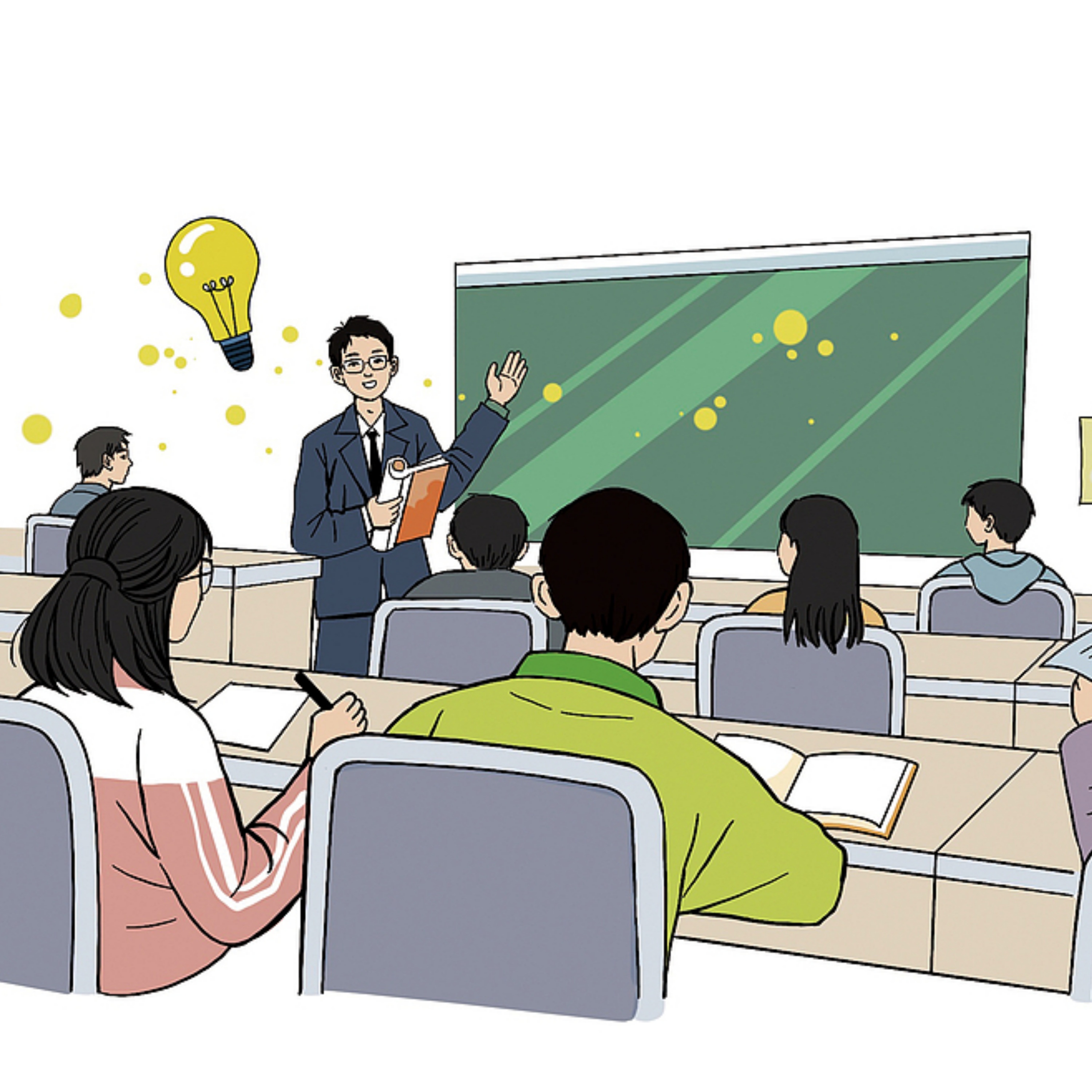
您正在收听的是圆桌会议。我是凌优豪,与史蒂夫和余迅一同主持。说到我对学生时代的记忆,就是考试、测验、评分,周而复始。但如果课堂能来一场改造秀呢?告别那种一刀切的讲座模式,迎来协同教学、翻转课堂,以及每日的离场访谈——听起来更像是真人秀而非成绩单。
You're listening to Roundtable. I'm Yoho Ling, joined by Steve and Yu Xun. When it comes to my memory of my skill time, it was chuck, test, grade, and repeat. But what if classrooms can have a makeover show? Got out well, outgoes, the one size fits all lecture, incomes, co teaching, flipped learning, and daily exit interviews that sound more like reality TV than report cards.
如果我们不再单向灌输学生,而是与他们共同学习呢?今天,我们将探索课堂如何打破旧模式,一次反思、一次协作地逐步革新。另外,今天是周一。我们知道周一可能有点难熬,但我们在这里为您提供额外动力,让您强势开启一周。圆桌会议的励志周一已准备好为您带来鼓舞人心的话语,充实您接下来一周的思想与精神。
What if we stopped teaching at students and started learning with them? Today, we explore the classroom's breaking old modes, one reflection, one collaboration at a time. Also, it's Monday. We know Mondays can be a bit tough, but we're here to give you that extra boost to start your week strong. Roundtable's motivational Monday is ready to bring you words of inspiration to fill your mind and spirit for the week ahead.
但首先,当我们思考教育时,常常会想到传统模式:一位老师、一次考试、标准化的授课方式。但在世界不同地区,教育工作者正采用创新工具和结构来提升学生的表现和参与度。今天我们重点关注两个最具影响力的变革:使用快速、日常的形成性评估工具,以及向协作教学环境的转变。理念简单却前瞻:我们是否在用尽所有可用工具来了解学生今天真正学到了什么?
But first, when we think about education, we often picture the traditional mode one teacher, one test, and standard lecture delivery. But in different parts of the world, educators are embracing innovative tools and structures to boost student performance and engagement. Our focus today is on two of the most powerful changes: the use of quick, daily, formative assessment tools and the shift toward collaborative teaching environments. The concept is simple but forward. Are we using every tool at our disposal to see what students actually learned today?
传统的每间教室一位老师的模式是否仍是教学或触及每位学生的最有效方式?我们将探讨像离场票这样简单的策略如何成为课堂中强大的反思工具,以及团队教学的推进如何从根本上塑造或撼动教育格局。同时,我们也会提供一些关于学习的小贴士。但让我们先来看看离场票。究竟什么是离场票?
And is the traditional one teacher per room model still the most effective way to teach or to reach every student. We're exploring how simple strategies like the exit ticket are becoming a powerful reflection tool in the classroom, and how a move forward team or a move towards team teaching is fundamentally shaping or shaking up the educational landscape. And also, we'll be providing a little bit of our own tips when it comes to learning. But let's go to the exit ticket first. Exactly exit ticket, what it is?
是的,说实话我也是第一次听说。它其实是一种每日反思工具,可用于课程结束时。这是一个非常快速的作业,要求学生总结所学内容。它允许他们提出关于刚听过的课程可能存在的疑问,或者解决一个与课程主要目标相关的问题。这是一个非常简短的活动,目的是确保学生对课程有某种程度的理解,或者发现他们是否未能完全掌握课程概念。这是一种形成性评估,意味着它让教育者能在学习过程中检查理解情况,而不仅仅是在最后——我所说的最后是指,通常...
Yeah, this is the first time I've heard of it as a matter of fact, and what it is is it's kind of like a daily reflection tool that can be used at the end of a lesson. It's a really quick assignment that asks the students to summarize what they've learned. It allows them to ask perhaps a question that they may have about the lesson that they just heard or maybe solve one problem related to the lesson's main objective as well. It's a really brief activity and the goal is to ensure that the students had some sort of comprehension of the lesson, or to find out if they didn't have a full grasp of the concept of the lesson. It's a kind of formative assessment, meaning it allows the the educators to check for understanding during the learning process, not just at the end, and what I mean by the end is, you know, usually
学期结束了。
End of a semester.
是的,没错。在学期末或者期中考试的时候,这就像一个小小的日常检查工具,用来确保学生们理解了所教的内容,主要的好处是给老师的,它让老师能够思考。如果你是老师,在课堂结束时收到这些退出票,也许有60%的学生说今天没太搞懂这个概念,那么老师就可以据此调整下一节课的内容,让学生们能跟上进度。
Yeah. Exactly. At the end of the semester or mid semester when you take your your midterm exams. This is just like a little daily check-in tool to make sure that the students are are understanding the lesson that was provided, and the main benefit here is for the teachers, it allows them to, you know, think about it. If you're a teacher and you get these exit tickets at the end of the class and maybe 60% say, I didn't really get the concept today, then it allows the teacher to change or make adjustments to the following lesson so that the students can, you know, keep up with what's going on.
好的。那么一般来说,这些票是关于什么的?它们是问比如课堂上刚教过的某些问题吗?还是只是问你觉得最难的点是什么?哪个部分没听懂?
Okay. So now in general, what are the tickets about? Are they asking, for example, certain questions that they've just taught in the classroom, classroom? Or are they simply asking what is the hardest point for you? Which one did you not get?
或者我们说的是哪种问题?
Or what kind of question are we talking about?
是的。它不只是泛泛的问题,比如今天的课怎么样?好、坏,或者糟糕。对,这不是餐厅评价。
Yeah. It's not just a generic question like, how was our lesson today? Good, bad, you know, terrible. Yeah. It's not a restaurant review.
嗯哼,对吧?他们称之为元认知,它让学生以这种方式参与,意思是思考他们自己的思维方式,元认知的。举个例子,三二一退出票,要求学生列出他们在课堂上学到的三件事、两个仍然存在的问题,以及一个关键收获。所以三二一退出票,让学生完成这些,给老师提供一些非常清晰的反馈。
Uh-huh. Right? They call these metacognition, and it allows the students to engage in in that manner, meaning thinking about their own kind of thinking, metacognitive. So an example would be the three two one exit ticket, and that requires students to identify three things that they learned in the lesson, two questions that they still have, and one key takeaway from the lesson. So three, two, one exit ticket, and it allows students to complete them and provide the teacher with some really clear feedback.
我真的很希望圆桌会议的听众在听完我们的节目后也这样做。
I really want roundtable listeners to do that after listening to After our
每场演出?
every show?
是的。每场演出后都要留言评论。不。不。不。
Yeah. After every show and leave a comment. No. No. No.
不,我不是那个意思。我们爱你,你可以聆听和享受。但你应该。你觉得完成这样一份简单的出口票需要多长时间,比如用三二一结构说就行。
No. I I didn't mean that. We love you and you can listen and enjoy. But you should. How long do you think it will take you to finish, for example, a exit ticket like this with a just say three two one structure.
这正是我想问的,因为这些都是在每节课结束时进行的,对吧?所以大概需要,比如说,十到十五分钟让所有学生
That's exactly what I wanna ask because all of these happened at the at the end of each class. Right? So probably it's gonna take, let's say, ten to fifteen minutes all the students
所有学生。
All of the students.
是的。并且完成问题,对他们所学内容进行一点反思,给老师反馈,老师可以评估所有结果。
Yeah. And to, like, finish the questions and have a little bit of a reflection on what they've learned and getting giving feedback to teachers and teachers can assess all of the results.
是的。我认为当系统到位且学生熟悉后,你可以在课程进行中就填写出口票。对吧?比如今天学到的东西。如果你理解了某个内容,好的,我明白了,那你就可以在课程进行时直接填写。
Yeah. I think when you have the system in place and the students are familiar with it, you could be filling out your exit ticket as the lesson is going on. Right? You know, things that you learned today. If you understood something, okay, I get that, then you could fill that in right as the lesson's going on.
所以,是的,你不想占用课堂半小时让学生们填写这个。而且
So, yeah, you don't wanna be taking up a half an hour of class time for the students to to fill this in. And
我必须说,这也和班级规模有关。比如,我上小学的时候,我们班有70多个学生。不止70个?是的,是的。
I have to say, it has something to do with the size of the class as well. For example, when I was in primary school, our class has more than 70 students. It's just not 70? Yes. Yes.
那是个大班,意味着老师肯定没有足够的时间当场处理票单。他们必须把所有票单带回办公室,如果数量那么大,就得开始认真分析。是的。
It was a huge class, meaning that the teacher would definitely not have enough time to process ticket right on spot. They will have to take all the tickets back to their office and start doing serious analyzing if it's that huge Yeah. Of a
这就是老师们应该做的,你不应该坐在那里占用额外的课堂时间来逐一检查票单和核对答案。你应该课后做这件事,也许晚上在家或下班后在办公室,但,是的,目标仍然一样,无论是70个学生还是5个学生。不过,是的,确实,如果你班上有70个学生,处理这些票单会花你长得多的时间。
that's what the teachers are meant to do, is that you don't sit there and use extra class time to go through all the tickets and and check the answers. You do this post class, perhaps in the evening at home or in your office after after work, but, yeah, the the goal still, 70 students or five students, the goal remains the same. Although, yes, granted, if you have 70 students in the classroom, it's gonna take you a lot longer to go through those tickets.
如今,一个班的平均学生人数大约是40到50人,如果是初中或高中。但对于更小的学生,比如更年幼的学生,例如幼儿园或小学,学生人数甚至可以更少,这使得这种方法在这方面更可行一些。但我们有任何研究状况或任何东西证明应用这种方法对学生的影响吗?
Nowadays, the average numbers of students in one class would be around 40 to 50 if it's middle school or 40 high to 40. But for smaller students, like younger students, for example, if it's kindergarten or primary school, can be even smaller a number of students, making this method a bit more doable in that sense. But do we have any research status or anything proving the effect on students when you apply this kind of method.
范德比尔特皮博迪学院的研究副教授詹妮弗领导的一项近期研究发现,持续使用这种元认知驱动的离场票单的学生显著优于对照组。这是一个强有力的发现,表明这些工具在困难和顺序性学科中非常有效,并且我认为它更全面,因为它能为学生和老师在课堂上提供交流的机会。因为我会说,这种形式并不那么新,因为实际上,家庭作业就是一种让学生进行一点反思的方式。对吧?但它是在放学后完成的。
A recent study led by Jennifer, a research associate professor at Vanderbilt Peabody College, found that students consistently using this metacognitive driven exit tickets significantly outperformed control groups. This is a strong finding that shows these tools are highly effective in difficult and sequential subjects, and I was thinking in the way that it is more comprehensive, in the way they can offer an opportunity for students and teachers to communicate during the class. Because I would say, of this form is not that new because, actually, homework is a way for students to have a little bit of reflection. Right? But it is done after school.
而当学生们可以——但他们必须,比如,主动自己完成这个并交作业,如果他们还有问题,也许可以问老师。
And when students can they but they have to, like, actively do this by their self by themselves and hand hand in the homework, and maybe if they still have questions, they can ask teachers.
是的。这个这个就是。这是你不能用AI来做的事情。是的。你没有。
Yeah. This this is way. This is something you cannot use AI for. Yeah. You have No.
一个课后反馈单。你怎么能用AI来做这个呢?
An exit ticket. How can you use AI for that?
不。我不是说你可以用AI来做作业,我是说AI可以应用在其中。因为我在想,如果我们讨论的是有哪些内容没听懂,也许有些学生会害怕让老师知道,如果不是匿名的话,告诉老师我没听懂80%的内容。所以也许可以有不同的方式或不同的场景来实现。
No. I don't think I'm not saying you can use AI to do your homework, but I'm saying AI can be applied in it. Because I was thinking, if we are talking about what are some things that you didn't get, maybe some students would fear making teacher well, telling teacher that I didn't get 80% of what you taught if it's not anonymously. So maybe what can happen or it's in different scenarios. It can be done in different ways.
你可以让每个学生课后提交反馈单。也可以通过一个AI应用让他们匿名提交答案,这样老师就会知道,哦,60%的学生没听懂,但我不知道具体是谁,我完全可以再教一遍。另外,我在想,你觉得这在不同的学科之间会有区别吗?
You can have every student handing up their exit ticket after the class. You can also have them put in their answers anonymously through a AI app so that the teachers would know, oh, 60% of the students didn't get it, but I do not know whom, but I can definitely teach it again. And also, I was wondering, do you think it differentiates between different subjects?
研究结果显示,这在STEM学科中是一个有效的工具。嗯。是的。如果你说的是哲学类的话题,比如,我不知道,英国文学和思考莎士比亚诗歌的含义,那么,你知道,艺术类的问题并没有标准答案。但当你讨论数学或科学问题时,这些问题有明确的对错,有清晰的答案,那么这种方法往往会带来积极的效果。
The results of studies showed that this is an effective tool in STEM subjects. Mhmm. Yeah. If you're talking about philosophical topics like, I don't know, English literature and pondering Shakespeare's meanings in his poems, then, you know, it's not that there's no definitive answer for the arts. But when you're talking about things like math or science questions where there is a clear black and white, there's a clear answer, then there tends to be positive results from this.
尽管有这些积极的结果,但也有缺点,我认为最明显的一点是老师需要善加利用这些。你不能只是发下反馈单然后就
But with all the positive results, there are drawbacks as well, and I think the first most obvious one is that the teacher needs to take advantage of these. You can't just give out the tickets and then
忽略结果。
Ignore the results.
是的。先不说结果,你知道,老师们很忙。他们有很多事情要做,也许,我不确定,也许人工智能工具可以帮助分析数据,因为说到底这就是数据收集,对吧?所以老师们必须确保有时间去审阅这些数据,而且他们也提到,如果提示、如果问题变得有点太重复,如果每天都用同样的321方法,这存在失去学生真实声音的风险,因为那样相当限制性,不是吗?
Yeah. Ignoring the results, you know, teachers are busy. They have a lot of things Yeah. To do, and maybe, I don't know, maybe AI tools can help analyze the data, because it is data collection, isn't it, at the end of the lesson. So the teachers have to make sure that they have time to review it, and they say too that there's a risk in this of losing the student's voice if the prompts, if the questions become a little bit too repetitive, if they're the same every day, you're using the 321 every day, because that's quite restrictive, isn't it?
你并不是真正在和学生们交谈,你几乎是在让他们填写调查问卷。那么你能从那份调查中获得可靠的结果吗?
You're not actually speaking to the student, you're having them fill out a survey almost. So can you get reliable results from that survey?
另外,如果我们讨论的是不同阶段的学生,我记得在高中,每个人都已经非常清楚需要努力学习的事实。大多数学生都知道这有多重要,这就是为什么我们有所谓的自习课,但其实它们并不完全是自习。你可以完成作业和做练习,但同时,教室里或办公室里会有老师,如果你有问题,比如解决不了某个难题或对所学内容有疑问,你随时可以去找他们。所以
And also if we're talking about different students from different stages, I remember in senior high, everyone is already very aware of the fact that they need to study hard. Most students know how important it is, which is why we would have different so called self learning lessons, but they're not really self learning. You can finish your homework and do exercise, but at the same time, there will be a teacher in classroom or in the office, and you can always go find them if you have some problems, if you have some trouble solving one problem or about the things that you've learned. So
是的。我明白你的意思。但这有点不同,因为你举的例子是把责任放在了学生身上。
Yeah. I know what you mean. This is a little bit different, though, because that puts your your example puts the onus on the student.
没错。这正是我想说的。因为我认为在不同的阶段,学生们对自己学得怎么样、学得如何有不同的认识。他们对自己、对自己的学习能力、学习成果有不同的理解水平。所以必须针对不同阶段,如果不是不同班级的话,采用不同的策略。
Exactly. That's what I'm talking about. Because I think in different stages, students know about how well they learn or differently. They have different level of understanding of themselves, of their learning ability, of their learning results. So different strategies must be used for different stages, if not different classes.
我的意思是,我记得在大学时,我的教授们在学期初告诉我们,这是我的办公时间。我的门总是敞开的。是的。但我一次也没去拜访过。
I mean, I remember in university, my professors told us at the beginning of the semester, here are my office hours. My door is always open. Yes. I don't remember visiting once.
看吧,就是不同的场景。在中国,2022年有一份全国性的文件,我认为是一份建议性的文件,要求学生们或者要求学校记录学生的学习过程,而不仅仅是学习结果。就像Steve说的,在学期末。他们也在鼓励学生或鼓励教师和学校去弄清楚学习过程,并认为这会是一个好方法。除此之外,我们还提到了另一种正在被发现和讨论的方法,那就是替代性的课堂结构。
See, just different scenarios. Here in China in 2022, there has been a national I think it's a paper, but it's a suggestive kind of paper asking students or asking schools to record students' learning process instead of just the learning result. Like Steve said, at the end of the semester, semester. What they are also encouraging students or encouraging teachers and schools to figure out the learning process, and think this would be a good way to do that. And on top of it, we mentioned there is another method that is being discovered and being discussed, that is the alternative classroom structure.
是的。这个操作起来要难一些。我认为任何地方的任何课堂上的老师都可以发放随堂测验。嗯。不过协同教学由于几个不同的原因,要实施起来困难得多。
Yeah. Now this one's a little harder to do. I think any teacher in any classroom anywhere can give out an exit ticket. Mhmm. Though co teaching is a much more difficult thing to accomplish for a couple of different reasons.
但他们现在正在美国密歇根州这样做。他们称之为团队教学,并且发现这在课堂上是一个非常有效的体系,因为它真正摆脱了单一教师模式。据我理解,他们的做法是在教室里安排两位老师,并将学生分成小组。对我来说这也是个新概念,以前从未在任何课堂见过。他们把在课程概念上有困难的学生分给一位老师教,而已经很好掌握概念的学生则由另一位老师指导。
But they are doing this in Michigan in The United States right now. They're calling it team teaching, and they're finding it to be a really effective system in the classroom because it's a real shift away from the single single teacher model where and what they do here is that you have two teachers in the classrooms, and you separate them into groups from what I could understand. Again, for me, this is a new concept and I've never seen it in any classroom before, but you take the students who are having trouble with the concepts in the class, and you have one teacher for them, and then you have another teacher for the students who seem to grasp the concepts quite well.
为什么我们不直接把他们分到不同的班级呢?
Why why don't we just put them into classes?
嗯,因为那样做起来非常困难
Well, because when you have to because that's very difficult to do
总是或者持续不断地。
All the time or constantly.
是的。因为你不可能在开课第一天就知道谁能够很好地掌握概念而谁不能。对吧?所以即使你把他们分成两个不同的小组,每个小组内部仍然会有更优秀的学生和概念上稍落后的学生。他们在课堂上发现这是一个非常高影响力的场景,但这实施起来一点也不容易。
Yeah. Because you don't know on day one of the class who's going to grasp the concepts well and who isn't. Right? So even if you split them into two different groups, you're still gonna have two groups within each of those groups, the stronger students and the students who are a little bit behind in the concepts. And this is a really high impact scenario that they're finding in the classrooms, but this is not easy to accomplish at all.
而在中国这里,我们也有双教师场景,但方式不同。
And here in China, we have the two teacher scenario, but in different ways.
是的。我在网上查找了一些相关信息,我觉得我稍微理解了一些,因为他们会更有针对性地设计这种模式,因为教育场景中存在很多问题。所以在设计这种双师课堂之类的东西时,他们会找到适合的具体场景,这是一种混合模式,由经验更丰富的教师或名师通过直播远程授课。
Yeah. I was looking for some information about this on the Internet, and I've I I I think I get a little bit sense as they will design this kind of mode in a more targeted way because, there are a lot of issues, I would say, in the educational scenarios. So when they are designing these kind of, like, dual teacher classrooms or that kind of things, they will find specific scenarios to fit in, which is this is a hybrid model where, like, more experienced teacher or master teacher delivers lessons remotely via live streaming. Oh.
是的。那么现场的老师
Yeah. Well the on-site teacher
解决问题。
Solves problems.
是的。回答问题之类的。这样一来,当这个教室或学校位于偏远地区时,他们也能享受到北京、上海这样大城市更优质的教育资源。我看到的一个例子是,一位北京物理专家通过远程教学为云南农村学生授课,当地老师协助实验。这样他们既能学到知识,又能动手做实验。
Yes. Answer questions or something like that. And so that's that's kind of in a way that when this classroom or this school is in a remote area, they can also enjoy higher quality educational resources in big cities like Beijing and Shanghai. So the example that I saw is that a Beijing physics expert teaching rural students in Vingnan with a local teacher assisting experiments. So they can have both the knowledge and also hands on experiment experiments.
这弥合了我们所说的城乡教育差距。
And this bridges the, what we call, urban rural education gap.
是的。我是说,这是个很棒的主意。但是,再次强调,这种模式以及密歇根系统中教室里有两位老师面临的挑战之一就是后勤安排。对吧?
Yeah. I mean, that's a great idea. Yes. But but, again, one of the challenges of that and also the Michigan system where they have two teachers in the classroom is just the logistic the logistics of it. Right?
你需要资源,需要这方面的预算。但如果能成功实施,对学生来说是非常有益的。
You need and also, you need the resources. You need a budget for this type of thing. But if you can pull it off, it's just so so beneficial to the students.
当我们谈论资源时,我们看到北京的一所中学能够为超过二十多个省份的200多所农村学校提供远程协作教学支持。这既节省了资源,又显著提高了效率,让偏远地区的学生能够更好地接触到优质的教学资源。这正是我们乐于见到的技术进步。是的。说到这里,我们还有其他例子,包括翻转课堂。
And when we talk about resources, we see a middle school in Beijing can provide remote collaborative teaching support to over 200 rural schools across more than two twenty provinces. And that saves resources and definitely improve efficiency and would allow students in remote areas to have better access to good, really good teaching resources. And that is the kind of technological advancement we love to see. Yeah. And on that note, we also have other examples, including a flipped classroom.
是的。我之前在你的例子中提到过,当你说这让学生承担起责任。
Yeah. I I mentioned before in your example, when you said it puts the onus on the student.
是的。
Yes.
这种翻转课堂模式100%地将责任放在了学生身上,因为在传统课堂中,老师会讲课,然后布置练习题或家庭作业让孩子们回家完成,但在这里,学生们会在课前观看预录的视频讲座或阅读内容,或者他们可以通过播客形式学习课程。学生们在自己的时间里完成这些,然后当他们来到教室时,所有这些时间都被释放出来了。老师不再花时间讲课,而是把时间用在解决问题上,与学生们互动讨论如何解题,因为他们已经在课前观看了讲座。
This flipped classroom model puts the onus on the student 100% because in your typical classroom, you're going to have a teacher delivering a lecture and then assigning practice problems or homework for the kids to do at home, but here students will watch prerecorded video lectures or they'll read content before the class, or maybe they can do the lesson in podcast form as The students do this on their own time, then when they come to the classroom, all this free all this time is freed up. The the teacher doesn't spend time teaching the lecture, the teacher spends time on the problems, interacting with the students on how to solve the problems because they've already watched the lecture before they come to the class.
假设我14岁,被引入了这种模式,那么我不仅要在教室里学习八小时,现在当我离开学校、吃饭、走路的时候,我走路时可以听播客学习,吃饭时可以看视频学习。多么迷人啊。不过说正经的,例如在重庆,有一个十分钟的微课系统,使考试成绩提高了12%。
Say I'm 14 and I'm introduced to this, so not only do I have to study eight hours in the classroom now when I'm out of the school, when I'm eating, when I'm walking, I can when I'm walking, I can listen to podcasts and study. When I'm eating, I can watch a video and study. How fascinating. But jokes aside, in Chongqing, for example, it has a ten minute micro lecture system that has led to a 12% improvement in test scores.
哦,所以
Oh, so
所以结果肯定是好的。
the So the results is definitely good.
所以他们正在使用那个系统,但课堂时间短得多?是课堂上的微课。
So they're using that system, but the class time is much shorter? A micro lesson in the classroom.
微课或微讲座。
A micro lesson or a micro lecture.
嗯,是的。
Mhmm. Yes.
所以可能整节课大约是四十五分钟,花十分钟让老师讲课,然后剩下的时间是学生解决所有问题并进行反思,嗯,并与老师交流。
So that's probably like you the whole lesson is about like forty five minutes and you spend ten minutes for teachers to give the lecture and then the last minutes will be students solving all of the problems and get that kind of reflection Mhmm. And to communicate with the teachers.
他们说这种模式,这种翻转课堂模式是个非常好的想法,而且顺便说一下,他们已经在使用了。在中国、美国、欧洲和世界其他地区都在使用,他们说之所以能如此成功,是因为它将课堂时间变成了一个积极的学习环境,用于学生之间以及师生之间的应用和协作,并消除了老师站在前面一小时单向传递信息,然后学生什么都不说、不练习就离开的模式。所以他们说这是一个很大的改进。
They say that this model, this flipped classroom model is a really good idea, and by the way, they're using this already. They're using it in in China, they're using it in The States, Europe, and other areas of the world, and they're saying why it can be so successful is because it turns the class time into an active learning environment for application and collaboration between the students themselves teacher, and it removes that one way communication model of the teacher standing in the front delivering information for an hour, and then the students don't say anything, they don't practice anything, they just leave. So they say this is a bigger a big improvement
是的。实际上,在中国乃至全球,老师们正在发现不同的方法、新的技巧和课堂结构,以改善学习体验,当然还有学生的成绩结果。希望越来越多的学生能找到最适合自己的方式,让他们理解学习可以多么不可思议、多么有趣。您正在收听的是《圆桌议事》,接下来是‘激励星期一’。
on that. Yes. And across China and around the world, actually, teachers are finding out different ways, different new tricks, and different structures of classrooms just to improve the learning experience and, of course, the score results results of students. And hopefully, more and more students can find the way that suits them the most that can make them understand how incredible learning can be and how fun it can be for them. You're listening to Roundtable coming up next, motivational Monday.
这里是《圆桌议事》,我是牛红林,还有史蒂夫·哈瑟利和于顺。现在我们进入‘激励星期一’。于顺,你有什么来激励我们?
It's roundtable with myself, Niu Hong Lin, Steve Hatherley, and Yu Shun. And now we enter motivational Monday. Yu Shun, what do you have to motivate us?
首先,好消息。我最近拿到了驾照。
First of all, good news. I recently got my driver's license.
恭喜。
Congratulations.
但就在昨天,我已经遇到了一些路怒症。哦。
But just yesterday, I already ran into some road rage. Oh.
这怎么激励人了?拜托。你有
How's that motivational? Come on. You have
是的。我来告诉你。你自己。根本没花多长时间。我在一条狭窄的街道上等待行人通过,这正是交通规则要求的。
to Yeah. I'll tell you. Yourself. Didn't take long at all. I I was on a narrow street waiting for pedestrians to pass, which is exactly what the traffic rules require.
对吧?这时我后面的车开始不停地按喇叭。然后超过我之后,这个司机故意在绿灯时停下来,就是为了挡住我的路。
Right? When the car behind me started honking non stop. And then after overtaking me, this driver deliberately stopped at a green light to just to block my way.
为了传达一个信息给。是的。
To deliver a message to. Yeah.
所以这感觉非常不合理且令人沮丧,因为规则就是如此,对吧?就好像他们无法理解我只是在遵守法律。这让我想起一篇文章谈到不要回应恶意——或许这个词太重了——但确实是恶意,不要陷入自证清白的陷阱。文章说我们应该学会不纠缠、不过度解释、不消耗自己的情绪能量,不要回应敌意或为无端的批评辩护。
So it felt so unreasonable and frustrating because that that's what the rule is. Right? As if we could could not understand that I was simply following the law. And it reminded me of an article about not responding to malice, maybe that's too serious, but malice, and don't get caught in the need to prove yourself. So it said that we should learn not to get entangled, not to over explain, and not to drain ourselves emotionally, and don't respond to hostility to or defend yourself against baseless criticism.
是啊。很高兴你在路怒症课程里找到了佛陀和孔子的智慧,但我得告诉你,下次你在路上开车时,那股怒气肯定又会冒出来的。不过
Yeah. I'm glad you found Buddha and Confucius in your road rage lesson, but I'll tell you right now, the next time you're in the car on the road, that rage is gonna come right back out again. But I
至少昨天我控制得很好。
think at least yesterday, I controlled very well.
挺好的。
It's good.
是的。再次恭喜你。那么,
Yeah. Congratulations again. So,
你知道,当你拒绝纠缠时,拥有不去在乎的勇气——不在乎那些伤人的话语、不公平的评价或随意指责——恶意就失去了力量。当你停止过度解释,负面能量自然就会回归其本源。因为我在想,无论你选择如何生活,总有人会说三道四。就像在互联网上,无论你分享什么,人们都可以评论并提出各种随意指责。所以为什么不活得自在些,把时间和精力专注于那些真正让你快乐的人和事呢?
you know, how having the courage not to care and not about, like, these hurtful words or minds, unfair judgments or random accusations when you refuse to engage, the malice loses its power. So when you stop over explaining, the negativity naturally just returns to where it came from. So no matter because I was thinking no matter how you choose to live, there was always gonna be something others can say because, like, when you're, like, on the Internet, when whatever you share, people can comment and give any random accusations. So why not just live comfortably and focus your time and energy on the people and things that truly make you happy?
是的。这非常明智。
Yeah. That is very wise.
路怒症显然在极端情况下极其危险。但在轻微案例中,我觉得它非常有趣。我姐姐是我这辈子见过最友善的人之一。她是一名小学老师,说话非常温柔。
Road rage is obviously, at its most extreme, incredibly dangerous. But in the minor cases, I find it so amusing. My sister is one of the nicest people I've ever met in my life. She's an elementary school teacher. She's very soft spoken.
她非常温柔,直到——哦,她开起车来
She's very sweet until Oh, she drives a
是吗?你这么觉得吗,老兄?
yeah? You think so, buddy?
就像,哇。这个人怎么回事?
Like, woah. Where'd this person go?
我知道。我理解这一点。
I know. I understand that.
另外,当你开车时,有一种理论认为你已经耗尽或已经用完了这部分认知能力。当需要控制情绪和对他人反应的方式时,这不是你的错。只是开车时你已经很疲惫了。
And also, while you're driving, one theory is that you used up or you used up the this part of your cognitive ability already. And when it comes to controlling your your emotion and the way you react to people, it's not your fault. It's just when you drive, you're already tired.
我发现这个话题在心理和情感层面上非常迷人。是的。多年来,因为当你置身于汽车的四面墙壁内时,会发生一些事情。嗯。这让你行为变得不同。是的。因为如果有人在银行或机场排队时插队,你不会对他们大喊大叫。
I've I've found this topic to be fascinating on a psychological and emotional level Yeah. For many years because there's something that happens when you are placed inside the four walls of a car Mhmm. That makes you behave differently. Yes. Because if somebody cuts you off in a line at the bank or the airport or something, you don't start screaming at them.
瞬间爆发,对吧?你可能会感到那种恼怒,但当你感到被保护时,你的车在那一刻就像键盘一样发挥作用。你知道,人们会在网上发表恶毒的评论,这些话他们永远不会当面说出口,但不知为何,当你感受到汽车保护带来的舒适感时,人们就会彻底失控。
Instantly. Right? You might feel that annoyance, but when you feel protected, your car functions as a keyboard kind of, in that moment. You know, people will comment on the Internet nasty things that they would never ever say to somebody in person, but for some reason, when you feel the comfort of a car protecting you, people just go absolutely nuts.
关于雨霜刚才想表达的观点。
And about the point Yushuang was trying to make.
哦,是的。恭喜你道歉了。
Oh, yeah. Congratulations on your sorry.
这也完全正确,因为我们讨论的是在生活中对某些事情说不的能力。这无疑至关重要。但回应呢——停止回应的能力,既包括主动停止回应,即当场发表评论或说些什么,也包括被动停止回应,即不再感到不适、不再感到困扰、不再受到情绪影响。这一点也非常重要。希望这足够有激励作用。
And it's also absolutely true because we talk about the ability to say no to certain things in life. That's vital for sure. But the response well, the ability to stop responding, stop responding actively in the sense of giving a comment or say something at the moment, and also stop responding passively in the sense of feeling not well, feeling bothered, being affected emotionally. It's also very important. Hopefully, that is motivating enough.
这就带我们来到今天圆桌会议的尾声。下次再见,保持对话继续,让想法流动。我是林叶荷,与史蒂夫和雨顺一起。感谢收听,再见。
And that brings us to the end of today's roundtable. Until next time, keep the conversations going and the ideas flowing. I'm Yeoho Lin with Steve and Yushun. Thank you for listening. Bye bye.
关于 Bayt 播客
Bayt 提供中文+原文双语音频和字幕,帮助你打破语言障碍,轻松听懂全球优质播客。