本集简介
双语字幕
仅展示文本字幕,不包含中文音频;想边听边看,请使用 Bayt 播客 App。
我是弗洛拉·利希特曼,您正在收听《科学星期五》。
I'm Flora Lichtman, and you're listening to Science Friday.
最近几个月,AI音乐似乎已走出新奇事物的范畴,进入了拥有真实粉丝的领域。
In recent months, AI music seems to have exited the realm of novelty act and moved into the world of having living, breathing fans.
但这会产生什么影响呢?
But what's the impact gonna be?
《科学星期五》的制作人兼音乐人迪·彼得施密特前来进行调查。
Science Friday producer and musician Dee Peterschmidt is here to investigate.
嗨,迪。
Hey, Dee.
嗨,弗洛拉。
Hey, Flora.
去年AI音乐引起我的注意,是因为我不断在算法推荐中看到这些视频。
AI music got on my radar last year because I kept getting these videos on my algorithm.
压路机的发明者是个天才。
Inventor of the road roller was a genius.
他制造了一台20吨的机器,能产生60吨的力。
He made a 20 ton machine, creates 60 tons of force.
秘密在于压路机的滚筒并不是一块实心金属。
The secret is that the roller drum isn't a solid piece of metal
AI生成的歌曲,描述了各种重型机械的工作原理。
AI generated songs describing how various pieces of heavy machinery work.
挺主流的东西。
Pretty mainstream stuff.
但去年,第一次有一些AI生成的歌曲真的登上了排行榜,比如扎纳娅·莫内的这首。
But for the first time, last year, some AI generated songs actually got onto the charts, like this one from Zanaya Monet.
音乐行业的一些重量级人物也对使用AI表达了强烈兴趣,比如汀博兰。
And some pretty big names in the music industry have gotten pretty vocal about using it too, like Timberland.
它就像一个助手。
It's like an assistant.
当我制作节拍时,我会说:嘿,你觉得这些鼓点能不能这样重新编排?
When I do a beat and I'm like, yo, how would you take these drums and rearrange it this way?
然后我就想,哦,我根本不会这样去听。
And I'm like, oh, I would have never heard it that way.
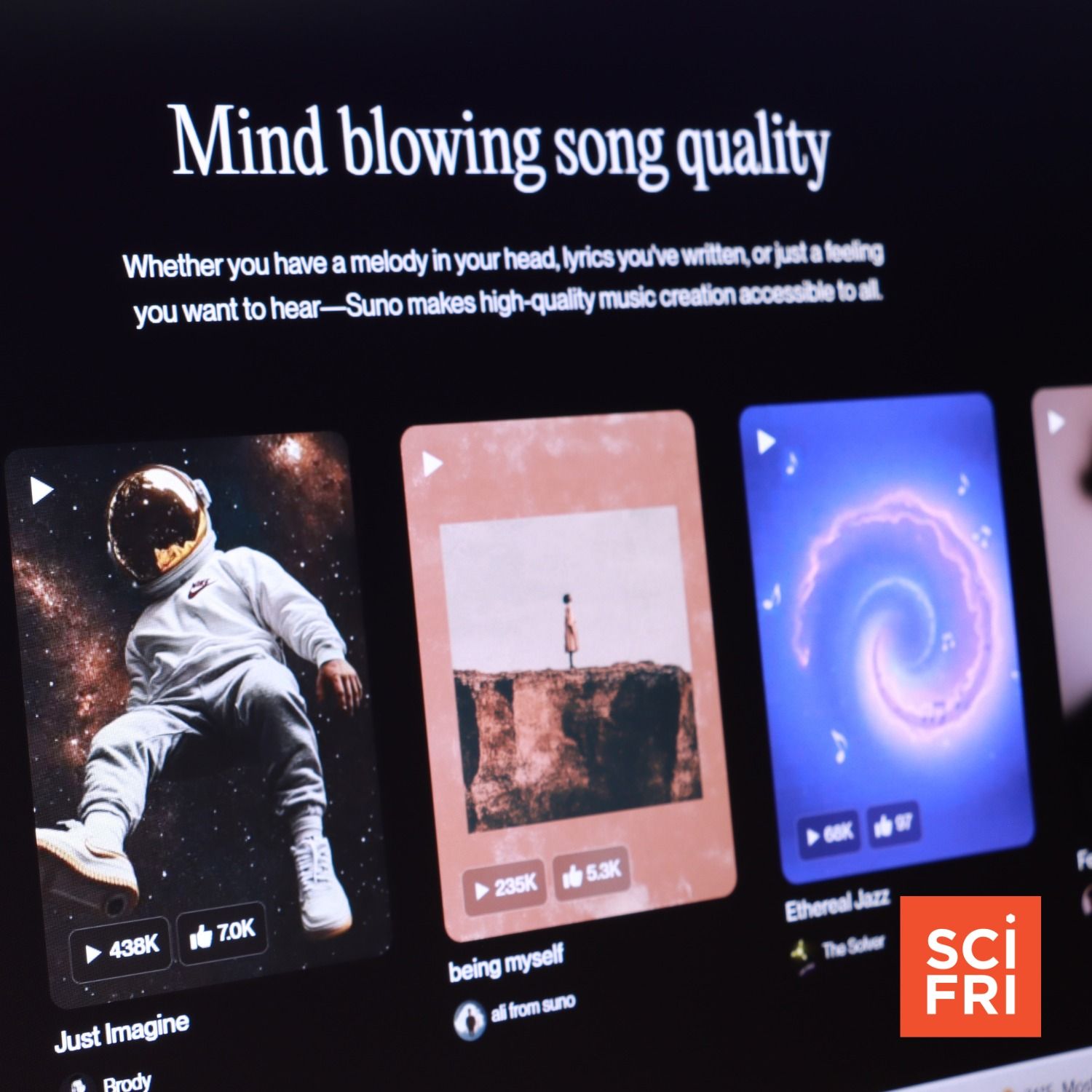
那么现在像Suno这样的AI音乐公司正在发生什么?这仅仅是音乐制作流程的又一项技术升级,还是别的什么?
So what's going on right now at AI music companies like Suno, and is this just another tech upgrade to the music making process, or is it something else?
我想联系一下我关注的这位记者,Kristin Robinson,她是《Billboard》的高级撰稿人,负责报道音乐产业中的AI应用。
I wanted to call up one of the journalists I follow on this topic, Kristin Robinson, senior writer at Billboard, who covers AI in the music industry.
嘿,Kristin。
Hey, Kristin.
嘿,Dee。
Hey, Dee.
我想知道,你去年是否也有过这样的时刻,觉得这些东西已经达到了另一个层次。
I was wondering if you also had a moment last year where you were like, oh, this stuff has kind of gotten to another level now.
你知道吗,我觉得大概就是Zanaya Monet出现的时候,你在开场提到的那位。
You know, I think it was around Zanaya Monet, who you mentioned in the intro.
我认为Zanaya Monet是一个真正的转折点。
I think Zanaya Monet was a real turning point.
但你可以指出几个不同的转折点。
But you could you could point to a few different turning points.
感觉很多事情突然之间都迅速发生了。
It just kinda felt like a lot of stuff started happening really fast.
所以在Zanaya Monet之前,让我稍微回溯一下,六月份的时候,我在TikTok上发现了一首叫《A Million Colors》的歌,歌手是Beanie Prey。
So to back up a little bit before Zanaya Monet, you know, June hits, and I find that there's this song on TikTok called a million colors by Beanie Prey.
春日的早晨,太阳从地平线上升起。
Spring mornings, the sun rises on the horizon.
我看到TikTok上的视频里,像 Kylie Jenner 这样的名人正跟着这首歌化妆,我意识到这首歌听起来有点怪,后来发现它是一首AI生成的歌曲。
I was seeing it in TikTok clips with, like, Kylie Jenner doing her makeup to the song, and I realized that the song sounded kinda weird, and it turned out it was an AI song.
而且这首歌在TikTok的热门榜单上排名很高。
And it was towards the top of the viral chart on TikTok.
然后这就像第一块多米诺骨牌倒下,之后事情就彻底失控了。
And then that just kinda felt like the first domino, and then things just totally got out of hand.
那年夏天晚些时候,一支叫The Velvet Sundown的乐队彻底火了,他们的音乐和配套图像都是完全由AI生成的。
Later that summer, this band called the Velvet Sundown, which was fully AI generated music and also AI generated images to correspond with it, really caught fire online.
然后是Zanaya Monet,那是在九月。
And then Zanaya Monet, it was in September.
她成为了我们在《公告牌》上的大新闻,因为她与一家名为Hollywood Media的传统音乐公司签下了据称价值数百万美元的唱片合约,而这家公司此前只与普通艺人合作。
She became a big headline for us at Billboard because she signed a reportedly multimillion dollar record deal with a traditional music company called Hollywood Media who's known for just working with regular artists previous to this point.
我认为,音乐行业很多人将Zanaya Monet的签约以及她的歌曲开始登上我们福音榜这一事实,视为AI音乐突然到来的一个重大转折点。
And I think that a lot of people in the music industry considered Zanaya Monet's signing and the fact that her songs were starting to climb on our gospel charts as a really big turning point when AI music has suddenly arrived.
当我们说她与这家唱片公司签约时,你知道,钱最终到了谁手里?
When we say she signed, you know, with this label, who is the person getting the money here?
好的。
Okay.
这是个很好的问题。
That's a great question.
Zanaya Monet是一个由一位名叫Talisha Nikki Jones的女性创造的AI生成虚拟形象和角色。
So Zanaya Monet is the AI generated avatar and character created by a woman named Talisha Nikki Jones.
Talisha住在密西西比州。
Talisha lives in Mississippi.
她认为自己是个诗人,但并不真正懂得如何将诗歌制作成完整的歌曲。
She considers herself to be a poet but isn't someone who knows really how to get to a finished product of a a final song.
因此,人们所说的Zanaya Monet,其实是她借以通过歌曲表达诗歌的一个角色。
And so the you know, what they say Zanai Monet is is like a a character for her to express her poetry through song.
所以,签署这份合约的人是塔莉莎·尼基·琼斯。
And so the person signing that deal would be Talicia Nikki Jones.
因此,版税会回到她手中,她还有一位经纪人。
And so the royalties would go back to her, and she has a manager as well.
他们可能会说,这些AI生成的角色或人格,与达蒙·阿尔巴恩创造的猩猩乐队及其卡通形象并无不同。
And what they would probably say is that these AI generated characters or personas are no different from, like, how Damon Albarn created the gorillas, with their, you know, little cartoon characters that kind of represented the band.
他们认为,这为艺术家提供了一种方式,让他们能够以自己通常不涉足的音乐风格表达自我。
They think that this is a way for artists to, you know, maybe express themselves in genres that don't typically follow what they're known for.
因此,他们可能会说,这促进了更多的实验性创作。
So they would probably say that this leads to more experimentation.
而且,这确实非常有趣。
And, yeah, it's very interesting.
在Zanaya Monet背后有一位女性。
There is a woman behind Zanaya Monet.
是的。
Yeah.
我的意思是,你能再多谈谈我们看到AI音乐主要融合了哪些流派吗?
I I mean, can you talk a little bit more about what kind of genres we're seeing AI music kind of glom onto?
我们有福音音乐。
We got we got gospel.
我们还有这些,
We've got these,
比如,是的。
like Yeah.
一些奇怪的重型机械视频。
Kind of weird, heavy machinery videos.
还有哪些流派正在兴起?
What what other genres are coming up?
我看到很多福音和基督教领域的音乐。
I am seeing a lot in the gospel Christian realm.
我看到乡村音乐。
I'm seeing country music.
我提到的那首《百万色彩之歌》更像是一种多尔伍普风格的复古歌曲,你知道的,五十年代的摇滚乐。
That, a million color song that I mentioned is more of, like, kind of a doo wop throwback, you know, fifties rock song.
我觉得我真正看到的是,它正在瞄准那些通常比较公式化的细分流派。
I think what I'm really seeing is that it's going for niche genres that tend to be fairly formulaic.
嗯。
Mhmm.
乡村音乐并不是一个特别复杂的流派。
Country music is not a super complex genre.
当然,它充满情感,这正是我们所有人都喜爱它的原因。
Of course, it has so much heart to it, and that's why we all love it.
但和弦结构通常都比较简单。
But the chord structure is usually pretty simple.
通常是一种主歌-副歌-主歌-副歌-桥段-副歌的结构。
It's usually a verse chorus, verse chorus bridge chorus kind of structure.
这个流派中很少有实验性创作,歌词也往往遵循特定的套路。
There's not a ton of experimentation going on in that genre, and the lyrics tend to follow specific tropes.
我认为这使得在这些流派中制作听起来逼真的AI歌曲变得更容易一些。
And I think that makes it a little bit easier to make a realistic sounding AI song in those genres.
这些是法国流媒体平台所做的大量研究,他们公开表示,他们的研究显示,97%的听众无法区分AI生成的歌曲和人类创作的歌曲。
These are the French streaming service has done a lot of research in this field, and they've they've said publicly that their research shows that 97% of listeners cannot tell the difference between an AI generated song and a human made song.
所以我认为,很可能有一些AI歌曲正在被那些并未完全意识到自己在听AI音乐的人收听和消费。
So I think it's very possible that some of these AI songs are being listened to and consumed by people who are not fully aware that they're listening to AI music.
我的意思是,你觉得AI音乐现在算得上是‘不错’了吗?
Well, I mean, do you think AI music has gotten, like, quote, unquote, good now?
你是不是那97%中,难以分辨区别的那类人?
Can you are you one of those 97% people who has trouble telling the difference?
有时候确实很难分辨。
Sometimes it is hard to tell.
我认为最大的破绽还是音频质量不够完美,我甚至不知道该怎么形容。
I think the big tell still is that the audio quality isn't fully like, I I don't even know how to describe it.
有点沙沙的,或者
It's a little bit of a scratchiness or
听起来有点数字化的感觉。
It's a little digitally sounding.
是的。
Yeah.
是的。
Yeah.
是的。
Yeah.
是的。
Yeah.
就像像素一样,我都不知道该怎么说
It's like pixel I don't even know how to
描述不出来。
describe that.
是的。
Yeah.
音频版的像素化。
The audio version of pixelated.
是的。
Yeah.
你懂我的意思。
You know what I mean.
是的。
Yeah.
我觉得这就是最大的破绽。
And, I I think that that's the big tell.
如果你处在没有好耳机的环境中,比如用iPhone的外放听,我觉得现在很容易被蒙骗。
And if you're in an environment where you don't have good headphones, like, if you're listening on your iPhone speaker, I think it's actually pretty easy to get fooled now.
我的意思是,我想我可以把自己归为那97%的一部分,尽管根据我的工作性质,我认为自己辨别能力比普通人强得多。
I mean, I guess I would consider myself part of the 97%, although I think I can discern a lot better than your average person just based on the nature of my job.
是的。
Yes.
你曾经与Imogen Heap、Charlie Puth等音乐人交谈过,了解他们如何使用AI。
You've talked to musicians like Image Heap, Charlie Puth, about their use of AI.
你从音乐人那里感受到他们对AI音乐的看法是怎样的?
How what sense do you get from musicians about how they feel about AI music?
也许我们可以先从这些例子开始。
And maybe we can start with those examples first.
Imogen Heap 一直走在技术前沿。
Well, Imogen Heap has always been on the cutting edge.
如果在座的听众熟悉她的作品,就会知道她一直既是音乐人,也是技术专家。
If anyone who's listening here is familiar with her work, she's always been both a musician and a technologist.
她坚信技术能让她的艺术更具影响力,并在创意上带她走向新的领域。
She really feels that technology can make her art more impactful and take her to new places creatively.
所以她非常积极地拥抱技术,但她仍然非常关注那些在未经补偿的情况下,使用她的作品来训练AI音乐模型的模型。
So she's leaning in pretty hard, but she is still very concerned about models that train AI music models on works like hers without any compensation for those who they're training on.
因此,她仍然尽量避免使用像Suno这样的公司,因为它们目前的模型正在未经许可或补偿的情况下,使用受版权保护的材料进行训练。
So she still tries to stay away from companies like Suno, which currently have models, that are being trained on copyrighted material without licensing or compensation for rights holders.
但是,我看到音乐人们对此意见分歧很大。
But, yeah, I'm I'm seeing musicians really divided.
我真的不能说,比如,所有人都在这么做,或者所有人都在那么做。
I don't really think you can say, like, you know, everyone's doing this or everyone's doing that.
我想说,令人震惊的是,许多专业词曲作者和制作人私下告诉我,他们现在已经在专业创作过程中使用Suno了。
I would say that a shocking number of professional songwriters and producers have been telling me mostly off the record that they are using Suno as part of professional songwriting sessions now.
因此,他们中的许多人向我提出,目前热门百首歌曲中,很可能有一些歌曲包含了未公开的AI生成内容。
And so a lot of them have posited to me that there are probably songs on the Hot 100 right now that have bits and pieces of AI generated material that is not disclosed.
没错。
So Right.
想想这件事还真有点疯狂。
A little crazy to think about that.
我想去试试Suno。
I wanna go to Suno.
你能给我们介绍一下主要的AI音乐公司有哪些吗?
And can you give us an idea of who the main AI music companies are?
我们之前聊过这些网络迷因歌曲。
And, you know, we've talked about these meme songs.
我们也谈过它如何帮助创作流程。
We've talked about it helping with the production process.
他们到底在向人们销售什么?
What what exactly are they selling to people?
是的。
Yeah.
当我们想到一键生成歌曲时,目前这主要由Suno主导。
So when we think of, like, you know, generating songs at the click of a button, that is really dominated at this point by Suno.
它是一家AI音乐初创公司。
It's an AI music startup.
Suno在音乐行业颇具争议,因为许多人对它感到威胁。
Suno is quite controversial in the music industry because people feel very threatened by them.
我去年十一月拿到了他们的投资人演示文稿,并报道说Suno每天生成700万首歌曲。
I obtained an investor pitch deck of theirs back in November and reported that 7,000,000 songs are being generated on Suno every day.
这种规模让音乐人非常不安,尽管这700万首歌并不都会登上流媒体平台,但其中很多确实会上线。
That kind of scale scares musicians quite a bit just in in terms of although that those 7,000,000 aren't necessarily making it onto streaming services, a lot of them are.
比如,其中一些会上线。
Like, some of them are.
嗯。
Mhmm.
而这种海量内容可能挤占了人类音乐家的作品空间。
And that crowd potentially crowds out works made by human musicians.
所以Suno是一个重要的玩家。
So Suno is a big one.
UDO是另一个重要的平台。
UDO is another big one.
他们做了类似的事情。
They did kind of the same thing.
你可以在文本框中输入一些内容,然后就会生成一首歌。
You can type something into a text box and then out pops a song.
UDO 现在正转向对已有的歌曲进行人工智能驱动的混音。
UDO is now pivoting to do AI powered remixing of already made songs.
这在人工智能音乐领域目前非常流行。
This is a very popular category in AI music right now.
Spotify 也即将进入这一领域。
Spotify is even getting into this realm soon.
基本上,这意味着在获得授权的情况下,你可以将你最喜欢的两首歌混合在一起,或许还可以去掉人声,制作出卡拉OK版本。
And, basically, what this means is that, with licenses in place, you would be able to take two of your favorite songs and create mashups, maybe remove the vocals so you can do a karaoke version.
你可以加快速度。
You can speed it up.
你可以放慢速度,诸如此类的操作。
You can slow it down, all these kinds of things.
所以你可以对已有的音乐进行创作和修改。
So you can play with music that already exists.
这挺有趣的,因为去年主要的音乐公司还在拼命起诉这些AI音乐公司。
Well, it's it's funny because last year, the main the the major music labels were trying to sue the heck out of these AI music companies.
是的。
Yes.
现在它们却开始与这些公司合作了。
Now they're partnering with them.
这中间发生了什么?
What happened there?
对。
Yeah.
我认为音乐公司终于意识到,他们无法让这件事消失,因此必须找到一种方式从中获利。
So I think the music companies are really realizing that they can't make this go away, and so they need to find a way to extract value from it.
嗯。
Mhmm.
我认为另一个需要记住的事情是,就在最近,比如过去十年内,三大音乐公司中有两家成为了上市公司。
I think another thing to keep in mind is that very recently, like, within the last decade, two of the three major music companies became publicly traded companies.
因此,他们可能面临着来自股东的巨大压力,要求他们创新、整合人工智能并从中获取价值。
So they're probably getting a lot of shareholder pressure, to innovate, to integrate AI, to capture value there.
他们不想被看作是软弱的。
They don't wanna be seen as weak.
他们不想被看作是落后于时代的。
They don't wanna be seen like they're behind the ball.
所以我认为,这也是他们如此愿意寻求和解的原因之一。
So I think that that's also, you know, one of the reasons why they have been so willing to, try to find reconciliation.
没错。
Right.
音乐产业在过去在技术方面落后了很多,但看起来他们正在改变态度。
The music industry has gotten left behind a lot in the past in regards to tech, seems like they're changing their tune.
那么,鉴于这些最近的交易,你认为这一切将走向何方?
So with all these recent deals, do you have a sense of where this is all heading?
今年你最关注什么?
What do you have your eye on this year?
有趣的是,音乐AI领域主要由初创公司主导。
Interestingly, the music AI game has mostly been dominated by startups.
我对这种情况的看法是,音乐生成非常困难,而且也不是一个能带来巨大收益的领域。
My take on that situation is that I think that music is a very hard thing to generate, and it's also not something that's a huge moneymaker.
因此,直到现在,像OpenAI和谷歌这样的公司基本上一直忽视了这个领域。
So I think it's been largely ignored by your OpenAI's and Google's of the world until now.
但谷歌已经在Gemini上推出了其最新的AI音乐模型Lyria 3。
But Google has launched Lyria three, its latest AI music model on Gemini.
虽然目前还赶不上Suno或Yudio,但谁知道明年它会如何发展呢。
Still not as good as Sun or YUTIO, but who knows in the next year how it will develop.
他们还收购了一家名为Producer AI的AI音乐公司。
And they also acquired an AI music company called Producer AI.
所以我 definitely 关注谷歌,同时也关注Suno和Yudio推出的新模型。
So I have my eye on Google for sure, and I also have my eye on these new models from Suno and Yudio.
好的。
Okay.
我们也会关注它们。
We'll keep an eye on them too.
克里斯汀·罗宾逊是《公告牌》的高级撰稿人,负责报道音乐产业中的人工智能。
Kristin Robinson is a senior writer at Billboard who covers AI in the music industry.
谢谢,克里斯汀。
Thanks, Kristin.
谢谢。
Thank you.
好的。
Okay.
请继续关注我们,广告后我们将邀请一位早在七十年代就尝试过算法生成音乐的音乐人,听听她对AI音乐的看法。
Stay with us because after the break, we have one of the first musicians who experimented with algorithmically generated music back in the seventies, and we'll hear her take on AI music.
你可能以为自己了解夏威夷。
You may think you know Hawaii.
温暖的天气、沙质海滩、椰子树。
Warm weather, sandy beaches, coconut trees.
但仔细一看,你会发现这段历史充满了自私的外来者和不光彩的土地交易,这些至今仍影响着我们的岛屿社区。
But look closer, and you'll find a history checkered with self interested outsiders and shady land deals that still affect our island communities today.
我是拉塞尔·苏比奥诺,HPR播客《这是我们夏威夷》的主持人。
I'm Russell Subiono, host of the HPR podcast, This Is Our Hawaii.
和我一起深入探索你所不了解的夏威夷。
Join me for a deeper dive into the Hawaii you don't know.
可在您收听播客的任何平台收听。
Available wherever you get your podcasts.
现在,让我们欢迎一位对人工智能音乐拥有独特视角的人物——音乐家劳丽·斯皮格尔,她是电子音乐和算法生成音乐的先驱。
And now a person with a one of a kind perspective on AI music, musician Laurie Spiegel, a pioneer of electronic music and also of algorithmically generated music.
当时,这引发了不少争议。
And like today, it raised some eyebrows at the time.
她为一些最早的计算机音乐技术编写了代码,她的1980年专辑《扩展的宇宙》被公认为有史以来最伟大的环境音乐专辑之一。
She wrote code for some of the first computer music technologies, and her 1980 album, The Expanding Universe, is considered one of the greatest ambient music albums of all time.
那张专辑中的另一首歌甚至被收录在旅行者号太空船的金唱片上。
Another song from that album is even on the Voyager spacecraft's golden record.
劳里,很高兴你来到这里。
Laurie, it's so great to have you here.
嗨。
Hi.
很高兴能来。
Glad to be here.
在七八十年代,人们觉得你做的东西是音乐吗?就像现在这种AI对话一样。
Did people think what what you were making in the seventies and eighties was music, kind of like this AI conversation right now.
你刚开始做这个的时候,有没有受到过质疑?
Did you did you get shade when you got into this?
那时候计算机受到强烈的抵制,因为当时计算机只属于最压迫性的机构。
There was a lot of heavy anti computer sentiment back then because computers belonged to the most oppressive of organizations only.
那时还没有个人电脑。
They weren't personal computers yet.
当时拥有电脑的是政府、银行、保险公司和军队。
And it was the government, the banks, the insurance companies, the military who had computers.
在公众眼中,电脑继承了其控制者那种压迫性的形象。
Computers things that they were inherited the image of the oppressiveness of their controllers in the public eye.
因为那时候的电脑被认为是非人性的,是艺术的敌人,而不是我们现在所熟悉的那种温暖、亲切的笔记本电脑。
Because computers, you know, they were called, they were inhuman, they were hostiles of the arts, They were not the warm, cuddly little laptops that we we aren't used to at this point.
因此,我经常被指责让音乐失去了人性。
So that I was often accused of dehumanizing music.
但当然,技术才是最有人性的东西。
But, of course, technology is the most human thing around.
我的意思是,我们人类是所有动物中从事技术活动最多的。
I mean, we are by far the animal that does the most technology.
你
You
你知道吗,在七十年代末,你曾开发过一种算法,试图模仿巴赫的和声风格。
know, I think in the in the late seventies, you worked on a an algorithm to kind of replicate Bach's harmonic style.
是的
Yeah.
巴赫对我来说是一种至高无上的理想和灵感。
The you know, Bach is just a superlative ideal for me and inspiration.
因此,我深入研究了巴赫众赞歌的和声进行,并编写了一个简化版的算法(与巴赫的思维相比),它能生成我认为有意义的和声进行。
And, so I studied the the harmonic progressions of the Bach chorales extensively and wrote a way simplified, compared to the mind of Bach algorithm that basically generated harmonic progressions that I felt were meaningful.
嗯
Mhmm.
对
Yeah.
显然,他是一位极具数学思维的作曲家,所以去思考如何将这种风格转化为算法是有道理的。
And obviously, he's a super mathematic kind of composer, and it makes some sense to be like, how can I translate this into an algorithm?
另一方面,现代AI音乐领域确实存在一些研究,指出人们使用大型语言模型时会经历一种被称为‘技能退化’的现象——你过度依赖这些模型,逐渐把大量原本属于自己的技能外包出去,久而久之这些技能就会萎缩。
I mean, the other the other side of the the modern AI music side is, you know, there have been there have been these studies of people who use these large language models experiencing something called deskilling where, you know, you end up starting to rely so much on these models that you kind of end up outsourcing a lot of your own skill to them, and then that skill atrophies over time.
但在这个过程中,技能其实也在进化,因为为AI系统编写提示本身,就是成为一种艺术形式的第一步,我认为。
And yet, skills are evolved during that process because the writing of the props for an AI system is in itself the very first stage of becoming an art form, I think.
但这与根据你即时情绪实时生成声音、通过演奏音乐进行自我表达的方式截然不同。
But it's quite different from the moment to moment generating of sound in response to your momentary emotions, the self expressiveness of playing music.
而人工智能目前的做法——通过给出提示并等待生成的结果——与此大不相同。
And that is something that the way AI has been doing, by giving a prompt and then waiting for a fabricated result, is quite different from.
演奏乐器的表达性是直觉性的。
The expressive nature of playing an instrument is it's visceral.
它是触觉的。
It's tactile.
我听说一些音乐制作人使用Suno这类产品和AI音乐,是因为他们不想被落下。
I mean, I've heard some music producers, you know, have talked about using Suno, one of these products, and AI music because they they don't wanna be left behind.
我也看到过这种说法被用在其他AI工具上。
And I've seen that language being used with other AI tools.
你怎么看待这一点?我的意思是,上世纪七十年代,如果你不接触计算机编程和创作新音乐,你会不会觉得自己会被淘汰?
What do you make of that in terms of I mean, did you did you feel like you were gonna get left behind, you know, back in the seventies if you didn't engage with, you know, computer programming and making fresh music?
恰恰相反。
Just the opposite.
我当时走得实在太前了,以至于根本没法向别人解释我在做什么。
I I was kind of way out ahead to the point where it was impossible to explain to people what I was doing.
我一点都没有落伍。
I was not at all left behind.
简直就像在疯人院的边缘。
Was like on the lunatic fringe.
我没法向别人解释清楚。
I couldn't explain to people.
人们会说,哦,你做音乐。
People would say, Oh, you do music.
你做的是什么类型的音乐?
What kind of music do you do?
我会说,嗯,我用的是电脑。
And I would say, Well, I'm using computers.
他们一听,表情立刻就变了,马上想换个话题。
And they would immediately like their expression would change and they'd want to change the subject too.
在艺术领域,关键不在于跟上潮流。
In the arts, it's not a matter of keeping up.
关键在于发自内心的真实与真诚,你能将其化为一种外部体验,并与他人分享。
It's a matter of something honest and authentic coming from inside of you that you can embody in an experience external to you that you can share with other people.
每个人都在努力跟上最新的东西。
Everybody is always trying to keep up with what is new.
但这并不能成就高质量的艺术表达。
That's not what makes high quality artistic expression.
它必须源自你的内心。
It has to be from inside of you.
音乐本身才是最重要的,而它并不依赖于任何特定的技术。
The music itself is what's important and that's not something which is reliant on any individual technology.
它经历了数个世纪不同技术的演变,但我们依然能清楚地分辨出文艺复兴时期、二十世纪初乃至其他时代的真正好音乐,它们依然能打动我们、吸引我们。
It's gone through many centuries of evolution of different technologies and it's still obvious to us what's really good music from the Renaissance that moves us and grabs us or the early twentieth century or whatever.
重要的是音乐对我们产生了什么影响,你知道的,音乐为我们做了什么。
It it's what it does for us, you know, what music does for us that's important.
所以我认为真的没必要担心跟上技术的步伐。
So I I don't think it's really worth worrying about keeping up with tech.
关键在于你怎么使用它。
It's how you use it.
是的。
Yeah.
嗯,人工智能似乎让太多事情迫使我们去思考一些最基本的问题,比如我们喜欢什么,以及为什么喜欢它们。
Well, it seems like so many things with AI is forcing us to ask, like, these these really basic questions about the things that we like and and why exactly we like them.
我知道你刚才就在谈这个,但我的意思是,音乐对你来说意味着什么?
I know you were just talking around that, but, I mean, what does what does music mean to you?
天啊。
God.
我不知道。
I don't know.
我的意思是,我一开始提出的那个问题——音乐对人们的意义是什么,音乐对我们产生的哪些影响是这些人工智能能够满足的。
I mean, the question of that I posted at the beginning, the the question of what the purpose of music is for people and what parts of what music does to us are these AIs able to satisfy.
它们显然可以按需生成音乐,但这并不一定是情感或感觉的表达。
They obviously can generate music like material on demand, but it's not necessarily the expression of emotion or feeling.
我真的很想再多和它们玩一玩。
I really do want to play with them a bit more.
我知道,编写提示词是一种非常间接的作曲方式,就像用铅笔在五线谱上写下那些小点一样。
I know that the writing of prompts is a very indirect way of making music much like writing all those little dots on staff paper with a pencil.
然后你得到的结果往往不是你原本预期的,因为它们并不真正具有互动性。
And then you get back a result which is not what you had anticipated because they're not really interactive.
情感这种东西,我们目前还不是很理解,但它们是音乐最根本的组成部分。
Emotions are kind of we don't understand them very well yet, but they are rock bottom an essential component of music.
而这一点,正是人工智能所欠缺的。
And this is where the AIs kind of fall down.
它们没有情感。
They don't have them.
虽然它们最终可能学会如何触发和唤起情感,优秀的提示词撰写者或许也能做到,但目前这仍处于非常初级的阶段。
While they will probably figure out how to trigger them and evoke them eventually and really good prompt writers might be able to do that, It still is very much in its infancy.
这些非交互式的生成式鹦鹉,我想你可以这么称呼它们。
These non interactive generative parrots, I guess you could call them.
它们复述着在网络上或整个音乐曲目中读到的语言,并将其回放出来。
They speak the language that they have read all over the net or throughout the repertoire, and they parrot it back.
但它们无法像人类那样在直觉层面理解它。
But they don't understand it on a gut level that we humans experience it.
劳丽·斯皮格尔,电子音乐和算法生成音乐的先驱。
Laurie Spiegel, a pioneer of electronic music and algorithmically generated music.
谢谢你与我同行,劳丽。
Thanks for being with me, Laurie.
谢谢你邀请我。
Thank you for having me.
顺便说一下,劳丽最著名的一款软件——Music Mouse,她于1986年开发,最近已在现代电脑上重新发布。
By the way, one of Laurie's best known pieces of software, Music Mouse, which she made in 1986, recently got re released on modern computers.
它就像一种用鼠标操作的互动乐器,你只需在音乐网格上拖动鼠标,就能生成有趣的和弦与旋律。
It's like an interactive instrument you play with your mouse, where you basically drag your mouse around a musical grid, and it makes these fun chords and melodies.
如果你想试试,可以在我们的网站 sciencefriday.com/music 上找到链接。
If you wanna try it out, can find a link to it on our website, sciencefriday.com/music.
谢谢你,迪。
Thank you, Dee.
这一期精彩的节目由迪·彼得施密特制作。
This fantastic episode was produced by Dee Peterschmidt.
各位听众,如果你对本期内容或我们所探讨的任何话题有任何想法或感受,我们一直在这里倾听。
And listeners, if you have thoughts or feelings on this or anything else that we cover, you were always here for it.
8774 感谢收听。
8774 Thank you for listening.
我们明天再见。
We'll see you tomorrow.
《科学星期五》每周为数百万充满好奇心的听众带来探索的喜悦。
Science Friday brings the joy of discovery to millions of curious listeners every week.
当你赞助《科学星期五》时,你就与一群重视知识、探索与学习的忠实听众建立了联系。
When you sponsor Science Friday, you connect with a dedicated audience that values knowledge, exploration, and learning.
这些人喜欢深入细节,积极思考各种观点,并重视可靠的信息。
These are folks who love getting into the details, who actively engage with ideas, and who value trustworthy information.
了解更多,请访问 sponsorship.wnyc.org。
Learn more at sponsorship.wnyc.org.
关于 Bayt 播客
Bayt 提供中文+原文双语音频和字幕,帮助你打破语言障碍,轻松听懂全球优质播客。