本集简介
双语字幕
仅展示文本字幕,不包含中文音频;想边听边看,请使用 Bayt 播客 App。
嗨。
Hi.
我是弗洛拉·利奇曼,您正在收听《科学星期五》节目。
I'm Flora Lichtman, and you're listening to Science Friday.
你听说这个消息了吗?
Have you heard this news?
新墨西哥州一名男子感染鼠疫。
New Mexico man sick with the plague.
加利福尼亚州南太浩湖一名居民检测出鼠疫阳性。
A resident in South Lake Tahoe, California has tested positive for the plague.
科罗拉多州已确诊一例鼠疫病例。
The case of plague has been confirmed in a person in Colorado.
这些鼠疫病例是怎么回事?
What is going on with these cases of plague?
我一直以为黑死病是历史书里的疾病,不该出现在我的新闻推送里。
I think of bubonic plague as an illness that lives in my history book, not in my feed.
你知道的,它就出现在中世纪欧洲那一章。
You know, it appears in that Middle Ages Europe chapter.
这种由跳蚤传播的可怕细菌性疾病曾导致两千五百万人丧生。
Twenty five million people were killed by this horrible bacterial disease carried by fleas.
然后我们翻过这一页。
And then we turn the page.
但实际上,这并不是鼠疫故事的终结。
But in reality, that isn't the end of plague's story.
这种疾病至今仍然存在,仍在让人患病。
The disease is still around and still making people sick.
那么为什么我们现在会看到它出现?又该如何看待它呢?
So why are we seeing it pop up, and how should we be thinking about it?
今天为我们详细讲解的是维韦卡·瓦迪瓦卢博士,他是鼠疫研究员,同时担任华盛顿州立大学艾伦全球健康学院的主任。
Here to tell us more is doctor Viveka Vadivalu, plague researcher and director of the Allen School for Global Health at Washington State University.
维韦卡,欢迎来到《科学星期五》。
Viveka, welcome to Science Friday.
谢谢,Flora。
Thanks, Flora.
很高兴能来到这里。
It's lovely to be here.
好的。
Okay.
所以,你知道,我认为很多人把鼠疫、黑死病看作是一种已经消失的历史疾病。
So, you know, I think a lot of people think of plague, bubonic plague, as this historical disease that has come and gone.
我们应该如何看待这些突然出现的病例呢?
What should we make of these cases popping up?
没错。
Right.
关于黑死病有趣的是,在中世纪造成大量死亡的大流行之后,以及在我们称之为亚洲鼠疫的时期——那实际上是在19世纪末20世纪初,我们也看到亚洲地区如印度、中国等地爆发了大量疫情。
So the interesting thing about the bubonic plague is that after these great pandemics that killed many people in the medieval ages and during what we call the Asian plague, which was really where we saw a lot of the outbreak also in the Asian area, India, China, etc, in the late 1800s and early 1900s.
这种情况断断续续一直持续到大约20世纪20或30年代。
And that sort of continued sporadically till probably the 1920s or 30s.
那时我们以为鼠疫就此终结了。
This is when we thought that was the end of plague.
对吧?
Right?
但这实际上是一个关键时期,导致鼠疫的细菌——鼠疫耶尔森菌——正是在此时在全球各地的啮齿类宿主中建立了储存库,因为那正是人类开始大规模迁徙的时代。
But this really was a critical time when actually the organism, the bacteria that causes plague, Yersinia pestis, became established in reservoir rodent hosts all over the world because it was a time, obviously, when people started to travel out.
例如在美国,来自亚洲的船只抵达太平洋沿岸,像旧金山、西雅图这些地方,就能发现携带鼠疫的跳蚤滋生的老鼠。
For example, in The United States, right, we were getting ships that were coming from Asia onto the Pacific Coast, places like San Francisco and Seattle and areas like that, you'd see rats that were infested with fleas carrying the plague.
旧金山甚至爆发过一场鼠疫,使得这种细菌在美国本土的啮齿类物种中扎根。
There was even an outbreak of plague in San Francisco that really then allowed this establishment of this bacteria in rodent species that are here in The US.
哇。
Wow.
好吧。
Okay.
所以过去两百年间,它一直潜伏在本土的啮齿动物体内,推测全球各地也都是如此。
So it's been living in in rodents here for the last two hundred years and presumably all over the globe then.
没错。
Right.
所以当我们谈论鼠疫时,它本质上是一种啮齿动物和跳蚤的疾病。
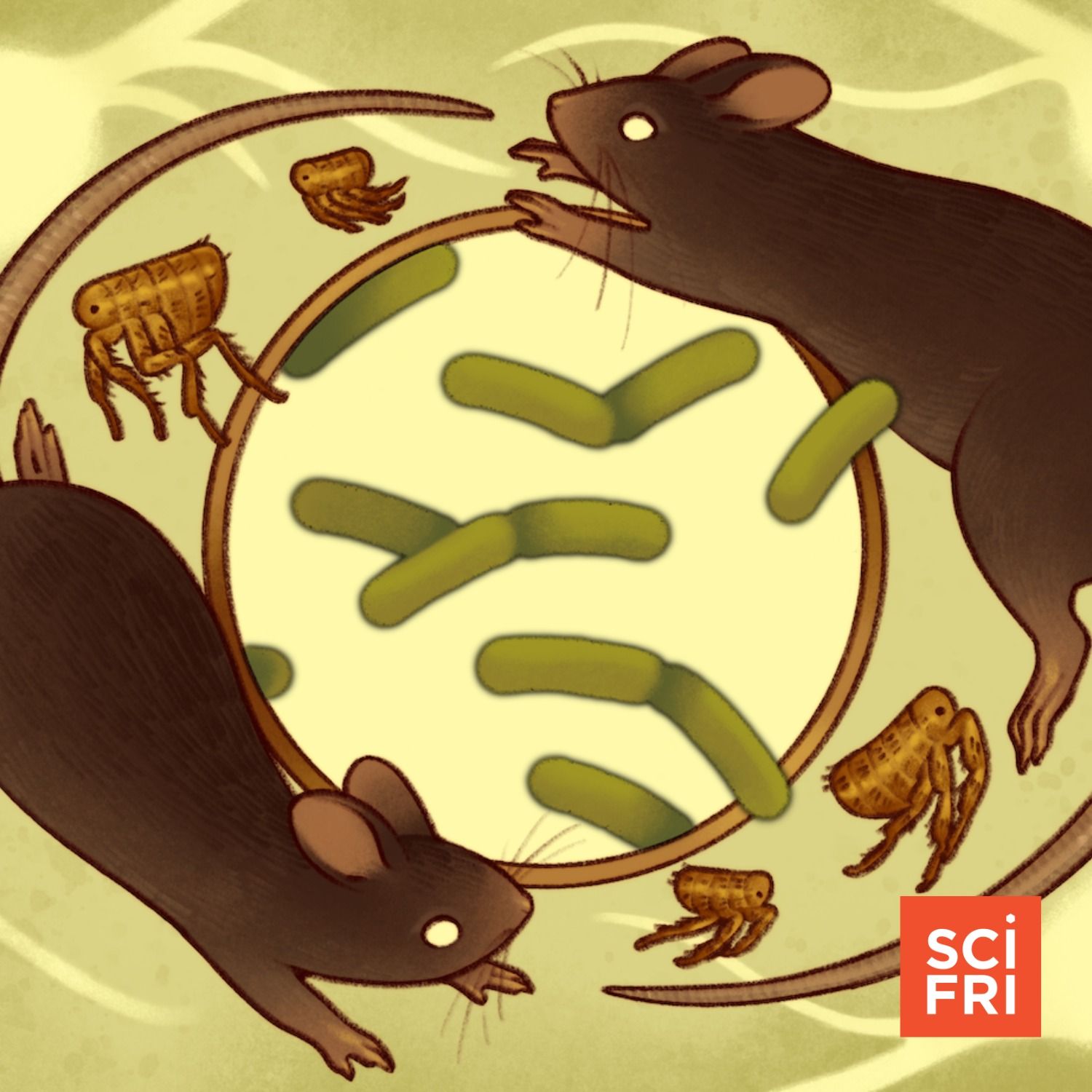
And so when we think about plague, right, it's really a disease of rodents and fleas.
而人类往往只是偶然被感染的宿主,当他们碰巧遇到受感染的跳蚤或可能死于鼠疫的啮齿动物时,这些跳蚤正在寻找新的血源,对吧?
And humans tend to be just these incidental infected hosts at some point when they happen to run into an infected flea or a rodent that might die of plague and then their fleas are looking for a new blood meal, right?
所以,当人类经过时,跳蚤跳上去,然后将细菌传播给他们。
So, a human comes by, flea jumps on and then passes the bacteria onto them.
这只跳蚤正在从那个人类身上吸血。
Well, this flea is blood feeding off that human.
我们对它的传播范围有概念吗?
Do we have a sense of how widespread it is?
是的,我认为我们对这方面了解得相当多。
Yeah, I think we know a fair amount about this.
我的意思是,多年来对鼠疫的生态学研究已经相当深入了。
I mean, the ecology of plague has been pretty well studied over the years.
我们知道这种疾病可以说是地方性的,几乎在每个大陆都存在,可能除了澳大利亚。
We know that the disease, we say, is endemic on probably practically every continent, except for probably Australia.
我们掌握了一些真正的热点区域,可以在那里开展监测工作,特别是在啮齿动物大量死亡时检测鼠疫。
And we have areas that are real hotspots where we know that we can do surveillance work and we can detect plague, especially when we have rodent die offs.
比如在美国,我们可能会看到草原犬鼠等,它们实际上是感染鼠疫的主要啮齿类物种。
Like in The United States, we might see prairie dogs, etcetera, which actually are the main rodent species that are infected with the plague.
当我们发现这些种群大量死亡时,就可以前往现场。
When we see die offs of these populations, we can go out there.
我们可以进行监测。
We can do surveillance.
我们可以查明是否是鼠疫。
We can figure out if it's plague.
这样我们就知道疾病在附近传播。
And then we know that the disease is around.
这种情况我们在世界各地都能看到。
And we see that all over the world.
中国、蒙古、马达加斯加、非洲、刚果、坦桑尼亚等地区,南美洲如秘鲁等地。
China, Mongolia, Madagascar, Africa, The Congo, Tanzania, places like that, South America, places like Peru, etcetera.
我们清楚这种疾病在哪些区域尤为盛行。
We know where this disease the regions where this disease is is especially prominent.
我是说,在中世纪时期这对人类是个大问题,然后如你所说19世纪在亚洲,那是在抗生素出现之前。
I mean, when this was a big problem for humans during medieval times and then, as you say, in Asia in eighteen hundreds, I mean, that's pre antibiotics.
我们现在还需要担心这个问题吗?
Is it still something we need to worry about?
对。
Right.
它可以用抗生素轻松治疗。
So it can be easily treated with antibiotics.
没错。
That's correct.
我认为在那些拥有健全公共卫生体系的地区,比如美国,我们拥有足够的资源。
And I think in areas where we have these robust public health systems, and that's usually in places like The United States, right, we have resources.
但当疫情发生在贫困国家时,比如马达加斯加和刚果民主共和国,我们通常会面临这些资源极度匮乏国家的困境,对吧?
But when we have outbreaks in poor countries, like Madagascar and, you know, the Democratic Republic Of The Congo, we usually have a situation where these are really resource poor countries, right?
他们未必有足够资源能轻易外出用抗生素治疗民众。
They don't necessarily have the resources to be able to go out there and treat people with antibiotics very easily.
因此这正是我们看到疾病爆发成为更严重问题的地方。
So this is where we see disease outbreaks as a bigger problem.
所以目前确实有针对它的治疗方法。
So currently, yes, there are treatments for it.
但每个人是否能获得治疗则是另一个问题。
Whether everyone has access to that treatment is a different question.
每年有多少人死于鼠疫?
How many people are killed by plague every year?
在美国死亡人数不多。
So not many in The United States.
我们通常看到五到十例人类病例。
We often see five to ten human cases.
如果我们能及早发现这些病例,通常都能妥善处理。
We usually can manage those cases when we get them early.
因此相关的死亡率相当低。
So the fatalities from that are fairly low.
至少今年六月,亚利桑那地区就有一例鼠疫致死病例。
At least this year in June, there was a fatality from plague in the Arizona area.
我们也会在马达加斯加等地看到人类死亡病例,那里每年都会季节性爆发鼠疫,非洲刚果民主共和国等地区也是如此。
And then we see human fatalities in places like Madagascar, where you have annual seasonal outbreaks of the plague, places like the DRC in Africa also.
具体数字每年不尽相同。
The numbers can vary.
几年前马达加斯加就有相当多死亡病例,超过两百人。
A few years ago, there were quite a few people, over two hundred people in Madagascar that died.
但现在可能少于这个数字,不过相比公共卫生体系完善的地区,这些地方的疾病负担和病例死亡率确实更高。
But now, probably less than that, but really a higher burden of disease and case fatalities in these areas than than other areas with, again, robust public health systems.
关于鼠疫,我们还有哪些认知空白?
What don't we understand about plague?
具体是指哪些方面?
In terms of what?
问得好。
Good question.
对我而言这是个很好的后续问题。
Good follow-up to me.
我想我感兴趣的是你们为什么要研究它,以及还有哪些关于它的未知领域。
I guess I'm interested in in why you're studying it and what there's left to learn about it.
好的。
Okay.
当我思考鼠疫时,考虑到所有未知因素,我实际上喜欢将其与我们了解的其他媒介传播疾病进行对比。
When I think about the plague and I think about all the unknowns, and I actually like to compare this to what we know about other what we call vector borne diseases.
有大量疾病是通过节肢动物传播的,对吧?
So, are a large number of diseases that are transmitted by arthropods, right?
比如由蜱虫传播的莱姆病,对吧?
Like Lyme disease that's transmitted by ticks, right?
比如由蚊子传播的疟疾。
Like malaria that's transmitted by mosquitoes.
因此,关于这些疾病,我们已经了解了很多——就传播媒介种群(对鼠疫而言是跳蚤)在传播过程中的关键作用而言。
So, there's a lot more known about these diseases in terms of how the vector populations or the fleas, in the case of plague, are actually really important in the transmission process.
但人们对于这些传播媒介及其在疾病传播中的运作机制了解得更多。
But a lot more is known about those vectors and how they function in order to transmit the disease.
而对跳蚤的了解则较少。
Less is known about fleas.
这恰恰是我的兴趣所在,因为全球范围内我们防治鼠疫的主要方式,就是通过杀虫剂喷洒来控制跳蚤种群。
And for me, that's where my interest lies because the way we manage plague really all over the world is through managing flea populations using insecticide spraying.
这是我们的主要
That's our primary
消灭宿主。
Kill the host.
没错。
Yes.
杀死宿主。
Kill the host.
没错。
Exactly.
你觉得有更好的方法吗?
Is there a better way, do you think?
我不确定是否有更好的方法。
I don't know if there's a better way.
我的意思是,这种特定管理策略的一个问题是,我们越来越多地看到杀虫剂抗性正在形成。
I mean, I think that one of the concerns, though, with that particular management strategy is that more and more we see that there's insecticide resistance building up.
所以我们真正想了解的是,是否存在其他基于病媒——或者说基于跳蚤的解决方案?通过更多研究来理解,比如我所做的就是理解细菌与跳蚤宿主之间的相互作用,明白吗?
So, what we really want to understand is, are there any other vector based, right, or flea based solutions that we can come up with with doing more research in understanding, for example, what I do is understand the interaction between the bacterium and the flea host, right?
细菌进入跳蚤后会发生什么?
What happens to the bacterium once it gets into the flea?
它是如何克服跳蚤吸血过程中相当严酷的环境的?
How does it overcome some of the blood feeding processes of the flea, which can be quite harsh?
它是如何克服跳蚤的免疫系统的?
How does it overcome the immune system of the flea?
我们是否能在完成研究后,通过创新方式利用这些研究成果,找到管理跳蚤种群的方法——特别是在疫情爆发期间?因为显然这是控制或减少疾病传播的途径。
Is there some way that we can actually, once we do that research, figure out a way to be innovative with that research in finding a solution to manage, you know, flea populations during outbreaks, because obviously, that's the way to manage or decrease transmission of the disease.
从公共卫生角度来看,目标是彻底根除吗?
From a public health perspective, is the goal eradication?
我认为要根除鼠疫非常困难,因为它显然是野生跳蚤种群与生俱来的特性。
I think it would be very difficult to eradicate the plague just because it's obviously something that's inherent or innate to flea populations in the wild.
因此,根除可能对我们来说并非可行方案。
So, think eradication might not be a feasible solution for us.
但我认为防控措施绝对是可行且易于实施的。
But I think management definitely is something that could be feasible and and, easy to implement.
所以我认为这确实是当前最理想的解决方案。
So that's, I think, really what the best solutions are right now.
我们是否需要担心气候变化可能对鼠疫产生的影响?
Do we have to be worried about how climate change might affect plague, for example?
我认为我们确实需要担心这一点。
I think we could be worried about that.
鼠疫在某些地区的一个显著特征是——已有相关研究表明——疫情爆发通常发生在非常潮湿的时期,或者某些地区的高降雨量时期。
One very discerning feature of the plague in some areas, and there've been studies done on on this, is that plague outbreaks usually follow a very wet period, or, you know, a period of high rainfall in some areas.
我们尚不清楚其背后的成因。
We don't know what underlies that.
但如果发现地方性流行区域出现可能导致洪水或强降雨等气候变化的迹象,我们就需要保持警惕,并考虑这可能导致环境中鼠疫疫情的加剧。
But, know, if we see shifts in climate in endemic areas that might result in probably flooding or heavy rainfall, etc, we might want to be cautious or we might want to consider that that might result in maybe an exacerbated period of plague in the environment.
因此在这种情况下,人类感染的风险也会相应增加。
And so, you know, risk of human infection becomes greater in that scenario.
当人们看到零星病例的新闻报道时,您希望他们作何感想?
When people see news of a case popping up here or there, what do you want them to think?
他们应该从中获得什么关键信息?
You know, what should their takeaway be?
我认为要根据具体地区情况保持警惕,对吧?
I think, depending on where the area is, to be cautious, right?
你可以采取一些措施来尽量减少被感染的跳蚤叮咬,尤其是在疾病流行地区生活时。
That there are things that you can do to minimise getting bitten by an infected flea, especially if you live in areas where the disease is endemic.
所以你应该保持警惕并采取这些预防措施。
And so you should have your head up and be putting in some of those practices.
对吧?
Right?
因为在疾病流行地区,人们可能养有猫狗,它们会带回这些被感染的跳蚤,而人们在不知不觉中被叮咬。
Because often people in these areas where the disease is endemic might have a cat or dog that will bring back these fleas that are infected, and unknowingly, they get bitten.
这样他们显然就可能感染疾病。
And they might then obviously contract the disease.
所以如果人们意识到这一点,我认为会有所帮助。
And so if people are aware, I think that helps.
说实话,一开始要让人们联想到这是鼠疫确实很难,因为有些症状非常典型,比如发烧、发冷和疲劳,这些症状可能与流感或其他致命性较低的感染相似。
It's really hard, I think, in the beginning for people to make the connections that it's plague also because some of the symptoms are very typical, you know, fevers and chills and tiredness, things that you would maybe experience with, you know, the flu or some other infection that can be less fatal.
谢谢你,维维卡。
Thank you, Viveka.
谢谢你,Flora。
Thank you, Flora.
华盛顿州立大学艾伦全球健康学院院长、鼠疫研究员Viveka Vadivalu博士。
Doctor Viveka Vadivalu, plague researcher and director of the Allen School for Global Health at Washington State University.
非常感谢您的收听。
Thank you so much for listening.
本环节由Kathleen Davis制作,我们明天见。
This segment was produced by Kathleen Davis, and we'll see you tomorrow.
关于 Bayt 播客
Bayt 提供中文+原文双语音频和字幕,帮助你打破语言障碍,轻松听懂全球优质播客。