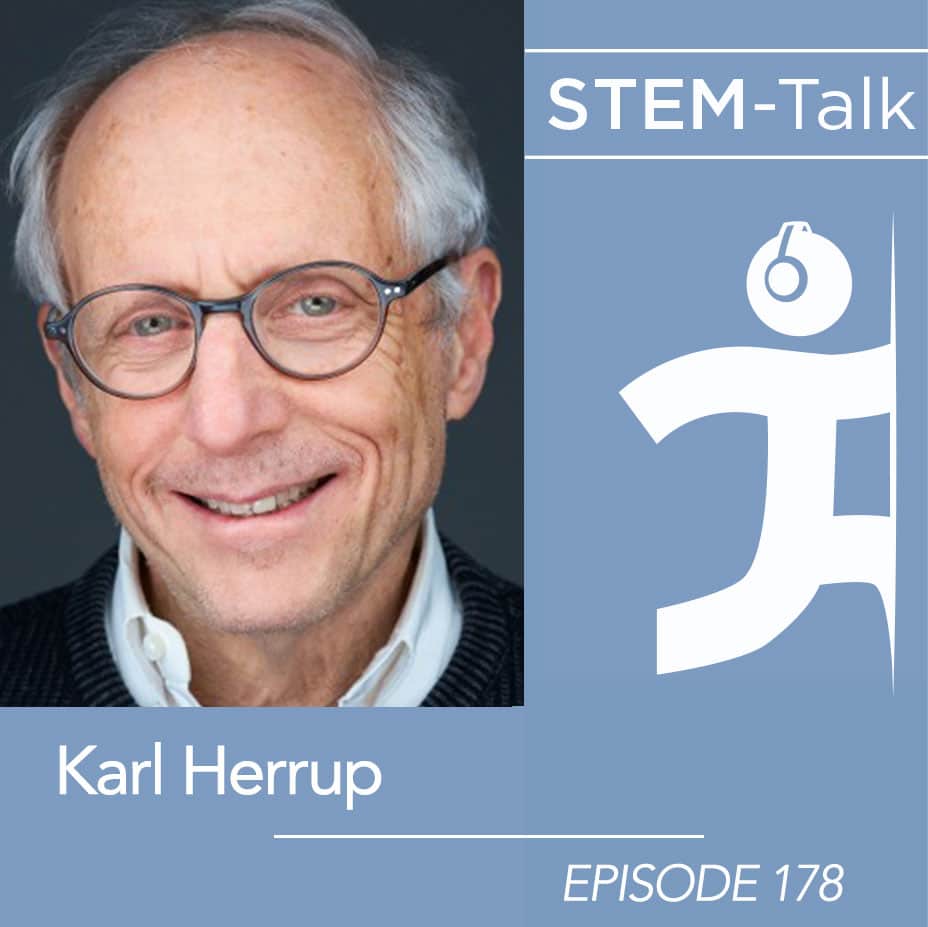
本集简介
双语字幕
仅展示文本字幕,不包含中文音频;想边听边看,请使用 Bayt 播客 App。
欢迎来到StemTalk。
Welcome to StemTalk.
StemTalk。
StemTalk.
StemTalk。
StemTalk.
StemTalk。
StemTalk.
StemTalk。
StemTalk.
欢迎来到StemTalk,我们将为您介绍那些热忱投身于社会科技前沿的杰出人物。
Welcome to StemTalk, we introduce you to fascinating people who passionately inhabit the scientific and technical frontiers of our society.
你好。
Hello.
我是主持人Tommy Wood博士,与我共同主持本期播客的是幕后策划者Ken Ford博士——IHMC创始人,同时也是负责筛选所有StemTalk嘉宾的双重秘密选拔委员会主席。
I am your host, doctor Tommy Wood, and joining me to introduce today's podcast is the man behind the curtain, doctor Ken Ford, IHMC's founder and chairman of the double secret selection committee that selects all of the guests who appear on StemTalk.
嗨,Tommy。
Hi, Tommy.
很高兴来到这里。
Great to be here.
非常感谢邀请我共同主持今天的访谈。
Thanks so much for inviting me to cohost to today's interview.
对于还不熟悉Tommy的听众——虽然我想象不出会有谁不认识他——他是IHMC的访问科学家,同时担任华盛顿大学儿科与神经科学副教授,专注于全生命周期的脑健康研究。
For our listeners who aren't familiar with Tommy, but I can't imagine who that would be, he's a visiting scientist here at IHMC and an associate professor of pediatrics and neuroscience at the University of Washington, where he focuses on brain health across the lifespan.
他曾多次做客我们的《STEM Talk》节目,本期节目笔记中我们会附上那些访谈的链接。
He has been our guest several times on STEM Talk, and we will have links to those interviews in our show notes for today's episode.
今天,我们有幸邀请到博士。
Today, we have Doctor.
卡尔·哈罗普,一位以研究衰老大脑闻名的神经生物学家,其研究领域包括DNA损伤与非编码基因变异在阿尔茨海默病中的作用。
Carl Harrop, a neurobiologist known for his investigations of the aging brain, including the role that DNA damage and non coding genetic variants have in Alzheimer's disease.
经过一个多世纪的研究,阿尔茨海默病的根本病因仍是个未解之谜。
After more than a century of research, the underlying cause of Alzheimer's remains a mystery.
过去几十年来,主流理论是淀粉样蛋白级联假说,该假说认为大脑中异常的淀粉样斑块是导致该病的核心原因。
For the past few decades, the leading theory has been the amyloid cascade hypothesis, which proposes that abnormal amyloid plaques in the brain are the central cause of the disease.
今天,我们将与卡尔对话
Today, we talk to Carl
探讨他的实验室及研究,以及他认为淀粉样蛋白级联假说不仅存在缺陷,还可能误导阿尔茨海默病治疗研究方向的观点。
about his lab and research, as well as his view that the amyloid cascade hypothesis is not only flawed, but could be misdirecting research for a cure of Alzheimer's.
作为匹兹堡大学医学院神经生物学教授兼阿尔茨海默病研究中心研究员,哈罗普著有《如何不研究一种疾病:阿尔茨海默病的故事》一书。
A professor of neurobiology and an investigator at the Alzheimer's Disease Research Center at the University of Pittsburgh School of Medicine, Harrop is the author of How Not to Study a Disease The Story of Alzheimer's.
不过在进入卡尔专访之前,我们有些节目事务需要处理。
But before we get to our interview with Carl, we have some housekeeping to take care of.
首先,衷心感谢所有订阅《STEM Talk》的听众,特别感谢那些给予五星好评的精彩评论。
First, we really appreciate all of you who have subscribed to STEM Talk, and we are especially appreciative of all the wonderful five star reviews.
如往常一样,我们的双重秘密评选委员会持续认真审核iTunes、Google、Stitcher等播客平台上的评论,精选最机智风趣且充满溢美之词的评论在节目中宣读。
As always, the double secret selection committee has been continually and carefully reviewing iTunes, Google, Stitcher, and other podcast apps for the wittiest and most lavishly praise filled reviews to read on StemTalk.
若您的评论被选中宣读,只需发送邮件至stemtalk@ihmc.us即可领取官方《STEM Talk》纪念T恤。
If you hear your review read on StemTalk, just contact us at stemtalk@ihmc.us to claim your official StemTalk T shirt.
今天,我们的获奖评论来自长期听众西西里。
Today, our winning review comes from longtime listener, Sicily.
评论标题为《蒸蒸日上》。
It's titled Picking Up Steam.
评论写道:就在我以为节目已经无法更精彩时,你们总能找到方法让它更上一层楼。
The review reads, just when I think the show couldn't get any better, you all find a way to elevate it further.
我特别着迷于你们最近与医生合作的那期节目。
I was particularly fascinated by your recent episode with Doctor.
凯文·特雷西关于迷走神经的普遍性与重要性的讨论,包括生物电刺激治疗方面的突破性研究。
Kevin Tracy on the pervasiveness and importance of the vagus nerve, including the groundbreaking research on bioelectrical stimulation for healing.
我的祖母患有严重的类风湿性关节炎,严重到需要在脊柱植入金属杆,并连接一个用螺栓固定在她颅骨上的光环支架。
My grandmother suffered from severe rheumatoid arthritis, so severe that she required a rod in her spine with an attached halo that was bolted into her skull.
我不禁想象,如果当时能更了解代谢健康知识,或许每天只需一分钟的迷走神经刺激,她的人生会有怎样的改变。
I can't help but wonder how her life might have been transformed today, with greater awareness of metabolic health and perhaps even just a minute of that daily vagus nerve stimulation.
我也非常喜欢你们对坦西医生的采访。
I also thoroughly enjoyed your interview with doctor Tansey.
他关于阿尔茨海默病的发现令人着迷,而了解到他的音乐背景则是个惊喜。
His revelations on Alzheimer's were fascinating, and learning about his musical background was a delightful surprise.
下次当我听到埃罗尔·史密斯的《Dream On》时,一定会想起STEM Talk。
Next time I hear Dream On by Errol Smith, I'll certainly think of STEM Talk.
谢谢你西西里,也感谢所有其他STEM Talk听众,正是你们让STEM Talk取得如此巨大的成功。
Thank you, Cecily, and thanks to all our other STEM Talk listeners who have helped STEM Talk become such a great success.
好的。
Okay.
现在进入今天与卡尔·哈罗普医生的访谈环节。
And now on to today's interview with doctor Carl Harrop.
干细胞话题。
Stem talk.
干细胞 干细胞话题。
Stem Stem talk.
干细胞话题。
Stem talk.
干细胞
Stem
卡尔,听说你在匹兹堡长大。
Carl, I hear you grew up in Pittsburgh.
那么你小时候是个怎样的孩子?
So what kind of kid were you?
嗯,这个问题有点难回答。
Well, that's kind of hard to know.
我的意思是,这属于典型的自我评价案例。
I mean, it's a typical case of self evaluation.
我觉得自己是个典型的书呆子小孩,就是特别迷恋科学那种。
I would say I was a typical nerdy kid, just gravitated toward sciences.
我经历了小学和中学阶段。
I went through, you know, elementary and high school.
我最近还在回想,那会儿正值苏联发射人造卫星的时期。
I was reflecting on this earlier that it was in the era of Sputnik.
当年苏联发射人造卫星一号进入轨道时,我正好在场,这引发了联邦政府的强烈反应,各种课外拓展项目突然如雨后春笋般涌向中小学生。
So I was actually around when the Soviets sent Sputnik one up into orbit, and that triggered a huge response from the federal government, and all sorts of enrichment programs were suddenly being tossed at kids in elementary school and high school.
某种程度上说,我和所有同学都是那个时代的产物。
And in part, I'm a product of that as were all of my classmates.
我了解到你和一群非常优秀的同学一起上的高中。
And I understand you went to high school with a great group of classmates.
现在回想起来,我高中时有幸接触到了我见过最聪明的一群人。
I went to high school looking back on it now with some of the smartest people, I've ever had the privilege of being around.
确实是一群非凡的人。
Truly a remarkable group of folks.
当时匹兹堡是西屋电器的总部所在地,我们中很多人——虽然不包括我——都是西屋工程师和科学家的子女。
Pittsburgh was home to Westinghouse at the time, and many of us, not me, but many of my classmates were, children of the Westinghouse engineers and scientists.
所以那是个相当聪明的群体,现在回想起来,我意识到成长过程中能获得那种智力激励几乎是种恩赐。
So it was a pretty smart group of people, and I looked back and realized what a, almost what a gift it was to have that kind of intellectual stimulation when I was growing up.
高中毕业后你进入布兰迪斯大学,原本打算成为医生。
You went to Brandeis University after high school with the idea of becoming a physician.
是什么改变了你的想法?
So what happened to change your mind?
嗯,这是个好问题。
Well, that's a good question.
我确实抱着当医生的想法去的。
I did go, with the idea of being a physician.
当时我已经很清楚自己想走科学这条路。
I'd already been pretty clear that science was where I wanted to go.
在我家,这基本上意味着你将来要从事医学工作。
And sort of in my family, that meant you were going to go into medicine.
所以这对我来说很合理。
And so that seemed logical to me.
于是我开始上生物课,发现它非常适合我。
So I started taking classes in biology, and it fit pretty well.
然后在大二那年,我选修了钱德勒·富尔顿的遗传学课程,他彻底激发了我的热情。
And then in my sophomore year, I took a course in genetics from Chandler Fulton who just absolutely inspired me.
我完全爱上了遗传学的整个概念,以及如何将像人类这样复杂的生物编码在一个小小的细胞核里。
And I just fell in love with the whole concept of genetics and how you encode something as complex as a human being in a tiny little nucleus of a cell.
就这样,我的医学职业生涯结束了。
And that was the end of my, career in medicine.
从那时起,我就成了一个彻头彻尾的基础研究者。
From that point on, was a dyed in the wool basic researcher.
我完全能理解这种情况的发生。
I can certainly see how that would take place.
换作是我也会这么做。
Would have worked for me too.
不过我听说,你父亲对你放弃医学院的决定并不太高兴。
I hear, though, that your father wasn't particularly thrilled with your decision to abandon medical school.
哦,可不是。
Oh, no.
他气坏了。
He was furious.
我是说,事实上,我认为那可能是我和父亲之间爆发过最激烈的一次争吵。
I mean, it was, in fact, I think that might have been one of the biggest arguments I ever had with my dad.
当然,我申请医学院和研究生院并被两者都录取后选择了读研,这让情况变得更糟,也让他更加生气。
And, of course, I made it worse by applying to medical schools and graduate schools and getting into both, and that made him even more angry, when I chose graduate school.
我想他认为,我选择像学术生涯这样收入微薄的职业,余生都会陷入经济困境。
I think he thought I would be financially destitute for the rest of my life by by choosing something as non remunerative as, as an academic career.
这种说法真委婉。
That's such a nice way to say it.
是啊。
Yeah.
我在尽力...尊重他的遗愿。
I'm I'm doing my best to, respect his memory.
嗯。
Yeah.
这其实很有趣,因为我的情况恰恰相反。
That's actually funny because it was the opposite for me.
我父亲是个铁杆科学家,当我决定去读医学院时他非常失望。
My dad is a a hardcore scientist, and he was very disappointed when I decided to go to medical school.
就像你提到的,你大二时选修了遗传学课程。
As you mentioned, you took a genetics class in your sophomore year.
那是六十年代末,当时研究人员刚开始解析DNA的结构和功能。
This is the late nineteen sixties when researchers were just beginning to unravel the structure of DNA and its functions.
你刚才已经有所暗示,不过或许可以详细说说,为什么学习这个新兴领域会让人如此兴奋。
You've kind of alluded to this, but maybe you can tell us about why this was such an exciting time to be learning about this emerging field.
嗯,那确实令人振奋。
Well, it was it was thrilling.
如今回首往事,那些岁月显得如此原始。
And I look back on it now, those years seem so primitive.
但在当时,那是尖端科技,令人无比兴奋。
But at that time, it was cutting edge and and just thrilling.
我在大二时研究的遗传学课题引起了我的兴趣,那时候还停留在研究性状如何通过雌雄交配传递的阶段。
The genetics that I studied at my sophomore year, the one that caught my interest, this was still, you know, how you do male times female transmission of traits.
想到双螺旋长聚合物中的核苷酸密码可能真正解释了这些性状的来源,这简直令人激动不已。
The idea that a nucleotide code in a double helix of a long polymer might actually have the explanation of where those traits came from was just absolutely exciting.
但那是早期阶段——我是说沃森和克里克在《自然》杂志发表他们的发现时,我还活着。
But it was the early days that I mean, I was around when Watson and Crick announced their discovery in the nature paper.
我想那时候我还在上小学,但到我上大学时这仍是热点新闻。
I guess I was still in elementary school at the time, but it was still hot news, when I was in college.
生物系有位凯尔纳教授,他以凯尔纳假说闻名——该假说认为细胞核内的核苷酸是长聚合物中随机组合的核苷酸,必定具有某种当时未知的结构功能。
And one of the professors, in the biology department was doctor Kellner, and he was famous for the Kellner hypothesis, which proposed that the nucleotides in the nucleus of the cell were a random assortment of nucleotides in a long polymer that must have some structural purpose that he didn't know.
但说这些都是随机的——我是说,这在我入学时仍是个站得住脚的假说。
But the whole idea that those were random, I mean, this was still a viable hypothesis when I started school.
那么是什么促使你从东海岸跑到西海岸攻读神经科学博士学位?
So then what prompted you to travel from the East Coast to the West Coast to work on a PhD in neuroscience?
某种程度上是随机的,几乎是个意外。
It was kinda random, almost an accident.
我从布兰迪斯大学申请了几所研究生院,东海岸和西海岸的都有几所录取了我。
I applied to several graduate programs out of Brandeis, got into several both on the East Coast and the West Coast.
但我有个在布兰迪斯大学学生物、比我高一级的好兄弟,最后去了斯坦福。
But a good buddy of mine who was a year ahead of me in biology, Brandeis, ended up at Stanford.
我在选校期间去拜访他,几乎就是凭个人感觉做了决定。
I went out to visit him while I was looking at schools, and just made a decision almost on a personal level.
选择导师也多少有些随意。
Choosing my adviser was also a bit random.
我直接闯进了埃里克·舒特的实验室逮住了他——现在我知道他当年的出差频率后,觉得这简直是个壮举。
I basically walked into the laboratory of Eric Shooter and caught him, which now that I know his what his travel schedule used to be like was kind of an amazing feat.
我们聊了一会儿,他说,好啊。
And we talked for a while, and he said, yeah.
如果你愿意的话,组里有你会很有趣。
If you'd like, it would be fun to have you in the group.
于是我就申请了。
So I applied.
但研究生院把我放进了候补名单,我猜是因为还有其他人选。
And, the graduate school put me on the waiting list because I guess there were others.
我是说,斯坦福的生物化学系,当时还叫神经与生物行为科学系。
I mean, Stanford biochemistry, and it was by neuro and bio behavioral sciences at the time.
那可是相当高端的领域。
It was pretty high profile stuff.
走廊里经常能看到几位诺贝尔奖得主晃悠。
There were a bunch of Nobel laureates kind of wandering around the halls.
而埃里克——愿上帝保佑他——从整摞申请里抽出了我的材料说:不行。
And Eric, god bless him, pulled my application out of the whole pile and said, no.
不。
No.
不。
No.
我确实希望这个人能来为我工作。
I'd I'd like this guy to come work for me.
所以我想这几乎算是一场意外。
So I guess that almost counts as an accident.
一个美好的意外。
A nice accident.
一个非常美好的意外。
A very nice accident.
结果证明这是一个很棒的研究生项目。
Turned out to be a great graduate program.
接着这个,据我所知,你的第一个博士后是在儿童医院,研究神经遗传学。
And, following up on that, your first postdoc was at Children's Hospital, as I understand it, in neurogenetics.
请告诉我们这是怎么发生的。
Tell us how that came about.
嗯,那也是个意外。
Well, that was also an accident.
不过我认为这里有个信息要传达给年轻学生们。
Although there's a message here, I think, for young students.
所以我研究生时期研究的是受体结合等温线。
So I did my graduate work in receptor binding isotherms.
我研究的是神经生长因子受体及其酶学特性和动力学特性。
I worked on the nerve growth factor receptor and its enzymatic properties, kinetic properties.
但我一直保持着广泛的兴趣。
But I've always been broadly interested.
如果你还记得,我进入科学领域的契机是一门遗传学课程。
And if you'll recall, my entree into science was through a genetics course.
所以在阿拉克,我参加了理查德·西德曼关于小鼠神经突变体的研讨会。
So on Alark, I went to this seminar that was given by Richard Sidman on the neurological mutants of the mouse.
那是在早期,他正推广用小鼠遗传学研究行为的理念,就像研究肤色和尾巴形态那样富有成效。
And this is the early days when he was promoting the idea that you could use genetics of mice to study behavior as profitably as you could to study skin color and tail morphology.
我记得去听他的讲座,听他讲述Reeler和Staggerer这些无法行走的小鼠的有趣命名。
And I remember going to his lecture and listening to talk about Reeler and Staggerer, all these funny names for mice that couldn't walk.
对吧?
Right?
重返遗传学领域的想法让我激动不已。
And the idea of getting back into genetics just blew me away.
于是我没有像埃里克·舒德尔预期的那样继续生物化学博士后研究,而是彻底转行进入了发育神经遗传学领域。
So rather than pursue postdoctoral work in biochemistry, which I think was what Eric Schuder had sort of imagined I would be doing, I completely changed fields and went into developmental neurogenetics.
很幸运你有这样一位博士后导师,给予你探索新领域的自由。
It's fortunate that you had a postdoc adviser like him that would allow you the freedom to explore and to launch into a new area.
是啊。
Yeah.
延续我们'偶然性'的话题,你去瑞士做第二个博士后也是机缘巧合吗?
Continuing on our accidental theme, was it also an accident that led you to Switzerland for a second postdoc?
那不太像是个意外。
That was a little less of an accident.
不过回想起来,确实有点鲁莽。
Although, I guess, looking back, it was a bit reckless.
我一直很仰慕汉斯·图南,他当时在瑞士巴塞尔的啤酒中心工作。
I had always admired Hans Thunen, who was, in Basel, Switzerland at the time at the Beersentrum.
但这种感觉源于我的研究生工作经历。
But that was a feeling I had based on my graduate work.
所以去瑞士时,我其实离开了神经遗传学领域,重新研究受体结合等温线。
So going to Switzerland, actually left neurogenetics and went back to receptor binding isotherms.
我在特南那里做了段短暂但精彩的博士后研究,从科学和个人生活角度都受益匪浅,尤其享受在异国生活的机会。
And I did a a wonderful but short postdoc with Ternan and enjoyed it thoroughly, both scientifically and and personally for the opportunity to live in a foreign country.
但我觉得我的心已经完全被博士后期间的遗传学研究吸引了。
But I think my heart had been, totally captured by the genetic aspects of my postdoc.
所以在生物中心的那段博士后经历,是我最后一次真正从事生物化学研究。
So that postdoc at at at the BioCentrum was the last time I actually did biochemistry.
你知道,如今去海外做博士后很常见,但在七十年代根本没有这种事。
You know, the going overseas for a postdoc is somewhat common these days, but not at all in the seventies.
完全没有。
Not at all.
确实没有。
No.
我不记得有哪个朋友去海外做过博士后。
I don't I don't remember any of my friends that did postdocs going overseas.
你能跟我们说说那件事吗?
Could you tell us about that?
我是说,你已经跟我们分享过你的经历了。
I mean, you told us about the experience you had.
必须是你称之为有点鲁莽的行为。
It had to be you called it kind of reckless.
我是说,你就这么收拾行李直接去了瑞士。
I mean, you you just packed up and went off to Switzerland.
我回想起来,这...这不是我人生中唯一一次让我摇头叹息的经历,我在想如果我的孩子做出这种事,我都不知道该说什么。
I I look back on it, and it's it's not the only time in my life that I have I just shake my head and and say, if one of my kids ever did this, I'm not sure what I would say.
但当时这看起来就是个绝佳的机会。
But it just seemed like a wonderful opportunity.
我见识到了汉斯·蒂南的学术活力。
I saw, you know, the intellectual vitality of Hans Tinen.
我看到在那里做出优秀工作的潜力,而搬家的其他琐事我压根没觉得有多重要。
I saw the potential to to do good work, and all of the other trappings of the move just sort of never crossed my mind as being significant.
所以现在回想起来,我可能应该更慎重地考虑这件事,特别是像你说的,那个年代出国做博士后并不常见。
So, of course, in retrospect, I think I probably should have pondered that a bit more carefully, especially because as you point out in those days, it was not real usual to end up going abroad for a postdoc.
当时的普遍看法是这就像张单程票。
It was the common wisdom was that that was a one way ticket.
一旦你去了海外,就再也无法回国面试工作了。
Once you got overseas, you'd never be able to interview for your job back in The United States.
那时候还没有Zoom和互联网,你只能亲自飞回来在各个地方露面。
This was in the days before Zoom and and Internet, so you would literally have to come back and and physically appear at these various places.
如果有人发现我,他们很可能会强烈建议我不要这么做,但我很高兴我做了。
And I if someone had caught me, they probably would have advised me strongly not to do this, but I'm glad I did.
看来你从准备充分与愿意探索出现的机会中获益良多,这确实是个绝佳的组合。
Well, you seem to have benefited by the combination of preparation and the willingness to explore opportunities that present, and that's kind of a great combination.
要知道,我们都会遇到机会,但往往视而不见,或是准备不足无法充分把握。
You know, we all are presented with opportunities, but we often don't see them or we're not prepared to fully benefit from them.
我同意这个观点。
I would agree with that.
我不确定会向任何人推荐我的人生轨迹,但我建议保持对新想法和改变的开放态度。
You know, I'm I'm not sure I would recommend my life trajectory to anyone, but I what I would recommend is that willingness to be open to new ideas and to change.
这很可怕,但我最自豪的是总能压制恐惧,审视机会并抓住它——只要我认为能推动事业或个人成长。
It's scary, but the one thing I'm most proud about is that I just I would always squelch that fear and just look at the opportunity and run with it if I thought it it would advance either my career or my personal growth.
后来你确实成功回来了。
And then you did successfully come back.
你回到了美国。
You came back to The US.
和我们说说你在耶鲁的教职任命吧。
Tell us about your faculty appointment at Yale.
这确实让我重新投入遗传学研究——正如我说过,正是遗传学最初把我拽进了科学领域。
So that was really seriously got me back into the genetics that, as I said, was what dragged me into science to begin with.
我从重新做受体结合等温线研究转入了人类遗传学系。
I went from back from doing receptor binding isotherms again to a department of human genetics.
那正是人类遗传学研究的激动人心时期。
And it was a very exciting time to be in human genetics.
那是我们第一次能够真正严肃地思考人类遗传学问题。
It was the first time we could even really think about human genetics in a serious way.
我们刚开始能够进行体细胞遗传学研究,这样就能从活体获取皮肤成纤维细胞并研究其遗传物质。
We were just starting to be able to do somatic cell genetics so we would be able to get skin fibroblasts from living people and work with their genetic material.
但正是在耶鲁期间,限制性片段长度多态性作为基因图谱工具的概念开始兴起,人类基因组图谱绘制才真正成为可能——当然不是如今这样逐个核苷酸测序,而是按区域划分进行。
But it was while I was at Yale that the whole concept of restriction fragment length polymorphisms as tools for mapping came into the fore, and you could actually begin to map the human genome, not in the sense that we think of it today nucleotide by nucleotide, but region by region.
那真是遗传学研究令人振奋的黄金时代。
And this was just a thrilling time to be in genetics.
这么说吧,为了让你了解这是多久前的事——我记得自己刚当上助理教授时参加研讨会,有位演讲者(名字当然已记不清)讲到DNA编码RNA后,RNA聚合物居然会被剪接,最终进入细胞质的甚至不是完整信息。
I mean, but just to give you a little perspective on how long ago this was, I I remember sitting in one of my first seminars as young assistant professor and listening to a speaker whose name, of course, I've now forgotten, talk about how once the DNA encoded RNA, the RNA polymer was actually spliced, and what ended up being translated into the cytoplasm was not even the whole message.
嗯。
Mhmm.
当时我就在想:天啊,我整个研究生教育都白费了。
And I remember thinking at the time, for god's sakes, my entire graduate education was wasted on me.
你明白吗?
You know?
但转眼间,这已成为遗传学的重要调控原理,意义非凡。
But, of course, fast forward, and it's it's major regulatory principle of of genetics and and hugely important.
这足以让你感受到当时人类遗传学领域有多么激动人心。
But but it just gives you a flavor for what an exciting time it was to be in human genetics.
那么在你延续这项研究后,离开耶鲁又历任多个教职,包括在香港的七年任期。
So as you built on that work, after Yale, you had several faculty appointments, including a seven year stint in Hong Kong.
我猜这可能是机缘巧合,不过能否请你聊聊这段经历?
I'm gonna guess that this came about by accident, but maybe you could tell us a little bit about that journey.
是啊。
Yeah.
嗯,香港完全是个意外。
Well, Hong Kong was a total accident.
坦白说,我在耶鲁待了十年后申请终身教职被拒了。
Full disclosure, I came up for tenure after ten years at Yale and was denied.
当然,这在当时是意料之中的,那时耶鲁大约只给十分之一的初级教员提供晋升终身教职的机会。
That's, of course, expected at that time Yale was taking about one in 10 of the junior faculty they hired to promote up to tenure.
所以我没被选中。
So I didn't make that cut.
之后我去波士顿待了四年,参与一个发育神经生物学项目,那是我第一次担任领导职务。
I went up to Boston for four years to be in a program of developmental neurobiology, And that was the first time I entered a leadership position.
那是个小团队。
So it was a small group.
我们只有四五个人,但我担任主任,这开始磨炼我的管理能力。
There was only five four or five of us, but I was the director, and it began to hone my skills as an administrator.
后来有机会转到凯斯西储大学的神经科学系,这个团队我关注已久,所以立刻抓住了机会。
But then an opportunity came to move to the neuroscience department at Case Western Reserve University, and that had been a group that I'd been on my radar for a long time, and I just jumped at that chance.
这次倒不算太鲁莽,但四年就换工作看起来也不是什么好广告。
Again, this one was not quite so reckless, but it does not seem to be a terrific advertisement to be changing jobs after only four years.
但凯斯的工作再次证明了随时准备改变的正确性——那是我职业生涯最高产的阶段,也是最愉快的时光之一。
But the case job once again proved the wisdom of being ready for change because that was one of the most productive periods of of my professional career and certainly one of the most enjoyable.
之后我从那里转到了新泽西州皮斯卡塔威的罗格斯大学。
And then from there, I moved to Rutgers University in Piscataway, New Jersey.
正如我朋友常说的那样,那是因为我的主席Jean突然变卦,导致我在克利夫兰失去了一切担任领导职务的机会。
And that was, that was because, as my friend always says, my chairman Jean turned on, and I was blocked from any opportunity to take a leadership role in Cleveland.
当时罗格斯大学给我提供了细胞生物学和神经科学的教席职位,我立刻抓住了这个机会,在那里度过了美好的六年时光。
And Rutgers had offered me the chair of cell biology and neuroscience out there, so I I jumped at that and, had a wonderful six years there.
当我刚去那里时,我记得自己曾沾沾自喜地认为——当然现在我不这么想了——以我的职业资历能被考虑担任教席,说明我已经相当出色了。
And when I went there, I remember already thinking that now, of course, I don't think of it this way, but that I I thought I was pretty advanced in my career for them to be thinking about me as a as a chair.
但我还是答应了。
But I said, okay.
我想那就去吧,反正他们最后肯定会用棺材把我抬出罗格斯大学的。
I'll go, and I'm sure that they'll they'll take me out of Rutgers in a box.
直到某天,我收到一封来自合作女性的邮件。
And then one day, I got an email from a woman that I'd been collaborating with.
准确说,用'合作'这个词并不恰当。
Not actually, collaborating is the wrong word.
我们其实是同事,都研究同一种蛋白质——CDK5。
We we were colleagues and interested in the same protein, CDK five.
她当时在香港科技大学工作。
And, she was at the Hong Kong University of Science and Technology in in Hong Kong.
我们原本只是进行学术交流,直到有封邮件的附言里她写道:'你是否有兴趣来担任我们这里的生命科学系主任?'
And we were just going back and forth about science, and at the end of one of her emails, she put a PS, which is basically, you wouldn't be interested in being the head of life science here, would you?
这个故事我讲过很多次。
And I've told this story many times.
其实按理说我本该婉拒说'承蒙厚爱,但恕难从命'的。
It is the case that I probably should have said, oh, that's very flattering, but no.
谢谢。
Thank you.
而那天行星排列不同,我给她回了张便条。
And instead, the planets were aligned differently that day, and I sent her back a note.
那么,我过来拜访一下如何?
Well, how about if I come do a visit?
于是我飞过去进行了访问,爱上了那个地点,爱上了在一所相对年轻的大学里工作的兴奋感。
So I flew over, did a visit, loved the location, loved the excitement of being in a relatively new university.
我到那里时,它成立还不到25年。
It was less than 25 years old when I got there.
我记得有天开车去罗格斯大学上班时,一路上权衡着利弊。
And I remember driving into work at Rutgers one day sort of weighing the pros and cons.
我列了张利弊清单,两边基本持平,但弊端稍多些。
And I made a list of pros and cons, and it was pretty well balanced, slightly more cons.
我至今仍记得开车上实验室那个弯道时突然起鸡皮疙瘩的感觉。
And I still remember the curve in the drive up to the lab where I just got goosebumps.
我说,你知道吗?
I said, you know what?
我想去香港。
I wanna go to Hong Kong.
嗯。
Mhmm.
剩下的就是历史了。
And the rest is history.
这既随机又鲁莽,但绝对是个绝佳的职业决策。
And that is both random, reckless, and one of just a fabulous professional decision.
我至今仍将香港的那段时光视为职业生涯中最富启发性的时期之一。
I do still look back on the time in Hong Kong as one of the most professionally stimulating times.
那所大学规模虽小。
It was it it is a small university.
正因如此,我结识了许多化学家、物理学家、工程师和计算机科学家朋友,甚至偶尔会和商学院的院长聊天。
And because of that, I had good friends who were chemists and physicists and engineers and computer scientists, and I even would occasionally chat with the dean of the business school.
这种极其丰饶的学术环境让我感到无比振奋且乐在其中。
And that's a really fertile intellectual environment that I find incredibly stimulating and thoroughly enjoyable.
汤米,这听起来像我们知道的某个地方。
Tommy, that sounds like someplace we know.
是啊。
Yeah.
你之前简短提到过,你不一定会向别人推荐你的职业路径。
You you mentioned briefly earlier that you wouldn't necessarily recommend your career trajectory to anybody.
但听你讲述这些不同经历和接触过的各类人群,我不禁思考这是否正是你职业的特色而非缺陷——它让你能以独特方式处理问题,特别是在阿尔茨海默病研究领域。2019年你回到家乡,成为匹兹堡大学神经生物学教授,并担任该校阿尔茨海默病研究中心的联合研究员,该中心是全美研究阿尔茨海默病及相关疾病的顶尖机构之一。
But listening to you talk about it and all these different experiences and the different groups of people you got to interact with, I really wonder if this is a feature of your career and not not a bug, and it allows you to, approach problems, in the way that you do, particularly in the field of Alzheimer's research, which we get to now in your career where you move back to your hometown in 2019 to become a professor of neurobiology at the University of Pittsburgh and coinvestigator at the university's Alzheimer's Disease Research Center, which is one of the nation's leading institutes specializing in Alzheimer's disease and related disorders.
是什么促使你这次回归并转向阿尔茨海默病领域?
So what prompted this move back and also sort of starting to move into the Alzheimer's field?
其实转向阿尔茨海默病研究在克利夫兰时就开始了。
So the move to Alzheimer's had started in Cleveland.
到那时我作为阿尔茨海默病研究者已相当资深。
So I was pretty well established as an Alzheimer researcher by then.
搬到匹兹堡并非偶然,但时机确实是随机的。
The move to Pittsburgh was not so much random, but the timing was random.
我六十多岁时去了香港,由于当地有强制退休年龄规定,他们无法授予我终身教职。
I had gone to Hong Kong in my early sixties, and they were unable to award me tenure because they had mandatory retirement age.
所以他们最终给了我一份终身教职合同,这对我来说是可以接受的。
So they awarded me a a basically, they awarded me a tenure contract, and that was agreeable to me.
我觉得即使自己仍在学术上活跃,也该退位让年轻人接棒了,而我会继续写作。
I felt that even if I were still intellectually active, that it was time for me to step aside and let younger people carry this ball forward, that I'd continue to write.
我希望能继续教书,但十年已经足够了。
I'd hope to be able to continue to teach, but the ten years was enough.
不过,匹兹堡毕竟是我的家乡。
But, of course, Pittsburgh was my home.
我的父母还在这里。
My folks were still here.
我的表亲和其他家人也都在这里。
My cousins and other family members were still here.
许多高中老友仍在此地生活。
A lot of my high school buddies were still here.
所以我经常回来探访,小住一段时间。
So I came back regularly for visits and spend time.
其中一位不定期聚会的老友是彼得·斯特里克,他是匹兹堡大学神经生物学系主任。
And one of the people I would irregularly get in together with was Peter Strick, who's the chair of neurobiology here at University of Pittsburgh.
我记得那个决定性的早晨。
And I remember one fateful morning.
大概是在2017年,或者18年。
It would have been probably 2017, so or '18.
总之,距离我在香港的合同结束还有四年,当时我和彼得一起吃了早餐。
Anyways, I'm I'm still four years from the end of my Hong Kong contract, and Peter and I had breakfast together.
我们往外走时,我边走边说,彼得,我想播下一颗种子。
And I walked as we were walking out, I said, Peter, I I wanna plant a seed.
我大概四年后就会从香港回来。
I I'm gonna be coming back from Hong Kong in about four years.
匹兹堡是我的家。
Pittsburgh's my home.
我正在考虑就在这里退休,但也在想或许可以保持学术上的活跃。
I'm thinking I'm just gonna retire here, but I'm still thinking I may be wanting to remain intellectually active.
我希望你能考虑帮我争取匹兹堡大学的兼职职位,这样我就能保留邮箱和使用图书馆的权限。
And I want you to think about helping me get an adjunct appointment at Pitt so that I can keep an email address, keep library privileges.
彼得毫不犹豫地回应了。
And Peter did not miss a beat.
他说:'你想要个实验室吗?'
He said, you want a lab?
我说:'彼得,你没在听我说话。'
And I said, Peter, you're not listening to me.
我老了。
I'm old.
我是个糟糕的投资,而且我觉得自己无法再从头建立一个实验室了。
I'm a bad investment, and I don't think I can start at a laboratory from scratch again.
他说,不行。
And he said, no.
你能做到的。
You can do it.
呃,我是说,好吧。
And well, I mean, okay.
所以你知道那个故事的结局。
So you know how that story ends.
我在这里。
Here I am.
嗯,他是对的。
Well, he was right.
是啊。
Yeah.
反正他赢得了争论。
Well, he won the argument anyways.
是啊。
Yeah.
他两方面都说对了。
He was right on both counts.
既然你现在有了实验室,能跟我们说说实验室的情况吗?
So so now that you had the lab, can you tell us about the lab?
你知道,它主要研究神经退行性变的生物学,但每个实验室都有些不同,各具特色,有独特的文化。
You know, it focuses on the biology of neurodegeneration, but each lab is sort of different and unique and has a unique culture.
跟我们简单介绍一下实验室吧。
Tell tell us a little about the lab.
嗯,我们稍后肯定会详细讨论为何选择这个特定研究方向。
Well, we'll we'll get into why this particular focus, I'm I'm sure, in a minute.
但此刻,我对这个被称为淀粉样前体蛋白的奇妙单次跨膜蛋白深深着迷。
But for now, I'm fascinated by this wonderful large one pass transmembrane protein known as the amyloid precursor protein.
至于它为何得此名称,我们稍后再谈,但这个蛋白在神经系统中具有各种引人入胜的作用机制。
And the reason it's called that, we'll get into later, but it's a fascinating protein that has all sorts of interesting actions in the nervous system.
如果要找出贯穿我所有工作的共同主线,那就是对这个蛋白多重功能的浓厚兴趣。
And right now, I would if I had to identify a common thread that holds all of my work together, it's it's an interest in the many, many functions of that protein.
因此我们从神经元活动的角度研究它——因为它能调控轴突起始段的位置,从而直接影响神经元的放电概率。
So we look at it from the standpoint of neuronal activity because it modulates the position of the axon initial segment, which directly alters the firing probability of a neuron.
我们也从DNA损伤的角度进行研究。
We look at it from the standpoint of DNA damage.
还有条未发表的新研究方向让我非常兴奋:它与基因组完整性密切相关。
We have a new line of research, not published yet, but very exciting to me, that it's tied closely to genomic integrity.
这特别触动我,因为基因组完整性是衰老研究的重要部分。
And that resonates with me because genomic integrity is such a big part of aging.
最后我还对髓鞘产生了兴趣,更准确说是对中枢神经系统中产生髓鞘的少突胶质细胞。
And then finally, I've developed an interest in myelin and in more specifically in the cells that create myelin in the central nervous system known as oligodendrocytes.
这些细胞与淀粉样前体蛋白之间同样存在令我着迷的重要关联。
And they too have an important relationship to the amyloid precursor protein that I'm just fascinated by.
以上就是目前我们实验室的主要研究方向。
So that's where my lab is right now.
确实很有趣。
Really interesting.
而且你是对的。
And you're right.
我们稍后会再讨论其中一些话题。
We'll come back to some of those topics.
不过让我稍微回溯一下。
But let me back up just a bit.
是否有某个特定时刻、发生的某件事或某个事件,让你决定在这个阶段将研究和职业重心如此强烈地集中在阿尔茨海默症上?
Was there a specific moment or something that happened or some incident that convinced you to focus your research and career so strongly at this point on Alzheimer's?
这要追溯到九十年代初,当时我从波士顿的施莱弗中心转到了克利夫兰。
So that goes back to the early nineties when I went from, the, Shriver Center in Boston to Cleveland.
我一直在研究发育遗传学,但那些工作都聚焦于细胞死亡的调控机制,这在发育过程中实际上是一种积极力量。
I'd been working in developmental genetics, but I'd focused all that work on regulation of cell death, which during development is actually a positive force.
它塑造了神经系统,并帮助完善其形态和平衡。
It sculpts the nervous system and helps refine its shape and balance.
我记得当我与那些研究阿尔茨海默症和神经退行性病变的人交流时,曾想过这些衰老疾病闻起来很像我正在研究的发育障碍。
And I remember as I would interact with people who studied Alzheimer's and neurodegeneration in general, I remember thinking that these diseases of aging smell a lot to me like developmental disorders that I'm already studying.
我想把我对细胞死亡和神经系统的发育视角,应用到迟发性神经退行性疾病的问题上。
And I think I would like to take my developmental perspective on cell death and on the nervous system and apply it to the problems of late onset neurodegenerative diseases.
当时的想法是,衰老不过是时间跨度更长的发育过程。
And the thinking was that aging was just development but on a longer time course.
这种观点可能有些天真,不过至今也没有任何部分被证伪。
Some of that was probably a bit naive, although I can't say that it and any of it has ever been disproven.
不过,无论如何,正是这一点引起了我的兴趣。
But, anyways, that was that was what got me interested.
后来搬到克利夫兰时,实际空缺的职位是在阿尔茨海默症中心。
And then with the move to Cleveland, the position that was actually open was in the Alzheimer's Center.
我当时就说,好吧,你知道的,要说到做到。
And I said, well, you know, put your money where your mouth is.
如果你们认为这就是疾病的驱动因素,那就放手去做吧。
If this is what you think is driving the disease, go for it.
于是我就这么做了。
So I did.
我至今仍认为,我对阿尔茨海默症的看法很大程度上是发育生物学家的视角。
And I still feel that it's a I my perspective on Alzheimer's is largely that of a developmental biologist.
我觉得这很有道理,至少部分原因是人只有一个大脑,而且它是在特定时期发育成型的。
I I think that makes a lot of sense, at least partly because you only get one brain, and it developed at one point.
认知功能的发展轨迹始于发育阶段,基本上会持续到晚年才开始衰退,所以二者必然存在某种关联。
And that trajectory of cognitive function starts during development and then essentially continues until it starts to decline late in life, so they have to be connected in some way.
所以我完全同意。
So I would agree.
比如我给学生们讲衰老专题时——这是我最喜欢的讲座之一,因为我喜欢把它纯粹当作生物学问题来看待。
I mean, when I teach students, I'll do a lecture on aging, which is one of my favorite lectures because I love to look at it just as a problem of biology.
实际上我会展示不同年龄段的面孔——在书里放这些照片是出于另一个原因——我会展示1岁、5岁、10岁、20岁、40岁和60岁人的面部变化。
And I put up faces actually, I I do it in the book for a different reason, but I I put up faces of a a one year old, a five year old, a 10 year old, 20, 40, and 60 year old.
然后我说:好吧。
And I said, okay.
你知道吗,你能看出哪些年龄对应哪些面孔吗?
You know, can you see which ages matches with which face?
当然,每个人都能做到。
And, of course, everybody can.
但我在教授衰老课程时会说,好吧。
But what I do when I'm teaching aging is I said, alright.
那么,想想这个。
Well, think about this.
发育是什么时候停止的?
When did development stop?
当然,我的观点是,如果发育随时间变化,那么从这些图片看来,变化贯穿了人类整个生命周期。
And, of course, if the my point being, if development is changed over time, then it looks from these pictures that there's change continues throughout the human lifespan.
然后我会反过来问,好的。
And then I turn it around and say, okay.
从这个角度看,衰老是从什么时候开始的?
From that perspective, when did aging begin?
这就是我传达观点的方式:我们实际上在讨论随时间的变化,无论是讨论胚胎发生中神经褶皱的形成,还是衰老过程中海马硬化导致的神经元丧失。
And that's my way of communicating that we really are talking about change over time, whether we're talking about embryogenesis and the rising up of the neural folds or aging and the loss of hippocampal neurons during hippocampal sclerosis.
那么最后这部分,我们来聊聊你的书《如何不研究一种疾病:阿尔茨海默病的故事》。
So then in that last area, let's talk about your book, How Not to Study a Disease, The Story of Alzheimer's.
在这本书开头,你提到采访了许多专家和同事,你让每个人用自己的话告诉你,什么是阿尔茨海默病?
In this book, you open by talking about the fact that you interviewed a lot of experts and colleagues, and you asked each one, tell me in your own words, what is Alzheimer's disease?
你从这个过程中学到了什么?
What did you learn from this process?
我了解到,我对这个领域最深的担忧是完全有道理的,因为我从每个交谈对象那里得到的答案都不同。
I learned that my deepest fears about the field were thoroughly justified because I got a different answer from everyone I spoke with.
通过这个简单的练习,我意识到阿尔茨海默病对不同的人意味着不同的东西,这意味着我们实际上并没有一个关于阿尔茨海默病的明确定义。
And what I realized from that very simple exercise was that Alzheimer's disease meant different things to different people, which means we really didn't have a good definition for what Alzheimer's disease was.
嗯。
Mhmm.
对我来说,这正是当前阻碍该领域发展的主要问题。
And to me, that is the major problem holding the field back right now.
所以第一点必须重申的是,至今仍没有一个被普遍接受的阿尔茨海默病定义。
So the the the first point, which has to be reiterated, is that there isn't a single accepted definition of Alzheimer's disease still.
你能详细说说为什么你认为这是个关键问题吗?
Can you tell us a bit more about why you think this is such a critical problem?
嗯,这既有好的原因,也有不好的原因。
Well, it it has many good reasons and many bad reasons.
其中一些好的原因是,这是一种极其复杂的疾病。
So some of the good reasons are that this is an extraordinarily complicated disease.
展开剩余字幕(还有 480 条)
它的形成需要多年时间。
It is years in the making.
其背后的生物学机制异常难以厘清。
The underlying biology is exceptionally difficult to tease apart.
至少在卡尔的世界里,它几乎是大脑中所有细胞类型——很可能还包括全身细胞的协同崩溃。
It at least in Carl world, it is a collaborative collapse of just about every cell type in the brain and most likely throughout the body.
所以这是个好理由。
So that's a good reason.
这这这从一开始就是个难题。
It it it's a hard problem to start with.
嗯。
Mhmm.
所以这个领域可能需要,你知道的,一两次重来的机会才能把它做对。
So the field may be, you know, given a mulligan or two to to try and get it right.
糟糕的原因在于太多人试图把它简化成一个简单问题,而实际上并非如此。
The bad reasons are that too many people have tried to make it a simple problem when it just isn't.
在简化的过程中,他们假设、预测或希望存在一条单一的致病通路。
And in making it simple, they assume or they predict or they hope that there is a a single pathway that leads to this disease.
当然,这个问题我我怀疑我们稍后会深入讨论,但对这种叫做β淀粉样蛋白的小蜡状肽的痴迷,虽然非常吸引人,但也极具误导性。
And that, of course, I I suspect we'll get into it more later, but this fascination with this tiny waxy peptide called beta amyloid, is very distract it's very compelling, but it's very distracting.
那么你对阿尔茨海默症的工作定义是什么?
So what is your working definition of Alzheimer's?
你你是否有自己认可的定义?
Do do you have one that you're comfortable with?
我的定义是基于症状的,具体表述我会参考临床医生的专业说法。
My definition is a symptomatic definition, and I defer to my clinicians to get the language exactly right.
这是一种影响大脑所有区域的神经退行性疾病。
But it's a neurodegenerative disease that affects all regions of the brain.
其最显著的早期表现和症状是难以形成新的短期记忆并将其巩固为长期记忆。
Its most prominent early manifestations and prominent early symptoms are the inability to easily form new short term memories and consolidate them into long term memories.
它在不同患者身上的发展方式各不相同。
It develops in different ways in different people.
存在语言障碍和空间定向障碍。
There are language problems and spatial orientation problems.
行为问题开始显现。
Behavioral problems begin to manifest.
在这种漫长而无情的疾病发展过程中,患者会完全丧失自主能力。
And over the course of the disease, which is long and relentless, the individual completely loses their their autonomy.
在疾病末期,患者会卧床不起、无法行动、丧失交流能力,最终导致死亡。
At the end stages of the disease, people are bedridden, immobile, uncommunicative, and ultimately death results.
因此这是一个漫长的过程。
So it is a long process.
这是一个不可逆转的过程,其生物学机制至今仍是个谜。
It's an irreversible process, and its biology remains still somewhat of a mystery.
你在书中开篇写到了一位名叫多萝西的女性。
You begin your book writing about a woman named Dorothy.
她身高不足五英尺,性格活泼开朗。
She was barely five feet tall and had a lively personality.
直到八十多岁,她仍然保持着相当活跃的生活状态。
She was quite active well into her eighties.
她早晨会做填字游戏,基本上在自我保健方面做得很到位。
She worked on crossword puzzles in the mornings and basically was doing everything right in terms of taking good care of herself.
后来阿尔茨海默病逐渐悄然而至。
Then gradually, Alzheimer's sort of snuck up on her.
能谈谈多萝西吗?为什么选择以她的故事作为全书开篇?
Can you talk about Dorothy and why you decided to open the book with her story?
从许多方面来看,多萝西的故事是阿尔茨海默病的典型病例。
Well, in many ways, Dorothy's story is a typical story of Alzheimer's.
病情从短期记忆丧失开始,逐渐发展为更严重的认知衰退,最终出现影响患者生活的身体异常。
It progresses from a loss of short term memory to more and more serious cognitive decline to the physical abnormalities that begin to affect a person.
但她的故事中有许多方面确实非同寻常,这使得多萝西的病例不足以作为阿尔茨海默病的典型研究案例。
But there are many things about her story that are frankly unusual and would not qualify Dorothy's case to be presented in a review of Alzheimer's disease.
首先,她的记忆问题出现得非常晚。
For one, it was very, late in life when the memory problems began.
通常这些症状最早在七十岁左右就能被发现。
Typically, these are first detectable in the in the seventies, 70 years of life.
而多萝西发病时已年过八旬。
Dorothy was well into her eighties.
她有一些行为症状,但阿尔茨海默病常见的攻击性行为在她身上并未出现。
She had a few behavioral symptoms, but the aggression that often accompanies Alzheimer's was not a problem for her.
存在诸多细微差别和不同之处。我选择她作为案例很有说服力,因为这能强调这种疾病的复杂性,以及每个阿尔茨海默病例的独特性。
There were many sort of tweaks and and and differences, And I found it compelling to use her as an example because it allowed me to emphasize what a complex disease this is and how each case of Alzheimer's is is personal.
每个人的病程发展都不尽相同。
It's that no one person travels the disease course in the same way.
我认为无论你接受哪种生物学机制解释,这一点都成立。
And I think that's true no matter whose biological mechanism you accept.
在写书过程中我意识到,这种异质性——我们对阿尔茨海默病本质的不确定性,以及学界定义这种疾病的失败尝试——使多萝西成为了一个极具说服力的范例,既展现了疾病本质,也暴露了我们的认知局限。
And at the end of the day, I realized as I was writing the book that this heterogeneity, this uncertainty about what Alzheimer's was, the failure of the field's attempt to define it, made Dorothy a very compelling exemplar of what was both what was the disease and also how little we knew about it.
所以最终,我认为这位女性完美诠释了我对这个领域既敬畏又沮丧的复杂感受。
So at the end of the day, I think that one woman captures my sense of both awe and wonder, but also frustration, about the field very, very well.
嗯。
Mhmm.
你知道,就是之前参加过STEM演讲的那个人,非常优秀,一位杰出的帕金森病研究专家,迈克尔·奥肯。
You know, a a guy who's been on STEM talk previously, really wonderful person, a fabulous Parkinson's researcher, Michael Oken.
他总爱说——就像你说的那样——如果你见过一例帕金森病,那你只是见过一例帕金森病。
He loves to say, just like you did, he loves to say, if you've seen one case of Parkinson's, you've seen one case of Parkinson's.
对。
Yes.
完全正确。
That's exactly right.
这和你刚才说的理念很相似。
It's kind of in the same spirit of what you were saying.
是啊。
Yeah.
我是说,这并不是...
I mean, this is not the
完全相同的说法。
exact same phrase.
你偷了我的台词。
You stole that from me.
虽然这话不够学术,但这些年我发现,至少在我的实验室里,大脑真的非常复杂。
It's not really publishable, but over the years, I've discovered, at least in my laboratory, the brain is very complicated.
你才发现啊。
You found that out.
我做了。
I did.
而且我还没发表它,所以请你知道,就让我们两人知道就好,别让第三人知道。
And I haven't published it yet, so please, you know, let's just keep it amongst the two for the three of us.
这事要保密。
It'll be hush-hush.
好的。
Okay.
谢谢。
Thank you.
我认为在我们深入探讨生物学和该领域的一些历史之前,先明确一些术语可能是有帮助的。
I think before we delve further into the biology and some of the history of the field, it's probably useful to set some some terminology.
那么你能先告诉我们阿尔茨海默病和更广泛的痴呆症之间的区别吗?
So could you start by just telling us the difference between Alzheimer's disease and dementia more broadly?
嗯,我已经暗示过我认为阿尔茨海默病很难定义。
Well, I've already given you the hint that I think Alzheimer's is very hard to define anyways.
是的。
Yeah.
但我和该领域的其他人都会将阿尔茨海默病描述为痴呆症的一种类型。
But I and everyone else in the field would characterize Alzheimer's as a type of dementia.
所以痴呆症是一个更广泛、更具包容性的术语,有点像癌症是对多种细胞问题的统称。
So dementia is the larger sort of more inclusive term, kind of like cancer is a large inclusive term for many types of of cellular problems.
根据你对阿尔茨海默病的定义,它是晚年最常见的痴呆症形式,但肯定还有其他类型,如路易体病、进行性核上性麻痹、血管性痴呆等。
Depending on how you define Alzheimer's, it is the most common form of late life dementia, but there are certainly others, Lewy body disease, progressive supranuclear palsy, vascular dementia.
有许多种情况会导致痴呆症,即心智衰退、脑功能丧失,且多发于晚年。
There there are many kinds of conditions that lead to a dementing illness, a of mind, loss of mental function, and, again, in late life.
因此阿尔茨海默病是其中一种。
So Alzheimer's is one of those.
尽管这与阿尔茨海默最初描述的不同,但如今我们认为阿尔茨海默病通常要到65岁以后才会发病,在此之前发病的情况相当罕见。
And even though it's not what Alzheimer originally first described, nowadays, we say that Alzheimer's typically doesn't start until someone is beyond the age of 65, and it's quite rare for it to start before then.
但若发生,则是一种特殊类型,称为早发性阿尔茨海默病,这种病进展迅速且通常具有家族遗传性。
But when it happens, it's a special form of the disease known as early onset Alzheimer's, which is quite aggressive and usually runs in families.
那么现在能否请您说明如何区分早发性与晚发性阿尔茨海默病?
So can you now tell us how do we differentiate between early onset and late onset Alzheimer's disease?
我们以65岁作为分界标准。
We use that age of 65 as the marker.
但就像生物学中所有事物一样,这是条模糊的界限而非清晰分明的。
But like all things in biology, it's it's a fuzzy line, not a sharp one.
若在65岁前出现具有阿尔茨海默病临床表现特征的痴呆症状。
If a dementia sets in before the age of 65 that has the clinical presentation, clinical characteristics of Alzheimer's.
我们称之为早发性阿尔茨海默病。
We call it early Alzheimer's.
若在65岁后发病,则称为散发性——用科学术语说,就是我们完全搞不清发病原因。
If it comes after that, we we call it sporadic, which is, I say, the book is science speak for we have no idea what's going on.
在临床上如何区分老年患者的血管性痴呆与阿尔茨海默病?
How how does one, clinically differentiate between something like vascular dementia in an older person and Alzheimer's?
这非常困难,我们主要通过症状来判断,比如认知缺陷最初出现在哪个领域?
It's very hard, and we we go with symptoms like where do the first deficits first appear?
真的只是短期记忆丧失吗?
Is it really just short term memory loss?
是否伴有幻觉症状?
Are there hallucinations involved?
是否存在运动功能障碍?
Are there any motor signs involved?
是否出现攻击性行为?
Are there aggressive behaviors involved?
睡眠是否受到干扰?
Is sleep disrupted?
综合这些症状,受过训练的神经科医生或老年病专家就能识别出典型的阿尔茨海默病临床表现。
Are the of these things, there is a clinical picture that a trained neurologist, geriatrician would be able to identify as a typical case of Alzheimer's.
但值得注意的是,当我们寻找生物学基础,通过尸检或生前PET配体显像观察大脑时,几乎不存在纯粹的阿尔茨海默病病例。
But it's worth noting that you as we look for a biological basis and go in to the brain either postmortem or with PET ligands during life, and there's almost no such thing as pure Alzheimer's.
这种情况虽然不能说绝无仅有,但确实非常罕见。
It's very it's it's not vanishingly rare, but it is really uncommon.
归根结底,这些病理变化往往是共同发生的。
And rather, the the bottom line is that these things go on together.
我在书中引用了相关数据:临床诊断为阿尔茨海默病的病例中,近四分之三在病理检查时都有明显的血管病变证据——这些血管问题很可能加剧了患者的痴呆症状。
So I think I cite the numbers in my book, but almost three quarters of the cases that are clinically diagnosed as Alzheimer's disease, if you look pathologically, three quarters of them have got strong evidence of vascular engagement so that that there were vascular problems that could well have contributed symptoms to the person's dementia.
感谢您的解释。
Thank you for that explanation.
确实,我们都知道有些人同时患有阿尔茨海默病和血管性痴呆。
You know, and we all know people who have had Alzheimer's and do have it as well as vascular dementia.
在某些情况下,我曾怀疑诊断是否如常言所说那般明确,而你给出了精彩的解释。
And in some cases, I wondered, and you gave a wonderful explanation, if the diagnosis was as crisp as it's often said to be.
要知道,在这两例中,患者都是APOE4基因携带者并被诊断为血管性痴呆,我只是怀疑他们可能同时遭受两种病症的困扰。
You know, it in serve two of these cases, the people were APOE four fours and were diagnosed as vascular dementia, and I was just wondering if they might be suffering from elements of both.
我们回到多萝西身上,为何她成为该领域状况的典范代表。
And we come back to Dorothy, and why she's such an exemplar of the field of of the situation.
确实如此。
Indeed.
STEM Talk是佛罗里达人类与机器认知研究所的教育服务项目,这家非营利研究机构致力于探索广泛课题,以理解和拓展人类认知、运动机能、健康寿命、适应力及表现。
STEM Talk is an educational service of the Florida Institute for Human and Machine Cognition, a not for profit research organization investigating a broad range of topics aimed at understanding and extending human cognition, locomotion, health span, resilience, and performance.
你选用《如何不研究一种疾病》作为书名,确实为全书定下基调,并突显出关于阿尔茨海默病成因的诸多假设可能在某种程度上误导了相关研究。
Your decision to use How Not to Study a Disease as the title really sets the tone for the book and highlights how so many assumptions about the causes of Alzheimer's may have misdirected research in some degree into the disease.
能否谈谈这种误导是如何产生的?其影响又是什么?
Could you talk about how this misdirection, could have happened and what the implications are?
我认为根源在于——正如我之前所说——问题源于试图将复杂疾病简单化。
I think at root, as I said before, the problems stem from trying to make a complicated disease simple.
我认为在更实际或浅显的层面上,这才是根本问题。
I think that's the underlying issue at a more practical or superficial level.
这个问题可以追溯到该疾病最早的描述者,即以自己名字命名此病的阿洛伊斯·阿尔茨海默本人。
The problem goes back to the very first description of the disease itself by the guy whose name is on the disease, Helois Alzheimer's.
他和他的上司都强烈主张大脑结构决定功能的观点。
He and his boss were both huge partisans of the idea that the structure of the brain dictated its function.
在不深入细节的情况下,当他遇到一例早发性痴呆患者,并在该女性去世后得以检查其大脑时,发现了这位女性脑部存在他从未见过的异常沉积物。
And without going into the details, when he had a single case of a early onset dementia and then was able, after the woman passed away, to examine her brain and found unusual deposits that he was unfamiliar with in the brain of this woman.
他得出了一个非常合乎逻辑的结论:我通常不会在大脑中看到这些沉积物。
He made the very logical conclusion that I don't normally see these deposits in the brain.
我通常不会见到这种侵袭性痴呆症,而这两者之间存在关联。
I don't normally see this aggressive dementia, and the two are correlated.
因此我要提出,正是这些异常结构导致了异常行为。
And so I'm going to I propose that it is these abnormal structures that lead to the abnormal behavior.
这就启动了雪球效应,至今仍在山坡上隆隆滚落。
And that set the snowball rolling, which is still thundering down the hill.
这个说法很精妙。
It's a great way to say it.
在你的书中,你完整讲述了雪球效应持续积累质量和速度的全过程。
In your book, you you tell the the full story of the snowball as it, continued to to gather mass and speed.
这个故事确实要追溯到阿尔茨海默和他的导师埃米尔·克雷佩林。
And it it does begin back with Alzheimer and his mentor Emil Krapelen.
最近一些重述版本指出,连阿尔茨海默本人都不确信他收集的少量病例符合单一诊断标准,但克雷佩林将这些病例整合起来,在他撰写的著作中以阿尔茨海默的名字命名了这种病症。
And some recent retellings of this story suggest that even Alzheimer wasn't convinced that the small collection of cases that he had actually fit one single diagnosis, but Grapelin sort of put them together and named the condition after Alzheimer in in a book that he was writing.
你说这是三个独立事件中的第一个,正是这些事件将阿尔茨海默病和淀粉样蛋白级联假说推向了今日的重要地位。
And you say that this was the first of three distinct events that sort of elevated Alzheimer's disease and the the amyloid cascade hypothesis to the prominence it holds today.
或许你可以为我们讲述这种疾病的历史发展轨迹。
So maybe you can tell us about the trajectory of of that history of the disease.
是的。
Yeah.
我称之为三次膨胀事件。
I call them the the three inflations.
阿尔茨海默和克里姆林宫将单一病例研究夸大成了一种完整疾病。
So Alzheimer and Kremlin inflated a single case study into an entire disease.
这曾是个伟大的假说,但正如我在书中指出的,将其编入教科书(克里姆林宫所为)相当于给它盖棺定论,这在当时并不恰当,现在看来很可能仍不恰当。
And this was a great hypothesis, but as I point out in the book, putting it in a in a textbook, which is what Kremlin did, sort of puts the imprimatur on it of case closed, which was inappropriate at the time and turns out probably is still inappropriate.
但第二次更具破坏性的夸大,发生在美国国家老龄化研究所成立之际。
The second inflation, though, then the much more destructive one, came around the time that the National Institute on Aging was being birthed, in The United States.
当时有人提出一系列假说认为:阿尔茨海默描述的这种伴随斑块和缠结的早发性痴呆,与我们看到的晚发散发病例极为相似,因为这些病例同样存在脑部异常沉积物。
And here, a series of hypotheses were put forward that said, you know, the early onset form of dementia with all of these plaques and tangles that Alzheimer described looks an awful lot like the later onset sporadic cases that we're seeing because these cases also have the abnormal deposits in the brains.
因此他们断定这必定是同一种疾病,只是由于某种原因发病年龄不同。
And therefore, it must be that this is the same disease, just having a different age of onset for whatever reason.
这发生在我们掌握基因技术之前。
This was before we actually had genes.
同样,作为假说它是可信的。
And, again, as a hypothesis, it's credible.
值得进行实验验证。
It's worthy of experimentation.
当时就存在争议。
It was controversial at the time.
至今仍存争议,但这个观点却固化了。
It remains controversial to this day, but it stuck.
从那时起,只要患者出现痴呆并伴有脑部斑块和缠结这些异常沉积物,就会被诊断为阿尔茨海默病。
And from that time forward, if you had dementia and and these abnormal deposits in the brain, the plaques and the tangles, you had Alzheimer's disease.
这极大地——且非常无益地——扩大了疾病定义范围,因为我们始终只是在处理相关性现象。
And that inflated the definition in a really substantial and very unproductive way because we were still just dealing with correlation.
斑块和缠结与痴呆症相关。
The plaques and tangles were correlated with dementia.
但即便如此,人们仍持怀疑态度。
But even then, people were skeptical.
他们发现了大脑中的其他结构异常。
They were finding other structural abnormalities in the brain.
存在髓鞘异常。
There were myelin abnormalities.
溶酶体存在囊泡异常。
There were vesicular abnormalities with lysosomes.
当时存在对这个概念的抵制,但我不知该如何称呼他们。
And there was resistance to the idea, but the I don't know what to call them.
当时的认知观念坚持认为:不。
The cognition of the of the time persisted and said, no.
正是这些异常沉积物才是疾病本身。
It is these abnormal deposits that is the disease.
因此,我们面对的是同一种疾病。
Therefore, we're dealing with the same disease.
而第三次理论膨胀是最应受谴责的。
And the third inflation is by far the most reprehensible.
我实在找不到足够强烈的词汇来形容——过去十年间的一系列论文声称,这些沉积物就是疾病本身,我们无需关注患者是否具有临床定义阿尔茨海默病的症状。
I mean, I I can't think of a strong enough word to describe it, but it's a series of papers developed over the past decade or so that says, well, actually, the deposits are the disease, and we don't need to care about whether the person has the symptoms that we use to to clinically define Alzheimer's.
只要存在这些沉积物,就是患了阿尔茨海默病。
If they have these deposits, they have Alzheimer's.
对于那些幸运地拥有这些沉积物但临床上未受影响的人来说,他们实际上已经患病了。
And for those fortunate people who have those deposits but are clinically unaffected, they actually have the disease.
他们只是尚未表现出症状。
They're just not showing symptoms yet.
这既让我背上的毛竖起来,又让我想把头发从头皮上拔下来。
And this it both brings the fur up on the on my back and makes me pull the hair out of my head.
所以我需要做的是把背上的毛拔下来移植到头上,治疗我的男性型秃发。
So what I need to do is pull the hair off my back and put it on my head, take care of my male pattern baldness.
但是,不,这真的快把我逼疯了。
But, no, it drive it it literally drives me crazy.
我认为,这使得阿尔茨海默病成为唯一一种诊断可以完全基于扫描或其他检查结果,而几乎与患者症状、病程或病史无关的疾病?
I think, this makes Alzheimer's disease the only disease where the diagnosis can be based purely on the finding of a scan or something else and and having almost nothing to do with the symptoms or the trajectory or the history of the patient itself?
我不认为这必然成立。
I don't think that is necessarily true.
这种情况并不常见。
It would be unusual.
要知道,如果我们在白血病患者血液中发现转移细胞,这就是该患者患有白血病的直接证据。
You know, if we find metastatic cells in the blood of a leukemia patient, that is direct evidence that this person has leukemia.
我在抓救命稻草,但我想说的是,并非我们不能拥有能预示疾病进程的生物标志物。
I'm I'm grasping for straws, but what I'm trying to say is that it isn't that we couldn't have a biological marker that told us about an impending disease process.
但要使这个标志物有价值,我们必须确切知道有生物学机制支持这个假设通路。
But for that marker to be valuable, we have to know with certainty that there is biology backing up that hypothetical pathway.
我在书中不遗余力地试图说明:我们针对这个假说进行的每个测试都失败了。
And I go to great lengths in the book trying to outline how every test that we put on on this hypothesis fails.
那么,是的,我们有一个生物标志物。
So, yes, we have a biomarker.
确实,它在某种程度上与痴呆症的存在相关,但我认为关联程度并不十分显著,而且目前尚未发现这些沉积物与被称为阿尔茨海默病或其他形式痴呆症的症状群之间存在生物学通路。
Yes, it's correlated to some extent, I would say not really a very serious extent, with the presence of dementia, but there's no biological pathway that links those deposits to the particular set of symptoms that we call Alzheimer's or any other form of dementia.
因此这个标志物实际上毫无价值。
And so the marker then is virtually worthless.
所以
So
你提到的这条不存在的生物通路,其理论基础源于所谓的淀粉样蛋白级联假说。
this biological pathway, you're talking about that doesn't exist, this is rooted in what is called the amyloid cascade hypothesis.
它始于你之前提到的淀粉样前体蛋白。
It starts with something you mentioned earlier, the amyloid precursor protein.
能否简要说明这条假想通路中推动疾病发展的机制?
Can you tell us a little bit about what is supposedly happening in this pathway that's that's driving the disease?
之后我们可以进一步讨论基于这个理念的检测方法及假说,以及它们如何经得起当前证据链的检验。
And then then we could talk about more how the tests and hypotheses that come from this, idea, and and how they they stand up to the current line of evidence.
这是个很好的问题。
That's a great question.
我认为对听众来说,把这些线索串联起来很重要。
I think for our listeners, it's gonna be important to tie those threads back together.
阿尔茨海默发现了这些异常沉积物,其中一种是他称为神经元内神经原纤维缠结的结构。
So Alzheimer discovered these abnormal deposits, and one of the deposits were these what he called neurofibrillary tangles inside of neurons.
这些沉积物具有嗜银性,意味着它们能吸附银盐并被染色。
They were, what's called argophilic, which means they took up silver and could be stained.
但除此之外,他还发现了这些他称之为蜡样沉积物的淀粉样蛋白沉积,它们同样会吸收银染且呈现异常状态。
But in addition, he found what he called these waxy deposits that were an amyloid deposit, which also took up the silver stain and were also abnormal.
时间快进到二十世纪八十年代,几位生物化学家从大脑中提纯了斑块,并利用当时的技术进行了测序。
So you fast forward in the nineteen eighties, and a couple of biochemists went and purified the plaques out of the brains and using the technology of the day sequenced.
他们测定了这些斑块中可检测蛋白质的氨基酸序列,得到了一条能识别氨基酸链的序列。
They did the the amino acid sequence of the protein that they could find in these plaques, and they got a sequence that identified a chain of amino acids.
这恰逢我们刚开始破译遗传密码的时期,因此我们能从氨基酸序列反推假设其对应的基因序列。
And this was fortuitously right at the time when we were begin we'd we'd crack the genetic code so we could go backwards from the amino acid sequence to hypothesize what the gene sequence was.
然后根据推测的序列,回溯到人类基因组中找到全长基因及其编码的蛋白质——正是这种蛋白质产生了斑块肽段。
And then from that proposed sequence, go back into the human genome and find the full length gene and then protein, which created the plaque peptide.
这引领我们发现了淀粉样前体蛋白。
And that led us to the amyloid precursor protein.
那段氨基酸序列最终被证实是一个大型跨膜蛋白的部分结构,该蛋白约由750个氨基酸组成,具体长度会随环境变化。
So that amino acid sequence turned out to be part of a large transmembrane protein, roughly 750 amino acids in length, varies depending on conditions.
在跨越细胞膜的区域中,约有5%的蛋白质序列与斑块肽段成分相匹配。
And about 5% of that protein in the region that that spans the membrane, the cellular membrane, is the sequence that matches the peptide constituent of the plaques.
于是所有人都说:这就是阿尔茨海默病的发病机制。
So everyone said, Here's what happens in Alzheimer's disease.
我们已经找到答案了。
We've we've got it.
你们过度切割了APP蛋白——淀粉样前体蛋白。
You cleave too much of the APP protein, the amyloid precursor protein.
切割量过大了。
There's too much cleavage.
最终你会积累过多这种小片段,即β淀粉样蛋白片段。
You end up with too much of that little fragment, the the beta amyloid fragment.
这种片段被发现具有粘性,容易形成聚集体,这些聚集体可能很小,也可能大到形成斑块,甚至肉眼几乎可见。
That fragment turns out to be sticky, and it forms easily forms aggregates, and the aggregates can be small or they can be as large as a plaque, which is actually almost visible macroscopically.
这促使人们认为,好吧。
And so that led people to say, okay.
那么现在我们有了一个可以导致阿尔茨海默病的通路。
Well, that makes now we have a a pathway that we can think of that leads to Alzheimer's.
所以我们有过多的APP蛋白。
So we have too much APP.
最终会产生过多的β淀粉样蛋白肽。
We end up with too much, the a beta peptide.
β淀粉样蛋白肽聚集形成斑块。
A beta peptide aggregates and forms plaques.
但在此过程中,它还会触发下游事件。
But in doing so, it also triggers downstream events.
它会激活先天免疫系统,小胶质细胞开始反应并促进炎症反应,同时触发神经纤维缠结的沉积。
It triggers the innate immune system, so microglia start, responding and contributing to an inflammatory profile, triggers the deposition of these neurofibrillary tangles.
我们不需要深入讨论其中的化学机制。
We can we don't need to get into the chemistry of that.
所有这些因素共同导致神经元首先功能障碍,随后死亡,最终引发痴呆。
And then all of these things together begin to lead to neuronal dis first neuronal dysfunction and then neuronal death, and that's what leads to dementia.
因此我们有一条从β淀粉样蛋白肽到聚集体、炎症、神经纤维缠结、神经元死亡直至痴呆的线性通路。
So we have a linear pathway going from the A beta peptide to aggregates to inflammation, neurofibrillary tangles, neuronal death, and dementia.
这一线性假说在其提出时代虽具争议性,但完全合理且需要验证。
And that linear hypothesis was, at in its day, controversial but perfectly plausible and needed to be tested.
我几乎用整本书试图说明:无论我们验证多少次,这个假说始终无法成立。
And that's the hypothesis that I spend almost an entire book trying to say no matter how many times we test it, it fails.
是的。
Yes.
无论在书中还是今天现场,您都清晰论证了淀粉样蛋白级联假说至少存在局限性,甚至可能价值甚微。
In, in the book and here today, you've, cogently argued that the amyloid cascade hypothesis is at the very least limited and potentially of little value.
需要指出的是,如您所知,持此观点者属于少数派。
I'll point out, as, you know, you're in the minority in this viewpoint.
您之前提到,淀粉样蛋白级联假说未能通过您与同事设置的三项基本检验。
And you argue, and you've mentioned this earlier, that the amyloid cascade hypothesis fails three basic tests that you and your colleagues applied to it.
虽然您已提及,但详细探讨这些检验会很有帮助。
And you mentioned it earlier, but I think it would be helpful to walk through them.
那我们就开始吧。
So let's do that.
先从第一项开始。
Let's start with the first one.
无论人类还是小鼠,向健康大脑添加淀粉样蛋白似乎都不会触发级联反应,对吗?
In both humans and mice, adding amyloid to healthy brains does not seem to start the amyloid cascade, does it?
我的研究结论是否定的。
Not in my book.
那么让我们从小鼠开始——这些我们用于药物测试等研究的模型。
And so let's actually start with mice, our models that we use to, you know, do drug tests and what have you.
我们已经对小鼠进行了数十次基因改造,使其产生过量的APP蛋白和淀粉样蛋白,在让那些通常不会在大脑中形成斑块沉积的小鼠产生斑块方面,我们取得了相当的成功。
We have genetically engineered mice dozens of times to produce excess APP, excess amyloid, and we've been reasonably successful at getting mice that normally do not get plaque deposits in their brains.
我们在促使小鼠大脑形成淀粉样斑块方面取得了相当的成功。
We've been reasonably successful at getting mice to develop amyloid plaques in their brain.
而且我认为这些模型没有一个能稍微接近阿尔茨海默病的临床复杂性。
And I would argue that not one of these models approaches the clinical complexity of Alzheimer's even a little.
如果你观察一个装有转基因阿尔茨海默模型小鼠的笼子,它们与野生型同窝小鼠混在一起,几乎无法分辨谁是谁。
If you look in a cage with transgenic mice that are that are Alzheimer models and they're in there with their wild type littermates, it is virtually impossible to tell who's who.
正如我常说的,如果你走进一个记忆护理单元,立刻就能分辨出哪些是住户,哪些是来访家属。
And as I like to say, if you go into a memory care unit, it is instantly obvious who the residents are and who their visiting family members are.
而这种临床区分度根本不适用于小鼠。
And that level of clinical distinction just does not apply to a mice.
我想我在书里说过,如果没说,现在我要说:
And I think I say in the book, and if I didn't, I'll say it here.
如果我让我的研究生去完成一个任务,告诉她:
If I sent my graduate student out into the world with and said, listen.
我要你证明β淀粉样蛋白与阿尔茨海默病的临床症状毫无关系,而她带回了该领域所有现有的转基因数据,我会拍拍她的头说干得好。
I want you to prove that beta amyloid has nothing to do with the clinical symptoms of Alzheimer's, and she came back with all of the existing transgenic data in the field, I pat her on the head and say, good job.
但我应该补充说,好吧。
But I should add that, okay.
我们无法在人类身上进行完全相同的实验。
We can't do that exact experiment in humans.
这这这太不道德了。
It's it's it's wildly unethical.
但我们可以研究老年人脑中淀粉样蛋白沉积的普遍性,而且我们已经这么做了。
But we can look at the prevalence of amyloid deposits in the brains of elderly people, and we've done that.
我们既通过神经病理学进行了回顾性研究。
And we've done it both retrospectively with neuropathology.
但现在有了PET配体,我们甚至能进行前瞻性研究,在人们活着时观察。
But now with the PET ligands, we can even do it prospectively and look while people are alive.
基本上,一个人脑内可能有大量淀粉样蛋白沉积,但认知功能却完全正常。
And, basically, you can have an individual with a significant quantity of amyloid deposits in their brain, and they are cognitively completely intact.
他们患阿尔茨海默病的风险略有升高,但仅高出几倍。
And their risk of getting Alzheimer's is slightly elevated, but only a few fold.
这似乎像是个线索,但从临床角度看基本没有意义。
And it just seems almost it's a clue, but it's clinically, it's largely insignificant.
所以无论是人类还是小鼠,往大脑添加淀粉样蛋白后,什么都没发生。
So both in human and in mice, you add amyloid to the brain, nothing happens.
那么你的第二个实验谈到,如果先从小鼠脑中清除淀粉样蛋白,再对阿尔茨海默病患者或淀粉样蛋白水平高的人进行同样操作,这并不能阻止疾病进程。
So then your second test, you talk about the fact that if you remove amyloid from the brains of first mice and then people with Alzheimer's or high levels of amyloid, that doesn't stop, the disease process.
这一点在你写书时确实成立,但后来变得略微复杂,因为FDA已批准多种抗淀粉样蛋白疗法,比如卢卡尼单抗和甘特尼单抗,它们被认为有望延缓阿尔茨海默病进展。
This point was certainly true when you wrote the book, has become slightly more complicated since then as we've had multiple anti amyloid therapies approved by the FDA, such as lucanumab and gantenerumab with supposedly the promise of slowing Alzheimer's progression.
能否请你谈谈这些抗淀粉样蛋白疗法的历史,以及你对新近药物的看法?
So could you talk us about the history of these anti amyloid therapies and your thoughts on the more recent drugs.
是的。
Yeah.
那是个复杂且——我愿称之为——我们临床试验史上的黑暗时期。
So that's a complicated and, I would say, dark period, in our clinical trial history.
让我重申你已说过的话:虽然持有这种观点的我绝对是少数派,但我坚定且自豪地坚持这一立场。
And let me repeat what you've already said, which I am definitely a minority, a member of the minority, in holding this view, but I hold it firmly and proudly.
在阿杜卡努单抗之前,我们进行了超过三十多项临床试验。
So before aducanumab, we went through over three dozen clinical trials.
该治疗方案旨在通过清除β淀粉样蛋白来阻止阿尔茨海默病的发展。
The treatment in question was aimed at removing amyloid as a way of arresting Alzheimer's disease.
2021年之前,所有这些试验无一成功——尽管其中许多(并非全部)确实有效降低了大脑中的斑块沉积水平。
And before 2021, every single one of those trials had failed, even though many of them, not all of them, but many of them had successfully reduced the levels of plaque deposits in the brain.
研究过程中我们意识到:通过免疫学方法减少斑块是可行的。只要产生能识别β淀粉样蛋白(无论其处于何种聚合阶段)的抗体,这些抗体不仅能阻止新斑块形成,还能清除大脑中已有的斑块。
And along the way, there was a realization that we could actually develop immunological approaches to reduce plaques so that if antibodies were produced that recognized this a beta peptide in in any stage of aggregation, that those antibodies were able to not just stop new plaques from forming, but actually clear the plaques that already exist in the brain.
近期三种抗体药物——仑卡奈单抗、多奈单抗和阿杜卡努单抗,都是通过静脉输注给药的工程化被动抗体。
And lecanumab, donanemab, and aducanumab are the three most recent versions that have and they're engineered antibodies that are given passively, so they're given by infusion.
这些抗体在减轻淀粉样蛋白负荷方面成效显著,特别是多奈单抗(注:此处应为口误修正)。
And these antibodies have been hugely successful in reducing the amyloid burden in the case of I think it's dananemab.
清除率接近80%。
The reduction is almost 80%.
具体数字可能有误,但这三种药物在减轻淀粉样蛋白负荷方面都极为成功。
I I may have those numbers wrong, but all three of them, were highly successful in reducing the amyloid burden.
欢呼吧!我们已实现减少大脑淀粉样蛋白的目标,从而第二次成功验证了淀粉样蛋白级联假说。
So Loud Hosannas, we've achieved our goal of reducing amyloid in the brain, and therefore, we have had now a successful second test of the amyloid cascade hypothesis.
理论上清除淀粉样蛋白就能阻止疾病发展。
So if you remove the amyloid, you should stop the disease.
但事实并非如此。
And in point of fact, that doesn't happen.
实际情况是认知能力下降的速度略有减缓,正是这个‘略有’在学界引发了巨大争议。
What happens is that the rate of decline in cognition slows slightly, and it's the slightly part that has caused a huge amount of controversy in the field.
一种理解方式是,相对于安慰剂组,接受抗体输注的患者认知下降速度大约慢了30%,这个数字在算术上是正确的。
One way of looking at it is that relative to the placebo, people on antibody infusions declined 30 roughly 30% more slowly, and that is arithmetically correct.
但它忽略的是,这30%的差异掩盖了一个事实:如果从认知能力的全量表来看,这个差异仅占总量表的5%左右。
What it ignores is that that 30% difference hides the fact that if you look at the full scale of cognition, that difference is only about 5% of the of the full scale.
更重要的是,在2021年实验之前的众多研究表明,这种差异在临床上无法被检测到——无论是医生还是患者,都无法通过认知表现来判断接受的是抗体还是安慰剂。
And that difference by many, many studies that preceded the 2021 experiments is clinically undetectable so that you can't tell a patient cannot tell based on their cognitive performance whether they have received antibody or received a placebo.
更令人不安的是,试验中没有任何人病情好转。
And even more troublesome is that nobody on the trial got better.
所有人的情况都在恶化。
Everybody got worse.
只是接受单克隆抗体治疗的患者恶化得更慢些。
It's just that the people on the monoclonals got worse more slowly.
所以确实存在某种影响。
So something is going on.
这让我很难坚持立场,因为我不想说淀粉样蛋白沉积与大脑衰老完全无关——确实存在某种影响,但这并非阿尔茨海默病。
I don't I I really and it it makes my position so hard to maintain because I I don't wanna say that amyloid and these deposits have absolutely zero to do with brain aging, that something is going on, but it isn't Alzheimer's disease.
我们刚在eNeuro发表的观点文章提出了另一种视角:如果将单克隆抗体的效果与胆碱酯酶抑制剂(过去二十年标准治疗药物,如安理申、加兰他敏)的临床试验数据对比...
And there is one more way of looking at it, which we just published in a opinion piece in eNeuro, that if you compare the mono the effect of the monoclonal antibodies with the effect of the cholinesterase inhibitors, which have been standard of care for two decades now, and you go back to their clinical trials, both the original ones and later ones, the effect of these cholinesterase inhibitors and we're talking about drugs that you know, Aricept, galantamine.
这些胆碱酯酶抑制剂的效果是单克隆抗体的两倍。
The effect of these cholinesterase inhibitors is twice that of the monoclonal antibodies.
以nadanemab试验为例,在综合评估量表中仅相差1.4个单位。
So the difference between, in the nadanemab trial was 1.4 units on a sum of boxes scale.
对于安尼匹兹(一种胆碱酯酶抑制剂),差异值为2.9。
To anepizil, which is the cholinesterase inhibitor, the difference was 2.9.
因此它在延缓病情恶化方面的效果是两倍。
So it's twice as effective in slowing decline.
而服用塔尼匹兹后,患者实际上会有所好转。
And when you take Tanepasil, people actually get better.
所以在疾病初期几个月内,患者的MMSE量表和CDR评分都会改善。
So over the first months of the disease, people's MMSE, people's CDRs improve.
虽然这种改善不是永久性的,业内多数人认为这只是症状缓解,但确实是一种改善。
Now that's not a permanent improvement, and most people in the field believe it's symptomatic, but it is nonetheless an improvement.
患者会好转并保持六个月的良好状态。
People get better and remain better for six months.
因此我们需要退一步说,单克隆抗体的价格至少贵100倍。
So we need to step back and say monoclonal antibodies are at least a 100 times as expensive.
它们伴有风险——虽然我还没谈到这点——但这些风险不容小觑,而且效果只有一半。
They come with risk, which I haven't talked about yet, but the risks are not trivial, and they're half as effective.
所以在我看来,这通不过'祖母测试'。
So why in my mind, that doesn't pass the grandmother test.
'祖母测试'指的是:你会把这些药推荐给自己的祖母吗?
And the grandmother test is, would you recommend these drugs to your grandmother?
我的答案是不会。
And I would not.
不会。
No.
听起来像是他们没通过奶奶的测试。
It does sound like if they fail the Granny test.
回到你关于淀粉样蛋白级联假说的三项测试,在第三项测试中,你发现阻止淀粉样前体蛋白形成淀粉样蛋白并不能阻止疾病,反而会让人类和小鼠病情加重。
So returning to your three tests of the amyloid cascade hypotheses, in your third test, you found that blocking the formation of amyloid from the amyloid precursor protein does not stop the disease and actually makes both humans and mice sicker.
你能详细谈谈这个发现吗?
Could you talk a little bit about that?
好的。
Yeah.
正如我之前所说,β淀粉样蛋白本身是从一个更大的蛋白质——淀粉样前体蛋白(APP)上切割下来的。
So as I said before, the amyloid itself, the beta amyloid, is cut from a larger protein, the amyloid precursor protein or APP.
完成这个切割需要两种酶:一种在细胞膜外侧进行切割。
To do that cut, you need two enzymes, one that cuts just outside the cell membrane, outside the cell.
这种蛋白酶被称为β分泌酶。
It's a protease known as the beta secretase.
还需要第二种蛋白酶,它实际上是在细胞膜内发挥作用。
And you need a second protease that actually works within the membrane.
这是一种被称为γ分泌酶的蛋白质复合物。
It's complex of protein known as the gamma secretase.
因此需要完成这两处切割才能释放出β淀粉样蛋白肽,最终形成斑块。
So you need both cuts to free the beta amyloid peptide and get a plaque.
多年来,人们已经设计出能抑制这两种切割的药物——既能抑制膜外切割(β分泌酶切割),也能抑制膜内切割(γ分泌酶切割)的小分子。
So over the years, people have devised drugs, small molecules that will inhibit both the outside cut, the beta secretase cut, and the intramembrane cut, the gamma secretase cut.
目前已有药物可以同时抑制这两种酶。
So drugs are available that inhibit both.
在每次试验中,那些抑制剂都让患者情况恶化。
In every trial, those inhibitors made people worse.
我的意思是,试验被迫中止是因为不良反应和认知能力下降明显超过了安慰剂组。
And by that, I mean that trials were halted because the adverse events and the decline of cognition was was clearly exceeding that of the placebo.
在我看来,这虽然不如直接添加或清除淀粉样蛋白的测试那么确凿,但绝对无法支持淀粉样蛋白级联假说——因为如果没有这些酶切过程,就无法产生β淀粉样蛋白。
Now in my mind, it it's not quite as definitive a test as the adding amyloid or removing amyloid, but it it certainly is not any argument in favor of the amyloid cascade hypothesis because without those cleavages, you can't make beta amyloid.
不过问题在于,这些蛋白酶(分泌酶)还会切割许多其他蛋白质,这就是实验结果不够确凿的原因。
The the problem, though, and the reason it's not quite as definitive, is that these proteases, the secretases, also cleave many, many other proteins.
据我所知,γ分泌酶作用的底物超过100种。
The gamma secretase, I believe, has well over a 100 substrates that it works on.
当你抑制γ分泌酶时,很难找到只阻断淀粉样前体蛋白切割的特异性抑制剂。
And when you inhibit the gamma secretase, you really have a very hard time coming up with a specific inhibitor so that it just blocks the cleavage of the amyloid precursor protein.
即使那些号称更具特异性的小分子药物,其效果仍然类似。
And even though even small molecules that are purportedly more specific, their effects are still similar.
澄清一下,你提到的这三个失败案例并非否定淀粉样蛋白的任何作用,只是不认同它在阿尔茨海默病中的致病性角色。
Just to be clear, I'd like to point out that these three failures that you mentioned, you're not arguing against any role for amyloid, just not a causative role in Alzheimer's.
正是如此。
That is correct.
它作为症状标志物可能仍有价值。
It may well prove useful as a symptom.
我不想称之为生物标志物——这个术语在当前领域太过敏感。
We call it I don't wanna so biomarker is a loaded term right now in the field.
我不愿称它为生物标志物,但它确实是个症状特征,最终可能在这方面被证明有用。
I I don't wanna call it a biomarker, but it it's a symptom, and it might end up proving useful from that in that regard.
你肯定经常被问到这个问题:如果不是淀粉样蛋白,那到底是什么?
A question you must get all the time is, well, if it's not amyloid, what is it?
哦,看看外面的天气。
Oh, look at the weather outside.
今天又是晴天。
It's sunny again today.
不。
No.
是的,没错。
It's, yes.
这是个很好的问题,也是我真正讨厌的问题。
So that's a great question, and it's one that I, I really hate.
我讨厌它是因为我要对你和听众说实话。
And I hate it because I'll be honest with you and with your listeners.
老实说我不知道答案,这听起来像我在自相矛盾,但请让我试着解释为什么我不知道。
The honest answer is I don't know, And it makes it sound like I'm talking out of both sides of my mouth, but let me let me try and elaborate on on why I don't know.
我不知道主要有两个原因。
So there are two main reasons why I don't know.
一个是之前讨论过的,大脑很复杂,而阿尔茨海默病是极其复杂的病症。
The one that we talked about before, the brain is complicated, and Alzheimer's disease is a hugely complicated condition.
另一个是该领域研究过分偏向淀粉样蛋白的核心作用,不仅忽视而且严重低估了其他因素可能的参与,这确实阻碍了我们在认识疾病驱动因素方面取得进展。
The other is that research in the field has been so badly skewed towards the central role of amyloid that it has not neglected, but so seriously downplayed the possible involvement of other agencies that we've really been held back from making progress and learning about what is driving this disease.
所以现在当我谈论它时,我想说的是这是一种多因素疾病。
So when I talk about it now and what I would suggest is that it is a multifactorial disease.
这是一种组合性疾病。
It is a combinatorial disease.
这些淀粉样蛋白沉积物的破坏性影响可能起到一定作用。
There may be a role for the disruptive effects of these amyloid deposits.
神经纤维缠结的破坏性影响可能起到一定作用,但炎症也是一个主要问题。
There may be a role for the disruptive effects of the neurofibrillary tangles, but there is also a major problem with inflammation.
我们之前讨论过血管问题,它对痴呆症状有很大影响。
We talked before about vascular problems, huge contribution to the symptoms of dementia.
可能涉及传染性病原体,如病毒和细菌。
There may be involvement of infectious agents, viruses and bacteria.
存在钙调节失调。
There is calcium dysregulation.
存在代谢失调。
There's metabolic dysregulation.
存在囊泡运输问题。
There's vesicular trafficking problems.
我们讨论过髓鞘。
We talked about myelin.
那么回答这个问题,如果是淀粉样蛋白,它到底是什么?
So in answer to the question, if it is an amyloid, what is it?
这可能是个不尽人意的答案,但我认为答案是以上所有因素的综合,它是衰老大脑的一种涌现特性。
It may be an unsatisfying answer, but I think the answer is all of the above, that it is an emergent property of the aging brain.
它代表了一整套稳态失调的总和。
It represents the sum of a entire constellation of homeostatic failures.
我在想,您能否简要阐述一下涌现这一概念与大脑的关系?
I wonder if you could briefly expand on that idea of emergence as it pertains to the brain?
因为您还提到过,特别是与淀粉样蛋白级联假说相关的是,我们过于关注单一还原论研究模型,试图将其简化为线性问题,但大脑的运作方式并非如此。
Because something that you've also mentioned, particularly relates to the amyloid cascade hypothesis is that we've focused on the single reductionist research model where you try and boil it down to a simple linear problem, whereas the brain just doesn't function like that.
事实上,大脑乃至意识和认知功能都是一种涌现现象。
And it really the brain, even consciousness and cognitive function is an emergent phenomenon.
那么您能否谈谈这一观点如何影响我们对疾病过程的理解?
So could you talk a little bit about how that may be, playing into some of the issues with trying to understand, the disease process?
当然。
Sure.
在我看来,这要追溯到衰老的基本问题——这又是一项我们刚刚开始理解的复杂生物学过程。
In in my mind, it goes back to the basic problem of aging, which is, again, a complex biology that we are only beginning to understand.
我认为衰老是一个高度异质化的过程,几乎是以细胞为单位逐步发展的。
And in my view, aging is a very heterogeneous process that progresses almost on a cell by cell basis.
随着时间的推移,每个细胞生理功能失效的概率都会增加,因为修复机制被时间积累的损伤所淹没。
So with time, every cell, the probability of failure of their physiological function increases as repair mechanisms get swamped by the accumulated damage of time.
这种情况发生在我们体内的每个细胞中:神经元、兴奋性神经元、抑制性神经元、血管内皮细胞、大脑小胶质细胞、形成髓鞘的少突胶质细胞、星形胶质细胞。
This is going on in every cell in our body, neurons, excitatory neurons, inhibitory neurons, vascular endothelial cells, the microglial cells of the brain, the oligodendrocytes that make myelin, the astrocytes.
它们每一个都在经历着近乎随机但又持续渐进的内稳态失调。
Each one of them is undergoing a almost random but relentless and progressive failure of homeostasis.
在这种环境下,尽管大脑网络结构非常强健——使得我们即使失去大量单个单元仍能良好运作。
In this environment, the network properties of the brain, despite their very robust construction so our brains can handle a huge amount of loss of individual units and still function quite well.
但即便有这种功能冗余,我们的网络特性最终仍无法跟上损伤速度,于是我们感知到的痴呆症状就从这种缓慢的多细胞衰老衰竭中涌现出来。
But despite that redundancy of function, our network and our properties just start being unable to keep up with the damage, and what we then perceive as dimension emerges from this slow multicellular failure of aging.
你书中最后一节《如何不研究一种疾病》的标题是《我们该何去何从?》
The last section in your book, how not to study a disease, is titled Where Do We Go From Here?
你认为由于年龄是阿尔茨海默病的绝对先决条件,若不深入理解衰老生物学,就无法解决痴呆症问题。
You argue that because age is an absolute prerequisite for Alzheimer's, there is no solution to the problem of dementia that doesn't rely heavily on understanding the biology of aging.
这些观点大多源自你2010年的论文《重新构想阿尔茨海默病:一个基于年龄的假说》。
Much of this was originally posited in your 2010 paper, Reimagining Alzheimer's Disease, an age based hypothesis.
能否谈谈你的观点——这将非常困难,因为衰老可能是生物学中最大的未解之谜之一?
Can you talk about your view that this is going to be hard because aging is probably one of the greatest unsolved mysteries in biology?
嗯,你已经说完了,所以
Well, you just said it all, so
已经
there's
没什么需要我补充的了。
very little more for me to add.
衰老真是个不可思议的难题。
Aging is just an incredible conundrum.
我们的细胞拥有非常强大的稳态机制。
We have these very robust homeostatic mechanisms in our cells.
它们非常擅长修复氧化损伤、蛋白质修饰异常,处理细胞内的异常沉积物,清除失效的细胞器。
They're very good at repairing oxidative damage, protein modification irregularities, taking care of abnormal deposits in the cells, getting rid of of failed organelles.
我们的细胞堪称自我修复大师,其中最重要的是修复核基因组——它保存着细胞所有活动的蓝图。但随着时间的推移,出于我们尚未理解的原因,这些修复机制会失效,损伤开始累积。
Our cells are just masters at self repair, and chief among them is repairing the nuclear genome, which, of course, is the architect that keeps the blueprints for everything the cell does With time, for reasons that we truly do not understand, those repair mechanisms fail and damage begins to accumulate.
在我看来,表现为阿尔茨海默型痴呆或其他类型痴呆的认知功能障碍,其根源完全在于衰老问题。
And it in my mind, the failure of cognition that we see as dementia of the Alzheimer type or whatever, that dementia is rooted thoroughly in that problem of aging.
这就是年轻人不会得阿尔茨海默症的原因。
And it's why young people don't get Alzheimer's.
他们不会得这种病。
They can't get it.
他们的细胞仍具备很强的自我修复能力。
Their cells are still too capable, too competent at repairing themselves.
这些机制会失效。
Those mechanisms fail.
关于失效原因,我们本可以专门开课或展开讨论。
Now we could have an entire class on or discussion about why would they fail.
为什么60岁的神经元突然就丧失了自我维护能力?
What what about a 60 year old neuron suddenly makes it incapable of taking care of itself?
我希望能回答这个问题,但我的犹豫恰恰说明我无法回答。
I wish I could answer that question, but but my hesitation there is is symptomatic of the fact that I can't.
因此,痴呆症的根源就在于这种衰老生物学机制中。
So it's in that biology of aging that the roots of our dementia lie.
有趣的是,衰老本身获得的研究关注和资金远少于它作为最大风险因素引发的各种疾病。
It's interesting that aging itself gets much less research attention and much less funding than all of the disorders for which it's the greatest risk factor.
想象一下,如果能在这方面实现哪怕10%的突破,其意义都将远超疲于应付衰老带来的各种下游问题。
So if you you can imagine if you could do something about even a 10 shift there, it would be monumental compared to sort of a whack a mole approach to all the downstream consequences of aging.
我其实想更进一步——不确定之前是否提到过——如果我们现在只考虑认知功能,就专注讨论大脑及其衰老过程。
I'd actually go one step further, and I'd I'd forget if I've mentioned this before, but let's we if we just think about cognition right now, let's just stay focused on the brain and its aging.
如果聚焦认知功能,我们的能力基本在四十多岁达到顶峰。
So if we focus on on cognitive function, we pretty much peak in our forties.
我知道,尤其对我这个年纪的人来说,思考这件事很可怕,但我很抱歉。
And I know that, especially for someone at my age, is a horrible thing to contemplate, but I'm sorry.
这是事实。
It's true.
所以随着时间的推移,我们的认知能力会无情地衰退。
So over time, our cognitive capacity just relentlessly declines.
你知道,赛车手通常不会超过五十岁是有原因的。
You know, there's a reason that race car drivers are not usually in their fifties.
职业体育是年轻人的游戏也是有原因的。
There's a reason professional sports is a young person's game.
你的反应时间会变慢。
Your reflex time slows.
你的一切都会变慢。
Your everything slows.
我这么说是因为这意味着,假设一个人到了80岁,他们正遭受认知能力下降的困扰。
I say that because that means that by the a time a person is 80 years old, let's say, they're suffering from a loss of cognitive capacity.
这是无法避免的。
There's just no other way around it.
所以他们比40岁时能力更差。
So they are less capable than they were when they were 40.
现在让我们考虑一下,如果一个80岁的老人患有阿尔茨海默病等痴呆症会发生什么。
Now let's consider what happens if you have an 80 year old with a dementing illness such as Alzheimer's.
这是一种疾病过程,它加速了认知能力下降的速度。
Well, there's a disease process, and that disease process has accelerated the rate of cognitive decline.
但这里有一个重大启示:对于那位80岁的痴呆症患者来说,他们实际上面临两个问题。
But there's a huge implication here, and that is that for that 80 year old with dementia, they actually have two problems.
首先是作为正常衰老过程的认知能力衰退,其次是由疾病本身导致的认知功能丧失。
The first is the loss of cognition that is the natural part of aging, and the second is the loss of cognition that is due to the disease process itself.
为什么这很重要?
Why is that important?
之所以重要,是因为当我们观察单克隆抗体的疗效时——正如我所说认知衰退速度确实减缓了——我们实际上无法确定这些抗体究竟作用于我刚才描述的哪个过程。
It's important because if you look at the results of the monoclonal antibodies where I said the rate of cognition, cognitive decline was slowed, we honestly do not know which of the processes I just described those monoclonal antibodies are impacting.
它们可能只是延缓了正常衰老过程,还是确实干扰了疾病进程?
Are they perhaps just slowing the normal aging process, or are they actually interfering with the disease process?
对痴呆症患者而言,这个问题无关紧要。
Now, to a person with dementia, that question is irrelevant.
如果治疗能让我好转,我就要接受它。
If the treatment is going to make me better, I want it.
但对从事痴呆症研究的人员来说,这个问题至关重要,因为我们需要明确:我们研究的是衰老的生物学机制,还是这种特定疾病的病理过程?
But to someone doing dementia research, that question is critical because we need to know, are we working on the biology of aging, or are we working on the biology of this particular disease process?
我必须坦言,目前我们还无法做出这种区分。
And I would say right now, we cannot make those distinctions.
我想稍微转换话题,谈谈您进行的一系列关于日本庭园对阿尔茨海默病患者临床症状改善作用的精彩研究。
I'd like to switch gears a bit and talk about a fascinating series of studies you conducted on the benefits of exposure to Japanese gardens on the clinical symptoms in individuals with Alzheimer's disease.
在《阿尔茨海默病杂志》发表的论文中,您发现日本庭园不仅能缓解生理压力,还能改善言语表达和记忆检索等定性指标。
In a paper that appeared in the journal of Alzheimer's disease, you found the observation that a Japanese garden not only relieved physiological stress, but also improved qualitative measures such as verbalization and memory retrieval.
您是如何对日本庭园产生研究兴趣的?这个结果是否出乎您的意料?
How did you become interested in Japanese gardens, and did the results surprise you?
关于我如何参与其中的答案,要回溯到我们最初讨论的一个主题。
Well, the answer to how I got involved goes back to a theme we were talking about in the very beginning.
这又是我人生中的一次意外。
It was another one of my life's accidents.
这一切始于我刚成为罗格斯大学的新教员时。
This all started when I was a new, faculty member at Rutgers University.
当时的校长认为,既然罗格斯是州立大学,而他的新教员来自世界各地,他们确实需要花些时间深入了解新泽西州。
The president at the time decided that since Rutgers was a state university and his faculty his new faculty were coming from all over the world, that they really needed to spend some time getting immersed in New Jersey as a state.
我们就免去那些通常会伴随这种描述的玩笑吧。
And we will avoid all the jokes that normally come with that description.
总之,他每年都会为罗格斯新聘用的所有教员安排一次巴士之旅。
But, anyways, he arranged for a bus tour every year with all of the new faculty that had been hired by Rutgers.
罗格斯是所相当大的学校,这意味着我们约有50人参加。
And Rutgers is a pretty big school, so that meant that there were about 50 of us.
当时安排了两辆巴士。
And there were there were two buses.
我确实记得和我的院长谈过。
And I do remember talking to my dean.
我当时是系主任,我说,真的,肯,我实在无法想象参加这次旅行。
I was chair at the time, and I said, really, Ken, I I I just can't imagine going on this trip.
这实在太老套了。
It just it's too hokey.
距离我上次踏上黄色校车已有几十年,我可不想再来一次。
It it's been decades since I've stepped on a yellow school bus, and I'm not about to do it again.
他说,嗯,他说大学校长对此事非常重视,甚至亲自参加这次旅行,你们将有三天时间可以随时与他交流。
And he said, well, he said, the president of the university is so committed to this that he actually goes on this trip, and you will have unfettered access to him for three days.
我建议你去。
I suggest you go.
于是我就去了,感觉真的很棒。
So I went, and it was really cool.
实际上我玩得很开心。
I actually had a great time.
结果发现新泽西是个非常有意思的州,不过这不是故事的重点。
Turns out New Jersey is a really interesting state, but that's not the point of the story.
故事的重点是校长真正关心的另一件事——促进教职员工之间的交流。
The point of the story is that the other thing the president was really interested in was fostering communication among the faculty.
所以他说,每次我们乘大巴从一个地方到另一个地方时,要坐在不同的人旁边并结识对方。
So he said, every time we take a a bus trip from one location to another, sit next to somebody different and get to know that person.
于是在最后几次行程中的某次,我发现自己旁边坐着一位刚被景观设计系聘用的日本年轻女性。
So on one of the last trips, I found myself next to a young Japanese woman who had just been hired by the landscape architecture department.
她问:"你是做什么的?"
And she said, what do you do?
我说:"嗯,我研究阿尔茨海默病。"
And I said, well, I I study Alzheimer's disease.
我又问:"那你是做什么的?"
And I said, what do you do?
她说:"嗯,我是景观设计师,专攻日本庭院的理论与设计。"
She said, well, I I'm a landscape architect with a specialty in the theory and design of Japanese gardens.
于是我们都开始打哈欠,因为这场讨论似乎毫无进展,直到她突然说,你知道吗,最近我一直在思考如何运用我所知的日本古典园林设计原则,来为室内空间设计花园,试图重现它们那种令人平静的疗效。
So we both started to yawn because this didn't seem like it was the discussion was gonna go anywhere until she said, well, you know, it it's interesting that I've been thinking recently about designing gardens with the design principles that I know from the famous Japanese gardens of the past, but designing them for interior spaces to try and recreate some of their calming benefits.
她还说养老院是她特别感兴趣的场所之一。
And she said one of the places I'm interested in is in old age homes.
我说,哦,这倒很有意思。
I said, oh, well, that's interesting.
我提议说,要不我们约个时间一起喝咖啡聊聊?
I said, why don't we get together and maybe have coffee?
总之长话短说,这就是我们现在这个项目的起源——天哪。
Anyways, long story short, that began at what is now good lord.
这几乎成了我们之间长达二十年的合作。
It's almost a twenty year collaboration between the two of us.
她的名字叫后藤静香。
Seiko Go to is is her name.
她现在已返回日本。
She's now returned to Japan.
她在长崎大学担任教授,但我们仍在合作。
She's a professor in Nagasaki University, but we're still collaborating.
我们在新泽西州建造过日式庭院。
We've built Japanese gardens in New Jersey.
我们为香港科技大学也建造过一座。
We built one in the Hong Kong University of Science and Technology.
她研究过中国大陆的园林,而结果总是如出一辙。
She's looked at gardens in Mainland China, and the results are always the same.
最令人着迷的是,这些设计原则能真正穿透痴呆的迷雾,降低个体的压力水平。
And it's fascinating that there's something about the design principles that will literally cut through the fog of dementia and lower the stress rate of an individual.
而且这与年龄无关。
And it's not age dependent.
我们已在年轻人和老年人身上都验证过这一效果。
We've done it with young people as well as old people.
我们最新研究表明,这可能实际上与眼球运动模式有关,即人们如何摄取场景信息。
Our latest work suggests that it might actually have to do with the pattern of eye movements, how you take in the scene.
最后,作为神经科学家,这让我开始尝试将一些线索串联起来。
And then finally, as a neuroscientist, this sort of begins to get me toward tying some threads together.
所以我们正在《Frontiers》期刊审稿的最新论文,将眼球运动模式视为这种效应的驱动因素之一。
And so our late our latest paper that's under review right now in a Frontiers journal looks at the pattern of eye movements as one of the drivers of this effect.
你们对日本庭院的研究为大量文献做出了贡献,这些文献证明了环境对塑造和维持认知功能的关键作用。
So this work you've done with Japanese gardens contributes to a a large body of literature showing the critical importance of the environment in shaping and maintaining cognitive function.
例如,在你书中开篇讲述的多萝西故事中,我读到每当她经历机构化程度的加深,认知能力就会突然衰退——这某种程度上与阿尔茨海默首例患者奥古斯特·迪特的故事相呼应,她显然是在被送入精神病院后才与医生相识的。
For example, in the story of Dorothy that opens your book, it almost seemed to me when I read it that each successive increase in institutionalization that she experienced preceded a sudden decline in her cognitive capacities, which partly mirrors the story of Auguste Dieter, was Alzheimer's first patient, who he he obviously, met after she was placed in an asylum.
所以我想请教,能否请您更广泛地谈谈社会认知和环境刺激对认知功能的重要性,以及我们如何利用这些因素?
So I was wondering if you could talk about the importance of social cognitive and environmental stimuli for cognitive function more broadly and how we might leverage that.
我认为这极其重要。
I think it's hugely important.
由于诸多原因,相关研究非常困难——我们关于日本庭院的工作就体现了这种研究难度。
It it's really hard to study for many, many reasons, and and just even the work we've done with Japanese gardens is is an example of how difficult it can be.
用临床试验的术语来说,你该如何控制干预变量?
How do you control the intervention, to use the language of clinical trials?
而且,答案并不简单。
And, the the answer isn't easy.
那么如何进行随机临床试验呢?
And how do you do a randomized clinical trial?
再次强调,答案并不简单。
The answer, again, is not easy.
然而,驱动精工和我以及其他该领域研究者前进的动力,是这些效果确实可感知。
However, what what drives Seiko and me on and others who are in this area, what drives us on is that the effects are palpable.
这不足为奇,但我们的神经系统所处的环境对其表现影响巨大。
And it should come as no surprise, but the environment that our nervous system finds itself in is a huge factor in its performance.
而花园的视觉刺激只是冰山一角。
And the visual stimulus of a garden is just really the tip of the iceberg.
所以这很有趣。
So it's interesting.
在我们最新的论文中,我们讨论了一种用于治疗创伤后应激障碍的技术——眼动脱敏与再处理(EMDR)。
In in our latest paper, we talk about a technique used to treat post traumatic stress syndrome called EMDR.
EMDR是一种通过双侧眼动训练(可能辅以声音或触觉等其他感官刺激)的治疗方法。
And EMDR is a way of training the eyes to move back and forth in a bilateral way with perhaps other sensory stimuli such as sound or or touch.
但当患者在回忆创伤事件时进行这种双侧刺激,已被证明极其有效。
But this bilateral stimulation moving back and forth while the person is thinking of the traumatic event has proven tremendously effective.
我们尝试类比:那些完善日式庭园风格的建筑师们,可能无意中创造了一种场景——人眼会本能地快速左右移动,试图捕捉整个画面而非聚焦单一物体。
We try and draw the analogy that the architects who refined the the style of the Japanese garden may have inadvertently worked in such a way as to create a a scene where the natural instinct of the eye is to go back and forth quickly and and to try and and take in the entire scene rather than focus on a single object.
但从这个描述你就能看出,这是个不错的推测。
But you can see just from that description, that's that's a nice speculation.
这是个不错的理论。
It's a nice theory.
但你要怎么证明呢?
But how how do you go prove that?
非常困难。
Very hard.
但效果是显而易见的。
But the effect is clear.
通过EMDR疗法,可以更清楚地看到,对许多人来说,这是一种有效缓解症状的治疗方法。
With EMDR, it's even more clear that it's it is, in many for many people an effective therapy at at limiting the symptoms.
回到重点,我们大脑所处的环境对其功能至关重要。
But just to come back to the main point, the environment that our brains find themselves in are is hugely important for its function.
接着日本庭院的例子更广泛地说,你指出非药物方法迄今为止是抗击阿尔茨海默病最有效的工具。
Following up on, the Japanese garden example more broadly, you've pointed out that nonpharmacological approaches have been the most effective tools in the fight against Alzheimer's thus far.
在你看来,人们应该做些什么来保持大脑健康并抵抗这种可怕的疾病?
What are some of the things that, in your view, people should do to maintain their brain health and and resist, this appalling disorder?
好问题。
So good question.
在回答之前,我想提醒大家,我名字后面的头衔是博士(PhD),不是医学博士(MD)。
And before I answer, I always wanna remind people that the initials after my name are PhD, not MD.
所以我说的任何话都来自基础科学研究者,而非临床医生的观点。
So anything I say is the remarks of a basic scientist, not a clinician.
尽管如此,实验证据表明,严格控制血压对你非常有益。
That said, the experimental evidence is that aggressive control of blood pressure is really good for you.
2型糖尿病的发病是导致痴呆症的重大风险因素,因此通过控制饮食来避免那些高碳水化合物、高糖分的饮食模式——这些正是诱发成人糖尿病的主因——显得尤为重要。
The onset of type two diabetes is a huge risk factor for developing dementia, and so watching diet to avoid the sorts of high carb, high sugar diets that lead to adult onset diabetes is really important.
所以无论是脑力还是体力锻炼都很重要,而且确实有研究表明复合维生素补充剂也能产生积极效果。
So exercise, both mental and physical, and I mean, there was even a study that a multivitamin supplement has a positive effect.
这些都是成功的试验案例。
These are all successful trials.
我再次提醒听众,一次成功的试验仅仅代表一次成功。
Again, I caution your listeners that one successful trial is one successful trial.
这些结果需要被重复验证。
They need to be repeated.
但越来越多的证据表明,这些更简单的非药物干预方法——就像你提到的日本庭园那样——与我们身处的认知环境息息相关。
But the accumulating evidence is that these more simple non pharmacological approaches and as you say, it it it relates back to the Japanese garden and the and, you know, the the cognitive environment in which we find ourselves.
这些简单技巧对维持大脑健康非常非常有效。
These simple techniques are really, really good at maintaining brain health.
您参与或支持了至少两个慈善组织,它们致力于改变阿尔茨海默病研究的资助格局。
You're involved with or support at least two charitable organizations that hope to change the face of funding for Alzheimer's research.
分别是阿尔茨海默病研究信托基金的'硬币行动'和'澄思基金会'。
They are the coins for Alzheimer's Research Trust and the Clear Thoughts Foundation.
能否谈谈您与这些组织的关系?以及您对未来几年阿尔茨海默病研究资助体系变革的展望?
Can you talk about your relationship with these groups and how you hope the landscape for funding Alzheimer's research might change in the coming years?
这两个组织最初都是小规模的地方性倡议,源于家庭成员因痴呆症去世的触动。
So both of them are certainly began as small local efforts triggered by the loss of a family member who had a dementing illness.
就澄思基金会而言,其成立契机实际是一例额颞叶痴呆症病例。
In the case of Clear Thoughts Foundation, it was actually a case of frontotemporal dementia that was the catalyst.
就CART(阿尔茨海默病研究信托基金)或'硬币换阿尔茨海默研究'项目而言,这些病例最初被诊断为阿尔茨海默病。
In the case of CART or the Coins for Alzheimer's Research Trust, it was diagnosed as Alzheimer's disease.
但在这两种情况下,都是外行人士试图将他们的挫败感转化为推动研究进展的实际行动。
But in both in both cases, it it was laypeople just trying to channel their frustration into doing something to advance the research.
所以我同时参与这两个项目,而且你知道,我从两者领取的巨额薪水都是0。
So I'm involved with both of them, and, you know, I accept a huge salary of 0 from both.
但我对这两个项目都充满热情,因为我认为这些组织比美国国立卫生研究院(NIH)或阿尔茨海默病协会等老牌机构更有效地填补了研究空白。
But I I'm quite passionate about both because I feel that it's these organizations are filling the gap much more effectively than the NIH or more established organizations, like the Alzheimer's Association.
我是说,NIH和阿尔茨海默病协会确实做了很棒的工作。
I mean, both NIH and the Alzheimer's Association do great work.
但通过CART和'清晰思维'项目,我至少能帮助他们采用更全面的方法来应对这种疾病。
But with CART and with Clear Thoughts, I'm able to at least help guide them into a much more holistic approach to the disease.
而且CART已经取得了惊人的发展。
And CART has grown dramatically.
他们现在已成为阿尔茨海默病研究领域真正重量级的资助方。
They are now really, really serious funders of of Alzheimer's disease research.
由于我能担任他们的科学顾问委员,我可以帮助他们将资助方向引导到更广阔的痴呆症与老龄化研究领域。
And because I'm able to sit on their scientific advisory board, I'm able to help guide the work that they fund into this more broad view of dementia and and aging.
我认为这真是太棒了,而且正如你所说,填补这些空白并拓宽我们的研究兴趣确实非常重要。
I think that's, fantastic work and and and really important, like you said, to to fill some of those gaps and diversify our our interest in in that research.
卡尔,今天非常感谢你接受这次精彩的采访。
Thanks so much for such a fascinating interview today, Carl.
我最后还有个问题:你自己后院里有日式庭院吗?
I just have one last question, which is whether you have a Japanese garden in your own backyard.
但愿如此,可惜并非如此。
I wish I did, but I do not.
我想既然新冠疫情已经结束,或许我能说服Seiko回到美国,看看她能否在我后院那片零星的拼字游戏地上有所作为。
I guess now that COVID's over, I may be able to entice Seiko to come back to The United States and see what she can do in the scrabble patch that passes from my backyard.
卡尔,这次访谈太棒了,非常感谢你参加《STEM对话》节目。
Well, Carl, this was wonderful, and thank you very much for coming on STEM talk.
很感谢能有这个机会。
I appreciate the opportunity.
谢谢你们两位邀请我。
Thanks thanks to both of you for having me.
谢谢。
Thank you.
谢谢你,卡尔。
Thanks, Carl.
《STEM对话》。
STEM talk.
《STEM对话》。
STEM talk.
《STEM对话》。
STEM talk.
你
You
肯,当我读完卡尔的书时,我就知道他会是《STEM对话》的绝佳嘉宾,很高兴这次谈话没有让人失望。
know, Ken, when I read Carl's book, I knew that he would be an excellent guest for StemTalk, and I'm glad to say that the conversation did not disappoint.
今天听完卡尔的演讲后,我想我明白他为何将著作命名为《如何不研究一种疾病》了。
After listening to Carl today, I think it's clear why he titled his book, How Not to Study a Disease.
令人失望的是,我们在阿尔茨海默症治疗研究上走了太多弯路,但我觉得这本书为未来如何提高成功率提供了蓝图。
It's disappointing that we've taken so many wrong turns in the search for a cure for Alzheimer's, but I think the book provides a blueprint for how we can increase the likelihood of success in the future.
我的妻子伊丽莎白·南斯——另一位STEM讲座的往期嘉宾——甚至给实验室每个学生都买了一本卡尔的书。
My wife, Elizabeth Nance, another previous STEM talk guest, even bought a copy of Carl's book for every student in her lab.
我认为我们俩都欣赏卡尔的研究和著作之处在于,他为我们重新定义了衰老、痴呆以及更广泛的神经科学研究概念。
I think that what we both appreciated about Carl's research and book is that he gives us a fresh conceptualization of aging, dementia, and neuroscience research more broadly.
你说得对,汤米。
You're right, Tommy.
这确实是场引人入胜的对话。
This was indeed a fascinating conversation.
卡尔的书出版时,他曾说过一句话,我完全认同。
When Carl's book came out, he was quoted as saying, and I certainly agree with that.
正如我们之前在STEM讲座中提到的,科学进步从不靠共识达成。
And as we've noted before on STEM talk, science does not proceed by consensus.
关于 Bayt 播客
Bayt 提供中文+原文双语音频和字幕,帮助你打破语言障碍,轻松听懂全球优质播客。