本集简介
双语字幕
仅展示文本字幕,不包含中文音频;想边听边看,请使用 Bayt 播客 App。
嘿。
Hey.
很快说一下。
Real quick.
你可能觉得这个播客是我们Talking Health Tech做的唯一的事情。
You might think that this podcast is the only thing we do at Talking Health Tech.
其实完全不是。
Well, not at all.
因为我们在Talking Health Tech做的所有事情的核心,是我们的THT plus社区,面向个人。
Because the heart of everything we do at Talking Health Tech is our THT plus community for individuals.
所以,如果你是一个在数字健康领域工作或者想进入这个领域的人,需要加入一个真正在做同样事情的人群,今天就成为THT plus会员吧。
So if you're an individual who's working or wants to work in digital health and you need to plug into a real group of people who are doing the same thing, become a THT plus member today.
我们会定期举办仅限会员的线上聚会和工作坊,还有独家内容和人脉,这些你在其他地方都得不到。
We host regular online member only meetups and workshops and exclusive content and connections that you won't get anywhere else.
只要去talkinghealthtech.com/tht+就能了解更多。
Just go to talkinghealthtech.com/tht+ to learn more.
欢迎收听《Talking Health Tech》播客。
Welcome to the Talking Health Tech Podcast.
我是彼得·伯奇。
My name is Peter Birch.
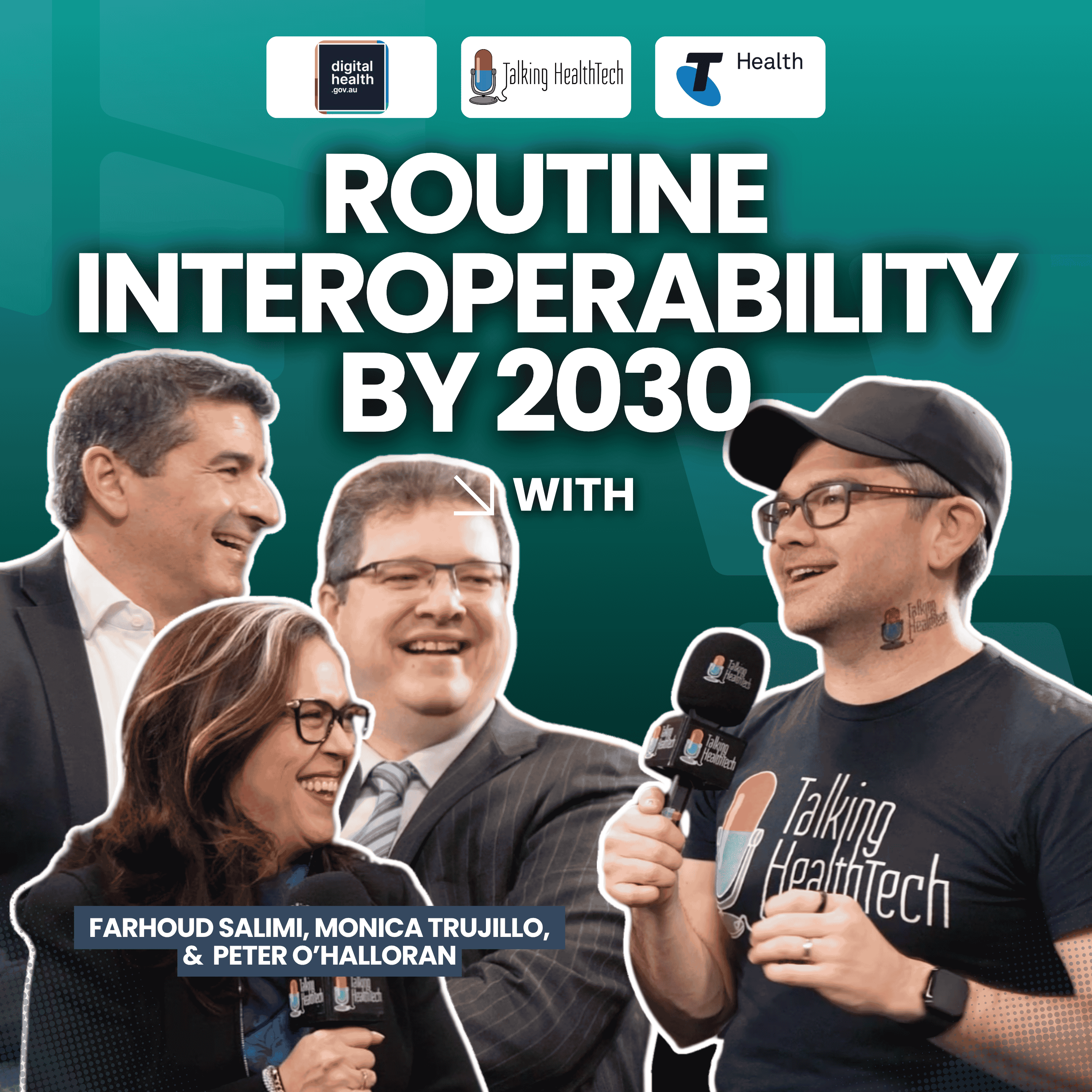
今天节目请到的嘉宾有澳大利亚数字健康局的彼得·奥哈洛伦,以及来自Telstra Health的法鲁德·萨利米和莫妮卡·特鲁希略博士。
Today on the show, I'm joined by Peter O'Halloran from the Australian Digital Health Agency, Farhoud Salimi from Telstra Health, and Dr Monica Trujillo also from Telstra Health.
大家好。
Good day, team.
你们怎么样?
How are we going?
很好。
Great.
早上好。
Morning.
很期待。
Excited.
我也是。
Same.
谢谢你们来参加这次对话。
Thanks for joining me here in this conversation.
而且我觉得,这次讨论的框架其实是个问题,在医疗保健领域,这也不是什么新鲜事了。
And the I guess the framing for this discussion too is a problem that, I guess, in health care, it's not one that we've, you know, is brand spanking new.
这个挑战就是,如果我们都能更好地实现互操作性,病人就能更容易获得医疗服务。
This challenge of, if only we could all be more interoperable, then patients would get better access to health care.
临床医生也能提供更好的服务。
Clinicians could be able to provide better services.
所有系统都能连接起来。
Systems would all be connected.
我觉得这些对大家来说都不是什么新知识。
I don't think any of that is kinda new knowledge for people.
我们就当这些是已知的吧。
Let's let's assume that is kinda known.
不同的是,现在我们有了一些更实际的办法可以解决这个问题,也有一些例子可以分享,让大家看看实际效果是什么样的。
The difference is now there's probably some more practical things that we can do about it and some examples that we can also share about what that actually looks like.
彼得,很高兴你能参加这次讨论,还有我在Telstra Health的好朋友们。
Peter, it's great to be able to have you in this discussion as well as well as my good friends from Telstra Health.
但从你的角度来看,考虑到整体的进展速度,你觉得我们在整个互操作性进程中处于什么阶段?真正促使我们采取行动、实现互联互通和数据流动的紧迫感或动力是什么?
But, from your perspective, you know, and thinking about the overall pace, you know, where would you say we're at in that whole interop journey and the the the real kind of urgency or burning platform for us to actually do something about the this connected pace and having data flow?
对。
Yeah.
彼得,和所有人一样,我参与这个进程已经很多年了,多到我不想数。
And look, Peter, like everyone else, I've been on this journey for probably more years than I wanna count.
这个话题我们已经讨论了几十年。
It it we've been talking about this for decades.
我们有过很多次失败的开始,每次大家都说。
We've had so many false starts where everyone's gone.
我们需要讨论互操作性。
We need to talk about interoperability.
我们需要采取行动。
We need to do something.
今天我看这个问题,觉得情况已经根本不同了。
I look at it today, and I say it's fundamentally different.
我们明白为什么需要互操作性。
We recognise why we need to have interoperability.
我们意识到,因为临床医生手边没有所需的信息来安全、恰当地治疗病人,所以每天都有病人受到伤害。
We recognise that harm is occurring to patients every single day because clinicians do not have the information they need at their fingertips to treat someone safely and appropriately.
这一点大家都认同。
People accept that.
我们不再讨论是否需要互操作性。
We're longer talking about we need interoperability.
我们讨论的是如何实现它,下一步是什么,什么时候能达到理想状态。
We're talking about how can we get there, what are the next steps, when will we get to Nirvana.
而且参与了好几年,我们可能都不再数了。
And having been involved for a couple of years, we're probably not gonna count anymore.
这太让人沮丧了。
It's it's too depressing.
我想说的是
What I would
十年,整整十年。
Ten years at ten years.
后面那位资深人士。
Senior in the back.
资深人士。
Senior.
对。
Yeah.
对。
Yeah.
我干这行之前,一根白头发都没有。
I didn't have any gray hair before I started this.
我想说的是,我从未见过像过去两三年那样,在实现这一目标方面取得如此大的进展。我完全相信,到2030年,实时共享医疗信息将成为澳大利亚医疗保健的常规操作。
What I would say is I've never seen so much traction as we've seen in the last two or three years towards this journey, and I'm completely confident by 2030, we'll get to the point where sharing of health care information in real time is just routine in Australian health care.
我们不会再去想这件事。
We don't think about it.
我们不会再讨论‘哦,我们应该这样做’之类的话题。
We won't be talking about, oh, we should do it.
我们会讨论的是,接下来我们该如何利用这些数据?
We'll be talking about what are we doing next with that data?
我们如何整合这些数据,使其对临床医生最有用?
How are we synthesising it so it's the best use for the clinician?
我们如何将其应用于精准医疗或群体健康?
How are we applying that to whether it's precision medicine or whether it's to population health?
这就是我们需要达到的目标。
That's where we need to get to.
而且我认为,我们可以在四年内达到这个目标,因为我们已经具备了这些基础条件。
And I think we can get to that position in four years because we've got these building blocks in place.
我们已经取得了进展。
We've made the progress.
正如彼得·斯皮沃洛斯所说的,我们已经过了临界点。
As Peter Spivulos sort of has said, we're beyond the tipping point.
现在这已经变得很平常了。
It's now becoming routine.
问题是如何再进一步,把这种互操作性真正融入整个行业。
It's how do we go those extra steps and just embed that interoperability throughout the sector.
我期待到2030年,大概第850期节目的时候。
I look forward to in 2030 around episode 850 is my rough calculation.
我们会拿出这段视频,然后说,对。
We'll be pulling out clip from this and be like, yeah.
太棒了。
Cool.
现在我们有了
Now we got
有更多的话题要聊。
more stuff to talk about.
但特别是,莫妮卡,我很想听听你的看法。
But particularly, Monica, I'm keen to hear your take on
因为从临床医生和患者的角度来看,我们讨论的这个挑战,是不是仅仅为了让医疗系统运行得更高效、更盈利?
it too because from a clinician's point of view and the patient side too, are are we talking about a challenge that is is more just to allow us to run a more efficient and profitable health care system?
还是说,从患者的角度来看,真正的影响是什么?
Or, like, what's the real impact from a patient's point of view?
我想分享一个刚刚有人告诉我的故事,这个故事真的很有意思,你一定会喜欢,因为有人告诉我,她通过我的健康记录里的一个结果发现自己有个肿块,是乳腺癌。
I'll share a story that was just shared with me before, which was a really interesting story, and you'll appreciate this one because someone just shared that she found out that she had a lump and breast cancer through a result that was in my health record.
之前没有人告诉过她这件事。
No one had told her that before.
她之所以去查看,是因为她分享给我的某件事,我不记得具体是什么了,而且她也同意我分享这个故事。
And it's only because she went in and had a look because of I forget what she shared with me, and she was happy for me to share this as well.
她去查看了,因为这是她的健康。
She went in, and it is her health.
对吧?
Right?
从消费者的角度来看,我们都是健康的消费者。
When you think about it from a consumer perspective, I mean, we're all consumers of health.
我们才是最关心自己健康的人。
We're the ones more invested in staying healthy.
对吧?
Right?
所以我们也希望在整个过程中掌握这些信息。
So we want the information to stay in this journey as well.
我们聊这个话题已经有一段时间了,我觉得我之前也提过。
Now we've been talking about it for a while, and it's a bit a little bit, and I think I've spoken about this before.
这有点像安全带。
It's a little bit like seat belts.
大家都知道系安全带是正确的做法。
Everyone know everyone knew that's putting a seat belt on was the right thing.
你还记得以前人们假装系安全带的日子吗?还记得那个吗?
And you remember the days where people used to pretend to put a seat belt on as well to see when remember that.
不记得了。
No.
记得的。
Do.
不记得。
No.
我觉得他们不记得。
I think they don't.
我确实记得那些日子。
I do remember those days.
但是,不管怎样,直到政策出台并立法规定,这成了理所当然的事,就像现在,没人会再想这个问题。
But, anyway, it's until, you know, policy came through and made it legislated that it was the obvious thing was, like, these days, no one would even think about it.
对吧?
Right?
所以有时候,显而易见的事情之所以能推行,靠的是政策,靠的是一个准备好行动的社区,再加上一点火花,然后技术几乎就成了通往正确护理的平台。
And so sometimes the obvious thing that is coming through is aided by policy, by a community that's ready to go, which is sparked, and then we and then the technology is almost then a platform to get to the right care.
我也想过安全带那件事,因为我听说过。
I've thought about the the seat belt thing a bit too because I've heard that.
但如果要两步验证,然后填表,然后还要审批才能系安全带,那确实挺麻烦的。
But because if you had to two factor authenticate and then fill out a form and then, you know, get approval to put on a seat belt
而且这里还有两条三条安全带,我在想该系哪一条。
And they have two, three seat belts here going, which seat belt am I
对。
Yeah.
所以,我们现在就处于那种技术上是可行的,但实际操作起来很难的阶段。
So, you know, we're kind of at that that it's technically available, which is really hard to kinda do.
是这样吗,还是我把它想得太简单了?
Is that right, or am I oversimplifying it?
好。
Cool.
但归根结底,我之前也说过,关键在于连接的医疗服务。
But and in the end and I said this before, it's about the care connected.
因为说到底,真正重要的是那个护理的时刻,无论你是消费者还是临床医生,你只有五分钟、十分钟的时间来帮助这个人走过他们的旅程。
Because at the end of the day, it's that moment of care that is really important for you to make a decision, whether you're a consumer or the clinician that you have five minutes, ten minutes to help this person in their journey.
技术,这也是我最终从事这份工作的原因,是真正能够改变那五到十分钟,让它变得非常有意义的东西之一。
The technology, and this is why I end up in this job, is one of those things that can really transform those five to ten minutes to make it really meaningful.
所以当我们思考这一点时,我们一直在开发这项技术,让那十到十五分钟变得更有价值,让你感觉自己在掌控自己的健康旅程。
And so as we think about that, we've been in this journey building that technology to make those ten, fifteen minutes way more valuable so that you feel you're in control of your health journey.
但回到那个比喻,如果你想上车开车,你必须有那些文件。
But it's also if I go back to that analogy, like, in order to get in a car and drive a car, you've gotta have the paperwork.
你必须要有驾照。
You've gotta have a license.
你的钥匙几乎就像两步验证一样。
Your key is almost like two factor authentication away.
就像,就是,对。
Like, it's it's just Yeah.
这需要成为我们思考和操作中的常规做法,当然,当我作为临床医生工作时,你早上做的第一件事就是登录系统,访问这些工具,检查一下,然后继续为患者提供优质的护理。
It needs to become routine in how we think and how we operate that of course, when I'm acting working as a clinician, the first thing you'll do, you'll go in the morning, you'll log on, you'll have access to these things, you'll check, you'll do it, and then you'll go on and provide exceptional care to patients throughout the day.
有些东西,以及历史上开发的一些技术,充其量也就是一般般,这一点我们都清楚。
Some of these things and some of the technology that's been developed historically is pretty average at best, and we all know that.
我今天看到的各种供应商正在开发的东西,已经远远领先于过去,实际上非常直观。
What I see being developed today by a whole range of vendors is light years ahead of that, where actually it is intuitive.
它真正围绕临床医生完成工作所需的功能来设计,而我认为,人们现在还在用二十年前的系统来评判互操作性。
It is actually focused around what a clinician needs to do to do their job, And that's the thing I think is people are still judging interoperability on a twenty year old system that they're using now.
五年前的系统。
Five year old system.
好吧,我本来想说得客气点。
Well, was trying to be nice.
但是,彼得,我觉得到2030年,我们不应该再谈互操作性了。
But, also, Peter, I think in 2030, we shouldn't be talking about interoperability.
对吧?
Right?
它应该无缝地融入工作流程中。
It should be that seamless in the workflow.
数据应该直接呈现,你不需要去点击不同的门户或者去获取数据再拼凑起来。
The data should just come through where you're not actually clicking different portals or going and getting the data to assemble it.
正如你所说,确实有一些人正在把信息无缝地整合到工作流程和系统里,同时也在投资建设国家基础设施来支撑这一点。我觉得,到2030年,我们希望达到的状态是,你不再需要去想两步验证或者Apple钥匙这些事。
As you said, there are people out there that are actually bringing that information within the workflow, within the system seamlessly, and it's also investing in that national infrastructure to underpin that as well, I think, which is which is where we'll get to, hopefully, in 2030 where, you know, your two factor auth or your Apple keys are no longer something you think about.
它就在你口袋里,随时可用。
It's just always in your pocket.
没错。
Exactly.
如果我们到2030年不再谈论数字健康,而是直接说健康,那就说明我们成功了。
And if if we know we've succeeded, if we get to 2030 and we don't talk about digital health, it's just health.
它只是提供护理的方式。
It's just how care is provided.
也是人们获取服务的方式。
It's how people access it.
然后我们就进入下一个阶段,应该讨论的是,在澳大利亚,我们如何利用这些数据来建设学习型医疗系统,无论是消费者在当下看医生,还是他们在做规划,比如你有一个新生儿,你会想,他们一生的护理路径会是什么样的?
And then it goes to the next stage of we should then be talking about, so what are we doing in Australia with a learning health system that's actually using that data, whether it's for the the consumer who's seeing a clinician in right that moment or whether they're planning something and you might have a newborn baby and you're going, so what what will their care journey be over their life?
或者甚至就是简单的群体健康。
Or even be simply population health.
这就是我们在2030年需要进行的对话。
Like, that's the conversation we need to be having in twenty thirty.
我们需要知道我们已经成功了,因为互操作性已经完成。
We need to know we've made it because interoperability is done.
已经搞定了。
It's dusted.
已经到位了。
It's in place.
而且你正在查看信息,没错。
And you're looking at information and Exactly.
洞察。
Insights.
对。
Yeah.
而且技术已经到位了。
And the technology is there.
我觉得这也是我们最大的一个误解。
I think that's the biggest myth as well to us.
是的。
Yes.
我们确实有旧系统。
We've got legacy systems.
你好。
Hello.
我们都有。
We all do.
我们不得不处理这些旧系统。
We have to deal with legacy systems.
对吧?
Right?
我是说,它们当时是符合用途的。
I mean and they were there fit for a purpose.
对吧?
Right?
比如,你想想二十、二十五年前,它们在当时确实很出色,符合那个时代的需求,也符合当时微服务或特定场景的需求。
Like, if you think about twenty, twenty five years, I mean, they were pretty out there great for a purpose at that point in time and for a microservice or a particular point in time.
但如今,重点在于连接医疗服务。
But these days, it's around connecting the care.
在于交换数据。
It's around exchanging it.
在于把洞察带到医疗服务的那一刻。
It's about bringing insights to that moment of care.
因此,你知道,这是一个巨大的转变,从维护这些传统的、经典的——我们称之为经典的系统。
Therefore, this is, you know, this is a big transition between maintaining these legacy classic classic, we call them.
经典经典产品。
Classic classic product.
经典产品。
Classic products.
经典产品,同时还要建设未来,对吧。
Classic products, and then building a future, right, at the same time.
对。
Yeah.
想想那些,因为我们常说,如果这只是法胡德的技术问题,那就像所有技术一样。
The thinking about some of those because often we say too, if if it was just a technology problem for Farhoud, it's kinda like all the technologies.
是的。
Yes.
我们大概能做到,对。
We can kinda do yeah.
解决这个问题。
Sort that out.
不过也许我们可以先从挑战本身之外的地方开始聊,比如,如果我们再往下深入一点,谈谈人们在医疗系统里可能熟悉的具体操作,那些实际的应用场景,比如某个特定领域或服务,只要技术应用得当,就能产生实实在在的影响。
But maybe we can start firstly on the not so much the challenges, but, like, what what are those actual if we were to come down a little bit further and talk about, like, the practical bits that people might be familiar with in the health system, those use cases, like the the real examples of the here's a particular vertical or a particular service that with the right application of technology, it has, like, a meaningful impact.
对。
Yeah.
你看。
Look.
我觉得技术本身就是问题的一部分。
I I think technology is part of the problem.
这些年技术确实进步了不少。
Like, the the tech has improved over the years quite significantly.
但就像莫妮卡说的,十年前、十五年前、二十年前,我们用的那些小系统其实已经算是很大的改进了。
But what Monica said, you know, ten, fifteen, twenty years ago, all those little systems that we had were actually a significant improvement.
对。
Yeah.
对。
Yeah.
对。
Yeah.
我们实际上创造的是数字孤岛,而不是纸质孤岛和纸质文件柜。
We actually created was digital silos instead of paper silos and paper filing cabinets.
如果把这个带到我们现在的位置,就是我们正在制定标准,让这些系统真正能够相互沟通。
If you take that to where we're at now is where we're coming up with the standards to actually get those systems to talk to one another.
那显然是第一步,你知道,莫妮卡提到的,加速器之类的创造出来的。
That that was obviously the first part, which, you know, Monica mentioned sparked, accelerator sort of created.
但接下来我们怎么把这个标准、这些已经开发出来的好东西真正落地实施呢?
But then how do we then take that standard, take that goodness that's been developed and actually implemented?
所以你想,比如电子转诊、电子申请结果,跟SA Pathology合作,把结果真正拿出来,从公共卫生系统带到我们的应用里,然后把它变成全科医生在私营环境里能用的东西,然后再提交另一个检查或测试的申请。
So if you think about, you know, e referrals, e requesting results, so, you know, working with SA Pathology to actually get the results out there, take that into from public health system into our application and actually turn that into something that a GP can use in a private sort of setting and then actually then put in a request in for another order or another test.
这些现在都变成电子化了。
That's all now becoming electronic.
所以把这些用例拿过来,然后让这些标准真正实施,最后把价值带回来。
So taking those use cases then getting those standards implemented to actually then bring in value back.
但就算你想想看,我自己去看全科医生,被转诊到医院,然后又回到全科医生那里,做了三次检查。
But even if you think about it, I personally went to my GP, got referred to the hospital, then went back to the GP, three tests.
那可能根本没必要,因为检查内容都一样。
That was probably not required because they all did the same thing.
对吧?
Right?
全科医生和医院的专科医生。
And the GP specialist in the hospital.
如果你们真的共享这些信息,能为患者和临床医生节省多少时间和精力呢?
If you actually share that information, how much time and effort could it save for the for the patient and the clinician
甚至整个行业也能受益。
and even the sector?
我也喜欢这些例子,因为通常在这种单一场景下,如果只是个例外,那只是有点烦人而已。
I like those examples too because often in that single use case, if that was like an exception that, oh, that's a little bit that's mildly annoying.
但确实,你完全可以去做个检查然后回来。
But, yeah, you could totally go get a test done and come back.
但是,你
But you
能大规模地这样做吗?
do that at scale?
那是大约六个月前的事了。
That was, like, six months ago.
对。
Yeah.
对。
Yeah.
是的。
Yeah.
他们给我做的检查和医院专家做的一样。
Did the same test as the specialist as the as the hospital on me personally.
而且这种事每天都在发生。
And and that's every day that that's happening.
而且是对数百万人。
And to millions.
而且是对数百万人。
And to millions.
没错。
Exactly.
你只要看看这个,就会觉得,作为临床医生,这肯定让人很恼火,莫妮卡,你知道你本可以拥有更多,本可以和患者进行更有深度的会诊。
And you just look at it, like, you you think as a clinician that must be infuriating, Monica, where you know you could have so much more and you could have a much more insightful consultation with the patient.
如果你已经能拿到那些结果,知道它们是什么,而且这些结果常规就能获取,你实际上可能能推进得更远。
You might actually be able to progress a lot further if you already had access to those results, if you knew what they were and if it was just available routinely.
但患者的期望也在改变。
But even the patient expectations are changing as well.
我希望能够拿到自己的病历,能够绕过那个测试,直接和我的临床医生讨论那个测试的结果。
I I want to be able to have my record to be able to circumvent that test being done, to have that conversation with my clinician about the results of that test.
对。
Yeah.
能帮你止痛的那种。
Me that can turn off your pain.
没错。
Exactly.
对。
Yeah.
还要收费。
Being charged.
对。
Yeah.
这正是我们要解决的问题。
That's what we're trying to solve.
对。
Yeah.
所以做数字健康这块,有时候会觉得挺孤单的,尤其是当团队或公司里只有你一个人真正懂这个领域的时候。
So working in digital health can feel a bit isolating, especially if you're the only person in your team or your company who really gets the space.
这也是我们建立THT Plus社区的原因之一。
That's one of the reasons why we built the THT plus community.
这是我们为数字健康领域的人或即将进入这个领域的人提供的个人会员服务,让大家能接触到志同道合的人。
So this is our individual membership for people in or moving into digital health who wanna be in the vicinity of others that are doing the same thing.
你可以参加我们会员专属的聚会和研讨会,还能看到我分享的很多内容。
So you get access to our member only meetups and workshops and a lot of content from me.
我在这个社区里也结识了一些很棒的人脉。
I make some really good connections in the community too.
我们让这里保持有趣。
We keep it fun.
还有排行榜。
Got a leaderboard.
还有其他各种你期待我搞的疯狂点子。
All these other crazy things that you expect from me.
而且这里的人构成也很丰富。
And it's a good mix of people too.
这里有创始人、临床医生、运营人员、投资者和政策制定者。
There's founders, clinicians, and operators, investors, policymakers.
全都齐了。
It's all there.
而且这绝对是那种你付出越多收获越多的东西,你懂我意思吧,但所有好的社区都是这样。
And it's definitely one of those things that you get more from by giving more, if you get me, but that's like all good communities.
而且这也是一个付费社区,这意味着我们真的把它打造成了一群很棒的人,他们喜欢Talking Health Tech的氛围,关心这个行业,想在这个行业里做出好成绩。
And it's a paid community too, which means we've really dialed it in to just be a wonderful bunch of humans who dig the Talking Health Tech vibe and who care about this industry and wanna do good work in it.
所以你很可能很适合这里。
So you're probably a good fit for it.
去看看吧。
Check it out.
访问talkinghealthtech.com/tht+,今天就加入吧。
Go to talkinghealthtech.com/tht+ and join up today.
我回想起那个例子,你知道的,到2030年,一切都会解决的。
I'm just thinking back to the example of the oh, you know, by 2030, it'll all be sorted.
然后我们就有了所有——那是彼得说的。
Then we've got all That's what Peter said.
第一步。
Step one.
因为那样我们就在处理数据了。
Because then we're working with the data.
那我看来得改播客的名字了,因为以后就不叫HealthTech了。
Then I'm gonna change the name of the podcast apparently because it won't be HealthTech anymore.
叫健康科技。
It's the health tech.
那可真麻烦。
That'll be a pain.
但这就是进化。
But it'll be the evolution.
就像你之前说的,Farhoud,二十五年前我们数字化了那些糟糕透顶的流程和系统,有些甚至一百年都没变过,那在当时就是一次巨大的飞跃。
Like, you were saying early, Farhoud, like, we that digit originally, twenty five years ago, we digitized processes and systems that were truly appalling that in some cases have been that way for a hundred years, and it was a step change then.
我们现在正处在下一个转折点,所有这些东西都会连接起来,数据也会流动起来。
We're now at that next moment where we have the next step change where we're actually gonna have all those just joined together and the data will flow.
然后我们会迎来下一个重大变革,那就是如何在日常工作中真正利用所有这些数据。
And then we'll move to the next step change again is how do we then operate in a world where we actually have access to all of this data on a routine basis?
因为那将再次改变医学的实践方式。
Because that once again will change how medicine is practiced.
对。
Yeah.
而这正是我们需要为之准备的。
And and that's what we need to be preparing for.
是的。
Yeah.
我回想所有那些伟大的想法和真正在医疗保健领域,甚至坦率地说,在任何国家的任何行业里,实现重大变革的例子。
I reflect on all of the great ideas and all of the examples of, like, real step change in health care and, frankly, any industry too in any country.
如果我们都充满热情、积极投入,并且知识渊博、资源充足,具备所有必要的条件,我相信我们都能实现那个目标。
If we're all as passionate and kind of switch and and also knowledgeable and had the resource, all those things that you need, I'm sure we could all kinda get there without, you know, and achieve that goal.
不过我们也知道,有时候缺乏足够的紧迫感,或者即使那是我们想去的方向,有时候我们也会想,嗯,好像没有足够的动力去实现它,或者如果没有做到,那会怎么样?
However, we also know that sometimes there's not enough of a burning platform or even though that's where we want to go, sometimes we're kind of like, well, there's not enough incentive to get there, or there's not like, if not for if we don't do this, then what happens?
比如,这对你来说意味着什么?
Like, what does that look like for you?
我把发言权交给大家。
I'm opening the floor.
我也不知道为什么带这个iPad来准备要点,因为现在我们就是在聊天。
I don't know why I even brought this iPad for talking points because now we're just having a chat.
但是因为要聊的太多了。
But the because there's so much to talk about.
但是如果我们没把这个做好,是仅仅有点麻烦,需要改进,还是说有一个真正紧迫的问题需要我们马上解决?
But the if if we don't get this alright, is it just that it's a bit of a pain and that, yeah, we need to improve it, or is there, like, a real kind of burning platform that we need to address now?
你看。
Look.
我觉得系统里已经有相当高的数字化成熟度了。
I I think that there is a significant amount of digital maturity in the system.
对吧?
Right?
各地情况都不一样,你知道,无论是城市还是农村,无论是我们那些老旧的、过时的桌面系统,还是我们的云平台。
There are differences across the board whether, you know, in metro rural, whether it's our, you know, old antiquated sort of desktop based systems versus our cloud based platforms.
我觉得如果我们处理不好,那对病人来说肯定有安全隐患。
I think if we don't get it right, then there is definitely a safety issue for the patient.
临床医生在信息不全的情况下做决策,再加上AI的加速,而AI只看到一半的情况,却总是告诉你它是对的。
Clinicians making decisions with half the information accelerated by the use of AI, which will always tell you it's right with only half the picture.
你可以想象,从临床护理和安全角度来看,这意味着什么。
You can just imagine what that means from a from a clinical care and a safety perspective.
所以我认为我们确实必须改变,因为事情发展得太快了,我们需要迎头赶上。
So I think it is an imperative that we need to actually change it because things are moving at much more rapid rate, and we need to actually rise up to meet that.
而且我们还有像人力短缺这样的紧迫问题。
And we've got burning things like workforce issues.
我们的资源也有限。
We've got resources that are limited.
就是说,这个燃眉之急真的是火烧眉毛了。
As in this the burning platform is, like, really burning.
不是说我们有很多护士源源不断地出来。
Like, there's not like we're getting thousands of nurses coming out.
也不是说我们有很多事情要考虑。
It's not like we you know, we've got so many things that we have to think about.
你明白吗?
You know?
我们很幸运,这个国家有全民医疗体系。
We do have we're lucky to have a universal health care system in in this country.
所以我们能照顾到每个人。
Therefore, we look after everyone.
但能不能享受到,最大的决定因素其实是你的邮编。
Access, you know, biggest determinant is a postcode.
所有这些因素,比如偏远地区、劳动力短缺、现在人们对医疗的期望,都希望得到同样的服务,但我们的资源又有限。
All those things come together into rural, regional, the workforce shortage, the expectations these days of of people that want the same thing, but we've got less you know, resources are limited as well.
所以所有这些加在一起,就形成了一个非常紧迫的危机,而技术正好能推动这个变革。
So all that comes together as one burning platform with technology enabling that.
但同时也得看技术能带来什么可能性,因为如果你想想这个紧迫的危机以及我们能往哪个方向发展,最初是从旧系统开始的,这就是我所说的“人工自动化”。
But then also the art of the possible, because if you think about the burning platform and where we can go, it started with the legacy systems, and it's what I call manumation.
就是把人工流程自动化。
It's the automation of manual processes.
所以,最初的想法就是,我现在是这么做的,那就把这个流程自动化吧。
So it's the desire to say, well, I do it this way.
让我们用那种方式把这个流程自动化。
Let's automate that process that way.
然后现在,我们正在……那是第一阶段。
And then now we're going so that was the first phase.
而现在,我们开始记录已经发生的护理工作。
And then now we're going to we are recording care that happened.
对吧?
Right?
所以目前,我们的系统会捕捉已经发生的事情,然后记录下来。
So in the moment, our systems will capture something that's already happened, and we record it.
彼得说,随着我们向前发展,我们就能在事情发生之前利用这些数据。
Peter says, as we move forward, we'll be able to use that before that.
这样我们就能提前规划护理,从而改变医疗服务的提供方式。
So we plan the care, and it becomes a different way to deliver health care.
如果你现在和消费者聊聊,他们都在大声疾呼,说不想再这样下去了。
And if you talk to consumers at the moment, they're they're screaming out saying we don't wanna continue the way it is.
过去五年里,我们看到的最大变化之一就是,消费者对医疗服务提供方式的期望,尤其是对数字化服务的期望,已经飙升到了极点。
And one of the biggest changes we've seen in the last five years is consumer expectations for how health care is delivered, particularly how digital enable it, have gone through the roof.
比如,消费者就是希望,他们告诉一位临床医生的事情,整个治疗团队的所有医生都知道,这其实是个很合理的期望。
Like, consumers just expect that they tell one clinician something that every clinician they're treating team knows, and that's not an unreasonable expectation.
消费者同样也期望,他们能及时获取自己的信息,他们的医生也能及时获取这些信息。
Consumers also likewise expect that they have access to their information in a timely manner, that their clinicians have access to it.
这确实是一个紧迫的问题,消费者绝不会容忍这种情况继续下去。
These are this is a burning platform in a way that consumers will not tolerate
对。
Yeah.
继续沿用过去的老办法。
Continuing the way we have been historically.
是的。
Yeah.
他们完全有理由要求说,我要访问我的数据。
Like, they are rightfully demanding and saying, I want access to my data.
我要确保我的医生、护士、理疗师,不管是谁在治疗我,都能看到我的信息。我不想再去一次门诊,把同一个故事讲上57遍,就因为有人没看到我之前已经展示过56次的数据。
I want to ensure my doctor, my nurse, my physio, whoever is treating me has access to my information, and I don't wanna go into yet another clinical consult and tell the same story 57 times because someone didn't have access to the data that I've already showed 56 times before.
我是不是可以这样理解,因为医疗保健让人沮丧,比如,
Am I right in assuming that because that challenge of, like, oh, health care is frustrating
因为我无法访问
because I don't have access to
这个,或者做某件事真的很难,但作为病人你又不得不去做。
this, or it's really tricky to do x y z, but you kinda need to do it as a patient.
否则,你自己或者病人就得不到照顾了。
Otherwise, you're not gonna get care for yourself or or or a patient.
那现在不同的是,二三十年前,病人会怎么处理这种情况呢?
Is the difference now that, like, what's a what would a patient have done about it twenty, thirty years ago?
嗯,我不得不经历那个繁琐的过程。
Well, I'm not this I have to go through that arduous process.
现在有了AI和各种工具,还有直接面向消费者的应用,病人和消费者会找到一些替代方案,但这些方案可能不是最安全的,或者没有经过测试,或者不属于正规体系,有点超出常规。
Now with the AI piece and all the tools available and the direct to consumer applications, there are alternatives that patients, consumers will find that potentially are not the safest solution or it's untested or it's not part of the it kind of extrapolates.
我觉得我大概说对方向了。
I'm, like, sort of going in the right direction.
因为现在的不同在于,你刚才描述的听起来就像传统的医疗保健,人们会对此感到不满,而我们只是忍受了那些非常不满的人。
Because the the difference now because what you just described kinda sounds like health care as it's been, yeah, people are gonna be annoyed about it, and we've just put up with really annoyed people.
但是然后呢,
But then
你的意思是AI填补了这个空白,对吧?
And that AI fills the gap is what you're saying.
对。
Yeah.
对。
Yeah.
对。
Yeah.
我不知道。
I don't know.
我说得对吗?
Am I right here?
对。
Yeah.
而且如果人们不小心的话,AI填补这个空白的方式真的很吓人。
And AI fills the gap in a really scary way if people aren't careful.
比如,有很多聪明的人作为消费者在用AI做很聪明的事情,而且对他们来说确实有效。
Like, there are so many intelligent people out there who are doing really clever things with AI as consumers, and it's working for them.
还有很多人只是说,哦,没事,这是AI。
There are so many more and who just go, oh, well, it's AI.
会没事的。
It'll be fine.
电脑最懂。
The computer knows best.
不会有问题的。
It'll be okay.
但我们没有为这些人做好准备。
And we haven't set those people up for success.
他们不知道应该有哪些防护措施。
They don't know what some of those guardrails should be.
在澳大利亚,我们还没有统一所有医疗数据的临床术语标准,AI模型甚至不明白那是什么。
We don't yet have standardized clinical terminology across all health care data in Australia nor the AI models even understand what that is.
所以这些就是我们需要建立的防护措施和规则,让消费者可以说,那没问题。
And so these are some of the guardrails and the things we need to put in place so that consumers can say, that's fine.
我可以正常地跟临床医生打交道,或者我可以把我的AI引擎加进去,安全地完成这件事。
I can deal with the clinician in the normal way, or I can chuck in my AI engine and do it safely.
而且我觉得,作为社会,我们还需要做的另一件事是,怎么让人们能够拥有这种选择?
And I think that's the other part we need to do as a as a society is say, how can we enable people to have that choice?
如果他们选择这样做,怎么才能让他们以有教育意义的方式去做,而且实际上对他们来说是安全的?
And if they choose to do it, how can they do it in an educated manner that is actually safe for them to do?
我们作为行业和政府,怎么才能设置这些护栏,让数据标准化,或者有安全的方法去做这件事?
And how do we, as a sector and as government, put in place those guardrails so that the data is standardised or that there are safe ways of doing it?
对。
Yeah.
这确实能建立信任。
Like, that builds trust.
但是,彼得,我们以前都用过谷歌医生。
But, Peter, we all used to use doctor Google.
那时候要找到正确的文章或正确的建议要难得多。
It was a lot harder to find the right article or the right advice.
人工智能要想成功,它需要燃料。
AI, for it to be successful, it needs fuel.
对吧?
Right?
人工智能的燃料,除了水和电,那些先放一边,那些都不好,其实真正重要的是数据,而且是干净的数据。
The fuel for AI, apart from the water and electricity, leave that to one side, which is all bad, is actually data, and it's clean data.
如果你给它不干净的数据,就像彼得说的,没有正确的术语,没有正确的映射,它就不会起作用。
If you give it unclean data, as as Peter said, without the right terminology, without the right mapping, it's not going to work.
如果你真的把数据弄对了,把它映射好,把术语弄对,让它完整,那么你就能让消费者和患者更多地参与到他们的健康记录中来。
And if you actually get the data right, get it mapped out, get the terminologies right, get it complete, then you have that ability to let consumers and patients actually engage a lot more with their health record.
如果你再把那个循环闭环到你的临床护理中,回到你去看医生的时候,那么你就能更好地讨论你的健康护理。
And if you then close that loop back into your clinical care, back into when you go see your clinician, then you can have a better dialogue about your health care.
我也见过它出错,就在我最近告诉你的那次事件中。
I've seen it go wrong as well in my latest incident that I was telling you about.
那个医生实际上在我的转诊单上勾错了选项。
The the clinician actually ticked the wrong box on my referral.
展开剩余字幕(还有 132 条)
我把结果输回AI,它告诉我左心室有问题,但事实并非如此。
I put the result back into AI, and it told me that I had a problem in my left ventricle, and it wasn't correct.
他其实勾错了选项。
He'd actually ticked the wrong box.
所以这就是为什么你必须做对。
So this is why you have to get it right.
否则,你可能会误导人们走上错误的道路。
Otherwise, you can actually mislead people down the right wrong pathway.
所以必须准确无误。
So it has to be right.
我觉得有一个
I feel one of
东西能够帮助并且有望惠及很多消费者,至少我是这么认为的,彼得,那就是“我的健康记录”。
the things that are gonna enable and hopefully help a lot of consumers, I believe anyway, Peter, would be My Health Record.
是的。
Yes.
完全同意。
Absolutely.
你觉得它在这样的新环境里扮演什么角色?现在那边情况怎么样?
How do you see the role of that in this kind of new world to you, and what's happening there?
澳大利亚,虽然我们都觉得这里的人会抱怨医疗、数字医疗,说这里太差了。
Australia, despite we all think everyone in Australia goes, oh, health care, digital health care, it's it's terrible here.
其他地方多好啊。
Where else is so great.
其实并不是这样。
It's actually not.
不是的。
No.
我跟很多海外的人聊过,感觉澳大利亚在数字医疗方面做得挺不错的,能排在全球前十或前二十。
And when I talk to so many people overseas, it's kind of like Australia's in that sort of top 10 or 20 of nations globally in terms of how well we're doing in digital healthcare.
医疗标识符、标准化的临床术语、我的健康记录,这些都是核心基础,以后也一直是。
Healthcare identifiers, standardised clinical terminology, My Health Record are core foundation pieces to that, and always will be.
所以最近我们宣布了一系列对“我的健康记录”一致性配置文件的升级。
And so recently we announced a whole range of uplifts of our conformance profiles to My Health Record.
听起来很无聊、很枯燥,对吧。
Very boring, very dry, etcetera.
但随着软件升级到新版本的一致性配置文件,其带来的影响其实要深远得多。
Except the outcome, as software is upgraded to the newer versions of conformance profiles, is much more fundamental.
它把标准化的临床术语嵌入到这些系统里。
It is embedding standardized clinical terminology into those systems.
它提升了隐私控制、网络安全控制,以及基础的临床用户设计,确保软件真正适合用途、使用安全。
It is uplifting the privacy controls, the cyber controls, basic clinical user design to ensure that software is actually fit for purpose and safe to use.
这正是我们正在获得的好处,而“我的健康记录”正是这一切的核心。
That's exactly the benefits that we're getting, and that's where My Health Record is centered to this.
所以,通过我们为“我的健康记录”制定的立法,以及立法中定义的互操作性要求和软件一致性要求,这实际上帮助我们把整个澳大利亚的医疗行业提升到一个新的水平,在临床安全、网络安全和隐私保护方面都是如此。同时,它也为我们提供了一个国家级平台,让临床医生和患者之间可以无缝共享信息,患者可以选择在什么情况下谁可以访问他们的信息。
So through the legislation we have for My Health Record and the defined interoperability requirements under the legislation and software conformance, that actually helps us lift the whole sector in Australia up to a new level in terms of that that clinical safety and the cyber and the and the privacy protections, but also it gives us a national platform where the information can be shared seamlessly between clinicians and consumers, where consumers can choose who has access to the information in what circumstances.
这些信息可以被各种临床系统使用,无论是在医院、初级保健机构还是其他任何地方的临床系统。
And that information can be consumed into a whole range of clinical systems, whether it's a clinical system in a hospital or in primary care or wherever.
而且临床医生甚至都不用去想,哦,不。
And it's not that a clinician has to even think, oh, no.
我在用我的健康记录。
I'm using My Health Record.
健康数据就在那里。
It's just the health data's there.
是的。
Yes.
对消费者来说也是一样。
And the same for the consumers.
比如,我的想法是,两三年后,消费者可能都不会想到我的健康记录,他们也不应该需要想到。
Like, my idea is two or three years from now, a consumer may not even think about My Health Record, and they shouldn't have to.
但它会在后台存在,作为那种核心的基础设施,把数据从A点传到B点,同时还有非常强大的法律保护,让消费者掌握主动权。
But it'll be there in the background providing that central sort of piece of infrastructure that moves data from point a to point b, but also has really strong legislative protections to put the consumer in the driving seat.
所以,是的,我听到的是,要让我的健康记录得到更广泛的采用,答案不是一个新的按钮,或者最新的用户界面体验。
So, yeah, the what what I'm hearing then, the answer for greater adoption of My Health Record is not a new button or the latest, you know, UI experience from a person.
你提到它就像那个核心基础设施。
You you talked about it being like that central infrastructure piece.
所以这就是现在最关键的不同之处。
So that's the the critical thing that's different now.
就像信息更多了,而且更有用?
Just like there's more information and it's more utility?
确实是这样。
There is.
而且,你看,我们已经通过默认共享立法看到了,甚至在它生效之前,病理和放射学就已经这样了。
And, look, we've already seen through the share by default legislation even before it took effect for pathology and radiology.
上传到“我的健康记录”的文件数量激增。
Uploads of documents to My Health Record went through the roof.
有一年,通过“我的健康记录”共享的临床文件中,有25%来自那一年,总共算下来。
We had in one year, 25% of the clinical documents shared through My Health Record came from one year, like in totality.
浏览量也大幅上升,不管是不同领域的临床医生查看,还是消费者查看。
That is the views went through the roof, whether that was clinician views from different sectors, whether that was consumer views.
五年前、十年前,如果我打开我的健康记录,里面什么都没有。
Five years ago, ten years ago, if I went into my My Health Record, there'd be nothing there.
空荡荡的。
Sparse.
对。
Yeah.
确实很空。
It's pretty empty.
空荡荡的。
Sparse.
我的意思是,可能只有几条医保的信息,然后就没别的了。
I mean, there was a couple of bits from Medicare maybe, and that's about it.
对。
Yeah.
现在我可以进去看到我的检查结果了。
Now I can go in there and see my test results.
说实话,我在看全科医生之前就已经先看了自己的血液检查结果。
And being realistic, I'm reading my blood results before I see my GP.
因为你想要的是简短完整的对话,或者说是引导式的对话,而不是那种零散的。
Because you wanna have a minimal full conversation or or you want a guided conversation rather than Sprite.
但不仅如此。
But not only that.
就像我和全科医生聊的时候,他的回答是,哦,是的。
It's like when I was in talking to my GP, the answer is, oh, yes.
我们需要做这些血液检查。
We need to do this blood work.
如果结果在这些范围内,你就没事。
If the results are in these ranges, you're fine.
三个月后再回来复查。
Come back and we'll review in three months.
如果超出范围,我们就需要谈谈。
If it's outside that, we need to talk.
如果结果在这个范围或者那个范围,你就知道该怎么做。
If it's here or here, this is what you do.
所以我们在诊室里就已经谈好了,甚至在我还没做血液检查之前。
And so we had that conversation while I was in the consult room, before I even had the blood test done.
对。
Mhmm.
对。
Mhmm.
所以实际上我对接下来发生的事情有了掌控。
And so I actually had control of what happened next.
全科医生不需要为了那些非常普通、标准的结果而特意见我,做一次没什么意义的复查,而且她也知道我已经有了接下来三个月的治疗计划。
The GP is not having to see me unnecessarily to do a a fairly pointless review of what were very boring and standard results, and she knew that I had a treatment plan in place for the next three months.
这应该成为每天的常规操作,这样我们就不用再去想它了。
That is what should just become routine every day so that we don't think about it.
它自然就发生了。
It just happens.
这种氛围对Telstra Health那边的发展方向有什么影响?
How's that vibe shaping the the directionally, the things happening on the Telstra Health side?
你看。
Look.
我觉得,当我们审视我们的产品布局和产品组合,以及展望未来,比如我们的Chorus产品,我们肯定在考虑如何以互操作性为核心来设计它。
I think as we look at our landscape and our product sets and and where we look into the future with, you know, our Chorus product, it's definitely something we're thinking about in terms of how we design that with interoperability at the center and in mind.
显然,我们在开发工作流程时非常以患者为中心,但在后端,这一切都与Peter团队在My Health Record方面的工作保持一致。
Obviously, being very much patient centric in how we develop our workflows, but at the back end, it is all aligned with what Peter and team are doing as part of My Health Record.
所以,我们非常依赖他们所做的努力,来整合单一的患者记录,无论你是在我们的系统中工作,临床记录或详细信息在我们的系统里,还是别人使用另一个平台、另一个系统,连接到My Health Record,再回到我们的系统,来展示端到端的视图。
So fire standards and really, really reliant on the work that they're doing to bring that single patient record together, whether you're working in our system and the clinical records or the details are in our system or whether it's someone else using another platform, another system connected back up to My Health Record and back to our back to our system to show you that end to end view.
我们追求的就是这种纵向视图。
And it's that longitudinal view that we're after.
所以我们非常期待那里的一些进展,以确保我们的平台在我们开发和部署时也能真正发挥作用。
So we're really, really looking forward to some of the, obviously, developments there to be to be able to make sure our platform comes to life as well as we develop and deploy that.
是的。
Yeah.
回顾这些年,我觉得我们很幸运,但这并不是靠运气得来的。
And we're we're you know, going back and reflecting on the years, I would say we're we're lucky, and we're also it's not a result of luck.
这是围绕国家基础设施、我的健康记录以及连接所有国家相关系统的辛勤工作。
It's hard work around the national infrastructure, the My Health Record, the the need to connect to all the national bits and pieces, let's call them.
对我们来说,因为我们首先是澳大利亚的公司,这贯穿于我们做的所有事情,同时我们在构建时也会纳入临床医生和消费者的观点。
And so for us, because, obviously, we're Australian first, then it's part of everything that we do, but we also then include the clinician, the consumer point of view as we build.
所以,让来自各个学科的用户的声音参与进来,对我们来说也非常重要。
And so having those voices in of the users that are there across all the disciplines, it's also really important for us.
我们有一个项目,里面有临床顾问给我们反馈,非常诚实的反馈,有时候甚至不留情面。
So we have a program where we have clinical advisers in there giving us their feedback, very honest feedback, times, no.
那真的不太好。
That's not that's not good at all.
是的。
Yes.
但我们可以做到。
But we can do that.
所以我觉得,我们现在能这么做,是因为我们站在了优秀基础设施这个巨人的肩膀上,从一开始就连接好了,而不是反复做集成、集成、再集成,结果还出问题。
So I think and we can do that now building it because we also stand on the shoulders of the giant excellent infrastructure and be connected from the start as opposed to try and do integrations, integrations, integrations, and and then something breaks as well.
对吧?
Right?
所以,是的。
And so yeah.
但我觉得关键也在于,这不是强加给任何人的。
But I think that's also the thing is we're we're not this isn't being done to anyone.
对。
Yeah.
而是和所有人一起做的。
It's being done with everybody.
这就是这次和以往几次我们参与的不同之处。
And that's the difference, I would say, this time compared to the last few times we've all been involved in it.
比如说,这次有行业参与进来。
Like, this is involving industry.
这涉及到消费者。
This is involving consumers.
这从一开始就涉及到临床医生。
This is involving clinicians from the ground up.
我是说,如果你从来没参加过Spark的活动,彼得,你见过的话,你就知道Spark是什么样的。
I mean, if you've never been to a Sparked event, and you've seen them, Peter, you know exactly what Spark's like.
就是那种疯狂的、混乱的,所有人挤在一个房间里,各抒己见,激烈地辩论各种问题。
Like, it's it's this mad chaotic everyone in a room having views, passionately debating different issues.
但最后出来的是什么?
But what comes out at the end?
一个非常好的标准,对。
A really good standard Yeah.
我们都能接受,因为它满足了所有的需求。
That we all can embrace because it meets all the needs.
是的。
Yes.
我们可以实施。
We can implement.
明天就能实施。
Implement tomorrow.
对。
Yeah.
我觉得这就是区别所在,整个行业一起合作来做这件事,而不是澳大利亚单打独斗。
Like, it and that's the difference, I think, is we have that this is the whole sector coming together to do it, and it's not just Australia doing it in isolation.
我们正在采用全球标准。
Like, we're we're adopting global standards.
我们和其他国家合作。
We're working with other nations.
我们和全球的标准制定组织合作,推动他们走同一条路。
We're working with the standard development organizations globally to get them to go down the same path.
所以我认为,未来三到五年,我们会看到澳大利亚本土开发的优秀软件产品越来越多地被海外采用,因为他们也在采用同样的全球标准。
And so what I really I think that will deliver for us in the next three to five years is we'll see great Australian homegrown software products that are increasingly being used overseas where they're adopting the same global standards, where we will see.
这是个梦想,彼得。
It's a dream, Peter.
那真是个梦想。
That's a dream.
但这就是我们需要的。
But that's what we need.
对。
Yeah.
我们需要这种能力,因为人和数据并不局限于某一个地方,甚至某一个国家。
We need that ability because people and data are not stuck in one location or even one nation.
对。
Yeah.
他们遍布全球,我们需要支持这一点。
They they travel across the globe, and we need to support that.
我们需要能够跨越国际边界的软件,现在已经有软件供应商在多个国家开展业务,我们也需要引进其他国家的供应商,让他们来分享他们的产品。
We need software that can go across international borders, and we now have software vendors who are working in multiple countries, and we need to bring vendors in from other countries to to share their wares with us.
对。
Yeah.
嘿。
Hey.
你看。
Look.
我觉得我们刚才的讨论反映了整个行业的氛围,我期待看到事情继续发展。
I think that the the discussion we've had here reflects the the vibe within the broader industry and looking forward to seeing things continue.
关于Telstra Health和澳大利亚数字健康局的所有细节,都会在本期节目的节目说明和我们的网站上,大家可以去看。
All the details of Telstra Health and the Australian Digital Health Agency actually roll on the in the show notes of this episode and on our website too for people to check out.
我可能要让这个梦想团队去忙他们的事情了。
And I might free up the dream team here to get on and get some stuff done.
所以Farhoud、Monica和Peter,非常感谢你们抽出时间。
So Farhoud and Monica and Peter, I really appreciate you making the time.
非常感谢。
Thanks so much.
谢谢。
Thank you.
谢谢,彼得。
Thanks, Peter.
谢谢,彼得。
Thanks, Peter.
希望你喜欢本期《Talking Health Tech》节目。
We hope you enjoyed this episode of Talking Health Tech.
记得点赞、订阅,并把本期节目分享给可能觉得有用的人。
Make sure you like and subscribe, and share this episode with someone who might find it valuable.
想了解更多关于医疗创新的信息和资源,请访问 talkinghealthtech.com。
For more information and resources about health care innovation, visit talkinghealthtech.com.
感谢收听。
Thanks for tuning in.
记得
Make sure
记得在talkinghealthtech.com/newsletter订阅我们的通讯,也别忘了在LinkedIn上关注我们。
you subscribe to our newsletter on talkinghealthtech.com/newsletter, and follow us on LinkedIn too.
最近有很多动态
A lot of activity happening
那边。
there.
下次再聊。
Speak to you next time.
关于 Bayt 播客
Bayt 提供中文+原文双语音频和字幕,帮助你打破语言障碍,轻松听懂全球优质播客。