本集简介
双语字幕
仅展示文本字幕,不包含中文音频;想边听边看,请使用 Bayt 播客 App。
这条信息来自MS Now。
This message comes from MS Now.
人工智能的发展速度真快。
AI is moving fast.
什么是真实的?
What's real?
什么是炒作?
What's hype?
这一切最终会走向哪里?
And where is it all headed?
关于为什么会发生这些,克里斯·海耶斯邀请了顶尖专家来深入分析。
On why is this happening, Chris Hayes talks with the leading experts to make sense of it.
《人工智能的终局》,MS Now特别系列。
The AI endgame, a special series from MS Now.
欢迎在您收听播客的任何平台收听。
Listen wherever you get your podcasts.
这里是TED电台节目。
This is the TED Radio Hour.
每周为您呈现前沿的TED演讲。
Each week, groundbreaking TED Talks.
我们现在要做的,就是大胆畅想。
Our job now is to dream big.
这些演讲都来自TED大会。
Delivered at TED conferences.
去实现我们想要的未来。
To bring about the future we want to see.
遍及全球。
Around the world.
去理解我们是谁。
To understand who we are.
从这些演讲中,我们为您带来令人惊喜的演讲者与观点。
From those talks, we bring you speakers and ideas that will surprise you.
你根本猜不到会遇到什么。
You just don't know what you're gonna find.
让你受到挑战。
Challenge you.
我们真得问问自己,这到底有什么特别之处?
We truly have to ask ourselves, like, why is it noteworthy?
甚至让你发生改变。
And even change you.
我真的觉得自己变成了另一个人。
I literally feel like I'm a different person.
对。
Yes.
你也有这种感觉吗?
Do you feel that way?
值得传播的想法。
Ideas worth spreading.
来自TED和NPR。
From TED and NPR.
我是曼努什·佐莫罗迪。
I'm Manoush Zomorodi.
2014年,凯蒂·宽是一名住在纽约的职业舞者,正过着她梦想的生活。
In 2014, Catie Cuan was a professional dancer in New York City living her dream.
坐火车去林肯中心,在大都会歌剧院芭蕾舞团跳舞,还跑遍全美参加各种演出。
Taking the train to Lincoln Center and dancing at the Metropolitan Opera Ballet and traveling all over The United States to be in various shows.
我在芝加哥抒情歌剧院演过《国王与我》。
I did the king and I at the lyric opera of Chicago.
我在Gateway剧院演过《灰姑娘》。
I did Cinderella at the Gateway Theater.
我其实有自己的舞蹈团,每年大概演六到十场演出。
I had my own dance company actually, and we did something between, like, six to 10 shows a year.
但后来她父亲病了。
But then her father got sick.
是的。
Yeah.
这件事让我们全家都很害怕。
It was very scary for our family.
他中风了。
He had a stroke.
我爸爸的英语是第三语言,你知道的。
And my dad, you know, English is his third language.
那时候他六十多岁。
He was in his mid sixties at the time.
卡蒂发现自己陪在父亲的病床旁,周围全是医疗设备。
Catie found herself there with her dad in his hospital room surrounded by medical equipment.
他身上连着心电监护仪,就是那种在屏幕上滴滴答答响的设备。
So he had a heart monitor, you know, the the thing that blips and bloops on the screen.
他的肺也有不少问题,所以还有个设备在监测他的呼吸。
And he also had quite a few issues with his lungs, and so there was something that was helping to track his breathing.
看着我爸那么瘦小,周围全是这些机器,我本来以为它们是为了帮助他、支持他,可他却觉得特别陌生,甚至害怕它们。
You know, seeing my dad so small and surrounded by all of these machines, I thought these things are meant to help assist him and empower him, but he feels very alienated and afraid of them.
这让我觉得,人和科技之间的关系完全搞反了。
And that struck me as such the wrong relationship between humans and our technologies.
她开始想,有没有可能让这些机器在维持生命的同时,不那么吓人?
She wondered, was there a way these machines could keep someone alive without being so terrifying?
也许它们还能让人感觉温暖、有依靠。
Maybe they could even come across as nurturing.
这让我开始思考很多问题:我们能不能换一种方式,和科技和平共处?
And it started to open the door to so many questions about how we could live with our technologies in a way that we weren't living with them.
卡蒂的父亲后来完全康复了,但这些问题一直萦绕在她心头。
Catie's dad made a full recovery, but these questions continued to nag at her.
她一直擅长数学和科学,于是决定重返校园,试着找找答案。
She'd always been good at math and science, so she decided to go back to school to try and find some answers.
虽然很多人都说读研会特别难,但我还是硬着头皮去做了。
So even though there were lots of valid assertions that grad school was gonna be very hard for me, I kinda did it anyway.
我先后在斯坦福完成了硕士、博士和博士后研究,专业是机械工程和计算机科学。
And I did my master's, my PhD, and then my postdoc all at Stanford in mechanical engineering and computer science.
在斯坦福,人们正在研发各种技术,改变我们与机器共处的方式,不只是在医院,还设计机器人来做从打扫家务到提供陪伴的各种事情。
At Stanford, people were building technology to change the way we live with machines, well beyond hospitals, designing robots to do everything from cleaning our homes to offering companionship.
你想想看。
So just imagine.
想象一下,路上不仅有自动驾驶汽车,还有机器人来给你送炸玉米饼,甚至有无人机飞下来给你送包裹。
What's it gonna be like when not only you have autonomous vehicles on the road, but then you have autonomous robots who are showing up to deliver your burrito, and you have an autonomous robot that might fly in to drop off a package.
然后你去诊所,居然有个机器人给你量体温。
And then you go to your doctor's office, and there's an autonomous robot that takes your temperature.
这完全是另一种生活方式和工作模式。
Like, this is a completely different way of living and working.
我觉得,我们正站在一个长期来看最重大的环境变革的门槛上。
I think we're about to undergo one of the most consequential shifts to our built environment in a long time.
所以对我来说,关键问题是:我们该怎么设计机器人,让人觉得被赋能、受鼓舞、看得懂、有安全感,而且清楚知道怎么掌控它们?
So the question for me is how can we then build robots that make people feel empowered, inspired, legible, and clear that they feel safe around and know how to control?
对我来说,机器人会不会来根本不是问题。
Because it's not a question for me of whether or not the robots are coming.
真正的问题是,它们会多快到来,以及出现时会是什么样子。
It's simply a question of how quickly and what are those robots gonna look like when they do show up.
别再想着坐在电脑前或戳屏幕了。
Forget sitting down at a laptop or tapping on a screen.
技术正以各种新方式融入我们的物理世界,从机器人助手到能让我们变成赛博格的智能假肢。
Technology is being woven into our physical world in all kinds of new ways, from robot helpers to smart body parts that turn us into cyborgs.
但要设计出不那么像机器人、不那么反乌托邦,反而更自然、更实用的设备,难点在哪里?
But what are the challenges with creating devices that feel less robotic and dystopian and more organic and useful?
今天节目中,我们聊聊如何增强人类。
Today on the show, augmenting humans.
探讨如何设计科技,让我们身体更强,却不削弱甚至伤害人性。
Ideas about designing tech that enhances us physically without diminishing or even hurting humanity.
我们在哪里划线,才能区分改善人生和过度增强到认不出原貌?
Where do we draw the line between improving a human life and augmenting it beyond recognition?
我们可能是第一代大规模与机器人互动的人类。
We are arguably the first generation at mass scale to be interacting with robots.
这可是个巨大的变化。
That is a huge impactful difference.
我们再回到凯蒂·宽的话题。
So back to Catie Cuan.
她最终把对舞蹈的热爱和对科技的兴趣融合在一起,现在是一名机器人编舞师。
She ended up merging her love for dance with her interest in technology and is now a robot choreographer.
尽管有无数工程师在研发能智能行动的机器,但她认为,我们同样需要关注这些机器的运动方式。
Because even though countless engineers are building machines to act intelligently, she says we also need to consider how they move.
我们知道,动作对我们有着深远的影响。
We know that movement is incredibly impactful to us.
我们进化出了各种能力,能迅速感知和识别情绪,进而判断:这安全吗?
We've created all of these adaptations to very quickly experience and observe emotion and then to categorize, is this safe?
这安全吗?
Is this unsafe?
这让人感到欢迎吗?
Is this welcoming?
你知道,这到底意味着什么?
You know, what does it mean?
这就是为什么人们谈到非语言沟通时,会说单靠身体的动作就能传达这么多信息。
And this is why when people talk about nonverbal communication, you can express so much through simply the way that your body moves.
明白了。
Okay.
那这对机器人来说为什么重要?
Why is that relevant for robots?
因为机器人常常做出一些看似只讲实用性的动作。
Because robots will often perform motions that are, quote, utilitarian.
对吧?
Right?
比如拿起一个杯子,把它移到桌子的另一头,或者把螺丝拧进设备里。
That are picking up a cup, moving it to a different part of a table, screwing a bolt into a piece of equipment.
但机器人执行动作的方式,如果发生在人类附近,会产生深远的影响。
But the way that the robot performs that motion is deeply impactful if it's done near humans.
你后来去了一个叫 Everyday Robots 的地方工作。
You ended up working at a place called Everyday Robots.
那时候,那是谷歌称作机器人人工智能登月计划的实验室。
At the time, this was Google's robot AI moonshot lab as they called it.
那里的目标是设计出能帮助人们日常生活的机器人。
And the idea there was to design robots that could help people in their everyday lives.
那么,作为编舞家和舞者,你是如何把你的视角融入其中,让这一切成为现实的呢?
So how did you bring your perspective as a choreographer and a dancer to making that a reality?
这真是个雄心勃勃的登月计划,因为我们真的希望把机器人带入人们的日常生活,就像人们早已习惯使用智能手机或汽车那样普遍。
It was such an ambitious moonshot because we really did want to bring robots into people's everyday lives at the same scale that people are used to with all different kinds of technologies, whether that's a smartphone or a car.
所以,这不仅关乎机器人能不能做些有用的事,比如分类垃圾或擦桌子,更在于我们能不能打造出让人乐于接纳的机器人。
And so it was not only about can we get robots to do things that are useful, like sort trash or wipe tables, but also can we build robots that are welcomed in these environments?
假设在办公室、购物中心里,或者很多年后在学校、养老院里出现机器人,我们该怎样调整那些关键因素,让它们引发的是正面感受,而不是负面反应?
So that if you have a robot inside of an office or a shopping mall, or many years in the future inside of a school or a nursing home, what are the levers that we can push and pull to make these robots evoke sensations that are positive instead of negative?
如果机器人礼貌地从门口滑开,让你过去,你会觉得被看见、被尊重。
If a robot slides politely out of a doorway to let you pass, it might make you feel seen and acknowledged.
这是凯蒂·邱恩在TED舞台上的演讲。
Here's Catie Cuan on the TED stage.
如果机器人快速朝你冲过来,却在最后一刻突然躲开,可能会让你感到反感甚至害怕。
If a robot marches quickly towards you and avoids you at the last second, it might cause revulsion and fear.
机器人正逐渐出现在我们生活的各个场景——人行道、办公室、后院、医院。如果我们不仔细审视它们的运动方式,它们就会显得威胁又令人困惑。
Robots are beginning to show up in our everyday environments, from sidewalks to offices, backyards to hospitals, And they will be threatening and confusing to us if we do not carefully examine how they move.
在人工智能出现之前,程序员要花好几个小时才能为机器人编排一段简单的舞蹈动作,就像要花好几个小时才能让机器人学会开一扇门。
Before AI, programmers needed hours to script a simple dance sequence for a robot to perform, just like they needed hours to script the robot to open a single door.
有了人工智能,你只要教机器人开几扇特定的门,它就能学会开所有门,甚至那些它从未见过的门。
With AI, you can teach the robot to open just a few specific doors, and it will learn to open all of them, even ones it hasn't seen before.
舞蹈也是同样的道理。
It's also true for dance.
你可以教机器人和某个人跳舞,它就能学会在不同环境、面对不同的人时,自如地与他人共舞。
You can teach the robot to dance with a specific person, and it will learn how to dance and move with many others in many different environments and circumstances.
这正是我在谷歌的Everyday Robots公司所做的工作。
This is what I did at Everyday Robots at Google.
我没有单独教一个机器人,而是用人工智能教15个机器人一起像鸟群那样协同移动。
Rather than teach one robot, I used AI to teach 15 robots how to move together as a flock.
我们设想了一个世界:你走在布满机器人的走廊里,它们会像一群白鸽或城市街道上的人群一样自动为你让路,机器人能流畅甚至优雅地穿过繁忙混乱的时代广场。
We imagined a world where you could walk down a hallway filled with robots, and they would part to make space for you, like a flock of doves or a crowd of people on a city street, where a robot could navigate seamlessly and even beautifully through a busy, chaotic Times Square.
为了让大伙儿有个直观印象,这些机器人有点像装在可移动平台上的工业机械臂,会晃动、摇摆,意外地还挺可爱的。
Just so people can picture these robots, they kind of look like factory arms attached to platforms that wheel around and sway, and they're strangely kind of cute.
但我觉得,想象自己穿过一条全是机器人的走廊,听起来确实有点吓人。
But I think the idea of walking through a hallway of robots, I mean, sounds pretty intimidating.
你是不是在设想,有一天,机器人在我们身边移动时动作如此流畅、温和,以至于我们会觉得它们的存在再自然不过,完全不会感到害怕?
Are you envisioning that someday, it will feel totally normal and comfortable to live with robots because the way they move around us will be so fluid and, I guess, gentle that it won't feel scary?
我明白你说的,走在满是机器人的走廊里确实让人不安。
I hear you on the walking down a hallway filled with robots.
有意思的是,我妈妈还真来谷歌X实验室看过这个群聚项目。
It's fascinating because my mom actually came and saw the flocking project at Google X.
她站在旁边看着我,心里嘀咕:‘这我可说不准。’
She was watching me from the side and thinking, oh, I don't know.
这些机器人正跟着凯蒂转,完全按照她的指令行动。
You know, these robots are following Catie around and they're moving, you know, according to her commands.
她当时还有点怀疑。
And she was a little bit skeptical.
但当她穿过这群机器人时,脸上的笑容——我敢说,这辈子我都没见过我妈对任何科技产品笑得这么开心。
But when she wandered through this group of robots, the smile that she had on her face, I don't think I've seen my mom grin like that interacting with any piece of technology in her whole life.
我就问她:‘你当时是啥感觉?’
And I asked her, you know, what was that for you?
为什么你会不自觉地笑出来、还笑出声?
Why did you notice yourself smiling and laughing?
她说:‘感觉就像在和一群小狗互动,或者是一群我不怕的外星生物,一下子打开了我的眼界,让我对和机器人相处有了全新的想象。’
And she said, well, it felt like I was interacting with a bunch of puppies or sort of this alien species that I wasn't afraid of that kind of opened my eyes and opened my imagination to a different way of being with robots.
我妈说,这经历特别有趣,出乎意料,很不一样。
And mom's like, was fun and different and unexpected.
我们总听说科技的目标是消除障碍,让你根本察觉不到它的存在,这难道也是目标之一吗?
Is the goal you know, we always hear with technology, the goal is to remove friction so that you're not even thinking about the technology that you're using.
让这些机器人展现出优雅的节奏和流畅的动作,是不是其中一部分?
Is part of adding grace and choreography and smooth movement to these robots.
是不是也要让它们悄然退到背景里,让我们的互动感觉自然无痕?
Is is it part of letting them recede into the background so that it does feel sort of seamless, our interaction with them?
我觉得消除障碍确实是个不错的说法。
I would say that removing friction is certainly a way of describing it.
不过我更愿意从安全的角度来理解这一点。
You know, I tend to describe it also through the lens of safety.
如果你能预判并理解这些工具的行动方式,感到更安心,那肯定是个很大的优势。
You know, if you feel safer around these tools because you can anticipate and understand how they're gonna move, then that's always an a plus.
我觉得未来有可能出现这样的场景:像我父亲这样七十多岁的老人,能借助科技的帮助,在家多住几年,保持安全和独立。
I do think it's possible that we see a world in which people like my dad, who's now in his mid seventies, can live at home for longer with some assistance from technology that allows him to continue to be safe and independent.
一台进入我父亲家的机器人,可能只会做些简单的事,比如提醒他喝水,或者他摔倒时通知我,又或者告诉他邮件到了。
A robot that's gonna be inside of my dad's house might do a lot of simplistic things like remind him to drink a glass of water or to notify me if my dad has fallen or to remind him that the mail has arrived.
这些就是机器人在我父亲这样的环境中可能会做的事儿。
These are the kinds of tasks that a robot might do in an environment with my dad.
我希望这个机器人对他来说是安全的、容易理解的、清晰的,而且能让他感到更有力量。
And I want that robot to be safe, legible, clear, and empowering to him.
但更重要的是——我想提醒一下同行的机器人专家和工程师们——我还会从乐趣的角度来思考这个问题。
But even more than that, and this is where I like to nudge my fellow roboticists and my fellow engineers, I also like to think about it through the lens of fun.
我觉得,我们其实有权利选择想要活在一个怎样的世界里。
I'm like, we get to choose the kind of world that we wanna live in.
那个未来,会不会有机器人在擦桌子、分类垃圾的时候,路过你身边,顺便弹一首动听的音乐,让你觉得周围的一切都充满乐趣和活力?
Is that future going to include robots that play beautiful music when they wander by us while they're wiping tables and sorting trash that makes you feel like your environment is fun and exciting?
还是说,我们最终选择的机器人,只会带给你恐惧、困惑和疲惫?
Or are we going to choose robots that give you a sense of fear, confusion, and fatigue?
对吧?
Right?
所以对我来说,这不只是关于减少障碍、确保安全、提升沟通的清晰度,更是我们能为机器人注入个性、艺术感和创造力。
So it's very much for me, not only about the removing friction, making things safe, having more legible communication, but it's like we can also imbue character, you know, artistry, creativity.
对我来说,这就把机器人从单纯的实用工具,变成了能唤起情感的社会存在。
And that's, for me, taking a robot from simply being a utilitarian tool into an evocative social agent.
这位是机器人编舞师凯蒂·库安。
That was robot choreographer, Catie Cuan.
你可以在 ted.com 上观看她的完整演讲。
You can see her full talk at ted.com.
今天节目的主题是增强人类能力。
On the show today, augmenting humans.
我是马努什·扎莫罗迪,欢迎收听 NPR 的 TED 广播节目。
I'm Manoush Zamorodi, and you're listening to the TED Radio Hour from NPR.
马上回来。
We'll be right back.
在 NPR 的《Wildcard》播客里,玛雅·霍克说,她和妈妈乌玛·瑟曼一起度过的童年,有点儿‘女巫气质’。
On NPR's wildcard podcast, Maya Hawk says childhood with her mom, Uma Thurman, was witch adjacent.
不是那种‘魔咒加毒药’的套路,而是一种对自然的痴迷,对草药疗法的热爱,那种可能让人被当成女巫烧死的劲头。
It's not, you know, toil and trouble, but it's a witchiness, like a a kind of witchy love of nature and a love of herbal remedies and something that could potentially get you burned at the stake.
你可以在NPR应用或YouTube上的NPR Wildcard频道观看或收听这段对话。
Watch or listen to that wildcard conversation on the NPR app or on YouTube at NPR Wildcard.
如果你一直收听TED Radio Hour,但还没点关注,花几秒钟点一下吧。
If you've been hanging out with us here on the TED Radio Hour for a while but haven't hit the follow button, take a quick second.
点个关注。
Follow us.
每周新节目都会第一时间推送到你那里。
You'll have our newest episodes waiting for you every week.
非常感谢你的支持。
We really appreciate it.
现在继续回到节目。
Now back to the show.
这是来自NPR的TED Radio Hour。
It's the TED Radio Hour from NPR.
我是Manoush Zamorodi。
I'm Manoush Zamorodi.
今天节目中我们要聊的是如何增强人类能力。
On the show today, augmenting humans.
我出事那天是2014年12月26日,当时我和女儿还有几个来自缅因州的朋友在开曼群岛攀岩,他们只是碰巧也在那儿。
So the day of my accident was 12/26/2014, and I was rock climbing in the Cayman Islands with my daughter and some other friends from Maine who just happened to be there coincidentally.
这位是吉姆·伊文斯。
This is Jim Ewing.
那天嘛,就是普普通通的一天。
And it was, I don't know, kind of an ordinary day.
我以前没来过这个攀岩点,叫迪克森岩壁。
It was a climbing area that I hadn't been to before at a cliff called Dixon's Wall.
那次攀爬其实难度不大,吉姆已经爬了三十年,经历过更危险、更偏远的地形。
The climb wasn't particularly difficult and Jim had been climbing for thirty years in much more dangerous and remote conditions.
但那天他们只剩最后一次攀爬的时间了,吉姆说他当时走神了。
But that day, they only had time for one more ascent and Jim says he was distracted.
我们赶时间,没太留意装备是怎么搭的。
We were kind of in a hurry and I wasn't really paying great attention to how things all got set up.
就在最后一次攀爬时,我其实站在一个几乎完全不用手支撑的岩台上。
And on this one last climb, was actually standing on a ledge almost completely what we call a no hands rest.
我不知道怎么的,突然走神了,一脚踩空,直接掉了下去。
And I don't know, I just lost my focus and I stepped off the ledge and just started falling.
我摔了大概六十英尺,直接砸到地上。
So I fell about, 60 feet to the ground.
一开始我还觉得,好像没摔得多重。
Originally, I thought I I sort of felt like I hadn't hit the ground all that hard.
我就想躺在地上歇一会儿,等喘过气来再说。
I would just I would just lay there on the ground until I could catch my breath.
我跟另一个攀岩者对上了眼神,这才发现我的手腕歪得不正常。
I made eye contact with another climber, and I noticed my wrist was at a funny angle.
我就跟他说:‘你可能不知道,我觉得我手腕断了。’
And I said to him, just so you know, I I think my wrist is broken.
他回我说:‘我真不想这么说,但你的脚踝看起来也断得挺厉害的。’
And he he said something along the lines of, well, I hate to tell you this, but your ankle is looking pretty broken too.
吉姆被直升机送往当地医院,结果确诊手腕和脚踝都碎了。
Jim was helicoptered to a local hospital where he found out that yes his wrist and ankle were both shattered.
他还脱臼了肩膀,几节脊椎被压碎,骨盆也骨折了。
He'd also dislocated his shoulder, crushed several vertebrae, fractured his pelvis.
肋骨和胸骨分离,总之就是从那么高摔下来会有的所有重伤,我全摊上了。
Separated my ribs from my sternum like just a huge laundry list of injuries that you might expect from falling that kind of distance.
令人惊讶的是,经过一年的多次手术和康复训练,大部分伤都好了,就剩脚踝没好。
Amazingly within a year after a lot of surgeries and a lot of rehab, most of those injuries had healed all except that ankle.
CT显示主要的骨折还在,而且大部分骨头都已经坏死。
The CT showed that the main fracture was still there but also most of the bone was dead.
这叫无菌性骨坏死。
Condition called avascular necrosis.
就是骨头的血液供应被切断或受损,导致骨头慢慢死去。
And that occurs when the blood supply to a bone is cut off or damaged and then the bone slowly dies.
走路变得很困难。
Walking was difficult.
疼痛简直难以忍受。
The pain was excruciating.
我疼得厉害,医生们也只能说,唉,我们真没什么好办法,只能给你多开点止痛药。
I was in a lot of pain, a lot of painkillers that the doctors just, you know, like, there's nothing we can really do for you.
干脆再多给你点止痛药吧。
Let's just give you more pain meds.
于是吉姆开始想,是不是得来点极端的手段了。
So Jim began to wonder if he needed to do something drastic.
最后,我研究了大量踝关节损伤和重建的案例,慢慢意识到,也许我真该考虑截肢了。
Ultimately, my research in in ankle injuries and ankle, rebuilding kind of led me down the path of, well, I really probably ought to be looking at amputation.
巧的是,八十年代中期,休·赫尔和我住过同一个房间。
And it just so happens that Hugh Herr and I were roommates back in the mid eighties.
没错。
That's correct.
对。
Yeah.
我和吉姆认识很久了。
Jim and I go way back.
我们二十出头的时候就是登山搭档。
We were climbing buddies in our early twenties.
这位是麻省理工学院的休·赫尔教授。
This is MIT professor Hugh Herr.
他来找我,说:休,我实在太疼了。
And he came to me and said, Hugh, I'm in so much pain.
我的生活质量太差了。
My quality of life is is so poor.
我是不是该考虑把这条腿截了?
Does it make sense for, you know, me to consider amputating that leg?
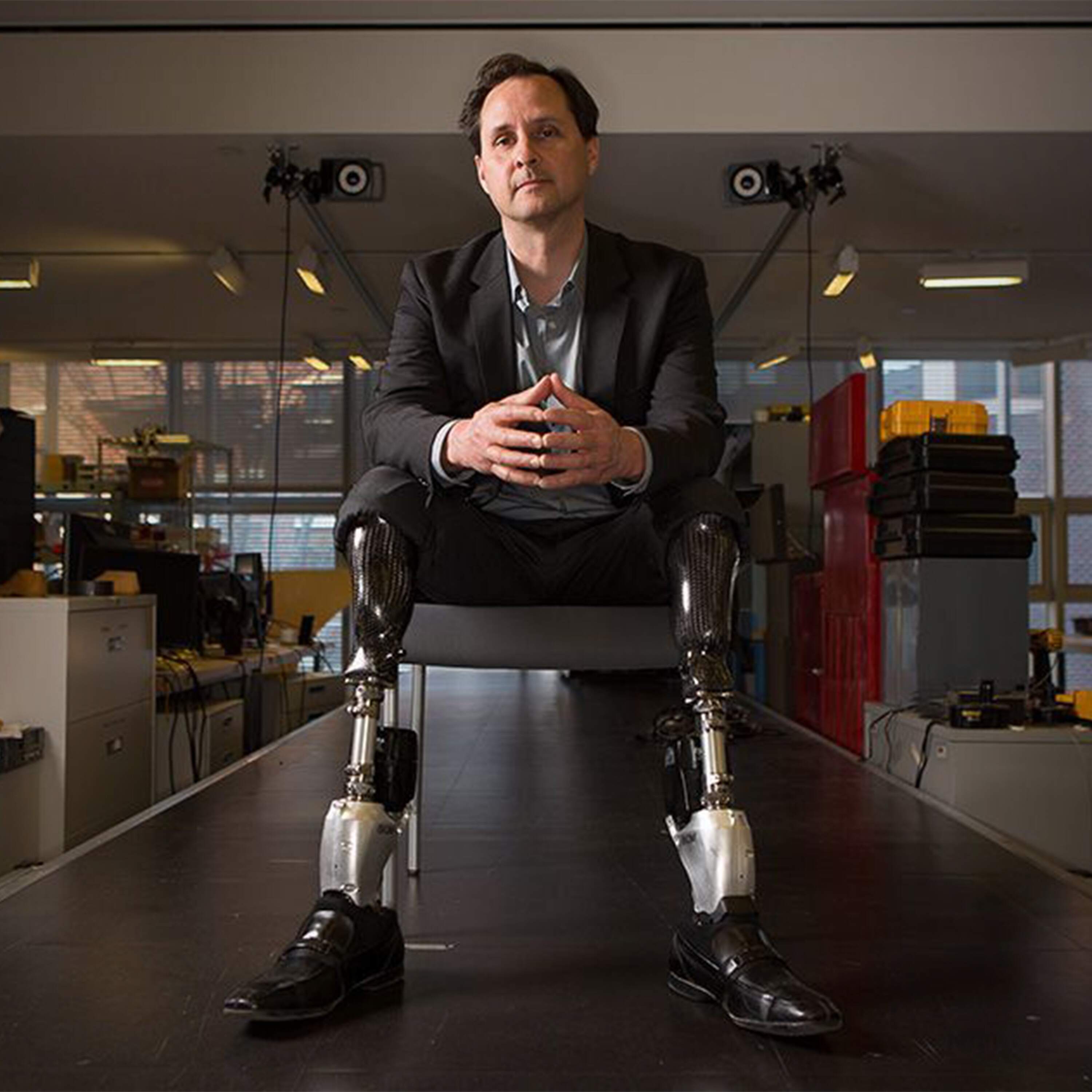
休是假肢领域的顶尖专家,他自己就是双下肢截肢者,年轻时在登山事故中失去了双腿。
Hugh is one of the top experts in prosthetics and a double amputee himself who lost both of his legs in a climbing accident as a teenager.
因为了解休,我知道截肢并不意味着结束活跃的生活,截肢后照样能做很多事。
So I knew from having known Hugh that amputation isn't the end of an active life and that you can still do a lot of things, as an amputee.
你知道,生活并不一定就此结束了。
You know, life isn't necessarily over.
所以我们聊了聊,吉姆的时机真是恰到好处,因为就在那之前,我们刚发明了一种新的手术方式,叫拮抗肌肌电接口,那是2014年的事。
So we chatted about it, and Jim's timing was quite insightful because we had just invented a new surgical paradigm called the agonist antagonist myonore interface in 2014.
吉姆给我打电话的时候,我们其实已经准备好用这项新技术做第一例人体手术了。
And when Jim called me, we were actually prepared to do the first human surgery with this new technique.
吉姆主动提出要做第一个实验对象。
And Jim volunteered to be that first first human subject.
吉姆具体是自愿接受什么手术?
What exactly was Jim volunteering for?
一种新的截肢方式,能保留大脑和身体之间的神经连接。
A new way to do amputation that keeps the brain body connection intact.
简单讲一下解剖知识。
So a quick anatomy lesson.
在一条健康的腿上,当你弯曲脚踝时,小腿前侧的肌肉会收缩,同时拉伸后侧的肌肉。
In a healthy leg, when you flex your ankle, muscles in the front contract and stretch the muscles in the back.
脚踝伸展时,情况就反过来。
Extend your ankle, and the reverse happens.
这种运动能让肌肉保持力量,同时向大脑传递信号,让你清楚知道肢体在空间中的位置。
The movement keeps muscles strong and registers in the brain, helping you understand where your limbs are in space.
这叫做本体感觉。
So that's called proprioception.
本体感觉。
Proprioception.
但传统截肢方式会切断肌肉、神经和大脑之间的联系。
But with a traditional amputation, that connection between the muscles, nerves and the brain is severed.
目前的截肢方法自美国内战以来就没本质改变,它破坏了肌肉之间的动态关系,也抹去了正常的本体感觉。
The current amputation paradigm hasn't changed fundamentally since the US Civil War and breaks these dynamic muscle relationships, and in so doing eliminates normal proprioceptive sensations.
休·赫尔在TED演讲中解释过。
Hugh Herr explains on the TED stage.
因此,普通的假肢无法向神经系统反馈假肢在空间中的位置信息。
Consequently, a standard artificial limb cannot feed back information into the nervous system about where the prosthesis is in space.
因此,患者如果不靠眼睛看,就无法感知假肢关节的位置和运动。
The patient, therefore, cannot sense and feel the positions and movements of the prosthetic joint without seeing it with their eyes.
我的双腿是用这种内战时期的方法截肢的。
My legs were amputated using this Civil War era methodology.
我能感觉到我的脚,现在就能感受到那种幻觉般的存在,但当我试图动它们时,却做不到。
I can feel my feet, I can feel them right now as a phantom awareness, but when I try to move them, I cannot.
感觉就像脚被卡在坚硬的滑雪靴里一样。
It feels like they're stuck inside rigid ski boots.
这些肢体并不是直接由我的神经系统控制的。
The limbs are not directly controlled by my nervous system.
我没法用意念让它们动,也感觉不到它们的存在。
I can't think and move them nor can I feel my limbs?
走路的时候,感觉像是踩着两个强大的机器人,而我自己反而像是被它们带着走。
It feels like I'm walking on powerful robots that I'm it feels like I'm being walked.
就像坐在车的后座上,完全没法掌控方向。
It feels like I'm in the backseat of the car.
休和他的团队开发的这种手术,能让人保留住与截肢部位依然相连的感觉。
The procedure that Hugh and his team developed preserves the feeling of being connected to the amputated limb.
这项技术叫作拮抗肌神经接口,简称AIMI,这让我们又回到吉姆身上,那是2016年首次实施这个手术的时候。
Again, it's called agonist antagonist myoneural interface or AIMI for short, which brings us back to Jim and the first time the procedure was done in 2016.
手术是在波士顿的布里格姆妇女医院进行的,由马修·卡迪医生主导,他是关键的合作伙伴。
The surgery was done at Brigham Women's Hospital in Boston under the direction of Matthew Cardi, a critical colleague and collaborator.
我们在吉姆残肢里把肌肉重新连接起来,让小腿肌肉和胫骨前肌自然配对,这样吉姆术后只要一想动,这两块肌肉就会像他还有完整腿时那样协调地活动。
And what we did in Jim's leg is we connected his muscles within his amputated residuum in natural ways, the calf muscle to the muscle in the front of the leg called the tibialis anterior, so that when Jim thinks after the surgery, those muscles move dynamically in a similar way to the when how they moved when he had an intact leg.
这样一来,大脑就能感知到脚踝应该怎样运动。
So what that does is it tells the brain how the ankle should move.
截肢之后,实际上已经没有真正的脚踝了。
Now it's not a physical ankle after the amputation.
那是一个幻觉中的脚踝。
It's a phantom ankle.
但当吉姆闭上眼睛,想象自己活动这个幻觉脚踝时,他能完整地感受到那种动态的触感。
But when Jim closes his eyes and moves his phantom ankle, he feels the full dynamics of that sensation.
他能翘起脚趾。
He can point his toes.
他还能反过来,从像芭蕾舞者那样脚尖朝下,到脚尖朝向天花板,他真的能感受到,就像自己的脚和脚踝还完好无损一样。
He can go the other way and from pointing his toes down like a ballerina to pointing his toes to the ceiling, and he actually feels it as if his foot, ankle were intact and biological.
你当时知道这会成功吗?
Did you know that that was gonna work?
你还记得手术后,他第一次来安装假肢时的情形吗?当时发生了什么?
Like, do you remember after the surgery the first time that he came to be fitted and and and what happened, what it was like when he
他站起来的时候?
stood up?
我们当时推测,他会感受到这些感觉,并且因为这些肌肉的动态变化,能更好地控制假肢。
We hypothesized that that he would have those sensations, and he would be better able to control the prosthesis because of those muscle dynamics.
但这只是个假设。
But it was a hypothesis.
当我们亲眼看到这一幕时,那天在实验室里真是令人惊叹。
And when we actually saw it with our own eyes, it was a remarkable day in the laboratory.
我们通过电极将吉姆的肌肉与仿生假肢连接起来,吉姆很快就学会了在四个不同的脚踝和脚部方向上控制假肢。
We electrically linked Jim's amy muscles via the electrodes to a bionic limb, and Jim quickly learned how to move the bionic limb in four distinct ankle foot movement directions.
我们对这些结果感到兴奋,但当吉姆站起来时,发生的事才真正令人惊叹。
We were excited by these results, but then Jim stood up, and what occurred was truly remarkable.
所有由中枢神经系统调控的自然生物力学机制,通过这个人工假肢以无意识的反射方式自然呈现出来。
All the natural biomechanics mediated by the central nervous system emerged via the synthetic limb as an involuntary reflexive action.
这是吉姆下楼梯的场景,他的仿生脚趾自动伸向下一阶台阶,完全不用刻意控制,动作却像正常人一样自然。
Here's Jim descending steps, reaching with his bionic toe to the next stair tread, automatically exhibiting natural motions without him even trying to move his limb.
因为吉姆的中枢神经系统接收到了本体感觉信号,所以它能精准地以自然的方式操控这个人造假肢。
Because Jim's central nervous system is receiving the proprioceptive signals, it knows exactly how to control the synthetic limb in a natural way.
现在,吉姆的行动和反应,就像那条假肢本来就是他身体的一部分。
Now, Jim moves and behaves as if the synthetic limb is part of him.
比如有一天在实验室,他不小心踩到了一卷电工胶带。
For example, one day in lab, he accidentally stepped on a roll of electrical tape.
当你的鞋底粘住了东西,你通常会怎么做?
Now, what do you do when something's stuck to your shoe?
你不会这么弯腰去弄,太别扭了。
You don't reach down like this, it's way too awkward.
你应该甩掉它,而吉姆在神经连接上这条假肢仅仅几小时后,就这么做了。
Instead, you shake it off, and that's exactly what Jim did after being neurally connected to the limb for just a few hours.
最让我感兴趣的是吉姆跟我们描述的他的感受。
What was most interesting to me is what Jim was telling us he was experiencing.
他说,这个机器人已经成了我身体的一部分。
He said, the robot became part of me.
刚开始动的时候,我就想:天啊,真神奇。
The first few movements were like, oh, wow.
再次为大家介绍吉姆·伊文。
Again, here's Jim Ewing.
我的大脑一下子兴奋起来了。
My brain got all excited.
我腿上的肌肉也跟着激动起来,好像在说:嘿。
My my muscles in my leg kinda got all excited like, hey.
有点不对劲,有什么事情在发生。
There's something happening.
后来休把这个现象称为神经具身化。
And this phenomenon that Hugh later called neural embodiment occurs.
你的神经系统、身体和大脑都会把这台设备当成自己的一部分。
Your nervous system, body, your brain recognizes this piece of equipment as being part of you.
你已经把它融入了自己,它就这样自然地被你使用,就像本来就该长在那儿一样。
You have embodied this thing, and it just adopts it and starts using it as if it belongs there.
实际上,到了后来,我们在做一系列测试时,他们偶尔得关掉机器人来重置系统。
And actually, it got to the point where, while we were doing a bunch of tests, they would occasionally have to turn the robot off to reset things.
每次关机的时候,虽然不是身体上的疼痛,但那种感觉就像心里被揪了一下。
And it got to be kind of a not a physically painful, it was like an emotionally painful experience every time they turned it off.
我跟他们说:你们得提前告诉我一声要关机,因为突然失去脚的感觉实在太突兀了。
And I asked them, I said, you you have to warn me when you're gonna turn it off because it it's, like, jarring to all of a sudden lose my foot again.
我的身体已经完全适应了它,一旦关机,它就特别不乐意。
That's how much my body had become accustomed to it, and and it did not like it when it turned off.
我不确定是不是因为马上要跟你说话,休,但我突然发现,我住的这片儿好多人都截过肢。
I don't know if it's just because I was getting ready to talk to you, Hugh, but I suddenly noticed that many people were amputees in my neighborhood.
我看到一个数据,简直吓了我一跳,每年有将近二十万美国人因为截肢?
And I read a statistic that kind of astounded me that something like two hundred thousand Americans have a limb amputated each year?
这主要是因为糖尿病患者数量急剧上升,很遗憾。
Well, because of the precipitous increase, sadly, of diabetes.
哦。
Ah.
严重的糖尿病往往会导致截肢,通常是腿,所以随着糖尿病患者越来越多,这类手术的数量也在持续攀升。
Extreme diabetes, sadly, often leads to the need to amputate a limb, typically a leg, so that the numbers are climbing higher and higher because of the increase in diabetes.
所以,你预计这种手术的需求会大幅增长吧?
So presumably, you expect demand for this procedure to skyrocket.
肯定的。
For sure.
这项手术刚开展起来,算起来大概十年了。
It's been about a decade since the procedure was first performed.
从那以后,有多少人做了这个手术?
Since then, how many people have had the surgery?
到目前为止,做手术的人已经超过一百位了,涵盖各种情况,比如膝下、膝上、肘下、肘上。
The surgery itself, over a 100 people to date, and at all levels, you know, below the knee, above the knee, below the elbow, above the elbow.
但这些新手术构建的组织与机电系统的整合,需要更长的时间。
The electromechanical integration into those new surgically constructed tissues will take longer.
对。
Mhmm.
不过我觉得,五年左右,从商业应用的角度来看,全仿生重建就能在临床上实现了,这非常令人振奋。
But I think in about five years from now, from a commercial setting, the full bionic reconstruction can be happening clinically, which is quite exciting.
那有多少人适合使用这种假肢呢?
So so how many people could qualify for this kind of a prosthetic?
很多人符合条件。
A lot of people qualify.
我们可以在截肢手术的同时,直接应用这种技术。
We can apply the surgical technique in an acute case at the time when the limb is amputated.
是的
Mhmm.
我们也可以将这些再生、外科和机电整合的方案作为后续修复手段来实施。
We can also pursue these regenerative and surgical and electromechanical strategies as a revision.
因此,像我这样已经截肢的人,完全可以通过这种重建手术,从过去的状况迈向未来。
So it it is possible for someone like myself that already has an amputation to undergo this reconstruction surgery to go from the past to the future.
太惊人了。
Wow.
我的意思是,在你的TED演讲中,你说因为接受了那次手术,你原本并不符合这项技术的条件。
I mean, in your TED Talk, you said that you because of the surgery that you received, you were not a good candidate for this technology.
现在情况有变化吗?
Has that changed?
情况确实变了。
It it has changed.
而且我现在真的觉得太不可思议了。
And I'm actually Wow.
要仔细考虑什么时候该动手术,什么时候该给自己植入这些接口。
Thinking carefully about when to to go under the knife, when to receive these interfaces for for myself.
如果现在有人想做这个,大概需要花多少钱?
And right now, if one chose to do this, how much would they have to pay?
就算手术费用有覆盖,那假肢和相关技术本身又要多少钱?
They they let's say they had the surgery covered, but for the limb and the technology, how much would that cost?
五年后,当这种仿生重建技术正式投入临床和商业使用时,比如一个带磁力装置的仿生脚踝,包含手术和所有设备,大概需要十万美金左右。
So in five years when this entire bionic reconstruction is made available clinically, commercially, you know, for a bionic, say, foot ankle with the magnets and the surgery and whatnot, it's on the order of a $100,000
是的。
Mhmm.
费用包括手术、机器人部件、传感系统和计算机系统在内。
Including the surgery and the the robotic components and the sensing components and the computer components.
确实很贵。
So expensive.
不过,这和其它大型手术的费用是差不多的。
Well, it it's it's on par with other surgeries.
我现在穿的这双仿生腿大概值四万美元,差不多等于一辆车的价格。
The bionic legs that I'm that I'm now wearing cost about $40,000, about the cost of a of a car.
你能想象能走路到底有多大的价值吗?
You know, just what is the value of being able to walk.
对吧?
Right?
四万美元听起来是不少,但能自在地在房间里走动,真的挺值得的。
So, you know, $40,000 sounds like a lot, but it's pretty nice to be able to walk across the room.
我听过你和一位参与过你研究项目的人做的播客。
I listened to a podcast that you did, with someone who received, who has been part of one of your research projects.
你们聊到装上假肢有多有趣,还谈到我们如今把所谓的‘正常身体’看得太理所当然了,而未来我们或许会进入一个时代——身体和机器的融合不仅实用,甚至还有点酷炫。
And the two of you were talking about how much fun it is to have a prosthetic and this idea that we have normalized the quote unquote normal body and that we hopefully are entering an era where this merging of bodies and machines is not only functional, but, like, sexy even.
人们常拿眼镜来做例子。
You know, people often talk about the example of eyeglasses.
对吧?
Right?
眼镜也是一种假体,但现在它已经成了时尚单品。
The glasses are a prosthesis, but now, you know, it's a fashion accessory.
所以,当技术真正发挥作用时,当我们能重建身体,让人重获自由,重新跳舞、奔跑,展现出他们想表达的自我,那感觉真的很棒。
So, yeah, I mean, when technology really works, when we're able to rebuild bodies and give people back their freedom, give people back their ability to dance and to run and with the expression that they want to put out into the world.
这些新的身体会不会也讲究设计感和美感呢?
Will these new bodies express themselves in terms of good design and aesthetics?
当然会。
Absolutely.
当身体的一部分开始老化衰退,而另一部分却能不断升级时,那将是一个很有趣的年代。
It's gonna be an interesting era when part of our bodies begin to age and deteriorate, and another part can be potentially continuously upgraded.
没错。
Correct.
我的假肢每五年升级一次,但我的身体却随着年龄增长越来越差。
My own body, my bionic legs are upgraded every five years, and my biological body continues to get worse and worse due to age related degeneration.
因为年龄增长,我们都在变老,对吧?
Due to age related you we're getting old, aren't we?
没错。
That's right.
你说得对。
So that that you're right.
这真的很有趣。
That is very interesting.
从某种意义上说,我身体的仿生部分可以说是永生的,但我的生物身体显然跟不上,除非抗衰老领域有重大突破。
In a sense, the bionic part of my body is immortal, but my biological body, you know, obviously won't be able to keep up unless there's major breakthroughs in aging.
这正好体现了你的观点,我认为你用的词是——我们应该成为赛博格,对吧?
I mean, this speaks to your philosophy that we should, and this is the word you use if I'm correct, become cyborgs.
没错。
Right?
我不敢说这一定好,但我确实认为,人类从使用与身体分离的工具,走向更深层次的融合,是自然的发展趋势。
Well, I I don't I don't know about good, but I do think it's part of humanity's natural progression to go from developing and using tools that are separate from our body to a more profound integration.
我实验室有一半的精力都放在研发技术上,目的是让人类的能力超越天生的生理极限。
Half of my lab is focused on technology to augment human capability beyond innate physiological levels.
所以我们正在研发外骨骼,如果你穿上我们的一款,就能跳得更高、跑得更快、走路也更稳。
So we're building exoskeletons that if I gave you one of our exoskeletons, you'd be able to jump higher, run faster, walk better.
这种技术力量一旦普及,很快就会在社会上变得非常普遍。
So that type of technological power, if you will, will be very popular and will become quite pervasive in society.
我预测,十年,甚至二十年后,当你走在世界各大城市的街头,会经常看到有人穿着增强能力的仿生设备。
I predict ten years, certainly twenty years from now, when you walk down the streets of major cities in the world, you'll routinely see people wearing bionics that are augmenting their capabilities.
所以,像UPS快递员以后能轻松地扔包裹了?
So, like, the UPS guy is gonna be flinging packages with no problem?
当然。
Absolutely.
如果送货的不是人形机器人,那……
If we don't have humanoids delivering packages or Right.
或者无人机,只要还是人送货,那这些人肯定都会配备增强装置。
Or aerial vehicles, if it's still humans, the humans will definitely be augmented.
当然。
Absolutely.
这是休·赫尔。
That was Hugh Herr.
他是麻省理工学院的工程师和生物物理学家,共同领导杨氏仿生学中心。
He is an engineer and bio physicist at MIT where he co leads the Yang Center for Bionics.
休和他的团队发表了一项关于接受这项新手术患者的研宄。
Hugh and his team published a study of patients who have received this new procedure.
我们会在 ted.npr.org 上提供这项研究和休的演讲链接。
We will link to the study and Hugh's talks at ted.npr.org.
特别感谢吉姆·伊文斯分享他的故事。
Special thanks also to Jim Ewing for sharing his story.
顺便说一下,吉姆和休现在都还在爬山。
Jim and Hugh, by the way, are both still climbing.
今天节目中,我们聊聊如何增强人类能力。
On the show today, augmenting humans.
我是马努什·扎莫罗迪,您正在收听来自NPR的TED电台节目。
I'm Manoush Zamorodi, and you are listening to the TED Radio Hour from NPR.
展开剩余字幕(还有 167 条)
马上回来。
Be back in a minute.
你好。
Hi.
我是玛丽·露易丝·凯利。
It's Mary Louise Kelly.
我的播客《消息来源与方法》是苹果平台上评分最高的国家安全类节目之一。
My podcast sources and methods is one of the top rated national security shows on Apple.
平均评分高达4.9分(满分5分)。
Average rating, 4.9 out of five.
我们之所以这么出色,是有原因的。
We're one of the best for a reason.
全球记者、资深媒体人、可靠分析,还有第一手现场报道。
Correspondents around the world, veteran journalists, trusted analysis, and on the ground reporting.
要了解战争、地缘政治和这个不断变化的世界,请收听NPR的《消息来源与方法》。
To understand war, geopolitics, our changing world, listen to sources and methods from NPR.
这里是来自NPR的TED播客。
It's the TED Radio Hour from NPR.
我是马努什·扎莫罗迪。
I'm Manoush Zamorodi.
今天节目的主题是增强人类能力。
On the show today, augmenting humans.
我们听到了休·赫尔如何以全新方式将假肢与人体融合。
We heard how Hugh Herr is taking prosthetics and integrating them into the body in new ways.
接下来,我们来看看正在研发的、模仿人体另一部分——皮肤的技术。
Now we want to turn to technology being developed to mimic another part of our anatomy, our skin.
这项研究还处于早期阶段,因为要复制人体最大器官向大脑传递的触觉信号,难度非常大。
This research is in its early days because replicating the sensations that the body's largest organ sends to our brains is incredibly difficult.
皮肤是一个复杂的系统,里面有很多不同的功能在同时协同工作。
So the skin is a complex system where there are a lot of things that are actually all working together at the same time.
这是安娜·玛丽亚·科利特。
This is Anna Maria Coclite.
她是一位材料科学家,过去十年一直在尝试人工复制皮肤。
She is a material scientist who has spent the past decade trying to replicate skin artificially.
这个想法并不新鲜。
This idea isn't new.
人工皮肤早在上世纪八十年代就出现了。
Artificial skin has been around since the nineteen eighties.
它常用于烧伤患者的治疗。
It's often used for burn victims.
但现在的人工皮肤还缺了点东西。
But there's something missing from today's artificial skin.
现在可以重建皮肤,让它看起来和烧伤前差不多,但触觉却再也找不回来了。
There is the possibility to reconstruct the skin more or less that it kind of looks similar to before the burn but still the sensation is lost.
早上捧着热咖啡的温度,洗手时水流过手心的感觉,还有你触摸到的各种质感——光滑的、粗糙的、柔软的、尖锐的。
The warmth of your coffee cup in the morning, water running through your hands as you wash them, or all the different textures you touch, smooth, rough, soft, or sharp.
所有这些感觉,都是靠皮肤里的感受器捕捉的。
All of those sensations are captured by your skin's receptors.
我们的皮肤上有不同类型的感应器,有的对强压敏感,有的对轻触或温度敏感。
We have receptors that are for a strong touch, light touch that is for the temperature.
人体有数以百万计的这种感应器。
We have millions of receptors.
整天里,这些数百万的感应器不断接收各种各样的信息。
And all day long, those millions of receptors are bombarded with all kinds of information.
然后它们通过神经通路,以电信号的形式把信息传送到大脑。
And then they transmit this information through electrical stimuli to the brain thanks to the nerves, nerve connections.
这是一个非常复杂的系统。
So it's a very complex system.
正因为皮肤如此复杂,直到现在,要完全模拟这些感觉依然非常困难。
And because the skin is so complex, replicating all those sensations has been really difficult until now.
这是一片人工皮肤。
This is a piece of skin, of artificial skin.
接下来是安娜·玛丽亚·科奇塔在TED演讲台上,首次展示了智能皮肤。
Here's Anna Maria Coclita on the TED stage where she unveiled smart skin.
我们首次研制出一种人造皮肤,能够同时感知三种刺激。
We have for the first time produced an artificial skin that can respond at the same time to three stimuli.
触觉、压力、温度和湿度。
Touch, so force, temperature and humidity.
而且它的灵敏度达到了前所未有的水平。
And it can do this also at an unprecedented resolution.
这是一款非常微型的装置。
So it's a very tiny device.
这意味着它能感知到比人类皮肤更小的物体。
And so this means that it can sense objects that are actually smaller than the objects that can be sensed with our skin.
首先是烧伤患者。
So, first of all, burns victims.
如果烧伤很深,伤及表皮底层,患者就会丧失触觉。
If the burn is very deep, these burns up until the lower level of the epidermis and this makes patients lose sensation.
如果能制造出完整的人造皮肤,就可以把它作为贴片敷在烧伤部位,帮助患者恢复触觉。
If one could make completely artificial skin, then this artificial skin could be applied as a patch in the area where there is the burn and give back the sensation to the people who have lost it.
那咱们聊聊你在实验室里做些什么吧。
So let's talk about what you're doing in your lab.
要是我到你实验室去,你带我看看,我会看到什么?
You know, if I if I came into your lab and I and you showed it to me, what would I see?
这种人工皮肤比一根头发的横截面还要薄。
This artificial skin is actually thinner than the cross section of a hair.
所以它基本看不见,摸起来也完全感觉不到。
So it's basically impossible to see and impossible to really feel it when you touch it.
它会继承所依附材料的特性。
So it takes the properties and the characteristics of the support material.
如果我们把它贴在手套上,看起来就和普通手套一模一样。
So if we deposit it on top of a glove, it will look like a glove.
我们甚至把它贴在儿童用的那种临时贴纸纹身上。
We have even deposited on top of this transferable tattoos, you know, the type that kids use.
结果你看到的,就只是那张贴纸本身。
And then what you see is just really the tattoo paper.
所以它特别微小,你看不见也摸不着,但它会完全贴合支撑物的形状。
So it's so tiny that you don't see it and you don't feel it, but it takes the shape of the support material.
这种人工皮肤由大量纳米级的圆柱体组成。
The artificial skin is made of a bunch of nanoscopic cylinders.
这就是人工皮肤的结构。
This is the architecture of the artificial skin.
我们真的能在原子层面精确控制材料的厚度和化学成分。
So we are really able to control the thickness and the chemical composition of a material at the atomic level.
每个圆柱体的内核都填充了一种聚合物,遇到外界刺激会膨胀。
The inner core of each cylinder is filled with a polymer that gets bigger when exposed to a stimuli.
比如温度和湿度的变化。
Like, temperature and humidity.
而且
And the
圆柱体的外层是一种叫做压电材料的物质。
outer part of the cylinder is made of something called piezoelectric material.
压电材料就是受到挤压时会产生电流的材料。
A piezoelectric material is a material that when it is compressed produces electricity.
所以当圆柱体被触碰或受热时,里面的聚合物会膨胀,挤压外层材料,瞬间就产生电流。
So when the cylinder is touched or exposed to heat, for example, the polymer on the inside kind of puffs up and compresses the material on the outside and boom.
这会生成一股电流。
This produces a electric current.
接下来,每个圆柱体都可以连接一组电极,我们就能在各个位置测量电流。
From there Each of these cylinders could be connected to a series of electrodes, and then we measure the electricity at each of these locations.
就像我们自己的皮肤会把感受到的信息传给大脑一样。
And similar to how our own skin sends information about what it's feeling to our brains.
这种人工皮肤会把信息传给电脑,我们就是通过电脑读取这些电信号的。
The artificial skin sends information to a computer, and that's where we read this electric signal.
不过,这个信号也可以无线传输到神经假体之类设备上,这正是我们打算把它传到大脑的方式。
But then, you know, this signal can also be transmitted wirelessly to, for example, a neuroprosthetic, and this is how we actually intend to transmit it to the brain.
但这将是未来的发展方向。
But that will be a future development.
你刚才提到了假肢。
You mentioned prosthetics.
在这期节目里,我们之前采访了麻省理工学院的休·赫尔。
Earlier in this episode, we talked to Hugh Herr at MIT.
我相信你对他做的假肢研究很熟悉。
I'm I'm sure you're familiar with his prosthetics work.
这种智能皮肤对需要佩戴假肢的人有什么额外的价值或重要意义呢?
How would smart skin be an added value, I guess, or or or be important to someone who needs to wear a prosthetic?
是的。
Yeah.
如果把这种人工皮肤加到假肢上,就能产生电信号,直接刺激手臂或腿部的神经,或者把信息传到大脑的神经通路,帮助使用者感知所接触物体的特性。
So with this type of artificial skin, when this would be added to a processes, then we could produce electrical signals that could send directly the information, could either stimulate the rest of the arm or of the leg, or, they could transmit the information to a neural processes in the brain and then help the patient recognize also the characteristics of the objects that they are touching.
比如他们装了假脚,就能知道脚下是滚烫的碎石还是……
So if they had a prosthetic foot, they would know if they were walking on hot gravel or
对。
Yes.
没错。
Exactly.
比如,假手能拿起热杯子或冰凉的啤酒瓶,立刻感受到温度差异。
So a prosthetic hand, for example, would fill a hot cup or a cold bottle of beer and would feel the difference.
另一个很有前景的应用领域是机器人技术。
Another interesting field of application would be robotics.
如今,人形机器人已经被广泛应用于医疗、家庭等多个领域。
Nowadays, humanoid robots are used in many fields, for example, in medicine, but also in household.
这些机器人要应对各种环境刺激和人际互动,有时会同时接收太多信息。
And these robots are exposed to several stimuli, several interactions with the environment and with the humans, and sometimes they have too many inputs at the same time.
这也是机器人故障的首要原因。
And this is the reason number one for robot failure.
想象一下未来,机器人能变得更敏感、更聪明一些。
So imagine a future where actually a robot could be a bit more sensitive, a bit smarter.
这也会大幅提升这项技术的安全性。
This would lead also to a higher safety of this technology.
我的意思是,这听起来有点像科幻情节,但未来要是你烫伤了,只要贴个临时纹身在上面,就能和身体连起来吗?
I mean, would that be this sounds kind of like science fiction, but in the future that you have a burn and you just put on like a temporary tattoo over that part and it connects to your body?
差不多就是那样。
Something like that.
对。
Yes.
它可以是个临时纹身,或者是个贴片,直接贴在皮肤上就行。
It could be a temporary tattoo or a patch, you know, that can be applied on the body.
然后,检测电信号的方式也可以有好几种。
And then, there could be different way of detecting the electrical signals.
甚至可以直接连到手机上的一个应用。
Could be even that it is just connected to an app on the smartphone.
然后这个应用可能会发出提醒,比如警报声,一旦温度超过某个阈值就通知你。
And then maybe the app is, I don't know, sending a message, a warning sound if the temperature goes above a certain level.
其实可以有多种不同的方案。
There could be different options.
说到这个的缺点,我猜成本应该不低吧?
In terms of the drawbacks to this, I can only imagine this is expensive?
其实也不完全是,也不完全不是。
Well, yes and no, actually.
虽然一开始用来沉积这些材料的设备很贵,但实际用的材料量极少,算下来每平方厘米的价格并不高。
In the sense that the instruments to deposit these materials are expensive at the beginning, but then the amount of material that is produced is so tiny that when you do a calculation per centimeter square, the price is not that high.
哦,这倒有意思。
Oh, interesting.
明白了。
Okay.
那这样的话,普通人也能用得上。
So this could be something that is accessible to people.
是的。
Yes.
我们真正希望的是,能让大家都能用得起。
That's, where we would like really to keep it accessible to people.
这确实是个挑战。
It's a challenge.
所以从科学和科技的角度来看,这个项目特别有意思。
And, therefore, it's an interesting project, you know, from all the scientific point of view, from the technological point of view.
而正是这一点,让我一直坚持下去。
And, yeah, this is what keeps me going.
这位是安娜·玛丽亚·科奇塔。
That's Anna Maria Coclita.
她是一名材料科学家,也是意大利巴里大学物理系的教授。
She's a materials scientist and a professor in the department of physics at the University of Bari in Italy.
你可以在 ted.com 上观看她的完整演讲。
You can see her full talk at ted.com.
我们之前聊过,如何通过机器人、假肢和智能皮肤把科技融入生活。
So we've talked about adding technology to our lives in the form of robots and prosthetics and smart skin.
但科技也在被用来增强和改造人体内生活的微生物。
But technology is also being used to enhance and alter organisms that live inside the human body.
生物化学家詹妮弗·杜德纳因发现基因编辑技术CRISPR而获得了诺贝尔奖。
The biochemist Jennifer Doudna won the Nobel Prize for discovering the gene editing technology CRISPR.
现在,她正利用这项技术,通过调控我们肠道内的微生物群,寻找治疗哮喘和阿尔茨海默病的方法。
Now she's using that technology to find a cure for diseases like asthma and Alzheimer's by manipulating the microbiome that live inside our guts.
下面这段是她在2023年TED演讲中对此的讲解。
Here she is explaining how on the TED stage in 2023.
人类的本质,就在于我们能够解决问题。
The essence of being human is that we solve problems.
当我们面对疾病、气候变化这样的巨大挑战时,必须通过合作才能找到出路。
And when we're faced with enormous problems like disease and climate change, we need to solve them by collaboration.
我想跟大家分享一种全新的合作方式,它一定能为这些重大问题带来解决方案。
I'm excited to tell you about a new kind of collaboration that will absolutely create solutions to these big problems.
这种合作出人意料,因为它发生在人类与地球上最微小的生物之间——那些生活在我们体内、体表和周围的细菌及其他微生物。
It's a collaboration that's unexpected, because it's between humans and the tiniest organisms that populate our planet, the bacteria and other microbes that live in, on and around us.
细菌虽然微小,看不见摸不着,但它们常常激发重大的创新,其中就包括我研究工作的核心基础。
Bacteria may be small and unseen, but they often have inspired transformative innovations, including the one that has become the cornerstone of my own research.
过去十年里,我一直走在研发一项革命性技术的前沿,这项技术叫CRISPR,它的诞生源于对细菌如何抵御病毒感染的研究。
Over the past decade, I've been at the forefront of developing a revolutionary technology called CRISPR that has come from the study of how bacteria fight viral infection.
CRISPR之所以了不起,是因为它能精准地编辑活体生物的DNA,包括人类和植物。
CRISPR is amazing because it allows us to precisely edit the DNA in living organisms, including in people and plants.
借助CRISPR,我们可以修改、删除或替换控制细胞功能的基因。
With CRISPR, we can change, remove or replace the genes that govern the function of cells.
这意味着,我们现在可以把CRISPR当成文字处理软件,用来查找、剪切和粘贴基因序列。
This means that we now have the ability to use CRISPR like a word processor to find, cut and paste text.
令人惊叹的是,CRISPR已经治愈了镰状细胞贫血等严重疾病,还培育出了抗病又耐旱的水稻。
CRISPR, amazingly, has already cured people of devastating disorders like sickle cell disease, and it's created rice plants that are resistant to both diseases and drought.
是不是很了不起?
Incredible, right?
但CRISPR下一个改变世界的应用,将不再局限于单独生物体的基因编辑。
But the next world changing advance with CRISPR will actually come from editing genes beyond just in individual organisms.
我们现在有能力用CRISPR来改造生活在我们体内和体表的整个微生物群落。
We now have the ability to use CRISPR to edit entire populations of tiny microbes, called microbiomes, that live in and on our bodies.
几十年来,科学家们一直逐个研究细菌,仿佛每种细菌都是独立运作的。
For decades, scientists studied bacteria one organism at a time, as if each type of bacteria behaved independently.
但我们现在知道,细菌的好坏行为其实都源于它们在复杂微生物群落中的相互作用。
But we now know that bacterial behaviors, both good and bad, result from their interactions within complex microbiomes.
在人体内,失衡的肠道微生物群与阿尔茨海默病、哮喘等多种疾病有关;而在家畜体内,微生物群会产生甲烷,这是加剧气候变化的重要因素。
In humans, dysfunctional gut microbiomes are associated with diseases as diverse as Alzheimer's and asthma, And in farm animals, microbiomes produce methane, a powerful contributor to climate change.
但当这些微生物群处于健康状态时,无论是对人体还是对动物,都能帮助预防疾病、减少甲烷排放。
But when they're healthy, both human and animal microbiomes can actually prevent disease and reduce methane emissions.
因此,要充分利用这些好处,我们需要一种能精准且稳定地调控这些微生物群落的方法。
So to harness these benefits, we need a way to precisely and reproducibly control these microbial communities.
那为什么过去一直很难控制微生物群落呢?
So why have microbiomes been difficult to control in the past?
原因在于,微生物群落结构极其复杂,很难进行有效干预。
It turns out that microbiomes are very complex, and they're difficult to manipulate.
抗生素会无差别地影响整个微生物群,滥用还会导致耐药性问题。
Antibiotics affect the entire microbiome, and their overuse can lead to drug resistance.
饮食和益生菌太笼统,效果往往不明显。
Diet and probiotics are nonspecific, and they're often ineffective.
粪菌移植在疗效和接受度上都面临不少难题。
Fecal transplants face various challenges to both effectiveness and acceptance.
但有了CRISPR,我们有了像手术刀一样精准的工具。
But with CRISPR, we have a tool that works like a scalpel.
它能针对特定细胞里的特定基因进行操作。
It allows us to target a particular gene in a particular kind of cell.
用CRISPR,我们可以改造某一种细菌,而不会影响其他菌种。
With CRISPR, we can change one kind of bacterium without affecting all the others.
另一个问题是,全球微生物物种中,不到1%能在实验室里培养和研究。
Another challenge is that less than 1% of the world's microbial species have been grown and studied in the lab.
幸运的是,得益于我的同事吉尔·班菲尔德的开创性研究和她发明的宏基因组技术,我们现在能研究剩下的99%了。这项技术能帮我们弄清微生物群落里有哪些物种,它们在做什么。
Fortunately, we can now access the other 99% due to the pioneering research of my colleague Jill Banfield and her breakthrough technology metagenomics, which is a tool that allows us to figure out what species are present and what they're doing in a microbial community.
宏基因组技术能绘制出复杂微生物组的详细图谱,这样我们就能知道该在哪个生物的哪个基因上进行编辑。
Metagenomics creates a detailed blueprint of a complex microbiome, and that means that we can use it to figure out how to use gene editing tools in the right gene in the right organism.
你可能在想,我们怎么把这些新发现应用到解决实际问题上。
You might be wondering how we can take this new knowledge and harness it to solve real world problems.
我们正把宏基因组学和CRISPR这两种突破性技术结合起来,开创一个全新的科学领域——精准微生物组编辑。
Well, we're bringing together these two breakthrough technologies, metagenomics and CRISPR, to create a brand new field of science called precision microbiome editing.
这将帮助我们发现失调的微生物组与疾病或温室气体排放之间的关联。
This will allow us to discover links between dysfunctional microbiomes and disease or greenhouse gas emissions.
我们可以开发出经过改良的微生物组编辑工具,并证明它们既安全又有效。
We can develop modified and improved microbiome editors and show that they're safe and effective.
然后,我们就能开始部署这些优化后的方案,它们将在未来带来颠覆性改变。
And then we can then begin to deploy these optimized solutions that will be transformative in the future.
那么,这对我们自身的健康和地球的健康有什么影响呢?
So how does this affect our health and the health of our planet?
牲畜体内特定的微生物组构成,实际上能把甲烷排放减少高达80%,但目前要做到这一点,每天都要进行干预,成本极高,根本无法大规模推广。
Specific microbiome compositions in livestock can actually reduce methane emissions by up to 80%, but doing that today currently requires daily interventions at enormous expense, and it just doesn't scale.
但通过精准微生物组编辑,我们有机会在小牛出生时就改造它的微生物组,让它一生都对气候产生更小的影响。
But with precision microbiome editing, we have an opportunity to modify a calf's microbiome at birth, limiting that animal's impact on the climate for its entire lifetime.
在人类健康方面,哮喘影响着全球多达三亿人,而且每十年患者数量还会增加百分之五十,低收入家庭的孩子受影响尤其严重。
In human health, asthma affects up to three hundred million people around the world, a number that grows by fifty percent each decade, and it disproportionately affects lower income children.
我们的团队发现,肠道微生物组产生的一种分子与哮喘的发病之间存在显著关联。
Our team has identified a promising link between a molecule produced in the gut microbiome and asthma development.
通过精准微生物组编辑,我们可以为有哮喘风险的孩子提供一种无创疗法,清除那些诱发哮喘的分子,从而改变她的人生轨迹。
With precision microbiome editing, we could offer a child at risk for asthma a noninvasive therapy that would eliminate asthma inducing molecules, changing her life trajectory.
更令人兴奋的是,未来这些技术同样有望用于治疗甚至预防与肠道微生物组相关的其他疾病,比如肥胖、糖尿病和阿尔茨海默病。
And what's really exciting is that these same approaches in the future could help us treat or even prevent human diseases that are linked to the gut microbiome, including obesity, diabetes and Alzheimer's.
我觉得特别有意思的是,我们现在居然能用CRISPR去编辑那些最初赋予我们CRISPR的微小生物。
I think it's fascinating that we can now use CRISPR to edit the same tiny organisms that gave us CRISPR.
在这个过程中,我们其实是在和自然界最完美的合作伙伴协同工作。
In doing so, we're collaborating with the ultimate partner, nature.
通过CRISPR驱动的精准微生物组编辑,我们可以共同构建一个更具韧性的未来,惠及每一个人。
Together, we can use CRISPR powered precision microbiome editing to build a more resilient future for all of us.
非常感谢。
Thank you very much.
刚才介绍的是诺贝尔奖得主、生物化学家詹妮弗·杜德娜。
That was Nobel Prize winning biochemist Jennifer Doudna.
你可以在 ted.com 上观看她的全部演讲。
You can watch all of her talks at ted.com.
非常感谢你收听本期节目《增强人类》。
Thank you so much for listening to our episode, Augmenting Humans.
本节目由凯蒂·蒙特莱奥内、蕾切尔·福克纳·怀特、詹姆斯·德拉胡西和菲奥娜·吉隆制作。
It was produced by Catie Monteleone, Rachel Faulkner White, James Della Hussi, and Fiona Giron.
剪辑工作由桑亚斯·梅什坎普尔和我共同完成。
It was edited by Sanaz Meshkampur and me.
NPR 的制作团队还包括希爾莎·纳哈达和马修·克鲁蒂尔。
Our production staff at NPR also includes Hirsha Nahada and Matthew Cloutier.
音频工程由帕特里克·默里和大卫·格林伯格负责。
Our audio engineers were Patrick Murray and David Greenberg.
节目主题音乐由拉姆廷·阿拉布卢伊创作。
Our theme music was written by Ramtin Arablui.
我们的TED合作伙伴包括克里斯·安德森、罗克珊·海克拉什、亚历杭德拉·萨拉扎尔和达尼埃拉·巴洛雷佐。
Our partners at TED are Chris Anderson, Roxanne Highlash, Alejandra Salazar, and Daniela Balorezo.
我是马努什·佐莫罗迪,您正在收听的是NPR的《TED电台访谈》。
I'm Manoush Zomorodi, and you've been listening to the TED Radio Hour from NPR.
你有没有过这样的感觉:听到一个特别棒的建议,心想:这道理怎么就这么明白呢?
You know that feeling when you hear a great tip and it's like, that makes so much sense.
我怎么以前就没这么做过呢?
Why haven't I been doing that all this time?
如果你也有这种感受,那你可能会喜欢《生活指南》。
If that's you, you might like Life Kit.
无论你是想改善健康、理财、人际关系,还是育儿,听了之后都会觉得:这真是太有用了。
Whether you're looking to make changes around your health, your money, your relationships, your parenting, You're guaranteed the this is so helpful feeling.
可以在NPR应用里,或者你常用的播客平台收听《生活指南》。
Listen to the Life Kit podcast in the NPR app or wherever you get your podcasts.
关于 Bayt 播客
Bayt 提供中文+原文双语音频和字幕,帮助你打破语言障碍,轻松听懂全球优质播客。