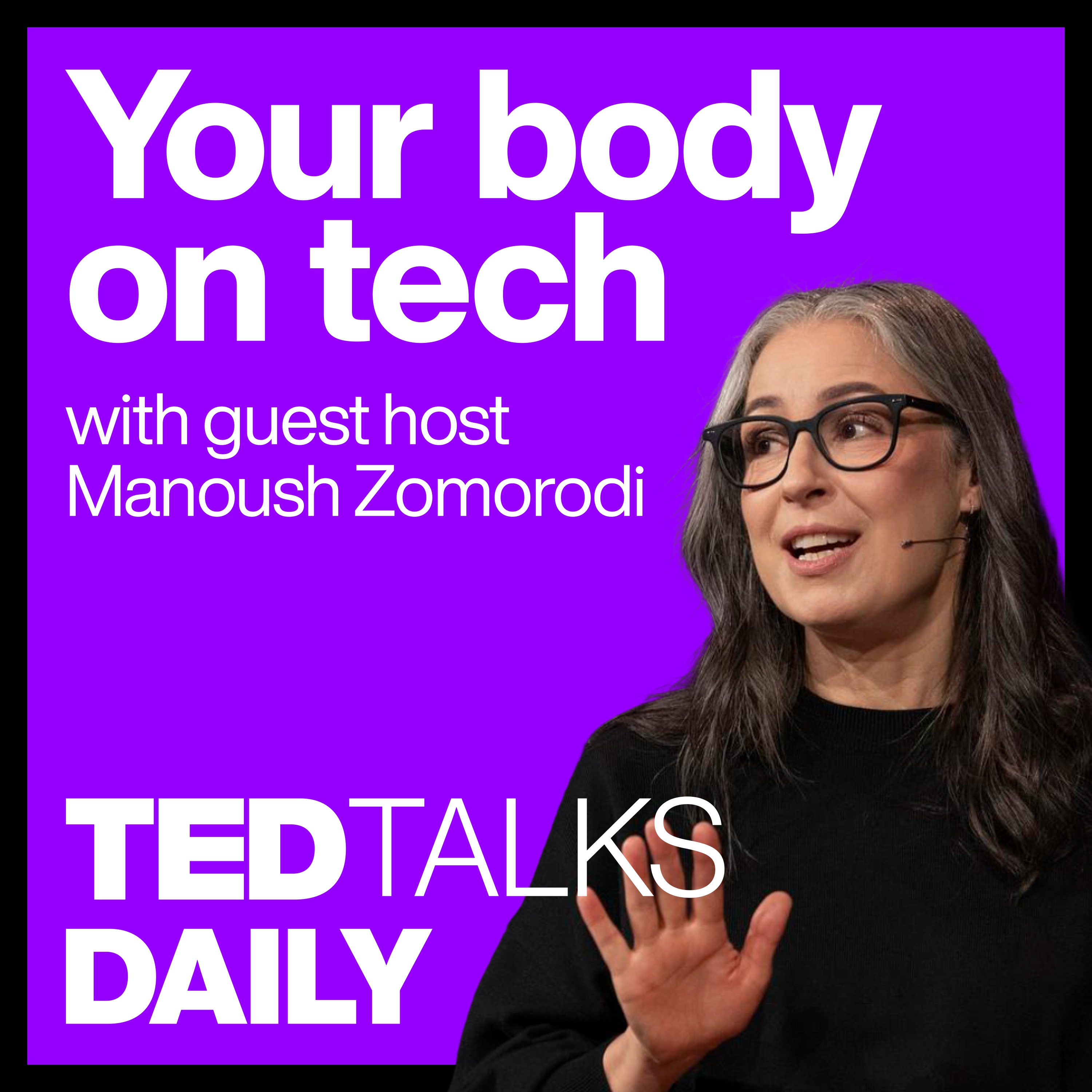
本集简介
双语字幕
仅展示文本字幕,不包含中文音频;想边听边看,请使用 Bayt 播客 App。
你正在收听《TED每日演讲》,每天为你带来新思想和对话,激发你的好奇心。
You're listening to TED Talks Daily where we bring you new ideas and conversations to spark your curiosity every day.
我是马努什·佐莫罗迪。
I am Manoush Zomorodi.
我是一名记者、作家,也两次登上过TED演讲台,你可能在NPR的《TED电台》播客里听过我的声音。
I am a journalist, an author, a two time TED speaker, and you may recognize my voice from the TED Radio Hour podcast over on NPR.
本周,我将接替埃莉斯·胡,带来一系列关于如何在高科技时代过上更健康生活的节目。
This week, I am taking over for Elise Hu with a series of episodes all about how you can live a healthier life in our high-tech era.
那我为什么在这儿呢?
So why am I here?
我很荣幸为TED2026策划了一组演讲,演讲者们的研究会让你重新思考身体、科技,以及在这个数字时代什么才是真正的人性。
I had the honor of guest curating a session at TED2026 full of speakers whose work will make you think differently about your body, technology, and what is keeping us human in this digital age.
我们这个时代让人感到奇怪又不安的一点,就是我们被无数看不见的系统包围着,它们悄悄塑造着我们的行为。
One of the many things that feels so strange and disconcerting about our modern era is that we are surrounded by invisible systems that shape our behavior.
比如人工智能。
Take AI.
这些系统由算法黑箱操控。
It is run by algorithmic black boxes.
我们能看到输入的数据,也能看到输出的文字、信息,但根本不知道机器内部到底发生了什么。
We see the data coming in, and we see the text or messaging or information that comes out, but we don't know exactly what's going on inside the machine.
我们摸不着,也看不见。
We can't touch it or see it.
甚至连我们自己都未必真正理解它。
We don't even fully understand it.
康宜云是一位多媒体艺术家,她的作品致力于弥合我们与这些无形力量之间的鸿沟。
Yiyun Kang is a mixed media artist whose work is about spanning that gap between us and those invisible forces.
我的目标变得清晰了:让看不见的东西变得可见。
My mission became clear, to render the invisible visible.
我想把这些棘手的问题转化为可体验的实体形式,让我们真正产生共鸣。
I want to translate these wicked problems into physical experiences so that we can truly care.
我说的多媒体,是真的什么都有。
And when I say mixed media, I mean mixed.
她原本是学绘画的,但现在却用数据、激光、平面设计,当然还有人工智能来创作。
She is trained as a painter, but now works with data, lasers, graphic design, and, of course, AI too.
她本人的技术水平,和她所探讨的科技一样前沿。
She is as high-tech as the technology she interrogates.
但她讲述的那些故事,反而让人感到亲近,而不是疏离。
But the beautiful stories she tells feel connecting rather than alienating.
因为正如她所说,艺术并不是科学和技术的附加装饰。
Because art, as she says, isn't a nice add on to science and technology.
它是连接信息、人性与我们在这个星球上福祉的关键纽带。
It's a crucial bridge between information, humanity, and our well-being on this planet.
艺术才是至关重要的桥梁,是那个能重新唤醒我们失落联系的缺失环节。
Arts is the vital bridge, a missing link that has undeniable power to restore our lost connection.
但如今我们面临更深层的危机——一种挑战人类智能根本定义的、难以理解的人工智能。
But now we face even deeper crisis, one that challenges the very definitions of human intelligence, the unfathomable AI.
技术正以惊人的速度发展,我们必须接受一个令人不安的真相。
The technology is advancing in a staggering pace, and we have to accept an uncomfortable truth.
她的演讲,正如你所料,充满了视觉元素。
Her talk, as you might expect, is very visual.
为了让你也能感受到她在TED现场激起的情感,我们请她详细描述了每一件展出的作品。
So just for you, we asked her to describe each work that she presented on stage so that you too can feel the emotions she stirred up in the TED theater.
接下来是宜云的演讲和我们的对话。
Yiyun's talk and our conversation coming up.
现在,让我们进入今天这场TED演讲与对谈。
And now, our TED Talk and conversation of the day.
这是我的一件作品正在消失的瞬间。
This is a glimpse into one of my artworks vanishing.
你看到的这些,是对那些被人类灭绝的物种的致敬。
What you see, this is a tribute to the species extinguished by us, humanity.
我一生致力于将我们这个时代那些看不见的危机,像眼前这些画面一样生动地呈现出来。
I dedicate my career to translating the invisible crisis of our time as vivid as the images before you.
这包括气候变化、人工智能,甚至是我们自身人性的危机。
That includes climate change, artificial intelligence and even the crisis of our own humanity.
我们正生活在一个问题极其复杂的时代。
We're living in an era of wicked problems.
这些危机太过庞大,我们根本无法真正理解。
The crises are so massive that we cannot grasp them.
我们能感受到纸割伤的痛,却感受不到一个正在崩溃的地球。
We can feel a paper cut, but we cannot feel a collapsing planet.
我是一名艺术家,经常和很多沉浸式技术专家合作。
I'm an artist working with a lot of immersive technologists.
那么,什么样的作品才配得上在我的TED演讲中呈现?
So what kind of work should stop my TED Talks?
我想到了《消逝》这件作品。
I thought about The Vanishing.
《消逝》最初被展示在首尔最大的LED幕墙之一上。
Vanishing is originally put in one of the largest LED facade in Seoul.
差不多有六十米宽。
It's like 60 meters wide.
这是一件艺术品,但不在画廊或博物馆里。
It's an artwork, but it's outside of gallery or museum.
它完全展现在公共空间中。
It's a completely public space.
而且它是在新冠疫情期间上演的。
And it was happening over the COVID nineteen.
于是我开始想,我该讲一个什么样的故事?
So, okay, I thought about what kind of story should I tell?
我们这个时代,有哪些东西因为人类的活动而消失了?
What is the vanished entities of our time because of the human activities?
于是我放出了许多大型图像,展示那些曾经生活在地球上、却因我们的行为而灭绝的动物。
So I put huge images of animals that once lived in the earth but vanished because of our behaviours.
TED的投影屏幕有30米宽,但舞台本身却很小。
The TED projection screen is 30 metres wide, But then the TED stage is quite small.
我们人类,不过是如此渺小的存在。
We're such a tiny, tiny entity.
所以我希望展现人类尺度与自然那宏大而神秘的力量之间的强烈对比,于是决定去掉所有色彩。
So I wanted to show the dramatic difference between the human scale and the massive, mysterious power of nature somehow, I decided to remove any color.
整个画面都是黑白的。
It was entirely black and white.
我决定让演讲在黑暗中开始。
And I decided to start my talk in the darkness.
我身后是巨大的屏幕,黑暗中,一片神秘的大陆缓缓浮现,大陆内部,化石般的骨骼掠过屏幕,随后消失不见。
Behind me, there is a massive scale screens and out of the darkness, mysterious continent emerges and inside of the continents, fossilized skeletons swoops across the screen and then they disappear.
接着,巨大的翅膀出现,与大陆一同四散崩解,化作无数细小的碎片,沉入黑暗。
And after that, a massive scale wings appears and with the continents, they started to scattered away and fall apart into tiny little pieces into the darkness.
在无止境的追求进步中,我们把自然和科技都变成了巨大的威胁。
In an endless chase of progress, we have turned our nature and technology into monumental threats.
讽刺的是,我们摧毁了赖以生存的家园,也危及了让我们成为人类的那份智慧。
Paradoxically, we have devastated the very habitat we live in and jeopardized the very intelligence that makes us human.
结果就是深深的焦虑。
The result is great anxiety.
但我们必须自问,这场崩溃真的就没人看见吗?
But we must ask ourselves, was this collapse truly unseen?
我们拥有的数据比历史上任何一代都多,可现实却显得越来越遥远。
We have more data than any generation in history, yet reality feels further away.
我们被信息淹没,却因缺乏意义而饥渴。
We're drowning in information but starving for meaning.
理解的链条断裂了,让我们的危机只剩下冰冷的抽象概念。
The chain of understanding is broken, leaving our crisis so cold in abstracts.
我们失去了联系,也失去了关心的能力。
We have lost the connection and the ability to care.
身处艺术与科技的交汇点,我们的使命变得清晰:让不可见的变得可见。
Living at the intersection of art and technology, our mission became clear: to render the invisible visible.
我想把这些棘手的问题转化为真实的体验,让我们真正地产生共鸣。
I want to translate these wicked problems into physical experiences so that we can truly care.
但我们要如何转化那些无形的东西呢?
But how do we translate the intangibles?
让我带你走一趟我的旅程。
Let me take you on my journey.
我从最重要的数据集开始——地球,尤其是我们的水资源。
I began with the most vital data set, the earth, specifically our water.
到2050年,全球有一半人口将面临清洁用水短缺,而很多人现在就已经在经历。
Half of humanity will like clean water by 2050, and many already do.
为了揭示这一关键资源的危机,我花了整整一年时间与谷歌合作。
To expose the crisis of this vital resource, I spent an intense year with Google.
他们正在寻找一位艺术家,来连接复杂的数据与富有感染力的叙事。
They were searching for an artist to bridge the gap between complex data and creative storytelling.
一扇意想不到的门打开了,NASA加入团队,让我获得了卫星数据的独家访问权限。
And an amazing door opened, NASA joined the team to offer me an exclusive access to the satellite data.
这份难得的馈赠,成了我作品《水之轨迹》的灵魂。
This rare gift becomes the soul of my artwork, passage of water.
我的目标是把NASA的数据转化成切身可感的体验,让它们鲜活起来,让我们真正看见并感受到淡水正在发生什么。
My goal is to turn these NASA numbers into visceral experiences, dramatize them so that we can truly see and feel what is happening to our freshwater.
你看这个。
Look at this.
这是捕捉水资源状况的原始卫星数据。
This is the raw satellite data that captures the water situation.
在这里,我想传达那种海量数据带来的压迫感。
Here, I wanted to deliver the overwhelming feeling of the massive amount of data.
在我身后三块巨大的屏幕上,一列列微小的白色数字不断飞速滚动,快到我们根本无法理解它们在说什么。
Behind me on three giant screens are column after column of tiny white numbers, endlessly scrolling up so fast up to the point we don't even know how to comprehend them.
我们拥有这个时代最尖端的技术,但有谁真能看懂这里发生的一切?
We have the most sophisticated technology of our time, but who can actually understand what is happening here?
根本看不到任何意义。
There is no visibility.
这正是关键所在。
That's the point.
数据和数字都在那儿,可它们就是没有意义。
So data is there, numbers there, but it doesn't have any meaning.
所以我们需要科学家、研究员、工程师,有时候还需要艺术家和设计师,来把数据转化成容易理解的形式,让我们能看懂。
So we have to have a scientist, we have to have a researcher, engineers, or sometimes artists, designers to translate it, to give an accessible form to it so that we can understand.
如果我们改变一下界面,会发生什么?
What happens if we change the interface?
我花了好几个月,一心想着怎么把这些数字变得有生命力,现在终于能向你们展示成果了。
I spend months obsessing over how to turn these numbers brave, and now I can present the outcome to you.
你看到的是二十年来水文变化,被转化成了一片会呼吸的景观。
What you see is twenty years of water patterns turned into a breathing landscape.
这是静止的水。
This is passive water.
它存在于谷歌的平台上,专为让你充分互动而设计。
It lives on Google's platform designed for you to fully interact with.
这是可交互的地球景观。
This is the interactive Earth landscape.
想象你身处太空中,眼前有一条线,你可以围绕轴心的任意一点自由旋转。
Imagine yourself in space, and there is a line which you can rotate around along any point of the axis.
在线的一边是蓝色,另一边是红色。
On one side of the line, you see blue and on the other, red.
蓝色代表仍然存在的淡水。
The blue is the fresh water that still exists.
红色则代表淡水的消失。
The red is its loss.
我们来看看2002年到2023年之间的巨大变化。
Let's see the dramatic change between 2002 and 2023.
如果你拖动时间轴,红色会不断蔓延,仿佛无边无际,而蓝色却越来越小。
If you scroll on the timeline, the red expands seemingly and endlessly into space, and the blue gets smaller and smaller.
我们正在迅速失去淡水,而这一切都是我们自己造成的。
We are losing our freshwater fast, and we are the reason.
在这里,数字变成了直觉。
Here, the numbers become instinct.
你看到的不只是数据,你还能感受到它。
You don't just see the data, you feel it.
这时,艺术的创造力就不再是锦上添花,而是必不可少的了。
And this is where artistic creativity becomes an essential, not a luxury.
它是我面对那些棘手问题,并把它们变成能被理解的东西的语言。
It is the language that allows me to tackle those wicked problems and turn them into something we can grasp.
我们把这个项目带到了COP28。
We brought this project to COP28.
在那里,我们和气候科学家、政策制定者,还有每天都在面对缺水问题的原住民进行了交流。
There, we spoke with climate scientists, policymakers, indigenous people who face water scarcity every day.
看到人们在我作品前的反应,我彻底确信了。
Seeing their reactions in front of my artwork gave me absolute certainty.
艺术是一条至关重要的桥梁,是那个缺失却拥有不可否认力量的环节,能帮我们重建失去的联结。
Arts is the vital bridge, a missing link that has undeniable power to restore our lost connection.
但现在,我们面临的是更深的危机——一种挑战人类智能根本定义的、难以想象的人工智能。
But now we face an even deeper crisis, one that challenges the very definitions of human intelligence, the unfathomable AI.
现在是2026年,人工智能已经无处不在。
Here you are, 2026, and AI is everywhere.
技术发展得太快了,我们必须接受一个不太舒服的事实。
The technology is advancing in a staggering pace, and we have to accept an uncomfortable truth.
机器正在取代我们的一部分。
The machines are replacing parts of us.
真正的危险藏在那些光鲜的界面背后。
But the real danger is hidden behind the sleek interfaces.
AI能给出很棒的结果,但它的推理过程,完全是个谜。
AI gives us brilliant results, but the logic, the process, that remains a total mystery.
正因如此,我们才管它叫‘黑箱’。
And that is exactly why we call it a black box.
如果这些算法在为我们设计未来,我们难道不该聊聊那些看不见的东西——主宰我们生活的隐性逻辑吗?
If these algorithms are designing our future, shouldn't we talk about the invisibles, the hidden logic governing our lives?
所以我和学生们在实验室里做了这个项目。
That is why I created this project with my students in my research lab.
这个项目的名称叫SOTA,是‘前沿技术’的缩写。
The title of this project is SOTA, short for state of the arts.
在工程领域,这指的是衡量机器能力的最高标准。
In the world of engineering, it means to describe the gold standard of machine capability.
SOTA 的目的,就是揭开这个黑箱。
SOTA is about opening the black box.
我们知道有大量的输入数据,这些数据经过模型处理,最后得出输出结果。
We know that there's tons of input data, and that input data is going through the model, and then we see the outputs.
但模型内部到底发生了什么?
But what is going on within the model?
生成图像、撰写文字的 AI 不是魔法,而是一套复杂的数学结构。
AI that generates our images, writes our text, isn't just magic, it's a complex mathematical structure.
数字神经元聚集成网络,通过多层隐藏层处理数据。
Digital neurons cluster into network processing data through multiple hidden layers.
你可能以为这些层都是相同的网格,但深入研究后,我们发现它们远比想象中多样。
You might assume that they are all identical grids, but as we looked deeper, we found far more diverse.
你看到的,是 118 个 AI 模型被可视化后的动态架构。
What you see is a living architecture of 118 AI models visualized.
看这些数字神经元是如何按照各自独特的结构连接并激活的。
See how digital neurons connect and fire with its own unique geometry.
结构的形状决定了它如何生成图像、文字或声音。
The shape decides how to generate images, text or sounds.
要理解它们的智能,我们得先看清这些形状。
To understand their intelligence, we need to see the shape first.
目前,这些计算机神经网络架构已经有了可视化呈现。
At this point, there are visual representations of these computer neuron architectures.
一种是层层叠叠的蓝色方块,一个接一个堆叠起来。
One is layer after layer of blue grade squares piling on top of each other.
另一种是绿色的螺旋线,从圆周向外延伸。
Then a circle kind of spiral graph lines reaching out at the circle's edge in green.
我们可能以为AI都是由同样的0和1构成,但每个模型的架构差异如此之大,在我看来,它们各自都有独一无二的形态和结构。
We might think about AI as the same ones and zeros but each model's architecture is so different that I see them as truly having their own unique shapes and geometry.
当我们用视觉去想象时,每一个都长得截然不同。
When we imagine it visually, they each look completely different.
我们来仔细看看目前最先进的模型。
Let's take a closer look at SOTA.
我来给你演示一下大语言模型是怎么计算并补全一句话的。
I will show you how LLM calculates and completes a single sentence.
你可以看到,面前这些AI模型的规模非常庞大。
You can see the AI models in front of you in a very big scale.
180个模型看起来各不相同,它们处理数据的方式也截然不同。
180 models looks very different, and they connect data in a very different way.
这个模型生成图像,那个生成文本,这个则生成声音。
So this one generates images, this one generates text, this one generates sounds.
这关乎揭示AI的结构——天啊,原来AI长这个样子。
It's about unveiling the structure of AI, then, oh my god, this is what AI looks like.
这就是机器的工作方式,一种由架构决定的复杂数学预测。
This is how a machine works, a complex mathematical prediction governed by its architecture.
这就是我们这个时代看不见的逻辑。
This is the invisible logic of our time.
当我们把那些隐藏的机制带到现实世界中,人工智能终于变得触手可及。
When we bring the hidden machinery into the physical world, the artificial finally becomes tangible.
感受人工智能的形态,就是揭开它的神秘面纱。
To experience the shape of AI is to demystify it.
这不仅仅是为了消除焦虑。
This isn't just about overcoming anxiety.
这是重新掌握人类主动权的第一步。
It is the very first step to reclaiming our human agency.
但我们不想只停留在表面的理解上。
But we don't want to stop a mere understanding.
清晰只是基础。
Clarity is just the foundation.
我们真正的任务不是去观察当下,而是去塑造未来。
Our true task is not to see the present, but to shape the future.
虽然我过去的作品主要存在于数字投影和屏幕上,但我强烈渴望把这种智能转化为实实在在的形态。
While my previous works primarily exist within digital projections and displays, I felt a strong yearning to pull this intelligence into tangible forms.
我想创造一种沉浸式的体验,不是让你只是看看,而是让你整个身体都融入其中。
I wanted to make an overwhelming experience, something that you don't just look at, but something you inhabit with your body.
我们正站在一个关键的门槛上。
We are at a threshold.
要想和人工智能共同设计未来,我们必须问:未来的AI会是什么样子?
To co design a future with AI, we must ask, what is the shape of future AI?
我为这个问题打造了一个实体的答案,这就是光之建筑。
I built a physical answer to that question, and this is light architecture.
想象你置身于一个巨大的圆形空间里。
Imagine yourself in a large circular space.
地面上竖立着二十四根金色金属圆柱,每根顶端都亮着灯,光线在空间中投下层层影子。
There are 24 metal cylinder gold rods coming up from the grounds with light on top of each one casting shadow all across the space.
光线洒满地面,爬上墙壁,一直延伸到天花板。
The light goes across the floor and the walls up to the ceiling.
这些光线共同在空间里勾勒出复杂的图案。
They collectively draw patterns throughout the space.
AI的神经元相互连接,形成图案。
The AI neurons connect and make patterns.
所以在这里,我想用光来表现这一点。
And so here, I wanted to represent that with light.
在光建筑中,AI有了真实的呼吸。
In light architecture, AI takes a physical breath.
这些模块不再是平平的像素,而是活的神经元,我称它们为神经舱。
These modules are no longer flat pixels, they are living neurons, and I call them neural pods.
它们随着光线脉动,在空间中移动,完全遵循AI的逻辑运行。
They pulse with light, move through space, running on an exact logic of AI.
在这里,你不是在看一个模型,而是站在一台机器的思维之中。
Here, you don't just watch a model, you stand inside the mind of a machine.
它们共同构成一个环形网络,将数据输入中央投影,呈现出最终结果。
Together, they form a circular network feeding data into a central projection to manifest the final output.
你看,光线向外蔓延,填满了每一个空隙。
See, the light spills outward, filling the voids.
我本意是想打造一种完全直觉化、令人震撼的身心体验。
I meant for it to be a completely visceral and overwhelming physical experience.
它把整个房间变成一个巨大的、活生生的黑箱。
It transforms the entire room into one giant living black box.
为什么设计成圆形?
Why circular formation?
因为我的灵感来自人脑。
Because I found my inspiration in the human brain.
人脑有一个惊人的机制,能灵活地把信息从皮层传到更深层,这是目前AI还做不到的。
Our brains have an incredible mechanism, moving data from cortex to deeper layers with the flexibility that AI cannot yet replicate.
但我不禁想,既然我们大脑有这么强大的能力,我们真的在好好训练它吗?
But it makes me wonder, with this incredible power inside our heads, are we genuinely training it?
还是说,我们只是依赖AI,因为害怕被机器取代,任由自己的创造力和好奇心慢慢枯萎?
Or are simply leaning on AI, paralyzed by the fear of being replaced by a machine, only to let our creativity and curiosity wither?
我设计这个圆形结构,就是为了提出一个问题。
I designed the circle of formation to raise a question.
如果AI学会了这种类神经的流动性呢?
What if AI learns this neuromorphic fluidity?
那样的未来会是什么样子?
What would that future look like?
更重要的是,那是我们想要的未来吗?
And more importantly, is that the future we want?
当你穿过刺眼的灯光和完全的黑暗时,你会感受到AI的浩瀚。
As you walk through the blinding lights and absolute darkness, you feel the vastness of AI.
我们注定只能成为数据的提供者。
It's our fate to become just data providers.
这种智能是在为我们引路,还是把我们拖得更深?
Is this intelligence lighting our way or pulling us deeper into the dark?
我的一些作品确实很暗黑。
Some of my artwork is really dark.
有时候却又异常明亮。
Sometimes it's really super bright.
它的变化真的很剧烈。
It really fluctuates.
我想让观众思考:我们是在变好,还是在变糟?
I wanted to make the audience to think that, are we getting better or worse?
我们还有能力做出改变吗?
Do we still have the power to make changes?
最后,我用一束光穿透剧场的黑暗,像一场视觉之舞,帮你感受自己与AI架构之间那种难以言喻的联系。
To end, I bring a beam of light illuminating the darkness of the theater in almost a visual dance that helps you feel your connection to the architectures of AI in these other unimaginable challenges.
我想利用光的这种实体感。
I wanted to use that physicality of light.
激光有着非常强烈的实体存在感。
Lasers has such a strong physical volume.
光从剧场后方射向中央。
The light's coming from the backside of the theater towards the center of the theater.
我们看得见它。
We see it.
我们能感受到。
We feel it.
我希望观众能完全被黑暗中的光线包围。
I wanted people to be fully enveloped by the lights in darkness.
这就是真实的我。
This is who I am.
我是一名搭建桥梁的艺术家。
I'm an artist who build bridges.
我与科学家们合作。
I collaborate with scientists.
我构建系统,连接物理世界与虚拟世界。
I build systems, and I connect the physical and the virtual.
我的艺术在于创造空间,让人能走进那些看不见的事物。
My art is about building spaces where you can step inside the unseen.
我这么做,是因为我相信一个简单的真相:我们彼此深深相连。
I do this because I believe one simple truth, that we are all deeply entangled.
自然、人类和科技,它们并不是彼此独立的个体。
Nature, humanity, technology, they are not separate entities.
这不是我们对抗它们,也不是人类对抗机器。
It is not us versus them or human versus machine.
这是一个共同的生命网络,拥抱这种联系才是解决我们棘手问题的唯一途径。
It is a one living network, and embracing this connection is the only way to solve our wicked problems.
就让这束光成为我最后的寄语吧。
Let this light be my final message.
我希望这束光不仅照亮我们的女儿,也照亮我们共同的愿景。
I hope it shines not just on our daughter, but on our shared vision.
只要我们携手并肩,就能共同面对未知的广阔世界,在那里找到真正的归属。
By standing together, we can face the unknown in greater worlds where we can finally belong.
谢谢大家。
Thank you.
刚才介绍的是艺术家姜一云。
That was artist Yiyun Kang.
接下来我们聊聊她的创作过程,美国这里艺术 funding 的匮乏,以及她为什么认为艺术对人们至关重要,能让人对未来不再那么虚无。
In a minute, we talk about her process, the lack of funding for art here in The US, and why she thinks art is imperative for people so that they feel less nihilistic about their future.
Yiyun 真的很温柔,也很有想法。
Yiyun is so lovely and thoughtful.
请继续关注我们。
Stay with us.
Yiyun Kang,今天你在哪儿呢?
Yiyun Kang, where are we finding you today?
我住在韩国首尔。
I am based in Seoul, Korea.
现在就在我的工作室里。
And I'm in my studio.
是在首尔市中心吗?
Is that in the in Downtown Seoul?
还是在别的地方?
Or where is it?
它就在首尔的核心地带。
It's very at the heart of Seoul.
这个地方叫明洞。
It's called Itaewon.
这是首尔最有活力的区域之一。
It's very dynamic area of Seoul.
这里有一半的人是外国人。
Half of the people is international.
氛围特别棒。
It's a very cool vibe.
是的。
Yeah.
所以当我来看你的时候,就是在那儿
So when I come visit you, that's where
在
Of
当然。
course.
那我们先聊聊你是怎么开始准备你的TED演讲的吧。
So let's start by talking about how you started your TED Talk.
你开场的那段《消逝》,讲的是地球上物种正在快速消失的问题。
So the piece that you start with, Vanishing, references the the rapid loss of species on our planet.
这个数字简直难以想象。
The number is unfathomable.
联合国报告说,大约有四分之一的动植物物种在这个世纪面临灭绝。
The UN reports that something like 25% of plant and animal species face extinction this century.
对。
Mhmm.
是的。
Yes.
人类的脑子很难真正理解这么庞大的数字。
The human mind cannot sort of comprehend that.
就算你真的这么想了,我这么一个普通人又能做什么呢?
And and even if you do, what are we, you know, little old me?
我到底该做点什么?
What am I supposed to do?
这压力简直让人受不了。
It's it's it's almost too much to bear.
确实如此。
That's true.
而这正是你想要做的,对吧?
And and that is what you are trying to do.
对。
Right?
把我们和那些大到几乎无法想象的问题联系起来?
To connect us to problems that almost feel too big to comprehend?
是的。
Mhmm.
是的。
Yes.
我们面临太多复杂的问题。
We have so many different complicated problems.
比如气候变化,规模太大了,而且在地球的每个地方表现方式都不一样。
For example, climate change is so massive, and it's happening so differently in every part of the earth.
有些人每天都得直面气候变化的挑战。
So some people really have to fight climate change every day in their life.
有些人却感受不到。
Some people don't.
对。
Mhmm.
另一方面还有人工智能,发展得太快了,我们根本跟不上它的节奏。
And on the other hand, there's AI, and it's so fast, we cannot even fathom it.
所有这些复杂的问题,其实都是我们自己造成的。
We are the reason for all these complicated problems.
我们造出了这些东西,却根本搞不清楚发生了什么,该怎么理解,又该怎么解决。
We made it, but we don't even know what is happening, how to understand it, how to solve the problems.
所以我觉得,我们第一步该做的,是把这些难题当成自己的事。
So the first thing I believe that we could do is make the problems ours.
要做到这一点,我觉得我们得真正感受到它们。
And to do that, I think we need to feel it.
得去体会它们的存在。
We need to sense it.
对。
Mhmm.
没错。
Mhmm.
你用了‘棘手问题’这个词。
You use the term wicked problem.
这其实是个老说法了,对吧?来自七十年代的一些设计理论家,他们的意思是,所有这些问题叠加在一起,让我们觉得根本无从下手。
That that's actually an old phrase, right, from from the seventies from these design theorists that the idea is, like, all of these different problems together make us feel that we can't even conceptualize Yes.
或者直接感受这些困境,真切地体会到我们正经历什么。
Or feel these pro just exactly what is happening to us.
对。
Mhmm.
是的。
Yeah.
我觉得这个观点不仅依然成立,而且因为人工智能的发展,现在比以往任何时候都更贴切。
I think that notion is still valid, even much more valid than before because of the AI, particularly.
对我来说,我之所以对棘手问题感兴趣,是因为当我们谈论、思考或研究气候变化、人工智能以及其他时代性难题时,第一反应总是觉得必须先去研究它、分析它。
For me, the reason why I found wicked problems interesting is that when we talk about, when we think about, when we study about the climate change and AI and the other mobile problems of our time, we first approach is that we need to study it, we need to research it.
但我认为应该反过来。
But I think slightly different.
我们首先需要去感知它。
I think we first need to sense it.
我们首先需要去感受它,然后才能去研究它。
We first need to feel it so that we can study it.
这样我们才会真正关心。
So that we can care.
没错。
Exactly.
我们得先有这种感受。
We need to feel that first.
可我们一上来就想着得去研究它。
But we just jump onto the we have to study it.
得去解决这些问题。
We have to tackle the problems.
可我们该怎么做到呢?
How can we do that?
所以这里头差了一大截。
So there's a huge gap.
这就是你当初投身艺术的原因吗?
Is that why you got into art to begin with?
也不是。
Not really.
但我当了很长时间的画家。
But I was trained as a painter for such a long time.
我一直跟二维的平面打交道。
I had to deal with two dimensional flat surface for a long time.
后来我想,也许这并不是最适合我的媒介。
But then I thought that, ah, maybe this is not my perfect medium.
于是我慢慢转向视频,从模拟到数字,现在又用上了人工智能。
So I slowly move on to video, analog, and then to digital, and then to AI now.
学习新技术,某种程度上也在拓展我的认知。
So learning new technology is kind of expanding my knowledge.
同时,也让我更清楚地意识到,技术在社会中占了很大一部分。
At the same time, it somehow makes me really aware of, you know, technology is a huge part of the society.
所以对我来说,把技术当作创作媒介,意味着我对社会的变化特别敏感。
So for me, using this technology as my medium means that I am very sensitive to our society in a way.
后来我就想,因为技术的发展,带来了碳排放,也引发了气候变化。
Then I wondered, because of the technology, there's carbons and then there are climate change.
所以人类到底是地球上最伟大的存在,还是最糟糕的存在?
So human is the best entity on the earth, or or are we the worst entity of the earth?
这类问题啊,一直在我脑子里反复琢磨,没完没了。
So, you know, that kind of question, yeah, goes on and on and on.
我们能不能聊聊水的流动,还有这件作品背后的故事?其实这也是一个关于数据的故事。
Can we talk about passage of water and and the story behind this piece of art, which is also a story about data?
对。
Yeah.
谷歌艺术与文化是一个隶属于谷歌的大型非营利机构,他们有一个规模很小但很特别的项目,叫‘地球的心跳’。
So the Google Art and Culture is a massive nonprofit institution under Google, and they have a very small but special project called Heartbeat of the Earth.
他们会邀请艺术家,并给我们布置任务。
They invite the artist and they give us a mission.
这个任务其实很简单。
The mission is really simple.
你得围绕任何一个气候变化的问题展开讨论。
You need to talk about whatever climate change issue.
你得用数据来扎实地支撑你的观点。
You need to, you know, rigorously ground it on data.
然后你要在谷歌的平台上发布你的项目。
And then you need to launch your projects under the Google's platform.
也就是说,没错。
Meaning Right.
我得创作网络艺术作品。
I have to make web arts.
我们决定聚焦淡水资源。
We decided to talk about freshwater.
后来NASA加入了团队,因为他们有一颗卫星能采集淡水资源的数据。
And then when NASA joined the team, because they have a satellite that captures the freshwater data.
对。
Mhmm.
但你知道,数据就是一堆数字而已。
But, you know, the data is just numbers and numbers.
它自己不会说话。
It doesn't speak for itself.
那我该怎么给数据赋予形态呢?
So how can I give the data a form?
你知道,数据无处不在,但我认为不是人人都能接触到这些数据。
You know, the data is everywhere, but I don't think the data is accessible to everyone.
我该怎么把故事串起来?
How can I weave the story?
所以,这正是我作为艺术家在这里的核心使命。
So that's that's my kind of fundamental role here as an artist.
是的。
Yeah.
我做这个项目的时候是2023年。
So at the time that I made this project was 2023.
比如说在2002年,水循环还保持着相对平衡的状态。
So let's say in 2002, there was a fair balance between the water circulation.
但到了2022年,我们正在迅速流失淡水。
But in 2022, we are losing freshwater so fast.
看着这个可视化画面,我总觉得心里有点难过。
So almost watching the visualisation makes me somehow sad.
是的。
Mhmm.
于是你自然就会开始思考这个问题。
So then it naturally leads you to think about it.
天哪,我们该怎么办?
Oh my god, what should we do?
水的流动分为四个阶段,最后一个阶段其实是个游戏。
The passage of water has four different segments, and at the very last segment, it's actually the game.
我用游戏引擎来展示一些淡水保护的方法和技术。
I use a game engine to give us a couple of freshwater protection, how can I say, methods, technologies Mhmm?
这样观众和用户就能看到一些希望。
So that the audience, the users, can kind of have a hope.
我们和联合国一起把这项成果带到了迪拜的COP28。
We brought it to the COP twenty eight Dubai with the UN.
同时举办了线下展览和线上展览。
So it has a physical exhibition and online exhibition at the same time.
在那个气候大会上,人们反应如何?
How did people respond at that climate conference?
是的。
Yeah.
这个项目彻底改变了我对艺术的看法,之前和之后完全不同。
It changed entirely my thought about arts before that project, after the project.
没人会想到在那儿能看到艺术作品。
So, you know, no one expects to see the arts work there.
这个COP和艺术根本没关系。
This COPE has nothing to do with arts.
是的。
Yeah.
当然,第一天根本没人来参观我们的展览。
And, of course, on the first day, no one's visiting our exhibition.
但从第二天、第三天开始,就排起了长队。
But in the second day, third day, there was a queue.
人们真的想体验这个项目,而我们的观众根本不是艺术爱好者。
People really wanted to see this experience, and our audience is not arts lovers.
没有收藏家。
There's no collectors.
也没有艺术界的人,全是气候科学家、政策制定者和原住民。
There's no arts people, but whole climate scientists, policymakers, indigenous people.
我们的展览成了一个平台。
Our exhibition became the platform.
人们在这里分享自己的想法。
People share their ideas.
展开剩余字幕(还有 186 条)
人们在讨论淡水危机的问题。
People talking about the freshwater crisis.
也许这就是艺术能做的事情。
Maybe this is something that arts can do.
你明白吧?
You know?
它就像一个创意平台,让我们能彼此交流。
It's working as a creative platform so we can communicate each other.
我们能真正连接起来。
We can connect to each other.
这让我作为一名艺术家,有了很积极的改变。
So it changes part of me as an artist in a very positive way.
我先休息一下,马上回来。
I'm gonna take a quick break, and then we'll be right back.
咱们聊聊你最近的作品吧,关于人工智能的。说实话,在我们谈过的所有话题里,这个最抽象,也最难让人理解。
Let's turn the conversation to your more recent work, which is to do with AI, which honestly, of all the things that we've discussed, to me, is the least tangible and hardest for people to wrap their heads around.
对你来说,是什么时候突然意识到的?
What was the point for you that you were like, okay.
是时候想办法让人们去感受自己的身体,去觉察那些生活中看不见的力量了。
It's time to figure out how we get people to connect with their bodies, with their senses to this invisible force in their lives.
我最近开始认真研究人工智能,主要是因为那些大公司的用户界面。
For me, the reason why I actively started tackling the AI recently is because of the user interface, the big tech products.
在GPT-4之前,人工智能还特别难上手。
So before the TED GPT-four, the AI was still very difficult.
你得懂编程,还得有经验,才能训练模型。
You have to have a proper coding knowledge, you have to have a proper experience so that you can train the model.
但现在,一切都在指尖触手可及了。
But now everything is just at our fingertips.
我们只要打几个字,所有的门槛就都没了。
We just need to type it so it removes all the barrier.
这让我觉得特别特别害怕。
And then it makes me so, so scary.
人们每天都把人工智能当聊天机器人来用。
And people start using AI like a chatbot every day.
我觉得,这背后肯定出了什么问题。
So I thought that, well, something's going wrong.
这项技术比历史上任何其他技术都要复杂得多,可我们却对此一无所知。
The technology is way much more complicated than any other technology over time, but we don't know it.
我们根本不去讨论它。
We don't talk about it.
是的。
Yeah.
在那看似简洁的用户界面背后,到底发生了什么?
What is what is going on behind the clean user interface?
我们该好好聊聊这个了。
We should talk about it.
也就是在这一刻,我们开始用‘黑箱’这个词了。
And then that's the, yeah, that's the very moment we start to use the term black box.
你觉得,如果人们完全不理解AI,觉得它像魔法一样高深莫测,这会有什么危险?
What do you think the danger is if people don't connect or if they have this sort of feeling that it's magic, you know, that it's beyond their understanding?
为什么你觉得这个问题这么让人担忧?
Like, what why do you find that worrying?
是的。
Yeah.
因为这背后是个庞大的产业,规模巨大。
Because it's a huge business, huge industry.
任何人都能买,任何人都能订阅。
Everybody can buy it, everybody can subscribe it.
但如果你不知道界面背后到底在发生什么,就容易被那些甜言蜜语的营销包装牵着走。
But if you don't know about what is going on behind that interface, we start to buy the sugar coated marketing, how can I say, the products?
就是那种销售话术。
The salesmanship.
没错。
Yes.
没错。
Exactly.
比如,当大型科技公司推销他们的生成式AI服务时,总是说:
For example, when the big tech corporates sell their gen AI services, for example,
对。
Mhmm.
动手创作吧。
They always say, create something.
做一名艺术家。
Be an artist.
你也可以成为一个有创造力的人。
You could be a creative person.
但如果你真觉得AI有创造力,那就很危险了。
But if you start to buy AI is creative, then it's very dangerous.
它们根本没有创造力。
They're not creative.
它们只是能生成内容。
They're just generative.
但这本质上是一种订阅服务。
But it's such a subscription services.
你只要点一下服务就行。
You just click the service.
你不断地购买。
You keep buying.
你开始使用它。
You start to use it.
你渐渐觉得你自己变得有创意了。
You start to believe that you becoming creative.
是的。
Yep.
但你要明白,生成图片、声音和视频,并不等于你真的有了创造力。
But, you know, generating images and sounds and videos, it doesn't mean that you become creative.
但如果你理解了人工智能的逻辑,理解了大语言模型的运作方式,你就会意识到,它们其实并不具备创造力。
But if you understand the logic of AI, if you understand the logic of LLM, you start to realise that, oh, they are not creative.
它们只是优化机器而已。
They're just like optimisation machine.
我们需要提升自己的认知能力,才能做出正确的判断。
We need to build our own literacy so that we can make the right decision.
好的。
Okay.
我需要这个工具在这里。
I need this tool here.
那边需要这个工具,但这里就不需要,因为……
I need this tool there, and I don't need this tool here because blah blah blah blah.
对。
Mhmm.
对。
Mhmm.
我认为,正是在这里,人的自主性开始回归。
That's what I believe where the agency starts coming back.
你在TED演讲上展示的那个,对。
The piece that you showed on the TED stage Mhmm.
就是那种神经建模,跟人脑的工作方式有点关联。
The one that is sort of neural modeling, which is based tangentially on how the human brain works.
对。
Mhmm.
它看起来特别美,因为画面一直在变化、变形。
It kind of looks beautiful because it's graphics changing and morphing.
而且如果你
And if
不知道它是什么,你
you didn't know what it was, you
会以为这是些漂亮的几何图形,慢慢连在一起,越来越密集,形态也在变化,数量也越来越多。
would think, oh, it's this is beautiful geometric shapes that are slowly getting connected and more connected and different and growing bigger and lots more shapes.
然后你开始意识到,这些其实是信息输入在屏幕上彼此连接,实实在在地生成了新的形态。
And and then you start to realize that this is inputs of information that are getting connected to each other and creating new forms quite literally on the the screen in front of you.
接着它们又相互融合,创造出更多新的形态。
And then those merge together and create other new forms.
人们常说,创造力就是把两个想法拿在一起,撞出点新东西来。
It's almost like people say creativity is taking one idea and another and then smashing them together to create something new.
而这里,你几乎是在亲眼看到一个想法和另一个想法直接连接的画面。
This is almost literally seeing the graphic representation of an idea connecting to another one.
就像你正看着一种几何形态的创造力,在屏幕上不断生长蔓延。
It's like you're seeing creativity in geometric form growing across the screen.
对。
Yes.
而且在
And on
一方面,它美得惊人。
the one hand, it's very beautiful.
但另一方面,这一切发生得太快了,就在你眼前,人类的大脑根本跟不上这种速度。
And on the other hand, it's almost like it's happening so fast and in front of your eyes that, you know, the human brain doesn't work as fast as this.
对。
Mhmm.
所以感觉有点吓人。
So it feels a little terrifying.
是的。
Yeah.
这话一点不假。
That is so true.
但你知道吗?
But you know what?
现实中的处理速度,远比屏幕上呈现的艺术作品快得多。
The reality, the speed is unfathomably faster than than the actual artwork.
尤其是像Sota这样的前沿项目,我们邀请了很多人工智能领域的科学家,他们都对这个项目非常着迷。
So particularly for Sota, the state of the art project, for example, we invited so many people, like AI scientists, they loved the project.
但有时候,确实有人觉得很难理解,因为他们根本没想过黑箱里面是什么样子。
But sometimes, yeah, sometimes people found it difficult to understand because they haven't even imagined the inside of the black box.
但这正是关键所在。
But that's the point.
我们得先看见它。
We need to see it first.
因为如果没有这类艺术作品——不只是我的作品,而是所有这样的创作,我们根本无从知晓。
Because without this artwork, not just my artwork, without these kind of artwork, we don't even know.
你说我们根本无从知晓。
You say we don't even know.
而我觉得特别棒的是,如果我们看不到,不仅不知道,连提问的欲望都会消失。
And what I guess I love about this is, like, if we don't, not only do we not know, we also stop asking.
对。
Mhmm.
没错。
Exactly.
我特别喜欢这一点,它让我突然意识到,哦,原来如此。
And I love that this made me be like, oh, okay.
你知道吗,这个黑箱的概念,就是我们根本不清楚技术是怎么运作的。
You know, the black box, this idea that we don't know how the technology works.
甚至写代码的人,也不再清楚技术是怎么运作的了。
Maybe even the coders don't know how the technology works.
他们真的已经搞不懂了。
They don't even know anymore.
是的。
Yeah.
他们真的已经搞不懂了。
They don't even know anymore.
但亲眼看到它、感受它如何影响你的情绪,试着去理解它,那种美与恐惧交织的感觉,真的很特别。
But there's something about seeing it with your eyes and feeling how it changes your mood and trying, just attempting to conceptualize it and the feeling of beauty combined with fear.
要忽略人工智能,只管用模型、然后继续过日子,其实很容易。
It's easy not to think about AI and just use the models and then move on with your day.
但我觉得,这正是艺术的意义所在。
But I think 's something about, like, this is what the purpose of art is.
对。
Yes.
确实如此。
Indeed.
没错。
Yes.
因为它不是给你答案,而是引发你思考。
Because it's it's not about giving you the answer, but more like giving you questions.
是的。
Mhmm.
而这正是我们所处的时代。
And this is our time.
我们已经和科技深度交织在一起了。
We're already really really deeply entangled with technology.
我们打开了这个黑箱。
We opened the black box.
我们打开了潘多拉的盒子。
We opened the Pandora's box.
东西是我们造的,可我们却不知道该怎么应对。
We created it, but we don't know how to deal with it.
这已经是个巨大的问题了。
So it's a massive situation.
我的意思是,一切都要从感知它、认识它、理解它开始,这样才能找到我们自己的应对方式。
I mean, everything starts from sensing it, knowing it, learning it so that we can have our own way of dealing it.
我觉得艺术能帮上忙。
And then I believe arts can help it.
你刚才简单提过,那些看到你AI艺术作品的技术人员,特别欣赏它的精准和具体。
You mentioned briefly how the technologists who saw your AI artwork loved how correct it was and specific it was.
你能再多说说,科技圈的人对你的作品有什么反应吗?
Can you tell me more about how people in the tech world respond to your work?
我觉得不管是科学家、工程师、艺术家、作家、记者,不管做什么工作,大家好像都在做完全不一样的事。
I think scientists, engineers, artists, writers, journalists, whatever the job is, it seems like everybody's doing very different job.
但归根结底,我觉得我们都是想传递信息。
But at the end of the day, I think we want to communicate.
技术圈的人觉得我的作品有意思,是因为他们觉得我用同样的知识,却以一种完全不同的方式在表达。
The tech people think my work is interesting because they think I communicate in a very different way using the same knowledge.
我们分析的都是同样的卫星数据,他们写论文,我却做艺术作品。
We analyze same satellite data, but they write paper, but I make artwork.
所以我们得调动不同的感官。
So we have to use different senses.
得用大脑的不同部分去处理眼前看到的东西。
We have to use different parts of the brain to process what is going on in front of my eyes.
归根结底,我们都想把信息传递给世界,但我相信,只有创造力才能做到这一点。
At the end of the day, we want to send the message to the world, but I believe there is a only thing that creativity can do.
不管是艺术、设计,还是建筑,只要能帮人看见这个世界看不见的一面、摸不着的部分,我就特别乐意去做。
And if it's an art, if it's a design, if it's an architect, whatever that is, I'm really happy to do it so that we can see the unseen side of the world, the invisible part of the world.
有时候是气候变化。
Sometimes it's a climate change.
有时候是难以想象的人工智能。
Sometimes it's unfathomable AI.
不管是什么,它都会变化,但我一直努力让看不见的东西变得可见,创造出让人切身感受的体验,让我们能真正察觉到它。
Whatever that is, it will change, but I will keep trying to put the invisible visible, making visceral experiences so that we can start to sense it.
你的那个淡水作品就很清楚,数据背后讲的就是气候变化。
You know, it was very clear with your freshwater piece, the data there, climate change.
那里面传递的信息很明确:这种情况不可接受,必须采取行动。
There was a a message which was this is unacceptable where clearly there needs to be action.
但你的AI作品也有同样的政治或行动主义倾向吗?
But does your AI work have the same sort of political or or activist bent?
普通人面对这些关于人工智能的信息,到底该做些什么?
What are regular people supposed to do with this information about AI?
我真的很喜欢这个问题。
Well, I really love that question.
水项目有个明确的结局。
The water project has a clear ending.
我们必须保护淡水。
We need to protect the freshwater.
我们得采取行动。
We have to make an action.
但AI项目就不一样了,它既是进步,又带着倒退的意味。
But then AI projects are slightly different because it is progress, but at the same time, it's a regression.
所以某种程度上,它很模糊。
So it's ambiguous in a way.
我不会给出答案。
I don't give them an answer.
更重要的是,它提供了一个让你去思考的机会。
It's it's rather having an opportunity to think about it.
你打算怎么和AI一起设计你的生活?
How do you want to design your life with AI?
我的意思是,我听得出你内心的一些感受
I mean, it sounds like I hear your own feelings of
没错。
Exactly.
那种被强迫的感觉,因为你
Inflictedness because you
用AI来创作关于AI的艺术作品。
used AI to make the artwork about AI.
对吧?
Right?
是的。
Yes.
那一定特别酷,也很了不起。
And so that must have been pretty cool and amazing.
但与此同时,我知道你一直在做很多环保方面的工作。
But at the same time, I'm you know, you've done a lot of work in in environmental issues.
你知道运行AI需要消耗多少资源。
You know the resources that is required to run the AI.
是的。
Yeah.
对。
Yeah.
听起来你对与AI建立共生关系既充满好奇,又带着顾虑和怀疑。
And then it sounds like you are curious about a symbiotic relationship with AI, but also cautious and skeptical and and unsure.
确实如此。
It is so true.
说真的,我内心充满了巨大的兴奋,也伴随着深深的焦虑,这两种情绪交织在一起。
I mean, exactly, like, a huge excitement, great anxiety, all kind of entangled inside of me.
这也就是为什么我的作品总是反复不定。
That's the reason why my artwork is also fluctuate.
时而积极,时而消极,就像光与影的交替。
Positive, negative, you know, lighting and darkness.
因为这是我们亲手打造的技术,所以我们想和大家一起分享这种感受。
Because this is the technology we built, so we want to share that feeling together.
我相信我们仍然有机会做出正确的决定,在合适的时机行动,这样我们才能共同进步。
And I want to believe that we still have an opportunity to make decisions, proper decisions, proper time so that we can progress together.
幕后的情况你可能不知道,和她合作时,易云要求特别严格。
Behind the scenes, just so you know, working with her, Yiyun is exacting.
她给我们展示了三个不同版本的演讲,每个都配有完整的幻灯片和演示。
She presented three different versions of her talk to us complete with slides and demos.
她每次出行都会带着一支工程师团队,专门负责安装她作品里那些灯光和激光设备。
She travels with a team of engineers that she needs to install the lights and lasers that are part of her work.
但易云本人身上,也有一种特别让人沉浸的气质。
But there is also just something so transportive about Yiyun herself.
她就像从未来来访的人一样。
It is like she is visiting us from the future.
她就像一位仁慈的智者,通过她的艺术,带我们脱离当下,跳出日常琐碎,让我们重新意识到这个世界有多美妙、多奇妙,而守护这一切,终究是我们人类的责任。
A benevolent sage who, through her art, takes us out of the moment, the ordinary details, and gives us a philosophical reminder of how beautiful and strange this world is and how it's up to us humans to preserve it.
谢谢您,Yiyun。
Thank you, Yiyun.
刚才为您呈现的是Yiyun Kang在TED2026上与我Manoush Zomorodi的对话。
That was Yiyun Kang at TED2026 in conversation with me, Manoush Zomorodi.
欢迎去ted.com观看Yiyun的完整演讲。
Please go check out Yiyun's full talk at ted.com.
非常感谢您今天的到来。
Thank you so much for being here.
别走开,明天我们将带来本系列的最终集,主题是科技、健康与人性——一位父亲讲述他如何面对科技在孩子健康问题上的局限,以及他如何看待我们在这颗星球上所拥有的这段时光。
Stick around for tomorrow on the final episode of this special series about tech, health, and humanity, a father's story about accepting what innovation could and could not do for his child's health, and how he thinks we all need to think about this time we have here on Earth.
他的故事一定会改变你。
His story will change you.
今天就到这里。
That's it for today.
如果您对TED的选题标准感兴趣,可以访问ted.com/curationguidelines。
If you're curious about TED's curation, visit ted.com/curationguidelines.
《TED 演讲每日》是 TED 推出的播客。
TED Talks Daily is a podcast from TED.
本期节目由马修·克鲁蒂尔、露西·利特尔和蕾切尔·福克纳·怀特制作。
This episode was produced by Matthew Cloutier, Lucy Little, and Rachel Faulkner White.
节目由阿莱杭德拉·萨拉扎尔剪辑,玛吉·毕晓普、常斑斑、桑纳兹·梅什坎普尔和我协助剪辑。
It was edited by Alejandra Salazar with editing support from Maggie Bishop, Banban Chang, Sanaz Meshkampur, and me.
Yiyun 的演讲内容由 TED 研究团队进行事实核查。
Yiyun's talk was fact checked by the TED research team.
我们的对话由露西·利特尔进行事实核查,本期节目由马修·波利斯混音。
Our conversation was fact checked by Lucy Little, and this episode was mixed by Matthew Polis.
《TED 演讲每日》团队包括玛莎·埃斯特瓦诺斯、奥利弗·弗里德曼、露西·利特尔、艾玛·陶布纳和唐西卡·宋玛尼·冯,得到达尼埃拉·巴雷佐、瓦伦蒂娜·博哈尼、常斑斑和莱妮·洛特的支持。
The TED Talks Daily team includes Martha Estevanos, Oliver Friedman, Lucy Little, Emma Taubner, and Tansika Sungmarni Vong, with support from Daniela Balarezzo, Valentina Bohanini, Banban Chang, and Lainie Lott.
特别感谢桑纳兹·梅什坎普尔和我在 NPR《TED 电台小时》团队的同事们,感谢你们在这次特别策划中的全力协助。
Special thanks to Sanaz Meshkampur and my team at NPR's TED Radio Hour for all their help on this special takeover.
同时,也要特别感谢我在 TED2026 的联合策展人大卫·比洛。
And to my co curator at TED2026, a very special thank you to David Biello.
你可以在《TED电台》中听到这些演讲者的更多内容,整个夏天都会陆续推出新一期。
You can hear more from these speakers on the TED Radio Hour with episodes coming out throughout the summer.
我是马努什·佐莫罗迪。
I'm Manoush Zomorodi.
明天我会带着全新的观点和对话回来,为你带来新鲜内容。
I'll be back tomorrow with a fresh idea and conversation for your feed.
非常感谢你的收听。
Thank you so much for listening.
在《TED电台》中,传奇足球运动员阿比·瓦姆巴赫回忆了2011年世界杯关键时刻,她脑海中闪过的每一个念头。
On the TED Radio Hour, legendary soccer player Abby Wambach remembers exactly what was going on in her mind at a crucial moment during the twenty eleven World Cup.
球刚离开我的脚,我就知道它一定会飞到我头上。
As soon as the ball came off of her foot, I knew that that ball was coming to my head.
我脑子里只有一个念头:千万别搞砸了。
The only thing in my mind was don't screw this up.
胜利的心理学。
The psychology of winning.
敬请期待下一期的TED播客节目,来自NPR。
That's next time on the TED Radio Hour from NPR.
请在您常用的播客平台订阅或收听TED播客节目。
Subscribe or listen to the TED Radio Hour wherever you get your podcasts.
关于 Bayt 播客
Bayt 提供中文+原文双语音频和字幕,帮助你打破语言障碍,轻松听懂全球优质播客。