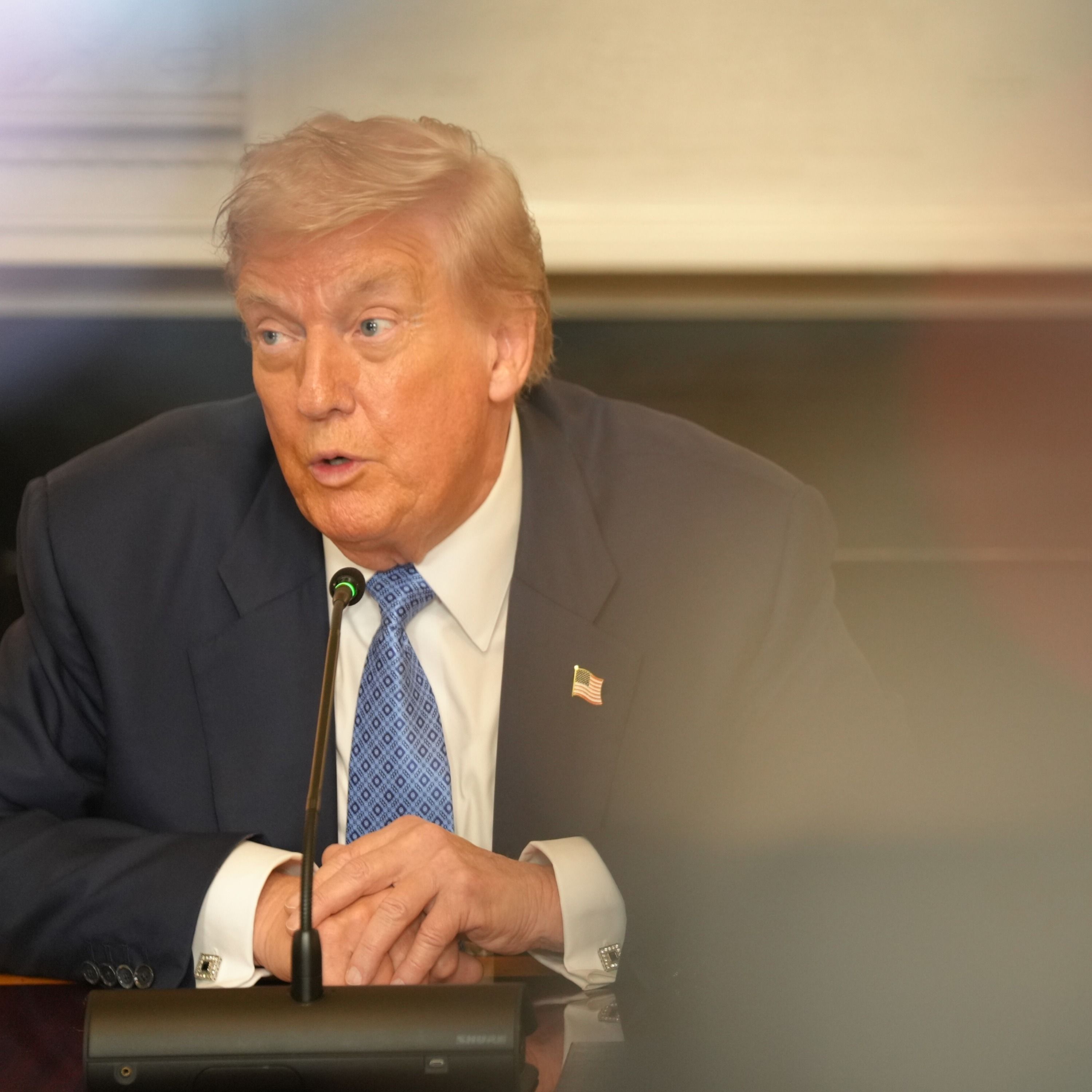
本集简介
双语字幕
仅展示文本字幕,不包含中文音频;想边听边看,请使用 Bayt 播客 App。
这是你需要解读的头条新闻。
It's your headline to unpack.
这是你每周都要跟进的一个故事。
It's your one story to follow week by week.
这是你需要破解的Wordle谜题。
It's your Wordle to work through.
这是你需要追踪的团队动态。
It's your team to track.
这是你探索的三十六小时。
It's your thirty six hours to explore.
这是你需要掌握的腌料配方。
It's your marinade to master.
这是你需要理清的观点。
It's your opinion to figure out.
这是你需要升级的床垫。
It's your mattress to upgrade.
这是你了解还需要为圣母大学做些什么的日子。
It's your day to know what else you need to Notre Dame.
《纽约时报》。这是你需要理解的世界。了解更多请访问nytimes.com/yourworld。
The New York Times. It's your world to understand. Find out more at nytimes.com/yourworld.
这里是《纽约时报》,我是娜塔莉·基特罗夫。您正在收听的是《每日播报》。
From The New York Times, I'm Natalie Kitroef. This is The Daily.
总统向记者表示,美国将在美国钢铁公司持有黄金股。
The president spoke with reporters. He says that The US will have a golden share in US steel.
稀土生产商MP Materials股价有望创下历史最佳单日涨幅。国防部将成为MP最大股东,此前英伟达和AMD已同意将15%营收交给美国政府。
Shares of rare earth producer MP Materials on pace for their best day in history. DOD will be MP's largest shareholder after buying NVIDIA and AMD have agreed to give the US government 15% of the revenue.
通过一系列非常规交易,特朗普总统已强势介入美国企业运营。
In a series of extraordinary deals, president Trump has muscled himself directly into the business of corporate America.
周五晚间突发新闻,事关英特尔公司。英特尔股票——
Friday night breaking news. It's on Intel. Intel stock is
包括使美国政府成为英特尔这家标志性企业的最大股东。
Including making the US government the largest shareholder of Intel, one of the most iconic companies in the country.
这几乎算是未知领域了,对吧?
It really is almost uncharted territory, is it?
此举受到伯尼·桑德斯赞扬,却被保守派批评为社会主义。今天,我的同事安德鲁·罗斯·索尔金将解读其影响,以及如何重塑美国资本主义模式。今天是9月2日星期二。安德鲁,过去几个月我们目睹特朗普以多种方式让政府介入企业运营,但最近美国政府入股英特尔的消息让我们确信必须请教你。
It's a move that's been praised by Bernie Sanders and criticized by conservatives as socialism. Today, my colleague Andrew Ross Sorkin on what all this means and how it could reshape America's approach to capitalism. It's Tuesday, September 2. Andrew, we've seen Trump insert the government into US companies in a bunch of ways in the last few months. But the recent news that the US government was taking this ownership stake in Intel is the thing that convinced us we had to come to you.
这堪称重磅炸弹。对于大型企业而言,此类操作极其罕见。作为美国企业事务的权威专家,你一直在试图解析其意义。
This was the bombshell. This is a major corporation, and this kind of move is just extremely rare. And you, as our resident expert on all things corporate America, have been trying to make sense of it.
政府决定持有英特尔10%股份无疑具有分水岭意义。这不仅关乎商业领域,更颠覆了美国近一个世纪以来推行的自由市场资本主义理念——这个曾对国有资本主义持批判态度的国家。从政治角度看,此举彻底扭转了共和党和保守派多年来的商业立场。过去几天我接触的商界领袖无不对此充满疑问,他们不仅关注政府入股的具体细节,更担忧其预示的深远影响。要知道,美国历史上政府如此深度介入企业的情况,此前仅出现在危机时期。
There's no question that the decision by the administration to take a 10% stake in Intel is a watershed. It's a watershed not just for the world of business, but for the much larger idea around capitalism, around free markets, around the idea that The United States has spent the last century exporting the concept of free market capitalism and has been critical of state run capitalism. And in so many ways, even politically, this flips the entire script of the approach that Republicans and conservatives have taken towards business for so many years. I can't tell you how many business leaders I've spoken to over the last several days who are looking at this and have so many questions, have so many questions not just about the particulars of The US taking stake in this company, but in what it portends, what it means. You know, the last time we saw anything like this, and really the only times this has ever happened in American history where The US Government's gotten this engaged in business, it's been in the context of a crisis.
嗯。
Mhmm.
2008年我们曾目睹投资银行和汽车制造商陷入这般境地,但当时是因为这些企业被认为处于绝对危机状态,放任它们破产将对国家及其经济造成灾难性影响。
We had this happen in 2008 with the investment banks, with the automobile makers, but it happened because those companies were considered in absolute distress and that the effect of letting them go bankrupt was going to be cataclysmic for the rest of the country and its economy.
没错。当时的理念是这些银行'大而不能倒'——顺便说一句,这正是您相关著作的书名。政府干预被视为遏制重大经济冲击的必要手段。
Right. The idea then was that these banks were too big to fail. Incidentally, title of your book on this subject. The idea was this was necessary to contain major economic fallout.
正是如此。而那个事件本身就在全国引发了持续至今的争论,围绕纾困政策本质以及政府应如何介入商业领域。如今英特尔案例又成为最新例证,这是美国政府在一系列非危机时期直接持股企业、收取特许权费等前所未有的商业行为中的最新一例,这些举动可能重写资本主义规则。
Exactly. And look. That moment unto itself created all sorts of debates around the country that last even to this day around the very idea of bailouts and how the government should or should not be involved in the world of business. And so here we have this example of Intel, which is just the latest in a string of transactions in which the US government has taken effectively stakes in businesses or otherwise collecting tolls or other things that they haven't done before at a time when we're not in crisis and how that may rewrite the rules of capitalism.
让我们追溯事件起源。您提到英特尔是这一系列交易中的一环,请详细说明。
So let's talk about how all this started. You mentioned that Intel is part of this string of transactions. Take me through that.
今年早些时候,日本制铁公司试图收购美国钢铁公司时,总统出面表示:'只有在美国获得所谓黄金股的情况下才会批准交易'。这种特殊股权赋予美国政府特定治理权,未来可实质控制日本制铁对美国钢铁的处置。具体如何实现?
So earlier this year, we saw Nippon, which is a steelmaker in Japan, try to buy US steel. And the president stepped in and said, I'll approve this deal, but I'll only approve this deal if The United States gets what's called a golden share. So this is a special share that has certain governance powers, which effectively allow the US government, in many cases, to control what Nippon Steel does with US Steel in the future. How so?
通过什么方式?
In what way?
例如若日本制铁打算关闭美国钢铁旗下工厂,美国政府有权否决。在某些情况下,政府甚至可能要求日本制铁进行非常规投资。这彻底改变了企业运营的底层逻辑。
Well, for example, if the US government decides that Nippon wants to close down a factory that's owned by US steel, they could say no. In certain cases, they may try to even be able to require Nippon steel to make investments in ways that Nippon Steel wouldn't normally. So it just changes the complete dynamic of the business.
确实。
Right.
随后七月份,五角大楼入股了一家稀土矿产公司——这同样是政府从未有过的举措。此后又出现更独特的交易:特朗普政府官员曾强烈反对允许芯片制造商向中国出口芯片。
And then in July, we saw the Pentagon take a stake in a rare earth's minerals company, which is something we've also never seen the government do in this kind of context. And then after that, we saw an even more unique transaction. Trump administration officials, you know, they had been railing about how we should not allow our chipmakers to export their chips to China.
没错。这是被禁止的。
Right. It was prohibited.
在英伟达CEO前往白宫向总统游说他们应该获准向中国出售低端芯片之前,这一直是被禁止的。
It was prohibited until the CEO of NVIDIA goes to the White House and makes the case to the president that they should be able to sell less advanced chips in China.
对。
Right.
然后总统说,你知道吗?好吧。我允许你这么做,但你要向我交钱。每卖出一块芯片,你都要向美国政府缴纳15%的税。现在有人看到这个就说,这是15%的保护费。
And the president says, you know what? Okay. I'll let you do that, but you are gonna pay me. You're gonna pay the US government a 15% tax on those chips. Now some people look at that and say, that's a 15% vig.
什么是保护费?
What's a vig?
保护费就像黑手党干的事。你要交保护费。
A vig is like what the mafia would do. You take a vig.
嗯哼。就像勒索。
Uh-huh. Like extortion.
我是说,这是我委婉的说法。但你可以卖芯片,不过我们要分一杯羹。每卖出一块芯片,我们都要抽成15%。
I mean, that's one way to I I'm being polite about it. But you can sell the chips, but we're gonna take a piece of the action. We're gonna take 15% of every chip that you sell.
而且就像你说的,这就是一种税,对吧?而共和党通常是不想对企业征税的。
It's also just, as you said, it's a tax, right, which is not something that Republicans typically wanna do, tax corporations.
这和他们多年来宣扬的理念完全背道而驰。罗纳德·里根有句名言,他说英语中最可怕的九个字是:我是政府派来帮忙的。而现在我们却看到一位共和党总统说:美国政府是来帮忙的——而且不只是帮忙,我们还想掌控你们。
It's the antithesis of what they've talked about for all of these years. You know, Ronald Reagan has a famous quote where he says, the nine most terrifying words in the English language are, I'm from the government, and I'm here to help. And here we are in a situation now where a Republican president is saying The US Government is here to help and not just here to help. We wanna own you.
然后我们拿下了英特尔这笔交易。
And then we get this Intel deal.
这确实是所有爆料中最重磅的一个。让我先倒回一分钟讲讲背景故事,因为单就这件事本身就非常引人入胜,整个商界都在猜测后续发展。这次福克斯新闻做了篇报道
And that was really the biggest bombshell of all. And let me go backwards just a minute to give you the backstory of that because unto itself, I think it's fascinating, and it has the entire business world wondering what comes next. In this instance, Fox News does a report
这位CEO名叫陈立武。
The CEO's name is Lip Bu Tan.
关于英特尔CEO的报道。
About the CEO of Intel.
他此前担任楷登电子(Cadence Design Systems)的负责人,这家软件公司从事芯片设计工具开发,但他因违反出口管制被定罪,将楷登电子的技术出售给中国一所军事院校。
He was formerly the head of Cadence Design Systems, a software company enabling chip design, but he was found guilty of violating export controls, selling the technology at Cadence Design to a Chinese military university.
报道指控并声称其与中国政府有关联。这篇报道直接激怒了特朗普总统,导致他立即在Truth Social上发文。
Alleging and claiming that he has ties to the Chinese government. And that report sets off president Trump to the point where he literally takes to Truth Social.
特朗普总统在Truth Social上写道:英特尔CEO存在严重利益冲突,必须立即辞职。这是解决问题的唯一方案。
On Truth Social, president Trump wrote, the CEO of Intel is highly conflicted and must resign immediately. There is no other solution to this problem.
质疑这位CEO是否应该继续执掌英特尔,以及英特尔当前的状况。需要特别记住的是,英特尔在2022年拜登政府时期获得了《芯片法案》数十亿美元的补贴,当时他们承诺在美国本土生产先进芯片并建设所谓晶圆厂。这是在新冠疫情后我们国家决定建立更具韧性的供应链背景下发生的——我们不能依赖所有重要芯片都在台湾制造。因此英特尔正在亚利桑那等地大规模建设制造工厂,预期这些补贴资金将持续到位。
Questioning the CEO whether he should be the CEO of Intel and what's happening at Intel. And remember, importantly, Intel was a recipient of billions of dollars of grants from the CHIPS Act in 2022 during the Biden administration, where they had committed to build advanced chips and what are called foundries in The United States. And that came after COVID where we decided as a country that we needed to have a more resilient supply chain. We couldn't rely on all of the major important chips being manufactured in Taiwan. And so Intel is literally building huge manufacturing facilities in places like Arizona with the expectation that this grant money is coming their way.
所以他们在整个事件中利益攸关。
So they have a lot at stake in all of this.
所有建筑工人都在现场,他们正等待未来数年持续到账的拨款支票。
All of the construction workers are there, and they're just waiting for more checks to keep coming for years.
没错。
Right.
因此,英特尔CEO如今正面临前所未有的压力,因为美国总统对他提出批评,指责英特尔公司,他和英特尔董事会随即进入危机管理模式。他们给他的建议是什么?他们说,去白宫试着与美国总统会面。这位总统喜欢与企业CEO会面,打电话给白宫,安排一次会面。
So the CEO of Intel is now under fire in the biggest way because you have the president of The United States criticizing him, criticizing Intel, and he and the board of Intel go into crisis management mode. And what do they tell him to do? They say, go try to take a meeting with with the president of The United States in the White House. This president loves to meet with CEOs, call the White House, and get a meeting.
就像,让这件事平息。这需要解决。
Like, make this go away. This needs to be solved.
无论如何,让这件事平息,因为如果不平息,CEO可能会失去工作,他就会离开。于是CEO前往白宫,与特朗普总统在椭圆形办公室坐下,陈述他的立场。在为自己和公司辩护的过程中,总统提出了一个建议。你知道,我们给了你们这么多钱。顺便说一句,还有数十亿美元的拨款已经分配给你们,但我们还没有寄出支票。
Somehow, make this go away because if it doesn't go away, the CEO might lose his job and he would go away. So the CEO goes to the White House, sits in the Oval Office with President Trump, and makes his case. And in the context of making his case for himself, for the company, the president has a suggestion. Well, you know, we're giving you all of this money. And by the way, there's still billions of dollars in grant money that has been allocated to you, but we have not sent the check yet.
所以你们仍然需要那笔钱。我认为美国政府,考虑到我们给予你们如此多的帮助,应该拥有你们公司的一部分股份。CEO考虑到围绕他个人的所有压力、公司的压力以及董事会的压力,最终同意了。哇。于是总统随后在Truth Social上宣布,我们美国纳税人刚刚获得了公司10%的股份,而且他说我们是免费得到的。
So you're gonna still need that money. I think the US government, given the fact that we're helping you so much, should own a piece of your company. The CEO, given all, I think, all of the pressures around him, against him personally, and the pressure on the company, and the pressure on the board says, okay. Wow. And so the president then takes to Truth Social and says that we, The US taxpayer, has just gotten 10% of the company, and he says that we got it for free.
我是说,我们真的是免费得到的吗?
I mean, did we get it for free?
这是个好问题。某种程度上是的。我们已承诺并分配这笔钱作为《芯片法案》的一部分给英特尔。这笔钱本来就是要给英特尔的。英特尔现在为其决定给出10%股份辩护,部分原因是如果你把美国政府给公司的所有拨款加起来,它相当于购买了公司10%的股份。
It's a good question. Sort of. We had committed and allocated this money as part of the CHIPS Act to Intel. That money was supposed to go to Intel anyway. Intel now is justifying its decision to give the 10% in part because if you were to add up all of the dollars that the US government had granted the company, it would buy you the equivalent of 10% of the company.
我们知道为什么特朗普要做这些交易吗?比如与英特尔,还有我们谈到的其他公司?有没有一个动机把这些都联系在一起?
Do we know why Trump is doing these deals, like, with Intel, but also with these other companies that we talked about? Is there a motivation that ties all of this together?
你知道,如果这一切有一个贯穿的主线,那就是特朗普几十年来一直阐述的一个普遍观念,他认为美国政府和纳税人最终被欺骗了,而且经常是被企业欺骗,在许多情况下还被其他国家欺骗。这就是背后的理由,比如说,
You know, if there's a through line to all of this, it's the general concept that Trump believes as he has articulated for decades that he believes the US government and the taxpayer is ultimately getting ripped off And is oftentimes getting ripped off by businesses, and in many cases getting ripped off by other countries. That's the rationale, for example, behind the
关税。没错。
tariffs. Right.
他表达的观点是,天下没有免费的午餐。如果纳税人要为企业提供资金,纳税人就应该直接从中获得回报。历史上,补助金的理念是,通过向不同行业或企业提供各类补助,美国经济乃至纳税人将间接受益。比如我们曾为促进电动汽车创新提供补贴,或支持风力发电(尽管现任总统反对这些)。但我们从未要求直接回报,因为我们期望获得的是更广泛的经济效益。
And he's somebody who's saying, there's no free lunch. If the taxpayer is gonna give a business money, the taxpayer should get something directly from it. Historically, the philosophy of grants, for example, was that The US economy and therefore the taxpayer indirectly would be a beneficiary of giving various grants to different industries or businesses or whatnot. Sometimes we wanted to increase innovation in EVs, and so we've subsidized that in the in the past or windmills, something the president is against. But we never asked for something directly in return because what we were getting in return was hopefully a larger economic benefit.
而特朗普在此表示,我们美国纳税人、美国政府需要比那更实质性的回报。
And in this case, Trump is saying, we, the American tax taxpayer, the American government, we need something much more tangible than that.
确实如此。他希望明确表示:'我拨出了X金额,现在可以当场核算,证明我们收回了X金额甚至更多。'
Very much so. He wants to be able to say, I gave out x amount of money, and I can look right here, and I can do the math, and I can show you that we got x amount back, and then some.
这些交易中获得的不仅是金钱补偿。特朗普和美国政府还获得了对这些公司的控制权,能左右其决策。这正是我们目睹特朗普政府在国内多机构反复实施的策略。那么这种控制具体意味着什么?
And it's not just money compensation that he's getting in these deals. He and the US government are also getting control control over these companies, sway over their decisions. This is something that we've seen the Trump administration do over and over again with a bunch of institutions in this country. In this case, what is that control about?
这里涉及两个层面。其一是国家安全问题。总统公开表达过对中国可能接管台湾的担忧。若发生这种情况,美国将陷入困境,因为全球多数高端芯片产自台湾。因此他认为必须加强对英特尔在美国成功发展的把控,并希望亲自参与其中。
There's two things going on here. One is this issue of national security. The president has been very outspoken about his worries that China is gonna one day take over Taiwan. And if that happens, The US is going to be in a real problem spot because most advanced chips in the world are made there. And so he says to himself that he needs to have more control over the idea that Intel is gonna have success in The United States, and he would like to have a hand in that.
另一个更广泛的议题几乎无关国家安全,而完全关乎特朗普所说的'交易的艺术'。你用了'控制'这个词,他可能更倾向用'杠杆'。他热衷于获得对他人、企业、国家施加影响的杠杆,现在正抓住一切机会创造这种优势。
There's another issue which is just broader that has almost nothing to do with national security and has everything to do with what president Trump would call the art of the deal. You use the word control. He might use the word leverage. He likes to have leverage over somebody else, over a company, over an individual, over a country. And he is now finding every opportunity he can to create that leverage.
他未必会使用这种杠杆,甚至可能不清楚要从中获取什么。但杠杆创造了选择权——这就是谈判策略的核心理论。
He doesn't have to be able to use the leverage. He may not even know what he wants from the leverage, but leverage creates optionality. That's the negotiating theory of the case.
但另一方面,特朗普并非经营企业,他是美国总统。他获取杠杆的手段——政府干预的程度——与美国传统做法大相径庭。正如你所说,这几乎没有先例可循。
But on the other hand, Trump isn't running a company. He is the president of America, and the tools that he's doing to get leverage in these cases, the extent of the government intervention, that's just a pretty big departure from what you normally see in America. There isn't all that much precedent for this, as you've said.
这类交易在美国几乎史无前例。但在中国、俄罗斯、法国都有先例。我们向来是自由市场资本主义的倡导者。
There's almost no precedent for these kinds of deals in this country. There's precedent for them in China. There's precedent for them in Russia. There's precedent for them in France. But we we've always been a country that is advocated for this idea of free market capitalism.
话虽如此,如今自由市场资本主义并非全球最受欢迎的理念。许多人审视这个制度后认为它并未惠及自身。
Having said that, it's not exactly like free market capitalism is somehow the most popular concept in the world these days. And there are a lot of people who look at the idea of free market capitalism and say it's not working for them.
嗯。
Mhmm.
从许多方面来看,唐纳德·特朗普正在戳穿自由市场资本主义曾经存在的假象。他指出自由市场资本主义实际上是个神话,美国政府一直在以各种方式补贴所有这些企业。与其假装这是自由市场却一无所获,他主张应该从中获得回报。这一理念在美国极具挑衅性。
And in many ways, Donald Trump is puncturing the idea that free market capitalism ever existed. He's saying free market capitalism has actually been a myth that the US government has always been subsidizing all of these businesses in all sorts of different ways. And instead of pretending it's a free market and getting nothing for it, he's saying, give us something back for it. And that very idea in America is so provocative.
我们稍后回来。
We'll be right back.
我是《纽约时报》全国政治记者贾斯敏·乌略亚。我在德克萨斯州与墨西哥接壤的边境地区长大,从高中起就开始在该地区进行报道。如今我走遍全国,寻找真正体现移民和国家人口结构变化对人们意味着什么的故事和声音。我不断发现,在这个极具争议的问题上,人们并不简单地归属于某个意识形态阵营。其中存在大量灰色地带,而我认为最有趣的故事就藏在那里。
My name is Jasmine Ulloa, and I'm a national politics reporter for The New York Times. I grew up in Texas on the border with Mexico, and I've been reporting in the region since I was in high school. Now I travel the country looking for stories and voices that really capture what immigration and the nation's demographic changes mean for people. What I keep encountering is that people don't fall into neat ideological boxes on this very volatile issue. There's a lot of gray, and that's where I feel the most interesting stories are.
我试图向读者展现这种复杂性和细微差别,这也是我们政治团队所有同事和《纽约时报》每位记者努力的目标。我们的使命是帮助您理解这个世界,无论它多么复杂。如果您想支持这一使命,请考虑订阅《纽约时报》,访问nytimes.com/subscribe即可订阅。
I'm trying to bring that complexity and nuance to our audience, and that's really what all of my colleagues on the politics team and every journalist at The New York Times is aiming to do. Our mission is to help you understand the world no matter how complicated it might be. If you want to support this mission, consider subscribing to The New York Times. You can do that at n y times dot com slash subscribe.
好的。安德鲁,请谈谈对这些举措的反应,这个关于政府应该在其以某种方式帮助的企业中获得股份或发言权的挑衅性想法。
Okay. Andrew, tell us about the reaction to these moves, to this provocative idea that the government should get a stake or some kind of say in the companies that it is helping in one way or another.
华盛顿方面最令人惊讶的是政治立场的几乎完全反转。比如伯尼·桑德斯就非常赞同这个想法。当《芯片法案》在2022年首次出台时,伊丽莎白·沃伦和伯尼·桑德斯等人就明确提出我们应该从这些巨额拨款中获得回报。多年来他一直主张企业不应享受福利,这些补贴都是救助金,我们本不该参与其中。如果非要参与,就必须有所回报。
Well, the real surprising part of this in Washington is just how the politics have almost flipped. So Bernie Sanders, for example, loves this idea. When the CHIPS Act was first put in place in 2022, folks like Elizabeth Warren and Bernie Sanders were specifically articulating the idea that we should be getting something for these big grants. So he's been out there for years advocating the idea that corporations should not be getting welfare, that all of these subsidies are bailouts, and that we shouldn't be involved in it. And if we are, we should be getting something for it.
从某种意义上说,总统的许多举措实际上是在对美国企业征税,这正是民主党人长期倡导的。
In a way, so much of what the president's doing is taxing corporate America, something the Democrats have long been advocating for.
这很有趣。要知道,特朗普的经济政策在很多方面都不属于传统党派政治范畴。关税显然不是共和党通常支持的,而这次更是以一种戏剧性的方式呈现——国会中最进步的议员之一居然表示支持,认为这是好事。
It is fascinating. You know, there there's so many ways in which Trump's economic policies just don't fall within traditional party politics. Tariffs, obviously, being something that Republicans don't typically favor. And this too in a kind of dramatic way, because here you have one of the most progressive members of Congress saying, good. This is good.
他的做法确实吸引了一部分民主党人,他们至少对其某些政策表示认同。而在光谱的另一端,虽然共和党建制派大多对此保持沉默,没有评论总统的举措,但一些知名保守派人士对此相当恼火。
You know, his approach really has pulled in a certain subset of Democrats who look at least some of his policies and say, yeah. That's what we should be doing. Now on the other end of the spectrum, while much of the Republican establishment has, truth, been pretty quiet about all this. They're not commenting on what the president's doing. There are some prominent conservatives who are kinda going out of their mind about this.
共和党参议员兰德·保罗在协议敲定前就批评道:如果社会主义意味着政府掌控生产资料,那么政府持有英特尔股份难道不是迈向社会主义的一步吗?
Republican senator Rand Paul criticized the deal before it was finalized posting, if socialism is government owning the means of production, wouldn't the government owning part of intel be a step towards socialism?
保守派评论员看到这种情况会暗自思忖:这是个危险的滑坡。
The conservative commentators look at this and say to themselves, this is a slippery slope.
不能只在左翼推行社会主义时反对它。所以如果你支持社会主义,显然唐纳德·特朗普就是你的选择。
You can't just be against socialism when the left does it. So if you support socialism, apparently, Donald Trump is your guy.
如果你是自由市场资本主义者,就不会希望政府投资上市公司。这可能导致政府目标优先于利润最大化。
If you are a free market capitalist, you do not want government investing in public companies. It may prioritize government goals as opposed to profit maximization.
美国是全球最具活力的经济体。他们会说全球资本主义让民众摆脱了贫困,会告诉你创新源于竞争而非保护主义。一旦政府开始'挑选赢家和输家'——正是这个说法——亚当·斯密所谓的'看不见的手'就失效了。
The United States is the most dynamic economy in the world. They would argue that capitalism across the globe has raised people out of poverty, they would tell you that innovation comes from competition, not protectionism. And once you have the government picking winners and losers, and that's the phrase, picking winners and losers, you no longer have the idea of Adam Smith's invisible hand at work.
没错。不再有看不见的手。现在我们看到的是唐纳德·特朗普和美国政府那非常显眼的'铁腕'。
Right. No more invisible hand. Now we have the very visible hand of Donald Trump, of the US government, the strong-arm, if you will.
正是如此。
Exactly.
让我们现实些:尽管这些举措可能很激进,但许多其他国家也会持有他们认为关乎国家安全的公司股份。欧洲就有先例——法德两国持有空客股份。我报道过航空航天业,那可是家非常成功的企业,而这两个国家都是世界顶级经济体。
So just to do a reality check here, as dramatic as these moves may be, there are plenty of other countries that own stakes in corporations that they think are important to national security. This happens in Europe. France and Germany have a stake in Airbus. I covered aerospace. That's a really successful company, and those countries are some of the biggest economies in the world.
确实。但我们多年来一直批评这些国家的做法,主要因为观察其经济后会发现:它们的增长速度远不及美国,缺乏活力。这些年来欧洲从未产生过像美国那样的创新。人工智能源自哪里?
Sure. But we've been critical of those countries for years for that approach in large part because we look at their economy, and we say that it doesn't grow nearly as fast as The United States. It's not nearly as dynamic. You're not seeing the kind of innovation out of Europe that you've seen out of The US over all of these years. Where does AI come from?
不是欧洲。互联网诞生于何处?不是欧洲。所以我认为,当然有些经济体的模式在某种程度上有效,但美国实验如此成功的核心正是自由市场理念。
Not Europe. Where did the Internet come from? Not Europe. And so I think, sure, there are other places that have economies that work to some degree, but what's made the American experiment so successful has been this very idea of a free market.
你所说的这种尽可能限制政府干预的自由市场,是美国经济身份的核心部分。这也解释了我国迄今为止的成功。
You're saying this kind of free market where you limit government intervention as much as possible, that's a key part of America's economic identity. It also explains our success as a country, at least until now.
这正是论点所在。问题是,这只是个例,还是更大趋势的开端?我曾与特朗普政府国家经济委员会主任凯文·哈西特交谈,他和总统以及现任商务部长霍华德·卢特尼克都表示,这仅是开始——政府希望入股更多企业,特别提到鉴于国防承包商与政府的密切业务往来,可能成为政府持股目标。比如洛克希德·马丁,其最大客户正是美国政府。
Well, that's the argument. And the question is, is this just a one off, or is this really the beginning of something much bigger? You know, I spoke with Kevin Hassett, who runs the National Economic Council for the Trump administration, and he has said, as has the president, as has now Howard Lutnick, secretary of commerce, that this is the beginning, that the administration wants to have stakes in more businesses, specifically has identified the idea that defense companies may be up for grabs in terms of the US government taking stakes in them given how much business the US government gives them. You know, Lockheed Martin, a huge part of their business, as you might imagine. The US government is their largest customer.
纳税人是否不仅应支付款项,还应持有这些公司股份?这引发更深层问题。不仅是军工企业,想想所有与政府有业务往来的公司——美国许多建筑企业的最大客户就是政府。
Should the taxpayer not just pay them, but have a stake in the company itself? These are the questions. And it's not just defense companies. Think about all of the businesses that interact with the US government. There are construction companies in America whose biggest client is the US government.
我们是否该持有这些建筑公司的股份?这进而引向竞争性质疑:当政府成为企业股东后,市场竞争是否会终结?比如下次政府需要在两家公司间做选择时——不论是采购飞机还是建造大楼——
Should we own a stake in those construction companies? And this goes then to the competition question, which is once you own a stake in the business, does the competition end? Meaning, the next time the US government has to choose between two companies that it wants to use for whatever. Maybe it's building an airplane. Maybe it's building a building.
真会基于最低报价和最优服务来竞标吗?还是政府会说'既然我们持有其中一家10%股份,就必须选它'?长远来看,纳税人最终是否要支付更高代价?不过请允许我追问——
Is there actually a competition based on the lowest price and the best service? Or does the US government say, actually, we own a 10% stake in this one, so we actually have to use this one? And then, by the way, longer term, does The US taxpayer actually pay more? But if I could push you
关于这点,有人认为美国早已处于竞争受抑制的环境。看看针对科技巨头的反垄断案,还有医疗行业的大规模整合。很多民众抱怨医疗费用居高不下——
on that just a little bit, some might argue that Americans already live in a world where competition has been stifled. You know, there's antitrust cases against some of the biggest tech companies in this country. And when you think about one of this country's biggest industries, health care, there's been all this consolidation. And I think a lot of Americans would probably say, look. We're already paying through the nose on hospital bills and drug costs.
批评者的观点是:若政府大量持股企业,这种情况会恶化吗?
Is the argument from critics that that would be worse if the government owns stakes in a lot of these companies?
批评在于:当前国内竞争已不足,而政府持股会雪上加霜。试想:当政府持股企业想要收购其他公司时,监管机构会如何考量?他们会以'这对纳税人有利'为由批准并购,即便损害市场竞争吗?
I think the critique is that you're right. We don't have enough competition in this country as it is, but that this would make it worse, not better. And think about this. The next time a company in which the government has a stake wants to buy another company, how would regulators think about that? For example, would they say, well, this is good for the American taxpayer because we own a stake in it, even though it would be bad for competition?
你认为这可能导致更严重的行业垄断。
You're saying it could lead to more consolidation, potentially.
这彻底改变了激励机制——政府与纳税人突然成了企业的法定所有者。
It just changes the entire incentive structure because all of a sudden the government, the taxpayer, is now an official owner in these businesses.
我想探讨这些交易理论上能带来的潜在利益,包括政府对私营企业的持股。特朗普政府的核心论点是,他们最终在为美国纳税人争取更优惠的交易。我的问题是,政府可能从英特尔、英伟达销售等企业获得的资金,我们是否清楚它将如何实际惠及美国纳税人?
I wanna turn to the potential benefits that we'd theoretically be getting in exchange for these deals, including the government stakes in private companies. The whole argument from the Trump administration is that ultimately, they are extracting better deals on behalf of The US taxpayer. My question is, does that money that the administration, that the government may be getting from Intel, from NVIDIA sales, from these other companies, do we know how it would actually benefit the American taxpayer?
表面上,利益会以政府收入的形式体现。考虑到我们现在面临的数万亿美元巨额预算赤字,显然我们早已入不敷出。我们正在寻找其他增收方式来支付各项开支。我无法确切说明这笔钱的直接去向——会用于社会保障网吗?
Well, ostensibly, the benefit would be in the form of revenue to the government. And if you think about the enormous budget deficit, which is in the trillions of dollars that we have today, I mean, I think there's no question that we already live beyond our means. We're already trying to find other ways to raise revenue to pay for things. I can't tell you where the money directly is gonna go. Will it be used for the social safety net?
会用于偿还债务吗?会投入美国基础设施建设吗?会用于教育事业吗?我认为这些问题尚无答案,但可论证的益处是资金将充实美国国库——而国库确实需要填补。值得注意的是,回顾2008年金融危机时,美国政府曾救助银行和汽车制造商,当时这种做法极不受欢迎。
Will it be used to pay down debt? Will it be used for infrastructure spending in The United States? Will it used for education? I don't think we know the answer to that question, but the arguable benefit is that it would go into the coffers of the US government and the coffers need filling. It's also worth noting that, you know, you go back to the financial crisis of two thousand eight, and US government did rescue the banks at that time and the automakers at that time, and it was very unpopular.
嗯。
Mhmm.
民众反感是因为认为这是免费施舍,觉得钱投出去就收不回来。但事实上美国政府从中获利了。这不仅带来直接盈利,还支撑了这些企业持续运营,维持了经济活力,保住了就业岗位等等。
And it was unpopular because people thought it was a freebie. People thought that the money was going out and was never coming back. And the truth is that the US government made a profit on that money. And so the benefit was that not only did it make a profit directly, it also managed to prop up those companies and businesses and keep them in business, which kept the economy alive, kept people in their jobs, etcetera.
退一步说,值得指出特朗普已两次凭借'现行经济体系未能惠及国内大量群体'的论点胜选——那些失去优质工厂工作机会的被遗忘者。我怀疑会不会有人看着现状说:没错,你或许在打破体系,但这正是我投票支持的。
Okay. Stepping back, I think it's probably worth noting that Trump won two elections now on the argument that this economic system has not worked for a huge swath of people in this country, that people had been left behind. They had lost good factory jobs. And so I wonder if there aren't gonna be people who look at this and say, sure. You may be kind of breaking the system, but that's what I voted for.
毫无疑问,许多美国人投票给特朗普就是要他打破现状。他们希望改变经济运作方式。至于是否想要这些具体改变,我认为仍是巨大疑问。更大的疑问在于这些变革的真正持久性。
There's no question that many Americans voted for Trump to break the glass. That's what they wanted him to do. They wanted him to change the way this economy works. Now whether they want these specific changes, I think is still a big question. I think an even bigger question is how permanent these changes really are.
最近几天我与CEO们交流时,他们提到'世代更迭'这个概念——我们正经历资本主义体系的世代转型,自由市场理念的根本转变。未来几十年我们对企业的所有权,相关决策将不再仅关乎利润或员工,而可能受华盛顿的影响。而白宫未来由谁主政?可能是特朗普总统施加影响,但也可能是民主党人。
You know, when I talk to CEOs, even in the past couple of days, they they talk about this phrase, a generational shift, That we are in the midst of a generational shift in capitalism, a generational shift in the very idea of free markets where we own these businesses for decades to come. The decisions that get made around that business or industry no longer have to do with profits or employees or anything else. It has to do with potentially the influence of what comes from Washington. And who knows who's gonna be in the White House? Maybe it'll be president Trump who's influencing this, but down the line, it could be a Democrat.
可能是伯尼·桑德斯。当政府成为企业所有者时,这种影响力会改变发展方向,使商业可能深度政治化。
It could be Bernie Sanders. But when the government becomes an owner in the business, that influence shifts the direction of travel such that business could potentially become deeply political.
安德鲁,非常感谢您的时间。
Andrew, thanks so much for your time.
感谢邀请我。
Thanks for having me.
我们稍后回来。以下是今天你还需要了解的其他消息。周日,在一连串最后一刻的法律行动中,一位联邦法官暂时阻止了特朗普政府驱逐已被送上飞机的危地马拉儿童。法官对政府表示失望,称令人惊讶的是,政府竟试图在假期周末的凌晨时分将这些未成年人送出美国。政府方面的一名律师表示,这些儿童将与他们在危地马拉的父母团聚。
We'll be right back. Here's what else you need to know today. In a last minute flurry of legal action on Sunday, a federal judge temporarily blocked the Trump administration from deporting Guatemalan children who had already been put onto planes. The judge expressed frustration with the government, saying it was surprising that the administration had tried to get the minors out of the country in the wee hours of the morning on a holiday weekend. A lawyer for the government said the children were gonna be reunited with their parents in Guatemala.
但代表儿童的律师对此提出异议,称至少部分儿童不愿返回。移民儿童对特朗普政府的移民打击行动构成了挑战,因为他们享有特殊的法律保护。阿富汗当局表示,周日发生在阿富汗的地震死亡人数已攀升至800多人,并警告死亡人数可能还会上升。目前,只有少数国家向塔利班政府提供了人道主义援助。近年来,由于塔利班面临将人道主义援助转移给其武装人员并偏袒某些社区的指控,外国越来越不愿意向阿富汗提供援助。
But a lawyer for the children disputed that, saying that at least some of the children didn't want to return. Migrant children have posed a challenge for the Trump administration's immigration crackdown because they're entitled to special legal protections. And the death toll from an earthquake that hit Afghanistan on Sunday has climbed to more than 800 people, authorities said, warning that the fatality count would likely rise. So far, only a handful of countries have offered humanitarian assistance to the Taliban government. Foreign countries have become reluctant to send aid to Afghanistan in recent years as the Taliban faces accusations diverting humanitarian assistance to their fighters and favoring some communities over others.
自今年早些时候特朗普政府完全切断美国对阿富汗的所有外援以来,阿富汗一直在应对各种危机,医院也已关闭。今天的节目由Ricky Nevetsky、Stella Tan和Carlos Prieto制作,由Lisa Chow和Chris Haxel编辑,Chris Wood负责技术制作。以上就是本期《每日新闻》。我是Natalie Kitrovev。
Afghanistan has been battling various crises and hospitals have shut down since the Trump administration completely cut off all US foreign aid to the country earlier this year. Today's episode produced by Ricky Nevetsky, Stella Tan, and Carlos Prieto. It was edited by Lisa Chow and Chris Haxel and was engineered by Chris Wood. That's it for The Daily. I'm Natalie Kitrovev.
明天见。
See you tomorrow.
关于 Bayt 播客
Bayt 提供中文+原文双语音频和字幕,帮助你打破语言障碍,轻松听懂全球优质播客。