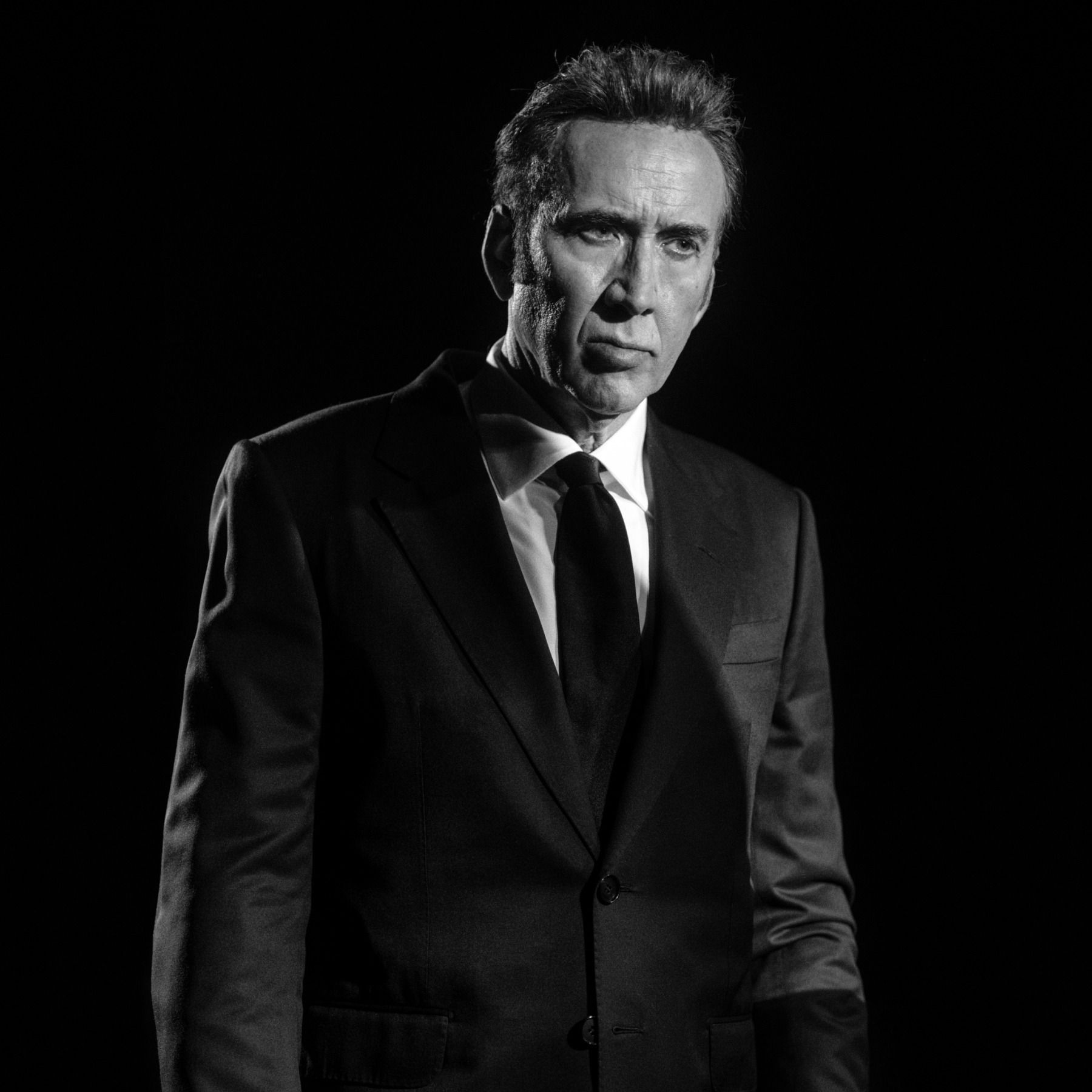
本集简介
双语字幕
仅展示文本字幕,不包含中文音频;想边听边看,请使用 Bayt 播客 App。
我是韦斯利·莫里斯。
I'm Wesley Morris.
我是一名影评人。
I'm a critic
为《纽约时报》工作,同时也是播客《Cannonball》的主持人。
for The New York Times, and I'm the host of a podcast called Cannonball.
我们会聊聊那些总在你脑子里挥之不去的歌,让你看了就停不下来、一直琢磨的剧,还有你小时候看过、不管喜不喜欢都塑造了你的电影。
We're gonna talk about that song you can't get out of your head, that TV show you watched and can't stop thinking about, and the movie that you saw when you were a kid that made you who you are, whether you like it or not.
整个过程我都特别尴尬,因为这电影真的很烂。
I was so embarrassed the whole time because it's a bad film.
是的。
Yeah.
但我还是特别喜欢它。
And I still love it.
你可以在YouTube上,还有你平时听播客的平台找到《Cannonball》。
You can find Cannonball on YouTube and where ever you get your podcasts.
来自《纽约时报》,这是本次访谈。
From The New York Times, this is the interview.
我是大卫·马尔切塞。
I'm David Marchese.
我就直说了。
I'm just gonna lay my cards out on the table.
我认为尼古拉斯·凯奇是一位真正独特的艺术家,是自马龙·白兰度以来最富有原创性和个性的演员。
I think Nicolas Cage is a truly special artist and the most original and unique actor since Marlon Brando.
他不仅能演出《离开拉斯维加斯》那样细腻真实的表演,凭此拿下奥斯卡影帝,还能在《月色撩人》这样的浪漫喜剧、《石破天惊》这类动作片,以及《改编剧本》这种难以归类的电影之间自由切换,更关键的是,他为每部作品都注入了一种后现代、充满想象力且大胆冒险的风格。
It's not just that he's capable of delivering beautifully naturalistic performances like in Leaving Las Vegas for which he won a Best Actor Oscar or that he's jumped between romantic comedies like Moonstruck, action movies like The Rock, and unclassifiable films like Adaptation, it's that he brings a postmodern, highly imaginative, and thrillingly risky approach to all of it.
这种风格让他经常成为社交媒体上的梗图素材,同时也借鉴了其他电影、音乐和绘画的元素。
That style, which has led to his work frequently being memed on social media, also pulls from other films, music, and painting.
我认为他的表演早已超越了写实主义,甚至超越了传统意义上对演技好坏的评判。
And I think it takes acting far beyond realism or even frankly traditional judgments of good or bad.
他对原创性的执着,也体现在他的戏外生活中。
The same devotion to originality shows up in his off screen life too.
我之前在2019年采访过凯奇,他真是个不折不扣的怪才。
Cage, whom I previously interviewed back in 2019, is a bona fide eccentric.
他那些独特的兴趣、挥金如土的习惯,还有随性自由的个性,和他那些极具辨识度的表演一样传奇。
His idiosyncratic interests, lavish spending habits, and all around free spirited nature are in their own way as legendary as his highly distinct performances.
我还能说什么呢?
To what else can I say?
除此之外,根本没人能跟他比。
Other than that, there's no one like him.
最新的例证就是新剧《蜘蛛暗影》,观众可以选择彩色或黑白版本观看。
The latest evidence is the new series Spider Noir, which viewers can watch in either color or black and white.
这是凯奇第一次真正进军电视剧领域。
The show is Cage's first big swing at television.
他在剧中饰演本·雷利,一位上世纪三十年代纽约的硬派私家侦探,同时又以一种典型的凯奇式混搭身份,成了个会飞檐走壁的超级英雄。
In it, he plays Ben Reilly, a hardboiled private investigator in nineteen thirties New York, who in a very Cagean mashup also happens to be a web slinging superhero.
下面是我的对话,与伟大的尼古拉斯·凯奇。
Here's my conversation with the great Nicolas Cage.
尼克,谢谢你抽出时间跟我聊天。
Nick, thank you for taking the time to speak with me.
真的很感谢。
I appreciate it.
谢谢您,大卫。
Thanks, David.
谢谢您再次邀请我。
Thanks for having me back.
我特别记得七年前在内华达和您的那场对话。
I enjoyed our last conversation seven years ago in Nevada.
咱们接着上次的话题继续聊。
We'll pick up where we left off.
好的。
Okay.
不过我倒是有点记不清了。
Which I don't remember.
但我一开始想聊的是,我刚看了你当年在加州州立大学富尔顿分校给毕业生的演讲。
But where I wanted to start, I just watched the speech you gave to graduates at Cal State Fullerton.
那大概是二十五年前的事了。
This is probably something like twenty five years ago.
真是很久以前了。
Going way back.
你在演讲里说,艺术家有权利直接冲着魔鬼的屁股上去,还冲他笑,然后活下来。
And in that speech, you said artists have the license to go straight up the devil's ass, smile at him, and survive.
你什么时候做过这样的事?
When have you done that?
我觉得拍《坏中尉》的时候,跟韦纳·赫尔佐格合作,我就干过这种事。
I felt like I did it on Bad Lieutenant with Werner Herzog.
赫尔佐格对那番话影响很大,我记得他说过,如果你没钱拍电影,就得去偷摄像机、偷胶片,硬把电影拍出来。
And Werner was an influence on that particular speech because I remember he said, if you don't have the money to make the movie, you have to steal the camera and you have to steal the film and make the movie.
不管用什么办法,先拍出来再说。
Do it any way you can.
你必须把电影拍出来。
You've got to make the movie.
我觉得这其实是在说热情。
And I think it was saying something about passion.
那种不顾一切也要抵达真相的热情,作为艺术家,你真正想表达的东西。
About the passion of facing the odds to get to the truth of what it is you hope to express as an artist.
有时候,你得在合理范围内,允许自己的工具、内心和想象力深入那些令人不安、阴暗的记忆或思绪角落,才能真实地呈现一个可能令人不安或危险的场景。
Sometimes you have to be willing to, within reason, allow your instrument, your psyche, your imagination to go to very uncomfortable and dark corners of your memory or your thoughts in order to convey a truth in a scene that is perhaps disturbing or dangerous in nature.
这样才不会显得虚假。
So that it doesn't feel phony.
我不是让你真的去干危险的事。
I'm not saying go out and do something dangerous.
但有时候,你得允许自己的内心,去拥抱那些阴暗的角落。
But I'm saying sometimes you have to allow your psyche, if you will, to embrace that dark corner of your mind.
我想,这大概就是我那场演讲里想说的,就像你刚才提到的——钻进魔鬼的屁股里。
And I think that's partially what I was talking about in that speech about, as you reiterated, go up the devil's ass.
去到那个地方,从来都不是一件轻松的事。
It's not always a fun process to go there.
重新回到你内心那个阴暗的角落,或者那段记忆里。
To go back in that dark corner of your mind or that memory.
甚至看看报纸上现在的新闻,去触碰那种真实的情感——悲伤、愤怒,这样才能让你的表演不显得虚假。
Or even look around you at current events in a newspaper to get to that place where you feel the emotion and you feel the grief or you feel the anger so that you don't feel like you're faking it.
你有没有做过你刚才说的这种事?
Have you ever done what you just described?
有没有借助过外界的现实事件,来激发自己的情绪?
Sort of used the world outside, sort of looked at current events to motivate?
当然有。
Certainly.
我记得我拍过一部叫《乔》的小电影。
I remember specifically on a little movie I made called Joe.
《乔》,对,大卫·戈登·格林的那部,没错。
Joe, yeah, David Gordon Green, yeah.
我当时很难进入那种强烈的愤怒情绪。
And I was having trouble getting to that feeling of intense anger.
我没点名,但想起之前读过一篇报纸文章,讲的是一个小男孩在动物园的事。
And without mentioning names, recalled a newspaper article I read about a little boy who was at the zoo.
他掉进了一个非洲彩犬的围栏里,那些狗活活把他咬死了。
And he fell into a cage or an environment of wild painted dogs, the African painted dogs, and they ate the child alive.
我记得当时特别震惊,怎么会发生这种事?
And I remember getting very upset about it, how could something like that happen?
所以在那场戏里,我很愤怒,因为那个我一直在指导的孩子,竟然遭受家暴,而他妹妹还可能被绑架,遭遇更可怕的暴行。
And so in that scene, I was upset that this child that I was sort of mentoring or guiding was the victim of domestic abuse and of his sister was potentially going to be abducted for other disturbing and horrible things, atrocities.
于是我回去重新看了当时的新闻,这才真正触动了我。
And so I I went and looked at that current event at that time, and I and then it got me there.
这就可以算一个例子。
So that would be an example.
演员们谈论表演时的心理和情感风险,这确实挺有意思的。
You know, it's interesting when actors talk about the psychological or emotional risks of performance.
他们通常在谈论负面情绪时提到这一点。
They often talk about it in the context of darker emotions.
是的。
Yeah.
感受到积极的情绪,会不会觉得更有风险或更难?
Does it feel risky or difficult to get to the more positive emotions?
这真是个特别到位的问题。
So that's a really perfect question.
比如说,我早上起床,要是状态特别差,这话说得有点老套了。
And if I wake up in the morning, to use a cliche on the wrong side of the bed.
结果还得装出一副笑嘻嘻、乐呵呵、又蹦又跳、活力四射、特别阳光的样子。
And I have to be funny, funny, funny, and happy, happy, happy, and dance, dance, dance, this and this bright and sparkling and poppy.
这种反而更难。
That is more difficult.
更别说,你到底怎么才能进入那种状态呢?
Much more Well, how you get there?
你得学会把情绪分门别类地处理。
You become a specialist in compartmentalizing.
明白了。
Okay.
我不会去想一小时前别人跟我说过什么。
That I'm not gonna think about what was said to me an hour ago.
我会把那些念头关掉,凭本能行事,装出开心的样子,然后切换状态。
I am going to shut that off and act from the spinal cord and be happy and turn it on.
这可不容易。
And that's not easy.
你还记得在加州州立大学富勒顿分校的那场演讲吗?你说过一句话让我印象特别深——你提到愿意接受别人对作品的负面反应,愿意被人讨厌或不被欣赏。
You know, also in in that Cal State Fullerton speech, something you said that that really stuck with me is you talked about a willingness to invite negative reaction to the work, a willingness to be despised or have someone not like the work.
你还说,当有人对你的作品有负面评价时,那不是瞎扯,是真心话。
And you said something along the lines of when somebody has a negative reaction like that, they're not BS ing.
这种真实的反馈,才是你真正想要的。
Like, it's a genuine reaction, and that's something that you're striving for.
我其实经常想到这一点。
And I think about that a lot, actually.
如果你做的事总是被人喜欢,总是得到正面反馈,那可能你根本没给人带来足够刺激的体验。
Like, if you're only doing something that people like all the time or only have positive reactions to, it's possible you're not taking them on an exciting of enough ride.
但愿意被人讨厌、被嘲笑、被误解,确实需要勇气。
But it does take some courage to be willing to be despised or or laughed at or misunderstood.
我想知道,你有没有过这样的时刻,意识到自己愿意引发这样的反应,甚至被这种反应吸引?
And I wanted to know for you if you have a memory of when you realized that you were willing to elicit that kind of reaction or maybe even were drawn to that kind of reaction.
我觉得是在拍《佩吉·苏出嫁》的时候,那部电影大家都知道,我其实根本不想参与。
I think it was on Peggy Sue Got Married, which everyone knows was a movie that I I did not really want to partake in.
但我找到了一种方式,制片方也同意让我以自己觉得有趣的方式来演这个角色。
And I found a way, and and the powers that be said okay to to play the part in a way that I thought would be interesting to me.
那就是用一种被认为不怎么悦耳的声音来表演。
Which was to use this voice that was not considered very attractive.
我还改变了外表,弄得几乎像卡通或者梦境里的卡通人物一样。
And to change my appearance in such a way where it almost became like a cartoon or like a dream cartoon.
我清楚得很,这么干肯定不讨好。
I knew full well that that was not going to go over very well.
但与此同时,也正是这个让我一直保持着兴趣。
But at the same time, it's what kept me interested.
我知道自己是在冒一个巨大的风险。
I knew that I was taking an enormous risk.
但每天去上班,我都觉得特别兴奋。
But it was so exciting every day I went to work.
我心里就一个念头:我就要这么做。
And I was just saying in my mind, I'm gonna do this.
我一定要坚持下去。
I'm gonna stick to it.
我一定要坚持下去。
I'm gonna stick to it.
我一定要坚持下去。
I'm gonna stick to it.
周围的人都在劝我停下,停下,停下。
And everyone else around me is like, stop, stop, stop.
但我还是继续往前走。
And I just kept going.
对于我来说,这个结果让我非常满意。
And I'm very happy with that performance for me.
我觉得随着时间推移,它慢慢变得特别出色。
And I think in time, it's matured in a way that's actually quite wonderful.
我很庆幸自己坚持做了这件事。
And I'm glad I did it.
但在这个过程中,我早知道会引来大量负面评价。
But in the process, it was I knew I was going to invite a lot of negative commentary.
但佩吉·苏结婚之后
But then after Peggy Sue got married
没错。
Right.
你之前的一些表演,确实把东西推向了容易被误解的方向。
You did you did other performances where you were taking things to places that were were probably likely going to be misunderstood.
是的。
Yeah.
是因为你个人特别喜欢《Peggy Sue Got Married》里的那种表现方式,才继续这么做的吗?
Was that a result of liking what you had done on Peggy Sue Got Married personally?
就是你确实这么做了。
Like that you you did yeah.
这是我自己的选择,我想塑造出一些东西,让它们以那种方式焕发光彩。
It was a personal choice of mine that I was carving something that I wanted to bring to life and have it shine in in that way.
弗朗西斯·培根在他的书《事实的残酷》里说过,任何试图把事物当作事实记录下来的行为,都会对形象造成某种伤害。
Francis Bacon famously said in his book, The Brutality of Fact, that it's impossible to record anything as a fact without causing some injury to the image.
所以我有时候会刻意去追求那种怪诞的风格。
So I was actively looking for, at times, the grotesque.
就像培根的画那样。
Like a bacon painting.
《吸血鬼之吻》
Vampire's kiss.
就连《烈火战车》那部片子,我也在挑战乔尔和伊桑,因为我坚持我的想法——让他演H这个角色。
Even Raising Arizona, I was challenging Joel and Ethan because I was sticking to my plan that he was going to H.
我。
I.
麦克多诺原本打算用那种伍迪·伍德佩克或乐一通的卡通风格,他们一开始还挺喜欢的。
McDonough was going to have this kind of Woody Woodpecker Looney Tunes style, which they originally liked.
但有些日子他们特别烦躁,说:‘我干嘛不选那个人,或者那个人呢?’
But there were days where they were frustrated and they were like, why did I why didn't you know, I coulda cast this person and I coulda cast that person.
后来我干脆直接问:‘那你们当初为什么要请我?’
Then I finally just said, well, why did you hire me?
这句话一出,他们就不再说了。
And that stopped that conversation.
我觉得最终的效果特别棒。
And the results on that, I think, are terrific.
我觉得那次合作特别成功。
I think that that was a great union.
乔尔、伊桑、我和霍莉,我们确实一起创造出了一种特别搞笑的氛围。
Joel, Ethan, and myself, and Holly, I think we got somewhere together that was remarkably funny.
但当时,那简直就在悬崖边上。
But at the time, it was right on the edge.
然后就是《吸血鬼之吻》了。
And then Vampires Kiss of course.
说实话,那部片子我真挺挣扎的,因为我心里对它有特别明确的构想。
I mean, I I was really struggling on that one because I had a very specific vision of what I wanted.
我想把那种《怪物史莱克》式的风格带回八十年代雅皮士的氛围里——就是那种还没到《美国派》之前,文学经纪人天天泡高级餐厅、约会,然后慢慢变成吸血鬼,还真觉得自己是吸血鬼的样子。
I wanted to bring a Max Shrek like style back into the sort of eighties yuppie this is before American Psycho attitude of like the the the literary agent who's going to the best restaurants and he's going on dates and and then slowly devolving into a vampire and thinking he is a vampire.
我想突出那种史莱克式的荒诞感。
And that I wanted to bring out the Shrek like behavior.
我干了件特别糟的事,那事儿我就不细说了,就是关于那个东西的吞咽。
And I did the horrible thing that I don't need to go back to with the, you know, the ingestion of that thing.
还有《蟑螂》。
And and Cockroach.
没错。
Yeah.
就是这样。
Right.
其实那都是我在努力制造声势,表明我们要干一件大事。
Well, that all that was me trying to make a big noise to say, we're gonna do this.
我们要做点不一样的东西。
We're gonna do something different.
但你刚才提到的那些表演,让我想到一个问题,这个问题可能只有你、我,还有尼古拉斯·凯奇的粉丝才会感兴趣,不过我还是想问。
But those some of those performances that you just mentioned bring to mind a question I had that's gonna be a little in the weeds for most people other than you, me, and Nicolas Cage fans, but, I'm gonna do it anyway.
我觉得你给表演带来的一种创新,几乎是后现代的、带有元文本性质的——你会把一些跟电影表演本身无关、甚至跟角色完全不搭界的元素,直接融入到你的表演里。
So I think one of the innovative things that you brought to acting was almost a kind of sort of like a postmodern, almost metatextual element to it, where you would take elements from genres that weren't outside of film and performance and sort of outside of the character you were trying to play and import them into what you were doing.
我举几个例子。
So I'll give examples.
我记得上次跟你聊的时候,我问过你关于电影《愤怒》里那个尖叫声的事,你说你当时是在模仿施托克豪森那种声音效果。
I remember when I spoke to you last time, there's I asked you about this scream that you gave in a movie called rage, and you explained that you were trying to emulate some sort of Stockhausen sonic effect with that.
还有《变脸》里,你扮演的角色悄悄走到一个小女孩身后,脸突然抬起来,对着镜头露出一种弗朗西斯·培根式的表情。
Or, in face off, there's a moment where, your character sort of goes up behind a schoolgirl and and your face raises up, and you're giving a Francis Bacon style look to the camera.
在《曼迪》里也有个场景,我觉得你角色坐在车里,突然快速瞥了镜头一眼,接着镜头猛地推进,像极了李小龙电影里的特写。
Or in Mandy, there's a a scene, I think your character is in a car, and you you look quickly at the camera and the camera zooms into a close-up like a Bruce Lee movie.
类似这样的例子还有很多,比如伍迪·伍德佩克、《raising arizona》。
And there's any number of other examples, like Woody Woodpecker, Raising Arizona.
对,没错。
Mhmm.
我还能举出更多例子。
I I could keep going.
但有没有哪些你用过类似手法的时刻,却没人注意到?
But are there similar examples of you doing that kind of technique that you haven't seen remarked on?
就是说,你什么时候做过这种事,但别人根本没看出来?
Like, when have you done that and people have not noticed?
我不确定别人是否了解我做这些选择背后的细节,你说的‘元文本’,我更愿意称之为一种艺术融合的尝试。
Well, I don't know if they've known the specifics that went into the choices in terms of what you're calling metatextual, I would call the art synthesis concept that I was dabbling in.
我可以从其他艺术形式中汲取灵感,来影响我的表演。
Where I could pull from other art forms and have them inform my performance.
我喜欢从各种地方吸收养分,比如你提到的李小龙那样的电影表演,或者图形艺术,甚至像施托克豪森这样的音乐家。
And I I like to take from places, whether it's in film performance, like you mentioned Bruce Lee, or or whether it's in graphic art or any other art, Stockhausen.
我们刚才在聊蓬奇和施蒂姆ung,对吧?
We were talking about Punki and Stimung, I think.
是的。
Yeah.
这次我又这么做了,我得承认。
In this case, and I will let I did it again.
我觉得《蓝丝绒》里的表演更像沃霍尔的风格,而不是斯坦尼斯拉夫斯基的体系。
I felt that Wild at Heart performance was Warholian, Not Stanislavski.
沃霍尔会把那些标志性形象拿来,做成精彩绝伦的拼贴作品。
Warholian in that Warhol would take these icons and do these marvelous collages with them.
我就想,为什么不在电影表演里也这么干呢?
I thought, well, why not do that with film performance?
而大卫·林奇作为美国超现实主义大师,正好特别适合这种风格。
And David Lynch being David Lynch, the great American surrealist was really up for that.
这就说到《蜘蛛黑帮》了。
Which brings me to Spider Noir.
所以我本来想现在讲,或者稍后再回头说。
So so I'll we'll circle I can get there now or I could circle back.
你讲吧。
Go for it.
你就顺着自己的思路说就行。
Just go where you're
我觉得杜尚的铲子最早在波普艺术里提出了这个想法——把日常工具抽离出来,当成艺术品来看。
Well, so Duchamp's Shovel started this idea, I think, in pop art of taking a utilitarian tool and isolating it and we could regard it as fine art.
后来沃霍尔也这么干,只不过他用的是汤罐头。
Then you had Warhol doing that with the soup cans.
然后我仔细看了这些作品。
And then I looked at all that.
接着我研究了利希滕斯坦。
And then I looked at Liechtenstein.
利希滕斯坦把漫画里那种大众化的表达方式拿过来,拆解到最细的印刷网点,就是你平时在印刷品上看到的那些小点。
And Liechtenstein utilized the embraced a mass utility in the comic strip and broke it down all the way to the little printing press dots that you see from the printing press.
他把这些元素放进了一幅静物画里。
And he threw it into a still life.
这就像修拉的点彩技法,但又是利希滕斯坦把漫画里那种既不敬又庄重的风格,转化成了高雅艺术,甚至在做这件事的时候,还带着点对高雅艺术的调侃。
And that became a kind of Seurat pointillism, but it was a Liechtenstein taking irreverence and reverence in a comic graphic and making it fine art and almost being irreverent about fine art while doing it.
那我做黑色电影或者《蜘蛛侠:暗夜》时,是在做什么呢?我是把我对那些我特别敬重的演员——比如博加特、尼古拉斯·凯奇、爱德华·G·罗宾逊——的敬意拿了出来。
So, what what am I doing with noir or Spider Noir is I'm taking the reverence I have for the actors that I cherish like Bogart or Cage or Edward G.
还有那些老电影里的彼得·洛里。
Robinson or Peter Lowry from those old movies.
然后我把电视这种大众媒介,或者说老式显像管电视,这种人人都在看的东西,和我心中的这份敬意,跟一个流行文化符号——比如漫威的蜘蛛侠——强行融合在一起,制造一种碰撞:我想说的是,看看电视吧,它虽然是个大众工具,人人都在看、在吸收,但你有没有认真看过它?
And I'm taking the mass utility of the television or the tube, if you will, and I'm trying to mash that that reverence I have up with a pop icon, a Marvel icon in in Spider Man, if you will, and make a collision in such a way that I'm taking television, which is a mass tool that every that many people imbibe on and and ingest, And I'm saying, look at this.
所以,我希望有个十几岁的年轻人看到后会说:‘哇,这是什么?’
So that maybe the hope is that a young person in their teens would go, oh, wow.
那是什么东西?
What is that?
这完全是黑白的。
That's that's black and white.
我对黑白影像不太熟悉。
I'm not too familiar with black and white.
我可以在影院看,也可以看黑白版本。
Well, I can watch it in club, but I can also watch it in black and white.
黑白影像到底是什么?
What is black and white?
天哪。
Oh my gosh.
那些早期演员参演过大量如此优美的作品。
There's this immense volume of beautiful art that all these early actors were in.
我去看看这个。
Let me check that out.
咱们去看看吧。
Let's go look at that.
对了,顺便说一下,他就是蜘蛛侠。
And, oh, and by the way, he's Spider Man.
这就像是突然爆发的、一场疯狂的列支敦士登式碰撞。
So, it's like this boom, this crazy Liechtenstein collision.
这又回到了我所说的元文本或者艺术融合的概念。
So, that is metatextual or my art synthesis concept again.
索尼的艾米·帕斯卡尔、亚马逊的詹·帕斯卡尔、奥拉·努齐尔,还有史蒂文·莱特富特都愿意支持我,我到现在还是觉得不可思议。
Now, the fact that Amy Pascal at Sony, Jen Psalke at Amazon, Ora Nuziel, and Steven Lightfoot let me, I'm still amazed by.
所以当你在开会讨论像《蜘蛛侠:暗夜》这样的项目时。
So when you're in meetings about doing a project like Spider Noir Yeah.
你会不会跟他们讲列支敦士登那套理论?
Do you do you explain the Liechtenstein stuff?
或者不,算了。
Or or No.
我不会说,我会留着这个,留着这个。
I don't I'll keep that I'll keep keep that
在我快进的部分里藏着。
under under my fast forward.
那些会议上,我可没拿出什么‘列支敦士登’来。
I didn't I didn't break out the Liechtenstein stein in those meetings.
但跟你讲可以,因为咱们有时候能说到一块儿去。
I can do it with you because we can talk the same language sometimes.
比如我去詹·普斯克家的时候,大家都坐在那儿。
But for example, with Jen Psalke at Amazon, I went over to her house and we all sat there.
所有关键人物都在场。
All the powers that be were there.
我就说,其实没关系,一个13岁的孩子不认识亨弗莱·鲍嘉也没关系。
And I just said, you know, it doesn't matter if a 13 year old doesn't know who Humphrey Bogart is.
关键是,这招管用。
The point is, it works.
真的管用。
It works.
我知道这招管用。
I know it works.
我记得当时给珍打电话说,你没必要非得只用黑白模式。
And I remember thinking calling Jen saying, you don't have to only do it in black and white.
你也可以用彩色的。
You can also do it in color.
这样他们之后还能跳回来,用黑白模式再看一遍。
And then they can hopscotch back and check it out in black and white.
结果你猜怎么着,他们说不定还真想看看《夜长梦多》或者《马耳他之鹰》。
And then lo and behold, maybe they'll wanna see The Big Sleep or Maltese Falcon.
我对看彩色版根本一点兴趣都没有。
I had zero interest in watching the color version.
谢谢。
Thank you.
像我们这样的电影迷,肯定会选黑白版。
Well, think folks like us, real film enthusiasts, will go with the black and white.
但我希望那些十三四岁、十五六岁的年轻人,看到彩色版后会想:要不试试黑白版?
But I'm hoping that the 13 year olds, a 15 year old, whomever, will see the color and go, well, let me try the black and white.
它们是什么?
What were they?
我觉得他们会的。
And I think they will.
话说回来,我们这访谈里要不要避剧透?
I mean, there's a real are we doing spoilers in this interview?
我无所谓。
Well, it's fine with me.
这得你来定。
You're the one who has to decide.
我是真的想看到一个蜘蛛侠,他体内流淌着蜘蛛的DNA,必须重新学习如何做一个普通人。
I mean, really wanted to see a version of Spider Man that was grappling with the arachnid DNA that was flowing through his bloodstream and having to retrain himself as to how to be human.
我还有几个关于表演的问题。
I have a couple more questions about acting.
但在那之前,我有个关于蜘蛛的问题想问问。
But before I do, there's something I was curious about related to spiders.
我知道你养过很多稀奇古怪的宠物。
I know you've had a lot of exotic pets.
你养过蜘蛛吗?
Have you had a spider?
当然养过。
Oh, sure.
是啊,我养过蜘蛛,还有捕鸟蛛。
Sure, I've had spiders, tarantulas.
我还专门研究过蜘蛛的移动方式,把这些细节写进了剧本里。
Well, I even learned a little bit about the movement of spiders and I put that in the script.
蜘蛛没有肌肉。
Spiders don't have muscles.
它们的腿就像吸管一样。
Their appendages are like straws.
它们靠喷射体液来行动。
They shoot fluid.
体液推动它们的腿运动,这让我觉得特别神奇。
So the fluid is making their appendages move which is fascinating to me.
就像吹口哨一样。
It's like a party whistle.
这些细节我都写进了剧本里。
All that went into the script.
有一种蜘蛛特别让我着迷,它被认为是世界上最聪明的动物之一。
There is a spider that I found fascinating which is listed as one of the more intelligent animals.
这种蜘蛛叫跳蛛。
And it's called the Portia spider.
这种蜘蛛,你听我说说它。
This spider Tell me about it.
这种蜘蛛聪明得不得了。
This spider is so intelligent.
它清楚每种虫子喜欢网上哪种振动。
It literally knows what bug likes what which tune on his web.
它知道该弹什么音调引诱苍蝇,也知道怎么吸引蚱蜢。
So he knows what to play to get the fly, and he knows what to play to get the grasshopper.
这种事真真实实地存在着。
And that's really something that exists.
我觉得这太神奇了。
I thought that was fascinating.
这跟刚才说的有点关系。
This is slightly related.
几年前我曾在 Reddit 上做过一次 AMA。
There was a Reddit ask me anything you did a couple years back.
没错。
Right.
有人问你关于螳螂的事,我都不记得具体问什么了,但话题就扯到螳螂上了。
And someone asked you about, I think I don't even remember what the question was, but the subject of praying mantises came up.
你当时说,别跟我提螳螂,一说就停不下来。
And you said something like, don't get me started on praying mantises.
为什么啊?
Why not?
我想起来,跟我们几年前聊过的那部电影是一回事,里面有一句特别经典的台词:我这辈子没干过什么职业,只有工作。
Well, I think it was the same movie we had talked about years ago with that great line, I never had a career only work.
是那部汉默恐怖片。
The Hammer horror film.
哦。
Oh.
叫《百万英里到地球》之类的。
A Million Miles to Earth or something.
对,就是《百万英里到地球》。
Well, a million miles to earth.
质量。
Mass.
《奎特马斯在坑里》。
Quater mass in the pit.
没错。
Yeah.
就是这个。
That's it.
哇,你记性真好。
Woah, you have a good memory.
天哪。
Holy moly.
你还记得这个?
You remember that?
是的。
Yeah.
那是你七年前随口提过的一件事。
That That's something you mentioned in passing seven years ago.
那时候外星人长得像螳螂,把我吓坏了。
Those aliens in that looked like praying mantises and it flipped me out.
小时候我特别容易受影响。
I was very impressionable as a child.
这让我想到另一个原因,为什么我最终能拍出这一季电视剧。
Which brings me to another reason why I'm that I managed to finally do season of television.
对。
Mhmm.
因为我觉得,甚至在我发现詹姆斯·迪恩和马龙·白兰度之前,我就已经完全沉迷于电视了。
Because I think even before I discovered James Dean and Brando, I was I was I was all about my television.
我家客厅里那台芝宇椭圆电视。
The Zenith Oval television in my living room.
我想钻进那台电视里,因为里面那些小人物比我客厅里的人有趣多了。
And I wanted to get inside that TV because the people Those little people in that TV were far more interesting to me than the people in my living room.
我想,那就是我最早想当演员的念头。
And I think that was my earliest memory of wanting to be an actor.
那时候我特别喜欢比尔·比克斯比、彼得·福克、洛克·赫德森、《麦克米兰夫妇》、丹尼斯·韦伯,还有《麦克劳德》。
It was people like Bill Bixby and Peter Falk and Rock Hudson and McMillan and wife and Dennis Wieber and McLeod.
我还特别喜欢罗德·塞林的所有作品。
And I loved anything by Rod Serling.
所以,电视——真没想到现在才说出口——从我很小的时候就深深影响了我想当演员的念头。
So the television, and it's amazing it's only happened now, was largely responsible for me wanting to become an actor at the earliest age.
大概三岁、四岁、五岁、六岁的时候吧。
Like three, four, five, six.
电视是我童年的救星。
The TV was the savior of my childhood.
为什么说是救星?
Why the savior?
嗯,说来话长,我就不细说了,但那时候家里确实不太太平。
Well, there I mean, I don't wanna go into too much detail, but it was not the calmest domestic environment.
所以我要么躲进电视里看节目,要么就跑到后院去。
And the the I could go and escape in the TV by watching shows or I could go in the backyard.
真没想到,我一个人在后院待了那么多时间,居然没人来管我。
Amazing how much time I spent in the backyard without anybody checking on me.
我开始挖一个坑。
I I started digging a hole.
我以为自己能挖到中国去,就一直挖啊挖啊,没人发现那个坑。
I thought I was gonna dig my way to China and I kept digging and digging and digging and digging and nobody found the hole.
我有把铲子,不停地挖。
And I had a shovel and I kept digging.
我看到了树根,还发现了些奇怪的虫子,还是继续挖。
I saw roots, and I saw weird bugs, and I kept digging and digging.
我用一块胶合板盖住坑,结果有人掀开它,说:‘你看见妮基在干什么吗?’
I would cover the hole with a plank of plywood, and then someone uncovered it said, do you see what Nikki's doing?
天哪。
Oh my god.
看看这个洞有多大。
Look at the size of this hole.
那后来怎么样了?
Then what was the upshot?
你因为这个洞挨骂了吗?
Did you get in trouble for the hole?
结果呢,天下雨了,洞里积了水,我就弄出个像池塘一样的东西。
Well, the upshot was it rained and then it was filled with water and I had like a pond of sorts.
不过没错,我确实因为这个洞挨了训。
But yes, I did get in trouble for the hole.
我因为这个洞挨了训,也因为当时特别火的伊夫·克尼维尔挨了训。
I got in trouble for the hole and I got in trouble for because Evel Knievel was big back then.
我骑着我的赫夫自行车从斜坡上跳下去,一次比一次跳得高,也因此挨了训。
I got in trouble for jumping off ramps on my Huffy bike going higher and higher.
我记得有一阵子,我打算给邻居们表演一场,专门跳过啤酒桶。
And I remember at one point, I was gonna put on a show for the neighborhood and I would jump over beer kegs.
我也不知道哪来的啤酒桶。
I don't know how I had beer kegs.
反正就是有啤酒桶。
There were beer kegs.
我一次能连续跳过四个,从坡道上冲过去。
And I would go over one, two, three, four on my ramp.
后来我决定要搭一个火环。
And then I had decided I was going to build a hoop of fire.
我用纸板做了一个圆圈,浇上煤油,点上火。
I was gonna build this round thing out of cardboard and d douse it with kerosene light on fire.
我要从火环里跳过去,各位。
I'm gonna jump through a hoop of fire, folks.
就是这时候,他们把自行车收走了。
And that was when they took the bike away.
是的
Yeah.
说得通
Fair enough.
对
Yeah.
等一下
Wait.
让我先回到表演这件事上。
Let me return to acting for a second.
当然。
Sure.
那个火圈的事,是真的吗?
Was that was that Hoop of Fire thing real, by the way?
哪个?
Which which one?
你刚才那不是即兴发挥的吧?
You weren't just improvising that?
不是。
No.
全都是真的。
That's all No.
句句属实。
That's all true.
这些都是真实发生过的事。
These are all true stories.
是的。
Yeah.
对。
Yeah.
几年前有次采访,不知怎么聊到了退休的事,你说你目前没有立即退休的打算,但可能想过要减减负。
So I there was an interview just a couple years ago where the somehow the subject of sort of retirement came up, and and you said, you know, you're no imminent plans, but maybe you had some plans to dial back.
但你提到过,你觉得屏幕表演已经做到了极致。
But one thing that you said was that you felt like you had pushed screen performance as far as it could go.
我想知道,你是在哪里遇到瓶颈的?
And I wanna know where did you find the limits?
你到底把它推到了什么地步?你认为自己能做的极限在哪里?
Like, where did you push it to, and what what were the the ultimate boundaries for what you were able to do?
但大卫,我觉得我不是把表演推到了极限。
But, David, I don't think it was so much that I pushed it to the limit.
我只是想不出还能再做些什么了。
I think I couldn't come up with I wasn't able to come up with any more ideas as to what to do with it.
我觉得,不管好坏,我已经清楚自己想通过电影表演实现什么了,比如《吸血鬼之吻》《抚养亚利桑那》和《改编剧本》这些作品。
I felt like I had realized, for better or for worse, for myself, I had realized for better what I'd wanted to achieve with film performance with things like Vampire's Kiss and Raising Arizona and adaptation.
我一直都在尝试突破电影表演中各种表达方式的边界。
I I kept pushing the envelope in terms of different points of expression within film performance.
我觉得,我已经把我对电影想说的话都说完了。
And I felt that I had said what I wanted to say with cinema.
能达成这样的理想状态,我真的很自豪。
Landing on dream scenario, which I'm very proud of.
然后我就想,接下来该做什么呢?
And thinking, well, how am I gonna what's next?
我该怎么保持兴趣?
How am I gonna stay interested?
我到底该去干什么?
What am I gonna do?
什么才能真正挑战我?
What's gonna challenge me?
我想了想,要么是舞台,要么是电视剧,因为这两者我都没真正深入尝试过。
And I thought, okay, it's either gonna be stage or television because I haven't done really that in any meaningful way as far as I'm concerned.
就只演过几场高中的话剧。
Some high school plays.
还拍过一个没被选中的烂电视剧试播集。
A bad television pilot that didn't get picked up.
展开剩余字幕(还有 480 条)
所以我心想,不如做点有意思的电视节目来保持新鲜感。
And so I thought, well, let's How am I gonna stay interested?
在电视上搞点真正有创意的东西。
Let's do something interesting on television.
大卫·林奇拍了《双峰》,他重新定义了电视——把这种大众化的连续剧形式,用超现实主义带给了数百万观众,这影响力太大了。
David Lynch had done Twin Peaks and he reinvented He introduced, he took the mass tool of television, the episodic tool of television and introduced surrealism to millions of people, which is immense.
这又是那种跳跃式的、自我指涉的艺术融合。
Again, hopscotching, metatextually art synthesis.
哈斯顿也这么干过。
Halston did it.
他是个天才设计师,想把高级设计带到JC彭尼这样的大众商场,可纽约那些精英却瞧不起他,结果项目没成功。
He was a genius designer and he decided he wanted to take the mass tool of JCPenney but the snobs in New York pooped on his head and it didn't pick up.
现在人人都在这么做。
Now everybody's doing it.
他当时太超前了。
He was ahead of his time.
现在你到处都能看到。
So now you see it everywhere.
你看阿玛尼的平价线,很多人都能享受到设计师的风格。
You see Armani exchange and many people get to enjoy designer style.
这太厉害了。
This is brilliant.
所以大卫也做到了。
And so David did it.
我想,那我能做点什么?
I thought, well, what can I do?
我能做些什么,改变一下形式,同时保持兴趣?
What can I do and change the format and stay interested?
通过《蜘蛛侠:暗影》,我希望能让年轻一代爱上黑白风格。
And with Spider Noir, I'm hoping that I will have instilled an interest in younger generations to enjoy the black and white style.
我设计的表演完全契合黑白风格。
I designed my performance to fit in the black and white format.
就是霍华德·霍克斯那种说话方式,那种在对话中抢话的风格。
That Howard Hawks way of talking, that talking on your side.
对,所有这些设计都是为了契合黑白片的风格。
Know, all that stuff was designed to fit in the black and white format.
我有两个关于表演的问题一直很好奇。
I have a so now two performance related questions that I've been curious about.
第一个是关于一部几年前上映的电影,叫《枪手》,是一部西部片。
The first is there's a movie that came out just a couple years ago called Gunslingers, a Western.
你那个角色的声音,我觉得可以形容成现代蓝调歌手之类的风格。
And your your character does a voice that I would describe as maybe, like, a modern blues man or something like that.
所以呢
So
当时是怎么处理的?
what happened there?
好的。
Okay.
是的
Yeah.
那个声音是怎么回事?
What was the voice?
好的
Okay.
其实吧,这件事大家都知道。
Well, so what happened with that was, it's common knowledge.
当时好莱坞接连发生了罢工。
We had a back to back strike in Hollywood.
我突然接到电话,说你得马上接这个活,不然就完蛋了。
And I suddenly got a phone call like, you need to do this right now or you're going belly up.
我说,真的吗?
And I said, oh no, really?
还有多少时间?
How much time?
就一周。
One week.
我当时就想,我该怎么办?
I'm like, what am I gonna do?
我想拍另一部电影,但他们推迟了,还不确定能不能拍。
I wanna do this other movie but they pushed and they're not sure they're gonna go.
我怎么负担得起拍那部电影的开销?
How am I gonna be able to afford to do the other movie?
那部电影叫《麦登》。
Which is a movie called Madden.
哦,对,想起来了。
Oh, right.
所以双罢工一来,我接到电话,心里就想着,天啊,求求你,别让我再拍广告了。
So, the double strike hit and I got the phone call and I thought, oh God, please I don't wanna do another commercial.
我很多年前在日本拍过广告,那次把我伤透了,当时觉得,永远别把话说死。
I had done commercials in Japan a million years ago and I got burned there because it was I thought it was You never say never.
但我还以为那是个玩具呢。
But I thought it was a toy.
我表弟卧室里有个小弹珠机,我们以前常玩。
This little pachinko machine that my cousin had in his bedroom and we used to play it.
我根本不知道。
I did not know.
我还问了,这产品在日本有什么问题需要我注意的吗?
And I asked, is there anything wrong with this product in Japan I should know about?
没有,就是个玩具。
No, it's a toy.
我说,行吧。
I said, okay.
然后我就去拍了广告,挺搞笑的,全是滑稽夸张的桥段。
And then I turned, I did the commercial which was fun and goofy and slapstick and what have you.
我还真放开了,演出了内心的杰瑞·刘易斯。
And I got to embrace my inner Jerry Lewis.
但本质上这就是日本的赌博。
But it was basically Japanese gambling.
他们不是为了钱玩的。
They don't do it for money.
他们是为玩具玩的。
They do it for toys.
然后你可以把赢来的玩具拿去卖。
And then you could sell a toy what have you.
这一点我真的觉得特别不能接受。
And that I really was I had umbrage with that.
所以我心想,这种广告我真的不该接,心里不踏实。
And so I thought I really don't trust this as as a thing I should be doing, commercials.
而且那时候我正处在一段迷茫期,老在想吉姆·莫里森会怎么做?
Plus, you know, I at a time I was going through this thing, like what would Jim Morrison do?
可惜啊,他只活了27岁。
Well, only lived at 27 sadly.
我真的不知道。
And I I don't know.
我今年62岁了。
I'm 62.
我现在比很多人年纪都大了。
I'm now older than many
这是我的糟糕建议。
of That's my terrible advice.
吉姆·莫里森会怎么做?
What would Jim Morrison do?
他肯定不会接广告,但他也没活多久。
Well, my well, you know, he would not do a commercial, but he didn't live that long.
所以谁说得准他会怎么选呢。
So who knows what would have happened.
不过说到底,我就是不想干。
But anyway, long story short, I didn't wanna do it.
我现在比贝多芬去世时的年纪还大,也比亨弗莱·鲍嘉、詹姆斯·迪恩、约翰·列侬这些我敬仰的偶像们离世时的年纪都大了。
And now I'm older than Beethoven was when he died and Humphrey Bogart and James Dean and all these guys and John Lennon and all these heroes of mine are.
我现在六十二岁了。
I'm now 62.
但我还在这儿。
And I'm still here.
我一直想拍这部电影《Madden》。
And I wanted to do this movie Madden.
我当时不知道怎么才能挤出时间去拍《Madden》。
I didn't know how I was gonna be able to buy the time to get to Madden.
我也不想拍广告。
And I didn't wanna do a commercial.
这时候,《Gunslingers》找上门来了。
So along comes Gunslingers.
我想,好吧。
And I thought, okay.
我在这部电影里客串了一下。
I'm a cameo in this movie.
咱们就当玩一玩吧。
Let's have some fun with it.
这部电影会好看吗?
Could the movie be good?
我不确定。
I don't know.
导演看着是个挺不错的人。
The director seems like a nice guy.
但我能贡献点什么,自己看着觉得有意思呢?
But what can I bring that I'm going to find amusing?
我想起很多年前,我和迈尔斯·戴维斯一起上过迪克·卡维特的节目。
And I remembered going on Dick Cavett a million years ago with Miles Davis.
是的。
Yeah.
迈尔斯那时候就说,你知道的,他有点像尼克。
And Miles was like, you know, he was he was sorta like, Nick.
是的,先生。
Yes, sir.
你的皮夹克呢?
Where where's your leather jacket?
我的皮夹克。
My my my leather jacket.
对。
Yeah.
你一点都没听说丹尼斯的事吗?
Do you know nothing from Dennis?
丹尼斯?
Dennis?
哈珀,老兄。
Harper, man.
你穿这套西装干嘛?
What are you wearing that suit for?
嗯,你知道的,我当时上节目,头发还弄成那样。
Well, I I I you know, and then I was on the show doing this with my hair.
头发竖得跟伍迪·伍德佩克一样。
It was sticking up like Woody Woodpecker.
又扯到《亚利桑那高地》那事儿了。
Again, back to raising Arizona.
我当时还带着一把小号,想让迈尔斯教我怎么吹。
And then I had this trumpet with me and I wanted Miles to teach me how to play the trumpet.
结果小号从我身后掉下去了。
Then the trumpet fell down behind me.
他跟我说:‘你可得小心点这乐器。’
He like, You be careful with that instrument.
后来我拿起小号,怎么也吹不出声来。
And so then I got the trumpet and I couldn't get a sound out of it.
有几次我真觉得特别丢脸,这辈子就那么三次,那种羞得无地自容的感觉。
Was so there's been a couple times when I've really felt that horrible three times in my life I really felt that humiliating, embarrassed feeling.
第一次就是那次,我在大师面前怎么也吹不出声音来。
One was that, when I couldn't get a sound out of trumpet with the maestro.
还有一次,我在戛纳电影节上,被大卫·林奇逼着,站在桌上给总统夫人唱《爱我》这首男高音歌曲。
One was when I had sing Love Me Tenor to the president's wife at the Cannes Film Festival on a table because David Lynch demanded it.
另一次是在高中的话剧里,我吹口琴怎么也对不上调。
And one was when I couldn't get the tune right on a harmonica in a high school play.
这三次全都是惨败。
All three were disasters.
不过回答你的问题,我当时是在模仿我记忆中特别喜欢的迈尔斯那种音色和感觉。
But to answer your question, I was channeling what I remembered that I loved about Miles' sound and his voice.
而且我还想戴一顶绿色的圆顶礼帽。
And I plus I wanted to wear a green bowler hat.
我想,要是我能同时模仿出迈尔斯的音色,再配上那顶绿帽子,我就心满意足了。
And I thought, well, if I can do a Miles Davis sound and a green bowler hat, I'm happy.
那咱们就把电影拍了吧。
So let's make the movie.
干脆就把这破电影拍了算了。
Just let's just make the stupid movie.
我到现在还在想,你居然真会问自己,吉姆·莫里森会怎么做?
I'm still trying to get over the fact you were asking yourself ever, what would Jim Morrison do?
那到底哪儿出问题了?
What did that what did that ever go wrong?
大概吧。
Probably.
是的。
Yeah.
大概吧。
Probably.
我真该再喝一杯威士忌吗?
Should I really have another whiskey?
吉姆·莫里森会怎么做?
What would Jim Morrison do?
没错。
Right.
不行。
Nope.
是的。
Yeah.
他会说好。
He would say yes.
他会说
He would say
好。
yes.
嗯,
Well
哦,你先说吧。
In oh, go ahead.
不行。
No.
我特别喜欢他的诗、舞台表现和嗓音。
I'm a big fan of his poetry and his stage presence and his voice.
我觉得,要是现在听他的嗓音,简直太有标志性了。
I think his voice, if you listen to it today, sounds like it's so iconic.
听起来根本不像是真的。
It doesn't sound real.
怎么可能有人真的发出这样的声音?那到底是什么?
It's like how can that come out of somebody really, a human being that that what was it?
让我想想,唉。
Let me let me Come on.
别闹了。
Come on.
来吧,现在。
Come on now.
摸摸我,宝贝。
Touch me, babe.
你难道看不出来我一点都不怕吗?
Can't you see that I am not afraid?
他当时许下的那个承诺到底是什么?你知道的,那话真是充满力量。
What was that promise that I mean, he just it's so full, you know?
我觉得我姑姑在加州大学洛杉矶分校的时候认识他。
I think my aunt knew him in UCLA.
我觉得他们那时候常一起去。
I think they would go for
娜塔莉亚·谢尔?
Natalia Shire?
对。
Yeah.
他们经常一起开车兜风,聊哲学。
They would go for car rides together and talk philosophy.
他是个挺聪明的人,听说是这样。
He was a smart man, apparently.
好了,关于吉姆·莫里森的部分就到这里。
And thus concludes the Jim Morrison portion of this interview.
艾恩?
Ian?
这样可能最好。
It's probably best.
那你能不能跟我聊聊演约翰·麦登的经历?
So what can you tell me about playing John Madden?
我其实刚才正想这事儿来着。
I don't I actually was trying to think about it.
我觉得你以前应该没演过这么有代表性的真人角色吧。
I don't think you've played sort of an an iconic real life character before.
没有。
No.
我真不知道他是谁。
I really didn't know who he was.
在我看来,我和他没什么共同点。
I don't have, in my view anyway, much in common with him.
大卫·O.
David O.
拉塞尔很多年前曾经给我提供过一部电影。
Russell is someone that offered me a movie a million years ago.
我想是……我记不清那部电影的名字了。
I think it was I don't remember the name of the movie.
但不管怎样,那是一部不错的电影,他邀我出演,我拒绝了。
But anyway, was a good movie and he offered it and I said no.
他是唯一一个我拒绝后还回来再邀我演另一部电影的导演。
And he's the only director that I ever said no to who actually came back and offered me another movie.
大多数人一不高兴就跟你断了联系。
Most of them, they get their feelings hurt or something and don't call you back.
这种事我遇到过无数次了。
It's happened a million times to me.
克里斯托弗·诺兰也这样过。
It's happened with Christopher Nolan.
伍迪·艾伦也这样过。
It's happened with Woody Allen.
保罗·托马斯·安德森也这样过。
It's happened with Paul Thomas Anderson.
他们都不再联系我了。
They don't call me back.
我的档期
My schedule
那克里斯托弗·诺兰和保罗
So what movie did Christopher Nolan and Paul
托马斯·安德森?
Thomas Anderson?
《失眠症》。
Insomnia.
保罗·托马斯·安德森那部电影是他早期的作品。
The Paul Thomas Anderson movie was a very early movie.
他给我看过一部短片,拍得特别好,主角是菲利普·比格·霍尔。
He'd show me a short film which was very good with Philip Bigger Hall.
我们本来打算合作一部片子。
And we were gonna do something
第八部。
Part eight.
是的。
Yeah.
但最后没成。
And it didn't work out.
不过话说回来,大卫确实给我回电话了。
But anyway, David did call me back.
我觉得他主动打电话回来,还再次邀请我,这真的很有风度。
And I have I thought that that was really it showed a lot of class that he would call me back and invite me again.
我实在不想再拒绝他了,因为我非常敬重他的才华。
And I didn't wanna say no to him again because I do have great respect for his talent.
那真是一段美好的经历。
And it was a beautiful experience.
和大卫合作非常愉快。
I enjoyed working with David.
和克里斯蒂安合作也很开心。
I enjoyed working with Christian.
和所有演员合作都很棒,比如约翰·穆拉尼。
I enjoyed working with all the actors, John Mulaney.
我们真的特别合拍。
I mean And we really got in step with each other.
所以,我很庆幸自己做了这件事。
And so, I'm glad I did it.
但话说回来,这确实是个巨大的挑战。
But again, it was big challenge.
这完全超出了我的能力范围。
It was a stretch.
我的意思是,我从没觉得自己跟约翰·麦登有什么相似之处。
I mean, it's not I don't think of myself when I think of John Madden.
于是我就想,好吧,怎么才能彻底跳出自己的舒适区呢?
So, I was like, okay, how can I get way out of my comfort zone?
我想我们之前聊过,大卫·鲍伊跟我说过类似的话。
Which I think we talked about that was what David Bowie said to me.
我问他:你是怎么做到的?
Asked him, I said, well, how did you do it?
你又是怎么不断重塑自己的?
How'd you keep reinventing yourself?
他说,他从来就没对任何自己做的事感到真正安心过。
He said, I just never got comfortable with anything I was doing.
这句话一直留在我心里。
And so that stayed with me.
有一部电影,叫《Deadfall》,我觉得是这个名字。
In a movie called I believe it's called Deadfall Yeah.
你的角色让我觉得你在模仿安迪·考夫曼的那个角色托尼·克利夫顿。
You your character looks to me like you're doing a riff on Andy Kaufman's alter ego, Tony Clifton.
不是的。
No.
以前也有人这么说过。
And I've heard that before.
但那其实不对。
That's not true though.
我根本不是在模仿托尼。
I wasn't riffing Tony at all.
我当时在做自己的东西,这挺有意思的,因为我曾和斯派克·琼斯一起看过那部电影的放映,他之前导演过我的一部改编作品。
I was doing my own thing, which is interesting because I saw a screening of that movie with Spike Jones who who had directed me an adaptation.
他特别喜欢那个表演。
And he loved that that performance.
后来我看了他的野兽男孩乐队的音乐录影带。
And then I saw his Beastie Boys video.
那支视频叫什么来着?
I think it was called what was the video?
是《Rampage》吗?
Rampage?
他们全都参与了。
They were all in
像是《Sabotage》那支?
like Sabotage?
对,就是《Sabotage》。
Sabotage.
他们都戴着特别丑的假发,还配着超难看的墨镜。
And they're all in like these bad wigs and they all and these terrible sunglasses.
一个个看起来都像《Deadfall》里的Eddie。
They all look like Eddie from Deadfall.
我说,哦,原来如此。
I said, oh, okay.
我想我知道这个灵感是从哪儿来的了。
I think I know where that came from.
不过,那部电影我其实不想拍。
But no, that was another movie I didn't wanna make.
但我感觉非拍不可,因为是我弟弟。
And I felt like I had to because it was my brother.
我就说,行吧,我拍了。
And I said, okay, I'll do it.
你弟弟是那部片的导演。
Your brother directed it.
是的,我怎么做才能让自己觉得有意思呢?
Yeah, what can I do that will make it interesting for me?
我能给这个角色带来什么?
And what can I bring to this?
所以我干脆彻底放开了。
So I just went full id release.
完全不管它合不合理,我都不在乎了。
Just full, I didn't care if it made sense or it didn't.
我就想演一场像电流一样的表演,戴着假发,翘着鼻子。
I just wanted to do this live wire performance in a bad wig and an upturned nose.
那个鼻子还往外翘,然后往上扬,就那样。
And the nose kinda went out and then up like that.
我对这场表演真的很满意。
And I'm just I'm very proud of that performance.
我觉得它经得起时间考验。
I I I do do think it I I think it endures.
广告之后,我和尼克聊了聊他是如何抗拒把自己变成一个刻板形象的。
After the break, Nick and I talk about his resistance to becoming a caricature of himself.
也许某种程度上,我特别想看尼克彻底放飞自我,但我不会每次都如他们所愿。
Maybe there's an element of, like, gosh, I really want to see Nick go off the rails, and I'm not going to give them that every time.
我希望他们别觉得失望。
And I hope they're not disappointed.
我写的一些歌,是先从钢琴开始的。
Some songs that I've written, I started on the piano.
《我想要的圣诞节》就是这样写出来的。
That happened with All I Want for Christmas Is You.
如果你还没听出来,那就是玛丽亚·凯莉。
If you couldn't tell, that is Mariah Carey.
我是约翰·卡拉蒙尼卡,纽约时报《30位最伟大的在世美国词曲作者》项目的评审之一。
I'm John Karamonika, one of the critics behind The New York Times' 30 Greatest Living American Songwriters Project.
我们采访了名单上的一些创作者,包括泰勒·斯威夫特——她已经很久没接受过这样的视频访谈了。
We interviewed some of the songwriters on our list, including Taylor Swift, who hasn't sat for a video like this in a long time.
这些对话可不一般。
These are not ordinary conversations.
你看这些视频时,会了解到一些很少人能接触到的创作细节。
You're gonna watch these videos and learn about intimate approaches to craft in ways that you rarely have access to.
我妈妈给我买了一个笔记本,我写得特别小,就是不想让人看到我写的东西。
My mom had got me this notebook, and I was just writing it really small because I didn't want anybody to read what I was writing.
明白了。
Okay.
Jay Z 年轻时的笔记本。
Jay Z's teenage notebooks.
我真想看看那些。
I need to see those.
免费观看全部访谈视频,了解更多关于《纽约时报》‘30位最伟大的在世美国词曲作者’项目的内容,请访问 n y times dot com slash thirty greatest,或在应用里查看。
Watch all the video interviews for free and check out the entire 30 greatest living American songwriters project at n y times dot com slash thirty greatest or in the app.
也欢迎告诉我们,你是否认同我们的选择。
And let us know if you agree with our picks.
我打赌你不会。
I bet you won't.
你之前提到,你几年前拍过一部叫《梦境人生》的电影,说它在某种程度上是你创作的巅峰。
Earlier, you said, you you pointed to a film you did a couple years ago called dream scenario as sort of being the the culmination in some ways of of what you were doing.
《梦境人生》这部电影,没看过的观众可能不知道,你演的是一位大学教授,突然开始出现在别人的梦里。
And Dream Scenario for people who didn't see it, it was you played a college professor who starts showing up in people's dreams.
是的。
Yeah.
但你能说说,你在那场表演里到底做了什么,让你觉得它代表了一种……
But can you can you explain what was going on in that performance that that makes you say makes you point to it as I a kind of think
因为我在应对一种网络迷因。
that because I was contending with this sort of meme.
网络迷因化。
Memefication.
我创造了‘网络迷因化’这个词。
I coined the word memefication.
我觉得这个词以前根本没人用过。
I don't think it was ever used before.
这种‘迷因化’是我亲身经历的,我得找个地方安放它,而《梦境人生》正是完美的载体,因为那些迷因和梦境其实很像。
This memeification that I had lived through and needed to find a place to put it and that was the perfect vessel because the memes were not unlike the dreams.
所以,在《梦境人生》里,我角色的‘梦境化’,就跟尼古拉斯·凯奇被‘迷因化’的过程很相似。
So the dreamification of my character in dream scenario was similar to me to the memeification of Nicolas Cage.
你把《梦境人生》当作探讨迷因化的方式,这点挺有意思。
It's interesting that you bring up dream scenario as a way to address the memeification.
我一直在想,拍这部电影的时候,是不是本来就有这层意思。
Because I was wondering if that was part of the intention for doing that film.
而且有意思的是,这部电影拍完没多久,你就演了《重口味天赋》——你在里面演了一个你自己。
And it was interesting because it also that movie came not too long after you did the unbearable weight of massive talent in which you played, you played a version of yourself.
在那部片子里,你演的尼古拉斯·凯奇,也在跟公众对你的刻板印象较劲。
And the character Nicolas Cage in that film was also kind of contending with a public perception that he was uncomfortable with.
在我看来,自从《梦境人生》和《重口味天赋》之后,那种狂热的迷因化现象基本就消失了。
And in my perception, a sort of feverish memeification has basically disappeared since Dream Scenario and since The Unbearable Weight of Massive Talent.
我一直在想,你接拍那些直接回应这个问题的电影,是不是想戳破这种狂热,让热度退下去?
And I wondered if in taking on films that directly addressed that, if you were trying to sort of puncture that so that the fever would break?
嗯,倒不是有意识地这么做的。
Well, not not consciously.
不是。
No.
不过这个观察挺有意思的。
But that's an interesting observation.
真的吗?
Has it?
我还不知道有这回事。
I didn't know that.
我真不太清楚是不是真的消退了。
I I don't I don't know if it has.
我觉得是的。
I I think so.
哦,这倒挺有意思的。
Oh, well, that's interesting.
到底什么是梗呢?
What is a meme really?
我的意思是,这到底是什么东西?
I mean, what is that?
它是不是某种文化现象的瞬间定格?
Is that a snapshot of something that happened culturally?
我觉得挺有意思的是,我的一些表演居然会在网络上以这种方式传播,比如我在《吸血鬼之吻》里的表情,成了‘你逗我呢’这个梗。
I think it's interesting to look at that communication as a result of some of my performances that it would land in cyberspace in such a way that my face in Vampires Kiss became the you don't say meme.
我的意思是,我也说不准。
I mean, I don't know.
某种程度上,我其实挺受宠若惊的。
I think I'm flattered by it on some level.
它能被如此强烈地传播和记住,还进入了我当时拍《吸血鬼之吻》时根本不存在的新技术领域,这让我觉得特别意外。
That it communicated and it was remembered that potently, that it got into a whole new technology that I wasn't even aware of when I made Vampires because it didn't exist.
我想我就这么看待这件事吧。
I guess that's how I'm choosing to look at it.
我觉得,正面来看,这让你一直被人们讨论着。
I think positively, it kept me in the conversation.
我对为什么你的某些作品特别容易被传播,有个不太一样的看法。
I have a a different a slightly different theory for why you some of your stuff in particular got maimed.
而且我觉得,这个看法归根结底也是一种夸奖。
And I I think it's also ultimately a a flattering theory too.
但我想, memes 的一个作用是——我现在说着说着才发现,我听起来像个在那高谈阔论的傻瓜,不过我还是继续说吧。
But I I think one of the things that memes do is also, I realize now as I'm talking, I sound like a jackass pontificating about what memes do, but I'm just gonna I'm just gonna continue sounding like a jackass.
我觉得你听起来一点都不傻。
It doesn't sound like a jackass to me.
听起来挺有意思的。
Sounds interesting.
但我就是想知道。
But but I wanna know.
表情包可以说是某种情绪或感受最纯粹的体现
Memes are are sort of the the the purest encapsulation of a particular feeling or sentiment
对
Yeah.
而这种情绪原本是很难用语言表达的
That than is otherwise being expressed.
比如那个吸血鬼接吻的例子,你根本不用说‘表情包’这个词,它本身就在传达一种感觉
So, like, the example of the the vampires kissed, you don't say meme, that is capturing a feeling Yeah.
它精准地捕捉了人们内心最真实的情感,所以才会被广泛传播
And an emotion that people have in the purest possible form, and that's why it gets passed around.
是的
Yeah.
因为大家用它来代替自己正在经历的那些感受
Because people use it as a shorthand for a feeling that that they're having.
从这个角度看,你的内容被做成表情包,恰恰说明你做对了——在你这种情况里,我觉得这说明你干得很到位。
And seen in that light, I think, actually, stuff getting memed is a signal that you're doing your in your instance, in your case, we're doing the job correctly, I would say.
我觉得,对于那些本分、努力成为社区好成员的人来说,他们需要一个替身,来发泄自己的情绪——不管是愤怒还是开心,或者其他任何感受。
I think that there is a need for a vessel vicariously for folks who are good citizens, who are doing their best to be upstanding members of the community to live through and get their yayas out, whether they're angry yayas or happy yayas or whatever it is.
我觉得,虽然当时我未必有意识,但我的一些崩溃式表演确实传递了这种需求——人们可以通过这些表演代入和释放,而不用真的去付诸行动。
I think, and I don't know how conscious I was of it, but that has communicated through some of the meltdown performances in my work where people can tap into it and live through it without having to go and do it.
比如药房里的火柴人。
Whether it's matchstick man in the pharmacy.
要不要我把你拉到街角,当众撒泡尿?
Would you like me to take you out of the street and piss?
流血。
Blood.
或者在《吸血鬼之吻》里发疯,诸如此类的场景。
Or flipping out in Vampires Kiss or whatever it is.
我觉得
I think
那
that
或许正是这一点,让我有了坚持下去的力量。
that perhaps more than anything else is what has enabled me to endure.
我特别被一些人吸引,比如詹姆斯·迪恩在《无因的反叛》里的表现。
People that I gravitated towards like James Dean when he did Rebel Without a Cause.
我第一次看到这部电影的时候才十五岁。
He was speaking to I was 15 when I discovered it.
那种感觉,我完全懂。
I knew what that felt like.
所以,作为一个喜欢当观众的人,我总会找到那些电影里的演员或角色,他们帮我认清了自己,也让我明白了自己正在经历什么。
And so I think as a person that enjoys being an audience member, I find these actors or personalities in cinema that have helped me find my own identity or understand what I was going through in my own life.
布鲁斯·李就是这样。
It happened with Bruce Lee.
约翰·特拉沃尔塔和《周末夜狂热》也一样。
It happened with Travolta and Saturday Night Fever.
那时候我突然觉得,哦,我也可以做到。
And it gave me a feeling of like, Oh, I can do this.
是的
Yeah.
你有没有告诉约翰·特拉沃尔塔
Did you ever tell John Travolta that
他的表演太棒了
his performance is happening?
当然有。
Sure.
事情是这样的,
Well, what happened was,
有趣的是,那些帖子上的照片都不太对劲
what's funny The post aren't face
不对劲。
off.
没错。
Right.
当时的情况是,我正要去霍勒斯·曼小学,路上总去一家热带鱼店。
What happened was literally I was going to Horace Mann Elementary School and I used to go to the tropical aquarium store.
那时候我就对鱼特别着迷。
Even then I was interested in fish.
我手里提着两个装满热带鱼的水桶。
And I had these two buckets of tropical fish in my hands.
穿着一件没袖子的T恤,就这么提着水桶走。
And I had the t shirt with just no sleeves walking with the buckets.
我当时觉得自己就像《周末夜狂热》里的托尼,正大摇大摆地走在街上,结果一抬头,约翰·特拉沃尔塔穿着蓝色阿迪达斯运动服,开着一辆金色的奔驰SL,停在了学校附近的红绿灯旁。
And I thought I was Tony from Saturday Night Fever walking down And the lo and behold, I'm at the stoplight waiting to cross near the school and up glides John Travolta in a blue Adidas tracksuit and a gold I think it was a February SL Mercedes.
他盯着我看,我也盯着他,心里直喊:天哪。
And he's looking at me, and I'm looking at him like, oh my god.
你现在看到的我,手里提着的不是油漆桶,是鱼,而他就站那儿看着。
I'm I'm you right now, you're over there with my buckets of not paint, but fish.
真有这事儿。
That happened.
然后就直接摆开架势对上了。
And then kinda wheeled it into face off.
我还有很多关于表演的具体问题,但能不能先快速问你几个关于尼古拉斯·凯奇的传闻,你帮我看看是不是真的?
I have a million more sort of specific questions about acting and performance, but can I just do, like, a quick rapid fire Nicolas Cage lore series of questions, and you tell me if they're true or not?
好啊。
Okay.
你尽管问吧。
I'm in your hands.
来吧,我听着呢。
Let's have it.
不管好坏,我都认了。
For better or worse.
不是。
No.
没关系,都挺好。
It's all good.
你到底有什么啊?
What what what what have you got?
我有一大堆呢。
I got a bunch.
好。
Okay.
第一个来了。
So here's the first one.
有一部电影里有吸血鬼接吻的场景,你还要求在拍吻戏的时候往脚趾上浇热酸奶?
Vampires kiss in a there was a sex scene, and you asked to have hot yogurt poured on your toes during the sex scene?
确实有点酸奶。
There there was there was some yogurt.
不是热的酸奶,而且我觉得是我自己往脚上浇的。
There wasn't hot yogurt, and I think I was administering the yogurt to myself.
可为什么啊?
But why?
我真记不清了。
I I I don't I don't really remember.
是的。
Yeah.
谁知道呢。
Who knows?
你记不得更好。
It's better that you don't.
对。
Yeah.
大概吧。
Probably.
好。
Okay.
下一个。
Next one.
以前有个八十年代中期或末期的《花花公子》采访。
There there was an an old Playboy interview from maybe mid eighties, late eighties, something like that.
里面随便提了一句,说从现代艺术博物馆偷了一个水族箱。
And there's just an offhand reference to stealing an aquarium from the Museum of Modern Art.
哦。
Oh.
真有这回事?
Did that happen?
有啊。
Yeah.
其实那不是水族箱,也不是在纽约,是在加州,而且那东西本来就在垃圾堆里。
Well, it wasn't an aquarium, and it wasn't it was in California, California and and it it was was in the trash.
那是个用来罩展品的亚克力箱罩。
It was a lucite box that covers artifacts.
我就直接拿走了。
And I just took it.
我拿它来当一条王蛇的饲养箱。
And I used it as an enclosure for a king snake.
所以严格来说不算偷。
So not stealing technically.
对,真不算。
No, not really.
不算。
No.
那东西本来就在垃圾堆里。
It was in trash.
我觉得吧。
I would say.
是的。
Yeah.
算是再利用。
Reusing.
捡垃圾。
Trash picking.
行吧。
Alright.
这最后一个,暂时就先说这个。
Last last one for last one for now.
我之后可能会再聊其他的。
I might come back to some others.
但据我所知,格雷斯兰庄园有个只对家人开放的区域。
But so apparently, at Graceland, there's a there's a private family only area.
我读到说,你被允许进入那个私人区域,试穿了国王的一些衣服,还坐在洗手间里,摆出了当年猫王被发现时的姿势。
And I read that you were granted access to the private area and tried on some of the king's clothes and sat in the bathroom in the same position that Elvis was found in when he was found dead.
这是真的吗?
Is that true?
不是。
No.
这完全不是真的。
That's not true at all.
真事是,我前妻和我……
What is true is, know, my ex wife and I
丽莎·玛丽·普雷斯利。
Lisa Marie Presley.
那时候关系很好,我们特别亲近,经常笑得很开心。
When it was great, we were very close and we had a lot of laughs.
有那么几个晚上在格雷斯兰,她想上楼去。
And there were a couple of nights at Graceland where she wanted to go upstairs.
我就陪她去了。
And so I did.
我记得躺在猫王的床上,他那儿有那种会转、变颜色的小光纤灯。
And I remember lying in Elvis' bed and he had this, you know those little fiber optics things that spin and change colors?
像 lava lamp 那种吗?
Like a lava lamp?
不是流星灯,但跟流星灯挺像的。
Not a lava lamp, but not unlike a lava lamp.
是一些小光纤,会旋转,颜色还能变,比如绿色和蓝色。
But little fiber optics and it rotates and then they can change colors like green and blue
还有小小的
and little
塑料做的细丝,像胡须一样竖着,颜色也会变。
plastic like strings that that like whiskers that stand out and they can change colors.
它们通常放在一个会变色的灯箱上,一边转一边换颜色。
They're usually sitting on top of a a light box that changes colors as it rotates.
我记得盯着看,特别放松,特别平静。
And I remember staring at that and being very relaxed by it and calmed by it.
我还想着,他当年看这个的时候,是不是也觉得特别舒缓。
And and I enjoyed thinking of him looking at that and how it might have must have relaxed him.
那真是我生命中一个美好又略带伤感的瞬间。
So it was kind of a beautiful, poignant little moment in my life.
明白了。
Okay.
表演在很多方面,其实都是关于选择。
So acting is, in a lot of ways, is all about choices.
对吧?
Right?
演员在表演中做出的选择,还有他们挑选演出项目时的选择。
The choices that the actor chooses to make within the performance and the the choices the actor makes about what performances to to do.
你在表演上常有很特别的选择,总爱做些出人意料、让人惊喜的事,这应该是你的特点。
I think you're you're known in some ways for making unconventional choices in performance or doing doing the unexpected thing or the surprising thing.
是的。
And Yeah.
我想了解一下,艺术中的选择和生活中的选择,有什么不同?
I I wanna know about the difference between making choices in art versus making choices in life.
我猜在艺术里,你可以更明确、更果断地做决定。
And I I assume that in art, you're able to be very intentional and and decisive about the choices you make.
你在生活中也能做到这种掌控吗?还是说,生活中的选择会带来艺术中没有的困难?
Are you able to to access that kind of control in life also, or do choices in life present difficulties that choices in art don't present?
我觉得这是个非常敏锐的问题。
I think that's a pretty astute question.
而这个问题里,其实暗含了一些观察。
And within the question I think there's perhaps some observation.
这些年,尤其是早年,我确实常常缺乏自控力,可能不该买那辆车,也不该买那处房产,诸如此类的事。
It's no secret that I have over the years, particularly early on perhaps, had lack of impulse control and probably shouldn't have bought that car or shouldn't have bought that property or whatever it was.
在艺术里,我作为喜剧演员的那一面,总在寻找意外的惊喜。
And yes, in art, the comedian in me is looking for the surprise.
当你做出出人意料的事,观众就会笑。
You get a laugh when you do something unexpected.
在我看来,这就是让人发笑的关键。
That's what makes people laugh in my view.
或者,你做出极其机智的举动。
Or you do something marvelously witty.
但真正让人笑起来的,往往是那种出乎意料的感觉。
But it's usually the surprise element that evokes a laugh response.
所以,我的品味总是同时在处理悲剧和幽默,有时候甚至是一起进行的。
So, part of my palate is always at work with the tragic part and sometimes at the same time.
但就我个人生活而言,比如你七年前认识我的时候,我那时候比现在更沉迷于一些别的习惯。
But in my own personal life, for example, when you met me seven years ago, I was more interested in other habits than I am now.
我现在可真是无聊透顶了。
I am extraordinarily boring right now.
我的生活过得像修道士一样简单。
I live a very monastic life.
我目前一点风险都不想冒。
I am not taking any risks whatsoever.
只要能避开,我一定会往相反的方向走。
If I can avoid it, I am really gonna go the other way.
我现在全心全意只想把我的三岁半儿子养得快乐又健康。
And I am all about raising my three and a half year old, my toddler, to have a happy and healthy life.
这就是我的重心。
That is my focus.
还有就是我的工作时间。
And that and when I work.
就这两件事了。
Those that's it.
我的两个儿子都长大了。
My two boys are grown up.
说实话,我也有些坏习惯。
And I mean, I do have vices.
我喝的咖啡因实在太多了。
I mean, I I drink entirely too much caffeine.
我一天要喝六瓶200毫克的草莓味能量饮料。
I'm drinking two hundred milligram strawberry energy drinks six times a day.
我手机刷得太厉害了,这种无意义刷屏得改掉。
And I'm not good with my phone and the doom scrolling's gotta stop.
这些习惯可不怎么健康。
They're not good vices to have.
对心理状态没什么好处。
They're not good for your psyche.
但我现在不喝马提尼了,以前我可喜欢喝马提尼了。
But I'm not enjoying a martini, which I did like my martinis.
我也不做别的那些事了。
And I'm not doing other things.
说真的,我生活挺简朴的。
I mean, I'm pretty monastic.
所以回答你的问题,我现在生活中没做什么出人意料的事。
So to answer your question, I'm not doing any unexpected things in life at the moment.
我得说,我刚才其实是在从一种更机械、更认知的角度思考这个问题。
I have to say, was wondering about the question almost in more of a mechanical cognitive way.
因为我觉得,我又在说一些可能不该说的话了,听起来好像我知道很多其实我不懂的事。
Because I think this is, again, I'm just pontificating in a way that I probably shouldn't do, because it makes me sound like I have, know things that I don't know.
但我觉得,对我而言,生活中一个真正的秘诀就是意识到:只要你能在冲动和想法之间留出一点空间,就能过上健康得多的生活,你知道吧?
But I think one of the real secrets to life, at least for me, has been realizing, like, if you can just get in between the impulse and a thought, you can really live a much healthier life, you know?
对。
Yeah.
如果你能有意识地提醒自己:我有这种感觉,但我没必要被感觉牵着走。
If you can just consciously decide, oh, I feel this, but I don't have to act on the feeling.
你可以退一步,冷静想想:在这种情况下,我真正想做的到底是什么?哪种选择更明智、更合适?
I can take a step back and decide actually what I would want to do or what would be the prudent thing or the better thing to do in a given situation.
我觉得在表演方面,你的一项天赋就是能做到这一点——比如,你清楚地知道:
And I it seems like with acting, your one of the gifts is to be able to do that, to say, okay.
我的角色此刻在想什么、在感受什么。
My character is thinking and feeling this.
那我要怎么回应,才能呈现出我想要的表演效果呢?
What is the best way for me to respond to in order to deliver the performance I want?
你在日常生活中,也能这样抽身出来,问自己:我现在到底想怎么走下一步吗?
Are you able to have that kind of perspective on day to day life choices where you can step back in the moment and say, how do I want to move forward right now?
是的。
Yes.
我
I
是的。
am.
是同样的思维方式吗?
Is it the same kind of thought process?
不是。
No.
是同样的那种?
It the same kind of?
那你跟我说说,差别在哪?
So tell me how, tell me about the difference.
这是两种不同的能力。
There's two different muscles.
一种是经过多年经验积累,我对自己乐器的理解,以及在片场如何为特定角色和表演做出贡献,还能和搭档们自然配合、产生默契,从而带来火花,最终逗乐你们。
One is a trained through years of experience understanding of my instrument and what I can contribute on the set for a specific character and performance and with my co stars that will flow and collaborate in such a way that we can have a spark and hopefully entertain you.
另一种呢,就是简单地告诉自己:你这么做,我不生气,我不去较劲,我忍着、看着,想想怎么不参与也能把局面缓和下来。
The other is just sort of saying, well, you're doing this and I am not gonna get angry because I'm not gonna I'm gonna let you do that and be patient and take it in and think about what I can do to diffuse but without engaging.
这种做法,我觉得特别简单。
And that I find very easy.
我19岁的时候?不可能。
Mean, when I was 19, no.
现在我62岁了,当然做得到。
Now, I'm 62, sure.
我现在清楚该做什么、不该做什么,不管是在家、在餐厅,还是在公共场合,我都心里有数。
I think I know what to do and what not to do, whether it's at home or in a restaurant or out in public, whatever.
我第一件事就是,如果觉得没法好好跟人相处,我就不出门。
I I First thing I do is I don't go out if I don't think I can meet people well.
这完全是我的选择。
That's a choice.
当我见到仰慕的人时,却因为他们的刻薄而毁掉了一整天的心情,那种感觉真的很难受。
And when I do meet someone, know what it means to meet someone that I admire and have them ruin your day by being unkind.
我深信人性中最宝贵的品质是善良、同情、智慧和爱。
My favorite pillars of the human spirit, which I'm a big believer in, are kindness, compassion, wisdom, and love.
每次见到人,我都希望自己能体现出这些品质。
And I I want to embody those pillars when I meet people.
你遇到过哪个对你不友善的偶像?
Who was the hero you met that was not kind to you?
就是你遇到的那个偶像。
The hero you met.
我不想点名,因为我依然很敬重他。
I don't wanna say it because I still love him.
而且他实在太有名了。
And I don't want to he's extremely famous.
我是真不想让他不开心。
I mean, I don't wanna upset him.
是的。
Yeah.
这个问题有两个部分。
And sort of a a two part question.
你有没有想过,即使不完全退休,至少减少一些演戏的时间?尤其是你现在有个这么小的孩子在家?
Do you envision, if not retiring, at least sort of ramping down the amount of time you spend acting, especially given that you have such a young child at home?
当然。
Definitely.
对。
Yeah.
不过那是因为
Though that's
如果你不常演戏了,你会做些什么?
And then what would you do if you weren't acting so often?
因为我知道你以前说过,你得靠演戏才能活下去。
Because I know in the past you've said things like, you know, you need to act to live.
那你会用什么来填补这段时间呢?
So how would you fill that space?
再说一遍,大卫,我现在全部心思都在我那小家伙身上。
Again, David, I'm all about my toddler.
我的大部分精力都被她占满了。
I mean, takes 80% of my energy.
我现在的重心就在这上面。
And I'm focused on that.
所以,问题根本不是该怎么打发时间。
So, it's not about how can I fill the time?
而是我能不能挤出时间,陪在她身边,好好照顾和引导她?
It's more about can I find the time that I can be there to nurture her and guide her?
我现在挺幸运的,因为她还小,只要能带着她一起出差,然后能回家陪她,我就满足了。
And I'm lucky right now because she's young enough that as long as we can travel together and I can come home to her, that's good.
不过,我确实在认真考虑该怎么合理安排我的时间。
But, yeah, that is on my mind how I'm going to compartmentalize my time.
最后一个问题。
And just the last question.
我知道你早年的时候,确实想过要打造一个属于自己的传奇形象,某种程度上把自己塑造成一个超凡脱俗的人物,我觉得是这样。
You know, I know early in your career, you were interested in the idea of developing a mythology around yourself, kind of becoming a larger than life character, I think.
你看起来有点困惑。
You're looking quizzical.
是我说得不对吗?
Is that not the No.
我在仔细想你这个问题。
I'm thinking about it.
我在琢磨你说的内容,试着把它们串起来,然后……
I'm thinking about what you're asking me, and I'm putting I'm connecting And, the
不管你有没有意识到,你确实已经做到了,对很多人来说,你就像那些老牌好莱坞传奇人物一样,是个充满传奇色彩的存在。
you know, whether you realize it or not, you definitely have achieved that and and are, to a lot of people, a kind of larger than life character or figure in the way that other kind of older Hollywood icons might be.
想想 Dennis Hopper 或者马龙·白兰度那样的人,他们的名声早就传开了,身上自带一种神话般的光环。
Think of somebody like, you know, like a Dennis Hopper or something or a Brando, whose sort of reputation precedes them in a way, and they have a mythology around them.
我想知道,达成这一点有什么好的地方,又有哪些挑战呢?
And I I wanna know, like, what's been what was what was good about achieving that, and what was more challenging?
你可能看起来超凡脱俗,但别忘了,别人看到的,终究是你真实的生活。
Because you might be larger than life, but I think, well, it's your life that you're living that the other people are viewing.
这真是个特别深刻的问题,我还在找答案。
That's a really profound, I think, question because I'm still trying to find my answer to it.
而且这个问题挺深的。
And it's pretty deep.
是的。
Yes.
我刚开始的时候,确实想为自己打造一个传奇形象。
When I began, I wanted to cultivate this mythology around myself.
那时候还没有现在这种叫互联网的东西。
That was before we had this thing called the Internet.
我根本没想到会发展到这么广、这么深远。
And I didn't know that it would go that far, that it would be that widespread.
关于 Bayt 播客
Bayt 提供中文+原文双语音频和字幕,帮助你打破语言障碍,轻松听懂全球优质播客。