本集简介
双语字幕
仅展示文本字幕,不包含中文音频;想边听边看,请使用 Bayt 播客 App。
我是韦斯利·莫里斯。
I'm Wesley Morris.
我是《纽约时报》的评论员,也是播客《Cannonball》的主持人。
I'm a critic for The New York Times, and I'm the host of a podcast called Cannonball.
我们会聊聊那些总在你脑子里挥之不去的歌,那部你看过后一直念念不忘的剧,还有那部你小时候看过、不管你喜不喜欢都塑造了你的电影。
We're gonna talk about that song you can't get out of your head, that TV show you watched and can't stop thinking about, and the movie that you saw when you were a kid that made you who you are, whether you like it or not.
整个过程我都特别尴尬,因为这电影真的很烂。
I was so embarrassed the whole time because it's a bad film.
是的。
Yeah.
但我还是特别喜欢它。
And I still love it.
你可以在YouTube上,还有你听播客的任何平台找到《Cannonball》。
You can find Cannonball on YouTube and where wherever you get your podcasts.
来自《纽约时报》,我是迈克尔·巴尔巴罗。
From The New York Times, I'm Michael Barbaro.
这是周日的《每日新闻》。
This is The Daily on Sunday.
旅行本质上是一种视觉体验。
Travel is an inescapably visual experience.
我们用来描述旅行的全部词汇,都印证了这一点。
The entire vocabulary we attach to travel confirms that.
我们去观光。
We go sightseeing.
我们要求住有
We ask for rooms with
景观的房间。
a view.
我们会通过在社交媒体上发布照片,来纪念或炫耀自己的旅行。
We memorialize our trip, or we brag about it, by posting photographs on social media.
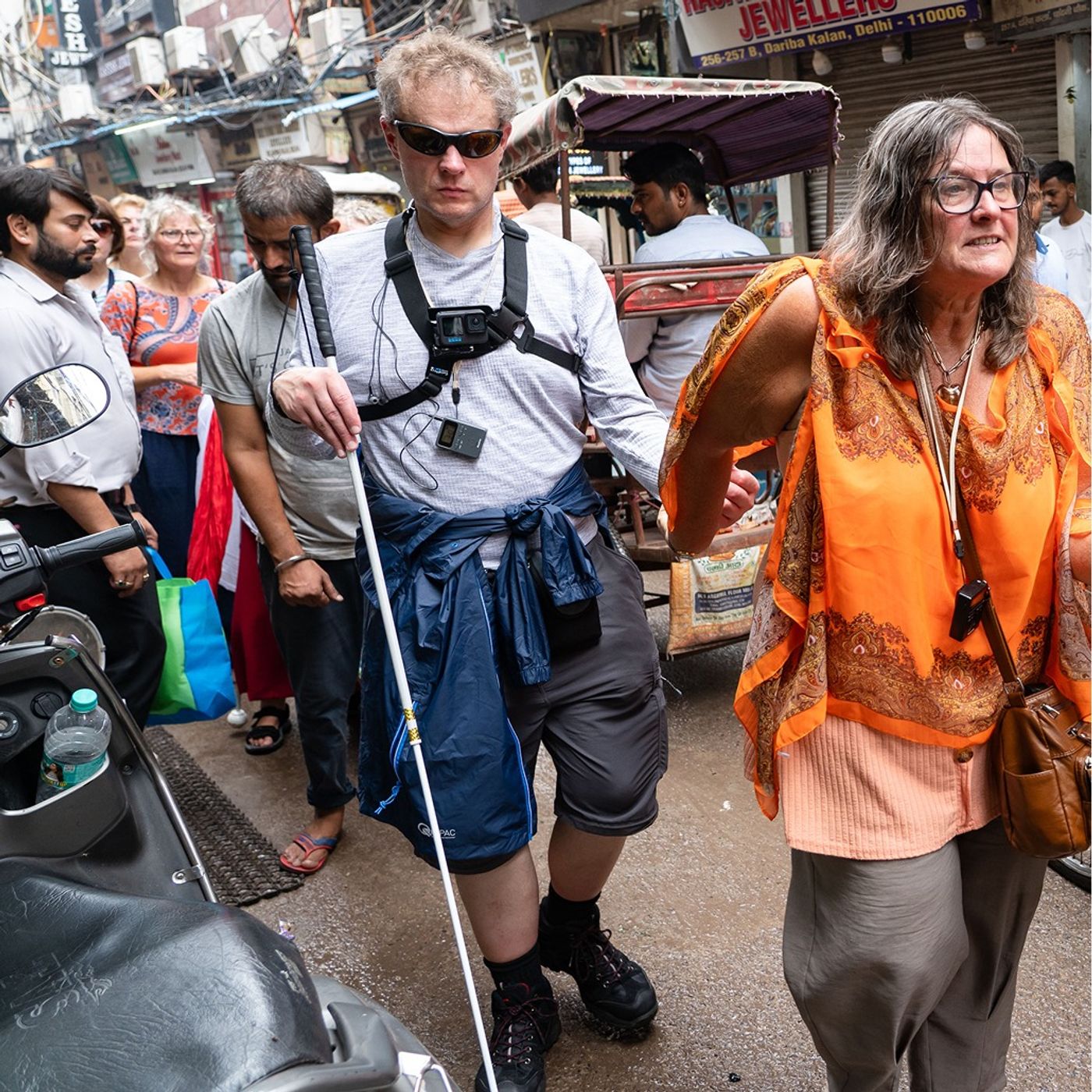
但我的同事安迪·艾萨克森,一位出色的摄影师和作家,最近和一群盲人旅行者一起出行,这直接挑战了‘我们主要通过眼睛认识世界’这一观念。
But my colleague Andy Isaacson, an accomplished photographer and writer, recently took a trip with a group of blind travelers that directly challenged the idea that we best understand the world through our eyes.
今天,安迪跟我们聊聊那次旅行,以及那些看不见世界的旅行者所揭示出的更深层的体验。
Today, Andy talks to us about that trip and about the deeper layers of experience that are revealed by travelers who cannot see.
今天是5月24日,星期天。
It's Sunday, May 24.
安迪·艾萨克森,欢迎来到《每日新闻》。
Andy Isaacson, welcome to The Daily.
非常感谢。
Thanks so much.
你为了工作走遍了世界各地。
You have traveled all over the world for your work.
你为《纽约时报》报道过地球上每一个大洲。
You've reported for The Times from every continent on Earth.
是的。
Yeah.
我得说,这听起来简直是世界上最浪漫的工作。
And I have to say, that sounds like the most romantic job in the universe.
你经常听到别人这么说吗?
Do you hear that all the time?
我听到的是‘理想工作’。
I hear dream job.
这确实是我梦寐以求的工作。
It certainly was my dream job.
真的吗?
Was it?
是的。
Yeah.
我小时候就爱收集《国家地理》杂志,还有关于野生动物和世界历史的书。
I was the kid that collected National Geographic magazines and books about wildlife and world history.
后来我进入新闻行业,很大程度上是因为想亲眼去看看那些地方。
And I think once I got into journalism, a lot of my career was driven by a desire to see the world, to lay eyes on these places.
你能简单说说,在你实现这个梦想的职业生涯中,去过哪些地方吗?
Can you give us a brief rundown of some of the places you've been in that fully realized dream job career?
我去过南极。
I've been to the South Pole.
我离北极只差一点点距离。
I've been a few clicks shy of the North Pole.
我横穿了塔吉克斯坦。
I've been across Tajikistan.
我在南大西洋一个世界上最偏远的有人居住的岛上待了一个月。
I spent a month on the world's most remote inhabited island, which is in the South Atlantic.
那叫什么名字?
What's that called?
特里斯坦-达库尼亚。
Tristan Da Cunha.
你去过不少地方啊。
You've been around.
是的。
Yeah.
我一直都想在心里画一张世界的视觉地图。
And I think I just always wanted to create, in my mind's eye, a visual map of the world.
我想去这些地方。
I wanted to go to these places.
我想亲眼看看,这样就能在脑海中想象地球上的任何角落。
I wanted to see them with my eyes and be able to visualize anywhere on Earth.
就是能看着地图,
To, like, be able to look
把手指往某处一放,
at a map and put
就能看见那里,因为你真的去过那儿。
your finger somewhere and and and see it because you had seen it.
我觉得,推动我四处旅行的,就是想用照片填满地图上那些空白的地方。
And that's what I think drove a lot of my traveling life, was to be able to fill in the dark spots on the map with pictures.
好多年里,我每次从国外回来,朋友都会问我:那地方是什么味道?
For years, I would I would return from a trip abroad, and a friend of mine would ask me, what did it smell like?
我总是找不到一个有分量的回答。
And I always fumbled for a meaningful answer.
这让我开始想,自己到底错过了哪些更深层的体验。
And it made me wonder what kind of deeper layers of experience I was I was missing.
对。
Mhmm.
我的视觉是不是太主导了我的感受,以至于忽略了更丰富、更深刻的环境体验?
To what degree was I was my sight so dominating my experience that it was leaving out richer, deeper layers of or a fuller sense of place.
问题?
Question?
我试过几种不同的方式。
Well, I've tried it in different ways.
十七年前,我在苏黎世,去了世界上第一家永久性的全黑餐厅,服务员都是盲人或视力障碍者。
Seventeen years ago, I was in Zurich, and I went to the world's first permanent dark restaurant staffed by blind and visually impaired people.
你得把所有设备锁进储物柜,然后一位盲人服务员会出来,让你把手搭在他或她的肩膀上,由他带你进餐厅。
You have to put away all your equipment in a locker, and then the staff member comes out who's blind, you put your hands on his or her shoulder, they lead you into the restaurant.
对。
Mhmm.
十七年后的今天,我依然记得那个房间里的声音。
And I still remember seventeen years later, the sound of the room.
我记得番茄酱的味道。
I remember the taste of the tomato sauce.
我记得用意大利饺子戳到脸时那种感觉。
I remember how it felt when I stabbed my face with the ravioli.
这正好说明,当我们减弱某些主导感官时,会打开怎样的新体验,让感受变得更加丰富。
I think that just shows what happens when we dim certain dominant senses and what that can open up and and and and how that can enrich an experience.
所以我认为,当我们调动其他感官时,旅行的体验会丰富得多。
And so I think that goes to show just how much richer travel can be when you activate other senses.
比如炭火的气味,动物的气味。
To have the the charcoal smells, the the the the animal smells.
所以门是光滑的。
So the door is smooth.
你
You
能听到很多动静。
can hear a lot going on.
到处都很混乱,各种事情在不同方向同时发生。
There's a lot of chaos, a lot of different things happening in all different directions.
这个想法在我脑子里盘旋了一阵子。
So that idea was kicking around in my head for a while.
对。
Mhmm.
几年后,我听说了一家叫Travel Eyes的公司,他们把体验提升到了另一个层次。
And some years later, I learned about this company called Travel Eyes, which takes us to another level.
说说看。
Explain that.
他们让视障旅行者和视力正常的旅行者成为平等的同伴。
It pairs visually impaired travelers with sighted travelers as equal companions.
它的核心理念是,盲人旅行者能带来独特的视角,让旅程更加深刻,而视力正常的人则可以提供细节和描述
And its whole premise is that blind travelers can bring a perspective that deepens the experience, then sighted people can also provide details and descriptions
对
Mhmm.
还能帮忙指路
And help with navigation.
这样一来,双方就能共同拥有更丰富、更有深度的旅行体验
And together, they could have a deeper, richer travel experience.
人
Person.
你说得对
You're right.
视力正常的人往往只关注视觉,其他感官体验都只是顺便想想
Sighted folk just think about the sight, and all the other things are just afterthought.
对
Mhmm.
这家公司是由一个叫阿马尔·拉蒂夫的人创立的。
The company was founded by a man named Amar Latif.
他从小在格拉斯哥长大,18岁时因视网膜色素变性而失明。
He was raised in Glasgow and lost his sight at 18 due to retinitis pigmentosa.
你知道吗,我一觉醒来,就什么也看不到了。
You know, I woke up, and I basically couldn't see.
我这才明白,我真的失明了。
And I realized that this was it, that I was now blind.
周围的人都说这事我干不了,那事我也干不了。
And people all around me kept saying that I couldn't do this and I couldn't do that.
刚开始我真信了,心里特别低落。
And at the beginning, was believing it, and it was getting me really down.
我就像被关在了自己的脑子里。
So was a prisoner in my own head.
而且
And
他不愿被这些限制束缚,于是逼着自己去旅行。
He didn't wanna live with those limits, so he pushed himself to travel.
他去加拿大读书,就是在那里,他爱上了旅行。
He went to Canada for school, and that's where the the travel bug bit him.
对。
Mhmm.
那是我生命中最棒的一年。
That was the most amazing year of my life.
我学到了很多关于这个世界的事。
And I learned so much about the world.
我明白,只要你敢突破自己的界限,你的世界就会变得更广阔。
And I learned that if if you dare to push your limits, you know, your world becomes bigger.
对。
Mhmm.
毕业后,他成了一名年轻的专业人士。
Then after graduate Became a young professional.
他终于有了闲钱可以去旅行了。
He finally had disposable income to do travel.
我手头有余钱可以花。
I had money to spend.
我想去看看这个世界。
I wanted to go and see the world.
但当我找正规旅行社时,他们都不让我参加他们的团体游。
But when I approached mainstream tour operators, all of them wouldn't let me book on their group holidays.
主流旅行社拒绝了他。
Mainstream travel companies rejected him.
他们不希望他独自参加旅行,必须有照护者陪同,还把他排除在徒步、滑雪等冒险活动之外。
They didn't want him to be on their trips without a a caregiver, and they excluded him from more adventurous activities like hiking and skiing.
巴黎,我想体验一次完全独立的旅行,不用依赖朋友或家人。
Paris, I wanted to have that independent experience when I didn't have to rely on my friends and family.
所以
So
于是我们决定打造一个全新的模式。
And so we decided to create something new.
我就想到了一个点子:让视力正常的人也一起来旅行。
Holiday, so I came up with the concept of, well, we'll just, you know, have sighted travelers come along.
他们也是客户,不是辅助人员。
They'll be customers as well.
他们不是来当
They're not gonna be
Travelized 这家公司让视障旅客和视力正常的人平等结伴出行,不是谁帮谁,而是真正的同行伙伴。
Travelized was a company that would allow blind travelers and sighted travelers to travel together as equal companions, not as clients and helpers, but as co travelers
对。
Mhmm.
这样双方都能更充分地体验这个世界。
So that both could experience the world more fully.
所以这个模式能让这两类旅客的旅行体验都变得更好。
So the idea is that this makes for a better travel experience for both of these groups.
这可不是什么慈善项目。
It wouldn't be a charity.
这是一种旅行体验的相互交融。
It would be a kind of cross pollination of travel experiences.
没错。
Yeah.
通过提供一种多感官的旅行体验,不仅能让视障旅客受益,也能让明眼旅客充分调动五感,从而获得更深刻、更丰富的旅行感受。
In providing a multisensory travel experience, which could benefit, obviously, the visually impaired travelers, it would also engage all five senses of the sighted travelers and, in turn, provide a deeper, richer travel experience for them.
而且还会让他们开始反思自己的生活。
And then it makes them think about their own life as well.
它能让人换一个角度看问题。
And, you know, it gives them a a different perspective.
视角。
Perspective.
对。
Mhmm.
给他们带来灵感。
Gives Gives them them inspiration.
灵感。
Inspiration.
我旅行到某个阶段时,不再那么在意去一个新的地方,而是更想用不同的方式去体验一个地方。
I'd reached a point in my traveling life in which I was less interested in traveling to a new place, but traveling to a place differently.
Travel Eyes 正好提供了这种可能。
And Travel Eyes offered the promise of that.
它带来了一种全新、不同、更沉浸式的旅行体验方式。
It offered the promise of a new, different, more immersive way of experiencing a travel destination.
于是我翻开了目录,看到他们有一趟去印度的行程,心想:还有什么地方比地球上的这个最富感官刺激的地方更适合体验这种旅行方式呢?
So I flipped the catalog and I saw that they had a trip to India and I thought, what better place to experience this form of travel than the most multisensory place on earth?
在我们面前,
In front
一只孔雀正拖着长长的尾羽跑过马路。
of us is a peacock with with one of those, like, really long tails that is running across the road.
这是
It's
我们将在广告之后,详细听听你去印度的这次旅行。
And we're gonna hear all about this trip that you took to India right after the break.
一些
Some
我写的一些歌,是从钢琴上开始的。
songs that I've written, I started on the piano.
《我想要的圣诞节礼物》就是这样写出来的。
That happened with All I Want For Christmas Is You.
如果你还没听出来,那就是玛丽亚·凯莉。
If you couldn't tell, that is Mariah Carey.
我是约翰·卡拉蒙尼卡,纽约时报《30位最伟大的在世美国词曲作者》项目的评审之一。
I'm John Karamonika, one of the critics behind The New York Times' 30 Greatest Living American Songwriters Project.
我们采访了名单上的一些词曲作者,包括泰勒·斯威夫特,她已经很久没有接受过这样的视频采访了。
We interviewed some of the songwriters on our list, including Taylor Swift, who hasn't sat for a video like this in a long time.
这些可不是普通的对话。
These are not ordinary conversations.
你将看到这些视频,深入了解那些难得一见的创作心法。
You're gonna watch these videos and learn about intimate approaches to craft in ways that you rarely have access to.
我妈妈给我买了一个笔记本,我写得特别小,就是不想让人看到我写的东西。
My mom had got me this notebook, and I was just writing it really small because I didn't want anybody to read what I was writing.
明白了。
Okay.
Jay Z 年轻时的笔记本。
Jay Z's teenage notebooks.
我真想看看那些东西。
I need to see those.
免费观看所有访谈视频,了解更多关于《纽约时报》‘30位在世最伟大美国词曲作者’项目的详情,请访问 nytimes.com/30greatest,或在应用内查看。
Watch all the video interviews for free, and check out the entire 30 greatest living American songwriters project @nytimes.comslash30greatest or in the app.
也欢迎告诉我们,你是否认同我们的选择。
And let us know if you agree with our picks.
我打赌你不会。
I bet you won't.
安迪,我们现在听的是什么?
Andy, what are we listening to?
在这儿。
Here.
这是老德里的喧嚣声。
This is the cacophony of Old Delhi.
我们正穿过老德里。
We're moving through Old Delhi.
我们走在坑洼不平的路面上。
We're navigating uneven pavement.
我们得避开三轮车。
We're dodging rickshaws.
有人凑上来想向我们推销东西。
People coming in to try to sell us things.
牛在人行道上慢悠悠地走着。
Cows walking along the sidewalk.
喇叭声。
Horns.
我正和一位名叫丹尼尔的盲人一起穿行在这片区域,他轻轻扶着我的胳膊。
And I'm moving through this environment with a visually impaired man named Daniel gently holding my elbow.
我的任务是带他安全地穿过德里的街道,并向他描述我看到的景象,让他能感受到我们正经过的环境。
My role is to guide him safely around the streets of Delhi and describe to him the visual details I see to give him a picture of of what we're passing through.
看。
View.
它位于一个长长的广场尽头,旁边有个反射水面的水池。
It's it's it's at the end of a long kind of, sort of plaza with with with a with a a a reflective pool.
与此同时,丹尼尔正用自己的感官去理解印度。
Daniel, meanwhile, is interpreting India through his own sensory experience.
对。
Mhmm.
是的。
Yeah.
我的意思是,对我们印度人来说,你走过那里时,会先穿过一个入口,接着进入某种门厅或类似的地方,然后又到另一个门,最后来到一片开阔的空间。
I mean, for us, for for Indian peoples, you'd be walking through that and you'd the scene, you'd sort of walk through an entrance, you'd come into some sort of antichain door or whatever, and then you'd come to another one, and then, again, you're a big open space.
对。
Yeah.
你身处一片开阔的空间。
You're in a big open space.
我在描述这些视觉细节时注意到,我特别关注那些默默定义一个地方的平凡元素。
And and What I noticed as I was describing these visual details is I was focusing on those sort of prosaic elements that quietly define a place.
那些你平时可能根本不会留意的普通事物。
Those unremarkable things that you might ordinarily pass over.
黑白相间的路缘石。
The black and white painted curbs.
路边小贩把薯片袋子像彩色珠子一样挂在摊位前的样子。
The way that roadside vendors displayed their potato chip bags over the front of their stands like colored beads.
整整齐齐的车道标线,可谁都不当回事。
The neat lane lines that were universally ignored.
这让我变得更加善于观察。
It was sharpening my noticing.
当我描述这些视觉细节时,我自己对印度的印象也变得越来越鲜活。
And as I was describing these visual details, I was gaining a more vivid impression of India myself.
之后
After
德里之后,你们接下来去了哪儿?
Delhi, where did you all go next?
从德里,我们去了阿格拉的泰姬陵。
From Delhi, we went to the Taj Mahal in Agra.
明白了。
Okay.
现在我们来到了这座纪念性建筑的内部核心区域。
So now we're in this the the inner sanctum of the of this entry monument.
那天,我被安排和一位新的视障旅行者搭档,Travel Eyes 称他们为 VI。
On that day, I was paired with a new visually impaired traveler or VI as Travel Eyes calls them.
对。
Mhmm.
他叫卢克。
And his name was Luke.
地面是起伏的。
The floor is undulating.
材质摸起来挺平滑,但不硬。
His texture is smoothish, but not tough.
我们穿过安检,和其他游客排起队,等着拍照。
We make our way through security, and we line up with all the other tourists angling for photographs.
你试试看能不能描述出来。
See what you can do.
我试着给卢克描述这个世界最著名的视觉景象之一。
And I attempt to describe to for Luke one of the most iconic visual pictures in the world.
对。
Mhmm.
泰姬陵的日出。
Sunrise at the Taj Mahal.
大概一千米远。
Maybe a thousand meters.
我们面前的倒影水池。
The reflective pools in front of us.
那是一座美丽的白色大理石建筑,背景是随着日出渐渐变亮的天空。
It is a gorgeous white marble monument set against a ever whitening sky from the sunrise.
他让我用他的GoPro相机给他拍几张照片。
It has Luke asked me to take photos of him with his GoPro camera.
对。
Mhmm.
你能给我框出个画面吗?
Can you frame that for me?
是的
Yeah.
然后他轻轻扶着我的胳膊,一只手托着我的肘部,另一只手拿着拐杖,我们慢慢在园区里走着。
And then he held my arm gently, my elbow with with one hand and his cane in the other, and we walked the grounds.
咱们往前走几步,就在这儿往下走一步。
Let's walk a little forward here, and we're gonna take a step down right here.
坡度挺陡的。
It's quite steep.
对。
Yep.
这
The
地面相当平整。
ground is, quite level.
这全是纯大理石。
This is all pure marble.
我当然能认出这个,但穿上这双鞋套后,脚底的触感就弱了不少。
I can tell this one, certainly, but I've lost some tactile sort of feedback with these foot coverings on.
感觉特别奇怪。
It's really weird.
好像有鸟在那儿。
There's, birds, I think.
它们大概是树吧。
They're roughly, believe, trees for
我看到一块牌子,上面写着:别靠近猴子,别和猴子对视,别逗弄或激怒猴子,别拍照。我当时真把这指示当回事了。
I'm looking at a sign that says, don't go neared monkeys, don't make direct eye contact with monkeys, don't tease or irritate monkeys, and don't take I was trying to take the assignment very seriously.
我总觉得,卢克对泰姬陵的印象,全靠我能不能把这儿描述清楚。
I really felt as though Luke's impression of the Taj Mahal rested with how well I could describe this place.
双手完全抬高。
Rise entirely in your hands.
所以我努力不辜负这份期待。
So I tried to rise to the occasion.
卢克,你把头歪一下
Luke, if you look tilt your head
抬头看。
up facing up.
对。
Yeah.
你正对着泰姬陵的正面看。
Are looking straight up at the facade of Taj Mahal.
我现在把你的手放在建筑的外墙上。
So I'm gonna put your hand on the facade of the building.
是的。
Yeah.
这些就是他之前提到的镶嵌宝石。
These are the inlaid precious stones that he was talking about.
有些不一样。
There's some differences.
比如这张床,表面特别亮。
For example, this bed here is quite glossy.
我猜这应该是那种镶嵌的宝石之一。
I assume that's probably one of the inlaid stones.
而且是绿色的。
And it's green.
对。
Yeah.
各种颜色。
Colors.
我们
We
现在正靠近陵墓的内室
are now in the inner approaching the sort of inner chamber of
了。
the tomb.
是的
Yeah.
你说得对。
You this is right.
这里回声很大,都是人声反射出来的。
This is you're getting a lot of echo reverb from people's voices.
是因为这个拱顶天花板吗?
Is that like your vaulted ceiling?
对。
Yes.
这个拱顶天花板是的。
Bubba's is a vaulted ceiling Yeah.
在这个前厅往上
In this antechamber up
再越过这里的门槛。
and over a threshold here.
啊,明白了。
Ah, got it.
声音变大了。
The sound has increased.
这简直像合唱一样。
This is very It's like a chorus.
我们现在
We're now
来到了泰姬陵最内层的殿堂。
in the innermost chamber of the Taj Mahal.
是的。
Yeah.
这声音简直要把我们压垮了,翻了好几倍。
They they are killing us double the triple.
对。
Yeah.
你感觉就像自己完全置身于音箱里面一样。
You get you get it's almost like you're inside the speaker.
我听到有人在那边唱歌,你听一下。
I heard somebody singing over to the Just try
到
to in
就在正前方,稍微偏右一点,或者正对中心的位置。
front sort of over to the right, or in front of the center.
现在我们要穿过一道狭窄的门廊了。
So now we're gonna now we're going through a narrow threshold Yo.
就是我们刚才进来的地方。
From where we came.
这是木制的走道,铺在大理石地面上。
This is a wooden surface that's kind of a boardwalk that they've built over the marble Uh-huh.
地面。
Flooring.
是的
Yeah.
而且
And
我觉得,慢慢穿过这片环境让我受益匪浅。
I think I was benefiting from moving slowly through the environment.
引导一位视力障碍者行走,让我放慢了脚步,也注意到了更多细节。
The experience of guiding a blind traveler allowed me to slow down and to notice more.
它让我能真正去体会和感受这一切。
It allowed me to to to savor it in a way.
我们经过的时候,你能感觉到阳光照在脸上吗?
Can you feel the sun on your face as we pass by?
是的
Yeah.
这些是那种格子状的大理石
These are the kind of latticed marble
我们现在看的是什么?
What's this we're looking at here?
我们眼前的是亚穆纳河。
What what we're looking at is the Yamuna River.
是的。
Yeah.
它就是这条
It's it's this
一条宁静优美的河,从泰姬陵的背面流过。
beautiful, placid river that runs along the backside of the Taj.
你前面感受到的是什么?
What does it what do you sense in front of us?
是一片开阔的空间。
It's wide open space.
它曾经环绕着流淌,我感觉到
So it was running around, and I felt
她脚上戴着脚链,脚踝上也戴满了手镯。
It's a child wearing bangles on her on her feet and around her ankles.
她转过身去,阳光洒在泰姬陵洁白的建筑上,衬着湛蓝的天空,格外耀眼。
And just turning her back around, and and now just bathed in sun is the whiteness of the Taj Mahal, like, set up against a blue sky.
第二天,我被安排和一个叫坎迪的人搭档。
So the next day, was paired with someone named Candy.
你的视力障碍具体是什么情况?
What what what what is the specific, like, nature of your visual impairment?
到目前为止,我完全看不见了。
For me, at this point, I don't have any vision.
我装的是假眼睛。
I have prosthetic eyes.
明白了。
Mhmm.
我问坎迪她希望别人怎么描述场景,她说,那些地方的概况根本吸引不了她。
And Candy told me when I asked her what what she wants descriptions of, she said, the whole Sites thing doesn't really interest me.
我更想听你说说印度的真实面貌。
I'm more interested in hearing about the reality of India.
这得看是什么情况。
Depending on what it is.
我喜欢听人怎么描述那些人,比如他们在做什么,对。
I like descriptions of the people, like, what they're doing Yeah.
哪怕不是什么特别的场景,比如他们只是躺在长椅上之类的。
Even if it's not the most you know, even if they're, like, laying on a bench or something.
我觉得这类细节反而更打动人,不像什么‘这儿有棵树,叶子是黄的’这种。
That part, I find, you know, has, like, more of a impact, I guess, than, you know, there's a tree over here with yellow leaves and
于是我朝窗外看了看,指出了印度更接地气的一面。
So I peered out the window and I pointed out the grittier aspects of of India.
晾在公寓楼外的衣物,还有路边男人用金盏花串成花环准备供奉寺庙。
The laundry fluttering outside of apartment buildings, and the men on the side of the road threading marigold garlings for temples.
Candy告诉我,她对印度最深刻的印象之一。
And Candy told me one of the most vivid impressions of India that she had had.
挺有意思的。
Kinda interesting.
有个小男孩走过来,轻轻拍了拍我的腿,我伸手一摸,想看看是什么,感觉那手特别粗糙,分不清是男孩还是女孩,但那双手真的又粗又硬。
This one kid little kid came up and, like, patted my leg, and I reached out to see what it was, and I felt I I don't know if it was a boy or a girl, but their hand, it was just really rough.
皮肤特别粗糙。
Like, the skin was rough.
你通常会觉得孩子皮肤嫩、手也软,可这双手却这么粗糙,我一直在想,一个孩子怎么会有一双这样的手。
And sometimes you would think, you know, children tend to have softer skin and softer hands, and this was I just thought about, you know, a child, like, having rough such rough hands.
他们到底过着什么样的生活?是什么让他们的手变得这么粗糙?
And I thought, how have they lived and what have what's made their hands so rough?
他们经历过什么?
Like, what have they been through?
我被这个细节深深触动了。
I was really struck by that.
我觉得特别深刻,对她来说,通往印度的那扇门,竟然是通过这样一个触碰的瞬间打开的。
It felt very profound to me that this portal, this doorway into India for her was crossed by this moment of touch.
就在那一刻,她完全被带入了这个地方的人性之中。
In that moment, she was totally transported into the humanity of this place.
人们都是真实的。
Like, people are just real.
他们就是真实的存在。
Like, they're real.
他们有真实的情感、情绪,还有生活,
They have real feelings and emotions and, you know, lives and
只是
Just
整个
the whole
你现在从印度回来了,我特别想了解你是怎么消化这段经历的。
Now that you're home from India, I really wanna understand how you process this entire experience.
不过在那之前,我们先插个短休息。
But first, we're gonna take a very quick break.
所以,安迪,这次印度之行结束后,作为记者,你不可避免地坐下来试图理清这一切并写下来,你最终明白了什么?
So, Andy, when this trip to India was over, and as a journalist, inevitably, you sat down to make sense of it all and write about it, What did you come to understand?
没有任何单一视角或对一个地方的单一印象能完整呈现全貌。
That no single viewpoint, no single impression of a place captures the full picture.
这让我想起一个著名的印度寓言:有一天,我们在穿越拉贾斯坦沙漠时,导游跟我们讲了六个盲人第一次遇到大象的故事。
And it made me think of this well known Hindu parable that one day our as we're crossing the Rajasthani Desert, our tour director told us about six blind men who encountered an elephant for the first time.
第一个盲人把手放在大象的侧面。
The first blind man kept his hand on the side of the creature.
大象光滑又坚实,像一堵墙。
An elephant is smooth and solid like a wall.
他说
He said
每个人摸到的都是大象身体的不同部位。
And they each touch a different body part.
一个摸到象鼻,以为那是条蛇。
One touches its trunk and imagines a snake.
另一个摸到大象的耳朵,说大象像一块飘在空中的地毯。
One touches the floppy ear and describes an elephant as like a flying carpet.
第三个盲人摸到了大象的长牙。
The third blind man touched the elephant's pointed tusk.
他想,我没错。
I was right, he decided.
大象像长矛一样尖锐。
An elephant is sharp as a spear.
他们都争执不休,每个人都坚信自己的感受才是对的。
And they all argue, each convinced that his perception is right.
国王说:
The king.
你们每个人只摸到了一部分。
Each of you touched only one part.
也许你们可以把这些部分拼起来。
Perhaps you all will put the parts together.
你们就会看到真相。
You will see the truth.
现在让我来
Now let me take
这个道理是,每个人对世界的体验都不一样,任何单一的角度都无法展现全貌。
And the idea is that everyone experiences the world differently, and no single viewpoint can capture the whole picture.
没错。
Right.
理解他人的视角,是看清更完整真相的一部分。
And understanding others' perspectives is part of seeing the fuller truth.
和视障旅行者一起体验印度,听他们描述自己的感受,让我对印度有了更全面的认识。
Experiencing India alongside of the visually impaired travelers and having them describe their perceptions gave me a fuller picture of India.
是的。
Mhmm.
正像这个寓言说的那样。
Just like the parable says.
展开剩余字幕(还有 59 条)
正像那个寓言说的那样。
Just like the parable says.
我记得有一次,在泰姬陵,一位视障旅行者描述了他在陵墓里听到的一种嗡鸣声。
There was a a moment in which I remember one of the VIA travelers at the Taj Mahal described this om that he heard in the mausoleum.
泰姬陵里头,因为人们彼此交谈,空气中确实有一种持续的嗡鸣音,像是‘嗡’的音调。
The the the generic in the Taj Mahal, it has, like, an om note pitch, an om pitch just from people talking to each other about the various various things.
他说,大多数视力正常游客可能根本不会注意到泰姬陵的这一面。
And he said most sighted tourists would probably never have experienced that aspect of the Taj Mahal.
他们根本听不到那个空间里的回响,因为光顾着拍照了。
They would have never really heard the resonance of that chamber because they're too busy taking photographs.
我想知道,你觉得这会怎样改变你未来的旅行方式?
I wonder how you think this will change how you travel in the future.
作为一个视力正常、主要依赖视觉的人,我不觉得我能完全压抑这种视觉主导,但这次经历确实让我更深刻地意识到,去开启其他感官有多重要——比如去感受空气的质地。
As a sighted person and so visually dominant, I don't imagine that I'll be able to dim that sense, but I think it certainly gave me a new and deeper appreciation for turning on my other senses, moments in which I could feel what is the texture of the air.
是的。
Mhmm.
这让我想起阿玛尔·拉蒂夫曾经跟我讲过,盲人和视力正常的人在旅行体验上的区别。
It reminds me of something that Amar Latif once told me about the difference between how blind and sighted people experience travel.
就是那个创办了Travel Eyes的人。
This is the guy who founded Travel Eyes.
是的。
Yeah.
我觉得,作为盲人,旅行就像在读一本原著。
It's a bit like I would say that as a blind person, traveling is like almost like the book version.
你跟我说过,对盲人来说,旅行就像读书一样。
For blind travelers, you told me it's like reading a book.
因为你得在脑子里自己想象那些画面。
You know, because you you're imagining things in your own head.
你会听到一些描述,然后在心里把它们构建出来。
So you get these descriptions, and then you're imagining them.
对视力正常的人来说。
For sighted travelers.
就像是看电影一样。
It's like, you know, the film version.
对。
Mhmm.
更像是在看电影。
It's more like watching a film.
看这部电影。
Watching the film.
对。
Mhmm.
有时候,书里的版本反而更好。
You know, maybe the book version sometimes better.
视力正常的人更依赖眼前的视觉信息,比如建筑、颜色和风景。
Sighted people tend to rely on immediate visual cues, architecture, color, landscape.
所有这些对他们来说,就像屏幕上的电影一样直接呈现。
It's all rendered for them like a movie on a screen.
对。
Mhmm.
对于盲人旅行者来说,他们对一个地方的体验更具诠释性。
For blind travelers, they experience a place in a more interpretive way.
这是一个更具诠释性的过程,靠描述来激发想象力。
It's a more interpretive process in which descriptions feed imagination.
对。
Mhmm.
世界通过声音、触感、气味和空间感知这些层面,缓缓向你展开。
The world reveals itself more slowly through these layers of sound and touch and scent, spatial awareness.
正是这些构成了对一个地方的整体印象。
And that's what builds the impression of a place.
很有趣。
Fascinating.
我始终会更多地保留那种像电影一样的地方印象。
I'll always have more of that film version of a place.
没错。
Right.
这还用说吗?
How could you not?
但我觉得这次经历给了我钥匙,让我能更深入地理解那种书里的版本。
But I think this experience gave me the tools to unlock more of that book version.
人们点燃的香,或者他们正在吃的晚餐,你能闻出他们做的达尔和我们做的有什么不同。
The incense that people might be burning or just what they're having for dinner, you can smell their version of dahl compared to our version.
回声表明拱顶大概有六七米高。
The reverberations would suggest the arch is perhaps 20 feet up 30.
有点难说准。
It's a bit hard.
所有传感器综合起来,构建出一个完整的感知图景,包含的不只是视觉,还有骑行时的其他感受。
All the sensors together build a cohesive image, comprising more elements than just sight because riding
我确实喜欢在街上这样骑行。
I do, like, riding in that on the street.
我加入。
I'm in
在凸起的前部,还有所有那些部分。
the front of the bump and everything.
这简直像赛车一样,主要是因为工程师的设计。
It's almost like a race car because it because of the the engineer
那边有东西在刮擦,好像有人在刷东西或者打扫什么。
There's something scraping over there as if somebody's brushing or cleaning something.
对。
Yeah.
是个男人在清理鸟粪。
It's a guy removing the bird
粪便。
poop.
安迪?
Andy?
非常感谢。
Thank you very much.
我们真的很感激。
We appreciate it.
谢谢你,迈克尔。
Thank you, Michael.
今天的节目由亚历克斯·巴隆制作,卢克·范德普洛格协助。
Today's episode was produced by Alex Barron with help from Luke Vanderploeg.
剪辑由温迪·多尔负责。
It was edited by Wendy Doerr.
制作经理是弗兰妮·卡托特,制作协助来自达莉娅·哈达德。
Our production manager is Frannie Kartoth, and production assistance came from Dahlia Hadad.
本集由丹尼尔·拉米雷斯负责技术制作,原创音乐由丹·鲍威尔和玛丽安·洛萨诺提供。
This episode was engineered by Daniel Ramirez and features original music by Dan Powell and Marian Lozano.
特别感谢阿利舒巴·埃图贝、黛安·王和阿莉西亚·哈里迪萨尼·古普塔。
Special thanks to Alyshuba Etyube, Diane Wong, and Alicia Haridhisani Gupta.
今天的《每日新闻》就到这里了。
That's it for The Daily on Sunday.
我是迈克尔·巴博罗。
I'm Michael Barbaro.
明天见。
See you tomorrow.
关于 Bayt 播客
Bayt 提供中文+原文双语音频和字幕,帮助你打破语言障碍,轻松听懂全球优质播客。