本集简介
双语字幕
仅展示文本字幕,不包含中文音频;想边听边看,请使用 Bayt 播客 App。
我正在开启跨平台对战。
I'm opening up cross play.
我一直在和丹对战,他是《纽约时报》的同事。
I've been playing against Dan, my colleague at The New York Times.
猫下了另一手。
Cat's played another move.
呃。
Ugh.
她用了‘stoop’得了36分。
She played stoop for 36 points.
我手里有个Z,值10分。
I've got a z, which is 10 points.
我猜‘Tenga’不是一个单词。
I'm guessing Tenga is not a word.
我们来看看。
Let's see.
Tenga 是一个单词。
Tenga is a word.
哦。
Oh.
丹完成了他的最后一轮。
Dan played his last turn.
我们来看看谁赢了。
Let's see who won.
比分非常接近,但我赢了。
It's so close, but I did win.
Crossplay,纽约时报游戏推出的首款双人文字游戏。
Crossplay, the first two player word game from New York Times games.
今天免费下载吧。
Download it for free today.
当你看到一场本可以赢的游戏时,真是令人沮丧。
It's devastating when you see a game that you could have won.
二一零。
Two one zero.
全部合一。
All in one.
《纽约时报》,我是迈克尔·比尔巴罗。
The New York Times, I'm Michael Bilbaro.
这是《每日新闻》。
This is The Daily.
自从美国将人类送上月球将近六十年了。
Nearly six decades after The United States put men on the moon.
这是人类的一小步,却是人类的一大步。
That's one small step for man, one diathlete for mankind.
它正重返这一使命。
It is returning to that mission.
今天,这一过程中的重要一步将在佛罗里达州启动。
And today, a major step in that process will begin in Florida.
我的同事常肯在那里,他解释了为什么美国想要重返月球。
My colleague, Ken Chang, is there and explains why it is that The United States wants to go back to the moon.
今天是4月1日,星期三。
It's Wednesday, April 1.
肯,欢迎再次回到《每日新闻》。
Ken, welcome back to The Daily.
很高兴再次来到这里。
Good to be here again.
每当太空中发生重大而有意义的事件时,我们都会找你,而今天,如果天气允许,又将发生一件重大而有意义的事。
So we always turn to you when something big and meaningful is happening in space, and something big and meaningful is happening today, weather permitting.
那么,今天的星期三,天气允许这件重大而有意义的事情发生吗?
So does the weather permit this big and meaningful thing to happen on Wednesday?
希望如此,看起来条件不错。
Hopefully, it looks good.
天气预报说有80%的概率会顺利发射,但这也意味着有20%的可能性某些条件未能完全满足。
The forecast says 80% chance that it's gonna go, but that means there's 20% chance that something doesn't quite clear up.
对。
Right.
好的。
Okay.
这些概率相当不错。
Those are pretty good odds.
先描述一下这次任务吧。
So start by describing this mission.
这是五十多年以来,首次有人接近月球。
This is the first time that anyone's going close to the moon in more than fifty three years.
哇。
Wow.
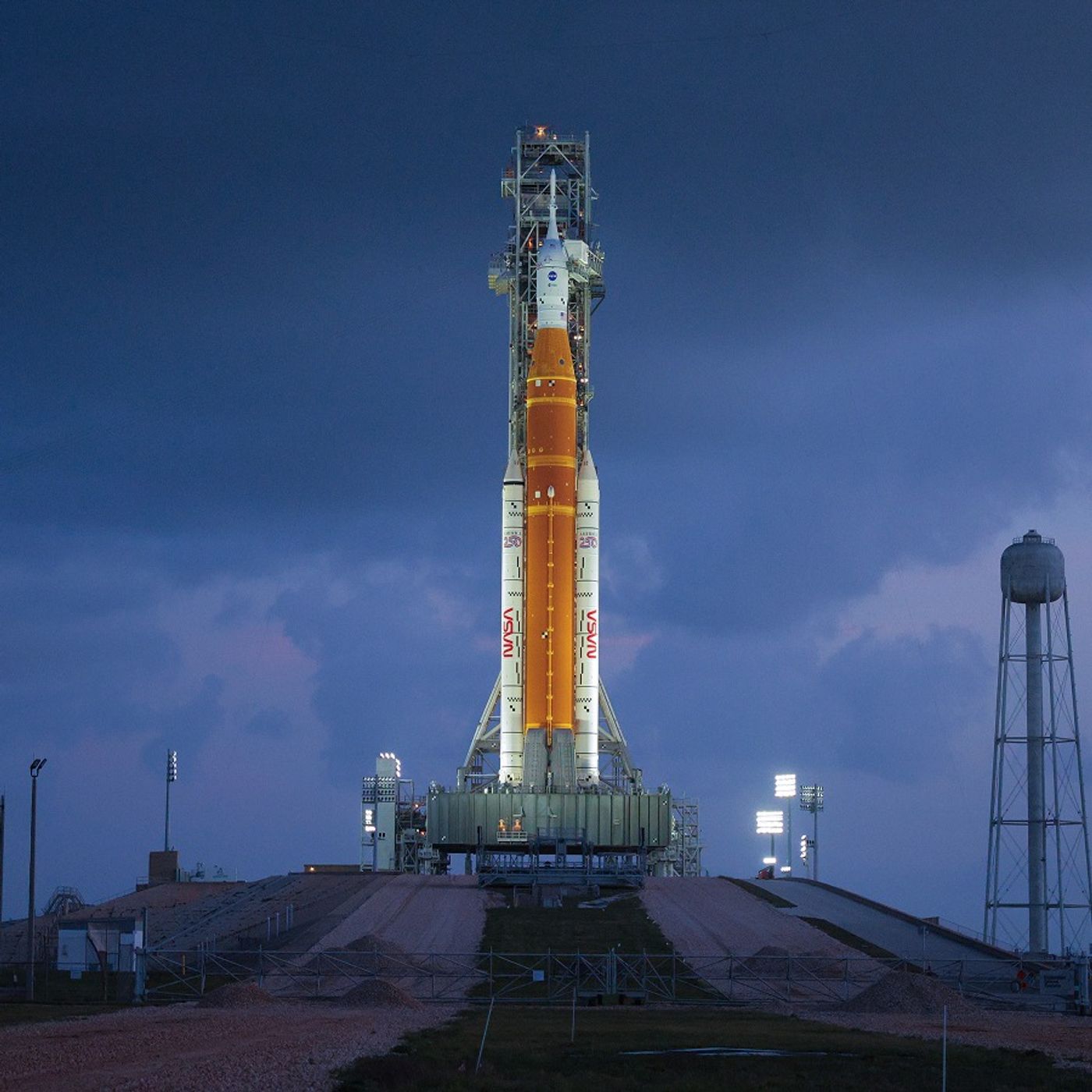
四名宇航员将从佛罗里达州的肯尼迪航天中心发射升空,前往月球。
Four astronauts are gonna be blasting off from Kennedy Space Center in Florida, and they're going to head out to the moon.
他们不会着陆。
They're not gonna land.
他们只是绕月飞行一圈,然后直接返回地球,十天后在太平洋溅落。
They're just gonna swing around the moon and then head straight back to Earth and splash down in the Pacific Ocean ten days later.
为什么呢?
And why?
我的意思是,正如你刚刚提到的,大约50年前,美国宇航员就已经做过同样的事。
I mean, as you've just hinted at, some 50 ago, astronauts from The United States did that very thing.
那我们为什么又要重做一遍呢?
So why are we doing it again?
这次在名为阿尔忒弥斯的计划中,目标不仅是让人类重返月球,还要在月球上长期驻留。
So the goal this time in this program, which is called Artemis, is to get people back to the moon, but also stay there this time.
因此,这个计划被分成了几个阶段,因为登月实在太难了。
And so this program is broken up into pieces because it's really hard to land on the moon.
你不想把所有困难的事情一次性做完。
You don't wanna do all the hard things all at once.
你希望把任务拆分成步骤,一步步来。
You want to break up into pieces, so you do step by step.
对。
Right.
所以2022年的阿尔忒弥斯一号任务,将这艘宇宙飞船送往月球,并在没有宇航员的情况下在月球附近停留了数周。
So Artemis I back in 2022, it sent this spacecraft to the moon and spent several weeks there without any people aboard.
这证明了基本设备是可行的。
So that's how it established that the basic machinery works.
现在我们进入了下一步,也就是阿尔忒弥斯二号任务。
Now we're on the next step, which is Artemis II.
这一次,飞船将搭载四名宇航员,这至关重要,因为本次任务的主要目标是测试生命支持系统。
This time, they're including the four people aboard, and that's critical because the main task of this mission is to test the life support systems.
如果没有真人产生二氧化碳、水分、排泄物等需要处理的物质,就不可能真正测试这些系统。
And it's impossible to test it without actual people producing carbon dioxide, producing water and poop and everything else that you need to clean up.
对。
Right.
这就是本次任务的内容。
So that's this mission.
第一步是,我们能否让飞行器绕月飞行?
Step one was, can we get an aircraft around the moon?
第二步是,我们能否让人类在这艘飞船上生存?
Step two is, can we get people on this craft to live?
是的。
Yes.
宇航员在这次任务中最重要的目标是不要死亡。
The biggest goal for the astronauts on this mission is to not die.
如果阿耳忒弥斯二号成功,NASA 就可以继续推进下一步,最终在几年内尝试将宇航员送上月球。
And if Artemis II succeeds, NASA can move on to the next steps, which will lead to attempts to land astronauts on the moon in a couple years.
好的。
Okay.
而且在
And at
这时候,我可能听起来像老生常谈,但为什么呢?
this point, I may sound like a broken record, but why?
我的意思是,我们为什么要重新做五十年前曾大张旗鼓做过的事情?
I mean, what is the rationale for trying to do this thing that we did with great fanfare fifty something years ago?
NASA表示,这次我们不会只是去一趟就抛在脑后。
What NASA says is that this time, we're not going to just go there and then forget about it.
这次将是建立月球基地的第一步,一个月球基地?
That this will be the first step to building a moon base to A moon base?
是的。
Yeah.
所以他们将开始部署发电设施和一些居住舱,让人们能在月球上停留数天、数周甚至数月。
So that they're going to start putting a power plant, some habitats to allow people to stay there for days, weeks, months.
最初,这很可能是一个科学考察站,就像我们在南极附近建立的那些一样。
So at first, it will probably be a scientific research station, much like what we have in Antarctica near the South Pole.
除此之外,人们将开始思考如何利用月球的资源。
Beyond that, people will start thinking about how we can take advantage of the moon's resources.
他们甚至可能开始尝试开采月球上可能存在的宝贵材料,比如氦-3。
They might even start trying to mine valuable materials that could be found there, such as helium three.
氦-3是什么?为什么我们要在月球上开采它?
And what's helium three, and why do we wanna mine it on the moon?
氦-3是氦的一种轻同位素,在地球上非常稀少。
So helium three is a light version of helium, and it's quite rare on Earth.
它在月球表面的含量稍多一些,这种氦同位素在未来聚变反应堆中可能非常有用。
It's a little bit more prevalent on the moon's surface, and this is a version of helium that could be very useful in future fusion reactors.
它还被认为对未来的量子计算机很有用,人们对这一点非常兴奋,因为它可用于人工智能以及其他领域。
It's also thought to be useful for future quantum computers, which people are very excited about because it could be used for artificial intelligence among other things.
而在地球上获取氦-3的成本大约是每磅300万美元。
And healing through on Earth costs roughly $3,000,000 a pound.
哇哦。
Wow.
所以如果你能从月球上获取哪怕一点点,就可能赚到钱。
So if you can even get a little bit from the moon, you could probably make them profit.
对。
Right.
因此,未来将是太空研究以及潜在的实质性商业采矿。
So what lies in the future is space research and potentially some serious commercial mining.
是的。
Yes.
这些想法仍属推测,但已经有一些公司正在计划开展类似的工作。
They're still speculative, but there are companies who are planning to do things along those lines already.
嗯。
Mhmm.
还有那些怀有科学梦想的人,他们想在月球背面建造一座大型射电望远镜,用来聆听宇宙的声音。
And then there's scientific dreamers who wanna do something like build a big radio telescope on the far side of the moon to listen to the universe.
聆听宇宙。
Listen to the universe.
是的。
Yes.
那里有来自大爆炸后数十亿年前的信号。
There's signals from just after the big bang billions of years ago.
但从地球上很难做到,因为我们已经用电视、手机通话、播客等制造了巨大的噪音。
But it's hard to do that from Earth because we've basically made things very noisy with TV, cell phone calls, podcasts.
但在月球背面,整个月球的厚度可以阻挡所有这些噪音。
But on the far side of the moon, you have the entire thickness of the moon blocking all that noise.
哇。
Wow.
这样你就能听到宇宙的其他声音了。
So you can hear the rest of the universe.
等等。
Wait.
让我确认一下我理解得对不对。
Just so I understand.
我们可以在月球背面建造一个巨大的监听站,那里一片寂静,能够听到宇宙诞生之初的古老声音。
We can build a giant listening post on the far side of the moon where it's dead quiet, and we could hear the ancient sounds of, really, the dawn of time itself.
差不多就是这样,这些声音几乎是大爆炸的回声。
Pretty much, these would be almost the echoes of the Big Bang.
哇。
Wow.
他们还希望利用月球作为测试平台,验证最终将应用于火星的技术。
And the other thing they wanna do is use the moon as a testing ground for technologies that they ultimately want to put on Mars.
这包括核能发电站、栖息地和生命支持系统,因为月球上的许多条件也正是未来在火星上必须面对的。
That would include nuclear power plants, habitats, life support systems, because many of the conditions on the moon are things you ultimately have to face on Mars as well.
所以,基本上,我们会利用月球及其环境和重力,来测试那些我们最终想在火星上部署的技术是否能在月球上先存活下来。
So basically, we'd use the moon and its conditions and its gravity to figure out whether something we eventually wanna have on Mars can first survive the moon.
是的。
Yes.
此外,还有一种浪漫的愿景,即人类将扩展到整个太阳系,不再局限于单一星球,而是有朝一日能在月球殖民地生活。
And then there's this romantic notion of humanity just spreading out into the solar system, that we are no longer just confined to one planet, but we can live elsewhere as well, someday on a moon colony.
但除此之外,还存在与中国在地缘政治上的竞争。
But on top of all that, there's also the geopolitical competition with China.
当然,我们希望在他们之前完成这一切。
And, of course, we want to do all this before they do.
对。
Right.
如果我们想要成为多星球物种,美国人希望成为第一个。
If we are to be a multi planet species, Americans would like to be the first.
是的。
Yeah.
第一个到达那里的人将决定太空商业的规则,我们将拥有月球上的最佳位置并控制资源等等。
The people who are there first are the ones who make the rules of how space commerce is conducted, We'll have the prime locations on the moon and control the resources and so on.
所以率先到达意味着成为主导者。
So being first means being the one who's in charge.
肯,你刚刚描绘的是一幅宏伟的未来图景,而这一切都寄托在四名宇航员身上,他们将在本周三数小时后从佛罗里达州启程前往月球。
Ken, what you have just laid out is a tremendous vision for the future, and all of it rests on the shoulders of four astronauts who are gonna be blasting off toward the moon in a few hours on Wednesday there in Florida.
没错。
True.
但那可能并不是他们此刻会想的事情。
But that's probably not what is gonna be on their minds.
记住,他们的首要任务是活下去。
Remember, their first job is staying alive.
如果他们做不到这一点,那么所有这些梦想将被进一步推迟。
If they don't do that, then all these dreams are pushed even farther into the future.
我们马上回来。
We'll be right back.
我是布莱恩·罗森塔尔。
I'm Brian Rosenthal.
我是《纽约时报》的调查记者。
I'm an investigative reporter at The New York Times.
我父亲是一名科学家。
My dad is a scientist.
我的职业生涯一直致力于科学教学与研究。
My career has been devoted to scientific teaching and research.
我记得小时候,我不太明白他每天在做什么,但现在我作为一名调查记者,我明白了。
I remember growing up, I didn't fully understand what he was doing every day, but now that I work as an investigative journalist, I do understand.
所以你必须从事实开始。
So you have to start with facts.
从这些事实中,会形成一个假设,然后你努力去验证这个假设。
From those facts, a hypothesis appears, and then you work on trying to test that hypothesis.
我也做同样的事情:获取文件、分析数据,并尽可能多地与人交谈,以揭开故事的真相。
I do the same thing, obtaining documents, crunching the data, and I talk to as many people as possible to get to the bottom of the story.
《纽约时报》在能够证明某事属实之前,不会发布任何内容。
The New York Times does not publish until we can prove that something is true.
最优秀的科学家之所以能够进行这种深入的研究,是因为他们获得了大学或政府的资金支持。
The best scientists are able to do that deep work because they receive funding from their university or from the government.
作为记者,我们依赖订阅者的资金支持。
We, as journalists, depend on funding from subscribers.
你可以通过订阅《纽约时报》来支持这种类型的工作。
You can support that type of work by subscribing to The New York Times.
肯,你能向我们介绍一下这四位宇航员吗?他们肩负着如此重大的责任,请从他们的角度描述一下这次为期十天任务的后勤安排。
Ken, can you introduce us to these four astronauts who have all this responsibility on their shoulders and describe the logistics of this ten day mission they're embarking on from their perspective?
是的
Yes.
指挥官是里德·韦斯曼。
The commander is Reed Weissman.
我们只需要去执行这次任务,并融入我们各自的一点个性。
We just need to go execute this mission and bring a little bit of each of our own personalities in.
他曾是美国海军的战斗机飞行员。
He's a former fighter pilot in the US Navy.
他曾在中东执行过两次部署,并在卸任前担任宇航员办公室主任,这使他得以被指派参与登月任务。
He served in The Middle East on two deployments, and he was the head of the astronaut office before he stepped down, which allowed him to be assigned to the moon mission.
昨晚我外出时,抬头望着月亮,心想下次我看到这片景象时,我们很可能已经绕过月球背面并返回了。
I was outside last night, and I was looking up up at the moon and thinking the next time I see this site, there's a good chance that we will have been around the far side and back.
关于他,还有一个细节要说明。
And there's also a point in detail about him.
他的妻子几年前去世了。
His wife died a few years ago.
他去月球意味着要离开女儿们十天。
Him going to moon means leaving his daughters behind for ten days.
嗯,
Well
因此,我希望这其中有一部分能超越人类航天的范畴。
And so I hope there's a piece of it that extends beyond human spaceflight as well.
维克托·格洛弗也是一名前海军飞行员。
Victor Glover, he's also a former naval aviator.
十年后,当下一个挑战来临时,也许我们可以回望此刻,说:嘿,伙计们。
Ten years from now when the next challenging thing happens, maybe we can look back on this and go, hey, guys.
还记得我们做过这件事吗?
Remember we did that?
我们曾完成过属于自己的飞行任务。
We we had our own wing shot.
还记得吗?
Remember?
而且这是全球性的。
And and it was global.
这是国际性的,我们是一起完成的。
It was international, and we did it together.
他是
He was the
第一位在空间站服役并延长驻留时间的黑人男性,现在他将成为第一位登月的黑人男性。
first black man to serve and extend his stay on the space station, and now he'll be the first black man to go to the moon.
接下来是克里斯蒂娜·科赫。
Next is Christina Koch.
我们每个人都无法完全胜任所被要求完成的宏大任务,但我们都能贡献自己的一部分,尽己所能。
None of us can be as big as what we're asked to do, but we can contribute the part and bring our best selves.
并团结一致去完成它。
And come together to do it.
她接受过电气工程方面的训练,在被NASA选为宇航员之前,曾参与NASA任务的地面工作。
She's an electrical engineer by training, and she actually worked on NASA missions on the ground before she was selected by NASA to become an astronaut.
她目前保持着女性单次太空飞行时间最长的纪录,长达328天。
And she now holds the record for the longest single spaceflight by a woman of three hundred twenty eight days.
这几乎整整一年。
So that's almost a full year.
我们所谈论的这些事情,其实并不是关于任何一个人的成就,而是更多地在庆祝我们所处的阶段。
All these, all these things that we talk about first are really not about any one individual's accomplishment, but more about celebrating where we are at.
最后,还有杰里米·汉森。
And finally, there's Jeremy Hansen.
他是任务中的加拿大人。
He's the Canadian on the crew.
你无法解决世界上所有的问题,但你可以影响你身边的一小部分。
You can't fix all the problems in the world, but you can influence, the little bit around you.
这将是第一次有非美国人前往深空。
It'd be the first time
那将是有史以来第一次非美国人进入深空。
that a non American has gone to deep space.
我们不知道即将做的事会产生怎样的连锁反应,但我们可以尽最大努力做好它,并在过程中保持快乐。
We don't know the ripple effects of what we're about to do, but we can do it well to the best of our ability and have joy while we're doing it.
而且,希望这能带来一点点贡献。
And, hopefully, that will make a small contribution.
他对这件事很有幽默感。
And he has a sense of humor about this.
他说,如果这次任务出了什么问题,NASA就可以怪加拿大。
He said, if something goes wrong on this mission, then NASA can blame Canada.
好的。
Okay.
这就是整个乘组。
So that is the crew.
跟我们聊聊他们接下来的十天吧,这四个人将一起经历这些。
Talk to us about their next ten days as they're going to experience it, the four of them together.
所以在发射前,他们会经历非常漫长的一天。
So they'll have a very long day before launch even.
他们将在发射前八小时醒来。
They'll wake up eight hours before launch.
他们需要穿上宇航服。
They have to get into their spacesuits.
他们会乘车前往发射台。
They'll be driven out to a launch pad.
他们将登上一座巨大的塔楼
They'll go up this huge tower
嗯哼。
Mhmm.
然后进入他们的飞船。
And enter their spacecraft.
这艘飞船被称为猎户座。
It's known as Orion.
然后他们会坐在那里大约四个小时,直到倒计时归零。
Then they'll be sitting there for about four hours until the countdown clock gets to zero.
八分钟后,他们就进入太空了。
And eight minutes later, they'll be in space.
哇哦。
Wow.
在太空中的第一天也会非常忙碌。
And that first day in space will also be quite busy.
他们不会立即前往月球。
They won't immediately go to the moon.
事实上,他们会先围绕地球进行两次环形轨道飞行。
In fact, what they would do is make two looping orbits around Earth.
他们这样做的原因是想利用这段时间检查飞船上的每一个系统,确保一切正常,然后再决定点火前往月球。
And the reason they're doing that is they wanna take this time to check out every little system on the spacecraft to make sure it's working before they make the decision to fire the engines to send them off to the moon.
基本上就是几次试飞。
Basically, couple of test flights.
对。
Right.
所以到了第二天,当他们点火前往月球时,月球距离地球约二十五万英里,因此需要一段时间才能到达。
So after day two, when they fire the engines to head to the moon, The moon is close to a quarter million miles from Earth, so it takes a while to get there.
是的。
Mhmm.
大概四天左右。
Basically, four days.
在这段时间里,他们将一直待在太空舱里,这个舱的空间大约相当于两辆小型货车。
And they'll be spending all this time in this capsule, which has about as much space as two minivans.
两辆小型货车。
Two minivans.
我这么说是因为我是个父亲,平时家里基本就靠一辆小型货车装所有人。
And I say this as a father that fills basically a minivan.
这点空间可真不够用。
That's not a lot of space.
实际上,太空中的空间比地球上稍大一些,因为你可以漂浮,能利用头顶上方的所有空间。
It's actually a little bit more than it'd be on Earth because you get to float around, so you can use all the space above you.
这还没有像你开车横跨美国时那么拥挤。
It's not quite as crowded as it would be if you were driving cross country.
对。
Right.
第六天是重大时刻。
So on day six is the big event.
这时他们离月球最近,但也不是特别近。
This is when they are closest to the moon, and they're not super close.
所以NASA描述说,月球看起来就像伸直手臂时拿着一个篮球那么大。
So the way NASA describes it, the moon will appear about the size of a basketball held at arm's length.
月球的引力会基本将他们拉绕到月球后面,他们会飞到月球背面。
And the moon's gravity will basically pull them around the moon, and they'll go behind the moon.
这意味着他们将与地球失去大约四十分钟的无线电通信。
So that means they'll lose all radio communication with Earth for about forty minutes.
在他们从另一侧出现之前,我们都不知道发生了什么。
And we won't know what's going on until they emerge on the other side.
在这段时间里,他们还将对月球背面进行各种观测。
And during this time, they'll also be making all these observations of the far side of the moon.
比如哪些方面?
Such as?
真正有趣的是,他们将看到月球背面一些此前从未有人类亲眼目睹过的区域。
So what's really interesting is that they will be seeing parts of the far side of the moon that no human eyes have seen before.
这是因为上一次宇航员飞越月球背面时,时间不同,那些区域正处于黑暗中。
And that's because the last time an astronaut passed over the far side of the moon, it was a different time of day, and those areas were in darkness.
这真是太令人着迷了。
So that's fascinating.
这些宇航员由于有光照,将首次以实际的日光视角观察月球上那些从未有人类见过的区域。
These astronauts, because there will be light, will cast their eyes on parts of the moon that no human being has ever seen before in actual daylight.
没错。
Correct.
在月球上,没有路灯。
On the moon, there's no street lights.
上一次宇航员飞越这些区域时,那里完全是漆黑一片。
So the last time an astronaut passed over these parts, it was completely dark.
所以,肯,当这些宇航员在月球背面移动时,你之前说过月球的引力会把他们拉住。
So, Ken, as these astronauts are moving along the far side of the moon, you had said that the moon's gravity was gonna be holding them down.
在这一阶段,他们需要多少动力来操控他们所在的飞船?
How much power will they have to actually direct the craft that they're in during this period?
他们所遵循的轨道是NASA专门设计的,实际上不需要启动引擎就能将他们送回地球。
The trajectory that they're on, NASA designed it specifically that they actually don't need to use the engines to bring them back to Earth.
飞船会沿着一条路径运行,月球的引力会将他们甩绕一圈,直接送回地球,而他们几乎不需要做任何操作。
It's going along a path that the gravity of the moon basically is gonna sling them around and throw them right back toward Earth without them doing much of anything.
所以某种程度上,他们自己几乎无能为力。
So in a sense, they're kind of powerless to do much themselves.
他们完全依赖月球引力的牵引和拉扯。
They're at the mercy of the moon's gravitational push and pull.
这其实是个好事,因为朝着地球返回总比飞向深空要好得多,谁知道你最后会飘到哪里去。
Which is a good thing because it's much easier to be headed back to Earth than into deep space where who knows where you would end up.
对。
Right.
所以,假设这个引力弹弓系统能安全地将这四位宇航员送回家,接下来会发生什么?
So assuming this gravitational slingshot system brings these four astronauts safely home, what happens?
所以,一旦他们完成月球飞掠,还需要再花三天时间坐在那里等待返回地球。
So once they complete their lunar flyby, they have to spend another three days just sitting around waiting to get back to Earth.
这可能是旅程中最无聊的部分。
This is probably the boring part of the trip.
我们到了吗?
It's are we there yet?
在最后一天,地球的引力会将他们拉向地球,他们会进入再入大气层的轨道,并在圣地亚哥附近的太平洋上溅落。
On the very last day, Earth's gravity is gonna be pulling them around Earth, and they'll be on a path to reenter the atmosphere, and they'll splash down in Pacific Ocean off San Diego.
他们会从海洋中被救起,送上飞船,然后被飞回陆地,由医生进行检查。
They'll be plucked out of the ocean, taken to a ship, and then flown back to shore where they'll be checked out by doctors.
之后,他们将飞回休斯顿,阿耳忒弥斯二号任务就此结束。
And then they'll get to fly back to Houston, and that will be the end of Artemis II.
假设宇航员在这一过程中状态极佳——当然,我们希望如此——我认为这将是NASA的一个无比自豪的时刻。
And assuming that the astronauts leave this process in tip top shape, which we, of course, hope they do, my sense is that this is gonna be a really proud moment for NASA.
因为根据我对阿耳忒弥斯二号任务前期报道的了解,这完全是一次由NASA主导的行动,而不是我们通常所理解的现代航天体系——在那里,任务往往由NASA与那些知名私营公司(如杰夫·贝佐斯、埃隆·马斯克)共同分担。
Because from everything I've taken from your reporting in the lead up to Artemis two, it's really a NASA production through and through and not what we think of when we think of the modern space system where things kinda get divided up between NASA and these well known private companies, Jeff Bezos, Elon Musk.
你说得对,迈克尔。
You're right, Michael.
这是老派的NASA,由NASA亲自设计并操作各种航天器。
This is old school NASA, where NASA designed and operated the various spacecraft.
这将是他们的一次胜利,证明了传统方法依然有效。
And it'll be a triumph for them in that the old ways of doing things succeeded.
但在下一次任务——阿耳忒弥斯三号中,新的航天公司——由埃隆·马斯克领导的SpaceX和杰夫·贝佐斯创立的蓝色起源——将参与进来,因为它们正在研制最终将宇航员送上月球表面的登月舱。
But on the very next mission, Artemis III, the new space companies, SpaceX, run by Elon Musk, and Blue Origin, started by Jeff Bezos, they become involved because SpaceX and Blue Origin are producing the lunar landers that are eventually going to take astronauts to the surface of the moon.
明白了。
Got it.
所以在接下来的阶段,这些大型私营公司将提供一些关键设备,帮助NASA实现登月。
So in these next phases, these big private companies are gonna be providing some of the really key equipment that will allow NASA to land on the moon.
从这个意义上说,阿尔忒弥斯二号可以说是某个时代的终结?
So in that sense, Artemis II is kind of the end of an era?
某种程度上,是的。
In a sense, yes.
人们预期这将是最后一个大型的NASA飞船和火箭。
This expectation is this will be the last big NASA spacecraft and rockets.
未来,像SpaceX和蓝色起源这样的私营公司将承担更多工作。
In the future, there will be much more work from private companies like SpaceX and Blue Origin.
你知道吗,肯,要结束这个话题,很难忽视阿尔忒弥斯二号当前所处的时代背景。
You know, Ken, just to end this conversation, it's pretty hard to ignore the context of when Artemis II is happening right now.
我们正身处一场战争之中。
We're in the middle of a war.
这场战争规模庞大,充满争议,并对全世界产生了连锁影响。
And it's big, and it's controversial, and it has had ripple effects across the entire world.
我认为,太空探索在最理想的状态下,应该是全人类共同的凝聚体验,而这次任务却发生在这样一个并不团结的时刻。
And I think of space exploration as, at its best, this big unifying experience for the whole world, and this mission comes at a moment that's not so unifying.
但如果你回想起上世纪六十年代我们首次登月的时候,那是一个动荡的年代,尤其是1968年。
But if you think back to nineteen sixties when we went to the moon for the first time, that was a turbulent era, especially the year 1968.
马丁·路德·金被暗杀。
Martin Luther King was assassinated.
罗伯特·肯尼迪被暗杀。
Robert Kennedy was assassinated.
美国深陷越南战争。
The country was mired in the Vietnam War.
芝加哥的民主党代表大会爆发了骚乱。
The Democratic Convention in Chicago was beset by riots.
那是美国非常动荡的时期。
It was a very unsettled time in The United States.
是的。
Mhmm.
而在那一年年底,1968年12月
And at the end of that year, December 1968
引擎已准备就绪。
The engines are armed.
四、三、二、一、零。
Four three two one zero.
我们已确认发射。
We have commit.
我们有阿波罗八号的发射。
We have Apollo eight launch.
哦,
Oh,
我们大楼里传来了轰鸣声。
and there's the rumble in our building.
这相当于阿尔忒弥斯二号。
And that was the equivalent of Artemis II.
到目前为止,发射非常漂亮。
It's a beautiful takeoff so far.
这是NASA当时首次搭载宇航员发射的强大的土星五号火箭。
It was the first launch of the mighty Saturn five rocket that NASA used then with people aboard.
阿波罗八号上的三名宇航员前往了月球,或说造访了月球。
And the three astronauts on Apollo eight, they went to the moon or visited the moon.
在圣诞前夜
And on Christmas Eve
我们现在正接近月球日出。
We are now approaching lunar sunrise.
对于地球上所有的人,阿波罗八号的乘组想向你们传递一条信息。
And for all the people back on Earth, the crew of Apollo eight has a message that we would like to send to you.
当他们在月球轨道上运行时
As they were in orbit around the moon
起初,上帝创造了天地。
In the beginning, God created the heaven and the earth.
三名宇航员轮流诵读《圣经》中的《创世记》。
The three astronauts took turns reading Genesis from the Bible.
深渊。
The deep.
神的灵运行在水面上。
And the spirit of God moved upon the face of the waters.
神说:要有光。
And God said, let there be light.
就有了光。
And there was light.
这是一个如此宁静而充满希望的时刻,以至于有些人甚至说,这次任务拯救了1968年。
And it was such a calming, hopeful moment that some people even talked about how that mission saved 1968.
所以我们不知道阿尔忒弥斯二号的四名宇航员在从月球返回时会说些什么。
So we don't know what the four astronauts on Artemis II are planning to say as they are coming back from the moon.
但即便如此,当他们从二十五万英里外回望地球时所呈现的画面,或许就能带来片刻宁静,让我们意识到我们依然同属一个星球。
But still, just the imagery that's gonna come back of them seeing Earth from a quarter million miles away could just provide a moment of calm that makes us realize we are still all part of the same planet.
也许我们只是想传递一丝希望:也许现实并不会像现在看起来那样动荡不安。
And perhaps we'll just offer a note of hope that maybe it won't be as turbulent as it seems right now.
好的。
Okay.
非常感谢。
Thank you very much.
我们很感激。
We appreciate it.
谢谢。
Thank you.
希望今天晚些时候的发射能完美进行。
I hope it goes off perfectly later today.
我也是。
Me too.
神称旱地为地,称水的聚处为海,神看着是好的。
And God called the dry land earth, and the gathering together of the waters called the seas, and God saw that it was good.
来自阿波罗八号的宇航员,我们以晚安、好运、圣诞快乐,愿上帝保佑你们所有人作为结束。
And from the crew of Apollo eight, we close with good night, good luck, a Merry Christmas, And God bless all of you.
地球上所有的人。
All of you on the good earth.
我们马上回来。
We'll be right back.
今天你还需知道这些。
Here's what else you need to know today.
周二下午,一名联邦法官下令,特朗普总统必须暂停在白宫东翼附近建造其计划中的大型舞厅,直至该项目获得国会批准。
On Tuesday afternoon, a federal judge ordered that president Trump end construction of his proposed massive ballroom off the East Wing of the White House until the project is blessed by Congress.
这一裁决给总统日益大胆的白宫改建计划带来了首次实质性挫折。
The decision delivered the first meaningful setback to the president's increasingly bold efforts to redesign the White House.
自伊朗战争开始以来,这是首次美国全国平均汽油价格突破每加仑4美元,对消费者而言是一个重大里程碑。
And for the first time since the start of the war in Iran, the average price of gasoline across The United States surpassed $4 a gallon, a major milestone for consumers.
对此我不高兴,就连我的顾客今天早上进来也都问:怎么回事?
Not happy about this, and even my customers are coming in this morning and saying, what what happened?
二十四小时内到底发生了什么?
What happened in twenty four hours where we went?
在佛罗里达州杰克逊维尔,我们在周五节目中采访的加油站经理卡姆·朱迪在周二将油价上调至每加仑4.29美元。
In Jacksonville, Florida, Cam Judy, the gas station manager we spoke to for Friday's episode, raised his prices on Tuesday to $4.29 a gallon.
自战争爆发以来,价格上涨了50%以上。
That's up more than 50% since the start of the war.
这让所有人都措手不及,包括我自己。
And it just caught everybody off guard, including myself.
这让人很不安,我希望这种情况不会持续太久。
So it's upsetting, and I hope it I hope it doesn't last long.
在霍尔木兹海峡的石油运输恢复畅通之前,油价预计将继续保持高位。
Prices are expected to remain high until oil can flow freely through the Strait Of Hormuz.
本期节目由亚历克斯·斯特恩、杰克·迪萨多罗、罗谢尔·博农和戴安娜·温制作。
Today's episode was produced by Alex Stern, Jack Disadoro, Rochelle Bonjour, and Diana Wynn.
节目由蕾切尔·奎斯托尔编辑,配乐由玛丽·洛扎诺、丹·鲍威尔和戴安·王提供。
It was edited by Rachel Questor and contains music by Mary Lozano, Dan Powell, and Diane Wong.
我们的主题音乐由Wonderly创作。
Our theme music is by Wonderly.
本集由艾莉莎·莫克利负责技术制作。
This episode was engineered by Alyssa Moxley.
特别感谢蒂莫西·贝拉。
Special thanks to Timothy Bella.
以上就是《每日新闻》的全部内容。
That's it for The Daily.
我是迈克尔·巴博罗。
I'm Michael Baboro.
明天见。
See you tomorrow.
关于 Bayt 播客
Bayt 提供中文+原文双语音频和字幕,帮助你打破语言障碍,轻松听懂全球优质播客。