本集简介
双语字幕
仅展示文本字幕,不包含中文音频;想边听边看,请使用 Bayt 播客 App。
这里是《纽约时报》,我是娜塔莉·基特罗夫。您正在收听的是《每日播报》。全美各地的公立学校正面临入学人数大幅下降的问题,而利用公共资金支持私立教育的运动却在兴起。今天,我的同事达娜·戈尔茨坦将解析为何众多家长选择用纳税人资金让孩子接受私立教育,以及这些选择将如何重塑美国教育的未来。今天是8月20日,星期三。
From The New York Times, I'm Natalie Kitroef. This is The Daily. Across the country, public schools are facing massive declines in enrollment, while the movement to use public funds for private education grows. Today, my colleague Dana Goldstein explains why so many parents are using taxpayer money to privately educate their children and how their choices will transform the future of American education. It's Wednesday, August 20.
达娜,作为《纽约时报》资深的教育线记者,你已成为许多人了解美国教育现状的权威参考。你一直在报道被形容为美国K-12教育体系根本性变革的现象。请为我们解读这种变革。
Dana, you're a longtime education reporter here at The Times. You have become a reference point, I think, for a lot of people on what is happening with schooling in The United States, and you've been covering what's been described as a sea change in the way America approaches k through 12 education. So tell me about that change.
长久以来,政策制定者的争论焦点始终是如何改善公立学校——如何帮助公立学校提升教学质量?如何在学业和社交层面更好地培养孩子?但过去几年,我观察到近二十年教育报道生涯中最重大的转变,这源于一个理念获得了前所未有的关注度。
For the longest time, the debate among policymakers was about improving public schools. How can policymakers help public schools do a better job? Do better academically for kids, do better socially for kids. But over the past few years, I've been looking at one of the biggest shifts I've observed in almost twenty years as an education reporter. And that is because a big idea has gotten more energy than ever before.
这个理念认为:与其将所有精力投入改善公立学校,我们更应该增加资金投入,让家长有更多机会让孩子脱离公立体系,选择家庭教育或私立教育。
And that is that instead of putting all of our efforts into making public schools better, we should be spending more money on giving parents more opportunities to basically escape public schools to put their kids in homeschooling or private education.
这种理念在政策层面如何体现?
And what does that look like on a policy level?
本质上体现为某种形式的私立学校券制度——让家长能用纳税人资金送孩子上私立学校或进行家庭教育。过去五年间,使用教育券的学生数量翻倍,目前全美超过100万儿童正使用公共资金接受某种形式的私立教育。这已经开始对公立教育体系产生重大影响,我们将在本学年重点观察。
Well, basically, it looks like some form of a private school voucher. Some way that parents can spend taxpayer dollars to send their kids to private school or to homeschool them. And over the past five years, we have doubled the number of students using some form of a private school voucher, and now more than 1,000,000 American kids are using public dollars for some form of private education. And this is starting to have a big impact on the public school system that we're beginning to really take a close look at this school year. And what is
具体观察到哪些现象?
it exactly? What are you seeing?
根据我们分析的数据,过去几年三分之二的传统公立学校出现入学率下降。哇。幅度很大?确实。这背后有两个原因。
So over the past few years, according to data that we've analyzed, two thirds of traditional public schools have lost enrollment numbers. Wow. A lot. Yes. And there are two reasons for that.
首先是美国生育率持续走低,适龄儿童减少自然导致公立学校生源萎缩。但与此同时,教育选择权运动正在爆发式发展——部分得益于教育券的普及。我们看到私立教育机构和家庭教育规模显著扩大。当孩子使用教育券离开公立学校时,他们带走了本应投入公立教育的公共资金。
The first is that Americans are having fewer children than before. So it makes sense that if the child population is going down, public schools will lose enrollment. But just as that is happening, there's this explosion of school choice, which is brought on in part by the availability of these vouchers. And we are seeing a lot of growth in the private education sector and in homeschooling. And when a kid uses one of these vouchers to leave a public school, they take with them public money that would otherwise go to public education.
嗯。
Mhmm.
这一趋势已发展到我们开始看到对公立学校产生实际影响的程度,以及家长对子女教育方式的重大转变。这是保守派活动家和捐助者多年工作的巅峰成果。
And this has grown to the point that we're beginning to see real impacts on public schools, and a major shift in how parents think about educating their children. And that is the culmination of years of work from conservative activists and donors.
好的。让我们回顾这段历史。把时间倒回去。这一切是如何开始的?
Okay. Let's talk about that history. Let's roll the tape back. How did all this start?
教育券其实是个非常古老的概念。但若追溯到上世纪九十年代,当时的理念是教育券应该优先提供给最需要替代选择的儿童——那些在公立学校系统中未能获得充分服务的残障学生,或是被划分到表现不佳学校的低收入家庭孩子。此外还经常出现另一种论点:如果我们向教育领域引入更多竞争机制,或许公立学校在被迫与私立教育竞争时会有所改善。
Well, vouchers are a really old idea. But if you go back to the nineteen nineties, the idea was that vouchers should be available to the kids who maybe needed another option most. Those with disabilities who were not being adequately served in the public school system. Perhaps low income children who were zoned for underperforming schools. And then there was another argument that was frequently put forth, which was that if we introduce more competition into the education sector, perhaps public schools would improve when forced to compete more with private education.
然而,私立学校选择运动背后的核心理念,真正开始转变是在COVID-19疫情期间。
However, the sort of organizing idea behind the private school choice movement really started to shift during the COVID nineteen pandemic.
具体是怎样的?我清楚地记得疫情期间,家长群体对学校关闭和口罩令积压了大量不满情绪,各种争论不断。这些如何与这场运动产生关联?
How so? I mean, I obviously remember very well that during the pandemic, there was all of this kind of anger from parents around school closure, around masking. There was all this debate. How how did that interact with this movement?
要明白,疫情期间家长的不满来自多个层面。我们可能因疫情失去整整一代人。有些家长因学校关闭面授课程而希望复课。学校
Remember, parents were dissatisfied on many different levels during COVID. We risk losing an entire generation to the pandemic. It could be that their schools were closed for in person learning and they wanted them to be open. Schools
是安全的。
are safe.
我们的生活被彻底打乱了。也有些家长认为开放校园的做法过于冒险。
Our lives have been upended. It could be that their schools were open and they thought that that wasn't cautious enough.
将批判性种族理论引入课堂正在把我们的国家引向错误方向。
Putting critical race theory into our classrooms is taking our nation in the wrong direction.
有些家长通过视频观看孩子在家上网课时,对所见内容感到不满。或者他们可能单纯认为教师的教学效果不佳。所有这些在疫情期间凸显的教育焦虑,极大助推了保守派长期追求的目标——更普及化的教育券理念。通过基层运动与保守派捐助者的支持,多个共和党主导州在疫情期间开始通过所谓'全民教育储蓄账户'法案,这是一种几乎面向所有人的教育券形式。
Some parents watching their students learn virtually on video from home did not like what they saw. Or they may have just thought, look, I don't think the teacher is teaching my child effectively. But all of this frustration and angst about schooling that really came to the fore during the COVID nineteen pandemic sort of supercharged what many conservatives had been fighting for, which was a much more universal view of the school voucher. So through a combination of grassroots activism and support from conservative donors and philanthropists, a string of Republican leaning states during the COVID nineteen pandemic start to pass laws for something called a universal education savings account. It is a type of voucher that's available to almost anybody.
对收入几乎没有限制。目前有18个倾向共和党的州实施了此类政策。哇。州议会正围绕全民教育券展开激烈辩论。我们看到西弗吉尼亚等州的情况。
Very few restrictions on income. And there are now policies like this in 18 Republican leaning states. Wow. A debate is raging at the state capitol over universal school vouchers. We see states like West Virginia.
在这里,孩子们不会被困在表现不佳的学校里。
Here, kids are not trapped in failing schools.
亚利桑那州、佛罗里达州。家长们,
Arizona, Florida. Parents,
你们掌握着孩子的教育主导权。
you're in charge of your kids' education.
最近,德克萨斯州采纳了这种全民或近乎全民教育储蓄账户的愿景。
And most recently, Texas embraced this vision of a universal or near universal education savings account.
如你所知,我们希望将教育权归还给各州。
And we wanna as you know, we wanna bring education back to the states.
最近,我们甚至看到一个联邦项目,它可能首次在全国范围内成为私立学校择校的一种形式。
And most recently, we even see a federal program that will be a form of private school choice, potentially nationally for the first time.
通过这项宏大而美好的法案,我们既赋予数十万家庭选择公立、私立、特许、宗教学校或家庭教育权利,又...
With the one big beautiful bill, we're delivering both empowering hundreds of thousands of families to choose the public private charter religious school or the home school of their choice. And and
7月4日,当特朗普总统签署预算案时,其中包含了一项可能为全国私立学校代金券提供资金的税收抵免政策。
On July 4, when president Trump signed his budget bill, included in there was a tax credit that would go to fund private school vouchers potentially across the country.
当我们审视共和党州通过的项目时,他们给家长提供了多少资金?
When we look at the programs passed in the Republican states, how much money are they giving parents?
随着这项运动越来越受欢迎,教育券的金额也变得更加慷慨。可能是5000美元,也可能是7000、8000,甚至10000美元。对于一些残障学生,每年最高可达30000美元。
The vouchers are getting more generous as this movement becomes more popular. It could be $5,000 also. It could be 7,000, 8,000. It could be 10,000. And for some students with disabilities, it could be up to $30,000 per year.
哇哦。
Oh, wow.
而且相关法律通常涵盖非常广泛的支出范围。比如可以支付传统私立学校的学费,也可以用于购买孩子在家自学使用的电脑,或是支付SAT考试或大学预修课程的报名费。想象一下,当把5000、7000美元乘以成千上万的学生时,最终...
And often the laws are written to really include a broad variety of expenses. So for example, I could pay for traditional private school tuition. But it can also be spent on a computer that your child would use to do their homeschooling from home. Or it could be spent on the test fee to take the SAT or an advanced placement exam. And and I'd imagine when you're multiplying that, whatever, $5.06, $7,000 by many, many kids, at the end
这意味着一大笔钱要从公共预算中支出。
of the day, you're talking about a lot of money coming out of public budgets.
没错。各州预算要为这些项目支出巨额资金,关于这是否是公共资金的合理使用也存在很多争议。让我们深入探讨这个争议。
Yes. A lot of money coming out of state budgets for these programs and a lot of debate about whether this is a good use of public dollars. Let's get into that debate.
现在教育券计划已在更广泛的地区实施,批评者有哪些看法?
What are the critics saying now that these voucher programs have taken hold in a in a larger swath of the country?
反对教育券的论点有些是长期存在的,已有数十年历史。比如,教育券不一定能覆盖私立学校的全额学费,因此实际上主要是中上阶层和富裕家庭能利用这些资金就读私立学校。换句话说,你可能已经在自费支付私立教育费用,现在可以轻松用这笔钱来补贴。此外还存在私立教育的问责问题。
Well, there are some arguments against vouchers, which are perennial and have existed for decades. So for example, they don't pay necessarily for the full price of private school tuition. So therefore, it's really mostly upper middle class and affluent families who can take advantage of these to go to many private schools. In other words, you might be able to use this money for the private education that you're already paying for out of pocket with no problem. And then there's the question of accountability for private education.
私立学校不必遵守与公立学校相同的问责规定。法律不要求私立学校为残障学生提供全部必要支持。私立学校可以拒绝任何学生,没有义务服务所有人。这意味着私立学校在获取越来越多公共资金的同时,却不必完全遵守同等标准。
Private schools do not have to follow the same accountability rules that public schools do. Private schools are not required by law to educate disabled students with all the supports that they need. Private schools can reject anybody they want. They're not required to serve everybody. And so all of this means that private schools are more and more taking public money, but not being held to exactly the same standards.
没错。当然,人们主要担心的是这将对公立学校产生的影响。由于公立学校资金是按学生人数拨付的,当单个学生转出时,会带走数千美元资金。但学校仍需维持运营——维护暖通系统、修理屋顶、支付校长工资...
Right. And then, of course, there's the major concern about the impact all of this will have on public schools. Because public schools are funded on a per pupil basis, when a single child withdraws, they take many thousands of dollars with them. But the school is still open. It still needs to maintain its HVAC system, fix the roof, pay the principal.
保持正常运转。
Keep the lights on.
是的。因此,如果学校要在学生减少的情况下继续开放,它就必须用更少的资金完成所有必要的工作。这是教育券反对者多年来提出的一个重要论点。但有趣的是,随着这笔资金越来越多地用于家庭教育,出现了新的质疑:这些钱是否真正用于教育目的?在一些州,家长曾试图报销购买蹦床的费用,声称这是他们家庭教育体育课程的一部分。
Yes. So if the school is going to remain open with fewer kids, it's going to be doing everything it needs to do with less money. And that is a big argument that opponents of vouchers have made for many years. But what's interesting is there are new critiques as this money is increasingly being spent on homeschooling, which is the question of, is the money being spent on truly educational purposes? In some of the states, parents have attempted to collect reimbursements for, say, buying a trampoline, which they have set as part of their physical education curriculum in their homeschool.
或者,哦,好吧,参观主题公园,因为他们声称带接受家庭教育的学生进行了实地考察。当然,当当地媒体深挖这些收据时,发现了一些引发公愤的例子。
Or Oh, okay. Visiting a theme park because they've said they took their homeschooled student on a field trip. So, of course, when the local media has dug into some of these receipts, they have found some examples that have provoked some outrage.
如果我们暂时搁置购买蹦床的问题,只关注教育券将如何影响公共教育系统的担忧,以及实际上将用什么替代方案来满足孩子们的需求。这已不再是理论问题了,对吧?你告诉我们,这已经实践多年了。那么,你如何确定实际产生了哪些具体影响?
So if we set aside the trampoline purchases for a moment and just focus on the fears about how vouchers are gonna impact the public education system, and what actually is gonna replace those options for kids. That's not a theoretical question anymore. Right? This has been now in practice for years, you've told us. So how do you determine what the impact actually has been on the ground?
很好的问题。很多情况还很新,但佛罗里达州是一个影响非常明显的地方。那里比其他任何州都有更多学生使用某种形式的私立学校教育券。所以我去了奥兰多,那里有该州最大的学区之一,实地了解情况。我们稍后继续。
Great question. A lot of this is pretty new, but one place where the impacts are really visible is Florida. That's where more students than in any other state are using some form of a private school voucher. So I went to Orlando, which has one of the state's largest school districts, to really see how this is playing out. We'll be right back.
Dana,你去了佛罗里达。你认为在那里会真正看到这种影响,因为正如你所说,这么多家长在使用这些教育券。你到那里后发现了什么?
Dana, you go to Florida. You think this is gonna be a place where you really see the impact of this because, as you said, so many parents are using these vouchers. What do you find when you get there?
我发现,奥兰多橙县公立学校的幼儿园新生班级规模预计将减少25%。
Well, what I found is a 25% expected decline in the size of the incoming kindergarten class in the Orange County Public Schools in Orlando.
今年?
This year?
是的,就是这个刚开始的学年。这相当于约2800万美元的资金减少,对学校来说影响重大。更有趣的是我亲眼所见——当你开车沿高速公路行驶时,会看到住房建设如火如荼。
Yes. For this school year, which is starting right now. And this equals about a $28,000,000 funding decrease. So it is significant for the schools. And what's really interesting is also what I saw with my own eyes, which is when you drive down the highway, you just see housing booming up.
大量新建住房拔地而起,数据显示有相当多的家庭迁入奥兰多,这是个受欢迎的居住地。然而,尽管奥兰多地区在儿童人口减少的趋势中表现不同,公立学校却面临学生流失。橙县有132所小学,其中107所出现入学率下降。因此我们知道,佛罗里达州的私立学校选择权(教育券计划)正在发挥非常重要的作用。
There's a lot of new housing construction, and data shows that families are moving to Orlando in pretty significant numbers. It's a popular place to live. And yet still, even though the Orlando area defies some of these trends in terms of a decreasing child population, the public schools are experiencing disenrollment. So there are 132 elementary schools in Orange County, and 107 of them have experienced enrollment declines. And so we know that the private school choice, the voucher programs in Florida are playing a very significant role.
而谁
And who
这些离开公立学校系统的都是家庭吗?
are all these families that are leaving the public school system?
真正有趣的是,这种现象跨越了人口统计的界限。数据显示,奥兰多低收入城市社区的学校在流失学生,主题公园附近一些富裕的郊区也是如此。我在全国各地与家长交谈时发现,无论是正在使用某种形式的私立学校代金券还是希望使用的家长,他们并非清一色的共和党人。他们的政治身份、种族、阶级各不相同,对于为何想使用代金券也有诸多不同的理由。
What's really interesting is that it cuts across demographic divides. What the data shows is that schools are losing population in low income urban neighborhoods in Orlando, and also in some of the affluent suburban areas near the theme parks. And that's what I'm finding as I go out across the country and talk to parents who are either using some form of a private school voucher or want to be. They're not down the line Republicans in any way. They really run the gamut in terms of their political identity, their race, their class, and they have a lot of different reasons for why they would like to use a voucher.
家长们告诉你他们选择退出的原因是什么?
What did parents tell you about why they're opting out?
几乎所有我采访的家长都在考虑除了社区公立学校之外的选择。许多人反复提到两个主题。首先是学术严谨性,他们希望孩子受到挑战,并且有一种观念——无论公平与否——认为孩子在公立教育中不会得到足够的挑战。另一个突出的主题是对安全的看法。
So almost all the parents I interviewed were considering something other than their neighborhood public school. And many of them talked about two themes over and over again. The first was academic rigor. They wanted their children to be challenged, and they had the perception, fair or not, that their children would not be adequately challenged in public education. And the other really big theme that came out was perceptions of safety.
许多家长告诉我,尤其是初中,他们认为在行为管理上有些失控。他们不确定孩子是否能真正安全并得到良好照顾,因此寻求不同的环境。
Many parents told me that especially middle schools, they perceived as sort of out of control behaviorally. They weren't sure their kids would be really safe and well cared for, and they were looking for a different environment.
从这些对话听起来,你听到的是家长在说公立学校辜负了我的孩子。是这样吗?有没有办法验证这一点?
So in these conversations, it sounds like you're hearing parents saying the public schools are failing my kid. Is that true? Is there any way of getting at that?
我认为家长们表达的意思并不完全是公立学校辜负了我的孩子,而是我担心它们会。需要强调的是,没有理由认为奥兰多的这个公立学区特别糟糕。事实上恰恰相反,75%的学校获得了佛罗里达州A或B的评级。当然,像任何大型学区一样,也存在一些表现不佳的学校。
You know, I think what the parents were saying was not exactly the public schools are failing my kid, but I fear that they will. And I think it's important to say that there's no reason to believe that this public school district in Orlando is extraordinarily bad. In fact, the opposite is true. 75% of the schools have an a or b rating from the state of Florida. So, of course, like any large district, there are some underperforming schools.
学校系统内存在一些种族隔离和阶级隔离。但在很多方面,这是一个典型的大型学区。
There's some racial segregation within the school system and class segregation. But in many ways, this is a typical large school district.
当这些家庭用脚投票,把孩子带离公立系统时,他们会去哪里?
So when those families vote with their feet, when they take their kids out of the public system, where do they go?
首先,我们来说说他们大多不去哪里。因为如果你有一张每年价值约7000到10000美元的代金券,这不足以支付真正学术精英私立学校的费用。当然,佛罗里达州乃至全国绝大多数私立学校都是基督教或天主教学校,它们获得了大量这类代金券资金。但全国范围内真正有趣的是,传统的实体私立学校部门并没有真正增长以满足这些代金券计划创造的新需求。
Well, first, let's talk about where they mostly aren't going. Because if you have a voucher worth, say, 7 to $10,000 per year, that is not going to buy you the cost of a really academically elite private school. Right. Of course, the vast majority of private schools in Florida and across the country are Christian or Catholic schools, and those are receiving many of these voucher dollars. But what's really interesting nationally is that the private school traditional brick and mortar sector is not really growing to meet the new demand created by these voucher programs.
因此我们确实看到非传统私立教育的显著增长。具体形态包括微型学校——这种营利性私立模式类似单间校舍,我曾实地探访过,有些甚至直接设在教师家中运作。
And so we really see a lot of growth in nontraditional private education. Here's what that looks like. It could be a microschool, which is, you know, a private for profit one room schoolhouse type model. I have visited some of these. It could be run out of the teacher's house.
哦,令人惊讶的是,它们也可能租用商业街的店面,年收费五六千美元,容纳7到12个孩子。另一个蓬勃发展的领域是营利性虚拟学校,我们看到风险资本正大量涌入这个领域推动其发展。
Oh, wow. It could be rented space in a strip mall, and it could cost 5 or $6,000 a year. There might be seven or 12 kids in there. Another thing that's really growing is virtual schooling, which is for profit. And we see venture capital money flowing into this sector and really growing it up.
但这些项目通常是家庭教育者为协助父母指导孩子在家学习课程而选择的。
But these are programs that homeschoolers often enroll in to help their parents guide them through the curriculum at home.
随着私立教育市场扩张,人们趋之若鹜。奥兰多学区如何应对?这听起来像是公立系统的集体逃离。
So this private school market expands. People flock to it. How is the Orlando School District responding? Because this sounds like an exodus from the public system.
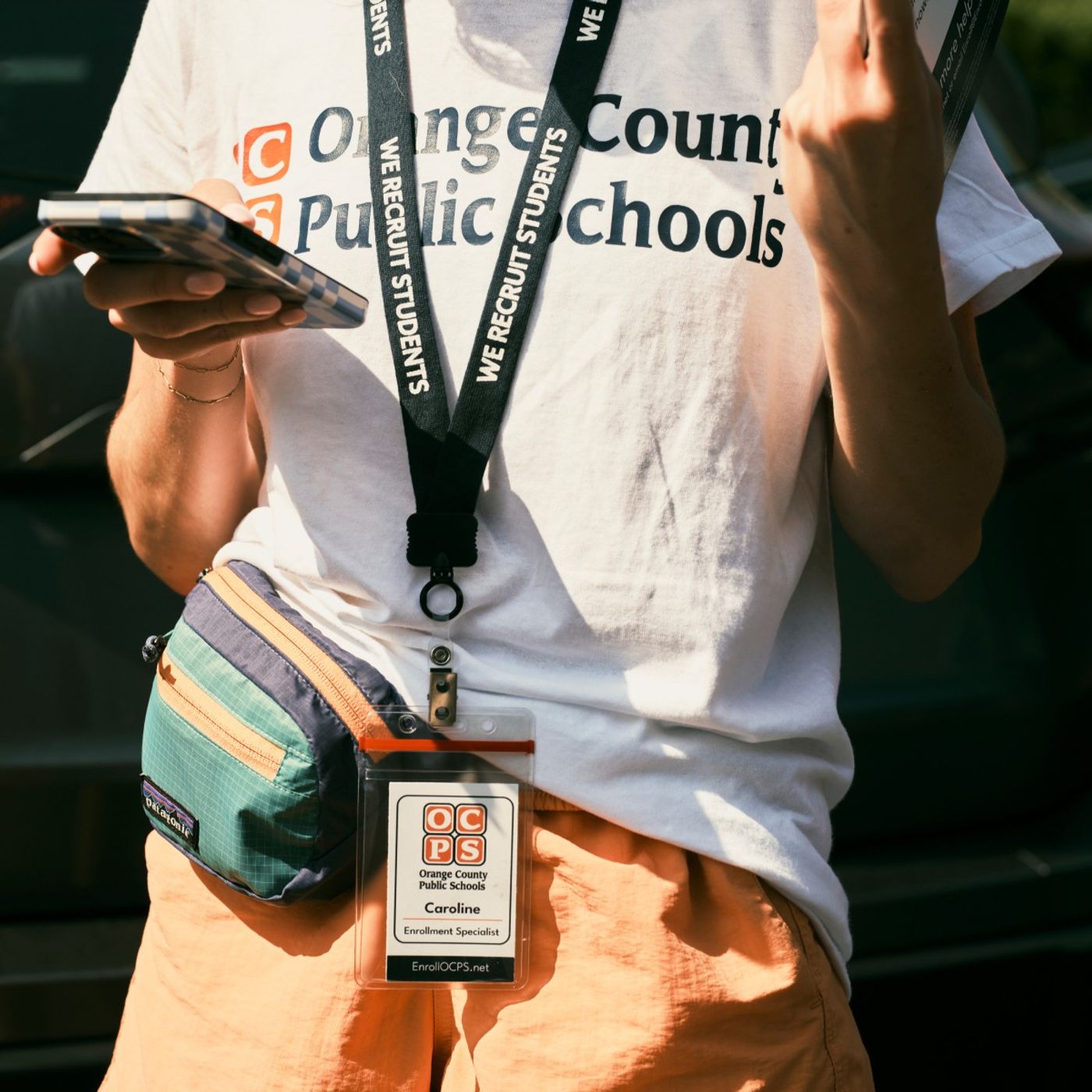
没错。他们正在尝试非常规手段。我在当地时曾跟随一个招生顾问团队走访全市——这些来自私营公司的人专门为公立教育招募学生。
Yes. They are trying some really nontraditional things. One of the things I did while I was down there was traverse the city with a team of consultants who are from a private company that recruits students to public education. Woah. Yes.
他们带着宣传单和学区资料四处寻找家长,可能在青少年俱乐部、幼儿园或游乐场搭话:'正在为孩子考虑学校选择吗?让我告诉你橙县公立学校的优势项目。'
So they're basically out there with flyers and information about the public school district, and they're looking for parents. It could be at a boys and girls club. They could visit a preschool, a playground. And they're saying, hey, are you considering school options for your child? Let me tell you about all of the great things that are happening in Orange County public schools.
本质上,学区正在雇佣这类公司进行自我营销。
So districts are hiring companies like this to actually market themselves essentially.
公立学校的上门推销员。
Door to door salesman for public schools.
这相当耐人寻味。他们的推销话术会根据家长需求定制——比如面对工作到六点需要课后托管的母亲,
It's kind of remarkable. What is their pitch? So they really target their pitch to what parents are looking for. So if the mom says, you know, I work till six. I really need after school childcare.
他们会重点介绍课后项目;若家长希望高中生获得大学学分,他们就推介社区大学双注册或先修课程。他们在倾听诉求的同时,也会提出可能引发争议的反私立学校论点——当家长追求小班教学时,他们会声称:'研究表明小班制与成人期成就几乎没有关联性。'
They'll be prepared to talk about the after school options. If the parent says, I really want my high school kid to earn college credit, they can talk about dual enrollment with the local community college or the advanced placement program. So they're really listening to what parents have to say. But they also make some anti private school arguments that might be controversial. If a parent says I'm looking for small class size, they will say, look, there's very little or no research that shows that a small class size leads to better outcomes in adulthood.
这正说明了当前教育市场已变得更具竞争性。过去一百年间,公立学校几乎垄断了教育领域,而佛罗里达州的情况已彻底改变。
And this speaks to the fact that this is now a much more competitive marketplace. For a hundred years, public schools have had a near monopoly, and that has really changed in Florida.
如果家长因为认为自己能为孩子提供更好的教育而离开公立学校——正如你所听到的那样——我们是否了解他们是否真的做到了?孩子们的学业表现更好了吗?换言之,择校承诺是否兑现了?
If parents are leaving public schools because they think they can do better for their kids, which is what you're hearing, do we have any insight into whether they actually are doing better for their kids? Are their kids doing better academically? In other words, is the promise of school choice paying off?
这是个至关重要的问题。作为教育记者,最令我沮丧的是目前对这个问题的答案尚未形成有力共识。已有一些关于孩子获得教育券后表现的研究,但遗憾的是结论相互矛盾。俄亥俄州的一项研究似乎表明,使用教育券的孩子在大学入学率和毕业率上优于未使用券的同类群体。
This is such a crucial question. And what is really frustrating for me as an education reporter is right now, there is not a strong consensus on what the answer to that question is. There have been some studies of what happens after a child accepts a voucher. Unfortunately, they've come to conflicting conclusions. One study out of Ohio seemed to suggest that kids who took a voucher did better in terms of attending and graduating from college than similar peers that didn't use a voucher.
但路易斯安那州的研究得出了截然不同的结论:使用教育券的学生在数学标准化测试中表现更差。因此研究人员正持续高度关注这个问题,我也会继续追踪报道。退一步说,这些项目的支持者并未真正主张它们会带来可量化的分数提升或学业进步——他们的诉求远比这宏大。
But a study from Louisiana came to a very different conclusion. It showed that students with a voucher did worse on math standardized tests. So this is something that researchers are continuing to look at with great interest, and I'm going to be continuing to track as a reporter. But to step back a second, the proponents of these programs are not really making the argument that they're going to lead to higher test scores or better academic outcomes that are measurable for students. It's much bigger than that.
他们主张的是家长权利与选择权,认为每个家庭都应为自己的孩子选择最适合的教育方式,并由家长来定义成功的标准。这与不久前的教育政治理念形成了巨大哲学转变——那时所有政策都聚焦于帮助孩子学得更多,提高考试成绩。
They're making an argument about parental rights, about parental choice, that every family should choose for themselves what works best for their individual child, and they get to define what success looks like. And this is a really big philosophical shift from where education politics was in the very recent past, which was all about helping kids learn more, raising their test scores.
某种程度上,成功的衡量标准似乎不完全是孩子的学业成就本身,而在于家长是否满意——这在某种程度上有其合理性,对吧?毕竟我们理应期待家长对子女接受的教育感到满意。
In some ways, it sounds like the measure of success isn't precisely about kids' achievement per se, but whether parents are happy, which to a certain extent makes sense. Right? I mean, like, we should expect parents to wanna be satisfied with the education that their children are getting.
确实如此。我完全理解这点——我的两个孩子就在公立学校,我总在思考他们是否得到了良好教育,不断搜集课堂信息,担心他们是否受到足够挑战,社交情感需求是否得到满足。但无论是我还是其他家长,我们对学校的评估都基于不完善的信息。
Yes. And I totally get that. I have two kids in public school, and I'm always wondering if they're being well served and looking for more information about what's going on in their classroom and thinking, are they being challenged? Are their social emotional needs being met? But whether it's me or any other parent, we make these assessments about schools with imperfect information.
社区里充斥着大量关于学校的流言蜚语,这些传言可能与现实相符也可能不符。在公立教育质量方面,认知与现实之间往往存在巨大鸿沟。
I mean, there's a lot of rumors and gossip in a neighborhood about what's going on in a school that may or may not align with reality. And there can be a real gap between perception and reality when it comes to the quality of public education.
Dana,我想问个政治问题。鉴于这类项目跨 demographics 的受欢迎程度——正如你所说它们吸引了许多工薪阶层家庭——民主党人在此情境下该如何应对?这似乎是极其棘手的政治局面:他们既不愿疏远支持该政策的工薪阶层选民,但支持公立教育体系又是民主党的核心价值。
Dana, I wanna ask a political question here. Given the popularity of these programs, which you've told us about and which you said cuts across demographic lines and appeals to many working class families, What are Democrats to do in this scenario? Because it seems like a very tricky political situation for them. Because on the one hand, they don't wanna alienate working class voters who support this. But on the other, it's been a core value of the Democratic Party to uphold and support the public education system.
这对民主党而言确实是个新出现的棘手难题。民调显示,虽然白人自由派普遍对私立学校教育券持负面态度,但许多工薪阶层的黑人和西班牙裔家长对此很感兴趣。事实上,我在奥兰多采访的多数热衷使用教育券的家长正是这两个族群。我们之前讨论过特朗普总统签署首个联邦层面私立学校择校计划的法律。
This is an incredibly tricky emerging issue for Democrats. Polls suggest that while white liberals feel pretty negatively about private school vouchers, a lot of working class black and Hispanic parents are interested in them. And in fact, many of the parents who I interviewed in Orlando who are excited to use a voucher were black and Hispanic. We spoke earlier about president Trump signing into law the first sort of national federal private school choice program. Right.
州长们将有机会选择加入或退出,决定他们的州是否接受这笔资金。现在民主党州长们正面临一个非常艰难的选择。他们将承受来自教师工会等选民群体的巨大压力,要求不为私立学校学费提供代金券。然而,他们也听到党内人士的呼声,这些人敦促采取新方法——一种关注工薪阶层黑人和西班牙裔家长(这些正是去年大选中倾向特朗普总统的选民群体)对教育选择权热情高涨的现状。
Governors will have the opportunity to opt in or out, to decide if their states are going to accept that money. Now Democratic governors are facing a really difficult choice. They're going to have a lot of pressure from constituencies like teachers' unions to not provide vouchers for private school tuition. However, they are also hearing from those within the Democratic party who are urging a new approach. One that would tune into the fact that working class black and Hispanic parents, those same voters who we know tilted toward president Trump in last year's election, are excited about school choice.
哪怕只有一位民主党州长选择参与特朗普的私立学校奖学金计划,其他州长也会面临参与压力。
And if even a single Democratic governor chooses to participate in the Trump private school scholarship program, there will be pressure on others to participate.
退一步说,我想问在这个将纳税人资金通过代金券导入私立学校的体系下,公立学校存在的意义是什么?我们讨论过实际影响,但我想知道,作为一个国家,这如何反映我们对美国教育功能认知的转变?
Pulling back, I wanna ask what it means to have public schools in this world where we have the system that pours taxpayer dollars into vouchers that funnel people into private schools. There are practical implications that we've talked about, but what I wanna know is, as a country, what does it mean about how we see now the function of education in America?
我认为这触及了美国最深刻的意识形态分歧。如果你将教育视为家长赋权与家长权利问题,你会喜欢当前代金券和私立学校选择权扩张的局面。但值得注意的是,这与美国公立教育某些根本创立原则存在深刻矛盾。回溯1830年代公共学校运动诞生时期,被誉为美国公立教育之父的霍勒斯·曼认为,教育应让儿童跨越宗教、阶级等差异线。
So I think this gets to some of the deepest ideological divides in our country. If you see education as an issue of parental empowerment and parental rights, you are going to love the moment we're in with the expansion of vouchers and private school choice. However, it's worth pointing out that this is in deep contradiction to some of the sort of fundamental founding principles of public education in The United States. If you go back to the eighteen thirties, and the birth of the common schools movement, and a man named Horace Mann, who was sort of the father of public education in America. His idea was that you would take children across lines of difference, religion, class.
后来种族当然成为课堂上必须跨越的关键差异线。让所有孩子共同学习,灌输共享价值观,跨越差异为民主公民身份做准备,确保未来选民和工作者具备优秀阅读理解能力。但作为一个国家,我们是否践行了这些美好理想?
Later on, of course, race being a crucial line of difference that we're supposed to cross in the classroom. Bring all these kids together and inculcate in them shared values. Prepare them together across differences for citizenship in a democracy. Make sure that our future voters and future workers have great reading comprehension skills. Now, as a country, did we live up to these beautiful ideals?
往往没有。我们常让儿童留在按种族和阶级隔离的学校,许多孩子毕业时缺乏优秀的阅读和数学能力。公众对公立教育存在大量质疑,但许多人仍坚守公共教育的这些理想。
Often, we did not. Often, we kept kids in schools that were segregated by race and class. Often, kids graduated without great reading skills, without great math skills. And there has been a lot of cynicism about public education. But many people still hold fast to these ideals of common schooling.
然而私立学校选择权运动发展如此迅猛,值得停下来思考:在我们有生之年,美国教育是否会发生翻天覆地的变化。
However, the private school choice movement is moving so quickly that it is worth pausing to consider whether education in America could look drastically different within our lifetimes.
感谢达娜做客节目。
Well, Dana, thanks so much for coming on the show.
谢谢邀请,娜塔莉。
Thanks so much for having me, Natalie.
稍后继续。以下是今日其他要闻:白宫新闻秘书卡罗琳·莱维特周二表示,俄罗斯总统普京已同意与乌克兰总统泽连斯基会面,但莫斯科方面尚未确认。特朗普将两位领导人可能举行的会面标榜为周一与欧洲领导人外交日的成果——这些领导人访问华盛顿商讨结束乌克兰战争的条件。但克里姆林宫淡化了面对面和谈的可能性。
We'll be right back. Here's what else you need to know today. White House press secretary Caroline Leavitt said on Tuesday that president Vladimir Putin of Russia had agreed to meet with Ukrainian president Volodymyr Zelenskyy, something Moscow hasn't confirmed. Trump has touted the potential meeting between the two leaders as an achievement of Monday's day of diplomacy with European leaders who visited Washington to discuss terms for ending the war in Ukraine. But the Kremlin downplayed any potential for face to face peace talks.
俄罗斯官方媒体几乎未提及普京与泽连斯基周二可能举行会晤的任何可能性。俄罗斯外长表示,虽然俄罗斯不反对此类会面,但涉及高层官员的任何接触都必须经过极其谨慎的准备。世界各国领导人一直在努力敲定安全保障措施以保护战后的乌克兰,包括可能派遣欧洲士兵作为维和人员进驻该国。特朗普曾表示,美国军队不会作为任何协议的一部分被派往乌克兰。
Russian state media barely mentioned any possibility of Putin and Zelensky sitting down together on Tuesday. Tuesday. And Russia's foreign minister said that while Russia wasn't against such a meeting, any contacts involving top officials would have to be prepared very carefully. World leaders have been trying to hammer out security guarantees to protect a postwar Ukraine, including potentially sending European soldiers to the country as peacekeepers. Trump has said American troops would not be sent to Ukraine as part of any deal.
我只想结束这一切。我想结束它。你知道,我们没有牺牲美国人的生命。我们没有失去美国士兵。我们失去的主要是俄罗斯和乌克兰的士兵。
I just wanna end it. I wanna end it. You know, we're not losing American lives. We're not losing American soldiers. We're losing Russian and Ukrainian, mostly soldiers.
有些人
Some people
周二在接受《福克斯与朋友们》采访时,总统深入阐述了他为斡旋结束战争所做的努力。
And in an interview on Fox and Friends on Tuesday, the president gave new insight into his efforts to broker an end to the war.
你知道,如果我能每周拯救7000人免于死亡,我认为这很可能是我想尝试进入天堂的理由。我听说我表现不佳,真的处于最底层。但如果我能进入天堂,这将是我成功的原因之一。
You know, when if I can save 7,000 people a week from being killed, I think that's a pretty I wanna try and get to heaven possible. I I'm hearing I'm not doing well. I am really at the bottom of the totem pole. Did defer. But if I can get to heaven, this will be one of the reasons.
嗯,我想我救了他。
Well, I think I saved him.
他表示自己的动机是救赎。今天的节目由埃里克·克鲁普克和戴安娜·温制作,悉尼·哈珀和玛丽·威尔逊协助,莱克西·刁和MJ·戴维斯·林恩编辑,克里斯·伍德负责技术制作。以上就是《每日新闻》的全部内容,我是娜塔莉·基特罗夫。
He said his motivation was salvation. Today's episode was produced by Eric Krupke and Diana Wynn with help from Sydney Harper and Mary Wilson. It was edited by Lexi Diao and MJ Davis Lynn and was engineered by Chris Wood. That's it for The Daily. I'm Natalie Kitroef.
明天见。
See you tomorrow.
关于 Bayt 播客
Bayt 提供中文+原文双语音频和字幕,帮助你打破语言障碍,轻松听懂全球优质播客。