本集简介
双语字幕
仅展示文本字幕,不包含中文音频;想边听边看,请使用 Bayt 播客 App。
你好。
Hi.
我是索拉娜·莱恩。
I'm Solana Pine.
我是《纽约时报》视频部门的总监。
I'm the director of video at The New York Times.
多年来,我的团队制作了大量视频,带你走近重大新闻现场,这些视频由《纽约时报》的记者亲自操刀,帮你真正看懂发生了什么。
For years, my team has made videos that bring you closer to big news moments, videos by Times journalists that have the expertise to help you understand what's going on.
现在,这些视频已经上线《纽约时报》App的‘观看’标签页。
Now we're bringing those videos to you in the watch tab in The New York Times app.
这是一个专门的视频频道,你可以完全信任里面的内容。
It's a dedicated video feed where you know you can trust what you're seeing.
所有这些视频都免费开放,任何人都可以观看。
All the videos there are free for anyone to watch.
你不需要是订阅用户。
You don't have to be a subscriber.
下载《纽约时报》应用,立即开始观看。
Download The New York Times app to start watching.
来自《纽约时报》,我是娜塔莉·基托埃夫。
From The New York Times, I'm Natalie Kitroef.
这里是《每日新闻》。
This is The Daily.
在中非埃博拉疫情的最前线,医疗人员装备匮乏,外界支援极少,正眼看疫情失控,成为历史上最严重的爆发之一。
At the front lines of the Ebola crisis in Central Africa, badly equipped health workers with little outside support are losing the fight against one of the worst outbreaks in history.
今天,我的同事德克兰·沃尔什带我们深入病毒的核心地带,了解为什么至今为止,疫情的传播几乎无法遏制。
Today, my colleague, Declan Walsh, takes us to the epicenter of the virus to understand why, so far, its spread has been nearly impossible to stop.
今天是6月3日,星期三。
It's Wednesday, June 3.
德克兰,非常感谢你参与这次采访。
Declan, thank you so much for doing this.
你现在人在哪儿?
Where are you right now?
我现在在刚果民主共和国东北部的布尼亚市。
I'm in Bunya, a city in the Northeast of the Democratic Republic Of Congo.
明白了。
Okay.
你已经在刚果民主共和国待了一周半左右,报道这场可怕的埃博拉疫情。
So you've been in the DRC for about a week and a half covering this horrific Ebola outbreak.
能跟我们说说你亲眼看到的情况吗?当地到底是什么样子?
So just tell us what you're seeing, what it's been like on the ground.
这里的情况现在非常严峻。
It's a really dire situation here right now.
这次疫情两周前才被发现,但病毒很可能早在两个月前,有些说法甚至说三个月前就已经在传播了。
This outbreak was only detected just over two weeks ago, but the virus was probably spreading for two, some groups are saying even three months before it was detected.
所以我们根本不清楚这场疫情在这些地区已经蔓延到了多深、多广的程度。
And so we just don't know how deep, how wide it has gotten into the population in these areas.
这严重阻碍了救治患者和控制疫情扩散的努力。
And that's really hampered efforts, not just to treat the people affected by the disease, but to contain its spread.
那在病例和死亡人数方面,现在情况怎么样?
And in terms of numbers, cases, deaths, where do things stand?
到目前为止,已经有大约二百五十人被确认死亡。
So far, about two hundred and fifty people are confirmed to have died.
还有大约一千一百例疑似病例。
There are about another one thousand one hundred suspected cases.
但病毒实际的传播范围和程度,恐怕要远远超过这个数字。
But the true spread and extent of this virus is thought to be much, much wider than that.
我觉得这么说并不夸张:目前病毒的蔓延速度已经远远超过了应对措施。
And I don't think it's an exaggeration to say that the virus is way ahead of the response at this point.
这已经是历史上第三大规模的埃博拉疫情了,有些机构甚至说,它有可能成为有史以来最严重的一次。
Already, this is the third largest Ebola outbreak on record, and there are groups saying that it has the potential to become the largest ever.
这可是个很高的标准。
Now that's a very high bar.
历史上规模最大的一次埃博拉疫情发生在2014到2016年的西非地区。
The largest Ebola outbreak was between 2014 and 2016 in West Africa.
那次疫情导致了一万一千人死亡。
That killed eleven thousand people.
对。
Right.
我们现在离那个数字还很远,但应对措施远远落后于疫情发展,这让遏制疫情变得异常困难。
We're far off those numbers, but the fact that the response is so far behind the curve makes it obviously much, much harder to start to push it back.
那我们对这次疫情的起源以及它为何长期未被发现了解多少?
So what do we know about how this started and how it went undetected for so long?
由于延误太久,我们还有很多未知之处。
Because of that huge delay, there's so much we still don't know.
但几乎可以肯定的是,这次疫情始于一个叫蒙戈卢的金矿小镇。
But one thing that seems to be almost certain is that this outbreak started in this gold mining town called Mongolu.
它位于地区首府布尼亚以北大约五十英里处。
That's about 50 miles north of Bunya, of the regional capital.
我和摄影师阿拉蒂·巴希齐抵达后几天,我们就开车去了蒙戈卢,不仅想找到疫情的源头,还想看看当地应对情况——据我们所知,那里是感染人数最多的地方。
And so a couple of days after I got here with our photographer, Arlette Bashizi, we got in a car and we drove to Mongolu to find not just the town where it started, but also what the response looked like in this place where, as far as we had heard, there was the greatest number of infections.
那你们发现了什么?
And what did you find?
首先,去那里的路特别难走。
Well, first, the road to get there was quite difficult.
那条路根本算不上是路。
It was really a road just a name.
全是泥巴路。
It was made of mud.
颠得厉害,特别不平。
It was extremely rough and bumpy.
一路上我们经过了好几个刚果军方的检查站,因为那片区域至少有三四个武装组织活动。
But all along that road, we passed these Congolese military checkpoints, and that was because we were passing through territory where at least three or four different militias were known to operate.
这不仅让救援工作更加困难,也拦住了援助人员前往那个小镇。
So that was complicating the response and also preventing aid workers from getting to this town.
到了蒙古洛镇后,我们直接去了公立医院,那里是我们知道的治疗中心。
And when we got to Mongolovo itself, we went straight to the public hospital, which we knew was the center of treatment efforts.
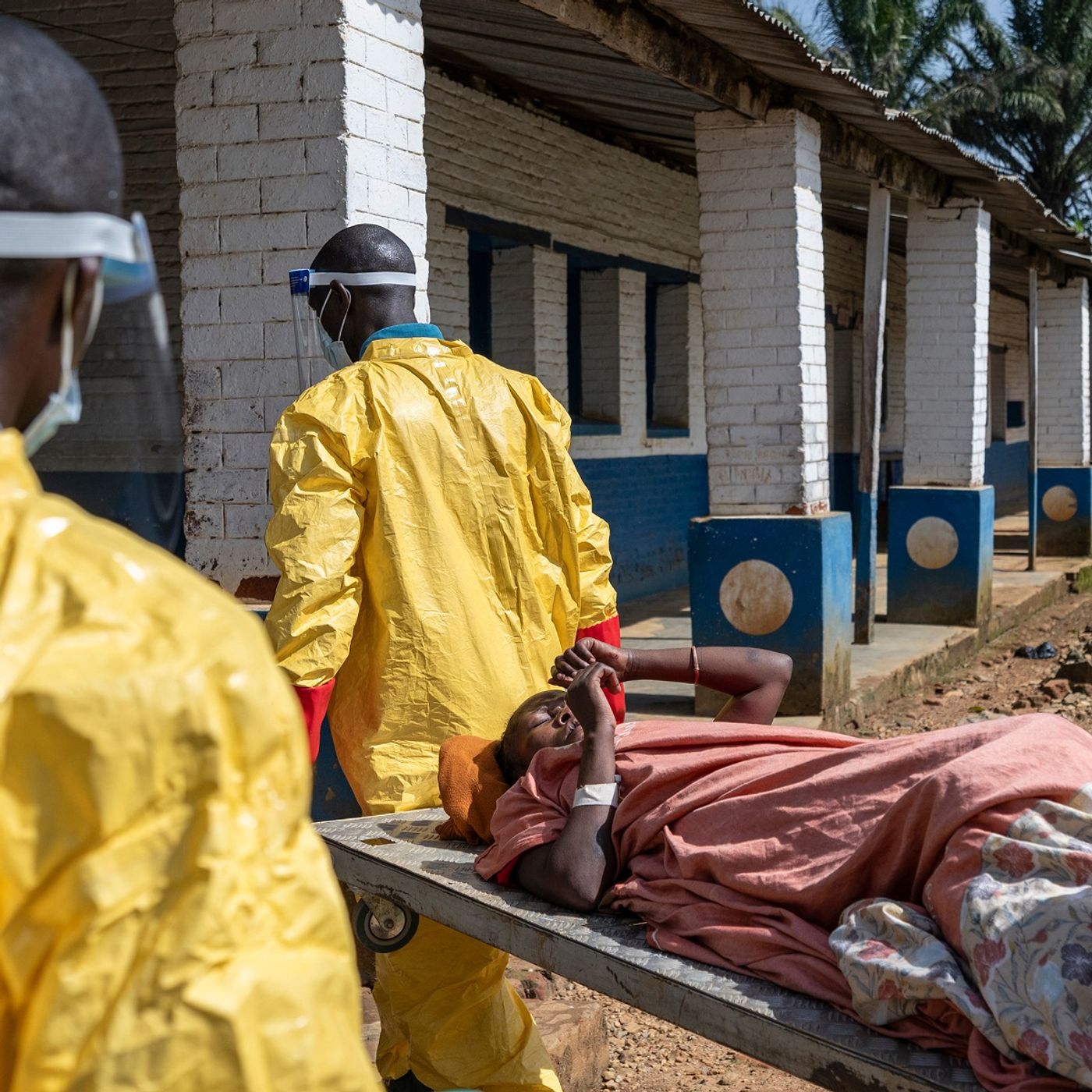
我们本来以为会看到那种典型的埃博拉应对设施布局。
We were expecting really to see the architecture of an Ebola response that you classically think of.
对。
Mhmm.
对有些人来说,这可能像电影里的场景,比如《出病》这类片子,满是大大的白色帐篷,到处都是穿着密闭防护服的人。
For some of us, it's maybe a Hollywood reference, like movies like Outbreak and so on, these large white tents, lots of people walking around in sealed suits.
没错。
Right.
但那里几乎什么都没有。
But there was almost nothing.
我们还进了真正的埃博拉隔离区。
And we went into the actual Ebola awards themselves.
我们穿上了全套防护装备。
We put on the full protective equipment.
我们跟那里的工作人员聊了聊。
We spoke to the staff.
我们遇到一位医生,他主动提出带我们进去。
We found a doctor who wanted to take us inside.
说实话,那场面真的让人震惊。
And there, honestly, it was pretty shocking.
对。
Mhmm.
除了带我进去的那位医生,病房里全是来帮助埃博拉病人的志愿者。
Apart from the doctor who brought me in, the ward was just full of people who had come to help the Ebola patients.
他有三个姐妹。
So he has three sisters.
就是这几个。
These ones.
这两个。
These two.
还有这两个。
These two.
那这位女士呢?
And this lady over here?
是姑姑。
Auntie.
通常是亲戚们来送吃的或水,因为医院根本不提供这些,但他们几乎没穿任何防护装备。
Usually relatives who had come to bring food or water because those things aren't provided by the hospital, but they were wearing almost no protective equipment.
在房间尽头的角落,我们发现了一个五岁的小男孩,叫埃马纽埃尔,他独自躺在一张光秃秃的床垫上,挂着一个很简单的输液架。
And at the end of the room in the corner, we found this young boy, five year old boy called Emmanuel, who was lying on this bare mattress on his own hooked up to a very simple drip.
他爸爸站在旁边,满脸担忧,我们用法语聊了起来。
And his dad was standing over him looking so concerned, and we got speaking in French.
他说,就在几天前,他儿子还在上学,老师却让他回家了。
He told me that his son had been going to school just a few days earlier when the teacher sent him home.
据说他当时头疼发烧。
Apparently, he had a headache and a fever.
家人一开始在家照顾他,但情况越来越糟。
The family tried to look after him for the first few days, but he got worse.
然后他说,前一天晚上,埃马纽埃尔的鼻子开始大量出血,怎么都止不住。
And then he said that the night before, Emmanuel started to bleed uncontrollably out of his nose.
于是他们赶紧把他送到了这家医院。
And so they rushed him to this hospital.
他躺在那儿时,鼻子里塞满了纱布,想尽量堵住出血。
And when he was lying there, he had this tissue stuffed up his nose to try and staunch that bleeding.
更让人震惊的是,就在几米外、往下两床的地方,躺着一位名叫克里斯汀·巴哈蒂的21岁女性,她几个小时前刚去世。
And what was even more striking was that just a couple of yards away, two beds down, there was lying the body of a 21 year old woman called Christine Bahati, who had died just hours earlier.
医生说,她晚上还好好的,但凌晨两点左右突然昏迷了。
The doctor said that she had been doing fine in the evening, and then suddenly at about two in the morning, she fell into a coma Yeah.
把袜子脱掉。
Close the the socks.
死得非常快。
Died very quickly.
他说他们根本没能把她救回来。
He said they were unable to revive her.
她的鞋子还放在床底下,就和她之前放的一样。
Her shoes were still under the bed where she had left them.
她的东西都装在一个包里。
Her belongings were in a bag.
但真正让人不安的是,刚死于埃博拉的人尸体具有极强的传染性。
But what was so disturbing about that is that the body of a person who has just died of Ebola is extremely contagious.
对。
Right.
可这位可怜女子的遗体却只盖着一层薄被,人们来来往往,几乎没什么防护措施,当然,也包括这个男孩的父亲。
And yet the remains of this poor woman were just covered by this thin sheet, and people were walking in and out of this ward with very little protection, including, it has to be said, the dad of this boy.
这完全违背了所有应对埃博拉的防护准则。
This just seemed to go against every precaution that you could take against Ebola.
你有没有感觉到,为什么会这样?
And did you get a sense of why this was happening?
你有和医生聊过吗?
Did you talk to the doctors?
到底发生了什么?
What was going on?
我肯定他们也不想这样。
I'm sure they didn't want that to be happening either.
对。
No.
医生们很清楚其中的风险。
The doctors were very well aware of the risks.
他们说,你看。
They said, look.
我们能怎么办?
What can we do?
这就是我们能用的空间。
This is the space we've got available to us.
这就是我们手头的资源。
These are the resources that we have.
我们手头的防护装备数量是有限的。
We only have a certain amount of protective equipment.
没法给所有员工都配发,实在是不够用。
We can't give it to all of our staff because simply we don't have it.
而且说实话,我们也没受过这方面的训练。
And frankly, also said, we're not really trained for this.
我们从来没接受过针对这种情况的专门培训。
We didn't receive any special training for this.
疫情突然爆发,我们只能尽力应对。
We were suddenly hit with this declaration of an outbreak, and we are making do as best as we can.
不过,那位带我参观的年轻医生。
But, you know, this young doctor who was bringing me around.
他对自己的政府很生气,因为当局在疫情开始两三个月后才发现。
He was angry at his own government because it took the authorities so long to discover this outbreak two, possibly three months after it started.
他更对整个国际埃博拉应对体系感到愤怒——那些专家和援助组织,几乎没人赶到这个疫情最早爆发、病例最多的小镇。
And he was also angry more broadly at the international system of Ebola response, that architecture of experts and aid groups and so on, because so few of them had reached this town where it started and where the greatest number of cases were.
尽管他穿着防护装备,我还是从他的眼神和声音里听出了深深的挫败感。
Even though he was wearing the protective gear, I could see in his eyes and hear in his voices intense frustration.
我们看着眼前这一幕时,他突然转过身对我说:这场疫情已经持续十二天了。
And as we were looking at this scene, at one point, he turned around to me and he said, we are twelve days into this outbreak.
我们就只能做到这种地步了吗?
Is this the best we can do?
嗯,好吧。
Well, okay.
针对这位医生的问题,德克兰,为什么响应这么慢?
To this doctor's question, Declan, why has the response been so slow?
你对这个问题有什么新的理解?
What have you come to understand about that?
原因之一跟病毒本身有关,更准确地说,是这种病毒株。
Part of the reason is to do with the virus itself or rather with this strain of the virus.
埃博拉是一种高度传染性的出血性疾病,它不像新冠那样通过呼吸道传播,而是通过接触传播,通常是接触感染者的体液。
Ebola is this highly contagious hemorrhagic disease, which is spread not like COVID-nineteen through respiratory means, but it's spread through touch, usually by touching bodily fluids of a person who is infected.
这种特定的病毒株叫本迪布焦。
Now, this particular strain of the disease is called Bundi Bujio.
它的名字来源于乌干达西部一个小镇,离这儿大概六十英里,跨过边境就是那里,2007年首次爆发就在那儿。
It's named after, in fact, a town in Western Uganda, about 60 miles from here across the border where it first occurred in 2007.
和所有引起埃博拉的病毒一样,人们认为它主要存在于果蝠种群中。
And like all the viruses that cause Ebola, it's thought to reside in the fruit bat population.
而恰好,这一带的树上栖息着大量果蝠。
And it just happens that there is a large fruit bat population that roosts in the trees in this region.
但这种病毒株极其罕见。
But it is an incredibly rare strain of the virus.
这还是有史以来第三次本迪布焦疫情爆发。
This is only the third Bundibugio outbreak ever.
这意味着,目前还没有针对这种疾病的疫苗或特效药。
What that means is that as yet, there is not a vaccine or a cure for this disease.
另外,埃博拉传入人群后,初期症状常常和疟疾或伤寒非常相似。
On top of that, when Ebola spreads into a population, it often presents in people initially with symptoms that are very similar to malaria or typhoid.
不过在这一带,这两种病非常普遍。
Now they happen to be extremely common diseases in this area.
像穆恩加卢这样的小镇,人们早就习惯了得这些病。
And in a town like Mungualu, people are very used to getting these diseases.
一旦生病,他们通常不会去医院。
And when they do, they typically don't go to the hospital.
事实上,有时候连医生都不去看。
In fact, sometimes they don't even go and see a doctor.
很多穷人会去找传统医生,或者去当地的小诊所。
Many poor people, they tend to go to traditional healers or they will go to some local small clinic.
所有这些加在一起,导致穆恩加卢的人们只有在病情快到晚期时,才会去医院求医。
All of that combined means that people in Mungbualu were really only going to the hospital for medical help when they were approaching the last stages in the disease.
所以人们之所以拖延治疗,是因为他们以为自己得的只是这些常见病。
So people are delaying treatment basically because it seems like they may think that they have one of these more common illnesses.
他们根本不知道这病有多严重。
They just don't know how serious it actually is.
没错。
That's right.
另外,医生们还提到了检测方面的问题。
And then the other issue the doctors brought up was with testing.
因为这种病毒株非常罕见,最初整个地区根本就没有针对本迪布焦的检测手段。
Because it's this very rare strain, initially, there wasn't even a test in this entire region for Bundibugio.
当他们最初发现这个小镇在四月到五月间出现不明原因的死亡潮时,就把样本送到区域实验室检测,结果却是阴性,因为他们用的是另一种常见病毒株——阿扎尔的检测方法。
When they first detected what they saw is this mysterious wave of deaths in this town that happened all through the month of April and then into early May, They send samples off to the regional lab to get it tested, and it came back negative for Ebola because they were testing for an entirely different strain, the much more common strain, which is called azaire.
直到卫生部门把样本送到首都金沙萨,专门检测本迪布焦病毒株,才最终确认是这种病。
And that it was only eventually when health officials sent a sample to the capital Kinshasa that they tested it for this rare Bundibudgio strain, and then that came back positive and they identified the disease.
自疫情爆发以来,一直严重缺乏能检测出本迪布焦病毒的试剂盒。
So since the outbreak has started, there's been this chronic shortage of testing kits to identify who's got Buddy Buddy O.
这使得医院的治疗变得特别困难,医生告诉我们,他们送检后往往要等四到六天才能拿到结果。
And that just makes treatment at the hospital really hard because the doctors told us that they would send off a test and not get a result for four, five, six days.
他们说,很多时候等结果出来,病人已经去世了。
Oftentimes, they said, by the time the test result came back, the patient was already dead.
所以,所有条件都具备了,让这种疾病在这个地方持续蔓延——就像你说的,这里非常偏僻,远离大城市,交通也不方便。
So all the elements are in place for this disease to fester in this place that, as you said, is very remote, far from a major city, difficult to get to.
对。
Yes.
你可能会觉得,这种隔绝状态反而能阻止疾病传播。
And you'd think that that isolation would prevent the spread of the disease.
但事实上,有好几个因素让这个小镇不仅成了疾病爆发的理想温床,还成了向周边地区扩散的跳板。
But in fact, there are several factors that, in some respects, made this town an ideal place, not just for the disease to take off, but also to spread across the region.
这是一个金矿小镇,聚集了大量外来务工人员。
So it's this gold mining town that has a huge population of migrant laborers.
因为采矿赚了钱,吸引了商人、黄金走私者、性工作者,这些人也频繁进出小镇。
And because mining has money, it brings traders, it brings gold smugglers, it brings sex workers, and these are all people who move in and out of the town as well.
这无意中可能也为疾病向外传播提供了途径。
That also incidentally has possibly been a factor that provided vectors for the disease to spread elsewhere.
我想问一下。
I wanna ask.
我们最近听到很多关于特朗普政府削减对外援助的消息。
We've been hearing a lot about the Trump administration pulling back on foreign aid.
在埃博拉疫情的这次传播中,这产生了多大影响?
How much of an impact did that have in the spread of Ebola in this case?
如果你去问援助领域的工作人员,他们都会认为,要是美国国际开发署和美国的援助资金还在,这个病毒早就被发现了。
Well, if you speak to people in the aid community, for them, there's no doubt that if USAID and American aid more generally were still in place, that this virus would have been detected sooner than it was.
援助人员还提到,美国过去一直向刚果提供大量人道主义援助资金,其中一部分流向了当地的小型组织。
The other point that aid workers brought up is that The US was providing a lot of funding for general humanitarian aid in The Congo, and some of that money went to funding small Congolese groups.
但这些组织并不全都是搞医疗的。
And they weren't all necessarily working in health.
有些只是普通的社区团体。
They might have been just community organizations.
但它们的存在,形成了一套能迅速动员起来应对危机的网络。
But the fact of their existence provided a network that could be activated at short notice in response to a crisis.
而这次需要的时候,这套网络却已经不复存在了。
And now that network really just wasn't available when it was needed this time.
一旦宣布爆发,大家意识到埃博拉传播得这么快,情况有没有发生变化?
And did things change once this was declared an outbreak, once it became clear just how fast Ebola was spreading?
美国或者其他国际援助组织有没有加大援助力度?
Like, did The US or other international aid groups step up?
有的。
Yes.
援助机制总算启动了,专家们也开始陆续进入这个地区。
I mean, the aid machine has started up, and the experts are coming into this area.
援助物资也慢慢开始抵达了。
Aid is starting to arrive.
但后来发现,要控制这次疫情还有另一个障碍——许多受灾最严重社区的人,对那些试图救他们的人极度不信任。
But then it turns out that there is another obstacle to pushing back this outbreak, and that's the fact that many of the people in some of the worst affected communities have a deep mistrust for the people who are trying to save them.
我们马上回来。
We'll be right back.
我是《纽约时报》的卡罗尔·罗森伯格。
I'm Carol Rosenberg from The New York Times.
我现在一个人坐在关塔那摩湾美国海军基地的新闻中心。
Right now, I'm sitting alone in the press room at the US Navy base at Guantanamo Bay.
我大概在这里待过两千多个夜晚。
I probably spent around two thousand nights at this Navy base.
自从9·11事件后四个月,我就开始来这里了。
I've been coming here since four months after the nine eleven attacks.
我亲眼看着第一批囚犯穿着橙色连体服,从遥远的阿富汗被押送过来。
I watched the first prisoners arrive in those orange jumpsuits from far away Afghanistan.
这些囚犯中,有些人至今还没有确定审判日期。
Some of these prisoners, they still don't have a trial date.
来这儿可不容易。
It's hard to get here.
想从监狱里获取消息也很难。
It's hard to get news from the prison.
很多时候,我是这里唯一的记者。
Often, you know, I'm the only reporter here.
如果在监狱里设立一个远离美国公众视线的军事法庭,那它也不该脱离美国新闻界的监督。
If you build a military court in prison out of reach of the American people, it should not be out of reach of American journalism.
我们有责任不断回来,向大家说明这里到底发生了什么。
We have a duty to keep coming back and explain what's going on here.
《纽约时报》会带你们走进那些艰难而有争议的现场。
The New York Times takes you to difficult and controversial places.
它持续报道那些不受欢迎、难以获取的进展,而这些都需要资源支持。
It keeps you informed about unpopular and hard to report developments, and that takes resources.
通过订阅《纽约时报》,你就能支持这样的新闻报道。
You can power that kind of journalism by subscribing to The New York Times.
好的。
Okay.
你刚才说人们对援助组织、对那些试图控制病毒的人有不信任,能具体说说吗?
Explain what you just said, that people have this distrust of aid groups, of the people trying to contain this virus.
这背后到底是什么原因?
What's going on there?
你听好了。
Look.
对抗这场疫情的一大障碍,是这些社区里很多人仍然拒绝承认病毒的存在。
A huge obstacle to fighting this outbreak has been the fact that a lot of people in these communities are still in denial about the virus.
要么他们根本不相信病毒真的存在,要么觉得这是某种诅咒,或者干脆当成阴谋论。
Either they don't accept that it exists at all, or they see it as somehow a curse, or they see it as a conspiracy theory.
我们当时在那儿,听到了很多说法,说当地人认为这场病是当地医院的医生和那些外国援助组织合谋搞出来的,故意把病毒带进社区。
When we were there, we heard so many stories about how people saw this disease as some sort of conspiracy between doctors in the local hospital and these foreign aid groups who they thought were bringing this disease to the community.
甚至有人说,无国界医生的吉普车顶上装着特别高的天线,他们就是靠这些天线把病毒传播出去的。
In fact, it was a story that we heard that Doctors Without Borders, had jeeps that have extremely high antennas sticking out of the roof, that Doctors Without Borders were using those antennas to somehow spread the disease among the community.
说来奇怪,但其实这背后是有一定逻辑的,事情是这样的。
Now there is, strangely enough, I think, a sort of logical explanation for this, and that goes like this.
在疫情被发现和宣布之前,这个社区早就一直在经历一系列神秘死亡事件。
This community had been grappling with this wave of mysterious deaths until this outbreak was finally detected and declared.
等我们终于搞清楚这是埃博拉病毒时,感染人数已经高达数百人了。
And so by the time we had an explanation for it, which was Ebola, there were already hundreds of cases.
所以这个社区正面对着一波又一波的感染和死亡,人们都在寻找原因。
So this community is faced with this tidal wave of infections and deaths, and people are searching for an explanation.
等他们赶到医院时,往往已经太晚了,没法得到有效治疗。
They're going to the hospital too late to get treatment by the time they get there.
很多人就这样去世了。
Many of them are dying.
于是,人们很自然地把医院当成一个不是救命、而是送命的地方。
And so people, in a certain way, logically, are starting to associate the hospital as a place where people go not to have their lives saved, but to die.
没错。
Right.
我想,这正是那些荒唐阴谋论流传开来的一个重要原因。
And so I think that really is partly at the root of some of these wild conspiracy theories that were going around.
但对医院里的医护人员来说,这意味着他们不仅要应对这种极其危险的疾病,而且设备严重不足,还要承受来自社区的强烈敌意。
But what that meant in practice for the medical staff at the hospital is that they not only were grappling with this incredibly dangerous disease and chronically underequipped to fight it, but they were also dealing with this intense hostility from the community.
这种敌意具体表现为什么样子?
And what did that hostility actually look like?
后来事情是怎么发展的?
How did it play out?
你是怎么看到的?
How did you see it?
我们到芒布阿卢的时候,最大的问题是如何处理那位刚去世的知名牧师的遗体。
So when we got to Mangbualu, the huge issue was how to deal with the body of this popular pastor who had just died the night before.
他叫西尔维斯特·阿塔马。
His name was Sylvester Atama.
他是镇上一位很有魅力的天主教传教士,有很多追随者。
He was this charismatic Catholic preacher in the town who had a pretty big following.
我们到医院时,院长告诉我们,他的信徒们聚集在医院门口,要求把遗体领走,按刚果传统方式下葬。
And when we arrived at the hospital, the director told us that his followers had gathered at the gate of the hospital, and they were demanding to get his body so that they could bury it in the traditional Congolese fashion.
但院长拒绝了,他说那样做会让疫情在镇上彻底失控。
Now the hospital director refused because he said that would have been a disaster for the spread of the disease in the town.
为什么?
Why?
因为在刚果,传统的葬礼习俗是让大量哀悼者触摸逝者的遗体。
Because traditional burial practices in The Congo involve large numbers of mourners touching the body of a deceased person.
天哪。
Oh, no.
所以葬礼很容易变成超级传播事件,这在之前的疫情中确实发生过。
And so a funeral can become a super spreader event, and that, in fact, has been a problem in previous outbreaks.
明白了。
Okay.
有道理。
Makes sense.
但院长拒绝交出遗体,激怒了牧师的追随者,他们根本不相信他说的这样做会极其危险。
But the refusal to give up this body by the director enraged his supporters who didn't believe his explanations about why this was an incredibly unsafe thing to do.
前一天,他们冲进医院院区,院长告诉我,他被一群人追着跑,还被扔石头。
And so the day before, they had stormed into the hospital compound, and the director told me he had been chased through the compound with people throwing rocks at him.
如果我把车停在他办公室外,就能看到他的车,车窗上有个洞——他说那是石头砸的,没打中他,但打中了车。
And if I parked outside his office, I could see his vehicle, which had a hole in one of the windows where he said people threw rocks that didn't hit him, but they hit his car.
他们真的在攻击医院院长。
They're literally attacking the hospital director.
他们就是为了抢回那具遗体,才对他动手的。
They are literally attacking him in order to get this body.
他们就是不肯答应。
They refused.
然后他说,当局派了安保人员来试图平息事态。
And then he said that the security forces were called to try and bring peace.
第二天我们又去了医院。
Then we turn up the next day.
那天晚上,我们回到了镇上的酒店。
Then that evening, we went back to our hotel in the town.
我们刚安顿下来,天黑后就听见了枪声。
And just as we were settling in after dark, we hear these gunshots going off.
后来才知道,又有一百多个年轻人——还是那位神职人员的支持者——再次涌到医院,想强行把遗体抢走。
And it turns out that a crowd of over a 100 young men, again supporters of this cleric, had converged on the hospital yet again in an effort to spring out this body.
天哪。
My god.
警察和士兵朝天开枪,想把人群驱散,可那群人绕到医院后头,从另一侧发动攻击,整晚都持续着这场混战,整整打了五个小时。
The police and the soldiers were firing their weapons in the air to try and disperse them, Then this crowd of people went around the back of the hospital, tried to attack it from another side, and this running battle went on for five hours all through the evening.
五个小时?
Hours?
直到晚上十一点,警察才终于控制住局面。
Until 11:00 at night when the police finally got the situation under control.
第二天早上,经过与教会当局的仔细协商,士兵们护送着遗体从医院一路送往当地墓地,最终安全下葬。
And then the next morning, after careful negotiation with the church authorities, the body was escorted by a line of soldiers from the hospital down to the local cemetery where it was safely buried.
明白了。
Okay.
这听起来像是个特别极端的事件。
So this sounds like a particularly extreme incident.
医院工作人员、援助人员,还有那些直接在疫情最前线工作的人,经常遭遇这种反应吗?
How common is this reaction to the hospital workers, to the aid workers, to the people who are directly working on the front lines of the virus?
我觉得这次事件比较特殊,因为涉及的是一位在当地很有影响力、粉丝众多的知名人物。
Well, I would say this incident was exceptional because it involved this very prominent local figure who had a huge following.
但这种状况其实很常见,整个城市里,红十字会的工作人员在执行所谓的‘安全葬礼’时,都面临类似问题。
But the dynamic, unfortunately, is very common because across the city, Red Cross workers who were trying to carry out these, what they call, safe burials of these bodies.
也就是说,他们不会让很多人靠近遗体,而是先对遗体进行消毒。
In other words, instead of allowing a lot of people to come and touch the body, the body will typically be disinfected.
然后把遗体装进密封袋,确保葬礼庄重得体,同时避免引发大规模感染。
It will be placed in a sealed bag, and these workers will ensure that while there is a dignified burial, it's not gonna turn into an event where many other people become infected.
所以,这些负责安葬的红十字团队经常遭遇同样的抵制。
So the teams of Red Cross workers trying to carry out these burials often run into the same kind of resistance.
他们曾受到威胁。
They've been threatened.
也曾经遭到袭击。
They've been attacked
天哪。
Wow.
因为很多人根本不信这病毒真的存在,或者觉得它不会威胁到自己,老实说,我觉得他们只是被这场席卷社区的灾难压得喘不过气了。
Because people effectively don't believe the virus exists or else they don't believe that it poses a threat to them or, frankly, I think they just feel overwhelmed by the scale of the calamity that has befallen their community.
所以他们又把气撒在那些努力阻止疫情进一步扩散的人身上。
And so they take it out again on the people who are trying to ensure that this disease doesn't spread even further.
通过和卫生官员的交流,你有没有意识到,这种阻力对控制疫情到底有多大影响?
And do you have an understanding from your conversations with health officials of just how big of an obstacle this is in the effort to get the outbreak under control?
你觉得它到底在多大程度上拖慢了应对进度?
Like, how much is it actually stymieing the response, do you think?
影响非常大。
It's huge.
当你去问卫生官员或者援助人员,你们需要什么才能把疫情压下去?
When you talk to health officials or aid workers and say, what do you need to push this back?
他们第一个反应就是:我们需要设备。
The first thing, of course, they say is we need equipment.
我们需要防护装备。
We need protective equipment.
我们还需要药品。
We need medicine.
我们还需要资金。
We need funds.
他们第二点提到的是,需要开展宣传教育。
The second thing they say is we need education.
必须立即采取紧急措施,向公众讲清楚他们所面临的风险到底是什么。
We need an immediate urgent effort to communicate to people about the nature of the danger that they face.
我们在新冠疫情期间有过类似的经验。
We have some experience with this kind of thing from COVID.
即使在美国,也出现了各种阴谋论。
Even in The United States, there were conspiracy theories.
人们对医疗体系和医院普遍存在不信任。
There was a lot of mistrust of the medical establishment, of hospitals.
我觉得,要解决这个问题,可能比把资源送到该去的地方还要难。
It strikes me that this is a harder thing to solve than even perhaps getting the resources to where they need to be.
建立信任可不是件容易或能快速完成的事。
I mean, building trust is not an easy or a quick thing.
确实很有挑战性。
It's very challenging.
但也不是没有先例。
But there is precedent.
比如2014到2015年西非爆发疫情时,还有刚果发生的第二次大规模疫情,医护人员都遇到过类似的问题。
I mean, in previous outbreaks in West Africa in 2014, 2015, in the second largest outbreak, which was also in Congo, health workers ran into similar problems.
其实我们已经有了一些应对方法和策略,但关键是要有系统性的、全力以赴的投入。
And so there are tools, there are techniques, there are ideas for combating this problem, but it really does take a concerted, intensive effort.
我们在芒古卢的时候,去拜访了当地的天主教神父,因为那位刚去世的传教士就是天主教徒。
While we were in Mungwolu, I went to see the local parish priest, the Catholic priest, because this preacher who had just died was a Catholic.
我就问他,你这边都在做些什么来应对这个问题?
And I said, what what are you doing to try and address this problem?
他说,上个星期天做弥撒时,我在讲道里呼吁大家采取安全的葬礼方式,遵守正确的处理流程。
And he said, at mass last Sunday, in my sermon, I appealed to people to carry out safe burials, to adhere to the correct practices.
但他表示,到目前为止,大家根本听不进去。
But he said, until now, are not listening.
他说,要让这些社区真正明白必须改变哪些生活习惯才能保护自己,需要付出大得多、也更密集的努力。
He said it's gonna take a much bigger and more intensive effort to try and convince these communities about what they need to change in their own lives in order to keep themselves safe.
德克兰,目前我们对这个病毒在刚果民主共和国之外扩散到什么程度了解多少?
Declan, what do we know about how far it's spread outside of the DRC at this point?
邻国乌干达已经有一人死亡,目前大约有八到九例疑似病例。
There has been one death in neighboring Uganda, and I believe about eight or nine suspected cases at the moment.
人们非常担心,病毒也可能正在向南苏丹蔓延。
There are great fears that it is also spreading into South Sudan.
但现阶段,这种病毒大部分仍局限在阿伊图里省,另外两个刚果省份也出现了少数病例。
But for now, this virus has, for the large part, remained confined in Ayturi Province, and there have been some cases in two other Congolese provinces as well.
不过,我得再次强调,我们目前对这种病毒的实际传播范围还知之甚少。
But, again, I gotta stress that we just don't know enough about the extent of this virus just yet.
这也引出了另一个关键环节——接触者追踪,但说实话,这方面的工作他们甚至还没真正开始。
And that brings us to another key part of the effort to fight the virus that they haven't frankly even started on in earnest yet, which is called contact tracing.
对。
Right.
接触者追踪就是弄清楚每个感染者去过哪些地方,接触过哪些人。
Contact tracing meaning trying to understand where everybody who is infected has been, who they may have seen, touched, been in contact with.
没错。
That's right.
问题是,这种病毒株非常罕见,检测设施又极其有限,所以接触者追踪工作才刚起步。
The problem is that because this is such a rare strain and because there are such limited testing facilities, they've barely started the work of tracing those contacts yet.
所有相关专家都表示,如果不追踪接触者,就无法切断传播链,也就不可能有效控制疫情扩散。
And all the experts in this field say that until you trace the contacts, you cannot cut the chain of transmission, and you can't really expect to contain the spread of the disease.
明白了。
Okay.
显然,这里还有很多不确定因素。
Obviously, there is a lot of uncertainty here.
有很多不可预测的情况在影响局势。
There are a lot of unpredictable factors at play.
但根据你的报道,德克兰,你认为目前控制疫情扩散的最佳和最坏情况分别是什么?
But from your reporting, Declan, what is your understanding of the best case and the worst case scenario for containing the spread right now?
最坏的情况是,这场疫情会持续好几年,感染人数急剧上升,不仅患者数量暴增,死亡人数也可能达到2014到2015年西非爆发时的水平。
Well, the worst case scenario is that this outbreak goes on for several years and that the numbers soar, not just the numbers of people affected, but that the death toll rises possibly to the level that we saw back in West Africa in 2014, 2015.
但事情也不一定非得发展到那一步。
But, you know, it doesn't have to be that way.
还有一种可能的结果是,国际社会的援助力度能够及时跟上,应对这场疫情的挑战。
There is an outcome here where the scale of international assistance rises to meet the challenge of this outbreak.
所以我觉得现在还很难说最终会走向哪一种方向,别忘了,我们才刚刚进入这场疫情的初期阶段。
So I think it's still an open question about which way we're gonna go because don't forget we are very early into this outbreak.
正因如此,才让人格外担忧。
That's kind of in a way what's so worrisome about it.
官方宣布疫情才刚过去两周,但我跟当地的人聊过,他们说感觉已经像连续奋战了好几个月,因为一开始的形势实在太紧张了。
It's only been two weeks since it was officially declared, and I've been speaking to people on the ground here, and they say it already feels like they've been at this for months because it's been such an intense start.
大多数埃博拉疫情都是从少数几例开始,然后慢慢扩散的。
Most Ebola outbreaks start with a handful of cases, and then it spreads.
这次的难点在于,从一开始就有数百例疑似病例和许多死亡,而且这些数字还在持续攀升。
The challenge with this one is that from day one, there were hundreds of suspected cases and many deaths, and those numbers are just going up and up at the moment.
Declan,我一直在想你在诊所里见到的那个五岁小男孩Emmanuel,还有他爸爸。
Declan, I can't stop thinking about Emmanuel, the five year old boy who you met in the clinic with his dad.
你知道他现在怎么样了吗?
Do you know how he's doing?
我知道。
I do.
我跟他的爸爸一直保持着联系。
I've been in touch with his dad.
他每天都会给我发消息。
He's been sending me messages every day.
几天前,他发消息说,儿子已经能坐起来了,还在学着数数,画数字,也一直惦记着他的玩具。
And a couple of days ago, he sent me a message, he said that his son had been sitting up, had been drawing numbers because he'd just been learning to count, and that he was asking for his toys.
太好了。
Amazing.
而且
And
今天他告诉我,埃马纽埃尔已经出院回家了。
then today, he said that Emmanuel's been discharged, and he's gone home.
真的吗。
Wow.
至少在这一切中,有了一个希望的时刻。
So one moment of hope, at least, in all this.
Declan,非常感谢你。
Declan, thank you so much.
我们真的很感谢你抽出时间。
We really appreciate your time.
谢谢你,Natalie。
Thank you, Natalie.
我们马上回来。
We'll be right back.
我是凯瑟琳·本霍尔德,纽约时报每日通讯《世界》的主持人。
I'm Kathryn Benhold, host of The World, a daily newsletter from The New York Times.
我曾用二十年时间在十几个国家做报道,有一天我突然想到,我本人想读什么样的通讯呢?
I spent twenty years reporting from more than a dozen countries, and it occurred to me one day, what kind of newsletter would I like to read?
我不住在美国。
I don't live in The US.
我想做一份专门为全球读者打造的内容。
I want something especially for a global audience.
《世界》就是这样的通讯。
The world is just that.
每个工作日早上,我们会为你呈现最重要的新闻、记者们发回的现场报道,还有几段意想不到的视频内容。
Each weekday morning, we bring you the biggest stories, dispatches from my colleagues on the ground, and a few surprises with video too.
《世界》通讯。
The World Newsletter.
阅读最新一期并订阅,请访问 nytimes.com/theworld。
Read the latest and sign up at nytimes.com/theworld.
今天你还得知道这些事。
Here's what else you need to know today.
听好了。
Look.
这个基金我们根本不打算继续推进了,就这么定了。
We're not moving forward with the fund, period.
特朗普政府已放弃设立18亿美元基金的计划,该基金原本用于补偿那些声称遭受不公政府起诉的人,包括1月6日事件的参与者。
The Trump administration is abandoning plans to create a $1,800,000,000 fund for people who said they were victims of unfair government prosecution, including January 6 rioters.
这项基金一直遭到法院和国会的强烈反对,包括国会中的共和党人。
The fund had drawn fierce opposition from the courts and Congress, including congressional Republicans.
周二在众议院一个委员会作证时,代理司法部长托德·布兰奇——就在几天前他还支持这个基金——告诉议员们,这个计划已经彻底终止了。
During testimony before a house committee on Tuesday, acting Attorney General Todd Blanche, who just days ago advocated for the fund, told lawmakers that it was now dead.
是说永远不推进了吗?
Not moving forward ever?
没错。
Correct.
那这么说,这个基金彻底没了?
Oh, there's no more fund then?
严格来说,这个基金根本还没成型。
Well, to the extent there was a fund.
别忘了,这个基金压根儿还没建立起来。
And remember, the fund wasn't set up yet.
特朗普总统周二签署了一项行政命令,要求科技公司在发布新的AI模型前,必须让政府进行监管审核。
President Trump signed an executive order on Tuesday asking tech companies to give the government oversight of new AI models before releasing them.
根据这项命令,科技公司必须给政府三十天时间来审查他们的模型,之后才能向公众开放。
Under the order, tech companies would give the government thirty days to review their models before making them available to the public.
财政部长还将研究这些模型暴露出的安全漏洞。
And the treasury secretary would study security vulnerabilities discovered by the models.
这是政府迄今为止在AI监管方面采取的最重大举措,也标志着特朗普立场的转变——他过去一直主张对这项技术放任不管。
This is the administration's biggest step toward regulating AI, and it marked a change in approach for Trump, who had previously promoted a hands off stance toward the technology.
本期节目由克莱尔·特内斯凯特、斯特拉·谭和克里斯·本德罗夫制作,亚德里安·赫希提供了协助。
Today's episode was produced by Claire Tenesketter, Stella Tan, and Chris Benderov, with help from Adrian Hirsch.
展开剩余字幕(还有 14 条)
本集由克里斯·哈克尔剪辑,马克·乔治协助,音乐由莉亚·肖·达梅隆、罗文·内米斯托、帕特·麦卡斯基尔和索菲亚·兰德曼提供。
It was edited by Chris Haxel with help from Mark George and contains music by Leah Shaw Dameron, Rowan Nemistow, Pat McCusker, and Sofia Landman.
本集的音频制作由艾莉莎·莫克利负责。
This episode was engineered by Alyssa Moxley.
特别感谢布拉德·金布拉。
Special thanks to Brad Kimbra.
以上就是《每日新闻》的全部内容。
That's it for The Daily.
我是娜塔莉·基乔夫。
I'm Natalie Kichoef.
明天见。
See you tomorrow.
我是吉尔伯特·克鲁兹。
I'm Gilbert Cruz.
本周《书评播客》的月度读书会,我们聚在一起讨论本·勒纳的新作《转录》。
This week on the Book Review Podcast, our monthly book club meets to talk about Ben Lerner's new novel, Transcription.
这真是太出色了。
It's really brilliant.
对。
Yeah.
他2014年的那本书入选了《纽约时报》21世纪百大好书榜单。
His twenty fourteen book made the Times' best 100 books of the twenty first century list.
所以每回本·莱纳出新作,都是一件大事,值得好好讨论。
So whenever Ben Lerner puts out something new, it's an event, and it's something that needs to be discussed.
我们能聊一整天这本书。
We could talk about this book all day.
别忘了在你听播客的平台收听《书评》节目。
It's kinda Listen to the book review wherever you get your podcasts.
关于 Bayt 播客
Bayt 提供中文+原文双语音频和字幕,帮助你打破语言障碍,轻松听懂全球优质播客。