本集简介
双语字幕
仅展示文本字幕,不包含中文音频;想边听边看,请使用 Bayt 播客 App。
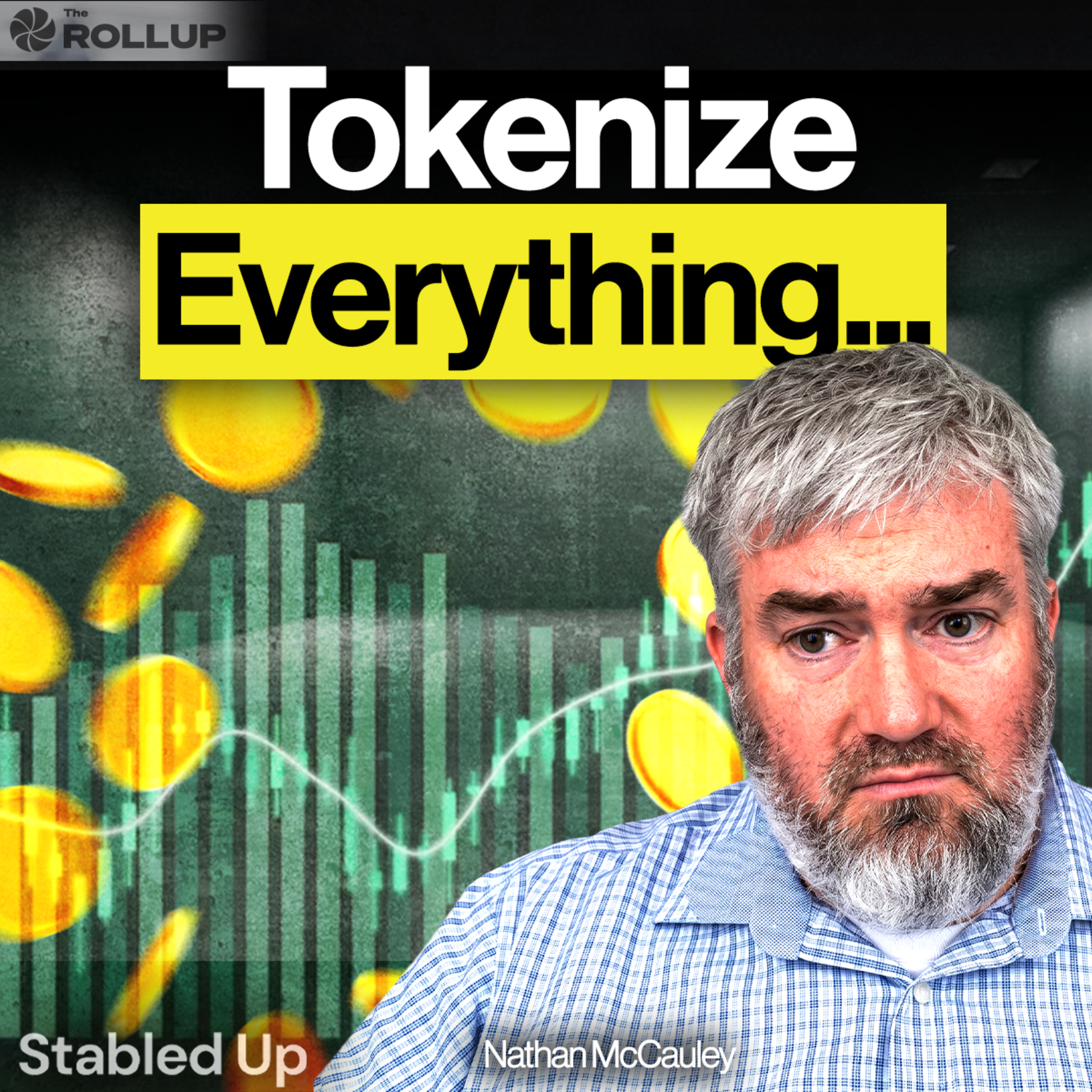
今天,我们请到了Nathan McCauley,来聊聊银行为什么要上链。
And today, we've got Nathan McCauley talking about why banks are going on chain.
Nathan是Anchorage Digital的联合创始人,他们也在帮助银行上链方面走在前列。
Nathan cofounded Anchorage Digital, and they are also leading the charge when it comes to helping banks go on chain.
他们是美国首批获得联邦特许的数字资产银行之一。
They're one of the first federally chartered digital asset banks in The United States.
他们发行USAT。
They issue USAT.
那是Tethr在美国监管下的美元稳定币。
That's Tethr's US regulated dollar stablecoin.
上周在Avalanche峰会上,我们正好聊到了USAT和AAVE相关的内容。
And we actually just covered something around USAT and AAVE at Avalanche Summit last week.
所以现在有很多重大的合作在推进,Nathan今天就来聊聊这些。
So big, big partnerships that are happening, and Nathan is here to talk about it.
Nathan,欢迎来到我们的节目。
Nathan, man, welcome to the show.
很高兴你能来。
It's a pleasure to have you.
谢谢。
Thanks.
我也很高兴能来这里。
I'm really happy to be here.
当然。
Absolutely.
上次你来做客时我就很享受,所以很高兴你能再次回来。
I really enjoyed our last time that we, we had you on as well, so it's good to have you back.
而且,感觉自从上次你来之后,我们一切都很顺利。
And, it just feels like everything I mean, we're hitting on all cylinders since the last time we had you.
请原谅我帽子上那些粗俗的话。
Excuse the, raunchy language there on my hat.
这次我会把它摘下来,但这确实是我真实的感受。
I'll take it off for this one, but it is truly how I feel.
所以,天哪,我觉得你能看出来,我们对目前的处境感到非常兴奋,不仅在市场上,而且在整个行业里,关于所有的机构采用。
And so, man, I think you can tell that we are, excited about where we stand, not only in the markets, but also in the industry broadly about all of the institutional adoption.
我们称之为机构FOMO。
We're calling it institutional FOMO.
这在各个层面都在发生。
It's happening at every level.
稳定币感觉像是国家的经济优先事项。
Stablecoins feel like they're a national economic priority.
他们从债券市场中扭曲久期的方式,感觉一切都顺风顺水。
The way that they're twisting duration out of the bond market, it feels like everything is hitting on all cylinders.
在Anchorage Digital总部,内部的感觉也是这样吗?
Is that how it feels inside at Anchorage Digital headquarters as well?
我觉得完全正确。
I think that's exactly right.
我们正在看到,你知道,几个大趋势正在发生。
We're seeing, you know, a few megatrends happen.
当然,数字资产在机构领域的应用,包括银行、经纪商、金融科技公司,以及稳定币和代币化资产,大家都在谈论,比如,嘿。
Certainly, the adoption of digital assets across the institutional landscape, banks, broker dealers, fintechs, across stables, across tokenized assets, peep everybody talking about, like, hey.
现在的问题不是资产是否上链,而是它们如何上链。
Is this the question now is not do assets come on chain, but how do they come on chain
是通过原生发行,还是通过DTCC,或者其他机制上链。
Via native issuance or DTCC or some other mechanism by which they come on chain.
所以我们进行的讨论和提出的问题都非常具体、非常实际,是那些有盈亏责任的团队在制定切实可行的路线图。
So the kinds of debates that we're having, the kinds of questions we're having are very tactical, very real solving road maps from teams with p and l responsibility.
所以,是的,我们在各个方面都看到了这种情况。
So, yeah, we're seeing it across the board.
我今天早些时候和一个人聊过。
I I had a conversation with someone earlier today.
这个对话还没公开,但对方是Tempo的代表。
It's not been released yet, but it was with a rep from Tempo.
他谈到了《Genius Act》的重要性,你知道,这是稳定币领域一项具有里程碑意义的法规。
And he was talking about how important the Genius Act which, you know, was this landmark piece of regulation in the stablecoin space.
显然,最近《清晰法案》没能通过终止辩论的程序。
Obviously, more recently, we've had the Clarity Act fail to reach cloture.
所以,考虑到Anchorage和你们,你们基本上每天都在和银行打交道。
And so given that Anchorage and yourself, you guys are interfacing with banks, I'd assume on essentially a daily basis.
那么,《清晰法案》是不是一个尚未克服的重大障碍,因此会阻碍银行进入这个领域?
Is the Clarity Act a significant obstacle that has not been overcome and therefore will hinder the bank's entrance into this space?
还是说它相对无关紧要,银行不管有没有《清晰法案》都会进来?
Or was it relatively inconsequential and banks are coming in anyway despite Clarity Act?
我同意今天早些时候那个团队的人说的,《天才法案》对数字资产来说是一个了不起的里程碑。
Agree with over whoever it was earlier on today from the from the other team that, the Genius Act was an incredible milestone for Digital Assets.
我的意思是,里面包含了很多内容。
I mean, there's a lot of things come in there.
首先,你看它,它本身就为稳定币在法律上铺平了道路。
So first of all, you look at it and say it it itself legally blesses a path for stablecoins.
所以,第一层的答案是,确实存在一种叫稳定币的东西。
And so there's a a first order answer there on there's a such a thing as a stablecoin.
它是一个法律实体。
It's a legal entity.
它是一个现在可以被监管的法律概念。
It's a legal concept that now can be regulated.
但这也意味着,稳定币所依赖的很多东西也都是好的。
But the implication there is that a bunch of the stuff that stablecoins depend on are also good.
链是好的。
Chains are good.
区块链是好的。
Blockchains are good.
去中心化网络是好的。
Decentralized networks are good.
所以它带来了很多内在的隐含意义,我认为这在很多方面为许多银行开始进入这个领域打开了大门。
And so it comes with a lot of built in implications that I think are, in many ways, the unlock for many banks to start to come in.
所以我会说,Genius法案已经是一个解锁了。
So I would say that Genius was already an unlock.
大多数银行的主要业务是美元的转移、结算和持有。
Most banks, their primary business is in movement, settlement, and holding of the dollar.
而美元通过稳定币升级成十倍好的产品,这意味着所有银行现在都无法忽视这个变化。
And the fact that the dollar is getting upgraded to, like, 10 times better product with stablecoins means that all of them now can't ignore what's going on.
那么关于Clarity,Clarity的失败是不是很大的损失,或者它会拖慢我们的进度吗?
So with respect to Clarity, is Clarity a big loss, or is it gonna slow us down?
我觉得看待这个问题的方式是,Clarity本来会是一个加速器。
I think the the way that I would think about it is that Clarity was going to be an accelerant.
也就是说,事情本来会进展得更快。
So things were going to go even faster.
本来会有更多的FOMO,我仍然认为这种情况会发生。
There was gonna be even more FOMO, and I still think that that will take place.
我认为国会和政府处理Genius的方式非常明智,就是把整个加密货币监管结构的一部分拿出来,单独作为一项法案通过。
I think it was actually really wise what Congress and the administration did with Genius, which is take off a chunk of the overall crypto landscape regulatory structure and pass it as an individual bill.
对于那些可能不是监管历史学家的人,可能大多数人不是,但不幸的是,在加密货币领域,你必须了解这些。
For those who aren't maybe historians of regulatory history, like probably most people aren't, but unfortunately, within crypto, have to be.
你会知道,证券立法实际上是在十年间通过三项不同的法案逐步推出的,分别是1933年法案、1934年法案和1940年法案,每一项都确立了不同的内容。
You'd know that securities legislation actually rolled out over the course of a decade across three different bills, the 30 act, 33 act, and the 40 act, each of which established a different thing.
所以,你知道,有一个法案是定义什么是证券的。
So, you know, there was a there was a bill to describe what a security is.
有一个法案是定义投资顾问的职责的。
There was a bill to decide describe what an investment adviser has.
有一个法案是定义交易所法案的。
There was a bill to describe what an exchange act.
《清晰法案》试图涵盖所有这些,包括资产的定义以及不同的资产类别。
The Clarity Act tried to bite off all of that across the definitions of assets and across different asset classes as well.
所以它本质上是一个非常雄心勃勃的法案,但我预计未来几年我们会看到加速。
And so it was inherently a very ambitious bill, but what I imagine will happen over the next few years is that we'll still see the acceleration.
我们仍然会看到采用,但也许我们会看到这些内容被拆分成小块,然后单独解决,要么通过立法机构的规则制定,要么更重要的是,通过立法,但以更聚焦、更有结构的方式,而不是作为一个大的综合法案。
We'll still see the adoption, but maybe we'll see pieces of this broken off into chunks and then solved individually, either through rulemaking at the legislative agencies or mean even more importantly, as legislation that passes, but in a more focused and and structured way rather than as one big omnibus.
我非常喜欢这个关于潜在加速器的说法,而不是人们可能猜测的减速。
I I really like the framing of the potential accelerant, but not the deceleration that people might be speculating that it it entails.
我们本来可以进展得更快,但现在依然在以惊人的速度推进。
We would have moved a lot faster, but we're still moving at a breakneck pace.
所以这对很多正在观看、关注未来几周几个月发展的人来说,非常相关。
So very, very relevant to a lot of the people that are watching this and looking at how this will evolve over the coming weeks and months.
而且,你们Anchorage公司跟很多银行和稳定币领域的机构玩家都有合作,他们都在考虑进入这个领域,考虑怎么应对,对吧,就是稳定币和代币化这股浪潮。
And, again, your company at Anchorage interfaces with several of the banking and stablecoin institutional players that are looking at entering the space, looking at how to navigate, right, some of the some of the stablecoin and also the tokenization, you know, wave more broadly.
我想说的是,很多金融机构,包括银行,之前都在某种程度上对加密货币持对立态度。
And I guess what I'm what I'm getting to is that a lot of these financial institutions, banks being part of that that cohort, were positioned against crypto in some way, shape, or form.
很长一段时间,那都是敌对的论调。
And for a long time, that was the red rhetoric.
就是说,嘿。
It was, hey.
做自己的银行。
Be your own bank.
我们不需要银行。
We don't need the banks.
我们要去搞加密货币了。
We're gonna go crypto.
我们要自己保管资产。
We're gonna self custody.
我们要做所有这些事情。
We're gonna do all these things.
现在还是这种对立吗?
Is that still the dichotomy?
还是银行和个体自己掌控金融之间的对立吗?
Is it still banks versus, you know, the individual taking finance into their own hands?
这种对立框架现在还有多大意义?你看,
How relevant is that oppositional framing now versus look.
我的意思是,我们听到更多银行在考虑推出稳定币项目的消息。
I mean, we have more news that banks are looking at launching stablecoin programs.
也许他们这样做是符合KYC和反洗钱规定的,但这并不一定和自托管以及数字资产所代表的某些基本原则相矛盾。
Maybe they're doing so in a KYC AML compliant way, but that's not necessarily antithetical to self custody and some of the, you know, underlying principles that digital assets stand for.
所以,这里面有很多可以深入探讨的内容。
So, I mean, lots to dig into there.
我觉得,从全国范围来看,银行有很多不同的角度可以观察。
I think that, there's a a number of apertures to look at the banks across the country.
有那些非常大的全球系统重要性银行,我常跟团队开玩笑说,这些大银行其实并不真正存在。
You've got the the very large GSIBs, which I I joke with my team that the very large GSIBs don't even really exist.
根本就没有所谓的大银行。
There's no such thing as a large bank.
大银行内部有很多部门,每个部门都有自己的目标和正在推进的事情。
There's a bunch of divisions within that large bank, each that have their own agenda and own kind of thing that they are they're working on.
比如财富管理部门,他们非常希望客户能够购买并持有比特币。
So you have wealth departments that absolutely want their clients to be able to buy and hold Bitcoin.
支付部门希望整合稳定币,同时也希望整合代币化存款。
You've got payments divisions that want stablecoins to be integrated, but also want tokenized deposits to be integrated.
贷款和主经纪业务部门则希望接受加密货币或代币化资产作为抵押品,以便更自由地转移这些资产。
You've got the lending and prime desks that want to accept crypto as collateral or accept tokenized assets as collateral so they can move them more freely.
所以,认为银行对数字资产行业、加密货币行业、区块链行业只有一种看法、一种态度,这种想法本身就是很愚蠢的。
And so the the idea that there is one view that banks have and one orientation that banks have towards the digital asset industry, the crypto industry, blockchain industry, is just a it's a foolish thing to even think about.
这其实是一种分类上的错误。
It's, kind of a category error.
正确的思考方式是,每个小组都有自己的任务,想要完成某些事情,想要改善自己的业务线。
The right way to think about is individual groups that have a mandate and wanna wanna get something done and want to improve their business lines.
不过,不幸的是,有一个银行游说团体,而且这个游说团体很奇怪,有时候并不总是为了银行自身的利益行事。
Now there is, unfortunately, a bank lobby, and the bank lobby actually weirdly doesn't always act in the very interests of the banks themselves.
所以我觉得奇怪的一点是,你会看到银行游说团体在推动一些事情,但当你真正去和个别银行交流时,他们其实并不想要这些。
And so I think that's one of the weird things where what you see is that the bank lobby was advocating for things that sometimes when you actually go talk to individual banks, didn't even want.
他们甚至不太在乎这些。
They didn't even care about that much.
所以这里就出现了一种有趣的动态。
And so it's a little bit of an interesting dynamic that comes there.
但别搞错,银行肯定会采用区块链技术的。
But make no mistake, banks are gonna be adopting blockchain.
银行正在采用代币化。
Banks are being adopting tokenization.
银行将会持有比特币。
Banks are gonna be holding Bitcoin.
而且我觉得,正如你所说,这不仅不会与去中心化的叙事相冲突,反而会非常有力地推动去中心化的叙事。
And I think it's, to your point, not just not gonna come in contention with the decentralized narrative, but actually gonna help the decentralization narrative very meaningfully.
我觉得你说得完全对。
And I I think that's absolutely right.
而且我们越想越觉得,在这种事情上,做极端主义者或搞派系之争是没有好处的。
And the more that we've thought about this is it pays not to be a maximalist or tribalistic in this sense.
保持开放的心态,看看大型机构可能以哪些方式上链,这才是明智的。
It pays to be open minded to the ways in which large institutions could come on chain.
当然,最终有些机构会带着许可环境进来。
Ultimately, sure, some of these institutions are coming on with permissioned environments.
他们这样做,还是带着KYC和反洗钱的要求。
They're doing so with, again, KYC and AML.
也许这就像是在这个许可环境里建了一个围墙花园,但这仍然是朝着正确方向迈出的一步,最终会让我们进入一个可互操作的统一经济区。
Maybe it's a walled garden inside of this permissioned environment, but that's still a step in the right direction that ultimately gets us into one composable economic zone of interoperability.
也许有一个区域遵循这些机构原则,然后还有其他区域更多地体现密码朋克精神,但这总比它们在链下作为封闭系统要好。
Maybe there's a there's a a zone that adheres to some of these institutional principles, and then you've got other zones that ultimately have more of the, you know, cypherpunk ethos, but it is better than them being this closed system off chain.
一旦我们把它带上链,我们就能用它做更多可组合的事情。
Once we bring it on chain, we can do a lot more composable things with it.
而且我认为这也让我们的结构更具资本效率。
And I think that gives us a much more capital efficient structure as well.
所以,Nathan,我想简单介绍一下Anchorage的产品栈,因为我觉得我们几个月前可能已经聊过这个了,但为了更生动地展示Anchorage如何支持这些机构,帮助更多人进入链上经济,并支持代币化工作,我想再详细说明一下。
And and so to that end, Nathan, I'd love just to kind of just to illustrate Anchorage's product stack because I think maybe we did go through this, you know, several months ago back in the day, but just to really paint a very vivid picture as to how Anchorage is supporting some of the institutions out there and helping bring more people into this economy on chain and and supporting the tokenization efforts.
你能简单介绍一下你们是如何帮助客户的吗?
Can you just kind of unpack the way in which you help customers?
你们的主要客户是谁?Anchorage的产品栈最终是如何帮助这些客户的?
Who are your primary customers, and what is the product stack with Anchorage that ultimately helps these customers?
好的。
Sure.
我觉得大致可以分为三个方向。
So I think there's there's broadly speaking three verticals.
一个是主经纪业务,一个是金融基础设施,还有一个就是我说的商业和企业类的应用场景。
One of them is prime, one of them is financial infrastructure, and then one of them is what I'd call commercial and enterprise type use cases.
主经纪业务就是我们直接帮客户做事。
And so prime is where we are helping a client directly.
他们直接来找我们,我们就是他们的银行。
They directly come to us that we are their bank.
我们是他们的交易伙伴。
We are their trading partner.
我们是他们的质押服务商或者结算服务商。
We are their staking provider or their settlement provider.
我们帮他们把资产抵押出去,然后借钱给他们。
We help them collateralize their assets to borrow against them.
传统主经纪商、托管行或银行能做的任何事,甚至所有事,我们都能帮你做。
Anything and even everything you'd want to do at a traditional prime or traditional custodian traditional bank, we can do that for you.
不管是加密资产还是传统资产,我们都能帮客户持有链上或链下的国债。
Across both crypto assets and traditional assets, we hold we hold treasuries for people on on off chain treasuries.
你知道,这些我们都能做。
You know, we can do that.
我们也帮客户持有现金。
We hold cash for people as well.
所以我们是一家全服务的银行,同时也具备完整的加密能力。
And so we are a a full service bank that also has the full gamut of crypto capabilities.
这就是主经纪业务的核心,现在全球大多数加密投资者都在用,非常受欢迎。
That's kind of the the prime stack and very popular, you used by most of the crypto investors in the world right now today.
第二个业务板块是我们所说的金融基础设施。
Second vertical is what we call financial infrastructure.
这个板块就是把我们为自家银行打造的强大技术,用来帮助你的银行也具备这些能力。
This is where you take the incredible technology we've built for our bank and help have it enable your bank.
比如托管功能。
So this could be custody features.
这可以是外包交易功能。
This could be outsourced trading features.
这可以是结算基础设施、代币化基础设施、代币化存款、稳定币,基本上任何你想在加密领域开展的业务,都可以建立在我们提供的基础设施之上。
This could be a settlement infrastructure, tokenization infrastructure, tokenized deposits, stablecoins, kind of anything where you're looking to build your business in crypto on top of the infrastructure that we've provided.
第三个领域则更偏向于发展中的商业和企业应用。
And the third area that's kind of more developing is, like, commercial and enterprise.
我们的愿景是,银行之后的下一批采用者将是财富500强企业。
And our our vision there is the the next set of adopters after the banks is gonna be the Fortune 500.
这些企业甚至不一定从事金融服务行业,但它们希望利用我们构建的技术和基础设施来优化它们的流程。
It's going to be people that aren't even necessarily in a financial services business at all, but wants to use the technology that we've built, wants to use the infrastructure that we've built to optimize their processes.
这可能不表现为它们在资产负债表上持有比特币。
And that may not look like them holding Bitcoin on their balance sheet.
而可能表现为,嘿,我们有一堆国际供应商,我们想用稳定币付款,因为稳定币比美元更好用。
That might look like, hey, we've got a bunch of international suppliers, we'd like to pay them and stablecoins are just better than the dollar.
所以我们希望能够支持这类用途。因此,我们所有的解决方案大致都归入这三个类别。
And so we want to be able to do those kinds of use And so all of our all of our solutions kind of fall in those three buckets.
直接为你服务。
Serve you directly.
我们搭建基础设施,让你可以在此基础上发展自己的业务,或者更进一步,探索商业和企业级的应用场景。
We build infrastructure so you can build your business, or then kind of the frontier, which is commercial and enterprise use cases.
那这些板块中,哪个增长最快?
And which of these segments is fastest growing?
哪个规模最大?
Which one is largest?
你能不能详细说说,每个类别大概占业务的多少比例?
Maybe you could just unpack, like, what portion of the business is falling into each of these categories.
当然可以。
Sure.
Prime这块我们已经做得比较成熟了,现在随着越来越多的客户加入,这块业务基本上在自动增长。
So prime is where we're we're well built up, and that's that business is kind of growing automatically right now as more and more clients come on.
金融基础设施这块,今年因为银行采用数字资产这个宏观主题,确实得到了很大的推动。
Financial infrastructure is the one that's really been boosted by, say, this this year's macro thesis around banks adopting digital assets.
所以稳定币在那块增长得很不错。
And so stablecoins is growing very nicely there.
代币化存款也会推出,很快会有一些银行采用我们作为代币化存款基础设施的公告,然后接下来还有代币化。
Tokenized deposits will be rolling out some some announcements coming soon about banks adopting us as their tokenized deposit infrastructure, and and then moving on from there, tokenization as well.
所有这些用例都是用我们的基础设施来搭建银行基础设施,这对我们来说非常重要。
And so all of those kinds of use cases using our infrastructure to build up your bank infrastructure, that's that's really big for us.
我,我遇到过一些人上节目。
How I I've had people come on.
代币化存款现在听起来很模糊,我们听到过一些不同的看法,有人上节目支持它,也有人上节目说,看吧。
The tokenized deposits seems to be this thing that's very nebulous right now, and we've got some mixed opinions from people that have come on the show and support it and then others who come on the show and say, look.
这完全无关紧要。
This is this is totally inconsequential.
其实没什么大不了的。
Like, it's really not much happening here.
我觉得有人称它为加密货币领域最无聊的事情。
It is I think someone called it, like, the least interesting thing happening in crypto.
但话说回来,这感觉像是一个过渡阶段,最终会走向更代币化、更链上的经济。
But, again, it feels like a stepping stone getting to a more tokenized and a more on chain economy.
既然你帮银行搭建代币化存款的基础设施,那代币化存款到底有多重要?还是说直接上稳定币就行了?
Given that you help banks set up their tokenized deposit infrastructure, how important are tokenized deposits versus just going directly to a stablecoin?
代币化存款能让银行做到哪些现在做不到的事情?
What does the tokenized deposit allow a bank to do that they can't currently do without a tokenized deposit?
这个确实很难理解,除非你深入了解过银行核心系统的集成。
So it is it is hard to understand unless you have steeped yourself in banking core integrations.
实际上,很多银行直到当天结束才知道自己账户里有多少钱,因为所有系统都是批量处理的。
The fact that many banks don't yet actually know how much money is in their accounts until the end of the day because all those systems are batch processed.
银行现在运营方式里有很多基本的东西其实是有问题的,但他们已经习以为常了。
There's so many things that are just kind of basic stuff that is kind of busted about the way that banks operate right now, and they're just they just come to accept it.
所以当你告诉他们,嘿,
And so when you tell them, hey.
你可以有一条全天候的通道,在银行内部甚至子公司之间转移资产,他们简直惊呆了。
You can have a twenty four seven rail that allows you to move assets even within your bank, move that assets between your subsidiaries, they are blown away.
即使这项技术是一个封闭的网络,甚至只是银行内部使用的,它仍然能推动他们向前发展。
And even if the technology is a closed network that is you just kind of just even internal to their bank, it still brings them forward.
但我想对那些对这个用例持怀疑态度的人说,听听把代币化存款引入银行后会发生什么。
But I would I would tell to anyone that is skeptical about that use case is listen to what happens when you bring tokenized deposits into a bank.
他们会获得钱包基础设施。
They get wallet infrastructure.
他们会接触到区块链系统。
They get contact with blockchain systems.
他们会接触到账本系统。
They get contact with ledgering systems.
所以这实际上是一个很好的入门方式,猜猜怎么着?
And so they it actually ends up being a great way to get started with crypto that guess what?
一旦他们有了钱包基础设施,再往前迈一小步,就可以说,嘿,现在我们开始接受稳定币,或者现在我们允许比特币通过我们构建的这个钱包基础设施进入。
After they have the wallet infrastructure, it's a very small leap to say, hey, now we're gonna start accepting stablecoins, or now we're gonna allow Bitcoin to come in through this wallet infrastructure that we've built.
所以这真的像是漫长旅程的第一步,我认为这些银行中的许多将在未来几十年里走过这段旅程。
And so it's really kind of like a first step on a on a long journey that I think many of these banks are going to be over for the next couple of decades.
你会把代币化存款称为特洛伊木马吗?
Would you call tokenized deposits a Trojan horse?
嗯,特洛伊木马对接受它的人来说结局可不太好。
Well, the Trojan haulers didn't, didn't end up well for those that accepted it.
所以我觉得它算是特洛伊木马,因为它是一份礼物,但这份礼物不会反过来害你。
And so I think it's a it's Trojan horse in in that it's a gift, but it's a gift that doesn't turn on you.
它不会背叛你。
It doesn't betray you.
实际上,它会在很多方面帮助你。
It actually, you know, helps you in many different ways.
所以我不确定特洛伊木马是不是最恰当的比喻。
So I don't I don't know if Trojan horse would be exactly the right analogy.
也许更像一个花园,随着时间慢慢生长,结出很多果实。
Maybe a a garden that grows and bears much fruit over much time.
可能还有更好的比喻吧。
There's probably some better analogy there.
看起来机构托管基础设施在系统层面非常重要。
It it it seems as if the institutional custody infrastructure is systemically important.
我的意思是,它基本上是为了发展链上生态系统的所有其他组成部分,随着它们逐步接入。
I mean, it is to basically grow all of the other components of the on chain ecosystem as they are onboarded.
对于机构合作伙伴,比如银行,将现有系统集成到像Anchorage这样的托管系统及其产品栈和金融基础设施栈中,接受代币化存款和代币化资产,这个过程有多难?银行或机构的接入流程是怎样的?他们需要拆除或替换多少现有系统,然后实施Anchorage系统?
How difficult is it for an institutional partner, be it a bank, to integrate some of their existing systems into, let's say, the custody system that Anchorage has as part of its product stack and your, you know, general financial infrastructure stack to accept tokenized deposits, to accept, you know, tokenized assets in general, What is the onboarding process like for a bank or an institution to how much do they have to unwind or rip out and then implement the Anchorage system?
所以这是一个每个人都需要经历的演进过程。
So it's a it's an evolution that everybody has to go through.
没有人一开始就说,嘿。
There's no one that is starting this by saying, hey.
让我们拆掉现有系统,换成基于区块链的轨道。
Let's rip out an existing system and replace it with blockchain based rails.
所以这总是一个增量的论点,你获得更多功能和能力,然后经历一个演进过程。
So it's always an additive an additive thesis where you're getting more features and more capabilities and then going through an evolutionary process.
我想这些会作为辅助系统存在相当长一段时间,可能十年,更多用例会朝那个方向发展,但你仍然需要支持传统系统。
I imagine that these will be sidecars for quite some time, maybe a decade on, where additional use cases are moving toward that, but you must still support the legacy.
现有系统有几十万甚至上百万的客户在用,你不可能直接切换过去。
You've got hundreds, hundreds of thousands, maybe millions of clients using the existing system, and there's no way you can just cut over to it directly.
所以我觉得这真的会是一个渐进式的采纳过程。
And so I really think it's gonna be about seductive adoption.
有些用例对某些客户非常有用,然后这些用例会不断累积,接着你会看到更多资产在这些轨道上发行,比如代币化存款带来稳定币,稳定币带来代币化货币市场基金,再到普通证券,甚至可能到代币化金属。
Some use cases that are very useful to a set of clients and those kind of compound, then you start to see a bunch more assets get delivered on top of those rails, whether it's tokenized deposits leading to stable coins, leading to tokenized money market funds, general purpose securities, and then on to maybe even tokenized metals.
谁知道呢?
Who knows?
随着时间的推移,会有很多东西慢慢加进来。
There's a there's a bunch of things that kinda get add added on over time.
但可以肯定的是,没有人会直接拆掉旧系统换新的。
But certainly, no one is doing a rip and replace on this.
这完全是增量式的。
This is all this is all purely additive.
我知道时间快到了,但我还有几个问题。
I I realized we're we're coming up on time, but I just got a couple more questions.
其中一个问题就是想深入了解一下你描述的技术实现,它是不是就是现有基础设施在区块链轨道上的一个翻版,基本上并行运行,以确保正常运行时间,确保无缝衔接,避免出现瓶颈或陷阱之类的问题,直到最终切换过去,这两个系统并行运行,确保它们在一天中的不同时段能够对账一致。
One of which is just to drill into the technical implementation that you're describing, does it look like a carbon copy of the existing infrastructure on blockchain rails pretty much running in parallel side by side to make sure that there's uptime and make sure that there's, you know, seamless and and, no no, you know, potential bottlenecks or trapdoors or anything for a little while until making the switch over these these two systems run-in parallel, make sure that they they net out and tie out at, you know, different periods throughout the day.
然后最终,预期会逐步淘汰传统基础设施,完全转移到区块链轨道上?
And then eventually, anticipate sunsetting the legacy infrastructure and moving completely onto blockchain rails?
我觉得,如果要淘汰任何东西,那淘汰的时间点会比这远得多。
I think the to the degree you're going to sunset anything, the sunsetting will be much farther out than that.
没有人会这么做然后说,嘿。
No one's doing this and saying, hey.
我们只是要把所有的存款都转移到代币化存款上。
We're just gonna move all of our deposits to tokenized deposits.
他们会说,嘿。
They're saying, hey.
这些针对部分客户的用例将采用代币化存款。
These use cases on the subset of clients are going to be on tokenized deposits.
所以现有系统照常运行,旁边会有一个全新的系统,支持一些现有账本无法实现的用例。
And so the existing system is running as is, and a net new system is sitting beside it that enables some of the use cases that weren't possible with the existing ledgers.
所以这完全是纯增量的。
And so it's it's all purely additive.
所以大家不必担心会有一个硬性的截止日期,到时候所有东西都要切换到那些新系统上。
And so no one has to feel like there's this hard cut off date, where you shift and everything is on those new rails.
等到技术用例足够全面、能覆盖所有场景的时候,你可能会考虑像你描述的那样逐步切换。
When it does eventually get to that point where the technology use cases are comprehensive enough, they can cover all the use cases, then yes, you might look at something like a progressive cutover like you described.
但现在没人考虑这个。
But nobody's looking at that right now.
大家都在想的是,嘿,为一部分客户增加代币化存款用例,允许一些客户在现有抵押系统内用比特币借款,把部分代币化回购用例从现有回购转移到代币化回购,这样抵押品流动性更强。
Everyone's looking at say, hey, add a tokenized deposit use case for a subset of clients, allow some clients to borrow against Bitcoin inside the existing collateralization system, move some of the tokenized repo use cases away from existing repo onto tokenized repo so we have more collateral mobility.
所以这一切都是从小实验开始,然后逐步推广。
So it's all, you know, kind of starts with experiments and then rolls out a little bit more.
没人想搞硬性切换。
No one's no one's trying to do a hard cut off.
好的。
Okay.
有道理。
Make sense there.
而且这是渐进式的、演化式的。
And this is gradual and evolutionary.
因为你知道,这些都是大船,它们转弯很慢。
Because these are, you know, these are large ships and they, you know, they they turn slowly.
但随着时间的推移,这些确实会在结构上带来显著的改变。
But over time, right, these make significant differences in the way that these things are structured.
最后一个问题,Nathan,就是宏观地想一想。
Last question here, Nathan, is just kind of thinking broadly.
你知道,我们现在有多个因素汇聚在一起,就像我们节目开头说的,感觉一切都在顺利推进。
You know, we've got what feels like multiple contributing factors that are now at a convergence or confluence where it does and like we opened the show, feel like we're hitting on all cylinders.
我们有所谓的代币化超级周期。
We've got what we're calling the tokenization supercycle.
这很大程度上源于对代币化证券的监管,CFTC、永续合约监管的推进。
A lot of that is born out of regulation for tokenized securities, CFTC, perpetuals regulation moving forward.
我们还有《天才法案》在帮助稳定币。
We got the Genius Act that's helping stablecoins.
而且就像你提到的,回购市场、闲置资本,现在都开始变得有生产力了。
We're also seeing, like you mentioned, the repo market, idle capital, right, is becoming productive.
这些都在发生。
A lot of this is happening.
我们现在看到,世界上一些最大的交易所,比如纽交所、伦敦证券交易所、纳斯达克,都在转向二十三乘五。
We're now seeing, some of the largest exchanges in the world, be it NYSE, the London Stock Exchange, Nasdaq, are moving to twenty three five.
这感觉肯定是迈向二十四乘七的一步。
That certainly feels like a stepping stone to twenty four seven.
很多这些感觉真的只有在区块链轨道上才能实现。
A lot of that feels like it's really only possible on blockchain rails.
所以,鉴于这些因素的汇聚,我们预计会有大量的代币化资产涌入生态系统,进入很多已经存在很久的DeFi和链上基础设施,而你正在帮助推动这种迁移和代币化浪潮。
And so given that we've got this confluence of factors, we anticipate a a surplus, just an absolute wave of tokenized assets now entering the ecosystem into a lot of the same DeFi and on chain primitives that, you know, have been around for a long time, and you're helping to facilitate that migration and that tokenization wave.
我很好奇,现在感觉这个行业的总可寻址市场已经增长了一个数量级。
I'm curious as now that it feels as if the total addressable market of this this industry has grown in order of magnitude.
你觉得最大的赢家是谁?
Who do you think are the biggest winners?
你觉得谁最有可能从代币化超级周期中获益最多?
Who do you think is positioned to benefit the most from the tokenization supercycle?
好问题。
Great question.
我想先说,最大的赢家是整个行业。
So I would I would start out saying that the biggest winner is the industry at large.
随着资产上链,我们会看到系统风险系统性降低,结算时间系统性加快。
As as assets move on chain, we're gonna have systematic reduction reduction of risk in the system, systematic acceleration of settlement times.
所以好消息是,这对整个行业来说真的是双赢。
And so the the good news here is it's it's truly a a win win for the entire industry at large.
所以我觉得最重要的一点是,这是正和博弈。
And so I think that's the the most important thing to keep in mind that this is this is positive sum.
每个人都可以成为赢家,而不必有人真正意义上输掉什么。
Everybody can be winners without their necessarily being losers in any meaningful sense.
所以我觉得整个行业都会因此受益。
And so I think the the whole industry is going to win as a as a result of this.
有些玩家确实占据了特别有利的位置。
Some some players are positioned particularly nicely.
为金融机构提供基础设施的供应商肯定会表现不错。
Infrastructure providers to the financial institutions are certainly going to do well.
资产最终结算所在的链会表现得非常好。
Chains where the assets end up settling are going to do extremely well.
那么,谁会在稳定币的结算环节胜出呢?
And so who who is going to win the the settlements leg for stablecoins?
这会在哪条链上发生?
Which chain is that gonna be on?
这将是一个值得争取的大机会。
That's gonna be a a big one to be to be won.
然后正如你提到的,DeFi协议。
And then as you mentioned, DeFi protocols.
把资产搬到链上的意义,不只是为了结算更快,更是为了让应用能被用起来,这样就能用这些资产做更多有趣的事情。
The whole point to move things on chain is not just for fast and settlement settlement time, but also applications being utilized so that more interesting stuff can be done with the assets themselves.
所以那些成熟且构建良好的DeFi协议,自然也会从这一趋势中受益。
And so the the DeFi protocols that are mature and have been built well, also kind of naturally benefit from this movement.
太棒了。
Very cool.
Nathan,非常感谢你今天抽出时间跟我们交流,也感谢你们作为代币化超级周期的引领者。
Nathan, thank you so much for spending some time with us today and for being stewards of the tokenization supercycle as well.
你们在帮助银行和金融机构普及知识方面,确实发出了很有影响力的声音。
You guys have been a, I mean, a great voice in helping to educate banks, financial institutions at large.
是的,我们很期待很快再邀请你们来,继续做更多深入的交流。
And, yeah, we'd love to have you on again soon and do some more with you guys in the very near future.
太好了。
Awesome.
因为每次都很愉快。
Because it's always a good time.
我们很快会再见的。
We'll see you again soon.
谢谢,兄弟。
Thanks, man.
祝你一切顺利。
Have a good one.
再见。
Bye bye.
关于 Bayt 播客
Bayt 提供中文+原文双语音频和字幕,帮助你打破语言障碍,轻松听懂全球优质播客。